


 购物车
购物车 个人中心
个人中心
A Visit to Three Fronts
¥8.09
Account of World War I, first published in 1916. According to Wikipedia: "Sir Arthur Ignatius Conan Doyle (22 May 1859 – 7 July 1930) was a Scottish physician and writer who is most noted for his fictional stories about the detective Sherlock Holmes, which are generally considered milestones in the field of crime fiction. He is also known for writing the fictional adventures of a second character he invented, Professor Challenger, and for popularising the mystery of the Mary Celeste. He was a prolific writer whose other works include fantasy and science fiction stories, plays, romances, poetry, non-fiction, and historical novels."
The Consolation of Philosophy
¥8.09
According to Wikipedia: "Anicius Manlius Severinus Bo?thius,commonly called Boethius (ca. 480–524 or 525 AD) was a philosopher of the early 6th century. He was born in Rome to an ancient and prominent family which included emperors Petronius Maximus and Olybrius and many consuls... Boethius was imprisoned and eventually executed by King Theodoric the Great, who suspected him of conspiring with the Eastern Roman Empire. While jailed, Boethius composed his Consolation of Philosophy, a philosophical treatise on fortune, death, and other issues. The Consolation became one of the most popular and influential works of the Middle Ages."
Long Odds
¥8.09
Dodo Collections brings you another classic from H. Rider Haggard, ‘Long Odds’ ? The subjects and historical periods that British action-adventure writer H. Rider Haggard tackled in his vast body of work ranged considerably, but one element remains a constant thread that unites his entire oeuvre: heart-racing adventure that will keep you on the edge of your seat. If you're looking for an engaging and entertaining read, try Haggard's Long Odds. ? Sir Henry Rider Haggard was an English writer of adventure novels set in exotic locations, predominantly Africa, and the creator of the Lost World literary genre. His stories, situated at the lighter end of the scale of Victorian literature, continue to be popular and influential. He was also involved in agricultural reform and improvement in the British Empire. ? Haggard was made a Knight Bachelor in 1912 and a Knight Commander of the Order of the British Empire in 1919. He stood unsuccessfully for Parliament as a Conservative candidate for the Eastern division of Norfolk in 1895. The locality of Rider, British Columbia, was named in his memory.
A Little Girl in Old Washington
¥8.09
Dodo Collections presents Amanda M Douglas’s ‘A Little Girl in Old Washington’. Presented as a fantastic edition with a fully interactive table of contents. Amanda Minnie Douglas was an American writer of adult and juvenile fiction. She was probably best remembered by young readers of her day for the Little Girl series published over the decades flanking the turn of the twentieth century. Her "A Little Girl" series was one of the first examples of historical fiction for girls, while her Helen Grant books fall into the "college girl" genre that became so popular at the turn of the 19th/20th centuries. Her Kathie's Stories series - the first that she published - is a fairly typical example of 19th-century didactic moralism. Douglas began by submitting short stories and poems to local publications. In time her stories appeared in editions of The New York Ledger, Saturday Evening Post and the Lady’s Friend Magazine. Her first novel, In Trust, was published in 1866 and sold some 20,000 copies. Learning from this first experience, Douglas made sure to retain the copyrights on all of her future works. She would go on to publish at least a novel a year until her retirement in 1913.
From the Snow Image
¥8.09
Collection of short stories, including The Snow Image, The Great Stone Face, Ethan Brand, The Canterbury Pilgrims, The Devil in Manuscript, and My Kinsman, Major Molineux. According to Wikipedia: "Nathaniel Hawthorne (born Nathaniel Hathorne; July 4, 1804 – May 19, 1864) was an American novelist and short story writer."
Bhagavadgita with the Sanatsugatiya and the Anugita
¥8.09
According to Wikipedia: "The Bhagavad Gita ... is a 700-verse Hindu scripture that is part of the ancient Sanskrit epic Mahabharata... The Sānatsujātiya refers to a portion of the Mahābhārata, a Hindu epic. It appears in the Udyoga Parva (book), and is composed of five chapters... The Anugita is part of the Asvamedhikaparva a book of the Sanskrit epic Mahabharata. It contains Krishna's conversation with Arjuna when Krishna decided to return to Dwaraka after restoring to the Pandavas, their kingdom. The main topics discussed are transmigration of souls, means of attaining liberation, description of gunas and ashramas, dharma, and the effects of tapas or austerity."
Dhammapada
¥8.09
According to Wikipedia: "The Dhammapada is a versified Buddhist scripture traditionally ascribed to the Buddha himself. It is one of the best-known texts from the Theravada canon. The title, Dhammapada, is a compound term composed of dhamma and pada, each word having a number of denotations and connotations. Generally, dhamma can refer to the Buddha's "doctrine" or an "eternal truth" or "righteousness" or all "phenomena"; and, at its root, pada means "foot" and thus by extension, especially in this context, means either "path" or "verse" (cf. "prosodic foot") or both."
Dharma Sutras
¥8.09
According to Wikipedia: "The Dharmasutras are Sanskrit texts dealing with custom, rituals and law. They include the four surviving written works of the ancient Indian tradition on the subject of dharma, or the rules of behavior recognized by a community. Unlike the later Dharmashastra, the dharmasutras are composed in prose. The oldest Dharmasutra is generally believed to have been that of Apastamba, followed by the dharmasutras of Gautama, Baudhayana, and an early version of Vasishtha. It is difficult to determine exact dates for these texts, but the dates between 500–300 BCE have been suggested for the oldest Dharmasutras."
The Mystery of Cloomber
¥8.09
According to Wikipedia: "The Mystery of Cloomber is a novel by British author Sir Arthur Conan Doyle. It is narrated by John Fothergill West, a Scot who has moved with his family from Edinburgh to Wigtownshire to care for the estate of his father's half brother, William Farintosh. It was first published in 1889."
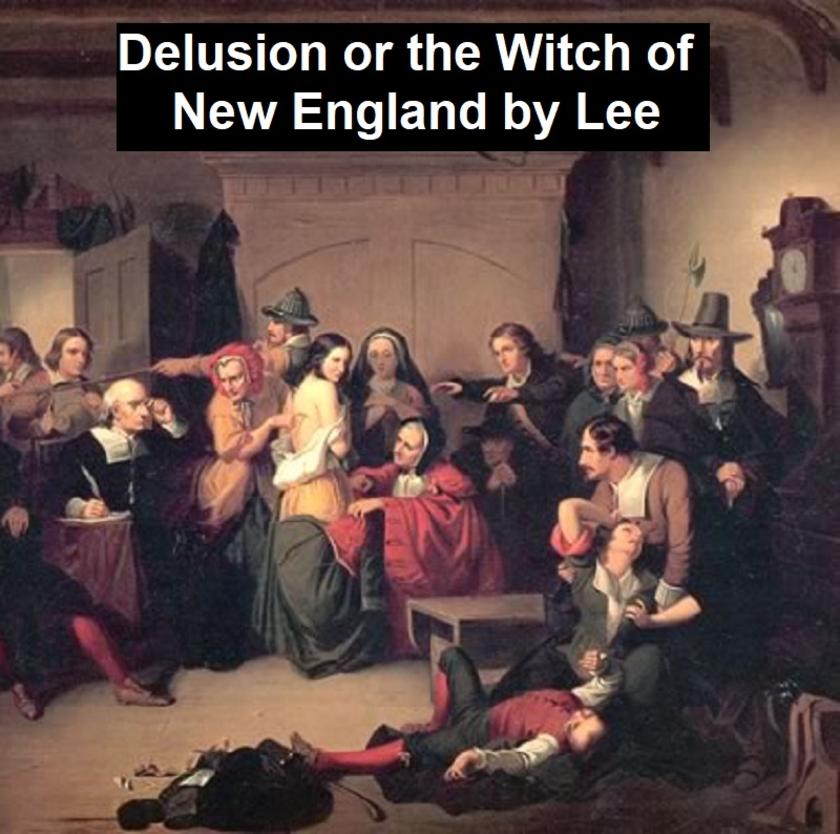
Delusion or The Witch of New England
¥8.09
According to Wikipedia: "Eliza (Buckminster) Lee (1792-1864) was an American author, the daughter of Joseph Buckminster. She was born in Portsmouth, New Hampshire; was well educated by her father and brother, Joseph Stevens Buckminster; married a Thomas Lee of Boston; became a writer; and was unusually felicitous in her descriptions of New England life. She wrote, notably: Sketches of New England Life (1837); Naomi, or Boston Two Hundred Years Ago (1848); and memoirs of her father and brother (1849). She translated from the German, wrote a life of Richter (1842), and published an historical novel, Parthenia, the Last Days of Paganism (1858).

Birds in Town and Village
¥8.09
According to Wikipedia: "William Henry Hudson (4 August 1841 – 18 August 1922) was an author, naturalist, and ornithologist. Hudson was born in the Quilmes, a borough (partido) of the greater Buenos Aires, in Buenos Aires Province, Argentina, the son of Daniel Hudson and his wife Catherine née Kemble, U.S. settlers of English and Irish origin. He spent his youth studying the local flora and fauna and observing both natural and human dramas on what was then a lawless frontier, publishing his ornithological work in Proceedings of the Royal Zoological Society, initially in an English mingled with Spanish idioms.
The Firm of Girdlestone
¥8.09
According to Wikipedia: "The Firm of Girdlestone is a novel by British author Sir Arthur Conan Doyle. It was first published in 1890 by Chatto and Windus in London, England. In 1915 a silent film adaptation The Firm of Girdlestone was made. John Girdlestone owns the firm of Girdlestone. It is a very lucrative business and John Girdlestone and his son Ezra Girdlestone are respected by everyone. Both father and son are cynics and have no other thought but for their business; after giving a donation of ?25 for charity, John Girdlestone remarks to himself that it is not a bad "investment", as it will make a favorable impression on the collector, who is a Member of Parliament, whose influence he hopes to use some day. Ezra, his son, is even more of a cynic, as the elder Girdlestone's cynicism is mitigated by his supposed religiosity. However, he manifests a great acumen for business, sometimes, even surpassing his father's sharpness in business matters. A series of disastrous speculations by the elder Girdlestone financially ruins the firm. After keeping the impending bankruptcy a secret from everyone for a time, he tells his son (whom he has fooled with a dummy ledger) about it, who is disgusted by his father's rashness..."
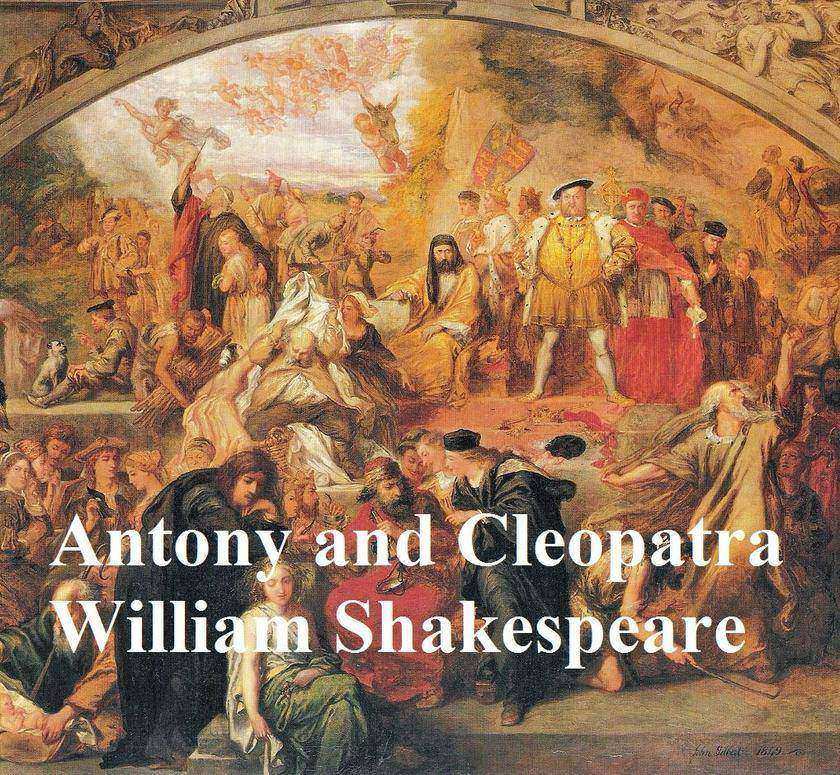
Antony and Cleopatra, with line numbers
¥8.09
The classic tragedy. According to Wikipedia: "Antony and Cleopatra is a tragedy by William Shakespeare. It was first printed in the First Folio of 1623. The plot is based on Thomas North's translation of Plutarch's Life of Markus Antonius and follows the relationship between Cleopatra and Mark Antony from the time of the Parthian War to Cleopatra's suicide. The major antagonist is Octavius Caesar, one of Antony's fellow triumvirs and the future first emperor of Rome. The tragedy is a Roman play characterized by swift, panoramic shifts in geographical locations and in registers, alternating between sensual, imaginative Alexandria and the more pragmatic, austere Rome. Many consider the role of Cleopatra in this play one of the most complex female roles in Shakespeare's work. She is frequently vain and histrionic, provoking an audience almost to scorn; at the same time, Shakespeare's efforts invest both her and Antony with tragic grandeur. These contradictory features have led to famously divided critical responses.["
Four Books
¥8.09
Classic fiction and poetry. This file includes: Flint and Feather, Legends of Vancouver, The Moccasin Maker, and The Shagganappi. According to Wikipedia: "Emily Pauline Johnson (also known in Mohawk as Tekahionwak, literally: 'double-life') (10 March 1861 – 7 March 1913), commonly known as E. Pauline Johnson or just Pauline Johnson, was a Canadian writer and performer popular in the late 19th century. Johnson was notable for her poems and performances that celebrated her First Nations heritage; her father was a Mohawk chief of mixed ancestry, and her mother an English immigrant. One such poem is the frequently anthologized "The Song My Paddle Sings". Her poetry was published in Canada, the United States and Great Britain. Johnson was one of a generation of widely read writers who began to define a Canadian literature."
Othello, with line numbers
¥8.09
The classic tragedy. According to Wikipedia: "Othello, the Moor of Venice is a tragedy by William Shakespeare, believed to have been written in approximately 1603, based on the short story "Moor of Venice" by Cinthio. The work revolves around four central characters: Othello, his wife Desdemona, his lieutenant Cassio, and his trusted advisor Iago. Attesting to its enduring popularity, the play appeared in 7 editions between 1622 and 1705. Because of its varied themes — racism, love, jealousy and betrayal — it remains relevant to the present day and is often performed in professional and community theatres alike. The play has also been the basis for numerous operatic, film and literary adaptations."
The Exploration of the World
¥8.09
First part of Jules Verne's three-part history of the exploration of the world. This volume covers from Hanno and Herodotus to Champlain and LaSale. According to Wikipedia: "Jules Gabriel Verne (February 8, 1828 – March 24, 1905) was a French author who pioneered the science-fiction genre. He is best known for his novels Journey to the Center of the Earth (written in 1864), From the Earth to the Moon (1865), Twenty Thousand Leagues Under the Sea (1869–1870), and Around the World in Eighty Days (1873). Verne wrote about space, air, and underwater travel before navigable aircraft and practical submarines were invented, and before any means of space travel had been devised. Consequently he is often referred to as the "Father of science fiction", along with H. G. Wells. Verne is the second most translated author of all time, only behind Agatha Christie with 4162 translations..."
Guy Mannering
¥8.09
First published in 1815. Set in Galloway, Scotland, 1760-1765 and 1781-1782. According to Wikipedia: "Sir Walter Scott, 1st Baronet (1771 – 1832) was a prolific Scottish historical novelist and poet popular throughout Europe during his time. In some ways Scott was the first English-language author to have a truly international career in his lifetime, with many contemporary readers all over Europe, Australia, and North America. His novels and poetry are still read, and many of his works remain classics of both English-language literature and of Scottish literature. Famous titles include Ivanhoe, Rob Roy, The Lady of The Lake, Waverley, The Heart of Midlothian and The Bride of Lammermoor."
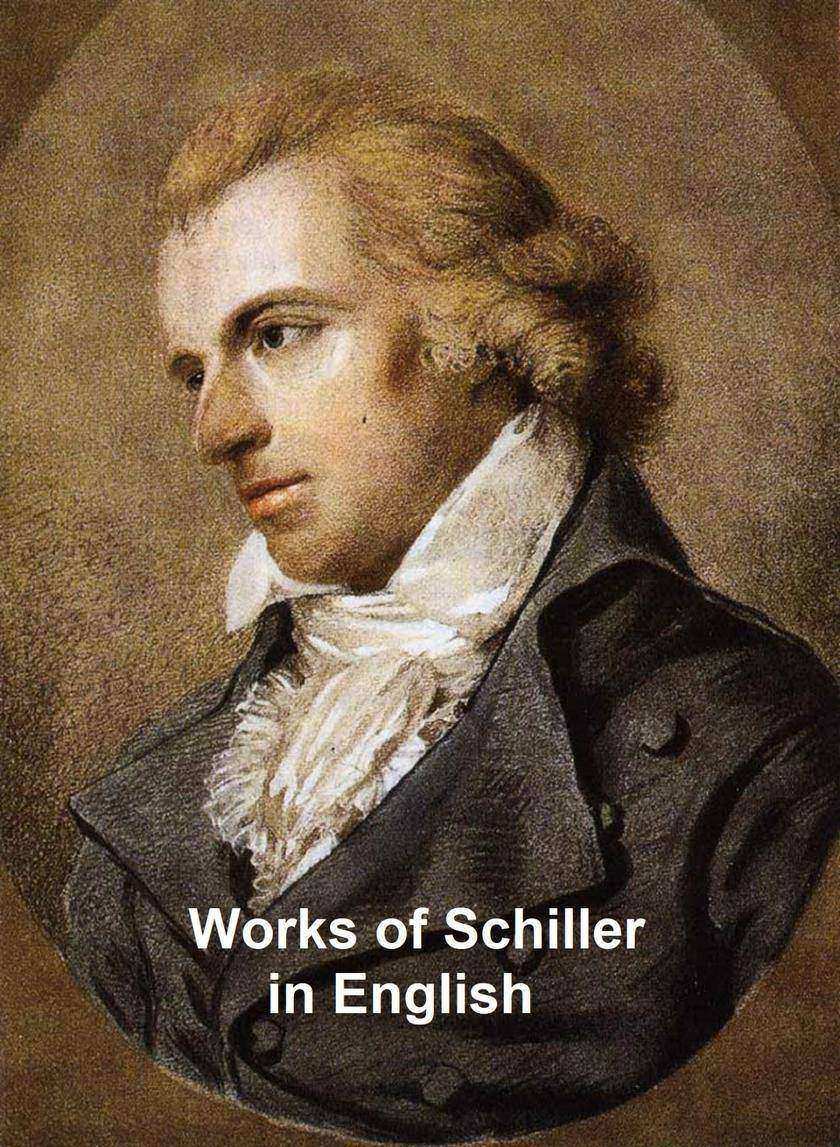
Works of Schiller in English
¥8.09
This collection includes: Life of Schiller by Calvin Thomas and such works by Schiller as Death of Wallenstein, William Tell, excerpts from The Thirty Years' War, poetry, and Correspondence with Goethe. The German Classics Of The Nineteenth And Twentieth Centuries, Volume 3, edited by Kuno Francke.
Hilda Lessways
¥8.09
Dodo Collections brings you another classic from Arnold Bennett, ‘"Hilda Lessways”. ? In the second volume of the trilogy, events in Clayhanger are retold from the perspective of Hilda Lessways, who is embarking upon a relationship with George Cannon, a charismatic entrepreneur, whose success has taken him from the Five Towns to Brighton. A disastrous bigamous marriage and pregnancy result. Finally, however, she is reconciled with Edwin Clayhanger and one of Bennett’s most lively heroines must face up to her conflicting emotions, and the reality of her hopes and tragedies. ? Enoch Arnold Bennett (always known as Arnold Bennett) was one of the most remarkable literary figures of his time, a product of the English Potteries that he made famous as the Five Towns. Yet he could hardly wait to escape his home town, and he did so by the sheer force of his ambition to succeed as an author. In his time he turned his hand to every kind of writing, but he will be remembered for such novels as The Old Wives' Tale, the Clayhanger trilogy (Clayhanger, Hilda Lessways, and These Twain), and The Card. He also wrote such intriguing self-improvement books as Literary Taste, How To Live on 24 Hours a Day, The Human Machine, etc. ? After a local education Bennett finished his education at the University of London and for a time was editor of Woman magazine. After 1900 he devoted himself entirely to writing; dramatic criticism was one of his foremost interests. Bennett is best known, however, for his novels, several of which were written during his residence in France. ? Bennett's infancy was spent in genteel poverty, which gave way to prosperity as his father succeeded as a solicitor. From this provincial background he became a novelist. ? His enduring fame is as a Chronicler of the Potteries towns, the setting and inspiration of some of his most famous and enduring literary work and the place where he grew up.
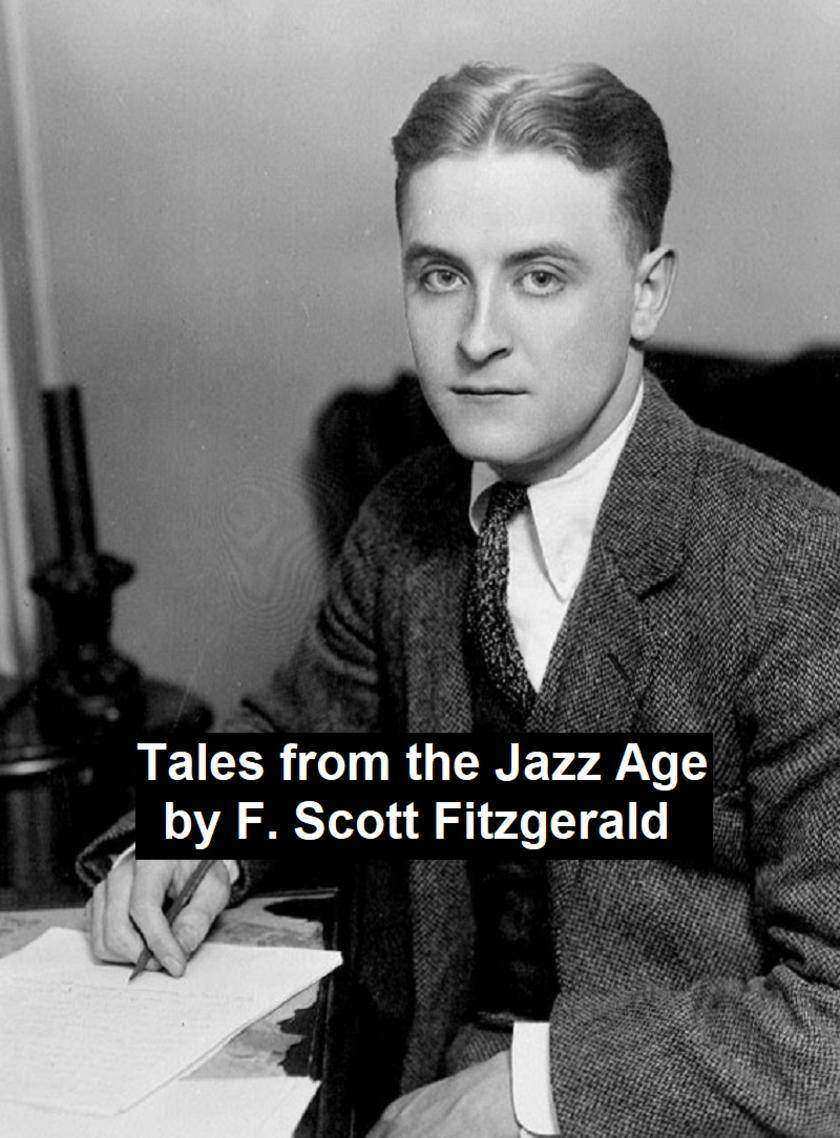
Tales from the Jazz Age
¥8.09
This book includes: The Jelly-Bean, The Camel's Back, may Day, Porcelain and Pink, The Diamond as Big as the Ritz, The Curious Case of Benjamin Button, Tarquin of Cheapside, O Russet Witch, The Lees of Happiness, Mr. Icky, and Jemina. According to Wikipedia: "Francis Scott Key Fitzgerald (September 24, 1896 – December 21, 1940) was an American writer of novels and short stories, whose works are evocative of the Jazz Age, a term he coined himself. He is widely regarded as one of the twentieth century's greatest writers. Fitzgerald is considered a member of the "Lost Generation" of the twenties. He finished four novels, including The Great Gatsby, with another published posthumously, and wrote dozens of short stories that treat themes of youth and promise along with despair and age."
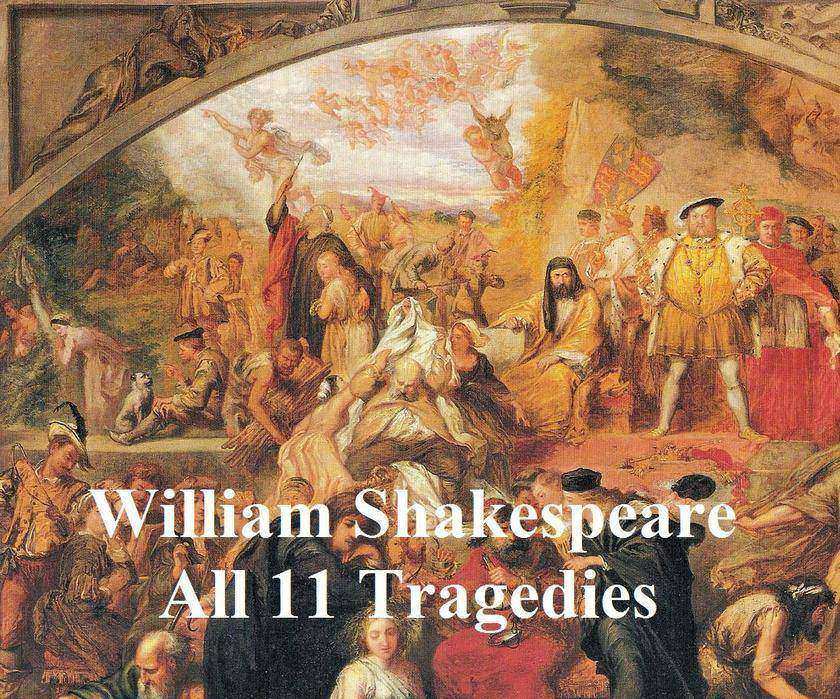
Shakespeare's Tragedies: 11 plays with line numbers
¥8.09
This book-collection file includes all of Shakespeare's tragedies, with line numbers: Antony and Cleopatra, Coriolanus, Hamlet, Julius Caesar, King Lear, Macbeth, Othello, Romeo and Juliet, Timon of Athens, Titus Andronicus, and Troilus and Cressida. It also includes "Notes to Shakespeare volume 3 Tragedies" by Samuel Johnson and Shakespearean Tragedy: Lectures on Hamlet, Othello, King Lear, Macbeth" by A.C. Bradley.


