


 购物车
购物车 个人中心
个人中心
The Sign of the Four, Second of the Four Sherlock Holmes Novels
¥8.09
The four Sherlock Holmes novels are: A Study in Scarlet, Sign of the Four, The Hound of the Baskervilles, and The Valley of Fear. According to Wikipedia: "Sir Arthur Ignatius Conan Doyle, (22 May 1859 – 7 July 1930) was an author most noted for his stories about the detective Sherlock Holmes, which are generally considered a major innovation in the field of crime fiction, and for the adventures of Professor Challenger. He was a prolific writer whose other works include science fiction stories, historical novels, plays and romances, poetry, and non-fiction."
Arabian Nights: The Book of the Thousand Nights and a Night
¥8.09
The full text of all 16 volumes of Richard Burton's monumental translation of The Arabian Nights, with all his candid, racy footnotes, with their wealth of anthropological and cultural information. This file also includes "The Life of Sir Richard Burton by Thomas Wright According to Wikipedia: "One Thousand and One Nights is a collection of stories collected over many centuries by various authors, translators and scholars across the Middle East, North Africa and Indian subcontinent. These collections of tales trace their roots back to ancient and medieval Arabic, Persian, Indian, Egyptian and Mesopotamian literature. In particular, many tales were originally folk stories from the Caliphate era as well as the Sassanid-era Pahlavi work Hazār Afsān. Though the oldest Arabic manuscript dates from the 14th century, scholarship generally dates the collection's genesis to around the 9th century." Captain Sir Richard Francis Burton (1821 – 1890) was an English explorer, translator, writer, soldier, orientalist, ethnologist, linguist, poet, hypnotist, fencer and diplomat. He was known for his travels and explorations within Asia and Africa as well as his extraordinary knowledge of languages and cultures. According to one count, he spoke 29 European, Asian, and African languages. Burton's best-known achievements include traveling in disguise to Mecca, making an unexpurgated translation of The Book of One Thousand Nights and A Night..."
The Adventures of Sherlock Holmes, First of the Five Sherlock Holmes Short Story
¥8.09
The other Sherlock Holmes story collections are: The Memoirs of Sherlock Holmes, The Return of Sherlock Holmes, His Last Bow, and The Case-Book of Sherlock Holmes. According to Wikipedia: "Sir Arthur Ignatius Conan Doyle, (22 May 1859 – 7 July 1930) was an author most noted for his stories about the detective Sherlock Holmes, which are generally considered a major innovation in the field of crime fiction, and for the adventures of Professor Challenger. He was a prolific writer whose other works include science fiction stories, historical novels, plays and romances, poetry, and non-fiction."
The Small House at Allington
¥8.09
The others in the series are: The Warden, Barchester Towers, Dr. Thorne, Framley Parsonage, and Last Chronicle of Barset. According to Wikipedia: "Anthony Trollope ( 1815 – 1882 ) became one of the most successful, prolific and respected English novelists of the Victorian era. Some of Trollope's best-loved works, known as the Chronicles of Barsetshire, revolve around the imaginary county of Barsetshire; he also wrote penetrating novels on political, social, and gender issues and conflicts of his day. Trollope has always been a popular novelist. Noted fans have included Sir Alec Guinness (who never travelled without a Trollope novel), former British Prime Ministers Harold Macmillan and Sir John Major, economist John Kenneth Galbraith, American novelists Sue Grafton and Dominick Dunne and soap opera writer Harding Lemay. Trollope's literary reputation dipped somewhat during the last years of his life, but he regained the esteem of critics by the mid-twentieth century. "Of all novelists in any country, Trollope best understands the role of money. Compared with him even Balzac is a romantic." — W. H. Auden"
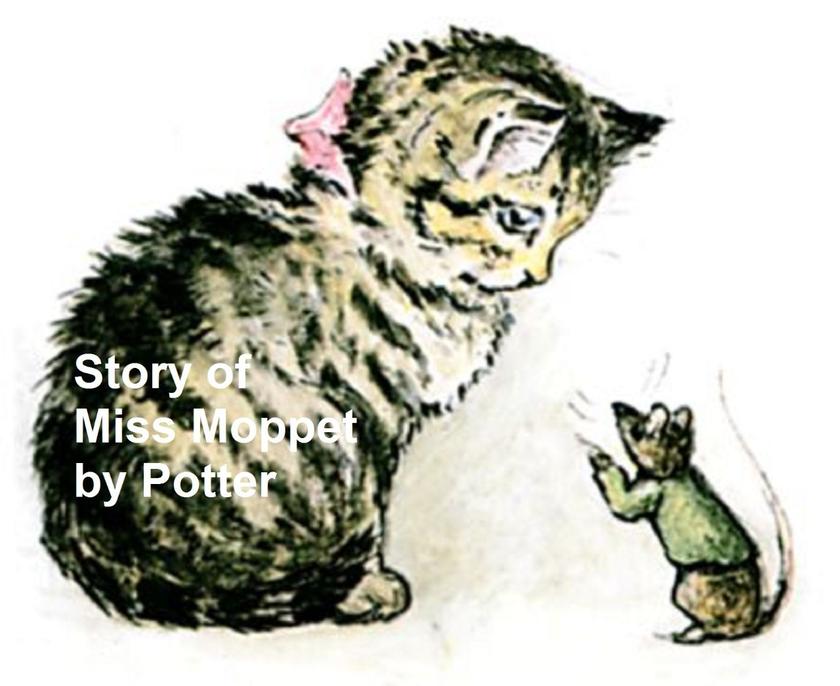
The Story of Miss Moppet
¥8.09
Classic children's picture book, with the 15 original color illustrations. According to Wikipedia: "Helen Beatrix Potter (28 July 1866 – 22 December 1943) was an English author, illustrator, natural scientist and conservationist best known for her imaginative children’s books featuring animals such as those in The Tale of Peter Rabbit which celebrated the British landscape and country life."
Sketches from Concord and Appledore
¥8.09
According to Wikipedia: "Frank Preston Stearns (1846-1917), the son of abolitionist George Luther Stearns, was a writer and abolitionist from Massachusetts during the 19th century. In addition to collaborating with Elizur Wright in ambitious abolitionist projects, such as the American Anti-Slavery Society, he is credited with several seminal works exploring the lives and careers of important American public figures and authors of note, including The Life and Genius of Nathaniel Hawthorne and The Life and Public Services of George Luther Stearns."
Essays of Travel
¥8.09
This collection includes: THE AMATEUR EMIGRANT: FROM THE CLYDE TO SANDY HOOK. COCKERMOUTH AND KESWICK, AN AUTUMN EFFECT, A WINTER'S WALK IN CARRICK AND GALLOWAY, FOREST NOTES, A MOUNTAIN TOWN IN FRANCE, RANDOM MEMORIES: ROSA QUO LOCORUM, THE IDEAL HOUSE, DAVOS IN WINTER, HEALTH AND MOUNTAINS, ALPINE DIVERSION, THE STUMULATION OF THE ALPS, ROADS, and ON THE ENJOYMENT OF UNPLEASANT PLACES.

Boone's Wilderness Road
¥8.09
Volume 6 of the series "Historic Highways of America". According to Wikipedia: "Archer Butler Hulbert (26 Jan 1873 – 24 Dec 1933), historical geographer, writer, and professor of American history... He was Vice-Principal of the Putnam Military Academy, Zanesville, Ohio, until 1897. Hulbert then did newspaper work in Korea in 1897 and '98: he was editor of the Korean Independent (Seoul) and edited Far East American newspapers... He was Professor of American History at Marietta College 1904-18. After Marietta College, Hulbert became a lecturer in American History at Clark University from 1918 to 1919. He also was a lecturer at the University of Chicago in 1904 and 1923; and he served as archivist for the Harvard Commission on Western History (1912-16). Hulbert's last position was at Colorado College, from 1920 until his death... Hulbert's interest in trails dated from fishing trips taken during his college, when he noticed Indian trails. This interest led at first to his 16 volumes of Historic Highways of America (1902-05)."

Le Roi Jean (King John in French)
¥8.09
L'histoire de Shakespeare joue King John, en traduction fran?aise. Selon Wikipedia: "La vie et la mort du roi John, une pièce d'histoire de William Shakespeare, dramatise le règne de John, roi d'Angleterre (gouverné 1199-1216), fils d'Henri II d'Angleterre et d'Aliénor d'Aquitaine et père de Henry III d'Angleterre On pense qu'il a été écrit au milieu des années 1590, mais il n'a pas été publié avant d'être publié dans le premier folio en 1623. "
Leonora
¥8.09
Dodo Collections brings you another classic from Arnold Bennett, ‘"Leonora."’ ? Enoch Arnold Bennett (always known as Arnold Bennett) was one of the most remarkable literary figures of his time, a product of the English Potteries that he made famous as the Five Towns. Yet he could hardly wait to escape his home town, and he did so by the sheer force of his ambition to succeed as an author. In his time he turned his hand to every kind of writing, but he will be remembered for such novels as The Old Wives' Tale, the Clayhanger trilogy (Clayhanger, Hilda Lessways, and These Twain), and The Card. He also wrote such intriguing self-improvement books as Literary Taste, How To Live on 24 Hours a Day, The Human Machine, etc. ? After a local education Bennett finished his education at the University of London and for a time was editor of Woman magazine. After 1900 he devoted himself entirely to writing; dramatic criticism was one of his foremost interests. Bennett is best known, however, for his novels, several of which were written during his residence in France. ? Bennett's infancy was spent in genteel poverty, which gave way to prosperity as his father succeeded as a solicitor. From this provincial background he became a novelist. ? His enduring fame is as a Chronicler of the Potteries towns, the setting and inspiration of some of his most famous and enduring literary work and the place where he grew up.

Henry V in French
¥8.09
Pièce d'histoire de Shakespeare, Henry V, en traduction fran?aise. Selon Wikipédia: "Henry V est une pièce d'histoire de William Shakespeare, dont on pense qu'elle a été écrite vers 1599. Ses titres complets sont The Cronicle History of Henri Quint (dans le texte du premier quarto) et The Life of Henry the Fifth (dans le premier texte du Folio) raconte l'histoire du roi Henry V d'Angleterre, en se concentrant sur les événements qui ont précédé et suivi la bataille d'Azincourt (1415) pendant la guerre de Cent Ans.
Sacred and Profane Love: A Novel in Three Episodes
¥8.09
Dodo Collections brings you another classic from Arnold Bennett, ‘"Sacred and Profane Love: A Novel in Three Episodes."’ ? Enoch Arnold Bennett (always known as Arnold Bennett) was one of the most remarkable literary figures of his time, a product of the English Potteries that he made famous as the Five Towns. Yet he could hardly wait to escape his home town, and he did so by the sheer force of his ambition to succeed as an author. In his time he turned his hand to every kind of writing, but he will be remembered for such novels as The Old Wives' Tale, the Clayhanger trilogy (Clayhanger, Hilda Lessways, and These Twain), and The Card. He also wrote such intriguing self-improvement books as Literary Taste, How To Live on 24 Hours a Day, The Human Machine, etc. ? After a local education Bennett finished his education at the University of London and for a time was editor of Woman magazine. After 1900 he devoted himself entirely to writing; dramatic criticism was one of his foremost interests. Bennett is best known, however, for his novels, several of which were written during his residence in France. ? Bennett's infancy was spent in genteel poverty, which gave way to prosperity as his father succeeded as a solicitor. From this provincial background he became a novelist. ? His enduring fame is as a Chronicler of the Potteries towns, the setting and inspiration of some of his most famous and enduring literary work and the place where he grew up.

Henri VI, Premiere Partie (Henry VI Part I in French)
¥8.09
Pièce d'histoire de Shakespeare, Henry VI Part One, en traduction fran?aise. Selon Wikipédia: "Henry VI, Part 1 ou la première partie de Henry le Sixt (souvent écrit comme 1 Henry VI) est une pièce d'histoire de William Shakespeare, et peut-être Thomas Nashe, qui aurait été écrit en 1591, et mis en La vie du roi Henry VI d'Angleterre Alors que 2 Henri VI traite de l'incapacité du roi à réprimer les querelles de ses nobles et de l'inévitabilité des conflits armés, 3 Henry VI traite des horreurs de ce conflit, 1 Henry VI traite de la perte des territoires fran?ais de l'Angleterre et les machinations politiques menant aux guerres des roses, comme le système politique anglais est déchiré par les querelles personnelles et la jalousie mesquine.

Henri VI, Seconde Partie (Henry VI Part II in French)
¥8.09
Pièce d'histoire de Shakespeare, Henry VI Deuxième partie, en traduction fran?aise. Selon Wikipédia: "Henry VI, Part 2 ou la deuxième partie de Henry le Sixt (souvent écrit comme 2 Henry VI) est une pièce d'histoire de William Shakespeare qui aurait été écrite en 1591, et placée pendant la vie du roi Henri VI Alors que 1 Henri VI traite principalement de la perte des territoires fran?ais de l'Angleterre et des machinations politiques menant aux guerres des Roses, et 3 Henry VI traite des horreurs de ce conflit, 2 Henri VI se concentre sur l'incapacité du roi à apaiser les querelles de ses nobles, la mort de son conseiller de confiance, le duc Humphrey de Gloucester, l'ascension du duc d'York et l'inévitabilité des conflits armés, ce qui aboutit à la première bataille de la guerre, la première bataille de St Albans. "
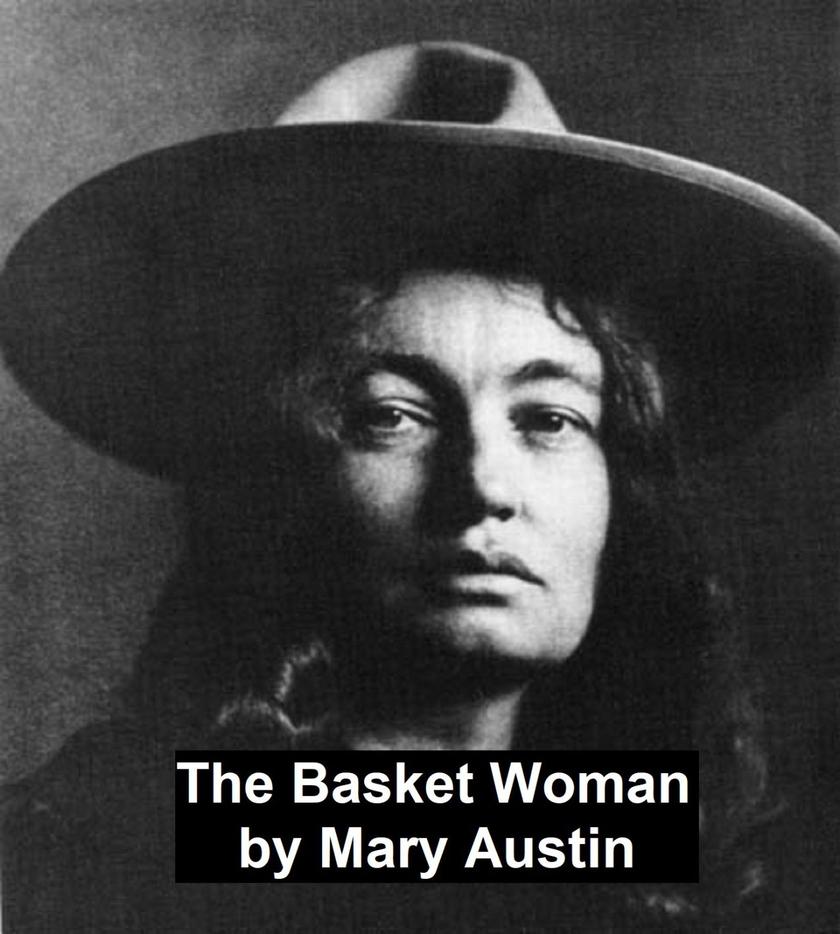
The Basket Woman
¥8.09
First published in 1904. According to Wikipedia: "Mary Hunter Austin (September 9, 1868 – August 13, 1934) was an American writer. One of the early nature writers of the American Southwest, her classic The Land of Little Rain (1903) describes the fauna, flora and people – as well as evoking the mysticism and spirituality – of the region between the High Sierra and the Mojave Desert of southern California."
The Ten Tragedies of Euripides
¥8.09
This file includes 10 tragedies by Euripides, literally translated by Theodore Buckley. The plays are: HECUBA, ORESTES, PHOENISSAE (The Phoenician Virgins), MEDEA, HIPPOLYTUS, ALCESTIS, BACCHAE, HERACLIDAE, IPHIGENIA IN AULIS, and IPHIGENIA IN TAURIS. According to Wikipedia: "Euripides (ca. 480 BCE–406 BCE) was the last of the three great tragedians of classical Athens (the other two being Aeschylus and Sophocles). Ancient scholars thought that Euripides had written ninety-five plays, although four of those were probably written by Critias. Eighteen or nineteen of Euripides' plays have survived complete. There has been debate about his authorship of Rhesus, largely on stylistic grounds and ignoring classical evidence that the play was his. Fragments, some substantial, of most of the other plays also survive. More of his plays have survived than those of Aeschylus and Sophocles together, because of the unique nature of the Euripidean manuscript tradition. Euripides is known primarily for having reshaped the formal structure of Athenian tragedy by portraying strong female characters and intelligent slaves and by satirizing many heroes of Greek mythology. His plays seem modern by comparison with those of his contemporaries, focusing on the inner lives and motives of his characters in a way previously unknown to Greek audiences."
An Old-Fashioned Thanksgiving
¥8.09
According to Wikipedia: "Louisa May Alcott (November 29, 1832 – March 6, 1888) was an American novelist. She is best known for the novel Little Women and its sequels Little Men and Jo's Boys. Little Women was set in the Alcott family home, Orchard House in Concord, Massachusetts, and published in 1868. This novel is loosely based on her childhood experiences with her three sisters."
The Seven Plays of Sophocles
¥8.09
This file includes the English verse translation by Lewis Campbell of all seven extant Sophocles plays: Antigone, Aias. King Oedipus, Electra, The Tracinian Maidens, Philoctetes, and Oedippus at Colonos. According to Wikipedia: "Sophocles( c. 496 BC-406 BC) was the second of the three ancient Greek tragedians whose work has survived. His first plays were written later than those of Aeschylus and earlier than those of Euripides. According to the Suda, a 10th century encyclopedia, Sophocles wrote 123 plays during the course of his life, but only seven have survived in a complete form... The most famous of Sophocles' tragedies are those concerning Oedipus and Antigone: these are often known as the Theban plays, although each play was actually a part of different tetralogy, the other members of which are now lost. Sophocles influenced the development of the drama, most importantly by adding a third actor and thereby reducing the importance of the chorus in the presentation of the plot."
Sawtooth Ranch
¥8.09
Classic western. According to Wikipedia: "Bertha Muzzy Sinclair or Sinclair-Cowan, née Muzzy (November 15, 1871 – July 23, 1940), best known by her pseudonym B. M. Bower, was an American novelist who wrote fictional stories about the American Old West... She wrote 57 Western novels, several of which were turned into films."
Five Lectures on Blindness
¥8.09
First published in 1919 by the California State Library.? The lectures cover: The Psychology of Blindness, The Blind Child and Its Develoment, The Re-Education of the Blind Adult, The Attiture of the Public Toward the Blind, and Prevention of Blindness and Conservation of Vision in Adults and Children.? According to the Foreword: "The following lectures were written primarily to be delivered at the summer sessions of the University of California, at Berkeley and at Los Angeles, in the summer of 1918. We are printing them, however, so that the information in them can be more widely distributed, since they are the outgrowth of almost a quarter of a century spent in work for the blind, and were written from the standpoint of a blind person, seeking to better the condition of the blind. They were addressed not to the blind, but to the seeing public, for the benefit that will accrue to the blind from a better understanding of their problems. The successful work of Miss Foley as a student in the California School for the Blind, as a volunteer teacher, and in recent years as home teacher for the California State Library, makes these lectures particularly important and authoritative."
Rudimental Divine Science
¥8.09
First published in 1891. According to Wikipedia: "Mary Baker Eddy (born Mary Morse Baker July 16, 1821 – December 3, 1910) was the founder of the Christian Science movement. Deeply religious, she advocated Christian Science as a spiritual practical solution to health and moral issues. She wrote Science and Health with Key to the Scriptures, founded The First Church of Christ, Scientist of Boston in 1879, and several periodicals including The Christian Science Monitor. She took the name Mary Baker Glover from her first marriage and was also known as Mary Baker Glover Eddy or Mary Baker G. Eddy from her third marriage. She did much spiritual teaching, lecturing, and instantaneous healing. Her influence continues to grow through her writings."


