


 购物车
购物车 个人中心
个人中心
The Caspak Series: All three novels
¥8.09
This book-collection file includes The Land that Time Forgot, 1918; The People that Time Forgot, 1918; and Out of Time's Abyss, 1918. According to Wikipedia: "Edgar Rice Burroughs (September 1, 1875 – March 19, 1950) was an American author, best known for his creation of the jungle hero Tarzan and the heroic John Carter, although he produced works in many genres."

The War-Workers
¥8.09
Set during World War I England, this story centers on a Lady Vivian, a 29-year-old woman who goes to great lengths to secure admiration for her selfless devotion to her war work managing a supply depot and other war service organizations in her region. Though projecting an image of herself as extremely efficient, her refusal to delegate and desire for control creates obstacles for others and great deals of unnecessary work for herself and staff. Her staff of about three-dozen women initially admire her greatly, but with the arrival of a well-bred young lady from Wales, the irritated expostulations of the neighborhood doctor, and a few heartless actions of her own, this view changes (except among her two most devoted allies).?
The Book of Five Rings
¥8.09
The Book of Five Rings
The Eye Of Osiris
¥8.09
Detective Classics presents you The Eye of Osiris in a fantastic ebook edition. ? John Bellingham is a world-renowned archaeologist who goes missing mysteriously after returning from a voyage to Egypt where fabulous treasures have been uncovered. Bellingham seems to have disappeared leaving clues, which lead all those hunting down blind alleys. But when the piercing perception of the brilliant Dr Thorndyke is brought to bear on the mystery, the search begins for a man tattooed with the Eye of Osiris in this strange, tantalisingly enigmatic tale. ? R. Austin Freeman is the doyen of the scientific division of detective writing, is best known for his character Dr John Thorndyke. A close and careful investigator and the outstanding medical authority in the field of detective fiction, R. Austin Freeman not only tested the wits of the reader but also inspired many modern detective forensic methods. Much of his long life was spent as a physician and surgeon at the Middlesex Hospital, London. He also held posts in West Africa and later was a medical officer at Holloway Prison. The most famous of the Edwardian detective writers, he rescued the detective story from "thrillerdom" and made it acceptable to a more discerning class of reader.

The Wendigo
¥8.09
Algernon Blackwood's classic tale, The Wendigo. An influential novella by one of the most best-known writers of fantasy and horror, set in a place and time Blackwood knew well.
The Federalist Papers
¥8.09
The Federalist Papers
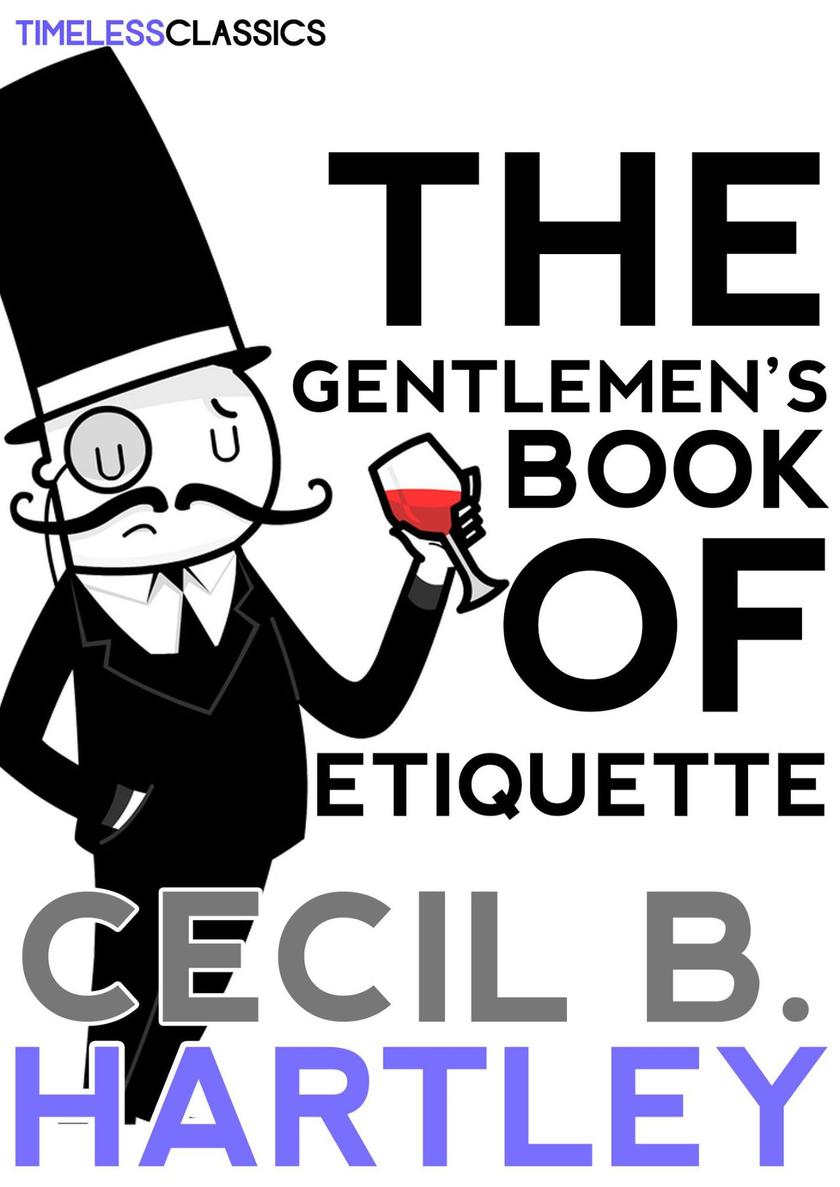
The Gentlemen’s Book Of Etiquette
¥8.09
Ever wondered what to do in polite society if you find an insect in your food? Or how a gentleman should ask a lady to dance? And what on earth is the etiquette for smoking cigars? First published in 1860, Cecil B. Hartley's classic guide to gentlemanly behaviour is a veritable mine of information and indispensable advice for aspiring gentlemen. No matter if a man finds himself at a party, meeting someone new or travelling abroad, he has but to leaf through this book to learn how best to behave, and indeed how not to behave. And if he can find time between his numerous invitations to balls and hunting parties, he could benefit from a perusal of the sections on gentlemanly deportment and conversational technique. Not forgetting, of course, the all-important advice on how to treat ladies, surely an integral part of any true gentleman's training. Published here in a stunning edition alongside The Ladies' Book of Etiquette, this is the perfect gift for the would-be gentleman in your life. While it's an excellent volume for dipping into for hilarious nuggets of outdated advice, this guide also contains advice on all manner of topics, from beard-keeping to chivalry, that are just as relevant today as they were in Cecil B. Hartley's time. As he says himself: 'Once a gentleman always a gentleman' and be sure that you can so carry out the rule, that in your most careless, joyous moments, when freest from the restraints of etiquette, you can still be recognizable as a gentleman by every act, word, or look.
The Red Thumb Mark
¥8.09
Fingerprints. A single print, being unique - not even identical twins have the same fingerprints - that single print found in the right place at the right time is sufficient to disclose the perpetrator of a crime. ? Actually, there are those who claim that identifying and matching fingerprints is not sufficiently scientific and so the fingerprint doesn't carry the weight in court that it did only a decade ago. DNA is now the sexy evidence. ? In The Red Thumbmark by R Austin Freeman, published in 1907, a single fingerprint is found at the scene of a crime. When the police are able to identify that fingerprint, the case seems closed. ? But Dr Thorndyke, the detective/barrister/medical doctor who takes on defense of this suspect, thinks he can disprove the prosecution's case, based on that same fingerprint. ? It does not take Dr Thorndyke to figure out who the criminal is. The mystery in this wonderful detective tale is who the lovely heroine is in love with. The answer may surprise you.
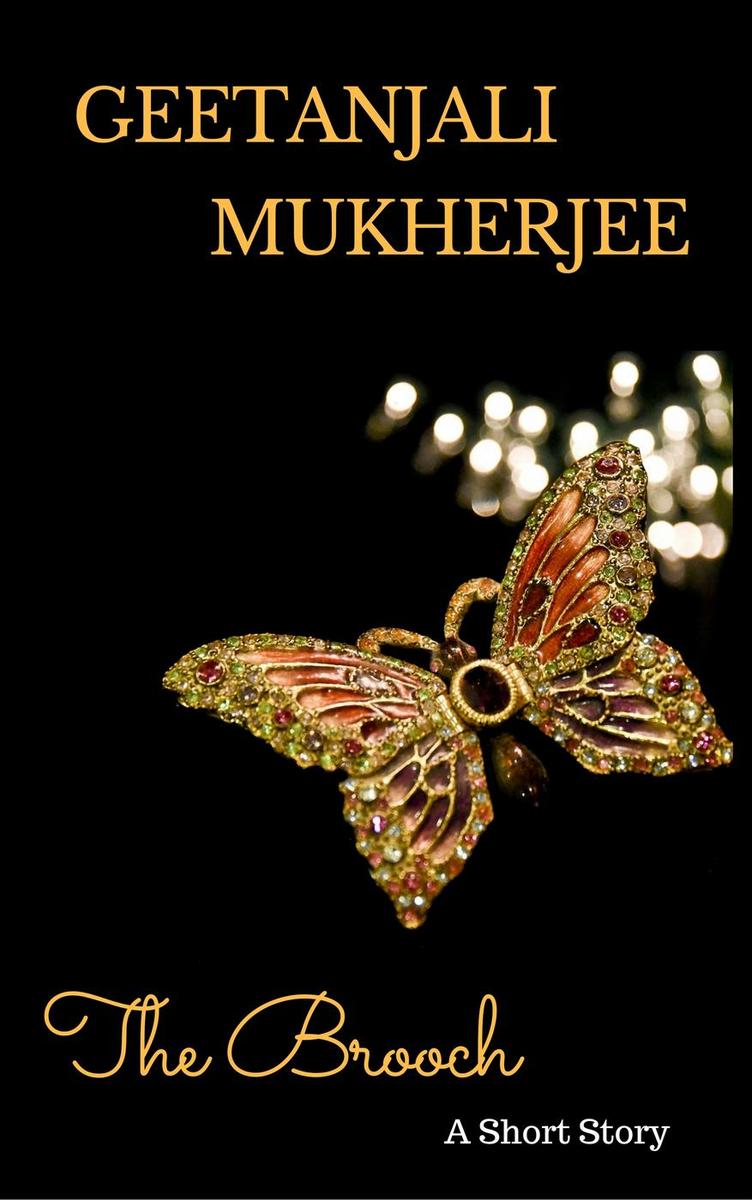
The Brooch:A Short Story
¥8.09
Michael Lim has a secret, one that he cannot tell anyone, even his wife. But how long can he keep it, and how will his wife react when she finds out? Grace Lim cares about expensive things and outdoing her neighbours. Her husband's secret can destroy her perfect world. Will she find out his secret, and will their marriage survive?
The Angel of Terror
¥8.09
Angelically beautiful Jean Briggerland is a sociopathic criminal, so lovely that none can see her guilt -- even in connection with the most blatant crimes! Can Jack Glover, best friend and lawyer to Jean's latest victim, bring her to justice before she murders her way to unspeakable wealth and power? ? This is a riveting tale which sets out with a man being sentenced for murder and a beautiful, innocent woman having had to testify against him. Except, what everyone thinks is exactly opposite to the truth, according to the condemned man's friend and attorney, Jack Glover. He claims that his friend was framed. Meanwhile, poverty-stricken Lydia gets pulled into this scenario completely out of the blue and is put in the situation of having to decide who to trust. One person is telling the truth and the other is out to murder her. We are not really ever in the dark about it, but watching Lydia's thinking and also seeing the behind-the-scenes machinations makes this a real page-turner.
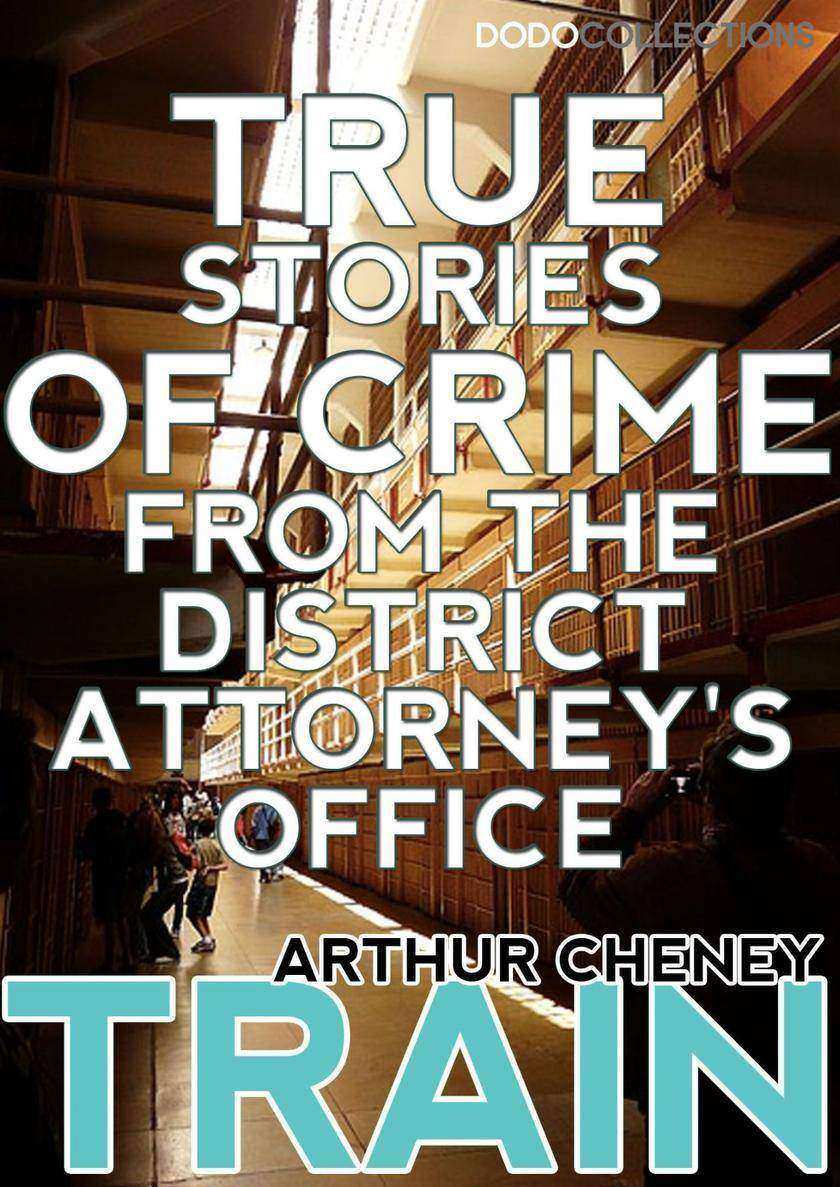
True Stories of Crime From the District Attorney's Office
¥8.09
Includes over 20,000 analytical, theoretical and practical works on American and British Law. It includes the writings of major legal theorists, including Sir Edward Coke, Sir William Blackstone, James Fitzjames Stephen, Frederic William Maitland, John Marshall, Joseph Story, Oliver Wendell Holmes, Jr. and Roscoe Pound, among others. Legal Treatises includes casebooks, local practice manuals, form books, works for lay readers, pamphlets, letters, speeches and other works of the most influential writers of their time. It is of great value to researchers of domestic and international law, government and politics, legal history, business and economics, criminology and much more.
The Lady with the Dog and Other Stories
¥8.09
Short stories that are unfulfilled episodes in the lives various characters without clear resolutions. There are no happy endings. Life just goes on, or doesn't. Checkhov negates all things fairy tale in favour of stark reality. Not one to read for escapism, but for some magnificent insights into the human condition.
Herland
¥8.09
Herland is a utopian novel from 1915, written by feminist Charlotte Perkins Gilman. The book describes an isolated society composed entirely of women, who reproduce via parthenogenesis (asexual reproduction). The result is an ideal social order: free of war, conflict, and domination. It first appeared as a serial in The Forerunner, a magazine edited and written by Gilman between 1909 and 1916. The book is the middle volume in her utopian trilogy; it was preceded by Moving the Mountain (1911), and followed with a sequel, With Her in Ourland (1916). It was not published in book form until 1979. ? The story is told from the perspective of Vandyck "Van" Jennings, a student of sociology who, along with two friends (Terry O. Nicholson and Jeff Margrave), forms an expedition party to explore an area of uncharted land where it is rumored lives a society consisting entirely of women. The three friends do not entirely believe the rumors because they are unable to think of a way how human reproduction could occur without males. The men speculate about what a society of women would be like, each guessing differently based on the stereotype of women which he holds most dear: Jeff regarding women as things to be served and protected; Terry viewing them as things to be conquered and won.
The Alchemist
¥8.09
The Alchemist is a comedy by English playwright Ben Jonson. First performed in 1610 by the King's Men, it is generally considered Jonson's best and most characteristic comedy; Samuel Taylor Coleridge claimed that it had one of the three most perfect plots in literature. The play's clever fulfilment of the classical unities and vivid depiction of human folly have made it one of the few Renaissance plays (except the works of Shakespeare) with a continuing life on stage (except for a period of neglect during the Victorian era).
Pragmatism:A New Name for Some Old Ways of Thinking
¥8.09
A profoundly influential figure in American psychology, William James (1842–1910) was also a philosopher of note, who used Charles S. Peirce's theories of pragmatism as a basis for his own conception of that influential philosophy. For James, this meant an emphasis on "radical empiricism" and the concept that the meaning of any idea — philosophical, political, social, or otherwise — has validity only in terms of its experiential and practical consequences. James propounded his theories of pragmatism in this book, one of the most important in American philosophy. In a sense, he wished to test competing systems of thought in the "marketplace of actual experience" to determine their validity, i.e. whether adopting a particular philosophical theory or way of looking at the world makes an actual difference in individual conduct or in how we perceive and react to the varieties of experience. In these pages, James not only makes a strong case for his own ideas, but mounts a powerful attack against the transcendental and rationalist tradition. For anyone interested in William James or the history of American philosophical thought, Pragmatism is an essential and thought provoking reference. In this handy, inexpensive edition, it will challenge and stimulate any thinking person.
Lord of the World
¥8.09
Lord of the World is a 1907 novel by Monsignor Robert Hugh Benson that centers upon the reign of the Anti-Christ and the End of the World. It has been called prophetic by Dale Ahlquist, Joseph Pearce, Pope Benedict XVI and Pope Francis. ? In early 21st century London, two priests, the white-haired Father Percy Franklin and the younger Father John Francis, are visiting the subterranean lodgings of the elderly Mr. Templeton. A Catholic and former Tory who witnessed the marginalization of his religion and the destruction of his Party, Mr. Templeton describes to the two priests the last century of British and world history. ? Since the Labour Party took control of the British Government in 1917, the House of Lords has been abolished, the British Royal Family has been deposed, Oxford and Cambridge have been closed down and all their professors exiled to Ireland. Marxism and Secular Humanism, which are described as the instruments of Freemasonry, dominate both culture and government. The Anglican Communion has been disestablished since 1929 and, like all forms of Protestantism, is almost extinct. The world now has only three main religious forces: Catholicism, Secular Humanism, and "the Eastern religions." ? Nationalism has been destroyed by Marxist internationalism and the world has been divided into three power-blocs. The first, which is generally marked in red on maps, is an European Confederation of Marxist one-party states and their colonies in Africa that use Esperanto for a world language. The second, marked in yellow, is "The Eastern Empire", whose Emperor, the "Son of Heaven", descends from both the Japanese and Chinese Imperial Families. The third, the blue marked, "The American Republic", consists of North, South, and Central America. ? In a move that almost toppled Marxism in the Confederation during the 1970s and '80s, the Eastern Empire invaded, annexed, and now rules India, Australia, New Zealand, as well as all of Russia east of the Ural Mountains. For this and other reasons, Mr. Templeton explains, the Confederation and the Eastern Empire are now on the brink of a global war. ? After Mr. Templeton completes his story, Fathers Franklin and Francis return to their spartan apartments at Westminster Cathedral.
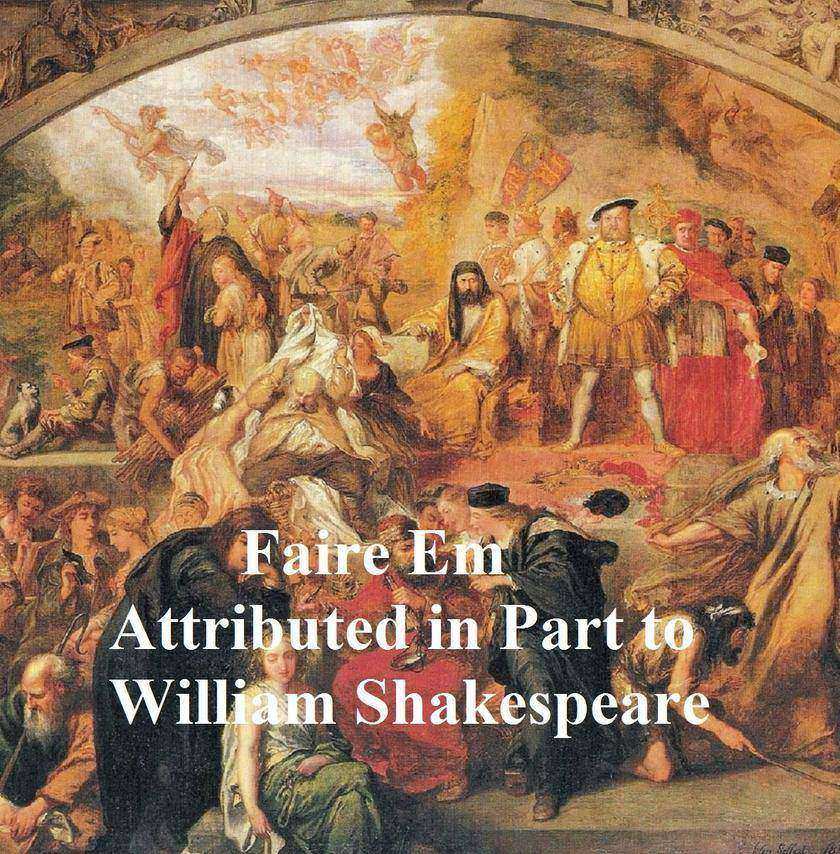
Pleasant Commodie of Faire Em, the Love of William the Conqueror, Shakespeare Ap
¥8.09
Elizabethan play, sometimes attributed in part to Shakespeare. According to Wikipedia: "William Shakespeare (baptised 26 April 1564 – died 23 April 1616) was an English poet and playwright, widely regarded as the greatest writer in the English language and the world's pre-eminent dramatist. He is often called England's national poet and the "Bard of Avon" (or simply "The Bard"). His surviving works consist of 38 plays, 154 sonnets, two long narrative poems, and several other poems. His plays have been translated into every major living language, and are performed more often than those of any other playwright."

The Merry Devil of Edmonton, Shakespeare Apocrypha
¥8.09
Elizabethan play, sometimes attributed in part to Shakespeare. According to Wikipedia: "William Shakespeare (baptised 26 April 1564 – died 23 April 1616) was an English poet and playwright, widely regarded as the greatest writer in the English language and the world's pre-eminent dramatist. He is often called England's national poet and the "Bard of Avon" (or simply "The Bard"). His surviving works consist of 38 plays, 154 sonnets, two long narrative poems, and several other poems. His plays have been translated into every major living language, and are performed more often than those of any other playwright."
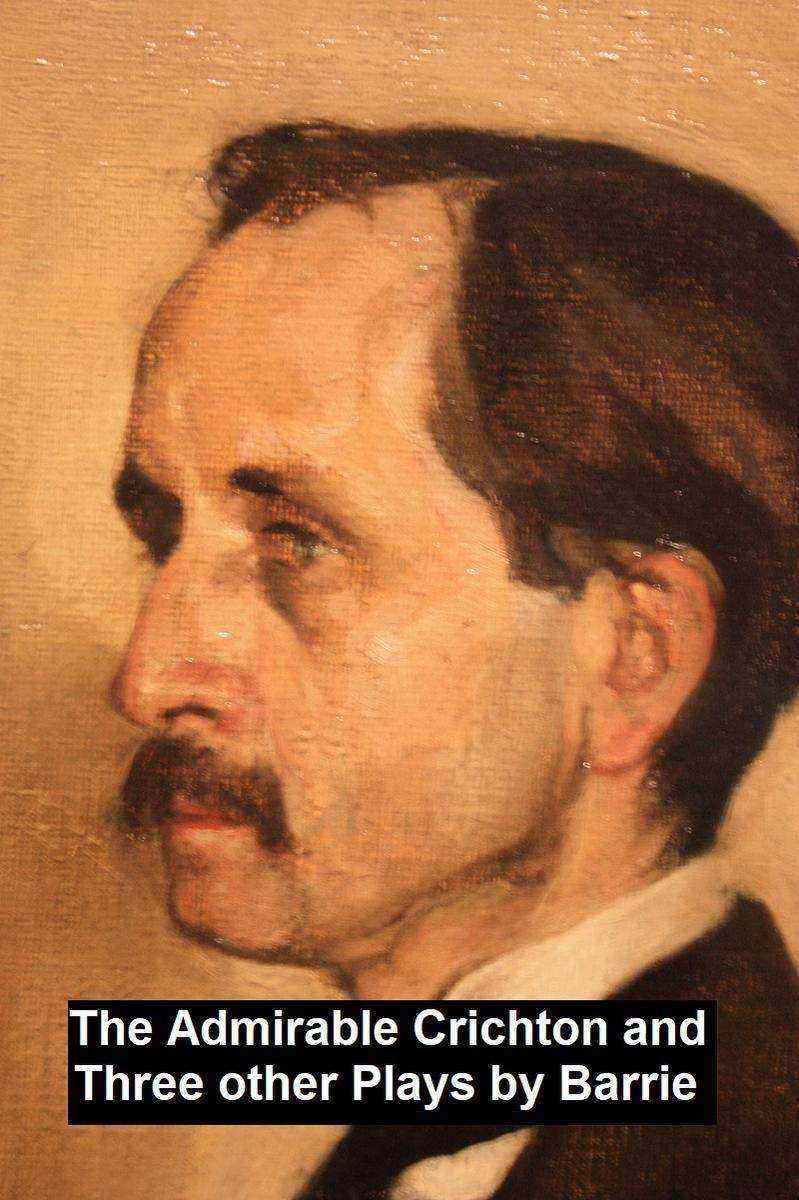
The Admirable Crichton and Three Other Plays
¥8.09
This collection includes: The Admirable Crichton, Alice Sit-By-the-Fire, Dear Brutus, and What Every Woman Knows. According to Wikipedia: "Sir James Matthew Barrie, 1st Baronet, OM (9 May 1860 – 19 June 1937) was a Scottish author and dramatist, best remembered today as the creator of Peter Pan. The child of a family of small-town weavers, he was educated in Scotland. He moved to London, where he developed a career as a novelist and playwright. There he met the Llewelyn Davies boys who inspired him in writing about a baby boy who has magical adventures in Kensington Gardens (included in The Little White Bird), then to write Peter Pan, or The Boy Who Wouldn't Grow Up, a "fairy play" about this ageless boy and an ordinary girl named Wendy who have adventures in the fantasy setting of Neverland. This play quickly overshadowed his previous work and although he continued to write successfully, it became his best-known work, credited with popularising the name Wendy, which was very uncommon previously. Barrie unofficially adopted the Davies boys following the deaths of their parents. Before his death, he gave the rights to the Peter Pan works to Great Ormond Street Hospital, which continues to benefit from them."
All's One or a Yorkshire Tragedy, Shakespeare Apocrypha
¥8.09
Elizabethan play, sometimes attributed in part to Shakespeare. According to Wikipedia: "William Shakespeare (baptised 26 April 1564 – died 23 April 1616) was an English poet and playwright, widely regarded as the greatest writer in the English language and the world's pre-eminent dramatist. He is often called England's national poet and the "Bard of Avon" (or simply "The Bard"). His surviving works consist of 38 plays, 154 sonnets, two long narrative poems, and several other poems. His plays have been translated into every major living language, and are performed more often than those of any other playwright."
Italian Hours
¥8.09
Essays inspired by travel and residence in Italy. According to Wikipedia: "Henry James, (1843 – 1916), son of theologian Henry James Sr., brother of the philosopher and psychologist William James and diarist Alice James, was an American-born British author. He is one of the key figures of 19th century literary realism; the fine art of his writing has led many academics to consider him the greatest master of the novel and novella form. He spent much of his life in England and became a British subject shortly before his death. He is primarily known for a series of major novels in which he portrayed the encounter of America with Europe. His plots centered on personal relationships, the proper exercise of power in such relationships, and other moral questions. His method of writing from the point of view of a character within a tale allowed him to explore the phenomena of consciousness and perception, and his style in later works has been compared to impressionist painting."


