


 购物车
购物车 个人中心
个人中心
Wessex Tales
¥8.09
According to Wikipedia: "Thomas Hardy, (1840 – 1928) was an English author of the naturalist movement, though he regarded himself primarily as a poet and composed novels mainly for financial gain. The bulk of his work, set mainly in the semi-fictional land of Wessex, delineates characters struggling against their passions and circumstances. Hardy's poetry, first published in his 50s, has come to be as well regarded as his novels, especially after The Movement of the 1950s and 1960s."
Daughter of the Commandant
¥8.09
Classic Russian novel. According to Wikipedia: "Alexander Sergeyevich Pushkin (1799 - 1837) was a Russian Romantic author who is considered to be the greatest Russian poet and the founder of modern Russian literature. Pushkin pioneered the use of vernacular speech in his poems and plays, creating a style of storytelling -- mixing drama, romance, and satire-- associated with Russian literature ever since and greatly influencing later Russian writers."
Fifteen Novels
¥8.09
This book-collection file includes 15 books: The Adventures of Gerard; Beyond the City; The Captain of the Polestar and Other Stories; A Desert Drama, Tragedy of the Korosko; The Doings of Raffles Haw; A Duet With Occasional Chorus; The Exploits of Brigadier Gerard; The Firm of Girdlestone; The Green Flag; The Last Galley. Impressions and Tales; The Mystery of Cloomber; The Parasite; The Stark Munro Letters; Tales of Terror and Mystery; and Through the Magic Door. According to Wikipedia: "Sir Arthur Ignatius Conan Doyle, DL (22 May 1859 – 7 July 1930) was an author most noted for his stories about the detective Sherlock Holmes, which are generally considered a major innovation in the field of crime fiction, and for the adventures of Professor Challenger. He was a prolific writer whose other works include science fiction stories, historical novels, plays and romances, poetry, and non-fiction."
The Storm
¥8.09
Classic Russian play, the best-known work of Alexander Ostrovsky. According to the introduction, "ALEXANDER NIKOLAYEVICH Ostrovsky (1823-86) is the great Russian dramatist of the central decades of the nineteenth century, of the years when the realistic school was all-powerful in Russian literature, of the period when Turgenev, Dostoyevsky, and Tolstoy created a literature of prose fiction that has had no superior in the world's history. His work in the drama takes its place beside theirs in the novel. Obviously inferior as it is in certain ways, it yet sheds light on an important side of Russian life that they left practically untouched."
Knock, Knock, Knock and Other Stories
¥8.09
Classic Russian short stories, including Knock, Knock, Knock; The Inn; Lieutenant Yergunov's Story, The Dog, and The Watch. According to Wikipedia: "Ivan Sergeyevich Turgenev 1818 - 1883) was a Russian novelist and playwright. His novel Fathers and Sons is regarded as one of the major works of 19th-century fiction."
The Forged Coupon and Other Stories
¥8.09
Classic Russian short stories, including The Forged Coupon, After the Dance, Alyosha the Pot, My Dream, There are No Guilty People, and the Young Tsar. According to Wikipedia: "As a fiction writer, Tolstoy is widely regarded as one of the greatest of all novelists, particularly noted for his masterpieces War and Peace and Anna Karenina. In their scope, breadth and realistic depiction of 19th-century Russian life, the two books stand at the peak of realist fiction. As a moral philosopher Tolstoy was notable for his ideas on nonviolent resistance through works such as The Kingdom of God is Within You, which in turn influenced such twentieth-century figures as Mohandas K. Gandhi and Martin Luther King, Jr."

What Men Live By and Other Tales
¥8.09
Classic Russian short stories. According to Wikipedia: "As a fiction writer, Tolstoy is widely regarded as one of the greatest of all novelists, particularly noted for his masterpieces War and Peace and Anna Karenina. In their scope, breadth and realistic depiction of 19th-century Russian life, the two books stand at the peak of realist fiction. As a moral philosopher Tolstoy was notable for his ideas on nonviolent resistance through works such as The Kingdom of God is Within You, which in turn influenced such twentieth-century figures as Mohandas K. Gandhi and Martin Luther King, Jr."

Wilhelm Tell
¥8.09
Classic Schiller drama, in English translation. . According to Wikipedia: "Johann Christoph Friedrich von Schiller (1759 – 1805) was a German poet, philosopher, historian, and dramatist. During the last few years of his life (1788–1805), Schiller struck up a productive, if complicated, friendship with already famous and influential Johann Wolfgang Goethe, with whom he greatly discussed issues concerning aesthetics, encouraging Goethe to finish works he left merely as sketches; this thereby gave way to a period now referred to as Weimar Classicism."
The Maid of Orleans
¥8.09
Classic Schiller play about Joan of Arc, in English translation. . According to Wikipedia: "Johann Christoph Friedrich von Schiller (1759 – 1805) was a German poet, philosopher, historian, and dramatist. During the last few years of his life (1788–1805), Schiller struck up a productive, if complicated, friendship with already famous and influential Johann Wolfgang Goethe, with whom he greatly discussed issues concerning aesthetics, encouraging Goethe to finish works he left merely as sketches; this thereby gave way to a period now referred to as Weimar Classicism."
L'Ile Mysterieuse
¥8.09
Roman d'aventure de science-fiction classique dans le fran?ais original. Selon Wikipédia: ?Jules Gabriel Verne (8 février 1828 - 24 mars 1905) est un auteur fran?ais qui a été le pionnier du genre de la science-fiction, notamment des romans comme Voyage au centre de la terre (1864), Vingt mille lieues sous la mer (1870) et autour du monde en quatre-vingts jours (1873) Verne a écrit sur l'espace, l'air et les voyages sous-marins avant que les voyages aériens et les sous-marins pratiques soient inventés. Selon Index Translationum, il est le troisième auteur le plus traduit au monde, certains de ses livres ont été transformés en films ... Verne, avec HG Wells, est souvent surnommé le ?père de la science-fiction?
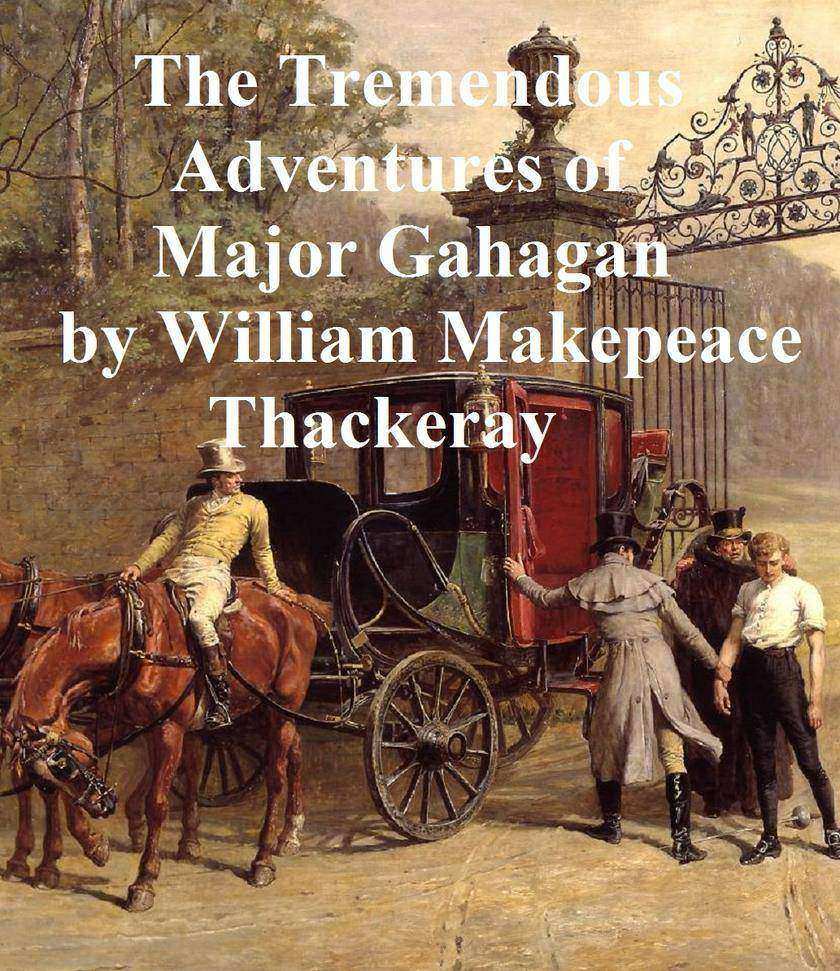
The Tremendous Adventures of Major Gahagan
¥8.09
Classic short novel. According to Wikipedia: "Thackeray is most often compared to one other great novelist of Victorian literature, Charles Dickens. During the Victorian era, he was ranked second only to Dickens, but he is now much less read and is known almost exclusively for Vanity Fair. In that novel he was able to satirize whole swaths of humanity while retaining a light touch. It also features his most memorable character, the engagingly roguish Becky Sharp. As a result, unlike Thackeray's other novels, it remains popular with the general reading public; it is a standard fixture in university courses and has been repeatedly adapted for movies and television. In Thackeray's own day, some commentators, such as Anthony Trollope, ranked his History of Henry Esmond as his greatest work, perhaps because it expressed Victorian values of duty and earnestness, as did some of his other later novels. It is perhaps for this reason that they have not survived as well as Vanity Fair, which satirizes those values."
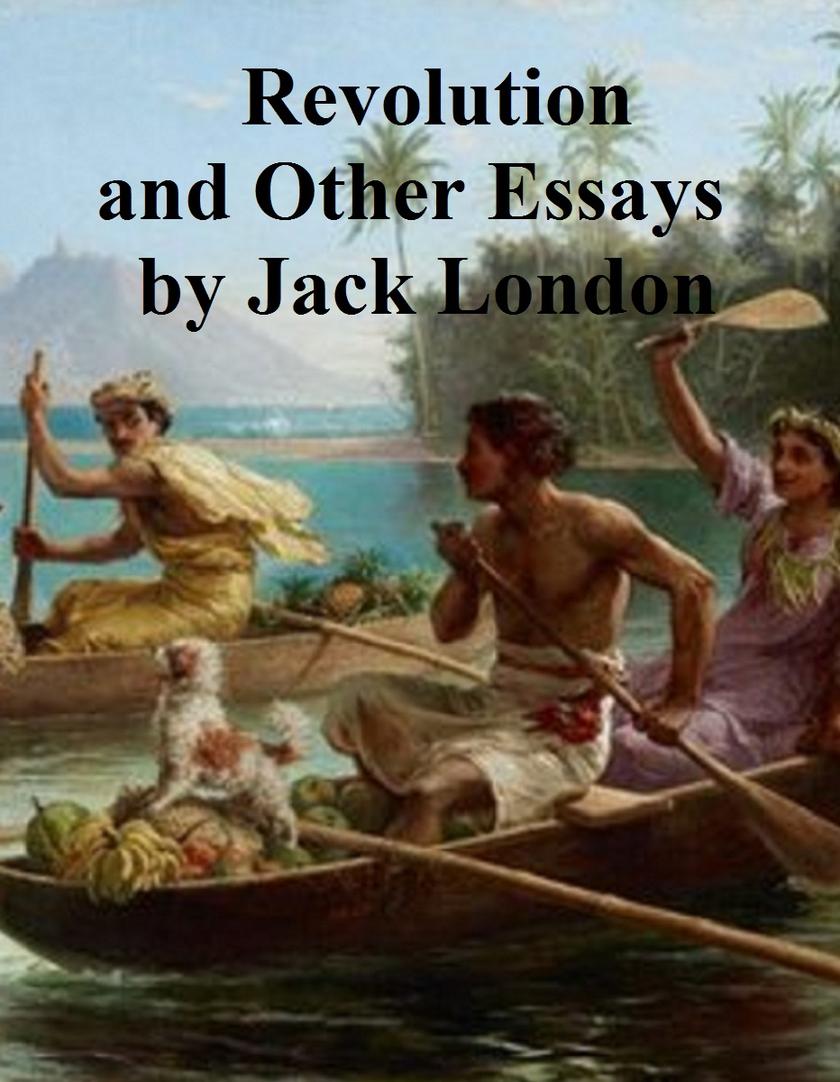
Revolution and Other Essays
¥8.09
This collection includes Revolution, The Somnambulists, The Dignity of Dollars, Goliah, The Golden Poppy, The Shrinkage of the Planet, The House Beautiful, The Gold Hunters of the North, Foma Gordyeeff, These Bones shall Rise Again, The Other Animals, The Yellow Peril, and What Life Means to Me. According to Wikipedia: "Jack London (1876 – 1916) was an American author who wrote The Call of the Wild, White Fang, and The Sea Wolf along with many other popular books. A pioneer in the then-burgeoning world of commercial magazine fiction, he was one of the first Americans to make a lucrative career exclusively from writing."
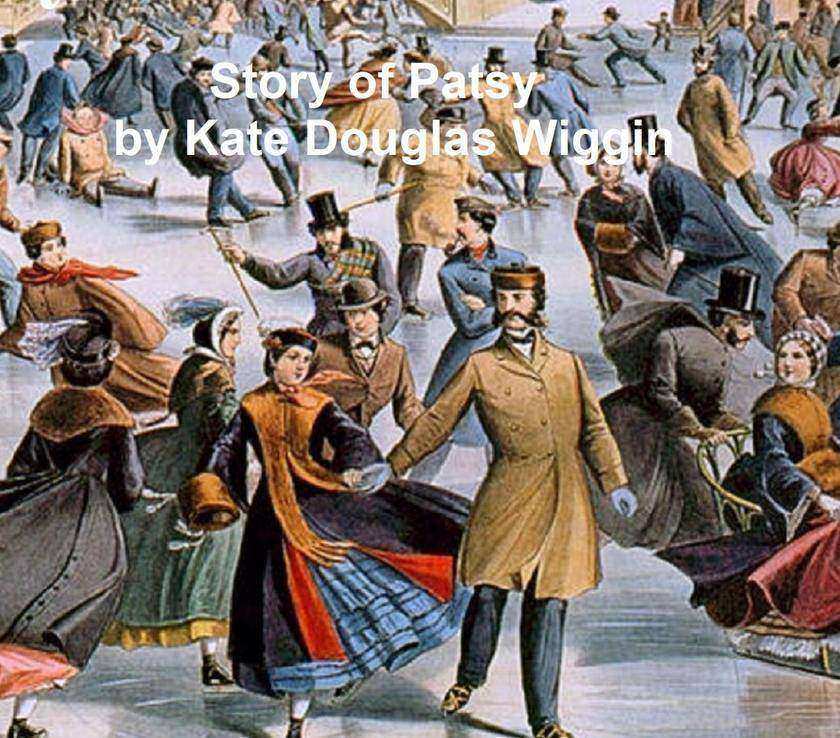
The Story of Patsy
¥8.09
Classic short story for very young children. According to Wikipedia: "Kate Douglas Wiggin ( 1856 - 1923) was an American children's author and educator. Kate Douglas Smith Wiggin was born in Philadelphia, and was of Welsh descent. She started the first free kindergarten in San Francisco in 1878 (the Silver Street Free Kindergarten). With her sister in the 1880s she also established a training school for kindergarten teachers. She was also a writer of children's books, the best known being The Birds' Christmas Carol (1887) and Rebecca of Sunnybrook Farm (1903)."
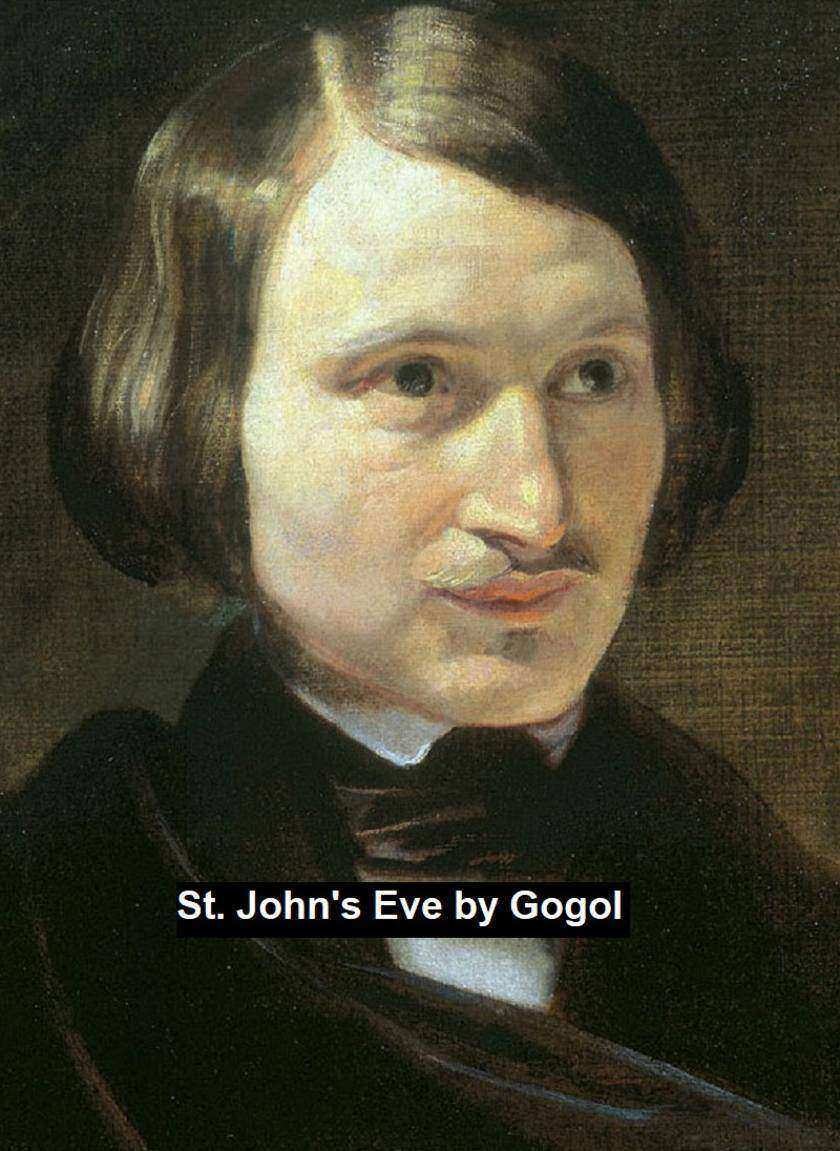
St. John's Eve
¥8.09
Classic short story. According to Wikipedia: "Nikolai Vasilievich Gogol ( 1809 - 1852) was a Russian writer of Ukrainian ethnicity. Although his early works were heavily influenced by his Ukrainian upbringing and identity, he wrote in Russian and his works belong to the tradition of Russian literature; often called the "father of modern Russian realism," he was one of the first Russian authors to criticize his country's way of life. The novels Taras Bul'ba (1835; 1842 [revised edition]), Dead Souls (1842), the play The Inspector-General (1836, 1842), and the short story The Overcoat (1842) are among his masterpieces."
Love and Other Stories
¥8.09
This collection includes: LOVE, LIGHTS, A STORY WITHOUT AN END, MARI D'ELLE, A LIVING CHATTEL, THE DOCTOR, TOO EARLY!, THE COSSACK, ABORIGINES, AN INQUIRY, MARTYRS, THE LION AND THE SUN, A DAUGHTER OF ALBION, CHORISTERS, NERVES, A WORK OF ART, A JOKE, A COUNTRY COTTAGE, A BLUNDER, FAT AND THIN, THE DEATH OF A GOVERNMENT CLERK, A PINK STOCKING, and AT A SUMMER VILLA. According to Wikipedia: "Anton Pavlovich Chekhov (1860 – 1904) was a Russian short-story writer, playwright and physician, considered to be one of the greatest short-story writers in world literature. His career as a dramatist produced four classics and his best short stories are held in high esteem by writers and critics Chekhov practised as a doctor throughout most of his literary career: "Medicine is my lawful wife," he once said, "and literature is my mistress." Chekhov renounced the theatre after the disastrous reception of The Seagull in 1896; but the play was revived to acclaim in 1898 by Constantin Stanislavski's Moscow Art Theatre, which subsequently also produced Uncle Vanya and premiered Chekhov’s last two plays, Three Sisters and The Cherry Orchard. These four works present a special challenge to the acting ensemble as well as to audiences, because in place of conventional action Chekhov offers a "theatre of mood" and a "submerged life in the text." Chekhov had at first written stories only for the money, but as his artistic ambition grew, he made formal innovations which have influenced the evolution of the modern short story. His originality consists in an early use of the stream-of-consciousness technique, later adopted by James Joyce and other modernists, combined with a disavowal of the moral finality of traditional story structure He made no apologies for the difficulties this posed to readers, insisting that the role of an artist was to ask questions, not to answer them."
Following the Equator
¥8.09
Classic Twain travel book. According to Wikipedia: "Samuel Langhorne Clemens (1835 – 1910), better known by the pen name Mark Twain, was an American humorist, satirist, lecturer and writer. Twain is most noted for his novels Adventures of Huckleberry Finn, which has since been called the Great American Novel, and The Adventures of Tom Sawyer. He is also known for his quotations. During his lifetime, Twain became a friend to presidents, artists, industrialists and European royalty. Twain enjoyed immense public popularity, and his keen wit and incisive satire earned him praise from both critics and peers. American author William Faulkner called Twain "the father of American literature."
The Party and Other Stories
¥8.09
This collection includes: THE PARTY, TERROR, A WOMAN'S KINGDOM, A PROBLEM, THE KISS, 'ANNA ON THE NECK', THE TEACHER OF LITERATURE, NOT WANTED, TYPHUS, A MISFORTUNE, and A TRIFLE FROM LIFE. According to Wikipedia: "Anton Pavlovich Chekhov (1860 – 1904) was a Russian short-story writer, playwright and physician, considered to be one of the greatest short-story writers in world literature. His career as a dramatist produced four classics and his best short stories are held in high esteem by writers and critics Chekhov practised as a doctor throughout most of his literary career: "Medicine is my lawful wife," he once said, "and literature is my mistress." Chekhov renounced the theatre after the disastrous reception of The Seagull in 1896; but the play was revived to acclaim in 1898 by Constantin Stanislavski's Moscow Art Theatre, which subsequently also produced Uncle Vanya and premiered Chekhov’s last two plays, Three Sisters and The Cherry Orchard. These four works present a special challenge to the acting ensemble as well as to audiences, because in place of conventional action Chekhov offers a "theatre of mood" and a "submerged life in the text." Chekhov had at first written stories only for the money, but as his artistic ambition grew, he made formal innovations which have influenced the evolution of the modern short story. His originality consists in an early use of the stream-of-consciousness technique, later adopted by James Joyce and other modernists, combined with a disavowal of the moral finality of traditional story structure He made no apologies for the difficulties this posed to readers, insisting that the role of an artist was to ask questions, not to answer them."
In a Hollow of the Hills
¥8.09
Classic western novel. According to Wikipedia: "Bret Harte (August 25, 1836[2] – May 6, 1902) was an American author and poet, best remembered for his accounts of pioneering life in California. He was born in Albany, New York. ... He moved to California in 1853, later working there in a number of capacities, including miner, teacher, messenger, and journalist. He spent part of his life in the northern California coast town now known as Arcata, then just a mining camp on Humboldt Bay. His first literary efforts, including poetry and prose, appeared in The Californian, an early literary journal edited by Charles Henry Webb. In 1868 he became editor of The Overland Monthly, another new literary magazine, but this one more in tune with the pioneering spirit of excitement in California. His story, "The Luck of Roaring Camp," appeared in the magazine's second edition, propelling Harte to nationwide fame... Determined to pursue his literary career, in 1871 he and his family traveled back East, to New York and eventually to Boston, where he contracted with the publisher of The Atlantic Monthly for an annual salary of $10,000, "an unprecedented sum at the time." His popularity waned, however, and by the end of 1872 he was without a publishing contract and increasingly desperate. He spent the next few years struggling to publish new work (or republish old), delivering lectures about the gold rush, and even selling an advertising jingle to a soap company. In 1878 Harte was appointed to the position of United States Consul in the town of Krefeld, Germany and then to Glasgow in 1880. In 1885 he settled in London. During the thirty years he spent in Europe, he never abandoned writing, and maintained a prodigious output of stories that retained the freshness of his earlier work. He died in England in 1902 of throat cancer and is buried at Frimley."
The Schoolmaster and Other Stories
¥8.09
This collection includes: THE SCHOOLMASTER, ENEMIES, THE EXAMINING MAGISTRATE, BETROTHED, FROM THE DIARY OF A VIOLENT-TEMPERED MAN, IN THE DARK, A PLAY, A MYSTERY, STRONG IMPRESSIONS, DRUNK, THE MARSHAL'S WIDOW, A BAD BUSINESS, IN THE COURT, BOOTS, JOY, LADIES, A PECULIAR MAN, AT THE BARBER'S, AN INADVERTENCE, THE ALBUM, OH! THE PUBLIC, A TRIPPING TONGUE, OVERDOING IT, THE ORATOR, MALINGERERS, IN THE GRAVEYARD, HUSH! IN AN HOTEL, and IN A STRANGE LAND. According to Wikipedia: "Anton Pavlovich Chekhov (1860 – 1904) was a Russian short-story writer, playwright and physician, considered to be one of the greatest short-story writers in world literature. His career as a dramatist produced four classics and his best short stories are held in high esteem by writers and critics Chekhov practised as a doctor throughout most of his literary career: "Medicine is my lawful wife," he once said, "and literature is my mistress." Chekhov renounced the theatre after the disastrous reception of The Seagull in 1896; but the play was revived to acclaim in 1898 by Constantin Stanislavski's Moscow Art Theatre, which subsequently also produced Uncle Vanya and premiered Chekhov’s last two plays, Three Sisters and The Cherry Orchard. These four works present a special challenge to the acting ensemble as well as to audiences, because in place of conventional action Chekhov offers a "theatre of mood" and a "submerged life in the text." Chekhov had at first written stories only for the money, but as his artistic ambition grew, he made formal innovations which have influenced the evolution of the modern short story. His originality consists in an early use of the stream-of-consciousness technique, later adopted by James Joyce and other modernists, combined with a disavowal of the moral finality of traditional story structure He made no apologies for the difficulties this posed to readers, insisting that the role of an artist was to ask questions, not to answer them."
The Three Partners
¥8.09
Classic western novel. According to Wikipedia: "Bret Harte (August 25, 1836[2] – May 6, 1902) was an American author and poet, best remembered for his accounts of pioneering life in California. He was born in Albany, New York. ... He moved to California in 1853, later working there in a number of capacities, including miner, teacher, messenger, and journalist. He spent part of his life in the northern California coast town now known as Arcata, then just a mining camp on Humboldt Bay. His first literary efforts, including poetry and prose, appeared in The Californian, an early literary journal edited by Charles Henry Webb. In 1868 he became editor of The Overland Monthly, another new literary magazine, but this one more in tune with the pioneering spirit of excitement in California. His story, "The Luck of Roaring Camp," appeared in the magazine's second edition, propelling Harte to nationwide fame... Determined to pursue his literary career, in 1871 he and his family traveled back East, to New York and eventually to Boston, where he contracted with the publisher of The Atlantic Monthly for an annual salary of $10,000, "an unprecedented sum at the time." His popularity waned, however, and by the end of 1872 he was without a publishing contract and increasingly desperate. He spent the next few years struggling to publish new work (or republish old), delivering lectures about the gold rush, and even selling an advertising jingle to a soap company. In 1878 Harte was appointed to the position of United States Consul in the town of Krefeld, Germany and then to Glasgow in 1880. In 1885 he settled in London. During the thirty years he spent in Europe, he never abandoned writing, and maintained a prodigious output of stories that retained the freshness of his earlier work. He died in England in 1902 of throat cancer and is buried at Frimley."
Poems of 1817 and 1820
¥8.09
This collection, with poems published in 1817, Endymion, and poems published in 1820, includes his best known works, such as: Ode to a Nightingale, Ode to a Grecian Ur, Ode to Psyche, Lamia, Eve of St. Agnes, Ode on Melancholy, To Autumn, and Hyperion. According to Wikipedia: "John Keats (1795 – 1821) was one of the principal poets of the English Romantic movement. During his short life, his work received constant critical attacks from periodicals of the day, but his posthumous influence on poets such as Alfred Tennyson has been immense. Elaborate word choice and sensual imagery characterize Keats's poetry, including a series of odes that were his masterpieces and which remain among the most popular poems in English literature. Keats's letters, which expound on his aesthetic theory of "negative capability"[1], are among the most celebrated by any writer."


