


 购物车
 个人中心


Tenting To-Night
¥8.09
A Chronicle of Sport and Adventure in Glacier Park and the Cascade Mountains. According to Wikipedia: "Mary Roberts Rinehart (August 12, 1876-September 22, 1958) was a prolific author often called the American Agatha Christie.[1] She is considered the source of the phrase "The butler did it", although she did not actually use the phrase herself, and also considered to have invented the "Had-I-But-Known" school of mystery writing.... Rinehart wrote hundreds of short stories, poems, travelogues and special articles. Many of her books and plays, such as The Bat (1920) were adapted for movies, such as The Bat (1926), The Bat Whispers (1930), and The Bat (1959). While many of her books were best-sellers, critics were most appreciative of her murder mysteries. Rinehart, in The Circular Staircase (1908), is credited with inventing the "Had-I-But-Known" school of mystery writing. The Circular Staircase is a novel in which "a middle-aged spinster is persuaded by her niece and nephew to rent a country house for the summer. The house they choose belonged to a bank defaulter who had hidden stolen securities in the walls. The gentle, peace-loving trio is plunged into a series of crimes solved with the help of the aunt. This novel is credited with being the first in the "Had-I-But-Known" school."[3] The Had-I-But-Known mystery novel is one where the principal character (frequently female) does less than sensible things in connection with a crime which have the effect of prolonging the action of the novel. Ogden Nash parodied the school in his poem Don't Guess Let Me Tell You: "Sometimes the Had I But Known then what I know now I could have saved at least three lives by revealing to the Inspector the conversation I heard through that fortuitous hole in the floor." The phrase "The butler did it", which has become a cliché, came from Rinehart's novel The Door, in which the butler actually did do it, although that exact phrase does not actually appear in the work."
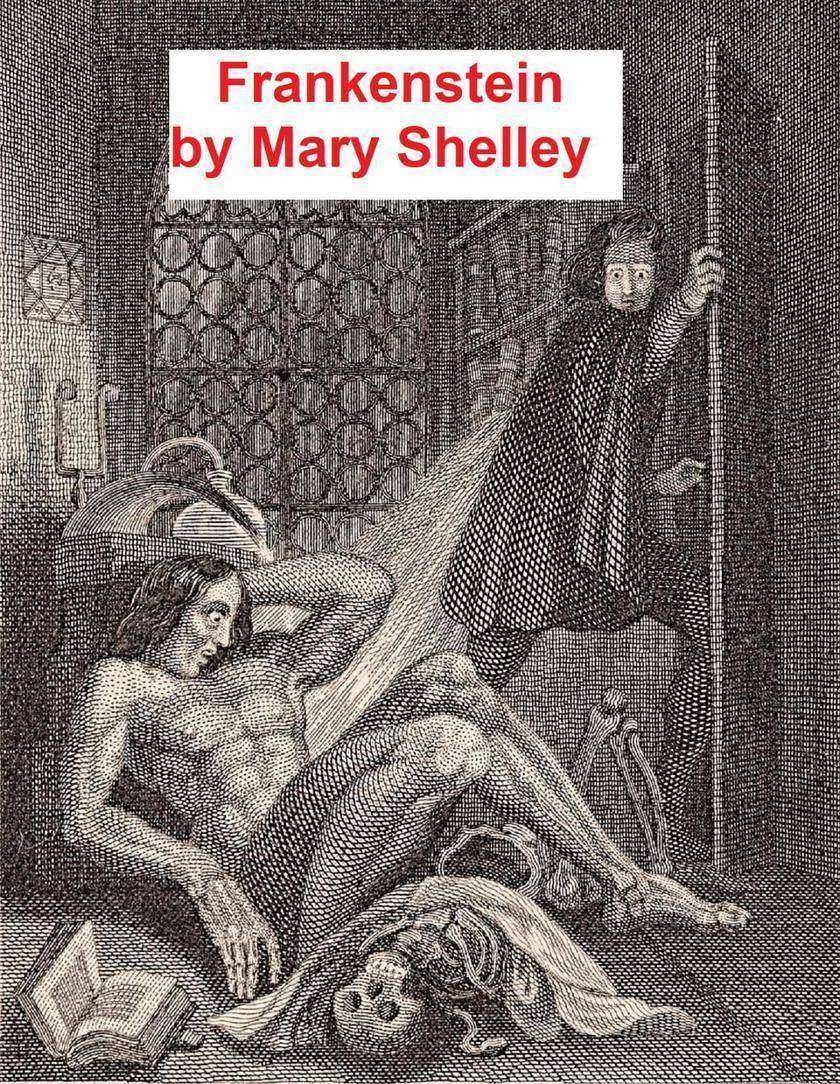
Frankenstein
¥8.09
According to Wikipedia: "Frankenstein; or, The Modern Prometheus is a novel written by Mary Shelley about a creature produced by an unorthodox scientific experiment. Shelley started writing the story when she was nineteen, and the novel was published when she was twenty-one. The first edition was published anonymously in London in 1818. Shelley's name appears on the second edition, published in France in 1823. Shelley had travelled in the region of Geneva, where much of the story takes place, and the topics of galvanism and other similar occult ideas were themes of conversation among her companions, particularly her future husband, Percy Shelley. The storyline emerged from a dream. Mary, Percy, Lord Byron, and John Polidori decided to have a competition to see who could write the best horror story. After thinking for weeks about what her possible storyline could be, Shelley dreamt about a scientist who created life and was horrified by what he had made. She then wrote Frankenstein."

Matthew Henry's Concise Commentary on the Bible
¥8.09
According to Wikipedia: "Matthew Henry (18 October 1662 – 22 June 1714), was an English non-conformist clergyman. He was born at Broad Oak, a farmhouse on the borders of Flintshire and Shropshire. His father, Philip Henry, had just been ejected by the Act of Uniformity 1662. Unlike most of his fellow-sufferers, Philip possessed some private means, and was thus able to give his son a good education. Matthew went first to a school at Islington, and then to Gray's Inn. He soon gave up his legal studies for theology, and in 1687 became minister of a Presbyterian congregation at Chester. He moved again in 1712 to Mare Street, Hackney. Two years later (22 June 1714), he died suddenly of apoplexy at the Queen's Aid House (41 High Street) in Nantwich while on a journey from Chester to London. Henry's well-known Exposition of the Old and New Testaments (1708–1710) is a commentary of a practical and devotional rather than of a critical kind, covering the whole of the Old Testament, and the Gospels and Acts in the New Testament. After the author's death, the work was finished by a number of ministers, and edited by G. Burder and John Hughes in 1811. Not a work of textual criticism, its attempt at good sense, discrimination, its high moral tone and simple piety with practical application, combined with the well-sustained flow of its English style, made it one of the most popular works of its type. Matthew Henry's six volume Complete Commentary, originally published in 1706, provides an exhaustive verse by verse study of the Bible. His commentaries are still in use to this day. Henry's commentaries are primarily exegetical, dealing with the scripture text as presented. Henry's prime intention was explanation, not translation or textual research."
Penrod
¥8.09
According to Wikipedia: "Newton Booth Tarkington (July 29, 1869, Indianapolis – May 19, 1946) was an American novelist and dramatist best known for his Pulitzer Prize-winning novels The Magnificent Ambersons and Alice Adams…. Much of Tarkington's work consists of satirical and closely observed studies of the American class system and its foibles. He himself came from a patrician family that came down in the world after the Panic of 1873. Today he is best known for his novel The Magnificent Ambersons, which Orson Welles filmed in 1942. It is included in the Modern Library's list of top-100 novels."
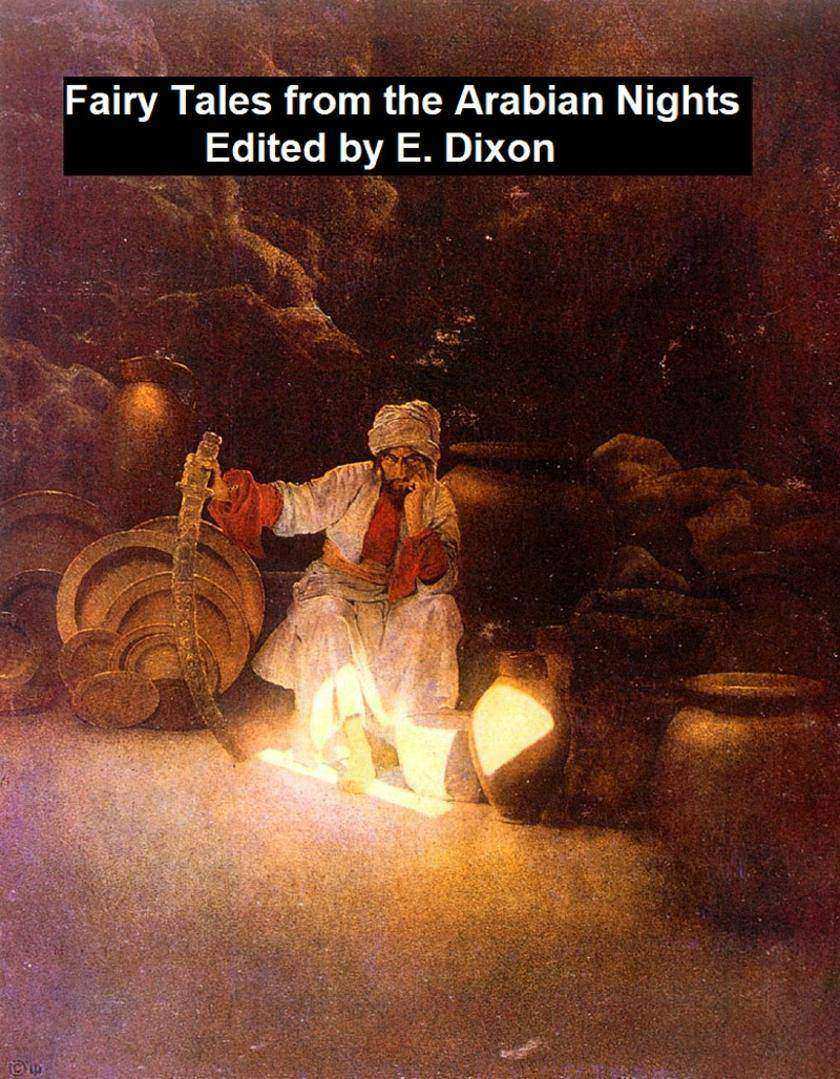
Fairy Tales from the Arabian Nights
¥8.09
The stories in this 1893 collection include: The King of Persia and the Princess of the Sea, Prince Beder and the Princess Giauhara, The Three Princes and Princess Nouronnihar, Prince Ahmed and the Fairy, Prince Camaralzaman and the Princess of China, The Loss of the Talisman, The Story of Zobeide, The Story of the King's Son, and the First, Second, Third, Fourth, Fifth, Sixth, and Seventh Voyages of Sinbad the Sailor.
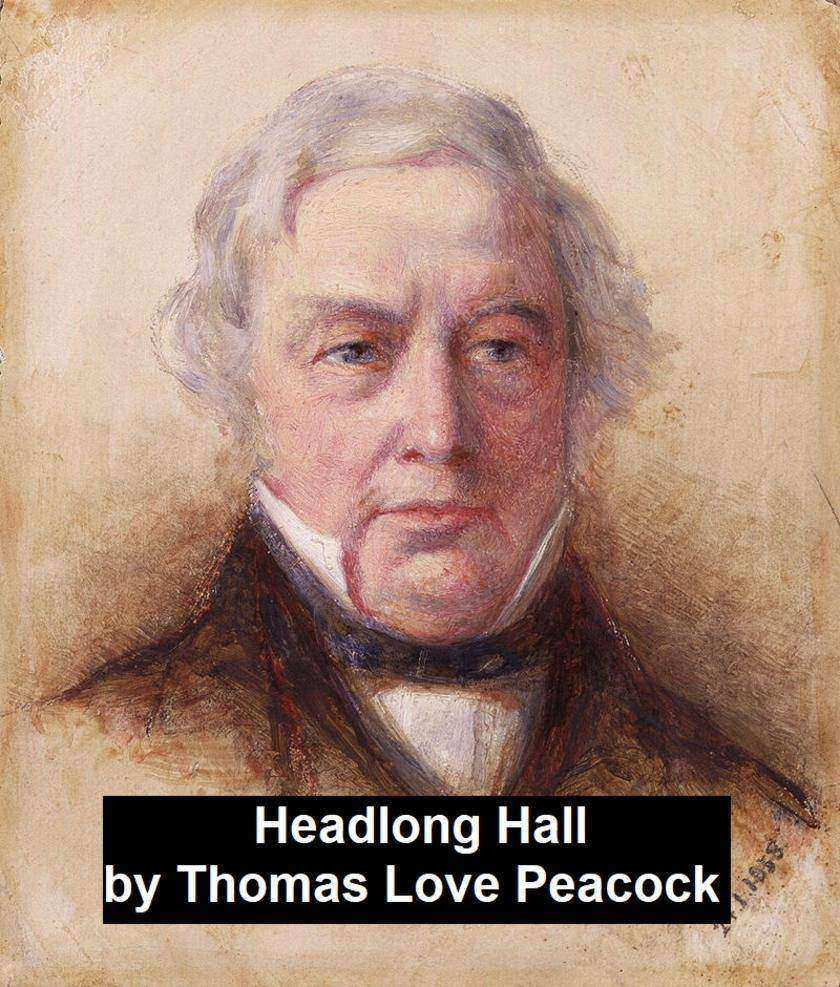
Headlong Hall
¥8.09
According to Wikipedia: "Thomas Love Peacock (18 October 1785 - 23 January 1866) was an English satirist and author. Peacock was a close friend of Percy Bysshe Shelley and they influenced each other's work. He wrote satirical novels, each with the same basic setting — characters at a table discussing and criticising the philosophical opinions of the day. He worked for the British East India Company."
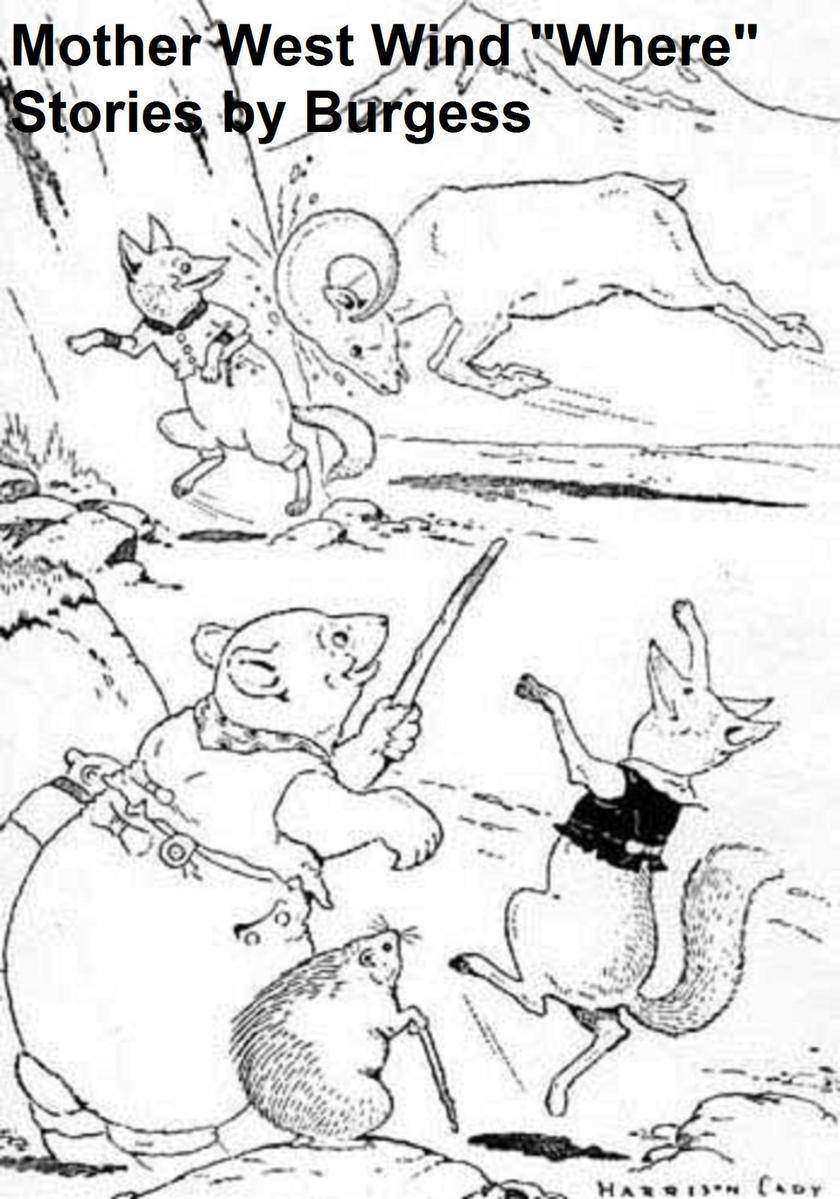
Mother West Wind "Where" Stories, Illustrated
¥8.09
Children's book, first published in 1918, with four black-and-white illustrations. According to Wikipedia: "Thornton Waldo Burgess (January 14, 1874 – June 5, 1965). Born in Sandwich, Cape Cod, Massachusetts, he was a conservationist and author of children's stories. Thornton Waldo Burgess loved the beauty of nature and its living creatures so much that he wrote about them for 50 years. By the time he retired, he had written more than 170 books and 15,000 stories for daily columns in newspapers."

The Bobbsey Twins at Home
¥8.09
According to Wikipedia: "Laura Lee Hope is a pseudonym used by the Stratemeyer Syndicate for the Bobbsey Twins and several other series of children's novels. Actual writers taking up the pen of Laura Lee Hope include Edward Stratemeyer, Howard and Lilian Garis, Elizabeth Ward, Harriet (Stratemeyer) Adams, and Nancy Axelrad. Laura Lee Hope was first used as a pseudonym in 1904 for the debut of the Bobbsey Twins. Series: The Bobbsey Twins (1904-), The Outdoor Girls (23 vols. 1913-1933), The Moving Picture Girls (7 vols. 1914-1916), Bunny Brown (20 vols. 1916-1931), Six Little Bunkers (14 vols. 1918-1930), Make Believe Stories (12 vols. c. 1920-1923), Blythe Girls (12 vols. 1925-1932)."
The Bobbsey Twins at the County Fair
¥8.09
According to Wikipedia: "Laura Lee Hope is a pseudonym used by the Stratemeyer Syndicate for the Bobbsey Twins and several other series of children's novels. Actual writers taking up the pen of Laura Lee Hope include Edward Stratemeyer, Howard and Lilian Garis, Elizabeth Ward, Harriet (Stratemeyer) Adams, and Nancy Axelrad. Laura Lee Hope was first used as a pseudonym in 1904 for the debut of the Bobbsey Twins. Series: The Bobbsey Twins (1904-), The Outdoor Girls (23 vols. 1913-1933), The Moving Picture Girls (7 vols. 1914-1916), Bunny Brown (20 vols. 1916-1931), Six Little Bunkers (14 vols. 1918-1930), Make Believe Stories (12 vols. c. 1920-1923), Blythe Girls (12 vols. 1925-1932)."
Typee: A Romance of the South Seas
¥8.09
Autobiographical novel set on a Pacific Island. Omoo is the sequel to this book. Cryptic, yet brilliant novel by the author of Moby Dick. According to Wikipedia: "Herman Melville (August 1, 1819 – September 28, 1891) was an American novelist, short story writer, essayist and poet. His first two books gained much attention, though they were not bestsellers, and his popularity declined precipitously after only a few years. By the time of his death he had been almost completely forgotten, but his longest novel, Moby-Dick — largely considered a failure during his lifetime, and most responsible for Melville's fall from favor with the reading public — was recognized in the 20th century as one of the chief literary masterpieces of both American and world literature."
Childe Harold's Pilgrimage
¥8.09
Byron's classic narrative poem. According to Wikipedia: "George Gordon Byron, later Noel, 6th Baron Byron FRS (1788 – 1824) was a British poet and a leading figure in Romanticism. Amongst Byron's best-known works are the brief poems When We Two Parted, She Walks in Beauty, and So, we'll go no more a roving, in addition to the narrative poems Childe Harold's Pilgrimage and Don Juan. He is regarded as one of the greatest European poets and remains widely read and influential, both in the English-speaking world and beyond. Byron's fame rests not only on his writings but also on his life, which featured extravagant living, numerous love affairs, debts, separation, and marital exploits. He was famously described by Lady Caroline Lamb as "mad, bad, and dangerous to know". Byron served as a regional leader of Italy's revolutionary organization, the Carbonari, in its struggle against Austria. He later traveled to fight against the Ottoman Empire in the Greek War of Independence, for which Greeks revere him as a national hero. He died from a fever in Messolonghi in Greece."
The Heptameron, Volume 2
¥8.09
With 29 illustrations. According to Wikipedia: "The Heptameron is a collection of 72 short stories written in French by Marguerite of Navarre (1492-1549), published posthumously in 1558. It has the form of a frame narrative and was inspired by The Decameron of Giovanni Boccaccio. It was originally intended to contain one hundred stories covering ten days just as The Decameron does, but at Marguerite’s death it was only completed as far as the second story of the eighth day. Many of the stories deal with love, lust, infidelity and other romantic and sexual matters. One was based on the life of Marguerite de La Rocque, a French noblewoman abandoned, as punishment, with her lover on an island off Quebec... Marguerite de Navarre (French: Marguerite d'Angoulême) (April 11, 1492 – December 21, 1549), also known as Marguerite of Angouleme and Margaret of Navarre, was the queen consort of King Henry II of Navarre. As patron of humanists and reformers, and as an author in her own right, she was an outstanding figure of the French Renaissance. Samuel Putnam called her "The First Modern Woman"."
Great German Composers
¥8.09
First published in 1878. Chapters cover: Bach, Handel, Gluck, Haydn, Mozart, Beethoven, Schubert, Schumann, Chopin, Web, Mendelssohn, and Wagner.
The Land of the Blue Flower
¥8.09
Classic short story for children. According to Wikipedia: "Frances Hodgson Burnett, ( 1849 - 1924) was an English–American playwright and author. She is best known for her children's stories, in particular The Secret Garden, A Little Princess, and Little Lord Fauntleroy. Born Frances Eliza Hodgson in Cheetham Hill, Manchester, her father died in 1854, and the family had to endure poverty and squalor in the Victorian slums of Manchester. Following the death of her mother in 1867, an 18-year-old Frances was now the head of a family of four younger siblings. She turned to writing to support them all, with a first story published in Godey's Lady's Book in 1868. Soon after she was being published regularly in Godey's, Scribner's Monthly, Peterson's Ladies' Magazine and Harper's Bazaar. Her main writing talent was combining realistic detail of working-class life with a romantic plot. Her first novel was published in 1877; That Lass o' Lowrie's was a story of Lancashire life. After moving with her husband to Washington, D.C., Burnett wrote the novels Haworth's (1879), Louisiana (1880), A Fair Barbarian (1881), and Through One Administration (1883), as well as a play, Esmeralda (1881), written with William Gillette...Her later works include Sara Crewe (1888) - later rewritten as A Little Princess (1905); The Lady of Quality (1896) - considered one of the best of her plays; and The Secret Garden (1909), the children's novel for which she is probably best known today. The Lost Prince was published in 1915..."
The German Novel of Provincial Life
¥8.09
This collection includes works by Little Barefoot by Berthold Auerbach and works by Jeremias Gotthelf, Fritz Euter, Adabert Stifter, and Wilhelm Heinrich Riehl. The German Classics Of The Nineteenth And Twentieth Centuries, Volume 8, edited by Kuno Francke.
The Waif Woman
¥8.09
Classic short story set in Iceland. According to Wikipedia: "Robert Louis (Balfour) Stevenson ( 1850 - 1894), was a Scottish novelist, poet, and travel writer, and a leading representative of Neo-romanticism in English literature. He was the man who "seemed to pick the right word up on the point of his pen, like a man playing spillikins", as G. K. Chesterton put it. He was also greatly admired by many authors, including Jorge Luis Borges, Ernest Hemingway, Rudyard Kipling, Vladimir Nabokov, and J. M. Barrie. Most modernist writers dismissed him, however, because he was popular and did not write within their definition of modernism. It is only recently that critics have begun to look beyond Stevenson's popularity and allow him a place in the canon."

Works of Hebbel and Ludwig
¥8.09
This collection includes works by Hebbel and Ludwig. The German Classics Of The Nineteenth And Twentieth Centuries, Volume 9, edited by Kuno Francke.
Poetry and Drama
¥8.09
This collection includes: Life of Goethe by Calvin Thomas, Hermann and Dorothea, Iphigenia in Tauris, Faust Parts 1 and selections from Part 2. The German Classics Of The Nineteenth And Twentieth Centuries, Volume 1, edited by Kuno Francke.
The Prince and the Pauper
¥8.09
Classic tale of switched identities. According to Wikipedia: "Samuel Langhorne Clemens (1835 – 1910), better known by the pen name Mark Twain, was an American author and humorist. Twain is most noted for his novels Adventures of Huckleberry Finn, which has since been called the Great American Novel and The Adventures of Tom Sawyer. He is extensively quoted. During his lifetime, Twain became a friend to presidents, artists, industrialists and European royalty. Twain enjoyed immense public popularity, and his keen wit and incisive satire earned him praise from both critics and peers. American author William Faulkner called Twain "the father of American literature."
The Chorus Girl and Other Stories
¥8.09
This collection includes: THE CHORUS GIRL, VEROTCHKA, MY LIFE, AT A COUNTRY HOUSE, A FATHER, ON THE ROAD, ROTHSCHILD'S FIDDLE, IVAN MATVEYITCH, ZINOTCHKA, BAD WEATHER, A GENTLEMAN FRIEND, and A TRIVIAL INCIDENT. According to Wikipedia: "Anton Pavlovich Chekhov (1860 – 1904) was a Russian short-story writer, playwright and physician, considered to be one of the greatest short-story writers in world literature. His career as a dramatist produced four classics and his best short stories are held in high esteem by writers and critics Chekhov practised as a doctor throughout most of his literary career: "Medicine is my lawful wife," he once said, "and literature is my mistress." Chekhov renounced the theatre after the disastrous reception of The Seagull in 1896; but the play was revived to acclaim in 1898 by Constantin Stanislavski's Moscow Art Theatre, which subsequently also produced Uncle Vanya and premiered Chekhov’s last two plays, Three Sisters and The Cherry Orchard. These four works present a special challenge to the acting ensemble as well as to audiences, because in place of conventional action Chekhov offers a "theatre of mood" and a "submerged life in the text." Chekhov had at first written stories only for the money, but as his artistic ambition grew, he made formal innovations which have influenced the evolution of the modern short story. His originality consists in an early use of the stream-of-consciousness technique, later adopted by James Joyce and other modernists, combined with a disavowal of the moral finality of traditional story structure He made no apologies for the difficulties this posed to readers, insisting that the role of an artist was to ask questions, not to answer them."
The Darling and Other Stories
¥8.09
This collection includes: THE DARLING, ARIADNE, POLINKA, ANYUTA, THE TWO VOLODYAS, THE TROUSSEAU, THE HELPMATE, TALENT, AN ARTIST'S STORY, and THREE YEARS. According to Wikipedia: "Anton Pavlovich Chekhov (1860 – 1904) was a Russian short-story writer, playwright and physician, considered to be one of the greatest short-story writers in world literature. His career as a dramatist produced four classics and his best short stories are held in high esteem by writers and critics Chekhov practised as a doctor throughout most of his literary career: "Medicine is my lawful wife," he once said, "and literature is my mistress." Chekhov renounced the theatre after the disastrous reception of The Seagull in 1896; but the play was revived to acclaim in 1898 by Constantin Stanislavski's Moscow Art Theatre, which subsequently also produced Uncle Vanya and premiered Chekhov’s last two plays, Three Sisters and The Cherry Orchard. These four works present a special challenge to the acting ensemble as well as to audiences, because in place of conventional action Chekhov offers a "theatre of mood" and a "submerged life in the text." Chekhov had at first written stories only for the money, but as his artistic ambition grew, he made formal innovations which have influenced the evolution of the modern short story. His originality consists in an early use of the stream-of-consciousness technique, later adopted by James Joyce and other modernists, combined with a disavowal of the moral finality of traditional story structure He made no apologies for the difficulties this posed to readers, insisting that the role of an artist was to ask questions, not to answer them."


