


 购物车
购物车 个人中心
个人中心
The Fortunes of Nigel
¥8.09
Historical novel, first published in 1822. Set in London and Greenwich, England, in 1616-1618. According to Wikipedia: "Sir Walter Scott, 1st Baronet (1771 – 1832) was a prolific Scottish historical novelist and poet popular throughout Europe during his time. In some ways Scott was the first English-language author to have a truly international career in his lifetime, with many contemporary readers all over Europe, Australia, and North America. His novels and poetry are still read, and many of his works remain classics of both English-language literature and of Scottish literature. Famous titles include Ivanhoe, Rob Roy, The Lady of The Lake, Waverley, The Heart of Midlothian and The Bride of Lammermoor."
Woodstock
¥8.09
Historical novel, first published in 1826. Set in Woodstock and Windsor, England, and in Brussels in 1652. According to Wikipedia: "Sir Walter Scott, 1st Baronet (1771 – 1832) was a prolific Scottish historical novelist and poet popular throughout Europe during his time. In some ways Scott was the first English-language author to have a truly international career in his lifetime, with many contemporary readers all over Europe, Australia, and North America. His novels and poetry are still read, and many of his works remain classics of both English-language literature and of Scottish literature. Famous titles include Ivanhoe, Rob Roy, The Lady of The Lake, Waverley, The Heart of Midlothian and The Bride of Lammermoor."
Miscellanies: A collection of essays
¥8.09
Book-length collection of essays. According to Wikipedia: "Oscar Fingal O'Flahertie Wills Wilde (1854 - 1900) was an Irish playwright, novelist, poet, and author of short stories. Known for his barbed wit, he was one of the most successful playwrights of late Victorian London, and one of the greatest celebrities of his day. As the result of a famous trial, he suffered a dramatic downfall and was imprisoned for two years of hard labour after being convicted of the offence of 'gross indecency.'"

Peveril of the Peak
¥8.09
Historical novel, originally published in 1822. Set in Derbyshire, the Island of Man, and London in 1658-1680. According to Wikipedia: "Sir Walter Scott, 1st Baronet (1771 – 1832) was a prolific Scottish historical novelist and poet popular throughout Europe during his time. In some ways Scott was the first English-language author to have a truly international career in his lifetime, with many contemporary readers all over Europe, Australia, and North America. His novels and poetry are still read, and many of his works remain classics of both English-language literature and of Scottish literature. Famous titles include Ivanhoe, Rob Roy, The Lady of The Lake, Waverley, The Heart of Midlothian and The Bride of Lammermoor."
True to the Old Flag
¥8.09
Historical novel, set during the American Revolution, and told from the British perspective. The Preface begins: "You have probably been accustomed to regard the war between England and her colonies in America as one in which we were not only beaten but, to some extent, humiliated. Owing to the war having been an unsuccessful one for our arms, British writers have avoided the subject, and it has been left for American historians to describe. These, writing for their own countrymen, and drawing for their facts upon gazettes, letters, and other documents emanating from one side only, have, naturally, and no doubt insensibly, given a very strong color to their own views of the events, and English writers have been too much inclined to accept their account implicitly. There is, however, another and very different side to the story, and this I have endeavored to show you. The whole of the facts and details connected with the war can be relied upon as accurate. According to Wikipedia: "George Alfred Henty (8 December 1832 - 16 November 1902), referred to as G. A. Henty, was a prolific English novelist, special correspondent, and Imperialist born in Trumpington, Cambridgeshire, England. He is best known for his historical adventure stories that were popular in the late 19th century. His works include Out on the Pampas (1871), The Young Buglers (1880), With Clive in India (1884) and Wulf the Saxon (1895)."

The Love Affairs of Great Musicians
¥8.09
First published in 1903. Biographical chapters cover Liszt, Mozart, Bach, Haydn, Beethoven, Chopin, Purcell, Gluck, Wagner, Tschaikovski, Schumann, and others.
Agnes Grey
¥8.09
Class novel by the third Bronte sister. According to Wikipedia: "Anne Bronte ( 1820 - 1849) was a British novelist and poet, the youngest of the Bronte literary family. She used the pen name Acton Bell."
Cinq Semaines en Ballon
¥8.09
Roman d'aventure classique dans le fran?ais original. Selon Wikipédia: ?Jules Gabriel Verne (8 février 1828 - 24 mars 1905) est un auteur fran?ais qui a été le pionnier du genre de la science-fiction, notamment des romans comme Voyage au centre de la terre (1864), Vingt mille lieues sous la mer (1870) et autour du monde en quatre-vingts jours (1873) Verne a écrit sur l'espace, l'air et les voyages sous-marins avant que les voyages aériens et les sous-marins pratiques soient inventés. Selon Index Translationum, il est le troisième auteur le plus traduit au monde, certains de ses livres ont été transformés en films ... Verne, avec HG Wells, est souvent surnommé le ?père de la science-fiction?
A Final Reckoning
¥8.09
Historical novel, set in Australia's equivalent of the Wild West, in the mid-19th century. According to Wikipedia: "George Alfred Henty (8 December 1832 - 16 November 1902), referred to as G. A. Henty, was a prolific English novelist, special correspondent, and Imperialist born in Trumpington, Cambridgeshire, England. He is best known for his historical adventure stories that were popular in the late 19th century. His works include Out on the Pampas (1871), The Young Buglers (1880), With Clive in India (1884) and Wulf the Saxon (1895)"
The Fur Country
¥8.09
Classic adventure novel by Jules Verne. According to Wikipedia: "Jules Gabriel Verne (February 8, 1828 – March 24, 1905) was a French author who pioneered the science-fiction genre. He is best known for his novels Journey to the Center of the Earth (written in 1864), From the Earth to the Moon (1865), Twenty Thousand Leagues Under the Sea (1869–1870), and Around the World in Eighty Days (1873). Verne wrote about space, air, and underwater travel before navigable aircraft and practical submarines were invented, and before any means of space travel had been devised. Consequently he is often referred to as the "Father of science fiction", along with H. G. Wells. Verne is the second most translated author of all time, only behind Agatha Christie with 4162 translations..."
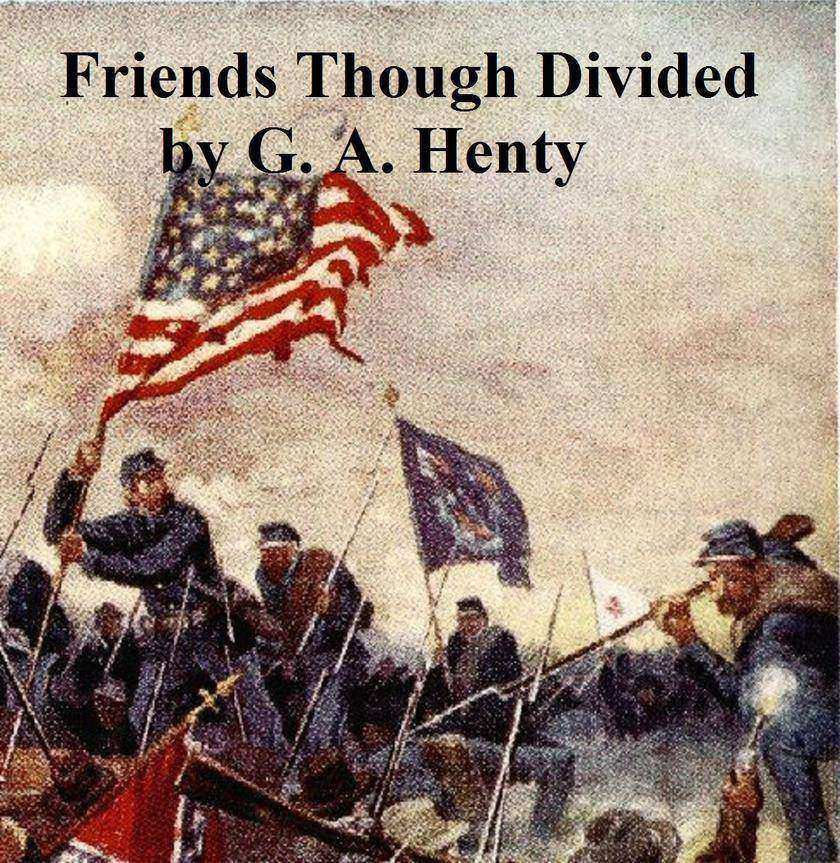
Friends Though Divided
¥8.09
Historical novel, set in England in the 1640s, during the English Civil War (Cromwell). According to Wikipedia: "George Alfred Henty (8 December 1832 - 16 November 1902), referred to as G. A. Henty, was a prolific English novelist, special correspondent, and Imperialist born in Trumpington, Cambridgeshire, England. He is best known for his historical adventure stories that were popular in the late 19th century. His works include Out on the Pampas (1871), The Young Buglers (1880), With Clive in India (1884) and Wulf the Saxon (1895)"
Topsy-Turvy
¥8.09
Classic adventure novel by Jules Verne. According to Wikipedia: "Jules Gabriel Verne (February 8, 1828 – March 24, 1905) was a French author who pioneered the science-fiction genre. He is best known for his novels Journey to the Center of the Earth (written in 1864), From the Earth to the Moon (1865), Twenty Thousand Leagues Under the Sea (1869–1870), and Around the World in Eighty Days (1873). Verne wrote about space, air, and underwater travel before navigable aircraft and practical submarines were invented, and before any means of space travel had been devised. Consequently he is often referred to as the "Father of science fiction", along with H. G. Wells. Verne is the second most translated author of all time, only behind Agatha Christie with 4162 translations..."
Les Indes Noires
¥8.09
Roman d'aventure classique dans l'original fran?ais. Selon Wikipédia: "Jules Gabriel Verne (8 février 1828 - 24 mars 1905) était un auteur fran?ais pionnier du genre de science-fiction, en particulier pour des romans tels que" Voyage au centre de la terre "(1864) Vingt mille milles sous la mer (1870) et autour du monde en quatre-vingts jours (1873) Verne a écrit sur le voyage spatial, aérien et sous-marin avant que les voyages aériens et les sous-marins pratiques soient inventés et avant que les moyens pratiques de vols spatiaux Translationum est le troisième auteur le plus traduit dans le monde, certains de ses livres ont été transformés en films et Verne, avec HG Wells, est souvent surnommé le ?père de la science-fiction?.
Le Chateau des Carpathes
¥8.09
Roman d'aventure classique, en fran?ais original. Selon Wikipédia: ?Jules Gabriel Verne (8 février 1828 - 24 mars 1905) est un auteur fran?ais qui a été le pionnier du genre de la science-fiction, notamment des romans comme Voyage au centre de la terre (1864), Vingt mille lieues sous la mer (1870) et autour du monde en quatre-vingts jours (1873) Verne a écrit sur l'espace, l'air et les voyages sous-marins avant que les voyages aériens et les sous-marins pratiques soient inventés. Selon Index Translationum, il est le troisième auteur le plus traduit au monde, certains de ses livres ont été transformés en films ... Verne, avec HG Wells, est souvent surnommé le ?père de la science-fiction?
Sea Poems
¥8.09
Dodo Collections brings you another classic from Cale Young Rice, ‘Sea Poems. Cale Young Rice writes in the foreword of the book: “The poems of this volume, gathered here after many requests, are, with a few exceptions, from my previous lyrical publications. They are also in a real sense an intimate record. For the sea has often enough seemed to me almost as a vast external sub consciousness in which the forces of my being—as well as the world's—were at play.” Cale Young Rice (December 7, 1872 – January 24, 1943) was an American poet and dramatist. He was born in Dixon, Kentucky, to Laban Marchbanks Rice, a Confederate veteran and tobacco merchant, and his wife Martha Lacy. He was a younger brother of Laban Lacy Rice, a noted educator. Cale Rice grew up in Evansville, Indiana, and Louisville, Kentucky. He was educated at Cumberland University and at Harvard (A.B., 1895; A.M., 1896). He was married to the popular author Alice Hegan Rice; they worked together on several books. The marriage was childless, and Cale committed suicide by gunshot during the night of January 23–24 at his home in Louisville a year after her death due to his sorrow at losing her. Cale Rice's poems were collected and published in a single volume by his brother, Laban Lacy Rice. His birthplace in Dixon is designated by Kentucky State Historical Marker 1508, which reads: "Birthplace of Rice brothers, Cale Young, 1872-1943, noted poet and author; Laban Lacy, 1870-1973, well-known educator and author. Lacy published The Best Poetic Works of Cale Young Rice after Cale's death. Included in famous collection is poem, "The Mystic." Cale married Alice Hegan, also a distinguished Kentucky writer. Home overlooks Memorial Garden."

The Death of the Lion
¥8.09
Dodo Classics brings you another classic from Henry James, ‘The Death of the Lion.’ ? This short novel is a black comedy about fame, manipulation, pretension, and surviving it all. The narrator, a reprehensible and seedy journalist, sets out to interview a minor author, and in his own quest for glory, turns the author into the celebrity of the day. The sudden and untimely death of the author, with his latest work unfinished, presents a troubling dilemma for the narrator, which he resolves with no more conscience than he had when he began his quest. ? Henry James, OM, son of theologian Henry James Sr., brother of the philosopher and psychologist William James and diarist Alice James, was an American-born author, one of the founders and leaders of a school of realism in fiction. He spent much of his life in England and became a British subject shortly before his death. He is primarily known for a series of major novels in which he portrayed the encounter of America with Europe. His plots centered on personal relationships, the proper exercise of power in such relationships, and other moral questions. His method of writing from the point of view of a character within a tale allowed him to explore the phenomena of consciousness and perception, and his style in later works has been compared to impressionist painting. ? James insisted that writers in Great Britain and America should be allowed the greatest freedom possible in presenting their view of the world, as French authors were. His imaginative use of point of view, interior monologue and unreliable narrators in his own novels and tales brought a new depth and interest to realistic fiction, and foreshadowed the modernist work of the twentieth century. An extraordinarily productive writer, in addition to his voluminous works of fiction he published articles and books of travel writing, biography, autobiography, and criticism,and wrote plays, some of which were performed during his lifetime with moderate success. His theatrical work is thought to have profoundly influenced his later novels and tales.

Finished
¥8.09
Dodo Collections brings you another classic from H. Rider Haggard, ‘Finished.’ ? A curious effect of Haggard's successful emulation of the terse, pithy style of saga prose is that the idiom of this novel actually seems rather less dated in the early 21st century than Haggard's other work or the general run of Victorian adventure fiction. Improvements in our understanding of the Viking period have done surprisingly little to falsify Haggard's imagination of its setting, and the book should still hold appeal to any reader interested in the period. ? Sir Henry Rider Haggard was an English writer of adventure novels set in exotic locations, predominantly Africa, and the creator of the Lost World literary genre. His stories, situated at the lighter end of the scale of Victorian literature, continue to be popular and influential. He was also involved in agricultural reform and improvement in the British Empire.? His breakout novel was?King Solomon's Mines(1885), which was to be the first in a series telling of the multitudinous adventures of its protagonist, Allan Quatermain. Haggard was made a Knight Bachelor in 1912 and a Knight Commander of the Order of the British Empire in 1919. He stood unsuccessfully for Parliament as a Conservative candidate for the Eastern division of Norfolk in 1895. The locality of Rider, British Columbia, was named in his memory.

Black Heart and White Heart: A Zulu Idyll
¥8.09
Dodo Collections brings you another classic from H. Rider Haggard, ‘Black Heart and White Heart: A Zulu Idyll.’ ? In "Black Heart And White Heart", H. Rider Haggard mounts once more those trusty steeds of his, the nobility of the savage and the rascality of the civilized white. He rides, too, with all his old dexterity, and the story concerning Zulus, witches, battles, sacrifices, and traitors, of which this volume consists, will revive the pleasures of reading his books. ? "Has the age of miracle quite gone by?" asks H. Rider Haggard concerning this story. "Hardly," most readers would be inclined to answer, if the question were put to them while their brains were alive with the witcheries and the wonders which are Haggard's " stock-in trade." The marvels he recounts lose nothing in effect because they deal with the immediate and the remote past of the country in which Briton and Boer have just fought the fight for supremacy and empire. And by an odd coincidence, a book which opens with a description of an encounter between an Englishman and a Boer at Utrecht appeared on the very day on which Utrecht was occupied by British forces. ? Haggard takes us to Zululand just before the outbreak of the war which crushed the power of Cetewayo, to ancient Zimbabwe, just before the period at which the Phoenicians may be supposed to have succumbed to the attacks of the native barbarians, and to a part of Central Africa occupied by the Children of Fire, whose country had been penetrated, and whose horrible customs had been observed by none but a solitary missionary. ? The novelist rings the changes on scenes and ideas which he has made familiar; here are the wizardry, the superstitions, the horrors, the deeds of devotion, of treachery, of love and of triumph, the superlative heroism, spiritual and material, which characterize all his work. Imagination runs riot, making unrealities live, and the fascination of "King Solomon's Mines" and " She" is over all. ? Sir Henry Rider Haggard was an English writer of adventure novels set in exotic locations, predominantly Africa, and the creator of the Lost World literary genre. His stories, situated at the lighter end of the scale of Victorian literature, continue to be popular and influential. He was also involved in agricultural reform and improvement in the British Empire. ? His breakout novel was King Solomon's Mines( 1885), which was to be the first in a series telling of the multitudinous adventures of its protagonist, Allan Quatermain. ? Haggard was made a Knight Bachelor in 1912 and a Knight Commander of the Order of the British Empire in 1919. He stood unsuccessfully for Parliament as a Conservative candidate for the Eastern division of Norfolk in 1895. The locality of Rider, British Columbia, was named in his memory.

Marching Men
¥8.09
Dodo Collections brings you another classic from Sherwood Anderson, ‘"Marching Men".’ ? Marching Men is the story of Norman "Beaut" McGregor, a young man discontented with the powerlessness and lack of personal ambition among the miners of his hometown. After moving to Chicago he discovers his purpose is to empower workers by having them march in unison. Major themes of the novel include the organization of laborers, eradication of disorder, and the role of the exceptional man in society. The latter theme led post-World War II critics to compare Anderson's militaristic approach to homosocial order and the fascists of the War's Axis powers. ? Anderson was born on Sept. 13, 1876, in Camden, Ohio. He never finished high school because he had to work to support his family. By 1912, he was the successful manager of a paint factory in Elyria, Ohio, and the father of three children by the first of his four wives. In 1912, Anderson deserted his family and job. In early 1913, he moved to Chicago, where he devoted more time to his imaginative writing. He became a heroic model for younger writers because he broke with what they considered to be American materialism and convention to commit himself to art.
Un Billet de Loterie
¥8.09
Roman d'aventure classique, en fran?ais original. Selon Wikipédia: ?Jules Gabriel Verne (8 février 1828 - 24 mars 1905) est un auteur fran?ais qui a été le pionnier du genre de la science-fiction, notamment des romans comme Voyage au centre de la terre (1864), Vingt mille lieues sous la mer (1870) et autour du monde en quatre-vingts jours (1873) Verne a écrit sur l'espace, l'air et les voyages sous-marins avant que les voyages aériens et les sous-marins pratiques soient inventés. Selon Index Translationum, il est le troisième auteur le plus traduit au monde, certains de ses livres ont été transformés en films ... Verne, avec HG Wells, est souvent surnommé le ?père de la science-fiction?.

Benita: an African Romance
¥8.09
Dodo Collections brings you another classic from H. Rider Haggard, ‘Benita, an African Romance.’ An adventurous trader, it is said, hearing the legend of a great treasure buried a party of Portuguese hundreds of years before, as a last resource attempted its discovery by the help of a mesmerist. A child was put into a trance, and gave his mesmerist details of the adventures and death of the unhappy Portuguese men and women. With much other detail, the boy described the burial of the great treasure and its exact situation so accurately that the white man and the mesmerist were able to dig for and find the place "where it had been" -- for the bags were gone, swept out by the floods of the river. In another trance, the boy revealed where the sacks still lay; but before the white trader could renew his search for them, the party was hunted out of the country by natives whose superstitious fears were aroused, barely escaping with their lives. Sir Henry Rider Haggard was an English writer of adventure novels set in exotic locations, predominantly Africa, and the creator of the Lost World literary genre. His stories, situated at the lighter end of the scale of Victorian literature, continue to be popular and influential. He was also involved in agricultural reform and improvement in the British Empire. His breakout novel was King Solomon's Mines (1885), which was to be the first in a series telling of the multitudinous adventures of its protagonist, Allan Quatermain. Haggard was made a Knight Bachelor in 1912 and a Knight Commander of the Order of the British Empire in 1919. He stood unsuccessfully for Parliament as a Conservative candidate for the Eastern division of Norfolk in 1895. The locality of Rider, British Columbia, was named in his memory.


