


 购物车
购物车 个人中心
个人中心
On the Irrawaddy
¥8.09
Historical novel, set during British colonial war in the 19th century. According to the Preface: "With the exception of the terrible retreat from Afghanistan, none of England's many little wars have been so fatal--in proportion to the number of those engaged--as our first expedition to Burma. It was undertaken without any due comprehension of the difficulties to be encountered, from the effects of climate and the deficiency of transport; the power, and still more the obstinacy and arrogance of the court of Ava were altogether underrated; and it was considered that our possession of her ports would assuredly bring the enemy, who had wantonly forced the struggle upon us, to submission." According to Wikipedia: "George Alfred Henty (8 December 1832 - 16 November 1902), referred to as G. A. Henty, was a prolific English novelist, special correspondent, and Imperialist born in Trumpington, Cambridgeshire, England. He is best known for his historical adventure stories that were popular in the late 19th century. His works include Out on the Pampas (1871), The Young Buglers (1880), With Clive in India (1884) and Wulf the Saxon (1895)."
The Cornet of Horse
¥8.09
Historical novel, set in Europe in the early 18th century. According to Wikipedia: "George Alfred Henty (8 December 1832 - 16 November 1902), referred to as G. A. Henty, was a prolific English novelist, special correspondent, and Imperialist born in Trumpington, Cambridgeshire, England. He is best known for his historical adventure stories that were popular in the late 19th century. His works include Out on the Pampas (1871), The Young Buglers (1880), With Clive in India (1884) and Wulf the Saxon (1895)."

The Young Buglers
¥8.09
Historical novel, set in Spain during the Peninsular War (Britain vs. the armies of Napoleon). The Preface begins: "...as a boy, I regarded any attempt to mix instruction with amusement as being as objectionable a practice as the administration of powder in jam; but I think that this feeling arose from the fact that in those days books contained a very small share of amusement and a very large share of instruction. I have endeavored to avoid this, and I hope that the accounts of battles and sieges, illustrated as they are by maps, will be found as interesting as the lighter parts of the story. As in my tale, "_The Young Franc-Tireurs_," I gave the outline of the Franco-German war, so I have now endeavored to give the salient features of the great Peninsular struggle. The military facts... are all strictly accurate, and any one who has read with care the story of "The Young Buglers" could pass an examination as to the leading events of the Peninsula War." According to Wikipedia: "George Alfred Henty (8 December 1832 - 16 November 1902), referred to as G. A. Henty, was a prolific English novelist, special correspondent, and Imperialist born in Trumpington, Cambridgeshire, England. He is best known for his historical adventure stories that were popular in the late 19th century. His works include Out on the Pampas (1871), The Young Buglers (1880), With Clive in India (1884) and Wulf the Saxon (1895)."
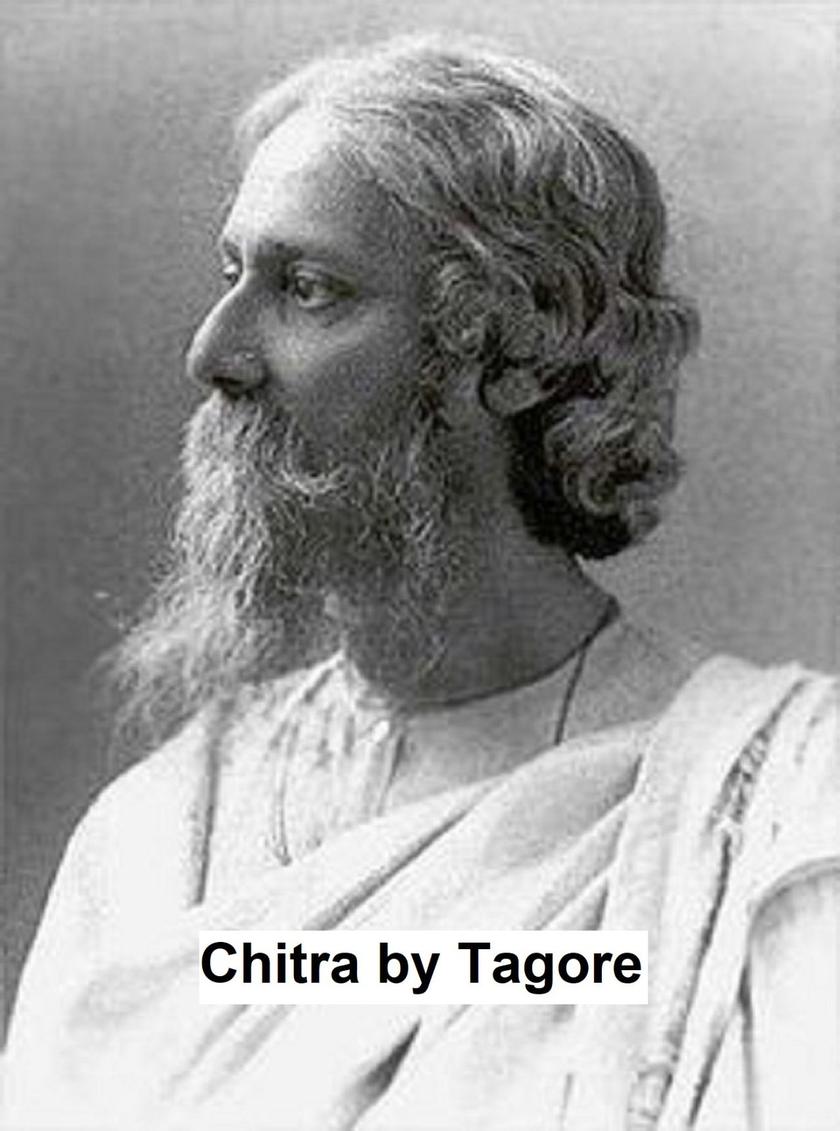
Chitra
¥8.09
Play. According to Wikipedia: "Rabindranath Tagore (7 May 1861 – 7 August 1941), sobriquet Gurudev, was a Bengali poet, novelist, musician, painter and playwright who reshaped Bengali literature and music. As author of Gitanjali and its "profoundly sensitive, fresh and beautiful verse", he was the first non-European who was awarded the Nobel Prize for Literature in 1913. His poetry in translation was viewed as spiritual, and this together with his mesmerizing persona gave him a prophet-like aura in the west. His "elegant prose and magical poetry" still remain largely unknown outside the confines of Bengal."
The Knight of the White Cross
¥8.09
Historical novel. According to the Preface: "The order of the Knights of St. John, which for some centuries played a very important part in the great struggle between Christianity and Mahomedanism, was, at its origin, a semi-religious body, its members being, like other monks, bound by vows of obedience, chastity, and poverty, and pledged to minister to the wants of the pilgrims who flocked to the Holy Places, to receive them at their great Hospital -- or guest house -- at Jerusalem, dedicated to St. John the Baptist, and to defend them on their passage to and from the sea, against attack by Moslems. In a comparatively short time the constitution of the order was changed, and the Knights Hospitallers became, like the Templars, a great military Order pledged to defend the Holy Sepulchre, and to war everywhere against the Moslems. The Hospitallers bore a leading share in the struggle which terminated in the triumph of the Moslems, and the capture by them of Jerusalem." According to Wikipedia: "George Alfred Henty (8 December 1832 - 16 November 1902), referred to as G. A. Henty, was a prolific English novelist, special correspondent, and Imperialist born in Trumpington, Cambridgeshire, England. He is best known for his historical adventure stories that were popular in the late 19th century. His works include Out on the Pampas (1871), The Young Buglers (1880), With Clive in India (1884) and Wulf the Saxon (1895)."
A Short History of England
¥8.09
History as seen by a famous novelist and essayist. The Introduction begins: "It will be very reasonably asked why I should consent, though upon a sort of challenge, to write even a popular essay in English history, who make no pretence to particular scholarship and am merely a member of the public. The answer is that I know just enough to know one thing: that a history from the standpoint of a member of the public has not been written. What we call the popular histories should rather be called the anti-popular histories. They are all, nearly without exception, written against the people; and in them the populace is either ignored or elaborately proved to have been wrong." According to Wikipedia: "Gilbert Keith Chesterton (29 May 1874 – 14 June 1936) was an influential English writer of the early 20th century. His prolific and diverse output included journalism, philosophy, poetry, biography, Christian apologetics, fantasy and detective fiction. Chesterton has been called the "prince of paradox." Time magazine, in a review of a biography of Chesterton, observed of his writing style: "Whenever possible Chesterton made his points with popular sayings, proverbs, allegories—first carefully turning them inside out."
Learning to Fly
¥8.09
How to fly an airplane, first published in 1916, with 10 photographs. Helps you understand the challenges of flying WWI era aircraft. According to the Author's Note, "This book is written for the novice—and for the novice who is completely a novice. We have assumed, in writing it, that it will come into the hands of men who, having determined to enter this great and growing industry of aviation, and having decided wisely to learn to fly as their preliminary step, feel they would like to gain beforehand—before, that is to say, they take the plunge of selecting and joining a flying school—all that can be imparted non-technically, and in such a brief manual as this, not only as to the stages of tuition and the tests to be undergone, but also in regard to such general questions as, having once turned their thoughts towards flying, they take a sudden and a very active interest."
Practical Mechanics for Boys
¥8.09
Instruction in practical household technology, first published in 1914. 60 black-and-white illustrations. "In language which every boy can understand and so arranged the he may readily carry out any work form the instructions given... This book takes the beginner through a comprehensive series of practical shop work, in which the uses of tools, and the structure and handling of shop machinery are set forth; how they are utilized to perform the work, and the manner in which all dimensional work is carried out. Every subject is illustrated, and model building explained. It contains a glossary which comprises a new system of cross references, a feature that will prove a welcome departure in explaining subjects."
The Keepers of the Trail
¥8.09
Historical novel, part of the Young Trailers series. According to the original publisher "Two boys, Henry Ware and Paul Cotter, and three scouts are the chief characters in these books dealing with frontier life and adventures with the Indians about the time of the Revolutionary War. Each story is complete in itself, full of excitement, and historically accurate." In the Keepers of the Trail, "In this book the boys and their comrades defeat a great Indian army and save Kentucky from invasion." According to Wikpedia, "Joseph Alexander Altsheler (April 29, 1862 - June 5, 1919), was an American author of popular juvenile historical fiction."

The Mantle and Other Stories
¥8.09
This collection includes: The Mantle (AKA The Cloak), The Nose, Memoirs of a Madman, A May Night, and The Viy. According to Wikipedia: "Nikolai Vasilievich Gogol (31 March 1809[4] – 4 March 1852[5]) was a Ukrainian-born Russian humorist, dramatist, and novelist. He is considered the father of modern Russian Realism, but, at the same time, his work is very much in the genre of Romanticism. His early works, such as Evenings on a Farm Near Dikanka, were heavily influenced by Ukrainian culture and folklore. His more mature writing satirised political corruption in the Russian Empire, leading to his exile. After briefly flirting with conversion to Roman Catholicism while in Italy, on his return to Russia Gogol immersed himself in the Russian Orthodox Church. The novels Taras Bul'ba (1835; 1842 [revised edition]) and Dead Souls (1842), the play The Government Inspector (1836, 1842), and the short stories "Diary of a Madman", "The Nose", and "The Overcoat" (1842) are among his best-known works. With their scrupulous and scathing realism, ethical criticism, as well as philosophical depth, they remain some of the most important works ever written."
The Satyricon
¥8.09
According to Wikipedia: "Satyricon (or Satyrica) is a Latin work of fiction in a mixture of prose and poetry. It is believed to have been written by Gaius Petronius, though the manuscript tradition identifies the author as a certain Titus Petronius. As with the Metamorphoses of Apuleius, classical scholars often describe it as a "Roman novel", without necessarily implying continuity with the modern literary form. The surviving portions of the text detail the misadventures of the narrator, Encolpius, and his lover, a handsome sixteen-year-old boy named Giton. Throughout the novel, Encolpius has a hard time keeping his lover faithful to him as he is constantly being enticed away by others. Encolpius's friend Ascyltus (who seems to have previously been in a relationship with Encolpius) is another major character. It is a rare example of a Roman novel, the only other surviving example (quite different in style and plot) being Metamorphoses written by Lucius Apuleius. It is also extremely important evidence for the reconstruction of what everyday life must have been like for the lower classes during the early Roman Empire."
The Palace in the Garden
¥8.09
Popular children's novel, first published in 1887. According to Wikipedia: "Mary Louisa Molesworth (29 May 1839 – 20 January 1921) was an English writer of children's stories who wrote for children under the name of Mrs Molesworth."
Louise de la Valliere
¥8.09
Louise de la Valliere is a self-contained novel, fifth of a series of six novels -- The Three Musketeers (covering 1625-1628), Twenty Years After (covering 1648-49), The Vicomte de Bragelonne (covering 1660), Ten Years Later (covering 1660-1661), Louise de la Valliere (covering 1661), The Man in the Iron Mask (covering 1661-1673). D'Artagnan, the fourth and most important musketeer is based on an historical figure, who was eventually promoted to commander of the musketeers. You can read about him at Wikipedia. According to Wikipedia: "Alexandre Dumas, père (French for "father", akin to 'Senior' in English), born Dumas Davy de la Pailleterie (1802 — 1870) was a French writer, best known for his numerous historical novels of high adventure which have made him one of the most widely read French authors in the world. Many of his novels, including The Count of Monte Cristo, The Three Musketeers, Twenty Years After, and The Vicomte de Bragelonne were serialized. He also wrote plays and magazine articles and was a prolific correspondent.

How It Works
¥8.09
Manual of how things work, with 233 illustrations, first published around 1905. "Dealing in Simple Language With Steam, Electricity, Light, Heat, Sound Hydraulics, Optics etc." According to Wikipedia: "Archibald Williams (1871-1934) was an English technical journalist and fellow of hte Royal Geographical Society."
The Civilization of Renaissance in Italy
¥8.09
Classic 19th century history book. According to Wikipedia: "Carl Jacob Christoph Burckhardt (May 25, 1818, Basel, Switzerland – August 8, 1897, Basel) was a historian of art and culture, and an influential figure in the historiography of each field. He is known as one of the major progenitors of cultural history, albeit in a form very different from how cultural history is conceived and studied in academia today. Siegfried Giedion described Burckhardt's achievement in the following terms: "The great discoverer of the age of the Renaissance, he first showed how a period should be treated in its entirety, with regard not only for its painting, sculpture and architecture, but for the social institutions of its daily life as well."Burckhardt's best known work is The Civilization of the Renaissance in Italy (1860).
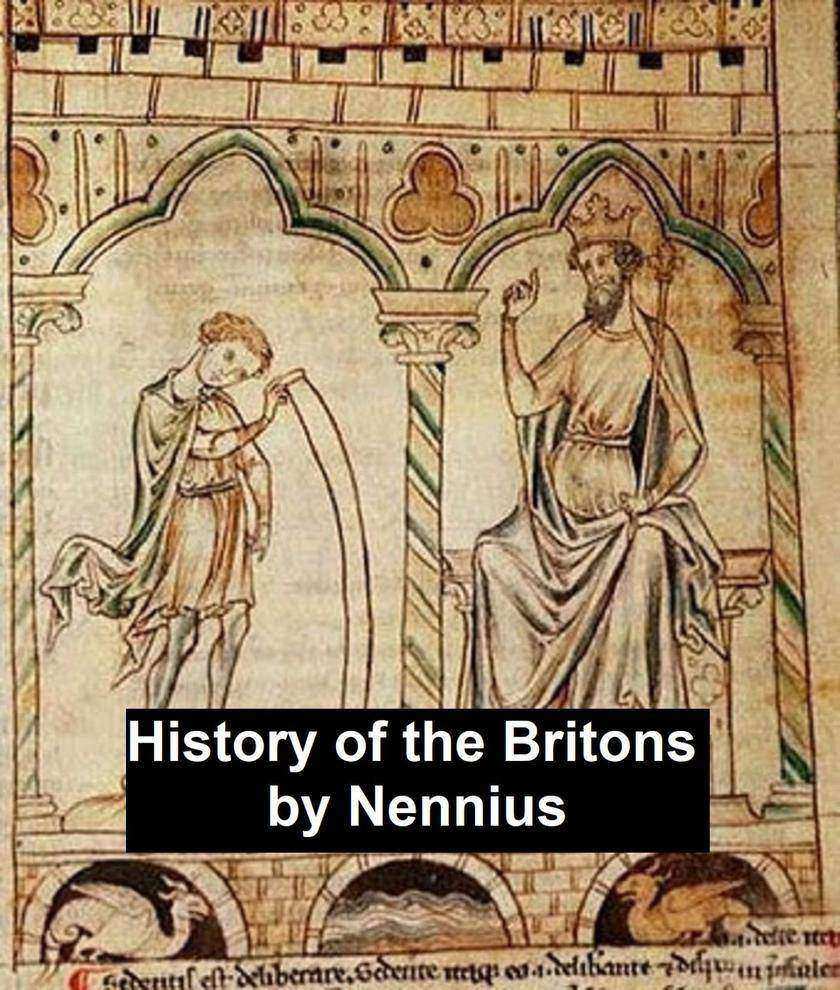
History of the Britons
¥8.09
According to Wikipedia: "Nennius was a Welsh monk of the 9th century. He has traditionally been attributed with the authorship of the Historia Brittonum, based on the prologue affixed to that work, This attribution is widely considered a secondary (10th century) tradition. Nennius was a student of Elvodugus, commonly identified with the bishop Elfodd who convinced British ecclesiastics to accept the Continental dating for Easter, and who died in 809 according to the Annales Cambriae. Nennius is believed to have lived in the area made up by present day Brecknockshire and Radnorshire counties in Powys, Wales. He lived outside the Anglo-Saxon kingdoms, isolated by mountains in a rural society."
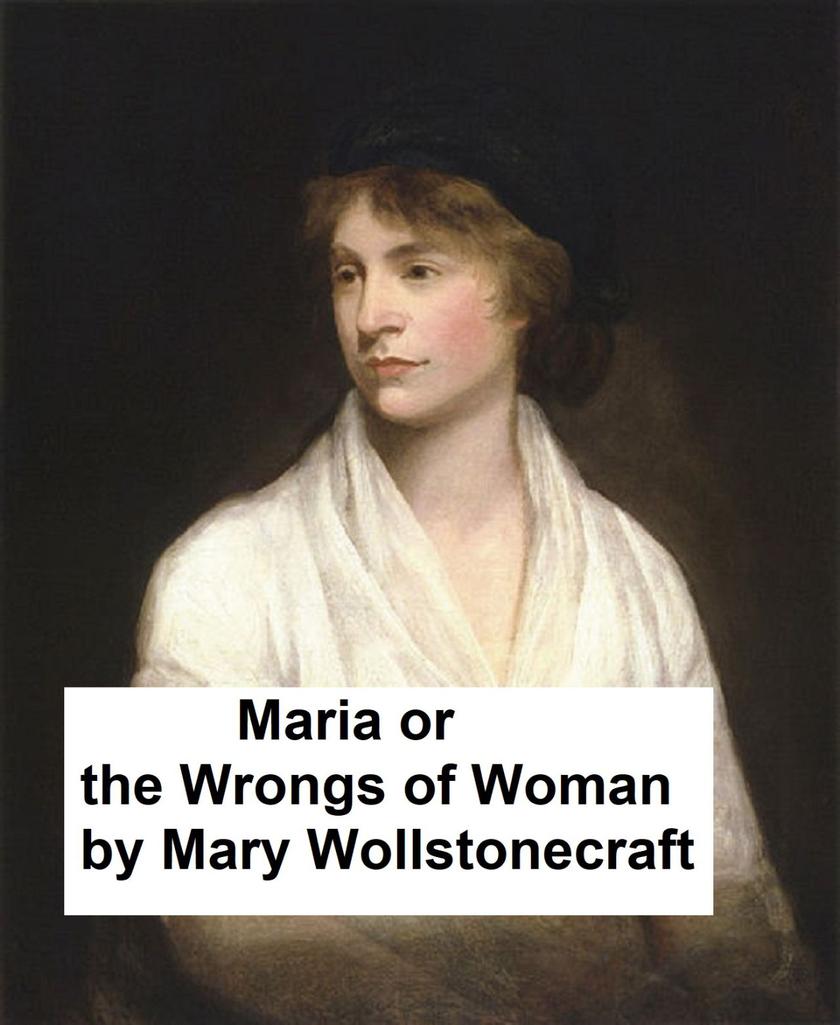
Maria or the Wrongs of Woman
¥8.09
Novel by the pioneering champion of women's rights (and the mother of Mary Shelley, author of Frankenstein). According to Wikipedia: "Maria: or, The Wrongs of Woman is the 18th century British feminist Mary Wollstonecraft's unfinished novelistic sequel to her revolutionary political treatise A Vindication of the Rights of Woman (1792). The Wrongs of Woman was published posthumously in 1798 by her husband, William Godwin, and is often considered her most radical feminist work. Wollstonecraft's philosophical and gothicpatriarchal institution of marriage in eighteenth-century Britain and the legal system that protected it. However, the heroine's inability to relinquish her romantic fantasies also reveals women's collusion in their oppression through false and damaging sentimentalism. The novel pioneered the celebration of female sexuality and cross-class identification between women. Such themes, coupled with the publication of Godwin's scandalous Memoirs of Wollstonecraft's life, made the novel unpopular at the time it was published.Twentieth-century feminist critics embraced the work, integrating it into the history of the novel and feminist discourse. It is most often viewed as a fictionalized popularization of the Rights of Woman, as an extension of Wollstonecraft's feminist arguments in Rights of Woman, and as autobiographical." novel revolves around the story of a woman imprisoned in an insane asylum by her husband. It focuses on the societal rather than the individual "wrongs of woman" and criticizes what Wollstonecraft viewed as autobiographical."
Polly Oliver's Problem
¥8.09
Novel for children and teens. According to Wikipedia: "Kate Douglas Wiggin ( 1856 - 1923) was an American children's author and educator. Kate Douglas Smith Wiggin was born in Philadelphia, and was of Welsh descent. She started the first free kindergarten in San Francisco in 1878 (the Silver Street Free Kindergarten). With her sister in the 1880s she also established a training school for kindergarten teachers. She was also a writer of children's books, the best known being The Birds' Christmas Carol (1887) and Rebecca of Sunnybrook Farm (1903)."
New Treasure Seekers
¥8.09
Novel for children. According to Wikipedia: "Edith Nesbit (married name Edith Bland; 15 August 1858 – 4 May 1924) was an English author and poet whose children's works were published under the name of E. Nesbit. She wrote or collaborated on over 60 books of fiction for children, several of which have been adapted for film and television. She was also a political activist and co-founded the Fabian Society, a precursor to the modern Labour Party.... Nesbit published approximately 40 books for children, both novels and collections of stories. Collaborating with others, she published almost as many more. According to her biographer Julia Briggs, Nesbit was "the first modern writer for children": "(Nesbit) helped to reverse the great tradition of children's literature inaugurated by [Lewis] Carroll, [George] MacDonald and Kenneth Grahame, in turning away from their secondary worlds to the tough truths to be won from encounters with things-as-they-are, previously the province of adult novels." Briggs also credits Nesbit with having invented the children's adventure story. Among Nesbit's best-known books are The Story of the Treasure Seekers (1898) and The Wouldbegoods (1899), which both recount stories about the Bastables, a middle class family that has fallen on relatively hard times. Her children's writing also included numerous plays and collections of verse. She created an innovative body of work that combined realistic, contemporary children in real-world settings with magical objects and adventures and sometimes travel to fantastic worlds."
The Shuttle
¥8.09
Novel for children. According to Wikipedia: "Frances Hodgson Burnett, ( 1849 - 1924) was an English–American playwright and author. She is best known for her children's stories, in particular The Secret Garden, A Little Princess, and Little Lord Fauntleroy. Born Frances Eliza Hodgson in Cheetham Hill, Manchester, her father died in 1854, and the family had to endure poverty and squalor in the Victorian slums of Manchester. Following the death of her mother in 1867, an 18-year-old Frances was now the head of a family of four younger siblings. She turned to writing to support them all, with a first story published in Godey's Lady's Book in 1868. Soon after she was being published regularly in Godey's, Scribner's Monthly, Peterson's Ladies' Magazine and Harper's Bazaar. Her main writing talent was combining realistic detail of working-class life with a romantic plot. Her first novel was published in 1877; That Lass o' Lowrie's was a story of Lancashire life. After moving with her husband to Washington, D.C., Burnett wrote the novels Haworth's (1879), Louisiana (1880), A Fair Barbarian (1881), and Through One Administration (1883), as well as a play, Esmeralda (1881), written with William Gillette...Her later works include Sara Crewe (1888) - later rewritten as A Little Princess (1905); The Lady of Quality (1896) - considered one of the best of her plays; and The Secret Garden (1909), the children's novel for which she is probably best known today. The Lost Prince was published in 1915..."
The Imitation of Christ
¥8.09
According to Wikipedia: "The Imitation of Christ (Latin: De Imitatione Christi) by Thomas à Kempis is a Christian devotional book. It was first composed in Latin ca.1418-1427.[1][2] It is a handbook for spiritual life arising from the Devotio Moderna movement, where Kempis was a member.[3] The Imitation is perhaps the most widely read devotional work next to the Bible,[2][4] and is regarded as a devotional and religious classic


