


 购物车
购物车 个人中心
个人中心
The Interest of America in Sea Power
¥8.09
Classic work of military history and theory. According to Wikipedia: "Alfred Thayer Mahan (September 27, 1840 - December 1, 1914) was a United States Navy officer, geostrategist, and educator. His ideas on the importance of sea power influenced navies around the world, and helped prompt naval buildups before World War I. Several ships were named USS Mahan, including the lead vessel of a class of destroyers. His research into naval History led to his most important work, The Influence of Seapower Upon History,1660-1783, published in 1890."
Sayings of the Jewish Fathers: Pirke Abot
¥8.09
Volume 3 of the Library of Jewish Classics. From the Preface: "Notwithstanding the fact that there are many editions of the Sayings of the Jewish Fathers, and that it has been translated innumerable times in all modern tongues, no apology need be given for the appearance of this little volume in the series of Jewish Classics. The Pirke Abot is indeed a classical bit of that ancient Jewish classic, the Mishnah. The translation in this edition is based largely upon that of Taylor, in his Sayings of the Jewish Fathers, and upon the excellent version of Singer, in his Authorized Daily Prayer Book."

Apologia Pro Vita Sua
¥8.09
According to Wikipedia: "Apologia Pro Vita Sua (Latin: A defense of his life) is the classic defense by John Henry Newman of his religious opinions, published in 1864 in response to what he saw as an unwarranted attack on him, the Catholic priesthood, and Roman Catholic doctrine by Charles Kingsley. The work quickly became a bestseller and has remained in print to this day. The work was tremendously influential in turning public opinion for Newman, and in establishing him as one of the foremost exponents of Catholicism in England....Venerable John Henry Newman, CO (21 February 1801 – 11 August 1890) was a Roman Catholic priest and Cardinal who converted to Roman Catholicism from Anglicanism in October 1845. In early life, he was a major figure in the Oxford Movement to bring the Church of England back to its Catholic roots. Eventually his studies in history persuaded him to become a Roman Catholic. Both before and after becoming a Roman Catholic, he wrote a number of influential books, including Via Media, Essay on the Development of Christian Doctrine (1845), Apologia Pro Vita Sua (1865-66) and the Grammar of Assent (1870)."

Boone's Wilderness Road
¥8.09
Volume 6 of the series "Historic Highways of America". According to Wikipedia: "Archer Butler Hulbert (26 Jan 1873 – 24 Dec 1933), historical geographer, writer, and professor of American history... He was Vice-Principal of the Putnam Military Academy, Zanesville, Ohio, until 1897. Hulbert then did newspaper work in Korea in 1897 and '98: he was editor of the Korean Independent (Seoul) and edited Far East American newspapers... He was Professor of American History at Marietta College 1904-18. After Marietta College, Hulbert became a lecturer in American History at Clark University from 1918 to 1919. He also was a lecturer at the University of Chicago in 1904 and 1923; and he served as archivist for the Harvard Commission on Western History (1912-16). Hulbert's last position was at Colorado College, from 1920 until his death... Hulbert's interest in trails dated from fishing trips taken during his college, when he noticed Indian trails. This interest led at first to his 16 volumes of Historic Highways of America (1902-05)."

Waterways of Westward Expansion
¥8.09
Volume 9 of the series "Historic Highways of America". According to Wikipedia: "Archer Butler Hulbert (26 Jan 1873 – 24 Dec 1933), historical geographer, writer, and professor of American history... He was Vice-Principal of the Putnam Military Academy, Zanesville, Ohio, until 1897. Hulbert then did newspaper work in Korea in 1897 and '98: he was editor of the Korean Independent (Seoul) and edited Far East American newspapers... He was Professor of American History at Marietta College 1904-18. After Marietta College, Hulbert became a lecturer in American History at Clark University from 1918 to 1919. He also was a lecturer at the University of Chicago in 1904 and 1923; and he served as archivist for the Harvard Commission on Western History (1912-16). Hulbert's last position was at Colorado College, from 1920 until his death... Hulbert's interest in trails dated from fishing trips taken during his college, when he noticed Indian trails. This interest led at first to his 16 volumes of Historic Highways of America (1902-05)."
Stratigraphic Paleobiology
¥353.16
Whether the fossil record should be read at face value or whether it presents a distorted view of the history of life is an argument seemingly as old as many fossils themselves. In the late 1700s, Georges Cuvier argued for a literal interpretation, but in the early 1800s, Charles Lyell's gradualist view of the earth's history required a more nuanced interpretation of that same record. To this day, the tension between literal and interpretive readings lies at the heart of paleontological research, influencing the way scientists view extinction patterns and their causes, ecosystem persistence and turnover, and the pattern of morphologic change and mode of speciation.?With Stratigraphic Paleobiology, Mark E. Patzkowsky and Steven M. Holland present a critical framework for assessing the fossil record, one based on a modern understanding of the principles of sediment accumulation. Patzkowsky and Holland argue that the distribution of fossil taxa in time and space is controlled not only by processes of ecology, evolution, and environmental change, but also by the stratigraphic processes that govern where and when sediment that might contain fossils is deposited and preserved. The authors explore the exciting possibilities of stratigraphic paleobiology, and along the way demonstrate its great potential to answer some of the most critical questions about the history of life: How and why do environmental niches change over timeWhat is the tempo and mode of evolutionary change and what processes drive this changeHow has the diversity of life changed through time, and what processes control this changeAnd, finally, what is the tempo and mode of change in ecosystems over time
Machiavelli's Virtue
¥147.15
Uniting thirty years of authoritative scholarship by a master of textual detail, Machiavelli's Virtue is a comprehensive statement on the founder of modern politics. Harvey Mansfield reveals the role of sects in Machiavelli's politics, his advice on how to rule indirectly, and the ultimately partisan character of his project, and shows him to be the founder of such modern and diverse institutions as the impersonal state and the energetic executive. Accessible and elegant, this groundbreaking interpretation explains the puzzles and reveals the ambition of Machiavelli's thought."e;The book brings together essays that have mapped [Mansfield's] paths of reflection over the past thirty years. . . . The ground, one would think, is ancient and familiar, but Mansfield manages to draw out some understandings, or recognitions, jarringly new."e;-Hadley Arkes, New Criterion"e;Mansfield's book more than rewards the close reading it demands."e;-Colin Walters, Washington Times"e;[A] masterly new book on the Renaissance courtier, statesman and political philosopher. . . . Mansfield seeks to rescue Machiavelli from liberalism's anodyne rehabilitation."e;-Roger Kimball, The Wall Street Journal
Gabriel Tarde On Communication and Social Influence
¥282.53
Gabriel Tarde ranks as one of the most outstanding sociologists of nineteenth-century France, though not as well known by English readers as his peers Comte and Durkheim. This book makes available Tarde's most important work and demonstrates his continuing relevance to a new generation of students and thinkers.Tarde's landmark research and empirical analysis drew upon collective behavior, mass communications, and civic opinion as elements to be explained within the context of broader social patterns. Unlike the mass society theorists that followed in his wake, Tarde integrated his discussions of societal change at the macrosocietal and individual levels, anticipating later twentieth-century thinkers who fused the studies of mass communications and public opinion research.Terry N. Clark's introduction, considered the premier guide to Tarde's opus, accompanies this important work, reprinted here for the first time in forty years.
Maps and Civilization
¥282.53
In this concise introduction to the history of cartography, Norman J. W. Thrower charts the intimate links between maps and history from antiquity to the present day. A wealth of illustrations, including the oldest known map and contemporary examples made using Geographical Information Systems (GIS), illuminate the many ways in which various human cultures have interpreted spatial relationships.The third edition of Maps and Civilization incorporates numerous revisions, features new material throughout the book, and includes a new alphabetized bibliography.?Praise for previous editions of Maps and Civilization:"e;A marvelous compendium of map lore. Anyone truly interested in the development of cartography will want to have his or her own copy to annotate, underline, and index for handy referencing."e;-L. M. Sebert, Geomatica
Contesting Nietzsche
¥311.96
In this groundbreaking work, Christa Davis Acampora offers a profound rethinking of Friedrich Nietzsche's crucial notion of the agon. Analyzing an impressive array of primary and secondary sources and synthesizing decades of Nietzsche scholarship, she shows how the agon, or contest, organized core areas of Nietzsche's philosophy, providing a new appreciation of the subtleties of his notorious views about power. By focusing so intensely on this particular guiding interest, she offers an exciting, original vantage from which to view this iconic thinker: Contesting Nietzsche.?Though existence-viewed through the lens of Nietzsche's agon-is fraught with struggle, Acampora illuminates what Nietzsche recognized as the agon's generative benefits. It imbues the human experience with significance, meaning, and value. Analyzing Nietzsche's elaborations of agonism-his remarks on types of contests, qualities of contestants, and the conditions in which either may thrive or deteriorate-she demonstrates how much the agon shaped his philosophical projects and critical assessments of others. The agon led him from one set of concerns to the next, from aesthetics to metaphysics to ethics to psychology, via Homer, Socrates, Saint Paul, and Wagner. In showing how one obsession catalyzed so many diverse interests, Contesting Nietzsche sheds fundamentally new light on some of this philosopher's most difficult and paradoxical ideas.
Maimonides and Spinoza
¥353.16
Until the last century, it was generally agreed that Maimonides was a great defender of Judaism, and Spinoza-as an Enlightenment advocate for secularization-among its key opponents. However, a new scholarly consensus has recently emerged that the teachings of the two philosophers were in fact much closer than was previously thought. In his perceptive new book, Parens sets out to challenge the now predominant view of Maimonides as a protomodern forerunner to Spinoza-and to show that a chief reason to read Maimonides is in fact to gain distance from our progressively secularized worldview.Turning the focus from Spinoza's oft-analyzed Theologico-Political Treatise, this book has at its heart a nuanced analysis of his theory of human nature in the Ethics. Viewing this work in contrast to Maimonides's Guide of the Perplexed, it makes clear that Spinoza can no longer be thought of as the founder of modern Jewish identity, nor should Maimonides be thought of as having paved the way for a modern secular worldview. Maimonides and Spinoza dramatically revises our understanding of both philosophers.
The Theory of Ecology
¥394.36
Despite claims to the contrary, the science of ecology has a long history of building theories. Many ecological theories are mathematical, computational, or statistical, though, and rarely have attempts been made to organize or extrapolate these models into broader theories. The Theory of Ecology brings together some of the most respected and creative theoretical ecologists of this era to advance a comprehensive, conceptual articulation of ecological theories. The contributors cover a wide range of topics, from ecological niche theory to population dynamic theory to island biogeography theory. Collectively, the chapters ably demonstrate how theory in ecology accounts for observations about the natural world and how models provide predictive understandings. It organizes these models into constitutive domains that highlight the strengths and weaknesses of ecological understanding. This book is a milestone in ecological theory and is certain to motivate future empirical and theoretical work in one of the most exciting and active domains of the life sciences.
Global Pigeon
¥247.21
The pigeon is the quintessential city bird. Domesticated thousands of years ago as a messenger and a source of food, its presence on our sidewalks is so common that people consider the bird a nuisance-if they notice it at all. Yet pigeons are also kept for pleasure, sport, and profit by people all over the world, from the "e;pigeon wars"e; waged by breeding enthusiasts in the skies over Brooklyn to the Million Dollar Pigeon Race held every year in South Africa.Drawing on more than three years of fieldwork across three continents, Colin Jerolmack traces our complex and often contradictory relationship with these versatile animals in public spaces such as Venice's Piazza San Marco and London's Trafalgar Square and in working-class and immigrant communities of pigeon breeders in New York and Berlin. By exploring what he calls "e;the social experience of animals,"e; Jerolmack shows how our interactions with pigeons offer surprising insights into city life, community, culture, and politics. Theoretically understated and accessible to interested readers of all stripes, The Global Pigeon is one of the best and most original ethnographies to be published in decades.
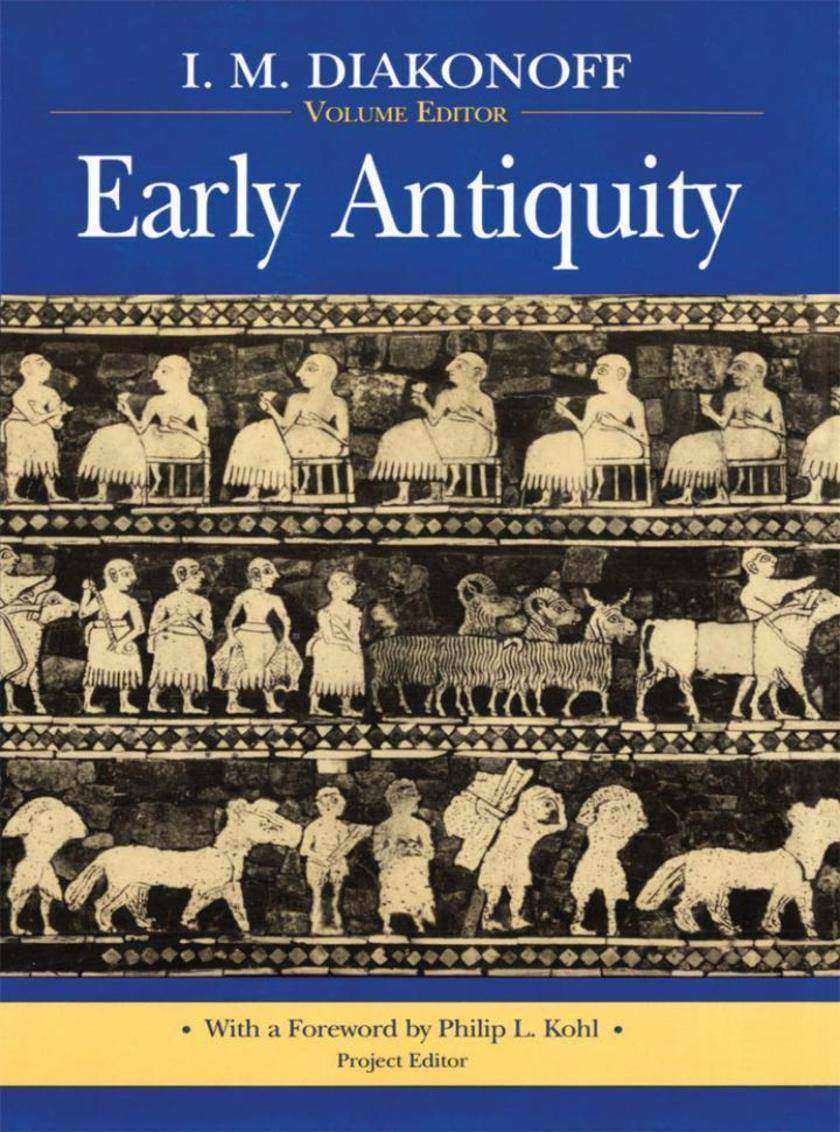
Early Antiquity
¥759.29
The internationally renowned Assyriologist and linguist I.M. Diakonoff has gathered the work of Soviet historians inthis survey of the earliest history of the ancient Near East,Central Asia, India, and China. Diakonoff and hiscolleagues, nearly all working within the general Marxisthistoriographic tradition, offer a comprehensive, accessiblesynthesis of historical knowledge from the beginnings ofagriculture through the advent of the Iron Age and the Greekcolonization in the Mediterranean and the Black Sea areas.Besides discussing features of Soviet historicalscholarship of the ancient world, the essays treat thehistory of early Mesopotamia and the course of PharaonicEgyptian civilization and developments in ancient India andChina from the Bronze Age into the first millennium B.C.Additional chapters are concerned with the early history ofSyria, Phoenicia, and Palestine, the Hittite civilization,the Creto-Mycenaean world, Homeric Greece, and the Phoenicianand Greek colonization.This volume offers a unified perspective on earlyantiquity, focusing on the economic and social relations ofproduction. Of immense value to specialists, the book willalso appeal to general readers.I. M. Diakonoff is a senior research scholar of ancienthistory at the Institute of Oriental Studies, LeningradAcademy of Sciences. Philip L. Kohl is professor ofanthropology at Wellesley College.
Personal Knowledge
¥206.01
The publication of Personal Knowledge in 1958 shook the science world, as Michael Polanyi took aim at the long-standing ideals of rigid empiricism and rule-bound logic. Today, Personal Knowledge remains one of the most significant philosophy of science books of the twentieth century, bringing the crucial concepts of "e;tacit knowledge"e; and "e;personal knowledge"e; to the forefront of inquiry.In this remarkable treatise, Polanyi attests that our personal experiences and ways of sharing knowledge have a profound effect on scientific discovery. He argues against the idea of the wholly dispassionate researcher, pointing out that even in the strictest of sciences, knowing is still an art, and that personal commitment and passion are logically necessary parts of research. In our technological age where fact is split from value and science from humanity, Polanyi's work continues to advocate for the innate curiosity and scientific leaps of faith that drive our most dazzling ingenuity.For this expanded edition, Polyani scholar Mary Jo Nye set the philosopher-scientist's work into contemporary context, offering fresh insights and providing a helpful guide to critical terms in the work. Used in fields as diverse as religious studies, chemistry, economics, and anthropology, Polanyi's view of knowledge creation is just as relevant to intellectual endeavors today as when it first made waves more than fifty years ago.
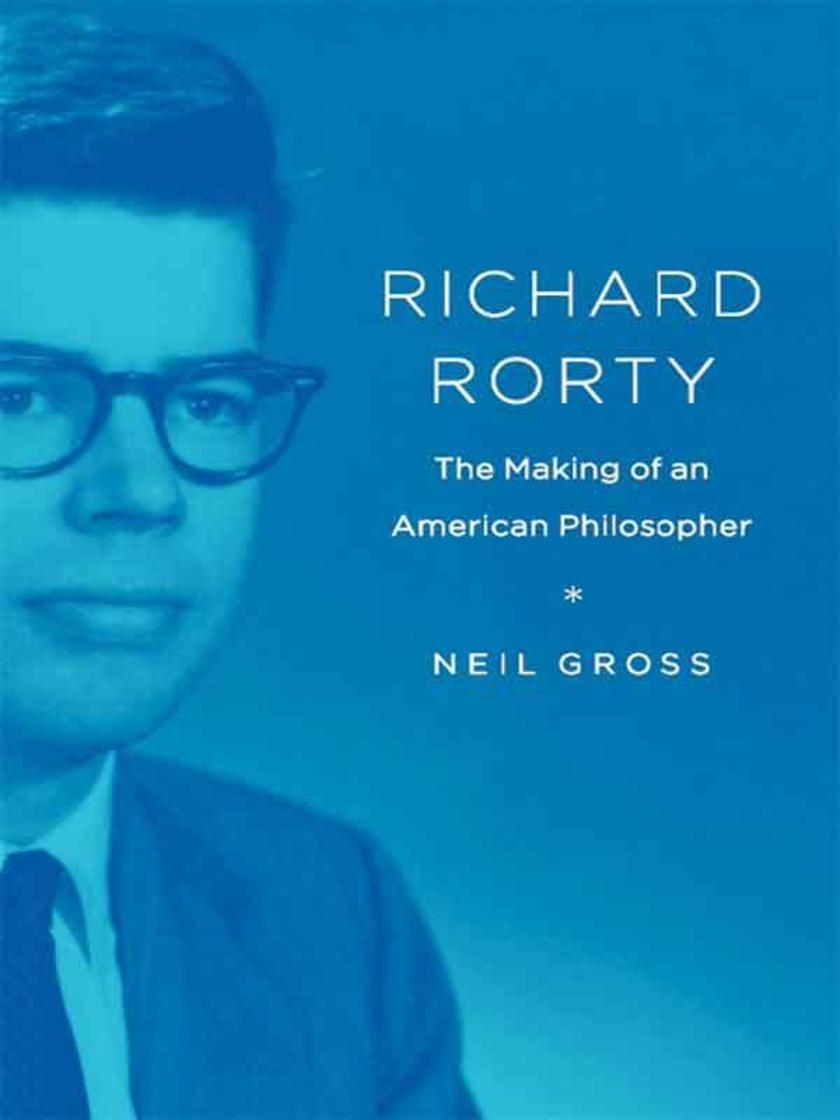
Richard Rorty
¥158.92
On his death in 2007, Richard Rorty was heralded by the New York Times as "e;one of the world's most influential contemporary thinkers."e; Controversial on the left and the right for his critiques of objectivity and political radicalism, Rorty experienced a renown denied to all but a handful of living philosophers. In this masterly biography, Neil Gross explores the path of Rorty's thought over the decades in order to trace the intellectual and professional journey that led him to that prominence.The child of a pair of leftist writers who worried that their precocious son "e;wasn't rebellious enough,"e; Rorty enrolled at the University of Chicago at the age of fifteen. There he came under the tutelage of polymath Richard McKeon, whose catholic approach to philosophical systems would profoundly influence Rorty's own thought. Doctoral work at Yale led to Rorty's landing a job at Princeton, where his colleagues were primarily analytic philosophers. With a series of publications in the 1960s, Rorty quickly established himself as a strong thinker in that tradition-but by the late 1970s Rorty had eschewed the idea of objective truth altogether, urging philosophers to take a "e;relaxed attitude"e; toward the question of logical rigor. Drawing on the pragmatism of John Dewey, he argued that philosophers should instead open themselves up to multiple methods of thought and sources of knowledge-an approach that would culminate in the publication of Philosophy and the Mirror of Nature, one of the most seminal and controversial philosophical works of our time.In clear and compelling fashion, Gross sets that surprising shift in Rorty's thought in the context of his life and social experiences, revealing the many disparate influences that contribute to the making of knowledge. As much a book about the growth of ideas as it is a biography of a philosopher, Richard Rorty will provide readers with a fresh understanding of both the man and the course of twentieth-century thought.
Angels Among Us
¥48.39
Gale was a strong swimmer -- but halfway across the lake she realized she couldn't make it to the other side ...Annabel and her three-year-old daughter turned suddenly -- and saw a car hurtling straight toward them ...Ken fell and his hunting rifle accidentally went off -- leaving him wounded, bleeding and alone in the frozen woods...and then they appeared! Angels do exist -- as illustrated in these moving,compelling and true contemporary accounts of ordinary people whose lives were touched and saved by the extraordinary.
A Civilization of Love
¥83.03
Carl Anderson, Supreme Knight of the Knights of Columbus, surveys the exciting and history-changing ideas of Pope John Paul II in A Civilization of Love. By popularizing not only John Paul's vision but also that of his successor, Benedict XVI, Anderson hopes to inspire Christians to work toward creating a civilization of love. In such a civilization every person is a child of God. We are all intrinsically valuable. The battle today is between the culture of death (where people are judged by their social or economic value) and the culture of life. Anderson pushes aside religious differences in order to spread a message of hope to those who are weary of the constant turmoil of modern society. While he does specifically challenge Christians to take an active role in their faith, you do not have to be a Christian to participate in the movement toward a civilization of love.By embracing the culture of life and standing with those most marginalized and deemed "useless" or a "burden" on modern society, Christians can change the tone and direction of our culture. Anderson demonstrates that regardless of our differences, we can come together on the centrality of loving and caring for others. He brings a message of inclusion and hope in the midst of a clash of civilizations and provides a road map for helping Christians understand their role in the world.

The Sensory-Sensitive Child
¥77.49
In a book likely to transform how parents manage many of their child's daily struggles, Drs. Smith and Gouze explain the central and frequently unrecognized role that sensory processing problems play in a child's emotional and behavioral difficulties. Practicing child psychologists, and themselves parents of children with sensory integration problems, their message is innovative, practical, and, above all, full of hope.A child with sensory processing problems overreacts or underreacts to sensory experiences most of us take in stride. A busy classroom, new clothes, food smells, sports activities, even hugs can send such a child spinning out of control. The result can be heartbreaking: battles over dressing, bathing, schoolwork, social functions, holidays, and countless other events. In addition, the authors say, many childhood psychiatric disorders may have an unidentified sensory component.Readers Will Learn: The latest scientific knowledge about sensory integration How to recognize sensory processing problems in children and evaluate the options for treatment How to prevent conflicts by viewing the child's world through a "sensory lens" Strategies for handling sensory integration challenges at home, at school, and in twenty-first century kid culture The result: a happier childhood, a more harmonious family, and a more cooperative classroom. This thoroughly researched, useful, and compassionate guide will help families start on a new path of empowerment and success.
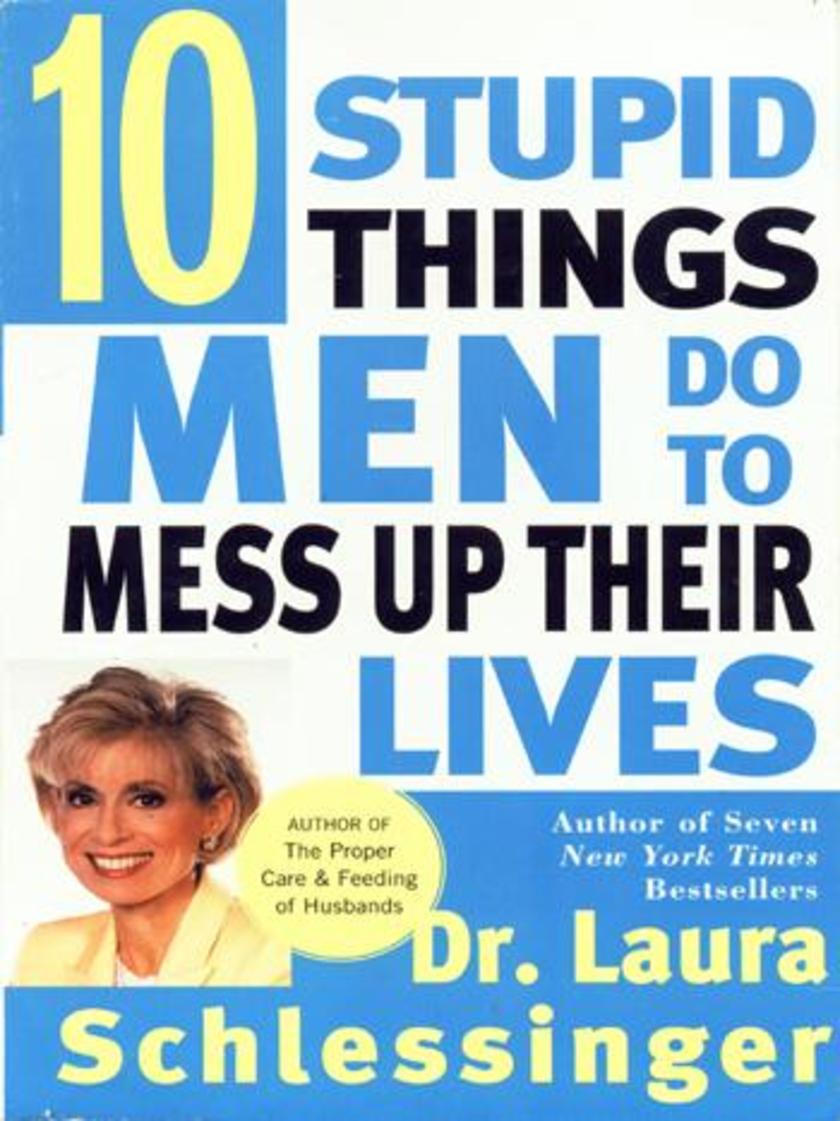
Ten Stupid Things Men Do to Mess Up Their Lives
¥77.49
For every woman who wants to know what her man is thinking. Internationally syndicated radio superhost and columnist, controversial psycho-therapist, and author of the break-out New York Times bestsellers How Could You Do That?! and Ten Stupid Things Women Do to Mess Up Their Lives, Dr. Laura Schlessinger is back with Ten Stupid Things Men Do to Mess Up Their Lives. In ten vital, compelling chapters, Dr. Laura speaks her mind on: Stupid Chivalry By getting involved with the wrong woman (weak, flaky, damaged, needy, desperate, stupid, untrustworthy, immature, etc.) you think that your love will save/transform her.Stupid Independence Unwilling to admit "need" for bonding and intimacy, you hide in excesses of work, play, drink, drugs, porn, and meaningless sex. Stupid Ambition Unable to comfortably and proudly accept your inherent importance to society and family as husband and father, you bow to the false idols of money, toys, power, and status. Stupid Strength Uncomfortable with feeling weak, vulnerable, useless, powerless, or rejected, you use intimidation, force, or passive-aggressiveness to regain control. Stupid Sex Taking an attraction, opportunity, or erection as a "sign," you measure your masculinity and power by sexual conquests, infidelities, and orgasms. Stupid Matrimony Lacking a mature sense of the purpose, meaning, or value of marriage, you realize too late you've gone down the aisle with the wrong woman for the wrong reasons and feel helpless to "fix it." Stupid HusbandingThinking that marriage is the honorable discharge from loving courtship, you continue to live as though you were single and your "mommy-wife" will take care of everything else. Stupid ParentingBelieving that only women/mothers nurture children, you withdraw from hands-on parenting to assert your masculine importance, missing out on the true "soul food" of a child's hug. Stupid BoyishnessHaving not yet worked out a comfortable emotional and social understanding with your mother, you form relationships with women that become geared to avenge, resolve, or protect you from your ties to Mommy. Stupid Machismo Understanding the true and meaningful difference between being male and a man, you can become a man.

Bad Childhood---Good Life
¥94.10
In her most important book yet, Dr. Laura Schlessinger shows men and women that they can have a Good Life no matter how Bad their Childhood was.For each of us, there is a connection between our early family dynamics and experiences and our current attitudes and decisions. Many of the people Dr. Laura has helped did not realize how their histories impacted their adult lives, or how their choices in people, repetitive situations, and decisions -- even their emotional reactions -- were connected to those early negative experiences, playing a major role in their current unhappiness. Dr. Laura will help you realize that no matter what circumstances you came from or currently live in, you are ultimately responsible for how you react to them. The acceptance of this basic truth is the source of your power to secure the Good Life you long for. In her signature straightforward style, with real-life examples, Dr. Laura shows you what you will gain by not being satisfied with an identity as a victim, or even as a survivor -- you should strive to be a victor! In Bad Childhood -- Good Life, Dr. Laura will guide you to accept the truth of the assaults on your psyche and soul, understand your unique coping style and how it impacts your daily thoughts and actions, and help you embrace a life of more peace and happiness.


