


 购物车
购物车 个人中心
个人中心

Parteneri perfec?i
¥7.36
Joel Blackstone a petrecut zece ani ca s? transforme Thornquist Gear dintr-un mic magazin local ?ntr-un juc?tor important pe pia?a echipamentelor sportive ?i de camping. Recompensa pentru munca sa era promisiunea b?tr?nului Thornquist de a-i vinde afacerea ?n mai pu?in de un an. Din p?cate, proprietarul moare pe nea?teptate ?i-i las? mo?tenire imperiul unei nepoate din Vestul Mijlociu – nimeni alta dec?t o bibliotecar?. Joel consider? acest lucru doar o piedic? minor? – se va oferi pur ?i simplu s? cumpere compania de la ea.Leticia Thornquist este profund ?ndurerat? de moartea unchiului ei ?i vede ?n mo?tenire ocazia perfect? de a-?i schimba radical via?a, mai ales dup? ce ??i surprinde logodnicul ?ntr-o postur? extrem de compromi??toare. Drept pentru care se hot?r??te s?-?i dea demisia, s? se mute la Seattle ?i s? preia conducerea companiei. Cur?nd ?ns? ??i d? seama c? un obstacol major ?i st? ?n cale – Joel Blackstone.Prin urmare, este inevitabil ca, profesional, Joel ?i Letty s? se ?nfrunte cu ?nfl?c?rare pentru c??tigarea controlului asupra companiei… dar asta nu ?i ?mpiedic? s? realizeze c? sunt parteneri perfec?i ?n toate celelalte privin?e.
The Complete Dialogues of Plato
¥8.09
This book-collection file includes all 26 dialogues: Apology, Charmides (and preface to the collection), Cratylus, Critias, Crito, Euthyphro, Euthydemus, Gorgias, Ion, Laches, Laws, Lesser Hippias, Lysis, Menexus, Meno, Parmenides, Phaedo, Phaedrus, Philebus, Protagoras, Republic, Sophist, Statesman, Symposium, Theaetetus, and Timaeus. The Jowett translation. According to Wikipedia: "Plato (428/427 BC[a] – 348/347 BC), was a Classical Greek philosopher, who, together with his mentor, Socrates, and his student, Aristotle, helped to lay the foundations of Western philosophy.[2] Plato was also a mathematician, writer of philosophical dialogues, and founder of the Academy in Athens, the first institution of higher learning in the western world. Plato was originally a student of Socrates, and was as much influenced by his thinking as by what he saw as his teacher's unjust death."

Boone's Wilderness Road
¥8.09
Volume 6 of the series "Historic Highways of America". According to Wikipedia: "Archer Butler Hulbert (26 Jan 1873 – 24 Dec 1933), historical geographer, writer, and professor of American history... He was Vice-Principal of the Putnam Military Academy, Zanesville, Ohio, until 1897. Hulbert then did newspaper work in Korea in 1897 and '98: he was editor of the Korean Independent (Seoul) and edited Far East American newspapers... He was Professor of American History at Marietta College 1904-18. After Marietta College, Hulbert became a lecturer in American History at Clark University from 1918 to 1919. He also was a lecturer at the University of Chicago in 1904 and 1923; and he served as archivist for the Harvard Commission on Western History (1912-16). Hulbert's last position was at Colorado College, from 1920 until his death... Hulbert's interest in trails dated from fishing trips taken during his college, when he noticed Indian trails. This interest led at first to his 16 volumes of Historic Highways of America (1902-05)."

Waterways of Westward Expansion
¥8.09
Volume 9 of the series "Historic Highways of America". According to Wikipedia: "Archer Butler Hulbert (26 Jan 1873 – 24 Dec 1933), historical geographer, writer, and professor of American history... He was Vice-Principal of the Putnam Military Academy, Zanesville, Ohio, until 1897. Hulbert then did newspaper work in Korea in 1897 and '98: he was editor of the Korean Independent (Seoul) and edited Far East American newspapers... He was Professor of American History at Marietta College 1904-18. After Marietta College, Hulbert became a lecturer in American History at Clark University from 1918 to 1919. He also was a lecturer at the University of Chicago in 1904 and 1923; and he served as archivist for the Harvard Commission on Western History (1912-16). Hulbert's last position was at Colorado College, from 1920 until his death... Hulbert's interest in trails dated from fishing trips taken during his college, when he noticed Indian trails. This interest led at first to his 16 volumes of Historic Highways of America (1902-05)."
The Origin and Deeds of the Goths
¥8.09
This English version first published in 1908. "For the first time the story of the Goths recorded in the Getica of Jordanes, a Christian Goth who wrote his account in the year 551, probably in Constantinople, is now put in English form, as part of an edition of the Getica prepared by Mr. Mierow. Those who care for the romance of history will be charmed by this great tale of a lost cause and will not find the simple-hearted exaggerations of the eulogist of the Gothic race misleading. He pictured what he believed or wanted to believe, and his employment of fable and legend, as well as the naive exhibition of his loyal prejudices, merely heightens the interest of his story." According to Wikipedia: "Jordanes, also written Jordanis or, uncommonly, Jornandes, was a 6th-century Roman bureaucrat, who turned his hand to history later in life. While he also wrote Romana about the history of Rome, his best-known work is his Getica, written in Constantinople about AD 551. It is the only extant ancient work dealing with the early history of the Goths."
Rudimental Divine Science
¥8.09
First published in 1891. According to Wikipedia: "Mary Baker Eddy (born Mary Morse Baker July 16, 1821 – December 3, 1910) was the founder of the Christian Science movement. Deeply religious, she advocated Christian Science as a spiritual practical solution to health and moral issues. She wrote Science and Health with Key to the Scriptures, founded The First Church of Christ, Scientist of Boston in 1879, and several periodicals including The Christian Science Monitor. She took the name Mary Baker Glover from her first marriage and was also known as Mary Baker Glover Eddy or Mary Baker G. Eddy from her third marriage. She did much spiritual teaching, lecturing, and instantaneous healing. Her influence continues to grow through her writings."
Pragmatism:A New Name for Some Old Ways of Thinking
¥8.09
A profoundly influential figure in American psychology, William James (1842–1910) was also a philosopher of note, who used Charles S. Peirce's theories of pragmatism as a basis for his own conception of that influential philosophy. For James, this meant an emphasis on "radical empiricism" and the concept that the meaning of any idea — philosophical, political, social, or otherwise — has validity only in terms of its experiential and practical consequences. James propounded his theories of pragmatism in this book, one of the most important in American philosophy. In a sense, he wished to test competing systems of thought in the "marketplace of actual experience" to determine their validity, i.e. whether adopting a particular philosophical theory or way of looking at the world makes an actual difference in individual conduct or in how we perceive and react to the varieties of experience. In these pages, James not only makes a strong case for his own ideas, but mounts a powerful attack against the transcendental and rationalist tradition. For anyone interested in William James or the history of American philosophical thought, Pragmatism is an essential and thought provoking reference. In this handy, inexpensive edition, it will challenge and stimulate any thinking person.
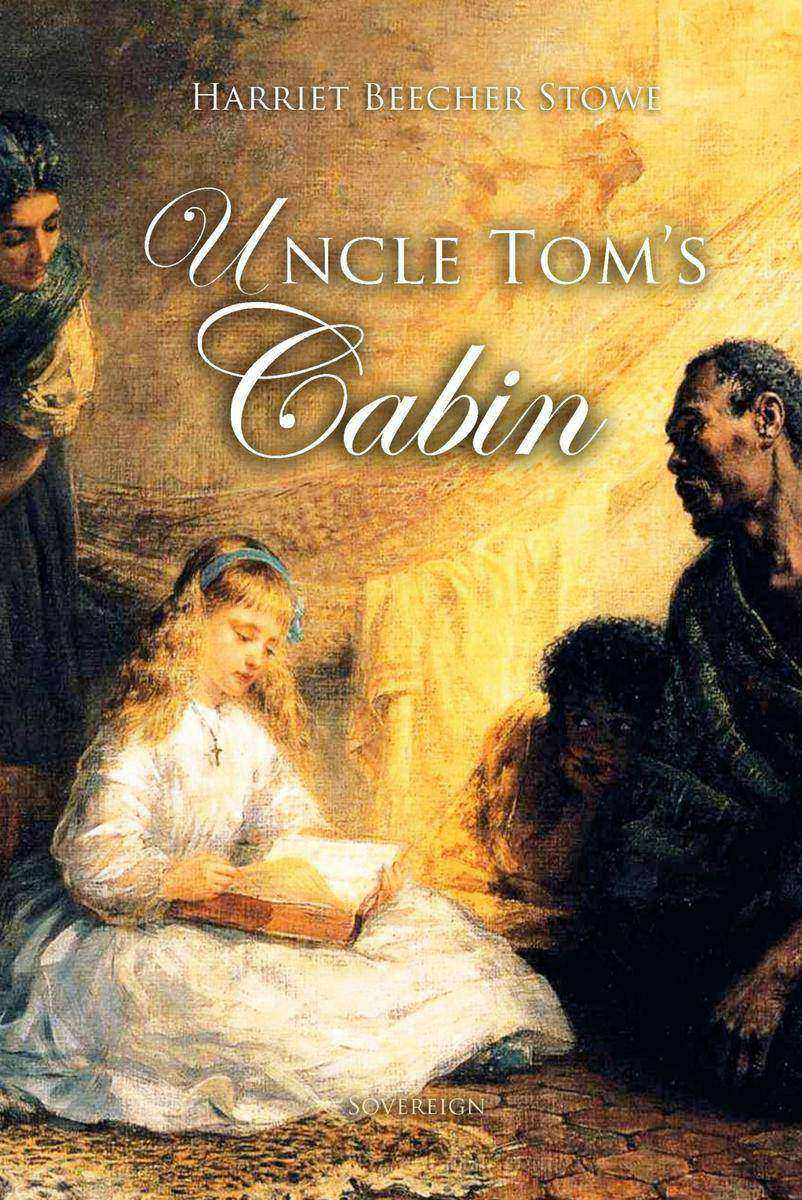
Uncle Tom's Cabin
¥40.79
Uncle Tom's Cabin is a hugely influential story written by Harriet Beecher Stowe, a Connecticut-born teacher at the Hartford Female Academy and an active abolitionist. Stowe featured the character of Uncle Tom, a long-suffering black slave around whom the stories of other characters revolve. The sentimental novel depicts the reality of slavery while also asserting that Christian love can overcome something as destructive as enslavement of fellow human beings.

Deadly Storms
¥97.69
This series of nonfiction readers will grab a student's interest from the very first page! Designed with struggling readers in mind, these riveting 92-page books offer short chapters on significant disasters. Each chapter is its own mini-book, which includes a timeline, key terms, and interesting facts. Fascinating black and white photographs keep the pages turning. A bibliography encourages further topical reading. Disasters are inherently frightening, riveting, and involving. Grabbed straight from the headlines, these disasters leave tragedy, destruction, and years of anguish: Cyclones, Hurricanes, Tornadoes, The Perfect Storm, Hurricane Katrina, and more.

Terrorism
¥97.69
This series of nonfiction readers will grab a student's interest from the very first page! Designed with struggling readers in mind, these riveting 92-page books offer short chapters on significant disasters. Each chapter is its own mini-book, which includes a timeline, key terms, and interesting facts. Fascinating black and white photographs keep the pages turning. A bibliography encourages further topical reading. Disasters are inherently frightening, riveting, and involving. Grabbed straight from the headlines, these disasters leave tragedy, destruction, and years of anguish: The Munich Massacre, Sara Jane Olson, The Achille Lauro, The Unabomber, Oklahoma City, 9/11, The London Underground, and more.

To Get Ukraine
¥90.03
Since Maidan in Kyiv and Russian presence in the Crimea, Ukraine has never been the same. In 2014, the country is deeply divided by the conflict imposed on the Ukrainians. But since nobody actually asked the nation, author Oleksandr Shyshko decided to take matters into his own hands and look for the answer to the ultimate question – who are the Ukrainians and what do they want. Shyshko spent his time researching the national identity of native Ukrainians, and as he went he stumbled on a discovery that led to yet another question – where is Ukraine going, the so-called Quo vadis? of the Ukrainian people. His findings and critical comments gave birth to this new book that is now for the first time being published in English. To Get Ukraine.
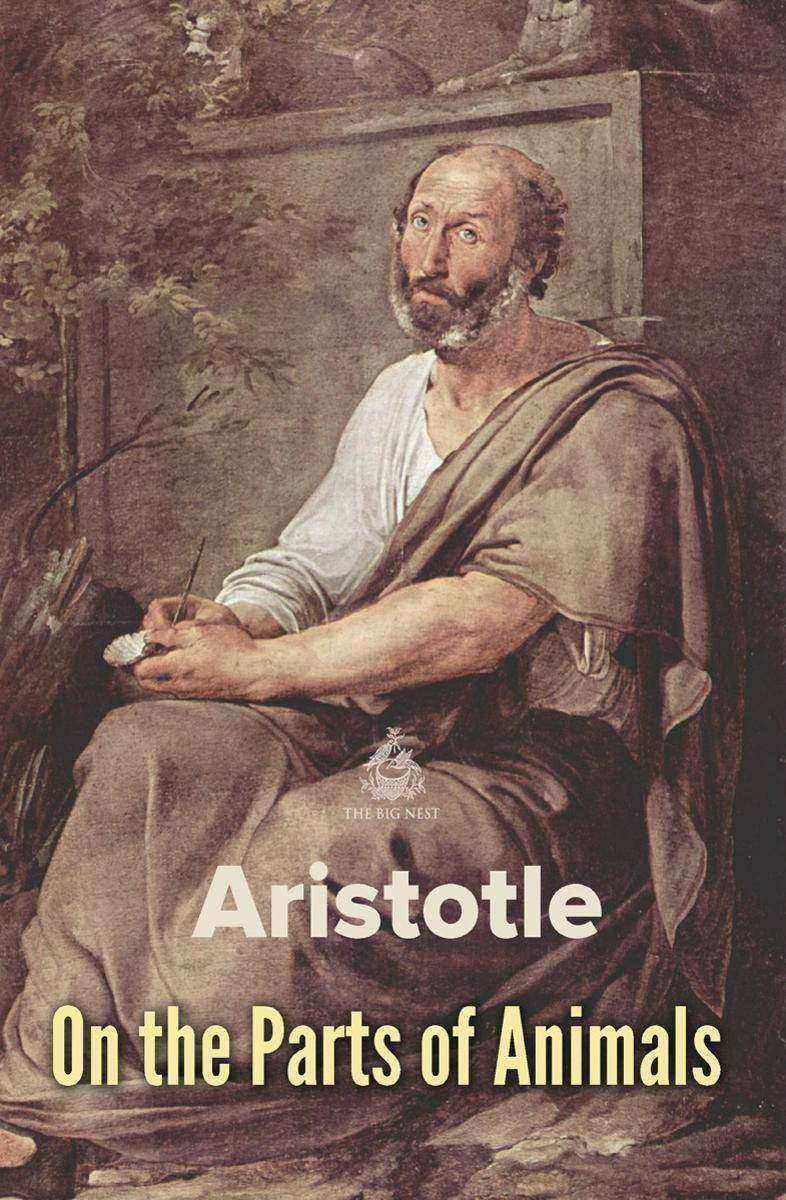
On the Parts of Animals
¥40.79
Every systematic science, the humblest and the noblest alike, seems to admit of two distinct kinds of proficiency; one of which may be properly called scientific knowledge of the subject, while the other is a kind of educational acquaintance with it. For an educated man should be able to form a fair off-hand judgement as to the goodness or badness of the method used by a professor in his exposition. To be educated is in fact to be able to do this; and even the man of universal education we deem to be such in virtue of his having this ability.
The Enchiridion
¥40.79
The Enchiridion or Manual of Epictetus is a guide on Stoic philosophy and ethical advice compiled by Arrian, a 2nd-century disciple of the Greek philosopher Epictetus. The book has played a disproportionately large role in the rise of modern attitudes and modern philosophy. Montaigne had a copy of the Enchiridion among his books. Frederick the Great carried the book with him on all campaigns. It was a source of inspiration and encouragement to Anthony, Earl of Shaftesbury, in the serious illness which ended only in his death; many pages of his diaries contain passages copied from the Enchiridion. It has been studied and widely quoted by Scottish philosophers like Francis Hutcheson, Adam Smith, and Adam Ferguson who valued Stoic moral philosophy for its reconciliation of social dependency and personal independence.
The Discourses
¥40.79
The Discourses are a series of extracts of the teachings of the Stoic philosopher Epictetus written down by Arrian c. 108 AD. It is a guide for the advanced student of Stoicism to show him the best roads toward the goal of becoming a true philosopher.

Fire Disasters
¥97.69
This series of nonfiction readers will grab a student's interest from the very first page! Designed with struggling readers in mind, these riveting 92-page books offer short chapters on significant disasters. Each chapter is its own mini-book, which includes a timeline, key terms, and interesting facts. Fascinating black and white photographs keep the pages turning. A bibliography encourages further topical reading. Disasters are inherently frightening, riveting, and involving. Grabbed straight from the headlines, these disasters leave tragedy, destruction, and years of anguish: London Bridge, The Morro Castle, Chicago, The Iroquois Theater, Australia's Bush Fires, The Station Nightclub, The West Burns, and more.

Volcanoes
¥97.69
This series of nonfiction readers will grab a student's interest from the very first page! Designed with struggling readers in mind, these riveting 92-page books offer short chapters on significant disasters. Each chapter is its own mini-book, which includes a timeline, key terms, and interesting facts. Fascinating black and white photographs keep the pages turning. A bibliography encourages further topical reading. Disasters are inherently frightening, riveting, and involving. Grabbed straight from the headlines, these disasters leave tragedy, destruction, and years of anguish: Vesuvius, Krakatoa, Mount Pelee, Mount St. Helens, Mount Pinatubo, Hawaii's Gentle Giants, The World's Most Active Volcanoes, and more.
Attacked
¥97.69
Discover the astonishing true stories--that will make readers laugh, cry, and gasp--behind the headlines: The Boston Massacre, Pearl Harbor, Kent State, Sarajevo, Pentagon, Cyber Attacks, and more. This series of nonfiction readers will grab a student's interest from the very first page! Designed with struggling readers in mind, these riveting books offer short chapters on high-interest headlines. Each chapter is its own mini-book, which includes a timeline, key terms, and interesting facts. Fascinating black and white photographs keep the pages turning. A bibliography encourages further topical reading.
Shot Down
¥97.69
Discover the astonishing true stories--that will make readers laugh, cry, and gasp--behind the headlines: Ace Pilot, Spy Plane, Flight 007, Dark Horse Six, Passenger Planes, Navy Seal Team 6, and more. This series of nonfiction readers will grab a student's interest from the very first page! Designed with struggling readers in mind, these riveting books offer short chapters on high-interest headlines. Each chapter is its own mini-book, which includes a timeline, key terms, and interesting facts. Fascinating black and white photographs keep the pages turning. A bibliography encourages further topical reading.
Stowed Away
¥97.69
Discover the astonishing true stories--that will make readers laugh, cry, and gasp--behind the headlines: Balboa in a Barrel, Harriet Tubman, Brown Tree Snakes, Guzman in the Wheel, Deadly Truck Trip, Man Ships Himself, The Case of the Huanglongbing, and more. This series of nonfiction readers will grab a student's interest from the very first page! Designed with struggling readers in mind, these riveting books offer short chapters on high-interest headlines. Each chapter is its own mini-book, which includes a timeline, key terms, and interesting facts. Fascinating black and white photographs keep the pages turning. A bibliography encourages further topical reading.
Trapped
¥97.69
Discover the astonishing true stories--that will make readers laugh, cry, and gasp--behind the headlines: The Triangle Shirtwaist Fire, A Sticky Mess, The Iron Curtain, The Kursk, The Quecreek Mine Flood, The Chilean Miners, and more. This series of nonfiction readers will grab a student's interest from the very first page! Designed with struggling readers in mind, these riveting books offer short chapters on high-interest headlines. Each chapter is its own mini-book, which includes a timeline, key terms, and interesting facts. Fascinating black and white photographs keep the pages turning. A bibliography encourages further topical reading.
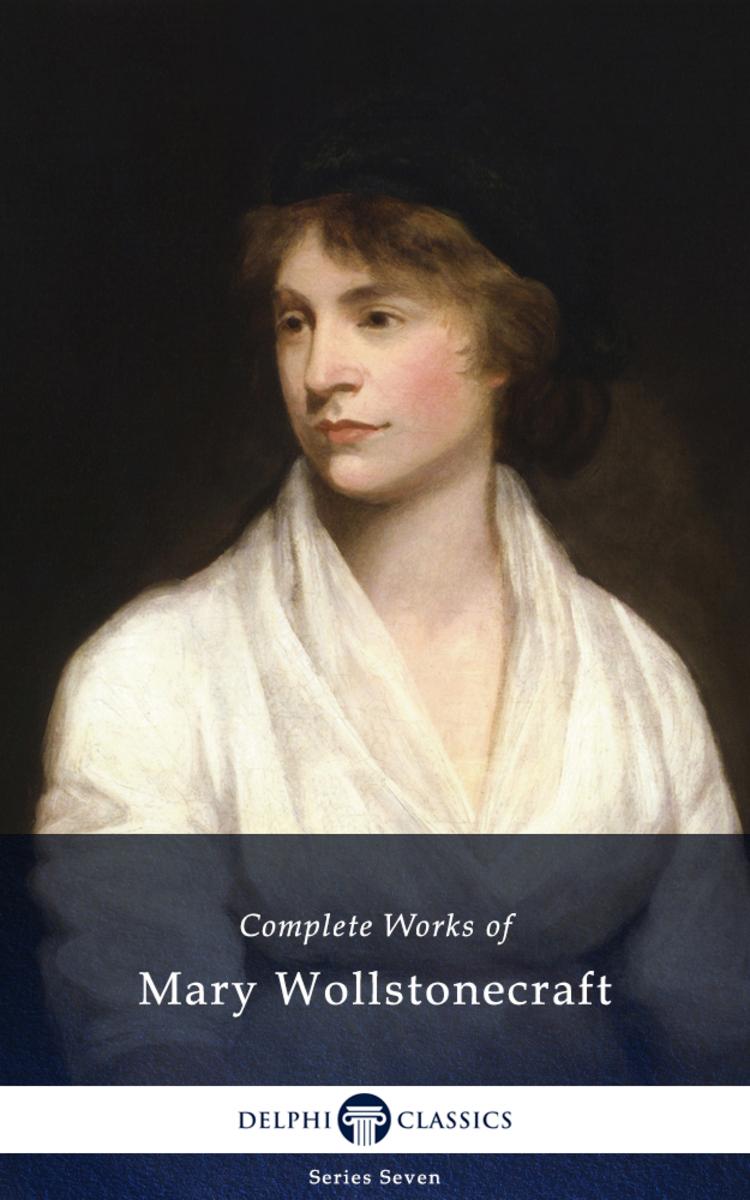
Delphi Complete Works of Mary Wollstonecraft (Illustrated)
¥24.44
English writer, philosopher and pioneering advocate of women's rights, Mary Wollstonecraft wrote novels, treatises, a travel narrative, a history of the French Revolution and a children's book. In her landmark feminist text, A Vindication of the Rights of Woman (1792), Wollstonecraft argued that women are not naturally inferior to men, but appeared to be only because they lacked education. She called for men and women to be treated equally, paving the way for the emergence of the feminist movement at the turn of the twentieth century. This comprehensive eBook presents Wollstonecraft’s complete fictional works, with numerous illustrations, rare texts, informative introductions and the usual Delphi bonus material. (Version 1) * Beautifully illustrated with images relating to Wollstonecraft’s life and works* Concise introductions to the novels and other texts* All the novels, with individual contents tables* Images of how the books were first published, giving your eReader a taste of the original texts* Excellent formatting of the texts* Includes Wollstonecraft’s complete pamphlets* ‘A Vindication of the Rights of Man’ in presented with an appendix of Burke’s ‘Reflections on the Revolution in France’* Includes Wollstonecraft’s posthumously published Works* Features three biographies, including the author’s husband’s controversial memoir - discover Wollstonecraft’s personal and literary life* Scholarly ordering of texts into chronological order and literary genres Please visit www.delphiclassics.com to browse through our range of exciting titles CONTENTS: The FictionMARY: A FICTIONMARIA; OR, THE WRONGS OF WOMANTHE CAVE OF FANCY The Children’s BookORIGINAL STORIES FROM REAL LIFE The Non-FictionTHOUGHTS ON THE EDUCATION OF DAUGHTERSA VINDICATION OF THE RIGHTS OF MENA VINDICATION OF THE RIGHTS OF WOMANAN HISTORICAL AND MORAL VIEW OF THE FRENCH REVOLUTION; AND THE EFFECT IT HAS PRODUCED IN EUROPELETTERS WRITTEN DURING A SHORT RESIDENCE IN SWEDEN, NORWAY, AND DENMARKON POETRY, AND OUR RELISH FOR THE BEAUTIES OF NATURELETTER ON THE PRESENT CHARACTER OF THE FRENCH NATIONFRAGMENT OF LETTERS ON THE MANAGEMENT OF INFANTSLETTERS TO MR. JOHNSON, BOOKSELLER, IN ST. PAUL’S CHURCH-YARDLESSONSHINTSLETTERS The BiographiesMEMOIRS OF THE AUTHOR OF A VINDICATION OF THE RIGHTS OF WOMAN by William GodwinMARY WOLLSTONECRAFT by Elizabeth Robins PennellA BRIEF SKETCH OF THE LIFE OF MARY WOLLSTONECRAFT Please visit www.delphiclassics.com to browse through our range of exciting titles or to purchase this eBook as a Parts Edition of individual eBooks


