


 购物车
购物车 个人中心
个人中心

Wellington: A Personal History
¥110.46
A bestseller in hardback, this is a highly-praised and much-needed biography of the first Duke of Wellington, concentrating on the personal life of the victor of Waterloo, and based on the fruits of modern research. Christopher Hibbert is Britain’s leading popular historian. Wellington (1769–1852) achieved fame as a soldier fighting the Mahratta in India. His later brilliant generalship fighting the French in Spain and his defeat of Napoleon at Waterloo earned him a dukedom and the award of Apsley House (No. 1, London) and a large estate in Hampshire. His second career saw him make his mark as a politician with commanding presence. Appointed Commander-in-Chief for life, he became Prime Minister in 1827 and presided over the emancipation of Roman Catholics and the formation of the country’s first police force. Privately, he was unhappily married, and had several mistresses (including two of Napoleon’s) and many intimate friendships with women. The private side of the public man has never been so richly delineated as in this masterly biography.
Climate and Weather (Collins New Naturalist Library, Book 115)
¥221.12
Reviewing the history and causes of climatic change and evaluating regional models, this New Naturalist volume offers an important analysis of climatic variations. Much has happened in our knowledge of climate and weather over the past fifty years. The recording of relations between weather and natural history has continued to be of constant interest, with the weather providing a continual and essential backdrop to natural history accounts. But the significance of this backdrop has been very much widened by our better understanding of climate change and its effects on flora, fauna and biodiversity and also by our increased knowledge of historical climates and weather events. In this timely addition to the New Naturalist Library, leading climatologist John Kington offers a comprehensive and up-to-date survey of the diverse climate of the British Isles. Examining the ways in which regional climates evolve from the interplay of meteorological conditions and geography of the British Isles, the author analyses the climatic characteristics and provides a historical overview of changing weather patterns, which is complemented by fascinating and never-before published photographs. Kington reviews the many ways in which people have observed and recorded weather conditions throughout the ages. It is a story based on a rich and varied resource stretching back 2000 years. This approach has allowed climatic trends, anomalies and extremes to be identified over the past two millennia, putting our present experience of weather into striking perspective.
Extreme Insects
¥120.47
Insects are the most extreme organisms on Earth and, despite their diminutive size, they wield inordinate power. With the exception of the polar icecaps, every terrestrial ecosystem on earth is colonized by them, and they account for almost three-quarters of all named animals – that's one million species at the last count! This book is a celebration of the insect universe, exploring their amazing forms and functions, their fascinating behaviour and the enormous impact they have on our lives. With its lively and informative text, it looks at insects in all their extremes, from the biggest, fastest and fiercest to the best nest builder, most devious hunter and deadliest bride. Insects are extreme in numbers – a single leaf-cutter ant nest, the size of a large camper van, may contain seven million individuals working together as a single giant super-organism. Insects are extreme in their bizarre forms – the stalk-eyed fly, as its name suggests, carries its eyes on the end of two ludicrously long stalks. And insects are invariably extreme in behaviour – take for instance the giraffe-necked weevil that holds head-bobbing contests to win a mate. Yet there is always method in their apparent madness, as each strange form and function is an adaptation designed to solve the extreme pressures that arise through the struggle to survive in a world that is always dangerous, competitive and unforgiving.
Heroes: The Greatest Generation and the Second World War
¥82.01
‘Heroes’ is the story of an extraordinary generation of young men, mostly British, who came of age in the Second World War. These young men – and women – found themselves facing life-threatening danger and the kind of responsibility few would be prepared to shoulder today. Whether fighting in the jungles of Burma or on the D-Day beaches, as submariners, pilots, spies or prisoners of war, young soldiers in WWII displayed astonishing courage and resilience, united by honour and bound by the fellowship of their comrades. Those who made it home are now a passing generation, and for many this is the last chance for them to tell their stories – men like football legend Tom Finney, who saw action in southern Italy; or James Bond set-designer Ken Adam, a German Jew who flew as a fighter pilot for the RAF; or identical twins Tom and Dee Bowles, who landed together on Easy Red beach on D-Day. Many of these young men never returned home and those who did faced insurmountable challenges assimiliating back into civilian life. ‘Heroes’ is a moving and uplifting tribute to an remarkable generation.

The Trial: A History from Socrates to O. J. Simpson
¥94.67
In an extraordinary history of the criminal trial, Sadakat Kadri shows with wit, legal insight and a travel writer’s eye for detail, how the irrationality of the past lives on in the legal systems of the present. A bold and brilliant debut from a prize-winning writer. ‘The Trial’ spans a vast distance in time, opening in the dread silence of the Egyptian Hall of the Dead and ending with the melodramas and hubbub of the 21st-century trial circus. Reconciliation and vengeance, secrecy and spectacle, superstition and reason all intertwine continually. The book crosses from the marbled courtrooms of Athens through the ordeal pits of Anglo-Saxon England, past the torture chambers of the Inquisition to the judicial theatres of 17th-century Salem, and from 1930s Moscow and post-war Nuremberg to the virtual courtrooms of modern Hollywood. Kadri shows throughout how the trial has always been concerned with doing more than guaranteeing fairness and holding human beings to account for their deliberate crimes. He recounts how insentient and irrational defendants from caterpillars to corpses were once summonsed to court, before being exiled for their failure to attend or sentenced to die again – and argues that the same urge to punish lives on in today's trials of children and the mentally ill. But although Justice’s sword has always been double-edged – as ready to destroy a community’s enemies as to defend its dreams of due process – the judicial contest also operates to enshrine some of the western world’s most cherished values. The show trials of Stalin's Soviet Union were shams, but Guantanamo Bay and Abu Ghraib are a reminder that a lack of a trial is equally unjust, and at a time when our constitutional landscape seems to be melting away, an appreciation of the criminal courtroom’s history is more necessary than ever. As the Labour government launches an almost annual attempt to truncate trial by jury, and as authorities on both sides of the Atlantic are indefinitely detaining people in the name of an endless war on terror, ‘The Trial’ could hardly be more timely. Note that it has not been possible to include the same picture content that appeared in the original print version.

Carbon Counter (Collins Gem)
¥36.79
What effect are you having on the environment? If you buy Kenyan green beans what is the CO2 cost? What about your journey to work, your fridge or your clothes? The Gem Carbon Counter is your portable instant green reckoner. This handy little book includes: ? Introduction by Mark Lynas author of Hide Tide: News from a Warming World ? Welcome to the Greenhouse: Explains what the Greenhouse effect actually is, all the issues surrounding global warming and your carbon footprint? ? Your Carbon Footprint: Measure your own carbon footprint covering all aspects of your life from your food shopping to your work, holidays and clothes. Starting with your home gas and electricity supplies and usage, the handy green reckoner takes you through each part of your life and helps you add up the impact you are making on the environment. So, in turn, it allows you to identify the key parts of your life which you’ll need to adapt to reduce your carbon footprint: from which coffee you drink to how often you go on holiday. ? Sustainability: How do you measure up in comparison to the average person’s carbon footprint? What can you do to generate your own energy and therefore reduce your footprint and what sort of targets can you set yourself? ? Helpful Appendices: Includes information on carbon emissions for journeys by car, train and plane. A list of corporate companies, their emissions and what they are doing to reduce their carbon footprint so that as a consumer, you can make decisions on who you support. A helpful carbon diary where you can record your carbon footprint for the year. Useful websites where you can read more about green issues.
Getting into Guinness: One man’s longest, fastest, highest journey inside the wo
¥72.99
Getting Into Guinness is the hilarious true story of record breaking attempts, how record obsession has become a global phenomenon, the weird and wonderful characters that set records and the history of the Guinness Book of World Records. Meet Larry Olmsted, a freelance travel and sports writer, always on the hunt for new and intriguing stories. In Spring 2003, somewhere over the North Atlantic, Larry stumbled on an article about the worldwide popularity of Guinness. Inspired by what he read, and in a bid to impress his editor, he took the drastic decision to set a record of his own and become part of the book's history. This leads Larry to break the record for the greatest distance travelled between two rounds of golf played on the same day and two years later to play poker continuously for 72 hours. After his own hilarious record attempts, Larry sets out to discover more about the vast and colourful history of the Guinness Book of World Records. This leads him to his fellow record setters with their widely varied motives for record-mania. Meet Ashrita, Record Breaker for God, who has been breaking records for 30 years and has set or broken 177 Guinness World Records in his lifetime. And Jackie 'The Texas Snakeman' Bibby, who became one of the book's all time icons by sharing a bathtub with poisonous rattlesnakes and dangling them from his mouth, and who literally puts his life on the line every time he breaks one of his rattlesnake records.

My Prison, My Home
¥85.65
Robbed in Iran and imprisoned for over 100 days for suspected espionage, this is the true story of one woman's shocking ordeal in the country she called home. The morning of 30 December 2006 began routinely for Haleh Esfandiari. The Iranian-American academic was due to return home to the United States after visiting her ailing mother in Tehran. She got into a taxi to the airport, and was driven by the driver who she always used when in Iran. Fifteen minutes later, Haleh was robbed at knife point by three men, who threatened to kill her. Her baggage, two passports and identification cards were all stolen. Without her documentation, Haleh was unable to leave Iran. What appeared to be an ordinary theft was almost certainly a stage-managed robbery by agents of Iran's Intelligence Ministry, conducted to keep Haleh in the country. This was the beginning of her eight-month Iranian saga - starting with endless hours of interrogation, intimidation and threat, and ending with her release from prison after over 100 days in solitary confinement. Revealing, gripping and, at times, alarming, Haleh Esfandiari's ordeal acts as a microcosm of Iran's difficulties in dealing with the outside world and the modernity that the country only half-embraces.
Empire’s Children: Trace Your Family History Across the World (Text only)
¥76.91
From the makers of 'Who Do You Think You Are?' comes 'Empire's Children' – a tie-in edition to a six part TV series for Channel 4 – which tells the story of Empire, and follows the personal journeys of six British celebrities as they retrace their steps through their multicultural past. British society is in every way defined by its Imperial past. It is home to 2.3 million British Asians, 570,000 Caribbeans and 250,000 Chinese. Not to mention Cypriots, Australians and southern Africans. These people represent different cultures and divergent experiences but they all share a common heritage: they are the children (grandchildren, or great grandchildren) of Empire; and their lives have been shaped by that legacy. In the second part of the 20th century, Britain relinquished control of 64 countries and half a billion subjects. During that period, many thousands of those same former British subjects fled their homes to build new lives here. What were they hoping to find? Why did they want to come to the very country they'd fought so hard to free themselves from? What kinds of lives were they leaving behind? What was the reality of their new life here? And how was British society itself shaped by their arrival and assimilation here? Real concerns that are very much in forefront of our minds in the multicultural melting pot that Britain is today. ‘Empire’s Children’ seeks to answer these questions by concentrating on the personal and emotive journeys of six chosen celebrities as they retrace the steps which they – or their parents or grandparents – took in order to reach this country for the first time. The stories will cover post colonial histories of Africa, the subcontinent, the West Indies, Australasia, South East Asia and Cyprus. In some cases, they will spend some time in the former colony and experience the motivations as well as the drama of the journey itself.
Art of the New Naturalists: A Complete History
¥456.66
The stunning, specially commissioned cover illustrations are one of the great joys of the New Naturalist series, lending it a distinctive style which has inspired nature enthusiasts for many decades. The Collins New Naturalist series is the longest-running and arguably the most influential natural history series in the world with over 100 volumes published in over 60 years. Throughout the years, the highly characteristic dust jacket illustrations have become iconic, lifting the books to a level of collectibility and increasing the level of admiration for an already well-established and respected series. With early cover illustrations prepared by Clifford and Rosemary Ellis, later and more recent covers have been designed by Robert Gillmor. Featuring prints of the awe-inspiring artwork of the New Naturalists, the book will offer a unique insight into Gillmor’s approach to each subject matter and the intricate and creative way through which he has brought his own distinctive style and craft of printmaking to the New Naturalist series. Marren explores the findings from the Ellis archive, which has thrown up considerable information on how the old covers were developed, approved, in some cases rejected, and then proofed. The Art of the New Naturalists offers a fascinating insight into how the creation of these eminent cover designs has developed and progressed and will be essential reading for everyone interested in the frantic workings behind the seemingly serene collection of artwork that is one of Britain’s iconic book series.
British Bats (Collins New Naturalist Library, Book 93)
¥456.66
British Bats is a comprehensive account of the natural history of these fascinating animals, from their origins and evolution to their feeding habits and reproduction. This edition is exclusive to newnaturalists.com Bats are arguably the most successful and diverse mammals ever to evolve. In Britain, one in three of our native land mammals is a bat. Their ecology and behaviour is fascinating. Few mammals live closer to humans; in fact many species roost unnoticed in our homes, and some are now almost entirely dependent on man-made structures for their survival. Bats are the only mammals capable of powered flight. They are also one of just two groups which have a sophisticated echolocation system (the other being the dolphins and their relatives). In this book, John Altringham discusses all the different aspects of the natural history of bats, from their origins and evolution to their behaviour, feeding habits and reproduction. He also discusses the threats to the survival of bats, and how we are working to conserve them. Finally, he gives an account of how to watch and study bats in the wild.
Seashore (Collins New Naturalist Library, Book 94)
¥456.66
A comprehensive, authoritative account of the natural history of the seashore, from earliest times to the present day. The seashore, with its endlessly changing tides, is one of the most fluctuating physical environments on the planet. Home to an abundance of animal and plant life, it is also one of the richest habitats the naturalist can explore. Here in Britain, we are fortunate to have a long and varied coastline, and our relatively large tidal ranges mean that our seashore offers a wide range of coastal habitats, including mud, sand, shingle and rock. In New Naturalist Seashore, Peter Hayward looks at: ? Resident and migrant species, including fish, barnacles, limpets, winkles, sponges, algae, lichens and sea grasses ? The effects of tourism and pollution on these habitats ? The geology of the British Isles, with its sinking and rising coastlines ? The responses and adaptations of plant and animal life to a changing physical environment This narrow strip of beach between the land and the sea that we call the seashore, has always attracted man, in the early years as a source of food, and in Victorian times as a rich habitat that the early naturalists would explore. In this fascinating addition to the highly regarded New Naturalist series, Peter Hayward brings the natural history of the seashore right up to date.
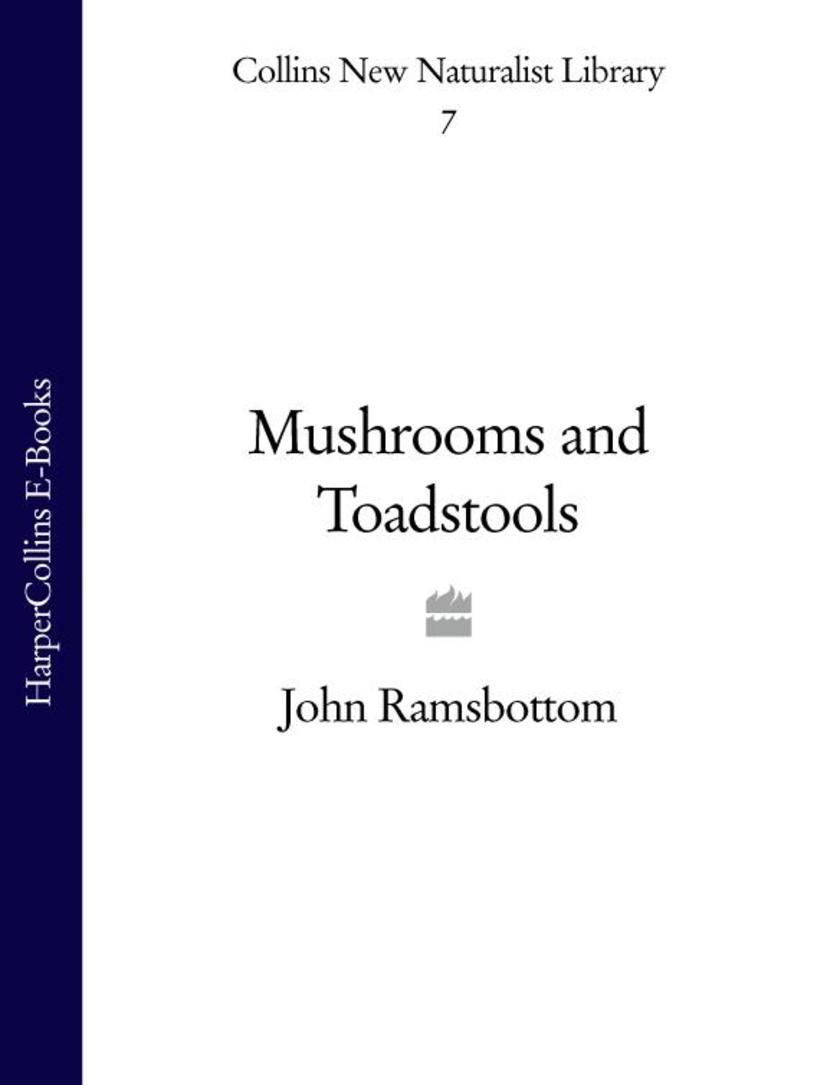
Mushrooms and Toadstools (Collins New Naturalist Library, Book 7)
¥456.66
Britain's neglect of fungi as table delicacies has perhaps been responsible for our surprising ignorance of the natural history of such fascinating plants. This edition is exclusive to newnaturalists.com Puff-balls, more than a foot in diameter; mouls in jam-pots; dry rot; truffles; these are examples of the wide range of the Group, comprising over 100,000 species. Many are of economic importance – for example, the rusts that attack wheat and other crops, and the yeasts which ferment beer – and there are others of great biological interest, such as the mycorrhizal fungi which live in association with the roots of forest trees, orchids and other plants, and help them to absorb food from the soil. Penicillin, of course, has become a household word, and this book's final chapter on the industry is one of the best short accounts of the subject yet writtern. Dr. Ramsbottom was for many years Keeper of Botany at the Natural History Museum, and has devoted his life to the study of fungi in all their aspects. He is equally at home in the field, the laboratory and the library. One of the special features of Mushrooms and Toadstools is the wealth of historical allusion to fungi extracted from old books. Set out in a style reminiscent of Robert Burton, this volume can truly be described as a 20th century Anatomy of Toadstool. Indeed, in fairy rings, science and superstition have gone hand in hand to produce a lively story of alternating surmise and research – and even today a full and final explanation of these mysterious rings has not yet been made. Many of the larger toadstools are brightly coloured and lend themselves admirably to colour photography, as shown by the 80 remarkable illustrations by Mr Paul de Laszlo.
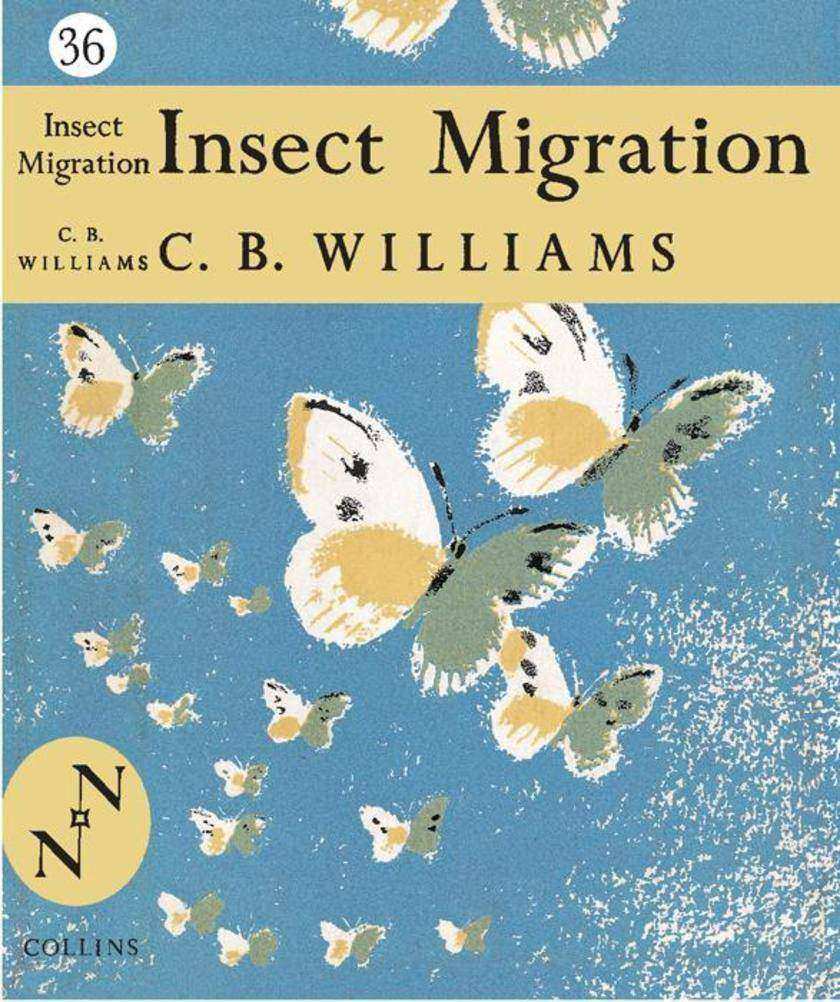
Insect Migration (Collins New Naturalist Library, Book 36)
¥456.66
Highlighting the significance of the widespread distribution of the migratory habit throughout the insect world. This edition is exclusive to newnaturalists.com This is a pioneer book, a real milestone in the progress of biology. Only in recent years have the scientists begun to realise the significance of the widespread distribution of the migratory habit throughout the insect world. Dr. Williams's own personal observations and adventures have played a fundamental part in the wakening of human consciousness to the extent to which insects migrate. His opportunities of studying the problem in remote corners of the world - such as British Guiana, Costa Rica, Egypt, Tanganyika and the Pyrenees - make the book as exciting as a world detective story. For Insect Migration deals with the subject on an international basis, with Britain - the home of the development of the present theories - as the natural peg on which a biological problem belonging to the world can properly be hung. From 1932 to 1955 C. B. Williams was chief entomologist at the Rothamsted Experimental Station. This book is the distillation of a subject which has occupied him for nearly the whole of his life. His theories are marshalled and summarised with modesty, economy and skill. The New Naturalist is honoured to publish what will certainly prove to be, above all things, the stimulus for new search and fresh discoveries.
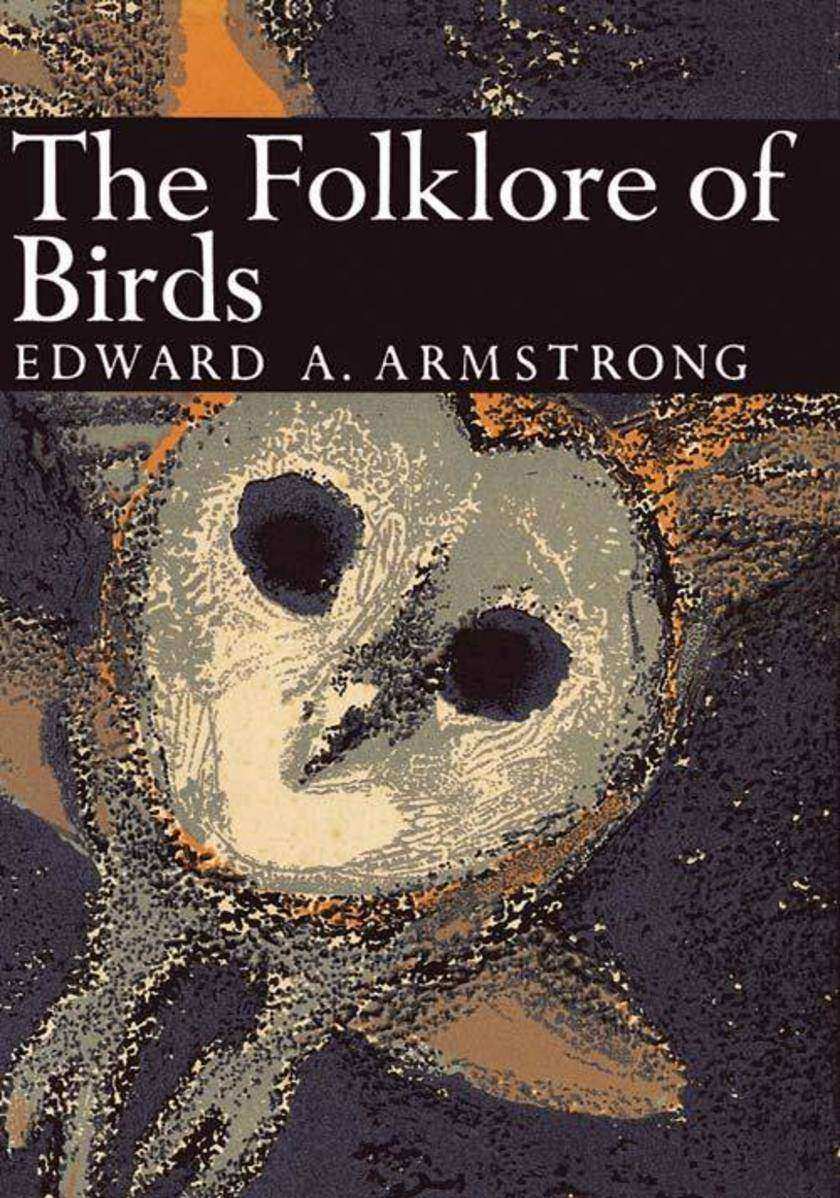
The Folklore of Birds (Collins New Naturalist Library, Book 39)
¥456.66
Tracing the magico-religious beliefs surrounding birds as far back in time as is possible, to the cultures in which these beliefs arose. This edition is exclusive to newnaturalists.com Edward A Armstrong is already known to readers of the New Naturalist as the author of the remarkable study on the wren. His wide scholarship and talents have fitted him outstandingly for this book, which could only have been written by a man with his deep understanding, not only of ornithology, but of social anthropology, psychology and comparative religion. Mr Amstrong has selected a number of familiar birds - such as the swan, the raven, the owl, the robin and the wren - and has traced magico-religious beliefs concerning them as far back as possible to the cultures in which these beliefs arose. With the scientist’s eye and methods of analysis he has examined the development of myth and ritual with originality and ingenuity. Many odd and interesting facts are cited, and explanations are given, for example of the customs of breaking the wish-bone, and of fables concerning weather-prophet birds and the generation of the Barnacle Goose from shell-fish. This book is the first treatment of a group of folklore beliefs as a series of artefacts are treated by an archaeologist, classifying them in order according to epochs. Archaeological data, as well as oral and literary traditions, have been used to illustrate the origins and significance of the current folklore. The illustrations are of exceptional quality and consist of over 140 carefully chosen photographs and line drawings from worldwide sources.
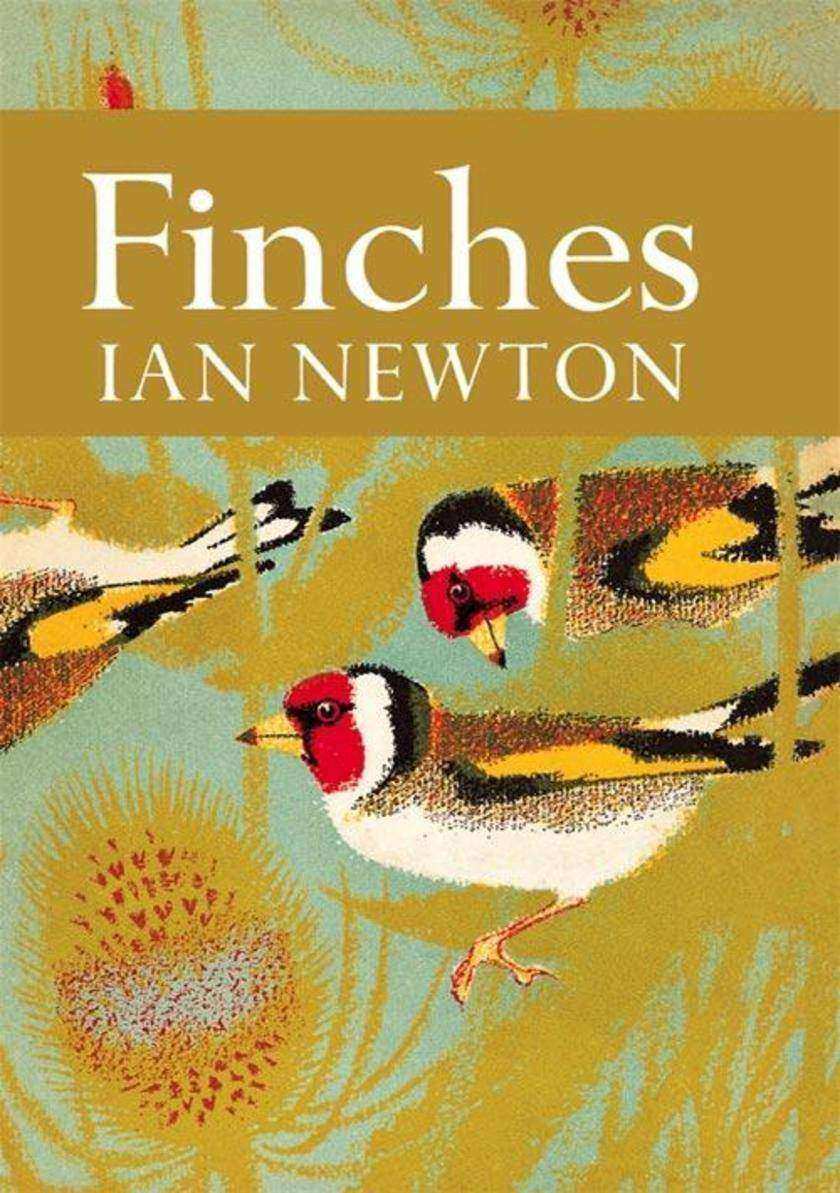
Finches (Collins New Naturalist Library, Book 55)
¥456.66
This illustrated survey of finch behaviour is a thorough, non-technical account of the habits of these birds throughout the world. Greenfinches nest in plantations, large shrubby gardens and churchyards with lots of evergreens, thickets and tall hedges. After breeding, goldfinches forage on waste land, overgrown rubbish dumps, neglected allotments of food, and rough pastures. Bullfinches, in their breeding season, develop in the floor of their mouths special pouches in which food for the young is retained. These pouches open, one on each side of the tongue and, when full, extend back under the jaws as far as the neck, when they together hold about one cubic centimetre of food. Cocks of the Chaffinch and Brambling species sing in the breeding season to repel other cocks and attract hens. This illustrated survey of finch behaviour is a thorough, non-technical account of the habits of these birds throughout the world. Dr. Newton uses his extensive bird-watching experience and knowledge of the published literature to document the main patterns of feeding, development of feathers, breeding, and migration. As a result, he presents the changing relationship of the birds to their environment. The author is on the staff of the Nature Conservancy at Edinburgh, Scotland. His several scientific papers on finches have appeared in Birds, Journal of Animal Ecology and other scholarly periodicals.
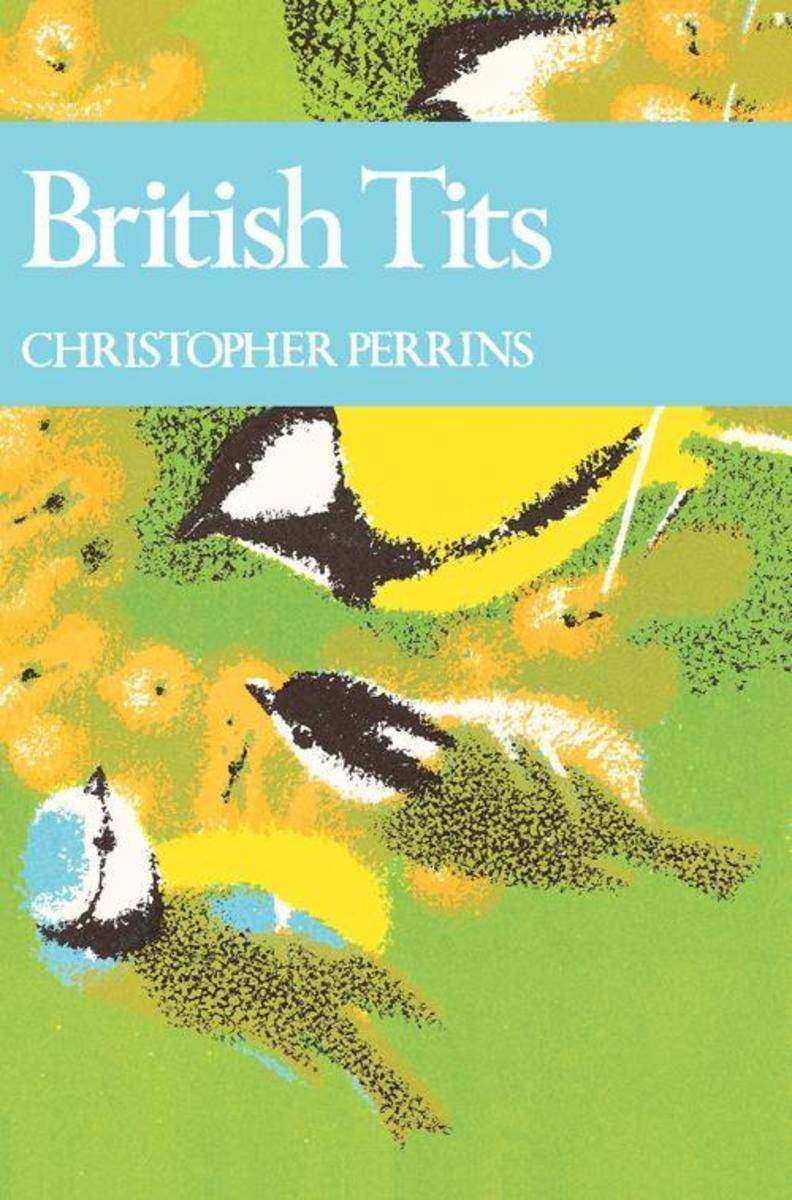
British Tits (Collins New Naturalist Library, Book 62)
¥456.66
In addition to dealing with the general biology and behaviour of the birds, Dr Perrins gives full attention to such things as their social lives, their intelligence and adaptiveness, and their puzzling ability to adjust their population sizes to the future availability of food. This edition is exclusive to newnaturalists.com Because of their ubiquity and apparent boldness, the tits are among the most easily observed, and the most popular, of all British birds. The Blue Tit, particularly, is an attractive and confident bird and will arrive at a well-stocked bird table, or at a bag of peanuts outside a window, within a few minutes of its being set out. Curiously, little has been written about tits for the general naturalist. In this book, Christopher Perrins, who succeeded the late David Lack at the Edward Grey Institute of Ornithology in Oxford, sets out to remedy this omission. Dr Perrins has spent many years studying these small birds in great detail and has himself made many important discoveries about their lives and behaviour. The book deals with seven species of tit. These include the six members of the true tits - Coal, Great, Blue, Crested, Marsh and Willow Tits - as well as the more distantly related Long-tailed Tit. In addition to dealing with the general biology and behaviour of the birds, Dr Perrins gives full attention to such things as their social lives, their intelligence and adaptiveness, and their puzzling ability to adjust their population sizes to the future availability of food. Dr Perrin's study demonstrates that there is much unsuspected complexity - some of it still not clearly understood - in the lives of even the most popular of groups of birds; as such it will be of interest to every birdwatcher, amateur and professional alike.
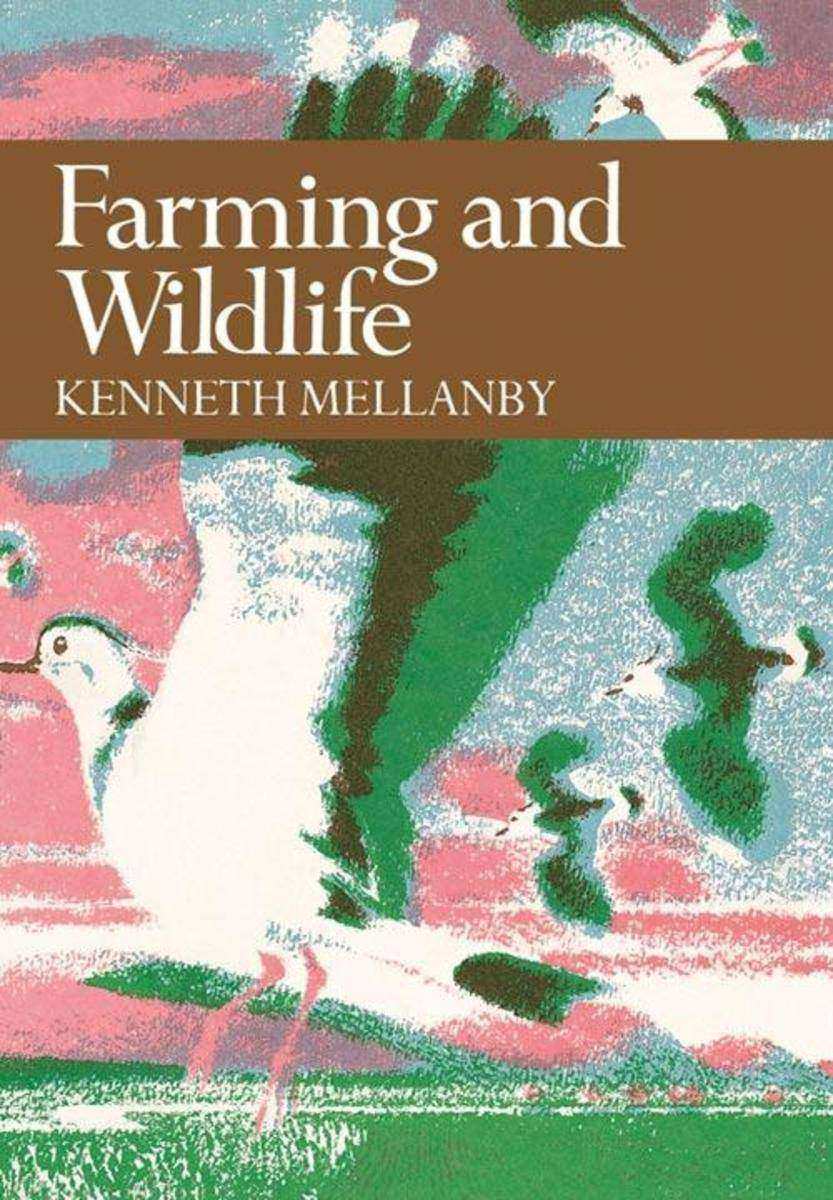
Farming and Wildlife (Collins New Naturalist Library, Book 67)
¥456.66
Farming and Wildlife argues forcefully that wild species are, in fact, beneficial to the land as a whole: without them its productivity will fall and farming will inevitably suffer. This edition is exclusive to newnaturalists.com Farming and wildlife affect each other in many, often subtle, ways. Yet most recent developments in farming have been harmful to wild plants and animals. As the land is made to yield more, so rare species become rarer or extinct, and even common ones are now absent from large areas of the country. This timely and provocative book argues forcefully that wild species are, in fact, beneficial to the land as a whole: without them its productivity will fall and farming will inevitably suffer. The main changes in farming practice and their environmental effects are dealt with systematically. Successive chapters discuss arable cropping, grassland management, animal husbandry, hedgerow removal, land drainage and the use of pesticides. Considered also are the care of the soil and its inhabitants - important and often overlooked forms of wildlife - possible damage to livestock by diseases of wild animals, and the effects of hunting and shooting. Professor Mellanby writes throughout with an understanding of the problems of both farmers and conservationists. This is a most persuasive account of why they should now work together to preserve the countryside's fauna and flora. Professor Kenneth Mellanby is the author of the highly acclaimed New Naturalist volume Pesticides and Pollution. He is the Founder-Director of the Monks Wood Experimental Station, which was the main research station of the Nature Conservancy, Chairman of the Watch Trust, President of the Cambridgeshire branch of the Ramblers Association, and has for many years been closely involved in all aspects of farming and conservation.
Loch Lomondside (Collins New Naturalist Library, Book 88)
¥182.47
Loch Lomondside is celebrated for its outstanding scenery. The area supports a rich tapestry of water and wild land, forest and woodland, farmland and settlement. This edition is exclusive to newnaturalists.com Another volume in the popular New Naturalist series, this book is a comprehensive account of the history and natural history of this internationally famous area, which is soon to become one of the first National Parks in Scotland. For centuries, Loch Lomondside has been celebrated for its outstanding scenery. The area supports a rich tapestry of water and wild land, forest and woodland, farmland and settlement. It includes architectural and archaeological features of considerable importance, and has been celebrated by many great writers including Walter Scott, John Ruskin and William Wordsworth. Loch Lomondside is the most popular countryside destination in Scotland, attracting more than 2 million visitors each year. Over 70 percent of the population of Scotland are less than 1 hour's travelling time from the area. This book covers the history of the Loch and its people, forestry, agriculture and fisheries, the natural history, recreational activities, and conservation, past, present and future. It complements other regional volumes in the New Naturalist series which include the Hebrides, Orkney and the Shetland Islands.
Moths (Collins New Naturalist Library, Book 90)
¥114.48
Moths provides a comprehensive account of the diverse natural history of these fascinating and popular insects. This edition is exclusive to newnaturalists.com Another volume in the popular New Naturalist series, this book is a comprehensive account of the diverse natural history of these fascinating and popular insects. Michael Majerus, author of the popular New Naturalist Ladybirds, examines all aspects of moths, from their life histories to their role as pests to humans. He covers their reproduction, feeding, evolution, habitats and conservation. New Naturalist Moths also discusses the enemies of moths, and the ways they have evolved to avoid detection, including camouflage, warning coloration, and mimicry. This is the definitive text for the study of these insects, written by an established New Naturalist author.
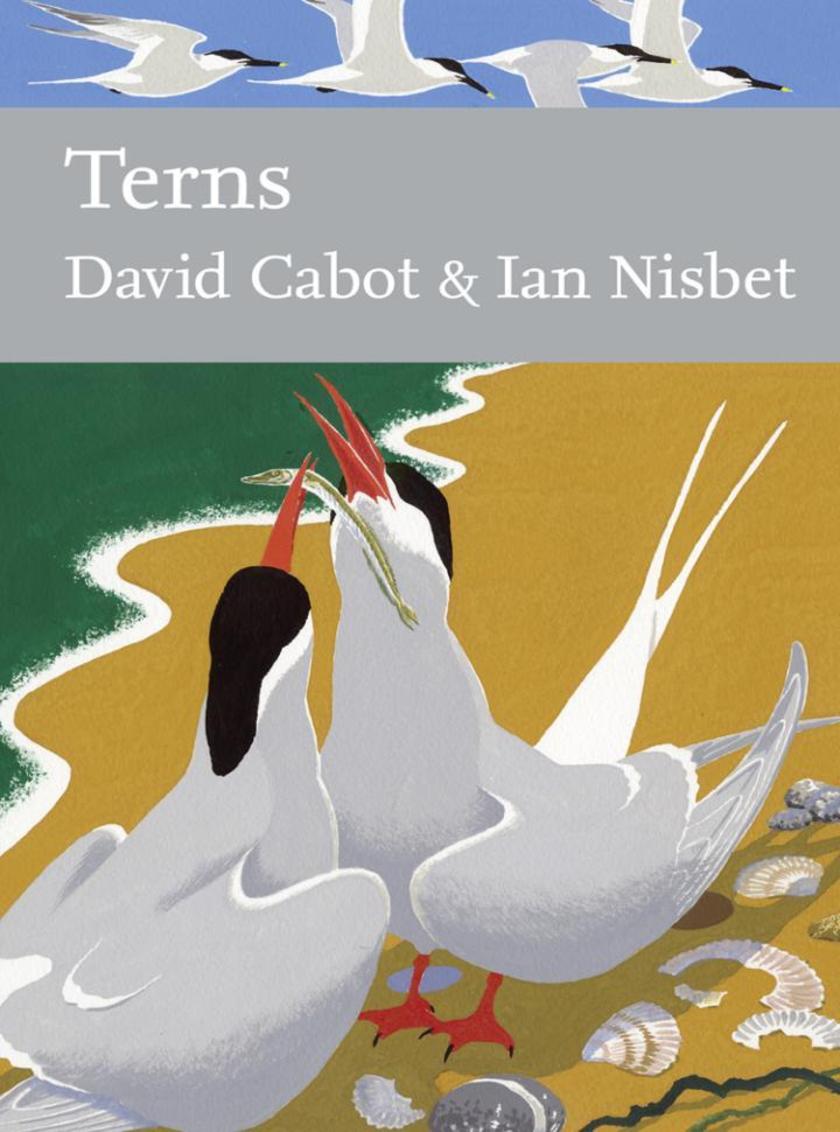
Terns (Collins New Naturalist Library, Book 123)
¥257.90
This New Naturalist volume provides a much-anticipated overview of these fascinating birds – the first book on the natural history of British and Irish terns since 1934. Terns are small seabirds that are commonly seen along coastlines and estuaries in the summer months – their graceful flight and command of the air are among their most attractive features. Most of the five species of terns breeding in Britain and Ireland today are under intensive management, involving protection from predators, human interference, egg-collecting, recreational activities, land-use changes, and a range of issues concerning climate change, including rising sea levels and flooding of low-lying colonies. If these protective measures were abandoned then the numbers of terns would inevitably decline, with the possibility of several species ending up on the endangered list. Covering the history of terns in Britain and Ireland, David Cabot and Ian Nisbet explore these diverse issues as well as offering a comprehensive natural history of these stunning seabirds. Drawing on a wealth of new information and research, the authors focus on migrations, food and feeding ecology as well as breeding biology and behaviour. Perhaps most importantly, they highlight recent conservation issues and prospects, and what this means for the future of terns.


