


 购物车
 个人中心

Me Cheeta: The Autobiography
¥63.18
The incredible, and moving true story of Cheeta the Chimp, star of countless Hollywood blockbusters, told in his own words The greatest Hollywood Tarzan, Johnny Weissmuller, died in 1984. His coffin was lowered into the ground to the recorded sounds of his famous jungle call. Maureen O'Sullivan, his Jane, died in 1998. Weissmuller's son, who first played Boy in the 1939 film Tarzan finds a Mate, has gone too. But Cheeta the Chimp, who starred with them all, is alive and well, retired in Palm Springs. At the incredible age of seventy-five, he is by far the oldest living chimpanzee ever recorded. Now, in his own words, Cheeta (aka Jiggs) finally tells his extraordinary story. He was just a baby when snatched from the jungle of Liberia in 1932, by the great animal importer Henry Trefflich, who went on to supply NASA with its 'Monkeys for Space' programme. That same year, Cheeta appeared in Tarzan the Ape Man, and in 1934 Tarzan and His Mate, in which he famously stole the clothes from a naked O'Sullivan, dripping wet from an underwater swimming scene with Weissmuller. Other Tarzan films followed until Cheeta finally retired from the big screen after the 1967 film Doctor Dolittle with Rex Harrison, whose finger he accidentally bit backstage while being offered a placatory banana. Cheeta tells it all, a life lived with the stars, a monkey stolen from deepest Africa forced to make a living in the fake jungles of Hollywood. He tells us too of his journey beyond the screen: his struggle with drink and addiction to cigars; his breakthrough with a radical new form of abstract painting, 'Apeism'; his touching relationship with his retired nightclub-performing grandson Jeeta, now a considerable artist in his own right; his fondness for hamburgers and his battle in later life with diabetes; and, through thick and thin, carer Dan Westfall, his loving companion who has helped this magnificent monkey come to terms with his peculiar past. Funny, moving, searingly honest, Cheeta transports us back to a lost Hollywood. He is a real star, and this the greatest celebrity memoir of recent times.
Queen Victoria: A Personal History
¥80.25
Christopher Hibbert’s acclaimed biography of Queen Victoria is as impressive and authoritative as the great woman herself. In 1837 an eighteen-year-old girl, raised by a German mother, inherited the throne of the United Kingdom. She was to reign as queen – and later Empress of India – for almost sixty-four years, presiding over twenty prime ministers and a period of unprecedented social and political change. Her era became synonymous with moral rigidity and colonial expansion, and this absorbing biography of Queen Victoria, the unlikely figurehead of a vast and powerful empire, explores how the young monarch transformed herself into a formidable matriarch and the epitome of an age. Embracing her life and family, her politics and personality, her love for Prince Albert and her relationship with John Brown, Hibbert’s touching biography is a persuasive portrait of a remarkable woman.
Tommy’s Honour: The Extraordinary Story of Golf’s Founding Father and Son
¥81.03
The definitive account of golf’s founding father and son, Old and Young Tom Morris. For the first time, the two will be portrayed as men of flesh and blood – heroic but also ambitious, loving but sometimes confused and angry. Two men from one household, with ambitions that made them devoted partners as well as ardent foes. Tommy's Honour is a compelling story of the two Tom Morrises, father and son, both supremely talented golfers but utterly different, constituting a record-breaking golfing dynasty that has never been known before or since. Father, Old Tom Morris, grew up a stone's throw away from golf's ancestral home at St Andrews, a whisky-fuelled caddie, a wonderful 19th century character who became an Open Champion three times before running the Royal & Ancient, then sole governing body of the game. His son, Young Tom, arguably an even more prodigious talent than his father, was a golfing genius, the Tiger Woods of his era, who at 17 became the youngest player, to this day, to win the Open Championship. He then went on to win it four times in a row, an unprecedented achievement. On one occasion, father and son fought it out at the last hole of the Championship before the son finally triumphed. But then came the pivotal day that would change their lives forever, the death of Young Tom’s wife and unborn child. The cataclysmic events of that day eventually lead to Young Tom’s tragic death, aged 24, with his father living on for another 20 years in deep remorse. So on the one hand, you have the story of one of the most influential figures in the history of golf, a pioneer in the birth of the modern game and of Scottish and Open Championship golf. And on the other hand – and this is the real appeal of this book – you have an extraordinary father-and-son story. It’s for every son who ever competed with his father, and every father who has guided his son towards manhood, then found it hard to let go.
Unravelled: Life as a Mother
¥54.65
Maria Housden tells of her own transformation, as a mother, a wife and a woman, as she struggled to cope with the death of her daughter Hannah and make the hardest decision of her life. From the author of the bestselling Hannah’s Gift. At the age of 36, instead of enjoying the perfect family life she had imagined as a child, Maria felt judged and found wanting by others. She realised that, no matter how much she still loved her husband and how powerful her bond of love was with her children, she had to change her life radically – she had to make it her own again. What followed was an emotional and enlightening search for herself. Written in the same moving, lyrical style as Hannah’s Gift, the story unfolds in a series of painful, joyful and humorous moments. At times the story is heart-wrenchingly sad but ultimately it is uplifting and inspiring.
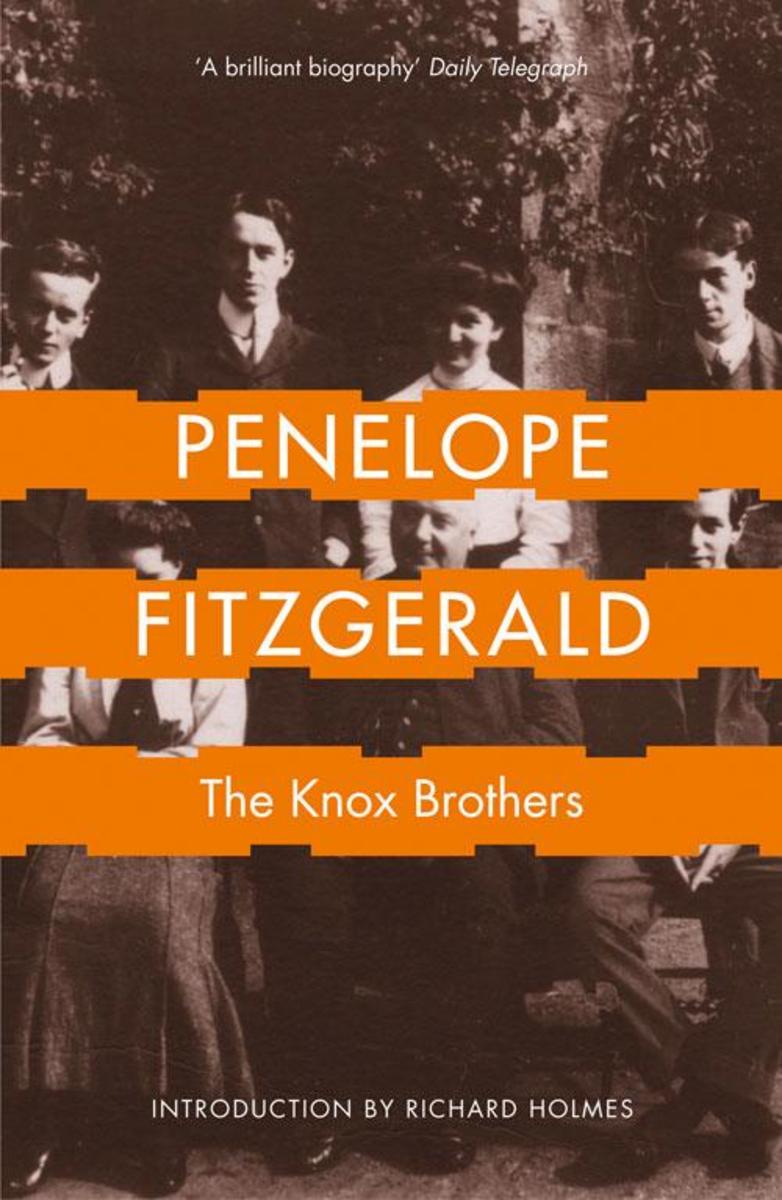
The Knox Brothers
¥76.52
Penelope Fitzgerald’s biography of her remarkable family. ‘When I was very young I took my uncles for granted, and it never occurred to me that everyone else in the world was not like them.’ In this, only her second book, Penelope Fitzgerald turned her novelist’s gaze on the quite extraordinary lives of her father and his three brothers. A masterly work of biography, within which we see Penelope Fitzgerald exercising her pen magnificently before she began her novel-writing career. Edmund Knox, her father, was one of the most successful editors of Punch. Dillwyn, a Cambridge Greek scholar, was the first to crack the Nazi’s message decoding system, Enigma, and in so doing, is estimated to have shortened the Second World War by six months. Wilfred became an Anglo-Catholic priest and an active welfare worker in the East End of London. Ronald, the best known of the four during his lifetime, was Roman Catholic chaplain to Oxford University’s student body, preacher, wit, scholar, crime-writer and translator of the Bible. A homage to a long-forgotten world and a fascinating account of the generation straddling the divide between late Victorian and Edwardian.
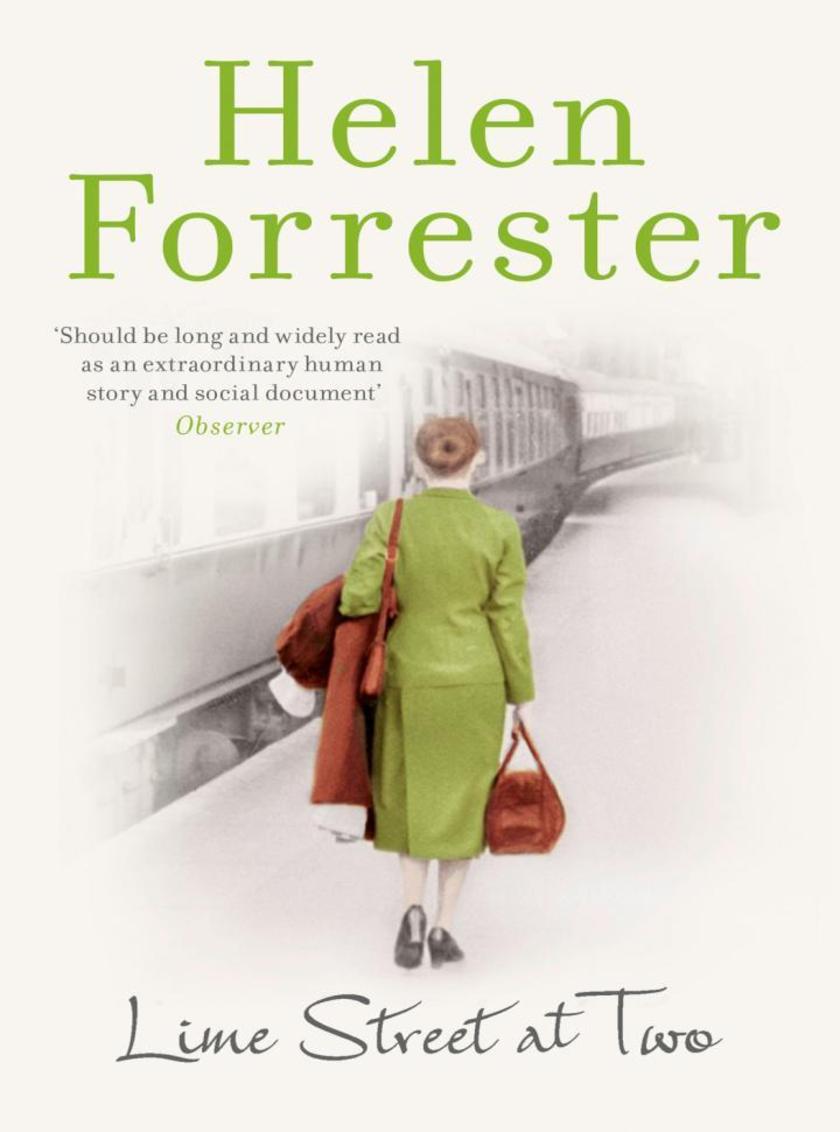
Lime Street at Two
¥54.25
The fourth and final part of Helen Forrester’s bestselling autobiography continues the moving story of her early poverty-stricken life with an account of the war years in Blitz-torn Liverpool In 1940 Helen, now twenty, reeling from the news that her fiance Harry has been killed on an Atlantic convoy, is working long hours at a welfare centre in Bootle, five miles from home. Her wages are pitifully low and her mother claims the whole of them for housekeeping. Then, early in 1941, she gets a new job and begins to enjoy herself a little. But in May the bombing starts again and another move brings more trouble to Helen, trouble which will be faced, as ever, with courage and determination.
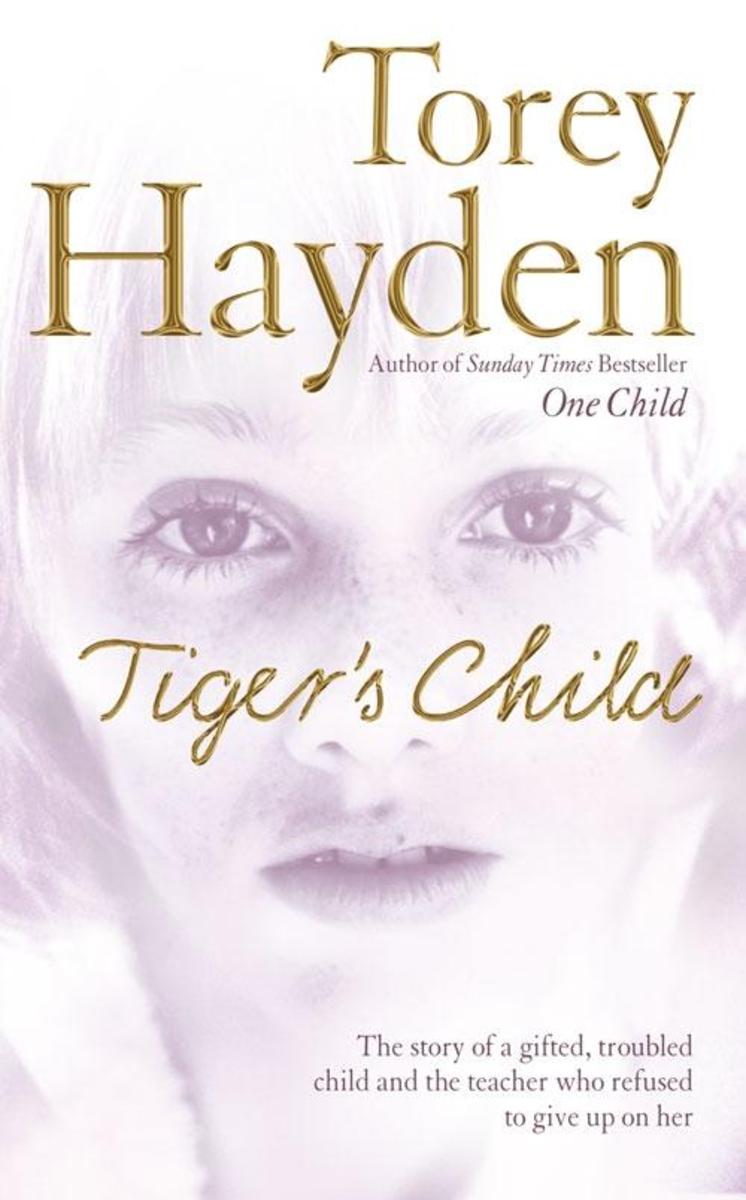
The Tiger’s Child
¥58.47
Torey Hayden returns with this deeply-moving sequel to her first book, One Child (the Sunday Times bestseller). After seven years, Torey is reunited with Sheila, the disturbed 6-year-old she tried to rescue. Sheila was a deeply disturbed six-year-old when she came into Torey Hayden's life – a story poignantly chronicled One Child. The Tiger's Child picks up the story seven years later. Hayden has lost touch with the child she helped to free from a hellish inner prison of rage and silence. But now Sheila is back, now a gangly teenager with bright orange hair – no longer broken and lost, but still troubled and searching for answers. This story of dedication and caring that began in childhood moves into a new and extraordinary chapter that tests the strength and heart of both Sheila and her one-time teacher. In The Tiger's Child the skilled and loving educator answers the call once again to help a child in need through her difficult yet glorious transition into young womanhood.
Bad Blood: A Memoir (Text Only)
¥73.58
From a childhood of gothic proportions in a vicarage on the Welsh borders, through adolescence, leaving herself teetering on the brink of the 1960's, Lorna Sage vividly and wittily brings to life a vanished time and place and illuminates the lives of three generations of women. Lorna Sage’s memoir of childhood and adolescence is a brilliantly written bravura piece of work, which vividly and wickedly brings to life her eccentric family and somewhat bizarre upbringing in the small town of Hanmer, on the border between Wales and Shropshire. The period as well as the place is evoked with crystal clarity: from the 1940s, dominated for Lorna by her dissolute but charismatic vicar grandfather, through the 1950s, where the invention of fish fingers revolutionised the lives of housewives like Lorna’s mother, to the brink of the 1960s, where the community was shocked by Lorna’s pregnancy at 16, an event which her grandmother blamed on ‘the fiendish invention of sex’.

Burnt Toast
¥57.09
Toast. You know when you're trying to make it and you just can't get it right? It's too light or too soft, then totally burnt. Are you the kind of person who tries to scrape off the black? Or do you smother it with jam to hide the taste? Do you throw it away, or do you just eat it? Up until now, I ate the burnt toast … then I hit forty. It took Teri Hatcher a divorce, the experience of single motherhood, a parade of bad dates, a stalled career and a memorable fortieth birthday to realize that she didn't want to spend another decade preparing herself for the next disaster. Burnt Toast is the heartfelt, funny, poignant and inspiring account of Teri's jagged route to happiness. Teri reveals her life in unexpected ways, in the hopes of keeping other women from eating the burnt toast, and explains why you'll never get a second chance if you don't open yourself up to the possibility.
The Times Great Irish Lives
¥67.49
For the first time, The Times brings together a unique collection of obituaries of Ireland's most distinguished individuals from the last two centuries.
Spike: An Intimate Memoir
¥72.40
The complete memoirs of a man of many talents and faces – the late, great Spike Milligan – affectionately recounted by his close friend and agent for 35 years, Norma Farnes. "'What's he really like?' Wherever I went and was introduced as Spike Milligan's manager I waited for the inevitable question. In not far short of 60 years it never altered. It wasn't one that could be answered in a few words so I generally made do with 'Interesting' or 'don't ask'…" After chancing on an advert for a secretarial position, Norma Farnes found herself initiated into the world of No.9 Orme Court – a hub of writing and creativity for many post-war entertainment names. Soon promoted to be his agent, Norma was working for a man with a celebrated reputation for brilliance and difficulty in equal measure. Much loved for many decades, Milligan was often heralded as creative and 'zany' but the truth went much deeper. He could be endearing, despicable, loyal, traitorous, challenging, inspirational, frenetic…sometimes all of these things in a single day, but never boring. In these affectionate and truthful memoirs of 35 years as agent, close friend and sometime-foe, Norma Farnes portrays Spike Milligan in all his guises. Uncovering a great many personal anecdote, Spike reveals his extraordinary sense of humour, his ongoing battle with a restless mind, his remarkable, life-long friendships with Peter Sellers and Erik Sykes, his relationship his family and the industry, and his heartening struggles with society at large. In Spike, Norma Farnes has captured a comprehensive and moving portrait of this truly extraordinary man of many talents and faces, and of her greatest friend.
Ancient Shore
¥105.95
Born in Australia, Shirley Hazzard first moved to Naples as a young woman in the 1950s to take up a job with the United Nations. It was the beginning of a long love affair with the city. The Ancient Shore collects the best of Hazzard's writings on Naples, along with a classic New Yorker essay by her late husband, Francis Steegmuller. For the pair, both insatiable readers, the Naples of Pliny, Gibbon, and Auden is constantly alive to them in the present.With Hazzard as our guide, we encounter Henry James, Oscar Wilde, and of course Goethe, but Hazzard's concern is primarily with the Naples of our own time-often violently unforgiving to innocent tourists, but able to transport the visitor who attends patiently to its rhythms and history. A town shadowed by both the symbol and the reality of Vesuvius can never fail to acknowledge the essential precariousness of life-nor, as the lover of Naples discovers, the human compassion, generosity, and friendship that are necessary to sustain it.Beautifully illustrated by photographs from such masters as Henri Cartier-Bresson and Herbert List, The Ancient Shore is a lyrical letter to a lifelong love: honest and clear-eyed, yet still fervently, endlessly enchanted."e;Much larger than all its parts, this book does full justice to a place, and a time, where 'nothing was pristine, except the light.'"e;-Bookforum"e;Deep in the spell of Italy, Hazzard parses the difference between visiting and living and working in a foreign country. She writes with enormous eloquence and passion of the beauty of getting lost in a place."e;-Susan Slater Reynolds, Los Angeles Times?"e;The two voices join in exquisite harmony. . . . A lovely book."e;-Booklist, starred review
Nature's Ghosts
¥206.01
The rapid growth of the American environmental movement in recent decades obscures the fact that long before the first Earth Day and the passage of the Endangered Species Act, naturalists and concerned citizens recognized-and worried about-the problem of human-caused extinction.As Mark V. Barrow reveals in Nature's Ghosts, the threat of species loss has haunted Americans since the early days of the republic. From Thomas Jefferson's day-when the fossil remains of such fantastic lost animals as the mastodon and the woolly mammoth were first reconstructed-through the pioneering conservation efforts of early naturalists like John James Audubon and John Muir, Barrow shows how Americans came to understand that it was not only possible for entire species to die out, but that humans themselves could be responsible for their extinction. With the destruction of the passenger pigeon and the precipitous decline of the bison, professional scientists and wildlife enthusiasts alike began to understand that even very common species were not safe from the juggernaut of modern, industrial society. That realization spawned public education and legislative campaigns that laid the foundation for the modern environmental movement and the preservation of such iconic creatures as the bald eagle, the California condor, and the whooping crane.A sweeping, beautifully illustrated historical narrative that unites the fascinating stories of endangered animals and the dedicated individuals who have studied and struggled to protect them, Nature's Ghosts offers an unprecedented view of what we've lost-and a stark reminder of the hard work of preservation still ahead.
Side Effects and Complications
¥147.15
The Affordable Care Act will have a dangerous effect on the American economy. That may sound like a political stance, but it's a conclusion directly borne out by economic forecasts.In Side Effects and Complications, preeminent labor economist Casey B. Mulligan brings to light the dire economic realities that have been lost in the ideological debate over the ACA, and he offers an eye-opening, accessible look at the price American citizens will pay because of it.Looking specifically at the labor market, Mulligan reveals how the costs of health care under the ACA actually create implicit taxes on individuals, and how increased costs to employers will be passed on to their employees. Mulligan shows how, as a result, millions of workers will find themselves in a situation in which full-time work, adjusted for the expense of health care, will actually pay less than part-time work or even not working at all. Analyzing the incentives-or lack thereof-for people to earn more by working more, Mulligan offers projections on how many hours people will work and how productively they will work, as well as how much they will spend in general. Using the powerful tools of economics, he then illustrates the detrimental consequences on overall employment in the near future.Drawing on extensive knowledge of the labor market and the economic theories at its foundation, Side Effects and Complications offers a crucial wake-up call about the risks the ACA poses for the economy. Plainly laying out the true costs of the ACA, Mulligan's grounded and thorough predictions are something that workers and policy makers cannot afford to ignore.
Bas Jan Ader
¥141.26
On July 9, 1975, Dutch-born artist Bas Jan Ader set sail from Chatham, Massachusetts, on a thirteen-foot sailboat. He was bound for Falmouth, England, on the second leg of a three-part piece titled In Search of the Miraculous. The damaged boat was found south of the western tip of Ireland nearly a year later. Ader was never seen again.?Since his untimely death, Ader has achieved mythic status in the art world as a figure literally willing to die for his art. Considering the artist's legacy and concise oeuvre beyond the romantic and tragic associations that accompany his peculiar end, Alexander Dumbadze resituates Ader's art and life within the conceptual art world of Los Angeles in the early 1970s and offers a nuanced argument about artistic subjectivity that explains Ader's tremendous relevance to contemporary art.?Bas Jan Ader blends biography, theoretical reflection, and archival research to draw a detailed picture of the world in which Ader's work was rooted: a vibrant international art scene populated with peers such as Ger van Elk, William Leavitt, and Allen Ruppersberg. Dumbadze looks closely at Ader's engagement with questions of free will and his ultimate success in creating art untainted by mediation. The first in-depth study of this enigmatic conceptual artist, Bas Jan Ader is a thoughtful reflection on the necessity of the creative act and its inescapable relation to death.

Big Jones Cookbook
¥147.15
You expect to hear about restaurant kitchens in Charleston, New Orleans, or Memphis perfecting plates of the finest southern cuisine-from hearty red beans and rice to stewed okra to crispy fried chicken. But who would guess that one of the most innovative chefs cooking heirloom regional southern food is based not in the heart of biscuit country, but in the grain-fed Midwest-in Chicago, no lessSince 2008, chef Paul Fehribach has been introducing Chicagoans to the delectable pleasures of Lowcountry cuisine, while his restaurant Big Jones has become a home away from home for the city's southern diaspora. From its inception, Big Jones has focused on cooking with local and sustainably grown heirloom crops and heritage livestock, reinvigorating southern cooking through meticulous technique and the unique perspective of its Midwest location. And with The Big Jones Cookbook, Fehribach brings the rich stories and traditions of regional southern food to kitchens everywhere.?Organized by region, The Big Jones Cookbook provides an original look at southern heirloom cooking with a focus on history, heritage, and variety. Throughout, Fehribach interweaves personal experience, historical knowledge, and culinary creativity, all while offering tried-and-true takes on everything from Reezy-Peezy to Gumbo Ya-Ya, Chicken and Dumplings, and Crispy Catfish. Fehribach's dishes reflect his careful attention to historical and culinary detail, and many recipes are accompanied by insights about their origins. In addition to the regional chapters, the cookbook features sections on breads, from sweet potato biscuits to spoonbread; pantry put-ups like bread and butter pickles and chow-chow; cocktails, such as the sazerac; desserts, including Sea Island benne cake; as well as an extensive section on snout-to-tail cooking, including homemade Andouille and pickled pigs' feet.?Proof that you need not possess a thick southern drawl to appreciate the comfort of creamy grits and the skill of perfectly fried green tomatoes, The Big Jones Cookbook will be something to savor regardless of where you set your table.

Who Freed the Slaves?
¥147.15
In the popular imagination, slavery in the United States ended with Abraham Lincoln's Emancipation Proclamation. The Proclamation may have been limited-freeing only slaves within Confederate states who were able to make their way to Union lines-but it is nonetheless generally seen as the key moment, with Lincoln's leadership setting into motion a train of inevitable events that culminated in the passage of an outright ban: the Thirteenth Amendment.?The real story, however, is much more complicated-and dramatic-than that. With Who Freed the Slaves?, distinguished historian Leonard L. Richards tells the little-known story of the battle over the Thirteenth Amendment, and of James Ashley, the unsung Ohio congressman who proposed the amendment and steered it to passage. Taking readers to the floor of Congress and the back rooms where deals were made, Richards brings to life the messy process of legislation-a process made all the more complicated by the bloody war and the deep-rooted fear of black emancipation. We watch as Ashley proposes, fine-tunes, and pushes the amendment even as Lincoln drags his feet, only coming aboard and providing crucial support at the last minute. Even as emancipation became the law of the land, Richards shows, its opponents were already regrouping, beginning what would become a decades-long-and largely successful-fight to limit the amendment's impact.?Who Freed the Slavesis a masterwork of American history, presenting a surprising, nuanced portrayal of a crucial moment for the nation, one whose effects are still being felt today.
Paying with Their Bodies
¥147.15
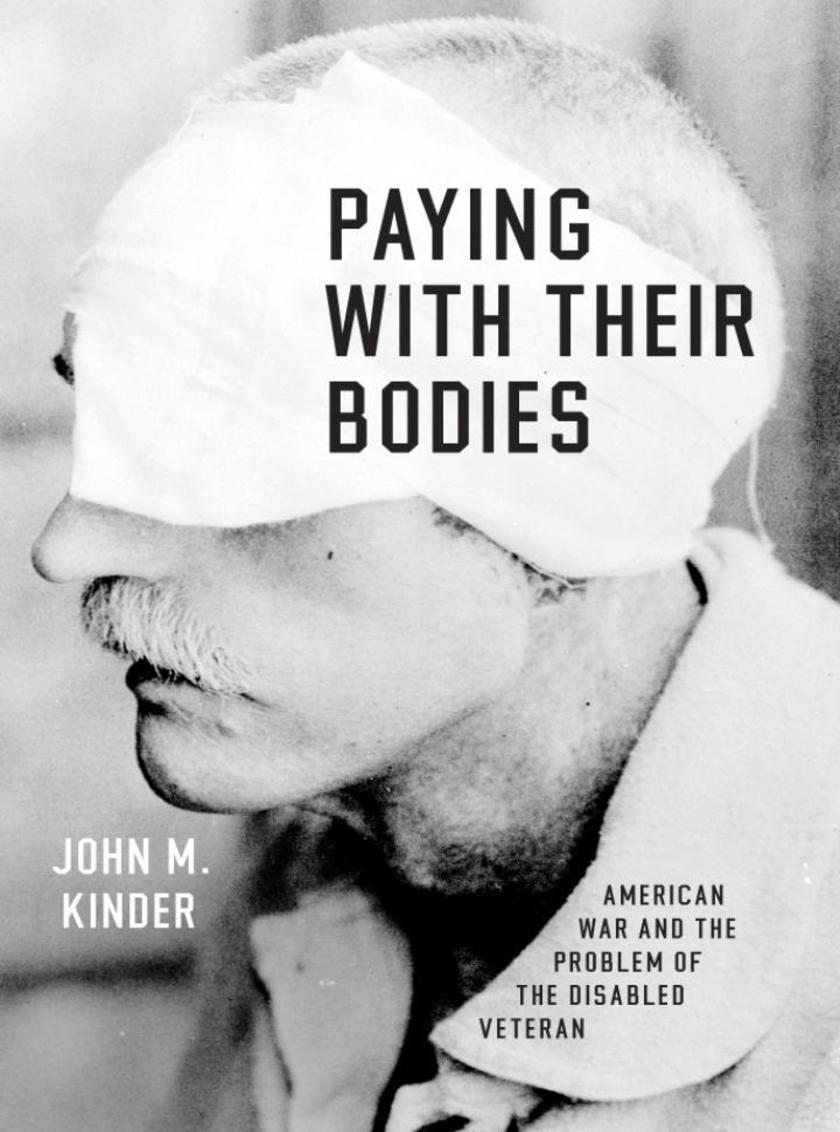
Christian Bagge, an Iraq War veteran, lost both his legs in a roadside bomb attack on his Humvee in 2006. Months after the accident, outfitted with sleek new prosthetic legs, he jogged alongside President Bush for a photo op at the White House. The photograph served many functions, one of them being to revive faith in an American martial ideal-that war could be fought without permanent casualties, and that innovative technology could easily repair war's damage. When Bagge was awarded his Purple Heart, however, military officials asked him to wear pants to the ceremony, saying that photos of the event should be "e;soft on the eyes."e; Defiant, Bagge wore shorts.America has grappled with the questions posed by injured veterans since its founding, and with particular force since the early twentieth century: What are the nation's obligations to those who fight in its nameAnd when does war's legacy of disability outweigh the nation's interests at home and abroadIn Paying with Their Bodies, John M. Kinder traces the complicated, intertwined histories of war and disability in modern America. Focusing in particular on the decades surrounding World War I, he argues that disabled veterans have long been at the center of two competing visions of American war: one that highlights the relative safety of US military intervention overseas; the other indelibly associating American war with injury, mutilation, and suffering. Kinder brings disabled veterans to the center of the American war story and shows that when we do so, the history of American war over the last century begins to look very different. War can no longer be seen as a discrete experience, easily left behind; rather, its human legacies are felt for decades.The first book to examine the history of American warfare through the lens of its troubled legacy of injury and disability, Paying with Their Bodies will force us to think anew about war and its painful costs.
Marvelous Clouds
¥147.15
When we speak of clouds these days, it is as likely that we mean data clouds or network clouds as cumulus or stratus. In their sharing of the term, both kinds of clouds reveal an essential truth: that the natural world and the technological world are not so distinct. In The Marvelous Clouds, John Durham Peters argues that though we often think of media as environments, the reverse is?just as true-environments are media.Peters defines media expansively as elements that compose the human world. Drawing from ideas implicit in media philosophy, Peters argues that media are more than carriers of messages: they are the very infrastructures combining nature and culture that allow human life to thrive. ?Through an encyclopedic array of examples from the oceans to the skies, The Marvelous Clouds reveals the long prehistory of so-called new media. Digital media, Peters argues, are an extension of early practices tied to the establishment of civilization such as mastering fire, building calendars, reading the stars, creating language, and establishing religions. New media do not take us into uncharted waters, but rather confront us with the deepest and oldest questions of society and ecology: how to manage the relations people have with themselves, others, and the natural world.A wide-ranging meditation on the many means we have employed to cope with the struggles of existence-from navigation to farming, meteorology to Google-The Marvelous Clouds shows how media lie at the very heart of our interactions with the world around us. ?Peters's ?book will not only change how we think about media but provide a new appreciation for the day-to-day foundations of life on earth that we so often take for granted.
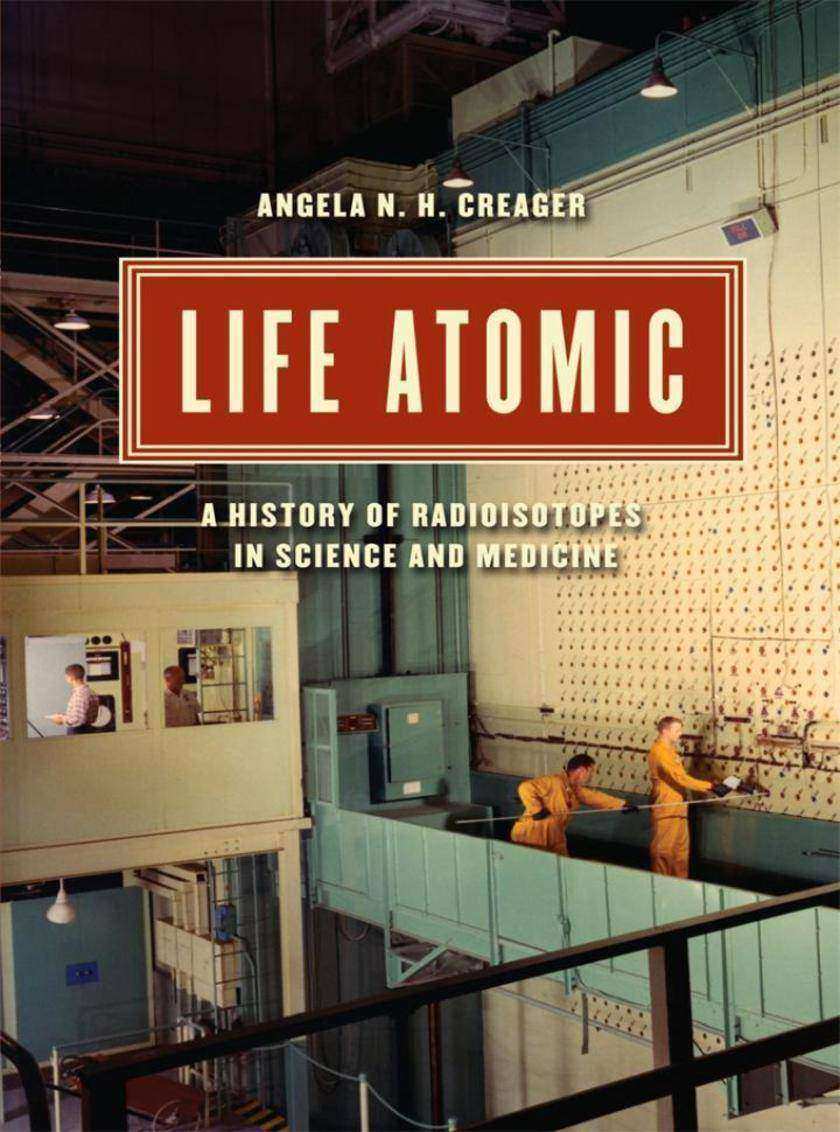
Life Atomic
¥247.21
After World War II, the US Atomic Energy Commission (AEC) began mass-producing radioisotopes, sending out nearly 64,000 shipments of radioactive materials to scientists and physicians by 1955. Even as the atomic bomb became the focus of Cold War anxiety, radioisotopes represented the government's efforts to harness the power of the atom for peace-advancing medicine, domestic energy, and foreign relations.?In Life Atomic, Angela N. H. Creager tells the story of how these radioisotopes, which were simultaneously scientific tools and political icons, transformed biomedicine and ecology. Government-produced radioisotopes provided physicians with new tools for diagnosis and therapy, specifically cancer therapy, and enabled biologists to trace molecular transformations. Yet the government's attempt to present radioisotopes as marvelous dividends of the atomic age was undercut in the 1950s by the fallout debates, as scientists and citizens recognized the hazards of low-level radiation. Creager reveals that growing consciousness of the danger of radioactivity did not reduce the demand for radioisotopes at hospitals and laboratories, but it did change their popular representation from a therapeutic agent to an environmental poison. She then demonstrates how, by the late twentieth century, public fear of radioactivity overshadowed any appreciation of the positive consequences of the AEC's provision of radioisotopes for research and medicine.
How Reason Almost Lost Its Mind
¥170.69
In the United States at the height of the Cold War, roughly between the end of World War II and the early 1980s, a new project of redefining rationality commanded the attention of sharp minds, powerful politicians, wealthy foundations, and top military brass. Its home was the human sciences-psychology, sociology, political science, and economics, among others-and its participants enlisted in an intellectual campaign to figure out what rationality should mean and how it could be deployed.?How Reason Almost Lost Its Mind brings to life the people-Herbert Simon, Oskar Morgenstern, Herman Kahn, Anatol Rapoport, Thomas Schelling, and many others-and places, including the RAND Corporation, the Center for Advanced Study in the Behavioral Sciences, the Cowles Commission for Research and Economics, and the Council on Foreign Relations, that played a key role in putting forth a "e;Cold War rationality."e; Decision makers harnessed this picture of rationality-optimizing, formal, algorithmic, and mechanical-in their quest to understand phenomena as diverse as economic transactions, biological evolution, political elections, international relations, and military strategy. The authors chronicle and illuminate what it meant to be rational in the age of nuclear brinkmanship.


