


 购物车
购物车 个人中心
个人中心
The 22 Immutable Laws of Branding
¥105.17
This marketing classic has been expanded to include new commentary, new illustrations, and a bonus book: The 11 Immutable Laws of Internet Branding Smart and accessible, The 22 Immutable Laws of Branding is the definitive text on branding, pairing anecdotes about some of the best brands in the world, like Rolex, Volvo, and Heineken, with the signature savvy of marketing gurus Al and Laura Ries. Combining The 22 Immutable Laws of Branding and The 11 Immutable Laws of Internet Branding, this book proclaims that the only way to stand out in today's marketplace is to build your product or service into a brand and provides the step-by-step instructions you need to do so. The 22 Immutable Laws of Branding also tackles one of the most challenging marketing problems today: branding on the Web. The Rieses divulge the controversial and counterintuitive strategies and secrets that both small and large companies have used to establish internet brands. The 22 Immutable Laws of Branding is the essential primer on building a category-dominating, world-class brand.
Taming Your Public Speaking Monkeys
¥24.44
A Godsend for anyone who’s ever suffered that dread of speaking in public!’ If, like almost everyone, you’re petrified of public speaking, the last thing you want is a lecture! And there lies the brilliance of this unique book’s genuinely innovative approach to the issue: Dee Clayton makes the process of overcoming those negative voices in your head (Your ‘Public Speaking Monkeys!’) and becoming an effective speaker lighthearted and fun! A Godsend for anyone who’s ever suffered that dread, Dee’s refreshingly simple yet amazingly effective multiawardwinning approach has already helped thousands to overcome their fears and become effective and confident public speakers. Significantly, the author’s keenly aware that for most of us, effective public speaking isn’t necessarily an end in itself but a means to other ends for example Dee has already helped company directors to persuade more successfully, doctors to win more funding, mediators to influence international decisions and all kinds of business people to fulfil their potential. What’s more, this is a genuinely practical guide! Unlike most ‘self help’ books on the topic (or any other), this one doesn’t just tell you what to do; in her chatty, good-humored style, Dee explains exactly how, sharing her own experiences and coaxing the reader through a programme that doesn’t just work it even makes public speaking enjoyable! Taming Your Public Speaking Monkeysworks so well because its easy, enjoyable style is underpinned by Dee’s solid, real-life experience of speaking publicly to tens of thousands of people first in her highly successful twenty-year marketing career (communicating for UK household brands such as Jacob’s Creek, Pizza Hut and Jammie Dodgers to name but a few) and now as a public speaking training specialist. Equally vitally, the book draws heavily upon the NeuroLinguistic Programming (NLP) techniques and insights in which Dee is a highly experienced Trainer and Master Practitioner. Taming your Public Speaking Monkeysis a rare find: a self-help book that really helps and best of all the results come to you quickly and stick with you for life!
Political Economy of Pipelines
¥576.83
With global demand for energy poised to increase by more than half in the next three decades, the supply of safe, reliable, and reasonably priced gas and oil will continue to be of fundamental importance to modern economies. Central to this supply are the pipelines that transport this energy. And while the fundamental economics of the major pipeline networks are the same, the differences in their ownership, commercial development, and operation can provide insight into the workings of market institutions in various nations.?Drawing on a century of the world's experience with gas and oil pipelines, this book illustrates the importance of economics in explaining the evolution of pipeline politics in various countries. It demonstrates that institutional differences influence ownership and regulation, while rents and consumer pricing depend on the size and diversity of existing markets, the depth of regulatory institutions, and the historical structure of the pipeline businesses themselves. The history of pipelines is also rife with social conflict, and Makholm explains how and when institutions in a variety of countries have controlled pipeline behavior-either through economic regulation or government ownership-in the public interest.
Reluctant Capitalists: Bookselling and the Culture of Consumption
¥229.55
Over the past half-century, bookselling, like many retail industries, has evolved from an arena dominated by independent bookstores to one in which chain stores have significant market share. And as in other areas of retail, this transformation has often been a less-than-smooth process. This has been especially pronounced in bookselling, argues Laura J. Miller, because more than most other consumer goods, books are the focus of passionate debate. What drives that debateAnd why do so many people believe that bookselling should be immune to questions of profit?In Reluctant Capitalists, Miller looks at a century of book retailing, demonstrating that the independent/chain dynamic is not entirely new. It began one hundred years ago when department stores began selling books, continued through the 1960s with the emergence of national chain stores, and exploded with the formation of "e;superstores"e; in the 1990s. The advent of the Internet has further spurred tremendous changes in how booksellers approach their business. All of these changes have met resistance from book professionals and readers who believe that the book business should somehow be "e;above"e; market forces and instead embrace more noble priorities.Miller uses interviews with bookstore customers and members of the book industry to explain why books evoke such distinct and heated reactions. She reveals why customers have such fierce loyalty to certain bookstores and why they identify so strongly with different types of books. In the process, she also teases out the meanings of retailing and consumption in American culture at large, underscoring her point that any type of consumer behavior is inevitably political, with consequences for communities as well as commercial institutions.
Economic Regulation and Its Reform
¥906.54
The past thirty years have witnessed a transformation of government economic intervention in broad segments of industry throughout the world. Many industries historically subject to economic price and entry controls have been largely deregulated, including natural gas, trucking, airlines, and commercial banking. However, recent concerns about market power in restructured electricity markets, airline industry instability amid chronic financial stress, and the challenges created by the repeal of the Glass-Steagall Act, which allowed commercial banks to participate in investment banking, have led to calls for renewed market intervention.Economic Regulation and Its Reform collects research by a group of distinguished scholars who explore these and other issues surrounding government economic intervention. Determining the consequences of such intervention requires a careful assessment of the costs and benefits of imperfect regulation. Moreover, government interventions may take a variety of forms, from relatively nonintrusive performance-based regulations to more aggressive antitrust and competition policies and barriers to entry. This volume introduces the key issues surrounding economic regulation, provides an assessment of the economic effects of regulatory reforms over the past three decades, and examines how these insights bear on some of today's most significant concerns in regulatory policy.

Direct From Dell
¥94.10
At nineteen, Michael Dell started his company as a freshman at the University of Texas with $1,000 and has since built an industry powerhouse. As Dell journeys through his childhood adventures, ups and downs, and mistakes made along the way, he reflects on invaluable lessons learned.Michael Dell's revolutionary insight has allowed him to persevere against all odds, and Direct from Dell contains valuable information for any business leader. His strategies will show you effective ways to grow your business and will help you save time on costly mistakes by following his direct model for success.
So You Want to Write a Novel
¥84.16
You know there is a novel locked inside of you chock-full of conflict, humor, irony, enthralling events and fascinating characters. What you don't know is how to set it free.Practical Advice, Hands-On HelpRespected author and professional writing instructor Lou Willett Stanek's New York workshops have enabled scores of aspiring novelists to realize their dreams of completing credible and compelling manu*s. Here, in a positive, user-friendly format, she offers not only encouragement and motivation, but Clear, Step-By-Step Instructions To Accomplish Your Goal from original conception through final draft.Learn How To: Set up and stick to a writing schedule Create unforgettable characters Follow strong plotting and solid structure guidelines Choose a viewpoint and develop conflict Handle flashbacks and transitions Not Just Philosophy Or A Simple Motivational Tool, This Is The Book That Tells You How To Succeed
The Peter Principle
¥88.56
The classic #1 New York Times bestseller that answers the age-old questionWhy is incompetence so maddeningly rampant and so vexingly triumphantThe Peter Principle, the eponymous law Dr. Laurence J. Peter coined, explains that everyone in a hierarchy from the office intern to the CEO, from the low-level civil servant to a nation's president will inevitably rise to his or her level of incompetence. Dr. Peter explains why incompetence is at the root of everything we endeavor to do why schools bestow ignorance, why governments condone anarchy, why courts dispense injustice, why prosperity causes unhappiness, and why utopian plans never generate utopias.With the wit of Mark Twain, the psychological acuity of Sigmund Freud, and the theoretical impact of Isaac Newton, Dr. Laurence J. Peter and Raymond Hull's The Peter Principle brilliantly explains how incompetence and its accompanying symptoms, syndromes, and remedies define the world and the work we do in it.

The Watson Dynasty
¥95.39
For an extraordinary fifty-seven-year period, one of the nation's largest and fastest-growing companies was run by two men who were flesh and blood. The chief executives of the International Business Machines Corporation from 1914 until 1971 were Thomas J. Watson and Thomas J. Watson, father and son. That great corporation bears the imprint of both men -- their ambitions and their strengths -- but it also bears the consequences of a family that was in near-constant conflict.Sometimes wrong but never in doubt, both Watsons had clear -- and farsighted -- visions of what their company could become. They also had volcanic tempers. Their fights with each other combined with their commitment to leadership and excellence made IBM one of the most rewarding, yet gut-clutching firms to work for in the history of American business.We are accustomed to describing professional behavior as if men and women leave their emotions and vulnerabilities at home each day. In the case of the Watsons, filial and sibling strife could not be excluded from the office. In closely studying the desires and frustrations of the Watson family, eminent historian Richard S. Tedlow has produced something more than a family portrait or a company history. He has raised the nearly forbidden issue of the role of emotion in corporate life.This book explores the interplay between the person- alities of these two extraordinary men and the firm they created. Both Watsons had deeply held beliefs about what a corporation is and should be. These ideas helped make "Big Blue" the bluest of blue-chip stocks during the Watsons' tenure. These very beliefs, however, also sowed the seeds for IBM's disasters in the late 1980s and early 1990s, when the company had lost sight of the original meaning behind many of the practices each man put into place.Tracing the family's idiosyncratic ability to cope with each other's weaknesses but not their strengths, The Watson Dynasty is a book for every person who ever went to work but didn't want to check his personality at the door.
Money 911
¥94.10
The popular TODAY financial editor Jean Chatzky helps you navigate through the critical challenges and potential catastrophes of personal finance.You've just lost your job. You've got a baby on the way. Your parent has had a stroke. Most people seek financial help not because they're planning for the future but because they need it . . . right now! If you have money problems or are seeking immediate help to solve a dire, unanticipated financial emergency, then you need Money 911. In this invaluable guidebook, financial expert Jean Chatzky provides answers to today's most pressing financial questions and concerns, including: How do I get out of debtHow do I avoid foreclosureHow do I set up a monthly budgetHow can I improve my credit scoreHow do I get my health insurance to pay a claimWhat should I do when I lose a parentWith Money 911, you can prepare for retirement, buy or sell a home, pick up the pieces of your personal finances, and get back on your feet and stay there!
Winning the Money Game
¥94.10
Former NBA center Adonal Foyle has seen athletes burn through millions on women, large entourages, family gifts, gambling debts even shark tanks! Such spending habits are partly responsible for 60 percent of NBA players going broke within five years of retirement and nearly 80 perfect of NFL players being strapped within two.Rich with anecdotes from a sports insider, Winning the Money Game shows you how to avoid the financial fouls of athletes. Foyle gives you the straight, offering guidance on a wide range of money matters, from taxes to alimony, from child support to medical bills, and so much more. He beaks down expenses point by point, illustrating the difference between luxury items and family needs, and lays out the essential dos and don'ts to help you spend, save, and grow your money wisely.
Know What Makes Them Tick
¥84.16
Max Siegel started with none of the obvious advantages, yet again and again he built mutually beneficial partnerships with peers, mentors, supervisors, and industry leaders that took him to the heights of professional and personal achievement. He's managed some of the world's top recording artists, ballplayers, and race-car drivers, and helped run some of the top organizations in sports and entertainment. He's grown fragmented niche markets into bestselling audiences by tapping into the universal hopes and passions that bring people together. Now he travels the country giving motivational speeches and inspiring professionals of all kinds, sharing his method for connecting with people, whatever their differences.The secret, Siegel says, is to know what makes others tick. For some, it's financial security; for others, it's respect, devotion to family, a creative calling, or a vision of a better world. He shows how to encourage people to share these hidden, all-important motivations, and how to partner with them in the most powerful way there is: by finding the overlap between their goals and yours, so that together you can realize the dreams that make you tick.The nine universal rules outlined in Know What Makes Them Tick include:See Where You Want to Be, Not Where You AreFind Your AmbassadorsShow What's in It for ThemReaders will learn practical strategies for negotiating the challenges in every part of life, whether motivating colleagues to be more productive, finding a market for their product, uniting a divided family, or building a life of satisfaction in an unpredictable world. It's an eye-opening guide to a unique and powerful approach that anyone can use.

Buy, Close, Move In!
¥84.16
The rules have changed, but your dreams haven't. You can buy the home you want let award-winning real estate guru Ilyce Glink show you how! With her books, syndicated newspaper and Internet columns, radio show, blog, Web site, and numerous media appearances, Ilyce Glink has become the go-to expert Americans rely on to help them successfully navigate the tricky world of real estate a marketplace made even more complex today thanks to the Great Recession. Sure, there's a maze of new regulations. Sure, it's harder than ever to find a great deal or get the best loan. But you can do it. All it takes is a little expert advice from Ilyce. Clear and concise, Buy, Close, Move In! cuts through confusing red tape to provide the essential inside information you need to make the best decisions, and answers commonly asked questions about every step of the process, including: Credit from raising your score to identitifying theft protection Real estate investments trends and opportunities Foreclosures, short sales, and auctions Appraisals, closing costs, and other fees Mortgages fixed rate versus adjustable rate and other financing options With Ilyce Glink's Buy, Close, Move In! you're one step closer to home.

Collateral Knowledge
¥265.87
It has been more than twelve years since this project began.This book draws upon seventeen months of fieldwork conducted in Tokyo between summer 1997 and fall 2001 followed by frequent research visits in the years that followed.Research and writing were supported by the American Bar Foundation, a Howard Fellowship, an American Council of Learned Societies Fellowship, a residential fellowship at Girton College, Cambridge, and research grants from the Social Science Research Council, the Japan Foundation, and the National Endowment for the Humanities.During that time, I held visiting positions at the University of Tokyo Faculty of Law, the Department of Anthropology at Keio University, and the Institute of Social Science at the University of Tokyo.I am grateful to each of these institutions for their hospitality, and in particular to professors Yoshiko Terao, Satoshi Tanahashi, and Yuji Genda, respectively, for making each of these affiliations possible.
Do Cool Sh*t
¥88.56
An inspiring, irreverent manifesto for those seeking to blaze their own path to entrepreneurship and find fulfillment and happiness through bold action and big ideasHave you ever wondered if it's possible to make a career out of something you loveOr how to march through life with a purpose and get the most out of every secondMiki Agrawal, entrepreneur, angel investor, and cool-sh*t-doer, has figured it out. Here Miki shares her own adventures in entrepreneurship and life, from learning to step out of her comfort zone in a foreign country to achieving her dream of playing soccer for the New York Magic to partnering with Tony Hsieh of Zappos.com to launch her dream business.In Do Cool Sh*t, Miki shows you how to start your own business, fund it on a shoestring budget, convene the perfect group to brainstorm your business plan, test your product, get great (free) press coverage, and more all while living a life you're proud of.Miki pulls back the curtain to reveal how you can live out loud, honor your hunches, and leave nothing on the table. She reminds you that it's cool to care and be excited about ideas and to be proactive; it's cool to mess up; it's cool to work your ass off on something that is meaningful to you; and it's cool to keep trying when the odds are stacked against you. Whether you're about to graduate from college and are wondering what the heck you want to do with your life, or you are in a dead-end job, dreaming about starting your own business, Do Cool Sh*t will make you open your eyes, laugh out loud, and shout, "I can do that!"

Good To Great And The Social Sectors
¥78.32
Building upon the concepts introduced in Good to Great, Jim Collins answers the most commonly asked questions raised by his readers in the social sectors. Using information gathered from interviews with over 100 social sector leaders, Jim Collins shows that his "Level 5 Leader" and other good-to-great principles can help social sector organizations make the leap to greatness.
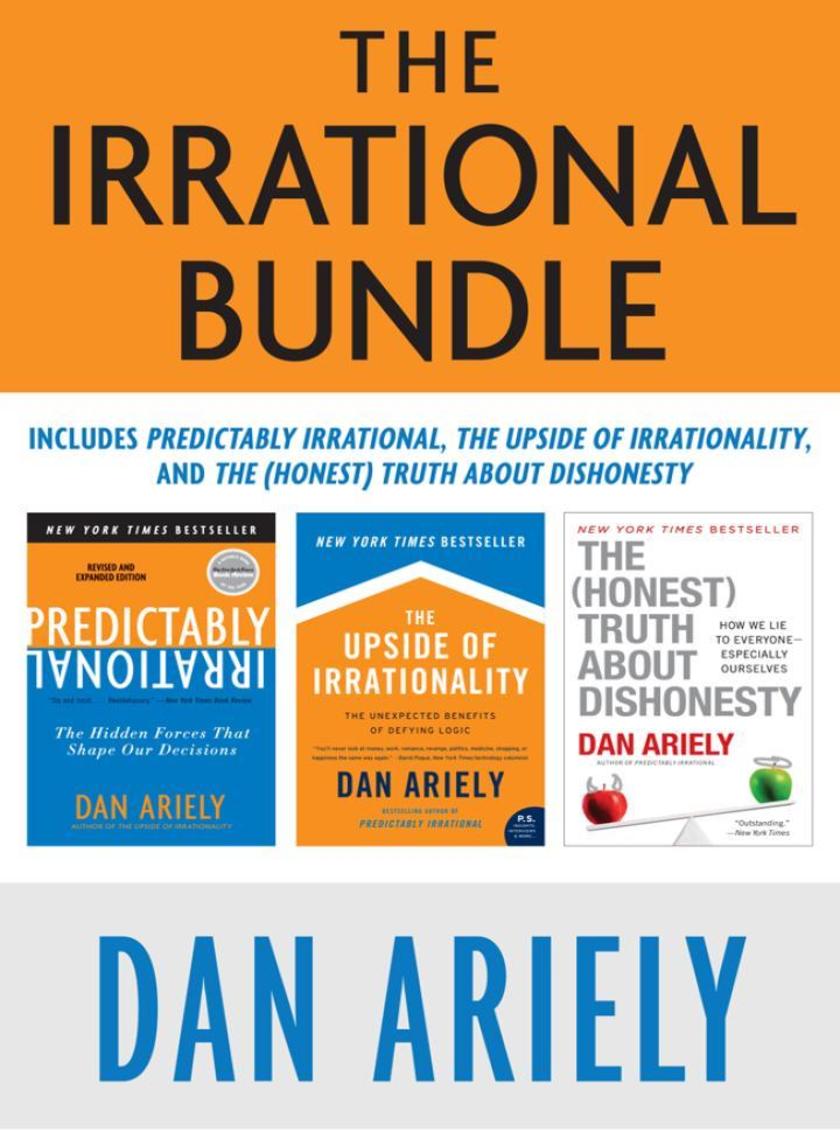
The Irrational Bundle
¥323.63
Dan Ariely's three New York Times bestselling books on his groundbreaking behavioral economics research, Predictably Irrational, The Upside of Irrationality, and The (Honest) Truth About Dishonesty, are now available for the first time in a single volume.

Use The News
¥78.32
Explaining the methods that have made her -- and her stock picks -- famous, Maria Bartiromo tells investors how to use hot information to make money in any market, raging bull or lumbering bear. Packed with sage advice from the most influential people on Wall Street, Use the News is an indispensable investment handbook that will disclose the Wall Street insiders' secrets and show you how to take control of your investments.
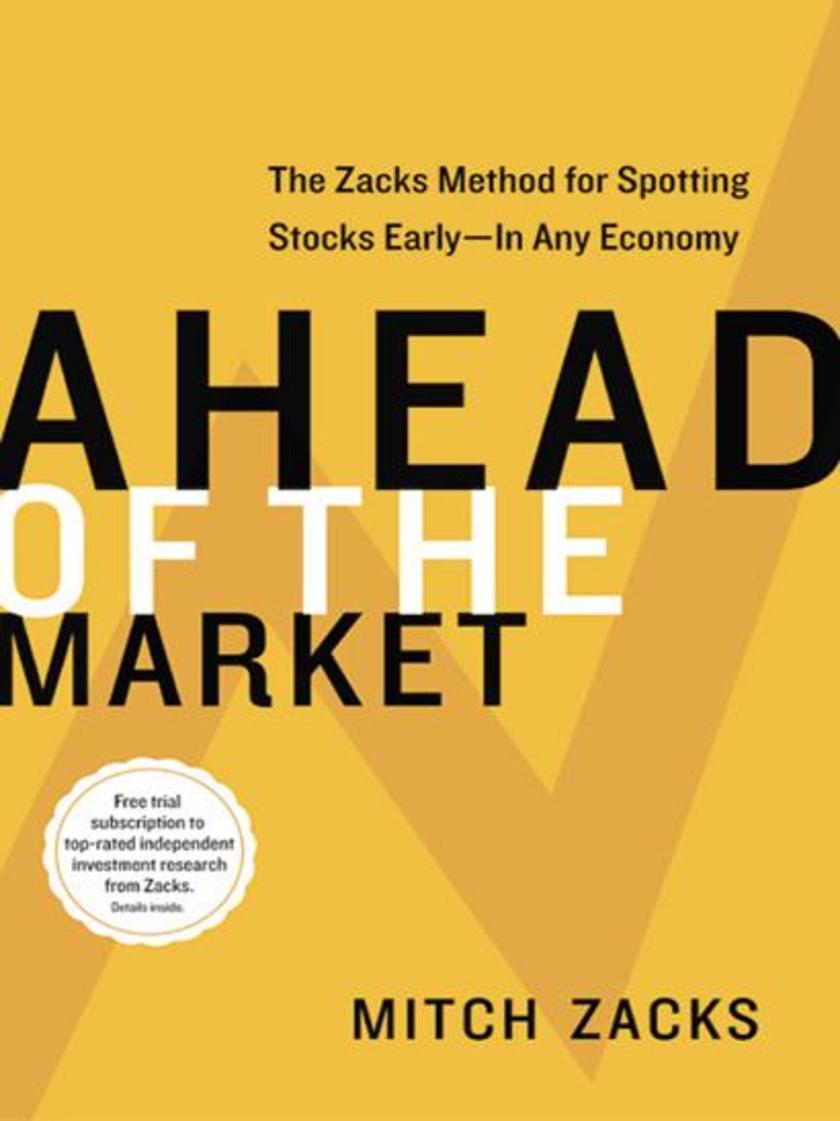
Ahead of the Market
¥90.77
Beat the Pros at Their Own Game All too often, you learn about good stocks far too late to profit from the information. By the time you actually buy a stock, professional investors have already been there, bought the stock, driven up the price, and are just waiting to unload it at an inflated price.All That's About to Change. . . .In Ahead of the Market, Mitch Zacks shows investors how they can spot stocks that are poised to take off long before the rest of the crowd learns about them. HowBy unlocking the gems of priceless information buried in Wall Street's often self-serving research. Ahead of the Market is the first book, ever, that enables you to profitably use the analyst stock research for which Wall Street firms pay more than one billion dollars annually. Many investors have rightly felt misled in the past by analysts who continued to hype stocks as prices plummeted. You may have even concluded that Wall Street research is totally worthless. But it's not.In Ahead of the Market, Mitch Zacks shows that analysts actually provide a wealth of market-moving information that can generate exceptional returns if interpreted correctly.The key is to use the research produced by Wall Street analysts the same way the professional money managers do.Pioneered by the firm Zacks Investment Research and based on more than twenty years of intensive analysis, the investment strategies revealed in this book are indeed the same ones used by successful professional investors everywhere.In these pages you will learn how to form an investment plan by locating stocks that are poised for price appreciation and avoiding stocks heading for a fall. Zacks shows how you could have prevented being burned when the recent bubble burst, if you had known how to use analyst research correctly and teaches you the rules of the research game so you will not fall victim the next time around. In sum, this book is your guide to picking the right stock at the right time.Mitch Zacks's groundbreaking research provides new insights and new strategies to: Use revisions to analysts' earnings estimates to predict the rise and fall of stock prices Interpret the real meaning behind analysts' stock recommendations Employ the "cockroach" phenomenon and other methodologies to predict earnings surprises before they occur Determine how to react when a company reports earnings and how to profit from "post-earnings announcement drift" Understand and profit from "analyst creep" the reason that earnings estimate revisions occur incrementally over time Avoid being duped by the games that companies play with their earnings reportsWhether the economy is healthy or stalled, whether the market is up or down, by focusing on the strategies contained in this book you will always come out ahead. Well-picked individual stocks will always carry the day. Now with Ahead of the Market, you will finally have the same tools institutional investors have and will be able to find great stocks in any market environment.
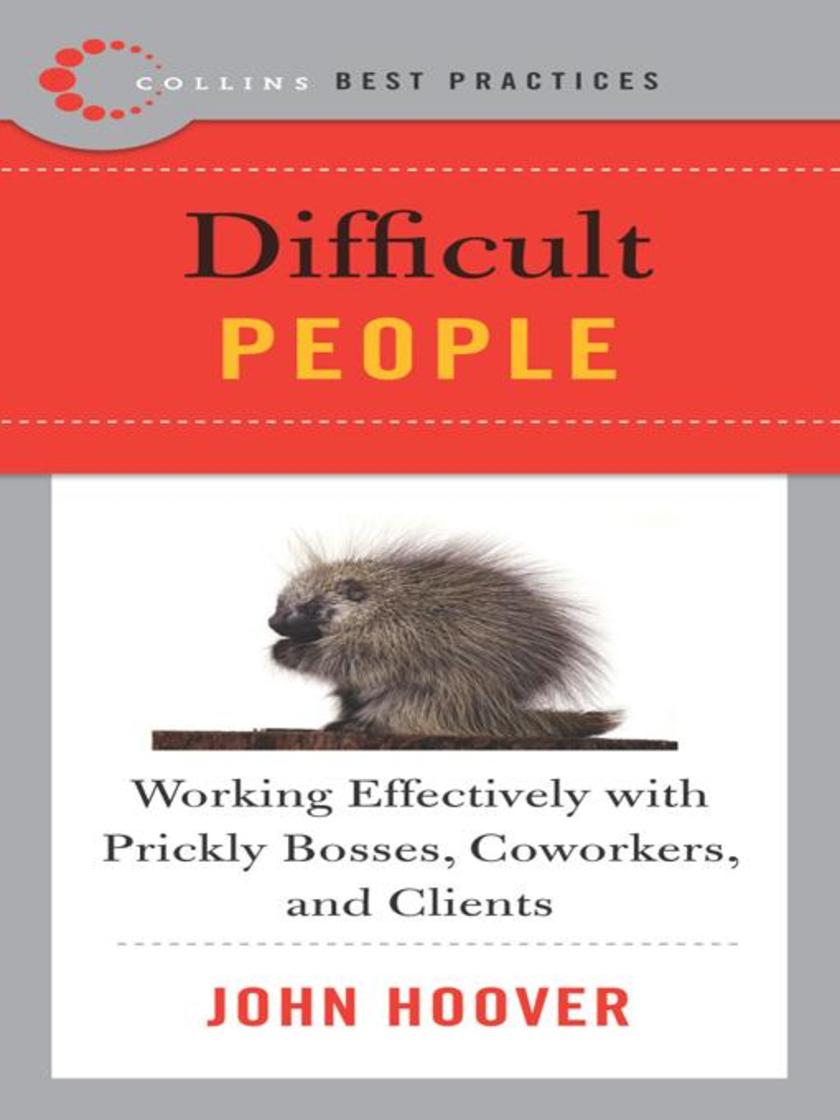
Best Practices: Difficult People
¥72.70
Every office has someone who's no fun to be around. But getting along with that person and managing them effectively can make both your jobs easier. Difficult People, a comprehensive and essential resource for any manager on the run, shows you how.Learn to: Recognize why and when people act out Identify different types of difficult people Cope with difficult behavior Get the most out of trouble employees Nurture a harmonious work environment The Collins Best Practices guides offer new and seasoned managers the essential information they need to achieve more, both personally and professionally. Designed to provide tried-and-true advice from the world's most influential business minds, they feature practical strategies and tips to help you get ahead.

Best Practices: Time Management
¥72.70
There are only twenty-four hours in a day, but you can make them count. Time Management, a comprehensive and essential resource for any manager on the run, shows you how.Learn to: Set and prioritize goals, objectives, and tasks Create an effective schedule Avoid distractions and interruptions Respect other people's time Build a time-conscious organization The Collins Best Practices guides offer new and seasoned managers the essential information they need to achieve more, both personally and professionally. Designed to provide tried-and-true advice from the world's most influential business minds, they feature practical strategies and tips to help you get ahead.


