


 购物车
购物车 个人中心
个人中心
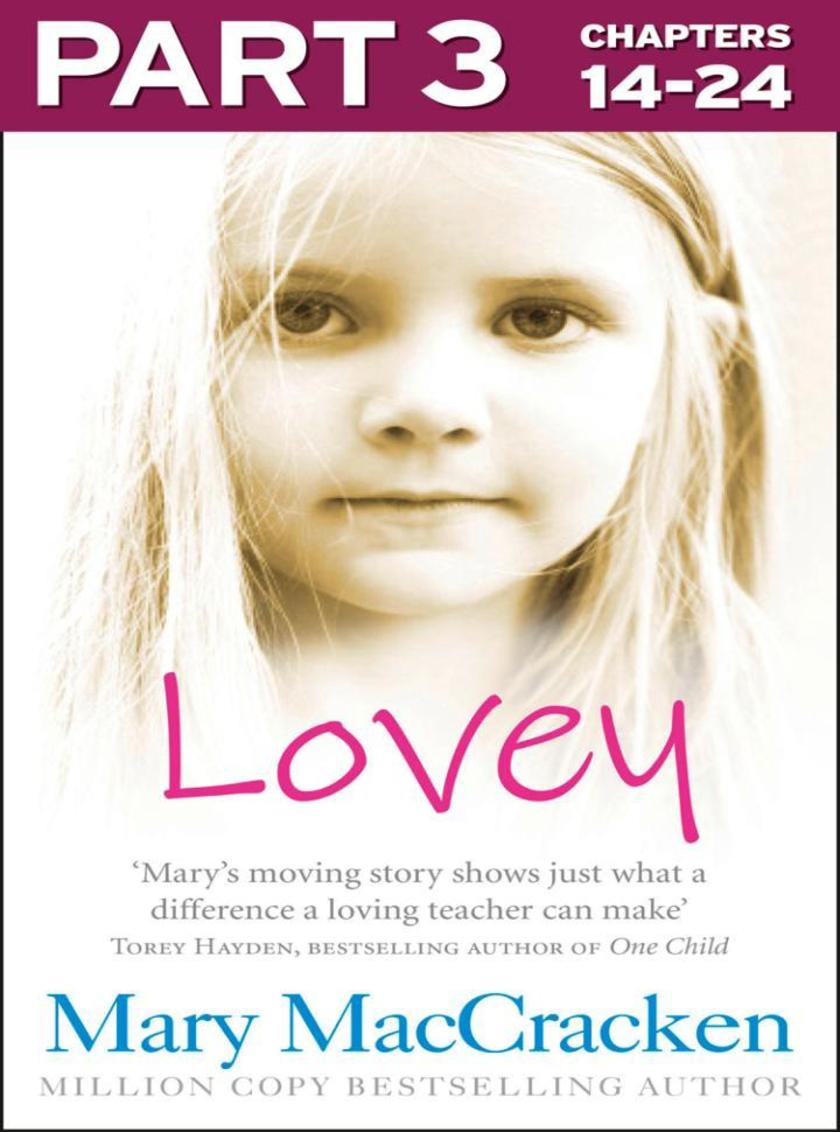
Lovey: Part 3 of 3
¥47.48
Lovey can either be read as a full-length eBook or in 3 serialised eBook-only parts. This is PART 3 of 3. You can read Part 3 1 week ahead of release of the full-length eBook and paperback. This deeply moving memoir tells the story of Hannah: a child who has been beaten and abused; a girl full of loneliness and rage; a student no one but learning disabilities teacher Mary MacCracken could reach. Mary had reservations about eight-year-old Hannah joining her class. The three emotionally disturbed boys she was currently looking after had been making steady progress, and Hannah, who had a reputation for being a withdrawn and incredibly troubled child, would only be a disruptive influence. For the first fortnight Hannah retired to a cupboard and refused to come out. Howling almost non-stop she was displaying the worst symptoms that Mary had ever seen. How could Mary help a child who had been shut up in closets and treated like an animal? What could she say to a child who had been locked out of her own home, and beaten by both her brother and her father? How could she reach this lost girl? This is the remarkable story of Hannah and Mary’s journey together. Deep within Hannah, Mary recognises an amazing strength. And with love, skill and patience, she gradually starts to make a difference. It’s a long road to recovery, but Mary never gives up. As this moving true story unfolds, we feel Mary’s joy, we share her hope and, in time, her faith that Hannah will be okay.
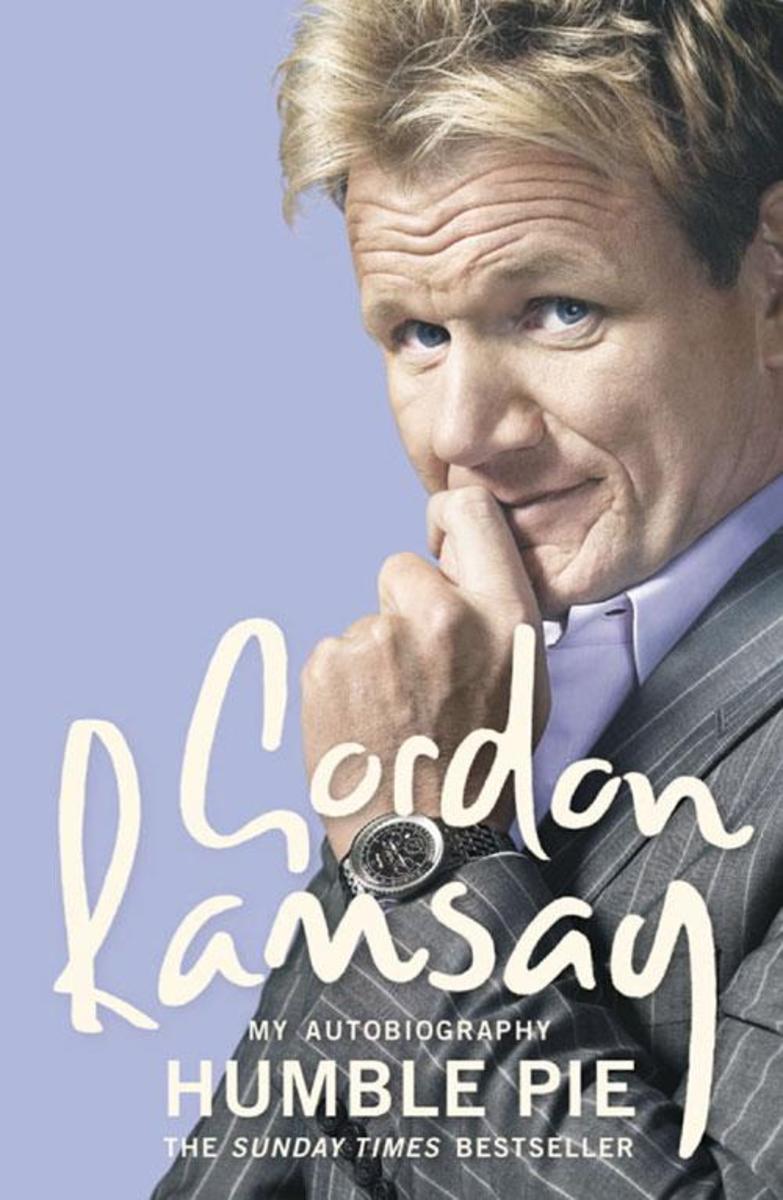
Humble Pie
¥63.18
Everyone thinks they know the real Gordon Ramsay: rude, loud, pathologically driven, stubborn as hell. But this is his bestselling real story… Humble Pie tells the full story of how he became the world’s most famous and infamous chef: his difficult childhood, his brother’s heroin addiction and his failed first career as a footballer: all of these things have made him the celebrated culinary talent and media powerhouse that he is today. Gordon talks frankly about: ? his tough childhood: his father’s alcoholism and violence and the effects on his relationships with his mother and siblings, ? his first career as a footballer: how the whole family moved to Scotland when he was signed by Glasgow Rangers at the age of fifteen, and how he coped when his career was over due to injury just three years later, ? his brother’s heroin addiction. ? Gordon’s early career: learning his trade in Paris and London; how his career developed from there: his time in Paris under Albert Roux and his seven Michelin-starred restaurants. ? Kitchen life: Gordon spills the beans about life behind the kitchen door, and how a restaurant kitchen is run in Anthony Bourdain-style. ? How he copes with the impact of fame on himself and his family: his television career, the rapacious tabloids, and his own drive for success.

More Than A Game: The Story of Cricket's Early Years
¥95.75
The former Prime Minister examines the history of one of the great loves of his life. Throughout John Major’s life, one of the constant factors has been his deep love of cricket. In this sumptuously illustrated book he delves deep into the game’s history, tracing its development from its rustic beginnings to the international sport we know today. Along the way he examines – and at times demolishes – many cherished myths. Among the subjects to which he pays particular attention are the changing social role of cricket, developments in the rules, the emergence of the professional player, the game’s spread throughout the British Empire and the part it has played in cementing international relations. John Major’s history of cricket reflects not only his lifelong passion for the game, but the depth of his research among a wealth of hitherto neglected but fascinating sources. It is a significant addition to the already rich literature of the greatest game of all.
Pete: My Story
¥53.76
When Pete Bennett exploded into the Big Brother house, and into everyone's living rooms, he instantly became an icon. Weird, unpredictable, involuntarily foul-mouthed, beautiful and endlessly entertaining, from day one he was the favourite to win. As a small, sensitive boy, Pete struggled with the bullies and gangs of thugs in some of the hardest housing estates and schools in South London. Despite a tough start, he showed prodigious creative talents in art, music and performance. When Tourette's exploded in his head at puberty, he lost control of his mouth, his body and his face. Unable to finish his education or follow any normal career path, he was led to living the high life and low life on the streets of Brighton. He cheerfully experimented with hard drugs and perverse sexuality, happy to find himself in a world where being beautiful and weird made you a star, not a victim. After witnessing the death of his close friend, he came crashing down to earth. As he battled on with the effects of depression and drug addiction, poverty and Tourette's, a visionary trip to heaven convinced him that the only way he could survive and save his family from penury was by winning Big Brother. After a euphoric victory in August 2006, he is now one of the most famous faces and voices in the country.
Lewis Hamilton: My Story
¥73.58
Lewis Hamilton’s explosive arrival on the Formula 1 scene has made front-page headlines. In My Story, for the first time Lewis opens up about his stunning debut season in grand prix racing, as well as his dad Anthony, his home life and his early years. The only book with the real story, as told by Lewis. In his first season in F1, Lewis Hamilton thrilled the world of motor racing by finishing on the podium in his first nine consecutive races – the first driver to do so in the sport's 57-year history – and drove to victories in Canada, America, Hungary and Japan. But bare statistics alone do scant justice to the amazing impact Lewis Hamilton has had on the sporting landscape. My Story gives the real account from Lewis himself, as he sets the record straight about his colourful life on and off the track. Given a grounded upbringing by his dedicated father in unremarkable Stevenage, Lewis tells about how he first tried out go-karting while on a cut-price family holiday in Ibiza. In his book he gives the real version of events at a motor sport dinner where, as a nine-year-old wearing a borrowed suit, he approached McLaren team boss Ron Dennis with the immortal words that were to change his life forever. He rose rapidly through the Junior and Formula ranks, dominating every series with his raw speed and canny race craft. Here Lewis candidly recalls those key moments that shaped his career and went some way towards compensating for the sacrifices made by his father Anthony in getting his son to the top. Lewis also charts how he got into the sport and was signed up by Ron Dennis, what motivates him, who are his closest friends, how he copes with the constant travelling, and the physical and mental challenges of driving a state-of-the-art Formula 1 car. He looks back in detail at the 2007 World Championship – the race wins, the frightening crash in Germany, his intense rivalry with team-mate Fernando Alonso, his special relationship with Ron Dennis, and the furore over the Ferrari allegations – right up to the dramatic last race of the season in Brazil.
At the Coalface: Part 1 of 3: The memoir of a pit nurse
¥33.75
A heart-warming story of a woman who devoted her life to helping others. This is the memoir of Joan, who started nursing in the 1940s and whose experiences took her into the Yorkshire mining pits and through the tumult of the 1984-85 miners’ strike. Joan Hart always knew what she wanted to do with her life. Born in South Yorkshire in 1932, she started her nursing training when she was 16, the youngest age girls could do so at the time. She continued working after she married and her work took her to London and Doncaster, caring for children and miners. When she took a job as a pit nurse in Doncaster in 1974, she found that in order to be accepted by the men under her care, she would have to become one of them. Most of the time rejecting a traditional nurse’s uniform and donning a baggy miner’s suit, pit boots, a hardhat and a headlamp, Joan resolved always to go down to injured miners and bring them out of the pit herself. Over 15 years Joan grew to know the miners not only as a nurse, but as a confidante and friend. She tended to injured miners underground, rescued men trapped in the pits, and provided support for them and their families during the bitter miners’ strike which stretched from March 1984 to 1985. Moving and uplifting, this is a story of one woman’s life, marriage and work; it is guaranteed to make readers laugh, cry, and smile.
At the Coalface: Part 3 of 3: The memoir of a pit nurse
¥41.01
A heart-warming story of a woman who devoted her life to helping others. This is the memoir of Joan, who started nursing in the 1940s and whose experiences took her into the Yorkshire mining pits and through the tumult of the 1984-85 miners’ strike. Joan Hart always knew what she wanted to do with her life. Born in South Yorkshire in 1932, she started her nursing training when she was 16, the youngest age girls could do so at the time. She continued working after she married and her work took her to London and Doncaster, caring for children and miners. When she took a job as a pit nurse in Doncaster in 1974, she found that in order to be accepted by the men under her care, she would have to become one of them. Most of the time rejecting a traditional nurse’s uniform and donning a baggy miner’s suit, pit boots, a hardhat and a headlamp, Joan resolved always to go down to injured miners and bring them out of the pit herself. Over 15 years Joan grew to know the miners not only as a nurse, but as a confidante and friend. She tended to injured miners underground, rescued men trapped in the pits, and provided support for them and their families during the bitter miners’ strike which stretched from March 1984 to 1985. Moving and uplifting, this is a story of one woman’s life, marriage and work; it is guaranteed to make readers laugh, cry, and smile.

Laugh or You’ll Cry
¥11.77
For most mothers, keeping up with the washing, the mess and the irrepressible energy of two young boys is a challenge in itself. But when Sue Askin’s eldest son was diagnosed with autism, only to be followed by her own diagnosis of MS the next year, the challenge became ever so slightly harder… Told in her own upbeat words, this is the heart-warming and funny account of one woman’s determination to do the best for her child, whilst learning to cope with her own diagnosis without any fuss. Packed with funny anecdotes and familiar challenges to which all families will relate, you’ll be uplifted and inspired as much as you’ll be smiling.
Memories, Dreams and Reflections
¥72.40
This book is a more personal history than has ever before been written by or about Marianne Faithfull. Anecdotal, conversational, intimate and revealing, this is her no-holds-barred account of her life, her friends, her triumphs and mistakes. A decade after the publication of ‘Faithfull’, one of the most acclaimed rock autobiographies of all time, Marianne Faithfull is back, vowing periodically leave her wicked ways behind and grow up, but finding that somehow strange things keep happening. A wry observer of her slightly off-kilter world, Marianne muses nostalgically about afternoons languishing on Moroccan cushions at George and Pattie's, getting high and listening to new songs. She fondly recalls the outlandish antics of her Beat friends Allen Ginsberg and William Burroughs; is frequently baffled at her image in the press (opening the paper to read of her own demise: 'Sixties Star in Death Plunge'); terrified by the curse sent by Kenneth Anger; mortified by her history of reckless behaviour; not to mention her near-death experience in Singapore while looking for an opium den. Marianne peoples her anecdotal memoir with legendary characters one can imagine only Marianne assembling around her, both the eccentric and the beautiful, from Henrietta Moraes and Donatella Versace to Sofia Coppola, Juliette Greco, and Yves St. Laurent's dog. Here is Marianne on the dark side of the sixties and the bright side of the nineties, which saw her collaborating with the likes of Blur and Jarvis Cocker; compelling recollections of an unconventional childhood in her father's orgiastic literary commune to a hilariously decadent few days at Lady Caroline Blackwood's deathbed. Here she is her blossoming movie career, on her records as subliminal autobiography. This is as intimate a portrait as we've ever had of Marianne, as she meditates on sex and drugs, confronts her alter-ego, the Fabulous Beast, and faces her own mortality in her battle with breast cancer. Since her last book Marianne has, in her own words, 'made quite a few records, gone on many tours, tried to play it straight, and… Well, the rest is the subject of this book.'

Poems, Letters and Memories of Philip Sidney Nairn
¥110.46
A poignant memoir and tribute to the Oxford poet Nairn by the author who went on to create The Worm Ouroboros and the groundbreaking Zimiamvia fantasy trilogy. Eric Rucker Eddison’s first book, originally published privately in hardback during the First World War, is a poignant memoir and tribute to the Oxford poet Philip Sidney Fletcher Nairn, whose work was so inspired by his Scottish ancestry, life in the Lake District, and his subsequent travels across Asia. This first official paperback edition includes a poignant and evocative biography, a dozen photographs, and more than 50 of Nairn’s poems, and marks the centenary of his untimely death in Kuala Lumpur in May 1914, aged just 30 years old.
The Last Grain Race
¥80.25
An engaging and informative first-hand account of the last ‘grain race’ of maritime history, from respected travel writer Eric Newby. In 1939, a young Eric Newby – later renowned as a travel writer of exceptional talent – set sail aboard Moshulu, the largest sailing ship still employed in the transportation of grain from Australia to Europe. Every year from 1921 to 1939, the vessels involved in the grain trade would strive to find the shortest, fastest passage home – ‘the grain race’ – in the face of turbulent seas, atrocious weather conditions and hard graft. First published in 1956, ‘The Last Grain Race’, featuring many photographs from the author’s personal collection, celebrates both the spirit of adventure and the thrill of sailing on the high seas. Newby’s first-hand account – engaging and informative, with frequent bursts of humour and witty observations from both above and below deck – chronicles this classic sailing voyage of the Twenties and Thirties, and records the last grain race of maritime history.

David and Me: My path to solo motherhood
¥11.77
“This is the very beginning of the story of my life with my son. In some ways it is an unconventional one; a tale of choosing solo motherhood, with all its painful and joyful twists and turns. But at its heart it simply recounts a mother’s love for her child; a love that has been replicated throughout time all over the world.” The true story of Esther, who, at the age of 42, found herself single yet longing to be a mother. Flying in the face of the advice and scaremongering from the media, she made the brave decision to go it alone. Initially, the path was smooth, and Esther received nothing but encouragement and support from family and friends. But, as she ventured further down the path towards solo motherhood, Esther began to run up against bureaucracy, crushing negativity, obstructions and, occasionally, in amongst the care and compassion of doctors, nurses, embryologists and sonographers, bewildering incompetence. From IUI to IVF, dramatic hormonal fluctuations creating frustration and exhaustion, and a devastating blow, through to the joy of motherhood at last, Esther’s story is both moving and life-affirming.

I Blame The Hormones
¥9.71
I Blame the Hormones follows the story of one woman battling long-term depression, her determination to root out the cause, and her ultimate discovery which freed her from its prison. Caroline Church suffered from a depression so chronic she experienced hallucinations, delusions and even suicidal inclinations. Yet through exploring the correlation between her depressive episodes and the basic elements of female nature, over many years she discovered that what she thought was a mental disorder was actually due to a hormonal imbalance. And the best bit? She learnt what she could do and take to control it. Shocking, vivid, and a must read for women, their partners and healthcare professionals alike, I Blame the Hormones is the uplifting memoir of Caroline’s journey to pull herself through despite all the odds.
Provided You Don’t Kiss Me: 20 Years with Brian Clough
¥72.40
‘One day you’ll write a book about this club. Or, more to the point, about me. So you may as well know what I’m thinking and save it up for later when it won’t do any harm to anyone.’ Brian Clough’s twenty years as Nottingham Forest manager were an unpredictable mixture of success, failure, fall-outs and alcoholism. Duncan Hamilton, initiated as a young journalist into the Brian Clough empire, was there to see it all. In this strikingly intimate biography – William Hill Sports Book of the Year 2007 – Hamilton paints a vivid portrait of one of football’s greatest managers: from Nottingham Forest’s double European Cup triumph to the torturous breakdown of relations at the club and Clough’s descent into alcoholism. Sad, joyous and personal, Hamilton’s account of life with Brian Clough is a touching tribute to a brilliant man.
Look who it is!: My Story
¥57.09
The brilliantly funny Sunday Times top ten bestseller. Alan Carr tells his life story in his own words, from growing up in a football-mad family in Northampton to his rise as one of Britain’s best-loved comedians. ‘Puberty had been unkind. Whereas it had come in the night and left the other boys with chiselled, stubbly chins and deep masculine voices, I’d been left with a huge pair of knockers and the voice of a pensioner.’ Alan Carr Alan Carr grew up in one of the most boring towns in England – Northampton. A place known for making shoes. It was also known for its football club, Northampton Town FC. Alan’s dad as manager of the club was a local hero. A dream come true for most lads, but not Alan. Alan wore glasses and had man boobs at 14. He did not like P.E. In his very first book, Alan tells his life story, (‘oh and what a life’) with his unique twist of natural, observational humour – ‘I’m not saying I’m a fantasist but there have been times when things that I’ve seen on television when I was younger have tended to seep into my subconscious and blended into my own life. I remember telling my Mum about the time I stopped that woman from having a diamond encrusted necklace stolen and she’d say ‘No Alan, that was Poirot.’ With his tongue-in-cheek, end of pier humour that made him famous, Alan describes an ordinary life in bursts of technicolour. His journey from awkward schoolboy hiding his man-boobs on the pitch, drinking tea with the dinner ladies and working in a call centre, to becoming one of our best-loved comedians likened to the great Frankie Howerd, make his book a guaranteed tickler with a laugh-out-loud gag on every page.
Michael Jackson – Legend, Hero, Icon: A Tribute to the King of Pop
¥100.06
A lavishly illustrated tribute to the greatest entertainer of a generation. ‘The world has lost one of the greats but his music will live on forever’ - Madonna Michael Jackson was the undisputed King of Pop and his untimely death has provoked tributes from around the world. With a colourful life spanning from 1968 when Michael was a member of the Jackson 5 to his recent announcement of a final comeback tour at the O2 in London, nobody can dispute the achievements of the man who was arguably the greatest artist of the millenium. This fully illustrated book offers an insightful tribute to the man behind Thriller, the world's best selling album of all time. Including sections on Michael's early life and the Jackson 5, the making of Off the Wall and Thriller, and the troubled years leading right up to his announcement of a comeback tour, this will be a comprehensive and fitting tribute to a legendary pop star, the likes of which the world will never see again.

Journey of a Lifetime
¥69.26
The iconic broadcasting legend dusts down his suitcase for a final journey around the globe, revisiting locations of significance to his life and career. Published to coincide with a major Bbc Tv series of the same name, this is a glorious celebration of 50 years in front of the camera. For as long as most can remember, Whicker has roamed far and wide in search of the eccentric, the ludicrous, and the socially-revealing aspects of everyday life as lived by some of the more colorful of the world's inhabitants. Since the late 1950s, when the long-running Whicker's World documentary was first screened, he has probed and dissected the often secretive and unobserved worlds of the rich and famous, rooting out the most implausible and sometimes ridiculous characters after gaining admittance to the places where they conduct their leisure hours. The great man's legacy contains a number of genuine television firsts. As well as landmark interviews with figures as diverse as Papa Doc, Paul Getty, and The Sultan of Brunei, he was a pioneer, covering subjects like plastic surgery, gay weddings, polygamy, swinging, and following gun-toting cops, fly-on-the-wall style, for British screens long before anyone else. This wonderful new book is the end product of a very personal journey. Whicker retraces his steps, catching up with some past interviewees and reflecting on how the world has changedfor good and badover the passing of time. Lyrical and uplifting, this autobiography is peppered with a celebrated globetrotter's brand of subtle satire.

Hellfire
¥70.44
The true story of one man's determination to master the world's deadliest helicopter and of a split-second decision that changed the face of modern warfare. May 2006. Pilot Ed Macy arrives in Afghanistan with a contingent of the Apache AH Mk1. It’s the first operational tour for the deadly machines and confidence in the cripplingly expensive attack helicopter is low. It doesn’t help that for their first month ‘in action’, Ed and his mates see little more than the back-end of a Chinook. But when the men of 3 Para get pinned down during Op Mutay, reservations about the fearsome new attack helicopters are thrown out the window. In the blistering firefight that follows, Ed unleashes the first ever Hellfire missile in combat and, with one squeeze of the trigger, changes the war in Afghanistan forever. What had been rumoured as a ?4.2 billion mistake quickly becomes the British Army’s greatest asset, as the awe-inspiring Apache is dramatically redirected to fight the enemy head-on. In this gripping account of war on the ground and in the skies above the dusty wastes of Helmand, Ed recounts the intense months that followed: the steep learning curve, the relentless missions, the evolving enemy and the changing Rules of Engagement. As he comes to grip with the Apache, his early career as a paratrooper stands him in good stead, as does his operational baptism as a pilot. Both shaped his ability to fly, fight and survive during that fateful first Afghanistan tour against a cunning and ruthless enemy. Ed will need every ounce of willpower and skill to succeed over the long, hot Helmand summer, as he and his colleagues find themselves on trial for their lives and for the reputation of a machine on which the British government has staked a fortune. The crucible of fire that awaited them would cement the fate of man and machine forever.
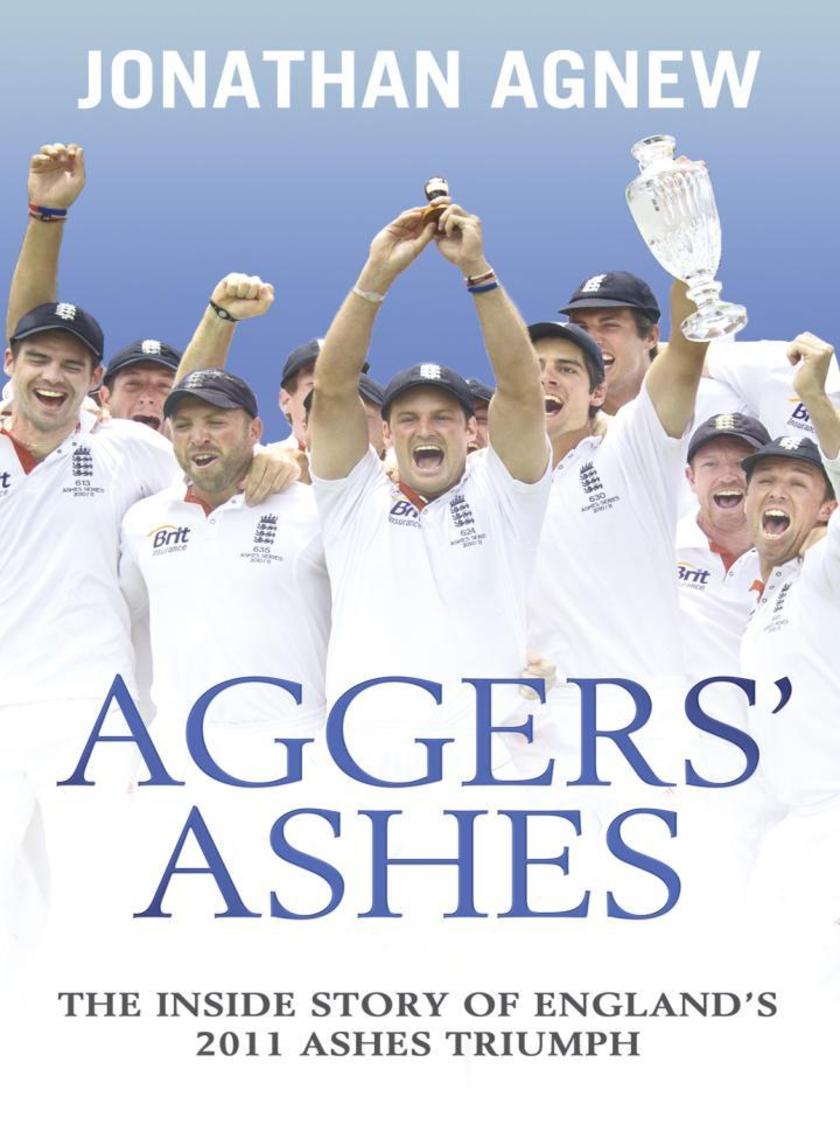
Aggers’ Ashes
¥146.27
An inside account of England’s Ashes triumph in Australia 2010/11. England’s much celebrated Ashes win by two clear matches with three comprehensive innings victories must rank as one of the finest of any English cricket team from any era. It kept people at home glued to their televisions, computers and radios – often all three at the same time – long into the night as the bitter winter and a depressed economy were forced into the background by the sheer joy and exhilaration of giving the old enemy a trouncing. It had been twenty-two years since a touring side won three Tests in Australia and twenty-four since the Ashes were last won on Australian soil. The current England team bears worthy comparison with some of the legendary teams of the past, captained by greats like Brearley, Hutton and Jardine. Andrew Strauss with back-to-back Ashes wins can now sit amongst that illustrious company. From the first ball of the tour in Perth to a closing rendition of the infamous ‘Sprinkler Dance’ on the outfield in Sydney some two months later – a clip that received some 250,000 hits in just three days – one person was there throughout, BBC Cricket Correspondent Jonathan Agnew, better known to his legion of Test Match Special fans as ‘Aggers’. Following the success of his last book Thanks, Johnners, Agnew has written a highly personal diary of his experiences in Australia. Whether he is sharing late night conversations in the bar with England coach Andy Flower, exchanging banter with new TMS recruit Michael Vaughan or keeping cricket junkies around the world sated with his daily Twitter feed, Aggers brings his unique sense of theatre and excitement to every day’s proceedings. With additional contributions from the best BBC cricket bloggers and the resident TMS statistician, Aggers Ashes is the only companion you will need to relive those glorious days when history was made Down Under.
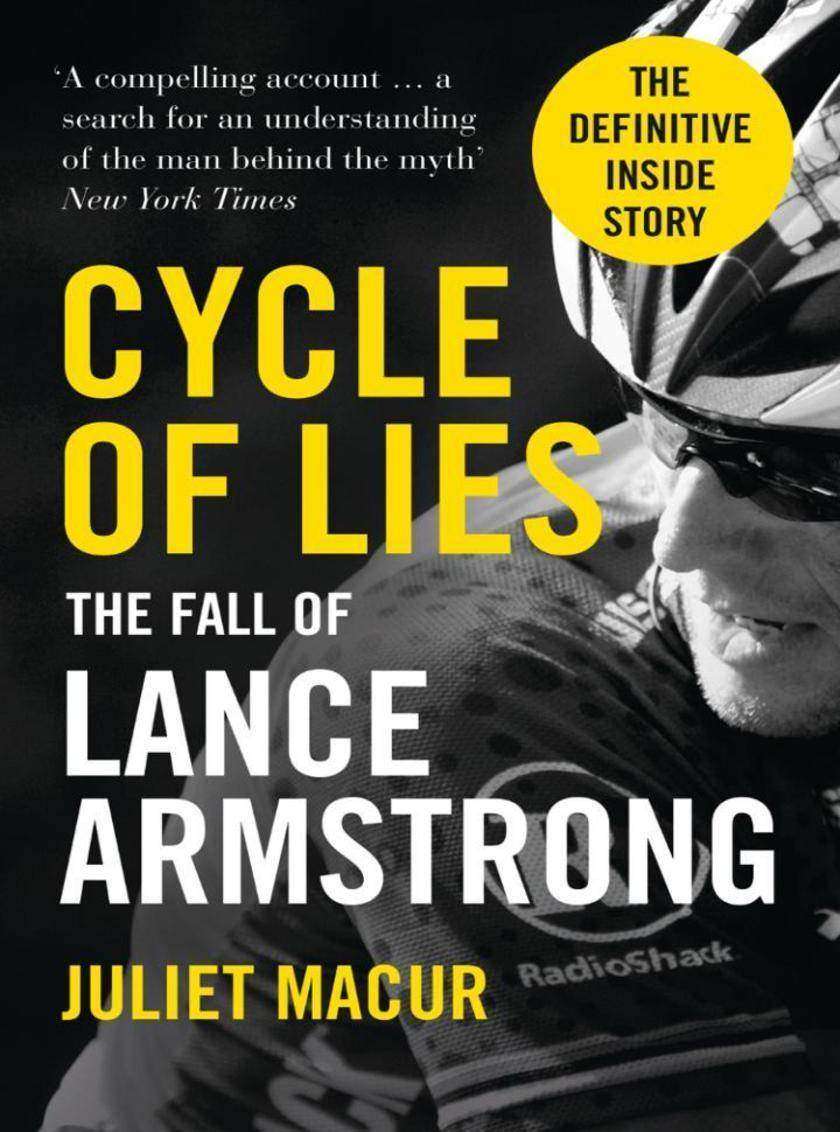
Cycle of Lies: The Fall of Lance Armstrong
¥81.03
A fly-on-the-wall account of the greatest drama in modern sporting history by the New York Times cycling correspondent. As Lance Armstrong’s precipitous fall from grace continues, New York Times sports reporter Juliet Macur takes the reader behind the scenes to bring to life the astonishing twists and turns of the scandal that has rocked the world of cycling. With unprecedented access to the key players in the drama – from Armstrong’s fellow cyclists and top cycling officials to doctors, trainers and wives – Cycle of Lies reveals how Armstrong built a fortress of people around him to protect his image and upend the lives of anybody who stood in his way. As America’s fallen idol faces potential perjury charges, Cycle of Lies widens the focus to expose corruption at all levels of the sport in a thrilling, page-turning work of contemporary narrative history.

HOLLYWOOD SHAPED MY HAIR
¥22.66
A humorous look at the influence of celebrity style, charting the hairdos (and hair don’ts) James King has fashioned over the years. From the classic ‘Rachel from Friends’ to the questionable David Beckham mohawk, most of us, probably unwisely, have tried to emulate our favourite star’s hairstyles at some point. In HOLLYWOOD SHAPED MY HAIR, James King takes us on a hair-history of cinema.


