


 购物车
 个人中心

History of the Federal Reserve, Volume 1
¥265.87
Allan H. Meltzer's monumental history of the Federal Reserve System tells the story of one of America's most influential but least understood public institutions. This first volume covers the period from the Federal Reserve's founding in 1913 through the Treasury-Federal Reserve Accord of 1951, which marked the beginning of a larger and greatly changed institution.To understand why the Federal Reserve acted as it did at key points in its history, Meltzer draws on meeting minutes, correspondence, and other internal documents (many made public only during the 1970s) to trace the reasoning behind its policy decisions. He explains, for instance, why the Federal Reserve remained passive throughout most of the economic decline that led to the Great Depression, and how the Board's actions helped to produce the deep recession of 1937 and 1938. He also highlights the impact on the institution of individuals such as Benjamin Strong, governor of the Federal Reserve Bank of New York in the 1920s, who played a key role in the adoption of a more active monetary policy by the Federal Reserve. Meltzer also examines the influence the Federal Reserve has had on international affairs, from attempts to build a new international financial system in the 1920s to the Bretton Woods Agreement of 1944 that established the International Monetary Fund and the World Bank, and the failure of the London Economic Conference of 1933.Written by one of the world's leading economists, this magisterial biography of the Federal Reserve and the people who helped shape it will interest economists, central bankers, historians, political scientists, policymakers, and anyone seeking a deep understanding of the institution that controls America's purse strings."e;It was 'an unprecedented orgy of extravagance, a mania for speculation, overextended business in nearly all lines and in every section of the country.' An Alan Greenspan rumination about the irrational exuberance of the late 1990sTry the 1920 annual report of the board of governors of the Federal Reserve. . . . To understand why the Fed acted as it did-at these critical moments and many others-would require years of study, poring over letters, the minutes of meetings and internal Fed documents. Such a task would naturally deter most scholars of economic history but not, thank goodness, Allan Meltzer."e;-Wall Street Journal"e;A seminal work that anyone interested in the inner workings of the U. S. central bank should read. A work that scholars will mine for years to come."e;-John M. Berry, Washington Post"e;An exceptionally clear story about why, as the ideas that actually informed policy evolved, things sometimes went well and sometimes went badly. . . . One can only hope that we do not have to wait too long for the second installment."e;-David Laidler, Journal of Economic Literature"e;A thorough narrative history of a high order. Meltzer's analysis is persuasive and acute. His work will stand for a generation as the benchmark history of the world's most powerful economic institution. It is an impressive, even awe-inspiring achievement."e;-Sir Howard Davies, Times Higher Education Supplement
Charleston Orphan House
¥265.87
The first public orphanage in America, the Charleston Orphan House saw to the welfare and education of thousands of children from poor white families in the urban South. From wealthy benefactors to the families who sought its assistance to the artisans and merchants who relied on its charges as apprentices, the Orphan House was a critical component of the city's social fabric. By bringing together white citizens from all levels of society, it also played a powerful political role in maintaining the prevailing social order.?John E. Murray tells the story of the Charleston Orphan House for the first time through the words of those who lived there or had family members who did. Through their letters and petitions, the book follows the families from the events and decisions that led them to the Charleston Orphan House through the children's time spent there to, in a few cases, their later adult lives. What these accounts reveal are families struggling to maintain ties after catastrophic loss and to preserve bonds with children who no longer lived under their roofs.?An intimate glimpse into the lives of the white poor in early American history, The Charleston Orphan House is moreover an illuminating look at social welfare provision in the antebellum South.
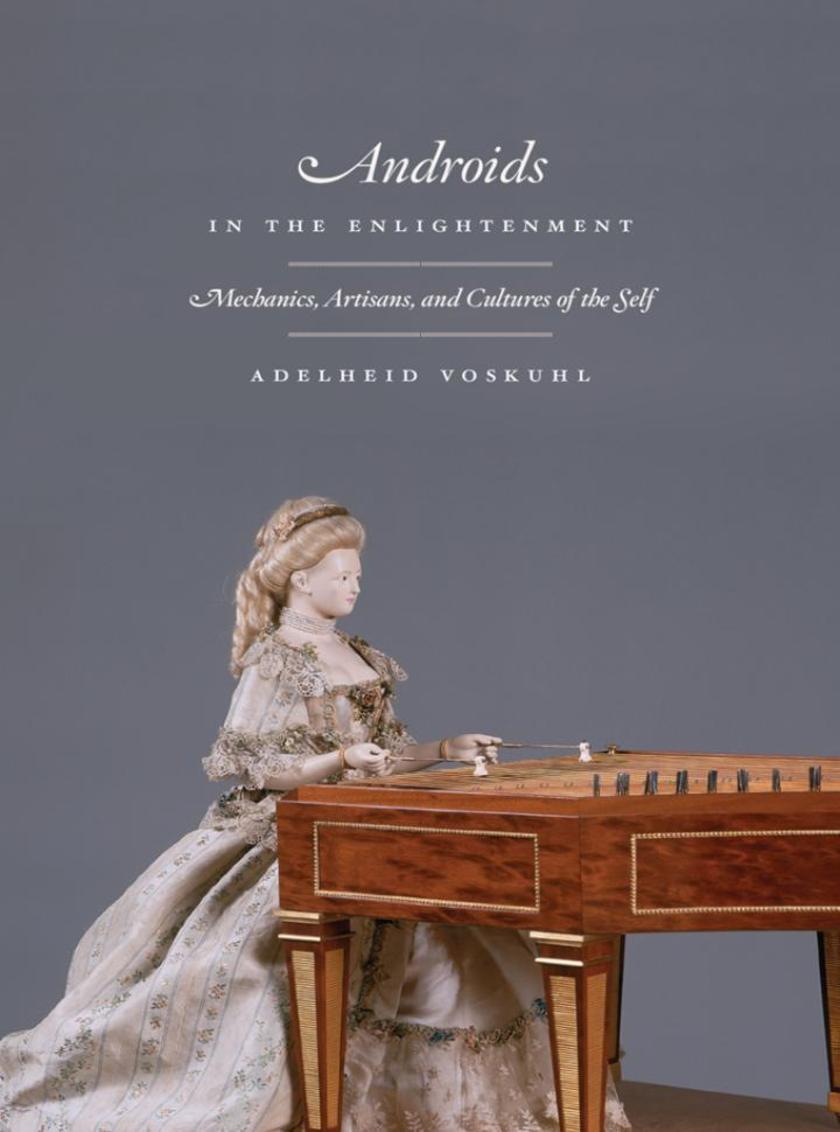
Androids in the Enlightenment
¥223.67
The eighteenth century saw the creation of a number of remarkable mechanical androids: at least ten prominent automata were built between 1735 and 1810 by clockmakers, court mechanics, and other artisans from France, Switzerland, Austria, and the German lands. Designed to perform sophisticated activities such as writing, drawing, or music making, these "e;Enlightenment automata"e; have attracted continuous critical attention from the time they were made to the present, often as harbingers of the modern industrial age, an era during which human bodies and souls supposedly became mechanized.?In Androids in the Enlightenment, Adelheid Voskuhl investigates two such automata-both depicting piano-playing women. These automata not only play music, but also move their heads, eyes, and torsos to mimic a sentimental body technique of the eighteenth century: musicians were expected to generate sentiments in themselves while playing, then communicate them to the audience through bodily motions. Voskuhl argues, contrary to much of the subsequent scholarly conversation, that these automata were unique masterpieces that illustrated the sentimental culture of a civil society rather than expressions of anxiety about the mechanization of humans by industrial technology. She demonstrates that only in a later age of industrial factory production did mechanical androids instill the fear that modern selves and societies had become indistinguishable from machines.?
After Freud Left
¥206.01
From August 29 to September 21, 1909, Sigmund Freud visited the United States, where he gave five lectures at Clark University in Worcester, Massachusetts. This volume brings together a stunning gallery of leading historians of psychoanalysis and of American culture to consider the broad history of psychoanalysis in America and to reflect on what has happened to Freud's legacy in the United States in the century since his visit.There has been a flood of recent scholarship on Freud's life and on the European and world history of psychoanalysis, but historians have produced relatively little on the proliferation of psychoanalytic thinking in the United States, where Freud's work had monumental intellectual and social impact. The essays in After Freud Left provide readers with insights and perspectives to help them understand the uniqueness of Americans' psychoanalytic thinking, as well as the forms in which the legacy of Freud remains active in the United States in the twenty-first century. After Freud Left will be essential reading for anyone interested in twentieth-century American history, general intellectual and cultural history, and psychology and psychiatry.?
Art and Truth after Plato
¥288.41
Despite its foundational role in the history of philosophy, Plato's famous argument that art does not have access to truth or knowledge is now rarely examined, in part because recent philosophers have assumed that Plato's challenge was resolved long ago. In Art and Truth after Plato, Tom Rockmore argues that Plato has in fact never been satisfactorily answered-and to demonstrate that, he offers a comprehensive account of Plato's influence through nearly the whole history of Western aesthetics.?Rockmore offers a cogent reading of the post-Platonic aesthetic tradition as a series of responses to Plato's position, examining a stunning diversity of thinkers and ideas. He visits Aristotle's Poetics, the medieval Christians, Kant's Critique of Judgment, Hegel's phenomenology, Marxism, social realism, Heidegger, and many other works and thinkers, ending with a powerful synthesis that lands on four central aesthetic arguments that philosophers have debated. More than a mere history of aesthetics, Art and Truth after Plato presents a fresh look at an ancient question, bringing it into contemporary relief.
City Water, City Life
¥147.15
A city is more than a massing of citizens, a layout of buildings and streets, or an arrangement of political, economic, and social institutions. It is also an infrastructure of ideas that are a support for the beliefs, values, and aspirations of the people who created the city. In City Water, City Life, celebrated historian Carl Smith explores this concept through an insightful examination of the development of the first successful waterworks systems in Philadelphia, Boston, and Chicago between the 1790s and the 1860s. By examining the place of water in the nineteenth-century consciousness, Smith illuminates how city dwellers perceived themselves during the great age of American urbanization.?But City Water, City Life is more than a history of urbanization.?It is also a refreshing meditation on water as a necessity, as a resource for commerce and industry, and as an essential-and central-part of how we define our civilization.
Economy of Glory
¥370.82
From the outset of Napoleon's career, the charismatic Corsican was compared to mythic heroes of antiquity like Achilles, and even today he remains the apotheosis of French glory, a value deeply embedded in the country's history. From this angle, the Napoleonic era can be viewed as the final chapter in the battle of the Ancients and Moderns. In this book, Robert Morrissey presents a literary and cultural history of glory and its development in France and explores the "e;economy of glory"e; Napoleon sought to implement in an attempt to heal the divide between the Old Regime and the Revolution. ?Examining how Napoleon saw glory as a means of escaping the impasse of Revolutionary ideas of radical egalitarianism, Morrissey illustrates the challenge the leader faced in reconciling the antagonistic values of virtue and self-interest, heroism and equality. He reveals that the economy of glory was both egalitarian, creating the possibility of an aristocracy based on merit rather than wealth, and traditional, being deeply embedded in the history of aristocratic chivalry and the monarchy-making it the heart of Napoleon's politics of fusion. Going beyond Napoleon, Morrissey considers how figures of French romanticism such as Chateaubriand, Balzac, and Hugo constantly reevaluated this legacy of glory and its consequences for modernity. Available for the first time in English, The Economy of Glory is a sophisticated and beautifully written addition to French history.
Shock of the Ancient
¥447.34
The cultural battle known as the Quarrel of the Ancients and Moderns served as a sly cover for more deeply opposed views about the value of literature and the arts. One of the most public controversies of early modern Europe, the Quarrel has most often been depicted as pitting antiquarian conservatives against the insurgent critics of established authority. The Shock of the Ancient turns the canonical vision of those events on its head by demonstrating how the defenders of Greek literature-rather than clinging to an outmoded tradition-celebrated the radically different practices of the ancient world.At a time when the constraints of decorum and the politics of French absolutism quashed the expression of cultural differences, the ancient world presented a disturbing face of otherness. Larry F. Norman explores how the authoritative status of ancient Greek texts allowed them to justify literary depictions of the scandalous. The Shock of the Ancient surveys the diverse array of aesthetic models presented in these ancient works and considers how they both helped to undermine the rigid codes of neoclassicism and paved the way for the innovative philosophies of the Enlightenment. Broadly appealing to students of European literature, art history, and philosophy, this book is an important contribution to early modern literary and cultural debates.
Lucretian Renaissance
¥447.34
With The Lucretian Renaissance, Gerard Passannante offers a radical rethinking of a familiar narrative: the rise of materialism in early modern Europe. Passannante begins by taking up the ancient philosophical notion that the world is composed of two fundamental opposites: atoms, as the philosopher Epicurus theorized, intrinsically unchangeable and moving about the void; and the void itself, or nothingness. Passannante considers the fact that this strain of ancient Greek philosophy survived and was transmitted to the Renaissance primarily by means of a poem that had seemingly been lost-a poem insisting that the letters of the alphabet are like the atoms that make up the universe.?By tracing this elemental analogy through the fortunes of Lucretius's On the Nature of Things, Passannante argues that, long before it took on its familiar shape during the Scientific Revolution, the philosophy of atoms and the void reemerged in the Renaissance as a story about reading and letters-a story that materialized in texts, in their physical recomposition, and in their scattering.?From the works of Virgil and Macrobius to those of Petrarch, Poliziano, Lambin, Montaigne, Bacon, Spenser, Gassendi, Henry More, and Newton, The Lucretian Renaissance recovers a forgotten history of materialism in humanist thought and scholarly practice and asks us to reconsider one of the most enduring questions of the period: what does it mean for a text, a poem, and philosophy to be "e;reborn"e;?
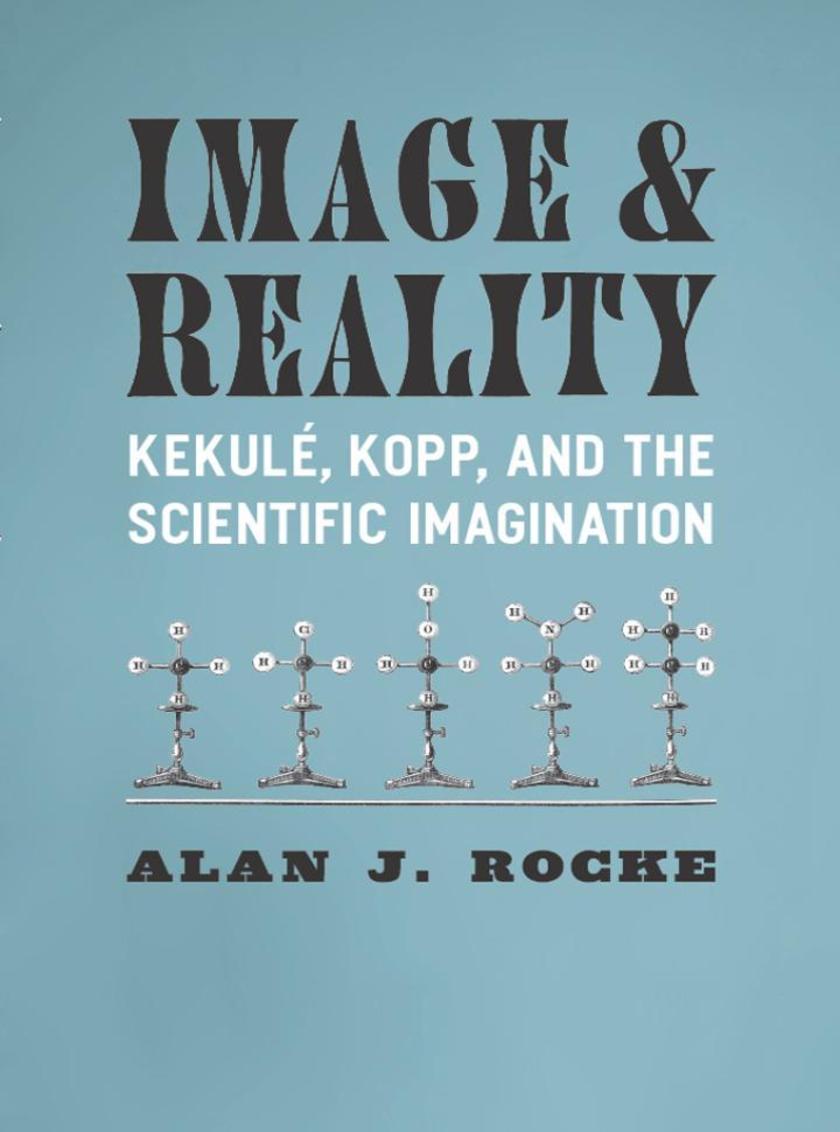
Image and Reality
¥447.34
Nineteenth-century chemists were faced with a particular problem: how to depict the atoms and molecules that are beyond the direct reach of our bodily senses. In visualizing this microworld, these scientists were the first to move beyond high-level philosophical speculations regarding the unseen. In Image and Reality, Alan Rocke focuses on the community of organic chemists in Germany to provide the basis for a fuller understanding of the nature of scientific creativity.?Arguing that visual mental images regularly assisted many of these scientists in thinking through old problems and new possibilities, Rocke uses a variety of sources, including private correspondence, diagrams and illustrations, scientific papers, and public statements, to investigate their ability to not only imagine the invisibly tiny atoms and molecules upon which they operated daily, but to build detailed and empirically based pictures of how all of the atoms in complicated molecules were interconnected. These portrayals of "e;chemical structures,"e; both as mental images and as paper tools, gradually became an accepted part of science during these years and are now regarded as one of the central defining features of chemistry.In telling this fascinating story in a manner accessible to the lay reader, Rocke also suggests that imagistic thinking is often at the heart of creative thinking in all fields.Image and Reality is the first book in the Synthesis series, a series in the history of chemistry, broadly construed, edited by Angela N. H. Creager, John E. Lesch, Stuart W. Leslie, Lawrence M. Principe, Alan Rocke, E.C. Spary, and Audra J. Wolfe, in partnership with the Chemical Heritage Foundation.
Unrepentant Renaissance
¥447.34
Who during the Renaissance could have dissented from the values of reason and restraint, patience and humility, rejection of the worldly and the physicalThese widely articulated values were part of the inherited Christian tradition and were reinforced by key elements in the Renaissance, especially the revival of Stoicism and Platonism. This book is devoted to those who did dissent from them.?Richard Strier reveals that many long-recognized major texts did question the most traditional values and uncovers a Renaissance far more bumptious and affirmative than much recent scholarship has allowed.The Unrepentant Renaissance counters the prevalent view of the period as dominated by the regulation of bodies and passions, aiming to reclaim the Renaissance as an era happily churning with surprising, worldly, and self-assertive energies. Reviving the perspective of Jacob Burckhardt and Nietzsche, Strier provides fresh and uninhibited readings of texts by Petrarch, More, Shakespeare, Ignatius Loyola, Montaigne, Descartes, and Milton. Strier's lively argument will stir debate throughout the field of Renaissance studies.
What Editors Want
¥188.35
Research publications have always been key to building a successful career in science, yet little if any formal guidance is offered to young scientists on how to get research papers peer reviewed, accepted, and published by leading scientific journals. With What Editors Want, Philippa J. Benson and Susan C. Silver, two well-respected editors from the science publishing community, remedy that situation with a clear, straightforward guide that will be of use to all scientists.Benson and Silver instruct readers on how to identify the journals that are most likely to publish a given paper, how to write an effective cover letter, how to avoid common pitfalls of the submission process, and how to effectively navigate the all-important peer review process, including dealing with revisions and rejection. With supplemental advice from more than a dozen experts, this book will equip scientists with the knowledge they need to usher their papers through publication.
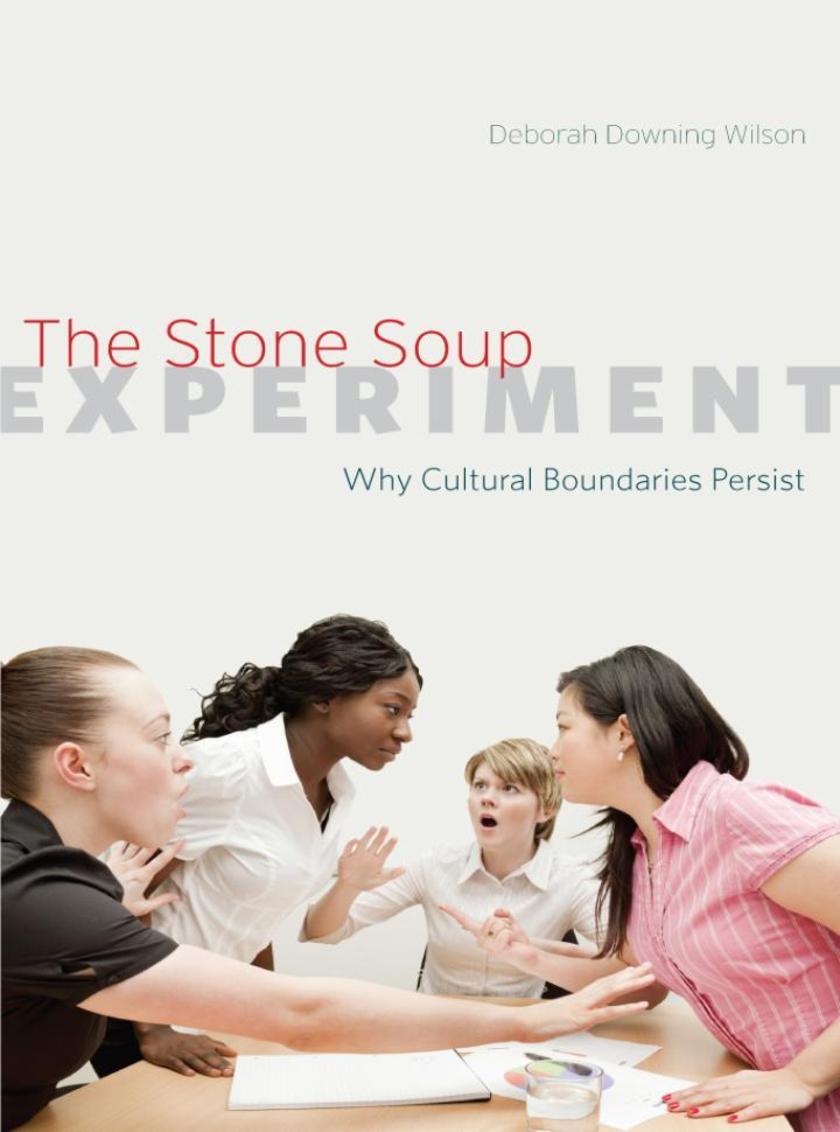
Stone Soup Experiment
¥147.15
The Stone Soup Experiment is a remarkable story of cultural difference, of in-groups, out-groups, and how quickly and strongly the lines between them are drawn. It is also a story about simulation and reality, and how quickly the lines between them can be dismantled.?In a compulsively readable account, Deborah Downing Wilson details a ten-week project in which forty university students were split into two different simulated cultures: the carefree Stoners, and the market-driven Traders. Through their eyes we are granted intimate access to the very foundations of human society: how group identities are formed and what happens when opposing ones come into contact.?The experience of the Stoners and Traders is a profound testament to human sociality. Even in the form of simulation, even as a game, the participants found themselves quickly-and with real conviction-bound to the ideologies and practices of their in-group. The Stoners enjoyed their days lounging, chatting, and making crafts, while the Traders-through a complex market of playing cards-competed for the highest bankrolls. When they came into contact, misunderstanding, competition, and even manipulation prevailed, to the point that each group became so convinced of its own superiority that even after the simulation's end the students could not reconcile. Throughout her riveting narrative, Downing Wilson interweaves fascinating discussions on the importance of play, emotions, and intergroup interaction in the formation and maintenance of group identities, as well as on the dynamic social processes at work when different cultural groups interact. A fascinating account of social experimentation, the book paints a vivid portrait of our deepest social tendencies and the powers they have over how we make friends and enemies alike.?
I'll Tell You Mine
¥165.81
The University of Iowa is a leading light in the writing world. In addition to the Iowa Writers' Workshop for poets and fiction writers, it houses the prestigious Nonfiction Writing Program (NWP), which was the first full-time masters-granting program in this genre in the United States. Over the past three decades the NWP has produced some of the most influential nonfiction writers in the country.I'll Tell You Mine is an extraordinary anthology, a book rooted in Iowa's successful program that goes beyond mere celebration to present some of the best nonfiction writing of the past thirty years. Eighteen pieces produced by Iowa graduates exemplify the development of both the program and the field of nonfiction writing. Each is accompanied by commentary from the author on a challenging issue presented by the story and the writing process, including drafting, workshopping, revising, and listening to (or sometimes ignoring) advice. The essays are put into broader context by a prologue from Robert Atwan, founding editor of the Best American Essays?series, who details the rise of nonfiction as a literary genre since the New Journalism of the 1960s.Creative nonfiction is the fastest-growing writing concentration in the country, with more than one hundred and fifty programs in the United States. I'll Tell You Mine shows why Iowa's leads the way. Its insider's view of the Iowa program experience and its wealth of groundbreaking nonfiction writing will entertain readers and inspire writers of all kinds.

Global Rivalries
¥200.12
As the economies of China, India, and other Asian nations continue to grow, these countries are seeking greater control over the rules that govern international trade. Setting the rules carries with it the power to establish advantage, so it's no surprise that everyone wants a seat at the table-or that negotiations over rules often result in stalemates at meeting of the World Trade Organization.Nowhere is the conflict over rule setting more evident than in the simmering "e;standards wars"e; over the rules that define quality and enable the adjudication of disputes.?In Global Rivalries, Amy A. Quark explores the questions of how rules are made, who makes them, and how they are enforced, using the lens of cotton-a simple commodity that has become a poignant symbol of both the crisis of Western rule making power and the potential for powerful new rivals to supplant it. Quark traces the strategies for influencing rule making processes employed not only by national governments but also by transnational corporations, fiber scientists, and trade associations from around the globe. Quark analyzes the efficacy of their approaches and the implications for more marginal actors in the cotton trade, including producers in West Africa.By placing the current contest within the historical development of the global capitalist system, Global Rivalries highlights a fascinating interaction of politics and economics.
Banking on Words
¥188.35
In this provocative look at one of the most important events of our time, renowned scholar Arjun Appadurai argues that the economic collapse of 2008-while indeed spurred on by greed, ignorance, weak regulation, and irresponsible risk-taking-was, ultimately, a failure of language. To prove this sophisticated point, he takes us into the world of derivative finance, which has become the core of contemporary trading and the primary target of blame for the collapse and all our subsequent woes. With incisive argumentation, he analyzes this challengingly technical world, drawing on thinkers such as J. L. Austin, Marcel Mauss, and Max Weber as theoretical guides to showcase the ways language-and particular failures in it-paved the way for ruin.?Appadurai moves in four steps through his analysis. In the first, he highlights the importance of derivatives in contemporary finance, isolating them as the core technical innovation that markets have produced. In the second, he shows that derivatives are essentially written contracts about the future prices of assets-they are, crucially, a promise. Drawing on Mauss's The Gift and Austin's theories on linguistic performatives, Appadurai, in his third step, shows how the derivative exploits the linguistic power of the promise through the special form that money takes in finance as the most abstract form of commodity value. Finally, he pinpoints one crucial feature of derivatives (as seen in the housing market especially): that they can make promises that other promises will be broken. He then details how this feature spread contagiously through the market, snowballing into the systemic liquidity crisis that we are all too familiar with now.With his characteristic clarity, Appadurai explains one of the most complicated-and yet absolutely central-aspects of our modern economy. He makes the critical link we have long needed to make: between the numerical force of money and the linguistic force of what we say we will do with it.?

Accommodated Animal
¥229.55
Shakespeare wrote of lions, shrews, horned toads, curs, mastiffs, and hellhounds. But the word "e;animal"e; itself only appears very rarely in his work, which was in keeping with sixteenth-century usage. As Laurie Shannon reveals in The Accommodated Animal, the modern human / animal divide first came strongly into play in the seventeenth century, with Descartes's famous formulation that reason sets humans above other species: "e;I think, therefore I am."e; Before that moment, animals could claim a firmer place alongside humans in a larger vision of belonging, or what she terms cosmopolity.?With Shakespeare as her touchstone, Shannon explores the creaturely dispensation that existed until Descartes. She finds that early modern writers used classical natural history and readings of Genesis to credit animals with various kinds of stakeholdership, prerogative, and entitlement, employing the language of politics in a constitutional vision of cosmic membership. Using this political idiom to frame cross-species relations, Shannon argues, carried with it the notion that animals possess their own investments in the world, a point distinct from the question of whether animals have reason. It also enabled a sharp critique of the tyranny of humankind. By answering "e;the question of the animal"e; historically, The Accommodated Animal makes a brilliant contribution to cross-disciplinary debates engaging animal studies, political theory, intellectual history, and literary studies.
Lectures on Kant's Political Philosophy
¥141.26
Hannah Arendt's last philosophical work was an intended three-part project entitled The Life of the Mind. Unfortunately, Arendt lived to complete only the first two parts, Thinking and Willing. Of the third, Judging, only the title page, with epigraphs from Cato and Goethe, was found after her death. As the titles suggest, Arendt conceived of her work as roughly parallel to the three Critiques of Immanuel Kant. In fact, while she began work on The Life of the Mind, Arendt lectured on "e;Kant's Political Philosophy,"e; using the Critique of Judgment as her main text. The present volume brings Arendt's notes for these lectures together with other of her texts on the topic of judging and provides important clues to the likely direction of Arendt's thinking in this area.

Hidden Wealth of Nations
¥147.15
We are well aware of the rise of the 1% as the rapid growth of economic inequality has put the majority of the world's wealth in the pockets of fewer and fewer. One much-discussed solution to this imbalance is to significantly increase the rate at which we tax the wealthy. But with an enormous amount of the world's wealth hidden in tax havens-in countries like Switzerland, Luxembourg, and the Cayman Islands-this wealth cannot be fully accounted for and taxed fairly. No one, from economists to bankers to politicians, has been able to quantify exactly how much of the world's assets are currently hidden-until now. Gabriel Zucman is the first economist to offer reliable insight into the actual extent of the world's money held in tax havens. And it's staggering.In The Hidden Wealth of Nations, Zucman offers an inventive and sophisticated approach to quantifying how big the problem is, how tax havens work and are organized, and how we can begin to approach a solution. His research reveals that tax havens are a quickly growing danger to the world economy. In the past five years, the amount of wealth in tax havens has increased over 25%-there has never been as much money held offshore as there is today. This hidden wealth accounts for at least $7.6 trillion, equivalent to 8% of the global financial assets of households. Fighting the notion that any attempts to vanquish tax havens are futile, since some countries will always offer more advantageous tax rates than others, as well the counter-argument that since the financial crisis tax havens have disappeared, Zucman shows how both sides are actually very wrong. In The Hidden Wealth of Nations he offers an ambitious agenda for reform, focused on ways in which countries can change the incentives of tax havens. Only by first understanding the enormity of the secret wealth can we begin to estimate the kind of actions that would force tax havens to give up their practices.Zucman's work has quickly become the gold standard for quantifying the amount of the world's assets held in havens. In this concise book, he lays out in approachable language how the international banking system works and the dangerous extent to which the large-scale evasion of taxes is undermining the global market as a whole. If we are to find a way to solve the problem of increasing inequality, The Hidden Wealth of Nations is essential reading.

Last Asylum
¥147.15
In the late 1970s, Barbara Taylor, then an acclaimed young historian, began to suffer from severe anxiety. In the years that followed, Taylor's world contracted around her illness. Eventually, her struggles were severe enough to lead to her admission to what had once been England's largest psychiatric institution, the infamous Friern Mental Hospital in North London.The Last Asylum is Taylor's breathtakingly blunt and brave account of those years. In it, Taylor draws not only on her experience as a historian, but also, more importantly, on her own lived history at Friern- once known as the Colney Hatch Lunatic Asylum and today the site of a luxury apartment complex. Taylor was admitted to Friern in July 1988, not long before England's asylum system began to undergo dramatic change: in a development that was mirrored in America, the 1990s saw the old asylums shuttered, their patients left to plot courses through a perpetually overcrowded and underfunded system of community care. But Taylor contends that the emptying of the asylums also marked a bigger loss, a loss of community. She credits her own recovery to the help of a steadfast psychoanalyst and a loyal circle of friends- from Magda, Taylor's manic-depressive roommate, to Fiona, who shares tips for navigating the system and stories of her boyfriend, the "e;Spaceman,"e; and his regular journeys to Saturn. The forging of that network of support and trust was crucial to Taylor's recovery, offering a respite from the "e;stranded, homeless feelings"e; she and others found in the outside world.A vivid picture of mental health treatment at a moment of epochal change, The Last Asylum is also a moving meditation on Taylor's own experience, as well as that of millions of others who struggle with mental illness.
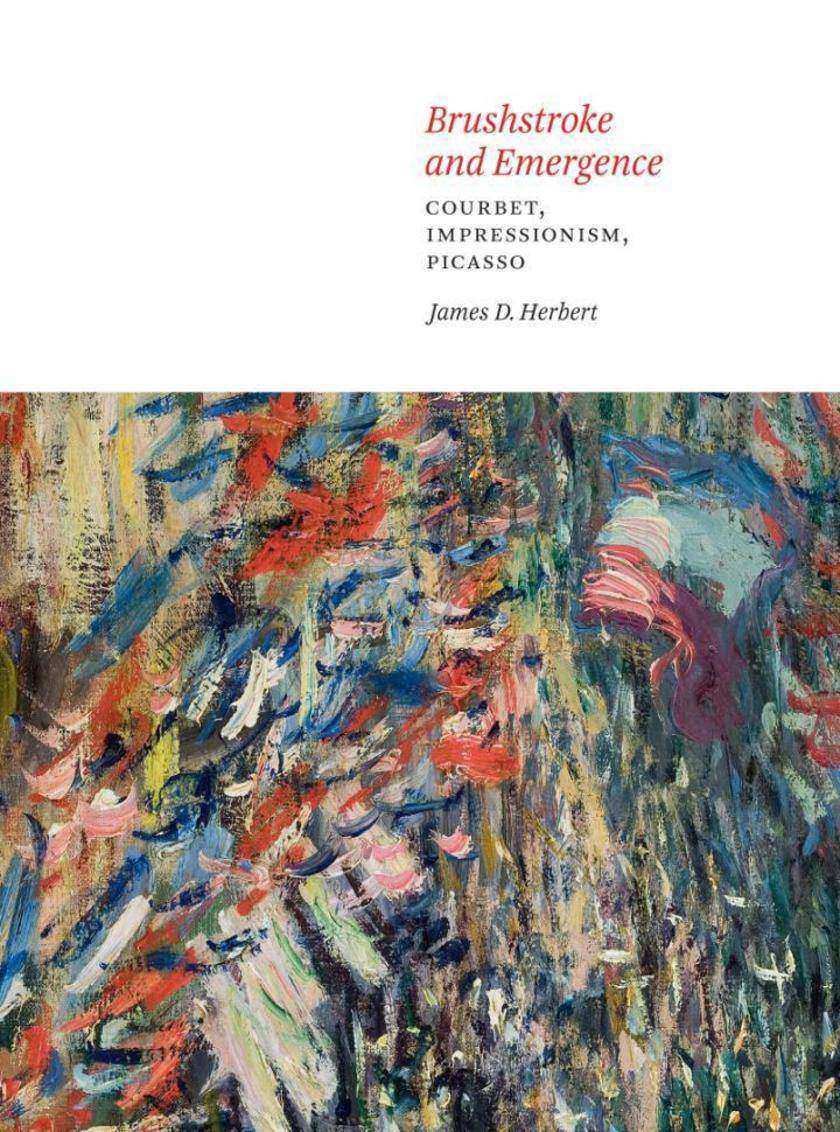
Brushstroke and Emergence
¥247.21
No pictorial device in nineteenth-century French painting more clearly represented the free-ranging self than the loose brushstroke. From the romantics through the impressionists and post-impressionists, the brushstroke bespoke autonomous artistic individuality and freedom from convention.Yet the question of how much we can credit to the individual brushstroke is complicated-and in?Brushstroke and Emergence, James D. Herbert uses that question as a starting point for an extended essay that draws on philosophy of mind, the science of emergence, and art history. Brushstrokes, he reminds us, are as much creatures of habit and embodied experience as they are of intent. When they gather in great numbers they take on a life of their own, out of which emerge complexity and meaning. Analyzing ten paintings by Courbet, Manet, Czanne, Monet, Seurat, and Picasso, Herbert exposes vital relationships between intention and habit, the singular and the complex. In doing so, he uncovers a space worthy of historical and aesthetic analysis between the brushstroke and the self.


