


 购物车
 个人中心

Habeas for the Twenty-First Century
¥447.34
For centuries, the writ of habeas corpus has served as an important safeguard against miscarriages of justice, and today?it remains at the center of some of the most contentious issues of our time-among them terrorism, immigration, crime, and the death penalty.?Yet, in recent decades, habeas has been seriously abused. In this book, Nancy J. King and Joseph L. Hoffmann argue that habeas should be exercised with greater prudence.Through historical, empirical, and legal analysis, as well as illustrative case studies, the authors examine the current use of the writ in the United States and offer sound reform proposals to help ensure its ongoing vitality in today's justice system. Comprehensive and thoroughly grounded in a modern understanding of habeas corpus, this informative book will be an insightful read for legal scholars and anyone interested in the importance of habeas corpus for American government.
State and the Stork
¥435.56
From the colonial era to the present, the ever-shifting debate about America's prodigious population growth has exerted a profound influence on the evolution of politics, public policy, and economic thinking in the United States. In a remarkable shift since the late 1960s, Americans of all political stripes have come to celebrate the economic virtues of population growth. As one of the only wealthy countries experiencing significant population growth in the twenty-first century, the United States now finds itself at a demographic crossroads, but policymakers seem unwilling or unable to address the myriad economic and environmental questions surrounding this growth.From the founders' fears that crowded cities would produce corruption, luxury, and vice to the zero population growth movement of the late 1960s to today's widespread fears of an aging crisis as the Baby Boomers retire, the American population debate has always concerned much more than racial composition or resource exhaustion, the aspects of the debate usually emphasized by historians. In The State and the Stork, Derek Hoff draws on his extraordinary knowledge of the intersections between population and economic debates throughout American history to explain the many surprising ways that population anxieties have provoked unexpected policies and political developments-including the recent conservative revival. At once a fascinating history and a revelatory look at the deep origins of a crucial national conversation, The State and the Stork could not be timelier.

Mastering the Niger
¥412.02
In Mastering the Niger, David Lambert recalls Scotsman James MacQueen (1778-1870) and his publication of A New Map of Africa in 1841 to show that Atlantic slavery-as a practice of subjugation, a source of wealth, and a focus of political struggle-was entangled with the production, circulation, and reception of geographical knowledge. The British empire banned the slave trade in 1807 and abolished slavery itself in 1833, creating a need for a new British imperial economy. Without ever setting foot on the continent, MacQueen took on the task of solving the "e;Niger problem,"e; that is, to successfully map the course of the river and its tributaries, and thus breathe life into his scheme for the exploration, colonization, and commercial exploitation of West Africa.?Lambert illustrates how MacQueen's geographical research began, four decades before the publication of the New Map, when he was managing a sugar estate on the West Indian colony of Grenada. There MacQueen encountered slaves with firsthand knowledge of West Africa, whose accounts would form the basis of his geographical claims. Lambert examines the inspirations and foundations for MacQueen's geographical theory as well as its reception, arguing that Atlantic slavery and ideas for alternatives to it helped produce geographical knowledge, while geographical discourse informed the struggle over slavery.
Freedom's Ballot
¥412.02
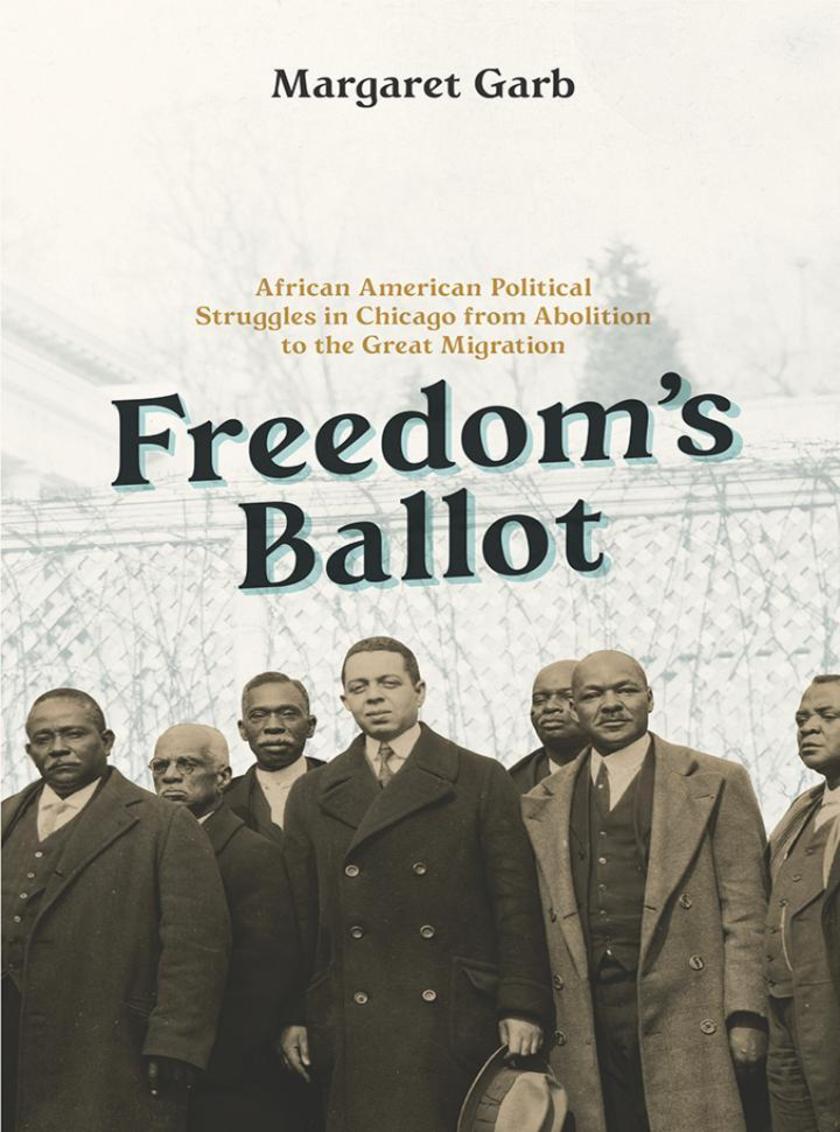
In the spring of 1915, Chicagoans elected the city's first black alderman, Oscar De Priest. In a city where African Americans made up less than five percent of the voting population, and in a nation that dismissed and denied black political participation, De Priest's victory was astonishing. It did not, however, surprise the unruly group of black activists who had been working for several decades to win representation on the city council.Freedom's Ballot?is the history of three generations of African American activists-the ministers, professionals, labor leaders, clubwomen, and entrepreneurs-who transformed twentieth-century urban politics. This is a complex and important story of how black political power was institutionalized in Chicago in the half-century following the Civil War. Margaret Garb explores the social and political fabric of Chicago, revealing how the physical makeup of the city was shaped by both political corruption and racial empowerment-in ways that can still be seen and felt today.

Treasuring the Gaze
¥412.02
The end of the eighteenth century saw the start of a new craze in Europe: tiny portraits of single eyes that were exchanged by lovers or family members. Worn as brooches or pendants, these minuscule eyes served the same emotional need as more conventional mementoes, such as lockets containing a coil of a loved one's hair. The fashion lasted only a few decades, and by the early 1800s eye miniatures had faded into oblivion. Unearthing these portraits in Treasuring the Gaze, Hanneke Grootenboer proposes that the rage for eye miniatures-and their abrupt disappearance-reveals a knot in the unfolding of the history of vision.?Drawing on Alois Riegl, Jean-Luc Nancy, Marcia Pointon, Melanie Klein, and others, Grootenboer unravels this knot, discovering previously unseen patterns of looking and strategies for showing. She shows that eye miniatures portray the subject's gaze rather than his or her eye, making the recipient of the keepsake an exclusive beholder who is perpetually watched. These treasured portraits always return the looks they receive and, as such, they create a reciprocal mode of viewing that Grootenboer calls intimate vision. Recounting stories about eye miniatures-including the role one played in the scandalous affair of Mrs. Fitzherbert and the Prince of Wales, a portrait of the mesmerizing eye of Lord Byron, and the loss and longing incorporated in crying eye miniatures-Grootenboer shows that intimate vision brings the gaze of another deep into the heart of private experience.?With a host of fascinating imagery from this eccentric and mostly forgotten yet deeply private keepsake, Treasuring the Gaze provides new insights into the art of miniature painting and the genre of portraiture.

Rebellion in the Backlands
¥394.36
Euclides da Cunha's classic account of the brutal campaigns against religious mystic Antonio Conselheiro has been called the Bible of Brazilian nationality."e;Euclides da Cunha went on the campaigns [against Conselheiro] as a journalist and what he returned with and published in 1902 is still unsurpassed in Latin American literature. Cunha is a talent as grand, spacious, entangled with knowledge, curiosity, and bafflement as the country itself. . . . On every page there is a heart of idea, speculation, dramatic observation that tells of a creative mission undertaken, the identity of the nation, and also the creation of a pure and eloquent prose style."e;-Elizabeth Hardwick, Bartleby in Manhattan
Frankenstein of 1790 and Other Lost Chapters from Revolutionary France
¥394.36
The French Revolution brings to mind violent mobs, the guillotine, and Madame Defarge, but it was also a publishing revolution: more than 1,200 novels were published between 1789 and 1804, when Napoleon declared the Revolution at an end. In this book, Julia V. Douthwaite explores how the works within this enormous corpus announced the new shapes of literature to come and reveals that vestiges of these stories can be found in novels by the likes of Mary Shelley, E. T. A. Hoffmann, Honore de Balzac, Charles Dickens, Gustave Flaubert, and L. Frank Baum.?Deploying political history, archival research, and textual analysis with eye-opening results, Douthwaite focuses on five major events between 1789 and 1794-first in newspapers, then in fiction-and shows how the symbolic stories generated by Louis XVI, Robespierre, the market women who stormed Versailles, and others were transformed into new tales with ongoing appeal. She uncovers a 1790 story of an automaton-builder named Franknsten, links Baum to the suffrage campaign going back to 1789, and discovers a royalist anthem's power to undo Balzac's Pre Goriot. Bringing to light the missing links between the ancien rgime and modernity, The Frankenstein of 1790 and Other Lost Chapters from Revolutionary France is an ambitious account of a remarkable politico-literary moment and its aftermath.
I'll Tell You Mine
¥165.81
The University of Iowa is a leading light in the writing world. In addition to the Iowa Writers' Workshop for poets and fiction writers, it houses the prestigious Nonfiction Writing Program (NWP), which was the first full-time masters-granting program in this genre in the United States. Over the past three decades the NWP has produced some of the most influential nonfiction writers in the country.I'll Tell You Mine is an extraordinary anthology, a book rooted in Iowa's successful program that goes beyond mere celebration to present some of the best nonfiction writing of the past thirty years. Eighteen pieces produced by Iowa graduates exemplify the development of both the program and the field of nonfiction writing. Each is accompanied by commentary from the author on a challenging issue presented by the story and the writing process, including drafting, workshopping, revising, and listening to (or sometimes ignoring) advice. The essays are put into broader context by a prologue from Robert Atwan, founding editor of the Best American Essays?series, who details the rise of nonfiction as a literary genre since the New Journalism of the 1960s.Creative nonfiction is the fastest-growing writing concentration in the country, with more than one hundred and fifty programs in the United States. I'll Tell You Mine shows why Iowa's leads the way. Its insider's view of the Iowa program experience and its wealth of groundbreaking nonfiction writing will entertain readers and inspire writers of all kinds.
Enigma of Diversity
¥229.55
Diversity these days is a hallowed American value, widely shared and honored. That's a remarkable change from the Civil Rights era-but does this public commitment to diversity constitute a civil rights victoryWhat does diversity mean in contemporary America, and what are the effects of efforts to support it?Ellen Berrey digs deep into those questions in The Enigma of Diversity. Drawing on six years of fieldwork and historical sources dating back to the 1950s and making extensive use of three case studies from widely varying arenas-housing redevelopment in Chicago's Rogers Park neighborhood, affirmative action in the University of Michigan's admissions program, and the workings of the human resources department at a Fortune 500 company-Berrey explores the complicated, contradictory, and even troubling meanings and uses of diversity as it is invoked by different groups for different, often symbolic ends. In each case, diversity affirms inclusiveness, especially in the most coveted jobs and colleges, yet it resists fundamental change in the practices and cultures that are the foundation of social inequality. Berrey shows how this has led racial progress itself to be reimagined, transformed from a legal fight for fundamental rights to a celebration of the competitive advantages afforded by cultural differences.Powerfully argued and surprising in its conclusions, The Enigma of Diversity reveals the true cost of the public embrace of diversity: the taming of demands for racial justice.

Conjugations
¥229.55
Bollywood movies have been long known for their colorful song-and-dance numbers and knack for combining drama, comedy, action-adventure, and music. But when India entered the global marketplace in the early 1990s, its film industry transformed radically. Production and distribution of films became regulated, advertising and marketing created a largely middle-class audience, and films began to fit into genres like science fiction and horror. In this bold study of what she names New Bollywood, Sangita Gopal contends that the key to understanding these changes is to analyze films' evolving treatment of romantic relationships.Gopalargues that the form of the conjugal duo in movies reflects other social forces in India's new consumerist and global society. She takes a daring look at recent Hindi films and movie trends-the decline of song-and-dance sequences, the upgraded status of the horror genre, and the rise of the multiplex and multi-plot-to demonstrate how these relationships exemplify different formulas of contemporary living. A provocative account of how cultural artifacts can embody globalization's effects on intimate life, Conjugations will shake up the study of Hindi film.
Stations in the Field
¥329.62
When we think of sites of animal research that symbolize modernity, the first places that come to mind are grand research institutes in cities and near universities that house the latest in equipment and technologies, not the surroundings of the bird's nest, the octopus's garden in the sea, or the parts of inland lakes in which freshwater plankton reside. Yet during the late nineteenth and early twentieth centuries, a group of zoologists began establishing novel, indeed modern ways of studying nature, propagating what present-day ecologists describe as place-based research.Raf De Bont's Stations in the Field focuses on the early history of biological field stations and the role these played in the rise of zoological place-based research. Beginning in the 1870s, a growing number of biological field stations were founded-first in Europe and later elsewhere around the world-and thousands of zoologists received their training and performed their research at these sites. Through case studies, De Bont examines the material and social context in which field stations arose, the actual research that was produced in these places, the scientific claims that were developed there, and the rhetorical strategies that were deployed to convince others that these claims made sense. From the life of parasitic invertebrates in northern France and freshwater plankton in Schleswig-Holstein, to migratory birds in East Prussia and pest insects in Belgium, De Bont's book is fascinating tour through the history of studying nature in nature.
Animal Claim
¥247.21
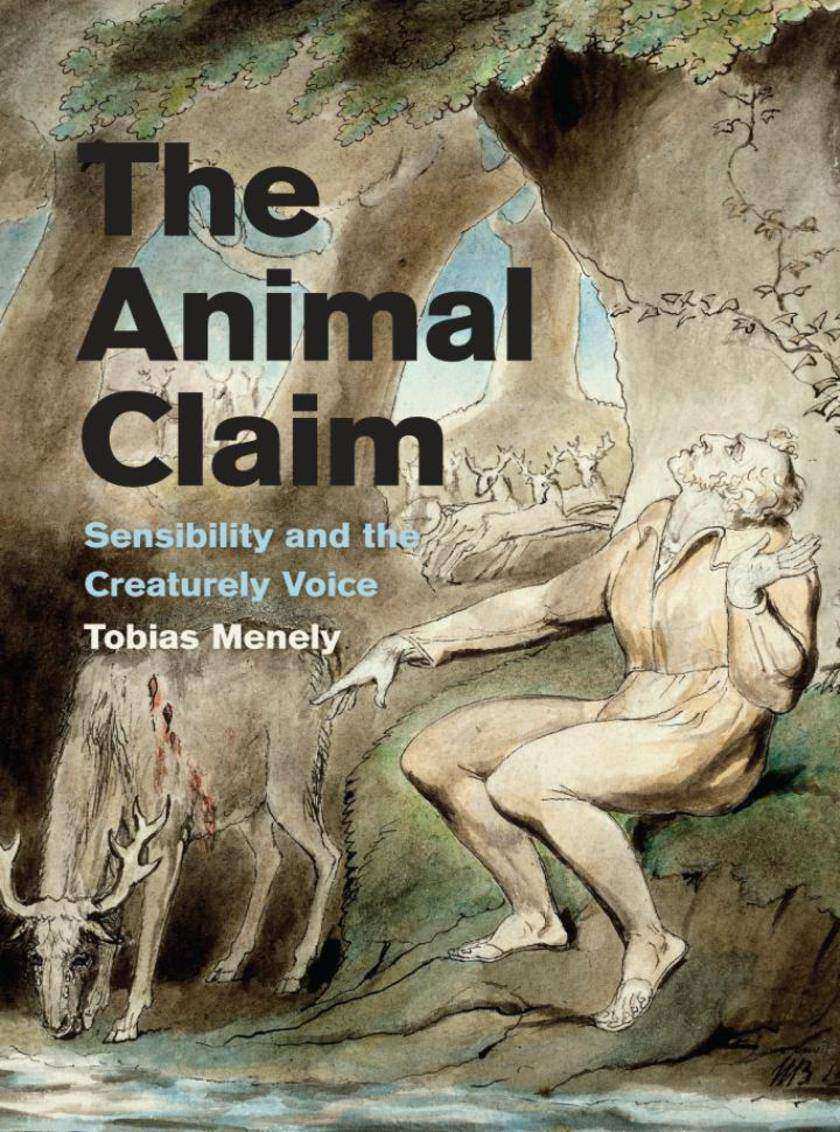
During the eighteenth century, some of the most popular British poetry showed a responsiveness to animals that anticipated the later language of animal rights. Such poems were widely cited in later years by legislators advocating animal welfare laws like Martin's Act of 1822, which provided protections for livestock. In The Animal Claim, Tobias Menely links this poetics of sensibility with Enlightenment political philosophy, the rise of the humanitarian public, and the fate of sentimentality, as well as longstanding theoretical questions about voice as a medium of communication. ?In the Restoration and eighteenth century, philosophers emphasized the role of sympathy in collective life and began regarding the passionate expression humans share with animals, rather than the spoken or written word, as the elemental medium of community. Menely shows how poetry came to represent this creaturely voice and, by virtue of this advocacy, facilitated the development of a viable discourse of animal rights in the emerging public sphere. Placing sensibility in dialogue with classical and early-modern antecedents as well as contemporary animal studies, The Animal Claim uncovers crucial connections between eighteenth-century poetry; theories of communication; and post-absolutist, rights-based politics. ?
Economy of Glory
¥370.82
From the outset of Napoleon's career, the charismatic Corsican was compared to mythic heroes of antiquity like Achilles, and even today he remains the apotheosis of French glory, a value deeply embedded in the country's history. From this angle, the Napoleonic era can be viewed as the final chapter in the battle of the Ancients and Moderns. In this book, Robert Morrissey presents a literary and cultural history of glory and its development in France and explores the "e;economy of glory"e; Napoleon sought to implement in an attempt to heal the divide between the Old Regime and the Revolution. ?Examining how Napoleon saw glory as a means of escaping the impasse of Revolutionary ideas of radical egalitarianism, Morrissey illustrates the challenge the leader faced in reconciling the antagonistic values of virtue and self-interest, heroism and equality. He reveals that the economy of glory was both egalitarian, creating the possibility of an aristocracy based on merit rather than wealth, and traditional, being deeply embedded in the history of aristocratic chivalry and the monarchy-making it the heart of Napoleon's politics of fusion. Going beyond Napoleon, Morrissey considers how figures of French romanticism such as Chateaubriand, Balzac, and Hugo constantly reevaluated this legacy of glory and its consequences for modernity. Available for the first time in English, The Economy of Glory is a sophisticated and beautifully written addition to French history.

Philosophy of Pseudoscience
¥288.41
What sets the practice of rigorously tested, sound science apart from pseudoscienceIn this volume, the contributors seek to answer this question, known to philosophers of science as "e;the demarcation problem."e; This issue has a long history in philosophy, stretching as far back as the early twentieth century and the work of Karl Popper. But by the late 1980s, scholars in the field began to treat the demarcation problem as impossible to solve and futile to ponder. However, the essays that Massimo Pigliucci and Maarten Boudry have assembled in this volume make a rousing case for the unequivocal importance of reflecting on the separation between pseudoscience and sound science. Moreover, the demarcation problem is not a purely theoretical dilemma of mere academic interest: it affects parents' decisions to vaccinate children and governments' willingness to adopt policies that prevent climate change. Pseudoscience often mimics science, using the superficial language and trappings of actual scientific research to seem more respectable. Even a well-informed public can be taken in by such questionable theories dressed up as science. Pseudoscientific beliefs compete with sound science on the health pages of newspapers for media coverage and in laboratories for research funding. Now more than ever the ability to separate genuine scientific findings from spurious ones is vital, and The Philosophy of Pseudoscience provides ground for philosophers, sociologists, historians, and laypeople to make decisions about what science is or isn't.
Plant Sensing and Communication
¥288.41
The news that a flowering weed-mousear cress (Arabidopsis thaliana)-can sense the particular chewing noise of its most common caterpillar predator and adjust its chemical defenses in response led to headlines announcing the discovery of the first "e;hearing"e; plant. As plants lack central nervous systems (and, indeed, ears), the mechanisms behind this "e;hearing"e; are unquestionably very different from those of our own acoustic sense, but the misleading headlines point to an overlooked truth: plants do in fact perceive environmental cues and respond rapidly to them by changing their chemical, morphological, and behavioral traits.In Plant Sensing and Communication, Richard Karban provides the first comprehensive overview of what is known about how plants perceive their environments, communicate those perceptions, and learn. Facing many of the same challenges as animals, plants have developed many similar capabilities: they sense light, chemicals, mechanical stimulation, temperature, electricity, and sound. Moreover, prior experiences have lasting impacts on sensitivity and response to cues; plants, in essence, have memory. Nor are their senses limited to the processes of an individual plant: plants eavesdrop on the cues and behaviors of neighbors and-for example, through flowers and fruits-exchange information with other types of organisms. Far from inanimate organisms limited by their stationary existence, plants, this book makes unquestionably clear, are in constant and lively discourse.
Lucretian Renaissance
¥447.34
With The Lucretian Renaissance, Gerard Passannante offers a radical rethinking of a familiar narrative: the rise of materialism in early modern Europe. Passannante begins by taking up the ancient philosophical notion that the world is composed of two fundamental opposites: atoms, as the philosopher Epicurus theorized, intrinsically unchangeable and moving about the void; and the void itself, or nothingness. Passannante considers the fact that this strain of ancient Greek philosophy survived and was transmitted to the Renaissance primarily by means of a poem that had seemingly been lost-a poem insisting that the letters of the alphabet are like the atoms that make up the universe.?By tracing this elemental analogy through the fortunes of Lucretius's On the Nature of Things, Passannante argues that, long before it took on its familiar shape during the Scientific Revolution, the philosophy of atoms and the void reemerged in the Renaissance as a story about reading and letters-a story that materialized in texts, in their physical recomposition, and in their scattering.?From the works of Virgil and Macrobius to those of Petrarch, Poliziano, Lambin, Montaigne, Bacon, Spenser, Gassendi, Henry More, and Newton, The Lucretian Renaissance recovers a forgotten history of materialism in humanist thought and scholarly practice and asks us to reconsider one of the most enduring questions of the period: what does it mean for a text, a poem, and philosophy to be "e;reborn"e;?
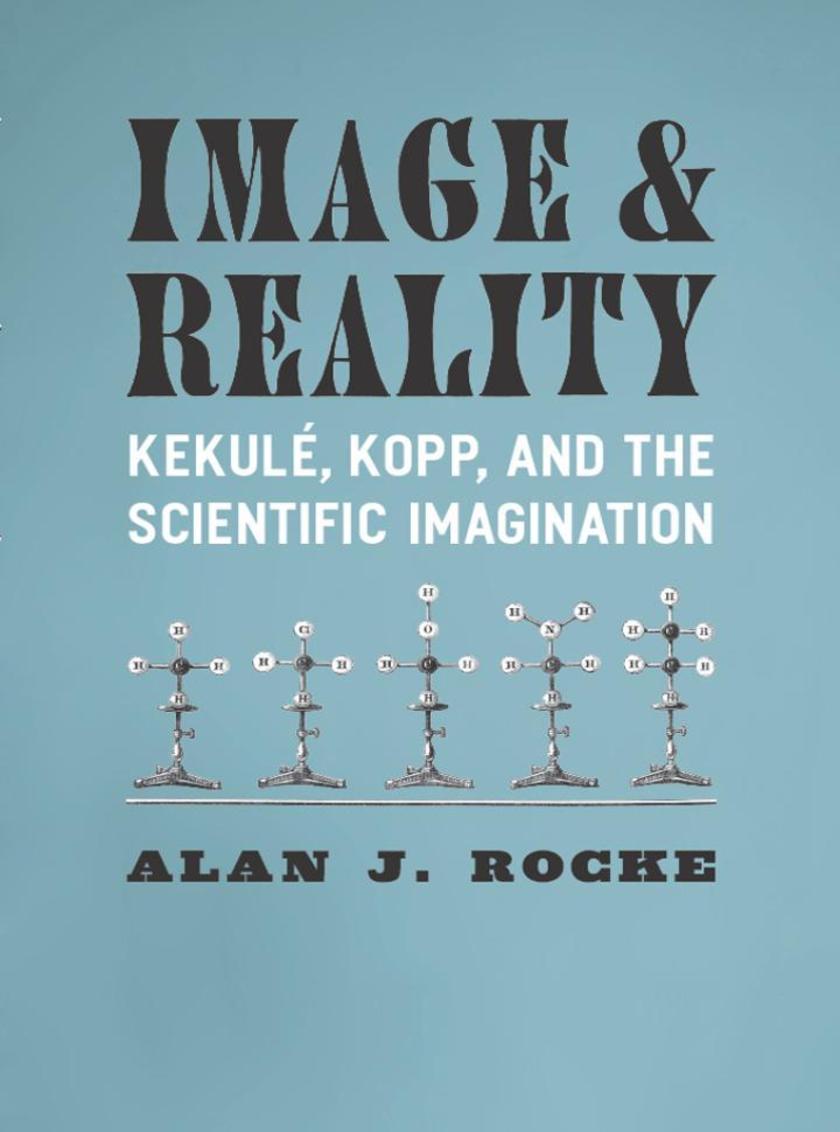
Image and Reality
¥447.34
Nineteenth-century chemists were faced with a particular problem: how to depict the atoms and molecules that are beyond the direct reach of our bodily senses. In visualizing this microworld, these scientists were the first to move beyond high-level philosophical speculations regarding the unseen. In Image and Reality, Alan Rocke focuses on the community of organic chemists in Germany to provide the basis for a fuller understanding of the nature of scientific creativity.?Arguing that visual mental images regularly assisted many of these scientists in thinking through old problems and new possibilities, Rocke uses a variety of sources, including private correspondence, diagrams and illustrations, scientific papers, and public statements, to investigate their ability to not only imagine the invisibly tiny atoms and molecules upon which they operated daily, but to build detailed and empirically based pictures of how all of the atoms in complicated molecules were interconnected. These portrayals of "e;chemical structures,"e; both as mental images and as paper tools, gradually became an accepted part of science during these years and are now regarded as one of the central defining features of chemistry.In telling this fascinating story in a manner accessible to the lay reader, Rocke also suggests that imagistic thinking is often at the heart of creative thinking in all fields.Image and Reality is the first book in the Synthesis series, a series in the history of chemistry, broadly construed, edited by Angela N. H. Creager, John E. Lesch, Stuart W. Leslie, Lawrence M. Principe, Alan Rocke, E.C. Spary, and Audra J. Wolfe, in partnership with the Chemical Heritage Foundation.
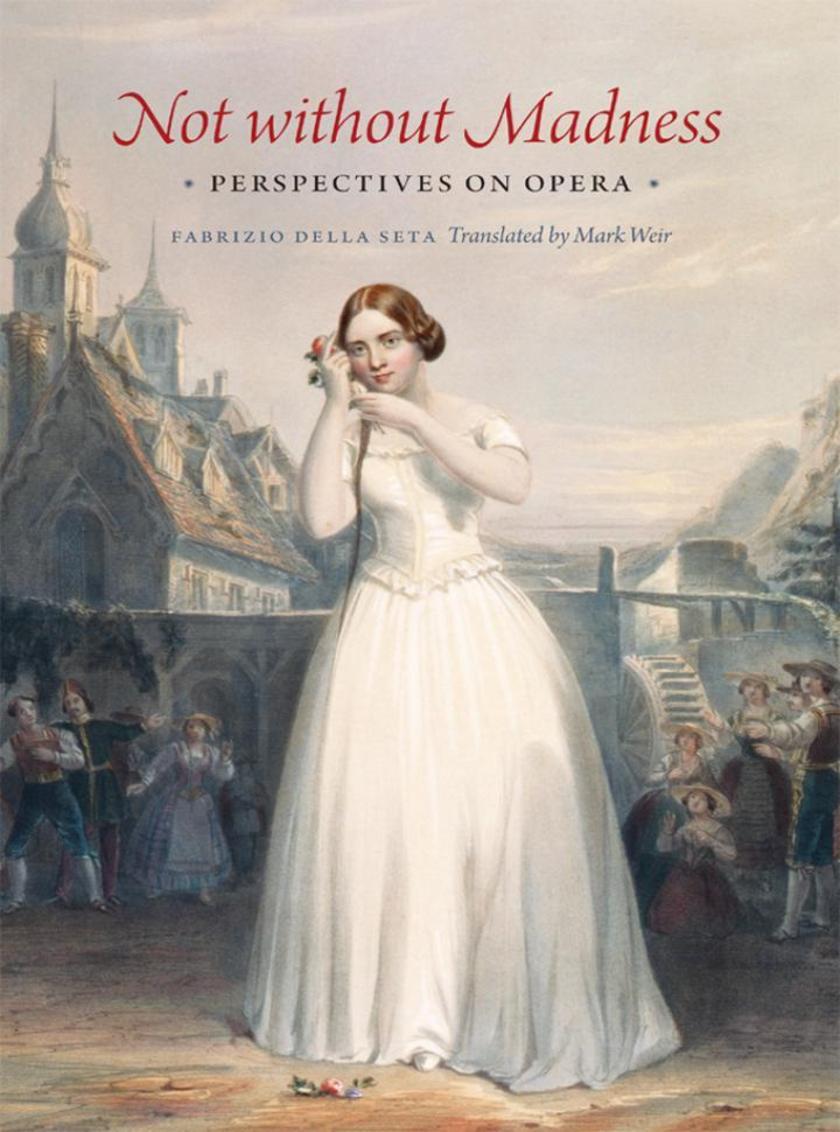
Not without Madness
¥488.54
Opera often seems to arouse either irrational enthusiasm or visceral dislike. Such madness, as Goethe wrote, is indispensable in all theater, and yet in practice, sentiment and passion must be balanced by sense and reason. Exploring this tension between madness and reason, Not without Madness presents new analytical approaches to thinking about eighteenth- and nineteenth-century opera through the lenses of its historical and cultural contexts.?In these twelve essays, Fabrizio Della Seta explores the concept of opera as a dramatic event and an essential moment in the history of theater. Examining the meaning of opera and the devices that produce and transmit this meaning, he looks at the complex verbal, musical, and scenic mechanisms in parts of La sonnambula, Ernani, Aida, Le nozze di Figaro, Macbeth, and Il trovatore. He argues that approaches to the study of opera must address performance, interpretation, composition, reception, and cultural ramifications. Purely musical analysis does not make sense unless we take into account music's dramatic function. Containing many essays available for the first time in English, Not without Madness bridges recent divisions in opera studies and will attract musicologists, musicians, and opera lovers alike.

Limits of Critique
¥182.47
Why must critics unmask and demystify literary worksWhy do they believe that language is always withholding some truth, that the critic's task is to reveal the unsaid or repressedIn this book, Rita Felski examines critique, the dominant form of interpretation in literary studies, and situates it as but one method among many, a method with strong allure-but also definite limits.Felski argues that critique is a sensibility best captured by Paul Ricoeur's phrase "e;the hermeneutics of suspicion."e; She shows how this suspicion toward texts forecloses many potential readings while providing no guarantee of rigorous or radical thought. Instead, she suggests, literary scholars should try what she calls "e;postcritical reading"e;: rather than looking behind a text for hidden causes and motives, literary scholars should place themselves in front of it and reflect on what it suggests and makes possible.By bringing critique down to earth and exploring new modes of interpretation, The Limits of Critique offers a fresh approach to the relationship between artistic works and the social world.
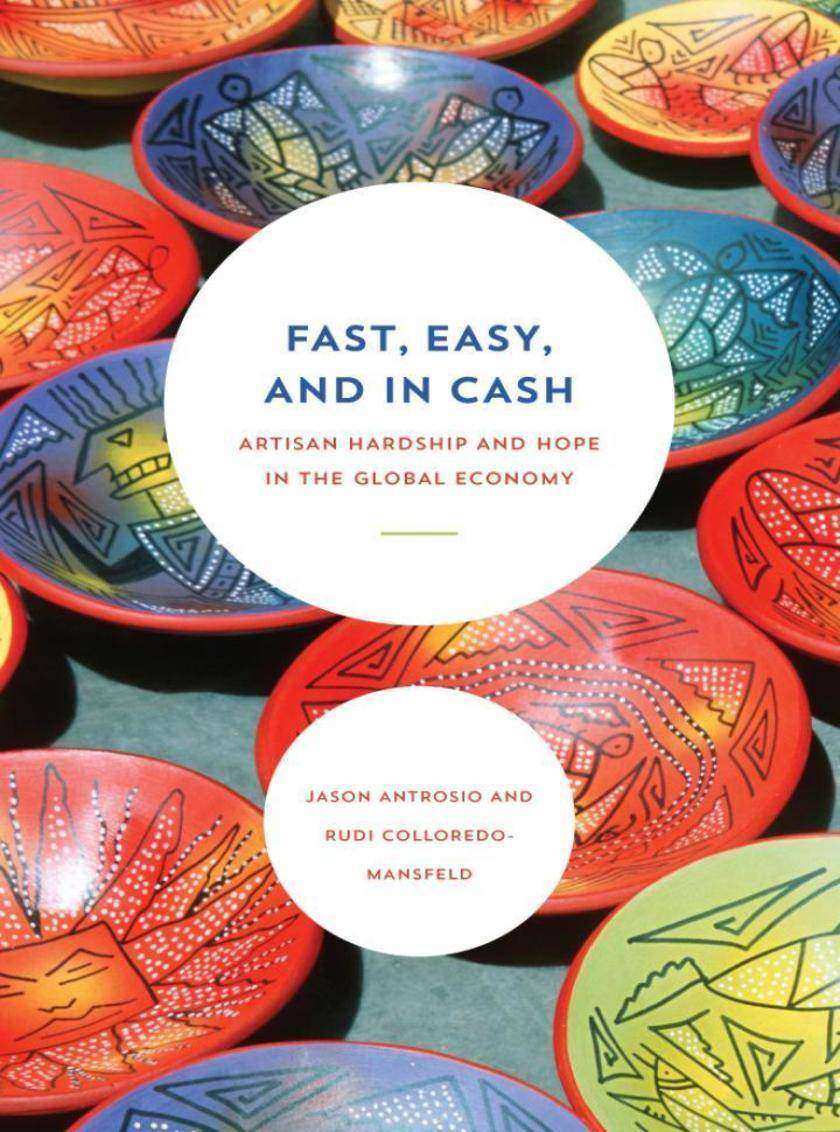
Fast, Easy, and In Cash
¥206.01
"e;Artisan"e; has become a buzzword in the developed world, used for items like cheese, wine, and baskets, as corporations succeed at branding their cheap, mass-produced products with the popular appeal of small-batch, handmade goods. The unforgiving realities of the artisan economy, however, never left the global south, and anthropologists have worried over the fate of resilient craftspeople as global capitalism remade their cultural and economic lives. Yet artisans are proving to be surprisingly vital players in contemporary capitalism, as they interlock innovation and tradition to create effective new forms of entrepreneurship. Based on seven years of extensive research in Colombia and Ecuador, veteran ethnographers Jason Antrosio and Rudi Colloredo-Mansfeld's?Fast, Easy, and In Cash?explores how small-scale production and global capitalism are not directly opposed, but rather are essential partners in economic development.Antrosio and Colloredo-Mansfeld demonstrate how artisan trades evolve in modern Latin American communities. In uncertain economies, small manufacturers have adapted to excel at home-based production, design, technological efficiency, and investments. Vivid case studies illuminate this process: peasant farmers in Tquerres, Otavalo weavers, Tigua painters, and the t-shirt industry of Atuntaqui.?Fast, Easy, and In Cash?exposes how these ambitious artisans, far from being holdovers from the past, are crucial for capitalist innovation in their communities and provide indispensable lessons in how we should understand and cultivate local economies in this era of globalization.
Until Choice Do Us Part
¥229.55
For centuries, people have been thinking and writing-and fiercely debating-about the meaning of marriage. Just a hundred years ago, Progressive era reformers embraced marriage not as a time-honored repository for conservative values, but as a tool for social change.In Until Choice Do Us Part, Clare Virginia Eby offers a new account of marriage as it appeared in fiction, journalism, legal decisions, scholarly work, and private correspondence at the turn into the twentieth century. She begins with reformers like sexologist Havelock Ellis, anthropologist Elsie Clews Parsons, and feminist Charlotte Perkins Gilman, who argued that spouses should be "e;class equals"e; joined by private affection, not public sanction. ?Then Eby guides us through the stories of three literary couples-Upton and Meta Fuller Sinclair, Theodore and Sara White Dreiser, and Neith Boyce and Hutchins Hapgood-who sought to reform marriage in their lives and in their writings, with mixed results. With this focus on the intimate side of married life, Eby views a historical moment that changed the nature of American marriage-and that continues to shape marital norms today.


