


 购物车
购物车 个人中心
个人中心
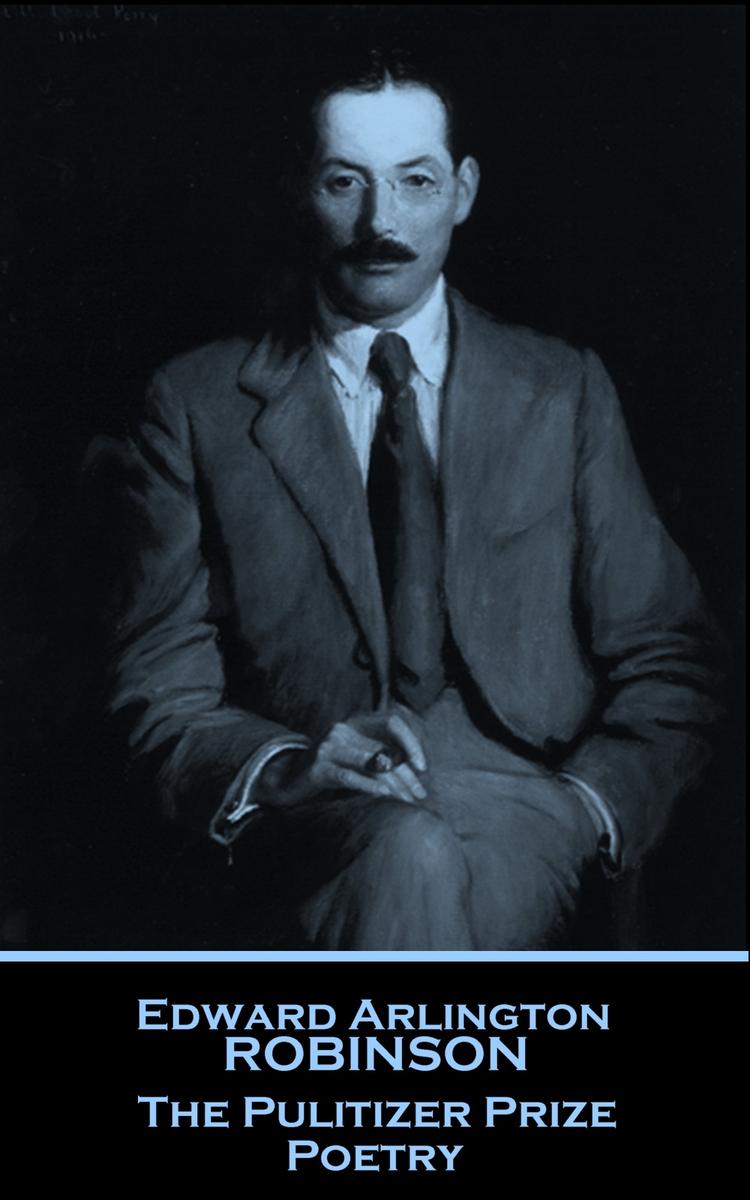
Pulitzer Prize Poetry
¥58.76
Poetry is a fascinating use of language. With almost a million words at its command it is not surprising that the English language have produced some of the most beautiful, moving and descriptive verse through the centuries. In this series we look at individual poets who have shaped and influenced their craft and cement their place in our heritage. In this volume we look at the works of Edwin Arlington Robinson who won the Pulitzer Prize for Poetry three times including the very first ever awarded.
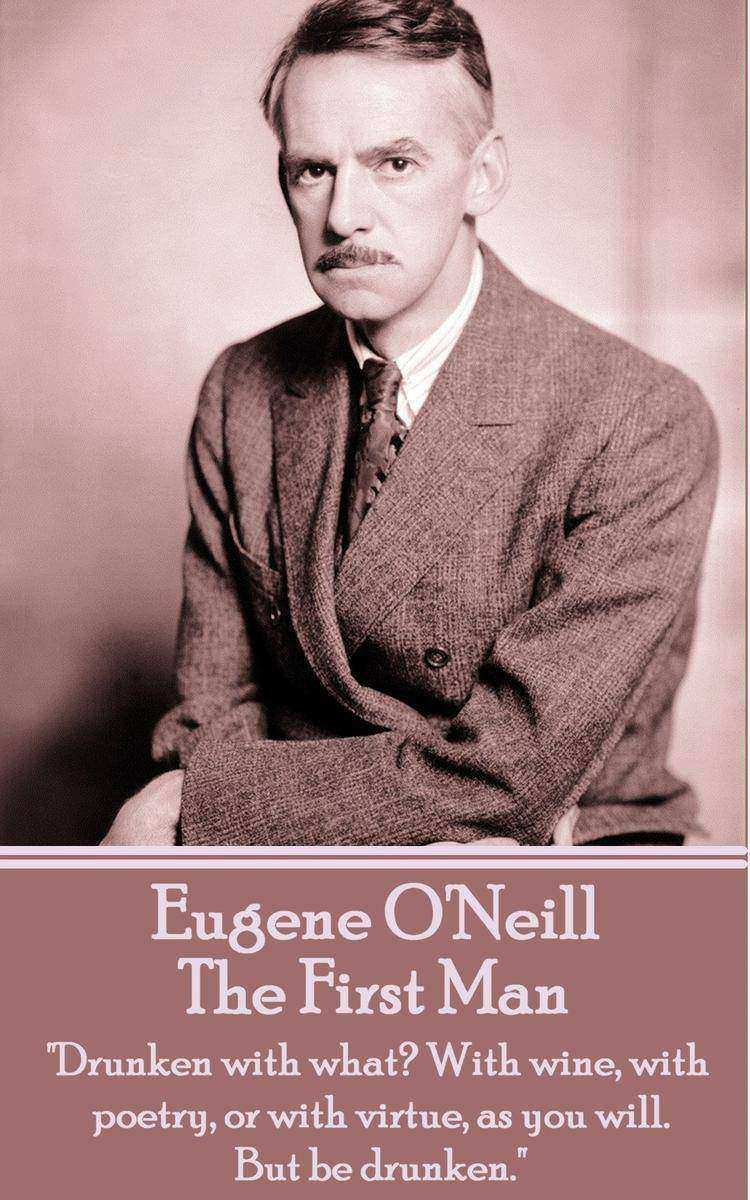
First Man - Drunken with what? With wine, with poetry, or with virtue, as you wi
¥23.45
Eugene Gladstone O'Neill was born on October 16, 1888 in a hotel bedroom in what is now Times Square, New York. Much of his childhood was spent in the comfort of books at boarding schools whilst his actor father was on the road and his Mother contended with her own demons. He spent only a year at University - Princeton - and various reasons have been given for his departure. However whatever his background and education denied or added to his development it is agreed amongst all that he was a playwright of the first rank and possibly America's greatest. His introduction of realism into American drama was instrumental in its development and paved a path for many talents thereafter. Of course his winning of both the Pulitzer Prize (4 times) and the Nobel Prize are indicative of his status. His more famous and later works do side with the disillusionment and personal tragedy of those on the fringes of society but continue to build upon ideas and structures he incorporated in his early one act plays. Eugene O'Neill suffered from various health problems, mainly depression and alcoholism. In the last decade he also faced a Parkinson's like tremor in his hands which made writing increasingly difficult. But out of such difficulties came plays of the calibre of The Iceman Cometh, Long Day's Journey Into Night, and A Moon for the Misbegotten. Eugene O'Neill died in Room 401 of the Sheraton Hotel on Bay State Road in Boston, on November 27, 1953, at the age of 65. As he was dying, he whispered his last words: "e;I knew it. I knew it. Born in a hotel room and died in a hotel room."e;

Trojan Women - Much effort, much prosperity
¥14.03
Euripides is rightly lauded as one of the great dramatists of all time. In his lifetime, he wrote over 90 plays and although only 18 have survived they reveal the scope and reach of his genius. Euripides is identified with many theatrical innovations that have influenced drama all the way down to modern times, especially in the representation of traditional, mythical heroes as ordinary people in extraordinary circumstances. As would be expected from a life lived 2,500 years ago, details of it are few and far between. Accounts of his life, written down the ages, do exist but whether much is reliable or surmised is open to debate. Most accounts agree that he was born on Salamis Island around 480 BC, to mother Cleito and father Mnesarchus, a retailer who lived in a village near Athens. Upon the receipt of an oracle saying that his son was fated to win "e;crowns of victory"e;, Mnesarchus insisted that the boy should train for a career in athletics. However, what is clear is that athletics was not to be the way to win crowns of victory. Euripides had been lucky enough to have been born in the era as the other two masters of Greek Tragedy; Sophocles and schylus. It was in their footsteps that he was destined to follow. His first play was performed some thirteen years after the first of Socrates plays and a mere three years after schylus had written his classic The Oristria. Theatre was becoming a very important part of the Greek culture. The Dionysia, held annually, was the most important festival of theatre and second only to the fore-runner of the Olympic games, the Panathenia, held every four years, in appeal. Euripides first competed in the City Dionysia, in 455 BC, one year after the death of schylus, and, incredibly, it was not until 441 BC that he won first prize. His final competition in Athens was in 408 BC. The Bacchae and Iphigenia in Aulis were performed after his death in 405 BC and first prize was awarded posthumously. Altogether his plays won first prize only five times. Euripides was also a great lyric poet. In Medea, for example, he composed for his city, Athens, "e;the noblest of her songs of praise"e;. His lyric skills however are not just confined to individual poems: "e;A play of Euripides is a musical whole....one song echoes motifs from the preceding song, while introducing new ones."e; Much of his life and his whole career coincided with the struggle between Athens and Sparta for hegemony in Greece but he didn't live to see the final defeat of his city. Euripides fell out of favour with his fellow Athenian citizens and retired to the court of Archelaus, king of Macedon, who treated him with consideration and affection. At his death, in around 406BC, he was mourned by the king, who, refusing the request of the Athenians that his remains be carried back to the Greek city, buried him with much splendor within his own dominions. His tomb was placed at the confluence of two streams, near Arethusa in Macedonia, and a cenotaph was built to his memory on the road from Athens towards the Piraeus.
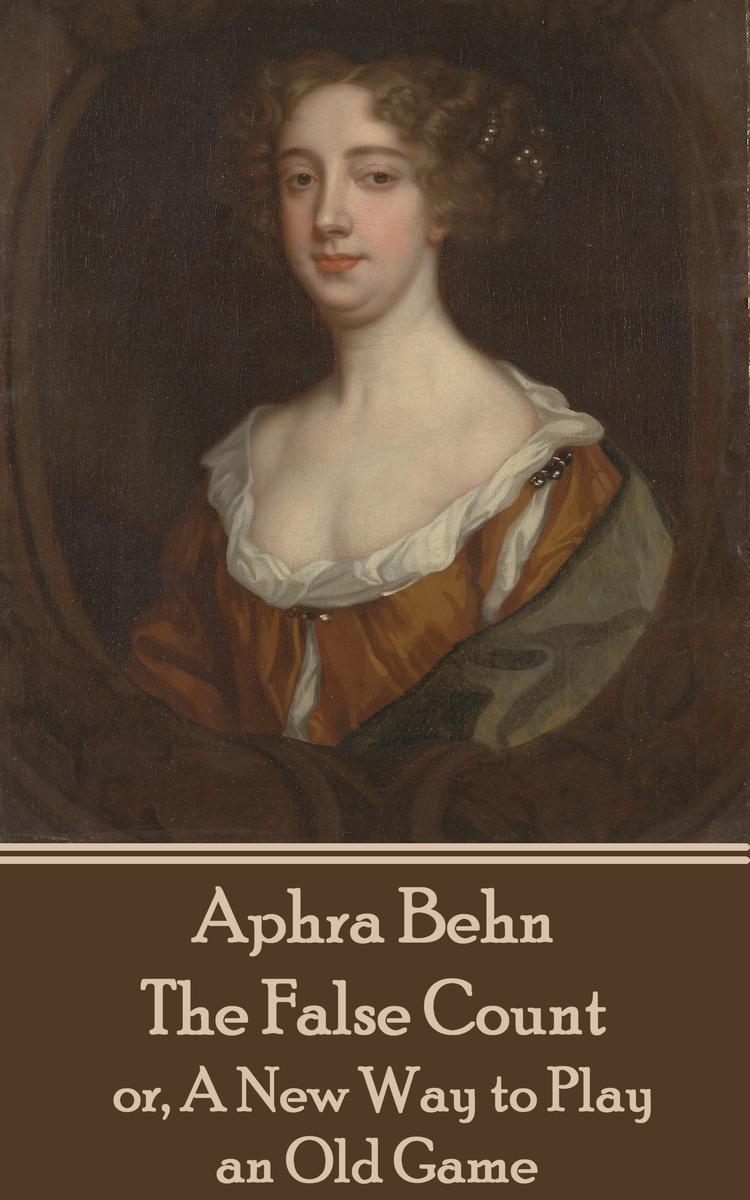
False Count - or, A New Way to Play an Old Game
¥23.45
Aphra Behn was a prolific and well established writer but facts about her remain scant and difficult to confirm. What can safely be said though is that Aphra Behn is now regarded as a key English playwright and a major figure in Restoration theatre. Aphra was born into the rising tensions to the English Civil War. Obviously a time of much division and difficulty as the King and Parliament, and their respective forces, came ever closer to conflict. There are claims she was a spy, that she travelled abroad, possibly as far as Surinam. By 1664 her marriage was over (though by death or separation is not known but presumably the former as it occurred in the year of their marriage) and she now used Mrs Behn as her professional name. Aphra now moved towards pursuing a more sustainable and substantial career and began work for the King's Company and the Duke's Company players as a scribe. Previously her only writing had been poetry but now she would become a playwright. Her first, "e;The Forc'd Marriage"e;, was staged in 1670, followed by "e;The Amorous Prince"e; (1671). After her third play, "e;The Dutch Lover"e;, Aphra had a three year lull in her writing career. Again it is speculated that she went travelling again, possibly once again as a spy. After this sojourn her writing moves towards comic works, which prove commercially more successful. Her most popular works included "e;The Rover"e; and "e;Love-Letters Between a Nobleman and His Sister"e; (1684-87). With her growing reputation Aphra became friends with many of the most notable writers of the day. This is The Age of Dryden and his literary dominance. From the mid 1680's Aphra's health began to decline. This was exacerbated by her continual state of debt and descent into poverty. Aphra Behn died on April 16th 1689, and is buried in the East Cloister of Westminster Abbey. The inscription on her tombstone reads: "e;Here lies a Proof that Wit can never be Defence enough against Mortality."e; She was quoted as stating that she had led a "e;life dedicated to pleasure and poetry."e;
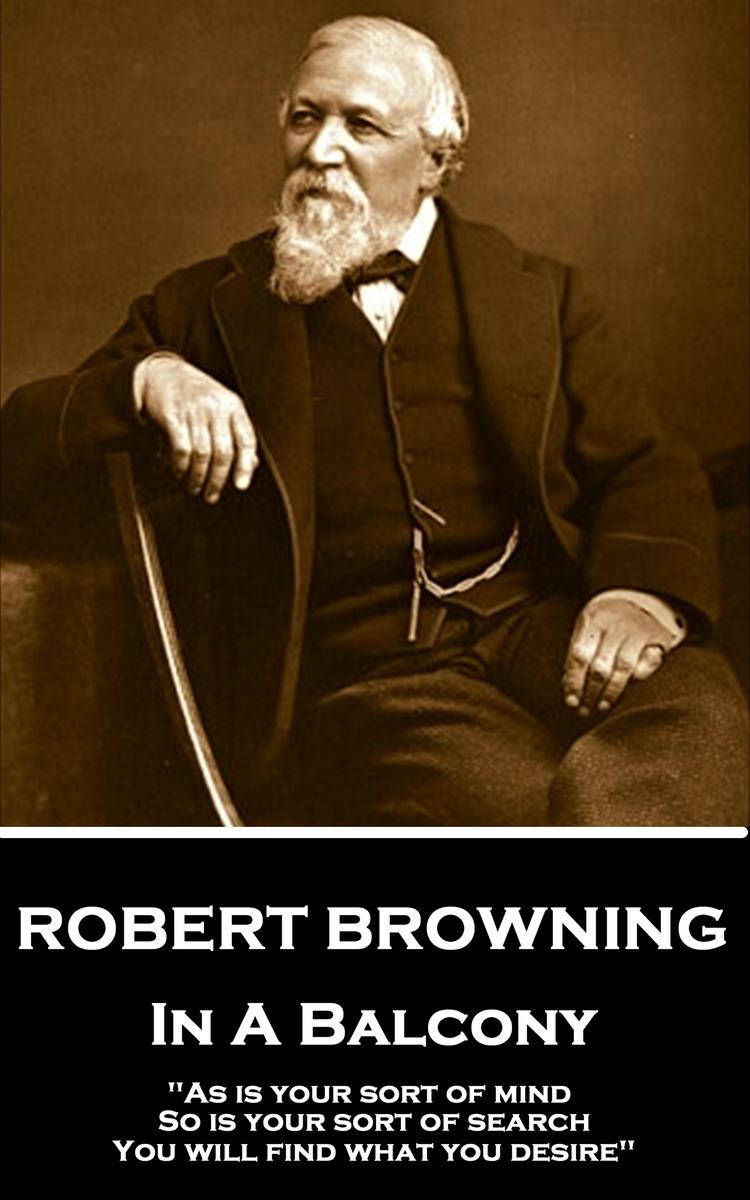
In A Balcony - As is your sort of mind, So is your sort of search: You will find
¥14.03
Robert Browning is one of the most significant Victorian Poets and, of course, English Poetry.Much of his reputation is based upon his mastery of the dramatic monologue although his talents encompassed verse plays and even a well-regarded essay on Shelley during a long and prolific career. He was born on May 7th, 1812 in Walmouth, London. Much of his education was home based and Browning was an eclectic and studious student, learning several languages and much else across a myriad of subjects, interests and passions. Browning's early career began promisingly. The fragment from his intended long poem Pauline brought him to the attention of Dante Gabriel Rossetti, and was followed by Paracelsus, which was praised by both William Wordsworth and Charles Dickens. In 1840 the difficult Sordello, which was seen as willfully obscure, brought his career almost to a standstill. Despite these artistic and professional difficulties his personal life was about to become immensely fulfilling. He began a relationship with, and then married, the older and better known Elizabeth Barrett. This new foundation served to energise his writings, his life and his career. During their time in Italy they both wrote much of their best work. With her untimely death in 1861 he returned to London and thereafter began several further major projects. The collection Dramatis Personae (1864) and the book-length epic poem The Ring and the Book (1868-69) were published and well received; his reputation as a venerated English poet now assured. Robert Browning died in Venice on December 12th, 1889.
Journey - Violence does, in truth, recoil upon the violent
¥11.67
If ever a writer needed an introduction Arthur Conan Doyle would not be considered that man. After all, Sherlock Holmes is perhaps the foremost literary detective of any age. Add to this canon his stories of science fiction and his poems, his historical novels, his plays, his political campaigning, his efforts in establishing a Court Of Appeal and there is little room for anything else. Except he was also an exceptional writer of short stories of the horrific and macabre. Something very different from what you might expect. Born in Arthur Conan Doyle was born on 22 May 1859 at 11 Picardy Place, Edinburgh, Scotland. From 1876 - 1881 he studied medicine at the University of Edinburgh following which he was employed as a doctor on the Greenland whaler Hope of Peterhead in 1880 and, after his graduation, as a ship's surgeon on the SS Mayumba during a voyage to the West African coast in 1881. Arriving in Portsmouth in June of that year with less than GBP10 (GBP700 today) to his name, he set up a medical practice at 1 Bush Villas in Elm Grove, Southsea. The practice was initially not very successful. While waiting for patients, Conan Doyle again began writing stories and composed his first novel The Mystery of Cloomber. Although he continued to study and practice medicine his career was now firmly set as a writer. And thereafter great works continued to pour out of him.

Heavenward
¥8.63
With the power to end the world, would you protect humanity when it broke you or would you take revenge? Meet Ariel: a quiet, unnoticeable girl with an incredible gift… Ariel never had an easy or pleasant life, but the arrival of three gorgeous strangers meant her measured life is turned upside down, as she discovers that angels exist.Now against her will, she’s drawn into an ancient celestial conflict, where her powers will decide the fate of humanity. Deceived, threatened, hunted and now on the run, who can she trust? It's fantastically written using highly descriptive languagethroughout allowing me to feel like I was transported into the story - I couldalmost smell and feel what the characters are experiencing. (Melanie from "Frasier's Fun House"/Book blogger) From the first chapter I found this book scarily addicting.I just wanted more. I was consumed and intrigued. I didn't know where it wasgoing or what was going to happen and was pleasantly surprised. (Emma from "Emma's Chapter"/Book blogger)Once I'm started, I just can't stop myself from reading itand almost constantly think about it while awake, torturing me. Stranger tothis genre, I wasn't aware this book would make my heart race so much and thatmy little imagination wheels in my brain would be on fire! (Kristina from "Books and Dachshunds"/Book blogger)Holy, that was great...I'm speechless by how amazing the story is. (Deekay from "Life of Deekay"/Book blogger)Heavenward by Olga Gibbs was an interesting read. I thoughtthe idea was brilliant. I have not read that many books dealing with angels butI find that I enjoy them. Gibbs took the story of the angels and definitely puther own spin on it. The scenery that she describes in the second half of thebook is just amazing. (Stephanie from "Books in the Skye"/Book blogger)Fantastic page turner! 150 pages were gone in a flash and Ijust wanted more! (Amazon reviewer)Addictive book with a fantastic and vivid world-building! Iwould definitely continue with this series. I need to know what happens next!Well written, well planned out. Reminded me a little of Hush, Hush, so if youlike things like that then you should definitely check this out. (Book blogger)Olga Gibbs has a talent for world-building. From the schoolyard to the heavenly architecture and natural surroundings, her settings andimagery are so vivid and cater to all five senses; it would be hard to tire fromher rich descriptions. (Kelsey from "There's something about KM"/Book blogger)

Shingas
¥33.14
He was an Iroquois war chief, she was an indentured servant. A careless footprint brought them together. The birth of a child would change their lives forever.
The Black Maria
¥54.76
When love becomes your greatest enemy. Part of?The Love and War Series, novels set during the 20th century's darkest years. Moscow, 1935. Stalin is in power. People live in constant fear – fear of each other, fear of being denounced, and fear of Stalin’s secret police, the NKVD. Ordinary citizens live behind a mask – a public face that enables them to toe the Party line and conceal their true feelings and personal thoughts.?One such citizen is thirty-year-old Maria. She has a past – the sort that, if known, would cost her her freedom. So monstrous her crime, she is forced to live a lie. Maria marries Petrov, a Party activist, not out of love, but as a means of forming a new identity, to escape her past. Her existence is safe – but dull. Until the day she meets Dmitry.Dmitry is an artist, whose work allows him a standard of living above the average Muscovite. But Dmitry feels straitjacketed by what he’s allowed to paint. Instead of the state approved rural idyll of his latest commission, he aspires to paint the female form. But when Maria offers to pose for him, he refuses – until he falls in love with her.Dmitry’s artistic aspirations and Maria’s yearning for a new life force them to risk everything in the name of love and freedom.?The Black Maria?is a novel about truth – the distortion of it, and the fear of it. And at the heart of the novel, is Maria’s brutal past. When love comes unexpectedly, it threatens to expose the truth and destroy her.“I'm seriously in awe. It's a remarkable piece of historical fiction. It's dark, gritty, and really quite disturbing. And heartbreaking at the same time. A brilliant achievement!”?“A disquieting, well-told tale in which the author delves deeply and effectively into the minds of his characters. Is it entertaining? Yes. You'll be glad you read this novel.”“Hard-hitting, dark and, at times, unpalatable. It is also honest.”“I don't recall being quite as thoroughly chilled by Solzhenitsyn's works as I was with Rupert Colley's The Black Maria.”“Wonderfully written, this is a novel that lives long in the memory. Highly recommended.”“An absorbing if confronting read, and stayed with me long after I'd finished it.”Rupert Colley is the founder, editor and writer of the highly successful?History In An Hour?series of ebooks and audio, published by HarperCollins.?Historical fiction with heart and drama.

Diondray's Journey
¥43.51
Your mission: To unite a nation divided by a forest of lies. When privilege becomes an unbearable burden. When you must discard your privilege to bring peace. What is a life of privilege worth if there’s no peace? One journey to save the world. One journey to unite the world. When hope rests on the shoulders of only one. When hope rests on the shoulders of only one man. Diondray's Journey is the second book of The Diondray's Chronicles.

Passages from the French and Italian Notebooks of Nathaniel Hawthorne
¥8.09
Journal of his stays in France and Italy, two volumes in one file. According to Wikipedia: "Nathaniel Hawthorne (1804 –1864) was an American novelist and short story writer... Much of Hawthorne's writing centers around New England and many feature moral allegories with a Puritan inspiration. His fiction works are considered part of the Romantic movement and, more specifically, dark romanticism. His themes often center on the inherent evil and sin of humanity and his works often have moral messages and deep psychological complexity. His published works include novels, short stories, and a biography of his friend Franklin Pierce."
The Silverado Squatters
¥8.09
Travelogue/memoir of a stay in a ghost town in northern California on Mount Saint Helena in the 1870s. According to Wikipedia: "Robert Louis (Balfour) Stevenson ( 1850 - 1894), was a Scottish novelist, poet, and travel writer, and a leading representative of Neo-romanticism in English literature. He was the man who "seemed to pick the right word up on the point of his pen, like a man playing spillikins", as G. K. Chesterton put it. He was also greatly admired by many authors, including Jorge Luis Borges, Ernest Hemingway, Rudyard Kipling, Vladimir Nabokov, and J. M. Barrie. Most modernist writers dismissed him, however, because he was popular and did not write within their definition of modernism. It is only recently that critics have begun to look beyond Stevenson's popularity and allow him a place in the canon."
Mark Twain's Speeches
¥8.09
Comprehensive collection, first published in 1910. According to Wikipedia: "Samuel Langhorne Clemens (November 30, 1835 - April 21, 1910), better known by the pen name Mark Twain, was a humorist, satirist, lecturer and writer from the United States of America. Twain is most noted for his novels Adventures of Huckleberry Finn, which has since been called the Great American Novel, and The Adventures of Tom Sawyer. He is also known for his quotations. During his lifetime, Twain became a friend to presidents, artists, leading industrialists and European royalty. Twain enjoyed immense public popularity, and his keen wit and incisive satire earned him praise from both critics and peers. American author William Faulkner called Twain 'the father of American literature.'"
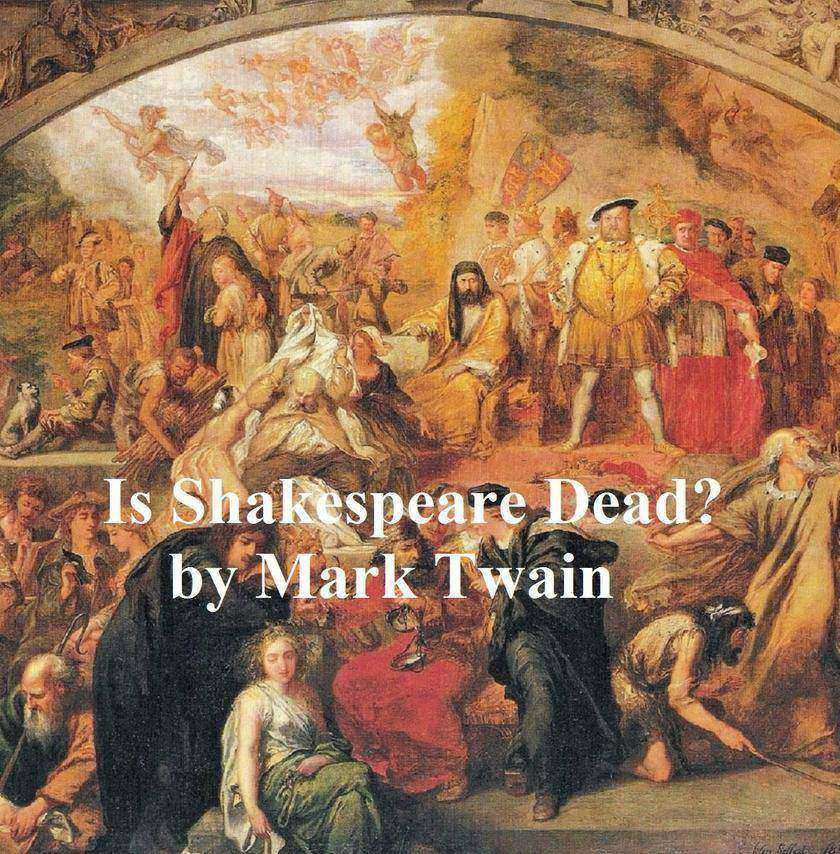
Is Shakespeare Dead? from My Autobiography
¥8.09
From Chapter 1: "A friend has sent me a new book, from England--The Shakespeare Problem Restated--well restated and closely reasoned; and my fifty years' interest in that matter--asleep for the last three years--is excited once more. It is an interest which was born of Delia Bacon's book--away back in that ancient day--1857, or maybe 1856. About a year later my pilot-master, Bixby, transferred me from his own steamboat to the Pennsylvania, and placed me under the orders and instructions of George Ealer--dead now, these many, many years. I steered for him a good many months--as was the humble duty of the pilot-apprentice: stood a daylight watch and spun the wheel under the severe superintendence and correction of the master. He was a prime chess player and an idolater of Shakespeare. He would play chess with anybody; even with me, and it cost his official dignity something to do that. "
Fables
¥8.09
Short collection of anecdotes. According to Wikipedia: "Robert Louis (Balfour) Stevenson ( 1850 - 1894), was a Scottish novelist, poet, and travel writer, and a leading representative of Neo-romanticism in English literature. He was the man who "seemed to pick the right word up on the point of his pen, like a man playing spillikins", as G. K. Chesterton put it. He was also greatly admired by many authors, including Jorge Luis Borges, Ernest Hemingway, Rudyard Kipling, Vladimir Nabokov, and J. M. Barrie. Most modernist writers dismissed him, however, because he was popular and did not write within their definition of modernism. It is only recently that critics have begun to look beyond Stevenson's popularity and allow him a place in the canon."
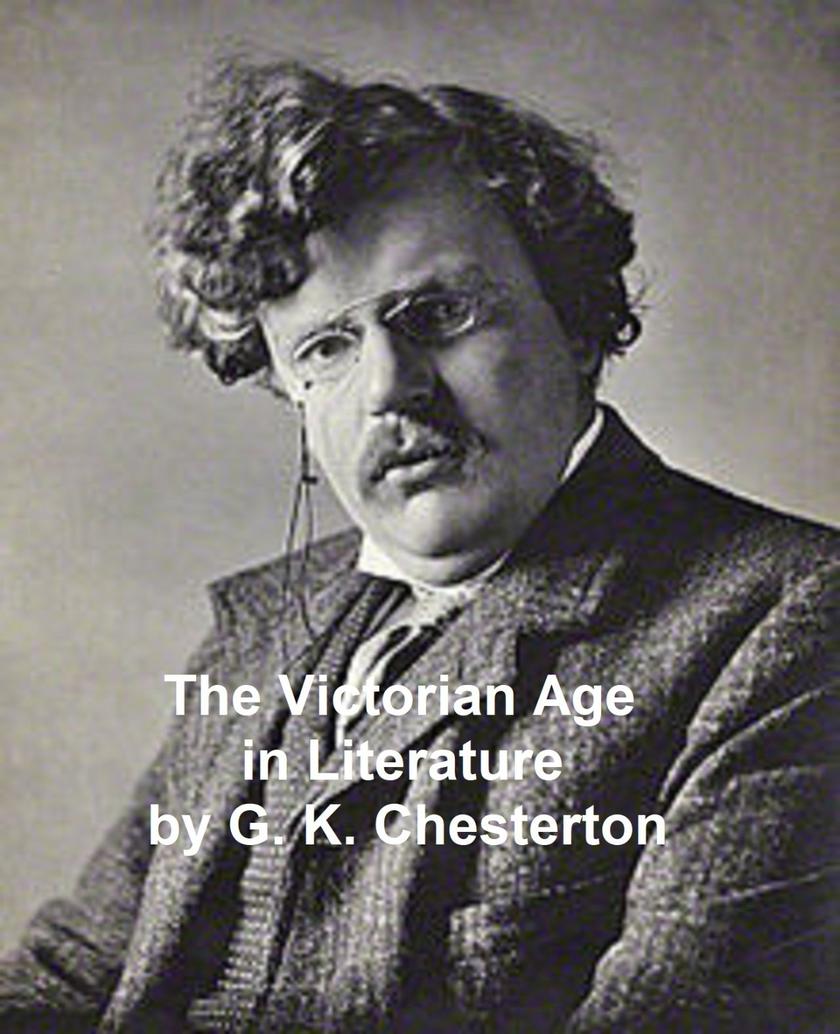
The Victorian Age in Literature
¥8.09
Criticism and literary history by a great novelist and essayist. According to Wikipedia: "Gilbert Keith Chesterton (1874 - 1936) was an influential English writer of the early 20th century. His prolific and diverse output included journalism, philosophy, poetry, biography, Christian apologetics, fantasy and detective fiction. Chesterton has been called the "prince of paradox."[1] He wrote in an off-hand, whimsical prose studded with startling formulations. For example: "Thieves respect property. They merely wish the property to become their property that they may more perfectly respect it."[2] He is one of the few Christian thinkers who are equally admired and quoted by both liberal and conservative Christians, and indeed by many non-Christians. Chesterton's own theological and political views were far too nuanced to fit comfortably under the "liberal" or "conservative" banner."
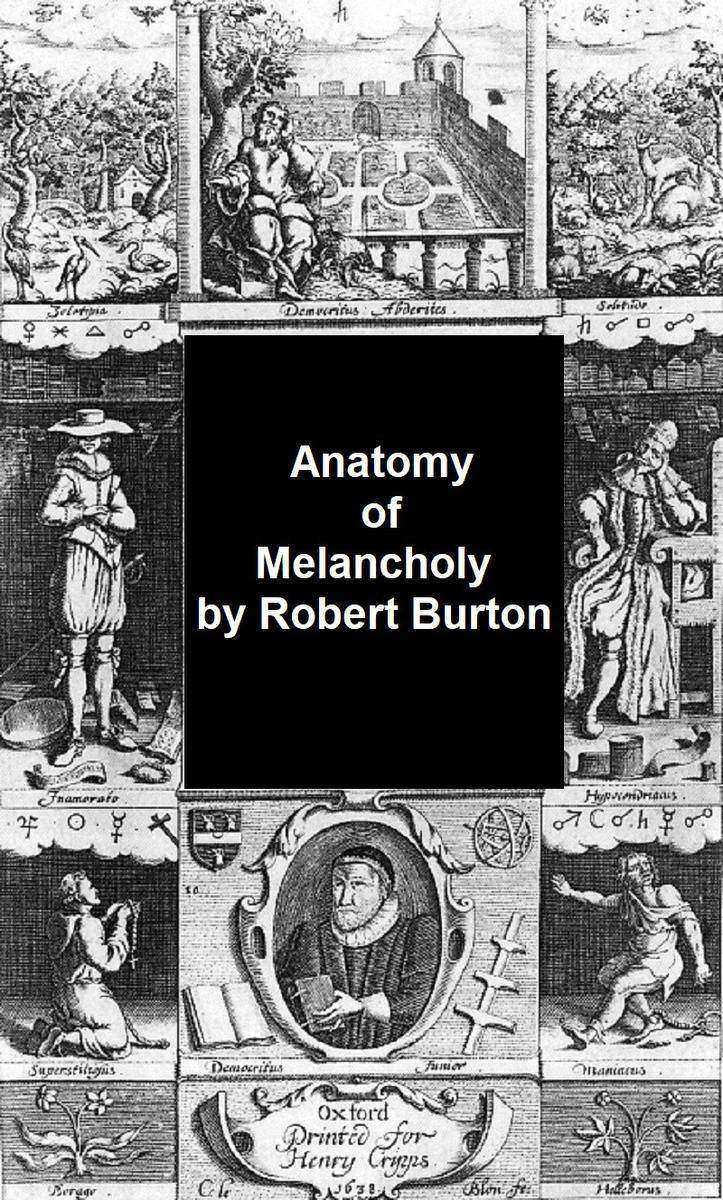
Anatomy of Melancholy
¥8.09
According to Wikipedia: "The Anatomy of Melancholy (Full title: The Anatomy of Melancholy, What it is: With all the Kinds, Causes, Symptomes, Prognostickes, and Several Cures of it. In Three Maine Partitions with their several Sections, Members, and Subsections. Philosophically, Medicinally, Historically, Opened and Cut Up) is a book by Robert Burton, first published in 1621. Burton's book consists mostly of a collection of opinions of a multitude of writers, grouped under quaint and old-fashioned divisions; in a solemn tone Burton endeavoured to prove indisputable facts by weighty quotations. The subjects discussed and determined by Burton ranged from the doctrines of religion to military discipline, from inland navigation to the morality of dancing-schools. On its surface, the book is presented as a medical textbook in which Burton applies his vast and varied learning, in the scholastic manner, to the subject of melancholia (which includes what is now termed clinical depression). Though presented as a medical text, The Anatomy of Melancholy is as much a sui generis work of literature as it is a scientific or philosophical text, and Burton addresses far more than his stated subject. In fact, the Anatomy uses melancholy as the lens through which all human emotion and thought may be scrutinized, and virtually the entire contents of a 17th-century library are marshalled into service of this goal. It is encyclopedic in its range and reference. In his satirical preface to the reader, Burton's persona Democritus Junior explains, "I write of melancholy by being busy to avoid melancholy." This is characteristic of the author's style, which often supersedes the book's strengths as a medical text or historical document as its main source of appeal to admirers. Both satirical and serious in tone, the Anatomy is "vitalized by (Burton's) pervading humour",[3] and Burton's digressive and inclusive style, often verging on a stream of consciousness, consistently informs and animates the text."
The German Novel of Provincial Life
¥8.09
This collection includes works by Little Barefoot by Berthold Auerbach and works by Jeremias Gotthelf, Fritz Euter, Adabert Stifter, and Wilhelm Heinrich Riehl. The German Classics Of The Nineteenth And Twentieth Centuries, Volume 8, edited by Kuno Francke.
Poetry and Drama
¥8.09
This collection includes: Life of Goethe by Calvin Thomas, Hermann and Dorothea, Iphigenia in Tauris, Faust Parts 1 and selections from Part 2. The German Classics Of The Nineteenth And Twentieth Centuries, Volume 1, edited by Kuno Francke.

Works of Hebbel and Ludwig
¥8.09
This collection includes works by Hebbel and Ludwig. The German Classics Of The Nineteenth And Twentieth Centuries, Volume 9, edited by Kuno Francke.
An Inland Voyage
¥8.09
Classic travelogue/memoir. According to Wikipedia: "Robert Louis (Balfour) Stevenson ( 1850 - 1894), was a Scottish novelist, poet, and travel writer, and a leading representative of Neo-romanticism in English literature. He was the man who "seemed to pick the right word up on the point of his pen, like a man playing spillikins", as G. K. Chesterton put it. He was also greatly admired by many authors, including Jorge Luis Borges, Ernest Hemingway, Rudyard Kipling, Vladimir Nabokov, and J. M. Barrie. Most modernist writers dismissed him, however, because he was popular and did not write within their definition of modernism. It is only recently that critics have begun to look beyond Stevenson's popularity and allow him a place in the canon."


