


 购物车
购物车 个人中心
个人中心

Olivier Twist: Bilingual Edition (English – French)
¥40.88
Olivier Twist: Bilingual Edition (English – French)
Bitcoin: Strategies to Make Money with Bitcoin
¥24.44
Bitcoin: Strategies to Make Money with Bitcoin
The Mysterious Island: Bilingual Edition (English – French)
¥40.88
The Mysterious Island: Bilingual Edition (English – French)
Real Estate Investing: 15 Valuable Lessons You Need To Achieve Success
¥24.44
Real Estate Investing: 15 Valuable Lessons You Need To Achieve Success
3rd Class in Indian Railway
¥8.09
3rd Class in Indian Railway

The American Claimant: Bilingual Edition (English – Russian)
¥40.88
The American Claimant: Bilingual Edition (English – Russian)
The Prince And The Pauper: Bilingual Edition (English – Russian)
¥40.88
The Prince And The Pauper: Bilingual Edition (English – Russian)
99 Perseverance Success Stories: Encouragement for Success in Every Walk of Life
¥32.70
99 Perseverance Success Stories: Encouragement for Success in Every Walk of Life
The Adventures of Tom Sawyer: Bilingual Edition (English – Russian)
¥40.88
The Adventures of Tom Sawyer: Bilingual Edition (English – Russian)
My Life and Work
¥8.09
My Life and Work

Sidetracks
¥95.75
In this classic work, the author of 'Footsteps' collects the biographical stories that have captured his fancy in the course of researching his books on the romantic poets, creating a captivating mixture of biography and memoir. ‘Sidetracks' is a sister book to 'Footsteps', conjured up from decades of 'wanderings from the straight and narrow' of his major biographies of Shelley and Coleridge. As Holmes himself says, 'to be sidetracked is, after all, to be led astray by a path or an idea, a scent or a tune, and maybe lost forever.' The centerpiece of the book is the poignant, inspiring story of Mary Woolstonecraft, the great feminist crusader and philosopher and her husband, William Godwin. But 'Sidetracks' winds through an extraordinary and eclectic assortment of Romantic and Gothic writers and personalities, all made hypnotically alive through Holmes's transforming touch. We meet Chatterton and Gautier, Pierrot and Voltaire, Scott Fitzgerald and Zelda, James Boswell and Zelide, MR James and some very unpleasant gothic apparitions. 'Sidetracks' is a renewed examination of the strange and sometimes shadowy pathways of biography.

The Short Life and Long Times of Mrs Beeton (Text Only)
¥80.25
We each of us strive for domestic bliss, and we may look to Delia and Nigella to give us tips on achieving the unattainable. Kathryn Hughes, acclaimed for her biography of George Eliot, has pulled back the curtains to look at the creator of the ultimate book on keeping house. In Victorian England what did every middle-class housewife need to create the perfect home? ‘The Book of Household Management’. ‘Oh, but of course!’ Mrs Beeton would no doubt declare with brisk authority. But Mrs Beeton is not quite the matronly figure that has kept her name resonating 150 years after the publication of ‘The Book of Household Management’. The famous pages of carefully costed recipes, warnings about not gossiping to visitors, and making sure you always keep your hat on in someone else’s house were indispensable in the moulding of the Victorian domestic bliss. But there are many myths surrounding the legend of Mrs Beeton. It is very possible that her book was given so much social standing through fear as she was believed to be a bit of an old dragon. It seems though that Mrs Beeton was a series of contradictions. Kathryn Hughes reveals here that Bella Beeton was a million miles away from the stoical, middle-aged matron. She was in fact only 25 years old when she created the guide to successful family living and had only had five years experience of her own to inform her. She lived in a semi-detached house in Pinner with the bare minimum of servants. She bordered on being a workaholic, and certainly wasn’t the meek and mild little wife that her book was aimed at – more a highly intelligent and ambitious young woman. After preaching about wholesome and clean living, Bella Beeton died at the age of 28 from (contrary to her parent’s belief) bad hygiene. Kathryn Hughes sympathetically explores the irony behind Bella Beeton’s public and private image in this highly readable and informative study of Victorian lifestyle.
Spike: An Intimate Memoir
¥72.40
The complete memoirs of a man of many talents and faces – the late, great Spike Milligan – affectionately recounted by his close friend and agent for 35 years, Norma Farnes. "'What's he really like?' Wherever I went and was introduced as Spike Milligan's manager I waited for the inevitable question. In not far short of 60 years it never altered. It wasn't one that could be answered in a few words so I generally made do with 'Interesting' or 'don't ask'…" After chancing on an advert for a secretarial position, Norma Farnes found herself initiated into the world of No.9 Orme Court – a hub of writing and creativity for many post-war entertainment names. Soon promoted to be his agent, Norma was working for a man with a celebrated reputation for brilliance and difficulty in equal measure. Much loved for many decades, Milligan was often heralded as creative and 'zany' but the truth went much deeper. He could be endearing, despicable, loyal, traitorous, challenging, inspirational, frenetic…sometimes all of these things in a single day, but never boring. In these affectionate and truthful memoirs of 35 years as agent, close friend and sometime-foe, Norma Farnes portrays Spike Milligan in all his guises. Uncovering a great many personal anecdote, Spike reveals his extraordinary sense of humour, his ongoing battle with a restless mind, his remarkable, life-long friendships with Peter Sellers and Erik Sykes, his relationship his family and the industry, and his heartening struggles with society at large. In Spike, Norma Farnes has captured a comprehensive and moving portrait of this truly extraordinary man of many talents and faces, and of her greatest friend.
Bad Blood: A Memoir (Text Only)
¥73.58
From a childhood of gothic proportions in a vicarage on the Welsh borders, through adolescence, leaving herself teetering on the brink of the 1960's, Lorna Sage vividly and wittily brings to life a vanished time and place and illuminates the lives of three generations of women. Lorna Sage’s memoir of childhood and adolescence is a brilliantly written bravura piece of work, which vividly and wickedly brings to life her eccentric family and somewhat bizarre upbringing in the small town of Hanmer, on the border between Wales and Shropshire. The period as well as the place is evoked with crystal clarity: from the 1940s, dominated for Lorna by her dissolute but charismatic vicar grandfather, through the 1950s, where the invention of fish fingers revolutionised the lives of housewives like Lorna’s mother, to the brink of the 1960s, where the community was shocked by Lorna’s pregnancy at 16, an event which her grandmother blamed on ‘the fiendish invention of sex’.

Burnt Toast
¥57.09
Toast. You know when you're trying to make it and you just can't get it right? It's too light or too soft, then totally burnt. Are you the kind of person who tries to scrape off the black? Or do you smother it with jam to hide the taste? Do you throw it away, or do you just eat it? Up until now, I ate the burnt toast … then I hit forty. It took Teri Hatcher a divorce, the experience of single motherhood, a parade of bad dates, a stalled career and a memorable fortieth birthday to realize that she didn't want to spend another decade preparing herself for the next disaster. Burnt Toast is the heartfelt, funny, poignant and inspiring account of Teri's jagged route to happiness. Teri reveals her life in unexpected ways, in the hopes of keeping other women from eating the burnt toast, and explains why you'll never get a second chance if you don't open yourself up to the possibility.
Niall Mackenzie: The Autobiography
¥63.77
he 40-year-old Scot has been Britain's most successful Grand Prix racer since the legendary Barry Sheene. At his final race in Knockhill in August 2001, more than 20,000 fans turned up to watch Mackenzie and to bid farewell to their local hero. Niall has come a long way from Denny where he would regularly get into trouble for racing round the streets, as well as in and out of the local chip shops, to impress the girls. As an amateur it was recognized he had an abundance of talent, especially after winning his first race at Knockhill, but he also had a wild side and looks back on a time when chasing girls and getting drunk were as important as winning races. After moving up through the amateur ranks and securing his first factory 500cc rides on a Suzuki, Niall notched up a host of 500cc GP podium finishes before moving to Superbikes. He proved unbeatable between 1996 and 1998 when he claimed a hat-trick of British Superbike titles. On each occasion he beat big-name team-mates such as Jamie Whitham, Chris Walker and Steve Hislop. This fascinating look into the British GP and Superbike scene through the eyes of one of its legends, has now been fully updated with Mackenzie’s latest adventures in his career off the track in 2003.
The Knox Brothers
¥76.52
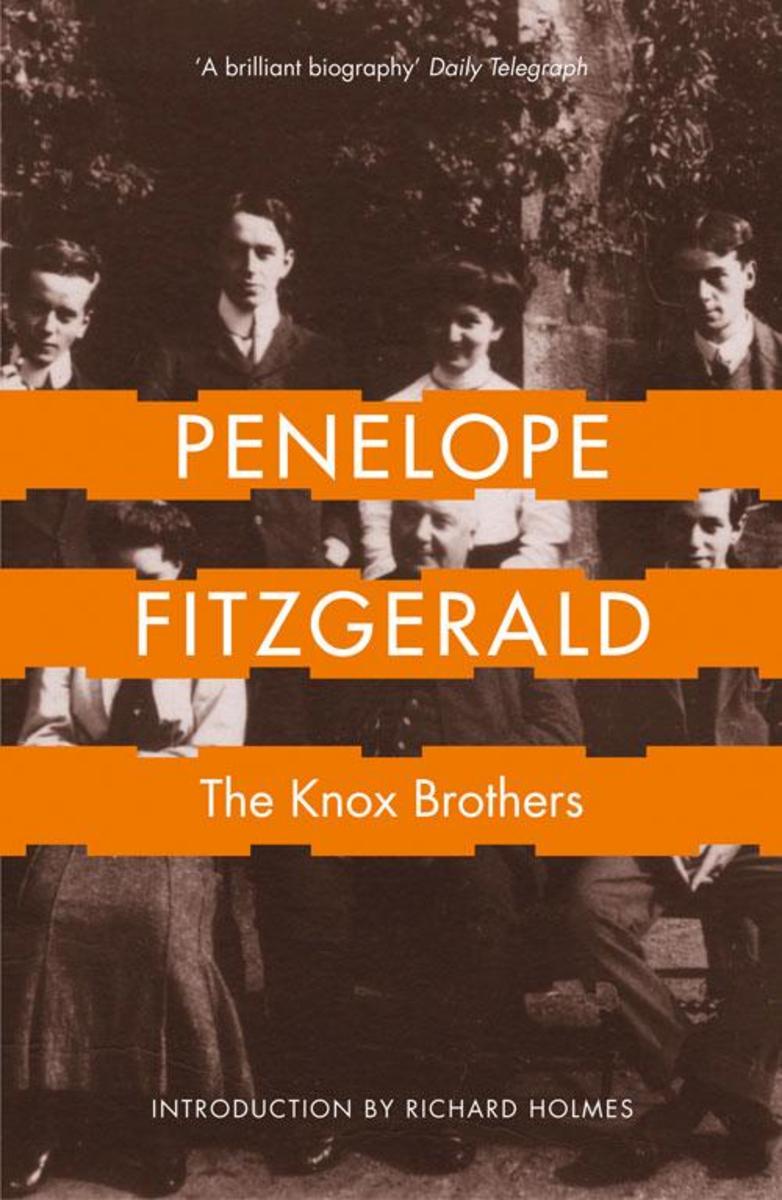
Penelope Fitzgerald’s biography of her remarkable family. ‘When I was very young I took my uncles for granted, and it never occurred to me that everyone else in the world was not like them.’ In this, only her second book, Penelope Fitzgerald turned her novelist’s gaze on the quite extraordinary lives of her father and his three brothers. A masterly work of biography, within which we see Penelope Fitzgerald exercising her pen magnificently before she began her novel-writing career. Edmund Knox, her father, was one of the most successful editors of Punch. Dillwyn, a Cambridge Greek scholar, was the first to crack the Nazi’s message decoding system, Enigma, and in so doing, is estimated to have shortened the Second World War by six months. Wilfred became an Anglo-Catholic priest and an active welfare worker in the East End of London. Ronald, the best known of the four during his lifetime, was Roman Catholic chaplain to Oxford University’s student body, preacher, wit, scholar, crime-writer and translator of the Bible. A homage to a long-forgotten world and a fascinating account of the generation straddling the divide between late Victorian and Edwardian.
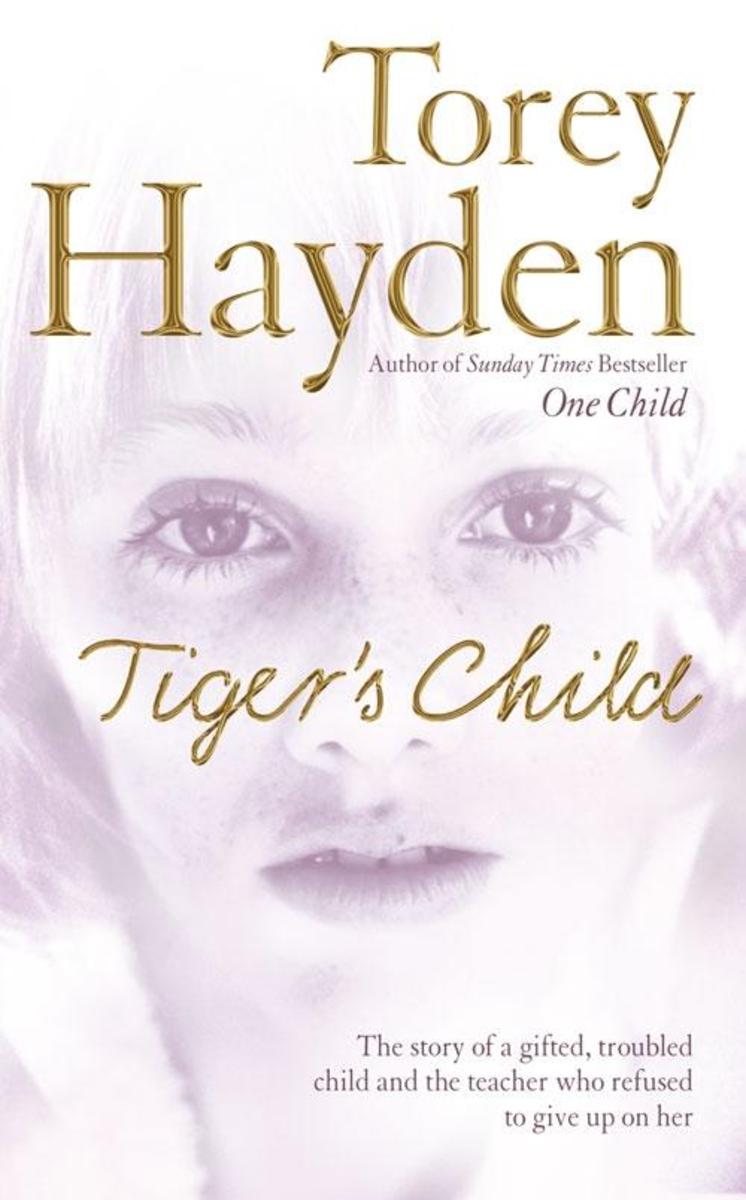
The Tiger’s Child
¥58.47
Torey Hayden returns with this deeply-moving sequel to her first book, One Child (the Sunday Times bestseller). After seven years, Torey is reunited with Sheila, the disturbed 6-year-old she tried to rescue. Sheila was a deeply disturbed six-year-old when she came into Torey Hayden's life – a story poignantly chronicled One Child. The Tiger's Child picks up the story seven years later. Hayden has lost touch with the child she helped to free from a hellish inner prison of rage and silence. But now Sheila is back, now a gangly teenager with bright orange hair – no longer broken and lost, but still troubled and searching for answers. This story of dedication and caring that began in childhood moves into a new and extraordinary chapter that tests the strength and heart of both Sheila and her one-time teacher. In The Tiger's Child the skilled and loving educator answers the call once again to help a child in need through her difficult yet glorious transition into young womanhood.
Unravelled: Life as a Mother
¥54.65
Maria Housden tells of her own transformation, as a mother, a wife and a woman, as she struggled to cope with the death of her daughter Hannah and make the hardest decision of her life. From the author of the bestselling Hannah’s Gift. At the age of 36, instead of enjoying the perfect family life she had imagined as a child, Maria felt judged and found wanting by others. She realised that, no matter how much she still loved her husband and how powerful her bond of love was with her children, she had to change her life radically – she had to make it her own again. What followed was an emotional and enlightening search for herself. Written in the same moving, lyrical style as Hannah’s Gift, the story unfolds in a series of painful, joyful and humorous moments. At times the story is heart-wrenchingly sad but ultimately it is uplifting and inspiring.
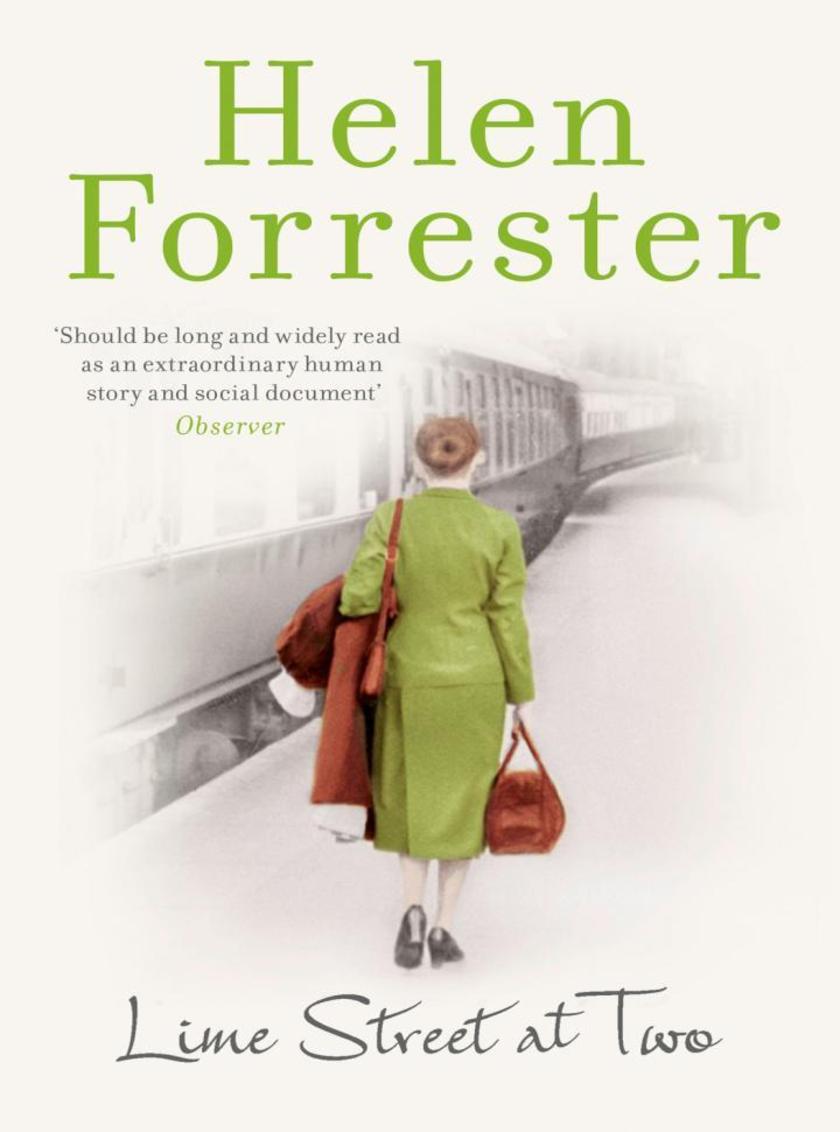
Lime Street at Two
¥54.25
The fourth and final part of Helen Forrester’s bestselling autobiography continues the moving story of her early poverty-stricken life with an account of the war years in Blitz-torn Liverpool In 1940 Helen, now twenty, reeling from the news that her fiance Harry has been killed on an Atlantic convoy, is working long hours at a welfare centre in Bootle, five miles from home. Her wages are pitifully low and her mother claims the whole of them for housekeeping. Then, early in 1941, she gets a new job and begins to enjoy herself a little. But in May the bombing starts again and another move brings more trouble to Helen, trouble which will be faced, as ever, with courage and determination.
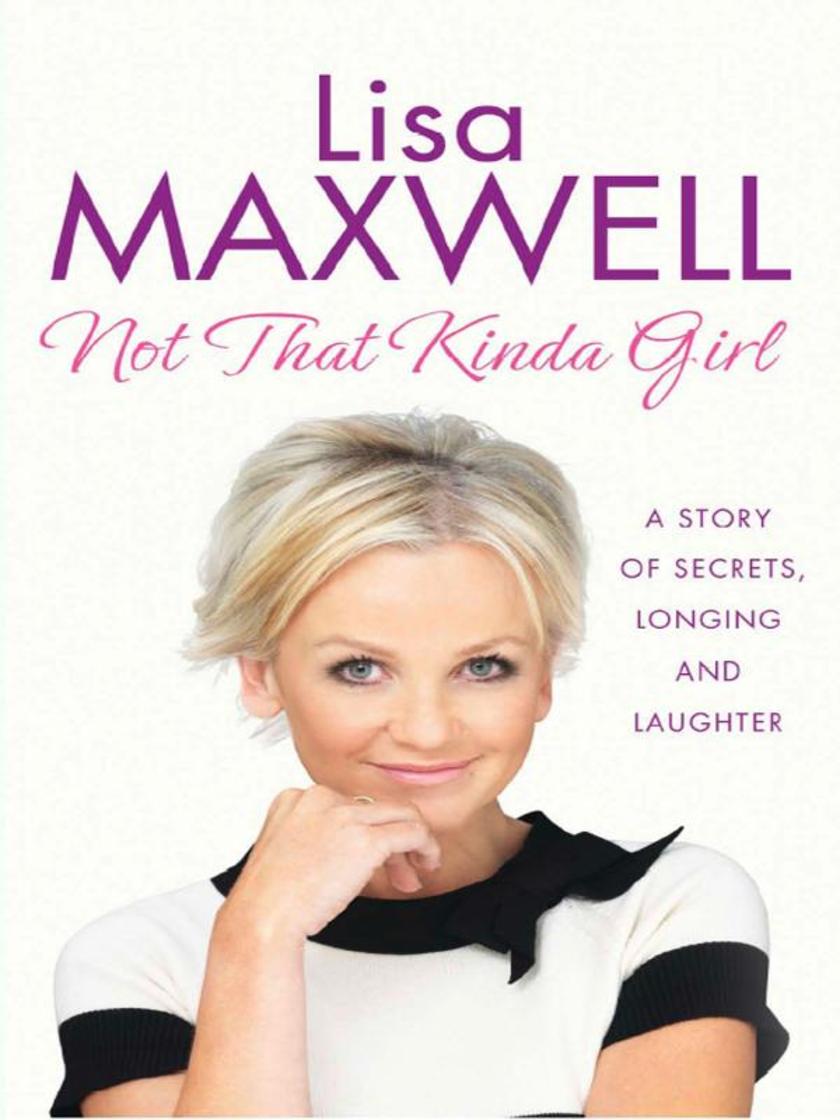
Not that Kinda Girl
¥58.86
Lisa Maxwell, an addition to the quick-witted Loose Women team, is a bundle of fun and laughter and a natural storyteller. Here, for the first time, she tells her astonishing story - a tale of remarkable spirit, incredible experiences and family secrets. A much-loved presenter and respected actress, Lisa got her first onscreen role at the age of just 11. In the eighties she became a TV presenter on series like Splash and No Limits, interviewing the icons of the time and partying with the likes of George Michael, Robert Downey Junior and Michael Hutchence, before moving more firmly into comedy, appearing on sketch shows like, The Les Dennis Laughter Show, The Russ Abbott Show and her very own, self-titled, The Lisa Maxwell Show. She narrowly missed out on the part of Daphne in a little show called Frasier. And then for seven years played the part of The Bill's DI Sam Nixon, before joining Loose Women in 2009, where she quickly became an audience favourite. But behind the fun, glamour and onscreen success, is a south London girl, hiding the secret she's been taught never to talk about. An illegitimate child, brought up in Elephant and Castle, Lisa's life very nearly took a different path. Lucky for her, her dear old Nan had a kind heart, and in a last minute change of plan she was brought home to her grandparent's flat on the Rockingham Estate. With warmth, honesty and humour, Lisa takes us to the heart of the Elephant, revealing a home filled with love, laughter and drama. From having the drawer of an old chest for her bed to hiding from the Tally Man, waiting for her Nan outside the betting shop to dabbling in petty crime, discovering her dad was still alive, and always looking for a way to be in the lime light, Lisa has written a colourful memoir of life as a daughter, a granddaughter, a mother, and an actress.


