


 购物车
购物车 个人中心
个人中心
Lectures and Essays
¥8.09
This collection includes: The Rise of Historical Criticism, The English Renaissance of Art, House Decoration, Art and the Handicraftsman, Lecture to Art Students, London Models, and Poems in Prose. According to Wikipedia: "Oscar Fingal O'Flahertie Wills Wilde (1854 - 1900) was an Irish playwright, novelist, poet, and author of short stories. Known for his barbed wit, he was one of the most successful playwrights of late Victorian London, and one of the greatest celebrities of his day. As the result of a famous trial, he suffered a dramatic downfall and was imprisoned for two years of hard labour after being convicted of the offence of 'gross indecency.'"
Mark Twain's Essays Letters and Speeches
¥8.09
This book-collection file includes books of Mark Twain's speeches and letters, plus 3 book-length collections of essays: What is Man? Sketches New and Old, and Christian Science. It also includes the following short collections and individual essays: Editorial Wild Oats, Essays on Paul Bourget, Fenimore Cooper's Literary Offences, and In Defence of Harriet Shelley. According to Wikipedia: "Samuel Langhorne Clemens (1835 – 1910), better known by the pen name Mark Twain, was an American humorist, satirist, lecturer and writer. Twain is most noted for his novels Adventures of Huckleberry Finn, which has since been called the Great American Novel, and The Adventures of Tom Sawyer. He is also known for his quotations. During his lifetime, Twain became a friend to presidents, artists, industrialists and European royalty. Twain enjoyed immense public popularity, and his keen wit and incisive satire earned him praise from both critics and peers. American author William Faulkner called Twain "the father of American literature."
Works of Freytag and Fontane
¥8.09
This collection includes works by Gustav Freytag and Theodor Fontane. The German Classics Of The Nineteenth And Twentieth Centuries, Volume 1, edited by Kuno Francke.
Littérature et Philosophie Mêlées
¥8.09
Livre classique de la critique littéraire et de la philosophie, publié en 1834. Selon Wikipédia: "Victor-Marie Hugo (26 février 1802 - 22 mai 1885) était un poète, dramaturge, romancier, essayiste, artiste visuel, homme d'?tat, défenseur des droits humains En France, la renommée littéraire de Hugo vient d'abord de sa poésie, mais repose aussi sur ses romans et ses réalisations dramatiques Parmi de nombreux volumes de poésie, Les Contemplations et La Légende des siècles tiennent particulièrement haut dans l'estime critique et Hugo est parfois identifié comme le plus grand poète fran?ais.A l'extérieur de la France, ses ?uvres les plus connues sont les romans Les Misérables et Notre-Dame de Paris (connu aussi en anglais sous le nom de Le Bossu de Notre Dame). il était jeune, Hugo devint plus libéral au fil des décennies, il devint un partisan passionné du républicanisme et son travail touche à la plupart des questions politiques et sociales et artistiques. nds de son temps. Il est enterré au Panthéon. "
Memories and Portraits
¥8.09
Memoirs by the author of Treasure Island. He explains at the beginning: "This volume of papers, unconnected as they are, it will be better to read through from the beginning, rather than dip into at random. A certain thread of meaning binds them. Memories of childhood and youth, portraits of those who have gone before us in the battle - taken together, they build up a face that "I have loved long since and lost awhile," the face of what was once myself. This has come by accident; I had no design at first to be autobiographical; I was but led away by the charm of beloved memories and by regret for the irrevocable dead; and when my own young face (which is a face of the dead also) began to appear in the well as by a kind of magic, I was the first to be surprised at the occurrence."
Representative Men
¥8.09
Classic collection of essays on great men, with 13 illustrations. According to Wikipedia: "Representative Men is a collection of seven lectures by Ralph Waldo Emerson, published as a book of essays in 1850. The first essay discusses the role played by "great men" in society, and the remaining six each extoll the virtues of one of six men deemed by Emerson to be great: Plato ("the Philosopher"), Emanuel Swedenborg ("the Mystic"), Michel de Montaigne ("the Skeptic"), William Shakespeare ("the Poet"), Napoleon ("the Man of the World"), and Johann Wolfgang von Goethe ("the Writer"). The work was described by Matthew Arnold as "the most important work done in prose"... Ralph Waldo Emerson (1803 – 1882) was an American essayist, philosopher, poet, and leader of the Transcendentalist movement in the early 19th century. His teachings directly influenced the growing New Thought movement of the mid 1800s. Emerson gradually moved away from the religious and social beliefs of his contemporaries, formulating and expressing the philosophy of Transcendentalism in his 1836 essay, Nature. As a result of this ground breaking work he gave a speech entitled The American Scholar in 1837, which Oliver Wendell Holmes Sr. considered to be America's "Intellectual Declaration of Independence". Emerson once said "Make the most of yourself, for that is all there is of you."
A Tale of a Tub by Jonathan Swift - Delphi Classics (Illustrated)
¥8.09
This eBook features the unabridged text of ‘A Tale of a Tub by Jonathan Swift - Delphi Classics (Illustrated)’ from the bestselling edition of ‘The Complete Works of Jonathan Swift’. Having established their name as the leading publisher of classic literature and art, Delphi Classics produce publications that are individually crafted with superior formatting, while introducing many rare texts for the first time in digital print. The Delphi Classics edition of Swift includes original annotations and illustrations relating to the life and works of the author, as well as individual tables of contents, allowing you to navigate eBooks quickly and easily. eBook features: * The complete unabridged text of ‘A Tale of a Tub by Jonathan Swift - Delphi Classics (Illustrated)’ * Beautifully illustrated with images related to Swift’s works * Individual contents table, allowing easy navigation around the eBook * Excellent formatting of the text Please visit www.delphiclassics.com to learn more about our wide range of titles
Peer Gynt by Henrik Ibsen - Delphi Classics (Illustrated)
¥8.09
This eBook features the unabridged text of ‘Peer Gynt by Henrik Ibsen - Delphi Classics (Illustrated)’ from the bestselling edition of ‘The Complete Works of Henrik Ibsen’. Having established their name as the leading publisher of classic literature and art, Delphi Classics produce publications that are individually crafted with superior formatting, while introducing many rare texts for the first time in digital print. The Delphi Classics edition of Ibsen includes original annotations and illustrations relating to the life and works of the author, as well as individual tables of contents, allowing you to navigate eBooks quickly and easily. eBook features: * The complete unabridged text of ‘Peer Gynt by Henrik Ibsen - Delphi Classics (Illustrated)’ * Beautifully illustrated with images related to Ibsen’s works * Individual contents table, allowing easy navigation around the eBook * Excellent formatting of the text Please visit www.delphiclassics.com to learn more about our wide range of titles
Brook Farm
¥8.09
According to Wikipedia: "Brook Farm, also called the Brook Farm Institute of Agriculture and Education or the Brook Farm Association for Industry and Education, was a utopian experiment in communal living in the United States in the 1840s. It was founded by former Unitarian minister George Ripley and his wife Sophia Ripley at the Ellis Farm in West Roxbury, Massachusetts (9 miles outside of downtown Boston) in 1841 and was inspired in part by the ideals of Transcendentalism, a religious and cultural philosophy based in New England. Founded as a joint stock company, it promised its participants a portion of the profits from the farm in exchange for performing an equal share of the work. Brook Farmers believed that by sharing the workload, ample time would be available for leisure activities and intellectual pursuits."
My Friends at Brook Farm
¥8.09
According to Wikipedia: "Brook Farm, also called the Brook Farm Institute of Agriculture and Education or the Brook Farm Association for Industry and Education, was a utopian experiment in communal living in the United States in the 1840s. It was founded by former Unitarian minister George Ripley and his wife Sophia Ripley at the Ellis Farm in West Roxbury, Massachusetts (9 miles outside of downtown Boston) in 1841 and was inspired in part by the ideals of Transcendentalism, a religious and cultural philosophy based in New England. Founded as a joint stock company, it promised its participants a portion of the profits from the farm in exchange for performing an equal share of the work. Brook Farmers believed that by sharing the workload, ample time would be available for leisure activities and intellectual pursuits.
A Memoir of Jane Austen
¥8.09
According to Wikipedia: "A Memoir of Jane Austen is a biography of the novelist Jane Austen (1775–1817) published in 1869 by her nephew James Edward Austen-Leigh. A second edition was published in 1871 which included previously unpublished Jane Austen writings. A family project, the biography was written by James Edward Austen-Leigh but owed much to the recollections of Jane Austen's many relatives. However, it was the decisions of her close friend and sister, Cassandra Austen, to destroy many of Jane's letters after her death that shaped the material available for the biography."
Summer on the Lakes in 1843
¥8.09
According to Wikipedia: "Sarah Margaret Fuller Ossoli (May 23, 1810 – July 19, 1850), commonly known as Margaret Fuller, was an American journalist, critic, and women's rights advocate associated with the American transcendentalism movement. She was the first full-time American female book reviewer in journalism. Her book Woman in the Nineteenth Century is considered the first major feminist work in the United States."
Two Books and a Poem
¥8.09
This file includes: The Story of My Life, The World I Live In, and The Song of the Stone Wall. According to Wikipedia: "Helen Adams Keller (June 27, 1880 – June 1, 1968) was an American author, political activist, and lecturer. She was the first deafblind person to earn a Bachelor of Arts degree. The story of how Keller's teacher, Anne Sullivan, broke through the isolation imposed by a near complete lack of language, allowing the girl to blossom as she learned to communicate, has become widely known through the dramatic depictions of the play and film The Miracle Worker. .. A prolific author, Keller was well-travelled and outspoken in her convictions. A member of the Socialist Party of America and the Industrial Workers of the World, she campaigned for women's suffrage, labor rights, socialism, and other radical left causes."
The World As I Have Found It
¥8.09
Sequel to Incidents in the Life of a Blind Girl.? First published in 1878. Autobiography of a blind woman, followed by the essays: Help the Blind Help Themselves, Sight of the Blind, How do the Blind See, Invocation to Light, Is It More to Lose Eyes than the Ears? and Education of the Blind. It also includes a collection of poems by the blind. Such a book as this has a value which, probably, has not occurred to its author. She has put on record the phenomena of her life as she has recollected them, with great simplicity, merely for the entertainment of her readers, without attaching any importance to the value which every such memoir has in the department of science. But it is just from the study of such phenomena as these that the students in mental and moral philosophy learn the laws of mind and the operations of a human soul under a divine, moral government. "
Editorial Wild Oats
¥8.09
Short collection of short humorous essays, including: PAGE MY FIRST LITERARY VENTURE, JOURNALISM IN TENNESSEE, NICODEMUS DODGE--PRINTER, MR. BLOKE'S ITEM, HOW I EDITED AN AGRICULTURAL PAPER, and THE KILLING OF JULIUS CAESAR "LOCALIZED".
A Confederate Girl's Diary
¥8.09
The war-time diary of a young girl, first published in 1913.
Elective Affinities, Essays, and Letters by Goethe
¥8.09
This collection includes: Elective Affiniities and shorter works by Goethe. The German Classics Of The Nineteenth And Twentieth Centuries, Volume 2, edited by Kuno Francke.
Essays and Lectures
¥8.09
Dodo Collections brings you another classic from Oscar Wilde, ‘Essays and Lectures’. It is a collection of essays, lectures, reviews, letters, and aphorisms by Oscar Wilde. Oscar Fingal O'Flahertie Wills Wilde (16 October 1854 – 30 November 1900) was an Irish author, playwright and poet. After writing in different forms throughout the 1880s, he became one of London's most popular playwrights in the early 1890s. He is remembered for his epigrams, his novel The Picture of Dorian Gray, his plays, as well as the circumstances of his imprisonment and early death. At the height of his fame and success, while his masterpiece, The Importance of Being Earnest (1895), was still on stage in London, Wilde had the Marquess of Queensberry prosecuted for libel. The Marquess was the father of Wilde's lover, Lord Alfred Douglas. The charge carried a penalty of up to two years in prison. The trial unearthed evidence that caused Wilde to drop his charges and led to his own arrest and trial for gross indecency with other men. After two more trials he was convicted and imprisoned for two years' hard labour. In 1897, in prison, he wrote De Profundis, which was published in 1905, a long letter which discusses his spiritual journey through his trials, forming a dark counterpoint to his earlier philosophy of pleasure. Upon his release he left immediately for France, never to return to Ireland or Britain. There he wrote his last work, The Ballad of Reading Gaol (1898), a long poem commemorating the harsh rhythms of prison life. He died destitute in Paris at the age of 46.
Speaking of Operations
¥8.09
Dodo Collections brings you another classic from Irvin S. Cobb, ‘"Speaking of Operations". ? Speaking of Operations is a monologue about the author's experience in having an operation in 1915 written in his typical tongue-in-cheek style. ? American author, humorist, editor and columnist from Paducah, Kentucky who relocated to New York during 1904, living there for the remainder of his life. ? Cobb joined the staff of the magazine Saturday Evening Post during 1911, and covered the Great War for the magazine. At the same time, he wrote a book about his experiences, published during 1915, titled Paths Of Glory. After a second visit to France to cover the Great War, Cobb publicized the achievements of the unit known as theHarlem Hellfighters, most notably, Croix de Guerre recipients Henry Lincoln Johnson and Needham Roberts. His article "Young Black Joe," published on August 24, 1918 in theSaturday Evening Post and later republished in Cobb's book, The Glory of the Coming, highlighted the discipline and courage displayed by black American soldiers fighting in Europe during World War I. The three-page article and half-page photograph reached a national audience of more than two million readers, and was widely reprinted in the black press.
Letters of Chekhov
¥8.09
From the Translator's Note: "Of the eighteen hundred and ninety letters published by Chekhov's family I have chosen for translation these letters and passages from letters which best to illustrate Chekhov's life, character and opinions. The brief memoir is abridged and adapted from the biographical sketch by his brother Mihail. Chekhov's letters to his wife after his marriage have not as yet been published." According to Wikipedia: "Anton Pavlovich Chekhov (1860 – 1904) was a Russian short-story writer, playwright and physician, considered to be one of the greatest short-story writers in world literature. His career as a dramatist produced four classics and his best short stories are held in high esteem by writers and critics Chekhov practised as a doctor throughout most of his literary career: "Medicine is my lawful wife," he once said, "and literature is my mistress." Chekhov renounced the theatre after the disastrous reception of The Seagull in 1896; but the play was revived to acclaim in 1898 by Constantin Stanislavski's Moscow Art Theatre, which subsequently also produced Uncle Vanya and premiered Chekhov’s last two plays, Three Sisters and The Cherry Orchard. These four works present a special challenge to the acting ensemble as well as to audiences, because in place of conventional action Chekhov offers a "theatre of mood" and a "submerged life in the text." Chekhov had at first written stories only for the money, but as his artistic ambition grew, he made formal innovations which have influenced the evolution of the modern short story. His originality consists in an early use of the stream-of-consciousness technique, later adopted by James Joyce and other modernists, combined with a disavowal of the moral finality of traditional story structure He made no apologies for the difficulties this posed to readers, insisting that the role of an artist was to ask questions, not to answer them."
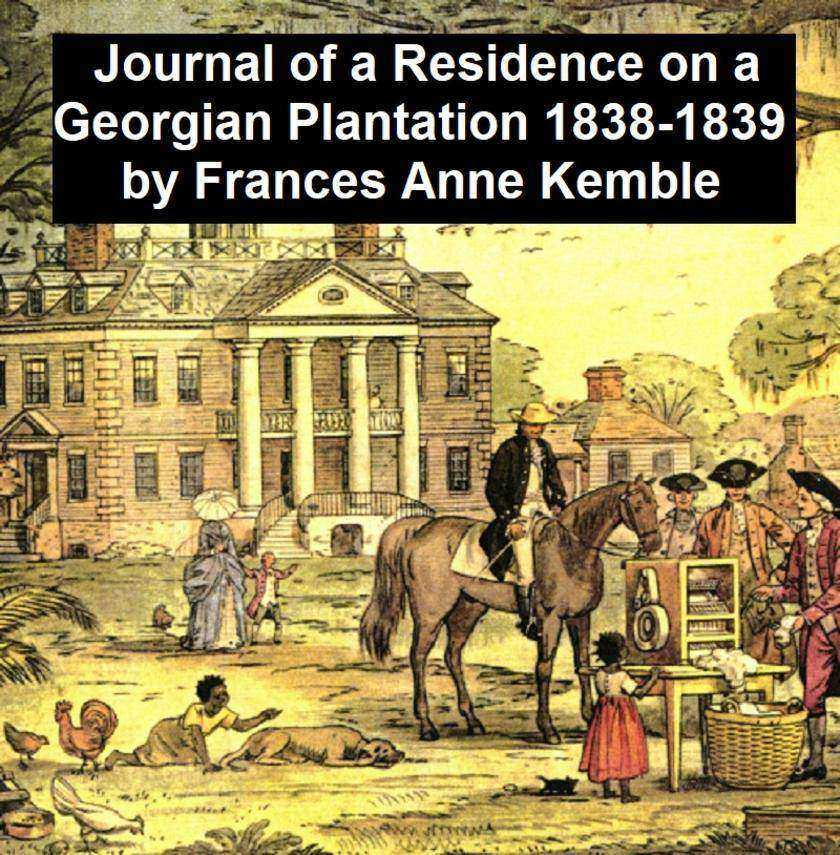
Journal of a Residence on a Georgian Plantation 1838-1839
¥8.09
Autobiographical journal, with first-hand account of slavery in Georgia, first published in 1863. According to Wikipedia: "Frances Anne Kemble (27 November 1809 - 15 January 1893), was a famous British actress and author in the early and mid nineteenth century… In 1834, she retired from the stage to marry an American, Pierce Butler, grandson of the Founding Father Pierce Butler, and heir to a large fortune founded on cotton, tobacco and rice... Butler squandered a fortune estimated at $700,000, but was saved from bankruptcy by the March 2–3, 1859 sale of his 436 slaves at Ten Broeck racetrack, outside Savannah, Georgia—the largest single slave auction in American history. Following the American Civil War, he tried to make his plantations profitable with free labor, but was unsuccessful. Butler died in Georgia, of malaria, in 1867. Neither he nor Fanny ever remarried... In 1877, Fanny returned to England, where she lived using her maiden name till her death. During this period, Fanny Kemble was a prominent and popular figure in the social life of London. She became a great friend of and inspiration for Henry James during her later years. His novel Washington Square (1880) was based upon a story Fanny had told him concerning one of her relatives... Her various volumes of reminiscences contain much valuable material illuminating the social and dramatic history of the period. Her elder daughter Sarah married a doctor, Owen Jones Wister, and they had one child, Owen Wister (b. 1860), the popular American novelist and author of the 1902 western novel, The Virginian."


