


 购物车
 个人中心

Web Development with MongoDB and Node - Third Edition
¥71.93
Use the two popular web development stacks, Node.js and MongoDB, to build full-featured web applications About This Book ? Learn the new ECMAScript along with Node 8 and MongoDB to make your application more effective. ? Get the up-to-date information required to launch your first application prototype using the latest versions of Node.js and MongoDB. ? A practical guide with clear instructions to designing and developing a complete web application from start to finish using trending frameworks such as angular4 and hapi Who This Book Is For The book is designed for JavaScript developers of any skill level who want to get up-and-running using Node.js and MongoDB to build full-featured web applications. A basic understanding of JavaScript and HTML is the only prerequisite for this book. What You Will Learn ? Work with Node.js building blocks ? Write and configure a web server using Node.js powered by the Express.js framework ? Build dynamic HTML pages using the Handlebars template engine ? Persist application data using MongoDB and Mongoose ODM ? Test your code using automated testing tools such as the Mocha framework ? Automate test cases using Gulp ? Reduce your web development time by integrating third-party tools for web interaction. ? Deploy a development environment to the cloud using services such as Heroku, Amazon Web Services, and Microsoft Azure ? Explore single-page application frameworks to take your web applications to the next level In Detail Node.js builds fast, scalable network applications while MongoDB is the perfect fit as a high-performance, open source NoSQL database solution. The combination of these two technologies offers high performance and scalability and helps in building fast, scalable network applications. Together they provide the power for manage any form of data as well as speed of delivery. This book will help you to get these two technologies working together to build web applications quickly and easily, with effortless deployment to the cloud. You will also learn about angular 4, which consumes pure JSON APOIs from a hapi server. The book begins by setting up your development environment, running you through the steps necessary to get the main application server up-and-running. Then you will see how to use Node.js to connect to a MongoDB database and perform data manipulations. From here on, the book will take you through integration with third-party tools to interact with web apps. You will see how to use controllers and view models to generate reusable code that will reduce development time. Toward the end, the book supplies tests to properly execute your code and take your skills to the next level with the most popular frameworks for developing web applications. By the end of the book, you will have a running web application developed with MongoDB, Node.js, and some of the most powerful and popular frameworks. Style and approach A practical guide with clear instructions to designing and developing a complete web application from start to finish
Continuous Delivery with Docker and Jenkins
¥80.65
Unleash the combination of Docker and Jenkins in order to enhance the DevOps workflow About This Book ? Build reliable and secure applications using Docker containers. ? Create a complete Continuous Delivery pipeline using Docker, Jenkins, and Ansible. ? Deliver your applications directly on the Docker Swarm cluster. ? Create more complex solutions using multi-containers and database migrations. Who This Book Is For This book is indented to provide a full overview of deep learning. From the beginner in deep learning and artificial intelligence to the data scientist who wants to become familiar with Theano and its supporting libraries, or have an extended understanding of deep neural nets. Some basic skills in Python programming and computer science will help, as well as skills in elementary algebra and calculus. What You Will Learn ? Get to grips with docker fundamentals and how to dockerize an application for the Continuous Delivery process ? Configure Jenkins and scale it using Docker-based agents ? Understand the principles and the technical aspects of a successful Continuous Delivery pipeline ? Create a complete Continuous Delivery process using modern tools: Docker, Jenkins, and Ansible ? Write acceptance tests using Cucumber and run them in the Docker ecosystem using Jenkins ? Create multi-container applications using Docker Compose ? Managing database changes inside the Continuous Delivery process and understand effective frameworks such as Cucumber and Flyweight ? Build clustering applications with Jenkins using Docker Swarm ? Publish a built Docker image to a Docker Registry and deploy cycles of Jenkins pipelines using community best practices In Detail The combination of Docker and Jenkins improves your Continuous Delivery pipeline using fewer resources. It also helps you scale up your builds, automate tasks and speed up Jenkins performance with the benefits of Docker containerization. This book will explain the advantages of combining Jenkins and Docker to improve the continuous integration and delivery process of app development. It will start with setting up a Docker server and configuring Jenkins on it. It will then provide steps to build applications on Docker files and integrate them with Jenkins using continuous delivery processes such as continuous integration, automated acceptance testing, and configuration management. Moving on you will learn how to ensure quick application deployment with Docker containers along with scaling Jenkins using Docker Swarm. Next, you will get to know how to deploy applications using Docker images and testing them with Jenkins. By the end of the book, you will be enhancing the DevOps workflow by integrating the functionalities of Docker and Jenkins. Style and approach The book is aimed at DevOps Engineers, developers and IT Operations who want to enhance the DevOps culture using Docker and Jenkins.

Raspberry Pi Zero W Wireless Projects
¥63.21
Build DIY wireless projects using the Raspberry Pi Zero W board About This Book ? Explore the functionalities of the Raspberry Pi Zero W with exciting projects ? Master the wireless features (and extend the use cases) of this $10 chip ? A project-based guide that will teach you to build simple yet exciting projects using the Raspberry Pi Zero W board Who This Book Is For If you are a hobbyist or an enthusiast and want to get your hands on the latest Raspberry Pi Zero W to build exciting wireless projects, then this book is for you. Some prior programming knowledge, with some experience in electronics, would be useful. What You Will Learn ? Set up a router and connect Raspberry Pi Zero W to the internet ? Create a two-wheel mobile robot and control it from your Android device ? Build an automated home bot assistant device ? Host your personal website with the help of Raspberry Pi Zero W ? Connect Raspberry Pi Zero to speakers to play your favorite music ? Set up a web camera connected to the Raspberry Pi Zero W and add another security layer to your home automation In Detail The Raspberry Pi has always been the go–to, lightweight ARM-based computer. The recent launch of the Pi Zero W has not disappointed its audience with its $10 release. "W" here stands for Wireless, denoting that the Raspberry Pi is solely focused on the recent trends for wireless tools and the relevant use cases. This is where our book—Raspberry Pi Zero W Wireless Projects—comes into its own. Each chapter will help you design and build a few DIY projects using the Raspberry Pi Zero W board. First, you will learn how to create a wireless decentralized chat service (client-client) using the Raspberry Pi's features?. Then you will make a simple two-wheel mobile robot and control it via your Android device over your local Wi-Fi network. Further, you will use the board to design a home bot that can be connected to plenty of devices in your home. The next two projects build a simple web streaming security layer using a web camera and portable speakers that will adjust the playlist according to your mood. You will also build a home server to host files and websites using the board. Towards the end, you will create free Alexa voice recognition software and an FPV Pi Camera, which can be used to monitor a system, watch a movie, spy on something, remotely control a drone, and more. By the end of this book, you will have developed the skills required to build exciting and complex projects with Raspberry Pi Zero W. Style and approach A step-by-step guide that will help you design and create simple yet exciting projects using the Raspberry Pi Zero W board.
Exploring Experience Design
¥71.93
Learn how to unify Customer Experience, User Experience and more to shape lasting customer engagement in a world of rapid change. About This Book ? An introductory guide to Experience Design that will help you break into XD as a career by gaining A strong foundational knowledge ? Get acquainted with the various phases of a typical Experience Design workflow ? Work through the key process and techniques in XD, supported by most of the common use cases Who This Book Is For This book is for designers who wish to enter the field of UX Design, especially Programmers, Content Strategists, and Organizations keen to understand the core concepts of UX Design. What You Will Learn ? Understand why Experience Design (XD) is at the forefront of business priorities, as organizations race to innovate products and services in order to compete for customers in a global economy driven by technology and change ? Get motivated by the numerous professional opportunities that XD opens up for practitioners in wide-ranging domains, and by the stories of real XD practitioners ? Understand what experience is, how experiences are designed, and why they are effective ? Gain knowledge of user-centered design principles, methodologies, and best practices that will improve your product (digital or physical) ? Get to know your X’s and D’s—understand the differences between XD and UX, CX, IxD, IA, SD, VD, PD, and other design practices In Detail We live in an experience economy in which interaction with products is valued more than owning them. Products are expected to engage and delight in order to form the emotional bonds that forge long-term customer loyalty: Products need to anticipate our needs and perform tasks for us: refrigerators order food, homes monitor energy, and cars drive autonomously; they track our vitals, sleep, location, finances, interactions, and content use; recognize our biometric signatures, chat with us, understand and motivate us. Beautiful and easy to use, products have to be fully customizable to match our personal preferences. Accomplishing these feats is easier said than done, but a solution has emerged in the form of Experience design (XD), the unifying approach to fusing business, technology and design around a user-centered philosophy. This book explores key dimensions of XD: Close collaboration among interdisciplinary teams, rapid iteration and ongoing user validation. We cover the processes, methodologies, tools, techniques and best-practices practitioners use throughout the entire product development life-cycle, as ideas are transformed to into positive experiences which lead to perpetual customer engagement and brand loyalty. Style and approach An easy-to-understand guide, filled with real-world use cases on process, design, and techniques, helping you build a strong foundation in Experience Design.
JBoss: Developer's Guide
¥80.65
Build your own enterprise applications and integration flows with JBoss and its products About This Book ? Build fast, smart, and flexible applications using JBoss ? Couple one or more JBoss products to effectively solve various business problems ? Explore the JBoss product ecosystem for improving the performance of your projects Who This Book Is For If you are a Java developer who wants to have a complete view of the JBoss ecosystem or quickly explore a specific JBoss Product, then this is the book you want. Integrators and consultants, familiar with JBoss, who want integrate several JBoss products within their ongoing project will also find this book useful. What You Will Learn ? Create new applications or integrate existing systems with JBoss products ? Setup and manage a JBoss domain ? Setup and manage a JBoss Fuse cluster with Fabric and Apache Karaf ? Create and deploy OSGi applications on JBoss Fuse containers ? Manage enterprise data with JBoss Datagrid ? Aggregate various data sources with JBoss Data virtualization to offer data as a service ? Optimize your business and workflows with both JBoss Business RulesManagement System and JBoss Business Process Management platforms. In Detail Have you often wondered what is the best JBoss product to solve a specific problem? Do you want to get started with a specific JBoss product and know how to integrate different JBoss products in your IT Systems? Then this is the book for you. Through hands-on examples from the business world, this guide presents details on the major products and how you can build your own Enterprise services around the JBoss ecosystem. Starting with an introduction to the JBoss ecosystem, you will gradually move on to developing and deploying clustered application on JBoss Application Server, and setting up high availability using undertow or HA proxy loadbalancers. As you are moving to a micro service archicture, you will be taught how to package existing Java EE applications as micro service using Swarm or create your new micro services from scratch by coupling most popular Java EE frameworks like JPA, CDI with Undertow handlers. Next, you will install and configure JBoss Data grid in development and production environments, develop cache based applications and aggregate various data source in JBoss data virtualization. You will learn to build, deploy, and monitor integration scenarios using JBoss Fuse and run both producers/consumers applications relying on JBoss AMQ. Finally, you will learn to develop and run business workflows and make better decisions in your applications using Drools and Jboss BPM Suite Platform. Style and Approach The book works through the major JBoss products, with examples and instructions to help you understand each product and how they work together.
Beginning C# Hands-On - The Core Language
¥71.93
A C# beginners guide to the core parts of the C# language! About This Book ? Learn C#, Visual Studio, and Object Oriented Programming ? See practical examples of all the core C# language features so that you can easily master them yourself ? Use the C# programming language to work with code and data, which can be applied to other programming languages as well ? Complete a variety of programming assignments for hands-on practice, as you move through the course Who This Book Is For This book will appeal to anyone who is interested in learning how to program in C#. Previous programming experience will help you get through the initial sections with ease, although, it’s not mandatory to possess any experience at all. What You Will Learn ? Learn C#, Visual Studio, and object-oriented programming ? Learn all the core C# language syntax with hands-on working examples ? Learn everything from basic variable assignments to complex multidimensional arrays ? Go through practical examples of all the core C# language features so that you can easily master them yourself ? Use the C# programming language to work with code and data, which can be applied to other programming languages as well In Detail Beginning C# Hands-On - The Core Language teaches you core C# language and syntax in a working Visual Studio environment. This book covers everything from core language through to more advanced features such as object-oriented programming techniques. This book is for C# beginners who need a practical reference to core C# language features. You'll also gain a view of C# through web programming with web forms, so you'll learn HTML, basic CSS, and how to use a variety of controls, such as buttons and drop-down lists. You'll start with the fundamentals of C# and Visual Studio, including defining variables, interacting with users, and understanding data types, data conversions, and constants. You'll move on to checking conditions using if/else blocks, and see how to use loops to do things such as repeat blocks of code. After covering various operators to evaluate and assign control structures, you'll see how to use arrays to store collections of data. By the time you’ve finished the book, you’ll know how to program the vital elements of the core C# language. These are the building blocks that you can then combine to build complex C# programs. Style and approach A comprehensive book that blends theory with just the right amount of practical code implementations, to help you get up and running with the C# programming language. You’ll also get to work with other tools and technologies that complement C# programming. Each core part of the C# language is coded as you learn, and code output is tested every time to verify the syntax is working as expected, so it’s easy for you to learn directly from the working code examples.
Learning Continuous Integration with Jenkins - Second Edition
¥80.65
Speed up the software delivery process and software productivity using the latest features of Jenkins About This Book ? Take advantage of a Continuous Integration and Continuous Delivery solution to speed up productivity and achieve faster software delivery ? See all the new features introduced in Jenkins 2.x, such as Pipeline as code, Multibranch pipeline, Docker Plugin, and more ? Learn to implement Continuous Integration and Continuous Delivery by orchestrating multiple DevOps tools using Jenkins Who This Book Is For The book is for those with little or no previous experience with Agile or CI and CD. It’s a good starting point for anyone new to this field who wants to leverage the benefits of CI and CD to increase productivity and reduce delivery time. It’s ideal for Build and Release engineers, DevOps engineers, SCM (Software Configuration Management) engineers, developers, testers, and project managers. If you’re already using Jenkins for CI, you can take your project to the next level—CD. What You Will Learn ? Get to know some of the most popular ways to set up Jenkins ? See all the new features introduced in the latest Jenkins, such as pipeline as code, Multibranch pipeline, and more ? Manage users, projects, and permissions in Jenkins to ensure better security ? Leverage the power of plugins in Jenkins ? Learn how to create a CI pipeline using Jenkins Blue Ocean ? Create a distributed build farm using Docker and use it with Jenkins ? Implement CI and CD using Jenkins ? See the difference between CD and Continuous Deployment ? Understand the concepts of CI In Detail In past few years, agile software development has seen tremendous growth. There is a huge demand for software delivery solutions that are fast yet flexible to numerous amendments. As a result, Continuous Integration (CI) and Continuous Delivery (CD) methodologies are gaining popularity. This book starts off by explaining the concepts of CI and its significance in the Agile. Next, you'll learn how to configure and set up Jenkins in many different ways. The book exploits the concept of "pipeline as code" and various other features introduced in the Jenkins 2.x release to their full potential. We also talk in detail about the new Jenkins Blue Ocean interface and the features that help to quickly and easily create a CI pipeline. Then we dive into the various features offered by Jenkins one by one, exploiting them for CI and CD. Jenkins' core functionality and flexibility allows it to fit in a variety of environments and can help streamline the development process for all stakeholders. Next, you'll be introduced to CD and will learn how to achieve it using Jenkins. Through this book's wealth of best practices and real-world tips, you'll discover how easy it is to implement CI and CD using Jenkins. Style and approach The book uses a simple Maven project to demonstrate the implementation of CI and CD using Jenkins. This step-by-step guide shows you how to implement CI/CD and can be used as a template to perform CI/CD in your projects.

Containers in OpenStack
¥63.21
A practical book which will help the readers understand how the container ecosystem and OpenStack work together. About This Book ? Gets you acquainted with containerization in private cloud ? Learn to effectively manage and secure your containers in OpenStack ? Practical use cases on container deployment and management using OpenStack components Who This Book Is For This book is targeted towards cloud engineers, system administrators, or anyone from the production team who works on OpenStack cloud. This book act as an end to end guide for anyone who wants to start using the concept of containerization on private cloud. Some basic knowledge of Docker and Kubernetes will help. What You Will Learn ? Understand the role of containers in the OpenStack ecosystem ? Learn about containers and different types of container runtimes tools. ? Understand containerization in OpenStack with respect to the deployment framework, platform services, application deployment, and security ? Get skilled in using OpenStack to run your applications inside containers ? Explore the best practices of using containers in OpenStack. In Detail Containers are one of the most talked about technologies of recent times. They have become increasingly popular as they are changing the way we develop, deploy, and run software applications. OpenStack gets tremendous traction as it is used by many organizations across the globe and as containers gain in popularity and become complex, it’s necessary for OpenStack to provide various infrastructure resources for containers, such as compute, network, and storage. Containers in OpenStack answers the question, how can OpenStack keep ahead of the increasing challenges of container technology? You will start by getting familiar with container and OpenStack basics, so that you understand how the container ecosystem and OpenStack work together. To understand networking, managing application services and deployment tools, the book has dedicated chapters for different OpenStack projects: Magnum, Zun, Kuryr, Murano, and Kolla. Towards the end, you will be introduced to some best practices to secure your containers and COE on OpenStack, with an overview of using each OpenStack projects for different use cases. Style and approach An end to end guide for anyone who wants to start using the concept of containerization on private cloud.

Learn to Create WordPress Themes by Building 5 Projects
¥63.21
This book will help you take your first steps in the WordPress theme development process, with 5 different projects centered around creating unique and responsive WordPress themes About This Book ? Learn the basics of WordPress theme development in a step by step manner ? Make your themes more dynamic by integrating components of Bootstrap and JQuery ? 5 carefully-selected projects to help you get beyond the theory and create highly marketable WordPress themes from scratch Who This Book Is For If you are a blogger or a WordPress user who wants to learn how to create attractive, eye-catching WordPress themes, this book is for you. A basic understanding of HTML5, CSS, PHP, and some creativity is all you need to get started with this book. What You Will Learn ? Simple and advanced themes – covers basic syntax and files along with archives and search pages ? Photo Gallery – add simple animation and use the W3.CSS framework to design a photo gallery theme ? Wordstrap – incorporate Twitter Bootstrap into the theme and use the WP_NavWalker class ? E-commerce theme – build an e-commerce theme using the Foundation framework In Detail WordPress has emerged as a powerful, easy-to-use tool to design attractive, engaging websites. Themes play a big role in making WordPress as popular as it is today, and having an eye-catching, fully-functional theme could separate your website from the rest! This book will help you take your first steps in the WordPress theme development process, with 5 different projects centered around creating unique and responsive WordPress themes. Start with creating a simple WordPress theme using HTML5, CSS, and PHP. Then, you will move on to incorporate different APIs, widgets, and tools such as Bootstrap and jQuery to create more dynamic and highly-functional themes. Whether you want to create a photo gallery theme, a highly customizable e-commerce theme, or a theme designed to suit a particular business, this book will teach you everything you need to know. By the end of this highly interactive book, you will have the required mastery to develop WordPress themes from scratch. Style and approach This book takes a projects-based approach, where every project incrementally builds on your programming skills required to create different kinds of WordPress themes. With the difficulty of the projects ranging from basic to complex, this book will help you get beyond the theory and put your understanding of WordPress theme development to practical use.
Mastering Node.js - Second Edition
¥90.46
Expert techniques for building fast servers and scalable, real-time network applications with minimal effort; rewritten for Node.js 8 and Node.js 9 About This Book ? Packed with practical examples and explanations, Mastering Node.js contains everything you need to take your applications to the next level. ? Unleash the full potential of Node.js 9 to build real-time and scalable applications. ? Gain in-depth knowledge of asynchronous programming, event loops, and parallel data processing. ? Explore Node's innovative event-non-blocking design, and build professional applications with the help of detailed examples. Who This Book Is For This book is targeted at JavaScript developers who want to take an in-depth look at the latest Node.js framework to create faster, scalable, real-time backend applications. Basic JavaScript programming knowledge—and also some previous Node.js development experience—are mandatory to get the best out of this book What You Will Learn ? Build an Electron desktop app using Node that manages a filesystem ? Explore Streams and understand how they apply to building networked services ? Develop and deploy an SMS-driven customer service application ? Use WebSockets for rapid bi-directional communication ? Construct serverless applications with Amazon Lambda ? Test and debug with headless browsers, CPU profiling, Mocha, Sinon, and more ? Scale applications vertically and horizontally across multiple cores and web services In Detail Node.js, a modern development environment that enables developers to write server- and client-side code with JavaScript, thus becoming a popular choice among developers. This book covers the features of Node that are especially helpful to developers creating highly concurrent real-time applications. It takes you on a tour of Node's innovative event non-blocking design, showing you how to build professional applications. This edition has been updated to cover the latest features of Node 9 and ES6. All code examples and demo applications have been completely rewritten using the latest techniques, introducing Promises, functional programming, async/await, and other cutting-edge patterns for writing JavaScript code. Learn how to use microservices to simplify the design and composition of distributed systems. From building serverless cloud functions to native C++ plugins, from chatbots to massively scalable SMS-driven applications, you'll be prepared for building the next generation of distributed software. By the end of this book, you'll be building better Node applications more quickly, with less code and more power, and know how to run them at scale in production environments. Style and approach Mastering Node.js contains all of the examples and explanations you'll need to build applications in a short amount of time and at a low cost, running rapidly and at scale.
Designing Purpose-Built Drones for Ardupilot Pixhawk 2.1
¥63.21
Design and build land, air, and sea drones using Ardupilot with Pixhawk 2.1 About This Book ? Explore the best practices used by the top industry professionals that will not only help you build drones in time, but also build effective solutions to cater to. ? Navigate through the complexities of Ardupilot to put together a complete functional UAV and assemble your drone ? Learn through practical examples that help you build robust UAV flight and ground control components Who This Book Is For The primary audience for this book is anyone (enthusiasts and hobbyists) who dream of building their own drones. It will also help those who are trying to build UAVs for commercial purposes. Some prior experience with microcontrollers and electronics would be useful. What You Will Learn ? Kitbash "dumb" objects into smart ones ? Program Pixhawk for your drones ? Fabricate your own parts out of different materials ? Integrate Pixhawk into different types of drones ? Build and understand the significant difference between land, sea, and air drones ? Adapt old Pixhawk sensors to the new Pixhawk 2.1 plugs ? Become familiar with procedures for testing your new drones In Detail The Ardupilot platform is an application ecosystem that encompasses various OS projects for drone programming, flight control, and advanced functionalities.The Ardupilot platform supports many Comms and APIs, such as DroneKit, ROS, and MAVLink. It unites OS drone projects to provide a common codebase. With the help of this book, you will have the satisfaction of building a drone from scratch and exploring its many recreational uses (aerial photography, playing, aerial surveillance, and so on). This book helps individuals and communities build powerful UAVs for both personal and commercial purposes. You will learn to unleash the Ardupilot technology for building, monitoring, and controlling your drones.This is a step-by-step guide covering practical examples and instructions for assembling a drone, building ground control unit using microcontrollers, QgroundControl, and MissionPlanner. You can further build robotic applications on your drone utilizing critical software libraries and tools from the ROS framework. With the help of DroneKit and MAVLink (for reliable communication), you can customize applications via cloud and mobile to interact with your UAV. Style and approach Step-by-step instructions to help assemble your first drone with the Ardupilot platform.
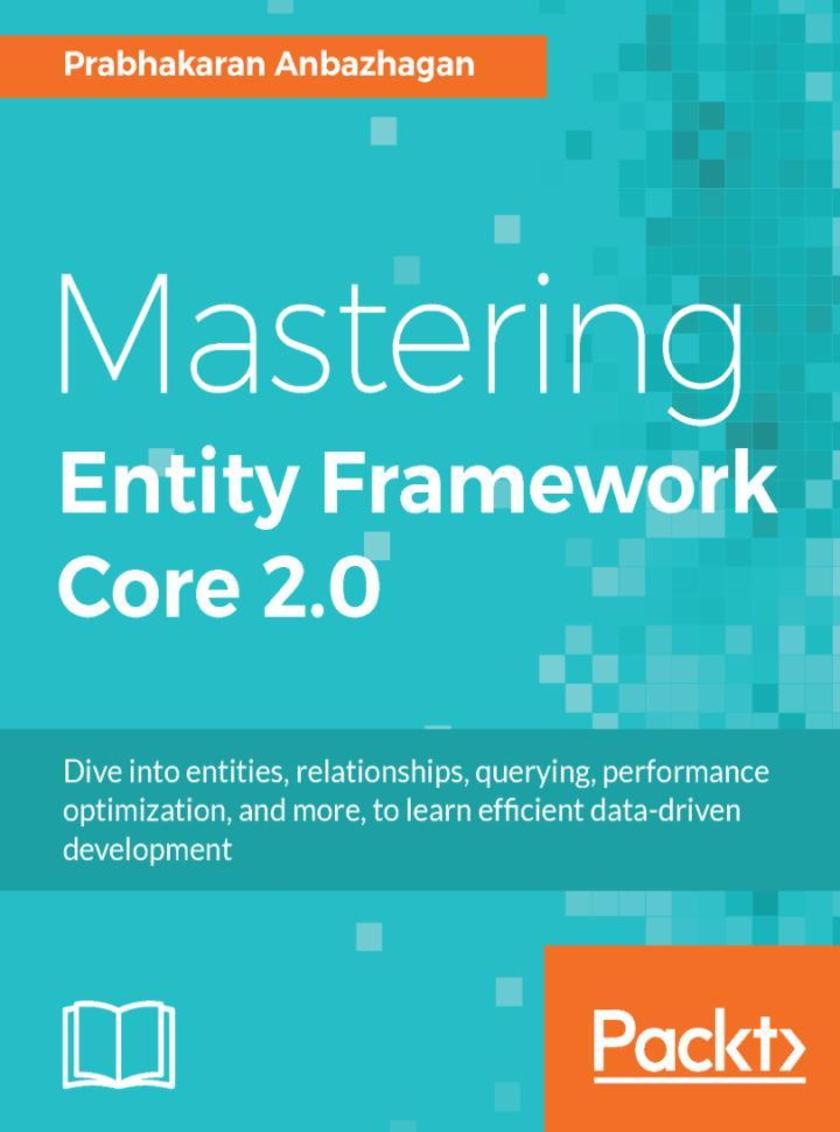
Mastering Entity Framework Core 2.0
¥90.46
Learn how to leverage the features of the new Entity Framework Core APIs and use them to build pure .NET Core applications. About This Book ? Learn how to effectively manage your database to make it more productive and maintainable. ? Write simplified queries using LINQ to acquire the desired data easily ? Raise the abstraction level from data to objects so teams can function independently, resulting in easily maintainable code Who This Book Is For This book is for .NET Core developers who would like to integrate EF Core in their application. Prior knowledge of .NET Core and C# is assumed. What You Will Learn ? Create databases and perform CRUD operations on them ? Understand and build relationships (related to entities, keys, and properties) ? Understand in-built, custom, and remote validation (both client and server side) ? You will learn to handle concurrency to build responsive applications ? You will handle transactions and multi-tenancy while also improving performance In Detail Being able to create and maintain data-oriented applications has become crucial in modern programming. This is why Microsoft came up with Entity Framework so architects can optimize storage requirements while also writing efficient and maintainable application code. This book is a comprehensive guide that will show how to utilize the power of the Entity Framework to build efficient .NET Core applications. It not only teaches all the fundamentals of Entity Framework Core but also demonstrates how to use it practically so you can implement it in your software development. The book is divided into three modules. The first module focuses on building entities and relationships. Here you will also learn about different mapping techniques, which will help you choose the one best suited to your application design. Once you have understood the fundamentals of the Entity Framework, you will move on to learn about validation and querying in the second module. It will also teach you how to execute raw SQL queries and extend the Entity Framework to leverage Query Objects using the Query Object Pattern. The final module of the book focuses on performance optimization and managing the security of your application. You will learn to implement failsafe mechanisms using concurrency tokens. The book also explores row-level security and multitenant databases in detail. By the end of the book, you will be proficient in implementing Entity Framework on your .NET Core applications. Style and approach This book is filled with various examples that will help you use Entity Framework Core 2.0 to write efficient software.
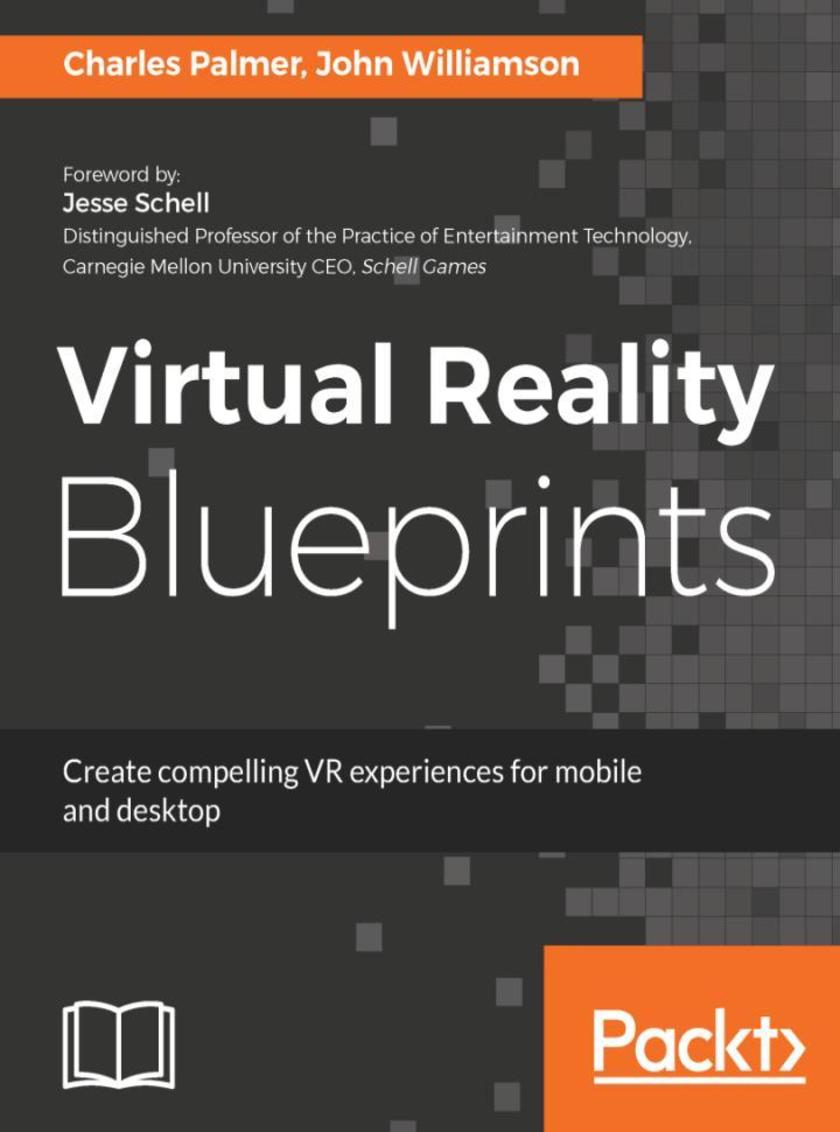
Virtual Reality Blueprints
¥73.02
Join the virtual reality revolution by creating immersive 3D games and applications with Cardboard VR, Gear VR, OculusVR, and HTC Vive About This Book ? Develop robust, immersive VR experiences that are easy on the eye. ? Code 3D games and applications using Unity 3D game engine. ? Learn the basic principles of virtual reality applications Who This Book Is For If you are a game developer and a VR enthusiast now looking to get stuck into the VR app development process by creating VR apps for different platforms, then this is the book for you. Familiarity with the Unity game engine and the C# language is key to getting the most from this book. What You Will Learn ? Use Unity assets to create object simulation. ? Implement simple touch controls in your application. ? Apply artificial intelligence to achieve player and character interaction. ? Add *s for movement, tracking, grasping, and spawning. ? Create animated walkthroughs, use 360-degree media, and build engaging VR experiences. ? Deploy your games on multiple VR platforms. In Detail Are you new to virtual reality? Do you want to create exciting interactive VR applications? There's no need to be daunted by the thought of creating interactive VR applications, it's much easier than you think with this hands-on, project-based guide that will take you through VR development essentials for desktop and mobile-based games and applications. Explore the three top platforms—Cardboard VR, Gear VR, and OculusVR —to design immersive experiences from scratch. You’ll start by understanding the science-fiction roots of virtual reality and then build your first VR experience using Cardboard VR. You'll then delve into user interactions in virtual space for the Google Cardboard then move on to creating a virtual gallery with Gear VR. Then you will learn all about virtual movements, state machines, and spawning while you shoot zombies in the Oculus Rift headset. Next, you'll construct a Carnival Midway, complete with two common games to entertain players. Along the way, you will explore the best practices for VR development, review game design tips, discuss methods for combating motion sickness and identify alternate uses for VR applications Style and approach A project-based guide with every project built across chapters.

The Romance Of The Greed Card
¥12.18
The Romance Of The Greed Card

Murder on the Golden Hind
¥6.95
Murder on the Golden Hind

Write an eBook in 30 Days or Less: Step by Step Tips to Focus, Motivate, and be
¥40.79
Write an eBook in 30 Days or Less: Step by Step Tips to Focus, Motivate, and be Creative

The Unstarving Musician's Guide to Getting Paid Gigs
¥81.67
The Unstarving Musician's Guide to Getting Paid Gigs
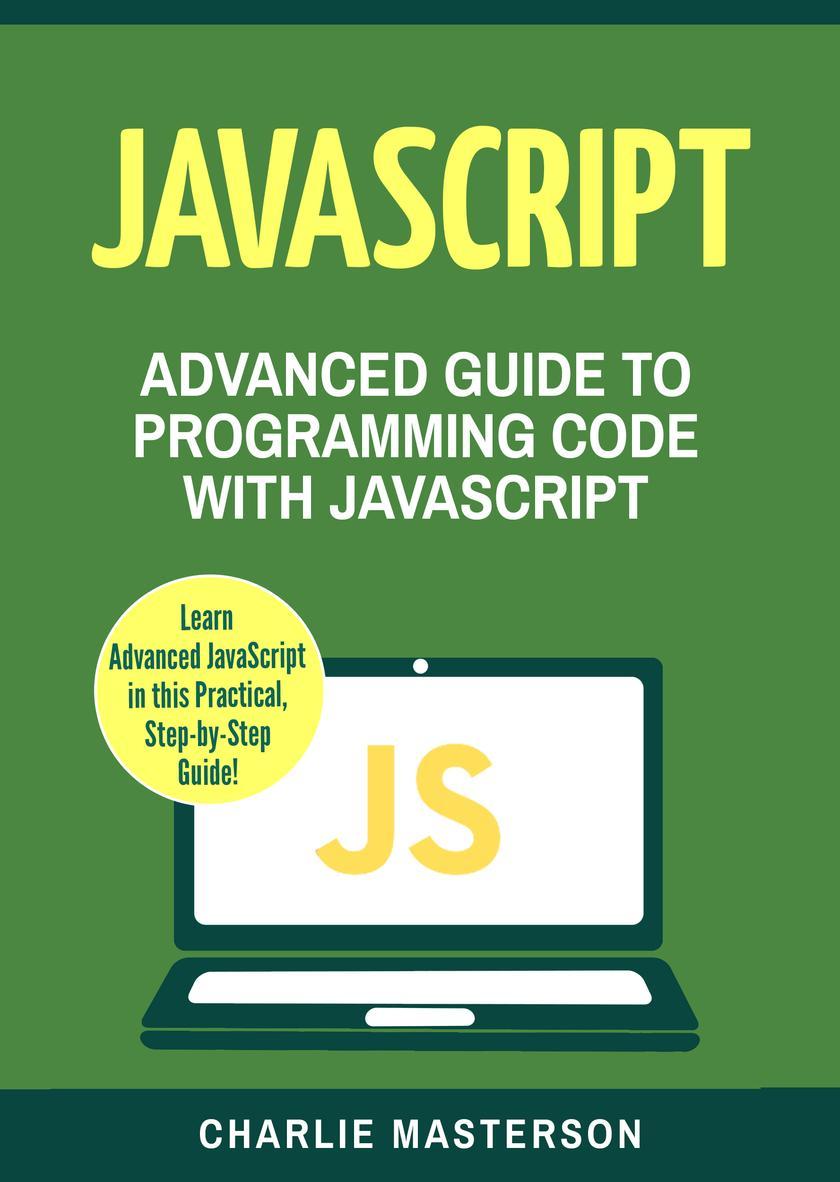
JavaScript: Advanced Guide to Programming Code with JavaScript
¥24.44
JavaScript: Advanced Guide to Programming Code with JavaScript

宮本武蔵 全巻完全版: Miyamoto Musashi
¥8.09
宮本武蔵 全巻完全版: Miyamoto Musashi

RV and Travel Trailer Preppers Long Term Survival Bug Out Skills Camping Guide
¥40.79
RV and Travel Trailer Preppers Long Term Survival Bug Out Skills Camping Guide

Toddler Potty Training: Incredibly Simple 2-Day Potty Training that Works
¥24.44
Toddler Potty Training: Incredibly Simple 2-Day Potty Training that Works


