


 购物车
购物车 个人中心
个人中心
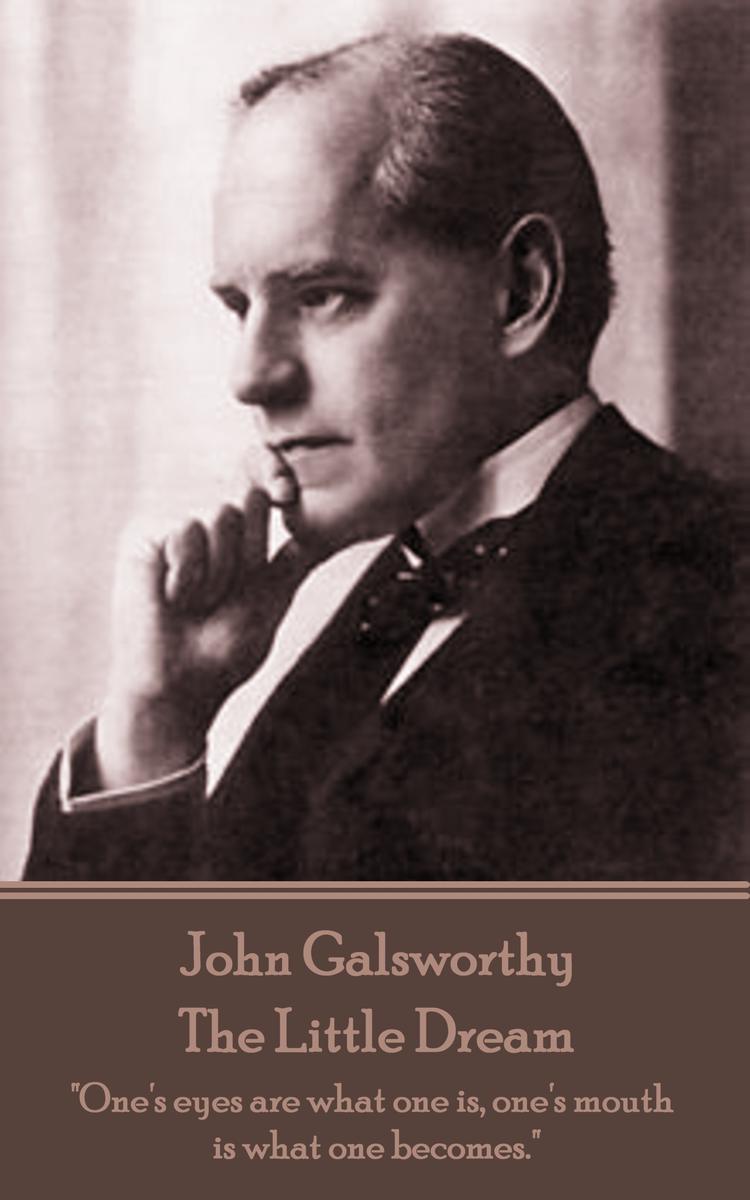
Little Dream - One's eyes are what one is, one's mouth is what one becomes.
¥14.03
John Galsworthy was born at Kingston Upon Thames in Surrey, England, on August 14th 1867 to a wealthy and well established family. His schooling was at Harrow and New College, Oxford before training as a barrister and being called to the bar in 1890. However, Law was not attractive to him and he travelled abroad becoming great friends with the novelist Joseph Conrad, then a first mate on a sailing ship. In 1895 Galsworthy began an affair with Ada Nemesis Pearson Cooper, the wife of his cousin Major Arthur Galsworthy. The affair was kept a secret for 10 years till she at last divorced and they married on 23rd September 1905. Galsworthy first published in 1897 with a collection of short stories entitled "e;The Four Winds"e;. For the next 7 years he published these and all works under his pen name John Sinjohn. It was only upon the death of his father and the publication of "e;The Island Pharisees"e; in 1904 that he published as John Galsworthy. His first play, The Silver Box in 1906 was a success and was followed by "e;The Man of Property"e; later that same year and was the first in the Forsyte trilogy. Whilst today he is far more well know as a Nobel Prize winning novelist then he was considered a playwright dealing with social issues and the class system. Here we publish Villa Rubein, a very fine story that captures Galsworthy's unique narrative and take on life of the time. He is now far better known for his novels, particularly The Forsyte Saga, his trilogy about the eponymous family of the same name. These books, as with many of his other works, deal with social class, upper-middle class lives in particular. Although always sympathetic to his characters, he reveals their insular, snobbish, and somewhat greedy attitudes and suffocating moral codes. He is now viewed as one of the first from the Edwardian era to challenge some of the ideals of society depicted in the literature of Victorian England. In his writings he campaigns for a variety of causes, including prison reform, women's rights, animal welfare, and the opposition of censorship as well as a recurring theme of an unhappy marriage from the women's side. During World War I he worked in a hospital in France as an orderly after being passed over for military service. He was appointed to the Order of Merit in 1929, after earlier turning down a knighthood, and awarded the Nobel Prize in 1932 though he was too ill to attend. John Galsworthy died from a brain tumour at his London home, Grove Lodge, Hampstead on January 31st 1933. In accordance with his will he was cremated at Woking with his ashes then being scattered over the South Downs from an aeroplane.
Earl of Essex - 'In hour malignant, to o'erturn the state''
¥14.03
Henry Jones was born at Beaulieu, near Drogheda, County Louth, Ireland in 1721. His working life began when he was apprenticed to a bricklayer. Jones, however, was keen to better himself and studied hard in his private time. He fashioned some complimentary verses, addressed to the corporation of Drogheda and together with some lines 'On Mr. Pope's Death', managed to attract the attention of Lord-chief-justice Singleton, who lived at Beaulieu.In 1745 he obtained employment at the parliament house at Dublin. Jones, used the position to promote his literary talents and celebrated the arrival of Lord Chesterfield as lord-lieutenant of Ireland in a poem that was then presented to Chesterfield by Singleton. Chesterfield asked Jones to accompany him on his return to London in 1748. There, he and his friends helped Jones to publish, by subscription, 'Poems on Several Occasions' in 1749, which delivered a handsome profit for the young poet. Jones is though more noted as a dramatist and that, primarily, is due to his tragedy, 'The Earl of Essex' which he completed in 1752. Chesterfield introduced both the play and Jones to Colley Cibber, the Poet Laureate, who then introduced Jones to the manager of Covent Garden Theatre. Cibber would later attempt to secure the laureateship for Jones after his own death.'The Earl of Essex', after being revised by Chesterfield and Cibber, was premiered at Covent Garden on 21st Feb. 1753, and played for seventeen sold-out nights. It was a triumph, and was equally well received in Dublin and then later in the provinces. It brought Jones over GBP500, a large sum even by today's standards. The play was printed soon after its production, and eventually sold through four editions.The success, unfortunately, was to be the ruin of Jones. His drunken habits, indolence, raw manners, and harshly arrogant temper appalled most of his patrons who soon withdrew their support. However, he seemed adept at keeping on good terms with Chesterfield for some years longer, but at length even he gave up on the relationship when Jones borrowed money from his servant. Jones did continue to write and had made progress on a tragedy entitled 'Harold,' and, on that thin security, managed to raise money as an advance from booksellers. He was rather more successful in his revelries with the acting profession. Jones continued to be on friendly terms with many of the leading actors although in his often drunk state he would harangue the more minor actors as 'parrots', but he repaid them with puffs and panegyrics. His charm and ease with a few lines were valuable commodities.Whenever he was an inmate of sponging-houses he contrived to flatter any bailiff's daughter or wife with verses on their beauty or talents, and, in the process, secured himself more comfortable quarters than he perhaps deserved. Henry Jones died in the parish workhouse in April 1770.After his death, Reddish, the actor of Drury Lane, acquired Jones's manuscripts, which included 'Harold' and three acts of an unfinished tragedy, 'The Cave of Idra.' This was completed by Paul Hiffernan, and re-titled 'The Heroine of the Cave,' was produced for Reddish's benefit on 25th March 1774.
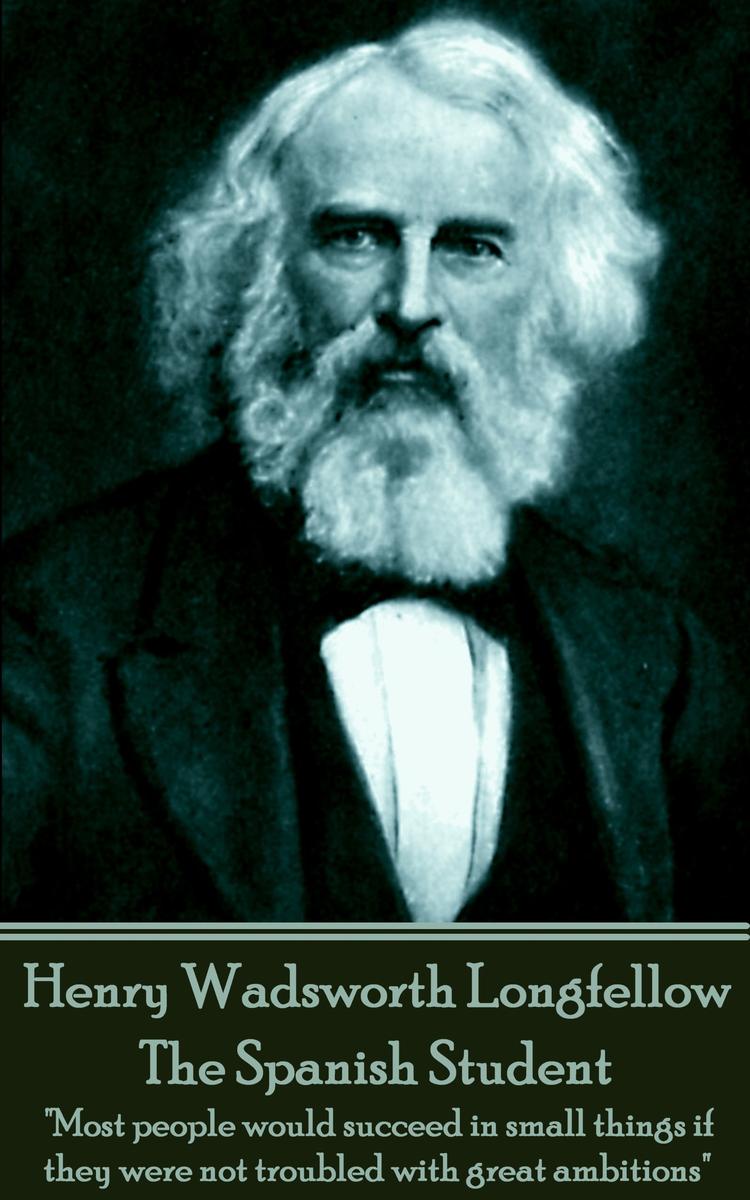
Spanish Student
¥17.56
Henry Wadsworth Longfellow was born on February 27th, 1807 in Portland, Maine. As a young boy, it was obvious that he was very studious and he quickly became fluent in Latin. He published his first poem, "e;The Battle of Lovell's Pond"e;, in the Portland Gazette on November 17th, 1820. He was already thinking of a career in literature and, in his senior year, wrote to his father: "e;I will not disguise it in the least... the fact is, I most eagerly aspire after future eminence in literature, my whole soul burns most ardently after it, and every earthly thought centers in it...."e; After graduation travels in Europe occupied the next three years and he seemed to easily absorb any language he set himself to learn. On September 14th, 1831, Longfellow married Mary Storer Potter. They settled in Brunswick. His first published book was in 1833, a translation of poems by the Spanish poet Jorge Manrique. He also published a travel book, Outre-Mer: A Pilgrimage Beyond the Sea. During a trip to Europe Mary became pregnant. Sadly, in October 1835, she miscarried at some six months. After weeks of illness she died, at the age of 22 on November 29th, 1835. Longfellow wrote "e;One thought occupies me night and day... She is dead - She is dead! All day I am weary and sad"e;. In late 1839, Longfellow published Hyperion, a book in prose inspired by his trips abroad. Ballads and Other Poems was published in 1841 and included "e;The Village Blacksmith"e; and "e;The Wreck of the Hesperus"e;. His reputation as a poet, and a commercial one at that, was set. On May 10th, 1843, after seven years in pursuit of a chance for new love, Longfellow received word from Fanny Appleton that she agreed to marry him. On November 1st, 1847, the epic poem Evangeline was published. In 1854, Longfellow retired from Harvard, to devote himself entirely to writing. The Song of Haiwatha, perhaps his best known and enjoyed work was published in 1855. On July 10th, 1861, after suffering horrific burns the previous day. In his attempts to save her Longfellow had also been badly burned and was unable to attend her funeral. He spent several years translating Dante Alighieri's Divine Comedy. It was published in 1867. Longfellow was also part of a group who became known as The Fireside Poets which also included William Cullen Bryant, John Greenleaf Whittier, James Russell Lowell, and Oliver Wendell Holmes Snr. Longfellow was the most popular poet of his day. As a friend once wrote to him, "e;no other poet was so fully recognized in his lifetime"e;. Some of his works including "e;Paul Revere's Ride"e; and "e;The Song of Haiwatha"e; may have rewritten the facts but became essential parts of the American psyche and culture. Henry Wadsworth Longfellow died, surrounded by family, on Friday, March 24th, 1882. He had been suffering from peritonitis.
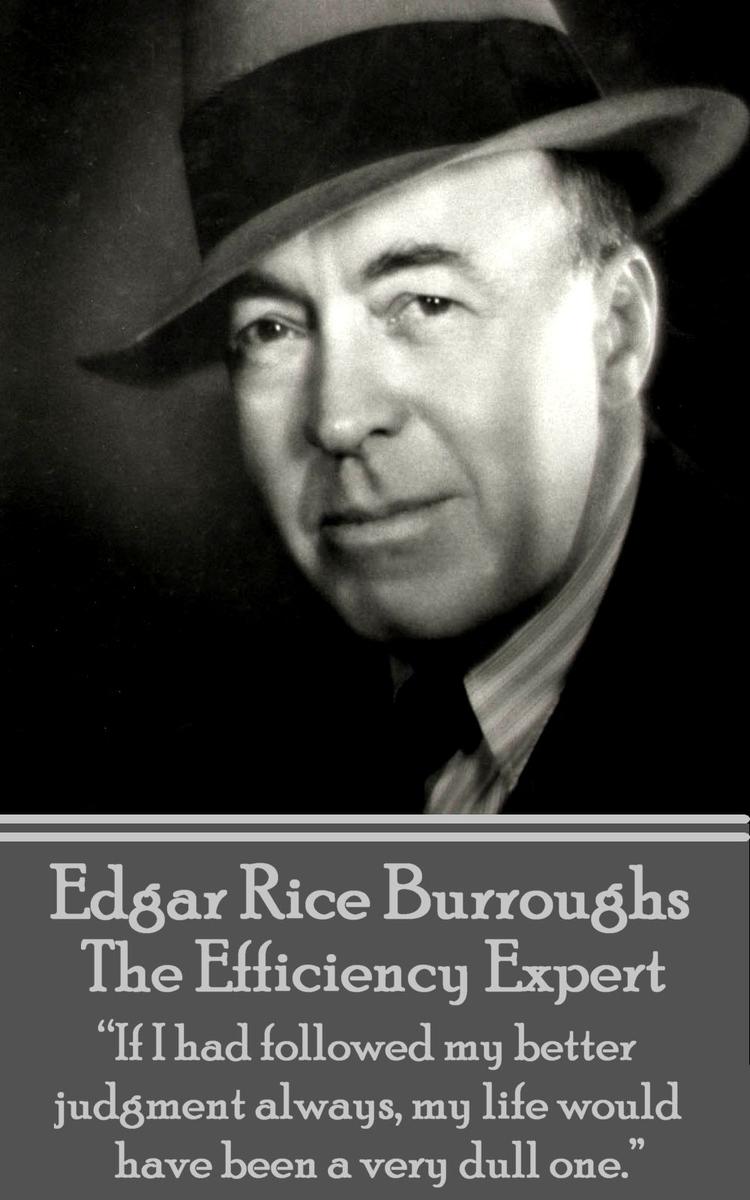
Efficiency Expert - If I had followed my better judgment always
¥35.22
Edgar Rice Burroughs was born on September 1, 1875, in Chicago, Illinois. His early career was unremarkable. After failing to enter West Point he enlisted in the 7th Calvary but was discharged after heart problems were diagnosed. A series of short term jobs gave no indication as to a career path but finally, in 1911, married and with two young children, he turned his hand to writing. He aimed his works squarely at the very popular pulp serial magazines. His first effort 'Under The Moons Of Mars' ran in Munsey's Magazine in 1912 under the pseudonym Norman Bean. With its success he began writing full time. A continuing theme of his work was to develop series so that each character had ample opportunities to return in sequels. John Carter was in the Mars series and there was another on Venus and one on Pellucidar among others. But perhaps the best known is Tarzan. Indeed Burroughs wanted so much to capitalise upon the brand that he introduced a syndicated Tarzan comic strip, movies and merchandise. He purchased a large ranch north of Los Angeles, California, which he named "e;Tarzana."e; The surrounding communities outside the ranch voted in 1927 to adopt the name as their own. By 1932 Burroughs set up his own company to print his own books. Here we publish 'The Efficiency Expert' somewhat different to what the title might suggest in the hands of an ordinary writer but in the hands of Edgar Rice Burroughs the title is just the beginning.....

Girl From Hollywood
¥35.22
Edgar Rice Burroughs was born on September 1, 1875, in Chicago, Illinois. His early career was unremarkable. After failing to enter West Point he enlisted in the 7th Calvary but was discharged after heart problems were diagnosed. A series of short term jobs gave no indication as to a career path but finally, in 1911, married and with two young children, he turned his hand to writing. He aimed his works squarely at the very popular pulp serial magazines. His first effort 'Under The Moons Of Mars' ran in Munsey's Magazine in 1912 under the pseudonym Norman Bean. With its success he began writing full time. A continuing theme of his work was to develop series so that each character had ample opportunities to return in sequels. John Carter was in the Mars series and there was another on Venus and one on Pellucidar among others. But perhaps the best known is Tarzan. Indeed Burroughs wanted so much to capitalise upon the brand that he introduced a syndicated Tarzan comic strip, movies and merchandise. He purchased a large ranch north of Los Angeles, California, which he named "e;Tarzana."e; The surrounding communities outside the ranch voted in 1927 to adopt the name as their own. By 1932 Burroughs set up his own company to print his own books. Here we publish 'The Girl From Hollywood' a gentle title that in the hands of an ordinary writer might be just so but in the hands of Edgar Rice Burroughs the title is just the beginning.....
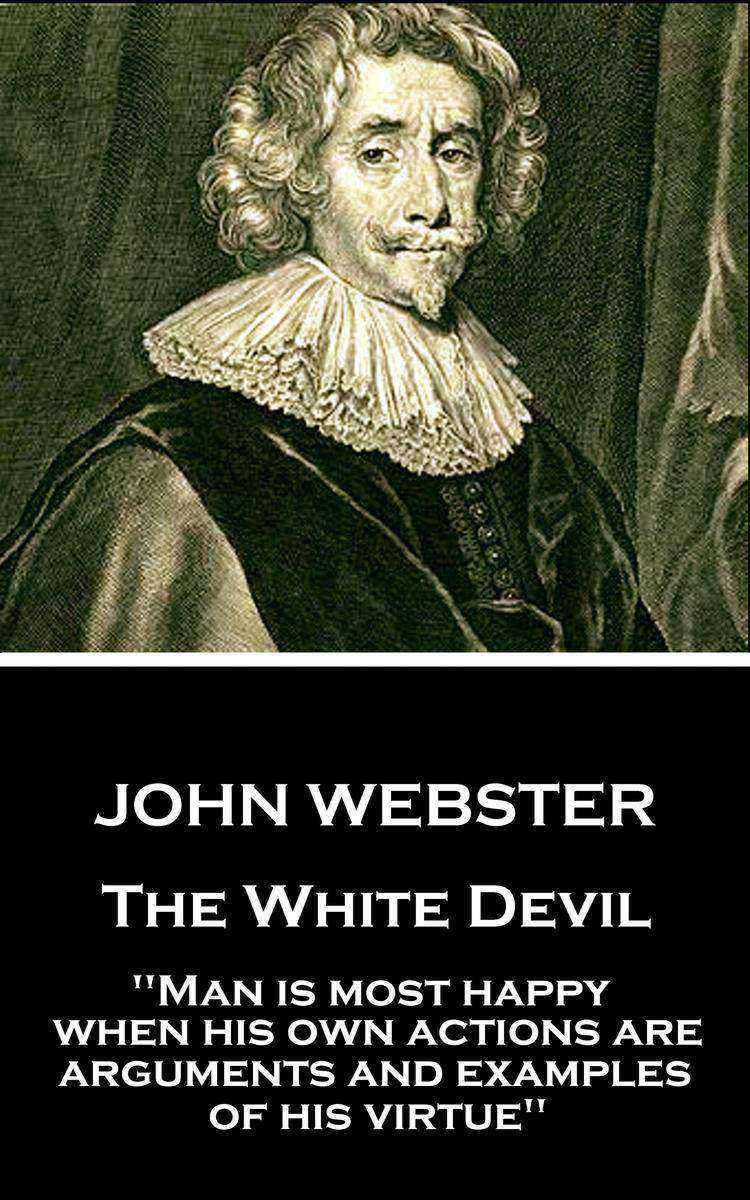
White Devil - Man is most happy, when his own actions are arguments and examples
¥25.80
John Webster is known primarily for his two Jacobean tragedies, The Duchess of Malfi and The White Devil. Much of the detail and chronology of his life that led to these two pivotal works is, however, unknown. His father, a carriage maker also named John Webster, married a blacksmith's daughter, Elizabeth Coates, on November 4th, 1577, and it is likely that Webster was born within a year or two in or near London. The family lived in St. Sepulchre's parish. Both his father and his uncle, Edward Webster, were Freemen of the Merchant Taylors' Company and Webster attended Merchant Taylors' School in Suffolk Lane, London. Some accounts say he began to study law but nothing is certain although there are some legal aspects to his later works to suggest this may have been so. By 1602, Webster was employed working as part of various teams of playwrights on history plays, though unfortunately most were never printed and therefore do not survive. These include a tragedy Caesar's Fall (written with Michael Drayton, Thomas Dekker, Thomas Middleton and Anthony Munday), and a collaboration with Thomas Dekker; Christmas Comes but Once a Year (1602). This factory line assembly of plays may seem rather odd to us today but plays then ran for much shorter durations and consequently a steady supply had to be assured. Webster's relationship with Dekker seems to have been a good one. Together they wrote Sir Thomas Wyatt, printed in 1607, although it is thought first performed in 1602 and two city comedies, Westward Ho! in 1604 and Northward Ho! in 1605. It seems Webster also adapted, in 1604, John Marston's The Malcontent for staging by the King's Men. On March 18th, 1606 Webster married the 17-year-old Sara Peniall at St Mary's Church, Islington. Sara was 7 months pregnant and marrying during Lent required the issuing of a special permit, hence the certainty of the date. Their first child, John, was baptised at the parish of St Dunstan-in-the-West on March 8th, 1606. Records show that on the death of a neighbour, who died in 1617, several bequests were made to the Webster family and it is therefore thought that other children were born to the couple. Despite his ability to write comedy, and to collaborate with others, Webster is remembered best for his sole authorship on two brooding English tragedies based on Italian sources. The White Devil, retells the intrigues involving Vittoria Accoramboni, an Italian woman assassinated at the age of 28. It was performed at the open-air Red Bull Theatre in 1612 but was unsuccessful, perhaps being too high brow for a working-class audience. In 1614 The Duchess of Malfi was first performed by the King's Men, most probably in the indoor Blackfriars Theatre and to a more high-brow audience. It proved to be more successful. The play Guise, based on French history, was also written but him but no text has survived. Webster wrote one more play on his own: The Devil's Law Case (c. 1617-1619), a tragicomedy. He continued to write thereafter but always in collaboration and usually city comedies; Anything for a Quiet Life (c. 1621), with Thomas Middleton, and A Cure for a Cuckold (c. 1624), with William Rowley. In 1624, he also co-wrote a topical play about a recent scandal, Keep the Widow Waking (with John Ford, Rowley and Dekker). The play itself is lost, although its plot is known from a court case. There is also some certainty that he contributed to the tragicomedy The Fair Maid of the Inn with John Fletcher, John Ford, and Phillip Massinger. His Appius and Virginia, was probably written with Thomas Heywood, and is of uncertain date. It is believed, mainly from Thomas Heywood's Hierarchie of the Blessed Angels (licensed 7 November 1634) that speaks of him in the past tense that John Webster had died at some point in that year of 1634.

Machine - Fascism is capitalism plus murder.
¥26.98
Upton Sinclair (1878-1968) was a prolific American novelist and a political activist. Apart from his bestselling novels, which told in black and white, illuminated the realities of the United States at the turn of the twentieth century, he is remembered today for championing socialist causes that were naturally unpopular in conservative America. In classics like 'The Jungle' his work had considerable effects on American politics and legislation. Sinclair's socialist ideals and dreams found their way to his fiction as he believed that no art can be practiced for art's sake as long as humanity still suffers from persistent dangers and evils. Such orientations have often subjected Sinclair to harsh criticism and even to demonization from numerous critics and politicians of his time, the most distinguished among which was probably President Theodore Roosevelt. However his legacy is that of a successful and established novelist and activist who if not always righting the balance was able to bring an incisive mind and mass exposure to many areas and industries.
Tempest
¥17.56
William Shakespeare was born in Stratford-upon-Avon in late April 1565 and baptised there on 26th April. He was one of eight children. Little is known about his life but what is evident is the enormous contribution he has made to world literature. His writing was progressive, magnificent in scope and breathtaking in execution. His plays and sonnets helped enable the English language to speak with a voice unmatched by any other. William Shakespeare died on April 23rd 1616, survived by his wife and two daughters. He was buried two days after his death in the chancel of the Holy Trinity Church. The epitaph on the slab which covers his grave includes the following passage, Good friend, for Jesus's sake forbear, To dig the dust enclosed here. Blessed me the man that spares these stones, And cursed be he that moves my bones. Here we publish his comedy from 1611 'The Tempest'.
Taming of the Shrew - The poorest service is repaid with thanks.
¥11.67
The life of William Shakespeare, arguably the most significant figure in the Western literary canon, is relatively unknown. Shakespeare was born in Stratford-upon-Avon in 1565, possibly on the 23rd April, St. George's Day, and baptised there on 26th April. Little is known of his education and the first firm facts to his life relate to his marriage, aged 18, to Anne Hathaway, who was 26 and from the nearby village of Shottery. Anne gave birth to their first son six months later. Shakespeare's first play, The Comedy of Errors began a procession of real heavyweights that were to emanate from his pen in a career of just over twenty years in which 37 plays were written and his reputation forever established. This early skill was recognised by many and by 1594 the Lord Chamberlain's Men were performing his works. With the advantage of Shakespeare's progressive writing they rapidly became London's leading company of players, affording him more exposure and, following the death of Queen Elizabeth in 1603, a royal patent by the new king, James I, at which point they changed their name to the King's Men. By 1598, and despite efforts to pirate his work, Shakespeare's name was well known and had become a selling point in its own right on title pages. No plays are attributed to Shakespeare after 1613, and the last few plays he wrote before this time were in collaboration with other writers, one of whom is likely to be John Fletcher who succeeded him as the house playwright for the King's Men. William Shakespeare died two months later on April 23rd, 1616, survived by his wife, two daughters and a legacy of writing that none have since yet eclipsed.
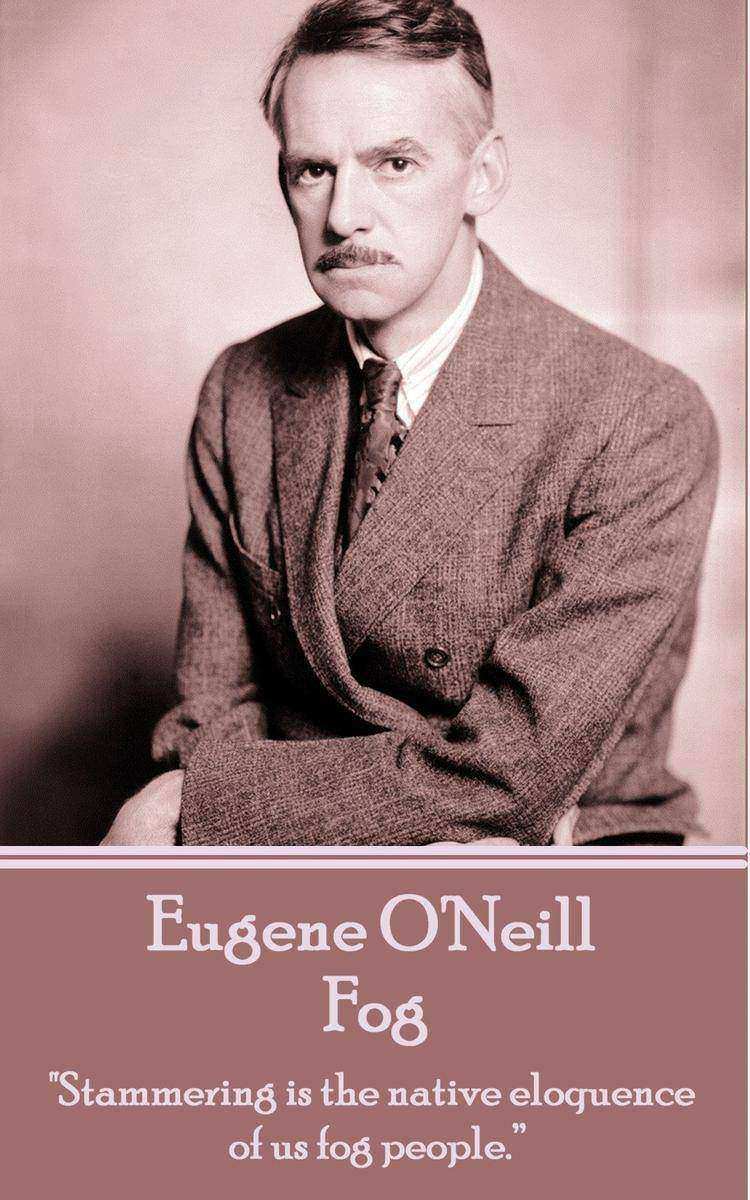
Fog - Stammering is the native eloquence of us fog people.
¥14.03
Eugene Gladstone O'Neill was born on October 16, 1888 in a hotel bedroom in what is now Times Square, New York. Much of his childhood was spent in the comfort of books at boarding schools whilst his actor father was on the road and his Mother contended with her own demons. He spent only a year at University - Princeton - and various reasons have been given for his departure. However whatever his background and education denied or added to his development it is agreed amongst all that he was a playwright of the first rank and possibly America's greatest. His introduction of realism into American drama was instrumental in its development and paved a path for many talents thereafter. Of course his winning of both the Pulitzer Prize (4 times) and the Nobel Prize are indicative of his status. His more famous and later works do side with the disillusionment and personal tragedy of those on the fringes of society but continue to build upon ideas and structures he incorporated in his early one act plays. Eugene O'Neill suffered from various health problems, mainly depression and alcoholism. In the last decade he also faced a Parkinson's like tremor in his hands which made writing increasingly difficult. But out of such difficulties came plays of the calibre of The Iceman Cometh, Long Day's Journey Into Night, and A Moon for the Misbegotten. Eugene O'Neill died in Room 401 of the Sheraton Hotel on Bay State Road in Boston, on November 27, 1953, at the age of 65. As he was dying, he whispered his last words: "e;I knew it. I knew it. Born in a hotel room and died in a hotel room."e;
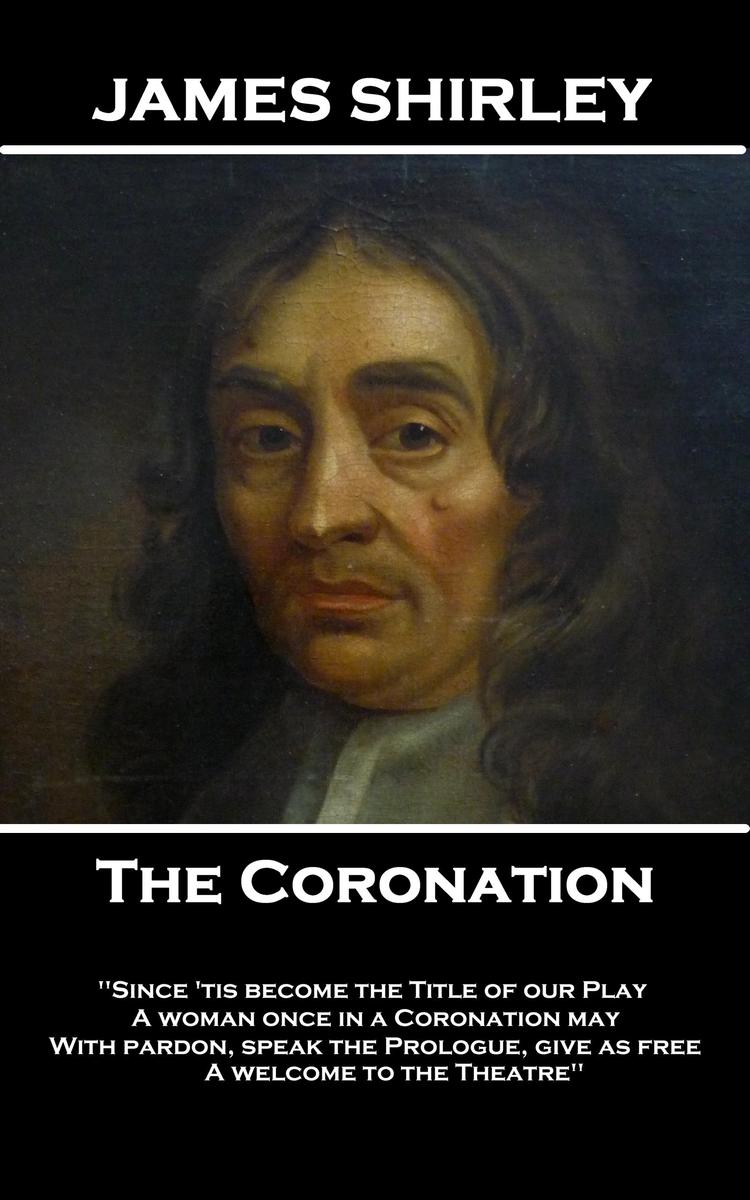
Coronation - What wind brought thee hither?
¥23.45
James Shirley was born in London in September 1596.His education was through a collection of England's finest establishments: Merchant Taylors' School, London, St John's College, Oxford, and St Catharine's College, Cambridge, where he took his B.A. degree in approximately 1618.He first published in 1618, a poem entitled Echo, or the Unfortunate Lovers.As with many artists of this period full details of his life and career are not recorded.He wrote his first play, Love Tricks, or the School of Complement, which was licensed on February 10th, 1625.For the next two decades, he would write prolifically and with great quality, across a spectrum of thirty plays; through tragedies and comedies to tragicomedies as well as several books of poetry. Unfortunately, his talents were left to wither when Parliament passed the Puritan edict in 1642, forbidding all stage plays and closing the theatres.His death, at age seventy, along with that of his wife, in 1666, is described as one of fright and exposure due to the Great Fire of London which had raged through parts of London from September 2nd to the 5th.He was buried at St Giles in the Fields, in London, on October 29th, 1666.
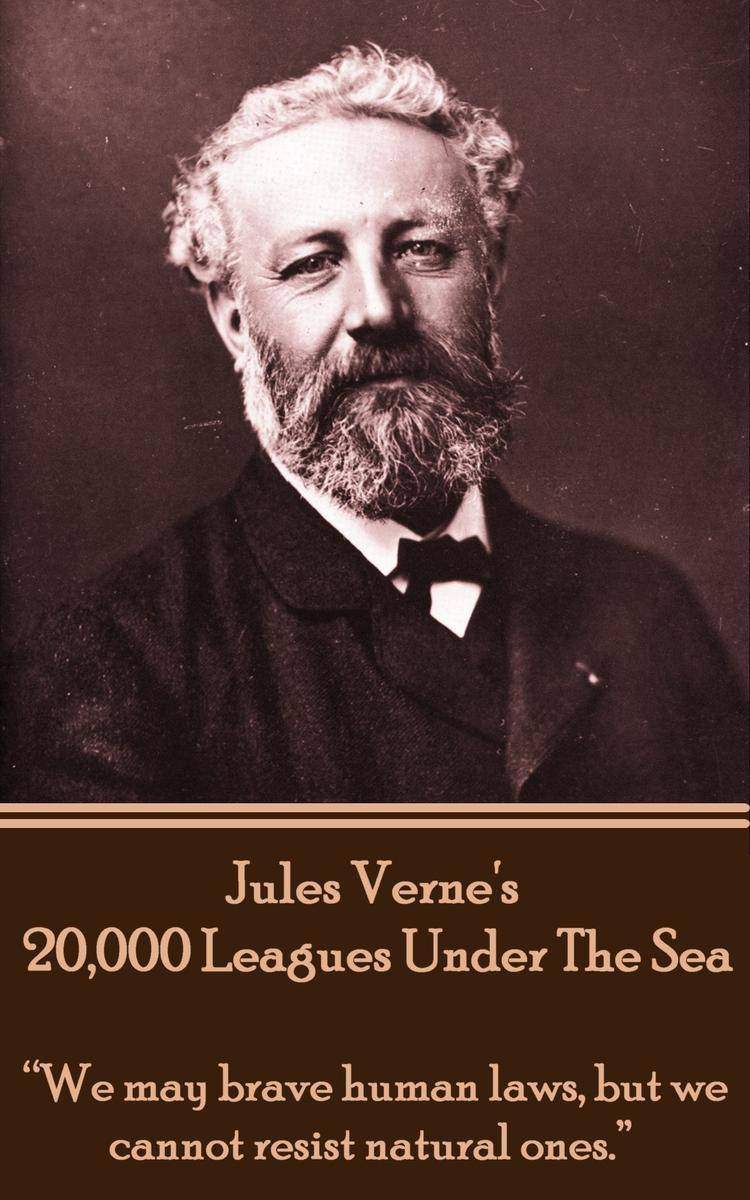
20,000 Leagues Under the Sea - We may brave human laws, but we cannot resist nat
¥23.45
Jules Verne is probably the world's first science-fiction novelist. His Twenty Thousand Leagues Under the Sea (1870) centers around a sea monster that keeps on menacing and damaging ships and ocean liners in the Atlantic and Pacific oceans. When the US government eventually decides to destroy the monster, a group of whaling and marine biology experts from different nationalities led by Professor Arronax are invited to join the American ship Abraham Lincoln and engage in an expedition around the South American continent to search for the weird creature. After losing their first battle, the crew discover, to their surprise, that the supposed monster is rather a large metal body that travels under the water. They are soon abducted and brought inside the vessel to meet its eccentric commander Captain Nemo. The submarine's new passengers learn that Captain Nemo has built the vessel to isolate himself from world governments and to spend his lifetime exploring new worlds and conducting scientific research. Captain Nemo's treatment of his visitors is generally respectful and kind except for his radical rejection of their pleas to leave the submarine and go back home. By the end of the story, the submarine is attacked by another ship sent by Captain Nemo's enemies. Captain Nemo decides to destroy the attacking ship and to send it to the bowels of the ocean. The novel ends when the submarine encounters a very strong whirlpool named "e;Maelstrom,"e; allowing Professor Arronax to flee with the rest of his crew while the fate of Captain Nemo and his creation remains unknown.
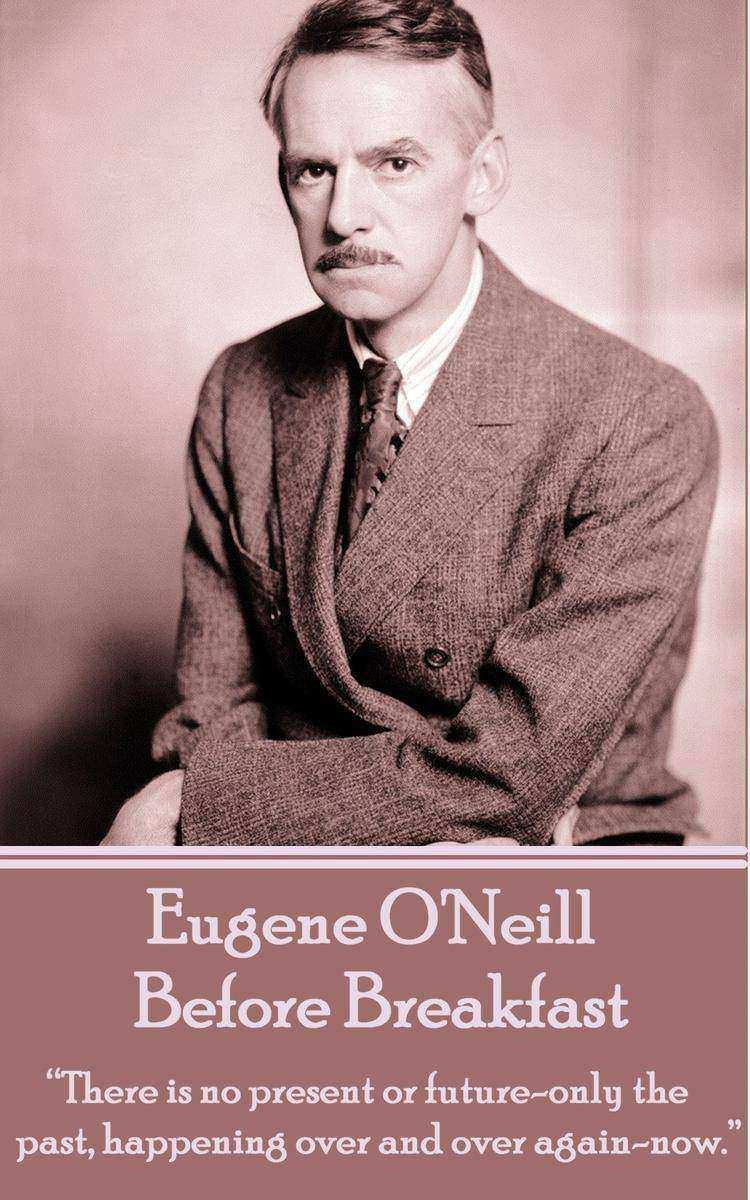
Before Breakfast - There is no present or future-only the past, happening over a
¥23.45
Eugene Gladstone O'Neill was born on October 16, 1888 in a hotel bedroom in what is now Times Square, New York. Much of his childhood was spent in the comfort of books at boarding schools whilst his actor father was on the road and his Mother contended with her own demons. He spent only a year at University - Princeton - and various reasons have been given for his departure. However whatever his background and education denied or added to his development it is agreed amongst all that he was a playwright of the first rank and possibly America's greatest. His introduction of realism into American drama was instrumental in its development and paved a path for many talents thereafter. Of course his winning of both the Pulitzer Prize (4 times) and the Nobel Prize are indicative of his status. His more famous and later works do side with the disillusionment and personal tragedy of those on the fringes of society but continue to build upon ideas and structures he incorporated in his early one act plays. Eugene O'Neill suffered from various health problems, mainly depression and alcoholism. In the last decade he also faced a Parkinson's like tremor in his hands which made writing increasingly difficult. But out of such difficulties came plays of the calibre of The Iceman Cometh, Long Day's Journey Into Night, and A Moon for the Misbegotten. Eugene O'Neill died in Room 401 of the Sheraton Hotel on Bay State Road in Boston, on November 27, 1953, at the age of 65. As he was dying, he whispered his last words: "e;I knew it. I knew it. Born in a hotel room and died in a hotel room."e;
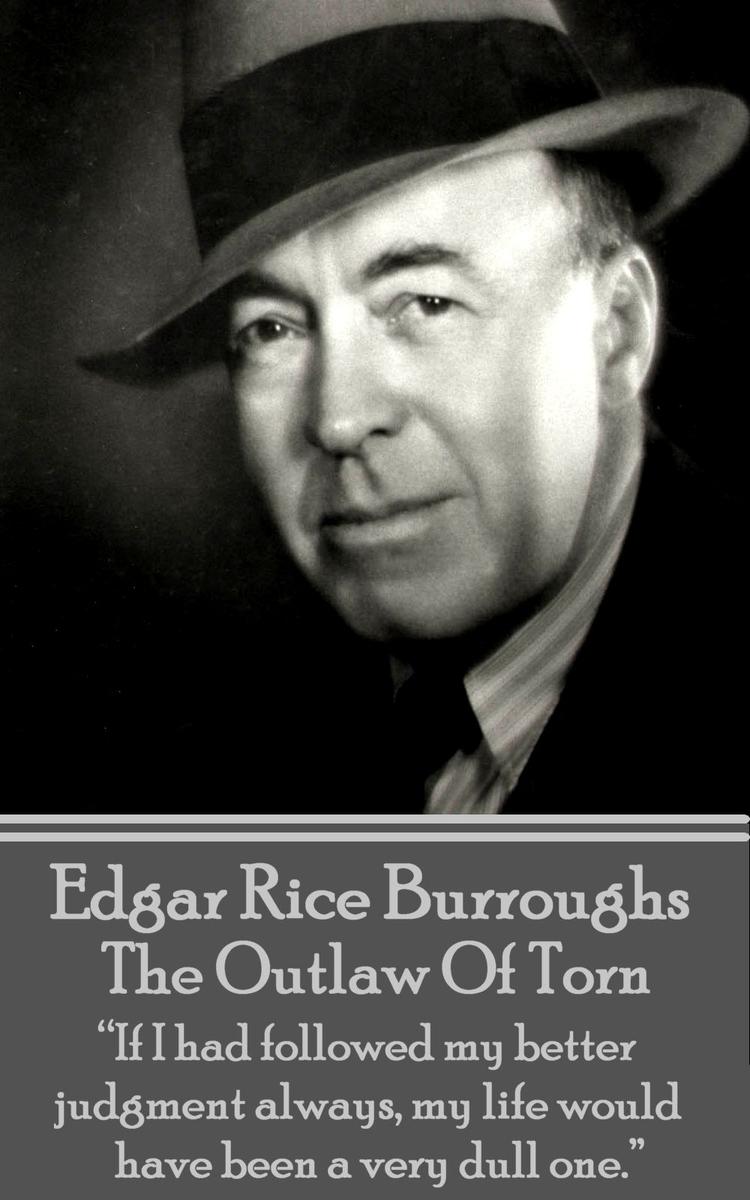
Outlaw Of Torn - If I had followed my better judgment always
¥35.22
Edgar Rice Burroughs was born on September 1, 1875, in Chicago, Illinois. His early career was unremarkable. After failing to enter West Point he enlisted in the 7th Calvary but was discharged after heart problems were diagnosed. A series of short term jobs gave no indication as to a career path but finally, in 1911, married and with two young children, he turned his hand to writing. He aimed his works squarely at the very popular pulp serial magazines. His first effort 'Under The Moons Of Mars' ran in Munsey's Magazine in 1912 under the pseudonym Norman Bean. With its success he began writing full time. A continuing theme of his work was to develop series so that each character had ample opportunities to return in sequels. John Carter was in the Mars series and there was another on Venus and one on Pellucidar among others. But perhaps the best known is Tarzan. Indeed Burroughs wanted so much to capitalise upon the brand that he introduced a syndicated Tarzan comic strip, movies and merchandise. He purchased a large ranch north of Los Angeles, California, which he named "e;Tarzana."e; The surrounding communities outside the ranch voted in 1927 to adopt the name as their own. By 1932 Burroughs set up his own company to print his own books. Here we publish 'The Outlaw Of Torn' somewhat different to what the title might suggest in the hands of an ordinary writer but in the hands of Edgar Rice Burroughs the title is just the beginning.....
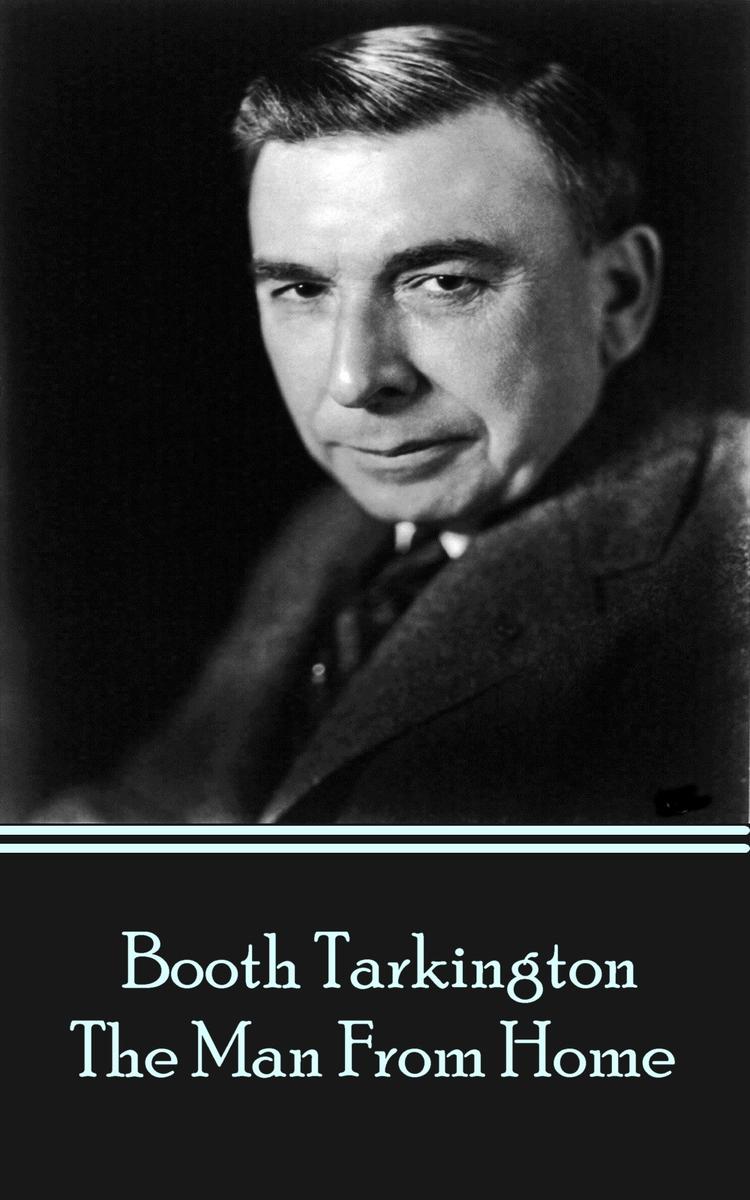
Man From Home
¥29.33
Booth Tarkington was born on July 29, 1869 in Indianapolis, Indiana. He is one of only three novelists to win the Pulitzer Prize more than once. When you look through the quality of his work it is easy to understand why. The Magnificent Ambersons, Alice Adams, Penrod, Penrod And Sam - all classics. The Penrod novels depict a typical upper-middle class American boy of 1910 vintage, revealing a fine, bookish sense of American humor. At one time, his Penrod series was as well known andregarded as Twain's Huckleberry Finn. Much of Tarkington's work consists of satirical and closely observed studies of the American class system and its foibles. Coming as he did from a patrician Midwestern family that lost much of its wealth after the Panic of 1873 the foundations for that outlook are clear. Today, he is best known for his novel The Magnificent Ambersons which contrasted the decline of the "e;old money"e; Amberson dynasty with the rise of "e;new money"e; industrial tycoons in the years between the American Civil War and World War I. In this volume you have an opportunity to read one his plays, The Man From Home.
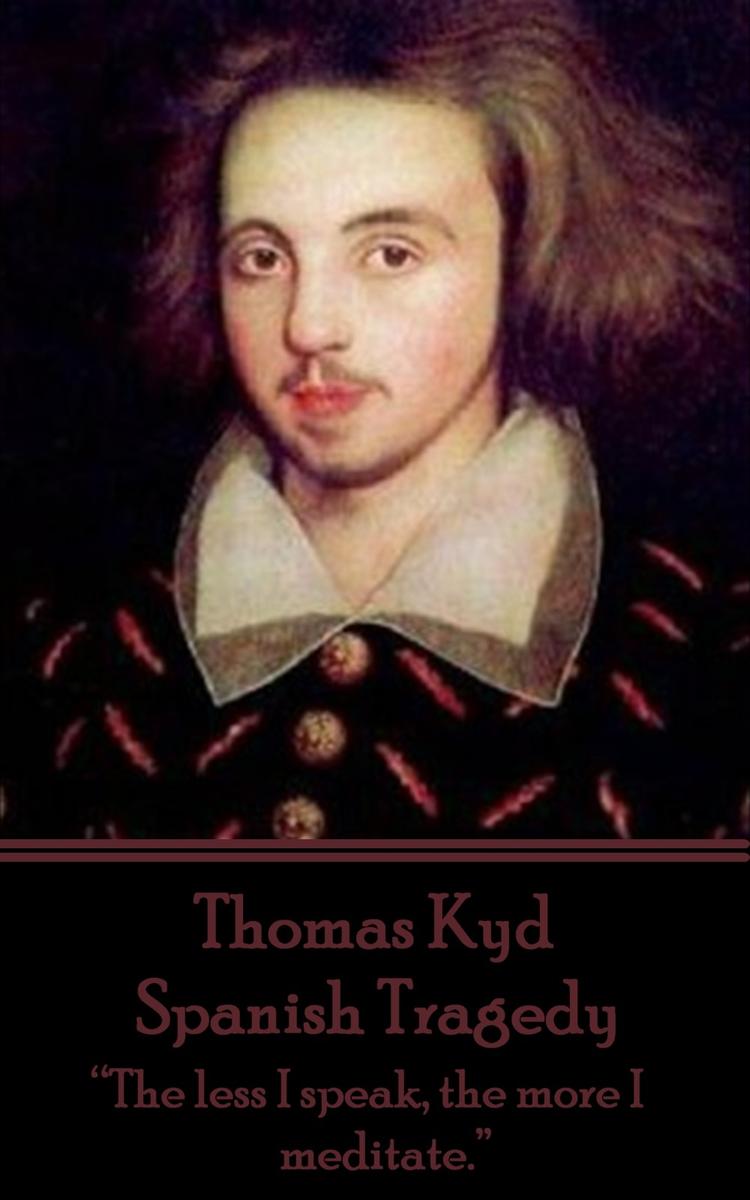
Spanish Tragedy - The less I speak, the more I meditate.
¥21.09
Thomas Kyd was born in 1558 and is most noted as a pivotal figure in the development of Elizabethan drama. In his own time he was highly praised but fell into obscurity until re-discovery in the late 1700's. his most famous work is The Spanish Tragedy, or Hieronimo is Mad Again, a tragedy written between 1582 and 1592 and established the then new genre of the revenge play. With the use of several violent murders and a structure of a play-within-a-play and a ghost intent on vengeance Kyd took drama in new directions that remain with us today. Thomas Kyd died in August 1594.
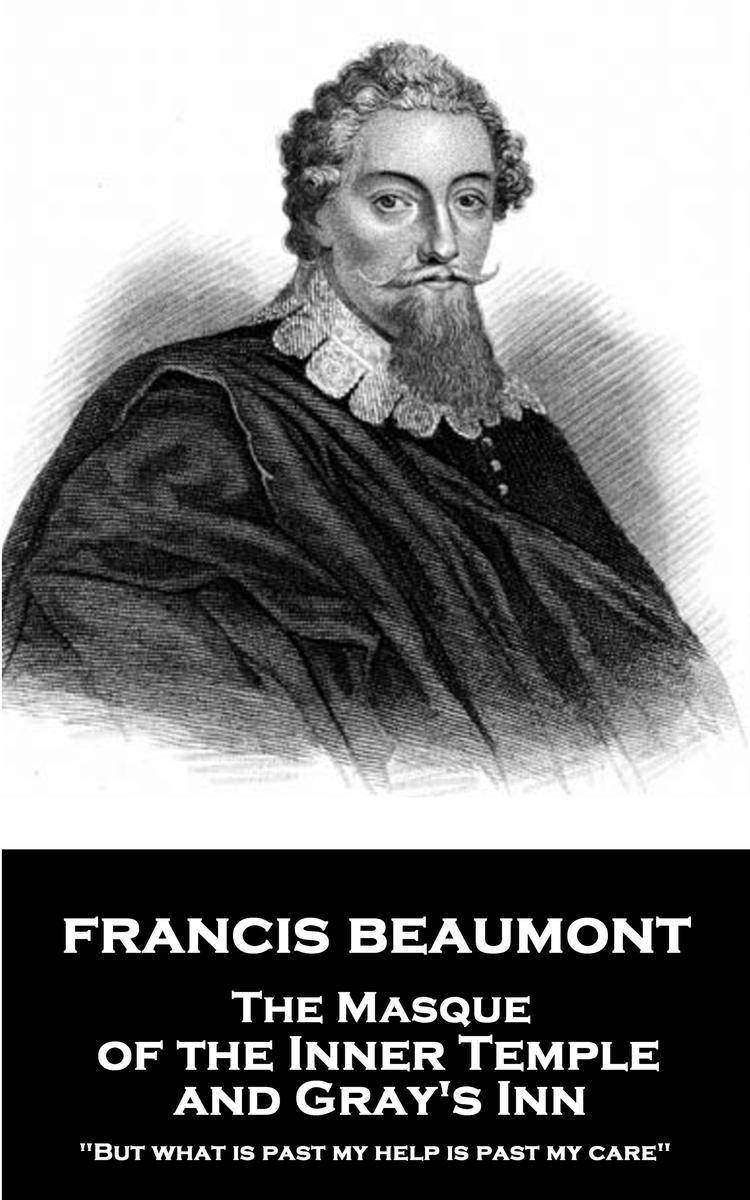
Masque of the Gentlemen of Grays-Inne & the Inner-Temple - But what is past my h
¥15.21
Francis Beaumont was born in 1584 near the small Leicestershire village of Thringstone. Unfortunately precise records of much of his short life do not exist.The first date we can give for his education is at age 13 when he begins at Broadgates Hall (now Pembroke College, Oxford). Sadly, his father died the following year, 1598. Beaumont left university without a degree and entered the Inner Temple in London in 1600. A career choice of Law taken previously by his father.The information to hand is confident that Beaumont's career in law was short-lived. He was quickly attracted to the theatre and soon became first an admirer and then a student of poet and playwright Ben Jonson. Jonson at this time was a cultural behemoth; very talented and a life full of volatility that included frequent brushes with the authorities.Beaumont's first work was Salmacis and Hermaphroditus, it debuted in 1602.By 1605, Beaumont had written commendatory verses to Volpone one of Ben Jonson's masterpieces.His solo playwriting career was limited. Apart from his poetry there were only two; The Knight of the Burning Pestle was first performed by the Children of the Blackfriars company in 1607. The audience however was distinctly unimpressed.The Masque of the Gentlemen of Grays-Inne and the Inner-Temple was written for part of the wedding festivities for the Princess Elizabeth, daughter of King James I and Frederick V, Elector Palatine. It was performed on 20 February 1613 in the Banqueting House at Whitehall Palace.By that point his collaboration with John Fletcher, which was to cover approximately 15 plays together with further works later revised by Philip Massinger, was about to end after his stroke and death later that year.That collaboration is seen as one of the most significant and fruitful of the English theatre.
Electra - Trust dies but mistrust blossoms
¥11.67
The village of Colonus, near Athens, was, in the year 495 BC, the birthplace of Sophocles. Sophocles place in Greek Tragedy is assured. His birth places him between the two other giants of Greek tragedy; schylus and Euripides. He was 30 years younger than schylus, the reigning master of drama and was fifteen years older than Euripides, who would, in turn, usurp Sophocles. Sophocles was a handsome and agile youth and selected, at the age of sixteen, to lead with dance and lyre the chorus which celebrated the triumph of Athens and its Allies over Persia at the battle at Salamis. Sophocles career as a dramatist was marked by a victory in competition with schylus, under exceptional circumstances. At the time the remains of the hero Theseus were being removed by Cimon from the isle of Scyros to Athens and, at the same time, a contest involving the two dramatists was being held. schylus was lauded at the time as the supreme dramatist but Sophocles was popular if inexperienced. The first prize was awarded to Sophocles, greatly to the disgust of the veteran schylus, who taking umbrage, soon afterward departed for Sicily. By all accounts Sophocles would now write and exhibit tragedies and satyric dramas for the next sixty years. The canon of his work varies to between 120 and 180 plays, naturally a number were fillers and not of his highest standard but the prodigious output is extraordinary. In the annual Dionysia, the number of first prizes he won is put at between eighteen and twenty-four, with many more second prizes. On this basis alone schylus and Euripides were left a long way behind. So far from being dulled with age and toil, his powers seem only to have assumed a mellower tone, a more touching pathos, a sweeter and gentler mode of thought and expression. Sophocles was spared the misery of witnessing the final overthrow of his country, dying, at the age or around 90 after a long life full of triumphs and honours, a few months before the defeat of Aegospotami brought the downfall of his beloved Athens. This naval Battle of Aegospotami took place in 405 BC and decisively determined the outcome of the Peloponnesian War. In the battle, a Spartan fleet under Lysander destroyed the Athenian navy. This effectively ended the war, since Athens could not import grain or communicate with its empire without control of the sea. There are only seven dramas of Sophocles that have survived. It can be argued that Sophocles and his works were the high-water mark of Athenian excellence. He is rightly lauded and we can only wonder at the splendours he wrote that are now lost to us.
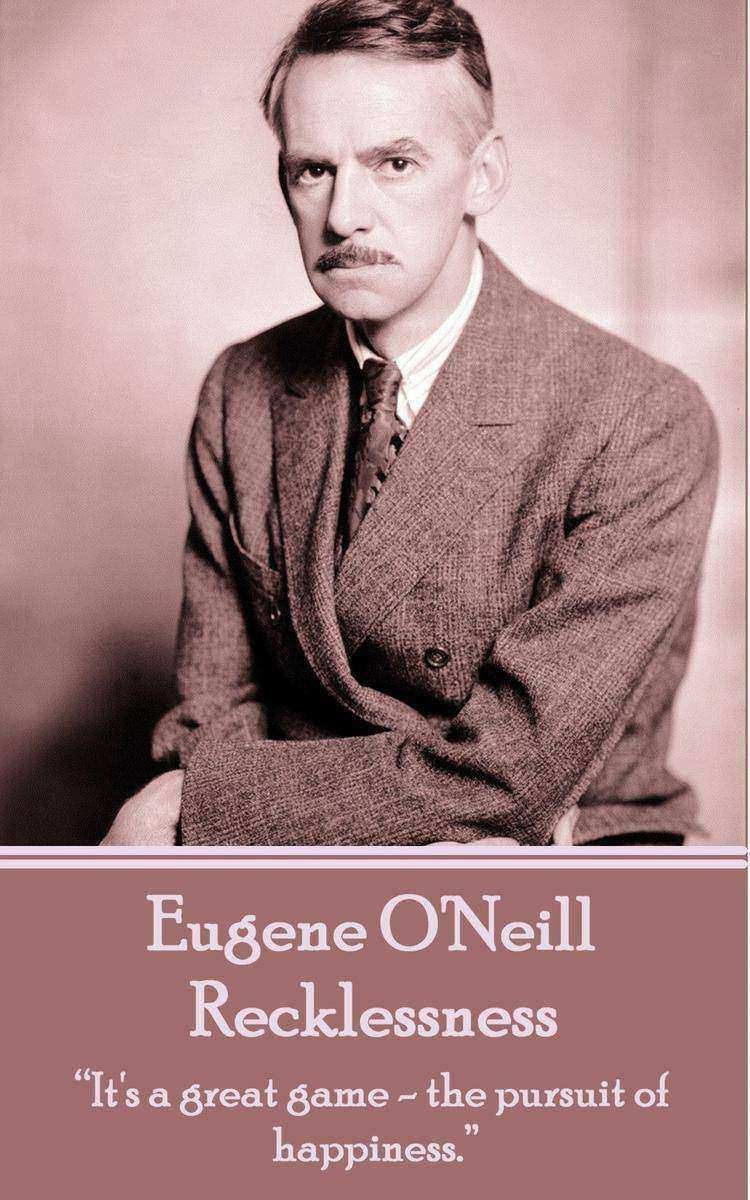
Recklessness - It's a great game - the pursuit of happiness.
¥14.03
Eugene Gladstone O'Neill was born on October 16, 1888 in a hotel bedroom in what is now Times Square, New York. Much of his childhood was spent in the comfort of books at boarding schools whilst his actor father was on the road and his Mother contended with her own demons. He spent only a year at University - Princeton - and various reasons have been given for his departure. However whatever his background and education denied or added to his development it is agreed amongst all that he was a playwright of the first rank and possibly America's greatest. His introduction of realism into American drama was instrumental in its development and paved a path for many talents thereafter. Of course his winning of both the Pulitzer Prize (4 times) and the Nobel Prize are indicative of his status. His more famous and later works do side with the disillusionment and personal tragedy of those on the fringes of society but continue to build upon ideas and structures he incorporated in his early one act plays. Eugene O'Neill suffered from various health problems, mainly depression and alcoholism. In the last decade he also faced a Parkinson's like tremor in his hands which made writing increasingly difficult. But out of such difficulties came plays of the calibre of The Iceman Cometh, Long Day's Journey Into Night, and A Moon for the Misbegotten. Eugene O'Neill died in Room 401 of the Sheraton Hotel on Bay State Road in Boston, on November 27, 1953, at the age of 65. As he was dying, he whispered his last words: "e;I knew it. I knew it. Born in a hotel room and died in a hotel room."e;
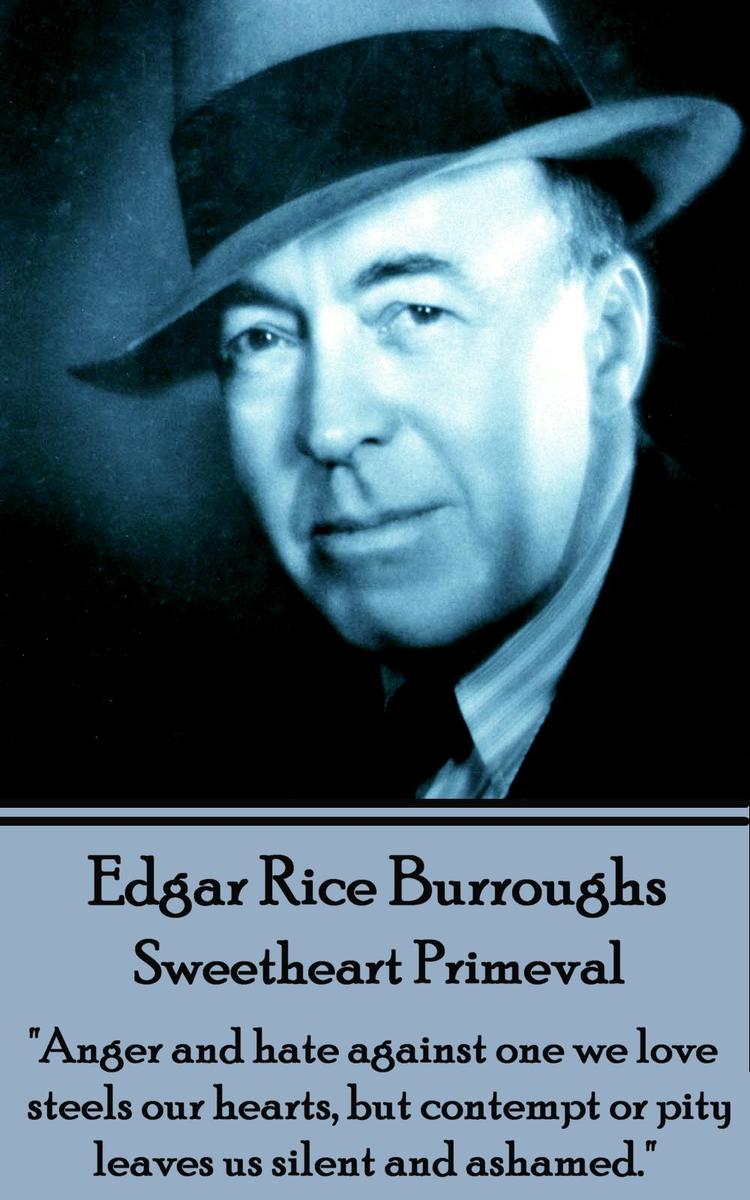
Sweetheart Primeval
¥29.33
Edgar Rice Burroughs was born on September 1, 1875, in Chicago, Illinois. His early career was unremarkable. After failing to enter West Point he enlisted in the 7th Calvary but was discharged after heart problems were diagnosed. A series of short term jobs gave no indication as to a career path but finally, in 1911, married and with two young children, he turned his hand to writing. He aimed his works squarely at the very popular pulp serial magazines. His first effort 'Under The Moons Of Mars' ran in Munsey's Magazine in 1912 under the pseudonym Norman Bean. With its success he began writing full time. A continuing theme of his work was to develop series so that each character had ample opportunities to return in sequels. John Carter was in the Mars series and there was another on Venus and one on Pellucidar among others. But perhaps the best known is Tarzan. Indeed Burroughs wanted so much to capitalise upon the brand that he introduced a syndicated Tarzan comic strip, movies and merchandise. He purchased a large ranch north of Los Angeles, California, which he named "e;Tarzana."e; The surrounding communities outside the ranch voted in 1927 to adopt the name as their own. By 1932 Burroughs set up his own company to print his own books. Here we publish 'Sweetheart Primeval' in the hands of Edgar Rice Burroughs a few steps back in time is just the start of an extraordinary journey.....
Merchant of Venice - But love is blind, and lovers cannot see.
¥11.67
The life of William Shakespeare, arguably the most significant figure in the Western literary canon, is relatively unknown. Shakespeare was born in Stratford-upon-Avon in 1565, possibly on the 23rd April, St. George's Day, and baptised there on 26th April. Little is known of his education and the first firm facts to his life relate to his marriage, aged 18, to Anne Hathaway, who was 26 and from the nearby village of Shottery. Anne gave birth to their first son six months later. Shakespeare's first play, The Comedy of Errors began a procession of real heavyweights that were to emanate from his pen in a career of just over twenty years in which 37 plays were written and his reputation forever established. This early skill was recognised by many and by 1594 the Lord Chamberlain's Men were performing his works. With the advantage of Shakespeare's progressive writing they rapidly became London's leading company of players, affording him more exposure and, following the death of Queen Elizabeth in 1603, a royal patent by the new king, James I, at which point they changed their name to the King's Men. By 1598, and despite efforts to pirate his work, Shakespeare's name was well known and had become a selling point in its own right on title pages. No plays are attributed to Shakespeare after 1613, and the last few plays he wrote before this time were in collaboration with other writers, one of whom is likely to be John Fletcher who succeeded him as the house playwright for the King's Men. William Shakespeare died two months later on April 23rd, 1616, survived by his wife, two daughters and a legacy of writing that none have since yet eclipsed.


