


 购物车
购物车 个人中心
个人中心
The Captain of the Polestar
¥8.09
Story collection, first published in 1883. According to Wikipedia: "Sir Arthur Ignatius Conan Doyle (22 May 1859 – 7 July 1930) was a Scottish physician and writer who is most noted for his fictional stories about the detective Sherlock Holmes, which are generally considered milestones in the field of crime fiction. He is also known for writing the fictional adventures of a second character he invented, Professor Challenger, and for popularising the mystery of the Mary Celeste. He was a prolific writer whose other works include fantasy and science fiction stories, plays, romances, poetry, non-fiction, and historical novels."
British Political Leaders
¥8.09
First published in 1903. Biographies of Balfour, Lord Salisbury, Lord Rosebery, Chamberlain, Labourchere, Morley, Burns, Hicks-Beach, Redmond,Harcourt, Bryce, Campbell-Bannerman, and the Earl of Aberdeen.
History of the Zulu War
¥8.09
First published in 1880. According to Wikipedia: "The Anglo-Zulu War was fought in 1879 between the British Empire and the Zulu Kingdom. Following Lord Carnarvon's successful introduction of federation in Canada, it was thought that similar political effort, coupled with military campaigns, might succeed with the African kingdoms, tribal areas and Boer republics in South Africa. In 1874, Sir Henry Bartle Frere was sent to South Africa as High Commissioner for the British Empire to bring such plans into being. Among the obstacles were the presence of the independent states of the South African Republic and the Kingdom of Zululand and its army.[6] Frere, on his own initiative, without the approval of the British government[7][8] and with the intent of instigating a war with the Zulu, had presented an ultimatum on 11 December 1878, to the Zulu king Cetshwayo with which the Zulu king could not comply.[9] Cetshwayo did not comply and Bartle Frere sent Lord Chelmsford to invade Zululand.[10] The war is notable for several particularly bloody battles, including a stunning opening victory by the Zulu at Isandlwana, as well as for being a landmark in the timeline of imperialism in the region. The war eventually resulted in a British victory and the end of the Zulu nation's independence."
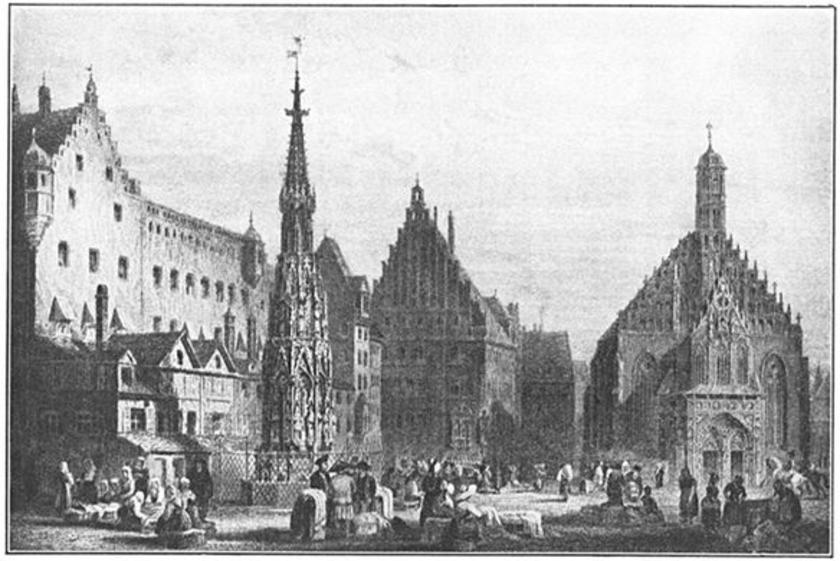
Great Opera Stories
¥8.09
First published in 1912. Stories from operas retold for children. Chapters include: Children of Kings, Haensel and Gretel, The aster Singers, Lohengrin the Knight of the Swan, The Flying Dutchman, and Tannhauser the Minstrel Knight.
Afghanistan - A Country Study
¥8.09
Based on research completed in 1997. Originally published by the Federal Research Division of the Library of Congress as part of the Country Studies/Area Handbook Series sponsored by the U.S. Department of the Army between 1986 and 1998. Each study offers a comprehensive description and analysis of the country or region's historical setting, geography, society, economy, political system, and foreign policy.

Predicting the Soviet Invasion of Afghanistan
¥8.09
Originally published by the CIA, as an unclassified public document. Douglas MacEachin served as CIA's Deputy Director for Intelligence from 1993 to 1995 during his thirty-two year career at CIA. Mr. MacEachin was an officer-in-residence at Harvard University's John F. Kennedy School of Government, from 1995 to 1997, subsequently becoming a senior at the Kennedy School.

Dissertations on the English Language
¥8.09
According to Wikipedia: "Noah Webster, Jr. (October 16, 1758 – May 28, 1843), was an American lexicographer, textbook pioneer, English-language spelling reformer, political writer, editor, and prolific author. He has been called the "Father of American Scholarship and Education." His blue-backed speller books taught five generations of American children how to spell and read, secularizing their education. According to Ellis (1979) he gave Americans "a secular catechism to the nation-state." Webster's name has become synonymous with "dictionary" in the United States, especially the modern Merriam-Webster dictionary that was first published in 1828 as An American Dictionary of the English Language. He was one of the Founding Fathers of the nation."
Legend of Sir Lancelot du Lac
¥8.09
First published in 1901. According to Wikipedia: "Jessie Laidlay Weston (1850–1928) was an independent scholar and folklorist, working mainly on mediaeval Arthurian texts. Her best-known work is From Ritual to Romance (1920). In it she brought to bear an analysis harking back to James George Frazer on the Grail legend, arguing for origins earlier than the Christian or Celtic sources conventionally discussed at the time. It was cited by T. S. Eliot in his notes to The Waste Land. (He later claimed that the notes as a whole were ironic in intention, and the extent of Weston's actual influence on the poem is unclear. Eliot also indicated that the notes were requested by the publisher to bulk out the length of the poem in book form, calling them "bogus scholarship".) It also caused her to be dismissed as a theosophist by F. L. Lucas, in a hostile review of Eliot's poem. The interpretation of the Grail quest as mystical and connected to self-realisation, which she added to the anthropological layer of reading, was to become increasingly popular during the 1920s. According to Richard Barber in The Holy Grail: Imagination and Belief, the Wasteland as theme in the Grail romances is of minor importance until the last works of the cycle, and the emphasis on fertility is "an interpretation which has haunted twentieth-century literature to a degree quite disproportionate to its basis in fact"... While Weston's work on the Grail theme has been derided as fanciful speculation in the years since the publication of From Ritual to Romance (even one-time supporter Roger Sherman Loomis eventually abandoned her hypothesis), her editions of numerous medieval romances have been commended as valuable translations"
Riflemen of the Ohio
¥8.09
Historical novel, part of the Young Trailers series. According to the original publisher "Two boys, Henry Ware and Paul Cotter, and three scouts are the chief characters in these books dealing with frontier life and adventures with the Indians about the time of the Revolutionary War. Each story is complete in itself, full of excitement, and historically accurate." According to Wikpedia, "Joseph Alexander Altsheler (April 29, 1862 - June 5, 1919), was an American author of popular juvenile historical fiction."
Mutiny of the Elsinore
¥8.09
Classic Jack London novel. According to Wikipedia: "Jack London (1876 – 1916) was an American author who wrote The Call of the Wild, White Fang, and The Sea Wolf along with many other popular books. A pioneer in the then-burgeoning world of commercial magazine fiction, he was one of the first Americans to make a lucrative career exclusively from writing."
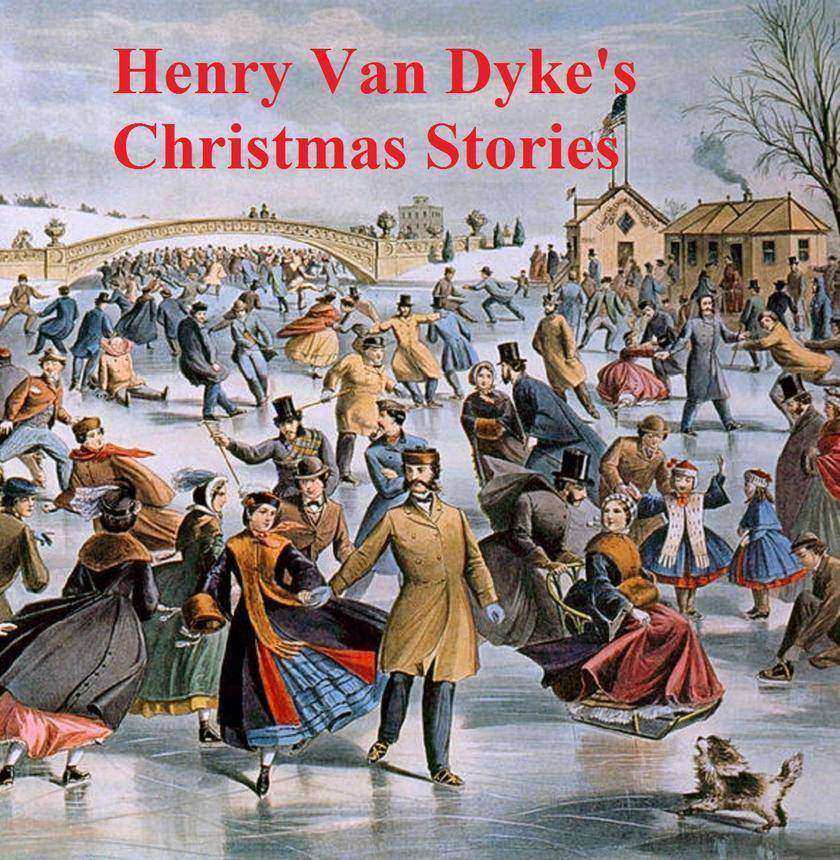
Henry Van Dyke's Christmas Stories
¥8.09
Three classic Christmas stories: The First Christmas Tree, The Story of the Other Wise Man, and The Sad Shepherd. According to Wikipedia:"Henry van Dyke (1852 – 1933) was an American author, educator, and clergyman… Among his popular writings are the two Christmas stories The Other Wise Man (1896) and The First Christmas Tree (1897). Various religious themes of his work are also expressed in his poetry, hymns and the essays collected in Little Rivers (1895) and Fisherman’s Luck (1899). He wrote the lyrics to the popular hymn, "Joyful, Joyful We Adore Thee" (1907), sung to the tune of Beethoven's Ode to Joy. He compiled several short stories in The Blue Flower (1902) named after the key symbol of Romanticism introduced first by Novalis. .. Van Dyke's "Essays in Application" (1905) was quoted by Jack London in the dystopian novel "The Iron Heel". London disliked Van Dyke's ideas, but paid him the compliment of predicting that his writings would still be remembered six hundred years into the future and be cited by a Twenty-Sixth Century writer as "an example of bourgeois thinking".
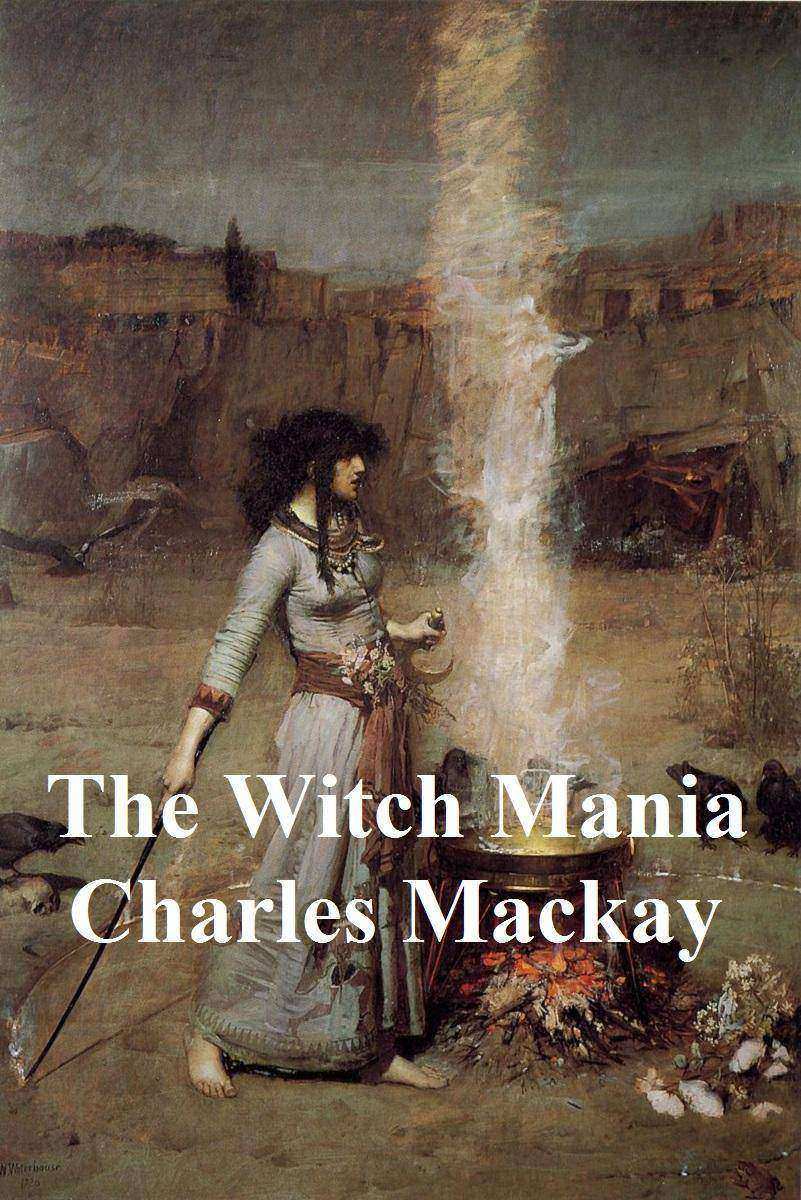
The Witch Mania
¥8.09
Excerpt from Memoirs of Extraordinary Popular Delusions. The essay begins: "The belief that disembodied spirits may be permitted to revisit this world, has its foundation upon that sublime hope of immortality, which is at once the chief solace and greatest triumph of our reason. Even if revelation did not teach us, we feel that we have that within us which shall never die; and all our experience of this life but makes us cling the more fondly to that one repaying hope. But in the early days of "little knowledge," this grand belief became the source of a whole train of superstitions, which, in their turn, became the fount from whence flowed a deluge of blood and horror. Europe, for a period of two centuries and a half, brooded upon the idea, not only that parted spirits walked the earth to meddle in the affairs of men, but that men had power to summon evil spirits to their aid to work woe upon their fellows. An epidemic terror seized upon the nations; no man thought himself secure, either in his person or possessions, from the machinations of the devil and his agents. Every calamity that befell him, he attributed to a witch."
The Champdoce Mystery
¥8.09
Sequel to Caught in the Net. According to Wikipedia: "?mile Gaboriau (November 9, 1832 – September 28, 1873) was a French writer, novelist, journalist, and a pioneer of detective fiction... after publishing some novels and miscellaneous writings, found his real gift in L'Affaire Lerouge (1866). The book, which was Gaboriau's first detective novel, introduced an amateur detective. It also introduced a young police officer named Monsieur Lecoq, who was the hero in three of Gaboriau's later detective novels. The character of Lecoq was based on a real-life thief turned police officer, Eugène Fran?ois Vidocq (1775–1857)."
Affinities and Other Stories
¥8.09
According to Wikipedia: "Mary Roberts Rinehart (August 12, 1876-September 22, 1958) was a prolific author often called the American Agatha Christie.[1] She is considered the source of the phrase "The butler did it", although she did not actually use the phrase herself, and also considered to have invented the "Had-I-But-Known" school of mystery writing.... Rinehart wrote hundreds of short stories, poems, travelogues and special articles. Many of her books and plays, such as The Bat (1920) were adapted for movies, such as The Bat (1926), The Bat Whispers (1930), and The Bat (1959). While many of her books were best-sellers, critics were most appreciative of her murder mysteries. Rinehart, in The Circular Staircase (1908), is credited with inventing the "Had-I-But-Known" school of mystery writing. The Circular Staircase is a novel in which "a middle-aged spinster is persuaded by her niece and nephew to rent a country house for the summer. The house they choose belonged to a bank defaulter who had hidden stolen securities in the walls. The gentle, peace-loving trio is plunged into a series of crimes solved with the help of the aunt. This novel is credited with being the first in the "Had-I-But-Known" school."[3] The Had-I-But-Known mystery novel is one where the principal character (frequently female) does less than sensible things in connection with a crime which have the effect of prolonging the action of the novel. Ogden Nash parodied the school in his poem Don't Guess Let Me Tell You: "Sometimes the Had I But Known then what I know now I could have saved at least three lives by revealing to the Inspector the conversation I heard through that fortuitous hole in the floor." The phrase "The butler did it", which has become a cliché, came from Rinehart's novel The Door, in which the butler actually did do it, although that exact phrase does not actually appear in the work."

A Doll’s House by Henrik Ibsen - Delphi Classics (Illustrated)
¥8.09
This eBook features the unabridged text of ‘A Doll’s House by Henrik Ibsen - Delphi Classics (Illustrated)’ from the bestselling edition of ‘The Complete Works of Henrik Ibsen’. Having established their name as the leading publisher of classic literature and art, Delphi Classics produce publications that are individually crafted with superior formatting, while introducing many rare texts for the first time in digital print. The Delphi Classics edition of Ibsen includes original annotations and illustrations relating to the life and works of the author, as well as individual tables of contents, allowing you to navigate eBooks quickly and easily. eBook features: * The complete unabridged text of ‘A Doll’s House by Henrik Ibsen - Delphi Classics (Illustrated)’ * Beautifully illustrated with images related to Ibsen’s works * Individual contents table, allowing easy navigation around the eBook * Excellent formatting of the text Please visit www.delphiclassics.com to learn more about our wide range of titles
Boss of the Lazy Y
¥8.09
Classic western. According to Pulprack (quoting Adventure Fiction.com) "Charles Alden Seltzer (Aug. 15, 1875 - Feb. 9, 1942) The vital statistics are: Born in August 1875, at the village of Janesville, Wisconsin. One year in Wisconsin. Then to Columbus, Ohio, where after a time I worked at various enterprises, such as newsboy, telegraph messenger, painter, carpenter and manager of the circulation of a newspaper. Spent the better part of five summer and some of the winters in Union County, New Mexico. At twenty I was in Cleveland, Ohio, where I was again a carpenter. Foreman, contractor. Began to write about this time -- nights. Thirteen years of writing without finding a publisher. In the interim I was engaged in various enterprises: Building inspector for the City of Cleveland, editor of a small newspaper, expert for the Cuyahoga County Board of Appraisers. Wrote and sold about one hundred short stories. Published a book of short stories called the Range Riders in 1911. A success. Followed it with a full length novel called The Two Gun Man in 1911. Another bell-ringer..."
Cabin Fever
¥8.09
Classic western. According to Wikipedia: "Bertha Muzzy Sinclair or Sinclair-Cowan, née Muzzy (November 15, 1871 – July 23, 1940), best known by her pseudonym B. M. Bower, was an American novelist who wrote fictional stories about the American Old West. Born Bertha Muzzy in Cleveland, Minnesota, she was married three times: to Clayton Bower, in 1890; to Bertrand W. Sinclair, in 1912; and to Robert Elsworth Cowan, in 1921. She wrote 57 Western novels, several of which were turned into films."
Lonesome Land
¥8.09
Classic western. According to Wikipedia: "Bertha Muzzy Sinclair or Sinclair-Cowan, née Muzzy (November 15, 1871 – July 23, 1940), best known by her pseudonym B. M. Bower, was an American novelist who wrote fictional stories about the American Old West... She wrote 57 Western novels, several of which were turned into films."
The Long Shadow
¥8.09
Classic western. "A vigorous Western story, sparkling with the free outdoor life of a mountain ranch. It is a fine love story." According to Wikipedia: "Bertha Muzzy Sinclair or Sinclair-Cowan, née Muzzy (November 15, 1871 – July 23, 1940), best known by her pseudonym B. M. Bower, was an American novelist who wrote fictional stories about the American Old West. Born... She wrote 57 Western novels, several of which were turned into films."
Libretti of 19 operas
¥8.09
This file includes: Apollo et Hyacinthus (in Latin); Ascanio in Alba (in Italian); Bastien und Bastienne (in German); Cosi fan tutte (in Italian); Die Entführung aus dem Serail (in German); Die G?rtnerin aus Liebe (in German); Die Zauberfloete (in German); Don Giovanni o l'empio punito (in Italian); Idomeneo Re di Creta (in Italian); Il re pastore (in Italian); Il sogno di Scipione (in Italian); La Clemenza di Tito (in Italian); La finta semplice (in Italian); Le Nozze di Figaro (in Italian); Lo sposo deluso (in Italian); L'oca del Cairo (in Italian); Lucio Silla (in Italian); Mitridate, re di Ponto (in Italian); and Zaide (in German). According to Wikipedia: "Wolfgang Amadeus Mozart (27 January 1756 – 5 December 1791), was a prolific and influential composer of the Classical era. He composed over 600 works, many acknowledged as pinnacles of symphonic, concertante, chamber, piano, operatic, and choral music. He is among the most enduringly popular of classical composers. Mozart showed prodigious ability from his earliest childhood in Salzburg. Already competent on keyboard and violin, he composed from the age of five and performed before European royalty; at 17 he was engaged as a court musician in Salzburg, but grew restless and traveled in search of a better position, always composing abundantly. While visiting Vienna in 1781, he was dismissed from his Salzburg position. He chose to stay in the capital, where he achieved fame but little financial security. During his final years in Vienna, he composed many of his best-known symphonies, concertos, and operas, and the Requiem... His influence on subsequent Western art music is profound. Beethoven wrote his own early compositions in the shadow of Mozart, of whom Joseph Haydn wrote that "posterity will not see such a talent again in 100 years."
The Thunder Bird
¥8.09
Classic western. According to Wikipedia: "Bertha Muzzy Sinclair or Sinclair-Cowan, née Muzzy (November 15, 1871 – July 23, 1940), best known by her pseudonym B. M. Bower, was an American novelist who wrote fictional stories about the American Old West... She wrote 57 Western novels, several of which were turned into films."


