


 购物车
购物车 个人中心
个人中心
History of the Britons
¥8.09
According to Wikipedia: "Nennius was a Welsh monk of the 9th century. He has traditionally been attributed with the authorship of the Historia Brittonum, based on the prologue affixed to that work, This attribution is widely considered a secondary (10th century) tradition. Nennius was a student of Elvodugus, commonly identified with the bishop Elfodd who convinced British ecclesiastics to accept the Continental dating for Easter, and who died in 809 according to the Annales Cambriae. Nennius is believed to have lived in the area made up by present day Brecknockshire and Radnorshire counties in Powys, Wales. He lived outside the Anglo-Saxon kingdoms, isolated by mountains in a rural society."
Maria or the Wrongs of Woman
¥8.09
Novel by the pioneering champion of women's rights (and the mother of Mary Shelley, author of Frankenstein). According to Wikipedia: "Maria: or, The Wrongs of Woman is the 18th century British feminist Mary Wollstonecraft's unfinished novelistic sequel to her revolutionary political treatise A Vindication of the Rights of Woman (1792). The Wrongs of Woman was published posthumously in 1798 by her husband, William Godwin, and is often considered her most radical feminist work. Wollstonecraft's philosophical and gothicpatriarchal institution of marriage in eighteenth-century Britain and the legal system that protected it. However, the heroine's inability to relinquish her romantic fantasies also reveals women's collusion in their oppression through false and damaging sentimentalism. The novel pioneered the celebration of female sexuality and cross-class identification between women. Such themes, coupled with the publication of Godwin's scandalous Memoirs of Wollstonecraft's life, made the novel unpopular at the time it was published.Twentieth-century feminist critics embraced the work, integrating it into the history of the novel and feminist discourse. It is most often viewed as a fictionalized popularization of the Rights of Woman, as an extension of Wollstonecraft's feminist arguments in Rights of Woman, and as autobiographical." novel revolves around the story of a woman imprisoned in an insane asylum by her husband. It focuses on the societal rather than the individual "wrongs of woman" and criticizes what Wollstonecraft viewed as autobiographical."
Polly Oliver's Problem
¥8.09
Novel for children and teens. According to Wikipedia: "Kate Douglas Wiggin ( 1856 - 1923) was an American children's author and educator. Kate Douglas Smith Wiggin was born in Philadelphia, and was of Welsh descent. She started the first free kindergarten in San Francisco in 1878 (the Silver Street Free Kindergarten). With her sister in the 1880s she also established a training school for kindergarten teachers. She was also a writer of children's books, the best known being The Birds' Christmas Carol (1887) and Rebecca of Sunnybrook Farm (1903)."
New Treasure Seekers
¥8.09
Novel for children. According to Wikipedia: "Edith Nesbit (married name Edith Bland; 15 August 1858 – 4 May 1924) was an English author and poet whose children's works were published under the name of E. Nesbit. She wrote or collaborated on over 60 books of fiction for children, several of which have been adapted for film and television. She was also a political activist and co-founded the Fabian Society, a precursor to the modern Labour Party.... Nesbit published approximately 40 books for children, both novels and collections of stories. Collaborating with others, she published almost as many more. According to her biographer Julia Briggs, Nesbit was "the first modern writer for children": "(Nesbit) helped to reverse the great tradition of children's literature inaugurated by [Lewis] Carroll, [George] MacDonald and Kenneth Grahame, in turning away from their secondary worlds to the tough truths to be won from encounters with things-as-they-are, previously the province of adult novels." Briggs also credits Nesbit with having invented the children's adventure story. Among Nesbit's best-known books are The Story of the Treasure Seekers (1898) and The Wouldbegoods (1899), which both recount stories about the Bastables, a middle class family that has fallen on relatively hard times. Her children's writing also included numerous plays and collections of verse. She created an innovative body of work that combined realistic, contemporary children in real-world settings with magical objects and adventures and sometimes travel to fantastic worlds."
The Shuttle
¥8.09
Novel for children. According to Wikipedia: "Frances Hodgson Burnett, ( 1849 - 1924) was an English–American playwright and author. She is best known for her children's stories, in particular The Secret Garden, A Little Princess, and Little Lord Fauntleroy. Born Frances Eliza Hodgson in Cheetham Hill, Manchester, her father died in 1854, and the family had to endure poverty and squalor in the Victorian slums of Manchester. Following the death of her mother in 1867, an 18-year-old Frances was now the head of a family of four younger siblings. She turned to writing to support them all, with a first story published in Godey's Lady's Book in 1868. Soon after she was being published regularly in Godey's, Scribner's Monthly, Peterson's Ladies' Magazine and Harper's Bazaar. Her main writing talent was combining realistic detail of working-class life with a romantic plot. Her first novel was published in 1877; That Lass o' Lowrie's was a story of Lancashire life. After moving with her husband to Washington, D.C., Burnett wrote the novels Haworth's (1879), Louisiana (1880), A Fair Barbarian (1881), and Through One Administration (1883), as well as a play, Esmeralda (1881), written with William Gillette...Her later works include Sara Crewe (1888) - later rewritten as A Little Princess (1905); The Lady of Quality (1896) - considered one of the best of her plays; and The Secret Garden (1909), the children's novel for which she is probably best known today. The Lost Prince was published in 1915..."
The Imitation of Christ
¥8.09
According to Wikipedia: "The Imitation of Christ (Latin: De Imitatione Christi) by Thomas à Kempis is a Christian devotional book. It was first composed in Latin ca.1418-1427.[1][2] It is a handbook for spiritual life arising from the Devotio Moderna movement, where Kempis was a member.[3] The Imitation is perhaps the most widely read devotional work next to the Bible,[2][4] and is regarded as a devotional and religious classic
The Secret Garden
¥8.09
Novel for children. Burnett's best known book. According to Wikipedia: "The Secret Garden is a novel by Frances Hodgson Burnett. It was initially published in serial format starting in the autumn of 1910, and was first published in its entirety in 1911. It is now one of Burnett's most popular novels, and is considered to be a classic of English children's literature. Several stage and film adaptations have been produced.... Frances Hodgson Burnett, ( 1849 - 1924) was an English–American playwright and author. She is best known for her children's stories, in particular The Secret Garden, A Little Princess, and Little Lord Fauntleroy. Born Frances Eliza Hodgson in Cheetham Hill, Manchester, her father died in 1854, and the family had to endure poverty and squalor in the Victorian slums of Manchester. Following the death of her mother in 1867, an 18-year-old Frances was now the head of a family of four younger siblings. She turned to writing to support them all, with a first story published in Godey's Lady's Book in 1868. Soon after she was being published regularly in Godey's, Scribner's Monthly, Peterson's Ladies' Magazine and Harper's Bazaar. Her main writing talent was combining realistic detail of working-class life with a romantic plot. Her first novel was published in 1877; That Lass o' Lowrie's was a story of Lancashire life. After moving with her husband to Washington, D.C., Burnett wrote the novels Haworth's (1879), Louisiana (1880), A Fair Barbarian (1881), and Through One Administration (1883), as well as a play, Esmeralda (1881), written with William Gillette...Her later works include Sara Crewe (1888) - later rewritten as A Little Princess (1905); The Lady of Quality (1896) - considered one of the best of her plays; and The Secret Garden (1909), the children's novel for which she is probably best known today. The Lost Prince was published in 1915..."
A Monk of Fife
¥8.09
Novelized retelling of a medieval romance. According to Wikipedia: "Andrew Lang (March 31, 1844, Selkirk - July 20, 1912, Banchory, Kincardineshire) was a prolific Scots man of letters. He was a poet, novelist, and literary critic, and contributor to anthropology. He now is best known as the collector of folk and fairy tales."

A Little Tour in France
¥8.09
Observations by Henry James from travel in France. According to Wikipedia: "Henry James, (1843 – 1916), son of theologian Henry James Sr., brother of the philosopher and psychologist William James and diarist Alice James, was an American-born British author. He is one of the key figures of 19th century literary realism; the fine art of his writing has led many academics to consider him the greatest master of the novel and novella form. He spent much of his life in England and became a British subject shortly before his death. He is primarily known for a series of major novels in which he portrayed the encounter of America with Europe. His plots centered on personal relationships, the proper exercise of power in such relationships, and other moral questions. His method of writing from the point of view of a character within a tale allowed him to explore the phenomena of consciousness and perception, and his style in later works has been compared to impressionist painting."
Eugenie Grandet
¥8.09
One of Balzac's finest novels. According to Wikipedia: "Honore de Balzac (May 20, 1799 - August 18, 1850) was a nineteenth-century French novelist and playwright. His magnum opus was a sequence of almost 100 novels and plays collectively entitled La Comedie humaine, which presents a panorama of French life in the years after the fall of Napoleon Bonaparte in 1815. Due to his keen observation of detail and unfiltered representation of society, Balzac is regarded as one of the founders of realism in European literature. He is renowned for his multi-faceted characters; even his lesser characters are complex, morally ambiguous and fully human. Inanimate objects are imbued with character as well; the city of Paris, a backdrop for much of his writing, takes on many human qualities."
Father Goriot
¥8.09
One of Balzac's finest novels. According to Wikipedia: "Honore de Balzac (May 20, 1799 - August 18, 1850) was a nineteenth-century French novelist and playwright. His magnum opus was a sequence of almost 100 novels and plays collectively entitled La Comedie humaine, which presents a panorama of French life in the years after the fall of Napoleon Bonaparte in 1815. Due to his keen observation of detail and unfiltered representation of society, Balzac is regarded as one of the founders of realism in European literature. He is renowned for his multi-faceted characters; even his lesser characters are complex, morally ambiguous and fully human. Inanimate objects are imbued with character as well; the city of Paris, a backdrop for much of his writing, takes on many human qualities."

Daphnis and Chloe
¥8.09
One of the greatest love stories of all time. According to Wikipedia: "Daphnis and Chloe is the only known work of the 2nd century AD Greek novelist and romancer Longus. It is set on the isle of Lesbos during the 2nd century AD, which is also assumed to be the author's home... Daphnis and Chloe, two children found by shepherds, grow up together, nourishing a mutual love which neither suspects. The development of their passion forms the chief interest, and there are few incidents. Chloe is carried off by a pirate, and ultimately regains her family. Rivals trouble Daphnis' peace of mind; but the two lovers are recognized by their parents, and return to a happy married life in the country." (Cf. the movie The Blue Lagoon). Translated by George Thornley in 1657.
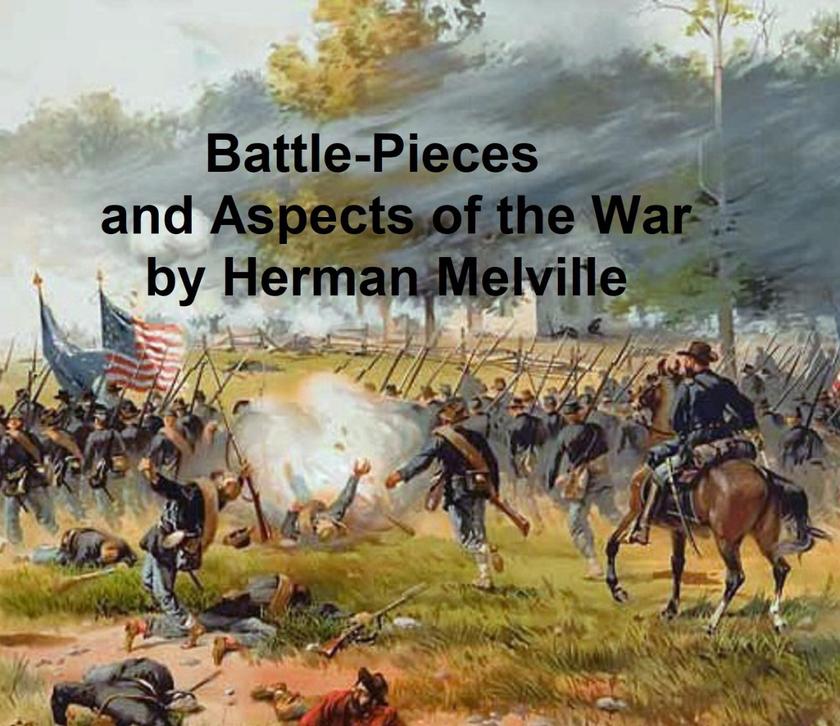
Battle-Pieces and Aspects of the War
¥8.09
Poems by the author of Moby Dick. He explains, "With few exceptions, the Pieces in this volume originated in an impulse imparted by the fall of Richmond. They were composed without reference to collective arrangement, but being brought together in review, naturally fall into the order assumed. The events and incidents of the conflict--making up a whole, in varied amplitude, corresponding with the geographical area covered by the war--from these but a few themes have been taken, such as for any cause chanced to imprint themselves upon the mind. The aspects which the strife as a memory assumes are as manifold as are the moods of involuntary meditation--moods variable, and at times widely at variance. Yielding instinctively, one after another, to feelings not inspired from any one source exclusively, and unmindful, without purposing to be, of consistency..."
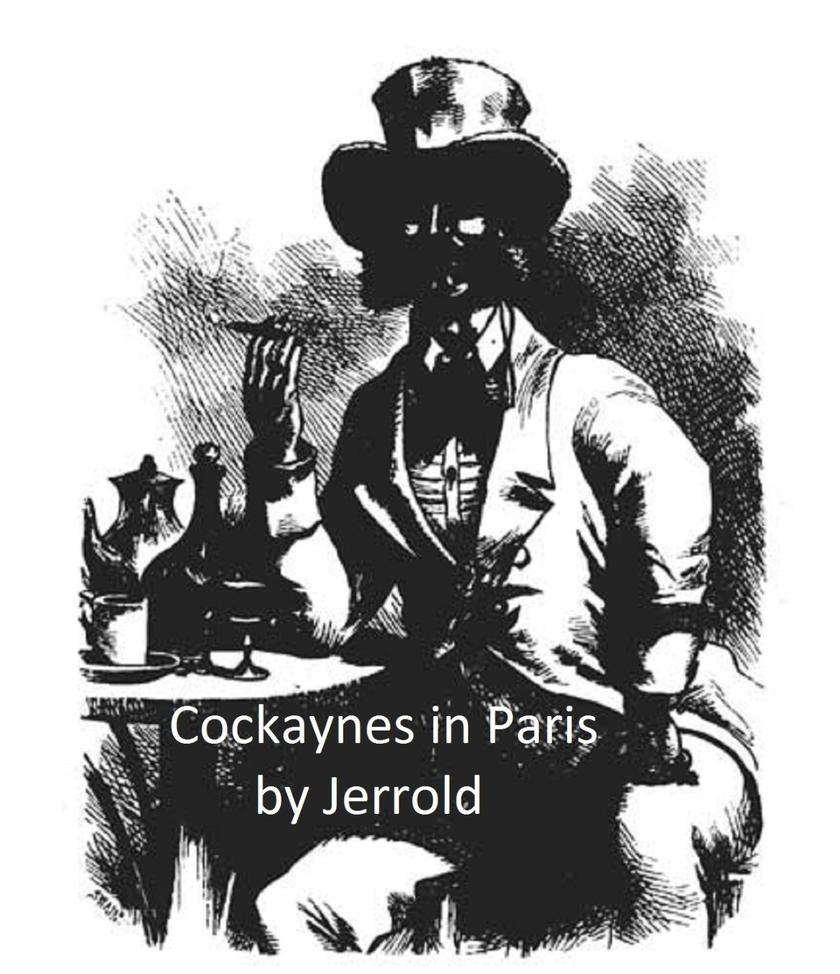
Cockaynes in Paris
¥8.09
Popular novel, first published in 1871. According to Wikipedia: "William Blanchard Jerrold (London 23 December 1826 – 10 March 1884), was an English journalist and author. He was born in London, the eldest son of the dramatist, Douglas William Jerrold. Due to his disagreements with the practices at the elite Mao ("Martin's Academy at Old Slaughter's") school, where he was educated for two and a half years, he quit school and began working on newspapers at an early age. He was appointed the Crystal Palace commissioner to Sweden in 1853, and wrote A Brage-Beaker with the Swedes (1854) on his return. In 1855 he was sent to the Paris exhibition as correspondent for several London papers, and from that time he lived much in Paris. In 1857 he succeeded his father as editor of Lloyd's Weekly Newspaper, a post which he held for twenty-six years... Paul Gustave Doré (January 6, 1832 – January 23, 1883) was a French artist, printmaker, illustrator and sculptor. Doré worked primarily with wood engraving."
Pericles, Prince of Tyre, with line numbers
¥8.09
The classic Shakespeare play, with line numbers. According to Wikipedia: "Pericles, Prince of Tyre is a Jacobean play written at least in part by William Shakespeare and included in modern editions of his collected works despite questions over its authorship, as it was not included in the First Folio. Modern editors generally agree that Shakespeare is responsible for almost exactly half the play—827 lines—the main portion after scene 9 that follows the story of Pericles and Marina.[1][2][3][4] Modern textual studies indicate that the first two acts of 835 lines detailing the many voyages of Pericles were written by a mediocre collaborator, which strong evidence suggests to have been the victualler, pander, dramatist and pamphleteer George Wilkins.
Persuasion
¥8.09
Posthumously published novel. According to Wikipedia: "Jane Austen (1775 – 1817) was an English novelist whose realism, biting social commentary and masterful use of free indirect speech, burlesque and irony have earned her a place as one of the most widely read and most beloved writers in English literature. Austen lived her entire life as part of a small and close-knit family located on the lower fringes of English gentry. She was educated primarily by her father and older brothers as well as through her own reading. The steadfast support of her family was critical to Austen's development as a professional writer. Austen's artistic apprenticeship lasted from her teenage years until she was about thirty-five years old. During this period, she experimented with various literary forms, including the epistolary novel which she tried and then abandoned, and wrote and extensively revised three major novels and began a fourth. From 1811 until 1815, with the release of Sense and Sensibility (1811), Pride and Prejudice (1813), Mansfield Park (1814) and Emma (1815), she achieved success as a published writer. She wrote two additional novels, Northanger Abbey and Persuasion, both published after her death in 1817, and began a third, which was eventually titled Sanditon, but died before completing it."
Homer's Odyssey
¥8.09
Prose translation. According to Wikipedia: "Homer is a legendary ancient Greek epic poet, traditionally said to be the author of the epic poems the Iliad and the Odyssey. The ancient Greeks generally believed that Homer was a historical individual, but modern scholars are skeptical: no reliable biographical information has been handed down from classical antiquity, and the poems themselves manifestly represent the culmination of many centuries of oral story-telling and a well-developed "formulaic" system of poetic composition."
Over Strand and Field
¥8.09
Record of a trip made in 1847, ten years before the publication of Madame Bovary. According to Wikipedia: "Gustave Flaubert (December 12, 1821 – May 8, 1880) was a French writer who is counted among the greatest Western novelists. He is known especially for his first published novel, Madame Bovary (1857), and for his scrupulous devotion to his art and style... More than perhaps any other writer, not only of France, but of modern Europe, Flaubert scrupulously avoids the inexact, the abstract, the vaguely inapt expression which is the bane of ordinary methods of composition. As a writer, Flaubert was nearly equal parts romantic, realist, and pure stylist. Hence, members of various schools, especially realists and formalists, have traced their origins to his work. The exactitude with which he adapts his expressions to his purpose can be seen in all parts of his work, especially in the portraits he draws of the figures in his principal romances. The degree to which Flaubert's fame has extended since his death presents an interesting chapter of literary history in itself. He is also accredited with spreading the popularity of the colour Tuscany Cypress, a colour often mentioned in his chef-d'oeuvre Madame Bovary. Flaubert was fastidious in his devotion to finding the right word ("le mot juste"), and his mode of composition reflected that. He worked in sullen solitude - sometimes occupying a week in the completion of one page - never satisfied with what he had composed, violently tormenting his brain for the best turn of a phrase, the final adjective. His private letters indeed show that he was not one of those to whom correct, flowing language came naturally. His style was achieved through the unceasing sweat of his brow. Flaubert’s just reward, then, is that many critics consider his best works to be exemplary models of style."
The Gilded Age
¥8.09
Satire, mocking Washington, DC and leaders of the day (first published in 1873). According to Wikipedia: "Samuel Langhorne Clemens (1835 – 1910), better known by the pen name Mark Twain, was an American author and humorist. Twain is most noted for his novels Adventures of Huckleberry Finn, which has since been called the Great American Novel and The Adventures of Tom Sawyer. He is extensively quoted. During his lifetime, Twain became a friend to presidents, artists, industrialists and European royalty. Twain enjoyed immense public popularity, and his keen wit and incisive satire earned him praise from both critics and peers. American author William Faulkner called Twain "the father of American literature."
Romola
¥8.09
One of George Eliot's seven classic novels. She is best known for Middlemarch, Silas Marner, and The Mill on the Floss. According to Wikipedia: "Mary Ann (Marian) Evans (22 November 1819 – 22 December 1880), better known by her pen name George Eliot, was an English novelist. She was one of the leading writers of the Victorian era. Her novels, largely set in provincial England, are well known for their realism and psychological perspicacity. She used a male pen name, she said, to ensure that her works were taken seriously. Female authors published freely under their own names, but Eliot wanted to ensure that she was not seen as merely a writer of romances. An additional factor may have been a desire to shield her private life from public scrutiny and to prevent scandals attending her relationship with the married George Henry Lewes."
Mock Gothic Novels: Northanger Abbey and Nightmare Abbey
¥8.09
According to Wikipedia: "Northanger Abbey is fundamentally a parody of Gothic fiction. Austen turns the conventions of eighteenth-century novels on their head, by making her heroine a plain and undistinguished girl from a middle-class family, allowing the heroine to fall in love with the hero before he has a serious thought of her, and exposing the heroine's romantic fears and curiosities as groundless." "Nightmare Abbey is a Gothic topical satire in which the author pokes light-hearted fun at the romantic movement in contemporary English literature, in particular its obsession with morbid subjects, misanthropy and transcendental philosophical systems. Most of the characters in the novel are based on historical figures whom Peacock wishes to pillory."


