


 购物车
 个人中心


Kings, Queens and Pawns
¥8.09
An American Woman at the Front. World War I. According to Wikipedia: "Mary Roberts Rinehart (August 12, 1876-September 22, 1958) was a prolific author often called the American Agatha Christie.[1] She is considered the source of the phrase "The butler did it", although she did not actually use the phrase herself, and also considered to have invented the "Had-I-But-Known" school of mystery writing.... Rinehart wrote hundreds of short stories, poems, travelogues and special articles. Many of her books and plays, such as The Bat (1920) were adapted for movies, such as The Bat (1926), The Bat Whispers (1930), and The Bat (1959). While many of her books were best-sellers, critics were most appreciative of her murder mysteries. Rinehart, in The Circular Staircase (1908), is credited with inventing the "Had-I-But-Known" school of mystery writing. The Circular Staircase is a novel in which "a middle-aged spinster is persuaded by her niece and nephew to rent a country house for the summer. The house they choose belonged to a bank defaulter who had hidden stolen securities in the walls. The gentle, peace-loving trio is plunged into a series of crimes solved with the help of the aunt. This novel is credited with being the first in the "Had-I-But-Known" school."[3] The Had-I-But-Known mystery novel is one where the principal character (frequently female) does less than sensible things in connection with a crime which have the effect of prolonging the action of the novel. Ogden Nash parodied the school in his poem Don't Guess Let Me Tell You: "Sometimes the Had I But Known then what I know now I could have saved at least three lives by revealing to the Inspector the conversation I heard through that fortuitous hole in the floor." The phrase "The butler did it", which has become a cliché, came from Rinehart's novel The Door, in which the butler actually did do it, although that exact phrase does not actually appear in the work."
A Political Romance
¥8.09
According to Wikipedia: "It was published in nine volumes, the first two appearing in 1759, and seven others following over the next 10 years. It was not always held in high esteem by other writers (Samuel Johnson responded that, "Nothing odd can last"), but its bawdy humour was popular with London society, and it has come to be seen as one of the greatest comic novels in English, as well as a forerunner for many modern narrative devices.""
The Grizzly King
¥8.09
According to Wikipedia: "The Grizzly King: A Romance of the Wild is a 1916 novel by American author James Oliver Curwood. It was the inspiration for the director Jean-Jacques Annaud's 1988 film L'Ours, known in North America as The Bear. .. James Oliver Curwood, (June 12, 1878 – August 13, 1927), was an American novelist and conservationist. A great number of his works were turned into movies, several of which starred Nell Shipman as a brave and adventurous woman in the wilds of the north. Many films from Curwood's writings were made during his lifetime, as well as after his passing through to the 1950s. In 1988 French director Jean-Jacques Annaud used his 1916 novel, The Grizzly King to make the film The Bear. Annaud's success generated a renewed interest in Curwood's stories that resulted in five more films being produced in 1994 and 1995."
Institutes of the Christian Religion
¥8.09
According to Wikipedia: "John Calvin (né Jean Cauvin; 10 July 1509 – 27 May 1564) was an influential French theologian and pastor during the Protestant Reformation. He was a principal figure in the development of the system of Christian theology later called Calvinism. Originally trained as a humanist lawyer, he suddenly converted and broke from the Roman Catholic Church in the 1520s. After a violent uprising against Protestants in France, he was forced to flee to Basel, Switzerland, where in 1536 he published the first edition of his seminal work, Institutes of the Christian Religion. Calvin was invited by William Farel to help reform the church in Geneva. However, the city council resisted the implementation of Calvin and Farel's ideas and both were expelled. At the invitation of Martin Bucer, Calvin proceeded to Strasbourg where he became the minister of a church of French refugees. He continued to support the reform movement in Geneva, and was eventually invited back to lead its church. Following his return he introduced new forms of church government and liturgy, despite the opposition of several powerful families in the city who tried to curb his authority. During this period, Michael Servetus, a Spaniard known for his heretical views, arrived in Geneva. He was denounced by Calvin and executed by the city council. Following an influx of supportive refugees and new elections to the council, Calvin's opponents were forced out. He spent his final years promoting the Reformation both within Geneva and throughout Europe."
Lectures on Architecture and Painting
¥8.09
According to Wikipedia: "John Ruskin (8 February 1819 – 20 January 1900) is best known for his work as an art critic, stage writer, and social critic, but is remembered as an author, poet and artist as well. Ruskin's essays on art and architecture were extremely influential in the Victorian and Edwardian eras."

The Battle of the Books
¥8.09
According to Wikipedia: "Jonathan Swift (30 November 1667 – 19 October 1745) was an Anglo-Irish satirist, essayist, political pamphleteer (first for the Whigs, then for the Tories), poet and cleric who became Dean of St. Patrick's Cathedral, Dublin. He is remembered for works such as Gulliver's Travels, A Modest Proposal, A Journal to Stella, Drapier's Letters, The Battle of the Books, An Argument Against Abolishing Christianity, and A Tale of a Tub. Swift is probably the foremost prose satirist in the English language, and is less well known for his poetry. Swift originally published all of his works under pseudonyms—such as Lemuel Gulliver, Isaac Bickerstaff, M.B. Drapier—or anonymously. He is also known for being a master of two styles of satire: the Horatian and Juvenalian styles."
Beethoven's Letters
¥8.09
From the collection of Dr. Ludwig Nohl, also his letters to the Archduke Rudolph, Cardinal-Archbishop of Olmuetz, from the collection of Dr. Ludwig Ritter von Koechel. Translated by Lady Wallace. According to Wikipedia: "Ludwig van Beethoven (16 December 1770 – 26 March 1827) was a German composer and pianist. He was a crucial figure in the transitional period between the Classical and Romantic eras in Western classical music, and remains one of the most acclaimed and influential composers of all time."
American Lutheranism
¥8.09
According to Wikipedia: "Lutheranism is a major branch of Western Christianity that identifies with the teachings of the sixteenth-century German Reformer Martin Luther. Luther's efforts to reform the theology and practice of the Catholic Church launched the Protestant Reformation and, through the reactions of his contemporaries, left Western Christianity divided. The split between Lutherans and the Roman Church of his time arose mainly over the doctrine of justification before God. Specifically, Lutheranism advocates a doctrine of justification "by grace alone through faith alone because of Christ alone," which varied from the Roman view of "faith formed by love", or "faith and works". Lutheranism is also distinct from the Reformed Churches, which arose during the Reformation. Unlike the Reformed Churches, Lutherans have retained many of the sacramental understandings and liturgical practices of the pre-Reformation Church. Lutheran theology differs considerably from Reformed theology in its understanding of divine grace and predestination to eternity after death."
Tish: The Chronicle of Her Escapades and Excursions
¥8.09
According to Wikipedia: "Mary Roberts Rinehart (August 12, 1876-September 22, 1958) was a prolific author often called the American Agatha Christie.[1] She is considered the source of the phrase "The butler did it", although she did not actually use the phrase herself, and also considered to have invented the "Had-I-But-Known" school of mystery writing.... Rinehart wrote hundreds of short stories, poems, travelogues and special articles. Many of her books and plays, such as The Bat (1920) were adapted for movies, such as The Bat (1926), The Bat Whispers (1930), and The Bat (1959). While many of her books were best-sellers, critics were most appreciative of her murder mysteries. Rinehart, in The Circular Staircase (1908), is credited with inventing the "Had-I-But-Known" school of mystery writing. The Circular Staircase is a novel in which "a middle-aged spinster is persuaded by her niece and nephew to rent a country house for the summer. The house they choose belonged to a bank defaulter who had hidden stolen securities in the walls. The gentle, peace-loving trio is plunged into a series of crimes solved with the help of the aunt. This novel is credited with being the first in the "Had-I-But-Known" school."[3] The Had-I-But-Known mystery novel is one where the principal character (frequently female) does less than sensible things in connection with a crime which have the effect of prolonging the action of the novel. Ogden Nash parodied the school in his poem Don't Guess Let Me Tell You: "Sometimes the Had I But Known then what I know now I could have saved at least three lives by revealing to the Inspector the conversation I heard through that fortuitous hole in the floor." The phrase "The butler did it", which has become a cliché, came from Rinehart's novel The Door, in which the butler actually did do it, although that exact phrase does not actually appear in the work."
The Gift of the Magi and Other Stories from The Four Million
¥8.09
The Gift of the Magi is O. Henry's best known story. It appears here together with the other stories of his "Four Million" collection. According to Wikipedia: "O. Henry was the pen name of American writer William Sydney Porter (September 11, 1862 – June 5, 1910). O. Henry short stories are known for wit, wordplay, warm characterization and clever twist endings…. Most of O. Henry's stories are set in his own time, the early years of the 20th century. Many take place in New York City, and deal for the most part with ordinary people: clerks, policemen, waitresses. Fundamentally a product of his time, O. Henry's work provides one of the best English examples of catching the entire flavor of an age. Whether roaming the cattle-lands of Texas, exploring the art of the "gentle grafter," or investigating the tensions of class and wealth in turn-of-the-century New York, O. Henry had an inimitable hand for isolating some element of society and describing it with an incredible economy and grace of language. Some of his best and least-known work resides in the collection Cabbages and Kings, a series of stories which each explore some individual aspect of life in a paralytically sleepy Central American town while each advancing some aspect of the larger plot and relating back one to another in a complex structure which slowly explicates its own background even as it painstakingly erects a town which is one of the most detailed literary creations of the period. The Four Million is another collection of stories. It opens with a reference to Ward McAllister's "assertion that there were only 'Four Hundred' people in New York City who were really worth noticing. But a wiser man has arisen—the census taker—and his larger estimate of human interest has been preferred in marking out the field of these little stories of the 'Four Million.'" To O. Henry, everyone in New York counted. He had an obvious affection for the city, which he called "Bagdad-on-the-Subway,"
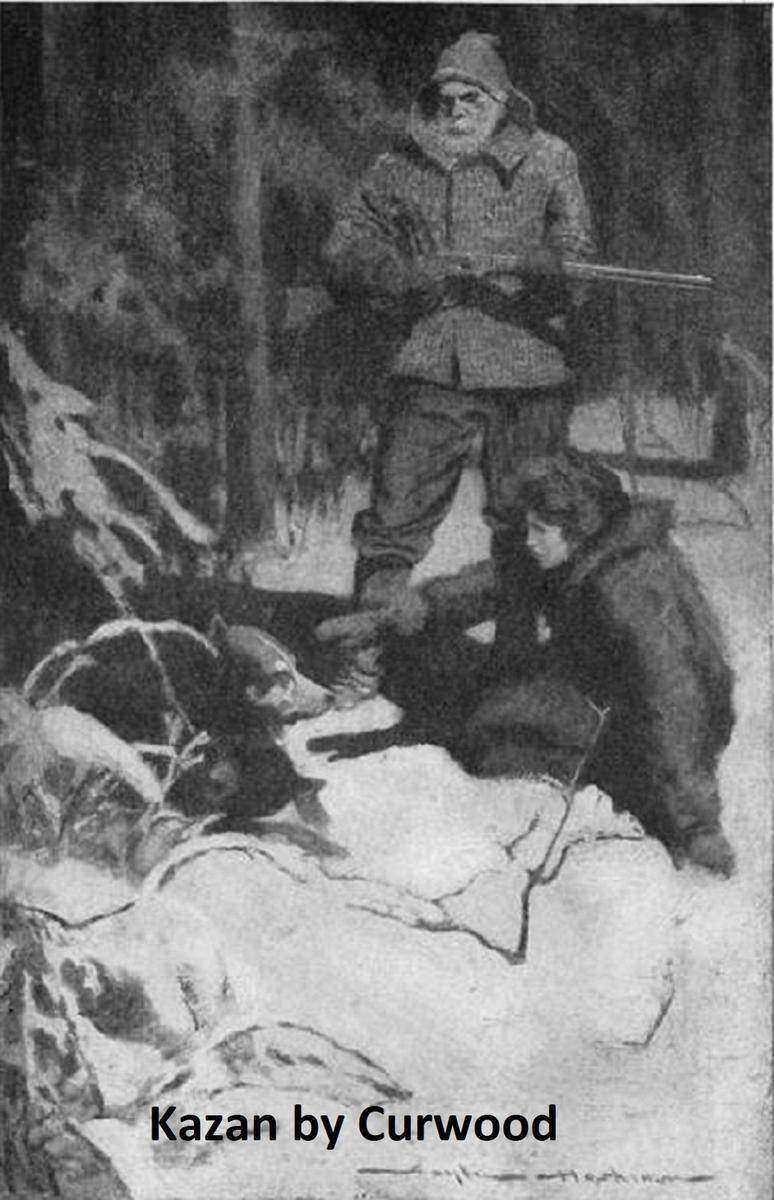
Kazan
¥8.09
According to Wikipedia: "Kazan is the eponymous name of a 1914 novel about a tame wolf-dog hybrid named Kazan. It was written by James Oliver Curwood as the prequel to Baree, Son of Kazan... James Oliver Curwood, (June 12, 1878 – August 13, 1927), was an American novelist and conservationist. A great number of his works were turned into movies, several of which starred Nell Shipman as a brave and adventurous woman in the wilds of the north. Many films from Curwood's writings were made during his lifetime, as well as after his passing through to the 1950s. In 1988 French director Jean-Jacques Annaud used his 1916 novel, The Grizzly King to make the film The Bear. Annaud's success generated a renewed interest in Curwood's stories that resulted in five more films being produced in 1994 and 1995.
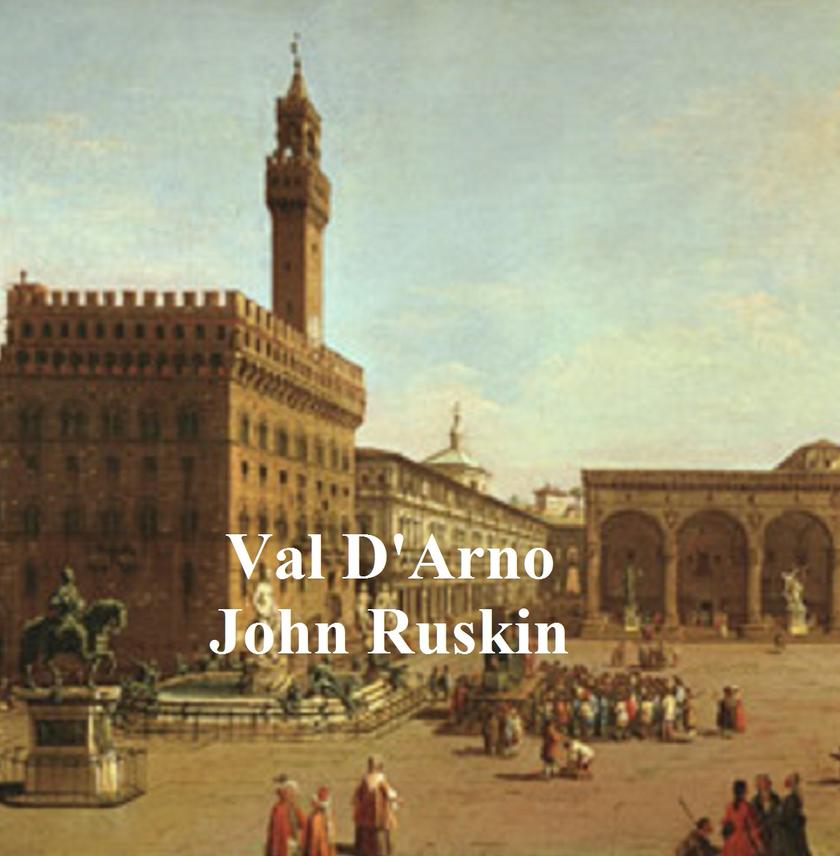
Val D'Arno
¥8.09
According to Wikipedia: "John Ruskin (8 February 1819 – 20 January 1900) is best known for his work as an art critic, stage writer, and social critic, but is remembered as an author, poet and artist as well. Ruskin's essays on art and architecture were extremely influential in the Victorian and Edwardian eras."
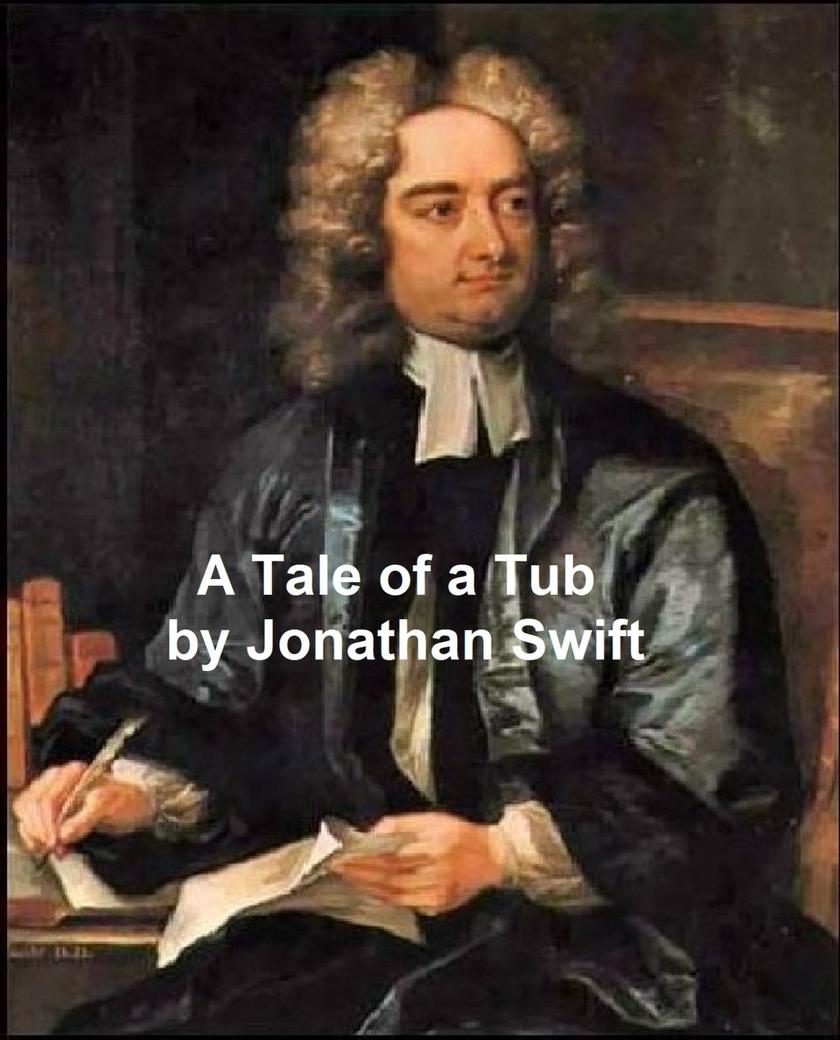
A Tale of a Tub
¥8.09
According to Wikipedia: "Jonathan Swift (30 November 1667 – 19 October 1745) was an Anglo-Irish satirist, essayist, political pamphleteer (first for the Whigs, then for the Tories), poet and cleric who became Dean of St. Patrick's Cathedral, Dublin. He is remembered for works such as Gulliver's Travels, A Modest Proposal, A Journal to Stella, Drapier's Letters, The Battle of the Books, An Argument Against Abolishing Christianity, and A Tale of a Tub. Swift is probably the foremost prose satirist in the English language, and is less well known for his poetry. Swift originally published all of his works under pseudonyms—such as Lemuel Gulliver, Isaac Bickerstaff, M.B. Drapier—or anonymously. He is also known for being a master of two styles of satire: the Horatian and Juvenalian styles."
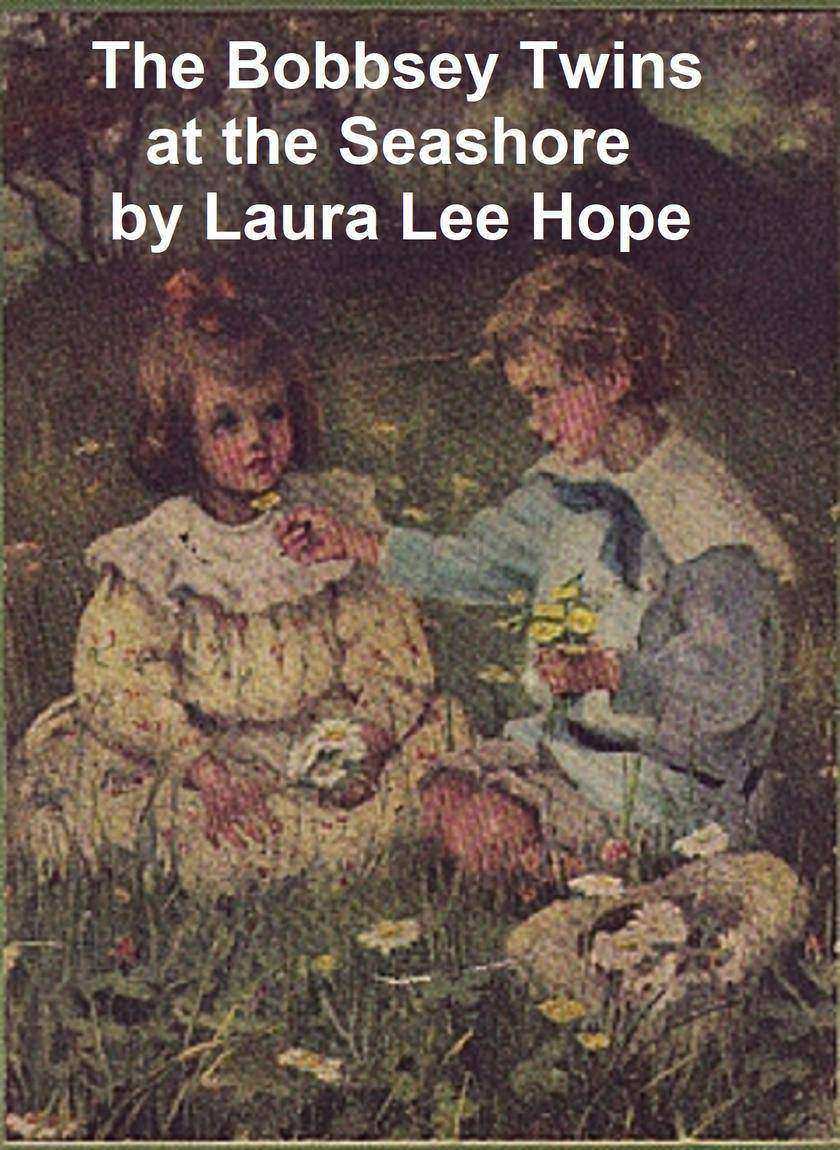
The Bobbsey Twins at the Seashore
¥8.09
According to Wikipedia: "Laura Lee Hope is a pseudonym used by the Stratemeyer Syndicate for the Bobbsey Twins and several other series of children's novels. Actual writers taking up the pen of Laura Lee Hope include Edward Stratemeyer, Howard and Lilian Garis, Elizabeth Ward, Harriet (Stratemeyer) Adams, and Nancy Axelrad. Laura Lee Hope was first used as a pseudonym in 1904 for the debut of the Bobbsey Twins. Series: The Bobbsey Twins (1904-), The Outdoor Girls (23 vols. 1913-1933), The Moving Picture Girls (7 vols. 1914-1916), Bunny Brown (20 vols. 1916-1931), Six Little Bunkers (14 vols. 1918-1930), Make Believe Stories (12 vols. c. 1920-1923), Blythe Girls (12 vols. 1925-1932)."
Sept pièces
¥8.09
Ce fichier comprend: Don Juan ou Le Festin de Pierre (1663); L'Avare (1667); L'?tourdi ou Les Contre-Temps (1653-1658); Le Mariage Forcé (1664); Le Médecin Malgré Lui (1666); Les Précieuses Ridicules (1659); et Sganarelle ou Le Cocu Imaginaire (1660); Selon Wikipedia: "Jean-Baptiste Poquelin, connu surtout sous son nom de scène Molière (15 janvier 1622 - 17 février 1673) était un dramaturge et acteur fran?ais considéré comme l'un des plus grands ma?tres de la comédie dans la littérature occidentale. Les drames les plus connus de Molière sont Le Misanthrope (Le Misanthrope), L'?cole des femmes, Tartuffe ou L'Imposteur, Tartuffe ou l'Hypocrite, L'Avare ou L'?cole du Mensonge. Le Malade imaginaire, et Le Bourgeois gentilhomme, issu d'une famille prospère et ayant étudié au Collège de Clermont (aujourd'hui le Lycée Louis-le-Grand), Molière était bien placé pour débuter une La vie au thé?tre Treize ans en tant qu'acteur itinérant l'ont aidé à peaufiner ses capacités comiques en commen?ant à écrire, en combinant les éléments de la Commedia dell'Arte avec la comédie fran?aise, plus raffinée.

The Matador of the Five Towns and Other Stories
¥8.09
Dodo Collections brings you another classic from Arnold Bennett, ‘"The Matador of the Five Towns and Other Stories."’ ? Twenty-two short stories by Arnold Bennett, mainly set in the 'Five Towns', Bennett's name for the pottery manufacturing towns of the English midlands ? Enoch Arnold Bennett (always known as Arnold Bennett) was one of the most remarkable literary figures of his time, a product of the English Potteries that he made famous as the Five Towns. Yet he could hardly wait to escape his home town, and he did so by the sheer force of his ambition to succeed as an author. In his time he turned his hand to every kind of writing, but he will be remembered for such novels as The Old Wives' Tale, the Clayhanger trilogy (Clayhanger, Hilda Lessways, and These Twain), and The Card. He also wrote such intriguing self-improvement books as Literary Taste, How To Live on 24 Hours a Day, The Human Machine, etc. ? After a local education Bennett finished his education at the University of London and for a time was editor of Woman magazine. After 1900 he devoted himself entirely to writing; dramatic criticism was one of his foremost interests. Bennett is best known, however, for his novels, several of which were written during his residence in France. Bennett's infancy was spent in genteel poverty, which gave way to prosperity as his father succeeded as a solicitor. From this provincial background he became a novelist. His enduring fame is as a Chronicler of the Potteries towns, the setting and inspiration of some of his most famous and enduring literary work and the place where he grew up.

Denry the Audacious
¥8.09
Dodo Collections brings you another classic from Arnold Bennett, ‘"Denry the Audacious."’ ? Like many of Arnold Bennett's works of fiction, the comic novel Denry the Audacious is set among the quaint village lanes of the Potteries District of Staffordshire. It is amidst this humble environment that the one-of-a-kind character Edward Henry Machin emerges from poverty and, largely through the force of his own indomitable will, achieves a measure of power and influence. ? Enoch Arnold Bennett (always known as Arnold Bennett) was one of the most remarkable literary figures of his time, a product of the English Potteries that he made famous as the Five Towns. Yet he could hardly wait to escape his home town, and he did so by the sheer force of his ambition to succeed as an author. In his time he turned his hand to every kind of writing, but he will be remembered for such novels as The Old Wives' Tale, the Clayhanger trilogy (Clayhanger, Hilda Lessways, and These Twain), and The Card. He also wrote such intriguing self-improvement books as Literary Taste, How To Live on 24 Hours a Day, The Human Machine, etc. ? After a local education Bennett finished his education at the University of London and for a time was editor of Woman magazine. After 1900 he devoted himself entirely to writing; dramatic criticism was one of his foremost interests. Bennett is best known, however, for his novels, several of which were written during his residence in France. ? Bennett's infancy was spent in genteel poverty, which gave way to prosperity as his father succeeded as a solicitor. From this provincial background he became a novelist. His enduring fame is as a Chronicler of the Potteries towns, the setting and inspiration of some of his most famous and enduring literary work and the place where he grew up.
Judith, a Play in Three Acts: Founded on the Apocryphal Book of Judith
¥8.09
Dodo Collections brings you another classic from Arnold Bennett, ‘"Judith, a Play in Three Acts; Founded on the Apocryphal Book of Judith."’ ? Enoch Arnold Bennett (always known as Arnold Bennett) was one of the most remarkable literary figures of his time, a product of the English Potteries that he made famous as the Five Towns. Yet he could hardly wait to escape his home town, and he did so by the sheer force of his ambition to succeed as an author. In his time he turned his hand to every kind of writing, but he will be remembered for such novels as The Old Wives' Tale, the Clayhanger trilogy (Clayhanger, Hilda Lessways, and These Twain), and The Card. He also wrote such intriguing self-improvement books as Literary Taste, How To Live on 24 Hours a Day, The Human Machine, etc. ? After a local education Bennett finished his education at the University of London and for a time was editor of Woman magazine. After 1900 he devoted himself entirely to writing; dramatic criticism was one of his foremost interests. Bennett is best known, however, for his novels, several of which were written during his residence in France. ? Bennett's infancy was spent in genteel poverty, which gave way to prosperity as his father succeeded as a solicitor. From this provincial background he became a novelist. His enduring fame is as a Chronicler of the Potteries towns, the setting and inspiration of some of his most famous and enduring literary work and the place where he grew up.
The Wizard
¥8.09
Dodo Collections brings you another classic from H. Rider Haggard, ‘The Wizard’. ? "The Wizard," H. Rider Haggard's 21st novel out of an eventual 58, was initially released as a serial in a publication called "The African Review" and then in its complete form in the October 29, 1896 "Arrowsmith's Christmas Annual for Boys." It was the third of four African novels that Haggard wrote from 1895-97, the others being "Black Heart and White Heart," "Swallow" and "Elissa,". "The Wizard" tells the story of Thomas Owen, a British missionary whom ventures into the wilds of south central Africa to bring the Good Word to a tribe called the Amasuka, or the Children of Fire. ? H. Rider Haggard practically invented the "journey-to-a-lost-civilization" adventure genre, which captured the public's imagination.? He traveled the world, spending much time in southern Africa.? These exotic experiences influenced all his works.? He wrote best-selling adventure stories on a dare. All his writings reflect a deep appreciation of humanity in the midst of extraordinary fantasy and adventure. In all, he wrote over 40 novels. ? Haggard — was an English writer of adventure novels set in exotic locations, predominantly Africa, and a pioneer of the Lost World literary genre. He was also involved in agricultural reform throughout the British Empire. His stories, situated at the lighter end of Victorian literature, continue to be popular and influential. ? His novels portray many of the stereotypes associated with colonialism, yet they are unusual for the degree of sympathy with which the native populations are portrayed. Africans often play heroic roles in the novels, although the protagonists are typically European (though not invariably). Notable examples are the heroic Zulu warrior Umslopogaasi and Ignosi, the rightful king of Kukuanaland, in King Solomon's Mines. Having developed an intense mutual friendship with the three Englishmen who help him regain his throne, he accepts their advice and abolishes witch-hunts and arbitrary capital punishment.
Shakespeare's Pericles in French
¥8.09
Le classique Shakespeare joue en traduction fran?aise. Selon Wikipédia: "Périclès, prince de Tyr est une pièce jacobéenne écrite au moins en partie par William Shakespeare et incluse dans les éditions modernes de ses ?uvres rassemblées malgré des questions sur sa paternité, car elle n'était pas incluse dans le premier folio. conviennent que Shakespeare est responsable de presque exactement la moitié du jeu - 827 lignes - la partie principale après la scène 9 qui suit l'histoire de Périclès et Marina.Les études textuelles modernes indiquent que les deux premiers actes de 835 lignes détaillant les nombreux voyages de Périclès ont été écrits par un collaborateur médiocre, qui suggère fortement d'avoir été l'aviateur, pander, dramaturge et pamphlétaire George Wilkins.
Lady Barbarina Henry
¥8.09
Dodo Collections brings you another classic from James Henry, ‘Lady Barbarina.’ ? Rich and beautiful American girls heading to England to find themselves noble titles through marriage, and using their New World wealth to prop up the waning strength of the aristocracy, was almost a staple of late Victorian literature. "The Buccaneers," Edith Wharton called them, and their day is not over yet (think of Downton Abbey's Earl of Grantham, and his American heiress countess). In Lady Barbarina, however, Henry James explores the obverse of this old tale: what if the wealth is in the hands of an American man, in love with the beautiful daughter of an old and titled (but no longer so very rich) family? Legal marital settlements, common in England, less so in America, can be a problem. Think of them as the Victorian equivalent of modern pre-nuptial contracts, introducing a note, not of suspicion perhaps, but of cautious prudence in what otherwise might be seen as a match of pure love. For all their similarities, Britain and the United States remain divided by three thousand miles of open water. ? Henry James, OM, son of theologian Henry James Sr., brother of the philosopher and psychologist William James and diarist Alice James, was an American-born author, one of the founders and leaders of a school of realism in fiction. He spent much of his life in England and became a British subject shortly before his death. He is primarily known for a series of major novels in which he portrayed the encounter of America with Europe. His plots centered on personal relationships, the proper exercise of power in such relationships, and other moral questions. His method of writing from the point of view of a character within a tale allowed him to explore the phenomena of consciousness and perception, and his style in later works has been compared to impressionist painting.


