Thyrza
¥40.79
Thyrza Trent, a young hat-trimmer, meets and falls in love with Walter Egremont, an Oxford-trained idealist who gives lectures on literature to workers. Trapped by birth and circumstance, Thyrza is attempting to escape her destiny in this tale of ambition, romance, betrayal and disillusionment.
The Secret of the Island
¥40.79
It was now two years and a half since the castaways from the balloon had been thrown on Lincoln Island, and during that period there had been no communication between them and their fellow-creatures. Once the reporter had attempted to communicate with the inhabited world by confiding to a bird a letter which contained the secret of their situation, but that was a chance on which it was impossible to reckon seriously. Ayrton, alone, under the circumstances which have been related, had come to join the little colony.
The Water-Babies: A Fairy Tale for a Land-Baby
¥40.79
Tom is a young chimney sweep, who falls into a river after meeting an upper-class girl named Ellie and being chased out of her house. There he drowns and is transformed into a water-baby. Tom embarks on a series of adventures and lessons, and enjoys the community of other water-babies once he proves himself a moral creature.
Tales of Dostoyevsky, Volume 1
¥40.79
Dostoyevsky is the only psychologist from whom I had something to learn', remarked Friedrich Nietzsche. 'He ranks among the most beautiful strokes of fortune in my life'. Discover the universal truths and wisdoms of Dostoyevsky in this volume of Dostoyevsky's tales including: An Honest Thief, The Heavenly Christmas Tree, The Peasant Marey.
The Devoted Friend
¥40.79
Little Hans spends most of his time gardening and makes a living from sales of his beautiful flowers. Little Hans always treats his neighbours well and even allows neighbouring rich Miller to pick flowers from his garden. But the Miller rarely invites Hans into his house or responds in kind. The Miller instead develops has his own philosophy of friendship: ‘Lots of people act well but very few people talk well, which shows that talking is much the more difficult thing of the two, and much the finer thing also'.
A Woman of No Importance
¥40.79
The play opens with a party on a terrace in Lady Hunstanton's estate. The upper class guests exchange social gossip and small talk. Lady Caroline Pontrefact patronizes an American visitor, Hester Worsley, and proceeds to give her own opinion on everyone in the room and her surrounding life. Lady Caroline also denounces Hester's enthusiasm for Gerald Arbuthnot until Gerald himself enters to proclaim that Lord Illingworth, a powerful, flirtatious male political figure intends to take him under his wing as secretary.
The Model Millionaire
¥40.79
Hughie Erskine is in love and wants to marry, but the girl's father will not allow it, since Erskine has no money. Erskine's friend Alan Trevor is a painter, and he visits him at his studio one day to find him with a pitiable beggar — the model for his painting. Erskine only has one coin, on which he depends for transportation, but he decides he can walk for a couple of weeks and gives the beggar the coin.
The Selfish Giant
¥40.79
Perpetual winter comes to a beautiful garden of the selfish giant who erected a wall around it to stop children playing in the garden. Unexpected consequences follow. The birds stop singing in this garden and both trees and flowers stop blossoming. One day discovers that spring has returned to the garden, as the children have found a way in through a gap in the wall. He sees the error of his ways, and resolves to destroy the wall.
Metaphysics
¥40.79
All men by nature desire to know. An indication of this is the delight we take in our senses; for even apart from their usefulness they are loved for themselves; and above all others the sense of sight. For not only with a view to action, but even when we are not going to do anything, we prefer seeing (one might say) to everything else. The reason is that this, most of all the senses, makes us know and brings to light many differences between things.
The History of Animals
¥40.79
Generally seen as a pioneering work of zoology, Aristotle frames his text by explaining that he is investigating the existing facts about animals. History of Animals is one of the major texts on biology.
The Beauty of Death
¥73.49
"Only in peace can a human being flower in goodness - not in war, not in violence, not in disorder, but only when there is a deep abiding peace. And to understand this whole phenomenon of hate, destruction and disorder, one has to enquire not merely intellectually - because such an enquiry is futile, worthless and has no meaning whatsoever - but actually what order means, what violence means, and the significance of peace; one has to enquire non-verbally, non-intellectually - [intellectual inquiry] really has very little meaning, because most of us have read or indulged in theory what peace should be, how to get rid of violence, and how to establish order.." Krishnamurti gave these talks in India and Europe. The talks span the whole of human existence, exploring what it means to live rightly in a world full of confusion and misery.
The Mirror of Relationship
¥73.49
Within the process of daily relations with people, with nature, and with society, our own causes of sorrow are revealed. 'In relationship the important thing to bear in mind is not the other but oneself,' states Krishnamurti, 'It is within oneself that harmony in relationship can be found, not in another, nor in environment.' (p. 160) This is not cause for isolation but the beginning of a process of self-revelation which creates the foundation for true relationship.
The World Within
¥73.49
"Truth is not something that is mysterious; truth is where you are. From there you can begin. The truth is that I am angry, I am jealous, I am aggressive, I quarrel. That is a fact. So one must begin, if one may most respectfully point out, from where one is. That is why it is important to know yourself, to have complete knowledge of yourself, not from others, not from psychologists, brain specialists and so on, but to know what you are. Because, you are the story of mankind. If you know how to read that book which is yourself, then you know all the activities and brutalities and stupidities of mankind because you are the rest of the world." – J. Krishnamurti Reading the teachings of J. Krishnamurti, one is immediately struck by how personal the words are to one’s own thinking and what a close mirror they are of our human psychological activity. His language is not bound by time, place, or circumstance, and so readers in any era or on any continent can find themselves clearly and compassionately made plain. Krishnamurti’s heuristic approach was typical not only of his dialogues or interviews, but also of his public talks where an attendee in an audience of thousands felt in direct contact with the speaker. His language was simple, without jargon or without any assumptions about the audience by the speaker. Krishnamurti helped the interviewees, without intending to, to see for themselves the intricacies of their thinking and of their problems. During the Second World War (1939-1945) Krishnamurti did not speak publicly in the United States, but lived quietly in Ojai, California. People sought him out and came to dialogue with him on many issues of the times or their own personal dilemmas. Their problems were universal human problems, and each made true his statement that ‘You are the world.’ As Krishnamurti unwound the tight threads of their thinking and feeling, the core or source of a concern was revealed, unadorned and without blame or guilt. After the Second World War years, there was a set of three volumes of interviews with Krishnamurti that appeared worldwide, titled Commentaries on Living. This new book, The World Within, out of the Krishnamurti Archives, is a compendium of additional perennial questions with their timeless answers. The inquiry is still fresh, after seventy years, and readers will find themselves in both the questions and the responses.
What is Right Action
¥73.49
This volume covers talks given in New Zealand, Ojai, New York, South America and Mexico. Krishnamurti begins by stating "What we call problems are merely symptoms, which increase and multiply because we do not tackle the whole life as one but divide it as economic, social or religious problems. ..Now it is my intention to show that so long as we deal with these problems apart, separately, we but increase the misunderstanding, and therefore the conflict, and thereby the suffering and the pain..." An extensive compendium of Krishnamurti's talks and discussions in the USA, Europe, India, New Zealand, and South Africa from 1933 to 1967—the Collected Works have been carefully authenticated against existing transcripts and tapes. Each volume includes a frontispiece photograph of Krishnamurti , with question and subject indexes at the end. The content of each volume is not limited to the subject of the title, but rather offers a unique view of Krishnamurti's extraordinary teachings in selected years. The Collected Works offers the reader the opportunity to explore the early writings and dialogues in their most complete and authentic form.
Action
¥51.91
The passages in this Study Book have been taken directly from Krishnamurti’s talks and books from 1933 through 1967. The compil- ers began by reading all the passages from this period which contained the word action—the theme of this book. This would not have been possible without the use of a full text computer database, produced by the Krishnamurti Foundation Trust of England. Over 750 passages were studied in all, and the aspects of “action” most frequently addressed by Krishnamurti were noted. These aspects then formed the outline for the contents of this book.The material selected has not been altered from the way it was originally printed except for limited correction of spelling, punctua- tion, and missing words. Words or phrases that appear in brackets are not Krishnamurti’s, but have been added by the compilers for the sake of clarity. Ellipses introducing a passage, or ending it, indicate that the passage begins or ends in mid-sentence. Ellipses in the course of a passage indicate words or sentences omitted. A series of asterisks between paragraphs shows that there are paragraphs from that talk which have been omitted. Captions, set off from the body of the text, have been used with many passages. Most captions are statements taken directly from the text, with some being a combination of phrases from the passage.Krishnamurti spoke from such a large perspective that his entire vision was implied in any extended passage. If one wishes to see how a statement flows out of his whole discourse, one can find the full context from the references at the foot of each passage. These refer primarily to talks which have been published in The Collected Works of J. Krishnamurti. This seventeen-volume set covers the entire period from which this study book has been drawn. A complete bibliography is included at the end of this book. Students and scholars may also be interested in additional passages on action not used in the book, available for study upon written request, in the archives of the Krishna- murti Foundation of America.This Study Book aims to give the reader as comprehensive a view as possible, in 140 pages, of the question of action as explored by Krishnamurti during the period covered. Most of the material presented has not been previously published, except in the Verbatim Reports which were produced privately, in limited numbers, primarily for those who attended Krishnamurti’s talks.
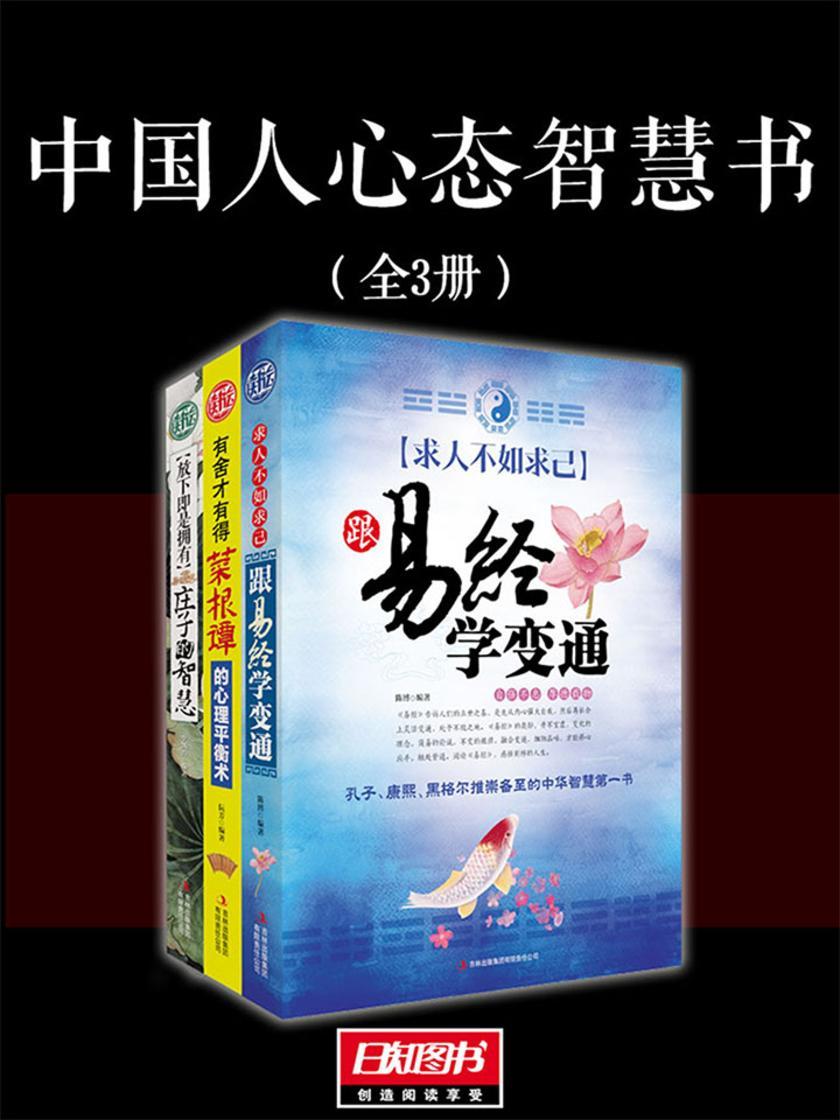
放下心中的尺子——《庄子》哲学50讲(人文大讲堂)
¥28.80
庄子在思维上很通透,在情感上很洒脱,在生活中很有趣,他解构了世间所有的尺子,生成了一种独立自由的人格。庄子思想具有极强的自省与批判精神,以语言、卮言、重言的独特写法,生成了一种不容易被概念化与意识形态化的活泼文本。《庄子》这本书为我们打开了很多扇门,道术,生死,天人,美丑,善恶,真假,梦醒,……每一扇门都是通向自由的方便法门。本书立足学术,面对现实,针对工业化与信息化时代的焦虑、困顿、颓丧等实际生活处境与心灵生态,系统讲解了《庄子》内七篇,引领我们通过自省与批判,解除外在的尺子;通过修身与功夫,解除内在的尺子,身心合一,万物一体,合乎大道而能游刃有余。
重大时代课题与科学理论体系(马克思主义理论研究与当代中国书系)
¥34.00
本书是作者研究党的十八大以来*新时代中国特色社会主义思想的相关成果,从新时代中国特色社会主义的基本支柱、实践基础、根本原则、历史使命、总体布局、安全保证、领导力量、领导方法等方面,系统回答了“新时代坚持和发展什么样的中国特色社会主义、怎样坚持和发展中国特色社会主义”这一重大时代课题,阐述了重大时代课题是科学理论体系的基石。 本书有两大特:*,以新时代中国特色社会主义的重要问题和*新时代中国特色社会主义思想的重要内容为研究对象,具有现实性。第二,研究内容既内含实践逻辑,又内生出理论逻辑,具有思辨性。
On the Duty of Civil Disobedience
¥40.79
In Civil Disobedience Thoreau argues that individuals should not permit governments to overrule or atrophy their consciences, and that they have a duty to avoid allowing such acquiescence to enable the government to make them the agents of injustice.
Meno
¥40.79
This Dialogue begins abruptly with a question of Meno, who asks, 'whether virtue can be taught.' Socrates replies that he does not as yet know what virtue is, and has never known anyone who did. 'Then he cannot have met Gorgias when he was at Athens.' Yes, Socrates had met him, but he has a bad memory, and has forgotten what Gorgias said. Will Meno tell him his own notion, which is probably not very different from that of Gorgias? 'O yes—nothing easier: there is the virtue of a man, of a woman, of an old man, and of a child; there is a virtue of every age and state of life, all of which may be easily described.'
Crito
¥40.79
The Crito seems intended to exhibit the character of Socrates in one light only, not as the philosopher, fulfilling a divine mission and trusting in the will of heaven, but simply as the good citizen, who having been unjustly condemned is willing to give up his life in obedience to the laws of the state . . .
Categories
¥40.79
Categories is a text from Aristotle's Organon that enumerates all the possible kinds of things that can be the subject or the predicate of a proposition. They are considered the single most heavily discussed of all Aristotelian notions.

购物车
个人中心