素书全鉴(珍藏版)
¥23.72
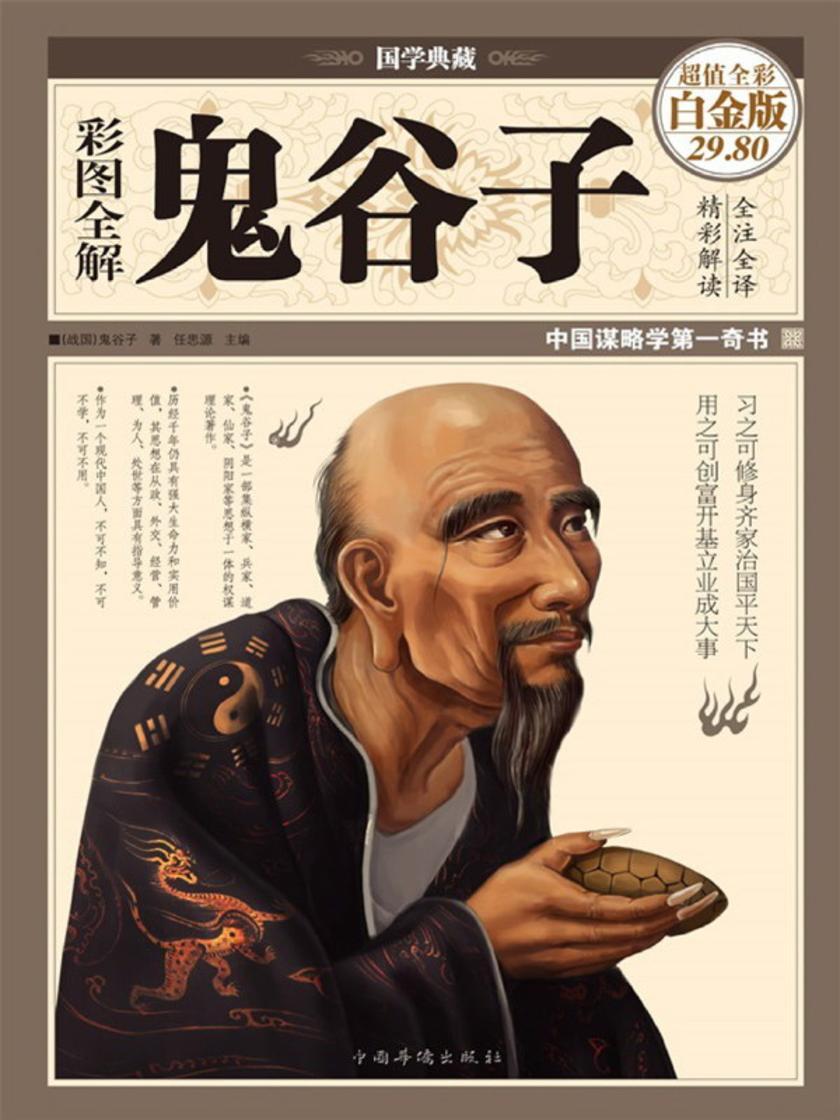
素书全鉴(珍藏版)按原典行了解译,并结合现实予以一步的解读。于《素书》有一个很有名的故事:曾刺杀秦始皇的张良,逃亡到下邳时遇到一位老人,这位老人故意把鞋子丢到桥下,让张良捡起并替他穿上,认定“孺子可教”后传他一卷书,告之“读书则为王者师”。这位老人即黄石公,这卷书即《素书》。《素书》分原始、正道、求人之志、本德宗道、遵义、安礼六章,共一百三十二句。虽只一千三百六十字,但字字珠玑,句句名言,在精准地认识世道、把握人性的基础上,对人生谋略给出了高屋建瓴的指。
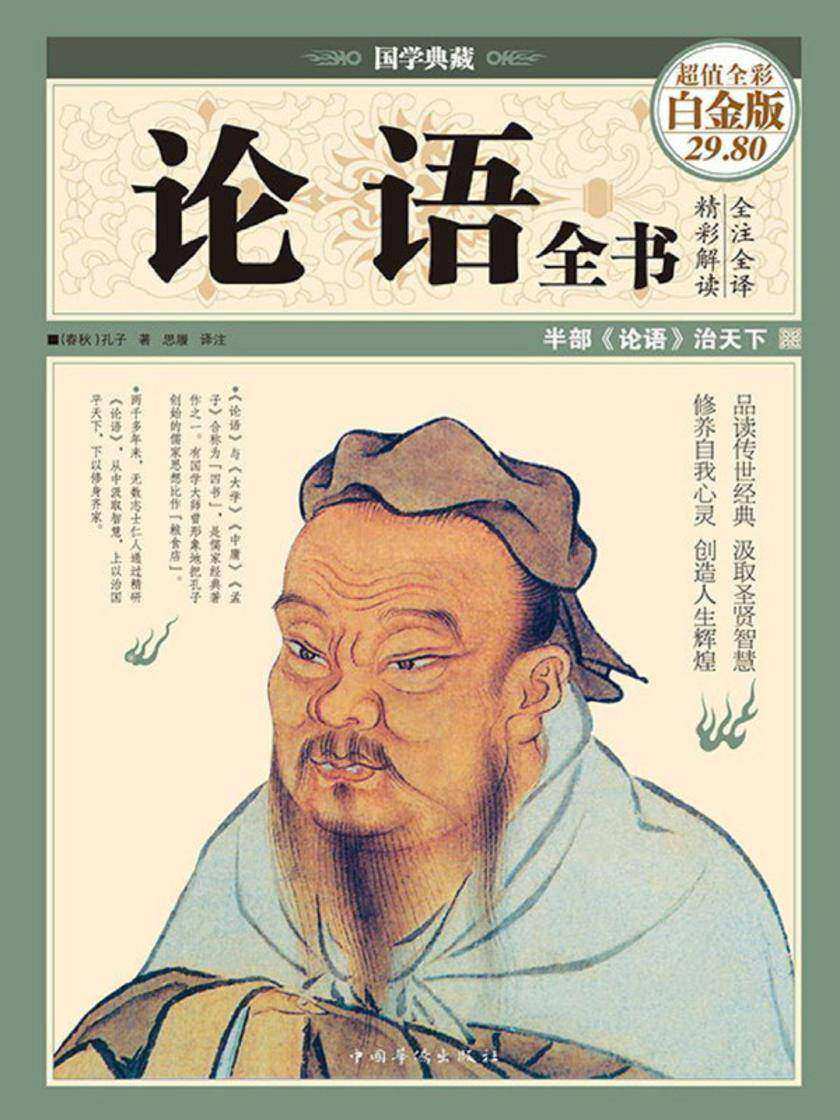
孔子家语通解+论语通解(合售二册)
¥23.98
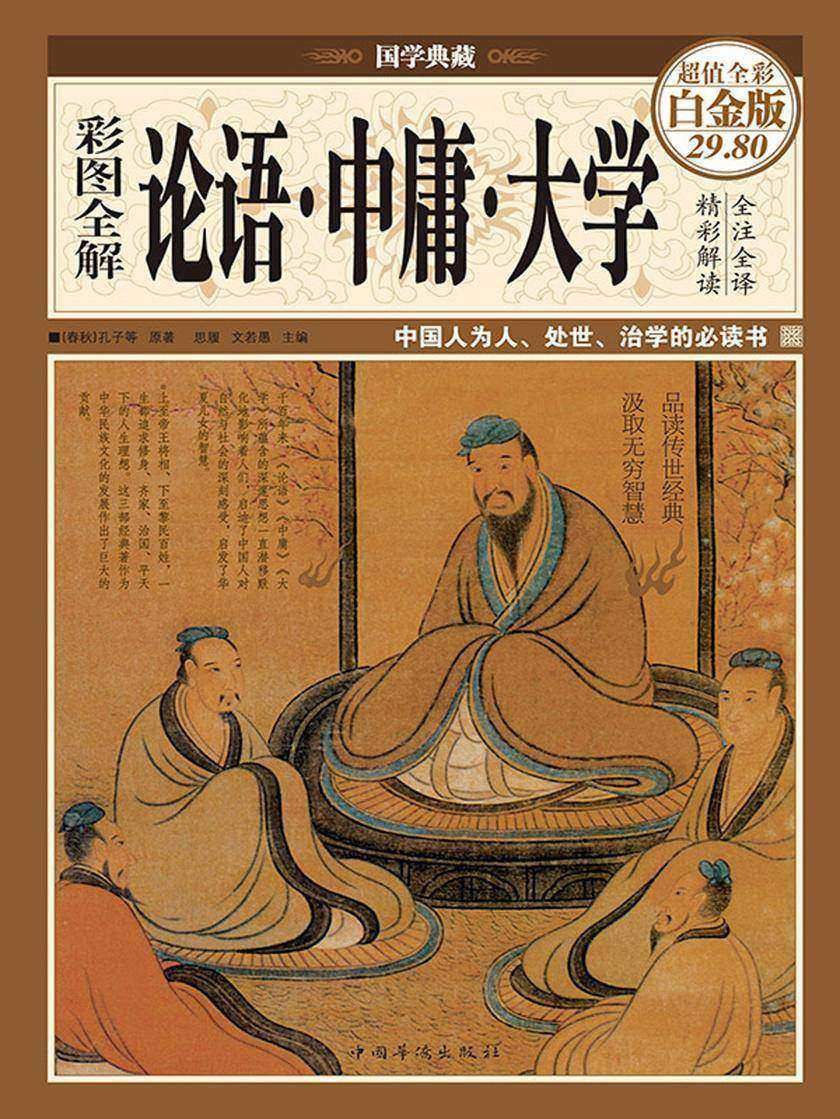
孔子家语通解+论语通解(合售二册),《论语》一书,成于很多人之手。主要是孔子弟子及再传弟子。孔子(前551年~ 前479年),子姓, 孔氏,名丘,字仲尼, 春秋时期鲁国陬邑(今山东曲阜)人,先祖为宋国(今河南商丘市夏邑县)贵族。中国古代的大思想家和大教育家、政治理论家,儒家学派的创始人。相传曾修《诗》、《书》、《礼》、《乐》,序《周易》,撰写《春秋》。他一生从事传道、授业、解惑,被中国人尊称“至圣先师,万世师表”。 相传他有弟子三千,贤弟子七十二人,曾带领部分弟子周游列国。孔子的思想对后世产生了极其深远的影响。孔子死后,其弟子及其再传弟子把孔子及其弟子的言行语录和思想记录下来,整理编成著名的儒家学派经典的《论语》。 《孔子家语》是中国古代记述孔子思想和生平的著作,其内容是自汉朝以前到汉朝早期不断编纂而成,后来王肃对其进行整理,凡二十七卷,现存十卷。《孔子家语》的争议很多。颜师古注《汉书》时,曾指出《孔子家语》二十七卷本“非今所有家语”。王柏《家语考》首先提出《孔子家语》是伪书,清代姚际恒《古今伪书考》、范家相《家语证伪》、孙志祖《家语疏证》,还有崔述、皮锡瑞、王聘珍、丁晏也都认为是伪书。
简而美的哲学小史
¥13.08
简单好读的哲学门书 让自我的哲学探索变成轻松的阅读消遣 在《简而美的哲学小史》中,深奥晦涩的哲学史被划分为极易消化的小板块,让读者可以一次啃完,快速读懂哲学3000年发展过程,轻松掌握120位哲学大师的思想精华,从更具智慧的视角理解什么是哲学,以及哲学的力量所在,激发读者一步学习哲学的欲望,看到不一样的全新自我。
希腊哲学简史
¥12.99
英国古典学家约翰·马歇尔的《希腊哲学简史》,是针对具有一般知识水平的读者撰写的哲学普及读物,大的特点是行文流畅,取材精当,容易为一般读者所理解。这本《希腊哲学简史》还注重哲学家的生平及所处时代特点,尤其善于用少量笔墨引导读者思考哲学与历史、政治的关系,把哲学放在更宏大的背景当中,体现了古典学家所具有的整全视野。 《希腊哲学简史》的译者陆炎,是北京大学西方伦理学研究生,具有深厚的西方哲学功底。陆炎不仅准确、流畅地翻译了全书,还添加了148条注释,便于读者更好地理解原书内容,了解当下希腊哲学研究的新成果。并且,陆炎还为本书撰写了长达两万字的导言,详述希腊哲学研究在中国的传统和历史,开列了详尽的希腊哲学研究相关书目,有志于深入了解希腊哲学的读者,可以按图索骥,通过本书踏入希腊哲学研究的殿堂。 勒所著的《希腊哲学史》基础上撰写而成。 全书行文流畅、取材精当,不仅论述简洁,还注重文本引述,并能很好地引导读者思考哲学与历史、政治的关系,反映出当时学者所具有的整全视野。这本书不仅有益于古典素养的提升,作为古典哲学的经典入门读物,全书呈现出20世纪初英国人文中学注重古典传统的基本状况,这对处在当今时代的我们仍不失借鉴意义。
贺麟中译黑格尔经典著作
¥346.00
《贺麟中译黑格尔经典著作》套装:小逻辑,黑格尔早期神学著作,精神现象学,哲学史讲演录《小逻辑》“贺麟全集”卷本书是《哲学全书纲要》的部分,通称《小逻辑》,以区别于《大逻辑》(即逻辑学)。全书除导言外,共分:存在论、本质论、概念论三篇,反映了黑格尔哲学体系的基本框架。黑格尔的《小逻辑》是构成他的《哲学全书》的一个主要环节,它的好处在于把握住全系统的轮廓和重点,材料分配均匀,文字简奥紧凑,而义蕴深厚。初看似颇难解,及细加咀嚼,愈觉意味无穷,启发人深思。他的学生在他逝世后编订全集时,再附加以学生笔记作为附释,于是使得这书又有了明白晓畅,亲切感人的特点。《黑格尔早期神学著作》“贺麟全集”第八卷《黑格尔早期神学著作》是著名哲学家、翻译家贺麟的重要译著之一,以八十岁高龄自诺尔编黑格尔著《早期神学著作》的德文原版翻译而成,并参考诺克斯与克朗纳的英译本。本书也是身为译介黑格尔至中国人的贺麟先生,生前后一部黑格尔相关译著。其中收入黑格尔著《民众宗教和基督教》《耶稣传》《基督教的权威性》《基督教的精神及其命运》及《1800年体系残篇》等五篇论文,是了解和研究黑格尔早期神学思想的手资料。《精神现象学》(上下)“贺麟全集”第15—16卷新校重排本,黑格尔哲学的“圣经”,深刻影响马克思、海德格尔、伽达默尔的哲学经典,对勘上卷初版与再版修订译文,存历史原貌利研究之便。《精神现象学》为德国古典哲学大师黑格尔阐述其哲学观点和方法论原则的部纲领性巨著。黑格尔自认此书为其哲学体系的导言。马克思誉《精神现象学》为“黑格尔哲学的真正起源和秘密”和“黑格尔哲学的圣经”。黑格尔通过此书提出,精神现象学是关于意识到达“*知识”或“科学”(即哲学)的道路的科学,它为个体提供了一把攀登*知识的“梯子”。中译本由贺麟、王玖兴合译,分上、下卷先后于1962年和1979年由商务印书馆出版。上卷1979年再版时曾修订译文,以与下卷译名统一,本次整理出版“贺麟全集”版,对勘再版所作修改,择其重要者,以编注形式留存上卷初版原貌。《哲学史讲演录》“贺麟全集”第11—14卷全新校对,重新排版,据贺麟手迹修订部分文字;德国古典哲学大师黑格尔天才的著作之一,哲学史的开山之作和经典; 贺麟弟子、著名哲学教授张祥龙参与修订编辑;重新收入苗力田选译黑格尔哲学史相关书信。《哲学史讲演录》是德国古典哲学大师黑格尔的代表作之一,“哲学史”的开山之作,治哲学者之书。黑格尔一方面将哲学史纳入他的客观唯心主义体系的框架中,把哲学史归结为理念回归自身的*精神阶段;另一方面把辩证法贯彻于哲学史研究,深刻地揭示了哲学史的发展规律。20世纪五六十年代,贺麟、王太庆等先生将其译成中文出版,是贺麟先生译述黑格尔的重要成果。本次收入“贺麟全集”出版,解决了之前版本由于出版时间相隔较远而存在的体例不一等问题,更符合当下阅读习惯。
东方哲学与东方宗教
¥69.76
东方,狭义的主要是指中国、日本、印度以及周边的国家和地区,广义的则大致是指欧洲以东,包括从阿拉伯半岛一直到西太平洋的广袤地区。本书的论述范围,取东方之广义。东方是人类文明*早和*重要的发祥地,曾诞生和培育了人类历史上那些*古老、*悠久的文明,如美索不达米亚文明(包括苏美尔文明、巴比伦文明和亚述文明)、埃及文明、印度文明、中国文明等,在“四大文明古国”或“五大文明发祥地”中都占据着举足轻重的地位。后来的希腊文明、罗马文明乃至基督教文化等世界各种文明,都或多或少地受到东方文明的熏陶和影响。在不断的文明创造中,东方孕育了许多在人类历史上产生过重要影响的宗教,如美索不达米亚宗教、古埃及宗教、婆罗门教、佛教、印度教、道教、神道教、琐罗亚斯德教、摩尼教、犹太教等,也创立了自己发达的哲学,如印度哲学、犹太哲学,特别是以儒道为主要代表的中国哲学。本书对东方哲学与宗教做了系统而又简明扼要的介绍和分析,生动展示了东方哲学与宗教的丰富内涵。
边读边悟菜根谭
促销价:¥2.99|¥30.00
常言道:“咬得菜根,百事可做”。明代奇人洪应明将谭以菜根名,化大俗为大雅,变腐朽为神奇,清雅超逸,特标一格,在洞察世情之余,化人间万事。 《菜根谭》将儒、释、道三家之精髓熔冶于一炉,总结处世为人之策略,概括功业成败之智慧,指示修身养性之要义,界分求学问道之真假,指生死名利之玄妙;既主张积极世、经营天下、为民谋福、恩泽后世的取精神,又宣扬亲近自然、悠游山水、独善其身、清静无为的隐逸趣旨,同时也倡导悲夫悯人、普渡众生、透彻禅机、空灵无际的超脱境界。初读《菜根谭》,似杂乱无章、自相矛盾;若深悟其意,方知狡兔三窟、智藏其里;若详悟再三,则如醍醐灌顶,倍觉终身受用无穷。 是故,《莱根谭》在读,读其语谈味长、长空朗月之逸韵,《菜根谭》更在悟,悟其深远意旨、玄机妙合之智慧。因此,本书将《菜根谭》的各种珍本搜集整合,拾遗补阕,并请著名的语言专家动笔亲译,以使读者亲睹原著之真味;同时精选中国古今之经典事例,并加之对《菜根谭》深意与智慧的感悟,字不求工整却显其深刻,句不求华丽而显其实用,力求能掘其精华、发其去机,并让读者受用一二。
反经
¥19.00
一部好书,犹如一个智慧的锦囊,它能带给人们深思、感悟与教益。在丰富、深厚的中国传统文化中,《反经》就是其中的一个瑰宝。 《长短经》是唐代学者赵蕤编写的一本纵横学著作,亦称《反经》。为历代有政绩的帝王将相所共悉,被尊奉为小《资治通鉴》。作者赵蕤也因此显名于世,时人称“赵蕤术数,李白文章”。*也说《资治通鉴》是权谋,是阳谋,《长短经》是阴谋。是诡谋。不管评价是褒是贬,《长短经》的确深地剖析了君臣谋略的利害得失,不失为官场学扬名立万的*范本。 全书分为大体、任长、品目、量才等多方面内容,对治国之术、任人之术、用兵韬略、权变之谋等行了具体的阐释,为现实生活中的思想家、政治家、军事家和实业家提供了卓有成效的谋略武器并展现了无限生机。这无疑具有重大的意义。
查拉图斯特拉如是说(经典哲理典藏品)
¥12.12
《查拉图斯特拉如是说》是尼采的里程碑式的作品,几乎包括了尼采的全部思想。这本以散文诗体写就的杰作,以震聋发聩的奇异灼见和横空出世的警世招语宣讲“超人哲学”和“权力意志”,横扫了基督教所造成的精神奴性的方方面面,谱写了一曲自由主义的人性壮歌,在这本书里,尼采宣告“上帝死了”,让“超人”出世,于是近代人类思想的天空有了一道光耀千年的奇异彩虹。
中国人的修养 (文史哲经典文库)
¥2.00
蔡元培是近代革命家、教育家、政治家,也是中国近代民族学研究的先驱,*首任教育总长,1916-1927年任北京大学校长,在北大“学术”与“自由”之风。 本书主要包括四部分——华工学校讲义(德育三十篇,智育十篇),中学修身教科书上篇,中学修身教科书下篇,关于国民之修养 本书是一部百年罕见的公民道德实践之书,放在现在意义非凡。今天的青年,若想要从我做起,培养健全的人格、塑造合格的公民,《中国人的修养》实具有重要的指导价值。
百年大师经典书系(中国人的修养+中国人的品德+中国人的禅修)(套装共3册)
¥10.00
百年大师经典书系(中国人的修养+中国人的品德+中国人的禅修)(套装共3册)。《中国人的修养》完美结合了中华传统文化中的修身、齐家、治国、平天下与现代公民应具备的素养,通过细微事件,具体、详尽地阐述了建设规范、道德社会的方法,是一部值得所有国人阅读的书。 它主要包括四部分,华工学校讲义(德育三十篇,智育十篇),中学修身教科书上篇,中学修身教科书下篇,关于国民之修养。这是一部百年罕见的公民道德实践之书,放在现在意义非凡。今天中国的青年,若想要从我做起,培养健全的人格、塑造合格的公民,《中国人的修养》实具有重要的指导价值。 《中国人的品德》精选了傅斯年关于中国人的品德与中国文化的深层次思考,主要包括六部分:1中国人的品德,2我们需要什么样的社会和政府,3民主与自由,4事业与人生,5我们需要什么样的文学,6我们需要什么样的教育;这些文章对于处于转型期的中国社会和探索人生的读者极具启示。 《中国人的禅修》阐述了弘一法师关于人生修养与佛学智慧的文章。在这部著作中,弘一法师以大学者、大艺术家的俗家修为,向常人揭示了佛门的真谛和人生的真义。书中收集的弘一法师说佛讲禅的内容,很多是整理出版。在这本著作中,除了弘一法师的著作之外,还有一部分他的演讲稿与处世格言,这些内容被梁实秋、林语堂等名家誉为“一字千金,值得所有人慢慢阅读、慢慢体味、用一生的时间静静领悟”。 弘一大师平生注重实践,本书可谓要言不烦,只要用心品读,定可见大师的慈悲心怀,并用以启迪我们的人生。
每天半小时读懂《菜根谭》
促销价:¥3.99|¥9.90
本书从中国传统文化根源出发,探究人文精神、生存体悟与生活睿智,诠释人生主题,在轻松的意境中,以思辨的方式体悟人生的大智慧。为更好地帮助读者阅读,本书采用了原文与译文对照的编排方式,同时还附有深度解读。书中不仅有至真至纯的说理性文字,更选取了许多富有哲理的小故事,给人带来不一样的人生感悟,相信读过之后会对自己的人生有一种全新的见解。愿你能偷得一点闲暇,找到它,翻开它,品读它,让心灵随着阅读步入另一番境界,看清世界的本源,找到幸福的真谛。
Oglinda spart?
¥33.03
Imagineaz?-?i c? e?ti într-o ma?in? a timpului care te poart? înainte ?i înapoi prin propria via??. Te duce în trecut, la anii copil?riei, când înv??ai s? mergi pe biciclet?, apoi te face s? revezi primul t?u s?rut, cel dintâi serviciu sau anii mai târzii, când te confrun?i, eventual, cu divor?ul. Înso?it de Platon, afl? ce spun marii gânditori ai lumii despre toate aceste pietre de hotar de pe drumul vie?ii noastre. Aristotel î?i va vorbi despre importan?a începerii ?colii, Freud despre îndr?gostire, Heidegger despre implica?iile psihologice ale mutatului, iar Nietzsche despre criza vârstei de mijloc. La drum cu Platon te ajut? s? în?elegi ?i s? vezi cu al?i ochi evenimentele majore, momentele-cheie ?i fazele de tranzi?ie din via?a ta, f?când filosofia s? par? accesibil? ?i plin? de umor!
A fekete vér
¥8.67
The present publication is intended to supply a recognised deficiency in our literature—a library edition of the Essays of Montaigne. This great French writer deserves to be regarded as a classic, not only in the land of his birth, but in all countries and in all literatures. His Essays, which are at once the most celebrated and the most permanent of his productions, form a magazine out of which such minds as those of Bacon and Shakespeare did not disdain to help themselves; and, indeed, as Hallam observes, the Frenchman's literary importance largely results from the share which his mind had in influencing other minds, coeval and subsequent. But, at the same time, estimating the value and rank of the essayist, we are not to leave out of the account the drawbacks and the circumstances of the period: the imperfect state of education, the comparative scarcity of books, and the limited opportunities of intellectual intercourse. Montaigne freely borrowed of others, and he has found men willing to borrow of him as freely. We need not wonder at the reputation which he with seeming facility achieved. He was, without being aware of it, the leader of a new school in letters and morals. His book was different from all others which were at that date in the world. It diverted the ancient currents of thought into new channels. It told its readers, with unexampled frankness, what its writer's opinion was about men and things, and threw what must have been a strange kind of new light on many matters but darkly understood. Above all, the essayist uncased himself, and made his intellectual and physical organism public property. He took the world into his confidence on all subjects. His essays were a sort of literary anatomy, where we get a diagnosis of the writer's mind, made by himself at different levels and under a large variety of operating influences. Of all egotists, Montaigne, if not the greatest, was the most fascinating, because, perhaps, he was the least affected and most truthful. What he did, and what he had professed to do, was to dissect his mind, and show us, as best he could, how it was made, and what relation it bore to external objects. He investigated his mental structure as a schoolboy pulls his watch to pieces, to examine the mechanism of the works; and the result, accompanied by illustrations abounding with originality and force, he delivered to his fellow-men in a book. W. C. H. KENSINGTON, November 1877. THE LIFE OF MONTAIGNE The author of the Essays was born, as he informs us himself, between eleven and twelve o'clock in the day, the last of February 1533, at the chateau of St. Michel de Montaigne. His father, Pierre Eyquem, esquire, was successively first Jurat of the town of Bordeaux (1530), Under-Mayor 1536, Jurat for the second time in 1540, Procureur in 1546, and at length Mayor from 1553 to 1556. He was a man of austere probity, who had "a particular regard for honour and for propriety in his person and attire . . . a mighty good faith in his speech, and a conscience and a religious feeling inclining to superstition, rather than to the other extreme. Between 1556 and 1563 an important incident occurred in the life of Montaigne, in the commencement of his romantic friendship with Etienne de la Boetie, whom he had met, as he tells us, by pure chance at some festive celebration in the town. From their very first interview the two found themselves drawn irresistibly close to one another, and during six years this alliance was foremost in the heart of Montaigne, as it was afterwards in his memory, when death had severed it.
Csupasz csontok
¥58.21
DAVID HUME (1711 – 1776) was a Scottish philosopher, historian, economist, and essayist known especially for his philosophical empiricism and skepticism. He was one of the most important figures in the history of Western philosophy and the Scottish Enlightenment. Hume is often grouped with John Locke, George Berkeley, and a handful of others as a British Empiricist. Beginning with his A Treatise of Human Nature (1739), Hume strove to create a total naturalistic "science of man" that examined the psychological basis of human nature. In stark opposition to the rationalists who preceded him, most notably Descartes, he concluded that desire rather than reason governed human behaviour, saying: "REASON IS, and OUGHT ONLY to BE the SLAVE of the PASSIONS". A prominent figure in the sceptical philosophical tradition and a strong empiricist, he argued against the existence of innate ideas, concluding instead that humans have knowledge only of things they directly experience.. NOTHING is more usual and more natural for those, who pretend to discover anything new to the world in philosophy and the sciences, than to insinuate the praises of their own systems, by decrying all those, which have been advanced before them. And indeed were they content with lamenting that ignorance, which we still lie under in the most important questions, that can come before the tribunal of human reason, there are few, who have an acquaintance with the sciences, that would not readily agree with them. It is easy for one of judgment and learning, to perceive the weak foundation even of those systems, which have obtained the greatest credit, and have carried their pretensions highest to accurate and profound reasoning. Principles taken upon trust, consequences lamely deduced from them, want of coherence in the parts, and of evidence in the whole, these are every where to be met with in the systems of the most eminent philosophers, and seem to have drawn disgrace upon philosophy itself. Nor is there required such profound knowledge to discover the present imperfect condition of the sciences, but even the rabble without doors may, judge from the noise and clamour, which they hear, that all goes not well within. There is nothing which is not the subject of debate, and in which men of learning are not of contrary opinions. The most trivial question escapes not our controversy, and in the most momentous we are not able to give any certain decision. Disputes are multiplied, as if every thing was uncertain; and these disputes are managed with the greatest warmth, as if every thing was certain. Amidst all this bustle it is not reason, which carries the prize, but eloquence; and no man needs ever despair of gaining proselytes to the most extravagant hypothesis, who has art enough to represent it in any favourable colours. The victory is not gained by the men at arms, who manage the pike and the sword; but by the trumpeters, drummers, and musicians of the army. From hence in my opinion arises that common prejudice against metaphysical reasonings of all kinds, even amongst those, who profess themselves scholars, and have a just value for every other part of literature. By metaphysical reasonings, they do not understand those on any particular branch of science, but every kind of argument, which is any way abstruse, and requires some attention to be comprehended. We have so often lost our labour in such researches, that we commonly reject them without hesitation, and resolve, if we must for ever be a prey to errors and delusions, that they shall at least be natural and entertaining. And indeed nothing but the most determined scepticism, along with a great degree of indolence, can justify this aversion to metaphysics. For if truth be at all within the reach of human capacity, it is certain it must lie very deep and abstruse: and to hope we shall arrive at it without pains, while the greatest geniuses have failed with the utmost pains..
Прода?ться все: Джефф Безос та ера Amazon
¥36.79
Dignità o miseria della natura umana? ?C'è un principio supposto prevalere tra molti che è del tutto incompatibile con ogni virtù o senso morale [...] Questo principio è che ogni benevolenza è mera ipocrisia, l'amicizia un inganno, lo spirito pubblico una farsa, la fedeltà un trucco per procurare fiducia e confidenza; e mentre tutti noi, in fondo, perseguiamo solo il nostro interesse privato, indossiamo questi bei travestimenti in modo da abbassare le difese degli altri ed esporli maggiormente alle nostre astuzie e macchinazioni?... Le meditazioni senza tempo di uno dei più grandi filosofi europei. SOMMARIO: Introduzione e avvertenza ai testi / Nota bibliografica: una mappa degli studi (di Fabrizio Pinna) - David Hume: Dignità o miseria della natura umana? / L'Amore di Sé. APPENDICE: Of the Dignity or Meanness of Human Nature; Of Self-love; My Own Life & Letter from Adam Smith, LL. D. to William Strahan, Esq.; Of the Reason of Animals; Of the Immortality of the Soul; Of Superstition and Enthusiasm; Of some Verbal Disputes. LE COLLANE IN/DEFINIZIONI & CON(TRO)TESTI
Liberty Girl
¥19.05
Human reason, in one sphere of its cognition, is called upon to consider questions, which it cannot decline, as they are presented by its own nature, but which it cannot answer, as they transcend every faculty of the mind. It falls into this difficulty without any fault of its own. It begins with principles, which cannot be dispensed with in the field of experience, and the truth and sufficiency of which are, at the same time, insured by experience. With these principles it rises, in obedience to the laws of its own nature, to ever higher and more remote conditions. But it quickly discovers that, in this way, its labours must remain ever incomplete, because new questions never cease to present themselves; and thus it finds itself compelled to have recourse to principles which transcend the region of experience, while they are regarded by common sense without distrust. It thus falls into confusion and contradictions, from which it conjectures the presence of latent errors, which, however, it is unable to discover, because the principles it employs, transcending the limits of experience, cannot be tested by that criterion. The arena of these endless contests is called Metaphysic.Time was, when she was the queen of all the sciences; and, if we take the will for the deed, she certainly deserves, so far as regards the high importance of her object-matter, this title of honour. Now, it is the fashion of the time to heap contempt and scorn upon her; and the matron mourns, forlorn and forsaken, like Hecuba: At first, her gover Modo maxima rerum, Tot generis, natisque potens... Nunc trahor exul, inops. —Ovid, Metamorphoses. xiii under the administration of the dogmatists, was an absolute despotism. But, as the legislative continued to show traces of the ancient barbaric rule, her empire gradually broke up, and intestine wars introduced the reign of anarchy; while the sceptics, like nomadic tribes, who hate a permanent habitation and settled mode of living, attacked from time to time those who had organized themselves into civil communities. But their number was, very happily, small; and thus they could not entirely put a stop to the exertions of those who persisted in raising new edifices, although on no settled or uniform plan. In recent times the hope dawned upon us of seeing those disputes settled, and the legitimacy of her claims established by a kind of physiology of the human understanding—that of the celebrated Locke. But it was found that—although it was affirmed that this so-called queen could not refer her descent to any higher source than that of common experience, a circumstance which necessarily brought suspicion on her claims—as this genealogy was incorrect, she persisted in the advancement of her claims to sovereignty. Thus metaphysics necessarily fell back into the antiquated and rotten constitution of dogmatism, and again became obnoxious to the contempt from which efforts had been made to save it. At present, as all methods, according to the general persuasion, have been tried in vain, there reigns nought but weariness and complete indifferentism—the mother of chaos and night in the scientific world, but at the same time the source of, or at least the prelude to, the re-creation and reinstallation of a science, when it has fallen into confusion, obscurity, and disuse from ill directed effort. I do not mean by this a criticism of books and systems, but a critical inquiry into the faculty of reason, with reference to the cognitions to which it strives to attain without the aid of experience; in other words, the solution of the question regarding the possibility or impossibility of metaphysics, and the determination of the origin, as well as of the extent and limits of this science. All this must be done on the basis of principles. ABOUT AUTHOR: That all our knowledge begins with experience there can be no doubt. For how is it possible that the faculty of cognition should be awakened into exercise otherwise than by means of objects which affect our senses, and partly of themselves produce representations, partly rouse our powers of understanding into activity, to compare to connect, or to separate these, and so to convert the raw material of our sensuous impressions into a knowledge of objects, which is called experience? In respect of time, therefore, no knowledge of ours is antecedent to experience, but begins with it. But, though all our knowledge begins with experience, it by no means follows that all arises out of experience. For, on the contrary, it is quite possible that our empirical knowledge is a compound of that which we receive through impressions, and that which the faculty of cognition supplies from itself (sensuous impressions giving merely the occasion), an addition which we cannot distinguish from the original element given by sense, till long practice has made us attentive to, and skilful in separating it. It is, therefore, a question which requires close investigation, and not to b
Cine a fost Isaac Newton?
¥32.62
Cartea de fa??, pe care cititorul o ?ine acum ?n m?n?, reprezint? o form? – literar vorbind, foarte complex?, fiindc? ea evolueaz? pe mai multe voci narative, dintre care doar unele ?i apar?in ?n mod direct autoarei – de exorcism. Geniul inimii e r?spunsul unui poet la o experien?? personal? plenitudinar?, ?n care bucuria ?i suferin?a se ?ntrep?trund reciproc pentru a exprima, ?mpreun? ?i tensionat, starea de gra?ie. Exist? o voce a experien?ei biografice ?n aceast? carte scris? febril, o alta de martor sau de participant la istorie, tot a?a cum exist? o voce a puterii ?i una a victimei. Deasupra tuturor st?, ?ns?, nu neap?rat triumf?toare, dar lucid-cerebral?, chemarea celor dou? credin?e pentru care merit? s? tr?ie?ti ?i s?-?i rememorezi via?a atunci c?nd ai ajuns cu ea la r?sp?ntie: credin?a ?n cultura modelelor care te-au precedat ?i credin?a deloc ingenu?, ci ivit? din cunoa?tere, ?n sacralitatea profund? a celor tr?ite ?i ?n transcenden??. (?tefan Borbély) A considera un text drept ?carte a ilumin?rilor mele“ ?i a a?eza ca titlu al primei p?r?i a volumului sintagma Povestea subteranei ne plaseaz? sub semnul aproape imposibil al drumului c?tre Sine, al cuprinderii, al denud?rii ?i al efortului de a ?n?elege un obiect al c?rui adev?r se va afla ?ntotdeauna ?n proximitatea pe?terii lui Platon. E un demers perpetuat, dar niciodat? epuizat ?i aproape exclus din plasma comunic?rii, care – ?n situa?ia ?romanului“ Aurei Christi – nu are coresponden?e, nu se apropie de experien?a budhist?, nici de prerogativele ocultismului de New Age, ci ne aduce ?n vecin?tatea ?ndemnului de pe frontispiciul templului lui Apollo din Delphi, preluat apoi, ca solu?ie ?ntre a fi ?i a p?rea, de c?tre Socrate: ?Cunoa?te-te pe tine ?nsu?i!“. Po?i ?nt?lni, pe acest drum, ?i acel daimonion care a str?juit g?ndirea aceluia?i ?n?elept atenian ca alt? fa?? a ?subteranelor“ fiin?ei, acolo unde lumina se ?ngem?neaz? cu ?ntunericul, stare ?poetizat?“ de Goethe, dar pr?bu?it? ?n tragic de Dostoievski. E o cobor?re spre ?n?elegere prin cuprindere ?i, implicit, prin atingerea nelimitatului. (Mircea Braga) Cartea Aurei Christi Geniul inimii pare o st?nc? masiv?, singuratic?, ?ntr-un peisaj ?mioritic“. Geniul inimii are originalitate ?i for??. Prima parte e liric?, a doua (?ntr-un fel) – o comedie negru-satiric?, a treia – predominant epic-narativ?. Prima parte este excelent?; mi-am ?nsemnat un num?r de poezii memorabile. A doua, ?n centrul ei mai ales, are sec?iuni, pasaje extrem de interesant-pl?cute-amuzante, ?n pofida tonului, uneori, foiletonistic. A treia e impresionant? ?n ansamblu, armonios-coerent?, de o sinceritate sf??ietoare. ?n tot volumul, istoricul, religiosul, subiectivul se leag? foarte frumos ?ntre ele. Nu-mi plac laudele la adresa lui Nietzsche! De fapt, cum se leag? acest autor de Biblie, de Evanghelii?! Aura Christi poate fi m?ndr? de o realizare major?, cu totul original?. Probabil, nu l-a citit pe romanticul britanic Wordsworth; dar el e cel care a scris (sau a ?nceput s? scrie) o memorabil? autobiografie ?n versuri. Pu?ini l-au continuat. Am putea spune c? Aura se num?r? printre cei pu?ini. (Virgil Nemoianu)
Аnalyste
¥11.77
O que somos?De onde viemos?!Para onde vamos? A que caminhos a vida nos leva? Essas e outras quest?es aflitivas e de todos os tempos nos s?o solucionadas por León Denis neste opúsculo. Filho da dor, Denis sabe, como você também, o quanto viver, muitas vezes é sofrer. E por isso apresenta, de modo t?o leve a solu??o espírita, racional, para o problema do existir. Mais do que um livro de Filosofia espírita, você tem em m?os palavras de consolo e estímulo para que cada trope?o do caminho seja compreendido e por assim dizer, aproveitado! Venha acompanhar-nos nesta viagem e descubra, em rápidos parágrafos os porquês de sua vida, da nossa vida, do planeta, do Universo.? Aos poucos, entenderemos com a lógica espírita como tudo esta em seu devido lugar.
Dream Psychology: Psychoanalysis the Dreams for Beginners
¥28.04
Ralph Waldo Emerson, was born at Boston in 1803 into a distinguished family of New England Unitarian ministers. His was the eighth generation to enter the ministry in a dynasty that reached back to the earliest days of Puritan America. Despite the death of his father when Emerson was only eleven, he was able to be educated at Boston Latin School and then Harvard, from which he graduated in 1821. After several years of reluctant school teaching, he returned to the Harvard Divinity School, entering the Unitarian ministry during a period of robust ecclesiastic debate. By 1829 Emerson was married and well on his way to a promising career in the church through his appointment to an important congregation in Boston. However, his career in the ministry did not last long. Following the death of his first wife, Ellen, his private religious doubts led him to announce his resignation to his congregation, claiming he was unable to preach a doctrine he no longer believed and that "to be a good minister it was necessary to leave the ministry."With the modest legacy left him from his first wife, Emerson was able to devote himself to study and travel. In Europe he met many of the important Romantic writers whose ideas on art, philosophy, and literature were transforming the writing of the Nineteenth Century. He also continued to explore his own ideas in a series of voluminous journals which he had kept from his earliest youth and from which virtually all of his literary creation would be generated. Taking up residence in Concord, Massachusetts, Emerson devoted himself to study, writing and a series of public lectures in the growing lyceum movement. From these lyceum addresses Emerson developed and then in 1836 published his most important work, Nature. Its publication also coincided with his organizing role in the Transcendental Club, a group of leading New England educators, clergy, and intellectuals interested in idealistic religion, philosophy, and literature.
Nature
¥9.24
The Prince (Italian: Il Principe) is a political treatise by the Italian diplomat, historian and political theorist Niccolò Machiavelli. From correspondence a version appears to have been distributed in 1513, using a Latin title, De Principatibus (About Principalities). But the printed version was not published until 1532, five years after Machiavelli's death. This was done with the permission of the Medici pope Clement VII, but "long before then, in fact since the first appearance of the Prince in manuscript, controversy had swirled about his writings" Although it was written as if it were a traditional work in the Mirror of Princes style, it is generally agreed that it was especially innovative, and not only because it was written in Italian rather than Latin. The Prince is sometimes claimed to be one of the first works of modern philosophy, in which the effective truth is taken to be more important than any abstract ideal. It was also in direct conflict with the dominant Catholic and scholastic doctrines of the time concerning how to consider politics and ethics. Although it is relatively short, the treatise is the most remembered of his works and the one most responsible for bringing "Machiavellian" into wide usage as a pejorative term. It also helped make "Old Nick" an English term for the devil, and even contributed to the modern negative connotations of the words "politics" and "politician" in western countries. In terms of subject matter it overlaps with the much longer Discourses on Livy, which was written a few years later. In its use of examples who were politically active Italians who perpetrated criminal deeds for politics, another lesser-known work by Machiavelli which The Prince has been compared to is the Life of Castruccio Castracani. The descriptions within The Prince have the general theme of accepting that ends of princes, such as glory, and indeed survival, can justify the use of immoral means to achieve those ends.

购物车
个人中心