


 购物车
 个人中心



批判性思维、逻辑论证:有理有据地说服他人(套装3册)
¥49.99
《论证是一门学问》是一本清晰、简洁、实用、有趣的论证规则手册。本手册能够使你的文章、谈话、辩论及论文写作更有理有据,更有说服力,更容易被读者、听众和对手欣然接受。 作者运用大量易于理解、趣味性十足、生活化的例证,归纳了 50 条论证规则,涵盖各学科、各种类型的论证。 本书首先告诉你构建简论的通则:如何从可靠的前提出发,如何理顺思路,如何使自己的论证简明、具体;其次,介绍了举例论证、因果论证和演绎论证,讨论了详论、口头陈述以及议论文写作和公共辩论所应遵循的规则;后,作者又揭开了论证过程中常见的谬误及陷阱。 《思维的模式》是20世纪伟大的思想家怀特海的代表著作之一,书中收录了他的九篇演讲,在这些演讲中,他阐述了自己综合性的思维模式。 现代科学给我们建立了一种思维模式,即在有限前提下作出假定。怀特海反对这种固有的思考模式。 他认为,我们不应该将自己的视野局限于此,而不思索世界和生活的整体。他认为哲学产生于好奇,如果缺乏兴趣,我们对任何问题的探讨都会是机械的。 怀特海所说的兴趣不是建立在对一般环境条件反射的基础之上,不是对琐碎细节的兴趣,他认为高级思维应该在世间万物中间建立联系,每一个事实都包含无限的细节,无限的细节会生发无数的结果。 这种综合的思维模式能够带给我们新颖的思考角度,开拓我们的视野,激发我们的创造力和创新性思维。它能够使我们打破固有的思考方式,建立灵活、多变的思维模式,实现学习、职场和生活的进阶。 《我们如何思维》是著名哲学家、教育学家约翰?杜威的代表作之一,详述了思维的过程和本质,并通过大量实例帮助我们提高思维能力。指出思维的本质并非记忆、听来的故事或偏见,而是经过批判、推理、论证结论之后的信念;提出了反省思维的必要性,表明只有正确思维才能提高规划与谋略能力,获取避免不良后果的措施;提供了进行思维训练的一系列步骤,包括加入逻辑推理要素,进行系统性的推论和试证,引入实例验证思维结果的正确性,等等。有助于我们对思维有一个全新而正确的认识,突破本能的禁锢,跳出思维舒适区,掌握科学有效的思维方法,并终提升实践活动中的效能。
Also sprach Zarathustra
¥8.82
Das Buch besteht aus vier Teilen. Der erste Teil erschien 1883, der zweite und dritte 1884, der vierte 1885 als Privatdruck. 1886 ver?ffentlichte Nietzsche die drei ersten Teile als ?Also sprach Zarathustra. Ein Buch für Alle und Keinen. In drei Teilen.“ Im Gegensatz zu den frühen Werken Nietzsches handelt es sich beim Zarathustra nicht um ein Sachbuch. In hymnischer Prosa berichtet ein personaler Erz?hler vom Wirken eines fiktiven Denkers, der den Namen des Persischen Religionsstifters Zarathustra tr?gt. Nietzsche selbst nennt den Stil, in dem Also sprach Zarathustra geschrieben ist, halkyonisch und wünscht sich Leser, die eines ?gleichen Pathos f?hig und würdig sind“: ?Man muss vor Allem den Ton, der aus diesem Munde kommt, diesen halkyonischen Ton richtig h?ren, um dem Sinn seiner Weisheit nicht erbarmungswürdig Unrecht zu tun“. Dass Nietzsche diese Leserschaft in seiner Gegenwart nicht gesehen hat, legt der Untertitel des Werkes nahe: ?Ein Buch für Alle und Keinen“.

Destine ale reginelor frumuse?ii
¥61.83
Constantin Dobrogeanu-Gherea (1855-1920), critic literar ?i politician intelectual, s-a num?rat printre primii sociologi ai Rom?niei. Lucrarea de fa??, care ?ncheie celebrul studiu Neoiobagia, constituie prima analiz? bine ?ntemeiat? a vie?ii sociale care a caracterizat Rom?nia ?ntre 1866 ?i Al Doilea R?zboi Mondial, fiind o concluzie ?i totodata o sintez? a acestui studiu.Dincolo de cifre ?i de personajele citate, dincolo de obiectele specifice ale analizei, cititorul r?bd?tor poate descoperi c?, sub forma diferit?, vom g?si de data aceasta un fond: fibra profund? din care se ?mpletesc ve?nicele noastre probleme na?ionale.? ?i doar? din cele spuse se vede clar unde rezid? r?ul ??rii. O organiza?ie social? ?i de stat antagonic? ?i contradictorie, care preface institu?iile ei ?n aparen?e ?i minciun?. O via?? politic? ?i economic? plin? de resturi feudale, care nu vor s? moar?, ?i bazat? pe capitalismul modern,care nu poate ?nc? s? tr?iasc?.“ - Constantin Dobrogeanu-Gherea
The Philosophy of Auguste Comte
¥33.11
M. Lévy-Bruhl then explains that, whilst recognising the entire coherence of Comte’s collective labours, he proposes to confine his present study to the earlier and principal work, the Philosophy, which in M. Lévy-Bruhl’s opinion is the dominant and more fruitful composition.??This he regards as the representative work of the nineteenth century, as shown by the intellectual history of the period. He points to its influence on thought in England, in Europe, and in America. It will surprise many persons to learn that in M. Lévy-Bruhl’s opinion two eminent French writers, who assuredly neither were, nor were supposed to be, Positivists, “have done more for the diffusion of the ideas and method of Comte than Littré and all the other Positivists together.” ??These two are Taine and Renan, much as they differed from Comte’s actual scheme and doctrines. Renan indeed spoke of Comte as destined to prove one of the typical names of the century. The present writer remembers Renan saying to him with a most genial welcome, “I too am a believer in the religion of humanity.” ??Professor Lévy-Bruhl followed up his History of Modern Philosophy in France by a substantial work on the philosophy of Auguste Comte. It forms a volume of the Bibliothèque de Philosophie Contemporaine, which has already devoted four other works to the Positive Philosophy. It is as well to premise that this treatise dealt solely with the philosophy, not with the polity, or any part of the religious scheme of Comte. Professor Lévy-Bruhl writes as a student, but not as an adherent of Auguste Comte. His entire work is rather an exposition, not a refutation, or a criticism, or an advocacy of Comte’s philosophical system. But it may be said at once that no one abroad or at home, certainly neither Mill, nor Lewes, nor Spencer, nor Caird, has so truly grasped and assimilated Comte’s ideas as M. Lévy-Bruhl has done.??In his Introduction M. Lévy-Bruhl very clearly states the scope of his work, and his own general attitude. He traces the origin of Comte’s philosophy in the mental effervescence of the first generation of the present century towards a reorganisation of society, after the upheaval left by the Revolution and its consequences. He correctly states the relation of St. Simon to Comte as being that of an initial stimulus. ??The cardinal difference between Comte and all the socialists and founders of social and religious Utopias consisted in this, that Comte saw the necessity of a new system of philosophy as the indispensable preliminary to any reorganisation of society.

Gorgias
¥40.79
In several of the dialogues of Plato, doubts have arisen among his interpreters as to which of the various subjects discussed in them is the main thesis. The speakers have the freedom of conversation; no severe rules of art restrict them, and sometimes we are inclined to think, with one of the dramatis personae in the Theaetetus, that the digressions have the greater interest. Yet in the most irregular of the dialogues there is also a certain natural growth or unity; the beginning is not forgotten at the end, and numerous allusions and references are interspersed, which form the loose connecting links of the whole.
Phaedrus
¥40.79
The Phaedrus is closely connected with the Symposium, and may be regarded either as introducing or following it. The two Dialogues together contain the whole philosophy of Plato on the nature of love, which in the Republic and in the later writings of Plato is only introduced playfully or as a figure of speech. But in the Phaedrus and Symposium love and philosophy join hands, and one is an aspect of the other. The spiritual and emotional part is elevated into the ideal, to which in the Symposium mankind are described as looking forward, and which in the Phaedrus, as well as in the Phaedo, they are seeking to recover from a former state of existence.
On Generation and Corruption
¥40.79
Our next task is to study coming-to-be and passing-away. We are to distinguish the causes, and to state the definitions, of these processes considered in general-as changes predicable uniformly of all the things that come-to-be and pass-away by nature. Further, we are to study growth and 'alteration'. We must inquire what each of them is; and whether 'alteration' is to be identified with coming-to-be, or whether to these different names there correspond two separate processes with distinct natures.
The Critique of Practical Reason
¥40.79
The Critique of Practical Reason follows on from Kant's Critique of Pure Reason and deals with his moral philosophy. The second Critique exercised a decisive influence over the subsequent development of the field of ethics and moral philosophy, beginning with Johann Gottlieb Fichte's Doctrine of Science and becoming, during the 20th century, the principal reference point for deontological moral philosophy.
Fundamental Principles of the Metaphysic of Morals
¥40.79
The first of Immanuel Kant's mature works on moral philosophy and remains one of the most influential in the field. Kant conceives his investigation as a work of foundational ethics, one that clears the ground for future research by explaining the core concepts and principles of moral theory and showing that they are normative for rational agents. Kant aspires to nothing less than this: to lay bare the fundamental principle of morality and show that it applies to us.

The Great Learning
¥40.79
What the great learning teaches, is to illustrate illustrious virtue; to renovate the people; and to rest in the highest excellence. The point where to rest being known, the object of pursuit is then determined; and, that being determined, a calm unperturbedness may be attained to. To that calmness there will succeed a tranquil repose. In that repose there may be careful deliberation, and that deliberation will be followed by the attainment of the desired end.
The Alexandrian Wars: English and Latin Language
¥40.79
When the war broke out at Alexandria, Caesar sent to Rhodes, Syria, and Cilicia, for all his fleet; and summoned archers from Crete, and cavalry from Malchus, king of the Nabatheans. He likewise ordered military engines to be provided, corn to be brought, and forces dispatched to him. Meanwhile he daily strengthened his fortifications by new works; and such parts of the town as appeared less tenable were strengthened with testudos and mantelets. Openings were made in the walls, through which the battering-rams might play; and the fortifications were extended over whatever space was covered with ruins, or taken by force. For Alexandria is in a manner secure from fire, because the houses are all built without joists or wood, and are all vaulted, and roofed with tile or pavement.
The Civil Wars, Book 3
¥40.79
Julius Caesar, holding the election as dictator, was himself appointed consul with Publius Servilius; for this was the year in which it was permitted by the laws that he should be chosen consul. This business being ended, as credit was beginning to fail in Italy, and the debts could not be paid, he determined that arbitrators should be appointed: and that they should make an estimate of the possessions and properties of the debtors, how much they were worth before the war, and that they should be handed over in payment to the creditors. This he thought the most likely method to remove and abate the apprehension of an abolition of debt, the usual consequence of civil wars and dissensions, and to support the credit of the debtors.

O slobodi
¥37.20
Iako je napisao veoma zna?ajne radove iz drugih podru?ja filozofije?(npr. Sistem logike, gde izla?e na?ela induktivnog zaklju?ivanja, ili Utilitarizam, gde izla?e shvatanje da svako treba da dela tako da proizvede najve?u sre?u za najve?i broj ljudi), Mil je najtrajniji utjecaj ostavio svojim radovima iz politi?ke filozofije i etike. Njegovo delo O slobodi smatra se jednim od temeljnih tekstova savremenog liberalizma. U njemu Mil zagovara na?elo da je ljudsku slobodu dozvoljeno ograni?avati samo ukoliko ?teti drugima. Na?elo ?tete, kako se to na?elo ?esto naziva, u svojoj primeni na ure?enje dru?tvenih odnosa isklju?uje sve despotske i autoritarne oblike vlasti koji gu?e slobodu pojedinaca i njihovu individualnost. Od posebne va?nosti za sre?u pojedinca i dru?tva u celini jeste sloboda govora, koja ni?im ne sme biti ograni?ena. Na Milovoj raspravi O slobodi njen prevodilac, kralj Petar I Kara?or?evi?, tvorac dr?ave Srba, Hrvata i Slovenaca, zasnovao je svoj politi?ki program.
Ayk?r? Dü?ünceler
¥18.80
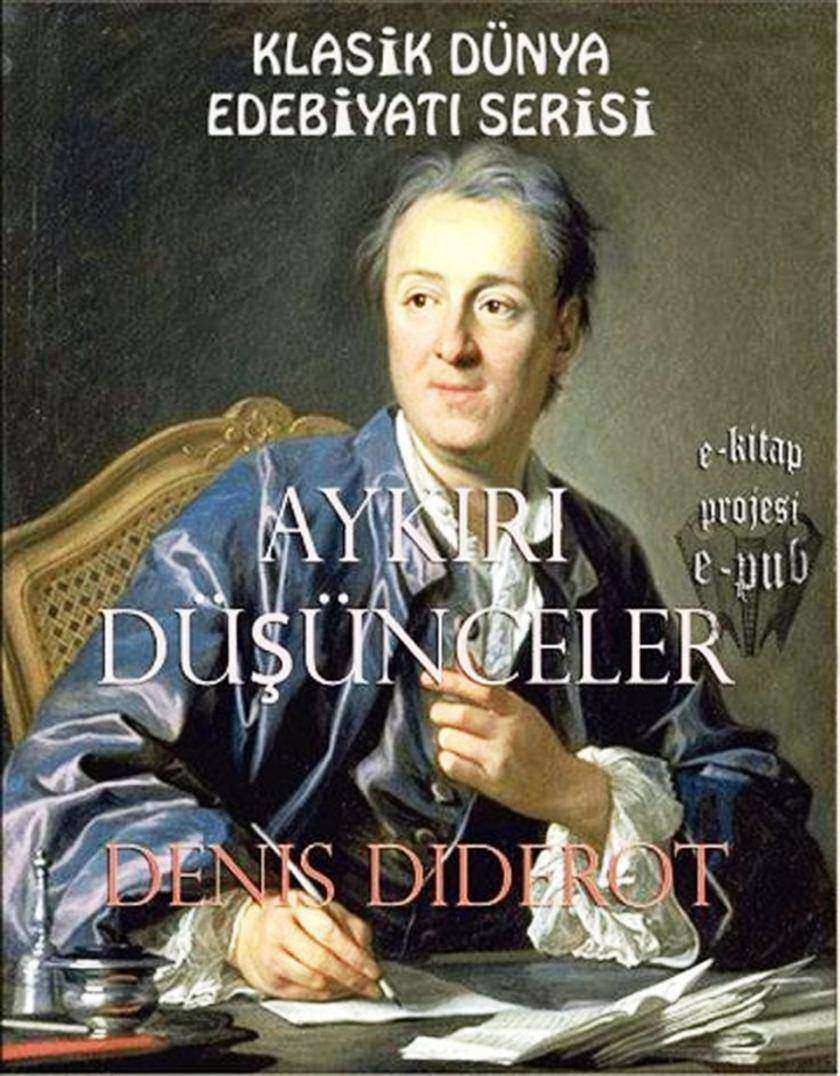
Diderot, tanr?sal, dinsel inanc?n yerine akl? ge?iren adamd?r, onun sava??m? buydu ve bütün k?r inan?lar? silip süpüren bu ak?l, g?rünen dünyay?, do?ay?, felsefenin, sanat?n, sa? t?renin temel ilkesi durumuna getirdi. Diderot’un yayg?n ?al??ma alan?n? olu?turan ilkedir bu. Maddeci ve gerekirci bir filozoftu. tanr?ya inanan ki?inin filozof olmayaca??n? s?yledi. 'K?rler üstüne mektup'taki k?r, kendini tanr?ya inand?rmaya ?al??an misyonere "bunun i?in tanr?ya parma??mla dokunmam gerekir" der. Diderot, bu yüzden hapse girdi. 'D'alembert'in dü?ü'nde, madde tanr?n?n yerini alm??t?r art?k. Madde devinim ve duyarl?l?kla donat?lm??t?r. Bilim gerekircili?in kan?t?d?r. Bütün varl?klar ?z?e birdir ve bir ge?i?, de?i?im, olu?um süreci i?inde bulunurlar. ?yle ise sa? t?renin temeli do?a olacakt?r. Do?as? gere?i insan iyidir, hristiyan sagtoresinin sand??? gibi do?u?tan günahkar de?il ve iyilikler de, k?tülükler de, düzenin, ko?ullar?n, e?itimin ürünüdür. ?nsan, bu gerekircilik anlay??? i?inde, ?zgür olamayaca?? i?in, su?lu da bulunamaz. bu üslama sonucu olarak sanat, do?ay? ?rnek almal?d?r. roman, resim, oyun ger?ek?i olmal?d?r. Diderot, bunlar? s?ylemekle kalmam??, romanlar? ve oyunlar? ile ?rneklendirmi?tir de ve ?a??n?n sanat??lar?n? bu a??dan de?erlendirmi?tir. Diderot, büyük sava??m? ve e?siz ?abas? ile insanl???n ba?tac?d?r bugün de ve onu b?ylesine unutulmaz k?lan i?lerinin ba??nda ise elbet 'ansiklopedi' gelir. 'Ansiklopedi', yunanca enkyklios paidela'dan yap?lm??t?r ve bütün bilimleri i?ine alan ??retim anlam?na gelir. s?zcü?ü bulan rabelais'dir (1532). Diderot ile d'alembert'in ansiklopedisine temel olan yap?t, ?ng?l?z chambers’?n cyelopaedia’s? idi; fakat diderot'nun etkisi ile ansiklopedi, bir ?eviri yap?t olmaktan ??k?p, gizemcili?e kar?? bilimin sava? alan? durumunu ald?. Bu yüzden de gerici ?evrelerin kar?? koymas?n? sonu?lad?. diderot, ya?am? boyunca ?al??t? 'ansiklopedi' i?in, bir?ok maddeyi kendisi yazd?. bu u?urda yepyeni ara?t?rmalara giri?ti, teknik de?i?mekte oldu?u i?in ortaya yeni ara?-gere?ler ??kmakta idi, bunlar? tan?d?, adland?rd?, tan?tt? ve fransa'y? ayd?nlanma ?a??'n?n avrupa'da g?zbebe?i durumuna getirdi. Ancak unutmamal? ki, bir ansiklopedi ortaya ??karan her ülkeyi ayd?nlanma ?a??'n? alg?lam?? sayamay?z. ?o?u ülkede bu tür yap?tlar, geni?letilmi? s?zlükler olmaktan ileri gidememi?tir. diderot’nun ansiklopedisi, toplu bilgi vermekten ?ok, dinsel inan?lara kar?? bilimlerin ??retimini üstlenmi?ti, demek yans?z de?ildi, metafizikle ve skolastikle ?arp???yordu..
Din registrul ideilor ginga?e
¥24.44
Immanuel Kant (1724-1804) este o figur? legendar? a filosofiei germane, opera sa fiind baza ? revolu?iei copernicane“ petrecute ?n istoria g?ndirii ?n plin? er? de av?nt al romantismului. ?n volumul de fa?? sunt cuprinse dou? eseuri foarte pu?in cunoscute publicului amator de filosofie, ?n care vom reg?si g?ndurile filosofului privitoare la ?nceputuri (ale istoriei omenirii) ?i sf?r?ituri (ale lumii ?n general). Scrise dup? celebra triad? a ? Criticilor“, textele poart? amprenta sistemului kantian de g?ndire, dar constituie totodat? ?ncerc?ri remarcabile de abordare a unor subiecte de larg interes, analizate din perspectiva ve?nicei clauze a ? condi?iilor de posibilitate“. Orice minte uman? care va ?ncerca s? cuprind? ?nceputul ?i sf?r?itul se va vedea constr?ns? ?ntr-un fel sau ?n altul de limitele pe care Kant ?ncearc? s? le expun? aici ?n idei c?t mai simple.? Istoria naturii ?ncepe a?adar cu binele, c?ci este lucrarea lui Dumnezeu, iar istoria libert??ii cu r?ul, c?ci este lucrarea oamenilor. Pentru individ, care, ?n exerci?iul libert??ii prive?te doar c?tre sine, o astfel de schimbare a fost o pierdere pentru natur?, ale c?rei scopuri sunt orientate spre oameni ca specie, a fost un c??tig.“

Protagoras
¥40.79
The Protagoras, like several of the Dialogues of Plato, is put into the mouth of Socrates, who describes a conversation which had taken place between himself and the great Sophist at the house of Callias—'the man who had spent more upon the Sophists than all the rest of the world'—and in which the learned Hippias and the grammarian Prodicus had also shared, as well as Alcibiades and Critias, both of whom said a few words—in the presence of a distinguished company consisting of disciples of Protagoras and of leading Athenians belonging to the Socratic circle.

The Analects
¥40.79
Confucius believed that the welfare of a country depended on the moral cultivation of its people, beginning from the nation's leadership. He believed that individuals could begin to cultivate an all-encompassing sense of virtue through ren, and that the most basic step to cultivating ren was devotion to one's parents and older siblings. He taught that one's individual desires do not need to be suppressed, but that people should be educated to reconcile their desires via rituals and forms of propriety, through which people could demonstrate their respect for others and their responsible roles in society.

Oglinda spart?
¥33.03
Imagineaz?-?i c? e?ti într-o ma?in? a timpului care te poart? înainte ?i înapoi prin propria via??. Te duce în trecut, la anii copil?riei, când înv??ai s? mergi pe biciclet?, apoi te face s? revezi primul t?u s?rut, cel dintâi serviciu sau anii mai târzii, când te confrun?i, eventual, cu divor?ul. Înso?it de Platon, afl? ce spun marii gânditori ai lumii despre toate aceste pietre de hotar de pe drumul vie?ii noastre. Aristotel î?i va vorbi despre importan?a începerii ?colii, Freud despre îndr?gostire, Heidegger despre implica?iile psihologice ale mutatului, iar Nietzsche despre criza vârstei de mijloc. La drum cu Platon te ajut? s? în?elegi ?i s? vezi cu al?i ochi evenimentele majore, momentele-cheie ?i fazele de tranzi?ie din via?a ta, f?când filosofia s? par? accesibil? ?i plin? de umor!

Isabel ?i apele diavolului
¥33.03
Tr?s?turi fundamentale ale unei concep?ii moderne despre lume?Cum se comport? filosofia c? art? fa?? de libertatea omului, ce este aceast? libertate, ?i dac? am ajuns s? ne ?mp?rt??im din ea, sau putem ajunge la acest lucru: iat? problema fundamental? a scrierii mele. Toate celelalte expuneri ?tiin?ifice au fost f?cute numai pentru ca, ?n cele din urm?, s? arunc?m ?i mai mult? lumin? asupra unei probleme care, dup? p?rerea mea, prezint? cea mai mare importan?? pentru om. ?n aceste pagini vrem s? d?m o filosofie a libert??ii.“ – Rudolf Steiner

Iubi?i-v? pe tunuri
¥33.03
F?r? a propune o terminologie aristotelic? bine precizat? pe teritoriul limbii rom?ne, transpunerea de fa?? reprezint? un moment important ?n raportarea rom?neasc? la opera Stagiritului.Traducere de ?tefan Bezdechi efectuat? dup? textul grec publicat de W. Christ ?n colec?ia ?Teubner“, Lipsca, 1906. Pentru realizarea ei au fost utilizate urm?toarele surse:Die Metaphysik des Aristoteles, traducere ?n limba german? de J. R. V. Kirchmann, ap?rut? ?n dou? volume ?i prev?zut? cu note ample ?n colec?ia ?Philosophische Bibliothek“, numerele 38 ?i 39, la Berlin, ?n 1871;Aristoteles, Metaphysik, traducere ?n limba german? de Adolf Lasson, ?n care cele patrusprezece c?r?i ale Metafizicii sunt a?ezate ?ntr-o r?nduial? mai logic? dec?t a?a cum au fost transmise ?n originalul grec, traducere ap?rut? ?n 1924, la Jena;Aristote, Métaphysique, traducere ?n limba francez? de J. Tricot, cu o prefa?? de A. Diés, ap?rut? ?n colec?ia ?Bibliothèque des textes philosophiques“, J. Vrin, la Paris, ?n 1933.La marginea textului a fost trecut? pagina?ia edi?iei Bekker, dup? care se fac ?n mod obi?nuit cita?iile din opera lui Aristotel.Confruntarea traducerii a fost f?cut? de prof. Aram M. Frenkian.

MI6. Adev?ruri ?ocante despre istoria serviciilor secrete britanice
¥82.81
Volumul cuprinde dou? din cele mai reprezentative lucr?ri ?n care filosoful german ??i expune concep?ia moral?: ?ntemeierea metafizicii moravurilor (1785) ?i Critica ra?iunii practice (1788). ?n ?ntemeierea metafizicii moravurilor Immanuel Kant expune principiile moralit??ii, iar ?n Critica ra?iunii practice ??i construie?te propriul s?u sistem etic, ceea ce face ca aceasta s? fie considerat?, dup? Critica ra?iunii pure, a doua sa oper? fundamental?.?ntre cele dou? lucr?ri este o at?t de str?ns? leg?tur?, ?nc?t cunoa?terea numai a uneia din ele ne-ar oferi o imagine incomplet? asupra concep?iei sale morale.Immanuel Kant a avansat idei etice ?i ?n alte opere ulterioare (Religia ?n limitele ra?iunii – 1793 sau Metafizica moravurilor – 1797), dar numai ?n cele reunite ?n acest volum se ocup? de problemele teoretice ale moralit??ii.Traducerea a fost f?cut? dup? edi?ia german? din 1956 (Leipzig, Hrsg. Von Raymund Schimidt).


