万本电子书0元读

万本电子书0元读

On the Eve by Ivan Turgenev - Delphi Classics (Illustrated)
Ivan Turgenev
¥8.09
This eBook features the unabridged text of ‘On the Eve by Ivan Turgenev - Delphi Classics (Illustrated)’ from the bestselling edition of ‘The Collected Works of Ivan Turgenev’. Having established their name as the leading publisher of classic literature and art, Delphi Classics produce publications that are individually crafted with superior formatting, while introducing many rare texts for the first time in digital print. The Delphi Classics edition of Turgenev includes original annotations and illustrations relating to the life and works of the author, as well as individual tables of contents, allowing you to navigate eBooks quickly and easily. eBook features: * The complete unabridged text of ‘On the Eve by Ivan Turgenev - Delphi Classics (Illustrated)’ * Beautifully illustrated with images related to Turgenev’s works * Individual contents table, allowing easy navigation around the eBook * Excellent formatting of the text Please visit www.delphiclassics.com to learn more about our wide range of titles

First Love by Ivan Turgenev - Delphi Classics (Illustrated)
Ivan Turgenev
¥8.09
This eBook features the unabridged text of ‘First Love by Ivan Turgenev - Delphi Classics (Illustrated)’ from the bestselling edition of ‘The Collected Works of Ivan Turgenev’. Having established their name as the leading publisher of classic literature and art, Delphi Classics produce publications that are individually crafted with superior formatting, while introducing many rare texts for the first time in digital print. The Delphi Classics edition of Turgenev includes original annotations and illustrations relating to the life and works of the author, as well as individual tables of contents, allowing you to navigate eBooks quickly and easily. eBook features: * The complete unabridged text of ‘First Love by Ivan Turgenev - Delphi Classics (Illustrated)’ * Beautifully illustrated with images related to Turgenev’s works * Individual contents table, allowing easy navigation around the eBook * Excellent formatting of the text Please visit www.delphiclassics.com to learn more about our wide range of titles
Ursule Mirouet by Honoré de Balzac - Delphi Classics (Illustrated)
Honoré de Balzac
¥8.09
This eBook features the unabridged text of ‘Ursule Mirouet by Honoré de Balzac - Delphi Classics (Illustrated)’ from the bestselling edition of ‘The Collected Works of Honoré de Balzac’. Having established their name as the leading publisher of classic literature and art, Delphi Classics produce publications that are individually crafted with superior formatting, while introducing many rare texts for the first time in digital print. The Delphi Classics edition of Balzac includes original annotations and illustrations relating to the life and works of the author, as well as individual tables of contents, allowing you to navigate eBooks quickly and easily. eBook features: * The complete unabridged text of ‘Ursule Mirouet by Honoré de Balzac - Delphi Classics (Illustrated)’ * Beautifully illustrated with images related to Balzac’s works * Individual contents table, allowing easy navigation around the eBook * Excellent formatting of the text Please visit www.delphiclassics.com to learn more about our wide range of titles
Phantoms by Ivan Turgenev - Delphi Classics (Illustrated)
Ivan Turgenev
¥8.09
This eBook features the unabridged text of ‘Phantoms by Ivan Turgenev - Delphi Classics (Illustrated)’ from the bestselling edition of ‘The Collected Works of Ivan Turgenev’. Having established their name as the leading publisher of classic literature and art, Delphi Classics produce publications that are individually crafted with superior formatting, while introducing many rare texts for the first time in digital print. The Delphi Classics edition of Turgenev includes original annotations and illustrations relating to the life and works of the author, as well as individual tables of contents, allowing you to navigate eBooks quickly and easily. eBook features: * The complete unabridged text of ‘Phantoms by Ivan Turgenev - Delphi Classics (Illustrated)’ * Beautifully illustrated with images related to Turgenev’s works * Individual contents table, allowing easy navigation around the eBook * Excellent formatting of the text Please visit www.delphiclassics.com to learn more about our wide range of titles
Delphi Complete Works of Henry Howard, Earl of Surrey (Illustrated)
Henry Howard, Earl of Surrey
¥16.27
One of the most influential and important figures of the Renaissance, Henry Howard, Earl of Surrey was the first poet to use blank verse in English literature, later influencing the works of Shakespeare, Spenser and Milton. This new edition of the bestselling Delphi Poets Series offers superior formatting of the complete surviving works of Surrey, with beautiful illustrations and the usual Delphi bonus material. (Version 1) * Beautifully illustrated with images relating to Surrey's life and works * Concise introduction to the influential early Renaissance poet * Excellent formatting of the poems * Special chronological and alphabetical contents tables for the poetry * Easily locate the poems you want to read * Includes line numbers ? ideal for students * Features a bonus biography - explore Surrey's literary life Please visit www.delphiclassics.com to browse through our range of exciting titles CONTENTS: The Poetry of Surrey BRIEF INTRODUCTION: HENRY HOWARD, EARL OF SURREY The Poems LIST OF POEMS IN CHRONOLOGICAL ORDER LIST OF POEMS IN ALPHABETICAL ORDER The Biography HENRY HOWARD by Sidney Lee Please visit www.delphiclassics.com to browse through our range of exciting titles
The Godson
The Godson
Leo Tolstoy
¥40.79
A son was born to a poor peasant. He rejoiced and went to a neighbour to ask him to stand as godfather to the boy. The neighbour refused. He did not want to be godfather to a poor man’s son. So the peasant went to another neighbour and he, too, refused. He walked from house to house, but could find no one who would be godfather to his son, so he set out to another village.
Four Seasons Cook Book
Josh Verbae
¥40.79
The Four Seasons Cook Book offers complete recipe book for every single day of the year featuring original varied cuisine from all over the world. There is everything in this book from East India Fish to Bavarian Pear Pudding and Russian Pancakes. The book is divided into twelve months of the year giving you something new to try for every single day. Travel the world with this exciting collection of international recipes and enjoy delicious authentic food.
The Athenian Constitution
Aristotle
¥40.79
The Constitution of the Athenians describes the political system of ancient Athens. The treatise was composed between 330 and 322 BC.
The Analects
The Analects
Confucius
¥40.79
Confucius believed that the welfare of a country depended on the moral cultivation of its people, beginning from the nation's leadership. He believed that individuals could begin to cultivate an all-encompassing sense of virtue through ren, and that the most basic step to cultivating ren was devotion to one's parents and older siblings. He taught that one's individual desires do not need to be suppressed, but that people should be educated to reconcile their desires via rituals and forms of propriety, through which people could demonstrate their respect for others and their responsible roles in society.
Laws
Laws
Plato
¥40.79
The Laws are discussed by three representatives of Athens, Crete, and Sparta. The Athenian, as might be expected, is the protagonist or chief speaker, while the second place is assigned to the Cretan, who, as one of the leaders of a new colony, has a special interest in the conversation. At least four-fifths of the answers are put into his mouth. The Spartan is every inch a soldier, a man of few words himself, better at deeds than words. The Athenian talks to the two others, although they are his equals in age, in the style of a master discoursing to his scholars; he frequently praises himself; he entertains a very poor opinion of the understanding of his companions.
55 Χρ?νια Σκ?ψει? & Διαλογισμο?
Αντώνης Αναστασιάδης
¥84.20
Το παρ?ν βιβλ?ο ?55 Χρ?νια Σκ?ψει? & Διαλογισμο?? ε?ναι το απ?σταγμα συνεχο?? προσπ?θεια?, αναζητ?σεων, προβληματισμ?ν, σκ?ψεων και διαλογισμ?ν εν?? ανθρ?που. Με πολυπο?κιλο και ποικιλ?μορφο θεματικ? περιεχ?μενο σε πεζ? κυρ?ω? μα και ποιητικ? λ?γο, τα θ?ματα ε?ναι ?λα απ? την καθημεριν?τητα: Κοινωνικ?, πολιτικ?, φιλοσοφικ?, ερωτικ?, γενικ?τερη? αναζ?τηση? κ.τ.λ.Πολλ? τα ερωτ?ματα που ξεπροβ?λλουν εμπρ?? σε κ?θε σκεπτ?μενο ?νθρωπο που βαδ?ζει το προσωπικ? του μονοπ?τι π?νω στην γη και ο οπο?ο? αναζητε? απαντ?σει? και λ?σει? των προβλημ?των τη? ζω??. Γιατ? αντιμ?χονται οι λαο?; Γιατ? μαλ?νουν οι ?νθρωποι; Τι δυσκολε?ει την ανθρ?πινη επικοινων?α την καθημεριν?; Τι ε?ναι η τ?χνη και η ομορφι?; Τι ε?ναι οι επιστ?με? οι πολλ?? και ποια ε?ναι τα ?ρια του? τα αληθιν?; Πρ?πει να τι? εμπιστευ?μαστε λοιπ?ν; Τι ε?ναι η ?σοφ?α? και η ?ομορφι?? και ποιε? οι γν?σει? που αξ?ζουν τελικ?; Ποια ε?ναι η αλ?θεια η μοναδικ?. Υπ?ρχει γν?ση αντικειμενικ?; Υπ?ρχει το καλ? και το κακ?; Ε?ναι λοιπ?ν τα τρ?α ιδανικ?, η ?Αγ?πη?, η ?Γν?ση? και η ?Αλ?θεια? τελικ?;?τσι λοιπ?ν ξεκ?νησα ?να πρω?, τι? σκ?ρπιε? σκ?ψει? μου αυτ??, το κατακ?θι μια? ολ?κληρη? ζω?? ?λων εκε?νων για τα οπο?α τ?σο πολ? ?χω προβληματιστε? και ?λα τα ερωτ?ματ? μου που ?χουν καταγραφε?, να τα μαζ?ψω ?να πρω?, ?λα αυτ? που ε?χα καταγεγραμμ?να εδ? και εκε?, σε ?να βιβλ?ο προσωπικ? σκ?ψεων και διαλογισμ?ν. Ε?ναι ?να βιβλ?ο τη? ζω?? λοιπ?ν το βιβλ?ο αυτ?, βγαλμ?νο απευθε?α? μ?σα απ? την ζω? που με συγκ?νηση το καταγρ?φω και με περ?σσια περισυλλογ?.Ε?ναι βιβλ?ο τη? ζω?? και απευθ?νεται σε κ?θε σκεπτ?μενο καλοπροα?ρετο και ?ντιμο αναγν?στη αλλ? και σε ηλικ?ε? νεαρ??, που με την καθαρ?τητα που ?χουν στη ψυχ?, πιο ε?κολα κι αντιλαμβ?νονται το ?μορφο, το δ?κιο και το σωστ?. Πεν?ντα π?ντε χρ?νια σκ?ψεων και διαλογισμ?ν ε?ναι το βιβλ?ο αυτ?. Ε?ναι μια αναζ?τηση τη? ?Αγ?πη??, τη? ?Γν?ση?? και τη? ?Αλ?θεια?
Canoeing in the wilderness
Henry David Thoreau
¥40.79
At the time Thoreau made this wilderness canoe trip he was forty years old. The record of the journey is the latter half of his The Maine Woods, which is perhaps the finest idyl of the forest ever written. It is particularly charming in its blending of meditative and poetic fancies with the minute description of the voyager’s experiences.
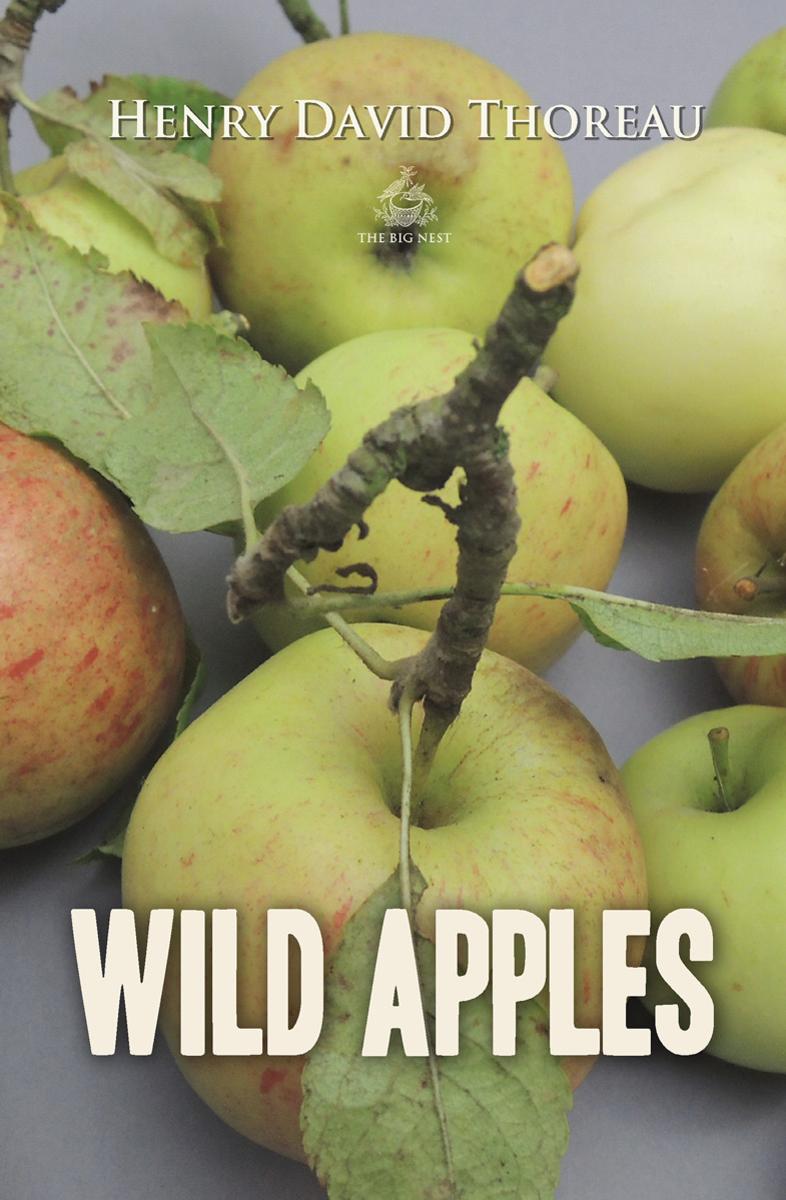
Wild Apples
Wild Apples
Henry David Thoreau
¥40.79
It is remarkable how closely the history of the Apple-tree is connected with that of man. The geologist tells us that the order of the Rosaceae, which includes the Apple, also the true Grasses, and the Labiatae, or Mints, were introduced only a short time previous to the appearance of man on the globe.
Protagoras
Protagoras
Plato
¥40.79
The Protagoras, like several of the Dialogues of Plato, is put into the mouth of Socrates, who describes a conversation which had taken place between himself and the great Sophist at the house of Callias—'the man who had spent more upon the Sophists than all the rest of the world'—and in which the learned Hippias and the grammarian Prodicus had also shared, as well as Alcibiades and Critias, both of whom said a few words—in the presence of a distinguished company consisting of disciples of Protagoras and of leading Athenians belonging to the Socratic circle.
On Generation and Corruption
Aristotle
¥40.79
Our next task is to study coming-to-be and passing-away. We are to distinguish the causes, and to state the definitions, of these processes considered in general-as changes predicable uniformly of all the things that come-to-be and pass-away by nature. Further, we are to study growth and 'alteration'. We must inquire what each of them is; and whether 'alteration' is to be identified with coming-to-be, or whether to these different names there correspond two separate processes with distinct natures.
Gorgias
Gorgias
Plato
¥40.79
In several of the dialogues of Plato, doubts have arisen among his interpreters as to which of the various subjects discussed in them is the main thesis. The speakers have the freedom of conversation; no severe rules of art restrict them, and sometimes we are inclined to think, with one of the dramatis personae in the Theaetetus, that the digressions have the greater interest. Yet in the most irregular of the dialogues there is also a certain natural growth or unity; the beginning is not forgotten at the end, and numerous allusions and references are interspersed, which form the loose connecting links of the whole.
Phaedrus
Phaedrus
Plato
¥40.79
The Phaedrus is closely connected with the Symposium, and may be regarded either as introducing or following it. The two Dialogues together contain the whole philosophy of Plato on the nature of love, which in the Republic and in the later writings of Plato is only introduced playfully or as a figure of speech. But in the Phaedrus and Symposium love and philosophy join hands, and one is an aspect of the other. The spiritual and emotional part is elevated into the ideal, to which in the Symposium mankind are described as looking forward, and which in the Phaedrus, as well as in the Phaedo, they are seeking to recover from a former state of existence.
The Philosophy of Auguste Comte
Lucien Lévy Bruhl
¥33.11
M. Lévy-Bruhl then explains that, whilst recognising the entire coherence of Comte’s collective labours, he proposes to confine his present study to the earlier and principal work, the Philosophy, which in M. Lévy-Bruhl’s opinion is the dominant and more fruitful composition.??This he regards as the representative work of the nineteenth century, as shown by the intellectual history of the period. He points to its influence on thought in England, in Europe, and in America. It will surprise many persons to learn that in M. Lévy-Bruhl’s opinion two eminent French writers, who assuredly neither were, nor were supposed to be, Positivists, “have done more for the diffusion of the ideas and method of Comte than Littré and all the other Positivists together.” ??These two are Taine and Renan, much as they differed from Comte’s actual scheme and doctrines. Renan indeed spoke of Comte as destined to prove one of the typical names of the century. The present writer remembers Renan saying to him with a most genial welcome, “I too am a believer in the religion of humanity.” ??Professor Lévy-Bruhl followed up his History of Modern Philosophy in France by a substantial work on the philosophy of Auguste Comte. It forms a volume of the Bibliothèque de Philosophie Contemporaine, which has already devoted four other works to the Positive Philosophy. It is as well to premise that this treatise dealt solely with the philosophy, not with the polity, or any part of the religious scheme of Comte. Professor Lévy-Bruhl writes as a student, but not as an adherent of Auguste Comte. His entire work is rather an exposition, not a refutation, or a criticism, or an advocacy of Comte’s philosophical system. But it may be said at once that no one abroad or at home, certainly neither Mill, nor Lewes, nor Spencer, nor Caird, has so truly grasped and assimilated Comte’s ideas as M. Lévy-Bruhl has done.??In his Introduction M. Lévy-Bruhl very clearly states the scope of his work, and his own general attitude. He traces the origin of Comte’s philosophy in the mental effervescence of the first generation of the present century towards a reorganisation of society, after the upheaval left by the Revolution and its consequences. He correctly states the relation of St. Simon to Comte as being that of an initial stimulus. ??The cardinal difference between Comte and all the socialists and founders of social and religious Utopias consisted in this, that Comte saw the necessity of a new system of philosophy as the indispensable preliminary to any reorganisation of society.
Ultimii martori
Ultimii martori
Svetlana Aleksievici
¥51.50
Lucrarea aceasta se bazeaz? pe teza de doctorat a autorului, sus?inut? ?n iunie 2008, Problema drept??ii ?i restituirea propriet??ilor ?n Rom?nia post-decembrist?, fiind ?ns? o versiune modificat? a tezei. Dup? cum m?rturise?te autorul, unele pasaje tehnice au fost adaptate, pentru a putea fi u?or inteligibile pentru publicul larg. Cartea de fa?? este rezultatul unor ample cercet?ri, ?ncepute ?n 2002. ?Nu mai cred c? principala datorie a filosofului moral este de a produce ?solu?ii? (sentin?e) la problemele etice percepute ca atare ?ntr-un univers social. […] La fel ca ?ntr-un tribunal, pledoariile sunt utile, ?i e bine s? se foloseasc? de argumente c?t mai puternice ?i mai rafinate. Dar, la fel cum cercetarea ?n materie de drept nu-?i poate propune ca obiectiv principal producerea de pledoarii specific avoca?ilor (cu toate c? examinarea fundamentelor legii poate conferi o greutate suplimentar? unei pledoarii particulare sau alteia), tot a?a cercetarea de ordin etic nu-?i poate propune ca obiectiv ceva similar pledoariilor.“ Con?inutul este organizat ?n 7 capitole, concluzii ?i o bibliografie, util? f?r? ?ndoial? pentru oricine ar dori s? aprofundeze chestiunile abordate de autor. Introducerea este urmat? de o discu?ie conceptual? ?i metodologic? despre repara?ie (capitolul 2), rectificare, restitu?ie, drepturile de proprietate ?i evaluarea moral? a restitu?iei. Celelalte capitole se ocup? de urm?toarele teme: nedreptatea na?ionaliz?rii (capitolul 3), restitu?ia post-comunist? (capitolul 4), argumentul coasian (capitolul 5), restitu?ia ?i dreptatea transgenera?ional? (capitolul 6), principiul nozickian al rectific?rii nedrept??ilor (capitolul 7). ?Am ?ncercat apoi s? analizez ce anume presupune c?utarea unui r?spuns la o ?ntrebare de tipul ?Este restitu?ia justificat? ?? (?n 2.3.) Rezultatul important, cred, a fost acela c? nu exist? un r?spuns simplu, ?i c? o astfel de ?ntrebare este prost formulat?. Am propus ?n loc alte cinci ?ntreb?ri, mai precise : dac? actul na?ionaliz?rii a fost unul nedrept, dac? o politic? restitutiv? risc? sau nu s? ?ndrepte o nedreptate trecut? ?nf?ptuind o alta, dac? putem identifica cu precizie obiectele restitu?iei ?i dac? orizontul temporal introduce elemente importante ?n cadrul de evaluare moral? (at?t ca atare, c?t ?i ?n dimensiunea sa intergenera?ional?). ?n primul r?nd, putem afirma c? politica aleas? imediat dup? 1989 (cea a men?inerii status-quo-ului, ?n speran?a c? lucrurile se vor rezolva cumva de la sine sau ca o solu?ie ideal? se va prezenta ?n mod miraculos) a fost at?t lipsit? de vreo justificare moral?, c?t ?i neinspirat? din punct de vedere pragmatic.“
Also sprach Zarathustra
Friedrich Nietzsche
¥8.82
Das Buch besteht aus vier Teilen. Der erste Teil erschien 1883, der zweite und dritte 1884, der vierte 1885 als Privatdruck. 1886 ver?ffentlichte Nietzsche die drei ersten Teile als ?Also sprach Zarathustra. Ein Buch für Alle und Keinen. In drei Teilen.“ Im Gegensatz zu den frühen Werken Nietzsches handelt es sich beim Zarathustra nicht um ein Sachbuch. In hymnischer Prosa berichtet ein personaler Erz?hler vom Wirken eines fiktiven Denkers, der den Namen des Persischen Religionsstifters Zarathustra tr?gt. Nietzsche selbst nennt den Stil, in dem Also sprach Zarathustra geschrieben ist, halkyonisch und wünscht sich Leser, die eines ?gleichen Pathos f?hig und würdig sind“: ?Man muss vor Allem den Ton, der aus diesem Munde kommt, diesen halkyonischen Ton richtig h?ren, um dem Sinn seiner Weisheit nicht erbarmungswürdig Unrecht zu tun“. Dass Nietzsche diese Leserschaft in seiner Gegenwart nicht gesehen hat, legt der Untertitel des Werkes nahe: ?Ein Buch für Alle und Keinen“.
Din registrul ideilor ginga?e
Zarifopol Paul
¥24.44
Immanuel Kant (1724-1804) este o figur? legendar? a filosofiei germane, opera sa fiind baza ? revolu?iei copernicane“ petrecute ?n istoria g?ndirii ?n plin? er? de av?nt al romantismului. ?n volumul de fa?? sunt cuprinse dou? eseuri foarte pu?in cunoscute publicului amator de filosofie, ?n care vom reg?si g?ndurile filosofului privitoare la ?nceputuri (ale istoriei omenirii) ?i sf?r?ituri (ale lumii ?n general). Scrise dup? celebra triad? a ? Criticilor“, textele poart? amprenta sistemului kantian de g?ndire, dar constituie totodat? ?ncerc?ri remarcabile de abordare a unor subiecte de larg interes, analizate din perspectiva ve?nicei clauze a ? condi?iilor de posibilitate“. Orice minte uman? care va ?ncerca s? cuprind? ?nceputul ?i sf?r?itul se va vedea constr?ns? ?ntr-un fel sau ?n altul de limitele pe care Kant ?ncearc? s? le expun? aici ?n idei c?t mai simple.? Istoria naturii ?ncepe a?adar cu binele, c?ci este lucrarea lui Dumnezeu, iar istoria libert??ii cu r?ul, c?ci este lucrarea oamenilor. Pentru individ, care, ?n exerci?iul libert??ii prive?te doar c?tre sine, o astfel de schimbare a fost o pierdere pentru natur?, ale c?rei scopuri sunt orientate spre oameni ca specie, a fost un c??tig.“