


 购物车
购物车 个人中心
个人中心
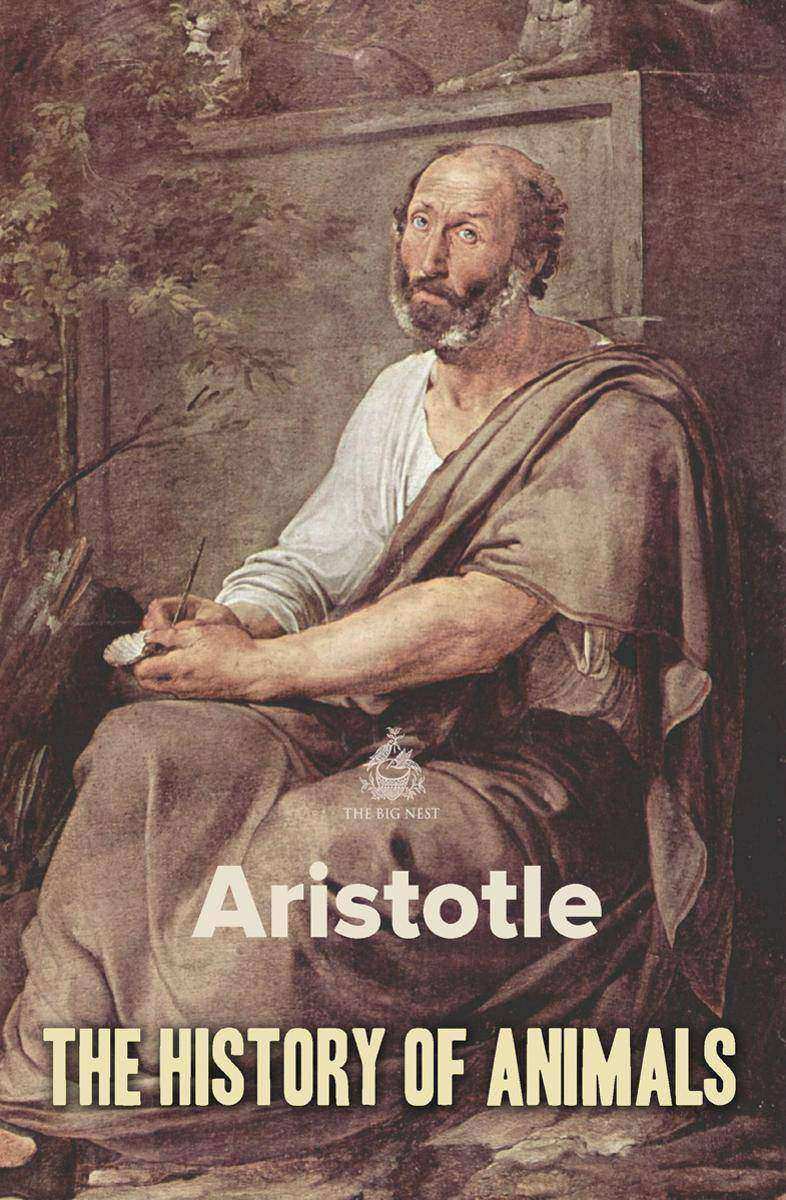
The History of Animals
¥40.79
Generally seen as a pioneering work of zoology, Aristotle frames his text by explaining that he is investigating the existing facts about animals. History of Animals is one of the major texts on biology.
Symposium
¥40.79
Of all the works of Plato the Symposium is the most perfect in form, and may be truly thought to contain more than any commentator has ever dreamed of; or, as Goethe said of one of his own writings, more than the author himself knew. For in philosophy as in prophecy glimpses of the future may often be conveyed in words which could hardly have been understood or interpreted at the time when they were uttered.
Euthyphro
¥40.79
In the Meno, Anytus had parted from Socrates with the significant words: 'That in any city, and particularly in the city of Athens, it is easier to do men harm than to do them good;' and Socrates was anticipating another opportunity of talking with him. In the Euthyphro, Socrates is awaiting his trial for impiety. But before the trial begins, Plato would like to put the world on their trial, and convince them of ignorance in that very matter touching which Socrates is accused. An incident which may perhaps really have occurred in the family of Euthyphro, a learned Athenian diviner and soothsayer, furnishes the occasion of the discussion.
Theaetetus
¥40.79
Some dialogues of Plato are of so various a character that their relation to the other dialogues cannot be determined with any degree of certainty. The Theaetetus, like the Parmenides, has points of similarity both with his earlier and his later writings. The perfection of style, the humour, the dramatic interest, the complexity of structure, the fertility of illustration, the shifting of the points of view, are characteristic of his best period of authorship. The vain search, the negative conclusion, the figure of the midwives, the constant profession of ignorance on the part of Socrates, also bear the stamp of the early dialogues, in which the original Socrates is not yet Platonized.
Sophist
¥40.79
There are no descriptions of time, place or persons, in the Sophist and Statesman, but we are plunged at once into philosophical discussions; the poetical charm has disappeared, and those who have no taste for abstruse metaphysics will greatly prefer the earlier dialogues to the later ones. Plato is conscious of the change, and in the Statesman expressly accuses himself of a tediousness in the two dialogues, which he ascribes to his desire of developing the dialectical method.
On the Gait of Animals
¥40.79
We have now to consider the parts which are useful to animals for movement in place (locomotion); first, why each part is such as it is and to what end they possess them; and second, the differences between these parts both in one and the same creature, and again by comparison of the parts of creatures of different species with one another. First then let us lay down how many questions we have to consider.
Discourse on Inequality
¥40.79
Rousseau first exposes in this work his conception of a human state of nature, presented as a philosophical fiction, and of human perfectibility, an early idea of progress. He then explains the way, according to him, people may have established civil society, which leads him to present private property as the original source and basis of all inequality.
The Social Contract
¥40.79
A book in which Rousseau theorized about the best way to establish a political community in the face of the problems of commercial society, which he had already identified in his Discourse on Inequality. The Social Contract helped inspire political reforms or revolutions in Europe, especially in France. The Social Contract argued against the idea that monarchs were divinely empowered to legislate. Rousseau asserts that only the people, who are sovereign, have that all-powerful right.
The African Wars
¥40.79
Caesar, advancing by moderate journeys, and continuing his march without intermission, arrived at Lilybaeum, on the 14th day before the calends of January. Designing to embark immediately, though he had only one legion of new levies, and not quite six hundred horse, he ordered his tent to be pitched so near the sea-side that the waves lashed the very foot of it. This he did with a view that none should think he had time to delay, and that his men might be kept in readiness at a day or an hour's warning. Though the wind at that time was contrary, he nevertheless detained the soldiers and mariners on board, that he might lose no opportunity of sailing; the rather, because the forces of the enemy were announced by the inhabitants of the province, to consist of innumberable cavalry not to be numbered; four legions headed by Juba, together with a great body of light-armed troops; ten legions under the command of Scipio; a hundred and twenty elephants, and fleets in abundance. Yet he was not alarmed, nor lost his confident hopes and spirits. Meantime the number of galleys and transports increased daily; the new-levied legions flocked in to him from all parts; among the rest the fifth, a veteran legion, and about two thousand horse.
Meno
¥40.79
This Dialogue begins abruptly with a question of Meno, who asks, 'whether virtue can be taught.' Socrates replies that he does not as yet know what virtue is, and has never known anyone who did. 'Then he cannot have met Gorgias when he was at Athens.' Yes, Socrates had met him, but he has a bad memory, and has forgotten what Gorgias said. Will Meno tell him his own notion, which is probably not very different from that of Gorgias? 'O yes—nothing easier: there is the virtue of a man, of a woman, of an old man, and of a child; there is a virtue of every age and state of life, all of which may be easily described.'
Categories
¥40.79
Categories is a text from Aristotle's Organon that enumerates all the possible kinds of things that can be the subject or the predicate of a proposition. They are considered the single most heavily discussed of all Aristotelian notions.
Marcus Aurelius Complete Works – World’s Best Collection: All Works
¥8.09
Marcus Aurelius Complete Works – World’s Best World's Best Collection This is the world’s best Marcus Aurelius collection, including the most complete set of Aurelius’s works available plus many free bonus materials. Marcus Aurelius Marcus Aurelius was a Roman Emperor from 161 to 180, known as one of the last of the Five Good Emperors, and is also considered one of the most important Stoic philosophers. His seminary work ‘Meditations’ has been revered since ancient times, and is still highly influential The ‘Must-Have’ Complete Collection In this irresistible collection you get all Marcus Aurelius’s work, plus several comprehensive and extensive notes, interpretations and annotative notes on his writings. Plus we also include a biography so you can experience the life of the man behind the words, and understand them on an even deeper level. Works Included: Biography Of Marcus Aurelius Antoninus The Philosophy Of Marcus Aurelius Antoninus The Meditations Of Marcus Aurelius Antoninus Your Special Bonuses A Guide To Stoicism: Philosophy Among The Greeks And Romans An in depth look at the philosophy that Aurelius followed and thought on, delving into it’s origins and basis, including chapters on: Logic Ethics Physic Stoicism The history and concepts of the Stoic philosophy, noting a special chapter on Aurelius and how his Stoic philosophy compared to others, including chapters on: Thought And Character Of Socrates Cynics Rise Of Stoicism And Its Relation To The Spirit Of The Age Stoicism At Rome Under The Republic Marcus Aurelius Antoninus, Or Stoicism On The Throne "How to Apply Stoicism in Your Daily Life"?- Written specially for this collection. Get This Collection Right Now This is the best Marcus Aurelius collection you can get, so get it now and start enjoying and being inspired by his world like never before!
Action
¥51.91
The passages in this Study Book have been taken directly from Krishnamurti’s talks and books from 1933 through 1967. The compil- ers began by reading all the passages from this period which contained the word action—the theme of this book. This would not have been possible without the use of a full text computer database, produced by the Krishnamurti Foundation Trust of England. Over 750 passages were studied in all, and the aspects of “action” most frequently addressed by Krishnamurti were noted. These aspects then formed the outline for the contents of this book.The material selected has not been altered from the way it was originally printed except for limited correction of spelling, punctua- tion, and missing words. Words or phrases that appear in brackets are not Krishnamurti’s, but have been added by the compilers for the sake of clarity. Ellipses introducing a passage, or ending it, indicate that the passage begins or ends in mid-sentence. Ellipses in the course of a passage indicate words or sentences omitted. A series of asterisks between paragraphs shows that there are paragraphs from that talk which have been omitted. Captions, set off from the body of the text, have been used with many passages. Most captions are statements taken directly from the text, with some being a combination of phrases from the passage.Krishnamurti spoke from such a large perspective that his entire vision was implied in any extended passage. If one wishes to see how a statement flows out of his whole discourse, one can find the full context from the references at the foot of each passage. These refer primarily to talks which have been published in The Collected Works of J. Krishnamurti. This seventeen-volume set covers the entire period from which this study book has been drawn. A complete bibliography is included at the end of this book. Students and scholars may also be interested in additional passages on action not used in the book, available for study upon written request, in the archives of the Krishna- murti Foundation of America.This Study Book aims to give the reader as comprehensive a view as possible, in 140 pages, of the question of action as explored by Krishnamurti during the period covered. Most of the material presented has not been previously published, except in the Verbatim Reports which were produced privately, in limited numbers, primarily for those who attended Krishnamurti’s talks.
The Critique of Pure Reason
¥40.79
One of the most influential works in the history of philosophy. Known as Kant's First Critique, dealing with questions concerning the foundations and extent of human knowledge, Kant builds on the work of empiricist philosophers such as John Locke and David Hume, as well as taking into account the theories of rationalist philosophers such as Gottfried Wilhelm Leibniz and Christian Wolff.
The African Wars: English and Latin Language
¥40.79
Caesar, advancing by moderate journeys, and continuing his march without intermission, arrived at Lilybaeum, on the 14th day before the calends of January. Designing to embark immediately, though he had only one legion of new levies, and not quite six hundred horse, he ordered his tent to be pitched so near the sea-side that the waves lashed the very foot of it. This he did with a view that none should think he had time to delay, and that his men might be kept in readiness at a day or an hour's warning. Though the wind at that time was contrary, he nevertheless detained the soldiers and mariners on board, that he might lose no opportunity of sailing; the rather, because the forces of the enemy were announced by the inhabitants of the province, to consist of innumberable cavalry not to be numbered; four legions headed by Juba, together with a great body of light-armed troops; ten legions under the command of Scipio; a hundred and twenty elephants, and fleets in abundance. Yet he was not alarmed, nor lost his confident hopes and spirits. Meantime the number of galleys and transports increased daily; the new-levied legions flocked in to him from all parts; among the rest the fifth, a veteran legion, and about two thousand horse.
The Alexandrian Wars
¥40.79
When the war broke out at Alexandria, Caesar sent to Rhodes, Syria, and Cilicia, for all his fleet; and summoned archers from Crete, and cavalry from Malchus, king of the Nabatheans. He likewise ordered military engines to be provided, corn to be brought, and forces dispatched to him. Meanwhile he daily strengthened his fortifications by new works; and such parts of the town as appeared less tenable were strengthened with testudos and mantelets. Openings were made in the walls, through which the battering-rams might play; and the fortifications were extended over whatever space was covered with ruins, or taken by force. For Alexandria is in a manner secure from fire, because the houses are all built without joists or wood, and are all vaulted, and roofed with tile or pavement.
On Memory and Reminiscence
¥40.79
We have, in the next place, to treat of Memory and Remembering, considering its nature, its cause, and the part of the soul to which this experience, as well as that of Recollecting, belongs. For the persons who possess a retentive memory are not identical with those who excel in power of recollection; indeed, as a rule, slow people have a good memory, whereas those who are quick-witted and clever are better at recollecting.
On the Duty of Civil Disobedience
¥40.79
In Civil Disobedience Thoreau argues that individuals should not permit governments to overrule or atrophy their consciences, and that they have a duty to avoid allowing such acquiescence to enable the government to make them the agents of injustice.
The Civil Wars, Book 1
¥40.79
Caesar, although he was not as yet at open enmity with him, determined neither to aid him by his influence nor openly oppose him on this occasion. But the consuls Lentulus and Marcellus, who had previously been on unfriendly terms with Caesar, resolved to use all means in their power to prevent him from gaining his object. Marcellus in particular did not hesitate to offer Caesar other insults. Caesar had lately planned the colony of Novumcomum in Gaul: Marcellus, not content with taking from it the right of citizenship, ordered the principal man of the colony to be arrested and scourged at Rome, and sent him to make his complaints to Caesar: an insult of this description had never before been offered to a Roman citizen.
Crito
¥40.79
The Crito seems intended to exhibit the character of Socrates in one light only, not as the philosopher, fulfilling a divine mission and trusting in the will of heaven, but simply as the good citizen, who having been unjustly condemned is willing to give up his life in obedience to the laws of the state . . .

Il mago di Oz
¥32.54
Nietzsche despre filologia clasic? – iat? un subiect cu adev?rat pasionant, prilej de satisfac?ii unice pentru amatorul de a urm?ri fascinantul spectacol al form?rii ?i al cunoa?terii de sine. C?ci acest subiect ?nseamn?, de fapt, Nietzsche despre el ?nsu?i ?i ?n acest sens pledeaz? chiar propria sa m?rturie – ?Filologii sunt asemenea oameni care folosesc sentimentul ap?s?tor pe care ?l provoac? infirmitatea proprie omului modern pentru a c??tiga cu el bani ?i p?ine. ?i cunosc, eu ?nsumi sunt unul dintre ei“ (Noi, filologii, fr. 170). Mai precis, este vorba despre o ipostaz? a personalit??ii spirituale nietzscheene considerat? din unghiul evolu?iei sale interioare; dar, nu o ipostaz? oarecare, ci una esen?ial?. ?i aceasta nu pentru simplul motiv c? este cea dint?i, ci pentru c? este cea mai profund?, cea care i-a marcat definitiv orizontul de cultur? ?i de g?ndire ?i a l?sat o amprent? durabil? ?n desf??urarea destinului personal al omului. (Vasile Musc?)


