Despre prostie
¥16.27
Volumul cuprinde o culegere de eseuri scrise de un filosof despre c?teva teme fierbin?i ale actualit??ii. Este un exerci?iu de ?angajare“ ?n cotidian, explor?nd statutul ?i ?utilitatea“ abord?rii filosofice ?ntr-o lume care pare s? -?i fi pierdut direc?ia. Valentin Mure?an scrie despre criza filosofiei, despre felul ?n care ar trebui reformat sistemul de ?nv???m?nt, despre anomaliile culturale ale dragostei ori despre secretul construirii unor institu?ii morale. Reflec?iile, amare ?n constat?ri, dar entuziaste ?n construirea solu?iilor, sunt completate de c?teva portrete sentimentale ale unor colegi.
Will Grayson, Will Grayson
¥73.49
Pornind de la leg?tura natural? care se creeaz? ?ntre mam? ?i copil, D.W. Winnicott exploreaz? o serie de probleme cotidiene din via?a unui bebelu? ?i a mamei lui, cum ar fi hr?nirea, pl?nsul ?i joaca, grijile, primele mi?c?ri spre independen??, precum ?i, mai t?rziu, probleme serioase, cum sunt furtul ?i minciuna. Importan?a mamei la ?nceputul vie?ii, timiditatea, educa?ia sexual? ?n ?coal? ?i r?d?cinile agresivit??ii sunt expuse ?ntr-o manier? direct?, accesibil? ?i prietenoas?. Pe parcursul fiec?rui capitol, Winnicott scoate ?n eviden?? abilit??ile ?nn?scute ale mamei ?i ale p?rin?ilor ?n general ?i face diferen?a ?ntre acestea ?i deprinderile care trebuie achizi?ionate de-a lungul timpului de c?tre cei care cresc ?i educ? un copil. Capacitatea voastr? de a ?ti ceea ce este real ?i ceea ce nu este real ?i este de mare ajutor copilului din toate punctele de vedere, pentru c? el nu reu?e?te s? ?n?eleag? dec?t treptat c? lumea nu este a?a cum ne o imagin?m ?i c? imagina?ia nu este chiar ca lumea real?. Dar fiecare are nevoie de cealalt?. ?ti?i prea bine c? primul obiect pe care ?l iube?te bebelu?ul – o buc??ic? de p?tur? sau o juc?rie moale –?nseamn? pentru el o parte din propria persoan? ?i, dac? i o lua?i sau o da?i la sp?lat, este o tragedie. C?nd bebelu?ul ?ncepe s? arunce obiectul iubit ?i alte obiecte (a?tept?ndu-se, desigur, s? le ridice cineva ?i s? i le dea ?napoi), atunci ?ti?i c? a venit momentul ?n care ave?i ?i voi permisiunea de a pleca ?i a v? ?ntoarce. Unele persoane cred c? un copil este ca lutul ?n m?inile unui olar. Ele ?ncep s? ?l modeleze ?i se simt responsabile de ceea ce vor ob?ine. Total gre?it. Dac? asta este ceea ce sim?i?i, ve?i fi cople?i?i de o responsabilitate pe care nu trebuie s? v-o asuma?i. Dac? accepta?i ideea c? bebelu?ul con?ine ?n el tot ce ?i trebuie pentru a tr?i, atunci ve?i putea acorda mai mult? aten?ie procesului de dezvoltare ?i ve?i fi ferici?i s? r?spunde?i nevoilor lui.
Nagyapó mesésk?nyve
¥22.73
...a knyvet ne tekintsük úgy, mint amelynek a fejldése már befejezdtt, és amin már nincs is mit tkéletesíteni... azzal mintha nem foglalkozna senki, hogy a knyvet miként lehetne az olvasó számára használhatóbbá tenni... nagyon is el tudnék képzelni ergonomikusabban megtervezett és knnyebben kézben tartható knyvet is (amelyet nem ejtek el, ha a mobilom után kezdek kotorászni a 6-os villamoson. Ha egyszer vehetünk jobban kézbe ill tollat, akkor talán ez sem képtelenség).”
Evolution of the Culture
¥28.04
Paradise Lost is an epic poem in blank verse by the 17th-century English poet John Milton (1608–1674). The first version, published in 1667, consisted of ten books with over ten thousand lines of verse. A second edition followed in 1674, arranged into twelve books (in the manner of Virgil's Aeneid) with minor revisions throughout and a note on the versification. It is considered by critics to be Milton's "major work", and helped solidify his reputation as one of the greatest English poets of his time. The poem concerns the Biblical story of the Fall of Man: the temptation of Adam and Eve by the fallen angel Satan and their expulsion from the Garden of Eden. Milton's purpose, stated in Book I, is to "justify the ways of God to men" Short Summary:The poem is separated into twelve "books" or sections, the lengths of which vary greatly (the longest is Book IX, with 1,189 lines, and the shortest Book VII, with 640). The Arguments at the head of each book were added in subsequent imprints of the first edition. Originally published in ten books, a fully "Revised and Augmented" edition reorganized into twelve books was issued in 1674, and this is the edition generally used today. The poem follows the epic tradition of starting in medias res (Latin for in the midst of things), the background story being recounted later.Milton's story has two narrative arcs, one about Satan (Lucifer) and the other following Adam and Eve. It begins after Satan and the other rebel angels have been defeated and banished to Hell, or, as it is also called in the poem, Tartarus. In Pand?monium, Satan employs his rhetorical skill to organise his followers; he is aided by Mammon and Beelzebub. Belial and Moloch are also present. At the end of the debate, Satan volunteers to poison the newly created Earth and God's new and most favoured creation, Mankind. He braves the dangers of the Abyss alone in a manner reminiscent of Odysseus or Aeneas. After an arduous traversal of the Chaos outside Hell, he enters God's new material World, and later the Garden of Eden. At several points in the poem, an Angelic War over Heaven is recounted from different perspectives. Satan's rebellion follows the epic convention of large-scale warfare. The battles between the faithful angels and Satan's forces take place over three days. At the final battle, the Son of God single-handedly defeats the entire legion of angelic rebels and banishes them from Heaven. Following this purge, God creates the World, culminating in his creation of Adam and Eve. While God gave Adam and Eve total freedom and power to rule over all creation, He gave them one explicit command: not to eat from the Tree of the knowledge of good and evil on penalty of death.
Heart of Darkness
¥9.07
The Republic (Greek: Politeia) is a Socratic dialogue, written by Plato around 380 BC, concerning the definition of (justice), the order and character of the just city-state and the just man, reason by which ancient readers used the name On Justice as an alternative title (not to be confused with the spurious dialogue also titled On Justice). The dramatic date of the dialogue has been much debated and though it must take place some time during the Peloponnesian War, "there would be jarring anachronisms if any of the candidate specific dates between 432 and 404 were assigned". It is Plato's best-known work and has proven to be one of the most intellectually and historically influential works of philosophy and political theory. In it, Socrates along with various Athenians and foreigners discuss the meaning of justice and examine whether or not the just man is happier than the unjust man by considering a series of different cities coming into existence "in speech", culminating in a city (Kallipolis) ruled by philosopher-kings; and by examining the nature of existing regimes. The participants also discuss the theory of forms, the immortality of the soul, and the roles of the philosopher and of poetry in society. Short Summary (Epilogue):X.1—X.8. 595a—608b. Rejection of Mimetic ArtX.9—X.11. 608c—612a. Immortality of the SoulX.12. 612a—613e. Rewards of Justice in LifeX.13—X.16. 613e—621d. Judgment of the Dead The paradigm of the city — the idea of the Good, the Agathon — has manifold historical embodiments, undertaken by those who have seen the Agathon, and are ordered via the vision. The centre piece of the Republic, Part II, nos. 2–3, discusses the rule of the philosopher, and the vision of the Agathon with the allegory of the cave, which is clarified in the theory of forms. The centre piece is preceded and followed by the discussion of the means that will secure a well-ordered polis (City). Part II, no. 1, concerns marriage, the community of people and goods for the Guardians, and the restraints on warfare among the Hellenes. It describes a partially communistic polis. Part II, no. 4, deals with the philosophical education of the rulers who will preserve the order and character of the city-state.In Part II, the Embodiment of the Idea, is preceded by the establishment of the economic and social orders of a polis (Part I), followed by an analysis (Part III) of the decline the order must traverse. The three parts compose the main body of the dialogues, with their discussions of the “paradigm”, its embodiment, its genesis, and its decline.The Introduction and the Conclusion are the frame for the body of the Republic. The discussion of right order is occasioned by the questions: “Is Justice better than Injustice?” and “Will an Unjust man fare better than a Just man?” The introductory question is balanced by the concluding answer: “Justice is preferable to Injustice”. In turn, the foregoing are framed with the Prologue (Book I) and the Epilogue (Book X). The prologue is a short dialogue about the common public doxai (opinions) about “Justice”. Based upon faith, and not reason, the Epilogue describes the new arts and the immortality of the soul. ? About Author: Plato (Greek: Platon, " 428/427 or 424/423 BC – 348/347 BC) was a philosopher in Classical Greece. He was also a mathematician, student of Socrates, writer of philosophical dialogues, and founder of the Academy in Athens, the first institution of higher learning in the Western world. Along with his mentor, Socrates, and his most-famous student, Aristotle, Plato helped to lay the foundations of Western philosophy and science. Alfred North Whitehead once noted: "the safest general characterization of the European philosophical tradition is that it consists of a series of footnotes to Plato." Plato's sophistication as a writer is evident in his Socratic dialogues; thirty-six dialogues and thirteen letters have been ascribed to him, although 15–18 of them have been contested. Plato's writings have been published in several fashions; this has led to several conventions regarding the naming and referencing of Plato's texts. Plato's dialogues have been used to teach a range of subjects, including philosophy, logic, ethics, rhetoric, religion and mathematics. Plato is one of the most important founding figures in Western philosophy. His writings related to the Theory of Forms, or Platonic ideals, are basis for Platonism. ? Early lifeThe exact time and place of Plato's birth are not known, but it is certain that he belonged to an aristocratic and influential family. Based on ancient sources, most modern scholars believe that he was born in Athens or Aegina between 429 and 423 BC. His father was Ariston. According to a disputed tradition, reported by Diogenes Laertius, Ariston traced his descent from the king of Athens, Codrus, and the king of Messenia, Melanthus. Plato's mother was Perictione, whose family boasted of a relationship with the famous Athenian lawmaker an
A leskel?d?
¥66.79
Within our Society (the International Society for Krishna Consciousness), guru has been taken to be synonymous with diksa-guru, but what about those great souls who have introduced us to Krsna consciousness? What relationship do we have with these Vaisnavas, and what are our obligations toward them, as well as toward parents, teachers, sannyasis, and other superiors who help guide us back to Godhead? Not much has been said by the Society on these topics, and hardly any appreciation is shown for those souls who labor to elevate us day by day.The scriptures, however, glorify as guru all Vaisnavas who guide a conditioned soul back to Godhead — be they instructors or initiators — advocating a culture of honor and respect. ISKCON needs to reflect upon these principles further, and the purpose of this book is to act as a catalyst toward such an end.
周易诵读本(插图版) 中华书局出品
¥21.00
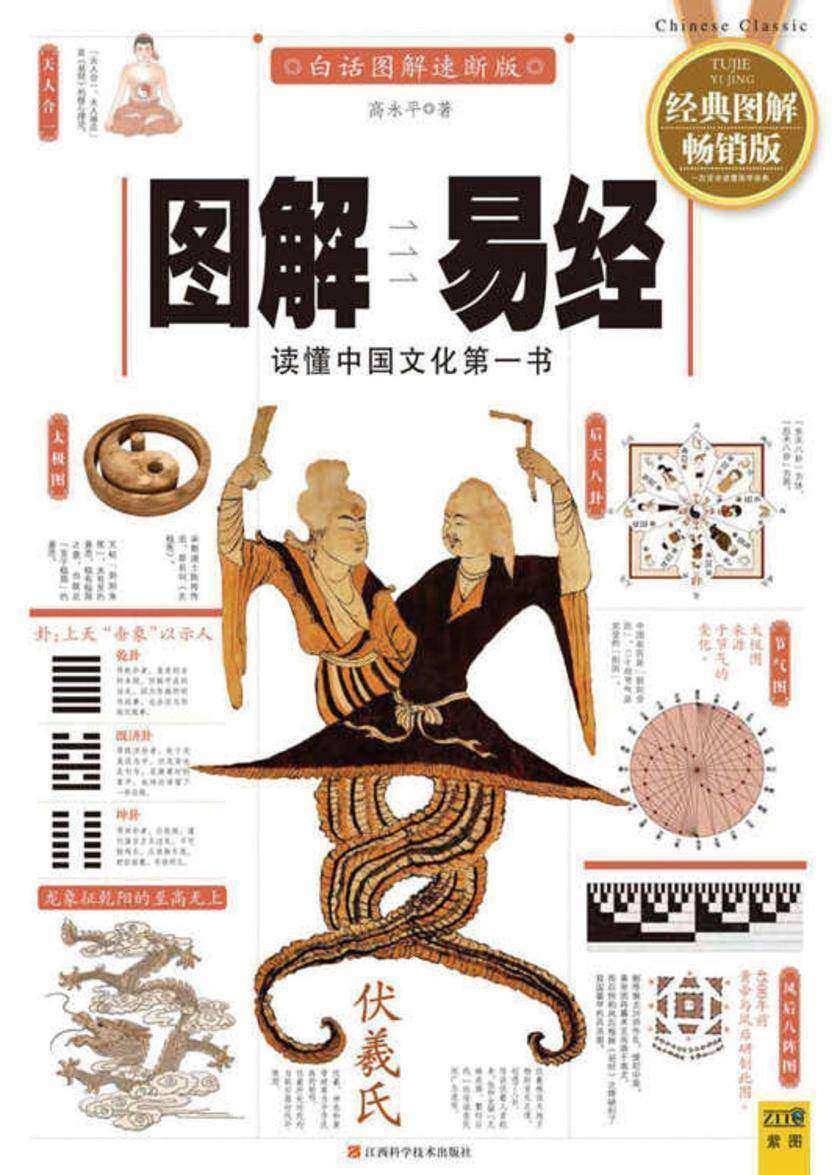
《周易诵读本》(插图版)是“中华经典诵读工程配套读本”之一,专为4—12岁的青少年儿童编写,我们依据版本收录《周易》全文,并附有拼音,对难字、难词、难句做了精炼、准确、易懂的注释,同时,配有大量与文字密切关联的图片,让读者在愉悦的审美中,品味经典的魅力。
Ruins of Ancient Cities: (Volume -II)
¥28.61
More’s “Utopia” was written in Latin, and is in two parts, of which the second, describing the place ([Greek text]—or Nusquama, as he called it sometimes in his letters—“Nowhere”), was probably written towards the close of 1515; the first part, introductory, early in 1516. The book was first printed at Louvain, late in 1516, under the editorship of Erasmus, Peter Giles, and other of More’s friends in Flanders. It was then revised by More, and printed by Frobenius at Basle in November, 1518. It was reprinted at Paris and Vienna, but was not printed in England during More’s lifetime. Its first publication in this country was in the English translation, made in Edward’s VI.’s reign (1551) by Ralph Robinson. It was translated with more literary skill by Gilbert Burnet, in 1684, soon after he had conducted the defence of his friend Lord William Russell, attended his execution, vindicated his memory, and been spitefully deprived by James II. of his lectureship at St. Clement’s. Burnet was drawn to the translation of “Utopia” by the same sense of unreason in high places that caused More to write the book. Burnet’s is the translation given in this volume. The name of the book has given an adjective to our language—we call an impracticable scheme Utopian. Yet, under the veil of a playful fiction, the talk is intensely earnest, and abounds in practical suggestion. It is the work of a scholarly and witty Englishman, who attacks in his own way the chief political and social evils of his time. Beginning with fact, More tells how he was sent into Flanders with Cuthbert Tunstal, “whom the king’s majesty of late, to the great rejoicing of all men, did prefer to the office of Master of the Rolls;” how the commissioners of Charles met them at Bruges, and presently returned to Brussels for instructions; and how More then went to Antwerp, where he found a pleasure in the society of Peter Giles which soothed his desire to see again his wife and children, from whom he had been four months away. Then fact slides into fiction with the finding of Raphael Hythloday (whose name, made of two Greek words [Greek text] and [Greek text], means “knowing in trifles”), a man who had been with Amerigo Vespucci in the three last of the voyages to the new world lately discovered, of which the account had been first printed in 1507, only nine years before Utopia was written. Designedly fantastic in suggestion of details, “Utopia” is the work of a scholar who had read Plato’s “Republic,” and had his fancy quickened after reading Plutarch’s account of Spartan life under Lycurgus. Beneath the veil of an ideal communism, into which there has been worked some witty extravagance, there lies a noble English argument. Sometimes More puts the case as of France when he means England. Sometimes there is ironical praise of the good faith of Christian kings, saving the book from censure as a political attack on the policy of Henry VIII. Erasmus wrote to a friend in 1517 that he should send for More’s “Utopia,” if he had not read it, and “wished to see the true source of all political evils.” And to More Erasmus wrote of his book, “A burgomaster of Antwerp is so pleased with it that he knows it all by heart.” Sir Thomas More, son of Sir John More, a justice of the King’s Bench, was born in 1478, in Milk Street, in the city of London. After his earlier education at St. Anthony’s School, in Threadneedle Street, he was placed, as a boy, in the household of Cardinal John Morton, Archbishop of Canterbury and Lord Chancellor. It was not unusual for persons of wealth or influence and sons of good families to be so established together in a relation of patron and client. The youth wore his patron’s livery, and added to his state. The patron used, afterwards, his wealth or influence in helping his young client forward in the world.
中国佛学特质在禅
¥18.00
对中国禅学的历史脉络做了导览式的介绍,将其演化历程行了分期研究。
Скоропадський. Спогади 1917-1918
¥22.74
Potere, cortigianeria, dispotismo, libertà, uguaglianza... attuali o inattuali la satira d'Holbach e La Boétie? Cambiano i tempi e i nomi, ma la natura umana nel suo fondo negli ultimi secoli non è mutata. Com'è virtù di tutti i classici, le loro voci continuano a farci sorridere, indignare e riflettere non solo sul passato ma ugualmente sul presente e sul futuro, su quanto in esso ci possa essere di desiderabile o indesiderabile. In Appendice, i testi si possono leggere anche nella loro originaria edizione in francese. SOMMARIO?- Fabrizio Pinna, Una introduzione (in due tempi) e qualche digressione: I. Barone d'Holbach, "Quest'arte sublime dello strisciare"...; II. ?tienne de La Boétie, "Siate determinati di non voler più servire ed eccovi liberi"... . LIBERT? & POTERE: Paul Henri Thiry d'Holbach, Saggio sull'arte di strisciare ad uso dei cortigiani; Paul Henri Thiry d'Holbach, I Cortigiani; Jean le Rond d'Alembert, Cortigiano; ?tienne de La Boétie, La servitù volontaria. APPENDICE I: Libertà Uguaglianza (1799)- Il Cittadino Editore. APPENDICE II: Essai sur l’art de ramper, à l’usage des courtisans (1764) - Paul Henri Thiry d'Holbach; Des Courtisans (1773) - Paul Henri Thiry d'Holbach; Courtisan (1752) / Courtisane (1754) - Jean le Rond d'Alembert; Discours de la servitude volontaire o Contr'un (1549) - ?tienne de La Boétie.?LE COLLANE IN/DEFINIZIONI & CON(TRO)TESTI
金刚经讲话
¥18.00
《金刚经》只有五千多字,本书分为三十二分,放弃传统的逐句解说,以宏观的角度贯穿全经的架构,每一分都设立纲目提要,阐述此分的意趣所在。各分各有其主题独立,但都不偏离“金刚般若”的丝缕经纬。
楞严经
¥18.00
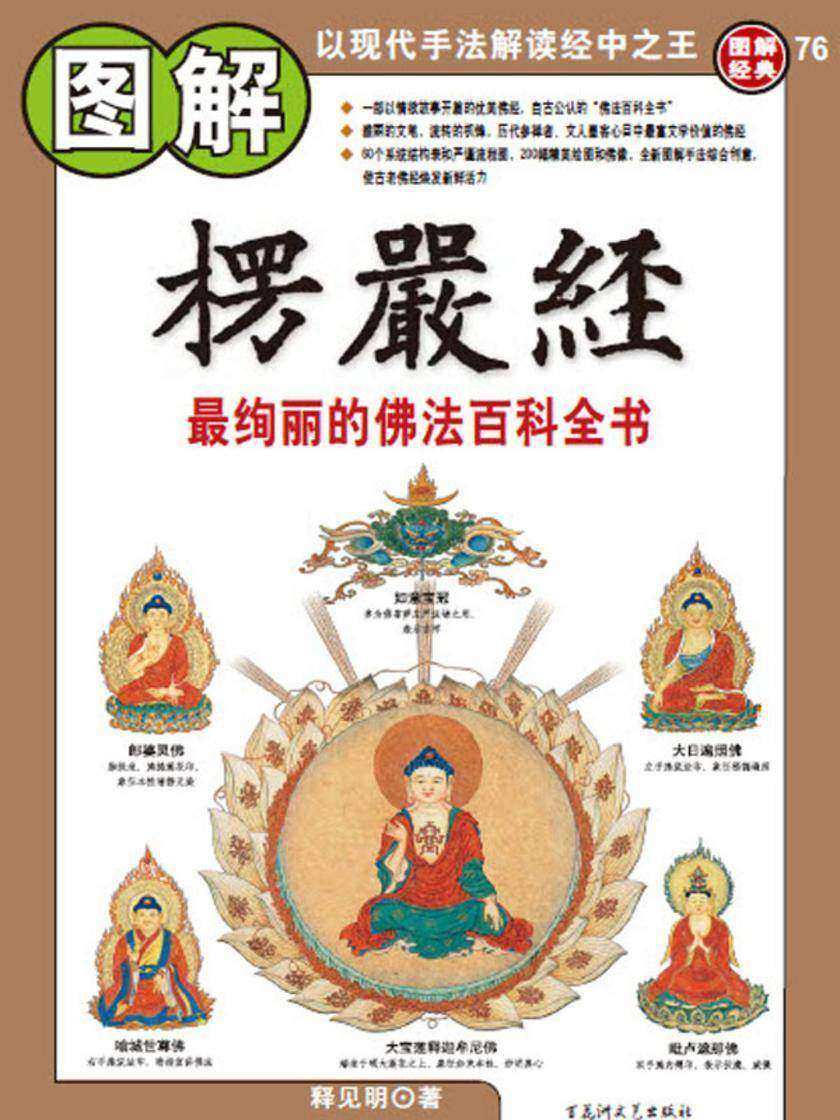
《楞严经》,大乘佛教经典,全名《大佛顶如来密因修证了义诸菩萨万行首楞严经》,简称《楞严经》。历来皆被修行者奉为必修的无上圭臬,尤其是对习禅者而言,更是如此。其文句优美富丽,也是文人墨客青睐的文学瑰宝。
六祖坛经
¥18.00
《六祖坛经》亦称《坛经》、《六祖大师法宝坛经》,全称《南宗顿教*上大乘摩诃般若波罗蜜经六祖惠能大师于韶州大梵寺施法坛经》,是佛教禅宗六祖惠能说、弟子法海集录的一部经典。作为一部中国僧人撰着、且被冠以“经”的佛教典籍,其*核心的思想是在教人如何才能成就佛道,其*的特则是把一切归结于自心自性。本书选用的是李申的敦煌坛经合校本。
星云禅话
¥18.00
《星云禅话》系为佛光山山宗长星云大师应各方对于禅的需渴反应,将刊载于报纸的“星云禅话”编集成书。该书从已出版的禅话一至四集,精心选辑了一百三十二则公案,希望透过生活性、人间性的“禅话”,为忙碌、紧张的今日社会,投下一剂清凉散。
佛教的女性观
¥18.00
本书主要是透过经典中记载的佛陀的平等思想、教育方法,客观探讨佛教的女性观。 其重有四: 一、佛教兴起时代的印度社会和女性:主要以印度低落的女性地位和不平等的四姓差别制度为背景,一一说明佛陀的众生平等观,从而奠定佛教的男女平等思想。 二、原始佛教时代的女性观:由原始经典中一再出现的母亲、妻子、媳妇、女人四种形象,分别说明佛陀对女性的教化,以及佛教对在家女性理想典范的树立,而从生活伦理中显示男女的平等性。 三、小乘佛教时代的女性观:对女人五障说、佛的三十二相和女人不能成佛说等思想做一全面深的探讨,以澄清佛陀的平等真义。 四、大乘佛教时代的女性观:由诸多经典中示现的女性成佛观、师子吼乃至大乘菩萨与女性的关系,显现佛教对女权的倡导和发展,以及女性的智慧和慈悲的特质。
精进佛七开示录
¥18.00
煮云法师关于佛七的示,近代念佛的实录,记载佛七中的各种事迹,可作为研究近代念佛法门演变的材料。
杂阿含经
¥18.00
《杂阿含经》是以言行录的体裁,记述佛陀和他的弟子们的修行与弘法活动。经中揭示了佛教的基本教义,如缘起、十二因缘、三法印、四圣谛、八正道、四念处等,故被称为“佛教圣典”。由于《杂阿含经》不重玄理、义解,重视的是修行实践,因而诵读此经,有助于现代人修行佛法。
胜鬘经
¥18.00
《胜鬘经》弘传于南北朝,备受教内教外的重视。本经为大乘如来藏系经典中代表作之一。内容叙述胜?N夫人对释尊立十大誓愿、三大愿,并自说大乘一乘法门,阐释圣谛、法身、如来藏等。 经中认为三乘之教归于大乘之一乘,得一乘即得如来法身。众生虽被烦恼所缠,然其本性清净无垢,与如来同等,故皆具有如来之性(佛性、如来藏)。且以如来藏为基础,即使在生死轮回之世界,亦有获得涅槃之可能。本经之一乘思想,即是承继法华经者,而成为大乘佛教之重所在。又本经之特色乃在以在家妇人说法,故与维摩居士所说之“维摩经”,并为大乘佛教在家佛教之代表作。 全书共分十五章,包括如来真实功德、十受、三愿、摄受、一乘、无边圣谛、如来藏、法身、空义隐覆真实、一谛、一依、颠倒真实、自性清净、真子、胜?N等。
美的救赎
¥24.99
美如今正处于一种矛盾的处境。 一方面,它如通货膨胀般蔓延四溢:到处都可以感受到人们对美的狂热崇拜。另一方面,美失去了一切超越性,屈服于消费的内在性:它塑造了资本的美学的一面。美以及崇高或震动所带来的对消极性的体验,完全被纯粹的快乐即赞所取代。美*终被色情化。 本书既为我们展示了那些以真理、灾难或诱惑表现出来的美的形式,也阐明了那些建立美的伦理或政治的美的维度。 阅读韩炳哲的书,意味着不断地被鞭策唤醒。……他的社会批判虽然不谙体恤之情,然而韩炳哲仍然热情地拥抱自己所处的这个时代。 ——《周刊》 ------------- 韩炳哲作品系列(见识城邦出品)(已出齐) 《精神政治学》(2019年3月) Psychopolitik 《爱欲之死》(2019年3月) Agonie des Eros 《在群中》(2019年3月) Im Schwarm 《他者的消失》(2019年6月) Die Austreibung des Anderen 《倦怠社会》(2019年6月) Müdigkeitsgesellschaft 《娱乐何为》(2019年6月) Gute Unterhaltung 《暴力拓扑学》(2019年10月) Topologie der Gewalt 《透明社会》(2019年10月) Transparenzgesellschaft 《美的救赎》(2019年10月) Die Errettung des Sch?nen
廿一世纪初的前言后语(下册)
¥22.80
本书稿是关于《老子》的讲记,内容涉及《老子》的后半部分。南怀瑾先生以深厚的文史功底,敏锐的社会洞察力,对《老子》的内涵做了充分的阐解、辨正和引述。书内容具有深浅出,明白通畅等的特。
释迦牟尼佛传
¥18.00
本书叙述了佛陀自住世至涅槃生命的全过程。包括佛陀住世时的印度社会,佛陀的家世,佛陀出家和修行的经过,佛陀的传法和教团的成立,佛陀在世时所得的尊荣,佛陀的涅槃,等等。

购物车
个人中心