


 购物车
 个人中心

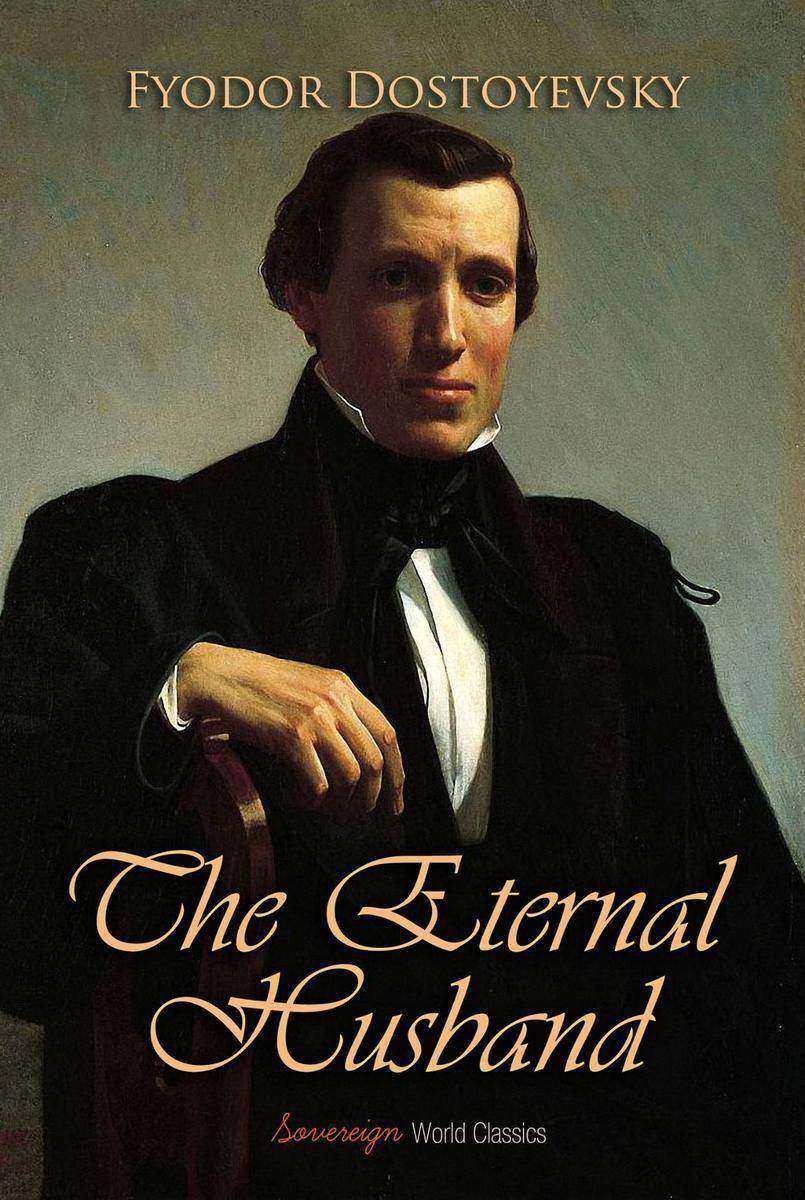
The Eternal Husband
¥40.79
Alexei Ivanovich Velchaninov is a land owner who stays in Saint Petersburg for a trial about a piece of land. He receives a visit from Pavel Pavlovich Trusotsky, an old acquaintance who recently became a widower. Velchaninov had an affair with Trusotsky's wife Natalia, and he realizes that he is the biological father of Liza, Trusotsky's eight year old daughter. Velchaninov, who doesn't want Liza to be raised by an alcoholic, brings Liza to a foster family. The novel ranks among his best works because of its style and structure. Alfred Bem described it as one of the most complete works by Dostoyevsky in regards to its composition and development.
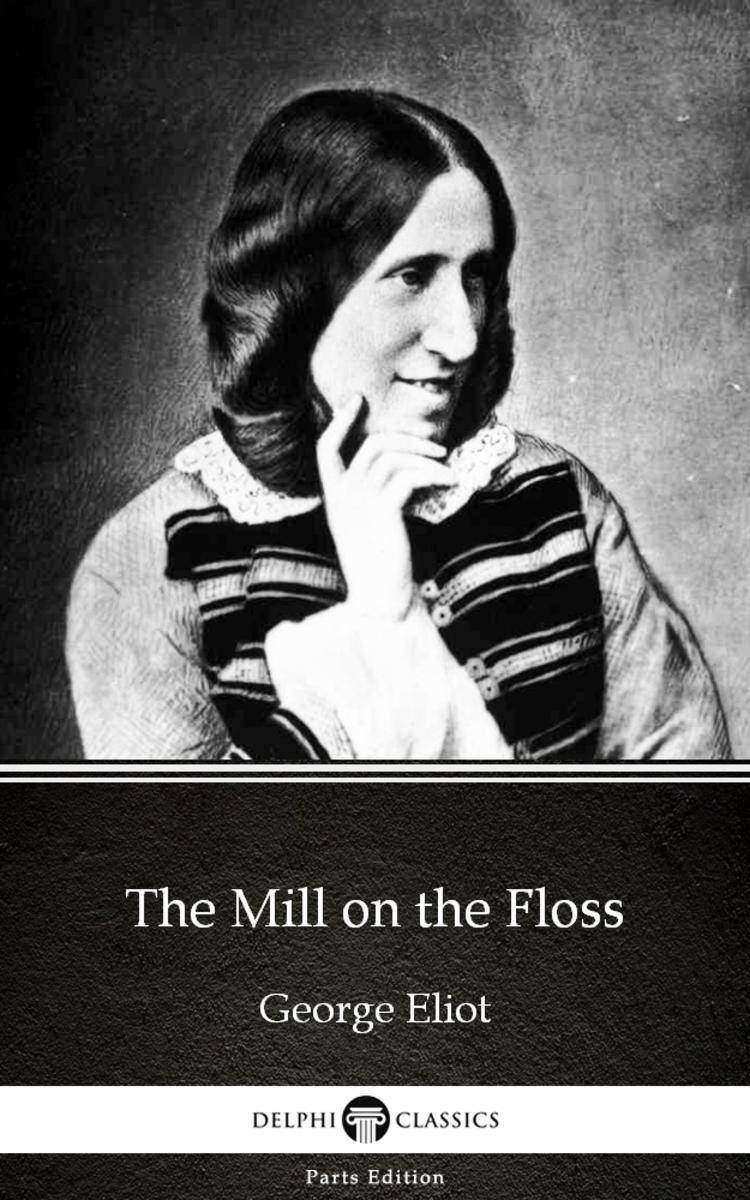
The Mill on the Floss by George Eliot - Delphi Classics (Illustrated)
¥8.09
This eBook features the unabridged text of ‘The Mill on the Floss by George Eliot - Delphi Classics (Illustrated)’ from the bestselling edition of ‘The Complete Works of George Eliot’. Having established their name as the leading publisher of classic literature and art, Delphi Classics produce publications that are individually crafted with superior formatting, while introducing many rare texts for the first time in digital print. The Delphi Classics edition of Eliot includes original annotations and illustrations relating to the life and works of the author, as well as individual tables of contents, allowing you to navigate eBooks quickly and easily. eBook features: * The complete unabridged text of ‘The Mill on the Floss by George Eliot - Delphi Classics (Illustrated)’ * Beautifully illustrated with images related to Eliot’s works * Individual contents table, allowing easy navigation around the eBook * Excellent formatting of the text Please visit www.delphiclassics.com to learn more about our wide range of titles

The New Freedom: [Illustrated & Biography Added]
¥23.14
The book is not a discussion of measures or of programs. It is an attempt to express the new spirit of our politics and to set forth, in large terms which may stick in the imagination, what it is that must be done if we are to restore our politics to their full spiritual vigor again, and our national life, whether in trade, in industry, or in what concerns us only as families and individuals, to its purity, its self-respect, and its pristine strength and freedom. The New Freedom is only the old revived and clothed in the unconquerable strength of modern America. I have not written a book since the campaign. I did not write this book at all. It is the result of the editorial literary skill of Mr. William Bayard Hale, who has put together here in their right sequences the more suggestive portions of my campaign speeches.And yet it is not a book of campaign speeches. It is a discussion of a number of very vital subjects in the free form of extemporaneously spoken words. I have left the sentences in the form in which they were stenographically reported. I have not tried to alter the easy-going and often colloquial phraseology in which they were uttered from the platform, in the hope that they would seem the more fresh and spontaneous because of their very lack of pruning and recasting. They have been suffered to run their unpremeditated course even at the cost of such repetition and redundancy as the ex-temporaneous speaker apparently inevitably falls into. WOODROW WILSON. ABOUT WOLSON: Thomas Woodrow Wilson, known as Woodrow Wil-son (1856 –1924), was an American politician and academic who served as the 28th President of the United States from 1913 to 1921. Born in Staunton, Virginia, he spent his early years in Augusta, Georgia and Columbia, South Carolina. Wilson earned a PhD in political science at Johns Hopkins University, and served as a professor and scholar at various institutions before being chosen as President of Princeton University, a position he held from 1902 to 1910. In the election of 1910, he was the gubernatorial candidate of New Jersey's Democratic Party, and was elected the 34th Governor of New Jersey, serving from 1911 to 1913. Running for president in 1912, Wilson benefited from a split in the Republican Party, which enabled his plurality of just over forty percent to win him a large electoral college margin. He was the first Southerner elected as president since 1848, and Wilson was a lea-ding force in theProgressive Movement, bolstered by his Democratic Party's winning control of both the White House and Congress in 1912. In office, Wilson reintroduced the spoken State of the Union, which had been out of use since 1801. Leading the Congress, now in Democratic hands, he oversaw the passage of progressive legislative policies unparalleled until the New Deal in 1933. Included among these were the Federal Reserve Act, Federal Trade Commission Act, the Clayton Antitrust Act, and the Federal Farm Loan Act. Having taken office one month after ratification of the Sixteenth Amendment, Wilson called a special session of Congress, whose work culminated in theRevenue Act of 1913, reintroducing an income tax and lowering tariffs. Through passage of the Adamson Act, imposing an 8-hour workday for railroads, he averted a railroad strike and an ensuing economic crisis. Upon the outbreak of World War I in 1914, Wilson maintained a policy of neutrality, while pursuing a more aggressive policy in dealing with Mexico's civil war. ***
Valetul de pic?
¥42.92
Cu o precizie remarcabil?, George Friedman a prognozat tendin?e viitoare ?n politica, tehnologia, cultura ?i demografia global?. ?n Puncte de presiune, Friedman se concentreaz? asupra Europei – centrul cultural ?i de putere al lumii ?n ultimele cinci secole... p?n? acum. Analiz?nd cele mai instabile, imprevizibile ?i fascinante linii de grani?? ale Europei ?i Rusiei – ?i liniile de falie care au existat vreme de secole ?i care au fost motivul a numeroase r?zboaie catastrofale – Friedman scoate ?n eviden??, ?ntr-o modalitate inedit?, punctele de presiune care au ?nceput din nou s? cedeze. Uniunea European? de ast?zi a fost construit? ?n mare parte pentru a reduce la minimum tensiunile geopolitice care au sf??iat continentul de-a lungul istoriei. Dup? cum demonstreaz? Friedman, folosindu-se de o bogat? analiz? istoric? ?i cultural?, acest model a ?nceput s? ??i arate limitele. Puncte de presiune relateaz? istoria vie a Europei ?i explic?, cu mult? claritate, care sunt cele mai volatile regiuni ale acesteia: teritoriul agitat ?i mereu ?n schimbare dintre Occident ?i Rusia (o zon? mare care include, ?n prezent, Ucraina, Belarus ?i Lituania); vechea linie de grani?? dintre Germania ?i Fran?a ?i zona Mediteranei, care este leag?nul iudaismului ?i al cre?tinismului ?i care a devenit un centru al vie?ii islamice. Din paginile scrise de Friedman se desprinde o imagine clar? a regiunilor ?i ??rilor, iar istoria ?ncepe s? se contureze precis. Puncte de presiune este o analiz? cuprinz?toare a Europei moderne, a trecutului s?u remarcabil ?i a faliilor care s-au trezit la via?? ?i care vor fi fundamentale ?n viitorul apropiat. Aceasta este cea mai oportun? ?i, p?n? la urm?, cea mai fascinant? carte a lui Friedman. ?... ?n preajma lui George Friedman, exist? mereu tenta?ia de a-l confunda cu un glob de cristal, capabil s? ??i arate viitorul.“ — The New York Times Magazine ?Friedman descrie ?n culori vii o regiune unde amintirile sunt vechi, vulnerabilit??ile omniprezente ?i amenin??rile apar rapid ?i pe nea?teptate...“ — Publishers Weekly ?Kronika“ este colec?ia ?n care umanitatea este reconstruit? prin c?r?i care ne ajut? s? p?trundem ?n culisele celor mai interesante evenimente politice, sociale sau financiare de ieri ?i de ast?zi.
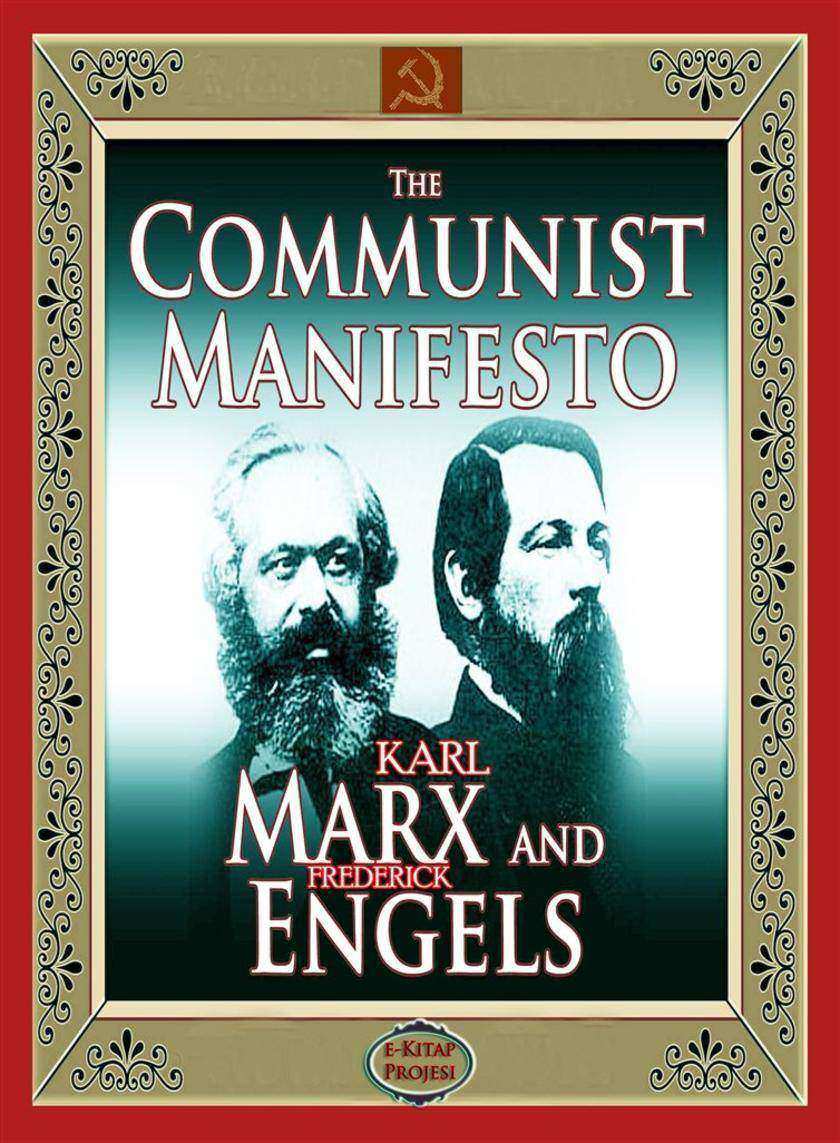
The Communist Manifesto
¥28.37
The “Manifesto of the Communist Party” was written by Marx and Engels as the Communist League’s programme on the instruction of its Second Congress (London, November 29-December 8, 1847), which signified a victory for the followers of a new proletarian line during the discussion of the programme questions. ??When Congress was still in preparation, Marx and Engels arrived at the conclusion that the final programme document should be in the form of a Party manifesto (see Engels’ letter to Marx of November 23-24, 1847). The catechism form usual for the secret societies of the time and retained in the “Draft of a Communist Confession of Faith” and “Principles of Communism,” was not suitable for a full and substantial exposition of the new revolutionary world outlook, for a comprehensive formulation of the proletarian movement’s aims and tasks. See also “Demands of the Communist Party in Germany,” issued by Marx soon after publication of the Manifesto, which addressed the immediate demands of the movement. ??Marx and Engels began working together on the Manifesto while they were still in London immediately after the congress, and continued until about December 13 when Marx returned to Brussels; they resumed their work four days later (December 17) when Engels arrived there. After Engels’ departure for Paris at the end of December and up to his return on January 31, Marx worked on the Manifesto alone. ??The first edition of the Manifesto was a 23-page pamphlet in a dark green cover. In April-May 1848 another edition was put out. The text took up 30 pages, some misprints of the first edition were corrected, and the punctuation improved. Subsequently this text was used by Marx and Engels as a basis for later authorised editions. Between March and July 1848 the Manifesto was printed in the Deutsche Londoner Zeitung, a democratic newspaper of the German emigrants. Already that same year numerous efforts were made to publish the Manifesto in other European languages. A Danish, a Polish (in Paris) and a Swedish (under a different title: “The Voice of Communism. Declaration of the Communist Party”) editions appeared in 1848. The translations into French, Italian and Spanish made at that time remained unpublished. In April 1848, Engels, then in Barmen, was translating the Manifesto into English, but he managed to translate only half of it, and the first English translation, made by Helen Macfarlane, was not published until two years later, between June and November 1850, in the Chartist journal The Red Republican. Its editor, Julian Harney, named the authors for the first time in the introduction to this publication. All earlier and many subsequent editions of the Manifesto were anonymous.

新时代改革方法论研究(马克思主义理论研究与当代中国书系)
¥65.80
该书包括以下几个个部分的内容。部分主要总结改革放的重大意义,第二部分回顾改革方法论的探索、创立、丰富、发展的历史,第三部分全景揭示新时代改革方法论的丰富内容和体系结构,第四部分主要讲述新时代改革方法论的世界意义,指出中国提出了解决人类共同难题的中国方案,为优化全球治理体系作出了中国贡献。


孙子兵法全集:运筹帷幄的决胜谋略
¥16.90
本书吸取了各版《孙子兵法》精华,在对原文、注释、译文认真考证的基础上,精选了曹操、杜牧、蒋百里、李零等古今名家批注,并以现代眼光重新解析经典,博引古今典例,抽丝剥茧,为您*呈现这部千古奇书中蕴藏的无限智慧,力求带给您一部感悟经典与学以致用并重的《孙子兵法》 《孙子兵法》是我国*古老的一部兵书,也是世界上*早的兵书之一。它论述了军事学的主要问题,对当时的战争经验进行了总结,提出来一些著名的革命性军事命题,并且揭示了一些具有普遍意义的军事规律。后世的兵书大多受到它的影响,它对中国的军事学发展影响非常深远。它被翻译成多种语言,在世界军事史上也具有重要的地位。《孙子兵法》是一部兵书,担起影响又绝不仅仅局限于军事领域。它在非军事领域的运用也有着悠久的历史。

瞄准目标!开炮!——世界经典坦克、装甲车科普绘本(套书2册)
¥63.70
本书是二战时期坦克、装甲车的科普绘本,作者通过全手绘的图画,为读者解析二战时期德国和盟国的坦克、装甲车的外形特征、内部构造、主要武器、作战方式等专业知识,同时兼具趣味性和可读性,能够满足读者的好奇心和求知欲。本书图片精美丰富,适合作为青少年学生的课外科普读物,也适合广大军事爱好者阅读和收藏。

马克思主义政治经济学重大理论研究(马克思主义理论研究与当代中国书系)
¥82.80
本书章阐述中国经济学现代化的学术原则、理论假设、体系创新,探讨构建现代广义政治经济学的重要问题。第二章阐述中国特色社会主义政治经济学的逻辑起、根本立场、研究要义、重大原则,前瞻性研究社会主义经济制度的发展阶段。第三章阐述新的活劳动价值论、生产性管理活动性质,比较分析资本主义贫困成因的理论。第四章阐述当代垄断资本主义的金融和经济危机、福利制度变动、监控技术权力,分析新帝国主义的特征和特性、美式民主损害世界经济和民生,以及新冠肺炎疫情加剧美国社会的不平等状况。第五章阐述社会主义基本经济制度、公有资本为主体的混合所有制经济、企业共享和平台经济治理,探讨新时代社会主义农业的发展。第六章阐述市场与国家的双重调节论、按比例规律与市场调节规律和国家调节规律之间的关系、公平与效率交互同向理论、新时代实现共同富裕的理论和政策,诠释社会主义比资本主义能更好地运用市场经济。第七章阐述自力主导型放、知识产权优势、构建新发展格局、统筹发展与安全、海上“一带一路”建设,界定中国正处于世界经济体系的“准中心”地位。 全书主题重大、求真务实、视野宽阔、守正创新、正本清源,丰富和发展了马克思主义政治经济学理论。

西方马克思主义在中国的传播与影响研究(马克思主义理论研究与当代中国书系)
¥40.80
西方马克思主义在中国的传播与影响研究(马克思主义理论研究与当代中国书系)

中国式现代化论纲
¥26.00
本书是学习和阐述党的二十大关于中国式现代化重大理论的经济学著作。本书在阐明世界现代化一般特征基础上,基于中国国情系统阐述中国共产党领导的社会主义现代化的中国特色。本书依据习近平经济思想,从现代化角度系统总结我国全面建成小康社会的经验,重阐述正在启的社会主义现代化新征程所涉及的发展道路和相应的发展战略问题,尤其关注新发展阶段贯彻新发展理念构建新发展格局推的高质量发展对中国式现代化道路的新拓展,全面论述中国式现代化道路所创的人类文明新形态。本书不仅是关于中国式现代化的学术著作,也可作为干部群众、青年学生行理论学习的重要读物。

闪击波兰
¥24.90
...

我们的“十四五”
¥16.00
全书共9章,前2章回顾江苏过去五年“强富美高”新江苏建设取得的显著成就,分析扛起“争当表率、争做示范、走在前列”的重大使命面临的形势任务;后7章则分别从推动经济高质量发展、创造人民期盼的美好生活、提升省域治理整体效能、促人与自然和谐共生、加强社会主义精神文明建设、塑造改革放新优势等方面对江苏“十四五”时期的目标任务行了阐释。本书使用数据和资料权威、专业,语言通俗易懂,具有较强的针对性和说服力。

诚信中国
¥10.00
在我们的民族文化传统中,诚信精神源远流长,是滋养我们的宝贵财富。但是,当我们阔步现代社会的发展阶段时,为什么仍然出现诚信缺失现象?我们应当采用怎样的发展策略,才能强化人们坚守信念,从而使诚信精神和诚信原则有效地贯彻到我们社会生活的全部领域?本书着力分析了我国传统诚信文化的可贵精神和历史局限,分析了现代社会中导致诚信缺失的基本原因,探讨了现代社会中诚信体系的运行机制和建构诚信系统的基本要求。 国无诚信,无以立本;人无诚信,无以立命;社会无诚信,无以和谐有序。从我做起,一起努力,让我们昂首步充满希望的诚信社会。

*建成小康社会中的农民问题
¥8.00
全面建成小康社会的重和难在农村,农村社会的主体是农民。我们党历来高度重视农民问题,从而不断赢得革命、建设和改革的主动权。。在新的历史条件下,如何从全面建成小康社会的战略高度出发,正确认识、解决农民问题,研究全面建成小康社会中的农民问题,是极具现实意义和指导意义的重大课题。本书对此行专题探讨。

接诉即办的治理逻辑
¥25.20
本书基于“技艺一人工品”的治理哲学范式和界面治理的理论视角,以北京市诉即办改革作为典型案例,尝试回答党的初心和使命如何转化为治理实践这一“治理之问”。诉即办改革是一种“治理之问”的实践探索,旨在通过回应市民诉求、促问题解决、及时反馈和“主动治理、未诉先办”来实现让人民生活幸福,这是寻找初心使命的治理之道。本书按照界面治理分析框架的逻辑,对诉即办改革行内部和外部治理分析:内部治理分析强调聚焦诉即办改革的运行模式展研究,外部治理分析强调讨论诉即办改革与横向和纵向治理界面之间的互动关系。多层次界面分析可以帮助我们以更加立体的方式来理解和认知诉即办改革,探究其中的治理逻辑。

绞杀库尔斯克
¥24.90
库尔斯克战役是二战中规模*的坦克绞杀战,也是苏德战争的分水岭。此役,苏德双方共投近8000辆坦克,共投兵力280万人,双方伤亡惨重,*终以苏联的胜利而告终。本书用粗线条勾勒库尔斯克的宏大战场,以细腻的笔触描写人物的内心,以对话体现人物性格,用电影分镜头的方式叙述惨烈的战斗画面,旨在让读者感受到真实的战场境况

大国脊梁 : 国家*高科学技术奖获得者的奋斗人生
¥30.00
本书是一本科学家故事读本,以“中国科协老科学家学术成长资料采集工程成果”为内容基础,精心选配百余幅新华社播发的科学家经典照片,按获奖时间顺序收录了2000年—2020年历届共35位国家科学技术奖获得者科学报国的感人故事,其中有袁隆平、吴文俊、王选、黄昆、金怡濂、屠呦呦、黄旭华等。全书旨在通过讲述科学家们勇于探索、献身科学的动人事迹激发广大读者,尤其是青少年群体尊重知识、热爱科学、崇尚创新的学习热情和科研兴趣。书中特别设列“科学家名言”“大科学家小故事”等小栏目,帮助青少年读懂科学家精神、领会学习方法。 书稿内容经相关专家审核,部分文章图片由获奖科学家本人亲自修改审定,内容权威,图文并茂。

扶贫*书记
¥39.00
到2020年确保我国现行标准下农村贫困人口实现脱贫、贫困县全部摘帽、解决区域性整体贫困问题,是党对人民、对历史的郑重承诺。 “火车跑得快,全靠车头带。”在全面赢脱贫攻坚的战役中,习近平书记是重要力量。习近平总书记强调,好脱贫攻坚战,关键在人,在人的观念、能力、干劲。广大扶贫干部要真正沉下去,扑下身子到村里干,同群众一起干。 本书为四色图文书,精选新华社记者采写的149篇稿件、268幅图片,真实记录了习近平书记们长年奋战在脱贫攻坚,发挥先锋模范作用,带领基层党组织和广大群众苦干实干的鲜活故事,展现了他们用生命坚守初心使命的坚韧精神、敢啃硬骨头的工作热情和顽强意志、求真务实的工作作风、推精准脱贫的思路与方法,以及将青春倾注在扶贫攻坚的共产党员的人民情怀和本色担当。

给领导干部提个醒
¥21.00
《给领导干部提个醒》自2010年首次出版后,十年间畅销不衰,先后被评为全国第三届优秀通俗理论读物,中宣部、中央文明办、新闻出版总署联合推介的百种优秀思想道德读物,是中央党校党建部教授、博士生导师、畅销书作者刘玉瑛的经典力作。新版紧密结合《中国共产党党内监督条例》内容,补充了大量新鲜案例,用提醒的方式,阐发了领导干部如何修养自身、如何更高效做事,如何提高境界的道理与方法。 对于领导干部而言,在人生的旅途中,要做的事情无非有三项内容:一是做人;二是做事;三是做官。做人需要修身,做事需要方法,做官需要境界。《给领导干部提个醒》对此三项内容都作了详尽的解答。本书既是领导干部自觉加强党性修养、受监督的理论读物,也是落实《监督条例》不可或缺的重要参考书籍。

战魔行动“巴巴罗萨”
¥24.90
希特勒西攻英国受阻,于是掉头向东,攻苏联。希特勒组织了北方、中央、南方三个集团军群,总兵力达550万人,从北向南闪电般地对苏联发动全面攻,妄图一举垮苏联,称霸世界。这就是震撼世界的巴巴罗萨行动。面对德国钢铁战车的疯狂冲,苏联红军节节败退,损失250多万人,*终将德国战车阻止在莫斯科城下。德国军队攻为何如此神速,苏联军队又为何节节败退?希特勒发布了什么指令,斯大林有什么惊人的举动?本书将为你一一解惑。


