


 购物车
购物车 个人中心
个人中心
Abbe Mouret’s Transgression: Les Rougon-Macquart #5
¥18.56
Serge Mouret, the younger son of Fran?ois Mouret, was ordained to the priesthood and appointed Curé of Les Artaud, a squalid village in Provence, to whose degenerate inhabitants he ministered with small encouragement. He had inherited the family taint of the Rougon-Macquarts, which in him took the same form as in the case of his mother-a morbid religious enthusiasm bordering on hysteria. Brain fever followed, and bodily recovery left the priest without a mental past. Dr. Pascal Rougon, his uncle, hoping to save his reason, removed him from his accustomed surroundings and left him at the Paradou, the neglected demesne of a ruined mansion-house near Les Artaud, where he was nursed by Albine, niece of the caretaker.
Aaron’s Rod
¥18.56
D.H. Lawrence's seventh novel, Aaron's Rod, was first published in 1922. The work stands as a unique picaresque novel among his works. The book masterfully combines Lawrence's reservations about growing the industrialization in English society and his deep concern with the demands of an inner, freer self that is at the risk of being throttled by the industrial transformation and its associated existential crisis.

The World Set Free
¥18.56
The World Set Free is a novel written in 1913 and published in 1914 by H. G. Wells. The book is based on a prediction of nuclear weapons of a more destructive and uncontrollable sort than the world has yet seen. A frequent theme of Wells's work, as in his 1901 nonfiction book Anticipations, was the history of humans' mastery of power and energy through technological advance, seen as a determinant of human progress. The novel begins: "The history of mankind is the history of the attainment of external power. Man is the tool-using, fire-making animal. . . Always down a lengthening record, save for a set-back ever and again, he is doing more." The novel is dedicated "To Frederick Soddy's Interpretation of Radium," a volume published in 1909.
Little Novels of Sicily
¥18.56
The stories collected in Little Novels of Sicily are drawn from the Sicily of Giovanni Verga's childhood, reported at the time to be the poorest place in Europe. Verga's style is swift, sure, and implacable; he plunges into his stories almost in midbreath, and tells them with a stark economy of words. There's something dark and tightly coiled at the heart of each story, an ironic, bitter resolution that is belied by the deceptive simplicity of Verga's prose, and Verga strikes just when the reader's not expecting it.

The Troll Garden: Short Stories
¥18.56
In the stories that comprise The Troll Garden, her first book, Willa Cather evokes the devastated, romantic dreams that haunt her characters. Artists, inveterate sentimentalists, hungering beauties, and demon-ridden ascetics find themselves torn between the need to confess and keep secret their private aspirations. Involved with the hope that destroys the spirit, their lives reflect both the impoverished materialism and the deadly idealism of the Plains country, of the fashionable East, and of London at the turn of the century.
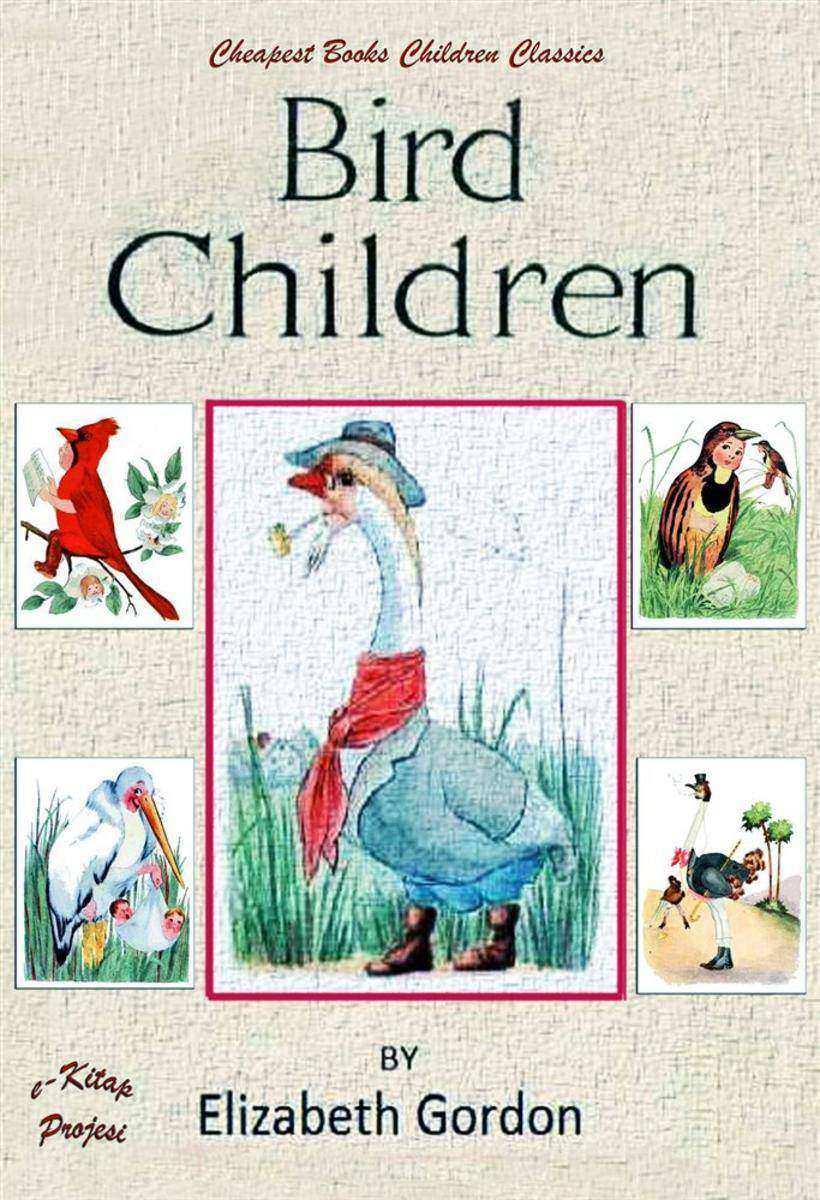
Bird Children
¥18.56
BIRDS are only another expression of God’s love, and we are told that not even a sparrow shall fall to the ground without the notice of the Father. Birds are poetry come to life and set to music. If you should stand at the edge of a forest at sundown and hear the birds singing their good-night songs, hear the sleepy little notes grow fainter and fainter until the silence came,—then when the dusk had deepened, you should hear the night birds begin their plaintive songs, you would realize what a different place our beautiful world would be without birds. Even in great cities we have always some birds. The saucy little sparrow, who comes so boldly begging crumbs at your window, likes the cities best. Only very thoughtless people, or those who do not understand, would harm or frighten a bird. They are real little people, and I am sure that when you have come to know them you will love them as much as you have learned to love the Flower Children..

The Mystery Girl
¥18.56
Quite aside from its natural characteristics, there is an atmosphere about a college town, especially a New England college town, that is unmistakable. It is not so much actively intellectual as passively aware of and satisfied with its own intellectuality.The beautiful little town of Corinth was no exception; from its tree-shaded village green to the white-columned homes on its outskirts it fairly radiated a satisfied sense of its own superiority.Not that the people were smug or self-conceited. They merely accepted the fact that the University of Corinth was among the best in the country and that all true Corinthians were both proud and worthy of it. The village itself was a gem of well-kept streets, roads and houses, and all New England could scarce show a better groomed settlement.In a way, the students, of course, owned the place, yet there were many families whose claim to prominence lay in another direction.However, Corinth was by all counts, a college town, and gloried in it. The University had just passed through the throes and thrills of one of its own presidential elections.The contest of the candidates had been long, and at last the strife had become bitter. Two factions strove for supremacy, one, the conservative side, adhering to old traditions, the other, the modern spirit, preferring new conditions and progressive enterprise. Hard waged and hard won, the battle had resulted at last in the election of John Waring, the candidate of the followers of the old school.Waring was not an old fogy, nor yet a hide-bound or nar-row-minded back number. But he did put mental attainment ahead of physical prowess, and he did hold by certain old-fashioned principles and methods, which he and his constituents felt to be the backbone of the old and honored institution.Wherefore, though his election was an accomplished fact, John Waring had made enemies that seemed likely never to be placated.
Chaucer for Children: "A Golden Key"
¥18.56
This is a copious and judicious selection from Chaucer’s Tales, with full notes on the history, manners, customs, and language of the fourteenth century, with marginal glossary and a literal poetical version in modern English in parallel columns with the original poetry. Six of the Canterbury Tales are thus presented, in sections of from 10 to 200 lines, mingled with prose narrative. ‘Chaucer for Schools’ is issued to meet a widely-expressed want, and is especially adapted for class instruction. It may be profitably studied in connection with the maps and illustrations of ‘Chaucer for Children.’??‘We hail with pleasure the appearance of Mrs. Haweis’s “Chaucer for Schools.” Her account of “Chaucer the Tale-teller” is certainly the pleasantest, chattiest, and at the same time one of the soundest descriptions of the old master, his life and works and general surroundings, that have ever been written. The chapter cannot be too highly praised.’ —Academy.??‘The authoress is in such felicitous harmony with her task, that the young student, who in this way first makes acquaintance with Chaucer, may well through life ever after associate Mrs. Haweis with the rare productions of the father of English poetry.’ —School-Board Chronicle.??‘Unmistakably presents the best means yet provided of introducing young pupils to the study of our first great poet.’ —Scotsman.??‘In her “Chaucer for Schools” Mrs. Haweis has prepared a great assistance for boys and girls who have to make the acquaintance of the poet. Even grown people, who like their reading made easy for them, will find the book a pleasant companion.’ —Guardian.??‘The subject has been dealt with in such a full and comprehensive way, that the book must be commended to everyone whose study of early English poetry has been neglected.’ —Daily Chronicle.??‘We venture to think that this happy idea will attract to the study of Chaucer not a few children of a larger growth, who have found Chaucer to be very hard reading, even with the help of a glossary and copious notes. Mrs. Haweis’s book displays throughout most excellent and patient workmanship, and it cannot fail to induce many to make themselves more fully acquainted with the writings of the father of English literature.’ —Echo.??‘The book is a mine of poetic beauty and most scholarly explanation, which deserves a place on the shelves of every school library.’—School Newspaper.??‘For those who have yet to make the acquaintance of the sweet and quaint singer, there could not well be a better book than this. Mrs. Haweis is, of course, an enthusiast, and her enthusiasm is contagious. Her volume ought to be included in all lists of school books—at least, in schools where boys and girls are supposed to be laying the foundations of a liberal education.’—Literary World.?‘Mrs. Haweis has, by her “Chaucer for Schools,” rendered invaluable assistance to those who are anxious to promote the study of English literature in our higher and middle-grade schools.... ?Although this edition of Chaucer has been expressly prepared for school use, it will be of great service to many adult readers.’?—School Guardian.??CHATTO & WINDUS, PICCADILLY, W.
![Joel: [A Boy of Galilee]](https://platform-permanent.ddimg.cn/pt-media-info-soa-resource/digital/product/46/8/1901164608_ii_cover.jpg?version=64962835-5f05-4bbe-9ee5-71087b983a8f)
Joel: [A Boy of Galilee]
¥18.56
BUT JESUS SAID: "Let the children come to me. Don't stop them! For the Kingdom of Heaven belongs to those who are like these children."?* * *?IN THIS LITTLE BOOK, it has been the purpose of the author to present to children, through "Joel," as accurate a picture of the times of the Christ as has been given to older readers through "Ben Hur." With this in view, the customs of the private and public life of the Jews, the temple service with its sacerdotal rites, and the minute observances of the numerous holidays have been studied so carefully that the descriptions have passed the test of the most critical inspection. An eminent rabbi pronounces them correct in every detail.?While the story is that of an ordinary boy, living among shepherds and fishermen, it touches at every point the gospel narrative, making Joel, in a natural and interesting way, a witness to the miracles, the death, and the resurrection of the Nazarene.
The Children's Book of Thanksgiving Stories
¥18.56
The success of "The Children's Book of Christmas Stories" has encouraged the Editor to hope that a similar collection of stories about Thanksgiving would prove useful to parents, librarians, and teachers, and enjoyable to children. Like the former book, this one is exactly what the title would indicate—a select collection of children's stories closely connected with our American festival.The short descriptive note placed before each story will be of use in choosing a tale suited to one's audience in reading aloud.May the present volume make as many friends as did its older brother! [A. D. D.] Older boys and girls who are familiar with "The Courtship of Miles Standish" will enjoy the colonial flavour of this tale of 1705. "OBED!" called Mistress Achsah Ely from her front porch, "step thee over to Squire Belding's, quick! Here's a teacup! Ask Mistress Belding for the loan of some molasses. Nothing but molasses and hot water helps the baby when he is having such a turn of colic. Beseems me he will have a fit! Make haste, Obed!" At that very moment Squire Belding's little daughter Hitty was travelling toward Mistress Ely's for the purpose of borrowing molasses wherewith to sweeten a ginger cake. Hitty and Obed, who were of an age, met, compared notes, and then returned to their respective homes. Shortly afterward both of them darted forth again, bound on the same errands as before, only in different directions. Mr. Chapin, the storekeeper, hadn't "set eyes on any mo-lasses for a week. The river's frozen over so mean and solid," he said, "there's no knowing when there'll be any molasses in town."
More Russian Picture Tales: "The Bedtime Story-Books"
¥18.56
ONCE upon time, there was a Cock. He tried to swallow it, and choked himself. He choked himself and stretched himself out, and there he lay, and couldn't even breathe.??* THE COCK AND THE BEAN.?* THE GOAT AND THE RAM.?* THE HUNGRY WOLF.?* THE PEASANT AND THE BEAR.?* THE DOG AND THE COCK.?* KING FROST.?* THE BEAR'S PAW.?* THE BEAR AND THE OLD MAN'S DAUGHTERS.?* THE STRAW OX.?* THE FOX AND THE BLACKBIRD.??And his mistress saw him, ran up to him, and asked: “Mr. Cock, what makes you lie there like that, so that you can't breathe?”
On the Trail: "An Outdoor Book for Girls"
¥18.56
The joyous, exhilarating call of the wilderness and the forest camp is surely and steadily penetrating through the barriers of brick, stone, and concrete; through the more or less artificial life of town and city; and the American girl is listening eagerly. It is awakening in her longings for free, wholesome, and adventurous outdoor life, for the innocent delights of nature-loving Thoreau and bird-loving Burroughs. Sturdy, independent, self-reliant, she is now demanding outdoor books that are genuine and filled with practical information; books that tell how to do worth-while things, that teach real woodcraft and are not adapted to the girl supposed to be afraid of a caterpillar or to shudder at sight of a harmless snake.??In answer to the demand, "On the Trail" has been written. The authors' deep desire is to help girls respond to this new, insistent call by pointing out to them the open trail. It is their hope and wish that their girl readers may seek the charm of the wild and may find the same happiness in the life of the open that the American boy has enjoyed since the first settler built his little cabin on the shores of the New World. To forward this object, the why and how, the where and when of things of camp and trail have been embodied in this book. Thanks are due to Edward Cave, president and editor of Recreation, for kindly allowing the use of some of his wild-life photographs.??Lina Beard, Adelia Belle Beard. ?Flushing, N. Y., March 16, 1915.??CHAPTER I??TRAILING?What the Outdoor World Can Do for Girls. How to Find the Trail and How to Keep It?There is a something in you, as in every one, every man, woman, girl, and boy, that requires the tonic life of the wild. You may not know it, many do not, but there is a part of your nature that only the wild can reach, satisfy, and develop. The much-housed, overheated, overdressed, and over-entertained life of most girls is artificial, and if one does not turn away from and leave it for a while, one also becomes greatly artificial and must go through life not knowing the joy, the strength, the poise that real outdoor life can give.??What is it about a true woodsman that instantly compels our re-spect, that sets him apart from the men who might be of his class in village or town and puts him in a class by himself, though he may be exteriorly rough and have little or no book education? The real Adirondack or the North Woods guide, alert, clean-limbed, clear-eyed, hard-muscled, bearing his pack-basket or duffel-bag on his back, doing all the hard work of the camp, never loses his poise or the simple dignity which he shares with all the things of the wild. It is bred in him, is a part of himself and the life he leads. He is as conscious of his superior knowledge of the woods as an astronomer is of his knowledge of the stars, and patiently tolerates the ignorance and awkwardness of the "tenderfoot" from the city. Only a keen sense of humor can make this toleration possible, for I have seen things done by a city-dweller at camp that would enrage a woodsman, unless the irresistibly funny side of it made him laugh his inward laugh that seldom reaches the surface....
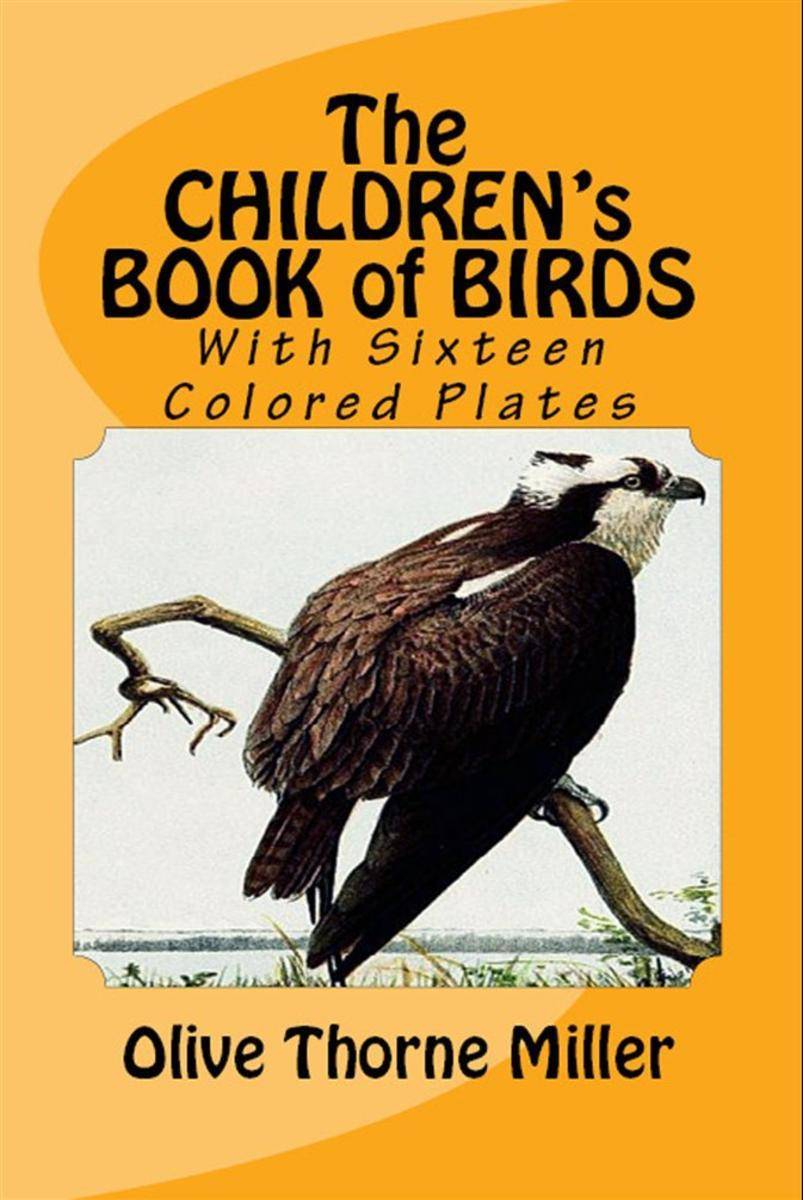
The Children's Book of Birds
¥18.56
The Children's Book of Birds combines under a single cover the First and Second Books of Birds, originally published in 1899 and 1901 respectively and still popular with children in and out of school and with other beginners in the study of birds.??The book is intended to interest young people in the ways and habits of birds and to stimulate them to further study. It has grown out of my experience in talking to schools. ??From the youngest kindergarten scholar to boys and girls of sixteen and eighteen, I have never failed to find young people intensely interested so long as I would tell them about bow the birds live.?Some of the results of these talks that have come to my knowledge have been astonishing and far-reaching, such as that of one boy of seven or eight, who persuaded the village boys around his summer home to give up taking eggs and killing birds, and watch them instead, and who was dubbed "Professor" by his eager followers. ??The effect has always been to make children love and respect the living bird.??It has therefore seemed to me that what is needed at first is not the science of ornithology,—however diluted,—but some account of the life and habits, to arouse sympathy and interest in the living bird, neither as a target nor as a producer of eggs, but as a fellow-creature whose acquaintance it would be pleasant to make.

La Horda
¥18.56
A las tres de la madrugada comenzaron a llegar los pri-meros carros de la sierra al fielato de los Cuatro Caminos.? Habían salido a las nueve de Colmenar, con cargamento de cántaros de leche, rodando toda la noche bajo una lluvia glacial que parecía el último adiós del invierno. Los carret-eros deseaban llegar a Madrid antes que rompiese el día, pa-ra ser los primeros en el aforo. Alineábanse los vehículos, y las bestias recibían inmóviles la lluvia, que goteaba por sus orejas, su cola y los extremos de los arneses. Los conduc-tores refugiábanse en una tabernilla cercana, la única puerta abierta en todo el barrio de los Cuatro Caminos, y aspiraban en su enrarecido ambiente las respiraciones de los parroqui-anos de la noche anterior. Se quitaban la boina para sacu-dirla el agua, dejaban en el suelo el barro de sus zapatones claveteados, y sorbiéndose una taza de café con toques de aguardiente, discutían con la tabernera la comida que había de prepararles para las once, cuando emprendiesen el re-greso al pueblo.? En el abrevadero cercano al fielato, varias carre-tas cargadas de troncos aguardaban la llegada del día para entrar en la población. Los boyeros, envueltos en sus man-tas, dormían bajo aquéllas, y los bueyes, desuncidos, con el vientre en el suelo y las patas encogidas, rumiaban ante los serones de pasto seco.? Comenzó a despertar la vida en los Cuatro Caminos. Chirriaron varias puertas, marcando al abrirse grandes cuad-ros de luz rojiza en el barro de la carretera. Una churrería exhaló el punzante hedor del aceite frito. En las tabernas, los mozos, so?olientos, alineaban en una mesa, junto a la entra-da, la batería del envenenamiento matinal: frascos cuadra-dos de aguardiente con hierbas y cachos de limón.?Presentábanse los primeros madrugadores temblando de frío, y luego de apurar la copa de alcohol o el café de ?a per-ra chica?, continuaban su marcha hacia Madrid a la luz mac-ilenta de los reverberos de gas. Acababa de abrirse el fielato y los carreteros se agolpaban en torno de la báscula. Los cántaros de esta?o brillaban en largas filas bajo el sombraje de la entrada. Discutían a gritos por el turno.? —?Quién da la vez?—preguntaba al presentarse un nuevo carretero.?Y al responderle el que había llegado momentos antes, colocaba sus cántaros junto a los de éste, con el propósito de repeler a trallazos cualquiera intrusión en el turno. ? AUTOR: Vicente Blasco Ibanez nacio el 29 de enero de 1867 en Valencia (Espana). Era hijo de Ramona Ibanez y del comerciante Gaspar Blanco. Estudio Derecho en la Universidad de Valencia. Participo en la politica uniendose al Partido Republicano". En 1894 fundo el periodico El pueblo. En el ano 1896, fue detenido y condenado a varios meses de prision. En 1889 contrajo matrimonio con Maria Blasco del Cacho, hija del magistrado Rafael Blasco y Moreno. Cuando subio al poder Canovas del Castillo, el escritor se exilio brevemente en la ciudad de Paris. Fue un autor vinculado en muchos aspectos al naturalismo frances. Por otra parte, la explicita intencion politicosocial de algunas de las novelas de Blasco Ibanez, aunada al escaso bagaje intelectual del autor, lo mantuvo alejado de los representantes de la Generacion del 98. Murio el 28 de enero de 1928 en Menton (Francia)a los 60 anos. Entre sus titulos destacan: "Arroz y Tartana" (1894), "La Barraca" (1898), "Entre Naranjos (1900), "Canas y Barro" (1902), "La Horda" (1905), "Sangre y Arena" (1908) o "Los Cuatro Jinetes Del Apocalipsis" (1916).
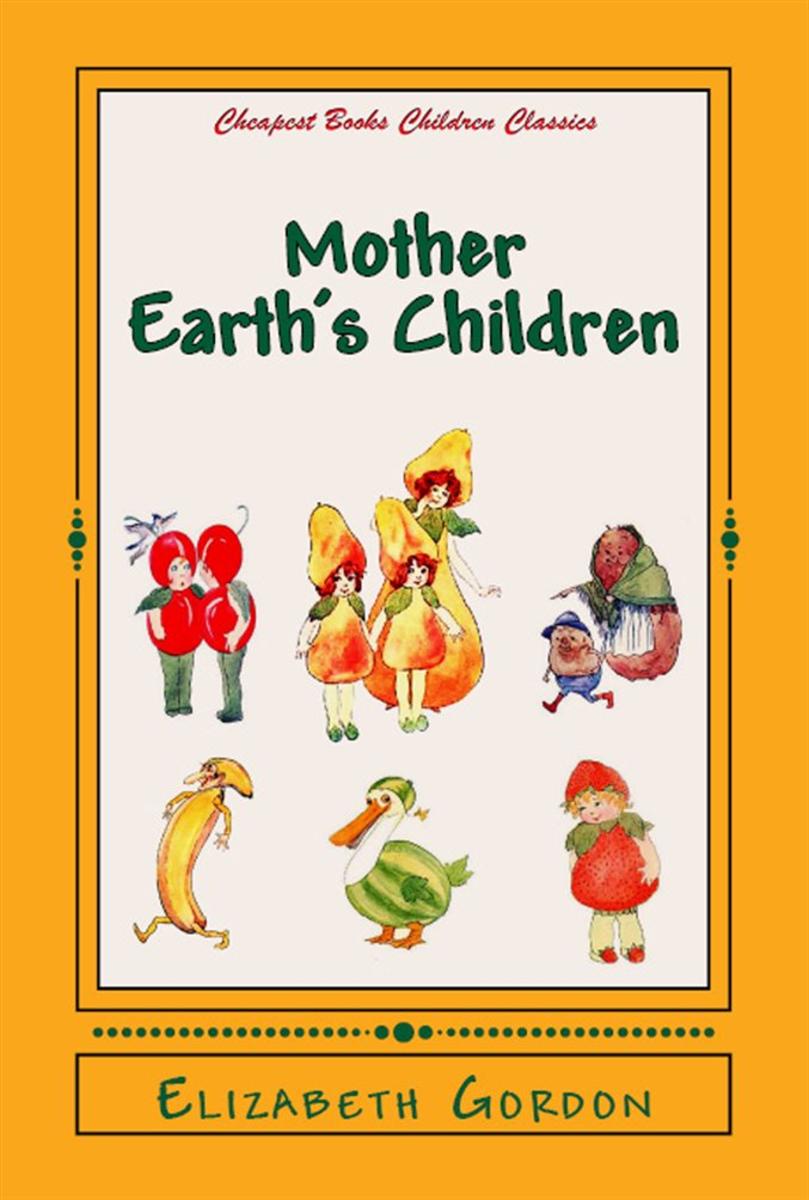
Mother Earth's Children: "The Frolics of the Fruits and Vegetables"
¥18.56
A seed, little friends, is really a plant or a tree all wrapped up in a little brown bundle. If you plant it in the ground it will grow, and when it is old enough it will bear fruit, because God has made it so. Among all the children of Mother Nature, the fruits and vegetables are probably the most useful to us. Wherever we may go some of these little people are there before us, ready to help us by giving us food and to make life easy and joyous for us. In your Mother’s garden you will always find many famil-iar friends; in the fields the graceful Grain children will nod and beckon to you; in the orchard the Fruit children will peep out at you from their leafy homes; along the roadside the gay little Berries will give you a friendly greeting, and in the forest you will find the little wild Grapes climbing trees and playing hide and seek with the Bird children. The publishers, who have already given you the Flower Children, Bird Children, and Animal Children, wish to join the author and the artist in their grateful acknowledgment of the wonderful appreciation which these books have received, and to hope that these new comrades will prove as fascinating as those whom you already know. For myself, little friends, I thank you from my heart. Elizabeth Gordon. Mother Earth's Children?"The Frolics of the Fruits and Vegetables" "Illustrated" by Elizabeth Gordon This little book is a thank-offering to the thousands of little friends who have so loyally given me their best in the way of encouragement and appreciation, and is most especially inscribed to Gladys Doris.
Winter Dreams: "Illustrated"
¥18.56
SOME of the caddies were poor as sin and lived in one-room houses with a neurasthenic cow in the front yard, but Dexter Green's father owned the second best grocery-store in Black Bear—the best one was "The Hub," patronized by the wealthy people from Sherry Island—and Dexter caddied on-ly for pocket-money. IN the fall when the days became crisp and gray, and the long Minnesota winter shut down like the white lid of a box, Dexter's skis moved over the snow that hid the fairways of the golf course. At these times the country gave him a feeling of profound melancholy—it offended him that the links should lie in enforced fallowness, haunted by ragged sparrows for the long season. It was dreary, too, that on the tees where the gay colors fluttered in summer there were now only the desolate sand-boxes knee-deep in crusted ice. When he crossed the hills the wind blew cold as misery, and if the sun was out he tramped with his eyes squinted up against the hard dimensionless glare. IN April the winter ceased abruptly. The snow ran down into Black Bear Lake scarcely tarrying for the early golfers to brave the season with red and black balls. Without elation, without an interval of moist glory, the cold was gone. About Author: Francis Scott Key Fitzgerald (1896 – 1940) was an American Jazz Age author of novels and short stories. He is regarded as one of the greatest twentieth century writers. Fitzgerald was of the self-styled "Lost Gen-eration," Americans born in the 1890s who came of age during World War I. He finished four novels, left a fifth unfinished, and wrote dozens of short stories that treat themes of youth, despair, and age. Other Books of Fitzgerald:The Curious Case of Benjamin Button (1922)The Great Gatsby (1925)Tender is the Night (1933)The Beautiful and the Damned (1922)This Side of Paradise (1920)"I Didn't Get Over" (1936)The Rich Boy (1926)Jacob's Ladder (1927)The Sensible Thing (1924) ***
The Lawman of Silver Creek: (A Novella) (The Men of Fir Mountain)
¥18.65
"If you want an emotional romantic adventure to nineteenth century frontier America this is for you." Jane Hunt Reviews For fans of Diana Palmer and Linda Lael Miller comes a new novella in The Men of Fir Mountain series. As sheriff of Silver Creek, Matthew Marston's job is to look after his town. But when he fails to protect the most important person in his life, Claire, from an attack, Matt feels as though he will never be able to forgive himself. Her husband-to-be's newly found overprotectiveness drives the headstrong Claire from his arms. She can't see a future with a man who won't allow her to follow her dreams. In a small town where everybody knows your name and your business, it's impossible for the pair to stay apart, especially as Claire finds that she can't completely turn her back on the lawman that she loves.

A Present from Paul Temple: Two Short Stories including Light-Fingers
¥18.65
Two short stories featuring Francis Durbridge’s famous detective, Paul Temple. The perfect winter read, these two short stories follow Paul and Steve through a blustery Christmas and New Year’s Eve to solve two compelling crimes. Also featuring an introduction from Francis Durbridge on how he created his famous detective.

No Pirates Nowadays: A Short Story
¥18.65
A classic tale of nautical adventure from the author of the acclaimed Aubrey/Maturin series, now published in eBook for the very first time to commemorate the Patrick O’Brian centenary. As their schooner inches through the dense yellow fog of the northern Pacific, Ross is beginning to regret agreeing to Sullivan's latest plan. Their search for the island of Sakhalien, to hunt for precious sea-otters, is leading them nowhere. The appearance of a fellow ship should be cause to lift their mood, yet the captain and swarthy Malay crew of the Santa Maria leave Ross feeling all the more uneasy. But when their paths cross once again it is Sullivan's nephew, Derrick, who has good cause to doubt that there are no pirates nowadays. First published under a pseudonym, this classic tale of nautical adventure will thrill every fan of Patrick O'Brian's Aubrey-Maturin series of Napoleonic sagas. Together with 'Noughts and Crosses' and 'Two's Company', it is also a captivating companion story to his novel, THE ROAD TO SAMARCAND, which also features Derrick, Sullivan and Ross.

Supertoys Trilogy
¥18.65
For the first time ever all three Suptertoys stories are collected in one essential volume. Featuring one of Brian Aldiss’ most renowned works, ‘Supertoys Last All Summer Long’, which was adapted into the 2001 film ‘A.I.’ directed by Steven Spielberg. David is just a little boy, a little boy who loves his mother and his teddy bear. David wants to make his mother happy, and tell her he loves her, but can't quite seem to find the words. His verbal communication centre is giving him trouble again. He may have to go back to the factory. With a brand new introduction from Brian Aldiss, ‘The Supertoys Trilogy’ is essential reading for all Science Fiction fans. Also includes ‘Supertoys When Winter Comes’ and ‘Supertoys in Other Seasons’.
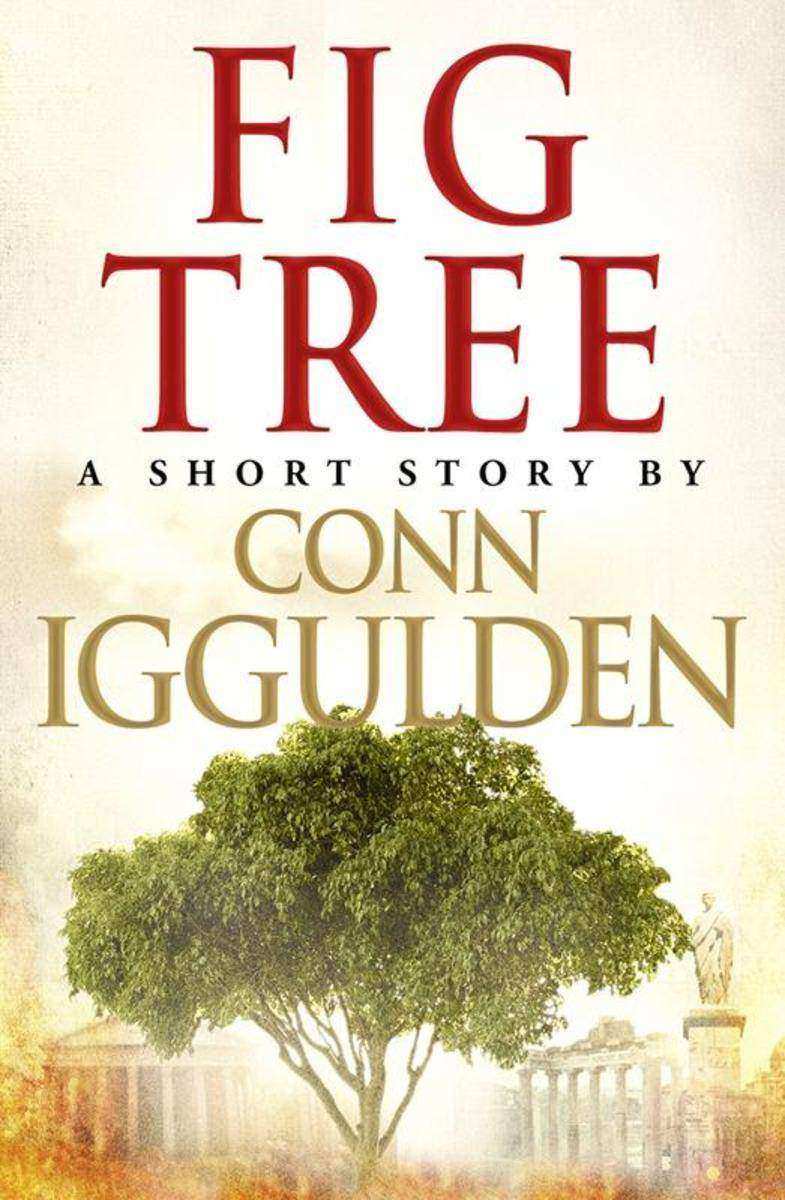
Fig Tree
¥18.65
This is the brilliant short story that featured in the back of the special edition ebook of CONN IGGULDEN’S bestselling novel EMPEROR: BLOOD OF GODS. As the effects of age creep up on Augustus Caesar, he is left with the whispers of his wife Livia in one ear and the echoes of his youthful dreams in the other, as he tries to come to the rescue of his beloved grandson, Marcus.


