


 购物车
 个人中心

Test-Driven iOS Development with Swift
¥71.93
Create fully-featured and highly functional iOS apps by writing tests firstAbout This BookLearn test-driven principles to help you build apps with fewer bugs and better designsBecome more efficient while working with Swift to move on to your next project faster!Learn how to incorporate all of the principles of test-driven development (TDD) in to your daily programming workflowWho This Book Is ForIf debugging iOS apps is a nerve-racking task for you and you are looking for a fix, this book is for you.What You Will LearnImplement TDD in swift application developmentGet to know the fundamentals, life cycle, and benefits of TDDExplore the tools and frameworks to effectively use TDDDevelop models and controllers driven by testsConstruct the network layer using stubsUse functional tests to ensure the app works as plannedAutomate and streamline the building, analysing, testing, and archiving of your iOS appsIn DetailTest-driven development (TDD) is a proven way to find software bugs early. Writing tests before your code improves the structure and maintainability of your app.Test-driven iOS Development with Swift will help you understand the process of TDD and how it impacts your applications written in Swift. Through practical, real-world examples, you’ll start seeing how to implement TDD in context. We will begin with an overview of your TDD workflow and then deep-dive into unit testing concepts and code cycles. We will showcase the workings of functional tests, which will help you improve the user interface. Finally, you will learn about automating deployments and continuous integration to run an environment.Style and approachThis is an easy-to-follow example-driven tutorial, packed with lots of tips and tricks that explore TDD bit-by-bit in the process of making an iOS application.
Poet's Freedom
¥229.55
Why do we need new artHow free is the artist in makingAnd why is the artist, and particularly the poet, a figure of freedom in Western cultureThe MacArthur Award-winning poet and critic Susan Stewart ponders these questions in The Poet's Freedom. Through a series of evocative essays, she not only argues that freedom is necessary to making and is itself something made, but also shows how artists give rules to their practices and model a self-determination that might serve in other spheres of work.Stewart traces the ideas of freedom and making through insightful readings of an array of Western philosophers and poets-Plato, Homer, Marx, Heidegger, Arendt, Dante, and Coleridge are among her key sources. She begins by considering the theme of making in the Hebrew Scriptures, examining their accountof a god who creates the world and leaves humans free to rearrange and reform the materials of nature. She goes on to follow the force of moods, sounds, rhythms, images, metrical rules, rhetorical traditions, the traps of the passions, and the nature of language in the cycle of making and remaking. Throughout the book she weaves the insight that the freedom to reverse any act of artistic making is as essential as the freedom to create.?A book about the pleasures of making and thinking as means of life, The Poet's Freedom explores and celebrates the freedom of artists who, working under finite conditions, make considered choices and shape surprising consequences. This engaging and beautifully written notebook on making will attract anyone interested in the creation of art and literature.
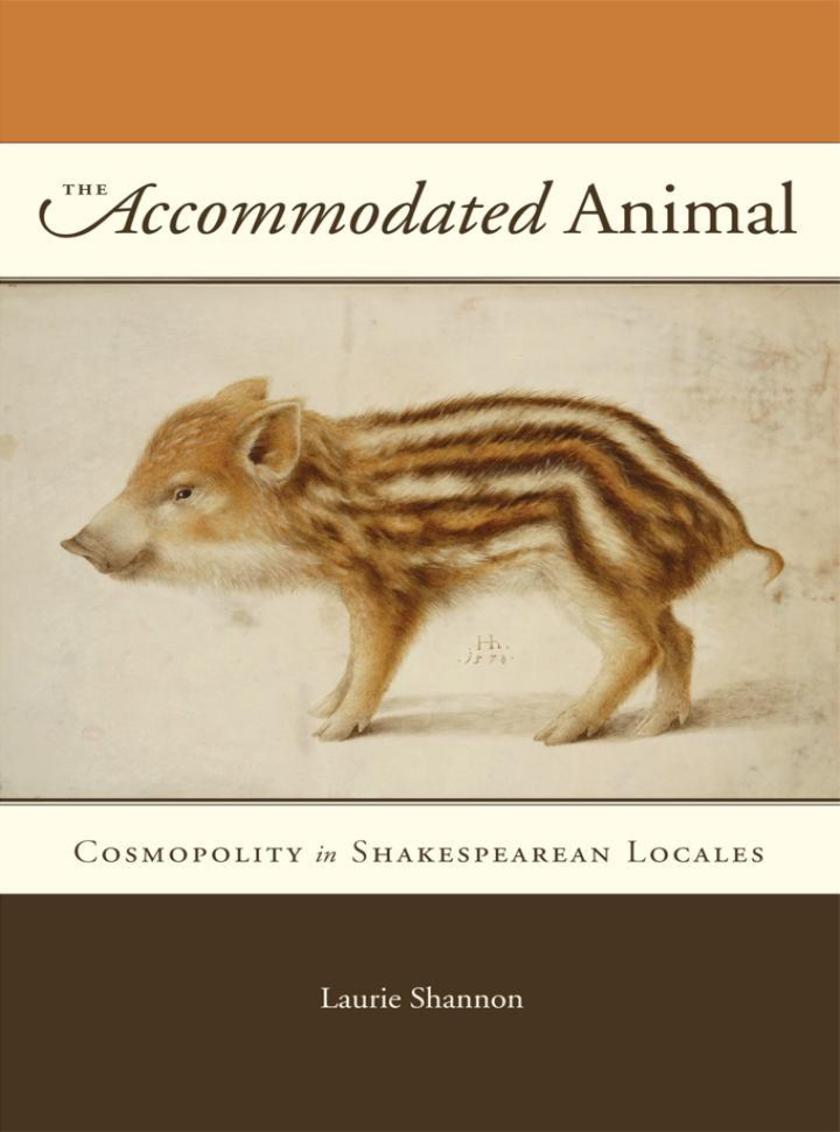
Accommodated Animal
¥229.55
Shakespeare wrote of lions, shrews, horned toads, curs, mastiffs, and hellhounds. But the word "e;animal"e; itself only appears very rarely in his work, which was in keeping with sixteenth-century usage. As Laurie Shannon reveals in The Accommodated Animal, the modern human / animal divide first came strongly into play in the seventeenth century, with Descartes's famous formulation that reason sets humans above other species: "e;I think, therefore I am."e; Before that moment, animals could claim a firmer place alongside humans in a larger vision of belonging, or what she terms cosmopolity.?With Shakespeare as her touchstone, Shannon explores the creaturely dispensation that existed until Descartes. She finds that early modern writers used classical natural history and readings of Genesis to credit animals with various kinds of stakeholdership, prerogative, and entitlement, employing the language of politics in a constitutional vision of cosmic membership. Using this political idiom to frame cross-species relations, Shannon argues, carried with it the notion that animals possess their own investments in the world, a point distinct from the question of whether animals have reason. It also enabled a sharp critique of the tyranny of humankind. By answering "e;the question of the animal"e; historically, The Accommodated Animal makes a brilliant contribution to cross-disciplinary debates engaging animal studies, political theory, intellectual history, and literary studies.

Moralizing Technology
¥253.10
Technology permeates nearly every aspect of our daily lives. Cars enable us to travel long distances, mobile phones help us to communicate, and medical devices make it possible to detect and cure diseases. But these aids to existence are not simply neutral instruments: they give shape to what we do and how we experience the world. And because technology plays such an active role in shaping our daily actions and decisions, it is crucial, Peter-Paul Verbeek argues, that we consider the moral dimension of technology.?Moralizing Technology offers exactly that: an in-depth study of the ethical dilemmas and moral issues surrounding the interaction of humans and technology. Drawing from Heidegger and Foucault, as well as from philosophers of technology such as Don Ihde and Bruno Latour, Peter-Paul Verbeek locates morality not just in the human users of technology but in the interaction between us and our machines. Verbeek cites concrete examples, including some from his own life, and compellingly argues for the morality of things. Rich and multifaceted, and sure to be controversial, Moralizing Technology will force us all to consider the virtue of new inventions and to rethink the rightness of the products we use every day.
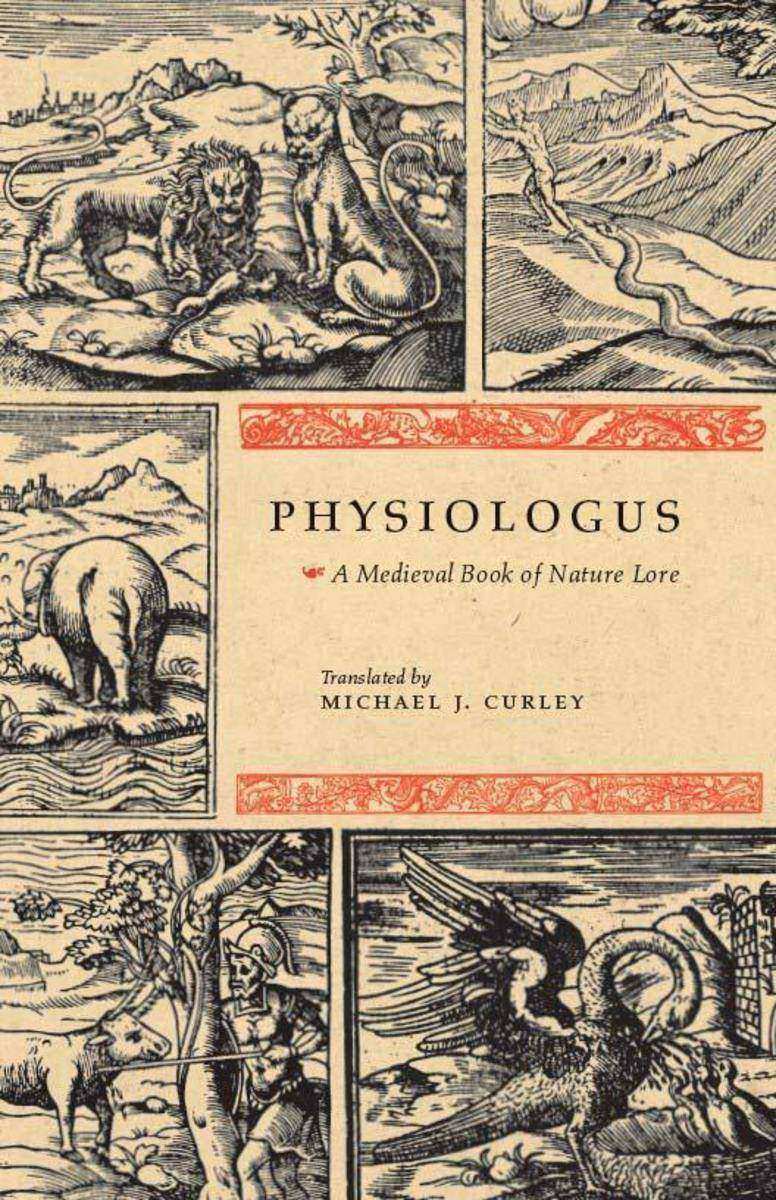
Physiologus
¥188.35
One of the most popular and widely read books of the Middle Ages, Physiologus contains allegories of beasts, stones, and trees both real and imaginary, infused by their anonymous author with the spirit of Christian moral and mystical teaching.Accompanied by an introduction that explains the origins, history, and literary value of this curious text, this volume also reproduces twenty woodcuts from the 1587 version. Originally composed in the fourth century in Greek, and translated into dozens of versions through the centuries, Physiologus will delight readers with its ancient tales of ant-lions, centaurs, and hedgehogs-and their allegorical significance."e;An elegant little book . . . still diverting to look at today. . . . The woodcuts reproduced from the 1587 Rome edition are alone worth the price of the book."e;-Raymond A. Sokolov, New York Times Book Review
Erring
¥188.35
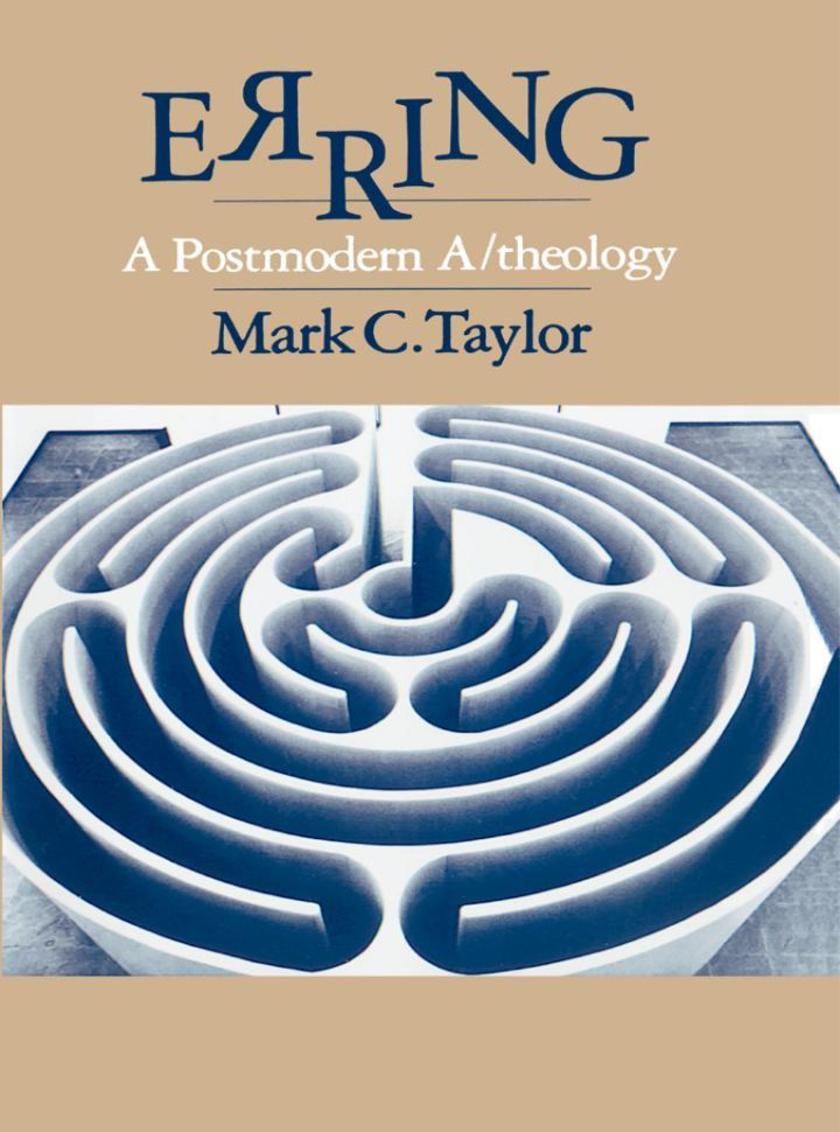
"e;Erring is a thoughtful, often brilliant attempt to describe and enact what remains of (and for) theology in the wake of deconstruction. Drawing on Hegel, Nietzsche, Derrida, and others, Mark Taylor extends-and goes well beyond-pioneering efforts. . . . The result is a major book, comprehensive and well-informed."e;-G. Douglas Atkins, Philosophy and Literature"e;Many have felt the need for a study which would explicate in coherent and accessible fashion the principal tenets of deconstruction, with particular attention to their theological implications. This need the author has addressed in a most impressive manner. The book's effect upon contemporary discussion is apt to be, and deserves to be, far-reaching."e;-Walter Lowe, Journal of Religion
Venusberg
¥129.49
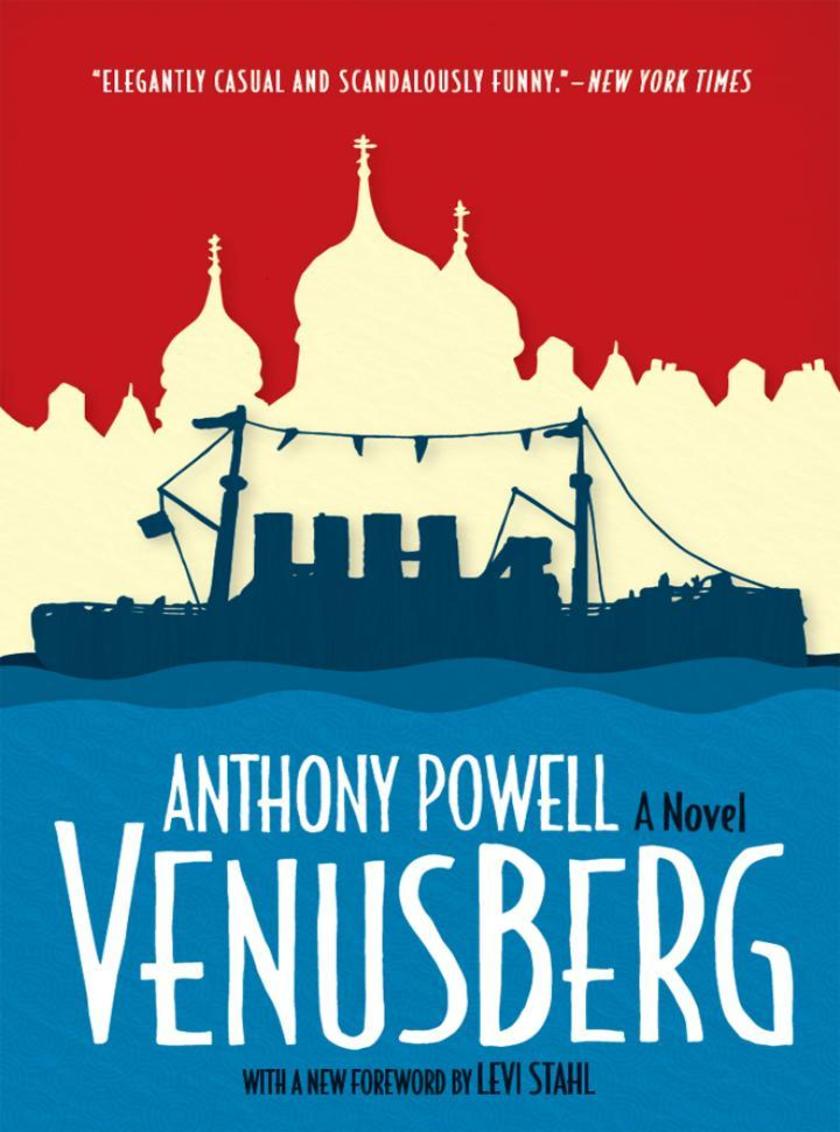
Written from a vantage point both high and deliberately narrow, the early novels of the late British master Anthony Powell nevertheless deal in the universal themes that would become a substantial part of his oeuvre: pride, greed, and the strange drivers of human behavior. More explorations of relationships and vanity than plot-driven narratives, Powell's early works reveal the stirrings of the unequaled style, ear for dialogue, and eye for irony that would reach their caustic peak in his epic, A Dance to the Music of Time.Powell's sophomore novel, Venusberg, follows journalist Lushington as he leaves behind his unrequited love in England and travels by boat to an unnamed Baltic state. Awash in a marvelously odd assortment of counts and ladies navigating a multicultural, elegant, and politically precarious social scene, Lushington becomes infatuated with his very own, very foreign Venus. An action-packed literary precursor to Wes Anderson's The Grand Budapest Hotel, Venusberg is replete with assassins and Nazis, loose countesses and misunderstandings, fatal accidents and social comedy. But beyond its humor, this early installment in Powell's literary canon will offer readers a welcome window onto the mind of a great artist learning his craft.
Medea
¥65.75
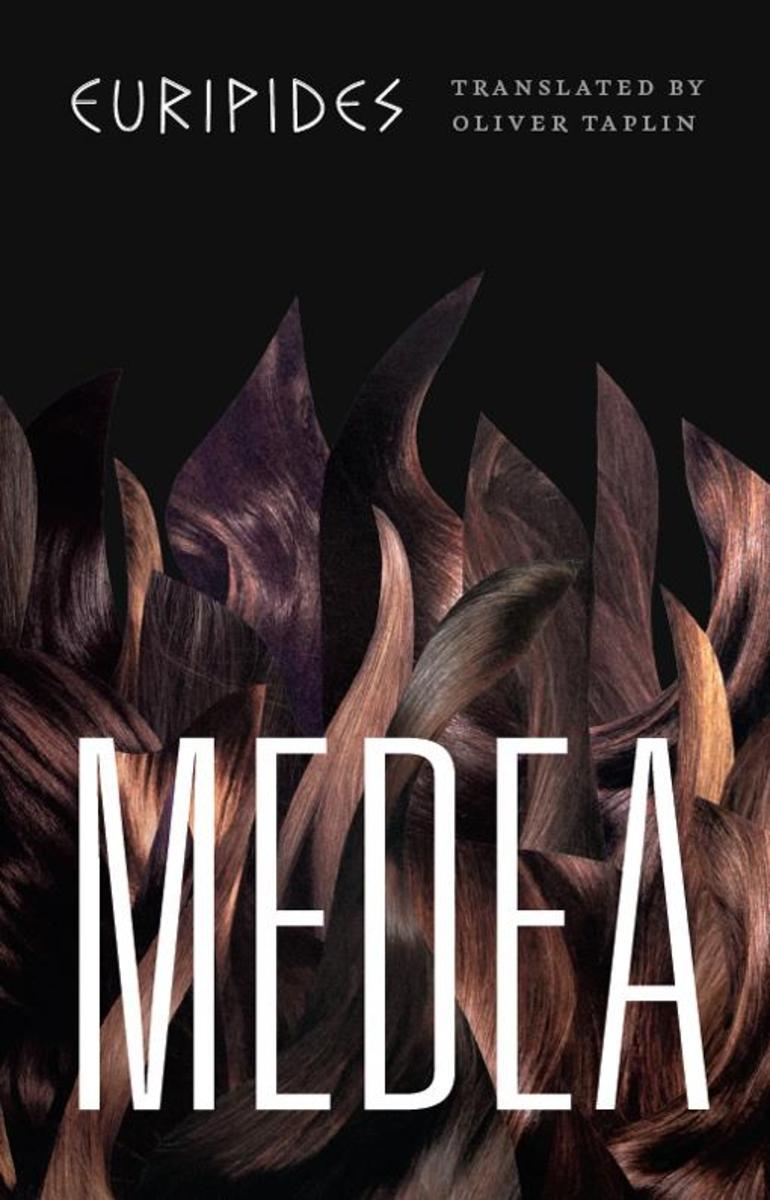
In the centuries since it was first performed, Euripides's Medea has established itself as one of the most influential of the Greek tragedies. The story of the wronged wife who seeks revenge against her unfaithful husband by murdering their children is lodged securely in the popular imagination, a touchstone for politics, law, and psychoanalysis and the subject of constant retellings and reinterpretations.This new translation of Medea by classicist Oliver Taplin, originally published as part of the acclaimed third edition of Chicago's Complete Greek Tragedies, brilliantly replicates the musicality and strength of Euripides's verse while retaining the play's dramatic and emotional impact.?Taplin has created an edition of Medea that is particularly suited to performance, while not losing any of the power it has long held as an object of reading or study. This edition is poised to become the new standard, and to introduce a new generation of readers to the heights and depths of Greek tragedy.

Hidden Wealth of Nations
¥147.15
We are well aware of the rise of the 1% as the rapid growth of economic inequality has put the majority of the world's wealth in the pockets of fewer and fewer. One much-discussed solution to this imbalance is to significantly increase the rate at which we tax the wealthy. But with an enormous amount of the world's wealth hidden in tax havens-in countries like Switzerland, Luxembourg, and the Cayman Islands-this wealth cannot be fully accounted for and taxed fairly. No one, from economists to bankers to politicians, has been able to quantify exactly how much of the world's assets are currently hidden-until now. Gabriel Zucman is the first economist to offer reliable insight into the actual extent of the world's money held in tax havens. And it's staggering.In The Hidden Wealth of Nations, Zucman offers an inventive and sophisticated approach to quantifying how big the problem is, how tax havens work and are organized, and how we can begin to approach a solution. His research reveals that tax havens are a quickly growing danger to the world economy. In the past five years, the amount of wealth in tax havens has increased over 25%-there has never been as much money held offshore as there is today. This hidden wealth accounts for at least $7.6 trillion, equivalent to 8% of the global financial assets of households. Fighting the notion that any attempts to vanquish tax havens are futile, since some countries will always offer more advantageous tax rates than others, as well the counter-argument that since the financial crisis tax havens have disappeared, Zucman shows how both sides are actually very wrong. In The Hidden Wealth of Nations he offers an ambitious agenda for reform, focused on ways in which countries can change the incentives of tax havens. Only by first understanding the enormity of the secret wealth can we begin to estimate the kind of actions that would force tax havens to give up their practices.Zucman's work has quickly become the gold standard for quantifying the amount of the world's assets held in havens. In this concise book, he lays out in approachable language how the international banking system works and the dangerous extent to which the large-scale evasion of taxes is undermining the global market as a whole. If we are to find a way to solve the problem of increasing inequality, The Hidden Wealth of Nations is essential reading.

Last Asylum
¥147.15
In the late 1970s, Barbara Taylor, then an acclaimed young historian, began to suffer from severe anxiety. In the years that followed, Taylor's world contracted around her illness. Eventually, her struggles were severe enough to lead to her admission to what had once been England's largest psychiatric institution, the infamous Friern Mental Hospital in North London.The Last Asylum is Taylor's breathtakingly blunt and brave account of those years. In it, Taylor draws not only on her experience as a historian, but also, more importantly, on her own lived history at Friern- once known as the Colney Hatch Lunatic Asylum and today the site of a luxury apartment complex. Taylor was admitted to Friern in July 1988, not long before England's asylum system began to undergo dramatic change: in a development that was mirrored in America, the 1990s saw the old asylums shuttered, their patients left to plot courses through a perpetually overcrowded and underfunded system of community care. But Taylor contends that the emptying of the asylums also marked a bigger loss, a loss of community. She credits her own recovery to the help of a steadfast psychoanalyst and a loyal circle of friends- from Magda, Taylor's manic-depressive roommate, to Fiona, who shares tips for navigating the system and stories of her boyfriend, the "e;Spaceman,"e; and his regular journeys to Saturn. The forging of that network of support and trust was crucial to Taylor's recovery, offering a respite from the "e;stranded, homeless feelings"e; she and others found in the outside world.A vivid picture of mental health treatment at a moment of epochal change, The Last Asylum is also a moving meditation on Taylor's own experience, as well as that of millions of others who struggle with mental illness.
Back to the Breast
¥247.21
After decades of decline during the twentieth century, breastfeeding rates began to rise again in the 1970s, a rebound that has continued to the present. While it would be easy to see this reemergence as simply part of the naturalism movement of the '70s, Jessica Martucci reveals here that the true story is more complicated. Despite the widespread acceptance and even advocacy of formula feeding by many in the medical establishment throughout the 1940s, '50s, and '60s, a small but vocal minority of mothers, drawing upon emerging scientific and cultural ideas about maternal instinct, infant development, and connections between the body and mind, pushed back against both hospital policies and cultural norms by breastfeeding their children. As Martucci shows, their choices helped ideologically root a "e;back to the breast"e; movement within segments of the middle-class, college-educated population as early as the 1950s.?That movement-in which the personal and political were inextricably linked-effectively challenged midcentury norms of sexuality, gender, and consumption, and articulated early environmental concerns about chemical and nuclear contamination of foods, bodies, and breast milk. In its groundbreaking chronicle of the breastfeeding movement, Back to the Breast provides a welcome and vital account of what it has meant, and what it means today, to breastfeed in modern America.
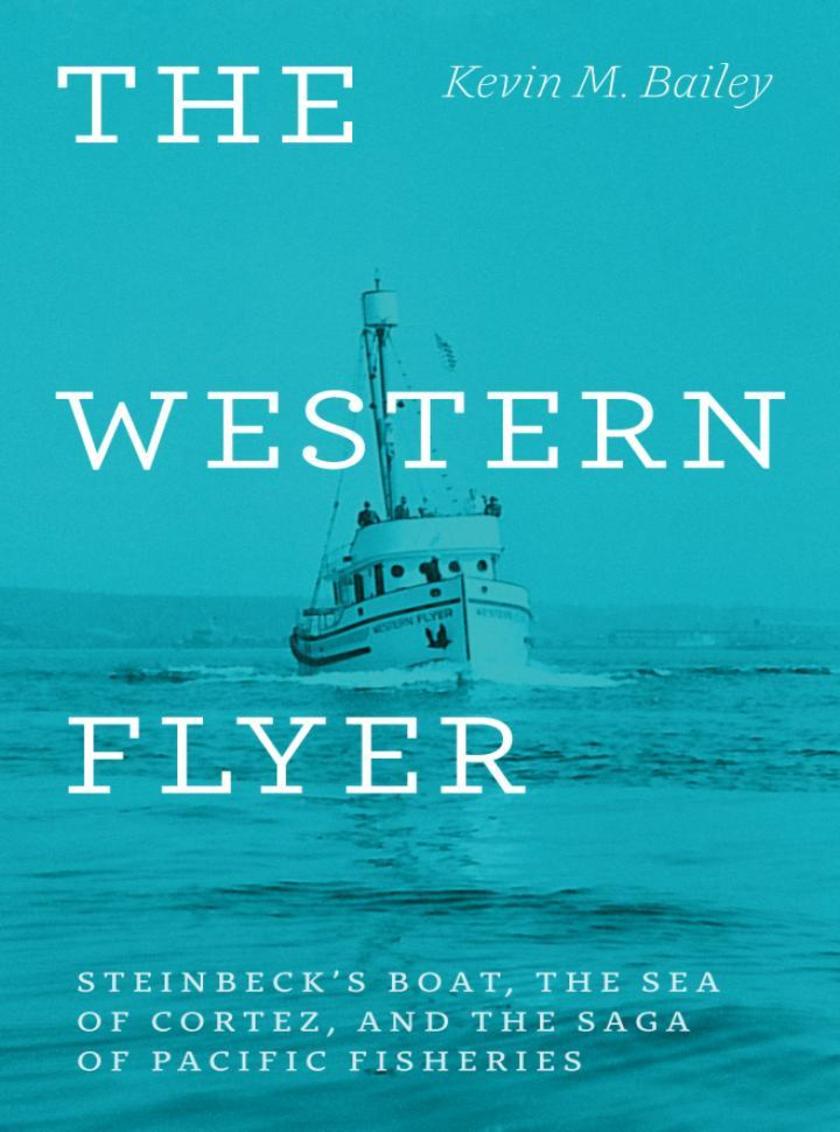
Western Flyer
¥147.15
In January 2010, the Gemini was moored in the Swinomish Slough on a Native American reservation near Anacortes, Washington. Unbeknownst to almost everyone, the rusted and dilapidated boat was in fact the most famous fishing vessel ever to have sailed: the original Western Flyer, immortalized in John Steinbeck's nonfiction classic The Log from the Sea of Cortez.In this book, Kevin M. Bailey resurrects this forgotten witness to the changing tides of Pacific fisheries. He draws on the Steinbeck archives, interviews with family members of crew, and more than three decades of working in Pacific Northwest fisheries to trace the depletion of marine life through the voyages of a single ship. After Steinbeck and his friend Ed Ricketts-a pioneer in the study of the West Coast's diverse sea life and the inspiration behind "e;Doc"e; in Cannery Row-chartered the boat for their now-famous 1940 expedition, the Western Flyer returned to its life as a sardine seiner in California. But when the sardine fishery in Monterey collapsed, the boat moved on: fishing for Pacific ocean perch off Washington, king crab in the Bering Sea off Alaska, and finally wild Pacific salmon-all industries that would also face collapse.As the Western Flyer herself faces an uncertain future-a businessman has bought her, intending to bring the boat to Salinas, California, and turn it into a restaurant feature just blocks from Steinbeck's grave-debates about the status of the California sardine, and of West Coast fisheries generally, have resurfaced. A compelling and timely tale of a boat and the people it carried, of fisheries exploited, and of fortunes won and lost, The Western Flyer is environmental history at its best: a journey through time and across the sea, charting the ebb and flow of the cobalt waters of the Pacific coast.
Integrating the Inner City
¥265.87
For many years Chicago's looming large-scale housing projects defined the city, and their demolition and redevelopment-via the Chicago Housing Authority's Plan for Transformation-has been perhaps the most startling change in the city's urban landscape in the last twenty years. The Plan, which reflects a broader policy effort to remake public housing in cities across the country, seeks to deconcentrate poverty by transforming high-poverty public housing complexes into mixed-income developments and thereby integrating once-isolated public housing residents into the social and economic fabric of the city. But is the Plan an ambitious example of urban regeneration or a not-so-veiled effort at gentrification?In the most thorough examination of mixed-income public housing redevelopment to date, Robert J. Chaskin and Mark L. Joseph draw on five years of field research, in-depth interviews, and volumes of data to demonstrate that while considerable progress has been made in transforming the complexes physically, the integrationist goals of the policy have not been met. They provide a highly textured investigation into what it takes to design, finance, build, and populate a mixed-income development, and they illuminate the many challenges and limitations of the policy as a solution to urban poverty. Timely and relevant, Chaskin and Joseph's findings raise concerns about the increased privatization of housing for the poor while providing a wide range of recommendations for a better way forward.

Great Paleolithic War
¥365.93
Following the discovery in Europe in the late 1850s that humanity had roots predating known history and reaching deep into the Pleistocene era, scientists wondered whether North American prehistory might be just as ancient. And why notThe geological strata seemed exactly analogous between America and Europe, which would lead one to believe that North American humanity ought to be as old as the European variety. This idea set off an eager race for evidence of the people who might have occupied North America during the Ice Age-a long, and, as it turned out, bitter and controversial search.?In The Great Paleolithic War, David J. Meltzer tells the story of a scientific quest that set off one of the longest-running feuds in the history of American anthropology, one so vicious at times that anthropologists were deliberately frightened away from investigating potential sites. Through his book, we come to understand how and why this controversy developed and stubbornly persisted for as long as it did; and how, in the process, it revolutionized American archaeology.
Translation as Muse
¥329.62
Poetry is often said to resist translation, its integration of form and meaning rendering even the best translations problematic. Elizabeth Marie Young disagrees, and with?Translation as Muse, she uses the work of the celebrated Roman poet Catullus to mount a powerful argument that translation can be an engine of poetic invention.Catullus has long been admired as a poet, but his efforts as a translator have been largely ignored. Young reveals how essential translation is to his work: many poems by Catullus that we tend to label as lyric originals were in fact shaped by Roman translation practices entirely different from our own. By rereading Catullus through the lens of translation, Young exposes new layers of ingenuity in Latin poetry even as she illuminates the idiosyncrasies of Roman translation practice, reconfigures our understanding of translation history, and questions basic assumptions about lyric poetry itself.

Frontier Seaport
¥370.82
Detroit's industrial health has long been crucial to the American economy. Today's troubles notwithstanding, Detroit has experienced multiple periods of prosperity, particularly in the second half of the eighteenth century, when the city was the center of the thriving fur trade. Its proximity to the West as well as its access to the Great Lakes and the St. Lawrence River positioned this new metropolis at the intersection of the fur-rich frontier and the Atlantic trade routes.In?Frontier Seaport, Catherine Cangany details this seldom-discussed chapter of Detroit's history. She argues that by the time of the American Revolution, Detroit functioned much like a coastal town as a result of the prosperous fur trade, serving as a critical link in a commercial chain that stretched all the way to Russia and China-thus opening Detroit's shores for eastern merchants and other transplants. This influx of newcomers brought its own transatlantic networks and fed residents' desires for popular culture and manufactured merchandise. Detroit began to be both a frontier town and seaport city-a mixed identity, Cangany argues, that hindered it from becoming a thoroughly "e;American"e; metropolis.

Building for the Arts
¥370.82
Over the past two decades, the arts in America have experienced an unprecedented building boom, with more than sixteen billion dollars directed to the building, expansion, and renovation of museums, theaters, symphony halls, opera houses, and centers for the visual and performing arts. Among the projects that emerged from the boom were many brilliant successes. Others, like the striking addition of the Quadracci Pavilion to the Milwaukee Art Museum, brought international renown but also tens of millions of dollars of off-budget debt while offering scarce additional benefit to the arts and embodying the cultural sector's worst fears that the arts themselves were being displaced by the big, status-driven architecture projects built to contain them.?With Building for the Arts, Peter Frumkin and Ana Kolendo explore how artistic vision, funding partnerships, and institutional culture work together-or fail to-throughout the process of major cultural construction projects. Drawing on detailed case studies and in-depth interviews at museums and other cultural institutions varying in size and funding arrangements, including the Art Institute of Chicago, Atlanta Opera, and AT&T Performing Arts Center in Dallas, Frumkin and Kolendo analyze the decision-making considerations and challenges and identify four factors whose alignment characterizes the most successful and sustainable of the projects discussed: institutional requirements, capacity of the institution to manage the project while maintaining ongoing operations, community interest and support, and sufficient sources of funding. How and whether these factors are strategically aligned in the design and execution of a building initiative, the authors argue, can lead an organization to either thrive or fail. The book closes with an analysis of specific tactics that can enhance the chances of a project's success.A practical guide grounded in the latest scholarship on nonprofit strategy and governance, Building for the Arts will be an invaluable resource for professional arts staff and management, trustees of arts organizations, development professionals, and donors, as well as those who study and seek to understand them.

Victorian Scientific Naturalism
¥370.82
Victorian Scientific Naturalism examines the secular creeds of the generation of intellectuals who, in the wake of The Origin of Species, wrested cultural authority from the old Anglican establishment while installing themselves as a new professional scientific elite. These scientific naturalists-led by biologists, physicists, and mathematicians such as William Kingdon Clifford, Joseph Dalton Hooker, Thomas Henry Huxley, and John Tyndall-sought to persuade both the state and the public that scientists, not theologians, should be granted cultural authority, since their expertise gave them special insight into society, politics, and even ethics.?In Victorian Scientific Naturalism, Gowan Dawson and Bernard Lightman bring together new essays by leading historians of science and literary critics that recall these scientific naturalists, in light of recent scholarship that has tended to sideline them, and that reevaluate their place in the broader landscape of nineteenth-century Britain. Ranging in topic from daring climbing expeditions in the Alps to the maintenance of aristocratic protocols of conduct at Kew Gardens, these essays offer a series of new perspectives on Victorian scientific naturalism-as well as its subsequent incarnations in the early twentieth century-that together provide an innovative understanding of the movement centering on the issues of community, identity, and continuity.

City for Children
¥370.82
American cities are constantly being built and rebuilt, resulting in ever-changing skylines and neighborhoods. While the dynamic urban landscapes of New York, Boston, and Chicago have been widely studied, there is much to be gleaned from west coast cities, especially in California, where the migration boom at the end of the nineteenth century permanently changed the urban fabric of these newly diverse, plural metropolises.In?A City for Children, Marta Gutman focuses on the use and adaptive reuse of everyday buildings in Oakland, California, to make the city a better place for children. She introduces us to the women who were determined to mitigate the burdens placed on working-class families by an indifferent industrial capitalist economy. Often without the financial means to build from scratch, women did not tend to conceive of urban land as a blank slate to be wiped clean for development. Instead, Gutman shows how, over and over, women turned private houses in Oakland into orphanages, kindergartens, settlement houses, and day care centers, and in the process built the charitable landscape-a network of places that was critical for the betterment of children, families, and public life.The industrial landscape of Oakland, riddled with the effects of social inequalities and racial prejudices, is not a neutral backdrop in Gutman's story but an active player. Spanning one hundred years of history,?A City for Children?provides a compelling model for building urban institutions and demonstrates that children, women, charity, and incremental construction, renovations, alterations, additions, and repurposed structures are central to the understanding of modern cities.
Heidegger's Confessions
¥370.82
Although Martin Heidegger is nearly as notorious as Friedrich Nietzsche for embracing the death of God, the philosopher himself acknowledged that Christianity accompanied him at every stage of his career. In Heidegger's Confessions, Ryan Coyne isolates a crucially important player in this story: Saint Augustine. Uncovering the significance of Saint Augustine in Heidegger's philosophy, he details the complex and conflicted ways in which Heidegger paradoxically sought to define himself against the Christian tradition while at the same time making use of its resources.?Coyne first examines the role of Augustine in Heidegger's early period and the development of his magnum opus, Being and Time. He then goes on to show that Heidegger owed an abiding debt to Augustine even following his own rise as a secular philosopher, tracing his early encounters with theological texts through to his late thoughts and writings. Bringing a fresh and unexpected perspective to bear on Heidegger's profoundly influential critique of modern metaphysics, Coyne traces a larger lineage between religious and theological discourse and continental philosophy.
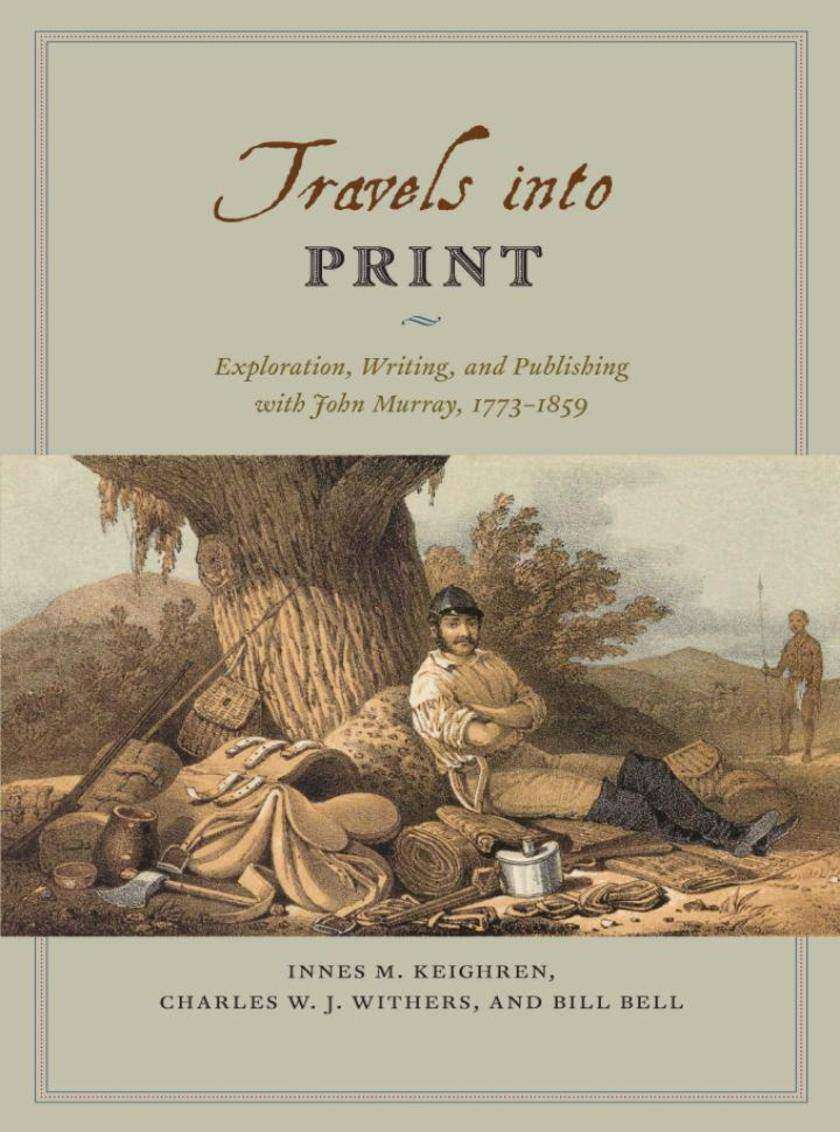
Travels into Print
¥370.82
In eighteenth- and nineteenth-century Britain, books of travel and exploration were much more than simply the printed experiences of intrepid authors. They were works of both artistry and industry-products of the complex, and often contested, relationships between authors and editors, publishers and printers. These books captivated the reading public and played a vital role in creating new geographical truths. In an age of global wonder and of expanding empires, there was no publisher more renowned for its travel books than the House of John Murray.Drawing on detailed examination of the John Murray Archive of manu*s, images, and the firm's correspondence with its many authors-a list that included such illustrious explorers and scientists as Charles Darwin and Charles Lyell, and literary giants like Jane Austen, Lord Byron, and Sir Walter Scott-Travels into Print considers how journeys of exploration became published accounts and how travelers sought to demonstrate the faithfulness of their written testimony and to secure their personal credibility. This fascinating study in historical geography and book history takes modern readers on a journey into the nature of exploration, the production of authority in published travel narratives, and the creation of geographical authorship-a journey bound together by the unifying force of a world-leading publisher.


