


 购物车
 个人中心


The Secrets of Lily Graves
¥56.08
Gone Girl meets Six Feet Under in bestselling author Sarah Strohmeyer's romantic YA mystery about a girl who must unravel a web of lies in her small town before it's too late.Descended from a long line of female morticians, Lily Graves knows all about buried secrets. So after senior-class president Erin Donohue—perfect saint to the community—turns up dead, Lily believes it's her job to find the culprit. But Lily has feelings for Erin's ex-boyfriend, Matt, which makes both of them suspects and makes Lily's investigation . . . complicated. As her world crumbles around her, Lily must figure out the difference between truth and deception, between genuine love and a web of lies. And she must do it quickly, before the killer claims another victim.Fans of Sara Shepard who enjoy realistic contemporary fiction with a dash of mystery will love the secrets, lies, and romance swirling in this sexy, intriguing novel.

看醫生
¥16.77
◆ 書中講述幼兒日常生活中的小故事,貼近孩子生活,透過生動形象的小故事,幫助孩子克服恐懼和不安的情緒,讓他們從小建立健康的心理質素。 ◆ 書後設置「互動小遊戲」和「爸爸媽媽看一看」小欄目,告訴家長和孩子面對心理困擾時應該怎樣處理,給您周到而實用的指導。 ◆ 書後還設有「你做到了嗎?」,從每本書的內容出發,讓孩子對照檢測自己是否做到。家長可因應孩子的實際情況作出適當的引導和鼓勵。 菲菲生了病,媽媽帶她去看醫生。醫生要給她診治,護士姐姐還會替她打針……她會害怕嗎?她的病能很快好起來嗎?

飯桌上
¥16.77
書中講述幼兒日常生活中的小故事,貼近孩子生活,透過生動形象的小故事,教導孩子適當的行為處事方法,從小建立良好品格。 書後設置「互動小遊戲」、「成長小貼士」小欄目,加強孩子對書中故事相關禮貌常識的認識,同時也給父母一些實用的指導,幫助孩子培養良好的品格。 書後還設有「齊來評評分」,列舉故事中可以的禮儀小常識,讓家長和孩子參考對照,增進親子間的互動。 《飯桌上》小明跟媽媽一起到同學美美家做客,美美的媽媽燒了好吃的小菜招待他們。吃飯時,小明知道了要細嚼慢嚥,還不能發出聲音。看到了喜歡的雞腿,小明會怎麼做呢?

靚餸(第五版)
¥29.35
白蘿蔔可解毒、清積滯、改善吃過量肉類引致的食慾不振。
OpenCV By Example
¥90.46
Enhance your understanding of Computer Vision and image processing by developing real-world projects in OpenCV 3About This BookGet to grips with the basics of Computer Vision and image processingThis is a step-by-step guide to developing several real-world Computer Vision projects using OpenCV 3This book takes a special focus on working with Tesseract OCR, a free, open-source library to recognize text in imagesWho This Book Is ForIf you are a software developer with a basic understanding of Computer Vision and image processing and want to develop interesting Computer Vision applications with Open CV, this is the book for you. Knowledge of C++ is required.What You Will LearnInstall OpenCV 3 on your operating systemCreate the required CMake *s to compile the C++ application and manage its dependenciesGet to grips with the Computer Vision workflows and understand the basic image matrix format and filtersUnderstand the segmentation and feature extraction techniquesRemove backgrounds from a static scene to identify moving objects for video surveillanceTrack different objects in a live video using various techniquesUse the new OpenCV functions for text detection and recognition with TesseractIn DetailOpen CV is a cross-platform, free-for-use library that is primarily used for real-time Computer Vision and image processing. It is considered to be one of the best open source libraries that helps developers focus on constructing complete projects on image processing, motion detection, and image segmentation.Whether you are completely new to the concept of Computer Vision or have a basic understanding of it, this book will be your guide to understanding the basic OpenCV concepts and algorithms through amazing real-world examples and projects.Starting from the installation of OpenCV on your system and understanding the basics of image processing, we swiftly move on to creating optical flow video analysis or text recognition in complex scenes, and will take you through the commonly used Computer Vision techniques to build your own Open CV projects from scratch.By the end of this book, you will be familiar with the basics of Open CV such as matrix operations, filters, and histograms, as well as more advanced concepts such as segmentation, machine learning, complex video analysis, and text recognition.Style and approachThis book is a practical guide with lots of tips, and is closely focused on developing Computer vision applications with OpenCV. Beginning with the fundamentals, the complexity increases with each chapter. Sample applications are developed throughout the book that you can execute and use in your own projects.
JavaScript Projects for Kids
¥45.77
Gear up for a roller-coaster ride into the world of JavaScript and programming with this easy-to-follow, fun, and entertaining project-based guideAbout This BookGet to know the concepts of HTML and CSS to work with JavaScriptExplore the concepts of object-oriented programmingFollow this step-by-step guide on the fundamentals of JavaScript programmingWho This Book Is ForIf you've never written code before or you are completely new to the world of web programming, then this book is the right choice for you. This book is for kids of age 10 years and above and parents who are completely new to the world of programming and want to get introduced to programming.What You Will LearnLearn how to work with Google Developer tools to iterate, debug and profile your codeDevelop a Battleship game using the basic concepts of HTML and CSSGet to know the fundamentals of JavaScript programmingCreate our own version of Pac Man game.Discover the vital concepts of object-oriented programmingIn DetailJavaScript is the most widely-used programming language for web development and that's not all! It has evolved over the years and is now being implemented in an array of environments from websites to robotics. Learning JavaScript will help you see the broader picture of web development.This book will take your imagination to new heights by teaching you how to work with JavaScript from scratch. It will introduce you to HTML and CSS to enhance the appearance of your applications. You’ll then use your skills to build on a cool Battleship game! From there, the book will introduce you to jQuery and show you how you can manipulate the DOM. You’ll get to play with some cool stuff using Canvas and will learn how to make use of Canvas to build a game on the lines of Pacman, only a whole lot cooler! Finally, it will show you a few tricks with OOP to make your code clean and will end with a few road maps on areas you can explore further.Style and approachThis is an easy-to-follow, informative, and fun guide that takes a project-based approach to teaching programming in JavaScript. You will learn everything you need to get started with serious web application development.
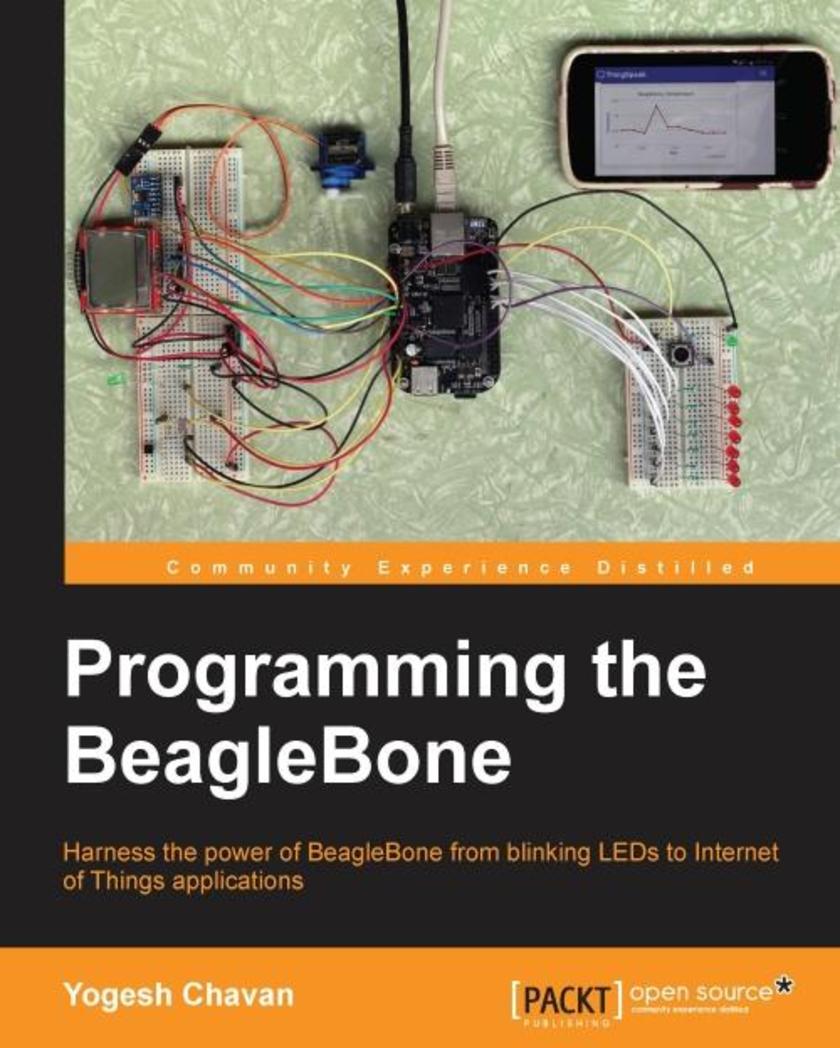
Programming the BeagleBone
¥54.49
Master BeagleBone programming by doing simple electronics and Internet of Things projectsAbout This BookQuickly develop electronics projects that interact with Internet applications using JavaScript and PythonLearn about electronics components such as sensors and motors, and how to communicate with them by writing programsA step-by-step guide to explore the exciting world of BeagleBone—from connecting BeagleBone to doing electronics projects and creating IoT applicationsWho This Book Is ForIf you want to learn programming on embedded systems with BeagleBone by doing simple electronics projects, this book is for you. This book is also helpful to BeagleBone owners who want to quickly implement small-scale home automation solutions. It is assumed that you have familiarity with C and Python programming. Some familiarity with electronics is helpful but not essential.What You Will LearnConnect your BeagleBone to a computer in different ways and get the Cloud9 IDE running to quick-start programming on the BeagleBoneGet to know about BeagleBone extension pins such as GPIO and how to connect various electronics components with BeagleBoneRead and write to various electronics components such as LED, Push-button, sensors, and motorsGrasp in-depth theory on Analog, PWM, and BUS programming and the electronics components used in programsHandle data to and from various BUS supporting modules such as UART, I2C, and SPI using the Adafruit BBIO Python libraryWrite real-life IoT applications in JavaScript and Python such as shooting an e-mail on overheat and controlling a servo motor remotelyMake use of online free cloud services to store and analyze sensor data collected on the BeagleBoneDiscover what else can be done using the BeagleBoneGet to grips with embedded system BUS communicationIn DetailThe whole world is moving from desktop computers to smartphones and embedded systems. We are moving towards utilizing Internet of Things (IoT). An exponential rise in the demand for embedded systems and programming in the last few years is driving programmers to use embedded development boards such as Beaglebone.BeagleBone is an ultra-small, cost-effective computer that comes with a powerful hardware. It runs a full-fledged Debian Linux OS and provides numerous electronics solutions. BeagleBone is open source and comes with an Ethernet port, which allows you to deploy IoT projects without any additions to the board. It provides plenty of GPIO, Anlaog pins, and UART, I2C, SPI pins which makes it the right choice to perform electronics projects. This gives you all the benefits of Linux kernel such as multitasking, multiusers, and extensive device driver support. This allows you to do programming in many languages including high-level languages such as JavaScript and Python.This book aims to exploit the hardware and software capabilities of BeagleBone to create real-life electronics and IoT applications quickly. It is divided into two parts. The first part covers JavaScript programs. The second part provides electronics projects and IoT applications in Python.First, you will learn to use BeagleBone as tool to write useful applications on embedded systems. Starting with the basics needed to set up BeagleBone and the Cloud9 IDE, this book covers interfacing with various electronics components via simple programs. The electronics theory related to these components is then explained in depth before you use them in a program. Finally, the book helps you create some real-life IoT applications.Style and approachAn easy-to-follow guide full of real-world electronics programs and quick troubleshooting tips using BeagleBone. All the required electronics concepts are explained in detail before using them in a program and all programs are explained in depth. Most of the theory is covered in the first part; while the second part gives you some quick programs.
Getting Started with ResearchKit
¥80.65
Enter the era of medical research using mobile devices with the help of this guide on ResearchKit!About This BookCreate a simple clinical research app using most aspects of ResearchKitBuild a simple survey with various data types with the results printed on the screen.A step-by-step guide introducing Apple's ResearchKit and techniques to incorporate it into various apps.Who This Book Is ForThis book is aimed at medical researchers with basic iOS coding knowledge and iOS developers looking to create clinical research apps.What You Will LearnLearn to create customized consent formGet introduced to two backend services: a simple backend server using Sinatra and Sage BridgeBuild a custom task (a conditional survey example) and a navigable taskGet an Overview of ResearchKit's open source repository and App CoreInteraction with the hardware of the device including the gyro and the motion sensorsLearn the basics of this revolutionary technologyGet introduced to the barebones app and learn to write your first codeIn DetailResearchKit is an open source software development framework from Apple that lets you easily create mobile applications for clinical research studies. ResearchKit provides you the ability to orchestrate the administration of tasks and recording of the results. ResearchKit provides tasks in order to perform informed consent, active tasks, and surveys.Starting with the basics of the ResearchKit framework, this books walks you through the steps of creating iOS applications that could serve as the basis of a clinical research mobile app.This book will introduce readers to ResearchKit and how to turn your iPhone into into a clinical research tool. The book will start off by installing and building the research framework in line with the researcher's needs; during this, the reader will learn to embed ResearchKit in the application and create a small task.After this, the book will go a little deeper into creating modules for surveys, consents, and so on. The book will also cover the various aspects of privacy and security with regard to participant data, and how to build dashboards for visualizing medical data and results in line with the researcher's requirements: data backends, JSON serialization and deserialization, and so on.Readers will be able to fully utilize ResearchKit for medical research, will be able to get more and more patients to participate in their surveys, and will gain insights from the surveys using the dashboards created.Style and approachA hands-on guide with ample screenshots for you to follow and learn about ResearchKit. Each topic is explained sequentially and placed in context so that you can get a better understanding of every step in the process of creating clinical research apps.
Cocos2d Cross-Platform Game Development Cookbook - Second Edition
¥90.46
Develop games for iOS and Android using Cocos2d with the aid of over 70 step-by-step recipesAbout This BookLearn to efficiently use Cocos2d to develop cross-platform games, and have them work on iOS as well as AndroidGet acquainted with industry-wide professional tools such as Glyph Designer, Texture Packer, and Physics Editor, as well as using the Swift/ Sprite builder implementation of Cocos2dUse the easy-to-follow recipes to develop as well as deploy games to the Playstore and the App StoreWho This Book Is ForThis book is for intermediate game developers and especially the ones who are generally curious to find out what’s new in Cocos2d v 3.3.What You Will LearnBuild custom sprites with custom animations for the gameBuild interactivity into your game by adding gestures and touch interactionsUnderstand AI enemy programming and path finding to make games more excitingAdd physics to your game to make it more lively and interactiveGet familiar with the Swift and Sprite builder implementations along with Objective-C programmingPerform hassle-free deployment of games built in iOS onto AndroidAdd effects and particle systems to make the game more colorfulIn DetailCocos2d is the world’s leading game development framework for developing iOS games. With the introduction of Swift and Spritebuilder, it has become easier than ever to develop the games of your dreams without much effort. With Cocos2d, you can also deploy the game on Android, thereby maximizing profit and reducing development and porting costs.The book starts off with a detailed look at how to implement sprites and animations into your game to make it livelier. You will then learn to add scenes to the game such as the gameplay scene and options scene and create menus and buttons in these scenes, as well as creating transitions between them. From there on, you will get an understanding of how to program user interactions such as tapping, holding, and swiping. You’ll then add accelerometer inputs and physics to the scene, and make objects respond back to the inputs. A game is practically incomplete without audio being added, so this will be covered next.The next section will include ways to add Artificial Intelligence to enemies in the game, allowing them to patrol, chase, and shoot in a projectile manner. You will then learn to use NSUserDefault to save and load game progress, and create and access files using JSON, Plist, and XML files for custom storage and retrieval of data. Then you will learn to add dynamic lighting to your game and will use industry-wide tools such as Texture Packer, Glyph Designer, Physics Editor, Particle Designer, and Sprite Illuminator to create more visually appealing and performance-optimized games.Towards the end of the book, we dive into Apple’s latest programming language—Swift, highlighting the major differences between Objective C and Swift. The book culminates with taking your existing game developed for iOS and porting it to Android, showing you how to install the Android Xcode plugin as well.Style and approachThe book is written in an extremely lucid and step-by-step manner; it can be understood easily by anyone. The topics included are broken down into individual chapters so you can refer to the specific chapter to get answers on the subject you are interested in.
Test-Driven iOS Development with Swift
¥71.93
Create fully-featured and highly functional iOS apps by writing tests firstAbout This BookLearn test-driven principles to help you build apps with fewer bugs and better designsBecome more efficient while working with Swift to move on to your next project faster!Learn how to incorporate all of the principles of test-driven development (TDD) in to your daily programming workflowWho This Book Is ForIf debugging iOS apps is a nerve-racking task for you and you are looking for a fix, this book is for you.What You Will LearnImplement TDD in swift application developmentGet to know the fundamentals, life cycle, and benefits of TDDExplore the tools and frameworks to effectively use TDDDevelop models and controllers driven by testsConstruct the network layer using stubsUse functional tests to ensure the app works as plannedAutomate and streamline the building, analysing, testing, and archiving of your iOS appsIn DetailTest-driven development (TDD) is a proven way to find software bugs early. Writing tests before your code improves the structure and maintainability of your app.Test-driven iOS Development with Swift will help you understand the process of TDD and how it impacts your applications written in Swift. Through practical, real-world examples, you’ll start seeing how to implement TDD in context. We will begin with an overview of your TDD workflow and then deep-dive into unit testing concepts and code cycles. We will showcase the workings of functional tests, which will help you improve the user interface. Finally, you will learn about automating deployments and continuous integration to run an environment.Style and approachThis is an easy-to-follow example-driven tutorial, packed with lots of tips and tricks that explore TDD bit-by-bit in the process of making an iOS application.
Learning Cython Programming - Second Edition
¥63.21
Learn the fundamentals of Cython to extend the legacy of your applicationsAbout This BookLearn how to extend C applications with pure Python codeGet more from Python – you’ll not only learn Cython, you’ll also unlock a greater understanding of how to harness PythonPacked with tips and tricks that make Cython look easy, dive into this accessible programming guide and find out what happens when you bring C and Python together!Who This Book Is ForThis book is for developers who are familiar with the basics of C and Python programming and wish to learn Cython programming to extend their applications.What You Will LearnReuse Python logging in CMake an IRC bot out of your C applicationExtend an application so you have a web server for rest callsPractice Cython against your C++ codeDiscover tricks to work with Python ConfigParser in CCreate Python bindings for native librariesFind out about threading and concurrency related to GILExpand Terminal Multiplexer Tmux with CythonIn DetailCython is a hybrid programming language used to write C extensions for Python language. Combining the practicality of Python and speed and ease of the C language it’s an exciting language worth learning if you want to build fast applications with ease.This new edition of Learning Cython Programming shows you how to get started, taking you through the fundamentals so you can begin to experience its unique powers.You’ll find out how to get set up, before exploring the relationship between Python and Cython. You’ll also look at debugging Cython, before moving on to C++ constructs, Caveat on C++ usage, Python threading and GIL in Cython. Finally, you’ll learn object initialization and compile time, and gain a deeper insight into Python 3, which will help you not only become a confident Cython developer, but a much more fluent Python developer too.Style and approachThis practical and a fast-paced guide gives you all the information you need to start programming using Cython.
Nagios Core Administration Cookbook - Second Edition
¥90.46
Over 90 hands-on recipes that will employ Nagios Core as the anchor of monitoring on your networkAbout This BookMaster the advanced configuration techniques of Nagios Core to model your network better by improving hosts, services, and contactsFilter and improve the notifications that Nagios Core sends in response to failed checks, which can greatly assist you when diagnosing problemsPull Nagios Core's data into a database to write clever custom reports of your own deviseWho This Book Is ForIf you are a network or system administrator and are looking for instructions and examples on working with Nagios Core, then this book is for you. Some basic shell command-line experience is required, and some knowledge of *ing would be helpful when we discuss how plugins work.What You Will LearnManage the configuration of Nagios Core with advanced techniques to achieve fine detail in your checksFind, install, and even write your own check pluginsFilter notifications to send them to the right people or programs at the right timeWork around difficult network accessibility issues and delegate checks to other machinesTweak a Nagios Core server to achieve both high performance and redundancy in case of disasterProcess the results of checks performed by other machines to monitor backups and similar processesExtend Nagios Core to allow advanced *ing, reporting, and network visualization behaviorIn DetailNagios Core is an open source monitoring framework suitable for any network that ensures both internal and customer-facing services are running correctly and manages notification and reporting behavior to diagnose and fix outages promptly. It allows very fine configuration of exactly when, where, what, and how to check network services to meet both the uptime goals of your network and systems team and the needs of your users.This book shows system and network administrators how to use Nagios Core to its fullest as a monitoring framework for checks on any kind of network services, from the smallest home network to much larger production multi-site services. You will discover that Nagios Core is capable of doing much more than pinging a host or to see whether websites respond.The recipes in this book will demonstrate how to leverage Nagios Core's advanced configuration, *ing hooks, reports, data retrieval, and extensibility to integrate it with your existing systems, and to make it the rock-solid center of your network monitoring world.Style and approachEach chapter contains a set of step-by-step recipes to perform an example of a commonly performed task related to network administration. The book begins by focusing closely on the properties and configuration of Nagios Core itself, and gradually moves on to other pieces of software that can support, manage, and extend the system.
Cisco UCS Cookbook
¥90.46
Over 40 practical recipes to get your hands dirty with the powerful Cisco UCS and overcome various challenges About This Book Master the skills of minimizing cost, enabling your business to work faster by reducing cycle times for reporting and improving overall revenue Work through hands-on recipes for efficient deployment approaches, see computing techniques, and explore new operational models with UCS Render a better work-flow management, ensure effective monitoring, and learn new deployment paradigms for the operational infrastructure with the help of this book Who This Book Is For This book is for competent system/network or storage administrators who are working with Cisco UCS, but now want to learn new ways to compute UCS. What You Will Learn Familiarize yourself with information on the latest information on memory management practices, virtualization architectures, and the specific technical advantages of UCS Get a concrete understanding of integrating processes and techniques to ensure effective convergence of LAN/SAN Get to know the best practices of Cisco UCS, EMC Storage, and VMware vSphere Master migrating data from other band servers or Blade to Cisco UCS Comprehend how to replicate and back up UCS to remote sites UCS Assimilate innovative techniques to deploy UCS to leverage its full potential Gather information on installing and configuring automatic and manual Pinning Discover ways to integrate a system in Cisco UCS In Detail Cisco Unified Computing System (UCS) is a data center server platform that is used for computing, deploying, and storing resources in data center environments. This cookbook aims to teach you about various tasks you can implement to improve your existing method of configuring and deploying UCS. You will start by learning how to upgrade your firmware on Brocade and Cisco Fibre Channel Switch and will move on to enhance your knowledge of LAN connectivity. We will then discuss how to configure Windows 2008 and 2012 local boot in Cisco UCS. Next, you will learn how to install the operating system on Cisco UCS and use Cisco UCS Power Calculator to calculate the UCS consumption. Finally, we’ll take a look at backup solutions. By the end of the book, you will know several ways to build and compute in data center environment using Cisco UCS. Style and approach This guide explains every task in a conversational and easy-to-follow style. You can open this book up to the task you want to learn and will be able to perform that task by the end of the recipe.
Troubleshooting OpenStack
¥54.49
Get unstuck and start stacking! About This Book Easily fix the nagging problems that commonly plague OpenStack and become the go-to person in your organization Get better equipped to troubleshoot and solve common problems in performance, availability, and automation that confront production-ready OpenStack environments Save time and decrease frustration by solving significant issues that arise from OpenStack deployments pertaining to storage and networking Who This Book Is For You will need a basic understanding of OpenStack, Linux, and Cloud computing. If you have an understanding of Linux, this book will help you leverage that knowledge in the world of OpenStack, giving you confidence to tackle most issues that may arise. What You Will Learn Diagnose and remediate authentication and authorization problems in Keystone Fix common issues with images served through Glance Master the art of troubleshooting Neutron networking Navigate and overcome problems with Nova Troubleshoot and resolve Cinder block storage issues Identify and correct Swift object storage problems Isolate and fix issues caused by Heat orchestration Leverage Ceilometer and other metering and monitoring tools for effective troubleshooting In Detail OpenStack is a collection of software projects that work together to provide a cloud fabric. OpenStack is one of the fastest growing open source projects in history that unlocks cloud computing for everyone. With OpenStack, you are able to create public or private clouds on your own hardware. The flexibility and control afforded by OpenStack puts the cloud within reach of anyone willing to learn this technology. Starting with an introduction to OpenStack troubleshooting tools, we’ll walk through each OpenStack service and how you can quickly diagnose, troubleshoot, and correct problems in your OpenStack. Understanding the various projects and how they interact is essential for anyone attempting to troubleshoot an OpenStack cloud. We will start by explaining each of the major components and the dependencies between them, and move on to show you how to identify and utilize an effective set of OpenStack troubleshooting tools and fix common Keystone problems. Next, we will expose you to common errors and problems you may encounter when using the OpenStack Block Storage service (Cinder). We will then examine Heat, the OpenStack Orchestration Service, where you will learn how to trace errors, determine their root cause, and effectively correct the issue. Finally, you will get to know the best practices to architect your OpenStack cloud in order to achieve optimal performance, availability, and reliability. Style and approach This is straight-to-the point guide to fixing your OpenStack cluster. Common problems are identified and suggestions to resolve these problems are presented in a simple, easy-to-understand manner.
Moodle 3 Administration - Third Edition
¥90.46
An administrator’s guide to configuring, securing, customizing, and extending MoodleAbout This BookLearn how to plan, install, optimize, customize, and configure MoodleGuarantee a cutting-edge learning experience in a secure and customizable environment while optimizing your day-to-day workloadA one-stop guide with a problem-solution approach and a wide range of real-world examplesWho This Book Is ForIf you are a technician, systems administrator, or part of academic staff, this is the book for you. This book is ideal for anyone who has to administer a Moodle system. Whether you are dealing with a small-scale local Moodle system or a large-scale multi-site Virtual Learning Environment, this book will assist you with any administrative task. Some basic Moodle knowledge is helpful, but not essential.What You Will LearnInstall and update Moodle on multiple platforms manually and via CLI and GITManage courses and categories, users and cohorts, as well as rolesGet Moodle hooked up to repositories, portfolios, and open badgesConfigure Moodle for mobile usage, accessibility, localization, communication, and collaborationGuarantee backups, security and privacy, and achieve maximum performance via the Moodle Universal Cache and the new cron systemConfigure the Moodle events system to generate comprehensive reports, statistics, and learning analyticsNetwork Moodle with Mahara and extend it with third-party add-ons and via LTICustomize Moodle web services to enable mobile learning and integration with other IT systemsIn DetailMoodle is the de facto standard for open source learning platforms. However, setting up and managing a learning environment can be a complex task since it covers a wide range of technical, organizational, and pedagogical topics. This ranges from basic user and course management, to configuring plugins and design elements, all the way to system settings, performance optimization, events frameworks, and so on.This book concentrates on basic tasks such as how to set up and configure Moodle and how to perform day-to-day administration activities, and progresses on to more advanced topics that show you how to customize and extend Moodle, manage courses, cohorts, and users, and how to work with roles and capabilities. You’ll learn to configure Moodle plugins and ensure your VLE conforms to pedagogical and technical requirements in your organization. You’ll then learn how to integrate the VLE via web services and network it with other sites, including Mahara, and extend your system via plugins and LTI. By the end of this book, you will be able to set up an efficient, fully fledged, and secure Moodle system.Style and approachThe book takes a problem-solution approach to fall in line with your day-to-day operations. This is a one-stop reference for any task you will ever come across when administering a Moodle site of any shape and size.
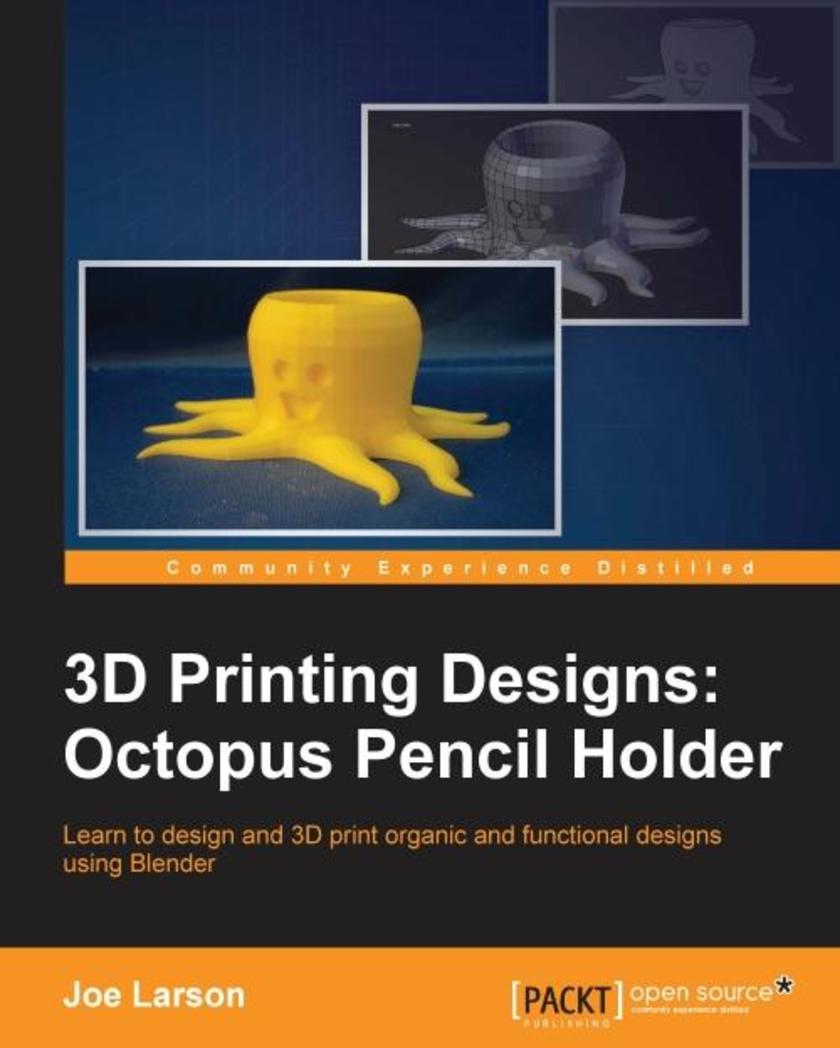
3D Printing Designs: Octopus Pencil Holder
¥35.96
Learn to design and 3D print organic and functional designs using BlenderAbout This BookLearn how to make complex shapes by editing basic onesMake printable objects from multiple shapes and partsLearn how to design from scratch, without a reference to physical objectsWho This Book Is ForYou should have basic knowledge of Blender and 3D printing and be interested in printing your first object.What You Will LearnGet to know the guiding principles required to create 3D printer-friendly modelsUnderstand material characteristics, printing specifications, tolerances, and design tipsMaster the art of modifying basic shapes with Blender's powerful editing tools: extrude, loop cuts, and other transformationsLearn techniques of editing complex meshes, smoothing, combining shapes, and exporting them into STL files for printingIn DetailThis book will cover the very basic but essential techniques you need to model an organic and functional object for 3D printing using Blender.Starting with pen and paper and then moving on to the computer, you will create your first project in Blender, add basic geometric shapes, and use techniques such as extruding and subdividing to transform these shapes into complex meshes. You will learn how modifiers can automatically refine the shape further and combine multiple shapes into a single 3D printable model.By the end of the book, you will have gained enough practical hands-on experience to be able to create a 3D printable object of your choice, which in this case is a 3D print-ready octopus pencil holder.Style and approachThis is a starter project designed to introduce you to your first real-world 3D printing designs, where you'll learn how to handle the fundamental principles of 3D printing design and have your hands on your reward in no time.
OpenGL Game Development By Example
¥107.90
Design and code your own 2D and 3D games efficiently using OpenGL and C++ About This Book Create 2D and 3D games completely, through a series of end-to-end game projects Learn to render high performance 2D and 3D graphics using OpenGL Implement a rudimentary game engine using step-by-step code Who This Book Is For If you are a prospective game developer with some experience using C++, then this book is for you. Both prospective and experienced game programmers will find nuggets of wisdom and practical advice as they learn to code two full games using OpenGL, C++, and a host of related tools. What You Will Learn Set up your development environment in Visual Studio using OpenGL Use 2D and 3D coordinate systems Implement an input system to handle the mouse and the keyboard Create a state machine to handle complex changes in the game Load, display, and manipulate both 2D and 3D graphics Implement collision detection and basic physics Discover the key components needed to complete a polished game Handle audio files and implement sound effects and music In Detail OpenGL is one of the most popular rendering SDKs used to develop games. OpenGL has been used to create everything from 3D masterpieces running on desktop computers to 2D puzzles running on mobile devices. You will learn to apply both 2D and 3D technologies to bring your game idea to life. There is a lot more to making a game than just drawing pictures and that is where this book is unique! It provides a complete tutorial on designing and coding games from the setup of the development environment to final credits screen, through the creation of a 2D and 3D game. The book starts off by showing you how to set up a development environment using Visual Studio, and create a code framework for your game. It then walks you through creation of two games–a 2D platform game called Roboracer 2D and a 3D first-person space shooter game–using OpenGL to render both 2D and 3D graphics using a 2D coordinate system. You'll create sprite classes, render sprites and animation, and navigate and control the characters. You will also learn how to implement input, use audio, and code basic collision and physics systems. From setting up the development environment to creating the final credits screen, the book will take you through the complete journey of creating a game engine that you can extend to create your own games. Style and approach An easy-to-follow guide full of code examples to illustrate every concept and help you build a 2D and 3D game from scratch, while learning the key tools that surround a typical OpenGL project.

Mobile Application Penetration Testing
¥90.46
Explore real-world threat scenarios, attacks on mobile applications, and ways to counter them About This Book Gain insights into the current threat landscape of mobile applications in particular Explore the different options that are available on mobile platforms and prevent circumventions made by attackers This is a step-by-step guide to setting up your own mobile penetration testing environment Who This Book Is For If you are a mobile application evangelist, mobile application developer, information security practitioner, penetration tester on infrastructure web applications, an application security professional, or someone who wants to learn mobile application security as a career, then this book is for you. This book will provide you with all the skills you need to get started with Android and iOS pen-testing. What You Will Learn Gain an in-depth understanding of Android and iOS architecture and the latest changes Discover how to work with different tool suites to assess any application Develop different strategies and techniques to connect to a mobile device Create a foundation for mobile application security principles Grasp techniques to attack different components of an Android device and the different functionalities of an iOS device Get to know secure development strategies for both iOS and Android applications Gain an understanding of threat modeling mobile applications Get an in-depth understanding of both Android and iOS implementation vulnerabilities and how to provide counter-measures while developing a mobile app In Detail Mobile security has come a long way over the last few years. It has transitioned from "should it be done?" to "it must be done!"Alongside the growing number of devises and applications, there is also a growth in the volume of Personally identifiable information (PII), Financial Data, and much more. This data needs to be secured. This is why Pen-testing is so important to modern application developers. You need to know how to secure user data, and find vulnerabilities and loopholes in your application that might lead to security breaches. This book gives you the necessary skills to security test your mobile applications as a beginner, developer, or security practitioner. You'll start by discovering the internal components of an Android and an iOS application. Moving ahead, you'll understand the inter-process working of these applications. Then you'll set up a test environment for this application using various tools to identify the loopholes and vulnerabilities in the structure of the applications. Finally, after collecting all information about these security loop holes, we'll start securing our applications from these threats. Style and approach This is an easy-to-follow guide full of hands-on examples of real-world attack simulations. Each topic is explained in context with respect to testing, and for the more inquisitive, there are more details on the concepts and techniques used for different platforms.
Mapbox Cookbook
¥71.93
Over 35 recipes to design and implement uniquely styled maps using the Mapbox platform About This Book Design and develop beautifully styled maps using TileMill, MapBox Studio, and CartoCSS Get to grips with the mapbox.js and Leaflet to create visually stunning web and mobile applications An easy-to-follow, quick reference guide to integrate powerful APIs and services like Foursquare, Fusion Tables, Geoserver, and CartoDB to populate your maps Who This Book Is For If you are a web developer seeking for GIS expertise on how to create, style, and publish interactive and unique styled maps, then this book is for you. Basic knowledge of programming and java*s is assumed. What You Will Learn Get accustomed to the MapBox Editor to visually style your maps Learn everything about CartoCSS, and how it will help you fine tune your styled maps Use MapBox Studio and Tilemill to generate your own tiles and vector maps Publish your maps using a variety of technologies like node.js, PHP, and Geoserver Integrate with third party APIs and services to populate your maps with public or private data Create many different map visualization styles like choropleth and heat maps, add interactivity, and even learn how to animate data over time Work with many different data formats and external services to create robust maps Learn to use MapBox GL to create a mobile application In Detail Maps are an essential element in today’s location aware applications. Right from displaying earth surface information to creating thematic maps displaying plethora of information, most of the developers lack the necessary knowledge to create customizable maps with combination of various tools and libraries. The MapBox platform is one such platform which offers all the tools and API required to create and publish a totally customizable map. Starting with building your first map with the online MapBox Editor, we will take you all the way to building advanced web and mobile applications with totally customizable map styles. Through the course of chapters we’ll learn CartoCSS styling language and understand the various components of MapBox platform and their corresponding JavaScript API. In the initial few chapters we will dive deeper into the TileMill and MapBox Studio components of MapBox and use them to generate custom styled map tiles and vector maps. Furthermore, we will publish these custom maps using PHP, node.js and third party tools like Geoserver. We’ll also learn to create different visualizations and map styles like a choropleth map, a heat map and add user interactivity using a UFTGrid. Moving on, we dive into advanced concepts and focus on integration with third party services like Foursquare, Google FusionTables, CartoDB, and Torque to help you populate and even animate your maps. In the final chapter we’ll learn to use the Mapbox SDK to create and publish interactive maps for the iOS platform. By the end of this book, you will learn about MapBox GL and how to create a fully functional, location-aware mobile app, using the maps styles created in the recipes. Style and approach An easy-to-use recipe driven book that will not just serve code samples, but also explains all the theory and concepts required to fully understand each recipe.
Learning Swift - Second Edition
¥71.93
Develop the skills required to create compelling, maintainable, and robust iOS and OS X apps with Swift About This Book Write expressive, understandable, and maintainable Swift 2 code with this hands-on tutorial Unveil the complex underpinnings of Swift to turn your app ideas into reality This book is packed with real-life examples to help you implement concepts as you learn Who This Book Is For If you are looking to build iOS or OS X apps using the most modern technology, this book is ideal for you. You will find this book especially useful if you are new to programming or if you are yet to develop for iOS or OS X. No prior programming exposure is required. What You Will Learn Form a solid understanding of the Swift 2 language Get to know the practical aspects of how a computer program actually works Understand the paradigms used by Apple’s frameworks so you are not intimidated by them Utilize the vast resources written in Objective-C to better inform your Swift programming Develop a basic portfolio of Swift code by learning the critical concepts Experience both object-oriented and functional programming Get to know the new coding techniques made available by Swift 2 Discover resources to ensure you never stop becoming a better developer In Detail Swift is Apple’s new programming language and the future of iOS and OS X app development. It is a high-performance language that feels like a modern *ing language. On the surface, Swift is easy to jump into, but it has complex underpinnings that are critical to becoming proficient at turning an idea into reality. This book is an approachable, step-by-step introduction into programming with Swift for everyone. It begins by giving you an overview of the key features through practical examples and progresses to more advanced topics that help differentiate the proficient developers from the mediocre ones. It covers important concepts such as Variables, Optionals, Closures, Generics, and Memory Management. Mixed in with those concepts, it also helps you learn the art of programming such as maintainability, useful design patterns, and resources to further your knowledge. This all culminates in writing a basic iOS app that will get you well on your way to turning your own app ideas into reality. Style and approach This is an approachable, step-by-step guide to programming in Swift 2. Each topic is separated into compressible sections that are full of practical examples and easy-to-understand explanations. Each section builds on the previous topics so you can develop a proficient and comprehensive understanding of app development in Swift 2.
Drupal 8 Theming with Twig
¥80.65
Master Drupal 8’s new Twig templating engine to create fun and fast websites with simple steps to help you move from concept to completion About This Book Create beautiful responsive Drupal 8 websites using Twig Quickly master theme administration, custom block layouts, views, and the Twig template structure A step-by-step guide to the most common approaches in web design Who This Book Is For This book is intended for front-end developers, designers, and anyone who is generally interested in learning all the new features of Drupal 8 theming. Discover what has changed from Drupal 7 to Drupal 8 and immerse yourself in the new Twig PHP templating engine. Familiarity with HTML5, CSS3, JavaScript, and the Drupal Admin interface would be helpful. Prior experience with setting up and configuring a standalone development environment is required as we will be working with PHP and MySQL. What You Will Learn Navigate the Drupal 8 Admin interface Build custom block layouts with reusable and fieldable blocks Create subthemes based on the Bartik and Classy base themes Construct a responsive theme with Twitter Bootstrap Work with the new Twig PHP templating engine Configure Drupal for Twig debugging Enable preprocessing of Twig variables Develop a theme from scratch following a step-by-step project outline In Detail Drupal 8 is an open source content management system and powerful framework that helps deliver great websites to individuals and organizations, including non-profits, commercial, and government around the globe. This new release has been built on top of object-oriented PHP and includes more than a handful of improvements such as a better user experience, cleaner HTML5 markup, a new templating engine called Twig, multilingual capabilities, new configuration management, and effortless content authoring. Drupal 8 will quickly become the new standard for deploying content to both the web and mobile applications. However, with so many new changes, it can quickly become overwhelming knowing where to start and how to quickly. Starting from the bottom up, we will install, set up, and configure Drupal 8. We’ll navigate the Admin interface so you can learn how to work with core themes and create new custom block layouts. Walk through a real-world project to create a Twig theme from concept to completion while adopting best practices to implement CSS frameworks and JavaScript libraries. We will see just how quick and easy it is to create beautiful, responsive Drupal 8 websites while avoiding the common mistakes that many front-end developers make. Style and approach Drupal 8 Theming with Twig is intended for front-end developers, designers, and anyone who is generally interested in learning all the new features of Drupal 8 theming. Discover what has changed from Drupal 7 to Drupal 8 and immerse yourself in the new Twig PHP templating engine. Familiarity with HTML5, CSS3, JavaScript, and the Drupal Admin interface would be helpful. Prior experience with setting up and configuring a standalone development environment is required as we will be working with PHP and MySQL.


