


 购物车
 个人中心

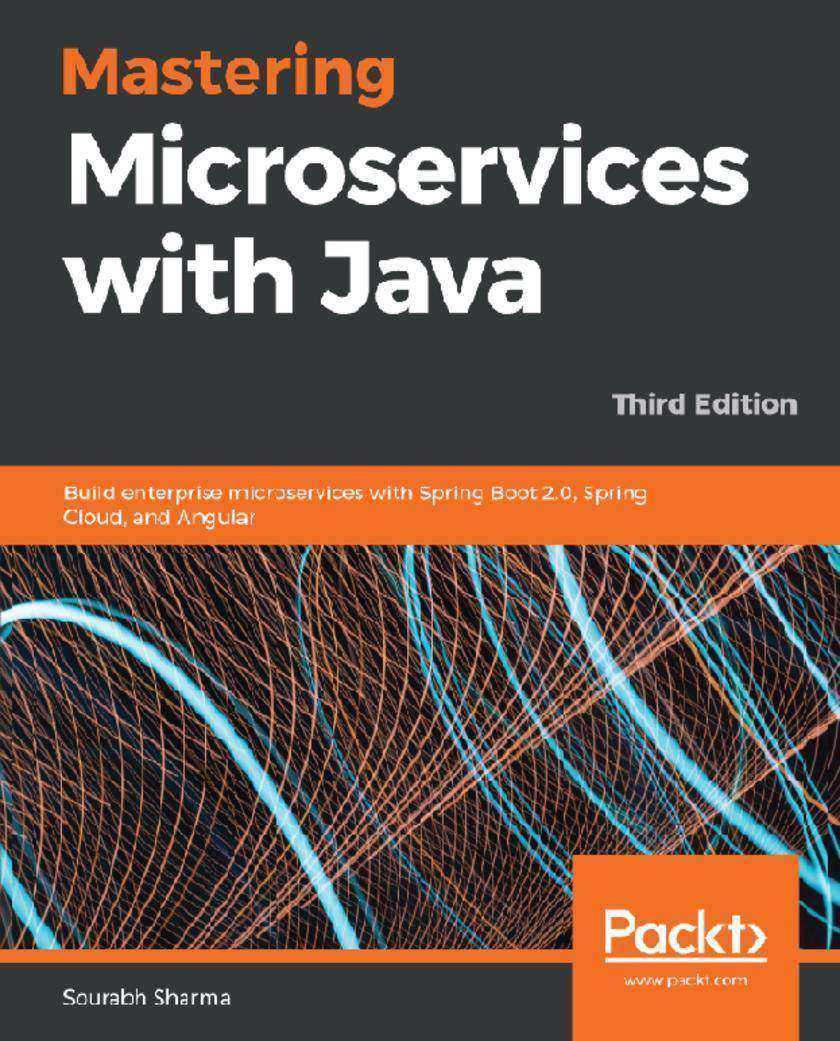
Mastering Microservices with Java
¥81.74
Master the art of implementing scalable and reactive microservices in your production environment with Java 11 Key Features * Use domain-driven designs to build microservices * Explore various microservices design patterns such as service discovery, registration, and API Gateway * Use Kafka, Avro, and Spring Streams to implement event-based microservices Book Description Microservices are key to designing scalable, easy-to-maintain applications. This latest edition of Mastering Microservices with Java, works on Java 11. It covers a wide range of exciting new developments in the world of microservices, including microservices patterns, interprocess communication with gRPC, and service orchestration. This book will help you understand how to implement microservice-based systems from scratch. You'll start off by understanding the core concepts and framework, before focusing on the high-level design of large software projects. You'll then use Spring Security to secure microservices and test them effectively using REST Java clients and other tools. You will also gain experience of using the Netflix OSS suite, comprising the API Gateway, service discovery and registration, and Circuit Breaker. Additionally, you'll be introduced to the best patterns, practices, and common principles of microservice design that will help you to understand how to troubleshoot and debug the issues faced during development. By the end of this book, you'll have learned how to build smaller, lighter, and faster services that can be implemented easily in a production environment. What you will learn * Use domain-driven designs to develop and implement microservices * Understand how to implement microservices using Spring Boot * Explore service orchestration and distributed transactions using the Sagas * Discover interprocess communication using REpresentational State Transfer (REST) and events * Gain knowledge of how to implement and design reactive microservices * Deploy and test various microservices Who this book is for This book is designed for Java developers who are familiar with microservices architecture and now want to effectively implement microservices at an enterprise level. Basic knowledge and understanding of core microservice elements and applications is necessary.
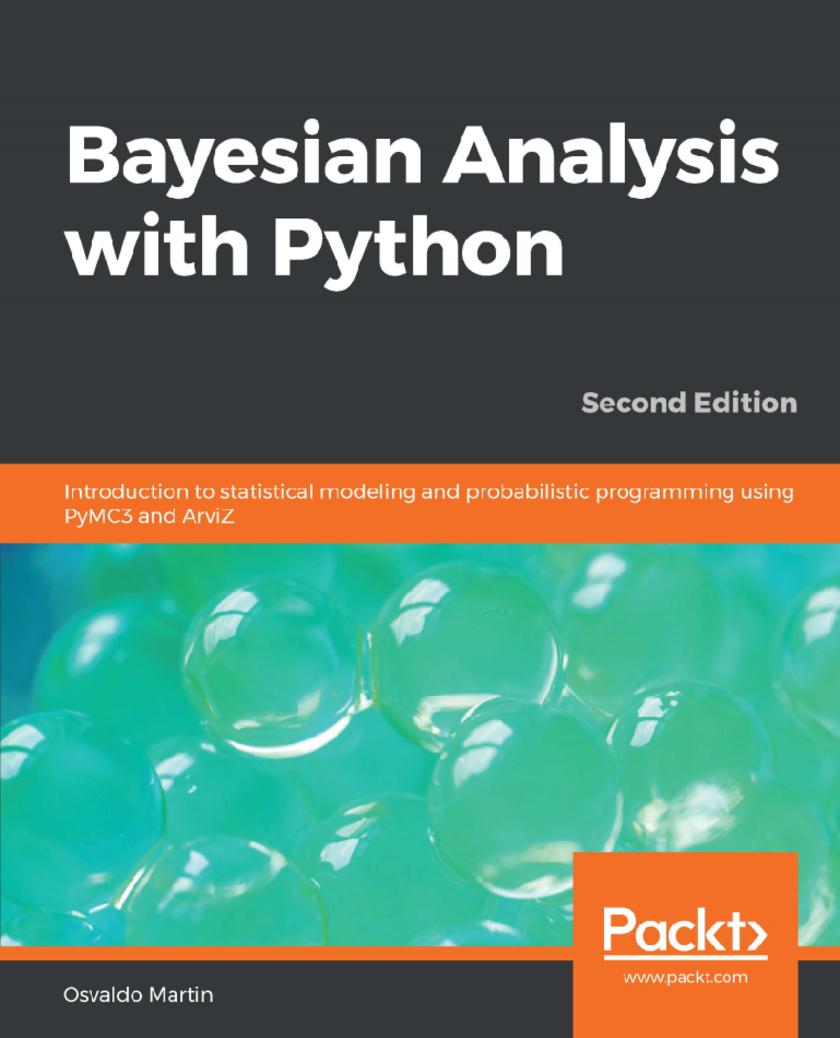
Bayesian Analysis with Python
¥81.74
Bayesian modeling with PyMC3 and exploratory analysis of Bayesian models with ArviZ Key Features *A step-by-step guide to conduct Bayesian data analyses using PyMC3 and ArviZ *A modern, practical and computational approach to Bayesian statistical modeling *A tutorial for Bayesian analysis and best practices with the help of sample problems and practice exercises. Book Description The second edition of Bayesian Analysis with Python is an introduction to the main concepts of applied Bayesian inference and its practical implementation in Python using PyMC3, a state-of-the-art probabilistic programming library, and ArviZ, a new library for exploratory analysis of Bayesian models. The main concepts of Bayesian statistics are covered using a practical and computational approach. Synthetic and real data sets are used to introduce several types of models, such as generalized linear models for regression and classification, mixture models, hierarchical models, and Gaussian processes, among others. By the end of the book, you will have a working knowledge of probabilistic modeling and you will be able to design and implement Bayesian models for your own data science problems. After reading the book you will be better prepared to delve into more advanced material or specialized statistical modeling if you need to. What you will learn *Build probabilistic models using the Python library PyMC3 *Analyze probabilistic models with the help of ArviZ *Acquire the skills required to sanity check models and modify them if necessary *Understand the advantages and caveats of hierarchical models *Find out how different models can be used to answer different data analysis questions *Compare models and choose between alternative ones *Discover how different models are unified from a probabilistic perspective *Think probabilistically and benefit from the flexibility of the Bayesian framework Who this book is for If you are a student, data scientist, researcher, or a developer looking to get started with Bayesian data analysis and probabilistic programming, this book is for you. The book is introductory so no previous statistical knowledge is required, although some experience in using Python and NumPy is expected.
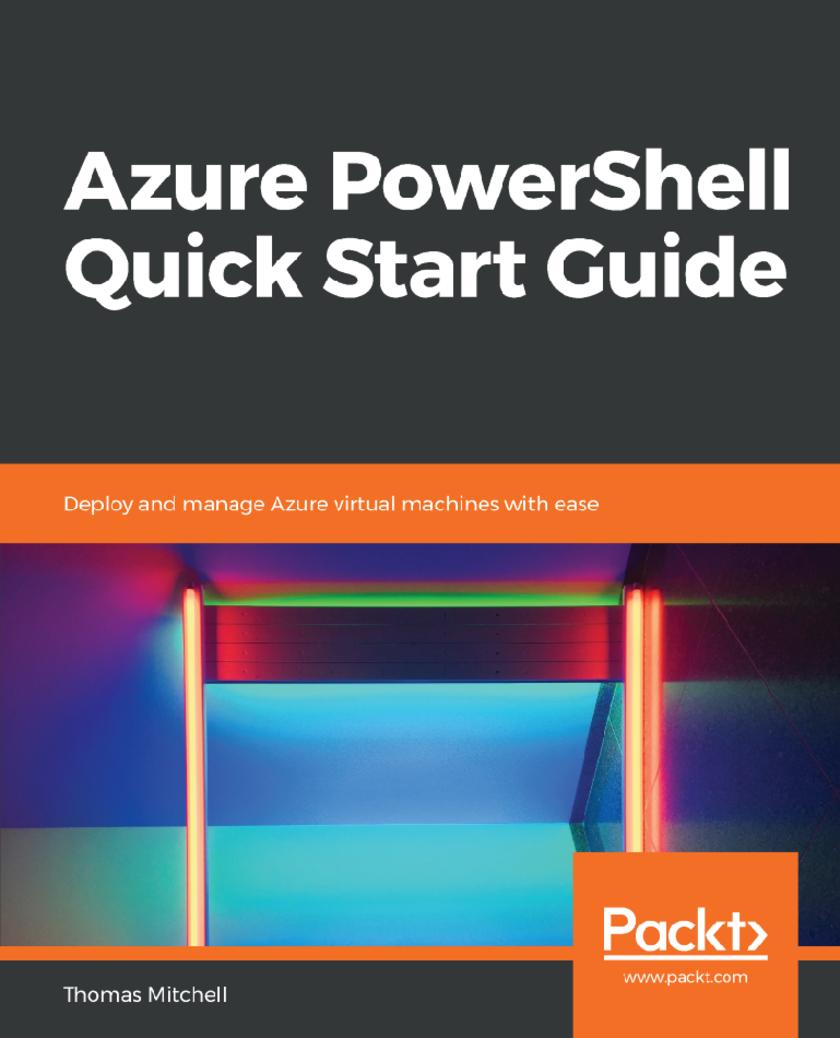
Azure PowerShell Quick Start Guide
¥54.49
Leverage PowerShell to perform many day-to-day tasks in Microsoft Azure Key Features *Deploy and manage Azure virtual machines with PowerShell commands. *Get to grips with core concept of Azure PowerShell such as working with images and disks, custom script extension, high availability and more. *Leverage hands-on projects to successfully apply what you learned through the course of this book. Book Description As an IT professional, it is important to keep up with cloud technologies and learn to manage those technologies. PowerShell is a critical tool that must be learned in order to effectively and more easily manage many Azure resources. This book is designed to teach you to leverage PowerShell to enable you to perform many day-to-day tasks in Microsoft Azure. Taking you through the basic tasks of installing Azure PowerShell and connecting to Azure, you will learn to properly connect to an Azure tenant with PowerShell. Next, you will dive into tasks such as deploying virtual machines with PowerShell, resizing them, and managing their power states with PowerShell. Then, you will learn how to complete more complex Azure tasks with PowerShell, such as deploying virtual machines from custom images, creating images from existing virtual machines, and creating and managing of data disks. Later, you will learn how to snapshot virtual machines, how to encrypt virtual machines, and how to leverage load balancers to ensure high availability with PowerShell. By the end of this book, you will have developed dozens of PowerShell skills that are invaluable in the deployment and management of Azure virtual machines. What you will learn *Manage virtual machines with PowerShell *Resize a virtual machine with PowerShell *Create OS disk snapshots via PowerShell *Deploy new virtual machines from snapshots via PowerShell *Provision and attach data disks to a virtual machine via PowerShell *Load balance virtual machines with PowerShell *Manage virtual machines with custom script extensions Who this book is for This book is intended for IT professionals who are responsible for managing Azure virtual machines. No prior PowerShell or Azure experience is needed.
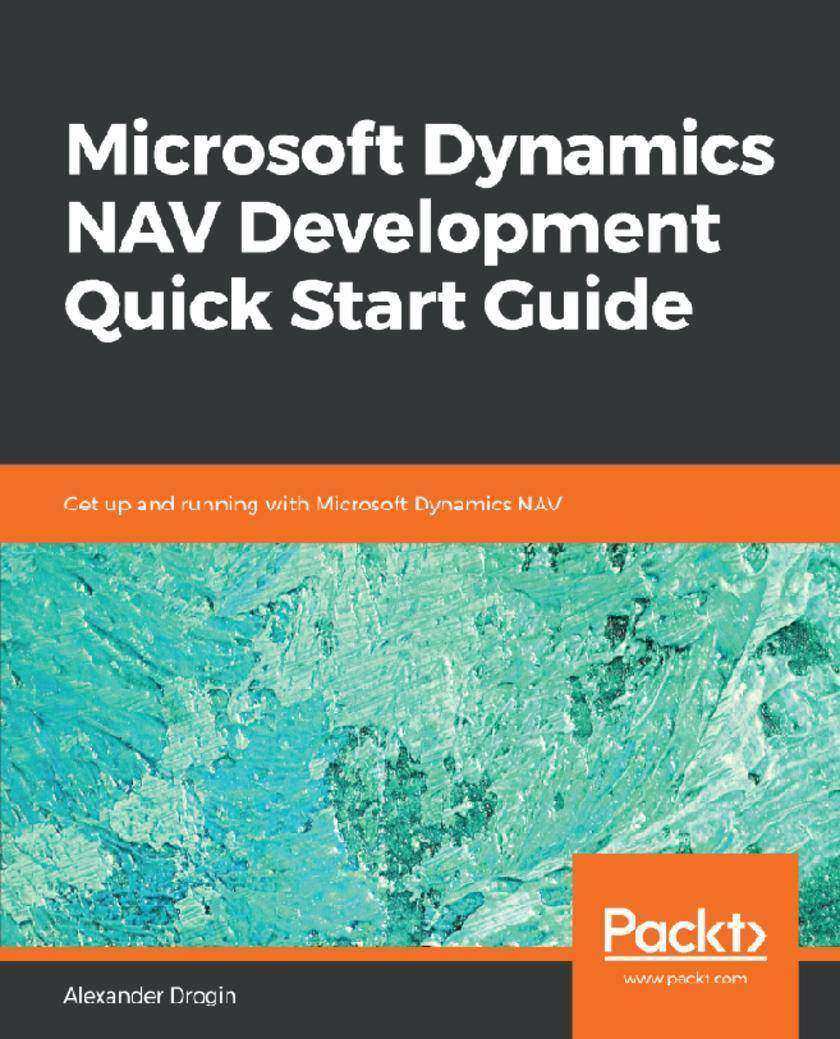
Microsoft Dynamics NAV Development Quick Start Guide
¥54.49
Learn development skills and improve productivity when programming in Microsoft Dynamics NAV 2018 - the popular Enterprise Resourse Planning management system used across a variety of industries for business process management Key Features *Solve common business problems with the valuable features and flexibility of Dynamics NAV *Understand the structure of NAV database - how documents and business entities are mapped to DB tables *Design user interface and bind the presentation layer with the data storage Book Description Microsoft Dynamics NAV is an enterprise resource planning (ERP) software suite for organizations. The system offers specialized functionality for manufacturing, distribution, government, retail, and other industries. This book gets you started with its integrated development environment for solving problems by customizing business processes. This book introduces the NAV development environment – C/SIDE. It gives an overview of the internal system language and the most essential development tools. The book will enable the reader to customize and extend NAV functionality with C/AL code, design a user interface through pages, create role centers, and build advanced reports in Microsoft Visual Studio. By the end of the book, you will have learned how to extend the NAV data model, how to write and debug custom code, and how to exchange data with external applications. What you will learn *Manage NAV Server configuration with Microsoft Management Console *Manage NAV installation with the NAV Administration Shell *Create integration events and extend functionality via the NAV event model *Run XML Ports from C/AL code *Design reports and write client code in RDLC expressions Who this book is for This book is for experienced NAV users who have an understanding of basic programming concepts. Familiarity with NAV development environment or its internal development language-C/AL is not expected.
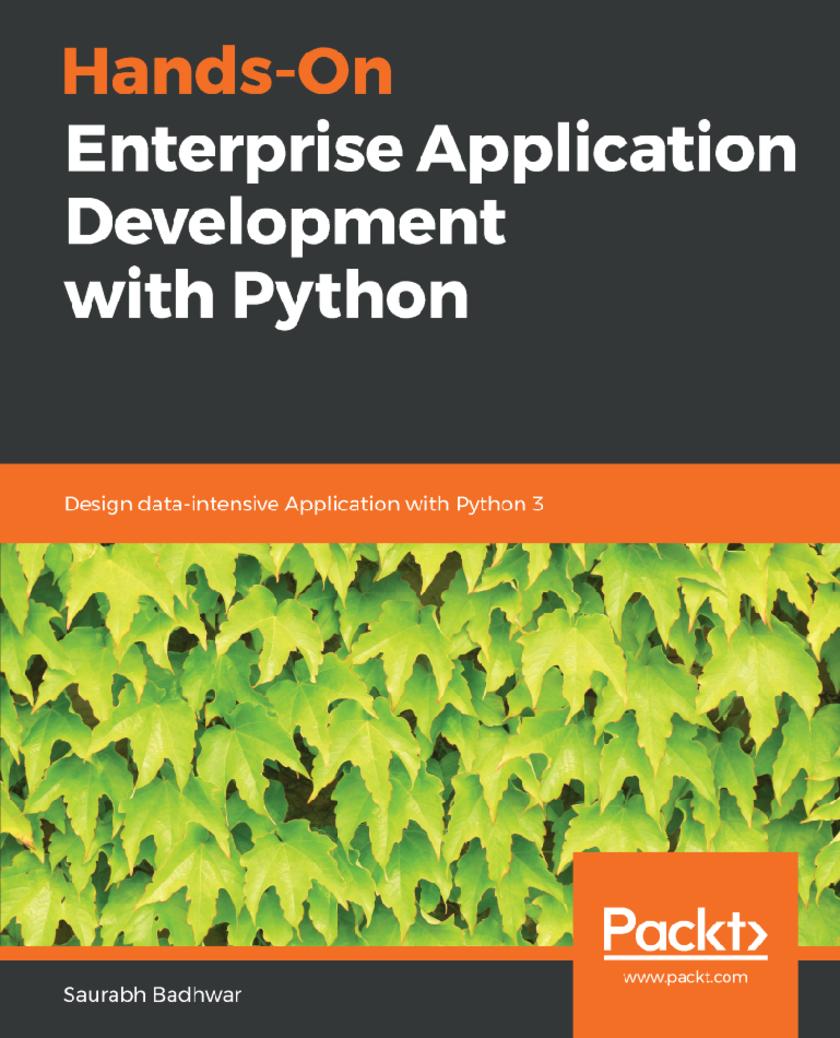
Hands-On Enterprise Application Development with Python
¥90.46
Architect scalable, reliable, and maintainable applications for enterprises with Python Key Features *Explore various Python design patterns used for enterprise software development *Apply best practices for testing and performance optimization to build stable applications *Learn about different attacking strategies used on enterprise applications and how to avoid them Book Description Dynamically typed languages like Python are continuously improving. With the addition of exciting new features and a wide selection of modern libraries and frameworks, Python has emerged as an ideal language for developing enterprise applications. Hands-On Enterprise Application Development with Python will show you how to build effective applications that are stable, secure, and easily scalable. The book is a detailed guide to building an end-to-end enterprise-grade application in Python. You will learn how to effectively implement Python features and design patterns that will positively impact your application lifecycle. The book also covers advanced concurrency techniques that will help you build a RESTful application with an optimized frontend. Given that security and stability are the foundation for an enterprise application, you’ll be trained on effective testing, performance analysis, and security practices, and understand how to embed them in your codebase during the initial phase. You’ll also be guided in how to move on from a monolithic architecture to one that is service oriented, leveraging microservices and serverless deployment techniques. By the end of the book, you will have become proficient at building efficient enterprise applications in Python. What you will learn *Understand the purpose of design patterns and their impact on application lifecycle *Build applications that can handle large amounts of data-intensive operations *Uncover advanced concurrency techniques and discover how to handle a large number of requests in production *Optimize frontends to improve the client-side experience of your application *Effective testing and performance profiling techniques to detect issues in applications early in the development cycle *Build applications with a focus on security *Implement large applications as microservices to improve scalability Who this book is for If you’re a developer who wants to build enterprise-grade applications, this book is for you. Basic to intermediate-level of programming experience with Python and database systems is required to understand the concepts covered in this book.
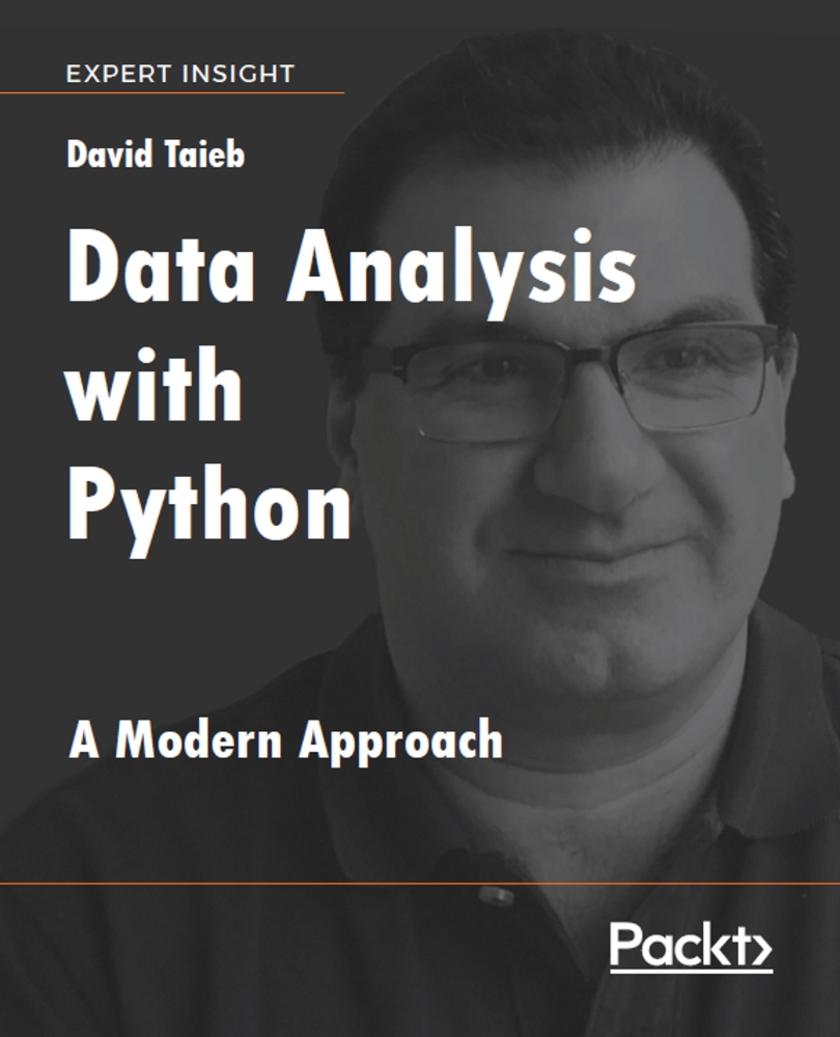
Data Analysis with Python
¥71.93
Learn a modern approach to data analysis using Python to harness the power of programming and AI across your data. Detailed case studies bring this modern approach to life across visual data, social media, graph algorithms, and time series analysis. Key Features *Bridge your data analysis with the power of programming, complex algorithms, and AI *Use Python and its extensive libraries to power your way to new levels of data insight *Work with AI algorithms, TensorFlow, graph algorithms, NLP, and financial time series *Explore this modern approach across with key industry case studies and hands-on projects Book Description Data Analysis with Python offers a modern approach to data analysis so that you can work with the latest and most powerful Python tools, AI techniques, and open source libraries. Industry expert David Taieb shows you how to bridge data science with the power of programming and algorithms in Python. You'll be working with complex algorithms, and cutting-edge AI in your data analysis. Learn how to analyze data with hands-on examples using Python-based tools and Jupyter Notebook. You'll find the right balance of theory and practice, with extensive code files that you can integrate right into your own data projects. Explore the power of this approach to data analysis by then working with it across key industry case studies. Four fascinating and full projects connect you to the most critical data analysis challenges you’re likely to meet in today. The first of these is an image recognition application with TensorFlow – embracing the importance today of AI in your data analysis. The second industry project analyses social media trends, exploring big data issues and AI approaches to natural language processing. The third case study is a financial portfolio analysis application that engages you with time series analysis - pivotal to many data science applications today. The fourth industry use case dives you into graph algorithms and the power of programming in modern data science. You'll wrap up with a thoughtful look at the future of data science and how it will harness the power of algorithms and artificial intelligence. What you will learn *A new toolset that has been carefully crafted to meet for your data analysis challenges *Full and detailed case studies of the toolset across several of today’s key industry contexts *Become super productive with a new toolset across Python and Jupyter Notebook *Look into the future of data science and which directions to develop your skills next Who this book is for This book is for developers wanting to bridge the gap between them and data scientists. Introducing PixieDust from its creator, the book is a great desk companion for the accomplished Data Scientist. Some fluency in data interpretation and visualization is assumed. It will be helpful to have some knowledge of Python, using Python libraries, and some proficiency in web development.
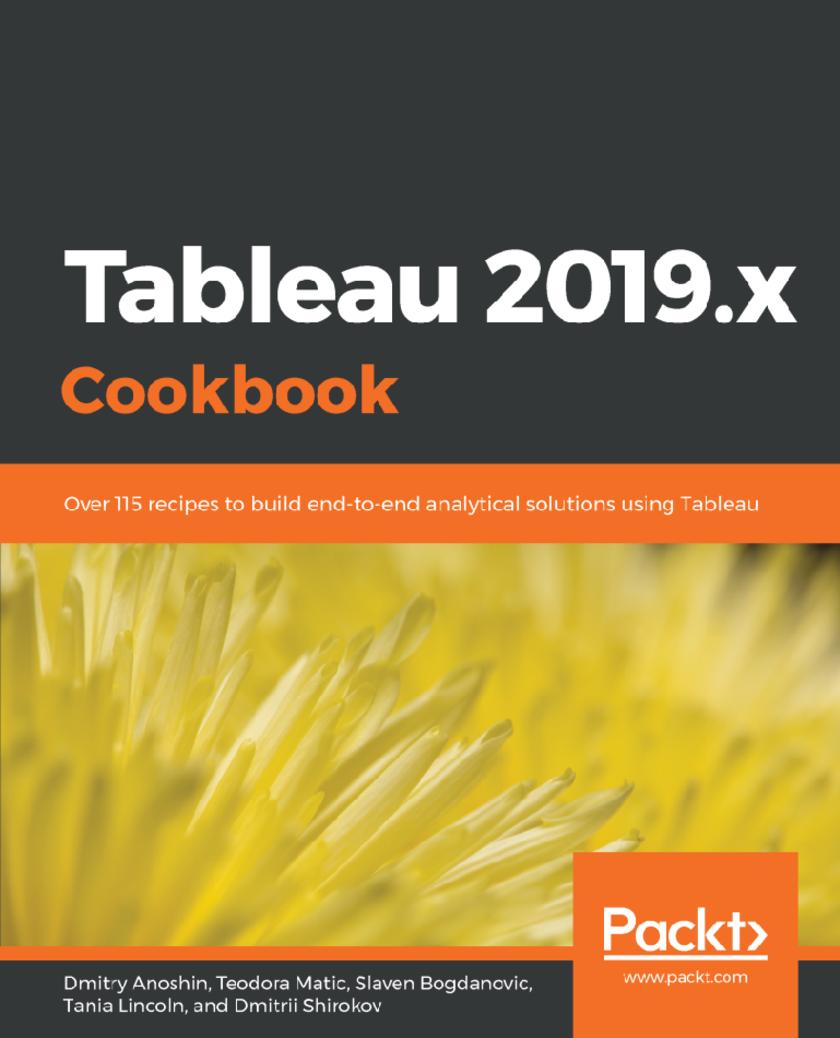
Tableau 2019.x Cookbook
¥90.46
Perform advanced dashboard, visualization, and analytical techniques with Tableau Desktop, Tableau Prep, and Tableau Server Key Features * Unique problem-solution approach to aid effective business decision-making * Create interactive dashboards and implement powerful business intelligence solutions * Includes best practices on using Tableau with modern cloud analytics services Book Description Tableau has been one of the most popular business intelligence solutions in recent times, thanks to its powerful and interactive data visualization capabilities. Tableau 2019.x Cookbook is full of useful recipes from industry experts, who will help you master Tableau skills and learn each aspect of Tableau's ecosystem. This book is enriched with features such as Tableau extracts, Tableau advanced calculations, geospatial analysis, and building dashboards. It will guide you with exciting data manipulation, storytelling, advanced filtering, expert visualization, and forecasting techniques using real-world examples. From basic functionalities of Tableau to complex deployment on Linux, you will cover it all. Moreover, you will learn advanced features of Tableau using R, Python, and various APIs. You will learn how to prepare data for analysis using the latest Tableau Prep. In the concluding chapters, you will learn how Tableau fits the modern world of analytics and works with modern data platforms such as Snowflake and Redshift. In addition, you will learn about the best practices of integrating Tableau with ETL using Matillion ETL. By the end of the book, you will be ready to tackle business intelligence challenges using Tableau's features. What you will learn * Understand the basic and advanced skills of Tableau Desktop * Implement best practices of visualization, dashboard, and storytelling * Learn advanced analytics with the use of build in statistics * Deploy the multi-node server on Linux and Windows * Use Tableau with big data sources such as Hadoop, Athena, and Spectrum * Cover Tableau built-in functions for forecasting using R packages * Combine, shape, and clean data for analysis using Tableau Prep * Extend Tableau’s functionalities with REST API and R/Python Who this book is for Tableau 2019.x Cookbook is for data analysts, data engineers, BI developers, and users who are looking for quick solutions to common and not-so-common problems faced while using Tableau products. Put each recipe into practice by bringing the latest offerings of Tableau 2019.x to solve real-world analytics and business intelligence challenges. Some understanding of BI concepts and Tableau is required.
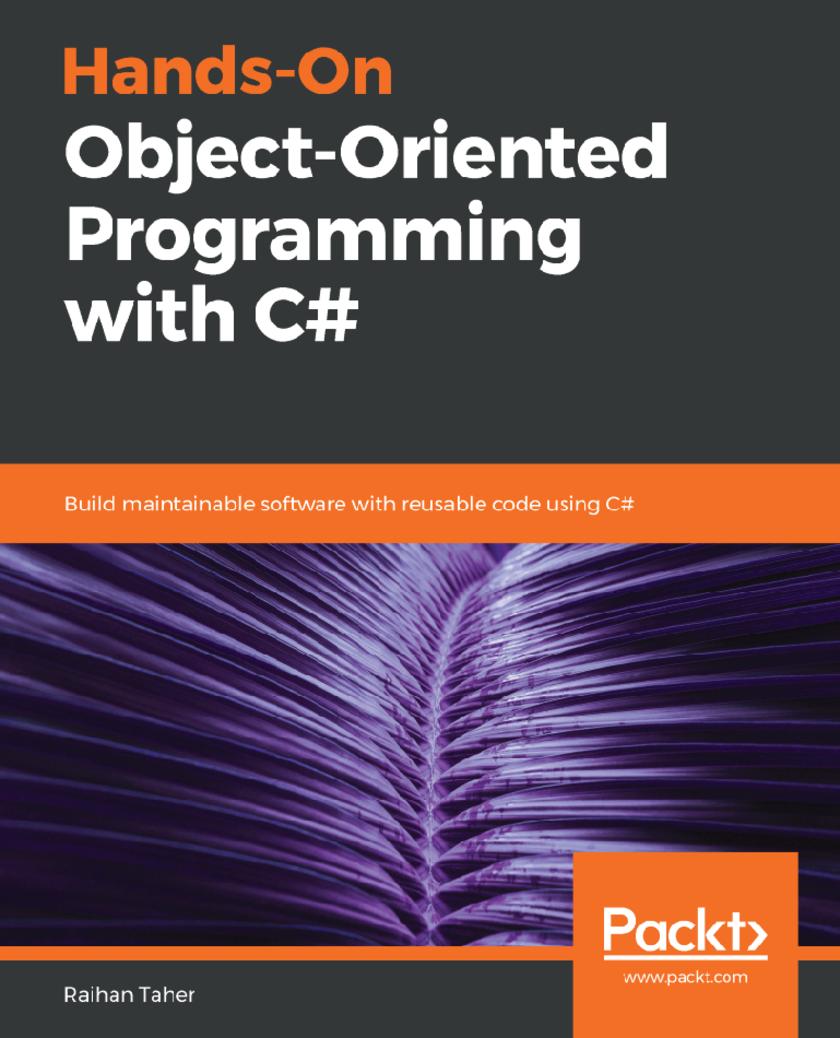
Hands-On Object-Oriented Programming with C#
¥73.02
Enhance your programming skills by learning the intricacies of object oriented programming in C# 8 Key Features * Understand the four pillars of OOP; encapsulation, inheritance, abstraction and polymorphism * Leverage the latest features of C# 8 including nullable reference types and Async Streams * Explore various design patterns, principles, and best practices in OOP Book Description Object-oriented programming (OOP) is a programming paradigm organized around objects rather than actions, and data rather than logic. With the latest release of C#, you can look forward to new additions that improve object-oriented programming. This book will get you up to speed with OOP in C# in an engaging and interactive way. The book starts off by introducing you to C# language essentials and explaining OOP concepts through simple programs. You will then go on to learn how to use classes, interfacesm and properties to write pure OOP code in your applications. You will broaden your understanding of OOP further as you delve into some of the advanced features of the language, such as using events, delegates, and generics. Next, you will learn the secrets of writing good code by following design patterns and design principles. You'll also understand problem statements with their solutions and learn how to work with databases with the help of ADO.NET. Further on, you'll discover a chapter dedicated to the Git version control system. As you approach the conclusion, you'll be able to work through OOP-specific interview questions and understand how to tackle them. By the end of this book, you will have a good understanding of OOP with C# and be able to take your skills to the next level. What you will learn * Master OOP paradigm fundamentals * Explore various types of exceptions * Utilize C# language constructs efficiently * Solve complex design problems by understanding OOP * Understand how to work with databases using ADO.NET * Understand the power of generics in C# * Get insights into the popular version control system, Git * Learn how to model and design your software Who this book is for This book is designed for people who are new to object-oriented programming. Basic C# skills are assumed, however, prior knowledge of OOP in any other language is not required.
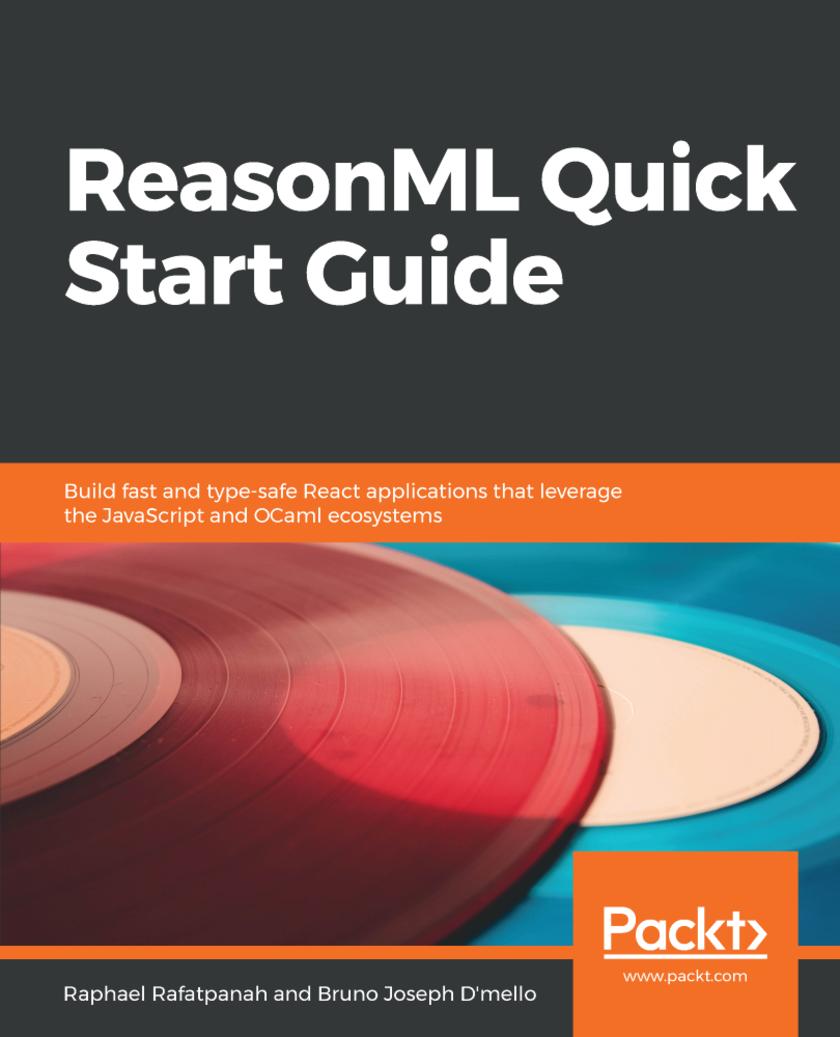
ReasonML Quick Start Guide
¥54.49
A hands on approach to learning ReasonML from the perspective of a web developer. Key Features * Hands on learning by building a real world app shell that includes client-side routing and more. * Understand Reason’s ecosystem including BuckleScript and various npm workflows. * Learn how Reason differs from TypeScript and Flow, and how to use it to make refactoring less stressful. Book Description ReasonML, also known as Reason, is a new syntax and toolchain for OCaml that was created by Facebook and is meant to be approachable for web developers. Although OCaml has several resources, most of them are from the perspective of systems development. This book, alternatively, explores Reason from the perspective of web development. You'll learn how to use Reason to build safer, simpler React applications and why you would want to do so. Reason supports immutability by default, which works quite well in the context of React. In learning Reason, you will also learn about its ecosystem – BuckleScript, JavaScript interoperability, and various npm workflows. We learn by building a real-world app shell, including a client-side router with page transitions, that we can customize for any Reason project. You'll learn how to leverage OCaml's excellent type system to enforce guarantees about business logic, as well as preventing runtime type errors.You'll also see how the type system can help offload concerns that we once had to keep in our heads. We'll explore using CSS-in-Reason, how to use external JSON in Reason, and how to unit-test critical business logic. By the end of the book, you'll understand why Reason is exploding in popularity and will have a solid foundation on which to continue your journey with Reason. What you will learn * Learn why Reason is exploding in popularity and why it's the future of React * Become familiar with Reason's syntax and semantics * Learn about Reason's ecosystem: BuckleScript and JavaScript interoperability * Learn how to build React applications with Reason * Learn how to use Reason's type system as a tool to provide amazing guarantees * Gain a solid foundation on which to continue your journey Who this book is for The target audience of this book is web developers who are somewhat familiar with ReactJS and who want to learn why ReasonML is the future of ReactJS.
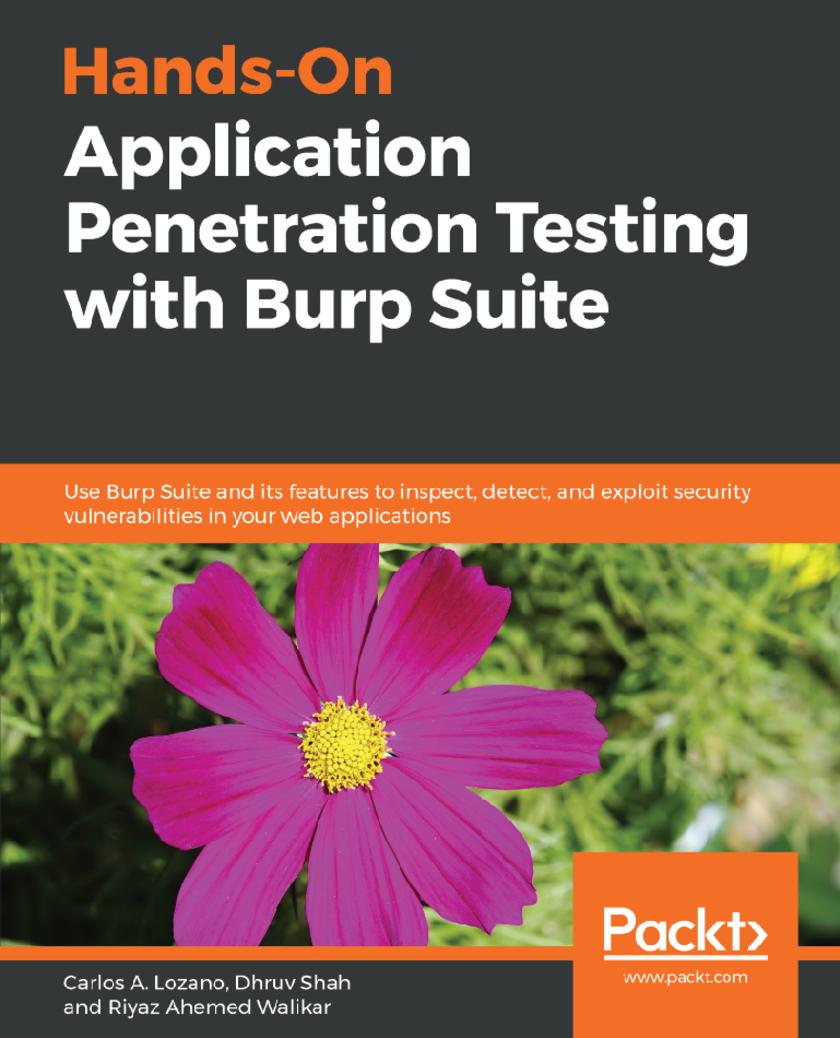
Hands-On Application Penetration Testing with Burp Suite
¥81.74
Test, fuzz, and break web applications and services using Burp Suite’s powerful capabilities Key Features * Master the skills to perform various types of security tests on your web applications * Get hands-on experience working with components like scanner, proxy, intruder and much more * Discover the best-way to penetrate and test web applications Book Description Burp suite is a set of graphic tools focused towards penetration testing of web applications. Burp suite is widely used for web penetration testing by many security professionals for performing different web-level security tasks. The book starts by setting up the environment to begin an application penetration test. You will be able to configure the client and apply target whitelisting. You will also learn to setup and configure Android and IOS devices to work with Burp Suite. The book will explain how various features of Burp Suite can be used to detect various vulnerabilities as part of an application penetration test. Once detection is completed and the vulnerability is confirmed, you will be able to exploit a detected vulnerability using Burp Suite. The book will also covers advanced concepts like writing extensions and macros for Burp suite. Finally, you will discover various steps that are taken to identify the target, discover weaknesses in the authentication mechanism, and finally break the authentication implementation to gain access to the administrative console of the application. By the end of this book, you will be able to effectively perform end-to-end penetration testing with Burp Suite. What you will learn * Set up Burp Suite and its configurations for an application penetration test * Proxy application traffic from browsers and mobile devices to the server * Discover and identify application security issues in various scenarios * Exploit discovered vulnerabilities to execute commands * Exploit discovered vulnerabilities to gain access to data in various datastores * Write your own Burp Suite plugin and explore the Infiltrator module * Write macros to automate tasks in Burp Suite Who this book is for If you are interested in learning how to test web applications and the web part of mobile applications using Burp, then this is the book for you. It is specifically designed to meet your needs if you have basic experience in using Burp and are now aiming to become a professional Burp user.
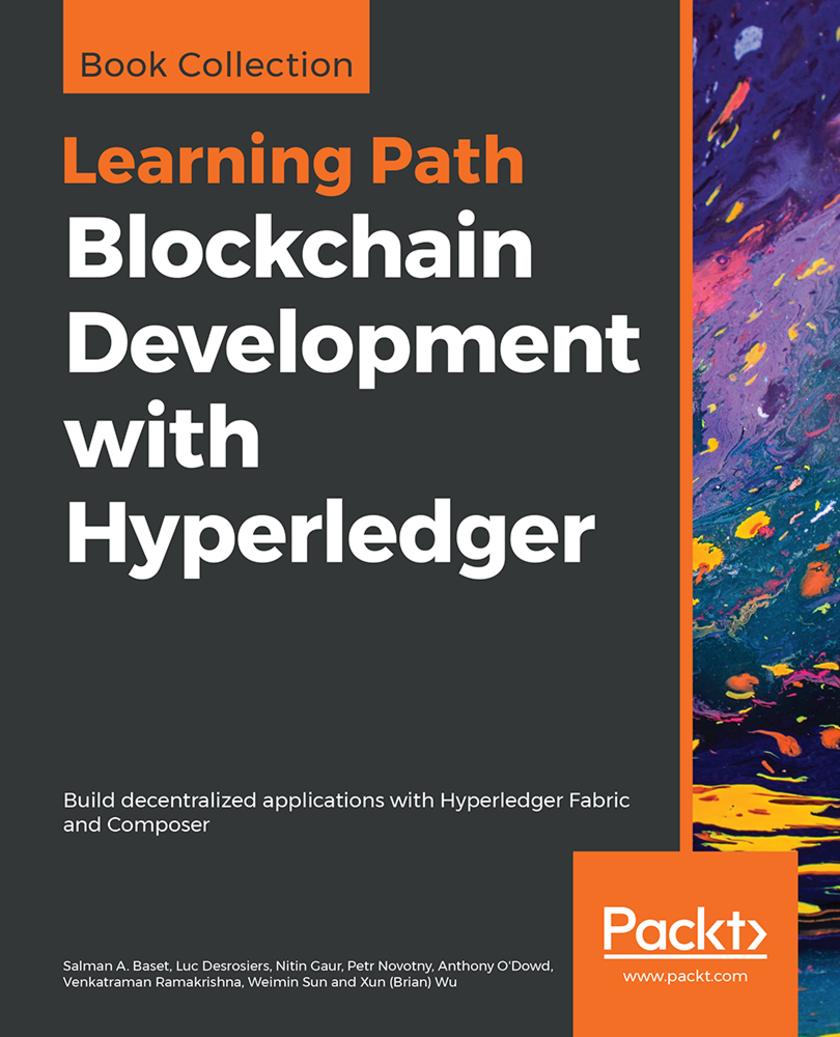
Blockchain Development with Hyperledger
¥90.46
Learn quick and effective techniques for developing blockchain-based distributed ledgers with ease Key Features * Discover why blockchain is a game changer in the technology landscape * Set up blockchain networks using Hyperledger Fabric * Write smart contracts at speed with Hyperledger Composer Book Description Blockchain and Hyperledger are open source technologies that power the development of decentralized applications. This Learning Path is your helpful reference for exploring and building blockchain networks using Ethereum, Hyperledger Fabric, and Hyperledger Composer. Blockchain Development with Hyperledger will start off by giving you an overview of blockchain and demonstrating how you can set up an Ethereum development environment for developing, packaging, building, and testing campaign-decentralized applications. You'll then explore the de facto language Solidity, which you can use to develop decentralized applications in Ethereum. Following this, you'll be able to configure Hyperledger Fabric and use it to build private blockchain networks and applications that connect to them. Toward the later chapters, you'll learn how to design and launch a network, and even implement smart contracts in chain code. By the end of this Learning Path, you'll be able to build and deploy your own decentralized applications by addressing the key pain points encountered in the blockchain life cycle. This Learning Path includes content from the following Packt products: * Blockchain Quick Start Guide by Xun (Brian) Wu and Weimin Sun * Hands-On Blockchain with Hyperledger by Nitin Gaur et al. What you will learn * Understand why decentralized applications are necessary * Develop and test a decentralized application with Hyperledger Fabric and Hyperledger Composer * Write and test a smart contract using Solidity * Design transaction models and chain code with Golang * Deploy the Composer REpresentational State Transfer (REST) Gateway to access Composer transactions * Maintain, monitor, and manage your blockchain solutions Who this book is for This Learning Path is designed for blockchain developers who want to build decentralized applications and smart contracts from scratch using Hyperledger. Basic familiarity with or exposure to any programming language will be useful to get started with this course.
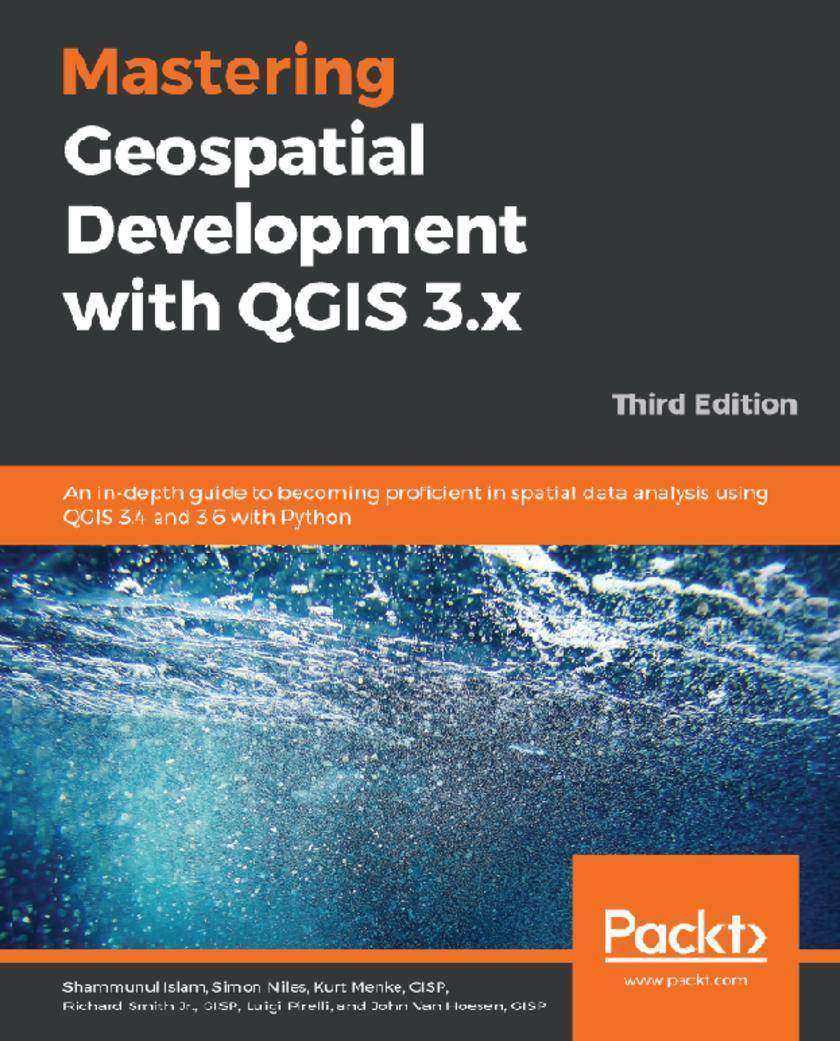
Mastering Geospatial Development with QGIS 3.x
¥73.02
Go beyond the basics and unleash the full power of QGIS 3.4 and 3.6 with practical, step-by-step examples Key Features * One-stop solution to all of your GIS needs * Master QGIS by learning about database integration, and geoprocessing tools * Learn about the new and updated Processing toolbox and perform spatial analysis Book Description QGIS is an open source solution to GIS and widely used by GIS professionals all over the world. It is the leading alternative to proprietary GIS software. Although QGIS is described as intuitive, it is also, by default, complex. Knowing which tools to use and how to apply them is essential to producing valuable deliverables on time. Starting with a refresher on the QGIS basics and getting you acquainted with the latest QGIS 3.6 updates, this book will take you all the way through to teaching you how to create a spatial database and a GeoPackage. Next, you will learn how to style raster and vector data by choosing and managing different colors. The book will then focus on processing raster and vector data. You will be then taught advanced applications, such as creating and editing vector data. Along with that, you will also learn about the newly updated Processing Toolbox, which will help you develop the advanced data visualizations. The book will then explain to you the graphic modeler, how to create QGIS plugins with PyQGIS, and how to integrate Python analysis scripts with QGIS. By the end of the book, you will understand how to work with all aspects of QGIS and will be ready to use it for any type of GIS work. What you will learn * Create and manage a spatial database * Get to know advanced techniques to style GIS data * Prepare both vector and raster data for processing * Add heat maps, live layer effects, and labels to your maps * Master LAStools and GRASS integration with the Processing Toolbox * Edit and repair topological data errors * Automate workflows with batch processing and the QGIS Graphical Modeler * Integrate Python scripting into your data processing workflows * Develop your own QGIS plugins Who this book is for If you are a GIS professional, a consultant, a student, or perhaps a fast learner who wants to go beyond the basics of QGIS, then this book is for you. It will prepare you to realize the full potential of QGIS.
Hands-On Network Forensics
¥73.02
Gain basic skills in network forensics and learn how to apply them effectively Key Features * Investigate network threats with ease * Practice forensics tasks such as intrusion detection, network analysis, and scanning * Learn forensics investigation at the network level Book Description Network forensics is a subset of digital forensics that deals with network attacks and their investigation. In the era of network attacks and malware threat, it’s now more important than ever to have skills to investigate network attacks and vulnerabilities. Hands-On Network Forensics starts with the core concepts within network forensics, including coding, networking, forensics tools, and methodologies for forensic investigations. You’ll then explore the tools used for network forensics, followed by understanding how to apply those tools to a PCAP file and write the accompanying report. In addition to this, you will understand how statistical flow analysis, network enumeration, tunneling and encryption, and malware detection can be used to investigate your network. Towards the end of this book, you will discover how network correlation works and how to bring all the information from different types of network devices together. By the end of this book, you will have gained hands-on experience of performing forensics analysis tasks. What you will learn * Discover and interpret encrypted traffic * Learn about various protocols * Understand the malware language over wire * Gain insights into the most widely used malware * Correlate data collected from attacks * Develop tools and custom scripts for network forensics automation Who this book is for The book targets incident responders, network engineers, analysts, forensic engineers and network administrators who want to extend their knowledge from the surface to the deep levels of understanding the science behind network protocols, critical indicators in an incident and conducting a forensic search over the wire.
TensorFlow 2.0 Quick Start Guide
¥54.49
Perform supervised and unsupervised machine learning and learn advanced techniques such as training neural networks. Key Features * Train your own models for effective prediction, using high-level Keras API * Perform supervised and unsupervised machine learning and learn advanced techniques such as training neural networks * Get acquainted with some new practices introduced in TensorFlow 2.0 Alpha Book Description TensorFlow is one of the most popular machine learning frameworks in Python. With this book, you will improve your knowledge of some of the latest TensorFlow features and will be able to perform supervised and unsupervised machine learning and also train neural networks. After giving you an overview of what's new in TensorFlow 2.0 Alpha, the book moves on to setting up your machine learning environment using the TensorFlow library. You will perform popular supervised machine learning tasks using techniques such as linear regression, logistic regression, and clustering. You will get familiar with unsupervised learning for autoencoder applications. The book will also show you how to train effective neural networks using straightforward examples in a variety of different domains. By the end of the book, you will have been exposed to a large variety of machine learning and neural network TensorFlow techniques. What you will learn * Use tf.Keras for fast prototyping, building, and training deep learning neural network models * Easily convert your TensorFlow 1.12 applications to TensorFlow 2.0-compatible files * Use TensorFlow to tackle traditional supervised and unsupervised machine learning applications * Understand image recognition techniques using TensorFlow * Perform neural style transfer for image hybridization using a neural network * Code a recurrent neural network in TensorFlow to perform text-style generation Who this book is for Data scientists, machine learning developers, and deep learning enthusiasts looking to quickly get started with TensorFlow 2 will find this book useful. Some Python programming experience with version 3.6 or later, along with a familiarity with Jupyter notebooks will be an added advantage. Exposure to machine learning and neural network techniques would also be helpful.


非凡.新日本语能力考试.N2全真模拟试题
¥19.90
【本书内容与特点】 一、“文字?词汇”试题涉及所有的词性。 二、“语法”中的项目尽可能选择实际运用中出现比较频繁的表达形式,出题形式也努力做到紧扣真题。 三、“读解”中的文章根据考试要求以及级别的不同,选编了诸如论述文、评论文、说明文、随笔以及应用文等不同体裁的文章。文章的来源既有日本的报纸、杂志等传统出版物,也有网络、电视等媒体。 四、“听解”中的内容紧密结合实际生活,难易度和篇幅等也尽可能地接近真题,文本均由日语专家海老原博先生编写。 五、编者精心编写了所有模拟试题的详细解析及听力原文。

非凡.新日本语能力考试.N3全真模拟试题
¥19.90
【本书内容与特】 一、“文字?词汇”试题涉及所有的词性。二、“语法”中的项目尽可能选择实际运用中出现比较频繁的表达形式,出题形式也努力做到紧扣真题。三、“读解”中的文章根据考试要求以及级别的不同,选编了诸如论述文、评论文、说明文、随笔以及应用文等不同体裁的文章。文章的来源既有日本的报纸、杂志等传统出版物,也有网络、电视等媒体。四、“听解”中的内容紧密结合实际生活,难易度和篇幅等也尽可能地近真题,文本均由日语专家海老原博先生编写。五、编者精心编写了所有模拟试题的详细解析及听力原文。

非凡.新日本语能力考试.N4读解
¥16.50
【本书内容与特】 一、试题解析。重介绍了出题形式和解题技巧以及解题时的逐一实现,使学习者有效把握考查的范围和解题时的阅读重。二、题型分析。按出题题型详细讲解了每个题型的出题形式和解题要求,并根据掌握的知识练习每个题型中配备的练习题。三、综合练习。主要设置了中篇文章阅读练习,是第二部分“题型分析”的集大成。解题技巧和方法可以参考“题型分析”中介绍的知识。四、实战演练。配备两套模拟测验题,题型完全对应真题,难易度近真题,有助于学习者有效检验和评价自己的学习效果。

非凡.新日本语能力考试.N3文字词汇
¥16.50
一、正文。正文按场景分类,每个大类中又分若干小项,如“生计?工作”中包含“生计”“产业”“职场”等小项,这样能让学习者在把握出题范围的同时,了解各个类别中的近义词表达。正文中的例句简短、精练。通过对例句的学习,学习者可以掌握单词*核心的用法。全书所有例句均标注注音假名,以便学习者学习。二、课后练习。练习不仅采用了出题形式中的题型,还根据学习需要,增加了“汉字书写”“读音书写”“词语搭配”等题型,从而帮助学习者更全面地掌握词语的应用知识。三、模拟试题。选择出题频率高的词汇作为考查对象,有助于学习者有效检验和评价自己的学习效果和实战能力。

非凡.新日本语能力考试.N4语法:归纳整理+全解全练
¥14.00
一、正文。由“语法与解说”“归纳与应用”两部分构成。“语法与解说”部分,按语法的功能行分类梳理,这样不仅可以使学习者有效地掌握各语法功能中的语法条目,还可以学习相近语法条目的意义和用法。“归纳与应用”部分,根据考题中的题型2 和题型3 的要求,重对出现频率高的考查项目行归纳与整理,以便学习者全面了解和掌握知识。譬如“敬语表达”“副词”“续词”“指示词”以及“时态”等考内容。二、课后练习。采用了三项选择题的形式,既包含语句结构方面的知识,也有句法、推论等方面的知识,学习者不仅可以通过练习巩固每课学习内容,还可以熟悉出题方式,在正式考试中应对自如。三、模拟试题。精选出题频率高的语法条目和语法知识作为考查对象,有助于学习者有效检验和评价自己的学习效果和实战能力。

非凡.新日本语能力考试.N5文字词汇
¥14.00
一、正文。正文按场景分类,每个大类中又分若干小项,如“事物的动向”中包含“存在”“移动”“触”等小项,这样能让学习者在把握出题范围的同时,了解各个类别中的近义词表达。正文中的例句简短、精练。通过对例句的学习,学习者可以掌握单词*核心的用法。全书所有例句均标注注音假名,以便学习者学习。二、课后练习。练习不仅采用了出题形式中的题型,还根据学习需要,增加了“汉字书写”“读音书写”“词语搭配”等题型,从而帮助学习者更全面地掌握词语的应用知识。三、模拟试题。选择出题频率高的词汇作为考查对象,有助于学习者有效检验和评价自己的学习效果和实战能力。

世界经典童话:狼和七只小羊(日文版)
¥3.00
本故事为世界经典童话之一。羊妈妈要出门去寻找食物,嘱咐七只小羊在家里千万不能给狼开门,但是天真的小羊还是被狡猾的狼欺骗了,不过幸好,勇敢的羊妈妈拯救了大家。故事情节为普通读者熟知。全书为日文版。难词标注假名,供日语学习者学习使用。


