


 购物车
 个人中心

With Kitchener in the Soudan
¥8.09
Historical novel set in the Sudan in the late 19th century. The Preface begins: "The reconquest of the Soudan will ever be mentioned as one of the most difficult, and at the same time the most successful, enterprises ever undertaken. The task of carrying an army hundreds of miles across a waterless desert; conveying it up a great river, bristling with obstacles; defeating an enormously superior force, unsurpassed in the world for courage; and, finally, killing the leader of the enemy and crushing out the last spark of opposition; was a stupendous one. After the death of Gordon, and the retirement of the British troops, there was no force in existence that could have barred the advance of the fanatical hordes of the Mahdi, had they poured down into Egypt. The native Egyptian army was, as yet, in the earliest stage of organization; and could not be relied upon to stand firm against the wild rush of the Dervishes." According to Wikipedia: "George Alfred Henty (8 December 1832 - 16 November 1902), referred to as G. A. Henty, was a prolific English novelist, special correspondent, and Imperialist born in Trumpington, Cambridgeshire, England. He is best known for his historical adventure stories that were popular in the late 19th century. His works include Out on the Pampas (1871), The Young Buglers (1880), With Clive in India (1884) and Wulf the Saxon (1895)."
By Right of Conquest
¥8.09
Historical novel that makes you feel like you are there. According to Wikipedia: "George Alfred Henty (8 December 1832 - 16 November 1902), referred to as G. A. Henty, was a prolific English novelist, special correspondent, and Imperialist born in Trumpington, Cambridgeshire, England. He is best known for his historical adventure stories that were popular in the late 19th century. His works include Out on the Pampas (1871), The Young Buglers (1880), With Clive in India (1884) and Wulf the Saxon (1895)"
Omoo: A Sequel to Typee
¥8.09
Autobiographical novel. "Omoo is so close a sequel to "Typee," that it almost forms a part of that work. Herman Melville's second book appeared in 1847, published (as its forerunner had been the year before) simultaneously in London and New York. In 'Omoo,' as Mr. Arthur Stedman says- 'We leave for the most part the dreamy pictures of island life, and find ourselves sharing the extremely realistic discomforts of a Sydney whaler in the early forties.' Both books are without a doubt largely autobiographical, and based on the writer's early sea-adventures, of which his voyage in the "Acushnet" in 1841-2 was the most memorable." According to Wikipedia: "Herman Melville (August 1, 1819 – September 28, 1891) was an American novelist, short story writer, essayist and poet. His first two books gained much attention, though they were not bestsellers, and his popularity declined precipitously after only a few years. By the time of his death he had been almost completely forgotten, but his longest novel, Moby-Dick — largely considered a failure during his lifetime, and most responsible for Melville's fall from favor with the reading public — was recognized in the 20th century as one of the chief literary masterpieces of both American and world literature."
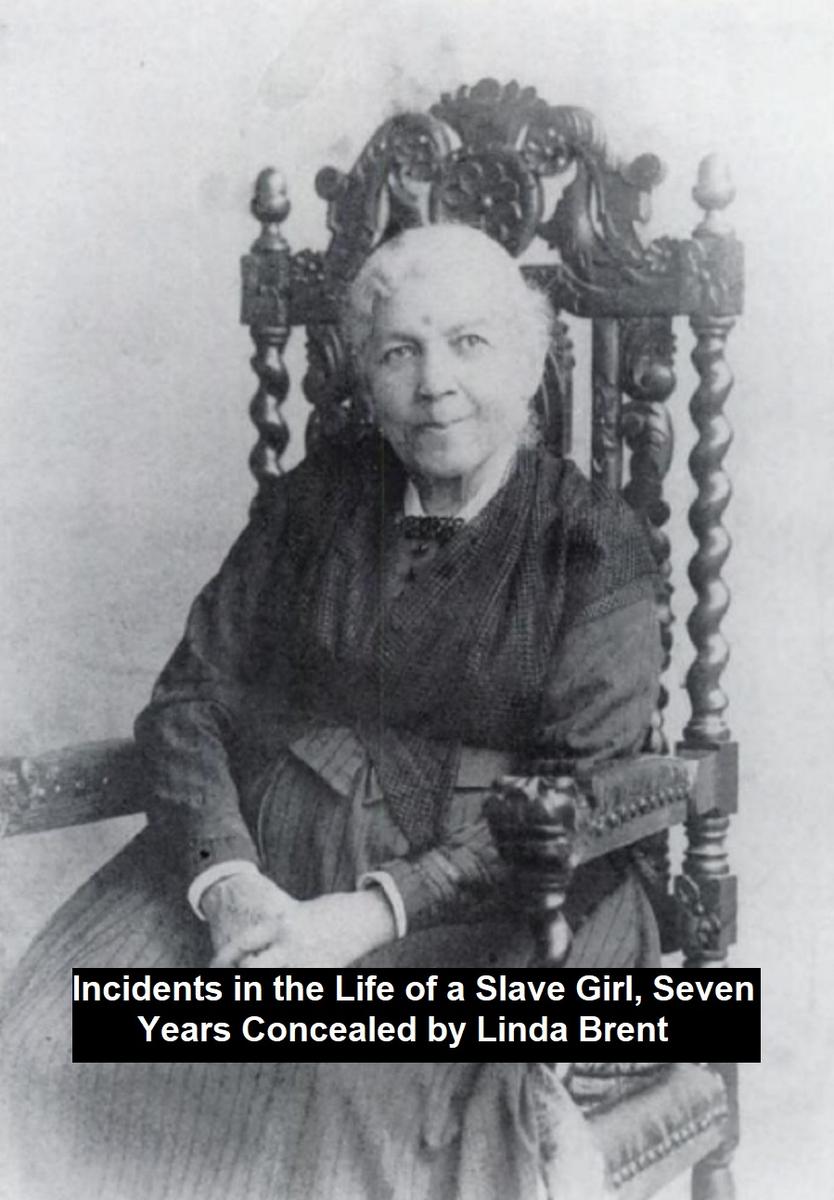
Incidents in the Life of a Slave Girl, Seven Years Concealed
¥8.09
Autobiography of a slave girl, first published in 1861. According to Wikipedia: "Harriet Ann Jacobs (February 11, 1813 – March 7, 1897) was an American writer, who escaped from slavery and became an abolitionist speaker and reformer. Jacobs' single work, Incidents in the Life of a Slave Girl, published in 1861 under the pseudonym Linda Brent, was one of the first autobiographical narratives about the struggle for freedom by female slaves and an account of the sexual harassment and abuse they endured."
A Book of Sibyls
¥8.09
Biographical sketches of Mrs. Barbauld, Miss Edgeworth, Mrs. Opie, and Jane Austen, first published in 1883. According to Wikipedia: " Anne Isabella, Lady Ritchie, née Thackeray (9 June 1837 – 26 February 1919) was an English writer. She was the eldest daughter of William Makepeace Thackeray.
Israel Potter: His Fifty Years of Exile
¥8.09
Biography of a soldier in the American Revolution. Melville explains, "Biography, in its purer form, confined to the ended lives of the true and brave, may be held the fairest meed of human virtue--one given and received in entire disinterestedness--since neither can the biographer hope for acknowledgment from the subject, nor the subject at all avail himself of the biographical distinction conferred. Israel Potter well merits the present tribute--a private of Bunker Hill, who for his faithful services was years ago promoted to a still deeper privacy under the ground, with a posthumous pension, in default of any during life, annually paid him by the spring in ever-new mosses and sward." According to Wikipedia: "Herman Melville (August 1, 1819 – September 28, 1891) was an American novelist, short story writer, essayist and poet. His first two books gained much attention, though they were not bestsellers, and his popularity declined precipitously after only a few years. By the time of his death he had been almost completely forgotten, but his longest novel, Moby-Dick — largely considered a failure during his lifetime, and most responsible for Melville's fall from favor with the reading public — was recognized in the 20th century as one of the chief literary masterpieces of both American and world literature."
Democracy and Education
¥8.09
According to Wikipedia: "John Dewey (October 20, 1859 – June 1, 1952) was an American philosopher, psychologist, and educational reformer whose thoughts and ideas have been greatly influential in the United States and around the world. Dewey, along with Charles Sanders Peirce and William James, is recognized as one of the founders of the philosophical school of pragmatism. He is also one of the founders of functional psychology and was a leading representative of the progressive movement in U.S. schooling during the first half of the 20th century."
Salvation
¥8.09
According to Wikipedia: "Lewis Sperry Chafer (February 27, 1871 – August 22, 1952) was the founder and first president of Dallas Theological Seminary, and an influential founding member of modern Christian Dispensationalism.
The Heptameron, Volume 2
¥8.09
With 29 illustrations. According to Wikipedia: "The Heptameron is a collection of 72 short stories written in French by Marguerite of Navarre (1492-1549), published posthumously in 1558. It has the form of a frame narrative and was inspired by The Decameron of Giovanni Boccaccio. It was originally intended to contain one hundred stories covering ten days just as The Decameron does, but at Marguerite’s death it was only completed as far as the second story of the eighth day. Many of the stories deal with love, lust, infidelity and other romantic and sexual matters. One was based on the life of Marguerite de La Rocque, a French noblewoman abandoned, as punishment, with her lover on an island off Quebec... Marguerite de Navarre (French: Marguerite d'Angoulême) (April 11, 1492 – December 21, 1549), also known as Marguerite of Angouleme and Margaret of Navarre, was the queen consort of King Henry II of Navarre. As patron of humanists and reformers, and as an author in her own right, she was an outstanding figure of the French Renaissance. Samuel Putnam called her "The First Modern Woman"."
The Heptameron, Volume 3
¥8.09
With 37 illustrations. According to Wikipedia: "The Heptameron is a collection of 72 short stories written in French by Marguerite of Navarre (1492-1549), published posthumously in 1558. It has the form of a frame narrative and was inspired by The Decameron of Giovanni Boccaccio. It was originally intended to contain one hundred stories covering ten days just as The Decameron does, but at Marguerite’s death it was only completed as far as the second story of the eighth day. Many of the stories deal with love, lust, infidelity and other romantic and sexual matters. One was based on the life of Marguerite de La Rocque, a French noblewoman abandoned, as punishment, with her lover on an island off Quebec... Marguerite de Navarre (French: Marguerite d'Angoulême) (April 11, 1492 – December 21, 1549), also known as Marguerite of Angouleme and Margaret of Navarre, was the queen consort of King Henry II of Navarre. As patron of humanists and reformers, and as an author in her own right, she was an outstanding figure of the French Renaissance. Samuel Putnam called her "The First Modern Woman"."
No and Yes
¥8.09
According to Wikipedia: "Mary Baker Eddy (born Mary Morse Baker July 16, 1821 – December 3, 1910) was the founder of the Christian Science movement. Deeply religious, she advocated Christian Science as a spiritual practical solution to health and moral issues. She wrote Science and Health with Key to the Scriptures, founded The First Church of Christ, Scientist of Boston in 1879, and several periodicals including The Christian Science Monitor. She took the name Mary Baker Glover from her first marriage and was also known as Mary Baker Glover Eddy or Mary Baker G. Eddy from her third marriage. She did much spiritual teaching, lecturing, and instantaneous healing. Her influence continues to grow through her writings."

Tenting To-Night
¥8.09
A Chronicle of Sport and Adventure in Glacier Park and the Cascade Mountains. According to Wikipedia: "Mary Roberts Rinehart (August 12, 1876-September 22, 1958) was a prolific author often called the American Agatha Christie.[1] She is considered the source of the phrase "The butler did it", although she did not actually use the phrase herself, and also considered to have invented the "Had-I-But-Known" school of mystery writing.... Rinehart wrote hundreds of short stories, poems, travelogues and special articles. Many of her books and plays, such as The Bat (1920) were adapted for movies, such as The Bat (1926), The Bat Whispers (1930), and The Bat (1959). While many of her books were best-sellers, critics were most appreciative of her murder mysteries. Rinehart, in The Circular Staircase (1908), is credited with inventing the "Had-I-But-Known" school of mystery writing. The Circular Staircase is a novel in which "a middle-aged spinster is persuaded by her niece and nephew to rent a country house for the summer. The house they choose belonged to a bank defaulter who had hidden stolen securities in the walls. The gentle, peace-loving trio is plunged into a series of crimes solved with the help of the aunt. This novel is credited with being the first in the "Had-I-But-Known" school."[3] The Had-I-But-Known mystery novel is one where the principal character (frequently female) does less than sensible things in connection with a crime which have the effect of prolonging the action of the novel. Ogden Nash parodied the school in his poem Don't Guess Let Me Tell You: "Sometimes the Had I But Known then what I know now I could have saved at least three lives by revealing to the Inspector the conversation I heard through that fortuitous hole in the floor." The phrase "The butler did it", which has become a cliché, came from Rinehart's novel The Door, in which the butler actually did do it, although that exact phrase does not actually appear in the work."
Frankenstein
¥8.09
According to Wikipedia: "Frankenstein; or, The Modern Prometheus is a novel written by Mary Shelley about a creature produced by an unorthodox scientific experiment. Shelley started writing the story when she was nineteen, and the novel was published when she was twenty-one. The first edition was published anonymously in London in 1818. Shelley's name appears on the second edition, published in France in 1823. Shelley had travelled in the region of Geneva, where much of the story takes place, and the topics of galvanism and other similar occult ideas were themes of conversation among her companions, particularly her future husband, Percy Shelley. The storyline emerged from a dream. Mary, Percy, Lord Byron, and John Polidori decided to have a competition to see who could write the best horror story. After thinking for weeks about what her possible storyline could be, Shelley dreamt about a scientist who created life and was horrified by what he had made. She then wrote Frankenstein."

Matthew Henry's Concise Commentary on the Bible
¥8.09
According to Wikipedia: "Matthew Henry (18 October 1662 – 22 June 1714), was an English non-conformist clergyman. He was born at Broad Oak, a farmhouse on the borders of Flintshire and Shropshire. His father, Philip Henry, had just been ejected by the Act of Uniformity 1662. Unlike most of his fellow-sufferers, Philip possessed some private means, and was thus able to give his son a good education. Matthew went first to a school at Islington, and then to Gray's Inn. He soon gave up his legal studies for theology, and in 1687 became minister of a Presbyterian congregation at Chester. He moved again in 1712 to Mare Street, Hackney. Two years later (22 June 1714), he died suddenly of apoplexy at the Queen's Aid House (41 High Street) in Nantwich while on a journey from Chester to London. Henry's well-known Exposition of the Old and New Testaments (1708–1710) is a commentary of a practical and devotional rather than of a critical kind, covering the whole of the Old Testament, and the Gospels and Acts in the New Testament. After the author's death, the work was finished by a number of ministers, and edited by G. Burder and John Hughes in 1811. Not a work of textual criticism, its attempt at good sense, discrimination, its high moral tone and simple piety with practical application, combined with the well-sustained flow of its English style, made it one of the most popular works of its type. Matthew Henry's six volume Complete Commentary, originally published in 1706, provides an exhaustive verse by verse study of the Bible. His commentaries are still in use to this day. Henry's commentaries are primarily exegetical, dealing with the scripture text as presented. Henry's prime intention was explanation, not translation or textual research."
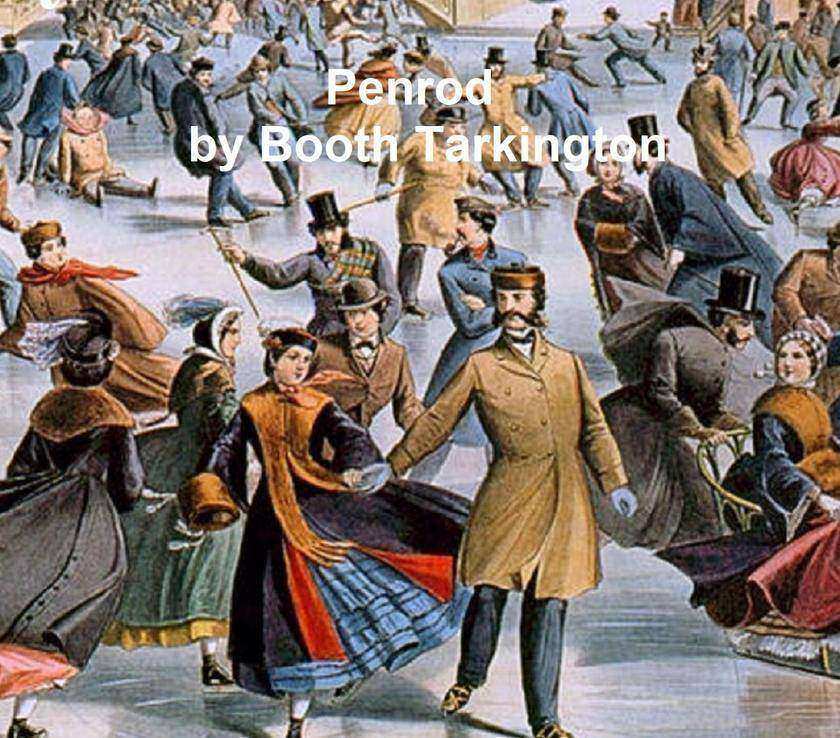
Penrod
¥8.09
According to Wikipedia: "Newton Booth Tarkington (July 29, 1869, Indianapolis – May 19, 1946) was an American novelist and dramatist best known for his Pulitzer Prize-winning novels The Magnificent Ambersons and Alice Adams…. Much of Tarkington's work consists of satirical and closely observed studies of the American class system and its foibles. He himself came from a patrician family that came down in the world after the Panic of 1873. Today he is best known for his novel The Magnificent Ambersons, which Orson Welles filmed in 1942. It is included in the Modern Library's list of top-100 novels."
Kenilworth
¥8.09
Historical novel, first published in 1821. Set in Southern England in 1575. According to Wikipedia: "Sir Walter Scott, 1st Baronet (1771 – 1832) was a prolific Scottish historical novelist and poet popular throughout Europe during his time. In some ways Scott was the first English-language author to have a truly international career in his lifetime, with many contemporary readers all over Europe, Australia, and North America. His novels and poetry are still read, and many of his works remain classics of both English-language literature and of Scottish literature. Famous titles include Ivanhoe, Rob Roy, The Lady of The Lake, Waverley, The Heart of Midlothian and The Bride of Lammermoor."
The Fortunes of Nigel
¥8.09
Historical novel, first published in 1822. Set in London and Greenwich, England, in 1616-1618. According to Wikipedia: "Sir Walter Scott, 1st Baronet (1771 – 1832) was a prolific Scottish historical novelist and poet popular throughout Europe during his time. In some ways Scott was the first English-language author to have a truly international career in his lifetime, with many contemporary readers all over Europe, Australia, and North America. His novels and poetry are still read, and many of his works remain classics of both English-language literature and of Scottish literature. Famous titles include Ivanhoe, Rob Roy, The Lady of The Lake, Waverley, The Heart of Midlothian and The Bride of Lammermoor."
Woodstock
¥8.09
Historical novel, first published in 1826. Set in Woodstock and Windsor, England, and in Brussels in 1652. According to Wikipedia: "Sir Walter Scott, 1st Baronet (1771 – 1832) was a prolific Scottish historical novelist and poet popular throughout Europe during his time. In some ways Scott was the first English-language author to have a truly international career in his lifetime, with many contemporary readers all over Europe, Australia, and North America. His novels and poetry are still read, and many of his works remain classics of both English-language literature and of Scottish literature. Famous titles include Ivanhoe, Rob Roy, The Lady of The Lake, Waverley, The Heart of Midlothian and The Bride of Lammermoor."
Miscellanies: A collection of essays
¥8.09
Book-length collection of essays. According to Wikipedia: "Oscar Fingal O'Flahertie Wills Wilde (1854 - 1900) was an Irish playwright, novelist, poet, and author of short stories. Known for his barbed wit, he was one of the most successful playwrights of late Victorian London, and one of the greatest celebrities of his day. As the result of a famous trial, he suffered a dramatic downfall and was imprisoned for two years of hard labour after being convicted of the offence of 'gross indecency.'"

Peveril of the Peak
¥8.09
Historical novel, originally published in 1822. Set in Derbyshire, the Island of Man, and London in 1658-1680. According to Wikipedia: "Sir Walter Scott, 1st Baronet (1771 – 1832) was a prolific Scottish historical novelist and poet popular throughout Europe during his time. In some ways Scott was the first English-language author to have a truly international career in his lifetime, with many contemporary readers all over Europe, Australia, and North America. His novels and poetry are still read, and many of his works remain classics of both English-language literature and of Scottish literature. Famous titles include Ivanhoe, Rob Roy, The Lady of The Lake, Waverley, The Heart of Midlothian and The Bride of Lammermoor."
True to the Old Flag
¥8.09
Historical novel, set during the American Revolution, and told from the British perspective. The Preface begins: "You have probably been accustomed to regard the war between England and her colonies in America as one in which we were not only beaten but, to some extent, humiliated. Owing to the war having been an unsuccessful one for our arms, British writers have avoided the subject, and it has been left for American historians to describe. These, writing for their own countrymen, and drawing for their facts upon gazettes, letters, and other documents emanating from one side only, have, naturally, and no doubt insensibly, given a very strong color to their own views of the events, and English writers have been too much inclined to accept their account implicitly. There is, however, another and very different side to the story, and this I have endeavored to show you. The whole of the facts and details connected with the war can be relied upon as accurate. According to Wikipedia: "George Alfred Henty (8 December 1832 - 16 November 1902), referred to as G. A. Henty, was a prolific English novelist, special correspondent, and Imperialist born in Trumpington, Cambridgeshire, England. He is best known for his historical adventure stories that were popular in the late 19th century. His works include Out on the Pampas (1871), The Young Buglers (1880), With Clive in India (1884) and Wulf the Saxon (1895)."


