


 购物车
购物车 个人中心
个人中心

The Little Mermaid
¥9.24
Far out in the ocean the water is as blue as the petals of the loveliest cornflower, and as clear as the purest glass. But it is very deep too. It goes down deeper than any anchor rope will go, and many, many steeples would have to be stacked one on top of another to reach from the bottom to the surface of the sea. It is down there that the sea folk live. Now don't suppose that there are only bare white sands at the bottom of the sea. No indeed! The most marvelous trees and flowers grow down there, with such pliant stalks and leaves that the least stir in the water makes them move about as though they were alive. All sorts of fish, large and small, dart among the branches, just as birds flit through the trees up here. From the deepest spot in the ocean rises the palace of the sea king. Its walls are made of coral and its high pointed windows of the clearest amber, but the roof is made of mussel shells that open and shut with the tide. This is a wonderful sight to see, for every shell holds glistening pearls, any one of which would be the pride of a queen's crown.

The Little Bun: "A Russian Folk Tale"
¥9.24
ONCE time ago, there lived an old man and old woman. The old man said, "Old woman, make me a little bun." "What can I make it from? I have no flour." "Eh, eh, old woman! Scrape the cupboard, sweep the flour bin, and you will find enough flour. "The old woman picked up a duster, scraped the cupboard, swept the flour bin and gathered about two handfuls of flour. She mixed the dough with sour cream, fried it in butter, and put the bun on the window sill to cool. The bun lay and lay there. Suddenly it rolled off the window sill to the bench, from the bench to the floor, from the floor to the door. Then it rolled over the threshold to the entrance hall, from the entrance hall to the porch, from the porch to the courtyard, from the courtyard trough the gate and on and on.
![Sleeping Beauty in the Wood: [Colored Edition]](https://platform-permanent.ddimg.cn/pt-media-info-soa-resource/digital/product/54/65/1901165465_ii_cover.jpg?version=4d4744e0-befc-42a0-86c3-876d63ffbc5c)
Sleeping Beauty in the Wood: [Colored Edition]
¥9.24
There were formerly a King and a Queen, who were so sorry that they had no children, so sorry that it cannot be expressed. They went to all the waters in the world; vows, pilgrimages, all ways were tried and all to no purpose. At last, however, the Queen proved with child, and was brought to bed of a daughter. There was a very fine christening; and the Princess had for her godmothers all the Fairies they could find in the whole kingdom (they found seven), that every one of them might give her a gift, as was the custom of Fairies in those days, and that by this means the Princess might have all the perfections imaginable. After the ceremonies of the christening were over, all the company returned to the King's palace, where was prepared a great feast for the Fairies. There was placed before every one of them a magnificent cover with a case of massive gold, wherein were a spoon, knife and fork, all of pure gold set with diamonds and rubies. But as they were all sitting down at table, they saw come into the hall a very old Fairy whom they had not invited, because it was above fifty years since she had been out of a certain tower, and she was believed to be either dead or inchanted. The King ordered her a cover, but could not furnish her with a case of gold as the others, because they had seven only made for the seven Fairies.
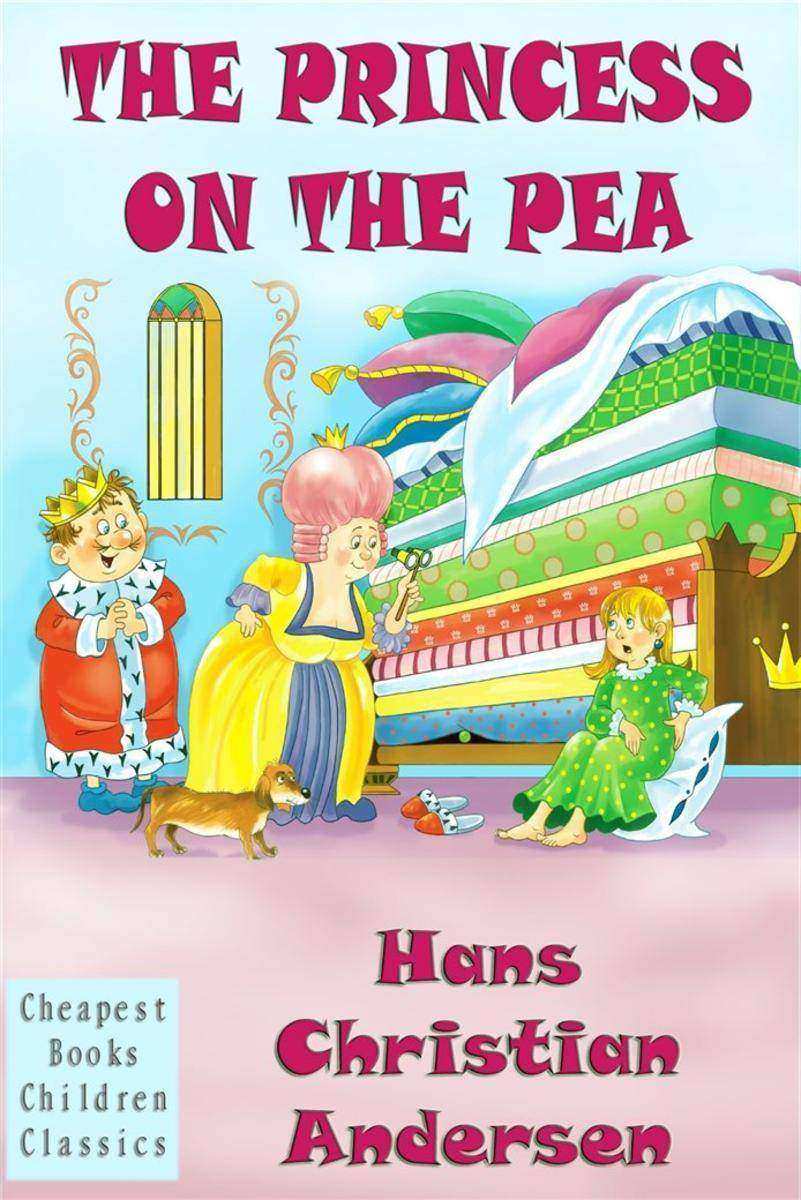
The Princess on the Pea
¥9.24
Once, there was a Prince who wanted to marry a Princess. Only a real one would do. So he traveled through all the world to find her, and everywhere things went wrong. There were Princesses aplenty, but how was he to know whether they were real Princesses? There was something not quite right about them all. So he came home again and was unhappy, because he did so want to have a real Princess.

The Frog Princess: "A Russian Fairy Tale"
¥9.24
In days gone by there was a King who had three sons. When his sons came of age the King called them to him and said, "My dear lads, I want you to get married so that I may see your little ones, my grand-children, before I die." And his sons replied, "Very well, Father, give us your blessing. Who do you want us to marry?" "Each of you must take an arrow, go out into the green meadow and shoot it. Where the arrows fall, there shall your destiny be."So the sons bowed to their father, and each of them took an arrow and went out into the green meadow, where they drew their bows and let fly their arrows. The arrow of the eldest son fell in the courtyard of a nobleman, and the nobleman's daughter picked it up. The arrow of the middle son fell in the yard of a merchant, and the merchant's daughter picked it up. But the arrow of the youngest son, Prince Ivan, flew up and away he knew not where. He walked on and on in search of it, and at last he came to a marsh, where what should he see but a frog sitting on a leaf with the arrow in its mouth. Prince Ivan said to it, "Frog, frog, give me back my arrow." And the frog replied, "Marry me!" "How can I marry a frog?" "Marry me, for it is your destiny."

Benediction
¥9.24
Trees filtering light onto dapple grass. Trees like tall, languid ladies with feather fans coquetting airily with the ugly roof of the monastery. Trees like butlers, bending courteously over placid walks and paths. Trees, trees over the hills on either side and scattering out in clumps and lines and woods all through eastern Maryland, delicate lace on the hems of many yellow fields, dark opaque backgrounds for flowered bushes or wild climbing garden. Some of the trees were very gay and young, but the monastery trees were older than the monastery which, by true monastic standards, wasn't very old at all. And, as a matter of fact, it wasn't technically called a monastery, but only a seminary; nevertheless it shall be a monastery here despite its Victorian architecture or its Edward VII additions, or even its Woodrow Wilsonian, patented, last-a-century roofing. Out behind was the farm where half a dozen lay brothers were sweating lustily as they moved with deadly efficiency around the vegetable-gardens. To the left, behind a row of elms, was an informal baseball diamond where three novices were being batted out by a fourth, amid great chasings and puffings and blowings. And in front as a great mellow bell boomed the half-hour a swarm of black, human leaves were blown over the checker-board of paths under the courteous trees.Some of these black leaves were very old with cheeks furrowed like the first ripples of a splashed pool. Then there was a scattering of middle-aged leaves whose forms when viewed in profile in their revealing gowns were beginning to be faintly unsymmetrical. These carried thick volumes of Thomas Aquinas and Henry James and Cardinal Mercier and Immanuel Kant and many bulging note-books filled with lecture data.

Head and Shoulders
¥9.24
In 1915 Horace Tarbox was thirteen years old. In that year he took the examinations for entrance to Prince-ton University and received the Grade A—excellent—in C?sar, Cicero, Vergil, Xenophon, Homer, Algebra, Plane Geometry, Solid Geometry, and Chemistry.??Two years later while George M. Cohan was composing "Over There," Horace was leading the sophomore class by several lengths and digging out theses on "The Syllogism as an Obsolete Scholastic Form," and during the battle of Ch?teau-Thierry he was sitting at his desk deciding whether or not to wait until his seventeenth birthday before beginning his series of essays on "The Pragmatic Bias of the New Realists."??After a while some newsboy told him that the war was over, and he was glad, because it meant that Peat Brothers, publishers, would get out their new edition of "Spinoza's Improvement of the Understanding." Wars were all very well in their way, made young men self-reliant or something but Horace felt that he could never forgive the President for allowing a brass band to play under his window the night of the false armistice, causing him to leave three important sentences out of his thesis on "German Idealism."
Porcelain and Pink
¥9.24
A room in the down-stairs of a summer cottage. High around the wall runs an art frieze of a fisherman with a pile of nets at his feet and a ship on a crimson ocean, a fisherman with a pile of nets at his feet and a ship on a crimson ocean, a fisherman with a pile of nets at his feet and so on. In one place on the frieze there is an overlapping—here we have half a fisher-man with half a pile of nets at his foot, crowded damply against half a ship on half a crimson ocean. The frieze is not in the plot, but frankly it fascinates me. I could continue indefinitely, but I am distracted by one of the two objects in the room—a blue porcelain bath-tub. It has character, this bath-tub. It is not one of the new racing bodies, but is small with a high tonneau and looks as if it were going to jump; dis-couraged, however, by the shortness of its legs, it has submitted to its environment and to its coat of sky-blue paint. But it grumpily refuses to allow any patron completely to stretch his legs—which brings us neatly to the second object in the room: SHE is a girl—clearly an appendage to the bath-tub, on-ly her head and throat—beautiful girls have throats instead of necks—and a suggestion of shoulder ap-pearing above the side. For the first ten minutes of the play the audience is engrossed in wondering if she really is playing the game fairly and hasn't any clothes on or whether it is being cheated and she is dressed. The girl's name is JULIE MARVIS. From the proud way she sits up in the bath-tub we deduce that she is not very tall and that she carries herself well. When she smiles, her upper tip rolls a little and reminds you of an Easter Bunny, She is within whispering distance of twenty years old.

The Jelly Bean
¥9.24
Jim Powell was a Jelly-bean. Much as I desire to make him an appealing character, I feel that it would be unscrupulous to deceive you on that point. He was a bred-in-the-bone, dyed-in-the-wool, ninety-nine three-quarters per cent Jelly-bean and he grew lazily all during Jelly-bean season, which is every season, down in the land of the Jelly-beans well below the Mason-Dixon line.Now if you call a Memphis man a Jelly-bean he will quite possibly pull a long sinewy rope from his hip pocket and hang you to a convenient telegraph-pole. If you Call a New Orleans man a Jelly-bean he will probably grin and ask you who is taking your girl to the Mardi Gras ball. The particular Jelly-bean patch which produced the protagonist of this history lies somewhere between the two—a little city of forty thousand that has dozed sleepily for forty thousand years in southern Georgia occasionally stirring in its slumbers and muttering something about a war that took place sometime, somewhere, and that everyone else has forgotten long ago.
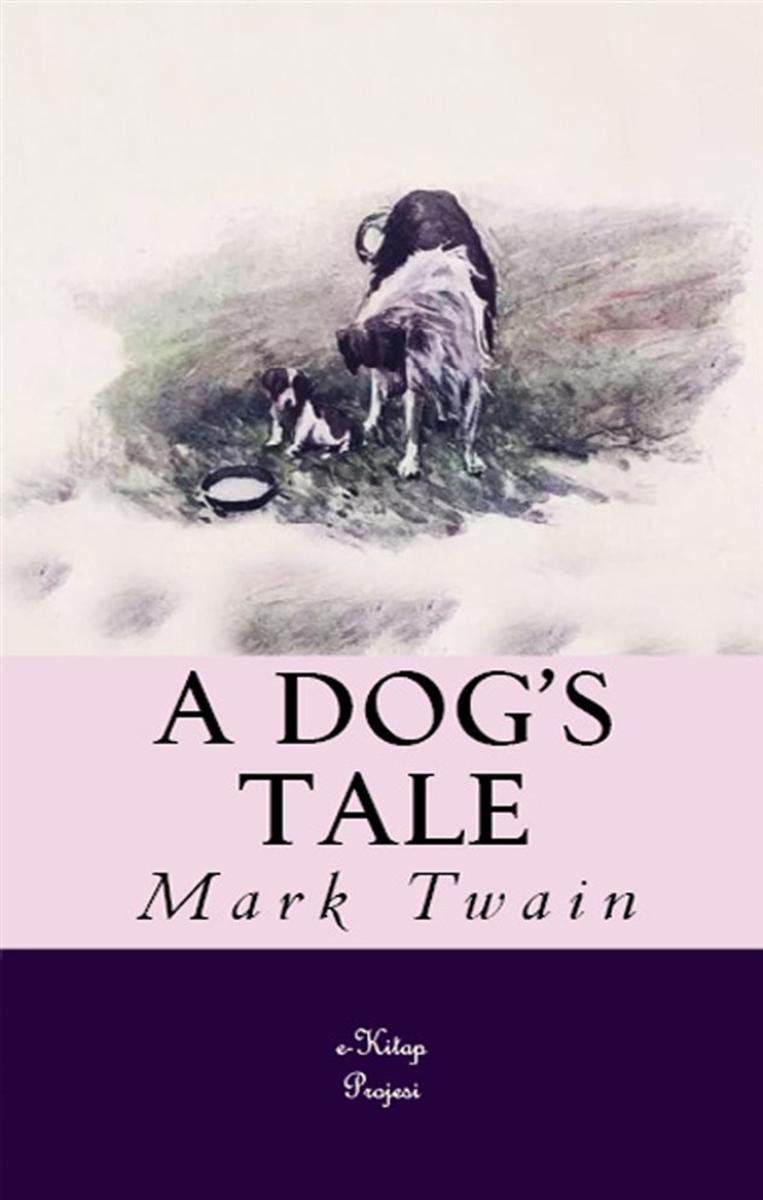
A Dog's Tale
¥9.24
SOON, the master stopped discussing a moment, and rang in the footman, and said, "Bury it in the far corner of the garden," and then went on with the discussion, and I trotted after the footman, very happy and grateful, for I knew the puppy was out of its pain now, because it was asleep. We went far down the garden to the farthest end, where the children and the nurse and the puppy and I used to play in the summer in the shade of a great elm, and there the footman dug a hole, and I saw he was going to plant the puppy, and I was glad, because it would grow and come up a fine handsome dog, like Robin Adair, and be a beautiful surprise for the family when they came home; so I tried to help him dig, but my lame leg was no good, being stiff, you know, and you have to have two, or it is no use. When the footman had finished and covered little Robin up, he patted my head, and there were tears in his eyes, and he said: "Poor little DOGGIE, you saved HIS child!" ABOUT AUTHOR: Mark Twain (1835-1910), was an American humorist, satirist, writer, and lecturer. Twain is most noted for his novels Adventures of Huckleberry Finn, which has since been called the Great American Novel, and The Adventures of Tom Sawyer. He is also known for his quotations. During his lifetime, Clemens became a friend to presidents, artists, leading industrialists, and European royalty. Clemens enjoyed immense public popularity, and his keen wit and incisive satire earned him praise from both critics and peers. American author William Faulkner called Twain "the father of American literature.”

Toots and His Friends: (Illustrated)
¥9.24
Stories:?HOW TOOTS WENT TO BED.?TOOTS AT THE KINDERGARTEN.?THE HAPPY HOUR.?ELFIE.?PAUL BROWN.?PAUL'S VIEWS AT EIGHT YEARS OF AGE.?MAX THE MEDDLER.?OUR MAY.?A BUBBLE PARTY.?SEWING A SEAM.?A FOUR-FOOTED FRIEND.?NAUGHTY SANDY?FLOSSIE'S HANDS.?JAMIE DOON.?FIVES.?OLIVER TWIST AT HOME.?MRS. WHITE'S FAMILY.?BUD AND BUNNIE.?DAISY DEAN.?THE COMMISSARY.?HARRY'S GUEST.?A TIRED VISITOR.?MR. SMITH'S FAMILY.?WHAT SHALL WE DO WITH BABY??DADDY TOUGH.?BUTTON BLUE.?THE STORY OF THE CUCKOO.?MAJOR AND BENJAMINA.?THE COMMODORE'S GUESTS.?HARVEST FESTIVAL.??TOOTS is our baby. He is a queer one too; up early, and always in dread of bed-time. One morning, not long ago, we heard him singing, and on looking for him, found the little rogue in the very middle of our best bed in the guest chamber, where he was playing hand-organ with a long hairpin put through the pretty pillow covers which had just come home from the laundry. There he sat singing a droll medley of "Uncle Ned," "Blessed Desus," and "Down in the Coal Mine." He had been watching two soldiers with a hand-organ, and Toots likes to do everything he sees done. While we were putting the guest-room in order, Toots marched out as a blind man, with his eyes shut and a cane in his hand. This brought him to grief, for he was picked up at the foot of the stairs with two large bumps on his pretty white brow. ??Toots was quiet then for a little while, a very little while, for as soon as we decided that his bones were all sound and a doctor need not be called, he "played sick," and asked for "shicken brof" and toast.

Die Hirtin und der Schornsteinfeger
¥9.24
Este Leopardi un poet pesimist, aa cum l-a clasat tradiia Nu. Din perspectiva zilei de azi, el apare mai degrab ca un poet tragic, ca un exponent al categoriilor existeniale fundamentale. Nu moartea ca atare l sperie pe Leopardi, ci murirea, adic manifestarea ei procesual. Tot astfel viaa leopardian este vieuire. Desfurarea acestora e inversat: trirea vieii (vieuirea) e retrospectiv, iar trirea morii (murirea) e perspectiv. Inversiunea ontologic este temeiul mitopo(i)eticii leopardiene. Cartea ne propune un Leopardi modern i postmodern, un spirit intercultural i multicultural n siajul integrrii europene. Nu lipsete, bineneles, odiseea receptrii lui n spaiul cultural romnesc, ca pattern al lirismului arhetipal, alturi de Eminescu.” (Mihai Cimpoi)Un studiu incitant despre unul dintre cei mai mari poei ai lumii.
![The Story of Miss Moppet: [Illustrated]](https://platform-permanent.ddimg.cn/pt-media-info-soa-resource/digital/product/45/94/1901164594_ii_cover.jpg?version=7700df74-d05a-4284-a3bf-f64f29176bb1)
The Story of Miss Moppet: [Illustrated]
¥9.24
This is a Pussy called Miss Moppet, she thinks she has heard a mouse!??This is the Mouse peeping out behind the cupboard, and making fun of Miss Moppet. He is not afraid of a kitten.??This is Miss Moppet jumping just too late; she misses the Mouse and hits her own head.??She thinks it is a very hard cupboard!??The Mouse watches Miss Moppet from the top of the cupboard.??Miss Moppet ties up her head in a duster, and sits before the fire.??The Mouse thinks she is looking very ill. ?He comes sliding down the bell-pull.??Miss Moppet looks worse and worse. The Mouse comes a little nearer.??Miss Moppet holds her poor head in her paws, and looks at him through a hole in the duster. The Mouse comes very close.??And then all of a sudden—Miss Moppet jumps upon the Mouse!!
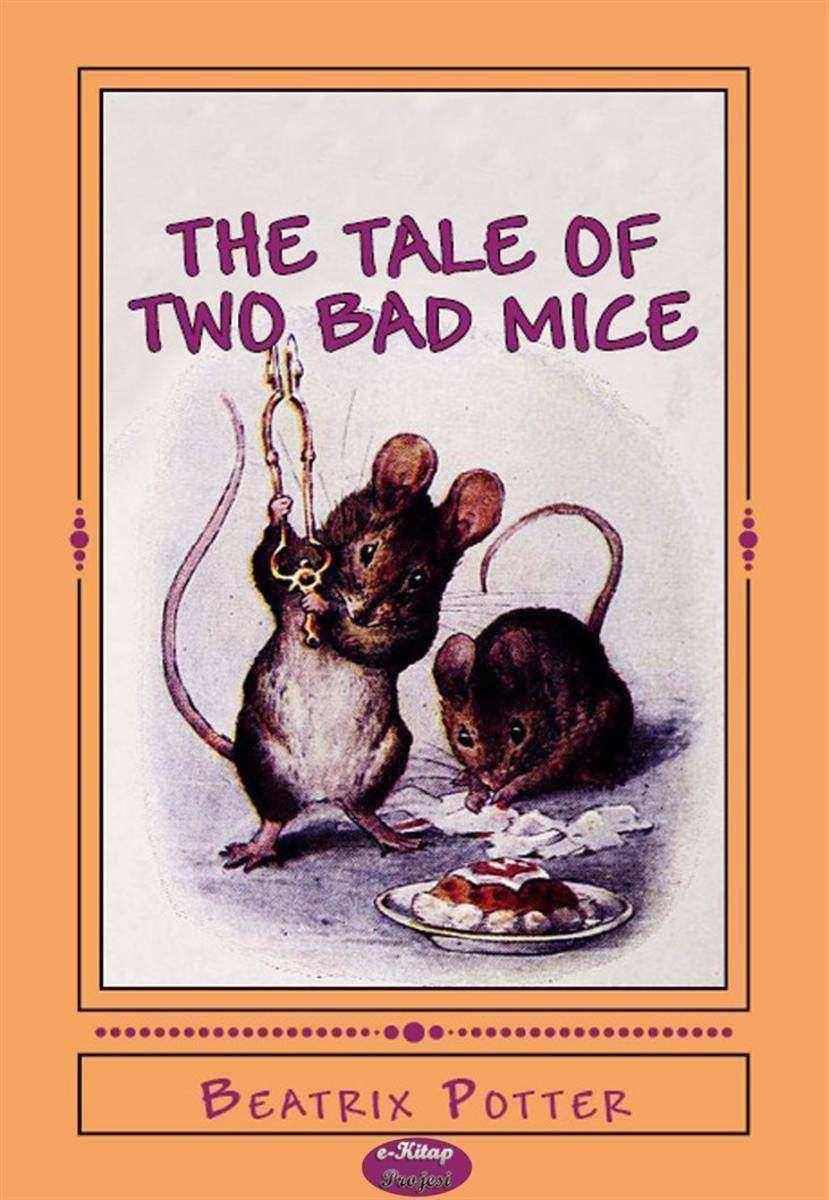
The Tale of Two Bad Mice: Illustrated
¥9.24
ONCE upon a time there was a very beautiful doll's-house; it was red brick with white windows, and it had real muslin curtains and a front door and a chimney.??IT belonged to two Dolls called Lucinda and Jane; least it belonged to Lucinda, but she never ordered meals.?Jane was the Cook; but she never did any cooking, because the dinner had been bought ready-made, in a box full of shavings. ??THERE were two red lobsters and a ham, a fish, a pudding, and some pears and oranges.?They would not come off the plates, but they were extremely beautiful.?ONE morning Lucinda and Jane had gone out for a drive in the doll's perambulator. There was no one in the nursery, and it was very quiet. Presently there was a little scuffling, scratching noise in a corner near the fire-place, where there was a hole under the skirting-board.?Tom Thumb put out his head for a moment, and then popped it in again.?Tom Thumb was a mouse. ??A MINUTE afterwards, Hunca Munca, his wife, put her head out, too; and when she saw that there was no one in the nursery, she ventured out on the oilcloth under the coal-box.

The Prince
¥9.24
If any book could be called legendary, surely it is this one. Its author, Italian diplomat and philosopher Niccolò Machiavelli (1469-1527) considered it his greatest work. Indeed, his thoughts on politics, as laid out so famously in this brief but profound work, have become so synonymous with him that his name has become an adjective: Machiavellian. How is political power achieved? How is it maintained? Though Machiavelli states explicitly that he is not discussing "Republics" here, only "Princedoms", this coldly rational guidebook to taking control and holding onto it contains such universal insights into human nature and the structure of human systems that his "advice" serves equally well in almost any power structure. With applications in such diverse realms as business, the military, even role-playing games, Machiavelli's rules for ruling continue to be required reading for students of politics, philosophy, and ethics.
Gadsby
¥9.24
"Gadsby" is a 1939 novel by Ernest Vincent Wright. The plot revolves around the dying fictional city of Branton Hills, which is revitalized thanks to the efforts of protagonist John Gadsby and a youth group he organizes.The novel is written as a lipogram and does not include words that contain the letter "e". Though self-published and little-noticed in its time, the book is a favourite of fans of constrained writing and is a sought-after rarity among some book collectors. Later editions of the book have sometimes carried the alternative subtitle "50,000 Word Novel Without the Letter 'E'". In 1968, the novel entered the public domain in the United States due to failure to renew copyright in the 28th year after publication.
The Colonists
¥9.24
Leonardo Da Vinci, the many-sided genius of the Italian Renaissance, was born, as his name implies, at the little town of Vinci, which is about six miles from Empoli and twenty miles west of Florence. Vinci is still very inaccessible, and the only means of conveyance is the cart of a general carrier and postman, who sets out on his journey from Empoli at sunrise and sunset. Outside a house in the middle of the main street of Vinci to-day a modern and white-washed bust of the great artist is pointed to with much pride by the inhabitants. Leonardo's traditional birthplace on the outskirts of the town still exists, and serves now as the headquarters of a farmer and small wine exporter.Leonardo di Ser Piero d'Antonio di Ser Piero di Ser Guido da Vinci—for that was his full legal name—was the natural and first-born son of Ser Piero, a country notary, who, like his father, grandfather, and great-grandfather, followed that honourable vocation with distinction and success, and who subsequently—when Leonardo was a youth—was appointed notary to the Signoria of Florence. Leonardo's mother was one Caterina, who afterwards married Accabriga di Piero del Vaccha of Vinci. His BirthLeonardo Da Vinci, the many-sided genius of the Italian Renaissance, was born, as his name implies, at the little town of Vinci, which is about six miles from Empoli and twenty miles west of Florence. Vinci is still very inaccessible, and the only means of conveyance is the cart of a general carrier and postman, who sets out on his journey from Empoli at sunrise and sunset. Outside a house in the middle of the main street of Vinci to-day a modern and white-washed bust of the great artist is pointed to with much pride by the inhabitants. Leonardo's traditional birthplace on the outskirts of the town still exists, and serves now as the headquarters of a farmer and small wine exporter. His ArtLeonardo, whose birth antedates that of Michelangelo and Raphael by twenty three and thirty-one years respectively, was thus in the forefront of the Florentine Renaissance, his life coinciding almost exactly with the best period of Tuscan painting.Leonardo was the first to investigate scientifically and to apply to art the laws of light and shade, though the preliminary investigations of Piero della Francesca deserve to be recorded.He observed with strict accuracy the subtleties of chiaroscuro—light and shade apart from colour; but, as one critic has pointed out, his gift of chiaroscuro cost the colour-life of many a noble picture. Leonardo was "a tonist, not a colourist," before whom the whole book of nature lay open. His MindWe can readily believe the statements of Benvenuto Cellini, the sixteenth-century Goldsmith, that Francis I. "did not believe that any other man had come into the world who had attained so great a knowledge as Leonardo, and that not only as sculptor, painter, and architect, for beyond that he was a profound philosopher." Leonardo anticipated many eminent scientists and inventors in the methods of investigation which they adopted to solve the many problems with which their names are coupled. Among these may be cited Copernicus' theory of the earth's movement, Lamarck's classification of vertebrate and invertebrate animals, the laws of friction, the laws of combustion and respiration, the elevation of the continents, the laws of gravitation, the undulatory theory of light and heat, steam as a motive power in navigation, flying machines, the invention of the camera obscura, magnetic attraction, the use of the stone saw, the system of canalisation, breech loading cannon, the construction of fortifications, the circulation of the blood, the swimming belt, the wheelbarrow, the composition of explosives, the invention of paddle wheels, the smoke stack, the mincing machine! It is, therefore, easy to see why he called "Mechanics the Paradise of the Sciences."Leonardo was a SUPERMAN.

Jemina, the Mountain Girl
¥9.24
This don't pretend to be "Literature."??This is just a tale for red-blooded folks who want a story and not just a lot of "psychological" stuff or "analysis."??Boy, you'll love it! Read it here, see it in the movies, play it on the phonograph, run it through the sewing-machine.??* * *??It was night in the mountains of Kentucky. Wild hills rose on all sides. Swift mountain streams flowed rapidly up and down the mountains.?Jemima Tantrum was down at the stream, brewing whiskey at the family still.??She was a typical mountain girl.
Drawn at a Venture
¥9.24
MYTH: ITS BIRTH AND GROWTH.“Unchecked by external truth, the mind of man has a fatal facility for ensnaring, entrapping, and entangling itself. But, happily, happily for the human race, some fragment of physical speculation has been built into every false system. Here is the weak point. Its inevitable destruction leaves a breach in the whole fabric, and through that breach the armies of truth march in.”Sir H. S. Maine. MYTH: ITS BIRTH AND GROWTH.CHAPTER IITS PRIMITIVE MEANING.It is barely thirty years ago since the world was startled by the publication of Buckle’s History of Civilisation, with its theory that human actions are the effect of causes as fixed and regular as those which operate in the universe; climate, soil, food, and scenery being the chief conditions determining progress. That book was a tour de force, not a lasting contribution to the question of man’s mental development. The publication of Darwin’s epoch-making Origin of Species[1] showed wherein it fell short; how the importance of the above-named causes was exaggerated and the existence of equally potent causes overlooked. Buckle probably had not read Herbert Spencer’s Social Statics, and he knew nothing of the profound revolution in silent preparation in the quiet of Darwin’s home; otherwise, his book must have been rewritten. This would have averted the oblivion from which not even its charm of style can rescue it. Its brilliant but defective theories are obscured in the fuller light of that doctrine of descent with modifications by which we learn that external circumstances do not alone account for the widely divergent types of men, so that a superior race, in supplanting an inferior one, will change the face and destiny of a country, “making the solitary place to be glad, and the desert to rejoice and blossom as the rose.” Darwin has given us the clue to those subtle and still obscure causes which bring about, stage by stage, the unseen adaptations to requirements varying a type and securing its survival, and which have resulted in the evolution of the manifold species of living things. The notion of a constant relation between man and his surroundings is therefore untenable. The object of this book is to present in compendious form the evidence which myths and dreams supply as to primitive man’s interpretation of his own nature and of the external world, and more especially to indicate how such evidence carries within itself the history of the origin and growth of beliefs in the supernatural. The examples are selected chiefly from barbaric races, as furnishing the nearest correspondences to the working of the mind in what may be called its “eocene” stage, but examples are also cited from civilised races, as witnessing to that continuity of ideas which is obscured by familiarity or ignored by prejudice.Had more illustrations been drawn from sources alike prolific, the evidence would have been swollen to undue dimensions without increasing its significance; as it is, repetition has been found needful here and there, under the difficulty of entirely detaching the arguments advanced in the two parts of this work.

Maggie A Girl of the Streets
¥9.24
Suddenly we heard a yelp and a volley of furious blasphemy from the companion hatchway, and the deformed man with the black face came up hurriedly. He was immediately followed by a heavy red-haired man in a white cap. At the sight of the former the staghounds, who had all tired of barking at me by this time, became furiously excited, howling and leaping against their chains. The black hesitated before them, and this gave the red-haired man time to come up with him and deliver a tremendous blow between the shoulder-blades. The poor devil went down like a felled ox, and rolled in the dirt among the furiously excited dogs. It was lucky for him that they were muzzled. The red-haired man gave a yawp of exultation and stood staggering, and as it seemed to me in serious danger of either going backwards down the companion hatchway or forwards upon his victim. So soon as the second man had appeared, Montgomery had started forward. “Steady on there!” he cried, in a tone of remonstrance. A couple of sailors appeared on the forecastle. The black-faced man, howling in a singular voice rolled about under the feet of the dogs. No one attempted to help him. The brutes did their best to worry him, butting their muzzles at him. There was a quick dance of their lithe grey-figured bodies over the clumsy, prostrate figure. The sailors forward shouted, as though it was admirable sport. Montgomery gave an angry exclamation, and went striding down the deck, and I followed him. The black-faced man scrambled up and staggered forward, going and leaning over the bulwark by the main shrouds, where he remained, panting and glaring over his shoulder at the dogs. The red-haired man laughed a satisfied laugh. “Look here, Captain,” said Montgomery, with his lisp a little accentuated, gripping the elbows of the red-haired man, “this won't do!” I stood behind Montgomery. The captain came half round, and regarded him with the dull and solemn eyes of a drunken man. “Wha' won't do?” he said, and added, after looking sleepily into Montgomery's face for a minute, “Blasted Sawbones!” With a sudden movement he shook his arms free, and after two ineffectual attempts stuck his freckled fists into his side pockets.“That man's a passenger,” said Montgomery. “I'd advise you to keep your hands off him.” “Go to hell!” said the captain, loudly. He suddenly turned and staggered towards the side. “Do what I like on my own ship,” he said.

The Snow Image: "A Childish Miracle"
¥9.24
This book is merely a personal narrative, and not a pretentious history or a philosophical dissertation. It is a record of several years of variegated vagabondizing, and its object is rather to help the resting reader while away an idle hour than afflict him with metaphysics, or goad him with science. Still, there is information in the volume; information concerning an interesting episode in the history of the Far West, about which no books have been written by persons who were on the ground in person, and saw the happenings of the time with their own eyes. I allude to the rise, growth and culmination of the silver-mining fever in Nevada -a curious episode, in some respects; the only one, of its peculiar kind, that has occurred in the land; and the only one, indeed, that is likely to occur in it.Yes, take it all around, there is quite a good deal of information in the book. I regret this very much; but really it could not be helped: information appears to stew out of me naturally, like the precious ottar of roses out of the otter. Sometimes it has seemed to me that I would give worlds if I could retain my facts; but it cannot be. The more I calk up the sources, and the tighter I get, the more I leak wisdom. Therefore, I can only claim indulgence at the hands of the reader, not justification. THE AUTHOR."My brother had just been appointed Secretary of Nevada Territory--?an office of such majesty that it concentrated in itself the duties and dignities of Treasurer, Comptroller, Secretary of State, and Acting Governor in the Governor's absence. A salary of eighteen hundred dollars a year and the title of "Mr. Secretary," gave to the great position an air of wild and imposing grandeur. I was young and ignorant, and I envied my brother. I coveted his distinction and his financial splendor, but particularly and especially the long, strange journey he was going to make, and the curious new world he was going to explore. He was going to travel! I never had been away from home, and that word "travel" had a seductive charm for me. Pretty soon he would be hundreds and hundreds of miles away on the great plains and deserts, and among the mountains of the Far West, and would see buffaloes and Indians, and prairie dogs, and antelopes, and have all kinds of adventures, and may be get hanged or scalped, and have ever such a fine time, and write home and tell us all about it, and be a hero. And he would see the gold mines and the silver mines, and maybe go about of an afternoon when his work was done, and pick up two or three pailfuls of shining slugs, and nuggets of gold and silver on the hillside. And by and by he would become very rich, and return home by sea, and be able to talk as calmly about San Francisco and the ocean, and "the isthmus" as if it was nothing of any consequence to have seen those marvels face to face. What I suffered in contemplating his happiness, pen cannot describe. And so, when he offered me, in cold blood, the sublime position of private secretary under him, it appeared to me that the heavens and the earth passed away, and the firmament was rolled together as a scroll! I had nothing more to desire. My contentment was complete.At the end of an hour or two I was ready for the journey. Not much packing up was necessary, because we were going in the overland stage from the Missouri frontier to Nevada, and passengers were only allowed a small quantity of baggage apiece. There was no Pacific railroad in those fine times of ten or twelve years ago--?not a single rail of it. I only proposed to stay in Nevada three months--?I had no thought of staying longer than that. I meant to see all I could that was new and strange, and then hurry home to business. I little thought that I would not see the end of that three-month pleasure excursion for six or seven uncommonly long years!


