


 购物车
购物车 个人中心
个人中心
Actes et Paroles
¥8.09
Selon Wikipedia: "Victor-Marie Hugo (26 février 1802 - 22 mai 1885) était un poète, dramaturge, romancier, essayiste, artiste visuel, homme d'?tat, militant des droits de l'homme et représentant du mouvement romantique en France. La renommée littéraire vient d'abord de sa poésie, mais repose aussi sur ses romans et ses réalisations dramatiques Parmi les nombreux volumes de poésie, Les Contemplations et La Légende des siècles sont particulièrement estimés et Hugo est parfois identifié comme le plus grand poète fran?ais. La France, ses ?uvres les plus connues sont les romans Les Misérables et Notre-Dame de Paris (connu aussi en anglais sous le titre de Le Bossu de Notre-Dame), bien que conservateur conservateur dans sa jeunesse, Hugo devint plus libéral au fil des décennies. il est devenu un partisan passionné du républicanisme et son travail touche à la plupart des questions politiques et sociales et aux tendances artistiques de son temps: il est enterré au Panthéon.
The Renaissance: Studies in Art and Poetry
¥8.09
According to Wikipedia: "Walter Horatio Pater (4 August 1839 - 30 July 1894) was an English essayist and critic of art and literary critic....his study of "Aesthetic Poetry" appeared in the Fortnightly Review, to be succeeded by essays on Leonardo da Vinci, Sandro Botticelli, Pico della Mirandola and Michelangelo. These, with other similar studies, were collected in his Studies in the History of the Renaissance in 1873. Pater, now at the centre of a small but interesting circle in Oxford, gained respect in London and elsewhere, numbering the Pre-Raphaelites among his friends.... by the time his philosophical novel Marius the Epicurean appeared, he had gathered quite a following. This, his chief contribution to literature, was published early in 1885. In it Pater displays, with fullness and elaboration, his ideal of the aesthetic life, his cult of beauty as opposed to bare asceticism, and his theory of the stimulating effect of the pursuit of beauty as an ideal of its own. The principles of what would be known as the Aesthetic movement were partly traceable to Pater and his effect was particularly felt on one of the movement's leading proponents, Oscar Wilde, a former student of Pater at Oxford. In 1887 he published Imaginary Portraits, a series of essays in philosophic fiction; Appreciations, with an Essay on Style was published in 1889 with a revised second edition in 1890; in 1893, Plato and Platonism; and in 1894, The Child in the House. His Greek Studies and his Miscellaneous Studies were collected posthumously in 1895; his romance Gaston de Latour appeared posthumously in 1896; and his essays from The Guardian were privately printed in 1897."
Abbotsford and Newstead Abbey
¥8.09
According to Wikipedia: "Washington Irving (April 3, 1783 – November 28, 1859) was an American author, essayist, biographer and historian of the early 19th century. He was best known for his short stories "The Legend of Sleepy Hollow" and "Rip Van Winkle", both of which appear in his book The Sketch Book of Geoffrey Crayon, Gent. His historical works include biographies of George Washington, Oliver Goldsmith and Muhammad, and several histories of 15th-century Spain dealing with subjects such as Christopher Columbus, the Moors, and the Alhambra. Irving also served as the U.S. minister to Spain from 1842 to 1846. He made his literary debut in 1802 with a series of observational letters to the Morning Chronicle, written under the pseudonym Jonathan Oldstyle. After moving to England for the family business in 1815, he achieved international fame with the publication of The Sketch Book of Geoffrey Crayon, Gent. in 1819. He continued to publish regularly—and almost always successfully—throughout his life, and completed a five-volume biography of George Washington just eight months before his death, at age 76, in Tarrytown, New York."
The Adventures of Captain Bonneville
¥8.09
According to Wikipedia: "Washington Irving (April 3, 1783 – November 28, 1859) was an American author, essayist, biographer and historian of the early 19th century. He was best known for his short stories "The Legend of Sleepy Hollow" and "Rip Van Winkle", both of which appear in his book The Sketch Book of Geoffrey Crayon, Gent. His historical works include biographies of George Washington, Oliver Goldsmith and Muhammad, and several histories of 15th-century Spain dealing with subjects such as Christopher Columbus, the Moors, and the Alhambra. Irving also served as the U.S. minister to Spain from 1842 to 1846. He made his literary debut in 1802 with a series of observational letters to the Morning Chronicle, written under the pseudonym Jonathan Oldstyle. After moving to England for the family business in 1815, he achieved international fame with the publication of The Sketch Book of Geoffrey Crayon, Gent. in 1819. He continued to publish regularly—and almost always successfully—throughout his life, and completed a five-volume biography of George Washington just eight months before his death, at age 76, in Tarrytown, New York."

George Washington
¥8.09
According to Wikipedia: "Washington is seen as a symbol of the United States and republicanism in practice. His devotion to civic virtue made him an exemplary figure among early American politicians. Washington died in 1799, and in his funeral oration, Henry Lee said that of all Americans, he was "first in war, first in peace, and first in the hearts of his countrymen." Washington has been consistently ranked by scholars as one of the greatest U.S. Presidents."
Der Kaufmann von Venedig
¥8.09
Shakespeare-Kom?die in deutscher ?bersetzung. Laut Wikipedia: "The Merchant of Venice" ist eine tragische Kom?die von William Shakespeare, die vermutlich zwischen 1596 und 1598 entstanden ist. Obwohl sie im First Folio als Kom?die klassifiziert wurde und gewisse Aspekte mit Shakespeares anderen romantischen Kom?dien teilt, ist das Stück vielleicht Die meisten werden für ihre dramatischen Szenen in Erinnerung bleiben und sind am besten für Shylock und die berühmte Rede "Hath not a jude eyes" bekannt. Bemerkenswert ist auch Portis Rede über die "Qualit?t der Barmherzigkeit". "

Das Leben und der Tod des K?nigs Lear
¥8.09
Die Shakespeare-Trag?die, übersetzt von Christoph Martin Wieland. Laut Wikipedia: "King Lear ist eine Trag?die von William Shakespeare. Der Titelheld kommt in den Wahnsinn, nachdem er t?richterweise zwischen zwei seiner drei T?chter aufgrund seiner Schmeichelei seinen Nachlass verworfen hat, was tragische Folgen für alle hat. Das Stück basiert auf der Legende von Leir of Britain, einem mythologischen vorr?mischen keltischen K?nig, der für Bühnen- und Spielfilme weitgehend adaptiert wurde, und die Rolle von Lear wurde von vielen der besten Schauspieler der Welt begehrt und gespielt. "

Der Erste Theil von Koenig Heinrich dem Vierten
¥8.09
Shakespeare-Geschichte spielt Heinrich den Vierten Teil, in deutscher ?bersetzung. Laut Wikipedia: "Henry IV, Part 1 ist ein historisches Stück von William Shakespeare, vermutlich sp?testens 1597 geschrieben. Es ist das zweite Stück in Shakespeares Tetralogie, das sich mit den aufeinanderfolgenden Regentschaften von Richard II, Henry IV (zwei Stücke ), und Heinrich V. Heinrich IV., Teil 1, zeigt eine Spannweite der Geschichte, die mit Hotspurs Schlacht bei Homildon gegen Douglas Ende 1402 beginnt und mit der Niederlage der Rebellen in Shrewsbury in der Mitte des Jahres 1403 endet. Von Anfang an war ein ?u?erst popul?res Spiel sowohl bei der ?ffentlichkeit als auch bei den Kritikern. "

Leben und Tod K?nigs Richard des Zweyten
¥8.09
Die Shakespeare-Geschichte spielt Richard II in deutscher ?bersetzung. Laut Wikipedia: "K?nig Richard der Zweite ist ein Geschichtsstück von William Shakespeare, vermutlich um 1595 geschrieben. Es basiert auf dem Leben von K?nig Richard II. Von England (regiert 1377-1399) und ist der erste Teil einer Tetralogie , von einigen Gelehrten als Henriad bezeichnet, gefolgt von drei Stücken über Richards Nachfolger: Henry IV, Teil 1, Henry IV, Teil 2 und Henry V. Es wurde vielleicht nicht als eigenst?ndige Arbeit geschrieben. "

Wie Es Euch Gefallt - As You Like It
¥8.09
Shakespeare-Kom?die, in deutscher ?bersetzung. Laut Wikipedia: "As You Like It" handelt es sich um eine Pastoralkom?die von William Shakespeare, die vermutlich im Jahr 1599 oder Anfang 1600 geschrieben und erstmals im First Folio 1623 ver?ffentlicht wurde. Die erste Aufführung des Stücks ist ungewiss, obwohl eine Aufführung im Wilton House in 1603 wurde als eine M?glichkeit vorgeschlagen, wie Sie es m?gen, folgt seine Heldin Rosalind, wie sie Verfolgung in Hof ihres Onkels flieht, begleitet von ihrer Cousine Celia und Touchstone der Hofnarr, um Sicherheit und schlie?lich Liebe im Wald von Arden zu finden.
Clotelle: A Tale of the Southern States
¥8.09
According to Wikipedia: "William Wells Brown (November 6, 1816 – November 6, 1884) was a prominent abolitionist lecturer, novelist, playwright, and historian. Born into slavery in the Southern United States, Brown escaped to the North, where he worked for abolitionist causes and was a prolific writer. Brown was a pioneer in several different literary genres, including travel writing, fiction, and drama, and wrote what is considered to be the first novel by an African American. An almost exact contemporary of Frederick Douglass, Wells Brown was overshadowed by Douglass and the two feuded publicly."

The Abbot's Ghost or Maurice Treherne's Temptation, A Christmas Story
¥8.09
According to Wikipedia: books, like this one, that Louisa May Alcott wrote under the pseudonym A.M . Barnard are "passionate, fiery novels and stories"... These works ... were known in the Victorian Era as "potboilers" or "blood-and-thunder tales." Her character Jo in "Little Women" publishes several such stories but ultimately rejects them after being told that they are "dangerous for little minds." Their protagonists are willful and relentless in their pursuit of their own aims, which often include revenge on those who have humiliated or thwarted them. These works achieved immediate commercial success and remain highly readable today." According to Wikipedia: "Louisa May Alcott (1832 – 1888) was an American novelist. She is best known for the novel Little Women, published in 1868. This novel is loosely based on her childhood experiences with her three sisters."
Two Gentlemen of Verona, with line numbers
¥8.09
Classic Shakespearean comedy. According to Wikipedia: "The Two Gentlemen of Verona is a comedy by William Shakespeare from early in his career. It has the smallest cast of any of Shakespeare's plays, and is the first of his plays in which a heroine dresses as a boy. It deals with the themes of friendship and infidelity. The highlight of the play is considered by some to be Launce, the clownish servant of Proteus, and his dog Crab, to whom "the most scene-stealing non-speaking role in the canon" has been attributed."
The Land that Time Forgot: First Novel of the Caspak Series
¥8.09
Adventure novel, first published in 1918. According to Wikipedia: "Edgar Rice Burroughs (1875 – 1950) was an American author, best known for his creation of the jungle hero Tarzan and the heroic John Carter, although he produced works in many genres."
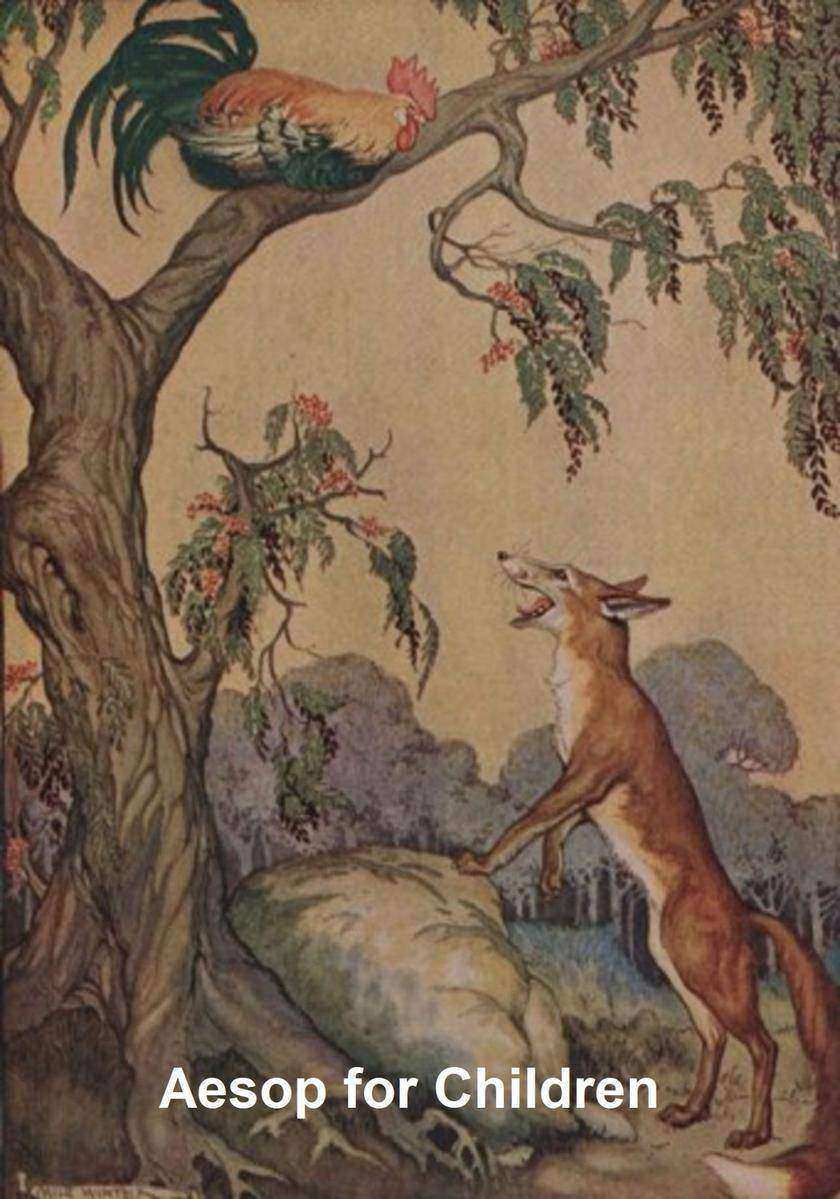
Aesop for Children
¥8.09
This edition, with 114 color illustrations, was first published in 1919. According to Wikipedia: "Aesop (ca. 620-564 BC), known for the genre of fables ascribed to him, was by tradition born a slave and was a contemporary of Croesus and Solon in the mid-sixth century BC in ancient Greece... The body of work identified as Aesop's Fables was transmitted by a series of later authors writing in both Greek and Latin. Demetrius of Phalerum (ca. 350-ca. 280 BC) made a collection in ten books, probably in prose (Lopson Aisopeion sunagogai) for the use of orators, which has been lost. Next appeared an edition in elegiac verse, cited by the Suda, but the author's name is unknown. Phaedrus, a freedman of Augustus, rendered the fables into Latin. Babrius turned the fables into Greek choliambics in the earlier part of the 3rd century A.D. Another 3rd century author, Titianus, rendered the fables in prose, now lost. Avianus (of uncertain date, perhaps the 4th century) translated 42 of the fables into Latin elegiacs. The 4th century grammarian Dositheus Magister also made a collection of Aesop's Fables, now lost. Aesop's Fables continued to be revised and translated through the ensuing centuries, with the addition of material from other cultures, so that the fables known today in some cases bear little relation to the original fables of Aesop. With a surge in scholarly interest in Aesop and Aesopic fable beginning toward the end of the 20th century, some attempt has been made to determine the nature and content of the very earliest fables which may be most closely linked to the historic Aesop... Milo Winter (August 7, 1888 – August 15, 1956) was a well known book illustrator, who produced works for editions of Aesop's Fables, Arabian Nights, Alice in Wonderland, Gulliver's Travels, Tanglewood Tales (1913) and others. He was born in Princeton, Illinois and trained at Chicago’s School of the Art Institute. He lived in Chicago until the early 1950s, when he moved to New York City. From 1947 to 1949, he was the art editor of Childcraft books and from 1949, was the art editor in the film strip division of Silver Burdett Company."

Ethan Frome
¥8.09
Classic short novel. According to Wikipedia: "Edith Wharton (January 24, 1862 - August 11, 1937) was an American novelist, short story writer, and designer. ... The Age of Innocence (1920), perhaps her best known work, won the 1921 Pulitzer Prize for literature, making her the first woman to win the award."

The Little Hunchback Zia, a short story
¥8.09
Classic short story for children. According to Wikipedia: "Frances Hodgson Burnett, ( 1849 - 1924) was an English–American playwright and author. She is best known for her children's stories, in particular The Secret Garden, A Little Princess, and Little Lord Fauntleroy. Born Frances Eliza Hodgson in Cheetham Hill, Manchester, her father died in 1854, and the family had to endure poverty and squalor in the Victorian slums of Manchester. Following the death of her mother in 1867, an 18-year-old Frances was now the head of a family of four younger siblings. She turned to writing to support them all, with a first story published in Godey's Lady's Book in 1868. Soon after she was being published regularly in Godey's, Scribner's Monthly, Peterson's Ladies' Magazine and Harper's Bazaar. Her main writing talent was combining realistic detail of working-class life with a romantic plot. Her first novel was published in 1877; That Lass o' Lowrie's was a story of Lancashire life. After moving with her husband to Washington, D.C., Burnett wrote the novels Haworth's (1879), Louisiana (1880), A Fair Barbarian (1881), and Through One Administration (1883), as well as a play, Esmeralda (1881), written with William Gillette...Her later works include Sara Crewe (1888) - later rewritten as A Little Princess (1905); The Lady of Quality (1896) - considered one of the best of her plays; and The Secret Garden (1909), the children's novel for which she is probably best known today. The Lost Prince was published in 1915..."

The Sea Fogs
¥8.09
Classic short story, set in California. According to Wikipedia: "Robert Louis (Balfour) Stevenson ( 1850 - 1894), was a Scottish novelist, poet, and travel writer, and a leading representative of Neo-romanticism in English literature. He was the man who "seemed to pick the right word up on the point of his pen, like a man playing spillikins", as G. K. Chesterton put it. He was also greatly admired by many authors, including Jorge Luis Borges, Ernest Hemingway, Rudyard Kipling, Vladimir Nabokov, and J. M. Barrie. Most modernist writers dismissed him, however, because he was popular and did not write within their definition of modernism. It is only recently that critics have begun to look beyond Stevenson's popularity and allow him a place in the canon."

A Little Dinner at Timmins's
¥8.09
Classic short story. According to Wikipedia: "Thackeray is most often compared to one other great novelist of Victorian literature, Charles Dickens. During the Victorian era, he was ranked second only to Dickens, but he is now much less read and is known almost exclusively for Vanity Fair. In that novel he was able to satirize whole swaths of humanity while retaining a light touch. It also features his most memorable character, the engagingly roguish Becky Sharp. As a result, unlike Thackeray's other novels, it remains popular with the general reading public; it is a standard fixture in university courses and has been repeatedly adapted for movies and television. In Thackeray's own day, some commentators, such as Anthony Trollope, ranked his History of Henry Esmond as his greatest work, perhaps because it expressed Victorian values of duty and earnestness, as did some of his other later novels. It is perhaps for this reason that they have not survived as well as Vanity Fair, which satirizes those values."

A First Family of Tasajara
¥8.09
Classic western novel. According to Wikipedia: "Bret Harte (August 25, 1836[2] – May 6, 1902) was an American author and poet, best remembered for his accounts of pioneering life in California. He was born in Albany, New York. ... He moved to California in 1853, later working there in a number of capacities, including miner, teacher, messenger, and journalist. He spent part of his life in the northern California coast town now known as Arcata, then just a mining camp on Humboldt Bay. His first literary efforts, including poetry and prose, appeared in The Californian, an early literary journal edited by Charles Henry Webb. In 1868 he became editor of The Overland Monthly, another new literary magazine, but this one more in tune with the pioneering spirit of excitement in California. His story, "The Luck of Roaring Camp," appeared in the magazine's second edition, propelling Harte to nationwide fame... Determined to pursue his literary career, in 1871 he and his family traveled back East, to New York and eventually to Boston, where he contracted with the publisher of The Atlantic Monthly for an annual salary of $10,000, "an unprecedented sum at the time." His popularity waned, however, and by the end of 1872 he was without a publishing contract and increasingly desperate. He spent the next few years struggling to publish new work (or republish old), delivering lectures about the gold rush, and even selling an advertising jingle to a soap company. In 1878 Harte was appointed to the position of United States Consul in the town of Krefeld, Germany and then to Glasgow in 1880. In 1885 he settled in London. During the thirty years he spent in Europe, he never abandoned writing, and maintained a prodigious output of stories that retained the freshness of his earlier work. He died in England in 1902 of throat cancer and is buried at Frimley."

Frank's Campaign
¥8.09
According to Wikipedia: "Horatio Alger, Jr. (January 13, 1832 – July 18, 1899) was a prolific 19th-century American author whose principal output was formulaic juvenile novels that followed the adventures of bootblacks, newsboys, peddlers, buskers, and other impoverished children in their rise from humble backgrounds to lives of respectable middle-class security and comfort. His novels were hugely popular in their day. Born in Chelsea, Massachusetts, the son of a Unitarian minister, Alger entered Harvard at the age of 16. Following graduation, he briefly worked in education before touring Europe for almost a year. He then entered the Harvard Divinity School, and, in 1864, took a position at a Unitarian church in Brewster, Massachusetts. Two years later, he resigned following a pederastic scandal involving two teenage boys. He subsequently retired from the ministry entirely and moved to New York City where he formed an association with the Newsboys Lodging House and other agencies offering aid to impoverished children. His empathy for the working boys of the city, coupled with the moral values learned at home, were the basis of his many juvenile "[rags to riches]" novels. He died in 1899. The first Alger biography was published in 1928, and later proved to be heavily fictionalized. Other biographies followed, sometimes citing the 1928 hoax as fact. In the last decades of the twentieth century however, a few reliable biographies were published that corrected the errors and fictionalizations of the past. Many of Alger's works have been described as rags to riches stories, illustrating how down-and-out boys might be able to achieve the American Dream of wealth and success through hard work, courage, determination, and concern for others. This widely held view involves Alger's characters achieving extreme wealth and the subsequent remediation of their "old ghosts." Alger is noted as a significant figure in the history of American cultural and social ideals."


