


 购物车
购物车 个人中心
个人中心
Romeo and Juliet
¥9.00
Romeo and Juliet is a tragic play written early in the career of William Shakespeare about two teenage "star-cross'd lovers" whose untimely deaths ultimately unite their feuding households. It was among Shakespeare's most popular plays during his lifetime and, along with Hamlet, is one of his most frequently performed plays. Today, the title characters are regarded as archetypal "young lovers".
As You Like It
¥9.00
As You Like It is a pastoral comedy by William Shakespeare based on the novel Rosalynde by Thomas Lodge, believed to have been written in 1599 or early 1600. It features one of Shakespeare's most famous and oft-quoted lines, "All the world's a stage", and has been adapted for radio, film, and musical theatre.
Henry VIII
¥9.00
The Famous History of the Life of King Henry the Eighth is a history play by William Shakespeare, based on the life of Henry VIII of England. An alternative title, All is True, is recorded in contemporary documents, the title Henry VIII not appearing until the play's publication in the First Folio of 1623. Stylistic evidence indicates that the play was written by Shakespeare in collaboration with, or revised by, his successor, John Fletcher. It is also somewhat characteristic of the late romances in its structure.

Timon d'athènes.
¥9.00
Timon est un noble de d'Athènes, très (trop) généreux avec ses amis qu'il invite régulièrement à des festins somptueux, auxquels il offre des cadeaux hors de prix, à tel point qu'il se retrouve un jour sur la paille et ne peut plus payer ses créanciers. S?r de la qualité de l'amitié, il se tourne vers ceux à qui il fait moultes cadeaux pour leur demander de l'aide. Ceux-ci trouvent mille excuses pour ne pas aider Timon qui sombre dans la colère envers Athènes et ses nobles, s'exile dans les bois, et maudit la ville et ses habitants hypocrites et avilis par l'app?t de l'or. De son c?té, Alcibiade, général athénien, se voit refuser l'aide du Sénat, quitte la ville avec son armée pour mieux l'assiéger ensuite. Il essaie d'obtenir le soutien de Timon exilé qui le maudit aussi et fait finalement la paix avec les sénateurs. Timon meurt seul dans les bois laissant pour épitaphe une dernière malédiction pour qui la lira.
Titus Andronicus
¥9.00
Titus Andronicus may be Shakespeare's earliest tragedy; it is believed to have been written sometime between 1584 and the early 1590s. It depicts a Roman general who is engaged in a cycle of revenge with his enemy Tamora, the Queen of the Goths. The play is by far Shakespeare's bloodiest work. It lost popularity during the Victorian era because of its gore, and has only recently begun to revive its fortunes.
Midsummer Night's Dream
¥9.00
A Midsummer Night's Dream is a romantic comedy by William Shakespeare, suggested by "The Knight's Tale" from Geoffrey Chaucer's The Canterbury Tales, written around 1594 to 1596. It portrays the adventures of four young Athenian lovers and a group of amateur actors, their interactions with the Duke and Duchess of Athens, Theseus and Hippolyta, and with the fairies who inhabit a moonlit forest. The play is one of Shakespeare's most popular works for the stage and is widely performed across the world.
Der Schut
¥9.00
Nach Abenteuern in der Teufelsschlucht und bei der Juwelenh?hle treffen Kara Ben Nemsi und seine Begleiter auf das Oberhaupt der Verbrecher, den "Schut". Manche gef?hrliche Situation wird heraufbeschworen, ehe die Jagd, die in der tunesischen Wüste begann, in Albanien zu Ende geht.
Knickerbocker's History of New York
¥9.00
Published to popular acclaim in 1809, this satire, considered the first important contribution to American comic literature, was Washington Irving's first book. It begins by relating the creation and population of the world, including the discovery of what would become New York. It ends by recording the eventual fall of the Dutch dynasty.
Much Ado About Nothing
¥9.00
Much Ado About Nothing is a comedy by William Shakespeare. First published in 1600, it is likely to have been first performed in the autumn or winter of 1598-1599, and it remains one of Shakespeare's most enduring and exhilarating plays on stage. Stylistically, it shares numerous characteristics with modern romantic comedies including the two pairs of lovers, in this case the romantic leads, Claudio and Hero, and their comic counterparts, Benedick and Beatrice.

Love Is ...: "10 Rules of the Love"
¥9.07
Everyone in life is gonna hurt you,?You just have to figure out which people are worth the pain.?- Erica Baican??She Walks In Beauty like the night (Lord Byron)??Everybody is looking for someone they belong to. Everybody is looking for the sense of their lives. But whatever you do, nothing makes sense without love in your heart.?So, the question is "What can love do?"?Love helps to live and to survive in the hardest moments of our lives.?Love inspires you.??Love awakes good feelings in your soul. The feeling of flying in the sky...The feeling of growing wings... The feeling of real living, not existing...?Love brings harmony in your heart.?Love is belief.??Love is warmth. Warmth, which can protect you from all your fears.?Love is caring. Caring for every living being around you.?Love is giving. Giving everything you have, your joy and your sorrow, your heart and your soul, your love and your mind, offering a helping hand in hard moments to the person you love...?Love is pain. Pain that hurts you & inspires you at the same time...?Love is peace. Peace in your heart, in your mind, in your life.?Love is charity...?Love is romance. Romantic ideas, romantic acting...??And Love is the best feeling in the world. Love makes the world go round. It is the greatest mystery of all times. If you ask someone What is love?, He or she will hardly find enough words to express its meaning. Love can be different. There is love for parents, love for children, love for animals, love for friends; first love, love for husband or wife, boyfriend or girlfriend. ??When you love someone or something, your heart and soul become warmer and kinder. People, who carry love in their hearts, are always happy and in good mood. Love helps to live and survive in the hardest moments of our lives. Almost all feelings in the world have some advantages or disadvantages.??However, love has only advantages.?It brings harmony and peace. About Author: Was born in city of Kharkov in Ukraine. She graduated from the National Law Academy of Ukraine named after Yaroslav Wise, speciality "Jurisprudence" with the red diploma. Wrote 5 scientific papers at the chair of financial law, National Law Academy of Ukraine named after Yaroslav the Wise. Occupation legal science had a great influence on my literary career and enriched me with your knowledge, who were guides in life. Successfully made a career – head of the legal Department at the tax office. Happily married (with “Murat UKRAY” who CEO of “CHEAPEST BOOKs”). ?Literary works: The book is about female destination: “Next stop, Married. Let's go, girls, go!” (Следующая Остановка) Publication in Russian language in July 2016

Bebidas naturales para su salud
¥9.16
Un jugo fresco curativo o un té de hierbaspara su salud Pequea guía digital con recetas de jugos frescos de frutas y verduras y con tés de hierbas La vida está llena de simples placeres que pueden convertirse fácilmente en pura felicidad Por qué no pasar a lo natural … o más bien volver N°0 - Bebidas naturales para su salud En este número "cero" de la colección "eGuide Nature" vamos a ver cómo preparar bebidas naturales, jugos frescos o tés de hierbas para cuidar de su salud. Qué vas a encontrar en este eGuide Nature Nuestros consejos para preparar jugos frescos curativos Nuestros consejos parapreparar tés de hierbas 20recetas par su salud Atentamente, Cristina Olivier Rebiere

?zlemek Sevmekse, ?zlüyorum Seni
¥9.16
B?R DAMLA SEVG?YLE MERHABA ?Dokunan hafif bir esinti, bir damla ya?, bir kü?ük ka?amak bak??tan ve bir tatl? s?zden sonra yüre?in ?eperlerine yap???p kalan a?k?n izleriyle dolu ya?amakt?r belki de istenilen… ??zlemek sevgiyle yüre?e dokunmaksa; bir tatl? s?z, bir gidenin ard?ndan kalan iz, bir hüzün i?indeki umutsuzluklarda bile, umut arayan kalple var olmakt?r kimbilir belki de i?imizde kalan… ??zlemek; a?k?n g?zya?lar?nda, yar?n? olmayan a?klarda ve bir garip a?k?n i?inde bile mutlulu?u, sevginin kanatlar?nda ?zlemle arayarak yazmakt?r belki de sayfalarda saklanan… ?Kim bilir belki de sevgiyi i?inde bularak kanatlanmakt?r, kanats?z hallerinde bile ?zlemle a?ka u?makt?r… ?Her okunan ?iirin i?inde hissedebilmektir belki de; tarifi olmayan, tarifsiz o duyguyu, yüre?indeki bir k?v?lc?m ate?iyle canland?r?p ya?atabilmektir belki de arzulanan... ?Sevgiyle dolu sayfalarda, hissettiklerinizi bulup dolu dolu ya?aman?z dile?iyle… Cengiz ?ET?K 1964 y?l?nda Konya/Karap?nar do?du. ?lkokulu Emirgazi il?esinde okudu. Ortaokulu ve liseyi Karap?nar’da okudu. Endüstri Meslek Lisesi Torna tesviye’den mezun oldu. 1989 y?l?nda Burdur E?itim Yüksek Okulu’ndan S?n?f ??retmeni olarak mezun olduktan sonra 1990 y?l?ndan bu yana zaman zaman idarecilik yapsa da ?u an Uzman S?n?f ??retmeni olarak ?al??makta olup iki k?z babas?d?r. 1986 y?l?nda ilk ?yküsü “sonun Ba?lang?c?” bir sinema dergisinin a?t??? yar??mada birinci gelmi?tir. Finike yerel gazetelerinde 2005 y?l?ndan sonra bir?ok k??e yaz?lar? yay?nland?. 2006 y?l?nda ilk ?iir kitab? “Son S?züm Sana Gülüm” yay?nlad?. ?kinci kitab? “Siyahlarday?m Alev Bak??l?m” 2008 y?l?nda yay?nland?. Ayr?ca güfte halinde “ Siyahlarday?m” 2010 y?l?nda ve “Vazge? G?nlüm” 2016 y?l?nda iki ?iiri bestelenip ?ark? olarak hayat bulmu?tur. 2017 y?l? son ay?nda ilk bilimkurgu roman? “Pokentranl? G?kmen” okurlar?yla tan??t?.

A?ktan ve Hayattan Damlalar: Resimli Denemeler
¥9.16
A?k?n ve Hayat?n ??inden Damlalarla Merhaba ?? ?A?k?n; hafiften yüre?e dokunu?uyla, i?imizdeki tutkular?n dizginlenemez halde damla damla ak???d?r belki s?zcüklerde canlanan… Belki de sonsuz renk dans?n?n büyüsünde kaybolmakt?r bir anda hissedilen. Yeni bir y?l?n geli?iyle bir ba?ka rüzg?r?n ak???nda kendini bulmakt?r belki de hayal edilen… Bir de bakm??s?n hayaller i?inde hayat yolundaki serüvenin i?inde buluvermi?sin kendini… ?ocuklar?m?z ayr? bir yer tutarken, gidenlerin ac?s? da derin bir iz b?rakarak bizlerin ya?am?nda yerini al?r ya?ad?klar?mla birlikte. ?? K?r?lma noktam?z olur bazen hayat?n i?inden yüre?e dü?en ac? damlalar, bazen de sevgiliye d?nü?en bir ???l?k olur son s?zü vasiyet gibi yaz?lan ya da hayat ?etelesinde dola??rken, ayk?r? dü?üncelerle beyninin sol yan?yla sa? yan? ?at???r bulursun hayat yolunda… Bazen de s?yleyecek s?z bulamazs?n ve sessiz bir ???l?k g?nderirsin annene; ?aresizli?inin i?inde ?are arayarak… ? Hayat?n sorgularla, sevgilerle dolu ge?erken, gün gelir d??a kapal? dü?ünce kap?lar?n? k?rmak istersin. Kirlenmi?liklerle, ya?arken ?ürüyenlerle, kapanmayan yaralarla, maddiyatla maneviyat? yok etmeye ?al??anlarla ya?arken i?inden gelen bir sesle a?k?n ve hayat?n i?inden dü?en damlalar?n harf harf dizili?iyle ?rülü bir anlat? serüvenidir sayfalara yans?yan. ??yle bir an gelir ki seslenirsin; elveda son sayfam?n, son tümcesinin, son noktas?…?

Bebidas naturais para a sua saúde:34 sucos frescos & smoothies
¥9.16
Um suco fresco natural o um smoothie para a sua saúde? Gostaria de saber como usar frutas e legumes para fazer sucos frescos e melhorar sua saúde? A vida também é feita de prazeres simples que podem se transformar com facilidade em pura felicidade Nossa cole??o de guias práticos ? eGuide Nature ? vai provar isso para você! Desejamos compartilhar o nosso conhecimento e as nossas dicas úteis para simplesmente ? domesticar ? a natureza da qual a vida moderna às vezes nos afasta… N°0 - Bebidas naturais para a sua saúde O que você vai encontrar neste ? eGuide Nature ?? Nossas dicas para preparar seus sucos frescos & smoothies curativos Propriedades curativas de frutas e legumes 84?receitas de sucos e smoothies Ent?o, você está pronto(a) para trazer a natureza em sua vida? Vamos! Sinceramente, Cristina & Olivier Rebiere
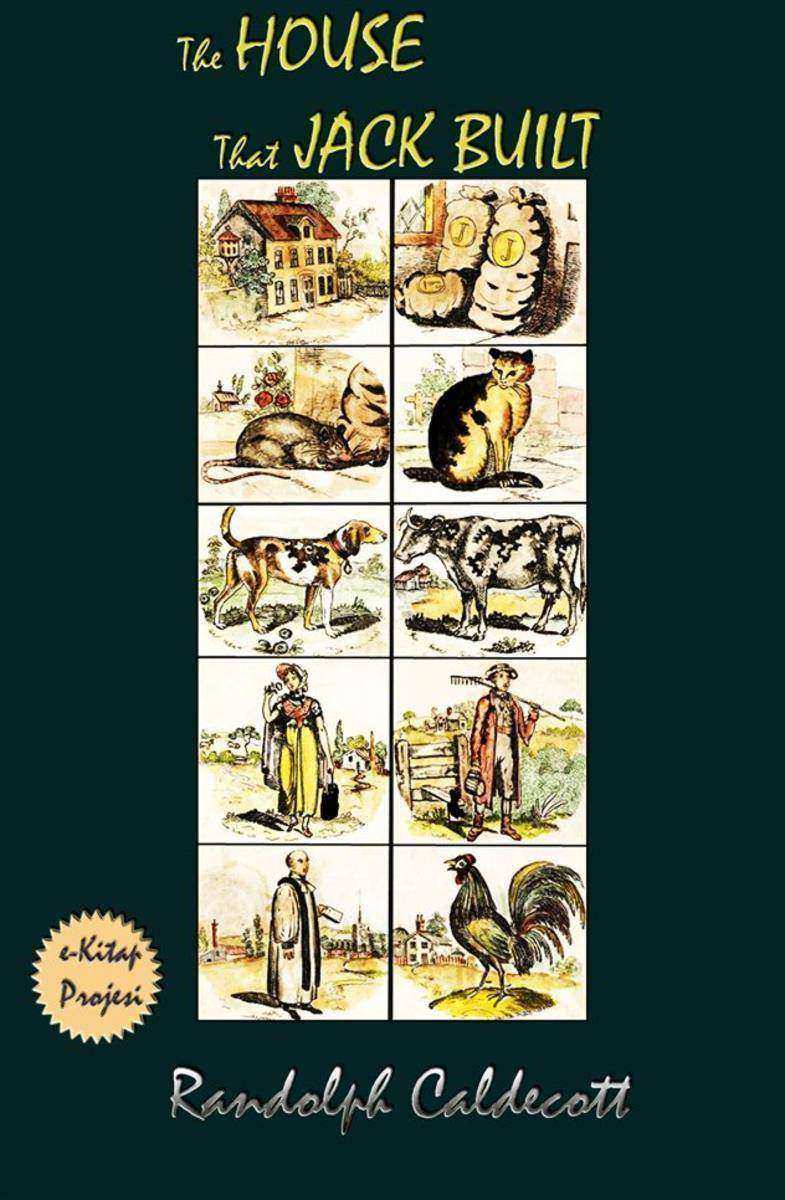
The House That Jack Built: "Illustrated"
¥9.24
Books of instruction in the practice of painting have rarely been successful. Chiefly because they have been too narrow in their point of view, and have dealt more with recipes than with principles. It is not possible to give any one manner of painting that shall be right for all men and all subjects. To say "do thus and so" will not teach any one to paint. But there are certain principles which underlie all painting, and all schools of painting; and to state clearly the most important of these will surely be helpful, and may accomplish something. It is the purpose of this book to deal practically with the problems which are the study of the painter, and to make clear, as far as may be, the principles which are involved in them. I believe that this is the only way in which written instruc-tion on painting can be of any use. It is impossible to understand principles without some statement of theory; and a book in order to be practical must therefore be to some extent theoretical. I have been as concise and brief in the theoretical parts as clearness would permit of, and I trust they are not out of proportion to the practical parts. Either to paint well, or to judge well of a painting, requires an understanding of the same things: namely, the theoretical standpoint of the painter; the technical problems of color, composition, etc.; and the practical means, processes, and materials through which and with which these are worked out. It is obvious that one cannot become a good painter without the ability to know what is good painting, and to prefer it to bad painting. Therefore, I have taken space to cover, in some sort, the whole ground, as the best way to help the student towards becoming a good painter. If, also, the student of pictures should find in this book what will help him to appreciate more truly and more critically, I shall be gratified. There is a false implication in the saying that "a poor workman blames his tools." It is not true that a good workman can do good work with bad tools. On the contrary, the good workman sees to it that he has good tools, and makes it a part of his good workmanship that they are in good condition. In painting there is nothing that will cause you more trouble than bad materi-als. You can get along with few materials, but you cannot get along with bad ones. That is not the place to economize. To do good work is difficult at best. Econo-mize where it will not be a hindrance to you. Your tools can make your work harder or easier according to your selection of them. The relative cost of good and bad materials is of slight importance compared with the relative effect on your work.The way to economize is not to get anything which you do not need. Save on the non-essentials, and get as good a quality as you can of the essentials. Save on the number of things you get, not on the quantity you use. You must feel free in your use of material. There is nothing which hampers you more than parsimony in the use of things needful to your painting. If it is worth your while to paint at all, it is worth your while to be generous enough with yourself to insure ordinary freedom of use of material.The essentials of painting are few, but these cannot be dispensed with. Put it out of your mind that any one of these five things can be got along without:—You must have something to paint on, canvas or panel. Have plenty of these.
![Sing a Song of Sixpence: [Illustrated]](https://platform-permanent.ddimg.cn/pt-media-info-soa-resource/digital/product/53/13/1901165313_ii_cover.jpg?version=72ffa993-0d82-44e1-96c7-94b432ffcec8)
Sing a Song of Sixpence: [Illustrated]
¥9.24
A brand new sixpence fresh from the Mint! How it sparkled and glittered in the dancing sunlight! Such a treasure for a small girl to possess! But then, on the other hand, what a heavy responsibility!??All day long it had been burning a hole in her pocket, and as for learning lessons, not an idea would enter her head. Everything went in at one ear and out of the other, as Miss Primmer sternly remarked when Nellie could not say her poetry. But, indeed, Nellie did try hard to learn her lessons; she squeezed her eyes together as tightly as possible, though how shutting her eyes was to prevent the lessons from coming out of her ears was not very clear. ??"But I must learn them now," she sighed, "or Miss Primmer will keep me in tomorrow, and I shan't be able to go out with Nursie and Reggie to spend my sixpence. Oh dear! I wish I could learn my poetry and keep it in, I guess I'd better get a bit of cotton wool to put in my ears and then it can't come out. There, now!
Lords of the Stratosphere
¥9.24
It is a cumulative tale that does not tell the story of Jack's house, or even of Jack who built the house, but instead shows how the house is indirectly linked to other things and people, and through this method tells the story of "The man all tattered and torn", and the "Maiden all forlorn", as well as other smaller events, showing how these are interlinked. Origins: It has been argued that the rhyme is derived from an Aramaic hymn Chad Gadya (lit., "One Young Goat") in Sepher Haggadah, first printed in 1590; but although this is an early cumulative tale that may have inspired the form, the lyrics bear little relationship. It was suggested by James Orchard Halliwell that the reference to the "priest all shaven and shorn" indicates that the English version is probably very old, presumably as far back as the mid-sixteenth century. There is a possible reference to the song in The Boston New Letter of 12 April 1739 and the line: "This is the man all forlorn, &c". However, it did not appear in print until it was included in Nurse Truelove's New-Year's-Gift, or the Book of Books for Children, printed in London in 1755. It was printed in numerous collections in the late eighteenth and early nineteenth centuries. Randolph Caldecott produced an illustrated version in 1878. Cherrington Manor, a handsome timber-framed house in North East Shropshire, England, is reputed to be the actual house that Jack built. There is a former malt house in the grounds. Syntactic structure: Each sentence in the story is an example of an increasingly deeply nested relative clause. The last version, "This is the horse...", would be quite difficult to untangle if the previous ones were not present. See the Noun Phrase for more details about postmodification of the noun phrase in this manner. References in popular culture: The rhyme continues to be a popular choice for illustrated children's books, with recent examples by Simms Taback and Quentin Blake showing how illustrators can introduce a fresh angle and humour into a familiar tale. The popularity of the rhyme can be seen in its use in a variety of other cultural contexts..
Metamorphosis: {Illustrated}
¥9.24
The third novel, The Vicomte de Bragelonne (serialized October, 1847—January, 1850), has enjoyed a strange history in its English translation. It has been split into three, four, or five volumes at various points in its history. The five-volume edition generally does not give titles to the smaller portions, but the others do. In the three-volume edition, the novels are entitled The Vicomte de Bragelonne, Louise de la Valliere, and The Man in the Iron Mask. For the purposes of this etext, I have chosen to split the novel as the four-volume edition does, with these titles: The Vicomte de Bragelonne, Ten Years Later, Louise de la Valliere, and The Man in the Iron Mask. In the first three etexts: The Vicomte de Bragelonne (Etext 2609): It is the year 1660, and D'Artagnan, after thirty-five years of loyal service, has become disgusted with serving King Louis XIV while the real power resides with the Cardinal Mazarin, and has tendered his resignation. He embarks on his own project, that of restoring Charles II to the throne of England, and, with the help of Athos, succeeds, earning himself quite a fortune in the process. D'Artagnan returns to Paris to live the life of a rich citizen, and Athos, after negotiating the marriage of Philip, the king's brother, to Princess Henrietta of England, likewise retires to his own estate, La Fere. Meanwhile, Mazarin has finally died, and left Louis to assume the reigns of power, with the assistance of M. Colbert, formerly Mazarin's trusted clerk. Colbert has an intense hatred for M. Fouquet, the king's superintendent of finances, and has resolved to use any means necessary to bring about his fall. With the new rank of intendant bestowed on him by Louis, Colbert succeeds in having two of Fouquet's loyal friends tried and executed. He then brings to the king's attention that Fouquet is fortifying the island of Belle-Ile-en-Mer, and could possibly be planning to use it as a base for some military operation against the king. Louis calls D'Artagnan out of retirement and sends him to investigate the island, promising him a tremendous salary and his long-promised promotion to captain of the musketeers upon his return. At Belle-Isle, D'Artagnan discovers that the engineer of the fortifications is, in fact, Porthos, now the Baron du Vallon, and that's not all. The blueprints for the island, although in Porthos's handwriting, show evidence of another script that has been erased, that of Aramis. D'Artagnan later discovers that Aramis has become the bishop of Vannes, which is, coincidentally, a parish belonging to M. Fouquet. Suspecting that D'Artagnan has arrived on the king's behalf to investigate, Aramis tricks D'Artagnan into wandering around Vannes in search of Porthos, and sends Porthos on an heroic ride back to Paris to warn Fouquet of the danger. Fouquet rushes to the king, and gives him Belle-Isle as a present, thus allaying any suspicion, and at the same time humiliating Colbert, just minutes before the usher announces someone else seeking an audience with the king. Ten Years Later (Etext 2681): As 1661 approaches, Princess Henrietta of England arrives for her marriage, and throws the court of France into complete disorder. The jealousy of the Duke of Buckingham, who is in love with her, nearly occasions a war on the streets of Le Havre, thankfully prevented by Raoul's timely and tactful intervention. After the marriage, though, Monsieur Philip becomes horribly jealous of Buckingham, and has him exiled. Before leaving, however, the duke fights a duel with M. de Wardes at Calais. De Wardes is a malicious and spiteful man, the sworn enemy of D'Artagnan, and, by the same token, that of Athos, Aramis, Porthos, and Raoul as well. Both men are seriously wounded, and the duke is taken back to England to recover. Raoul's friend, the Comte de Guiche, is the next to succumb to Henrietta's charms, and Monsieur obtains his exile as well, though De Guiche soon effects a reconciliation.
Tales Of Humour, Gallantry and Romance: New from the Italian Tales (Illustrated)
¥9.24
THE history, the features, and the most famous examples of European architecture, during a period extending from the rise of the Gothic, or pointed, style in the twelfth century to the general depression which overtook the Renaissance style at the close of the eighteenth, form the subject of this little volume. I have endeavoured to adopt as free and simple a mode of treatment as is compatible with the accurate statement of at least the outlines of so very technical a subject. Though it is to be hoped that many professional students of architecture will find this hand-book serviceable to them in their elementary studies, it has been my principal endeavour to adapt it to the requirements of those who are preparing for the professional pursuit of the sister arts, and of that large and happily increasing number of students who pursue the fine arts as a necessary part of a complete liberal education, and who know that a solid and comprehensive acquaintance with art, especially if joined to some skill in the use of the pencil, the brush, the modelling tool, or the etching needle, will open sources of pleasure and interest of the most refined description. The broad facts of all art history; the principles which underlie each of the fine arts; and the most precious or most noteworthy examples of each, ought to be familiar to every art student, whatever special branch he may follow. Beyond these limits I have not attempted to carry this account of Gothic and Renaissance architecture; within them I have endeavoured to make the work as complete as the space at my disposal permitted. THE architecture generally known as Gothic, but often described as Christian Pointed, prevailed throughout Europe to the exclusion of every rival for upwards of three centuries; and it is to be met with, more or less, during two others. Speaking broadly, it may be said that its origin took place in the twelfth century, that the thirteenth was the period of its development, the fourteenth that of its perfection, and the fifteenth that of its decline; while many examples of its employment occur in the sixteenth. In the following chapters the principal changes in the features of buildings which occurred during the progress of the style in England will be described. Subsequently, the manner in which the different stages of development were reached in different countries will be given; for architecture passed through very nearly the same phases in all European nations, though not quite simultaneously. It must be understood that through the whole Gothic period, growth or at least change was going on; the transitions from one stage to another were only periods of more rapid change than usual. The whole process may be illustrated by the progress of a language. If, for instance, we compare round-arched architecture in the eleventh century to the Anglo-Saxon form of speech of the time of Alfred the Great, and the architecture of the twelfth century to the English of Chaucer, that of the thirteenth will correspond to the richer language of Shakespeare, that of the fourteenth to the highly polished language of Addison and Pope, and that of the fifteenth to the English of our own day. We can thus obtain an apt parallel to the gradual change and growth which went on in architecture; and we shall find that the oneness of the language in the former case, and of the architecture in the latter, was maintained throughout. For an account of the Christian round-arched architecture which preceded Gothic, the reader is referred to the companion volume in this series. Here it will be only necessary briefly to review the circumstances which went before the appearance of the pointed styles.
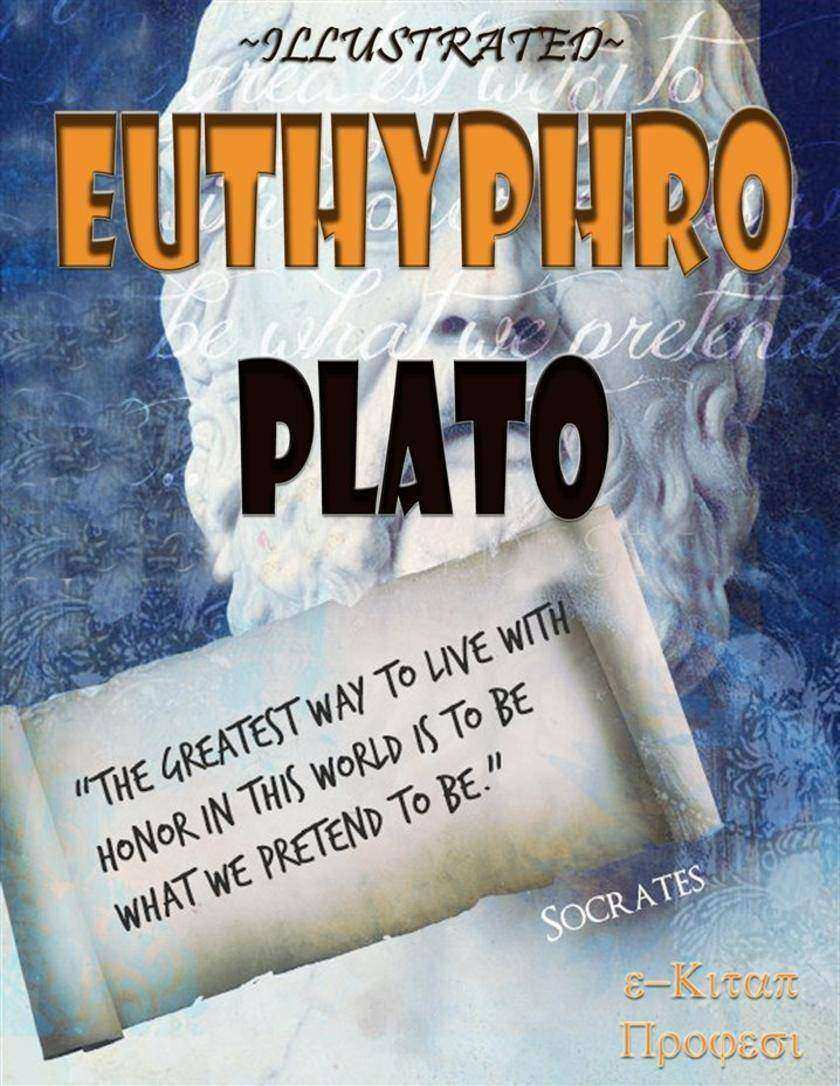
Euthyphro
¥9.24
On the Origin of Species, published on 24 November 1859, is a work of scientific literature by Charles Darwin which is considered to be the foundation of evolutionary biology. Its full title was On the Origin of Species by Means of Natural Selection, or the Preservation of Favoured Races in the Struggle for Life. For the sixth edition of 1872, the short title was changed to The Origin of Species. Darwin's book introduced the scientific theory that populations evolve over the course of generations through a process of natural selection. It presented a body of evidence that the diversity of life arose by common descent through a branching pattern of evolution. Darwin included evidence that he had gathered on the Beagle expedition in the 1830s and his subsequent findings from research, correspondence, and experimentation. Various evolutionary ideas had already been proposed to explain new findings in biology. There was growing support for such ideas among dissident anatomists and the general public, but during the first half of the 19th century the English scientific establishment was closely tied to the Church of England, while science was part of natural theology. Ideas about the transmutation of species were controversial as they conflicted with the beliefs that species were unchanging parts of a designed hierarchy and that humans were unique, unrelated to other animals. The political and theological implications were intensely debated, but transmutation was not accepted by the scientific mainstream. The book was written for non-specialist readers and attracted widespread interest upon its publication. As Darwin was an eminent scientist, his findings were taken seriously and the evidence he presented generated scientific, philosophical, and religious discussion. The debate over the book contributed to the campaign by T. H. Huxley and his fellow members of the X Club to secularise science by promoting scientific naturalism. Within two decades there was widespread scientific agreement that evolution, with a branching pattern of common descent, had occurred, but scientists were slow to give natural selection the significance that Darwin thought appropriate. During the "eclipse of Darwinism" from the 1880s to the 1930s, various other mechanisms of evolution were given more credit. With the development of the modern evolutionary synthesis in the 1930s and 1940s, Darwin's concept of evolutionary adaptation through natural selection became central to modern evolutionary theory, and it has now become the unifying concept of the life sciences. Summary of Darwin's theory: Darwin's theory of evolution is based on key facts and the inferences drawn from them, which biologist Ernst Mayr summarised as follows: ? Every species is fertile enough that if all offspring survived to reproduce the population would grow (fact).? Despite periodic fluctuations, populations remain roughly the same size (fact).? Resources such as food are limited and are relatively stable over time (fact).? A struggle for survival ensues (inference).? Individuals in a population vary significantly from one another (fact).? Much of this variation is inheritable (fact).? Individuals less suited to the environment are less likely to survive and less likely to reproduce; individuals more suited to the environment are more likely to survive and more likely to reproduce and leave their inheritable traits to future generations, which produces the process of natural selection (inference).? This slowly effected process results in populations changing to adapt to their environments, and ultimately, these variations accumulate over time to form new species (inference).
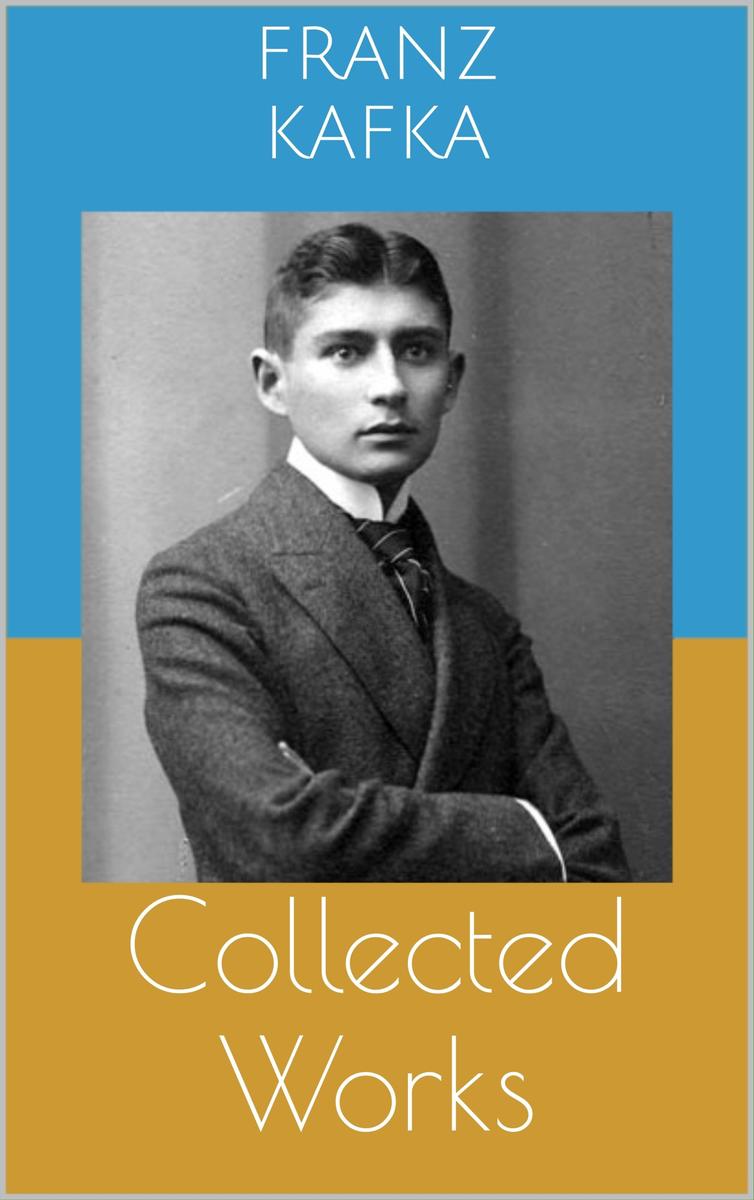
Collected Works: Complete Editions: The Metamorphosis, In the Penal Colony
¥9.24
This carefully crafted ebook is formatted with a functional and detailed table of contents.Franz Kafka (3 July 1883 – 3 June 1924) was a German-language writer of novels and short stories, regarded by critics as one of the most influential authors of the 20th century. Kafka strongly influenced genres such as existentialism. Most of his works, such as "Die Verwandlung" ("The Metamorphosis"), "Der Prozess" ("The Trial"), and "Das Schloss" ("The Castle"), are filled with the themes and archetypes of alienation, physical and psychological brutality, parent–child conflict, characters on a terrifying quest, labyrinths of bureaucracy, and mystical transformations. Kafka was born into a middle-class, German-speaking Jewish family in Prague, then part of the Austro-Hungarian Empire. In his lifetime, most of the population of Prague spoke Czech, and the division between Czech- and German-speaking people was a tangible reality, as both groups were strengthening their national identity. The Jewish community often found itself in between the two sentiments, naturally raising questions about a place to which one belongs. Kafka himself was fluent in both languages, considering German his mother tongue. Kafka trained as a lawyer and, after completing his legal education, obtained employment with an insurance company. He began to write short stories in his spare time. For the rest of his life, he complained about the little time he had to devote to what he came to regard as his calling. He regretted having to devote so much attention to his "Brotberuf" ("day job", literally "bread job"). Kafka preferred to communicate by letter; he wrote hundreds of letters to family and close female friends, including his father, his fiancée Felice Bauer, and his youngest sister Ottla. He had a complicated and troubled relationship with his father that had a major effect on his writing. He also suffered conflict over being Jewish, feeling that it had little to do with him, although critics argue that it influenced his writing.This collection contains the following works:- The Metamorphosis- A Country Doctor- A Hunger Artist- A Report for an Academy- An Imperial Message- Before the Law- In the Penal Colony- Jackals and Arabs- The Great Wall of China- The Hunter Gracchus- The Trial- Up in the Gallery


