


 购物车
购物车 个人中心
个人中心

The Tale of Ginger and Pickles: "Three Years in Bed and Never a Grumble!"
¥9.24
ONCE upon a time there was a village shop. The name over the window was "Ginger and Pickles."??It was a little small shop just the right size for Dolls??”Lucinda and Jane Doll-cook always bought their groceries at Ginger and Pickles.??The counter inside was a convenient height for rabbits. Ginger and Pickles sold red spotty pocket-handkerchiefs at a penny three farthings.??They also sold sugar, and snuff and galoshes.?In fact, although it was such a small shop it sold nearly everything -except a few things that you want in a hurry like bootlaces-, hair-pins and mutton chops.?Ginger and Pickles were the people who kept the shop. Ginger was a yellow tom-cat, and Pickles was a terrier.??The rabbits were always a little bit afraid of Pickles.

Pufi. Pisicu?a r?t?cit? ?n z?pad?
¥9.24
Ce ar fi dac? to?i cei patru pre?edin?i americani asasina?i de-a lungul timpului ar fi fost uci?i din acela?i motiv ?ocant: o clauz? din Constitu?ia Statelor Unite? C?nd pre?edintele Danny Daniels este ?inta unui atentat ?n inima Manhattan-ului, Cotton Malone, fost agent secret al Departamentului de Justi?ie, ??i risc? via?a pentru a-l salva ?i intr? astfel ?n conflict cu Commonwealth, o organiza?ie secret? ?nfiin?at? ?n vremea Revolu?iei Americane. Malone ?i Cassiopeia Vitt str?bat ?ara ?n lung ?i ?n lat ca s? sparg? cifrul secret al lui Thomas Jefferson, s? dezlege puzzle-ul lui Andrew Jackson ?i s? dezgroape un document semnat de ?n?i?i P?rin?ii Fondatori ai na?iei ?i suficient de puternic pentru a face din Commonwealth o for?? de neoprit. ?O intrig? ingenioas?, plin? de r?sturn?ri de situa?ie ?i scene de ac?iune, pe un fundal istoric care st?rne?te imagina?ia cititorilor.“ – Publishers Weekly ?Constitu?ia american?, coduri secrete, istorie c?t cuprinde ?i, ?n plus, pira?i! Ce altceva ?i-ai mai putea dori? Codul Jefferson te va b?ntui nu numai c?teva nop?i, ci toat? via?a. Cotton Malone se ?ntoarce ?n cel mai ?nfrico??tor loc de pe p?m?nt: acas?.“ – Brad Meltzer

Ge?mi?ten Gelece?e Emirda?
¥9.24
Foto?raf makinesi, insan o?lunun en ?nemli icatlar?ndan biridir. Bir foto?raf, ‘’an’’ denilen k?sac?k bir zaman?n tan???d?r. Ancak onda bir tarihi yakalamak da mümkündür. Bu bak?mdan foto?raf? sadece g?rsel bir obje olarak g?rmemek gerekir. Bakmas?n? bilenler i?in foto?raf; tarih, sosyoloji, psikoloji, kültürel yap?, sosyal de?i?im… konular?n ?nemli ip u?lar? i?erir. Foto?raf; g?rüp g?sterme, ger?e?i g?rünür k?lma, ger?e?i kavratmad?r. Her foto?raf?n bir dili vard?r. O dili anlayabilenler, nice güzellikleri ke?federler. Foto?rafta sadece g?rüneni de?il, g?sterilmek isteneni de bilmek ve alg?lamak gerekir. Her foto?raf bir ‘’an’’? yakalasa da onun i?inde sakl? bir hik?ye bulunur. Foto?raf, g?rselli?iyle beraber; topluma, zamana, mekana ve bireylere ili?kin bilgi ve belgelerle doludur. Foto?raf bireylerin ve toplumun aynas?d?r. Bu albüm-kitapta siz kendinizi bulacaks?n?z. Mahalleniz, k?yünüz, hat?ralar?n?z, akraba ve dostlar?n?z burada, sizin kar??n?zda olacakt?r. Sizleri ‘’Ge?mi?ten Gelece?e Emirda? ‘’ gezintisine ??kar?yoruz. Bu albüm-kitap Emirda?’?n tarihi süre? i?inde ge?ti?i a?amalar? da yans?tarak, gelece?imize ???k tutacakt?r. Emirda?’?n sosyal de?i?imini kitapta g?rmek mümkündür Foto?raflar grupla?t?r?larak okuyucuya kolayl?k sa?lanm??t?r. Genel, askerlik, ?ar??-pazar, bayramlar, spor, e?itim, tar?m-hayvanc?l?k, otobüs?ülük, aile, k?yler, ?ehreler, g??, yayla, bina-yap?lar, milli mücadele ve yat?rlara ait foto?raflar bir araya toplanm??t?r. “Ge?mi?ten Gelece?e Emirda?”?n olu?mas?nda eme?i ge?en, katk? sa?layan tüm Emirda?’l?lara te?ekkür ederim.. ? Ak?n A?CA Emirda? Kaymakam?
May Day
¥9.24
At nine o'clock on the morning of the first of May, 1919, a young man spoke to the room clerk at the Bilt-more Hotel, asking if Mr. Philip Dean were registered there, and if so, could he be connected with Mr. Dean's rooms. The inquirer was dressed in a well-cut, shabby suit. He was small, slender, and darkly handsome; his eyes were framed above with unusually long eyelashes and below with the blue semicircle of ill health, this latter effect heightened by an unnatural glow which colored his face like a low, incessant fever. Mr. Dean was staying there. The young man was directed to a telephone at the side. After a second his connection was made; a sleepy voice hello'd from somewhere above.

Na??llar Alemi: Yoxsul ??h?r
¥9.24
Biri var idi, biri yox idi. Bir yoxsul ?eher var idi. Bu ?eherin insanlari ?ox mehriban v? k?m?ksever idil?r. Amma pad?ah ??h?rd?ki insanlarin bütün var-d?vl?tl?rini ?l? kecirmi?di .Bu k?ndd? bir sirrli ma?ara var idi.?fsan?l?r? g?r? bu ma?ara 3 qarda? div t?r?find?n qorunurdu. Ora getmeye he? k?sin hün?ri ?atmirdi.Bir gün ??h?r ?halisinin yarisi s?zü bir yere qoydular ki,bu ma?araya gedey. Onlar yaraqlanin-yasaqlanib yola dü?dül?r. N?hay?t ma?araya g?lib ?atdilar. Ma?aranin sahibi 3 divin burada olmad???n? g?r?n ??h?rlil?r ma?araya girdil?r. Ancaq bunlardan biri ma?araya girm?yib da??n arxas?nda gizl?ndi. ??h?rlil?r ala bil?c?kl?ri q?d?r q?z?l g?türüb ma?aradan ?ixmaq ist?y?nd? divl?r g?ldi. Ma?aran?n ??x???n? b?yük da?la ba?ladilar v? ??h?rlil?r i??rid? qald?. Da??n arxas?nda gizl?n?n ??h?rli divl?r? g?rünm?d?n buradan getdi. O tez g?lib ??h?rin dig?r yar?s?na ?hvalat? na??l etdi. ??h?rlil?r silahlan?b ma?araya getdil?r ve 3 divl? mübariz? apard?lar. ?

The Prince
¥9.24
If any book could be called legendary, surely it is this one. Its author, Italian diplomat and philosopher Niccolò Machiavelli (1469-1527) considered it his greatest work. Indeed, his thoughts on politics, as laid out so famously in this brief but profound work, have become so synonymous with him that his name has become an adjective: Machiavellian. How is political power achieved? How is it maintained? Though Machiavelli states explicitly that he is not discussing "Republics" here, only "Princedoms", this coldly rational guidebook to taking control and holding onto it contains such universal insights into human nature and the structure of human systems that his "advice" serves equally well in almost any power structure. With applications in such diverse realms as business, the military, even role-playing games, Machiavelli's rules for ruling continue to be required reading for students of politics, philosophy, and ethics.

Toots and His Friends: (Illustrated)
¥9.24
Stories:?HOW TOOTS WENT TO BED.?TOOTS AT THE KINDERGARTEN.?THE HAPPY HOUR.?ELFIE.?PAUL BROWN.?PAUL'S VIEWS AT EIGHT YEARS OF AGE.?MAX THE MEDDLER.?OUR MAY.?A BUBBLE PARTY.?SEWING A SEAM.?A FOUR-FOOTED FRIEND.?NAUGHTY SANDY?FLOSSIE'S HANDS.?JAMIE DOON.?FIVES.?OLIVER TWIST AT HOME.?MRS. WHITE'S FAMILY.?BUD AND BUNNIE.?DAISY DEAN.?THE COMMISSARY.?HARRY'S GUEST.?A TIRED VISITOR.?MR. SMITH'S FAMILY.?WHAT SHALL WE DO WITH BABY??DADDY TOUGH.?BUTTON BLUE.?THE STORY OF THE CUCKOO.?MAJOR AND BENJAMINA.?THE COMMODORE'S GUESTS.?HARVEST FESTIVAL.??TOOTS is our baby. He is a queer one too; up early, and always in dread of bed-time. One morning, not long ago, we heard him singing, and on looking for him, found the little rogue in the very middle of our best bed in the guest chamber, where he was playing hand-organ with a long hairpin put through the pretty pillow covers which had just come home from the laundry. There he sat singing a droll medley of "Uncle Ned," "Blessed Desus," and "Down in the Coal Mine." He had been watching two soldiers with a hand-organ, and Toots likes to do everything he sees done. While we were putting the guest-room in order, Toots marched out as a blind man, with his eyes shut and a cane in his hand. This brought him to grief, for he was picked up at the foot of the stairs with two large bumps on his pretty white brow. ??Toots was quiet then for a little while, a very little while, for as soon as we decided that his bones were all sound and a doctor need not be called, he "played sick," and asked for "shicken brof" and toast.

Die Hirtin und der Schornsteinfeger
¥9.24
Este Leopardi un poet pesimist, aa cum l-a clasat tradiia Nu. Din perspectiva zilei de azi, el apare mai degrab ca un poet tragic, ca un exponent al categoriilor existeniale fundamentale. Nu moartea ca atare l sperie pe Leopardi, ci murirea, adic manifestarea ei procesual. Tot astfel viaa leopardian este vieuire. Desfurarea acestora e inversat: trirea vieii (vieuirea) e retrospectiv, iar trirea morii (murirea) e perspectiv. Inversiunea ontologic este temeiul mitopo(i)eticii leopardiene. Cartea ne propune un Leopardi modern i postmodern, un spirit intercultural i multicultural n siajul integrrii europene. Nu lipsete, bineneles, odiseea receptrii lui n spaiul cultural romnesc, ca pattern al lirismului arhetipal, alturi de Eminescu.” (Mihai Cimpoi)Un studiu incitant despre unul dintre cei mai mari poei ai lumii.

Benediction
¥9.24
Trees filtering light onto dapple grass. Trees like tall, languid ladies with feather fans coquetting airily with the ugly roof of the monastery. Trees like butlers, bending courteously over placid walks and paths. Trees, trees over the hills on either side and scattering out in clumps and lines and woods all through eastern Maryland, delicate lace on the hems of many yellow fields, dark opaque backgrounds for flowered bushes or wild climbing garden. Some of the trees were very gay and young, but the monastery trees were older than the monastery which, by true monastic standards, wasn't very old at all. And, as a matter of fact, it wasn't technically called a monastery, but only a seminary; nevertheless it shall be a monastery here despite its Victorian architecture or its Edward VII additions, or even its Woodrow Wilsonian, patented, last-a-century roofing. Out behind was the farm where half a dozen lay brothers were sweating lustily as they moved with deadly efficiency around the vegetable-gardens. To the left, behind a row of elms, was an informal baseball diamond where three novices were being batted out by a fourth, amid great chasings and puffings and blowings. And in front as a great mellow bell boomed the half-hour a swarm of black, human leaves were blown over the checker-board of paths under the courteous trees.Some of these black leaves were very old with cheeks furrowed like the first ripples of a splashed pool. Then there was a scattering of middle-aged leaves whose forms when viewed in profile in their revealing gowns were beginning to be faintly unsymmetrical. These carried thick volumes of Thomas Aquinas and Henry James and Cardinal Mercier and Immanuel Kant and many bulging note-books filled with lecture data.

Head and Shoulders
¥9.24
In 1915 Horace Tarbox was thirteen years old. In that year he took the examinations for entrance to Prince-ton University and received the Grade A—excellent—in C?sar, Cicero, Vergil, Xenophon, Homer, Algebra, Plane Geometry, Solid Geometry, and Chemistry.??Two years later while George M. Cohan was composing "Over There," Horace was leading the sophomore class by several lengths and digging out theses on "The Syllogism as an Obsolete Scholastic Form," and during the battle of Ch?teau-Thierry he was sitting at his desk deciding whether or not to wait until his seventeenth birthday before beginning his series of essays on "The Pragmatic Bias of the New Realists."??After a while some newsboy told him that the war was over, and he was glad, because it meant that Peat Brothers, publishers, would get out their new edition of "Spinoza's Improvement of the Understanding." Wars were all very well in their way, made young men self-reliant or something but Horace felt that he could never forgive the President for allowing a brass band to play under his window the night of the false armistice, causing him to leave three important sentences out of his thesis on "German Idealism."
Porcelain and Pink
¥9.24
A room in the down-stairs of a summer cottage. High around the wall runs an art frieze of a fisherman with a pile of nets at his feet and a ship on a crimson ocean, a fisherman with a pile of nets at his feet and a ship on a crimson ocean, a fisherman with a pile of nets at his feet and so on. In one place on the frieze there is an overlapping—here we have half a fisher-man with half a pile of nets at his foot, crowded damply against half a ship on half a crimson ocean. The frieze is not in the plot, but frankly it fascinates me. I could continue indefinitely, but I am distracted by one of the two objects in the room—a blue porcelain bath-tub. It has character, this bath-tub. It is not one of the new racing bodies, but is small with a high tonneau and looks as if it were going to jump; dis-couraged, however, by the shortness of its legs, it has submitted to its environment and to its coat of sky-blue paint. But it grumpily refuses to allow any patron completely to stretch his legs—which brings us neatly to the second object in the room: SHE is a girl—clearly an appendage to the bath-tub, on-ly her head and throat—beautiful girls have throats instead of necks—and a suggestion of shoulder ap-pearing above the side. For the first ten minutes of the play the audience is engrossed in wondering if she really is playing the game fairly and hasn't any clothes on or whether it is being cheated and she is dressed. The girl's name is JULIE MARVIS. From the proud way she sits up in the bath-tub we deduce that she is not very tall and that she carries herself well. When she smiles, her upper tip rolls a little and reminds you of an Easter Bunny, She is within whispering distance of twenty years old.

The Jelly Bean
¥9.24
Jim Powell was a Jelly-bean. Much as I desire to make him an appealing character, I feel that it would be unscrupulous to deceive you on that point. He was a bred-in-the-bone, dyed-in-the-wool, ninety-nine three-quarters per cent Jelly-bean and he grew lazily all during Jelly-bean season, which is every season, down in the land of the Jelly-beans well below the Mason-Dixon line.Now if you call a Memphis man a Jelly-bean he will quite possibly pull a long sinewy rope from his hip pocket and hang you to a convenient telegraph-pole. If you Call a New Orleans man a Jelly-bean he will probably grin and ask you who is taking your girl to the Mardi Gras ball. The particular Jelly-bean patch which produced the protagonist of this history lies somewhere between the two—a little city of forty thousand that has dozed sleepily for forty thousand years in southern Georgia occasionally stirring in its slumbers and muttering something about a war that took place sometime, somewhere, and that everyone else has forgotten long ago.

Gadsby
¥9.24
"Gadsby" is a 1939 novel by Ernest Vincent Wright. The plot revolves around the dying fictional city of Branton Hills, which is revitalized thanks to the efforts of protagonist John Gadsby and a youth group he organizes.The novel is written as a lipogram and does not include words that contain the letter "e". Though self-published and little-noticed in its time, the book is a favourite of fans of constrained writing and is a sought-after rarity among some book collectors. Later editions of the book have sometimes carried the alternative subtitle "50,000 Word Novel Without the Letter 'E'". In 1968, the novel entered the public domain in the United States due to failure to renew copyright in the 28th year after publication.
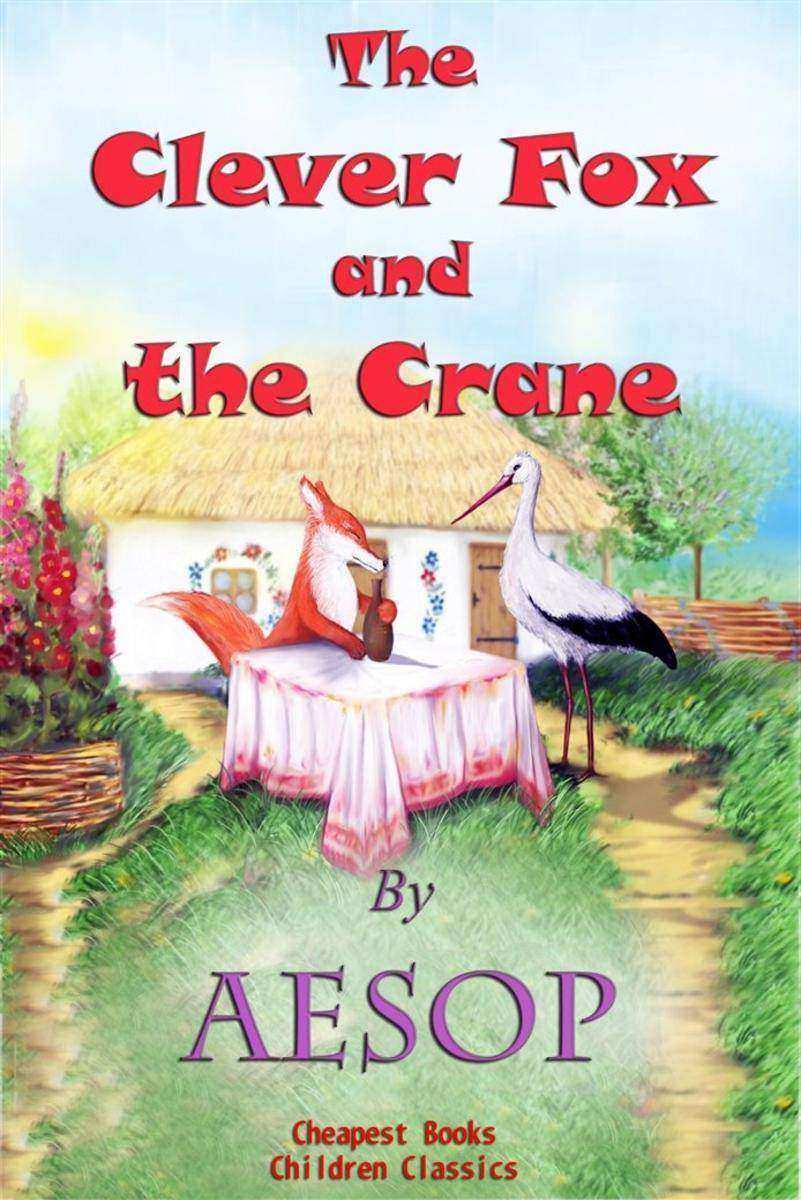
The Clever Fox and the Crane
¥9.24
The clever fox made friends with the crane. The clever fox once had a notion to treat the crane to dinner and went to invite him to her house."Come godfather! Come dear! How I'll entertain you!"The crain went to the dinner party.The clever fox had cooked farina cereal and spread it over a plate.She served it and urged. "Eat, my friend-godfather, I cooked it myself. "

The Little Mermaid
¥9.24
Far out in the ocean the water is as blue as the petals of the loveliest cornflower, and as clear as the purest glass. But it is very deep too. It goes down deeper than any anchor rope will go, and many, many steeples would have to be stacked one on top of another to reach from the bottom to the surface of the sea. It is down there that the sea folk live. Now don't suppose that there are only bare white sands at the bottom of the sea. No indeed! The most marvelous trees and flowers grow down there, with such pliant stalks and leaves that the least stir in the water makes them move about as though they were alive. All sorts of fish, large and small, dart among the branches, just as birds flit through the trees up here. From the deepest spot in the ocean rises the palace of the sea king. Its walls are made of coral and its high pointed windows of the clearest amber, but the roof is made of mussel shells that open and shut with the tide. This is a wonderful sight to see, for every shell holds glistening pearls, any one of which would be the pride of a queen's crown.

The Little Bun: "A Russian Folk Tale"
¥9.24
ONCE time ago, there lived an old man and old woman. The old man said, "Old woman, make me a little bun." "What can I make it from? I have no flour." "Eh, eh, old woman! Scrape the cupboard, sweep the flour bin, and you will find enough flour. "The old woman picked up a duster, scraped the cupboard, swept the flour bin and gathered about two handfuls of flour. She mixed the dough with sour cream, fried it in butter, and put the bun on the window sill to cool. The bun lay and lay there. Suddenly it rolled off the window sill to the bench, from the bench to the floor, from the floor to the door. Then it rolled over the threshold to the entrance hall, from the entrance hall to the porch, from the porch to the courtyard, from the courtyard trough the gate and on and on.

Jemina, the Mountain Girl
¥9.24
This don't pretend to be "Literature."??This is just a tale for red-blooded folks who want a story and not just a lot of "psychological" stuff or "analysis."??Boy, you'll love it! Read it here, see it in the movies, play it on the phonograph, run it through the sewing-machine.??* * *??It was night in the mountains of Kentucky. Wild hills rose on all sides. Swift mountain streams flowed rapidly up and down the mountains.?Jemima Tantrum was down at the stream, brewing whiskey at the family still.??She was a typical mountain girl.

The Adventure Girls at K Bar O
¥9.24
Though flattered by imitators galore Miss Potter's work stands supreme. Her many picture stories should be among the first books owned by children.Cecily Parsley lived in a pen,And brewed good ale for gentlemen; Gentlemen came every day,Till Cecily Parsley ran away.

The Island of Doctor Moreau: "Illustrated"
¥9.24
Once upon a time there was an old Sow with three little Pigs, and as she had not enough to keep them, she sent them out to seek their fortune. The first that went off met a Man with a bundle of straw, and said to him, "Please, Man, give me that straw to build me a house"; which the Man did, and the little Pig built a house with it. Presently came along a Wolf, and knocked at the door, and said, "Little Pig, little Pig, let me come in." To which the Pig answered, "No, no, by the hair of my chinny chin chin."

Cue for Quiet
¥9.24
Madame Bovary takes place in provincial northern France, near the town of Rouen in Normandy. The story begins and ends with Charles Bovary, a stolid, kindhearted man without much ability or ambition. As the novel opens, Charles is a shy, oddly dressed teenager arriving at a new school amidst the ridicule of his new classmates. Later, Charles struggles his way to a second-rate medical degree and becomes an officier de santé in the Public Health Service. His mother chooses a wife for him, an unpleasant but supposedly rich widow named Heloise Dubuc, and Charles sets out to build a practice in the village of Tostes (now T?tes). One day, Charles visits a local farm to set the owner's broken leg, and meets his client's daughter, Emma Rouault. Emma is a beautiful, daintily dressed young woman who has received a "good education" in a convent and who has a latent but powerful yearning for luxury and romance imbibed from the popular novels she has read. Charles is immediately attracted to her, and begins checking on his patient far more often than necessary until Heloise's jealousy puts a stop to the visits. When Heloise dies, Charles waits a decent interval, then begins courting Emma in earnest. Her father gives his consent, and Emma and Charles are married. ABOUT AUTHOR: Gustave Flaubert (French: December 12, 1821 – May 8, 1880) was an influential French writer widely considered one of the greatest novelists in Western literature. He is known especially for his first published novel, Madame Bovary (1857), for his Correspondence, and for his scrupulous devotion to his style and aesthetics. The celebrated short story writer Maupassant was a protégé of Flaubert. Early life and education:Flaubert was born on December 12, 1821, in Rouen, in the Seine-Maritime department of Upper Normandy, in northern France. He was the second son of Anne Justine Caroline (née Fleuriot; 1793–1872) and Achille-Cléophas Flaubert (1784–1846), a surgeon. He began writing at an early age, as early as eight according to some sources.He was educated at the Lycée Pierre Corneille in Rouen, and did not leave until 1840, when he went to Paris to study law. In Paris, he was an indifferent student and found the city distasteful. He made a few acquaintances, including Victor Hugo. Toward the end of 1840, he traveled in the Pyrenees and Corsica. In 1846, after an attack of epilepsy, he left Paris and abandoned the study of law. Writing career:His first finished work was November, a novella, which was completed in 1842.In September 1849, Flaubert completed the first version of a novel, The Temptation of Saint Anthony. He read the novel aloud to Louis Bouilhet and Maxime Du Camp over the course of four days, not allowing them to interrupt or give any opinions. At the end of the reading, his friends told him to throw the manuscript in the fire, suggesting instead that he focus on day-to-day life rather than fantastic subjects.In 1850, after returning from Egypt, Flaubert began work on Madame Bovary. The novel, which took five years to write, was serialized in the Revue de Paris in 1856. The government brought an action against the publisher and author on the charge of immorality, which was heard during the following year, but both were acquitted. When Madame Bovary appeared in book form, it met with a warm reception.In 1858, Flaubert traveled to Carthage to gather material for his next novel, Salammb?. The novel was completed in 1862 after four years of work.Drawing on his youth, Flaubert next wrote L'?ducation sentimentale (Sentimental Education), an effort that took seven years. This was his last complete novel, published in the year 1869.He wrote an unsuccessful drama, Le Candidat, and published a reworked version of Temptation of Saint Anthony.

The Colonists
¥9.24
Leonardo Da Vinci, the many-sided genius of the Italian Renaissance, was born, as his name implies, at the little town of Vinci, which is about six miles from Empoli and twenty miles west of Florence. Vinci is still very inaccessible, and the only means of conveyance is the cart of a general carrier and postman, who sets out on his journey from Empoli at sunrise and sunset. Outside a house in the middle of the main street of Vinci to-day a modern and white-washed bust of the great artist is pointed to with much pride by the inhabitants. Leonardo's traditional birthplace on the outskirts of the town still exists, and serves now as the headquarters of a farmer and small wine exporter.Leonardo di Ser Piero d'Antonio di Ser Piero di Ser Guido da Vinci—for that was his full legal name—was the natural and first-born son of Ser Piero, a country notary, who, like his father, grandfather, and great-grandfather, followed that honourable vocation with distinction and success, and who subsequently—when Leonardo was a youth—was appointed notary to the Signoria of Florence. Leonardo's mother was one Caterina, who afterwards married Accabriga di Piero del Vaccha of Vinci. His BirthLeonardo Da Vinci, the many-sided genius of the Italian Renaissance, was born, as his name implies, at the little town of Vinci, which is about six miles from Empoli and twenty miles west of Florence. Vinci is still very inaccessible, and the only means of conveyance is the cart of a general carrier and postman, who sets out on his journey from Empoli at sunrise and sunset. Outside a house in the middle of the main street of Vinci to-day a modern and white-washed bust of the great artist is pointed to with much pride by the inhabitants. Leonardo's traditional birthplace on the outskirts of the town still exists, and serves now as the headquarters of a farmer and small wine exporter. His ArtLeonardo, whose birth antedates that of Michelangelo and Raphael by twenty three and thirty-one years respectively, was thus in the forefront of the Florentine Renaissance, his life coinciding almost exactly with the best period of Tuscan painting.Leonardo was the first to investigate scientifically and to apply to art the laws of light and shade, though the preliminary investigations of Piero della Francesca deserve to be recorded.He observed with strict accuracy the subtleties of chiaroscuro—light and shade apart from colour; but, as one critic has pointed out, his gift of chiaroscuro cost the colour-life of many a noble picture. Leonardo was "a tonist, not a colourist," before whom the whole book of nature lay open. His MindWe can readily believe the statements of Benvenuto Cellini, the sixteenth-century Goldsmith, that Francis I. "did not believe that any other man had come into the world who had attained so great a knowledge as Leonardo, and that not only as sculptor, painter, and architect, for beyond that he was a profound philosopher." Leonardo anticipated many eminent scientists and inventors in the methods of investigation which they adopted to solve the many problems with which their names are coupled. Among these may be cited Copernicus' theory of the earth's movement, Lamarck's classification of vertebrate and invertebrate animals, the laws of friction, the laws of combustion and respiration, the elevation of the continents, the laws of gravitation, the undulatory theory of light and heat, steam as a motive power in navigation, flying machines, the invention of the camera obscura, magnetic attraction, the use of the stone saw, the system of canalisation, breech loading cannon, the construction of fortifications, the circulation of the blood, the swimming belt, the wheelbarrow, the composition of explosives, the invention of paddle wheels, the smoke stack, the mincing machine! It is, therefore, easy to see why he called "Mechanics the Paradise of the Sciences."Leonardo was a SUPERMAN.


