


 购物车
购物车 个人中心
个人中心
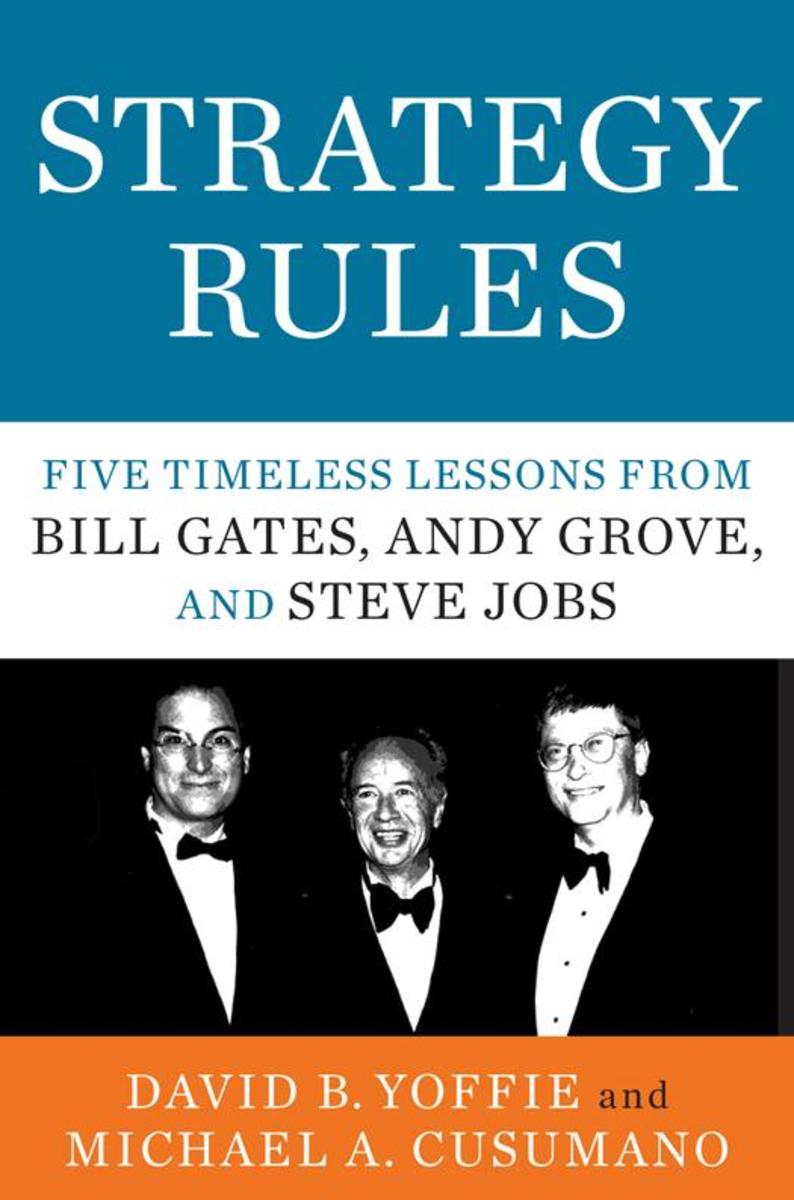
Strategy Rules
¥166.09
Between 1968 and 1976, Bill Gates, Andy Grove, and Steve Jobs launched three companies that would define the world of high technology, create more than a trillion dollars in value, and transform our lives. How did they realize these incredible achievementsStrategy Rules examines these three individuals collectively for the first time their successes and failures, comonalities and differences revealing the business strategies and practices they pioneered while building their firms.Eminent business professors David Yoffie and Michael Cusumano have studied these three leaders and their companies for nearly thirty years, while teaching business strategy, innovation, and entrepreneurship at Harvard Business School and the MIT Sloan School of Management. In this enlightening guide, they show how Gates, Grove, and Jobs became masters of strategy. As CEOs, each approached strategy and execution in remarkably similar ways yet markedly differently from their erstwhile competitors keeping their focus on five rules: Look Forward, Reason Back: They determined where they want their companies to be in the future and could reason back to identify the moves that would take them there. Make Big Bets, Without Betting the Company: All three men made enormous strategic bets but rarely took gambles that put the financial viability of their companies at undue risk. Build Platforms and Ecosystems: Technology leaders have to create industry platforms that enable other firms to create complementary products and services that make the platforms increasingly valuable. Exploit Leverage and Power: Gates, Grove, and Jobs often turned opponents strengths into weaknesses and used enormous resources (once they had them) to dominate competitors. Shape the Company around Your Personal Anchor: From Gates understanding of software to Grove's devotion to process discipline and Jobs obsession with design, all three built their companies around their personal strengths while compensating for their weaknesses. Strategy Rules brings together the best practices in strategic management and high-tech entrepreneurship, providing unique insights for start-up executives as well as the heads of modern multinationals.

Ugly Beauty
¥151.53
The gripping story of Helena Rubinstein, Eugne Schueller, and the dark side of the beauty business they helped to create Helena Rubinstein and L'Oral's Eugne Schueller both started out in the beauty business during the first years of the twentieth century, and, by the time World War II broke out, had come to dominate it. However, their motivations could not have been more different. Rubinstein, a Polish Jew, claimed the world of paid work for women, and working women's enthusiasm for her products made her the first self-made female millionaire. Schueller, a French conservative in the Henry Ford mold, thought women belonged in the home, and during the Nazi Occupation he used his company as a source of cash to buy economic and political influence.Schueller eventually won the long fight for supremacy: in 1988 his company swallowed Rubinstein's. But the victory cost him his reputation when, in the wake of the takeover, he was exposed as a Nazi collaborator. Deepening the scandal, his wartime activities were shown to have been abetted and condoned by a cadre of young men who, by the time the news broke, had scaled the peaks of wealth and power in postwar France.By then Schueller and Rubinstein were both long dead. But cultural historian and biographer Ruth Brandon argues that the battle they began continues to this day. She examines their conflict to ask important contemporary questions about beauty standards and the often murky intersection of individual political aims and the role of business. Filled with remarkable twists, turns, and larger-than-life characters, Ugly Beauty is a riveting true story about what lies beneath the flawless exterior of the cosmetics industry.

Hidden in Plain Sight
¥160.56
A global-innovation expert offers a new perspective on how consumers think and how to develop products and services that affect their everyday lives.Who are your next customers not just the ones you are serving today but the ones you'll need three, five, or ten years from nowHow do you figure out what goods and services will attract them in the future before your competitors do?According to Jan Chipchase whom Fast Company has called the James Bond of design research and Fortune has called the Indiana Jones of technology for the developing world most of the clues are right in front of us. The key is learning to see the ordinary in a revolutionary new way. As the executive creative director of Global Insights at frog, an award-winning global design and innovation company, Chipchase draws on everyday objects and patterns to show us how to see the world differently, from making a phone call to filling up a gas tank to ascertaining whether it's actually half-and-half you're pouring into your coffee. Chipchase is always looking for opportunities gaps, anomalies, and contradictions that will give his clients, some of the world's largest and most successful companies, a distinct competitive advantage, whether they're delivering the most low-tech bar of soap or the most high-tech wireless network.In Hidden in Plain Sight, Chipchase takes readers on his journeys around the globe and shares his methods for identifying the unmet needs of customers. No matter where he stops whether Cleveland or Kabul his goals are the same: to spot and decode the routines of daily life and to help readers use the very same tools that he and his team use to see, and capitalize upon, what is hidden in plain sight today to create businesses tomorrow.

FIRE
¥160.56
Why do some projects deliver under budget and ahead of schedule, while others cost more and take longer than expectedMore important, which products work better: the quick and thrifty or the slow and expensive?In a story-filled blend of quirky pop culture and practical engineering insight, Dan Ward's F.I.R.E. answers those questions and more. Ward's extensive research and firsthand experience show how the world's top technologists consistently deliver best-in-class results on shoestring budgets and cannonball schedules, and using skeleton crews.This remarkable book will make you laugh, make you think, and equip you to leverage the power of constraints. Discover the secrets of F.I.R.E. and learn how to:Build strategies for speed that enhance accountability and ensure your products are well aligned with the market's needs.Design your organizations, products, and processes with thrift in mind, solving problems with intellectual capital, not financial capital.Unleash the power of small budgets and small teams, using short schedules, short meetings, and short documents.Streamline your designs and cut through unnecessary, unproductive layers of bureaucracy.But this is not just a book about how to win. With unflinching candor, Ward shows how the F.I.R.E. method, even when followed wisely and well, can result in a flop. Taking a deep look at several negative outcomes, he shows how to make failures optimal rather than epic.F.I.R.E. provides strategic concepts for leaders, decision-making principles for managers, and practical tools for people working on anything from spacecraft and fighter jets to websites and children's toys. Technology professionals and curious amateurs alike will come away with a deeper understanding of effective product design. Plus, there's a funny story about a dishwasher that just may change the way you buy major appliances.
Good to Great
¥182.47
The Challenge Built to Last, the defining management study of the nineties, showed how great companies triumph over time and how long-term sustained performance can be engineered into the DNA of an enterprise from the verybeginning. But what about the company that is not born with great DNAHow can good companies, mediocre companies, even bad companies achieve enduring greatnessThe Study For years, this question preyed on the mind of Jim Collins. Are there companies that defy gravity and convert long-term mediocrity or worse into long-term superiorityAnd if so, what are the universal distinguishing characteristics that cause a company to go from good to greatThe Standards Using tough benchmarks, Collins and his research team identified a set of elite companies that made the leap to great results and sustained those results for at least fifteen years. How greatAfter the leap, the good-to-great companies generated cumulative stock returns that beat the general stock market by an average of seven times in fifteen years, better than twice the results delivered by a composite index of the world's greatest companies, including Coca-Cola, Intel, General Electric, and Merck.The Comparisons The research team contrasted the good-to-great companies with a carefully selected set of comparison companies that failed to make the leap from good to great. What was differentWhy did one set of companies become truly great performers while the other set remained only goodOver five years, the team analyzed the histories of all twenty-eight companies in the study. After sifting through mountains of data and thousands of pages of interviews, Collins and his crew discovered the key determinants of greatness -- why some companies make the leap and others don't. The Findings The findings of the Good to Great study will surprise many readers and shed light on virtually every area of management strategy and practice. The findings include: Level 5 Leaders: The research team was shocked to discover the type of leadership required to achieve greatness. The Hedgehog Concept (Simplicity within the Three Circles): To go from good to great requires transcending the curse of competence. A Culture of Discipline: When you combine a culture of discipline with an ethic of entrepreneurship, you get the magical alchemy of great results. Technology Accelerators: Good-to-great companies think differently about the role of technology. The Flywheel and the Doom Loop: Those who launch radical change programs and wrenching restructurings will almost certainly fail to make the leap. Some of the key concepts discerned in the study, comments Jim Collins, "fly in the face of our modern business culture and will, quite frankly, upset some people.Perhaps, but who can afford to ignore these findings?
The Entrepreneurial Imperative
¥138.19
In 2004, Carl Schramm, president of the Kauffman Foundation, the world's leading foundation for entrepreneurship, published a groundbreaking essay with a radical premise: that Americans literally have no conception of the secret that truly underlies our economic success, and that for the United States to survive and continue to lead the world's economy, it is imperative we learn to understand and employ that secret.The secret that has led the American economy to become the world's strongestOur unparalleled skill as entrepreneurs. As Schramm compellingly shows in this sweeping manifesto, entrepreneurship alone not anything else can give America the necessary leverage to remain an economic superpower. Not technology, since everyone now has the same technology, or access to it. Not education we are years behind other nations in this area. Not basic manufacturing, long since moved overseas from the United States. And not capital markets, now truly global entities.Drawing on detailed research conducted by the Kauffman Foundation and on his decades of experience as an entrepreneur himself and as a leader and mentor to other entrepreneurs, Schramm persuasively demonstrates in detail what this entrepreneurial imperative means for the way we run universities and foundations, lead companies, make personal job decisions, and even conduct our foreign affairs. The Entrepreneurial Imperative will change not only the way our government, corporations, and nonprofits operate, but also our day-to-day lives as working Americans.
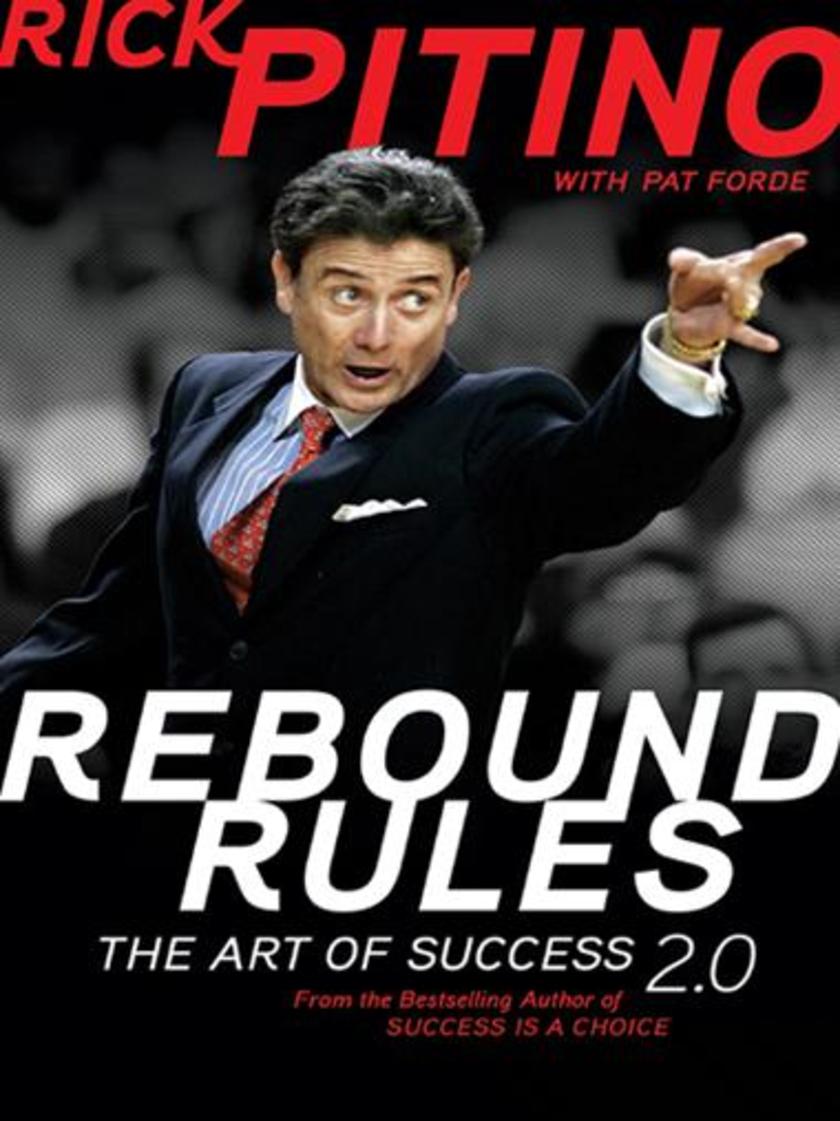
Rebound Rules
¥95.39
Rick Pitino is a basketball icon: the only coach in college history to lead three different schools to the Final Four, the winner of the 1996 NCAA championship, the owner of a sparkling career record, a bestselling author, and a lock for the College Basketball Hall of Fame. Yet Pitino's journey has not been without life-altering adversity: He's experienced profound personal and professional losses. In 2001, after three losing seasons as coach and president of the Boston Celtics, Pitino resigned, walking away from the $23 million left in his contract. And while recovering from the only breakdown in his extraordinary basketball career, Pitino who had previously suffered the devastating loss of his infant son, Daniel endured additional tragedies: His brother-in-law and best friend Billy Minardi, a trader at Cantor Fitzgerald, perished in the World Trade Center attacks of 9/11, less than a year after another brother-in-law had been fatally struck by a taxi. Pitino writes, "From that point on, my life changed forever. Nothing will ever be the same."This realization gave Pitino a new perspective. With it, the innovative leader felt the freedom to act even more dynamically than he ever had in the past. Returning to college basketball, he has rebuilt and revitalized the storied program at Louisville, guiding the Cardinals to a history-making Final Four appearance in 2005 that stamped him the only coach in history to take three schools that far. And in 2008, he rallied an injury-plagued Louisville team from a disappointing start and led it to the Elite Eight, setting the stage for greater success to come.The failures and tragedies he recounts make this book unique. More than just a recitation of what works and why, it's about how to succeed after you've failed; how to pick yourself up after being knocked down; and how to reframe yourself and see the world in a new light. This is a comeback story, a manual for overcoming life's difficulties. Pitino has experienced success as an author with his tremendously popular books Success Is a Choice and Lead to Succeed, but in Rebound Rules: The Art of Success 2.0, he's crafted a book that's more deeply personal, more inspiring, more practical, and more powerful than any he's written before.

Financial Security in Troubled Times
¥83.93
In troubled times, it is only natural to worry about our financial security. That's why now is the time to act -- to preserve your financial well-being, and that of your family, and to ensure your peace of mind.Financial expert and best-selling author Ric Edelman has written this guide to help all of us quickly safeguard our economic lives. Edelman's eight-point action plan -- actions that you can take right now -- will help you protect yourself and your family, as well as your money, your income, your job, your home, your possessions, and your business. You'll learn how to manage the powerful emotions that can cloud your financial judgment, and find the guidelines you need to make the right investment decisions now that will secure your investments today and prepare you for the future.And because it is more important than ever that we be generous in our charitable giving, you will learn the best ways to give, so you can lend support to all our neighbors who are in such dire need of our help.Financial Security in Troubled Times will help all of us face the future, knowing that our financial house is in order and that we are ready to meet the challenges ahead.
How to Talk So People Listen
¥84.16
At a time when it's harder than ever to get and keep people's attention, we could all use some help. Enter Sonya Hamlin, author of the now classic How to Talk So People Listen (1988), and one of the country's leading communication experts. In this revised and updated edition, Sonya Hamlin, arguably America's leading communication expert, shows us how to successfully capture people's attention so that they listen, understand, and are persuaded by your message especially in the plugged in, fast paced, visually driven atmosphere that is today's workplace. Whether making a presentation to a large audience or dealing one on one with a client or colleague, or communicating by Email, Hamlin teaches us that one of the keys to making people listen is to think about and respond to what motivates them namely, self interest. She then provides tools to assess others' self interest and use it to get them to listen to your message. Hamlin also explains how to capitalize on the latest visual aids we have at our disposal today. We learn to determine what information needs or lends itself to visual presentation, and how to make visuals active, so that they serve as an extension of the speaker. In How To Talk So People Listen, you'll also find practical information on how to understand your audience, how to encourage your listeners to trust you, and how to be yourself when you're on the podium.
Working Together
¥83.92
Dig deep and you will find the most compelling argument for working together: Happiness. In business there are always unique individual achievers, but pull down the veil and you'll often find someone alongside them. Michael Eisner does just that in Working Together. Using his own collaboration with Frank Wells at Disney as a launching point for examining other famously successful partnerships, Eisner offers us an intimate and deeply personal look at some of the most rewarding business partnerships, uncovering what makes them tick and offering unconventional wisdom and unexpected insights. In this essential book for businesspeople everywhere, Eisner shines a light on these startlingly long-lasting and enriching partnerships, weaving together ten separate narratives from investment gurus to entertainment impresarios, from fashion designers to big-box retailers into a larger story about the true nature of achievement in life and in business.Ten Stories, Ten Magical Partnerships:Michael D. Eisner and Frank Wells (Disney)Warren Buffett and Charlie Munger (Berkshire Hathaway)Bill and Melinda Gates (The Gates Foundation)Brian Grazer and Ron Howard (Imagine Entertainment)Valentino and Giancarlo Giammetti (Valentino)Ian Schrager and Steve Rubell (Studio 54)Arthur Blank and Bernie Marcus (The Home Depot)Susan Feniger and Mary Sue Milliken (restaurateurs)Joe Torre and Don Zimmer (New York Yankees)John Angelo and Michael Gordon (finance) Collectively, the stories you're about to read form a blueprint for building partnerships that matter, that last, and that allow each of us to do our very best work.

The Ecology of Commerce
¥105.17
The world has changed in the seventeen years since the controversial initial publication of Paul Hawken's Ecology of Commerce, a stirring treatise about the perceived antagonism between ecology and business. Yet Hawken's impassioned argument that business both causes the most egregious abuses of the environment and, crucially, holds the most potential for solving our sustainability problems is more relevant and resonant than ever.Containing updated and revised material for a new audience, The Ecology of Commerce presents a compelling vision of the restorative (rather than destructive) economy we must create, centered on eight imperatives: Reduce energy carbon emissions 80 percent by 2030 and total natural resource usage 80 percent by 2050. Provide secure, stable, and meaningful employment to people everywhere. Be self-organizing rather than regulated or morally mandated. Honor market principles. Restore habitats, ecosystems, and societies to their optimum. Rely on current income. Be fun and engaging, and strive for an aesthetic outcome.
Leadership and the One Minute Manager Updated Ed
¥132.87
Newly revised and updated, Leadership and the One Minute Manager teaches leaders the world-renowned method of developing self-reliance in those they manage: Situational Leadership II.In Leadership and the One Minute Manager, you'll learn why adapting leadership styles to team members based on their key goals and tasks is so important and why knowing when to delegate, support, or direct is critical. By consistently using Situational Leadership II's proven model and powerful techniques, leaders can develop and retain competent, motivated, confident employees. This remarkable, easy-to-follow book is a priceless guide to personalized leadership that elicits the best performance from your team and the best bottom line for any business.
Team Genius
¥156.69
A groundbreaking book that sheds new light on the vital importance of teams as the fundamental unit of organization and competition in the global economy. Teams—we depend on them for both our professional success and our personal happiness. But isn't it odd how little scrutiny we give themThe teams that make up our lives are created mostly by luck, happenstance, or circumstance—but rarely by design. In trivial matters—say, a bowling team, the leadership of a neighborhood group, or a holiday party committee—success by serendipity is already risky enough. But when it comes to actions by fast-moving start-ups, major corporations, nonprofit institutions, and governments, leaving things to chance can be downright dangerous. Offering vivid reports of the latest scientific research, compelling case studies, and great storytelling, Team Genius shows managers and executives that the planning, design, and management of great teams no longer have to be a black art. It explores solutions to essential questions that could spell the difference between success and obsolescence. Do you know how to reorganize your subpar teams to turn them into top performersCan you identify which of the top-performing teams in your company are reaching the end of their life spanDo you have the courage to shut them downDo you know how to create a replacement team that will be just as effective—without losing time or damaging moraleAnd, most important, are your teams the right size for the jobThroughout, Rich Karlgaard and Michael S. Malone share insights and real-life examples gleaned from their careers as journalists, analysts, investors, and globetrotting entrepreneurs, meeting successful teams and team leaders to reveal some "new truths": The right team size is usually one fewer person than what managers think they need. The greatest question facing good teams is not how to succeed, but how to die. Good "chemistry" often makes for the least effective teams. Cognitive diversity yields the highest performance gains—but only if you understand what it is. How to find the "bliss point" in team intimacy—and become three times more productive. How to identify destructive team members before they do harm. Why small teams are 40 percent more likely to create a successful breakthrough than a solo genius is. Why groups of 7 (± 2), 150, and 1,500 are magic sizes for teams. Eye-opening, grounded, and essential, Team Genius is the next big idea to revolutionize business.

Outside Innovation
¥151.30
How dynamic businesses of every size can unleash innovation by inviting customers to codesign what they do and make. Reading line: The 8 Roles Customers Play in Trend Setting Companies The refrain is familiar for Patricia Seybold in her journeys as a top technology and management strategist: "I want our company to be acknowledged as the most admired and most customer valued in our industry and to be recognized as the company that has forever changed the way things are done." "How can we become the Google of banking?" "How can we be the eBay of software?" "I want to be the JetBlue of manufacturing." "How can we become the undisputed trend setter in our industry with a competitive bar no one can topple?" In Outside Innovation, bestselling author Seybold taps her close relationship with dozens of high innovation companies to reveal the untold strategy behind the trendsetters and the next HUGE leap forward in customer strategy. Seybold shows that companies that are dominating their category and staying ahead of the pack are collaborating at every level of their business with their customers.

Be the Change
¥168.14
Meet the men and women whose deeply personal philanthropy is dramatically changing the way we think about giving There are 8.6 million millionaires in the United States, and these numbers are set to rise in what will be the biggest intergenerational wealth transfer in history. As $41 trillion dollars (or over three times the national GDP) moves from the World War II generation to their baby- boomer children over the next couple of decades, it will become imperative that the beneficiaries of this wealth—even those not joining the ranks of the superrich—begin thinking about philanthropy, perhaps for the first time in their adult lives. Here they will find the personal journeys of the most successful givers of their generation. This new generation of wealth has already begun to change the face of philanthropy and to reshape the entire nonprofit sector. In Be the Change, bestselling author Lisa Endlich presents eleven compelling profiles of this twenty-first century generosity. Through candid, revealing, and often surprising interviews, readers will venture into the hearts and minds of the top names in philanthropy today—men and women who have chosen to use their immense riches and influence to meaningfully improve the lives of others in the most dramatic ways. These intimate conversations include in-depth interviews with: ?Melinda Gates, one of the driving forces behind the largest philanthropic organization the world has ever seen; ?Bob and Suzanne Wright, he's the former vice chairman of GE and longtime head of NBC Universal and their Autism Speaks has brought awareness of autism onto the national and international stage; ?Paul Tudor Jones, founder of Tudor Investments and the Robin Hood Foundation; ?Peter Bloom, founding chairman of the groundbreaking DonorsChoose.org. From Connie Duckworth, a former Goldman Sachs partner, who brings steady employment to Afghani women and education to them and their children, to Johann Olav Koss, an Olympic gold medalist who now strives to give children in the direst circumstances the chance to play, these philanthropists demonstrate that giving doesn't begin or end with a signed check. They grant Endlich exclusive access to the stories of how they learned from early failures and developed a personal, sustainable way of giving, and they also share the catalyzing moment when they saw a problem so heartbreaking they simply could not turn away. In doing so, these new philanthropists offer valuable lessons—ones that will inspire readers to start giving, keep giving, and become the change they want to see in the world.

Minority Rules
¥128.85
In a perfect corporate world, intellect, hard work, and professionalism would be recognized and rewarded regardless of the color of your skin. Kenneth Arroyo Roldan is here to tell you that nobody works in a perfect corporate world. Stellar performance alone will not determine corporate advancement—minorities need to learn and follow the rules of corporate politics. As one African American employee who started as a systems analyst at Xerox observed, "The reality was that despite your ability, if you weren't playing politics correctly, you would be derailed." In Minority Rules, Roldan gives a dose of tough love to minorities in corporate America while educating their majority counterparts. As the CEO of the top U.S. head-hunting firm specializing in placing minorities in fast track jobs, Roldan watched as minority superstars hired at Fortune 500 companies bailed out, disappointed and rejected after only a few years. The problem, Roldan says, is that minorities are not adequately prepared psychologically or culturally for corporate careers. In a six-step plan, he explains how to surmount the obstacles, play corporate hardball, and succeed as a minority in the workplace. Corporate culture is unforgiving to minorities, but it is possible to rise to the top with Roldan as your guide. With refreshing candor, Roldan prepares minorities both psychologically and culturally for corporate careers. Forget about using affirmative action and discrimination lawsuits to level the playing field. The only way to win is to know the landscape and master the rules of the game—from finding the right mentor to learning the art of networking to focusing on self-reliance, patience, and most of all, performance. Roldan shows minorities how to climb to the top jobs—and keep them.
The WSJ Guide to the 50 Economic Indicators That Really Matter
¥88.56
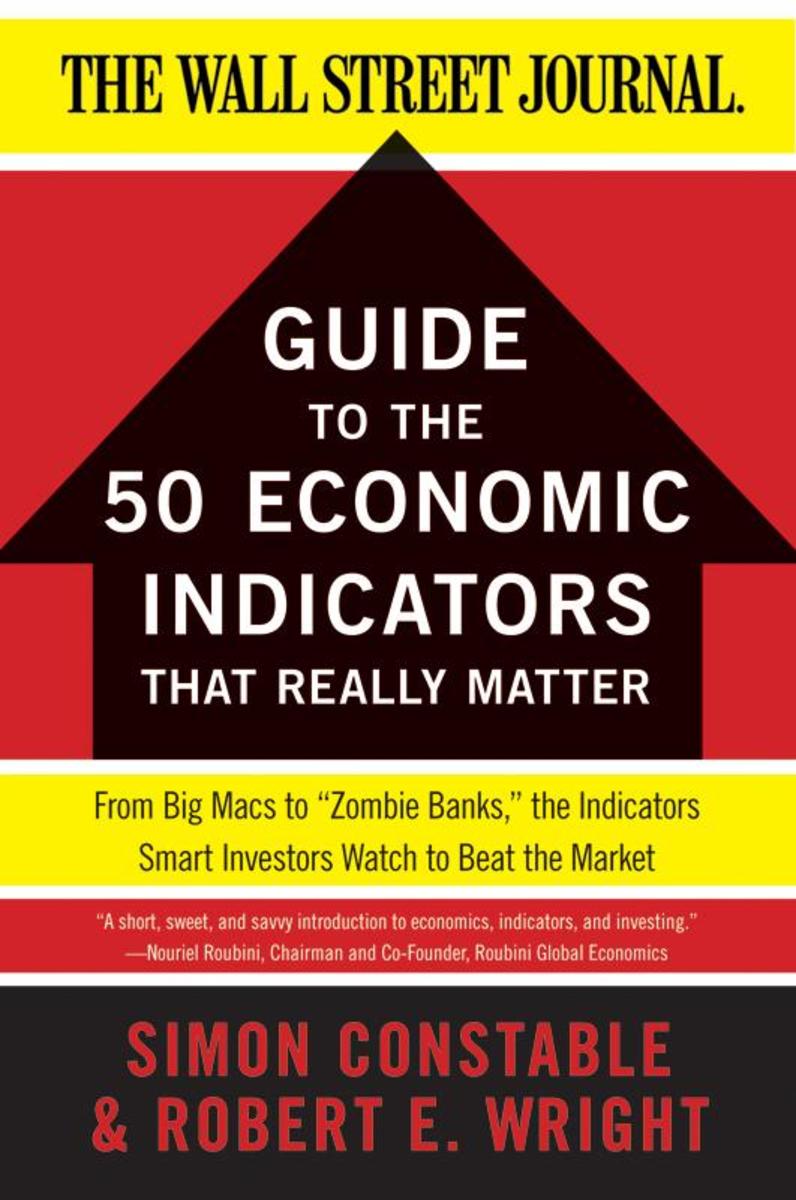
An entertaining, must-have guide to the indicators most investors aren't following but should be!To make the best possible investment decisions, savvy investors know that they should pay close attention to economic indicators. But while most are looking at conventional barometers like unemployment rates and housing starts, the smartest investors are following the often ignored, sometimes curious, but always interesting indicators that offer a true sense of where the economy is and where it's going. They provide the vital information needed to beat the market. In The Wall Street Journal Guide to the 50 Economic Indicators That Really Matter, Simon Constable and Robert E. Wright offer investors powerful new tools to guide them through the markets. Whether it's the VIX index (which tracks the level of anxiety among investors) or the Vixen index (which tracks the number of attractive waitresses in your hometown), this essential guide includes in-depth analyses of 50 valuable economic indicators, as well as what to watch for, what to do when movement happens, and the risk level involved in taking action. This must-have guide entertains and enlightens while offering essential advice on navigating the global economic climate.

Flawless Execution
¥96.28
Your business can take a lesson from the American military's fighter pilots. At Mach 2, the instrument panel of an F-15 is screaming out information, the horizon is a blur, the wingman is occupied, the jet is hanging on the edge -- and yet fighter pilots routinely handle the stress. It's not much different in today's unforgiving business world. One slipup and your company is bankrupt before your employees know what hit them.What works on the squadron level for F-15 pilots will also work for your marketing team, sales force, or research and development group. By analyzing the work environment and attacking its centers of gravity in parallel, you'll begin to utilize the Plan-Brief-Execute-Debrief-Win cycle that will rapidly impact your business's future success. U.S. fighter squadrons have been using this program for nearly fifty years to reduce their mistake rate, cut casualties and equipment losses, and rack up an envious victory record. Now, with Flawless Execution, your business can too.

Get Back in the Box
¥84.28
Douglas Rushkoff was one of the first social commentators to identify the new culture around the internet. He has spent nearly a decade advising companies on the ways they can re-orient their businesses to the transformations the internet has caused. Through his speaking and consulting, Rushkoff has discovered an important and unrecognized shift in American business. Too many companies are panicked and operating in survival mode when the worst of the crisis has already passed. Likening the internet transformation to the intellectual and technological ferment of the Enlightment, Rushkoff suggests we have a remarkable opportunity to re-integrate our new perspective with the work we actually do. Instead of running around trying to "think out of the box," Rushkoff demonstrates, now is the time to "get back in the box" and improve the way we do our jobs, run our operations and drive innovation from the ground up. Combining stories gleaned from his consulting with a thrilling tour of history's dramatic moments and clever readings of cultural shift we've just experienced, Rushkoff offers a compelling vision of the simple and effective ways businesses can re-invigorate themselves.

Career Management (Collins Business Secrets)
¥51.50
The career management secrets that experts and top professionals use. Get results fast with this quick, easy guide to the fundamentals of Career Management. Includes how to: ? Assess your career goals ? Create and follow an exciting career plan ? Make yourself visible for your ideal job ? Deliver the perfect interview ? Get yourself noticed and promoted, or go it alone

Finance Basics (Collins Business Secrets)
¥22.76
The finance basics that experts and top professionals understand. Get results fast with this quick, easy guide to the fundamentals of Finance. Includes how to: ? Analyse a business from its financial reports ? Understand a Profit and Loss account ? Make sense of accounting jargon ? Build a financially sound business plan ? Deal with revenue, profit and cashflow


