


 购物车
购物车 个人中心
个人中心
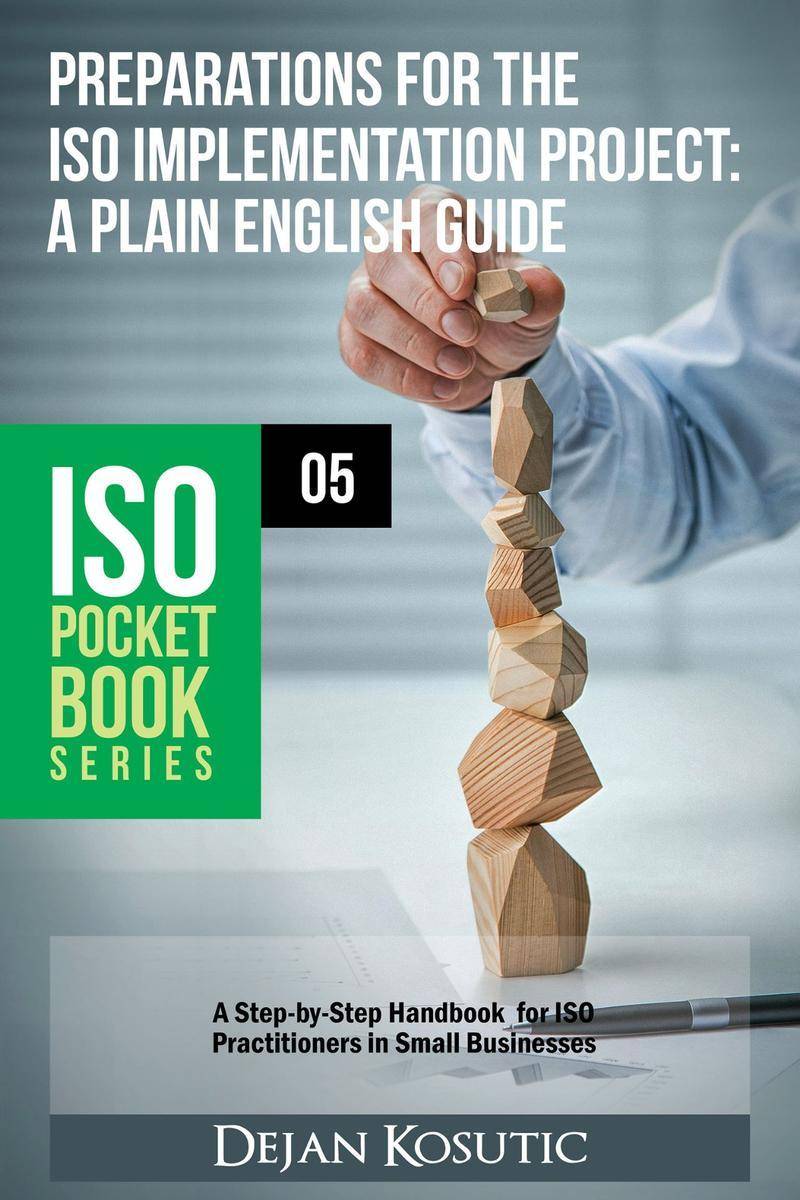
Preparations for the ISO Implementation Project – A Plain English Guide
¥81.67
“There are many misconceptions about ISO standards that very often do not allow the standard to become a serious candidate for consideration, let alone for the actual implementation.” In this book, Dejan Kosutic, author and experienced ISO consultant, is giving away his practical know-how on preparing for ISO 9001, ISO 14001, ISO 27001, ISO 22301, ISO 20000, ISO 22000, OHSAS 18001, ISO 13485, AS9100, and IATF 16949 implementation. No matter if you are new or experienced in the field, this book gives you everything you will ever need to learn about preparations for ISO implementation projects, and how to avoid some costly mistakes in the process. The first step that is crucial to any ISO implementation project is to convince your top management to implement the ISO standard, and in order to do so, you have to speak the language they want to hear. As Kosutic says: “What management wants to hear are profit, market share, client satisfaction, cost cutting, business strategy, and business risks. And you can't blame them – after all, this is what their job is all about.” Starting from that step, Preparations for the ISO Implementation Project: A Plain English Guide will cover other important steps your organization must take in order to be completely prepared for the implementation of any ISO standard. Among other important things, you will learn how to choose a consultant, how to set up the project management structure, and what tools and templates can help you in the implementation project. Written in easy-to-understand language, this book is written for people who are going for an ISO implementation for the first time and need clear guidance on what to do before the project starts. Whether you’re an experienced practitioner or new to the field, it’s the only book you’ll ever need on the subject.

Inside Intel (Text Only)
¥69.26
Tim Jackson is the author of Turning Japanese and a biography of Richard Branson and Virgin, Virgin King. He is currently working on a book about the Sainsbury family.

Women Managing for the Millennium
¥61.51
Sally Garratt has been an independent consultant since 1978 and is a prominent member of the Institute of Personnel Management. She has worked on numerous development programmes for senior professional and executive women. She is the author of Manage Your Time, which has sold over 32,000 copies in paperback.
The Modern Day Business Man: Success Without Sacrifice
¥81.50
I Believe as a Man You Are Put on This Earth with a Huge Mission!?This book exists to help equip, motivate, and teach you how to get your unique message out in today’s modern world.?The Modern Day Business Man?is for the leaders of tomorrow who want success without sacrifice. It is for men who want to have it all – vibrant health, thriving relationships, and financial freedom – while upholding a standard of conduct and integrity that inspires everyone around them. ??I went from being sixty pounds overweight, broke, and with zero influence…to creating a seven-figure business, building The Billion Dollar Brotherhood into a community thousands of men strong, and being named a Top 30 Under 30 Influencer – all by my twenty-sixth birthday.?After overcoming the agony of obesity, depression, poverty, and failing out of school, I made a decision to turn my life around. Now it is my mission to help men achieve success without sacrifice in their health, wealth and relationships. Entrepreneurs have always been the catalysts for change in society, and now more than ever, they are role models too. This book is a deep dive into the timeless principles of entrepreneurship that I have learned after investing hundreds of thousands of dollars, interviewing some of the most successful people in the world, and having a Navy Seal for a mentor over the last decade.?The Modern Day Business Man?will teach you how to:?* Get honest with yourself and take ownership of your life, so that you can create the future you really want* Rapidly build real relationships with influential people who will accelerate your journey to success* Prioritize your health and fitness so you can crush it with peak levels of performance and mental clarity in business* Build a business and brand with your spouse that deepens your bonds of trust and brings you closerDo you feel called to play at a bigger level? Are you ready to claim your destiny and live life at the highest level??Then get ready to achieve success without sacrifice as a Modern Day Business Man!
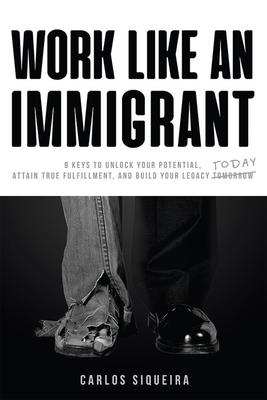
Work Like An Immigrant
¥163.09
Work Like an Immigrant: 9 Keys to Unlock Your Potential, Attain True Fulfillment, and Build Your Legacy Today is a memoir-meets-business book that offers you inspiration, hard-won guidance, and soul-searching steps and activities to build a highly fulfilling lifestyle—no matter where you come from, what career path you are on or what adversity you may have encountered in the past. Part 1: The Story traces the author’s journey from selling bread and dodging bullets on the streets of Brazil to earning millions selling cable TV and Internet services door to door, as well as building and managing record-breaking sales teams. It later explores the family crisis that inspired him to become a high-performance consultant, coach, and speaker, leading others to achieve levels of happiness and fulfillment they had never imagined possible. Part 2: Nine Steps to Health, Wealth, Happiness and Fulfillment reveals the nine-step program to dreaming big and living your purpose by taking control of your thoughts and emotions and engaging in continuous joyful execution. Here, you discover how to harness the power of your imagination, unlock hidden resources, and overcome both internal and external limitations. In addition, you gain mastery of a variety of techniques inspired by numerous self-improvement visionaries, from Napoleon Hill and Joseph Murphy to Zig Ziglar and Tony Robbins. Part 3: Principles and Practices presents the nine principles for achieving prosperity, along with twenty-eight practical techniques for envisioning success, defining your mission, transforming negative thoughts to positive action, teaming up with a mentor, shifting focus from problems to solutions, and much more.

?tk?zés: Rossz hely. Rossz id?. Nagy lecke.
¥68.02
Kézik?nyv azoknak, akik érdekl?dnek a baromfitartás iránt és egyetlen helyen szeretnének utánanézni felmerül? kérdéseiknek. ? milyen fajtát válasszak? ? mi a jobb: a tenyésztés vagy a szaporítás? ? hogyan készítsem el házilag az olcsóbb és táplálóbb takarmányt? ? mekkora helyen érdemes tartani a baromfikat és hogyan alakítsam ki az él?helyüket? ? milyen el?feltételeket kell megteremtenem a keltetéshez és milyen keltet?gépet használjak? ? hogyan el?zhetem meg a legfontosabb betegségeket? ? melyek a dísztyúktenyésztés legfontosabb feltételei és hogyan készülhet fel sikeresen a versenyekre? A k?tet kuriózuma az ?sszesen 60 baromfifajtát bemutató részletes ismertet?.

Секреты домашнего копчения (Sekrety domashnego kopchenija)
¥17.74
Ця книжка стане пусковим механ?змом для тих, хто прагне мислити та створювати нове, а не коп?ювати в?дпрацьован? шаблони. Автор перекону?: роблячи те, що ми вже зна?мо, ми руха?мо св?т в?д 1 до n, додаючи б?льше чогось вже знаного; проте щоразу, коли ми створю?мо щось нове, ми ступа?мо в?д 0 до 1. Т?ль покроково опису? д??в?сть експоненц?ального закону у св?т? стартап?в, та?мниц? роботи ?з венчурним кап?талом, а також ?нновац?йн? ?де? майбутнього, як? зм?нять життя людей до невп?знаваност?...

Живая еда от 1000 болезней. Рецепты, которые лечат позвоночник
¥17.74
У книжц? футуролога з Массачусетського технолог?чного ?нституту Март?на Форда йдеться про штучний ?нтелект ? роботехн?ку, чи? можливост? вже перевершують всяку уяву, руйнують стереотипи ? конкурують з людським мозком. Автор скрупульозно досл?джу? технолог?чн? ?нновац?? ? моделю? недалеке майбутн?, коли машини зам?нять людей ? заживуть сво?м життям. Ця книжка похитне в?ру читач?в у абсолютну доц?льн?сть роботизац?? ? спонука? задуматися над майбутн?м людства.

Золотые советы хозяюшки (Zolotye sovety hozjajushki)
¥18.07
Щоб справити враження промовою достатньо 18 хвилин — впевнений Кр?с Андерсон. Автор д?литься прийомами вдалого виступу: як сформулювати зм?ст ? ефективно донести свою думку до аудитор??. Окр?м того, це видання допоможе подолати страх публ?чних виступ?в. Андерсон упевнений: якщо ви за об?дом можете под?литися з друзями якоюсь ?стор??ю, то й публ?чну промову подужа?те. ??Ця книга — ун?версальна ?нструкц?я з ефективно? комун?кац??, яку можна застосувати як ? при д?лових переговорах, так ? при сп?лкування в повсякденному житт?.

?j vitaminforradalom
¥71.69
Mi az üzleti tervük Kész képtelenség! ... Ez a knyv az izraeli technológiai sikerek színes trténeteit gyjti ssze. Bámulatos olvasmány” – WASHINGTON POST Hogyan képes Izrael – ez az alig 7,1 millió lakosú ország, amely nem rendelkezik természeti kincsekkel, ellenségek veszik krül minden oldalról és folyamatosan hadiállapotban áll – tbb start-up céget elindítani, mint Japán, India, Dél-Korea, Kanada és Nagy-Britannia A szerzk, Dan Senor és Saul Singer, geopolitikai szakértk lévén a legnevesebb izraeli feltalálók és újítók példájából merítve mutatják be eme siker titkát, nevezetesen azt, hogyan tvzi Izrael egyedül- álló módon az innovációt és a vállalkozói kedvet az ellenséges krnyezetben. Más országokban az illemszabályokat és a precíz tervezést hangsúlyozzák, Izraelben azonban a hücpe, vagyis a merészség a legfontosabb. A szerzk azt is megmutatják, miként járult hozzá a sikerhez Izraelnek a bevándorlással, a K + F-fel és a sorkatonasággal kapcsolatos politikája. Az amerikai NASDAQ-on ma tbb izraeli cég van bejegyezve, mint amennyi dél-koreiai, japán, szingapúri, kínai, indiai és európai cég együttvéve. Ha valamikor, akkor most érdemes tanulmányozni ezt a figyelemre méltó és rugalmas országot, mert olyan lenygz és meglep tanulságokra bukkanhatunk, amelyek más nemzetek, üzletemberek és szervezetek számára is hasznosak lehetnek - mindenkinek, akit érdekel a gazdasági siker titka.

Backpack Abroad Now!: Travel overseas—even if you're broke
¥34.79
Like icebergs, some stories hold their mysteries submerged beneath the surface. Poet and novelist Mario Milosevic conjures a cornucopia of such tales, presenting 2,002 opening sentences paired with 2,002 closing sentences, bridged by a brief universal middle section that either muddies the waters or makes everything as clear as ice. A mad storyteller’s fever dream, Mostly Invisible doubles Scheherazade’s iconic 1,001 nights and pours forth a kaleidoscopic cavalcade of thrills, romance, mystery, adventure, fantasy, and intrigue. Echoing much of the mystery of life, the bulk of these stories lurk hidden from view, but come alive in the imaginations of readers willing to take a journey to the outer edges of storytelling.

Predictably Irrational, Revised and Expanded Edition
¥94.10
How do we think about moneyWhat caused bankers to lose sight of the economyWhat caused individuals to take on mortgages that were not within their meansWhat irrational forces guided our decisionsAnd how can we recover from an economic crisisIn this revised and expanded edition of the New York Times and Wall Street Journal bestseller Predictably Irrational , Duke University's behavioral economist Dan Ariely explores the hidden forces that shape our decisions, including some of the causes responsible for the current economic crisis. Bringing a much-needed dose of sophisticated psychological study to the realm of public policy, Ariely offers his own insights into the irrationalities of everyday life, the decisions that led us to the financial meltdown of 2008, and the general ways we get ourselves into trouble. Blending common experiences and clever experiments with groundbreaking analysis, Ariely demonstrates how expectations, emotions, social norms, and other invisible, seemingly illogical forces skew our reasoning abilities. As he explains, our reliance on standard economic theory to design personal, national, and global policies may, in fact, be dangerous. The mistakes that we make as individuals and institutions are not random, and they can aggregate in the market with devastating results. In light of our current economic crisis, the consequences of these systematic and predictable mistakes have never been clearer. Packed with new studies and thought-provoking responses to readers' questions and comments, this revised and expanded edition of Predictably Irrational will change the way we interact with the world from the small decisions we make in our own lives to the individual and collective choices that shape our economy.

The Cure
¥94.10
The riveting true story of John and Aileen Crowley's race to find a cure for Pompe disease that inspired the movie Extraordinary Measures With three beautiful children, a new house, and financial security, John and Aileen Crowley were on top of the world until their two youngest children, fifteen-month-old Megan and five-month-old Patrick, were diagnosed with Pompe disease and given only months to live. Refusing to accept a death sentence, John quit his financial consultant job and invested his life savings in a biotechnology start-up to research the disease and find a cure. Battling scientific setbacks, conflict of interest accusations, and business troubles, John and Aileen would be tested to their limits as they valiantly fought, and succeeded, in finding revolutionary new treatment for the disease offering hope to Megan, Patrick, and the many children and families affected by Pompe disease around the world. The inspiration for the captivating film Extraordinary Measures , starring Brendan Fraser and Harrison Ford, The Cure is a remarkable true story of cutting-edge science, business acumen and daring, and one family's indomitable spirit.
The Practice of Management
¥94.10
A classic since its publication in 1954, The Practice of Management was the first book to look at management as a whole and being a manager as a separate responsibility. The Practice of Management created the discipline of modern management practices. Readable, fundamental, and basic, it remains an essential book for students, aspiring managers, and seasoned professionals.

The Upside of Irrationality
¥94.10
The provocative follow-up to the New York Times bestseller Predictably Irrational Why can large bonuses make CEOs less productiveHow can confusing directions actually help usWhy is revenge so important to usWhy is there such a big difference between what we think will make us happy and what really makes us happyIn his groundbreaking book Predictably Irrational , social scientist Dan Ariely revealed the multiple biases that lead us into making unwise decisions. Now, in The Upside of Irrationality , he exposes the surprising negative and positive effects irrationality can have on our lives. Focusing on our behaviors at work and in relationships, he offers new insights and eye-opening truths about what really motivates us on the job, how one unwise action can become a long-term habit, how we learn to love the ones we're with, and more. Drawing on the same experimental methods that made Predictably Irrational one of the most talked-about bestsellers of the past few years, Ariely uses data from his own original and entertaining experiments to draw arresting conclusions about how and why we behave the way we do. From our office attitudes, to our romantic relationships, to our search for purpose in life, Ariely explains how to break through our negative patterns of thought and behavior to make better decisions. The Upside of Irrationality will change the way we see ourselves at work and at home and cast our irrational behaviors in a more nuanced light.

How to Buy, Sell, and Profit on eBay
¥83.03
A lively insider's guide to starting a successful small business selling items old and new on eBay, written with personal anecdotes, well kept secrets, and insider tips by Adam Ginsberg, eBay's most successful private salesperson. This is the insider's guide to making money on eBay. Adam Ginsberg is the most successful seller on eBay, moving around a million dollars' worth of merchandise every month. Not only will he impart his personal secrets on how to sell on eBay learned through years of experience and his tips on expanding your small business using eBay as a global market, but he'll also give fun side notes and anecdotes, keeping the book lively and making it a fun and interesting read. This book will be a must have for all current and aspiring eBay sellers, all small business owners, and anyone who wants to learn how to start a million dollar company.
Escape Velocity
¥157.15
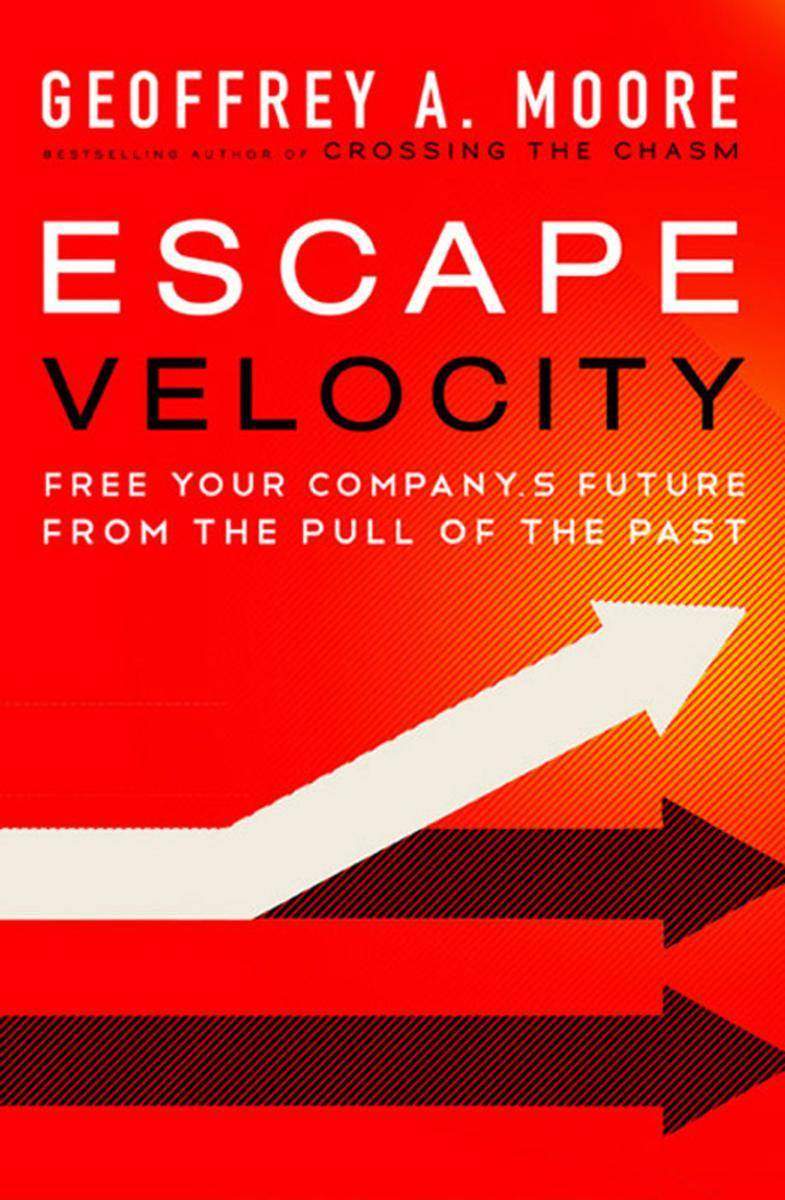
From the world leading high-tech strategist comes the definitive road map to help established companies create next-generation growth. Geoffrey Moore now-classic Crossing the Chasm became a must-read book by presenting an innovative framework to address the make-or-break obstacle facing all high-tech companies: how to gain market share from early adopters and from mainstream consumers. Based on twenty years’ experience advising the top leaders of many of the world most successful enterprises, Moore Escape Velocity offers a pragmatic plan to engage the most critical challenge that established enterprises face in the twenty-first-century economy: how to move beyond past success and drive next-generation growth from new lines of business. As he worked with senior management teams, Moore repeatedly found that executives were trapped by short-term performance-based compensation schemes. The result was critical decision-makers overweighting their legacy commitments, an embarrassingly low success rate in new-product launches, and a widespread failure to sustain any kind of next-generation business at scale. In Escape Velocity , Moore presents a cogent strategy for generating future growth within an established enterprise. Organized around a hierarchy of powers category power, company power, market power, offer power, and execution power this insightful work shows how each level of power can be orchestrated to achieve overall success. Moore explains how to use mergers and acquisitions as well as organic innovation to systematically migrate an enterprise portfolio out of lower-growth and into higher-growth categories; how to reallocate resources across an enterprise in deliberately asymmetrical ways to create a powerful and sustainable foundation for a long-term competitive advantage; how to leverage target-market initiatives as accelerants to growth and as stepping-stones to broad overall category success; how to create unmatchable offerings by being swift to neutralize competitors’ innovations and laser-focused on driving in-house innovations to make a business impervious to competitors; how to fundamentally change the execution cadence of an organization, pushing change from innovation to broad deployment, creating an irreversible tipping point along the way. Drawing from thousands of hours spent face-to-face with CEOs and their teams, Moore presents case examples and best practices. While his experience is deeply rooted in the high-tech sector, his models and techniques apply well beyond this arena, including to the public sector. At a time when the world is looking to established enterprises for growth and stability, Moore analysis is penetrating and his pre*ions are right on the mark. Escape Velocity gives executives and their teams a practical way forward to take advantage of the opportunities amid industry and economic disruptions.
The Asylum
¥88.56
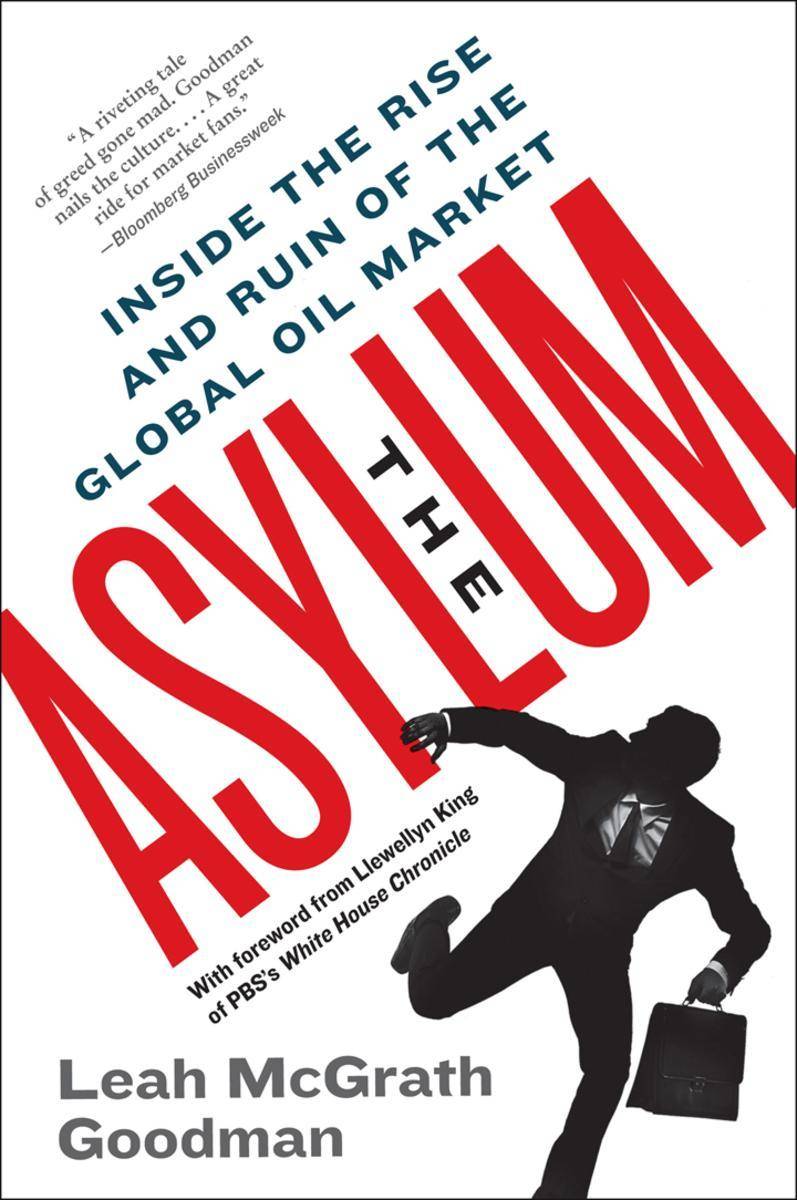
They were a band of outsiders unable to get jobs with New York's gilded financial establishment. They would go on to corner the world's multitrillion-dollar oil market, reaping unimaginable riches while bringing the economy to its knees. Meet the self-anointed kings of the New York Mercantile Exchange. In some ways, they are everything you would expect them to be: a secretive, members-only club of men and women who live lavish lifestyles; cavort with politicians, strippers, and celebrities; and blissfully jacked up oil prices to nearly $150 a barrel while profiting off the misery of the working class. In other ways, they are nothing you can imagine: many come from working-class families themselves. The progeny of Jewish, Irish, and Italian immigrants who escaped war-torn Europe, they take pride in flagrantly spurning Wall Street. Under the thumb of an all-powerful international oil cartel, the energy market had long eluded the grasp of America's hungry capitalists. Neither the oil royalty of Houston nor the titans of Wall Street had ever succeeded in fully wresting away control. But facing extinction, the rough-and-tumble traders of Nymex led by the reluctant son of a producemerchant went after this Goliath and won, creating the world's first free oil market and minting billions in the process. Their stunning journey from poverty to prosperity belies the brutal and violent history that is their legacy. For the first time, The Asylum unmasks the oil market's self-described "inmates" in all their un*ed and dysfunctional glory: the happily married father from Long Island whose lust for money and power was exceeded only by his taste for cruel pranks; the Italian kung fu fighting gasoline trader whose ferocity in the trading pits earned him countless millions; the cheerful Nazi hunter who traded quietly by day and ambushed Nazi sympathizers by night; and the Irish-born femme fatale who outsmarted all but one of the exchange's chairmen the Hungarian emigre who, try as he might, could do nothing to rein in the oil market's unruly inhabitants. From the treacherous boardroom schemes to the hookers and blow of the trading pits; from the repeat terrorist attacks and FBI stings to the grand alliances and outrageous fortunes that brought the global economy to the brink, The Asylum ventures deep into the belly of the beast, revealing how raw ambition and the endless quest for wealth can change the very nature of both man and market. Showcasing seven years of research and hundreds of hours of interviews, Leah McGrath Goodman reveals what really happened behind the scenes as oil prices topped out and what choice the traders ultimately made when forced to choose between their longtime brotherhood and their precious oil monopoly.

Think BIG and Kick Ass in Business and Life
¥94.10
Donald J. Trump is an icon: the very definition of the American success story. The star of The Apprentice and developer of some of the planet's most prestigious real estate, he's been on the bottom and risen to become one of the world's wealthiest men. Bill Zanker started The Learning Annex with $5,000 and grew it into a $5 million a year company. That was before he met Donald Trump. Thirty months later, after Zanker learned to think BIG himself, The Learning Annex is generating over $100 million a year in sales and still growing. Together, they're living examples of how thinking BIG and knowing when to back up your opinions aggressively regardless of what your critics or opponents might say can help you maximize your personal and professional achievements. For the first time ever, you too can learn Trump's secrets to thinking BIG and kicking ass! Learn: Momentum: the Big Mo. How to get it and how to get it back. Revenge: how and when to get it (and why it's so sweet). "I love you, now sign this!" Why contracts in business and personal life are so important. Real-life stories from people who've applied the think BIG formula in their own lives. These strategies are proven and attested to by those who've learned to think BIG from Donald Trump and found success in their own lives. Bill Zanker used Donald's strategies to grow the revenues of The Learning Annex twenty times in under three years. Both of them have been down and out, and know what it's like to feel the whole world's against you and both have risen to dizzying heights of success by thinking BIG and kicking ass! It is an attitude that can be easily learned.
The 22 Immutable Laws of Marketing
¥94.10
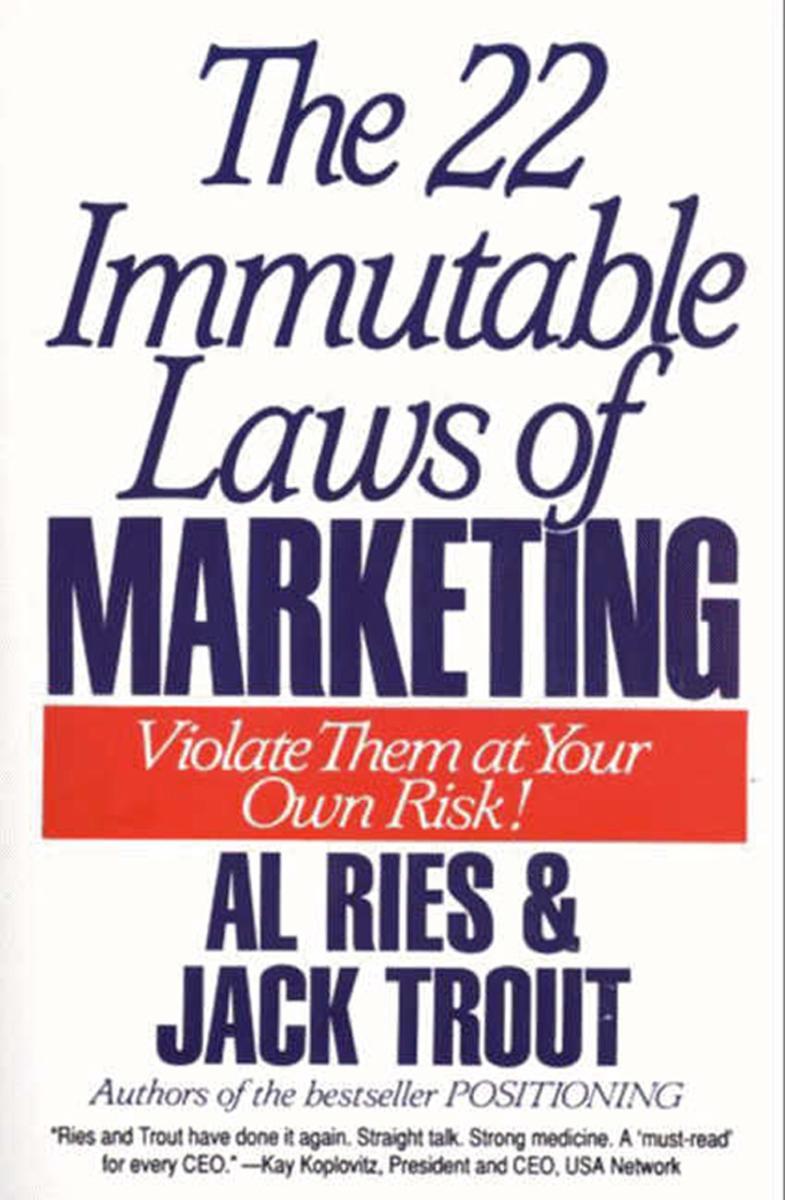
Two world-renowned marketing consultants and bestselling authors present the definitive rules of marketing.
The Daily Drucker
¥110.71
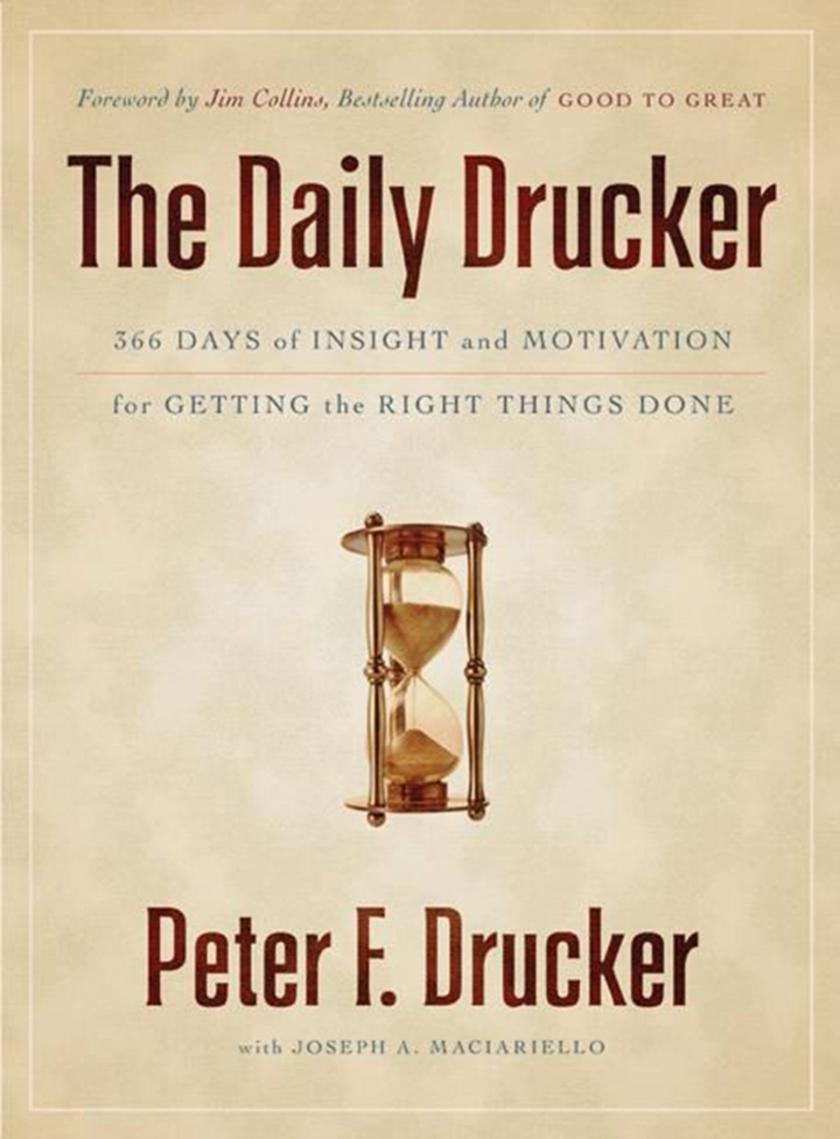
Revered management thinker Peter F. Drucker is our trusted guide in this thoughtful, day-by-day companion that offers his penetrating and practical wisdom. Amid the multiple pressures of our daily work lives, The Daily Drucker provides the inspiration and advice to meet the many challenges we face. With his trademark clarity, vision, and humanity, Drucker sets out his ideas on a broad swath of key topics, from time management, to innovation, to outsourcing, providing useful insights for each day of the year. These 366 daily readings have been harvested from Drucker's lifetime of work. At the bottom of each page, the reader will find an action point that spells out exactly how to put Drucker's ideas into practice. It is as if the wisest and most action-oriented management consultant in the world is in the room, offering his timeless gems of advice. The Daily Drucker is for anyone who seeks to understand and put to use Drucker's powerful words and ideas.


