


 购物车
购物车 个人中心
个人中心
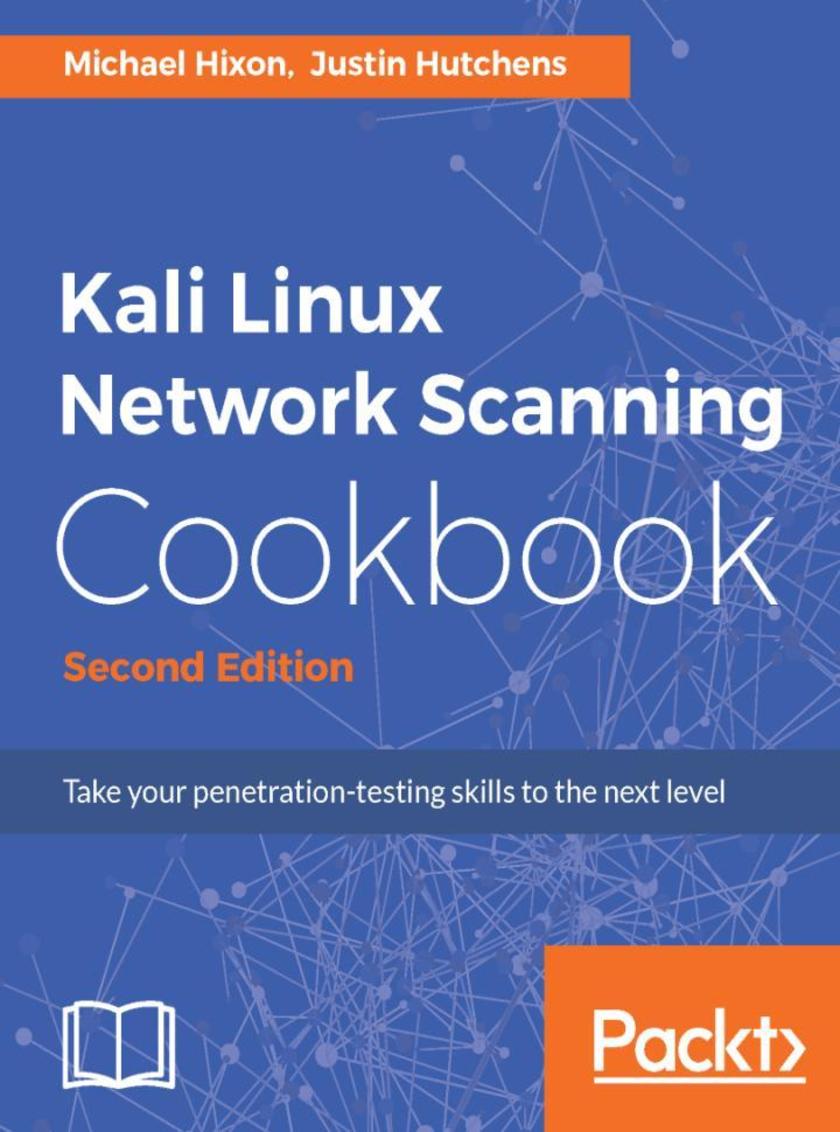
Kali Linux Network Scanning Cookbook - Second Edition
¥90.46
Over 100 practical recipes that leverage custom *s and integrated tools in Kali Linux to help you effectively master network scanning About This Book ? Learn the fundamentals behind commonly used scanning techniques ? Deploy powerful scanning tools that are integrated into the Kali Linux testing platform ? The practical recipes will help you automate menial tasks and build your own * library Who This Book Is For This book is for information security professionals and casual security enthusiasts alike. It provides foundational principles if you’re a novice, but will also introduce *ing techniques and in-depth analysis if you’re more advanced. Whether you are brand new to Kali Linux or a seasoned veteran, this book will help you both understand and ultimately master many of the most powerful and useful scanning techniques in the industry. It is assumed that you have some basic security testing experience. What You Will Learn ? Develop a network-testing environment to test scanning tools and techniques ? Understand the principles of network-scanning tools by building *s and tools ? Identify distinct vulnerabilities in web apps and remote services and learn how they are exploited ? Perform comprehensive scans to identify listening on TCP and UDP sockets ? Get started with different Kali desktop environments--KDE, MATE, LXDE, and Xfce ? Use Sparta for information gathering, port scanning, fingerprinting, vulnerability scanning, and more ? Evaluate DoS threats and learn how common DoS attacks are performed ? Learn how to use Burp Suite to evaluate web applications In Detail With the ever-increasing amount of data flowing in today’s world, information security has become vital to any application. This is where Kali Linux comes in. Kali Linux focuses mainly on security auditing and penetration testing. This step-by-step cookbook on network scanning trains you in important scanning concepts based on version 2016.2. It will enable you to conquer any network environment through a range of network scanning techniques and will also equip you to * your very own tools. Starting with the fundamentals of installing and managing Kali Linux, this book will help you map your target with a wide range of network scanning tasks, including discovery, port scanning, fingerprinting, and more. You will learn how to utilize the arsenal of tools available in Kali Linux to conquer any network environment. The book offers expanded coverage of the popular Burp Suite and has new and updated *s for automating scanning and target exploitation. You will also be shown how to identify remote services, how to assess security risks, and how various attacks are performed. You will cover the latest features of Kali Linux 2016.2, which includes the enhanced Sparta tool and many other exciting updates. This immersive guide will also encourage the creation of personally *ed tools and the skills required to create them. Style and approach This step-by-step guide is full of recipes that will help you use integrated scanning tools in Kali Linux and develop custom *s to make new and unique tools of your own.
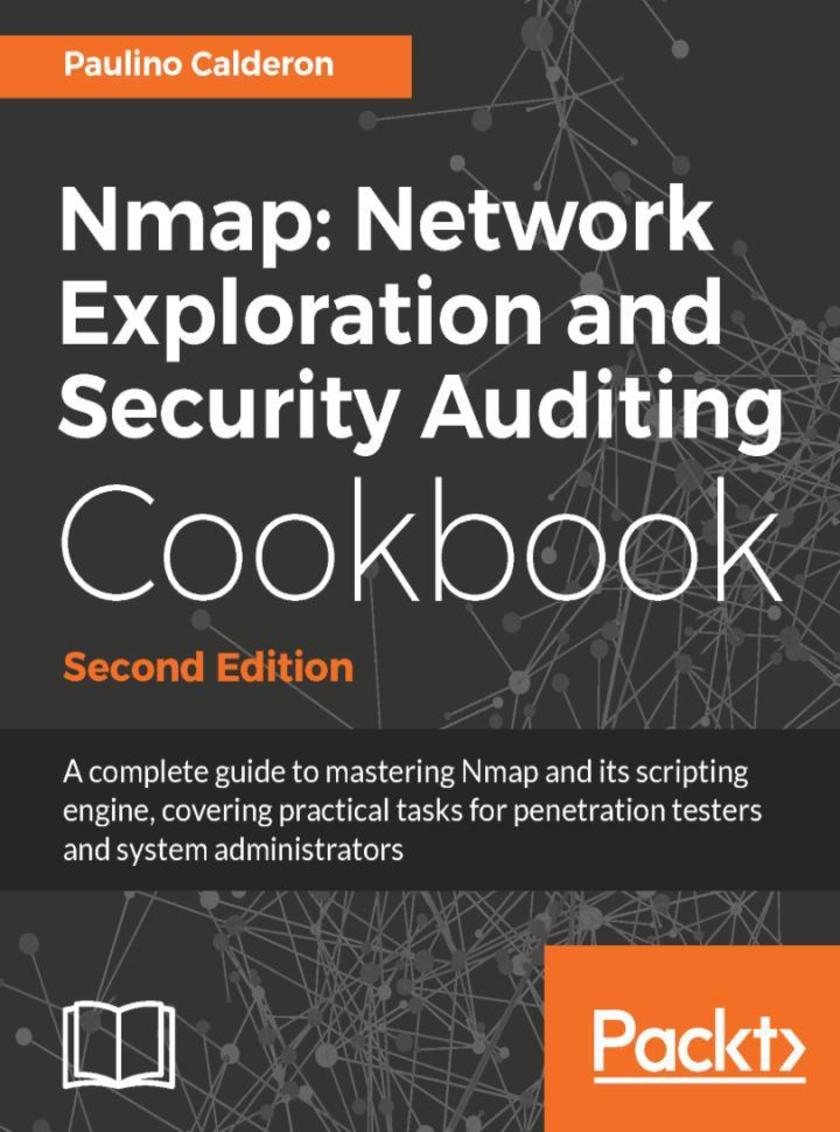
Nmap: Network Exploration and Security Auditing Cookbook - Second Edition
¥90.46
Over 100 practical recipes related to network and application security auditing using the powerful Nmap About This Book ? Learn through practical recipes how to use Nmap for a wide range of tasks for system administrators and penetration testers. ? Learn the latest and most useful features of Nmap and the Nmap Scripting Engine. ? Learn to audit the security of networks, web applications, databases, mail servers, Microsoft Windows servers/workstations and even ICS systems. ? Learn to develop your own modules for the Nmap Scripting Engine. ? Become familiar with Lua programming. ? 100% practical tasks, relevant and explained step-by-step with exact commands and optional arguments de*ion Who This Book Is For The book is for anyone who wants to master Nmap and its *ing engine to perform real life security auditing checks for system administrators and penetration testers. This book is also recommended to anyone looking to learn about network security auditing. Finally, novice Nmap users will also learn a lot from this book as it covers several advanced internal aspects of Nmap and related tools. What You Will Learn ? Learn about Nmap and related tools, such as Ncat, Ncrack, Ndiff, Zenmap and the Nmap Scripting Engine ? Master basic and advanced techniques to perform port scanning and host discovery ? Detect insecure configurations and vulnerabilities in web servers, databases, and mail servers ? Learn how to detect insecure Microsoft Windows workstations and scan networks using the Active Directory technology ? Learn how to safely identify and scan critical ICS/SCADA systems ? Learn how to optimize the performance and behavior of your scans ? Learn about advanced reporting ? Learn the fundamentals of Lua programming ? Become familiar with the development libraries shipped with the NSE ? Write your own Nmap Scripting Engine *s In Detail This is the second edition of 'Nmap 6: Network Exploration and Security Auditing Cookbook'. A book aimed for anyone who wants to master Nmap and its *ing engine through practical tasks for system administrators and penetration testers. Besides introducing the most powerful features of Nmap and related tools, common security auditing tasks for local and remote networks, web applications, databases, mail servers, Microsoft Windows machines and even ICS SCADA systems are explained step by step with exact commands and argument explanations. The book starts with the basic usage of Nmap and related tools like Ncat, Ncrack, Ndiff and Zenmap. The Nmap Scripting Engine is thoroughly covered through security checks used commonly in real-life scenarios applied for different types of systems. New chapters for Microsoft Windows and ICS SCADA systems were added and every recipe was revised. This edition reflects the latest updates and hottest additions to the Nmap project to date. The book will also introduce you to Lua programming and NSE * development allowing you to extend further the power of Nmap. Style and approach This book consists of practical recipes on network exploration and security auditing techniques, enabling you to get hands-on experience through real life scenarios.
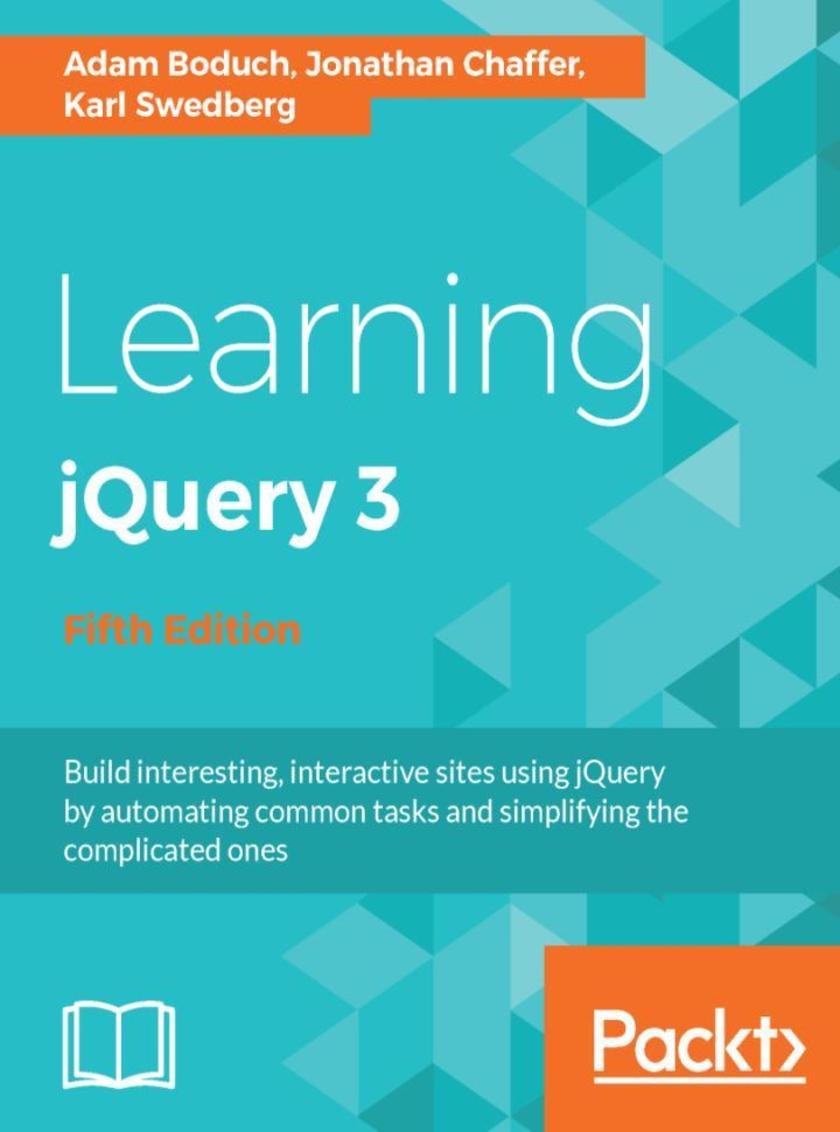
Learning jQuery 3 - Fifth Edition
¥71.93
Create efficient and smart web applications with jQuery 3.0 using this step-by-step practical tutorial About This Book ? Create a fully featured and responsive client-side application using jQuery ? Explore all the latest features of jQuery 3.0 and code examples updated to reflect modern JavaScript environments ? Develop high performance interactive pages Who This Book Is For This book is ideal for client-side JavaScript developers. You do need to have any previous experience with jQuery, although basic JavaScript programming knowledge is necessary. What You Will Learn ? Create custom interactive elements for your web designs ? Find out how to create the best user interface for your web applications ? Use selectors in a variety of ways to get anything you want from a page when you need it ? Master events to bring your web pages to life ? Add flair to your actions with a variety of different animation effects ? Discover the latest features available in jQuery with the latest update of this incredibly popular title ? Using jQuery npm Packages In Detail If you are a web developer and want to create web applications that look good, are efficient, have rich user interfaces, and integrate seamlessly with any backend using AJAX, then this book is the ideal match for you. We’ll show you how you can integrate jQuery 3.0 into your web pages, avoid complex JavaScript code, create brilliant animation effects for your web applications, and create a flawless app. We start by configuring and customising the jQuery environment, and getting hands-on with DOM manipulation. Next, we’ll explore event handling advanced animations, creating optimised user interfaces, and building useful third-party plugins. Also, we'll learn how to integrate jQuery with your favourite back-end framework. Moving on, we’ll learn how the ECMAScript 6 features affect your web development process with jQuery. we’ll discover how to use the newly introduced JavaScript promises and the new animation API in jQuery 3.0 in great detail, along with sample code and examples. By the end of the book, you will be able to successfully create a fully featured and efficient single page web application and leverage all the new features of jQuery 3.0 effectively. Style and approach Create efficient client-side apps that look great and run seamlessly across all devices with this step-by-step practical guide. There are illustrative examples for those who need extra help to get started with jQuery web development.
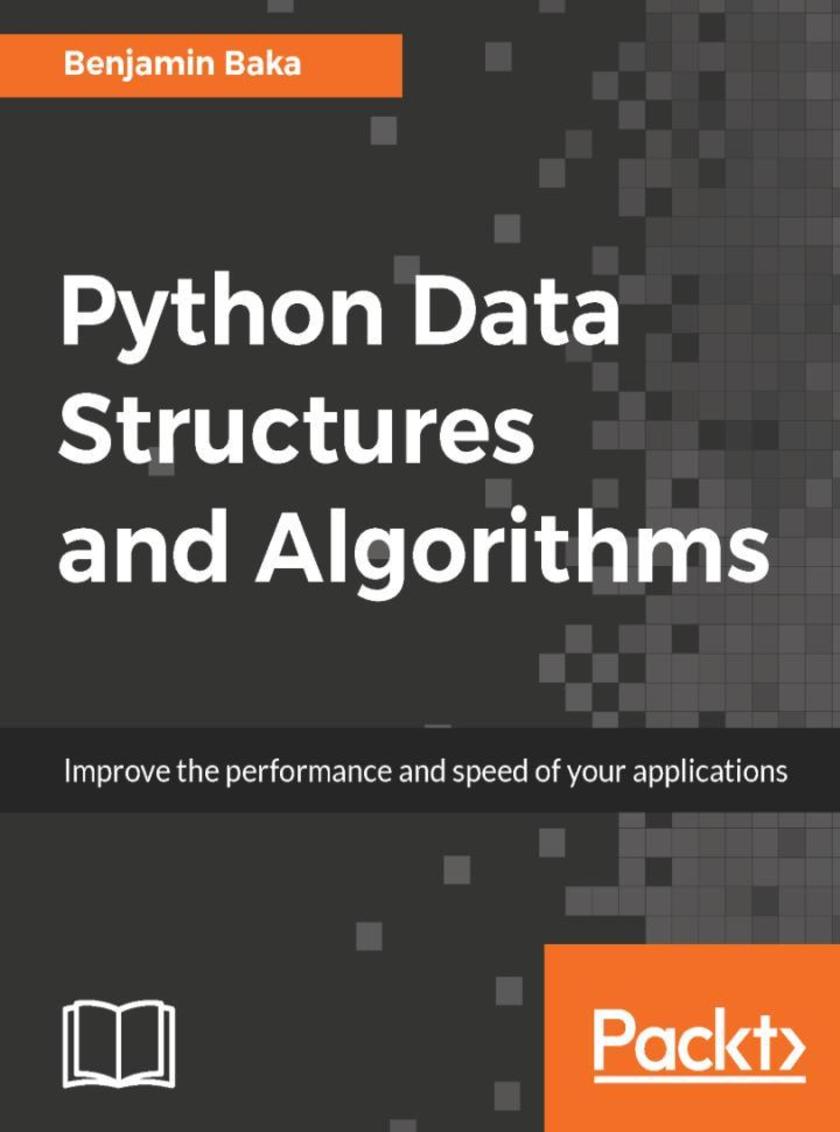
Python Data Structures and Algorithms
¥80.65
Implement classic and functional data structures and algorithms using Python About This Book ? A step by step guide, which will provide you with a thorough discussion on the analysis and design of fundamental Python data structures. ? Get a better understanding of advanced Python concepts such as big-o notation, dynamic programming, and functional data structures. ? Explore illustrations to present data structures and algorithms, as well as their analysis, in a clear, visual manner. Who This Book Is For The book will appeal to Python developers. A basic knowledge of Python is expected. What You Will Learn ? Gain a solid understanding of Python data structures. ? Build sophisticated data applications. ? Understand the common programming patterns and algorithms used in Python data science. ? Write efficient robust code. In Detail Data structures allow you to organize data in a particular way efficiently. They are critical to any problem, provide a complete solution, and act like reusable code. In this book, you will learn the essential Python data structures and the most common algorithms. With this easy-to-read book, you will be able to understand the power of linked lists, double linked lists, and circular linked lists. You will be able to create complex data structures such as graphs, stacks and queues. We will explore the application of binary searches and binary search trees. You will learn the common techniques and structures used in tasks such as preprocessing, modeling, and transforming data. We will also discuss how to organize your code in a manageable, consistent, and extendable way. The book will explore in detail sorting algorithms such as bubble sort, selection sort, insertion sort, and merge sort. By the end of the book, you will learn how to build components that are easy to understand, debug, and use in different applications. Style and approach The easy-to-read book with its fast-paced nature will improve the productivity of Python programmers and improve the performance of Python applications.
Python Machine Learning By Example
¥90.46
Take tiny steps to enter the big world of data science through this interesting guide About This Book ? Learn the fundamentals of machine learning and build your own intelligent applications ? Master the art of building your own machine learning systems with this example-based practical guide ? Work with important classification and regression algorithms and other machine learning techniques Who This Book Is For This book is for anyone interested in entering the data science stream with machine learning. Basic familiarity with Python is assumed. What You Will Learn ? Exploit the power of Python to handle data extraction, manipulation, and exploration techniques ? Use Python to visualize data spread across multiple dimensions and extract useful features ? Dive deep into the world of analytics to predict situations correctly ? Implement machine learning classification and regression algorithms from scratch in Python ? Be amazed to see the algorithms in action ? Evaluate the performance of a machine learning model and optimize it ? Solve interesting real-world problems using machine learning and Python as the journey unfolds In Detail Data science and machine learning are some of the top buzzwords in the technical world today. A resurging interest in machine learning is due to the same factors that have made data mining and Bayesian analysis more popular than ever. This book is your entry point to machine learning. This book starts with an introduction to machine learning and the Python language and shows you how to complete the setup. Moving ahead, you will learn all the important concepts such as, exploratory data analysis, data preprocessing, feature extraction, data visualization and clustering, classification, regression and model performance evaluation. With the help of various projects included, you will find it intriguing to acquire the mechanics of several important machine learning algorithms – they are no more obscure as they thought. Also, you will be guided step by step to build your own models from scratch. Toward the end, you will gather a broad picture of the machine learning ecosystem and best practices of applying machine learning techniques. Through this book, you will learn to tackle data-driven problems and implement your solutions with the powerful yet simple language, Python. Interesting and easy-to-follow examples, to name some, news topic classification, spam email detection, online ad click-through prediction, stock prices forecast, will keep you glued till you reach your goal. Style and approach This book is an enticing journey that starts from the very basics and gradually picks up pace as the story unfolds. Each concept is first succinctly defined in the larger context of things, followed by a detailed explanation of their application. Every concept is explained with the help of a project that solves a real-world problem, and involves hands-on work—giving you a deep insight into the world of machine learning. With simple yet rich language—Python—you will understand and be able to implement the examples with ease.
R Data Analysis Cookbook - Second Edition
¥90.46
Over 80 recipes to help you breeze through your data analysis projects using R About This Book ? Analyse your data using the popular R packages like ggplot2 with ready-to-use and customizable recipes ? Find meaningful insights from your data and generate dynamic reports ? A practical guide to help you put your data analysis skills in R to practical use Who This Book Is For This book is for data scientists, analysts and even enthusiasts who want to learn and implement the various data analysis techniques using R in a practical way. Those looking for quick, handy solutions to common tasks and challenges in data analysis will find this book to be very useful. Basic knowledge of statistics and R programming is assumed. What You Will Learn ? Acquire, format and visualize your data using R ? Using R to perform an Exploratory data analysis ? Introduction to machine learning algorithms such as classification and regression ? Get started with social network analysis ? Generate dynamic reporting with Shiny ? Get started with geospatial analysis ? Handling large data with R using Spark and MongoDB ? Build Recommendation system- Collaborative Filtering, Content based and Hybrid ? Learn real world dataset examples- Fraud Detection and Image Recognition In Detail Data analytics with R has emerged as a very important focus for organizations of all kinds. R enables even those with only an intuitive grasp of the underlying concepts, without a deep mathematical background, to unleash powerful and detailed examinations of their data. This book will show you how you can put your data analysis skills in R to practical use, with recipes catering to the basic as well as advanced data analysis tasks. Right from acquiring your data and preparing it for analysis to the more complex data analysis techniques, the book will show you how you can implement each technique in the best possible manner. You will also visualize your data using the popular R packages like ggplot2 and gain hidden insights from it. Starting with implementing the basic data analysis concepts like handling your data to creating basic plots, you will master the more advanced data analysis techniques like performing cluster analysis, and generating effective analysis reports and visualizations. Throughout the book, you will get to know the common problems and obstacles you might encounter while implementing each of the data analysis techniques in R, with ways to overcoming them in the easiest possible way. By the end of this book, you will have all the knowledge you need to become an expert in data analysis with R, and put your skills to test in real-world scenarios. Style and Approach ? Hands-on recipes to walk through data science challenges using R ? Your one-stop solution for common and not-so-common pain points while performing real-world problems to execute a series of tasks. ? Addressing your common and not-so-common pain points, this is a book that you must have on the shelf
Machine Learning With Go
¥90.46
Build simple, maintainable, and easy to deploy machine learning applications. About This Book ? Build simple, but powerful, machine learning applications that leverage Go’s standard library along with popular Go packages. ? Learn the statistics, algorithms, and techniques needed to successfully implement machine learning in Go ? Understand when and how to integrate certain types of machine learning model in Go applications. Who This Book Is For This book is for Go developers who are familiar with the Go syntax and can develop, build, and run basic Go programs. If you want to explore the field of machine learning and you love Go, then this book is for you! Machine Learning with Go will give readers the practical skills to perform the most common machine learning tasks with Go. Familiarity with some statistics and math topics is necessary. What You Will Learn ? Learn about data gathering, organization, parsing, and cleaning. ? Explore matrices, linear algebra, statistics, and probability. ? See how to evaluate and validate models. ? Look at regression, classification, clustering. ? Learn about neural networks and deep learning ? Utilize times series models and anomaly detection. ? Get to grip with techniques for deploying and distributing analyses and models. ? Optimize machine learning workflow techniques In Detail The mission of this book is to turn readers into productive, innovative data analysts who leverage Go to build robust and valuable applications. To this end, the book clearly introduces the technical aspects of building predictive models in Go, but it also helps the reader understand how machine learning workflows are being applied in real-world scenarios. Machine Learning with Go shows readers how to be productive in machine learning while also producing applications that maintain a high level of integrity. It also gives readers patterns to overcome challenges that are often encountered when trying to integrate machine learning in an engineering organization. The readers will begin by gaining a solid understanding of how to gather, organize, and parse real-work data from a variety of sources. Readers will then develop a solid statistical toolkit that will allow them to quickly understand gain intuition about the content of a dataset. Finally, the readers will gain hands-on experience implementing essential machine learning techniques (regression, classification, clustering, and so on) with the relevant Go packages. Finally, the reader will have a solid machine learning mindset and a powerful Go toolkit of techniques, packages, and example implementations. Style and approach This book connects the fundamental, theoretical concepts behind Machine Learning to practical implementations using the Go programming language.
Apache Spark 2.x Machine Learning Cookbook
¥90.46
Simplify machine learning model implementations with Spark About This Book ? Solve the day-to-day problems of data science with Spark ? This unique cookbook consists of exciting and intuitive numerical recipes ? Optimize your work by acquiring, cleaning, analyzing, predicting, and visualizing your data Who This Book Is For This book is for Scala developers with a fairly good exposure to and understanding of machine learning techniques, but lack practical implementations with Spark. A solid knowledge of machine learning algorithms is assumed, as well as hands-on experience of implementing ML algorithms with Scala. However, you do not need to be acquainted with the Spark ML libraries and ecosystem. What You Will Learn ? Get to know how Scala and Spark go hand-in-hand for developers when developing ML systems with Spark ? Build a recommendation engine that scales with Spark ? Find out how to build unsupervised clustering systems to classify data in Spark ? Build machine learning systems with the Decision Tree and Ensemble models in Spark ? Deal with the curse of high-dimensionality in big data using Spark ? Implement Text analytics for Search Engines in Spark ? Streaming Machine Learning System implementation using Spark In Detail Machine learning aims to extract knowledge from data, relying on fundamental concepts in computer science, statistics, probability, and optimization. Learning about algorithms enables a wide range of applications, from everyday tasks such as product recommendations and spam filtering to cutting edge applications such as self-driving cars and personalized medicine. You will gain hands-on experience of applying these principles using Apache Spark, a resilient cluster computing system well suited for large-scale machine learning tasks. This book begins with a quick overview of setting up the necessary IDEs to facilitate the execution of code examples that will be covered in various chapters. It also highlights some key issues developers face while working with machine learning algorithms on the Spark platform. We progress by uncovering the various Spark APIs and the implementation of ML algorithms with developing classification systems, recommendation engines, text analytics, clustering, and learning systems. Toward the final chapters, we’ll focus on building high-end applications and explain various unsupervised methodologies and challenges to tackle when implementing with big data ML systems. Style and approach This book is packed with intuitive recipes supported with line-by-line explanations to help you understand how to optimize your work flow and resolve problems when working with complex data modeling tasks and predictive algorithms. This is a valuable resource for data scientists and those working on large scale data projects.
Scala for Machine Learning - Second Edition
¥107.90
Leverage Scala and Machine Learning to study and construct systems that can learn from data About This Book ? Explore a broad variety of data processing, machine learning, and genetic algorithms through diagrams, mathematical formulation, and updated source code in Scala ? Take your expertise in Scala programming to the next level by creating and customizing AI applications ? Experiment with different techniques and evaluate their benefits and limitations using real-world applications in a tutorial style Who This Book Is For If you’re a data scientist or a data analyst with a fundamental knowledge of Scala who wants to learn and implement various Machine learning techniques, this book is for you. All you need is a good understanding of the Scala programming language, a basic knowledge of statistics, a keen interest in Big Data processing, and this book! What You Will Learn ? Build dynamic workflows for scientific computing ? Leverage open source libraries to extract patterns from time series ? Write your own classification, clustering, or evolutionary algorithm ? Perform relative performance tuning and evaluation of Spark ? Master probabilistic models for sequential data ? Experiment with advanced techniques such as regularization and kernelization ? Dive into neural networks and some deep learning architecture ? Apply some basic multiarm-bandit algorithms ? Solve big data problems with Scala parallel collections, Akka actors, and Apache Spark clusters ? Apply key learning strategies to a technical analysis of financial markets In Detail The discovery of information through data clustering and classification is becoming a key differentiator for competitive organizations. Machine learning applications are everywhere, from self-driving cars, engineering design, logistics, manufacturing, and trading strategies, to detection of genetic anomalies. The book is your one stop guide that introduces you to the functional capabilities of the Scala programming language that are critical to the creation of machine learning algorithms such as dependency injection and implicits. You start by learning data preprocessing and filtering techniques. Following this, you'll move on to unsupervised learning techniques such as clustering and dimension reduction, followed by probabilistic graphical models such as Na?ve Bayes, hidden Markov models and Monte Carlo inference. Further, it covers the discriminative algorithms such as linear, logistic regression with regularization, kernelization, support vector machines, neural networks, and deep learning. You’ll move on to evolutionary computing, multibandit algorithms, and reinforcement learning. Finally, the book includes a comprehensive overview of parallel computing in Scala and Akka followed by a de*ion of Apache Spark and its ML library. With updated codes based on the latest version of Scala and comprehensive examples, this book will ensure that you have more than just a solid fundamental knowledge in machine learning with Scala. Style and approach This book is designed as a tutorial with hands-on exercises using technical analysis of financial markets and corporate data. The approach of each chapter is such that it allows you to understand key concepts easily.

Emotional Intelligence for IT Professionals
¥63.21
Learn the techniques used by the most successful IT people in the world. About This Book ? Get real-life case studies for different IT roles, developers, testers, analysts, project managers, DBAs ? Identify with your IT scenarios and take the right decision to move up in your career ? Improve your EQ and face any difficult scenario confidently and effectively Who This Book Is For This book is for professionals across the IT domain who work as developers, administrators, architects, administrators system analysts, and so on, who want to create a better working environment around them by improving their own emotional intelligence. This book assumes that you are a beginner to emotional intelligence and will help you understand the basic concepts before helping you with real life scenarios. What You Will Learn ? Improve your observation skills to understand people better ? Know how to identify what motivates you and those around you ? Develop strategies for working more effectively with others ? Increase your capacity to influence people and improve your communication skills ? Understand how to successfully complete tasks through other people ? Discover how to control the emotional content of your decision-making In Detail This book will help you discover your emotional quotient (EQ) through practices and techniques that are used by the most successful IT people in the world. It will make you familiar with the core skills of Emotional Intelligence, such as understanding the role that emotions play in life, especially in the workplace. You will learn to identify the factors that make your behavior consistent, not just to other employees, but to yourself. This includes recognizing, harnessing, predicting, fostering, valuing, soothing, increasing, decreasing, managing, shifting, influencing or turning around emotions and integrating accurate emotional information into decision-making, reasoning, problem solving, etc., because, emotions run business in a way that spreadsheets and logic cannot. When a deadline lurks, you’ll know the steps you need to take to keep calm and composed. You’ll find out how to meet the deadline, and not get bogged down by stress. We’ll explain these factors and techniques through real-life examples faced by IT employees and you’ll learn using the choices that they made. This book will give you a detailed analysis of the events and behavioral pattern of the employees during that time. This will help you improve your own EQ to the extent that you don’t just survive, but thrive in a competitive IT industry. Style and approach You will be taken through real-life events faced by IT employees in different scenarios. These real-world cases are analyzed along with the response of the employees, which will help you to develop your own emotion intelligence quotient and face any difficult scenario confidently and effectively.
Drupal 8 Development Cookbook - Second Edition
¥80.65
Over 60 hands-on recipes that get you acquainted with Drupal 8's features and help you harness its power About This Book ? Discover the enhanced content authoring experience that comes with Drupal 8 and how to customize it ? Take advantage of the broadened multilingual and tools of the new version to provide an internationalized website ? This step-by-step guide will show you how to deploy from development, staging, and production of a website with Drupal 8's brand new configuration management system Who This Book Is For The audience of the Drupal 8 Cookbook have been using Drupal and are ready to get a grasp of what to expect in Drupal 8. They have worked with Drupal as site builders, back-end developers, and front-end developers and are eager to see what awaits when they start using Drupal 8. This book will be a resource that allows them to get started and have a reference to building new applications with Drupal. What You Will Learn ? Extend Drupal through contributed or custom modules and themes ? Develop an internationalized website with Drupal's multilingual tools ? Integrate third-party front-end and back-end libraries with Drupal ? Turn Drupal into a web services provider using REST ? Create a mobile-first responsive Drupal application ? Run SimpleTest and PHPUnit to test Drupal ? Understand the plugin system that powers many of Drupal 8's new APIs to extend its functionality ? Get to grips with the mechanics of the configuration management system and the ability to import and export site configuration In Detail Began as a message board, Drupal today is open source software maintained and developed by a community of over 1,000,000 users and developers. Drupal is used by numerous local businesses to global corporations and diverse organizations all across the globe. With Drupal 8’s exciting features it brings, this book will be your go-to guide to experimenting with all of these features through helpful recipes. We’ll start by showing you how to customize and configure the Drupal environment as per your requirements, as well as how to install third-party libraries and then use them in the Drupal environment. Then we will move on to creating blocks and custom modules with the help of libraries. We will show you how to use the latest mobile-first feature of Drupal 8, which will help you make your apps responsive across all the major platforms. This book will also show you how to incorporate multilingual facilities in your sites, use web services and third-party plugins with your applications from inside Drupal 8, and test and deploy your apps. Style and approach This practical, recipe-based book will provide you with actionable techniques and methods to improve your existing Drupal development skills.
Spring 5.0 Cookbook
¥90.46
Over 100 hands-on recipes to build web applications easily and efficiently IN Spring 5.0 About This Book ? Solve real-world problems using the latest features of the Spring framework like Reactive Streams and the Functional Web Framework. ? Learn how to use dependency injection and aspect-oriented programming to write compartmentalized and testable code. ? Understand when to choose between Spring MVC and Spring Web Reactive for your projects Who This Book Is For Java developers who would like to gain in-depth knowledge of how to overcome problems that they face while developing great Spring applications. It will also cater to Spring enthusiasts, users and experts who need an arena for comparative analysis, new ideas and inquiries on some details regarding Spring 5.0 and its previous releases. A basic knowledge of Spring development is essential What You Will Learn ? Understand how functional programming and concurrency in JDK 1.9 works, and how it will affect Spring 5.0 ? Learn the importance and application of reactive programming in creating services, and also the process of creating asynchronous MVC applications ? Implement different Spring Data modules ? Integrate Spring Security to the container ? Create applications and deploy using Spring Boot ? Conceptualize the architecture behind Microservices and learn the details of its implementation ? Create different test cases for the components of Spring 5.0 components In Detail The Spring framework has been the go-to framework for Java developers for quite some time. It enhances modularity, provides more readable code, and enables the developer to focus on developing the application while the underlying framework takes care of transaction APIs, remote APIs, JMX APIs, and JMS APIs. The upcoming version of the Spring Framework has a lot to offer, above and beyond the platform upgrade to Java 9, and this book will show you all you need to know to overcome common to advanced problems you might face. Each recipe will showcase some old and new issues and solutions, right from configuring Spring 5.0 container to testing its components. Most importantly, the book will highlight concurrent processes, asynchronous MVC and reactive programming using Reactor Core APIs. Aside from the core components, this book will also include integration of third-party technologies that are mostly needed in building enterprise applications. By the end of the book, the reader will not only be well versed with the essential concepts of Spring, but will also have mastered its latest features in a solution-oriented manner. Style and Approach This book follows a cookbook style approach, presenting a problem and showing you how to overcome it with useful recipes. The examples provided will help you code along as you learn.
UX for the Web
¥71.93
Learn how UX and design thinking can make your site stand out from the rest of the internet. About This Book ? Learn everything you need to know about UX for your Web Design. ? Design B2B, B2C websites that stand out from the competitors with this guide ? Enhance your business by improving customer accessibility and retention. Who This Book Is For If you’re a designer, developer, or just someone who has the desire to create websites that are not only beautiful to look at but also easy to use and fully accessible to everyone, including people with special needs, UX for the Web will provide you with the basic building blocks to achieve just that. What You Will Learn ? Discover the fundamentals of UX and the User-Centered Design (UCD) Process. ? Learn how UX can enhance your brand and increase user retention ? Learn how to create the golden thread between your product and the user ? Use reliable UX methodologies to research and analyze data to create an effective UX strategy ? Bring your UX strategy to life with wireframes and prototypes ? Set measurable metrics and conduct user tests to improve digital products ? Incorporate the Web Content Accessibility Guidelines (WCAG) to create accessible digital products In Detail If you want to create web apps that are not only beautiful to look at, but also easy to use and fully accessible to everyone, including people with special needs, this book will provide you with the basic building blocks to achieve just that. The book starts with the basics of UX, the relationship between Human-Centered Design (HCD), Human-Computer Interaction (HCI), and the User-Centered Design (UCD) Process; it gradually takes you through the best practices to create a web app that stands out from your competitors. You’ll also learn how to create an emotional connection with the user to increase user interaction and client retention by different means of communication channels. We’ll guide you through the steps in developing an effective UX strategy through user research and persona creation and how to bring that UX strategy to life with beautiful, yet functional designs that cater for complex features with micro interactions. Practical UX methodologies such as creating a solid Information Architecture (IA), wireframes, and prototypes will be discussed in detail. We’ll also show you how to test your designs with representative users, and ensure that they are usable on different devices, browsers and assistive technologies. Lastly, we’ll focus on making your web app fully accessible from a development and design perspective by taking you through the Web Content Accessibility Guidelines (WCAG). Style and Approach This is an easy-to-understand step-by-step guide with full of examples to that will help you in creating good UX for your web applications.
AWS Tools for PowerShell 6
¥80.65
Leverage the power of PowerShell to bring the best out of your AWS infrastructure About This Book ? A collection of real-world-tested Powershell *s that can be used to manage your Windows server efficiently ? Follow step-by-step processes to solve your problems with Windows servers using AWS tools ? Design examples that work in the Amazon free usage tier, which lets you run the Windows platform on cloud Who This Book Is For This book will be useful for (but not limited to) Windows System administrators, cloud engineers, architects, DevOps engineers, and all those who want to accomplish tasks on the AWS Public Cloud using PowerShell. What You Will Learn ? Install the AWS Tools for PowerShell 6 ? Understand key services provided by Amazon Web services (AWS) ? Understand the Virtual Private Cloud ? Use PowerShell 6 for AWS Identity and Access Management (IAM) ? Use PowerShell 6 for AWS Elastic Compute Cloud (EC2) ? Use PowerShell 6 for AWS Simple Storage Service (S3) ? Use PowerShell 6 for AWS Relational Database Service (RDS) ? Build fault-tolerant and highly-available applications using PowerShell 6 In Detail AWS Tools for PowerShell 6 shows you exactly how to automate all the aspects of AWS. You can take advantage of the amazing power of the cloud, yet add powerful *s and mechanisms to perform common tasks faster than ever before. This book expands on the Amazon documentation with real-world, useful examples and production-ready *s to automate all the aspects of your new cloud platform. It will cover topics such as managing Windows with PowerShell, setting up security services, administering database services, and deploying and managing networking. You will also explore advanced topics such as PowerShell authoring techniques, and configuring and managing storage and content delivery. By the end of this book, you will be able to use Amazon Web Services to automate and manage Windows servers. You will also have gained a good understanding of automating the AWS infrastructure using simple coding. Style and approach This step-by-step guide starts with simple examples then expands to full-blown administrative tasks leading to the efficient management of Windows servers. Each topic covers a section related to Amazon Web Services products, and the examples are built on one another to deliver a comprehensive library of *s for administrators.

Full Stack Web Development with Raspberry Pi 3
¥63.21
Discover how to build full stack web applications with the Raspberry Pi 3 About This Book ? Leverage JavaScript, HTML5, and Cloud APIs to create visual representations and interactive web pages. ? Learn to install and use a Node.js-based web framework to develop Raspberry Pi 3-powered web applications. ? A step-by-step guide that will cover from setting up a embedded system to developing embedded, device-powered interactive web applications. Who This Book Is For This book is aimed at hobbyist, enthusiasts, and developers eager to develop embedded device-powered web applications. Prior programming experience with JavaScript, HTML5, and Node.JS will be beneficial. What You Will Learn ? Get up and running with your Raspberry Pi ? Go full stack! Learn about the end-to-end development process for web applications, right from the OS up to the actual HTML web interface ? Discover that JavaScript is one of the fastest growing languages today, and is the only language that can be used both on a browser and server. This book will empower you to develop in a complete JavaScript stack ? See that the IoT is everywhere!Connect your application to the outside world. Make use of sensors in your Raspberry Pi to give your application an edge, and unleash the full power of the Internet of Things ? Build a rich UI with beautiful charts and data visualizations that can run on any browser ? Make your software data-driven. Learn how to utilize SQLite to collect and analyze data from multiple systems In Detail Modern web technology and portable computing together have enabled huge advances in the Internet of Things (IoT) space,as well as in areas such as machine learning and big data. The Raspberry Pi is a very popular portable computer for running full stack web applications. This book will empower you to master this rapidly evolving technology to develop complex web applications and interfaces. This book starts by familiarizing you with the various components that make up the web development stack and that will integrate into your Raspberry Pi-powered web applications. It also introduces the Raspberry Pi computer and teach you how to get up and running with a brand new one. Next, this book introduces you to the different kinds of sensor you’ll use to make your applications; using these skills, you will be able to create full stack web applications and make them available to users via a web interface. Later, this book will also teach you how to build interactive web applications using JavaScript and HTML5 for the visual representation of sensor data. Finally, this book will teach you how to use a SQLite database to store and retrieve sensor data from multiple Raspberry Pi computers. By the end of this book you will be able to create complex full stack web applications on the Raspberry Pi 3 and will have improved your application’s performance and usability. Style and approach Step-by-step instructions on developing a full stack web application and deploying it to the Cloud.
Salesforce Lightning Reporting and Dashboards
¥90.46
Learn how to build advanced reports and dashboards in Salesforce Lightning experience About This Book ? Visualize and create advanced reports and dashboards using Lightning Experience ? Improve overall business efficiency with advanced and effective reports and dashboards ? Understand and create custom reports and dashboards Who This Book Is For This book is targeted at Salesforce.com administrators, business analysts, and managers who use Salesforce.com for their daily job and want to learn in depth about Salesforce Reporting and Dashboard in Lightning Experience. Readers should have a basic knowledge of Salesforce, such as: Accounts, Contacts, Leads, Opportunities and custom objects. What You Will Learn ? Navigate in Salesforce.com within the Lightning Experience user interface ? Secure and share your reports and dashboards with other users ? Create, manage, and maintain reports using Report Builder ? Learn how the report type can affect the report generated ? Explore the report and dashboard folder and the sharing model ? Create reports with multiple formats and custom report types ? Explore various dashboard features in Lightning Experience ? Use Salesforce1, including accessing reports and dashboards In Detail Built on the Salesforce App Cloud, the new Lightning Experience combines the new Lightning Design System, Lightning App Builder, and Lightning Components to enable anyone to quickly and easily create modern enterprise apps. The book will start with a gentle introduction to the basics of Salesforce reports and dashboards. It will also explain how to access reports in depth. Then you will learn how to create and manage reports, to use Schedule Report, and create advanced report configurations. The next section talks about dashboards and will enable you to understand and compare various types of dashboard component and how you can benefit the most from each of them. Then we move on to advanced topics and explain tips and tricks related to reports and dashboards, including reporting snapshots, report parameters, and collaboration. Finally, we will discuss how to access dashboards and reports from the Salesforce1 mobile app. Style and approach This comprehensive guide covers the advanced features of the all new Salesforce Lightning concepts and communicates them through a practical approach to explore the underlying concepts of how, when, and why to use them.
AWS Networking Cookbook
¥80.65
Over 50 recipes covering all you need to know about AWS networking About This Book ? Master AWS networking concepts with AWS Networking Cookbook. ? Design and implement highly available connectivity and multi-regioned AWS solutions ? A recipe-based guide that will eliminate the complications of AWS networking. ? A guide to automate networking services and features Who This Book Is For This book targets administrators, network engineers, and solution architects who are looking at optimizing their cloud platform's connectivity. Some basic understanding of AWS would be beneficial. What You Will Learn ? Create basic network in AWS ? Create production grade network in AWS ? Create global scale network in AWS ? Security and Compliance with AWS Network ? Troubleshooting, best practices and limitations of AWS network ? Pricing model of AWS network components ? Route 53 and Cloudfront concepts and routing policies ? VPC Automation using Ansible and CloudFormation In Detail This book starts with practical recipes on the fundamentals of cloud networking and gradually moves on to configuring networks and implementing infrastructure automation. This book then supplies in-depth recipes on networking components like Network Interface, Internet Gateways, DNS, Elastic IP addresses, and VPN CloudHub. Later, this book also delves into designing, implementing, and optimizing static and dynamic routing architectures, multi-region solutions, and highly available connectivity for your enterprise. Finally, this book will teach you to troubleshoot your VPC's network, increasing your VPC's efficiency. By the end of this book, you will have advanced knowledge of AWS networking concepts and technologies and will have mastered implementing infrastructure automation and optimizing your VPC. Style and approach A set of exciting recipes on using AWS Networking services more effectively.
Continuous Delivery with Docker and Jenkins
¥80.65
Unleash the combination of Docker and Jenkins in order to enhance the DevOps workflow About This Book ? Build reliable and secure applications using Docker containers. ? Create a complete Continuous Delivery pipeline using Docker, Jenkins, and Ansible. ? Deliver your applications directly on the Docker Swarm cluster. ? Create more complex solutions using multi-containers and database migrations. Who This Book Is For This book is indented to provide a full overview of deep learning. From the beginner in deep learning and artificial intelligence to the data scientist who wants to become familiar with Theano and its supporting libraries, or have an extended understanding of deep neural nets. Some basic skills in Python programming and computer science will help, as well as skills in elementary algebra and calculus. What You Will Learn ? Get to grips with docker fundamentals and how to dockerize an application for the Continuous Delivery process ? Configure Jenkins and scale it using Docker-based agents ? Understand the principles and the technical aspects of a successful Continuous Delivery pipeline ? Create a complete Continuous Delivery process using modern tools: Docker, Jenkins, and Ansible ? Write acceptance tests using Cucumber and run them in the Docker ecosystem using Jenkins ? Create multi-container applications using Docker Compose ? Managing database changes inside the Continuous Delivery process and understand effective frameworks such as Cucumber and Flyweight ? Build clustering applications with Jenkins using Docker Swarm ? Publish a built Docker image to a Docker Registry and deploy cycles of Jenkins pipelines using community best practices In Detail The combination of Docker and Jenkins improves your Continuous Delivery pipeline using fewer resources. It also helps you scale up your builds, automate tasks and speed up Jenkins performance with the benefits of Docker containerization. This book will explain the advantages of combining Jenkins and Docker to improve the continuous integration and delivery process of app development. It will start with setting up a Docker server and configuring Jenkins on it. It will then provide steps to build applications on Docker files and integrate them with Jenkins using continuous delivery processes such as continuous integration, automated acceptance testing, and configuration management. Moving on you will learn how to ensure quick application deployment with Docker containers along with scaling Jenkins using Docker Swarm. Next, you will get to know how to deploy applications using Docker images and testing them with Jenkins. By the end of the book, you will be enhancing the DevOps workflow by integrating the functionalities of Docker and Jenkins. Style and approach The book is aimed at DevOps Engineers, developers and IT Operations who want to enhance the DevOps culture using Docker and Jenkins.
Beginning C# Hands-On - The Core Language
¥71.93
A C# beginners guide to the core parts of the C# language! About This Book ? Learn C#, Visual Studio, and Object Oriented Programming ? See practical examples of all the core C# language features so that you can easily master them yourself ? Use the C# programming language to work with code and data, which can be applied to other programming languages as well ? Complete a variety of programming assignments for hands-on practice, as you move through the course Who This Book Is For This book will appeal to anyone who is interested in learning how to program in C#. Previous programming experience will help you get through the initial sections with ease, although, it’s not mandatory to possess any experience at all. What You Will Learn ? Learn C#, Visual Studio, and object-oriented programming ? Learn all the core C# language syntax with hands-on working examples ? Learn everything from basic variable assignments to complex multidimensional arrays ? Go through practical examples of all the core C# language features so that you can easily master them yourself ? Use the C# programming language to work with code and data, which can be applied to other programming languages as well In Detail Beginning C# Hands-On - The Core Language teaches you core C# language and syntax in a working Visual Studio environment. This book covers everything from core language through to more advanced features such as object-oriented programming techniques. This book is for C# beginners who need a practical reference to core C# language features. You'll also gain a view of C# through web programming with web forms, so you'll learn HTML, basic CSS, and how to use a variety of controls, such as buttons and drop-down lists. You'll start with the fundamentals of C# and Visual Studio, including defining variables, interacting with users, and understanding data types, data conversions, and constants. You'll move on to checking conditions using if/else blocks, and see how to use loops to do things such as repeat blocks of code. After covering various operators to evaluate and assign control structures, you'll see how to use arrays to store collections of data. By the time you’ve finished the book, you’ll know how to program the vital elements of the core C# language. These are the building blocks that you can then combine to build complex C# programs. Style and approach A comprehensive book that blends theory with just the right amount of practical code implementations, to help you get up and running with the C# programming language. You’ll also get to work with other tools and technologies that complement C# programming. Each core part of the C# language is coded as you learn, and code output is tested every time to verify the syntax is working as expected, so it’s easy for you to learn directly from the working code examples.
Learning Salesforce Visual Workflow and Process Builder - Second Edition
¥90.46
Click your way to automating various business processes using Salesforce Visual Workflow About This Book ? Develop an application using Point and Click with the help of Flow ? Get to grips with various ways to launch a Flow ? Capture data from an external user without using the Visualforce page ? Save user input into the database, and learn how to query and manipulate the data ? Discover various ways to debug and deploy Flow and Process Builder ? Understand the concepts of Subflow and Login Flow ? Handle complex business processes using Process builder and keep them clean ? Use existing or new Flows to work with Salesforce Lightning Experience. Who This Book Is For This book is intended for those who want to use Flows to automate their business requirements by clicking, not coding. No previous experience in computer coding or programming is required. What You Will Learn ? Develop an application using point and click with the help of Flow ? Get to grips with various ways to launch a Flow ? Capture data from an external user without using the Visualforce page ? Save user input into the database, and learn how to query and manipulate the data ? Discover various ways to debug and deploy Flow and Process Builder ? Understand the concepts of Subflow and Login Flow ? Handle complex business processes using Process builder and keep them clean ? Use existing or new Flows to work with Salesforce Lightning Experience. In Detail Salesforce Management System is an information system used in CRM to automate the business processes like sales and marketing. To implement this, Force.com developed a powerful tool called Visual Workflow to automate business processes by creating applications also called Flows. Learning Salesforce Visual Workflow, Second Edition is a practical guide on Flows that will enable you to develop custom applications in Salesforce with minimized code usage. The book starts with an introduction to Visual Workflows that teaches all the building blocks of creating Flows and use it efficiently. You will learn how to easily automate business processes and tackle complex business scenarios using Flows. The book explains the working of the Process Builder so you can create reusable processes. The book also covers how you can integrate existing or newly created Flows with the Salesforce Lightening Experience. By the end of the book, you will get a clear understanding on how to use Flows and Process Builder in your organization to optimize code usage. Style and approach Step by step approch to use Process Builder to solve complex business requirements with the help of Flow
Enterprise PowerShell Scripting Bootcamp
¥80.65
The quick start guide for an advanced enterprise PowerShell framework About This Book ? Introduces industry-proven techniques that improve * efficiency and reliability ? Example-rich guide based on real-world scenarios ? Facilitates building a * that can fully scan a Windows server and identify components Who This Book Is For This book is for IT professionals and Windows administrators who would like to gain intensive, hands-on knowledge and skills on PowerShell without spending hours and hours in learning. If you have been struggling to find the time to gain proficiency and confidence with PowerShell and everyday *ing tasks What You Will Learn ? Create an advanced PowerShell *ing template that provides repeatable code to jumpstart all of your *ing projects ? Learn how to securely encrypt and store usernames, passwords, and other sensitive data in PowerShell *s and answer files ? Understand how to optimize the performance of *s to help process large datasets quickly and avoid time-consuming mistakes ? Develop a * to scan for non-standard Windows Server configurations and identify service accounts used on Windows Servers ? Gather a large list of data from a Windows server without locally or remotely logging in interactively In Detail Enterprise PowerShell Scripting Bootcamp explains how to create your own repeatable PowerShell *ing framework. This framework contains * logging methodologies, answer file interactions, and string encryption and decryption strategies. This book focuses on evaluating individual components to identify the system’s function, role, and unique characteristics. To do this, you will leverage built-in CMDlets and Windows Management Instrumentation (WMI) to explore Windows services, Windows processes, Windows features, scheduled tasks, and disk statistics. You will also create custom functions to perform a deep search for specific strings in files and evaluate installed software through executable properties. We will then discuss different *ing techniques to improve the efficiency of *s. By leveraging several small changes to your code, you can increase the execution performance by over 130%. By the end of this book, you will be able to tie all of the concepts together in a PowerShell-based Windows server scanning *. This discovery * will be able to scan a Windows server to identify a multitude of components. Style and approach This book is all about fast and intensive learning. This means, we don’t waste time in helping readers get started. The new content is about leveraging highly-effective examples to build new things, help solving problems in newer and unseen ways, and providing an enterprise-ready platform to create PowerShell Scripts.


