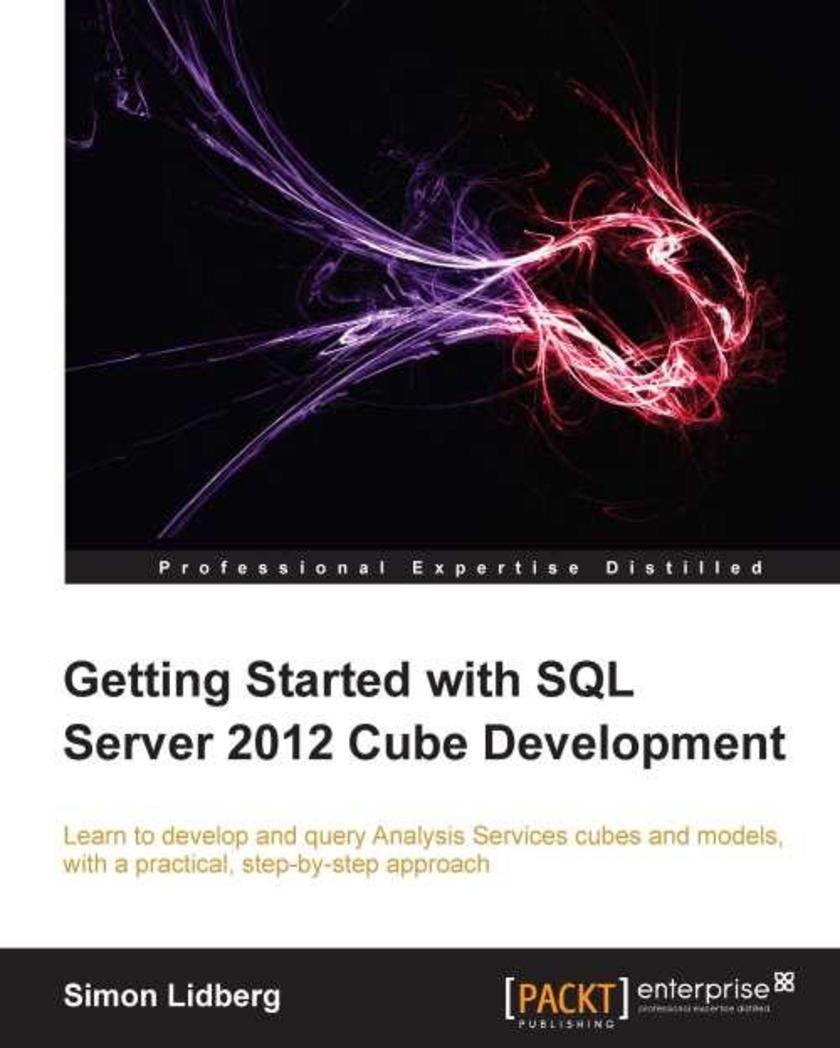
SQL Server on Linux
¥71.93
Bring the performance and security of SQL Server to Linux About This Book ? Design and administer your SQL Server solution on the open source Linux platform ? Install, configure, and fine-tune your database application for maximum performance ? An easy-to-follow guide teaching you how to implement various SQL Server CTP 2.x offerings on Linux—from installation to administration Who This Book Is For This book is for the Linux users who want to learn SQL Server on their favorite Linux distributions. It is not important if you are experienced database user or a beginner as we are starting from scratch. However, it is recommended that you have basic knowledge about relational models. More advanced readers can pick the chapters of their interest and study specific topics immediately. Users from Windows platform can also benefit from this book to expand their frontiers and become equally efficient on both platforms. What You Will Learn ? Install and set up SQL Server CTP 2.x on Linux ? Create and work with database objects using SQL Server on Linux ? Configure and administer SQL Server on Linux-based systems ? Create and restore database back-ups ? Protect sensitive data using the built-in cryptographic features ? Optimize query execution using indexes ? Improve query execution time by more than 10x using in-memory OLTP ? Track row-versioning using temporal tables In Detail Microsoft's launch of SQL Server on Linux has made SQL Server a truly versatile platform across different operating systems and data-types, both on-premise and on-cloud. This book is your handy guide to setting up and implementing your SQL Server solution on the open source Linux platform. You will start by understanding how SQL Server can be installed on supported and unsupported Linux distributions. Then you will brush up your SQL Server skills by creating and querying database objects and implementing basic administration tasks to support business continuity, including security and performance optimization. This book will also take you beyond the basics and highlight some advanced topics such as in-memory OLTP and temporal tables. By the end of this book, you will be able to recognize and utilize the full potential of setting up an efficient SQL Server database solution in your Linux environment. Style and approach This book follows a step-by-step approach to teach readers the concepts of SQL Server on Linux using the bash command line and SQL programming language trough examples which can easily be adapted and applied in your own solutions.
Serverless computing in Azure with .NET
¥90.46
Harness the power of the Cloud, leveraging the speed and scale of Azure Serverless computing About This Book ? Take advantage of the agility, scale, and cost-effectiveness of the cloud using Azure Serverless compute ? Build scalable, reliable, and cost-effecient applications with Serverless architecture and .NET ? Learn to use Azure functions to their fullest potential in .NET Who This Book Is For This book is for .NET developers who would like to learn about serverless architecture. Basic C# programming knowledge is assumed. What You Will Learn ? Understand the best practices of Serverless architecture ? Learn how how to deploy a Text Sentiment Evaluation application in an Azure Serverless environment ? Implement security, identity, and access control ? Take advantage of the speed of deployment in the cloud ? Configure application health monitoring, logging, and alerts ? Design your application to ensure cost effectiveness, high availability, and scale In Detail Serverless architecture allows you to build and run applications and services without having to manage the infrastructure. Many companies have started adopting serverless architecture for their applications to save cost and improve scalability. This book will be your companion in designing Serverless architecture for your applications using the .NET runtime, with Microsoft Azure as the cloud service provider. You will begin by understanding the concepts of Serverless architecture, its advantages and disadvantages. You will then set up the Azure environment and build a basic application using a sample text sentiment evaluation function. From here, you will be shown how to run services in a Serverless environment. We will cover the integration with other Azure and 3rd party services such as Azure Service Bus, as well as configuring dependencies on NuGet libraries, among other topics. After this, you will learn about debugging and testing your Azure functions, and then automating deployment from source control. Securing your application and monitoring its health will follow from there, and then in the final part of the book, you will learn how to Design for High Availability, Disaster Recovery and Scale, as well as how to take advantage of the cloud pay-as-you-go model to design cost-effective services. We will finish off with explaining how azure functions scale up against AWS Lambda, Azure Web Jobs, and Azure Batch compare to other types of compute-on-demand services. Whether you’ve been working with Azure for a while, or you’re just getting started, by the end of the book you will have all the information you need to set up and deploy applications to the Azure Serverless Computing environment. Style and approach This step-by-step guide shows you the concepts and features of Serverless architecture in Azure with .NET.
Azure Serverless Computing Cookbook
¥80.65
Over 50 recipes to help you build applications hosted on Serverless architecture using Azure Functions. About This Book ? Enhance Azure Functions with continuous deployment using Visual Studio Team Services ? Learn to deploy and manage cost-effective and highly available serverless applications using Azure Functions ? This recipe-based guide will teach you to build a robust serverless environment Who This Book Is For If you are a Cloud administrator, architect, or developer who wants to build scalable systems and deploy serverless applications with Azure functions, then this book is for you. Prior knowledge and hands-on experience with core services of Microsoft Azure is required. What You Will Learn ? Develop different event-based handlers supported by serverless architecture supported by Microsoft Cloud Platform – Azure ? Integrate Azure Functions with different Azure Services to develop Enterprise-level applications ? Get to know the best practices in organizing and refactoring the code within the Azure functions ? Test, troubleshoot, and monitor the Azure functions to deliver high-quality, reliable, and robust cloud-centric applications ? Automate mundane tasks at various levels right from development to deployment and maintenance ? Learn how to develop statefulserverless applications and also self-healing jobs using DurableFunctions In Detail Microsoft provides a solution to easily run small segment of code in the Cloud with Azure Functions. Azure Functions provides solutions for processing data, integrating systems, and building simple APIs and microservices. The book starts with intermediate-level recipes on serverless computing along with some use cases on benefits and key features of Azure Functions. Then, we’ll deep dive into the core aspects of Azure Functions such as the services it provides, how you can develop and write Azure functions, and how to monitor and troubleshoot them. Moving on, you’ll get practical recipes on integrating DevOps with Azure functions, and providing continuous integration and continous deployment with Visual Studio Team Services. It also provides hands-on steps and tutorials based on real-world serverless use cases, to guide you through configuring and setting up your serverless environments with ease. Finally, you’ll see how to manage Azure functions, providing enterprise-level security and compliance to your serverless code architecture. By the end of this book, you will have all the skills required to work with serverless code architecture, providing continuous delivery to your users. Style and approach This recipe-based guide explains the different features of Azure Function by taking a real-world application related to a specific domain. You will learn how to implement automation and DevOps and discover industry best practices to develop applications hosted on serverless architecture using Azure functions.
AWS Networking Cookbook
¥80.65
Over 50 recipes covering all you need to know about AWS networking About This Book ? Master AWS networking concepts with AWS Networking Cookbook. ? Design and implement highly available connectivity and multi-regioned AWS solutions ? A recipe-based guide that will eliminate the complications of AWS networking. ? A guide to automate networking services and features Who This Book Is For This book targets administrators, network engineers, and solution architects who are looking at optimizing their cloud platform's connectivity. Some basic understanding of AWS would be beneficial. What You Will Learn ? Create basic network in AWS ? Create production grade network in AWS ? Create global scale network in AWS ? Security and Compliance with AWS Network ? Troubleshooting, best practices and limitations of AWS network ? Pricing model of AWS network components ? Route 53 and Cloudfront concepts and routing policies ? VPC Automation using Ansible and CloudFormation In Detail This book starts with practical recipes on the fundamentals of cloud networking and gradually moves on to configuring networks and implementing infrastructure automation. This book then supplies in-depth recipes on networking components like Network Interface, Internet Gateways, DNS, Elastic IP addresses, and VPN CloudHub. Later, this book also delves into designing, implementing, and optimizing static and dynamic routing architectures, multi-region solutions, and highly available connectivity for your enterprise. Finally, this book will teach you to troubleshoot your VPC's network, increasing your VPC's efficiency. By the end of this book, you will have advanced knowledge of AWS networking concepts and technologies and will have mastered implementing infrastructure automation and optimizing your VPC. Style and approach A set of exciting recipes on using AWS Networking services more effectively.
Continuous Delivery with Docker and Jenkins
¥80.65
Unleash the combination of Docker and Jenkins in order to enhance the DevOps workflow About This Book ? Build reliable and secure applications using Docker containers. ? Create a complete Continuous Delivery pipeline using Docker, Jenkins, and Ansible. ? Deliver your applications directly on the Docker Swarm cluster. ? Create more complex solutions using multi-containers and database migrations. Who This Book Is For This book is indented to provide a full overview of deep learning. From the beginner in deep learning and artificial intelligence to the data scientist who wants to become familiar with Theano and its supporting libraries, or have an extended understanding of deep neural nets. Some basic skills in Python programming and computer science will help, as well as skills in elementary algebra and calculus. What You Will Learn ? Get to grips with docker fundamentals and how to dockerize an application for the Continuous Delivery process ? Configure Jenkins and scale it using Docker-based agents ? Understand the principles and the technical aspects of a successful Continuous Delivery pipeline ? Create a complete Continuous Delivery process using modern tools: Docker, Jenkins, and Ansible ? Write acceptance tests using Cucumber and run them in the Docker ecosystem using Jenkins ? Create multi-container applications using Docker Compose ? Managing database changes inside the Continuous Delivery process and understand effective frameworks such as Cucumber and Flyweight ? Build clustering applications with Jenkins using Docker Swarm ? Publish a built Docker image to a Docker Registry and deploy cycles of Jenkins pipelines using community best practices In Detail The combination of Docker and Jenkins improves your Continuous Delivery pipeline using fewer resources. It also helps you scale up your builds, automate tasks and speed up Jenkins performance with the benefits of Docker containerization. This book will explain the advantages of combining Jenkins and Docker to improve the continuous integration and delivery process of app development. It will start with setting up a Docker server and configuring Jenkins on it. It will then provide steps to build applications on Docker files and integrate them with Jenkins using continuous delivery processes such as continuous integration, automated acceptance testing, and configuration management. Moving on you will learn how to ensure quick application deployment with Docker containers along with scaling Jenkins using Docker Swarm. Next, you will get to know how to deploy applications using Docker images and testing them with Jenkins. By the end of the book, you will be enhancing the DevOps workflow by integrating the functionalities of Docker and Jenkins. Style and approach The book is aimed at DevOps Engineers, developers and IT Operations who want to enhance the DevOps culture using Docker and Jenkins.
Raspberry Pi Zero W Wireless Projects
¥63.21
Build DIY wireless projects using the Raspberry Pi Zero W board About This Book ? Explore the functionalities of the Raspberry Pi Zero W with exciting projects ? Master the wireless features (and extend the use cases) of this $10 chip ? A project-based guide that will teach you to build simple yet exciting projects using the Raspberry Pi Zero W board Who This Book Is For If you are a hobbyist or an enthusiast and want to get your hands on the latest Raspberry Pi Zero W to build exciting wireless projects, then this book is for you. Some prior programming knowledge, with some experience in electronics, would be useful. What You Will Learn ? Set up a router and connect Raspberry Pi Zero W to the internet ? Create a two-wheel mobile robot and control it from your Android device ? Build an automated home bot assistant device ? Host your personal website with the help of Raspberry Pi Zero W ? Connect Raspberry Pi Zero to speakers to play your favorite music ? Set up a web camera connected to the Raspberry Pi Zero W and add another security layer to your home automation In Detail The Raspberry Pi has always been the go–to, lightweight ARM-based computer. The recent launch of the Pi Zero W has not disappointed its audience with its $10 release. "W" here stands for Wireless, denoting that the Raspberry Pi is solely focused on the recent trends for wireless tools and the relevant use cases. This is where our book—Raspberry Pi Zero W Wireless Projects—comes into its own. Each chapter will help you design and build a few DIY projects using the Raspberry Pi Zero W board. First, you will learn how to create a wireless decentralized chat service (client-client) using the Raspberry Pi's features?. Then you will make a simple two-wheel mobile robot and control it via your Android device over your local Wi-Fi network. Further, you will use the board to design a home bot that can be connected to plenty of devices in your home. The next two projects build a simple web streaming security layer using a web camera and portable speakers that will adjust the playlist according to your mood. You will also build a home server to host files and websites using the board. Towards the end, you will create free Alexa voice recognition software and an FPV Pi Camera, which can be used to monitor a system, watch a movie, spy on something, remotely control a drone, and more. By the end of this book, you will have developed the skills required to build exciting and complex projects with Raspberry Pi Zero W. Style and approach A step-by-step guide that will help you design and create simple yet exciting projects using the Raspberry Pi Zero W board.
Exploring Experience Design
¥71.93
Learn how to unify Customer Experience, User Experience and more to shape lasting customer engagement in a world of rapid change. About This Book ? An introductory guide to Experience Design that will help you break into XD as a career by gaining A strong foundational knowledge ? Get acquainted with the various phases of a typical Experience Design workflow ? Work through the key process and techniques in XD, supported by most of the common use cases Who This Book Is For This book is for designers who wish to enter the field of UX Design, especially Programmers, Content Strategists, and Organizations keen to understand the core concepts of UX Design. What You Will Learn ? Understand why Experience Design (XD) is at the forefront of business priorities, as organizations race to innovate products and services in order to compete for customers in a global economy driven by technology and change ? Get motivated by the numerous professional opportunities that XD opens up for practitioners in wide-ranging domains, and by the stories of real XD practitioners ? Understand what experience is, how experiences are designed, and why they are effective ? Gain knowledge of user-centered design principles, methodologies, and best practices that will improve your product (digital or physical) ? Get to know your X’s and D’s—understand the differences between XD and UX, CX, IxD, IA, SD, VD, PD, and other design practices In Detail We live in an experience economy in which interaction with products is valued more than owning them. Products are expected to engage and delight in order to form the emotional bonds that forge long-term customer loyalty: Products need to anticipate our needs and perform tasks for us: refrigerators order food, homes monitor energy, and cars drive autonomously; they track our vitals, sleep, location, finances, interactions, and content use; recognize our biometric signatures, chat with us, understand and motivate us. Beautiful and easy to use, products have to be fully customizable to match our personal preferences. Accomplishing these feats is easier said than done, but a solution has emerged in the form of Experience design (XD), the unifying approach to fusing business, technology and design around a user-centered philosophy. This book explores key dimensions of XD: Close collaboration among interdisciplinary teams, rapid iteration and ongoing user validation. We cover the processes, methodologies, tools, techniques and best-practices practitioners use throughout the entire product development life-cycle, as ideas are transformed to into positive experiences which lead to perpetual customer engagement and brand loyalty. Style and approach An easy-to-understand guide, filled with real-world use cases on process, design, and techniques, helping you build a strong foundation in Experience Design.
JBoss: Developer's Guide
¥80.65
Build your own enterprise applications and integration flows with JBoss and its products About This Book ? Build fast, smart, and flexible applications using JBoss ? Couple one or more JBoss products to effectively solve various business problems ? Explore the JBoss product ecosystem for improving the performance of your projects Who This Book Is For If you are a Java developer who wants to have a complete view of the JBoss ecosystem or quickly explore a specific JBoss Product, then this is the book you want. Integrators and consultants, familiar with JBoss, who want integrate several JBoss products within their ongoing project will also find this book useful. What You Will Learn ? Create new applications or integrate existing systems with JBoss products ? Setup and manage a JBoss domain ? Setup and manage a JBoss Fuse cluster with Fabric and Apache Karaf ? Create and deploy OSGi applications on JBoss Fuse containers ? Manage enterprise data with JBoss Datagrid ? Aggregate various data sources with JBoss Data virtualization to offer data as a service ? Optimize your business and workflows with both JBoss Business RulesManagement System and JBoss Business Process Management platforms. In Detail Have you often wondered what is the best JBoss product to solve a specific problem? Do you want to get started with a specific JBoss product and know how to integrate different JBoss products in your IT Systems? Then this is the book for you. Through hands-on examples from the business world, this guide presents details on the major products and how you can build your own Enterprise services around the JBoss ecosystem. Starting with an introduction to the JBoss ecosystem, you will gradually move on to developing and deploying clustered application on JBoss Application Server, and setting up high availability using undertow or HA proxy loadbalancers. As you are moving to a micro service archicture, you will be taught how to package existing Java EE applications as micro service using Swarm or create your new micro services from scratch by coupling most popular Java EE frameworks like JPA, CDI with Undertow handlers. Next, you will install and configure JBoss Data grid in development and production environments, develop cache based applications and aggregate various data source in JBoss data virtualization. You will learn to build, deploy, and monitor integration scenarios using JBoss Fuse and run both producers/consumers applications relying on JBoss AMQ. Finally, you will learn to develop and run business workflows and make better decisions in your applications using Drools and Jboss BPM Suite Platform. Style and Approach The book works through the major JBoss products, with examples and instructions to help you understand each product and how they work together.
Pentaho 8 Reporting for Java Developers
¥90.46
Create reports and solve common report problems with minimal fuss. About This Book ? Use this unique book to master the basics and advanced features of Pentaho 8 Reporting. ? A book showing developers and analysts with IT skills how to create and use the best possible reports using the Pentaho platform. ? Written with a very practical approach: full of tutorials and practical examples (source code included). Who This Book Is For This book is written for two types of professionals and students: Information Technologists with a basic knowledge of Databases and Java Developers with medium seniority. Developers will be interested to discover how to embed reports in a third-party Java application. What You Will Learn ? The basics of Pentaho Reporting (Designer and SDK) and its initial setup. ? Develop the most attractive reports on top of a wide range of data sources. ? Perform detailed customization of layout, parameterization, internationalization, behaviors, and more for your custom reports developed with Pentaho Reporting. ? Integrate Pentaho reports into third-party Java application with full control over interactions, layout, and behavior in general. ? Use Pentaho reports in the other components of the Pentaho Suite (BA Platform and PDI). In Detail This hands-on tutorial, filled with exercises and examples, introduces the reader to a variety of concepts within Pentaho Reporting. With screenshots that show you how reports look at design time as well as how they should look when rendered as PDF, Excel, HTML, Text, Rich-Text-File, XML, and CSV, this book also contains complete example source code that you can copy and paste into your environment to get up-and-running quickly. Updated to cover the features of Pentaho 8, this book will teach you everything you need to know to build fast, efficient reports using Pentaho. If your interest lies in the technical details of creating reports and you want to see how to solve common reporting problems with a minimum of fuss, this is the book for you. Style and approach A step-by-step guide covering technical topics relating to environments, best practices, and source code, to enable the reader to assemble the best reports and use them in existing Java applications.
Implementing Microsoft Dynamics 365 for Finance and Operations
¥107.90
Harness the power of Dynamics 365 Operations and discover all you need to implement it About This Book ? Master all the necessary tools and resources to evaluate Dynamics 365 for Operations, implement it, and proactively maintain it. ? Troubleshoot your problems effectively with your Dynamics 365 partner ? Learn about architecture, deployment choices, integration, configuration and data migration, development, testing, reporting and BI, support, upgrading, and more. Who This Book Is For This book is for technology leaders, project managers solution architects, and consultants who are planning to implement, are in the process of implementing, or are currently upgrading to Dynamics 365 for Operations. This book will help you effectively learn and implement Dynamics 365 for Operations. What You Will Learn ? Learn about Microsoft Dynamics 365, it's offerings, plans and details of Finance and Operations, Enterprise edition ? Understand the methodology and the tool, architecture, and deployment options ? Effectively plan and manage configurations and data migration, functional design, and technical design ? Understand integration frameworks, development concepts, best practices, and recommendations while developing new solutions ? Learn how to leverage intelligence and analytics through Power BI, machine learning, IOT, and Cortana intelligence ? Master testing, training, going live, upgrading, and how to get support during and after the implementation In Detail Microsoft Dynamics 365 for Finance and Operations, Enterprise edition, is a modern, cloud-first, mobile-first, ERP solution suitable for medium and large enterprise customers. This book will guide you through the entire life cycle of a implementation, helping you avoid common pitfalls while increasing your efficiency and effectiveness at every stage of the project. Starting with the foundations, the book introduces the Microsoft Dynamics 365 offerings, plans, and products. You will be taken through the various methodologies, architectures, and deployments so you can select, implement, and maintain Microsoft Dynamics 365 for Finance and Operations, Enterprise edition. You will delve in-depth into the various phases of implementation: project management, analysis, configuration, data migration, design, development, using Power BI, machine learning, Cortana analytics for intelligence, testing, training, and finally deployment, support cycles, and upgrading. This book focuses on providing you with information about the product and the various concepts and tools, along with real-life examples from the field and guidance that will empower you to execute and implement Dynamics 365 for Finance and Operations, Enterprise edition. Style and approach This book is a step-by-step guide focusing on implementing Dynamics 365 Operations solutions for your organization.
Deploying Microsoft System Center Configuration Manager
¥90.46
Plan, design, and deploy System Center Configuration Manager 1706 like never before, regardless of how complex your infrastructure is About This Book ? The most up-to-date resource on deploying or migrating to System Center Configuration Manager 1706 within your IT infrastructure ? Plan, design, and deploy ConfigMgr 1706 with ease, both on primary and multiple-hierarchy sites ? Master the new features of ConfigMgr 1706, including Windows 10 support Who This Book Is For If you are a system engineer or an administrator planning to deploy Microsoft System Center Configuration Manager 1706, then this book is for you. This book will also benefit system administrators who are responsible for designing and deploying one or more System CenterConfiguration Manager 1706 sites in their new or existing systems. What You Will Learn ? Install ConfigMgr servers and the necessary roles ? Design and scale ConfigMgr environments ? Configure and administrate essential ConfigMgr roles and features ? Create software packages using .msi and .exe files ? Deliver detailed reports with an automatic patching process ? Apply proper hardening on your deployment and secure workstations ? Deploy operating systems and updates leveraging ConfigMgr mechanisms ? Create high-availability components using the built-in mechanism for backup and recovery In Detail It becomes important to plan, design, and deploy configurations when administrators know that Configuration Manager interacts with a number of infrastructure components such as Active Directory Domain Services, network protocols, Windows Server services, and so on. Via real-world-world deployment scenarios, this book will help you implement a single primary site or multiples sites. You will be able to efficiently plan and deploy a multiple-site hierarchy such as central administration site. Next, you will learn various methods to plan and deploy Configuration Manager clients, secure them and make the most of new features offered through ConfigMgr 1706 like compliance, deploying updates operating systems to the endpoints. Then, this book will show you how to install, configure, and run SQL reports to extract information. Lastly, you will also learn how to create and manage users access in an ConfigMgr environment By the end of this book, you will have learned to use the built-in mechanism to back up and restore data and also design maintenance plan. Style and approach This step-by-step guide teaches you cool ways to plan, deploy, and configure ConfigMgr 1706. This tutorial, which complements the release of ConfigMgr 1706 with a refreshing new approach and expert guidance, will teach you everything you need to know about the essentials of server.
Emotional Intelligence for IT Professionals
¥63.21
Learn the techniques used by the most successful IT people in the world. About This Book ? Get real-life case studies for different IT roles, developers, testers, analysts, project managers, DBAs ? Identify with your IT scenarios and take the right decision to move up in your career ? Improve your EQ and face any difficult scenario confidently and effectively Who This Book Is For This book is for professionals across the IT domain who work as developers, administrators, architects, administrators system analysts, and so on, who want to create a better working environment around them by improving their own emotional intelligence. This book assumes that you are a beginner to emotional intelligence and will help you understand the basic concepts before helping you with real life scenarios. What You Will Learn ? Improve your observation skills to understand people better ? Know how to identify what motivates you and those around you ? Develop strategies for working more effectively with others ? Increase your capacity to influence people and improve your communication skills ? Understand how to successfully complete tasks through other people ? Discover how to control the emotional content of your decision-making In Detail This book will help you discover your emotional quotient (EQ) through practices and techniques that are used by the most successful IT people in the world. It will make you familiar with the core skills of Emotional Intelligence, such as understanding the role that emotions play in life, especially in the workplace. You will learn to identify the factors that make your behavior consistent, not just to other employees, but to yourself. This includes recognizing, harnessing, predicting, fostering, valuing, soothing, increasing, decreasing, managing, shifting, influencing or turning around emotions and integrating accurate emotional information into decision-making, reasoning, problem solving, etc., because, emotions run business in a way that spreadsheets and logic cannot. When a deadline lurks, you’ll know the steps you need to take to keep calm and composed. You’ll find out how to meet the deadline, and not get bogged down by stress. We’ll explain these factors and techniques through real-life examples faced by IT employees and you’ll learn using the choices that they made. This book will give you a detailed analysis of the events and behavioral pattern of the employees during that time. This will help you improve your own EQ to the extent that you don’t just survive, but thrive in a competitive IT industry. Style and approach You will be taken through real-life events faced by IT employees in different scenarios. These real-world cases are analyzed along with the response of the employees, which will help you to develop your own emotion intelligence quotient and face any difficult scenario confidently and effectively.
Full Stack Web Development with Raspberry Pi 3
¥63.21
Discover how to build full stack web applications with the Raspberry Pi 3 About This Book ? Leverage JavaScript, HTML5, and Cloud APIs to create visual representations and interactive web pages. ? Learn to install and use a Node.js-based web framework to develop Raspberry Pi 3-powered web applications. ? A step-by-step guide that will cover from setting up a embedded system to developing embedded, device-powered interactive web applications. Who This Book Is For This book is aimed at hobbyist, enthusiasts, and developers eager to develop embedded device-powered web applications. Prior programming experience with JavaScript, HTML5, and Node.JS will be beneficial. What You Will Learn ? Get up and running with your Raspberry Pi ? Go full stack! Learn about the end-to-end development process for web applications, right from the OS up to the actual HTML web interface ? Discover that JavaScript is one of the fastest growing languages today, and is the only language that can be used both on a browser and server. This book will empower you to develop in a complete JavaScript stack ? See that the IoT is everywhere!Connect your application to the outside world. Make use of sensors in your Raspberry Pi to give your application an edge, and unleash the full power of the Internet of Things ? Build a rich UI with beautiful charts and data visualizations that can run on any browser ? Make your software data-driven. Learn how to utilize SQLite to collect and analyze data from multiple systems In Detail Modern web technology and portable computing together have enabled huge advances in the Internet of Things (IoT) space,as well as in areas such as machine learning and big data. The Raspberry Pi is a very popular portable computer for running full stack web applications. This book will empower you to master this rapidly evolving technology to develop complex web applications and interfaces. This book starts by familiarizing you with the various components that make up the web development stack and that will integrate into your Raspberry Pi-powered web applications. It also introduces the Raspberry Pi computer and teach you how to get up and running with a brand new one. Next, this book introduces you to the different kinds of sensor you’ll use to make your applications; using these skills, you will be able to create full stack web applications and make them available to users via a web interface. Later, this book will also teach you how to build interactive web applications using JavaScript and HTML5 for the visual representation of sensor data. Finally, this book will teach you how to use a SQLite database to store and retrieve sensor data from multiple Raspberry Pi computers. By the end of this book you will be able to create complex full stack web applications on the Raspberry Pi 3 and will have improved your application’s performance and usability. Style and approach Step-by-step instructions on developing a full stack web application and deploying it to the Cloud.
Salesforce Lightning Reporting and Dashboards
¥90.46
Learn how to build advanced reports and dashboards in Salesforce Lightning experience About This Book ? Visualize and create advanced reports and dashboards using Lightning Experience ? Improve overall business efficiency with advanced and effective reports and dashboards ? Understand and create custom reports and dashboards Who This Book Is For This book is targeted at Salesforce.com administrators, business analysts, and managers who use Salesforce.com for their daily job and want to learn in depth about Salesforce Reporting and Dashboard in Lightning Experience. Readers should have a basic knowledge of Salesforce, such as: Accounts, Contacts, Leads, Opportunities and custom objects. What You Will Learn ? Navigate in Salesforce.com within the Lightning Experience user interface ? Secure and share your reports and dashboards with other users ? Create, manage, and maintain reports using Report Builder ? Learn how the report type can affect the report generated ? Explore the report and dashboard folder and the sharing model ? Create reports with multiple formats and custom report types ? Explore various dashboard features in Lightning Experience ? Use Salesforce1, including accessing reports and dashboards In Detail Built on the Salesforce App Cloud, the new Lightning Experience combines the new Lightning Design System, Lightning App Builder, and Lightning Components to enable anyone to quickly and easily create modern enterprise apps. The book will start with a gentle introduction to the basics of Salesforce reports and dashboards. It will also explain how to access reports in depth. Then you will learn how to create and manage reports, to use Schedule Report, and create advanced report configurations. The next section talks about dashboards and will enable you to understand and compare various types of dashboard component and how you can benefit the most from each of them. Then we move on to advanced topics and explain tips and tricks related to reports and dashboards, including reporting snapshots, report parameters, and collaboration. Finally, we will discuss how to access dashboards and reports from the Salesforce1 mobile app. Style and approach This comprehensive guide covers the advanced features of the all new Salesforce Lightning concepts and communicates them through a practical approach to explore the underlying concepts of how, when, and why to use them.
Beginning C# Hands-On - The Core Language
¥71.93
A C# beginners guide to the core parts of the C# language! About This Book ? Learn C#, Visual Studio, and Object Oriented Programming ? See practical examples of all the core C# language features so that you can easily master them yourself ? Use the C# programming language to work with code and data, which can be applied to other programming languages as well ? Complete a variety of programming assignments for hands-on practice, as you move through the course Who This Book Is For This book will appeal to anyone who is interested in learning how to program in C#. Previous programming experience will help you get through the initial sections with ease, although, it’s not mandatory to possess any experience at all. What You Will Learn ? Learn C#, Visual Studio, and object-oriented programming ? Learn all the core C# language syntax with hands-on working examples ? Learn everything from basic variable assignments to complex multidimensional arrays ? Go through practical examples of all the core C# language features so that you can easily master them yourself ? Use the C# programming language to work with code and data, which can be applied to other programming languages as well In Detail Beginning C# Hands-On - The Core Language teaches you core C# language and syntax in a working Visual Studio environment. This book covers everything from core language through to more advanced features such as object-oriented programming techniques. This book is for C# beginners who need a practical reference to core C# language features. You'll also gain a view of C# through web programming with web forms, so you'll learn HTML, basic CSS, and how to use a variety of controls, such as buttons and drop-down lists. You'll start with the fundamentals of C# and Visual Studio, including defining variables, interacting with users, and understanding data types, data conversions, and constants. You'll move on to checking conditions using if/else blocks, and see how to use loops to do things such as repeat blocks of code. After covering various operators to evaluate and assign control structures, you'll see how to use arrays to store collections of data. By the time you’ve finished the book, you’ll know how to program the vital elements of the core C# language. These are the building blocks that you can then combine to build complex C# programs. Style and approach A comprehensive book that blends theory with just the right amount of practical code implementations, to help you get up and running with the C# programming language. You’ll also get to work with other tools and technologies that complement C# programming. Each core part of the C# language is coded as you learn, and code output is tested every time to verify the syntax is working as expected, so it’s easy for you to learn directly from the working code examples.
Managing Mission - Critical Domains and DNS
¥81.74
This book will give you an all encompassing view of the domain name ecosystem combined with a comprehensive set of operations strategies. About This Book ? Manage infrastructure, risk, and management of DNS name servers. Get hands-on with factors like types of name servers, DNS queries and and so on. ? Practical guide for system administrators to manage mission-critical servers ? Based on real-world experience - Written by an industry veteran who has made every possible mistake within this field. Who This Book Is For Ideal for sysadmins, webmasters, IT consultants, and developers-anyone responsible for maintaining your organization's core DNS What You Will Learn ? Anatomy of a domain - how a domain is the sum of both its DNS zone and its registration data, and why that matters. ? The domain name ecosystem - the role of registries, registrars and oversight bodies and their effect on your names. ? How DNS queries work - queries and responses are examined including debugging techniques to zero in on problems. ? Nameserver considerations - alternative nameserver daemons, numbering considerations, and deployment architectures. ? DNS use cases - the right way for basic operations such as domain transfers, large scale migrations, GeoDNS, Anycast DNS. ? Securing your domains - All aspects of security from registrar vendor selection, to DNSSEC and DDOS mitigation strategies. In Detail Managing your organization's naming architecture and mitigating risks within complex naming environments is very important. This book will go beyond looking at “how to run a name server” or “how to DNSSEC sign a domain”, Managing Mission Critical Domains & DNS looks across the entire spectrum of naming; from external factors that exert influence on your domains to all the internal factors to consider when operating your DNS. The readers are taken on a comprehensive guided tour through the world of naming: from understanding the role of registrars and how they interact with registries, to what exactly is it that ICANN does anyway? Once the prerequisite knowledge of the domain name ecosystem is acquired, the readers are taken through all aspects of DNS operations. Whether your organization operates its own nameservers or utilizes an outsourced vendor, or both, we examine the complex web of interlocking factors that must be taken into account but are too frequently overlooked. By the end of this book, our readers will have an end to end to understanding of all the aspects covered in DNS name servers. Style and approach The book is divided into two parts, the first part looks at the wider domain name ecosystem: registries, registrars and oversight policies. The second and larger part goes into operations. Every aspect of naming is considered from the viewpoint of how this affects ones domains, what are the ramifications of different operating methods as portfolios scale.
Python GUI Programming with Tkinter
¥81.74
Find out how to create visually stunning and feature-rich applications by empowering Python's built-in Tkinter GUI toolkit About This Book ? Explore Tkinter's powerful features to easily design and customize your GUI application ? Learn the basics of 2D and 3D animation in GUI applications. ? Learn to integrate stunning Data Visualizations using Tkinter Canvas and Matplotlib. Who This Book Is For This book will appeal to developers and programmers who would like to build GUI-based applications. Knowledge of Python is a prerequisite. What You Will Learn ? Implement the tools provided by Tkinter to design beautiful GUIs ? Discover cross-platform development through minor customizations in your existing application ? Visualize graphs in real time as data comes in using Tkinter's animation capabilities ? Use PostgreSQL authentication to ensure data security for your application ? Write unit tests to avoid regressions when updating code In Detail Tkinter is a lightweight, portable, and easy-to-use graphical toolkit available in the Python Standard Library, widely used to build Python GUIs due to its simplicity and availability. This book teaches you to design and build graphical user interfaces that are functional, appealing, and user-friendly using the powerful combination of Python and Tkinter. After being introduced to Tkinter, you will be guided step-by-step through the application development process. Over the course of the book, your application will evolve from a simple data-entry form to a complex data management and visualization tool while maintaining a clean and robust design. In addition to building the GUI, you'll learn how to connect to external databases and network resources, test your code to avoid errors, and maximize performance using asynchronous programming. You'll make the most of Tkinter's cross-platform availability by learning how to maintain compatibility, mimic platform-native look and feel, and build executables for deployment across popular computing platforms. By the end of this book, you will have the skills and confidence to design and build powerful high-end GUI applications to solve real-world problems. Style and approach This is a comprehensive guide that explores the essential Tkinter features and modules and implements them in building real-world cross-platform GUI applications
Learn Red – Fundamentals of Red
¥63.21
Discover how to use the next-generation language Red for full-stack development, from systems coding over user-interfaces to blockchain programming About This Book ? Explore the latest features of Red to build scalable, fast, and secure applications ? Learn graphical programming and build highly sophisticated reactive applications ? Get familiar with the specific concepts and techniques of Red development, like working with series, viewing code as data, and using dialects. Who This Book Is For This book is for software developers and architects who want to learn Red because of its conciseness, flexibility, and expressiveness, and more specifically for its possibilities in GUI apps and blockchain / smart contracts programming. Some knowledge of the basic concepts and experience of any programming language is assumed. What You Will Learn ? Set up your Red environment to achieve the highest productivity ? Get grounded in Red, gaining experience and insight through many examples and exercises ? Build simple, compact, and portable applications ? Analyze streams of data through Parse ? Compose GUI applications with View and Draw ? Get prepared for smart contract blockchain programming in Red In Detail A key problem of software development today is software bloat, where huge toolchains and development environments are needed in software coding and deployment. Red significantly reduces this bloat by offering a minimalist but complete toolchain. This is the first introductory book about it, and it will get you up and running with Red as quickly as possible. This book shows you how to write effective functions, reduce code redundancies, and improve code reuse. It will be helpful for new programmers who are starting out with Red to explore its wide and ever-growing package ecosystem and also for experienced developers who want to add Red to their skill set. The book presents the fundamentals of programming in Red and in-depth informative examples using a step-by-step approach. You will be taken through concepts and examples such as doing simple metaprogramming, functions, collections, GUI applications, and more. By the end of the book, you will be fully equipped to start your own projects in Red. Style and approach This book will gently guide you step by step into the fascinating programming universe of the Red language, offering real-world examples and practical exercises to sharpen your insight.
Hands-On MQTT Programming with Python
¥63.21
Explore the features included in the latest versions of MQTT for IoT and M2M communications and use them with modern Python 3. About This Book ? Make your connected devices less prone to attackers by understanding security mechanisms ? Take advantage of MQTT features for IoT and Machine-to-Machine communications ? The only book that covers MQTT with a single language, Python Who This Book Is For This book is for developers who want to learn about the MQTT protocol for their IoT projects. Prior knowledge of working with IoT and Python will be helpful. What You Will Learn ? Learn how MQTT and its lightweight messaging system work ? Understand the MQTT puzzle: clients, servers (formerly known as brokers), and connections ? Explore the features included in the latest versions of MQTT for IoT and M2M communications ? Publish and receive MQTT messages with Python ? Learn the difference between blocking and threaded network loops ? Take advantage of the last will and testament feature ? Work with cloud-based MQTT interfaces in Python In Detail MQTT is a lightweight messaging protocol for small sensors and mobile devices. This book explores the features of the latest versions of MQTT for IoT and M2M communications, how to use them with Python 3, and allow you to interact with sensors and actuators using Python. The book begins with the specific vocabulary of MQTT and its working modes, followed by installing a Mosquitto MQTT broker. You will use different utilities and diagrams to understand the most important concepts related to MQTT. You will learn to?make all the necessary configuration to work with digital certificates for encrypting all data sent between the MQTT clients and the server. You will also work with the different Quality of Service levels and later analyze and compare their overheads. You will write Python 3.x code to control a vehicle with MQTT messages delivered through encrypted connections (TLS 1.2), and learn how leverage your knowledge of the MQTT protocol to build a solution based on requirements. Towards the end, you will write Python code to use the PubNub cloud-based real-time MQTT provider to monitor a surfing competition. In the end, you will have a solution that was built from scratch by analyzing the requirements and then write Python code that will run on water-proof IoT boards connected to multiple sensors in surfboards. Style and approach This book shows you what MQTT is, and how to install and secure an MQTT server. You will write Python 3 code to control a vehicle with MQTT messages, test and improve, then monitor a surfing competition with cloud-based real-time MQTT providers.
Unity Virtual Reality Projects
¥90.46
Explore the latest features of Unity 2018 to create immersive VR projects for Oculus Rift, HTC Vive, Daydream and Gear VR About This Book ? A project-based guide to teach you how to develop immersive and fun VR applications using Unity 3D ? Build experiences with interactable objects, physics, UI, animations, C# scripting, and other Unity features ? Explore the world of VR by building experiences such as diorama, first-person characters, 360-degree projections, social VR, audio fireball game, and VR storytelling Who This Book Is For If you're a non-programmer unfamiliar with 3D computer graphics, or experienced in both but new to virtual reality, and are interested in building your own VR games or applications, then this book is for you. Any experience in Unity is an advantage. What You Will Learn ? Create 3D scenes with Unity and other 3D tools while learning about world space and scale ? Build and run VR applications for specific headsets, including Oculus, Vive, and Daydream ? Interact with virtual objects using eye gaze, hand controllers, and user input events ? Move around your VR scenes using locomotion and teleportation ? Implement an audio fireball game using physics and particle systems ? Implement an art gallery tour with teleportation and data info ? Design and build a VR storytelling animation with a soundtrack and timelines ? Create social VR experiences with Unity networking In Detail Unity has become the leading platform for building virtual reality games, applications, and experiences for this new generation of consumer VR devices. Unity Virtual Reality Projects walks you through a series of hands-on tutorials and in-depth discussions on using the Unity game engine. With its practical and project-based approach, this book will get you up to speed with the specifics of Virtual Reality development in Unity. You will learn how to use Unity to develop VR applications that can be experienced with devices such as Oculus, Daydream, and Vive. Among the many topics and projects, you will explore gaze-based versus hand controller input, world space UI canvases, locomotion and teleportation, software design patterns, 360-degree media, timeline animation, and multiplayer networking. You will learn the Unity 3D game engine via the interactive Unity Editor as well as C# programming. By the end of the book, you will be fully equipped to develop rich, interactive virtual reality experiences using Unity. Style and approach A practical step-by-step guide to building impressive VR experiences with Unity 2018.
Docker for Serverless Applications
¥73.02
Build applications and infrastructures that leverage Function-as-a-Service and Docker About This Book ? Implement containerization in Serverless/FaaS environments ? Utilize Docker as a functional unit of work for Serverless/FaaS platforms ? Use Docker as a portable infrastructure for Serverless Applications Who This Book Is For If you are a Developer, a Docker Engineer, a DevOps Engineer, or any stakeholder interested in learning the use of Docker on Serverless environments then this book is for you. What You Will Learn ? Learn what Serverless and FaaS applications are ? Get acquainted with the architectures of three major serverless systems ? Explore how Docker technologies can help develop Serverless applications ? Create and maintain FaaS infrastructures ? Set up Docker infrastructures to serve as on-premises FaaS infrastructures ? Define functions for Serverless applications with Docker containers In Detail Serverless applications have gained a lot of popularity among developers and are currently the buzzwords in the tech market. Docker and serverless are two terms that go hand-in-hand. This book will start by explaining serverless and Function-as-a-Service (FaaS) concepts, and why they are important. Then, it will introduce the concepts of containerization and how Docker fits into the Serverless ideology. It will explore the architectures and components of three major Docker-based FaaS platforms, how to deploy and how to use their CLI. Then, this book will discuss how to set up and operate a production-grade Docker cluster. We will cover all concepts of FaaS frameworks with practical use cases, followed by deploying and orchestrating these serverless systems using Docker. Finally, we will also explore advanced topics and prototypes for FaaS architectures in the last chapter. By the end of this book, you will be in a position to build and deploy your own FaaS platform using Docker. Style and approach A practical guide that offers a simple way to easily understand Serverless Applications utilizing Docker as the development environment.

购物车
个人中心