


 购物车
购物车 个人中心
个人中心
Hands-On Neural Networks with Keras
¥73.02
Your one-stop guide to learning and implementing artificial neural networks with Keras effectively Key Features * Design and create neural network architectures on different domains using Keras * Integrate neural network models in your applications using this highly practical guide * Get ready for the future of neural networks through transfer learning and predicting multi network models Book Description Neural networks are used to solve a wide range of problems in different areas of AI and deep learning. Hands-On Neural Networks with Keras will start with teaching you about the core concepts of neural networks. You will delve into combining different neural network models and work with real-world use cases, including computer vision, natural language understanding, synthetic data generation, and many more. Moving on, you will become well versed with convolutional neural networks (CNNs), recurrent neural networks (RNNs), long short-term memory (LSTM) networks, autoencoders, and generative adversarial networks (GANs) using real-world training datasets. We will examine how to use CNNs for image recognition, how to use reinforcement learning agents, and many more. We will dive into the specific architectures of various networks and then implement each of them in a hands-on manner using industry-grade frameworks. By the end of this book, you will be highly familiar with all prominent deep learning models and frameworks, and the options you have when applying deep learning to real-world scenarios and embedding artificial intelligence as the core fabric of your organization. What you will learn * Understand the fundamental nature and workflow of predictive data modeling * Explore how different types of visual and linguistic signals are processed by neural networks * Dive into the mathematical and statistical ideas behind how networks learn from data * Design and implement various neural networks such as CNNs, LSTMs, and GANs * Use different architectures to tackle cognitive tasks and embed intelligence in systems * Learn how to generate synthetic data and use augmentation strategies to improve your models * Stay on top of the latest academic and commercial developments in the field of AI Who this book is for This book is for machine learning practitioners, deep learning researchers and AI enthusiasts who are looking to get well versed with different neural network architecture using Keras. Working knowledge of Python programming language is mandatory.
Hands-On Machine Learning with Microsoft Excel 2019
¥70.84
A practical guide to getting the most out of Excel, using it for data preparation, applying machine learning models (including cloud services) and understanding the outcome of the data analysis. Key Features * Use Microsoft's product Excel to build advanced forecasting models using varied examples * Cover range of machine learning tasks such as data mining, data analytics, smart visualization, and more * Derive data-driven techniques using Excel plugins and APIs without much code required Book Description We have made huge progress in teaching computers to perform difficult tasks, especially those that are repetitive and time-consuming for humans. Excel users, of all levels, can feel left behind by this innovation wave. The truth is that a large amount of the work needed to develop and use a machine learning model can be done in Excel. The book starts by giving a general introduction to machine learning, making every concept clear and understandable. Then, it shows every step of a machine learning project, from data collection, reading from different data sources, developing models, and visualizing the results using Excel features and offerings. In every chapter, there are several examples and hands-on exercises that will show the reader how to combine Excel functions, add-ins, and connections to databases and to cloud services to reach the desired goal: building a full data analysis flow. Different machine learning models are shown, tailored to the type of data to be analyzed. At the end of the book, the reader is presented with some advanced use cases using Automated Machine Learning, and artificial neural network, which simplifies the analysis task and represents the future of machine learning. What you will learn * Use Excel to preview and cleanse datasets * Understand correlations between variables and optimize the input to machine learning models * Use and evaluate different machine learning models from Excel * Understand the use of different visualizations * Learn the basic concepts and calculations to understand how artificial neural networks work * Learn how to connect Excel to the Microsoft Azure cloud * Get beyond proof of concepts and build fully functional data analysis flows Who this book is for This book is for data analysis, machine learning enthusiasts, project managers, and someone who doesn't want to code much for performing core tasks of machine learning. Each example will help you perform end-to-end smart analytics. Working knowledge of Excel is required.
Learning Ansible 2.7
¥62.12
Use Ansible to configure your systems, deploy software, and orchestrate advanced IT tasks Key Features * Get familiar with the fundamentals of Ansible 2.7 * Understand how to use Ansible Tower to scale your IT automation * Gain insights into how to develop and test Ansible playbooks Book Description Ansible is an open source automation platform that assists organizations with tasks such as application deployment, orchestration, and task automation. With the release of Ansible 2.7, even complex tasks can be handled much more easily than before. Learning Ansible 2.7 will help you take your first steps toward understanding the fundamentals and practical aspects of Ansible by introducing you to topics such as playbooks, modules, and the installation of Linux, Berkeley Software Distribution (BSD), and Windows support. In addition to this, you will focus on various testing strategies, deployment, and orchestration to build on your knowledge. The book will then help you get accustomed to features including cleaner architecture, task blocks, and playbook parsing, which can help you to streamline automation processes. Next, you will learn how to integrate Ansible with cloud platforms such as Amazon Web Services (AWS) before gaining insights into the enterprise versions of Ansible, Ansible Tower and Ansible Galaxy. This will help you to use Ansible to interact with different operating systems and improve your working efficiency. By the end of this book, you will be equipped with the Ansible skills you need to automate complex tasks for your organization. What you will learn * Create a web server using Ansible * Write a custom module and test it * Deploy playbooks in the production environment * Troubleshoot networks using Ansible * Use Ansible Galaxy and Ansible Tower during deployment * Deploy an application with Ansible on AWS, Azure and DigitalOcean Who this book is for This beginner-level book is for system administrators who want to automate their organization's infrastructure using Ansible 2.7. No prior knowledge of Ansible is required
Cognitive Computing with IBM Watson
¥62.12
Understand, design, and create cognitive applications using Watson’s suite of APIs. Key Features * Develop your skills and work with IBM Watson APIs to build efficient and powerful cognitive apps * Learn how to build smart apps to carry out different sets of activities using real-world use cases * Get well versed with the best practices of IBM Watson and implement them in your daily work Book Description Cognitive computing is rapidly infusing every aspect of our lives riding on three important fields: data science, machine learning (ML), and artificial intelligence (AI). It allows computing systems to learn and keep on improving as the amount of data in the system grows. This book introduces readers to a whole new paradigm of computing – a paradigm that is totally different from the conventional computing of the Information Age. You will learn the concepts of ML, deep learning (DL), neural networks, and AI through the set of APIs provided by IBM Watson. This book will help you build your own applications to understand, plan, and solve problems, and analyze them as per your needs. You will learn about various domains of cognitive computing, such as NLP, voice processing, computer vision, emotion analytics, and conversational systems, using different IBM Watson APIs. From this, the reader will learn what ML is, and what goes on in the background to make computers "do their magic," as well as where these concepts have been applied. Having achieved this, the readers will then be able to embark on their journey of learning, researching, and applying the concept in their respective fields. What you will learn * Get well versed with the APIs provided by IBM Watson on IBM Cloud * Learn ML, AI, cognitive computing, and neural network principles * Implement smart applications in fields such as healthcare, entertainment, security, and more * Understand unstructured content using cognitive metadata with the help of Natural Language Understanding * Use Watson’s APIs to create real-life applications to realize their capabilities * Delve into various domains of cognitive computing, such as media analytics, embedded deep learning, computer vision, and more Who this book is for This book is for beginners and novices; having some knowledge about artificial intelligence and deep learning is an advantage, but not a prerequisite to benefit from this book. We explain the concept of deep learning and artificial intelligence through the set of tools IBM Watson provides.
Docker High Performance
¥44.68
Leverage Docker to unlock efficient and rapid container deployments to improve your development workflow Key Features * Reconfigure Docker hosts to create a logging system with the ElasticSearch-Logstash-Kibana (ELK) stack * Tackle the challenges of large-scale container deployment with this fast-paced guide * Benchmark the performance of your Docker containers using Apache JMeter Book Description Docker is an enterprise-grade container platform that allows you to build and deploy your apps. Its portable format lets you run your code right from your desktop workstations to popular cloud computing providers. This comprehensive guide will improve your Docker work?ows and ensure your application's production environment runs smoothly. This book starts with a refresher on setting up and running Docker and details the basic setup for creating a Docker Swarm cluster. You will then learn how to automate this cluster by using Chef Server and Cookbook. After that, you will run the Docker monitoring system with Prometheus and Grafana, and deploy the ELK stack. You will also learn some tips for optimizing Docker images. After deploying containers with the help of Jenkins, you will then move on to a tutorial on using Apache JMeter to analyze your application's performance. You will learn how to use Docker Swarm and NGINX to load-balance your application and how common debugging tools in Linux can be used to troubleshoot Docker containers. By the end of this book, you will be able to integrate all the optimizations that you have learned and put everything into practice in your applications. What you will learn * Automate provisioning and setting up nodes in a Docker Swarm cluster * Configure a monitoring system with Prometheus and Grafana * Use Apache JMeter to create workloads for benchmarking the performance of Docker containers * Understand how to load-balance an application with Docker Swarm and Nginx * Deploy strace, tcdump, blktrace, and other Linux debugging tools to troubleshoot containers * Integrate Docker optimizations for DevOps, Site Reliability Engineering, CI, and CD Who this book is for If you are a software developer with a good understanding of managing Docker services and the Linux file system and are looking for ways to optimize working with Docker containers, then this is the book for you. Developers fascinated with containers and workflow automation with benefit from this book.
TIBCO Spotfire: A Comprehensive Primer
¥62.12
Create innovative informatics solutions with TIBCO Spotfire Key Features * Get to grips with a variety of TIBCO Spotfire features to create professional applications * Use different data and visualization techniques to build interactive analyses. * Simplify BI processes and understand data analysis and visualization Book Description The need for agile business intelligence (BI) is growing daily, and TIBCO Spotfire? combines self-service features with essential enterprise governance and scaling capabilities to provide best-practice analytics solutions. Spotfire is easy and intuitive to use and is a rewarding environment for all BI users and analytics developers. Starting with data and visualization concepts, this book takes you on a journey through increasingly advanced topics to help you work toward becoming a professional analytics solution provider. Examples of analyzing real-world data are used to illustrate how to work with Spotfire. Once you've covered the AI-driven recommendations engine, you'll move on to understanding Spotfire's rich suite of visualizations and when, why and how you should use each of them. In later chapters, you'll work with location analytics, advanced analytics using TIBCO Enterprise Runtime for R?, how to decide whether to use in-database or in-memory analytics, and how to work with streaming (live) data in Spotfire. You'll also explore key product integrations that significantly enhance Spotfire's capabilities.This book will enable you to exploit the advantages of the Spotfire serve topology and learn how to make practical use of scheduling and routing rules. By the end of this book, you will have learned how to build and use powerful analytics dashboards and applications, perform spatial analytics, and be able to administer your Spotfire environment efficiently What you will learn * Work with Spotfire on its web, Cloud, PC, Mac and mobile clients * Deploy Spotfire's suite of visualization types effectively and intelligently * Build user-friendly analytics frameworks and analytics applications * Explore Spotfire's predictive analytics capabilities * Use Spotfire's location analytics capabilities to create interactive spatial analyses * Write IronPython scripts with the Spotfire API * Learn the different ways Spotfire can be deployed and administered Who this book is for If you are a business intelligence or data professional, this book will give you a solid grounding in the use of TIBCO Spotfire. This book requires no prior knowledge of Spotfire or any basic data and visualization concepts.
Mastering Swift 5
¥62.12
Harness the power of the latest edition with this in-depth and comprehensive guide to the Swift language Key Features * Fifth edition of this bestselling book, improved and updated to cover the latest version of the Swift 5 programming language * Get to grips with popular and modern design techniques to write easy-to-manage Swift code * Learn how to use core Swift features such as concurrency, generics, and copy-on-write in your code Book Description Over the years, the Mastering Swift book has established itself amongst developers as a popular choice as an in-depth and practical guide to the Swift programming language. The latest edition is fully updated and revised to cover the new version: Swift 5. Inside this book, you'll find the key features of Swift 5 easily explained with complete sets of examples. From the basics of the language to popular features such as concurrency, generics, and memory management, this definitive guide will help you develop your expertise and mastery of the Swift language. Mastering Swift 5, Fifth Edition will give you an in-depth knowledge of some of the most sophisticated elements in Swift development, including protocol extensions, error handling, and closures. It will guide you on how to use and apply them in your own projects. Later, you'll see how to leverage the power of protocol-oriented programming to write flexible and easier-to-manage code. You will also see how to add the copy-on-write feature to your custom value types and how to avoid memory management issues caused by strong reference cycles. What you will learn * Understand core Swift components, including operators, collections, control flows, and functions * Learn how and when to use classes, structures, and enumerations * Understand how to use protocol-oriented design with extensions to write easier-to-manage code * Use design patterns with Swift, to solve commonly occurring design problems * Implement copy-on-write for you custom value types to improve performance * Add concurrency to your applications using Grand Central Dispatch and Operation Queues * Implement generics to write flexible and reusable code Who this book is for This book is for developers who want to delve into the newest version of Swift. If you are a developer and learn best by looking at and working with code, then this book is for you. A basic understanding of Apple's tools would be beneficial but not mandatory. All examples should work on the Linux platform as well.
Android Programming with Kotlin for Beginners
¥70.84
Build smart looking Kotlin apps with UI and functionality for the Android platform Key Features * Start your Android programming career, or just have fun publishing apps on Google Play marketplace * The first-principle introduction to Kotlin through Android, to start building easy-to-use apps * Learn by example and build four real-world apps and dozens of mini-apps Book Description Android is the most popular mobile operating system in the world and Kotlin has been declared by Google as a first-class programming language to build Android apps. With the imminent arrival of the most anticipated Android update, Android 10 (Q), this book gets you started building apps compatible with the latest version of Android. It adopts a project-style approach, where we focus on teaching the fundamentals of Android app development and the essentials of Kotlin by building three real-world apps and more than a dozen mini-apps. The book begins by giving you a strong grasp of how Kotlin and Android work together before gradually moving onto exploring the various Android APIs for building stunning apps for Android with ease. You will learn to make your apps more presentable using different layouts. You will dive deep into Kotlin programming concepts such as variables, functions, data structures, Object-Oriented code, and how to connect your Kotlin code to the UI. You will learn to add multilingual text so that your app is accessible to millions of more potential users. You will learn how animation, graphics, and sound effects work and are implemented in your Android app. By the end of the book, you will have sound knowledge about significant Kotlin programming concepts and start building your own fully featured Android apps. What you will learn * Learn how Kotlin and Android work together * Build a graphical drawing app using Object-Oriented Programming (OOP) principles * Build beautiful, practical layouts using ScrollView, RecyclerView, NavigationView, ViewPager and CardView * Write Kotlin code to manage an apps' data using different strategies including JSON and the built-in Android SQLite database * Add user interaction, data captures, sound, and animation to your apps * Implement dialog boxes to capture input from the user * Build a simple database app that sorts and stores the user's data Who this book is for This book is for people who are new to Kotlin, Android and want to develop Android apps.It also acts as a refresher for those who have some experience in programming with Android and Kotlin.
Expert Python Programming
¥70.84
Refine your Python programming skills and build professional grade applications with this comprehensive guide Key Features * Create manageable code that can run in various environments with different sets of dependencies * Implement effective Python data structures and algorithms to write optimized code * Discover the exciting new features of Python 3.7 Book Description Python is a dynamic programming language that's used in a wide range of domains thanks to its simple yet powerful nature. Although writing Python code is easy, making it readable, reusable, and easy to maintain is challenging. Complete with best practices, useful tools, and standards implemented by professional Python developers, the third edition of Expert Python Programming will help you overcome this challenge. The book will start by taking you through the new features in Python 3.7. You'll then learn the advanced components of Python syntax, in addition to understanding how to apply concepts of various programming paradigms, including object-oriented programming, functional programming, and event-driven programming. This book will also guide you through learning the best naming practices, writing your own distributable Python packages, and getting up to speed with automated ways of deploying your software on remote servers. You’ll discover how to create useful Python extensions with C, C++, Cython, and CFFI. Furthermore, studying about code management tools, writing clear documentation, and exploring test-driven development will help you write clean code. By the end of the book, you will have become an expert in writing efficient and maintainable Python code. What you will learn * Explore modern ways of setting up repeatable and consistent development environments * Package Python code effectively for community and production use * Learn modern syntax elements of Python programming such as f-strings, enums, and lambda functions * Demystify metaprogramming in Python with metaclasses * Write concurrent code in Python * Extend Python with code written in different languages * Integrate Python with code written in different languages Who this book is for This book will appeal to you if you’re a programmer looking to take your Python knowledge to the next level by writing efficient code and learning the latest features of version 3.7 and above.
The Art of CRM
¥70.84
This CRM masterclass gives you a proven approach to modern customer relationship management Key Features * Proven techniques to architect CRM systems that perform well, that are built on time and on budget, and that deliver value for many years * Combines technical knowledge and business experience to provide a powerful guide to CRM implementation * Covers modern CRM opportunities and challenges including machine learning, cloud hosting, and GDPR compliance Book Description CRM systems have delivered huge value to organizations. This book shares proven and cutting-edge techniques to increase the power of CRM even further. In The Art of CRM, Max Fatouretchi shares his decades of experience building successful CRM systems that make a real difference to business performance. Through clear processes, actionable advice, and informative case studies, The Art of CRM teaches you to design successful CRM systems for your clients. Fatouretchi, founder of Academy4CRM institute, draws on his experience over 20 years and 200 CRM implementations worldwide. Bringing CRM bang up to date, The Art of CRM shows how to add AI and machine learning, ensure compliance with GDPR, and choose between on-premise, cloud, and hybrid hosting solutions. If you’re looking for an expert guide to real-world CRM implementations, this book is for you. What you will learn * Deliver CRM systems that are on time, on budget, and bring lasting value to organizations * Build CRM that excels at operations, analytics, and collaboration * Gather requirements effectively: identify key pain points, objectives, and functional requirements * Develop customer insight through 360-degree client view and client profiling * Turn customer requirements into a CRM design spec * Architect your CRM platform * Bring machine learning and artificial intelligence into your CRM system * Ensure compliance with GDPR and other critical regulations * Choose between on-premise, cloud, and hybrid hosting solutions Who this book is for CRM practitioners who want to update their work with new, proven techniques and approaches
Introduction to DevOps with Kubernetes
¥70.84
Become familiar with Kubernetes and explore techniques to manage your containerized workloads and services Key Features * Learn everything from creating a cluster to monitoring applications in Kubernetes * Understand and develop DevOps primitives using Kubernetes * Use Kubernetes to solve challenging real-life DevOps problems Book Description Kubernetes and DevOps are the two pillars that can keep your business at the top by ensuring high performance of your IT infrastructure. Introduction to DevOps with Kubernetes will help you develop the skills you need to improve your DevOps with the power of Kubernetes. The book begins with an overview of Kubernetes primitives and DevOps concepts. You'll understand how Kubernetes can assist you with overcoming a wide range of real-world operation challenges. You will get to grips with creating and upgrading a cluster, and then learn how to deploy, update, and scale an application on Kubernetes. As you advance through the chapters, you’ll be able to monitor an application by setting up a pod failure alert on Prometheus. The book will also guide you in configuring Alertmanager to send alerts to the Slack channel and trace down a problem on the application using kubectl commands. By the end of this book, you’ll be able to manage the lifecycle of simple to complex applications on Kubernetes with confidence. What you will learn * Create and manage Kubernetes clusters in on-premise systems and cloud * Exercise various DevOps practices using Kubernetes * Explore configuration, secret, and storage management, and exercise these on Kubernetes * Perform different update techniques and apply them on Kubernetes * Use the built-in scaling feature in Kubernetes to scale your applications up and down * Use various troubleshooting techniques and have a monitoring system installed on Kubernetes Who this book is for If you are a developer who wants to learn how to apply DevOps patterns using Kubernetes, then this book is for you. Familiarity with Kubernetes will be useful, but not essential.
Hands-On Game Development with WebAssembly
¥70.84
Make your WebAssembly journey fun while making a game with it Key Features * Create a WebAssembly game that implements sprites, animations, physics, particle systems, and other game development fundamentals * Get to grips with advanced game mechanics in WebAssembly * Learn to use WebAssembly and WebGL to render to the HTML5 canvas element Book Description Within the next few years, WebAssembly will change the web as we know it. It promises a world where you can write an application for the web in any language, and compile it for native platforms as well as the web. This book is designed to introduce web developers and game developers to the world of WebAssembly by walking through the development of a retro arcade game. You will learn how to build a WebAssembly application using C++, Emscripten, JavaScript, WebGL, SDL, and HTML5. This book covers a lot of ground in both game development and web application development. When creating a game or application that targets WebAssembly, developers need to learn a plethora of skills and tools. This book is a sample platter of those tools and skills. It covers topics including Emscripten, C/C++, WebGL, OpenGL, JavaScript, HTML5, and CSS. The reader will also learn basic techniques for game development, including 2D sprite animation, particle systems, 2D camera design, sound effects, 2D game physics, user interface design, shaders, debugging, and optimization. By the end of the book, you will be able to create simple web games and web applications targeting WebAssembly. What you will learn * Build web applications with near-native performance using WebAssembly * Become familiar with how web applications can be used to create games using HTML5 Canvas, WebGL, and SDL * Become well versed with game development concepts such as sprites, animation, particle systems, AI, physics, camera design, sound effects, and shaders * Deploy C/C++ applications to the browser using WebAssembly and Emscripten * Understand how Emscripten HTML shell templates, JavaScript glue code, and a WebAssembly module interact * Debug and performance tune your WebAssembly application Who this book is for Web developers and game developers interested in creating applications for the web using WebAssembly. Game developers interested in deploying their games to the web Web developers interested in creating applications that are potentially orders of magnitude faster than their existing JavaScript web apps C/C++ developers interested in using their existing skills to deploy applications to the web
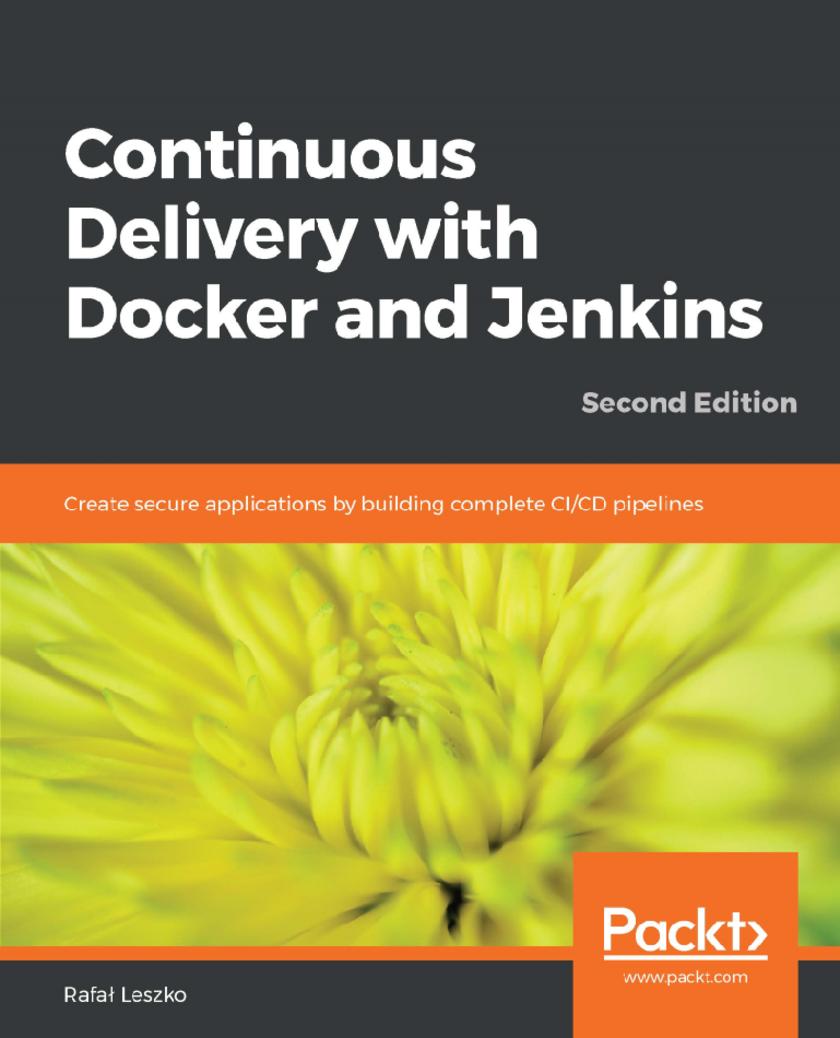
Continuous Delivery with Docker and Jenkins
¥79.56
Create a complete Continuous Delivery process using modern DevOps tools such as Docker, Kubernetes, Jenkins, Docker Hub, Ansible, GitHub and many more. Key Features * Build reliable and secure applications using Docker containers. * Create a highly available environment to scale a Docker servers using Kubernetes * Implement advance continuous delivery process by parallelizing the pipeline tasks Book Description Continuous Delivery with Docker and Jenkins, Second Edition will explain the advantages of combining Jenkins and Docker to improve the continuous integration and delivery process of an app development. It will start with setting up a Docker server and configuring Jenkins on it. It will then provide steps to build applications on Docker files and integrate them with Jenkins using continuous delivery processes such as continuous integration, automated acceptance testing, and configuration management. Moving on, you will learn how to ensure quick application deployment with Docker containers along with scaling Jenkins using Kubernetes. Next, you will get to know how to deploy applications using Docker images and testing them with Jenkins. Towards the end, the book will touch base with missing parts of the CD pipeline, which are the environments and infrastructure, application versioning, and nonfunctional testing. By the end of the book, you will be enhancing the DevOps workflow by integrating the functionalities of Docker and Jenkins. What you will learn * Get to grips with docker fundamentals and how to dockerize an application for the CD process * Learn how to use Jenkins on the Cloud environments * Scale a pool of Docker servers using Kubernetes * Create multi-container applications using Docker Compose * Write acceptance tests using Cucumber and run them in the Docker ecosystem using Jenkins * Publish a built Docker image to a Docker Registry and deploy cycles of Jenkins pipelines using community best practices Who this book is for The book targets DevOps engineers, system administrators, docker professionals or any stakeholders who would like to explore the power of working with Docker and Jenkins together. No prior knowledge of DevOps is required for this book.
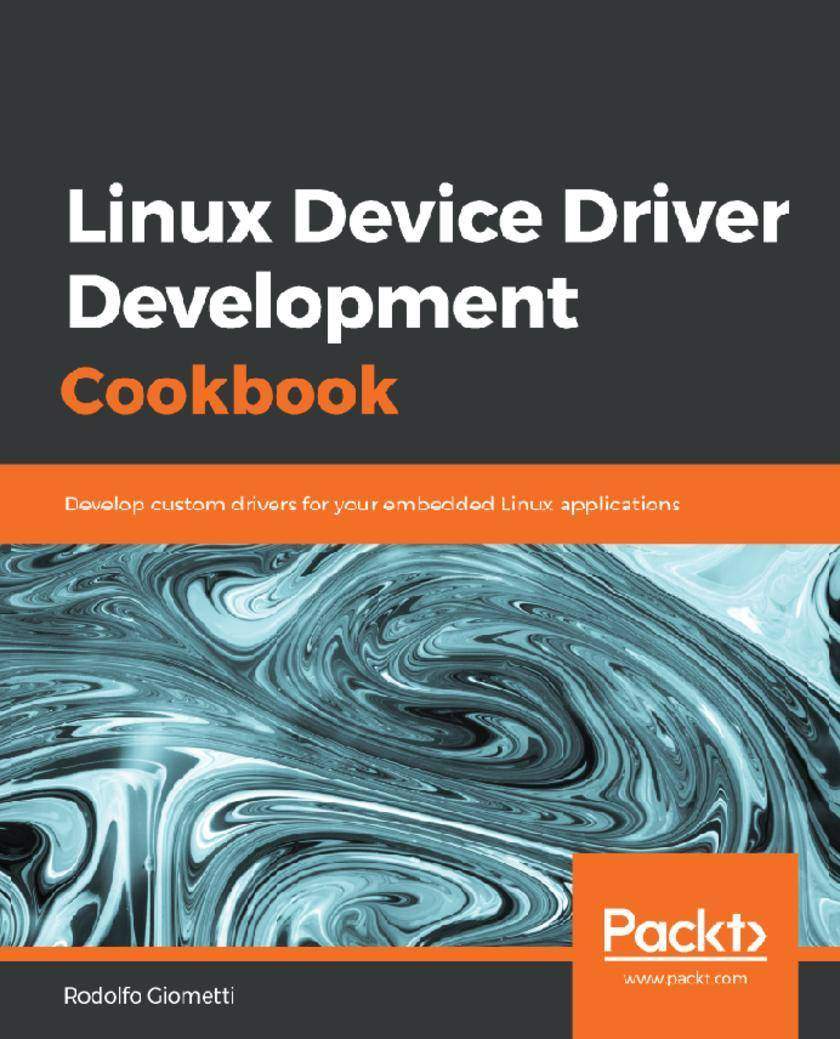
Linux Device Driver Development Cookbook
¥70.84
Over 30 recipes to develop custom drivers for your embedded Linux applications. Key Features * Use Kernel facilities to develop powerful drivers * Via a practical approach, learn core concepts of developing device drivers * Program a custom character device to get access to kernel internals Book Description Linux is a unified kernel that is widely used to develop embedded systems. As Linux has turned out to be one of the most popular operating systems used, the interest in developing proprietary device drivers has also increased. Device drivers play a critical role in how the system performs and ensures that the device works in the manner intended. By offering several examples on the development of character devices and how to use other kernel internals, such as interrupts, kernel timers, and wait queue, as well as how to manage a device tree, you will be able to add proper management for custom peripherals to your embedded system. You will begin by installing the Linux kernel and then configuring it. Once you have installed the system, you will learn to use the different kernel features and the character drivers. You will also cover interrupts in-depth and how you can manage them. Later, you will get into the kernel internals required for developing applications. Next, you will implement advanced character drivers and also become an expert in writing important Linux device drivers. By the end of the book, you will be able to easily write a custom character driver and kernel code as per your requirements. What you will learn * Become familiar with the latest kernel releases (4.19+/5.x) running on the ESPRESSObin devkit, an ARM 64-bit machine * Download, configure, modify, and build kernel sources * Add and remove a device driver or a module from the kernel * Master kernel programming * Understand how to implement character drivers to manage different kinds of computer peripherals * Become well versed with kernel helper functions and objects that can be used to build kernel applications * Acquire a knowledge of in-depth concepts to manage custom hardware with Linux from both the kernel and user space Who this book is for This book will help anyone who wants to develop their own Linux device drivers for embedded systems. Having basic hand-on with Linux operating system and embedded concepts is necessary.
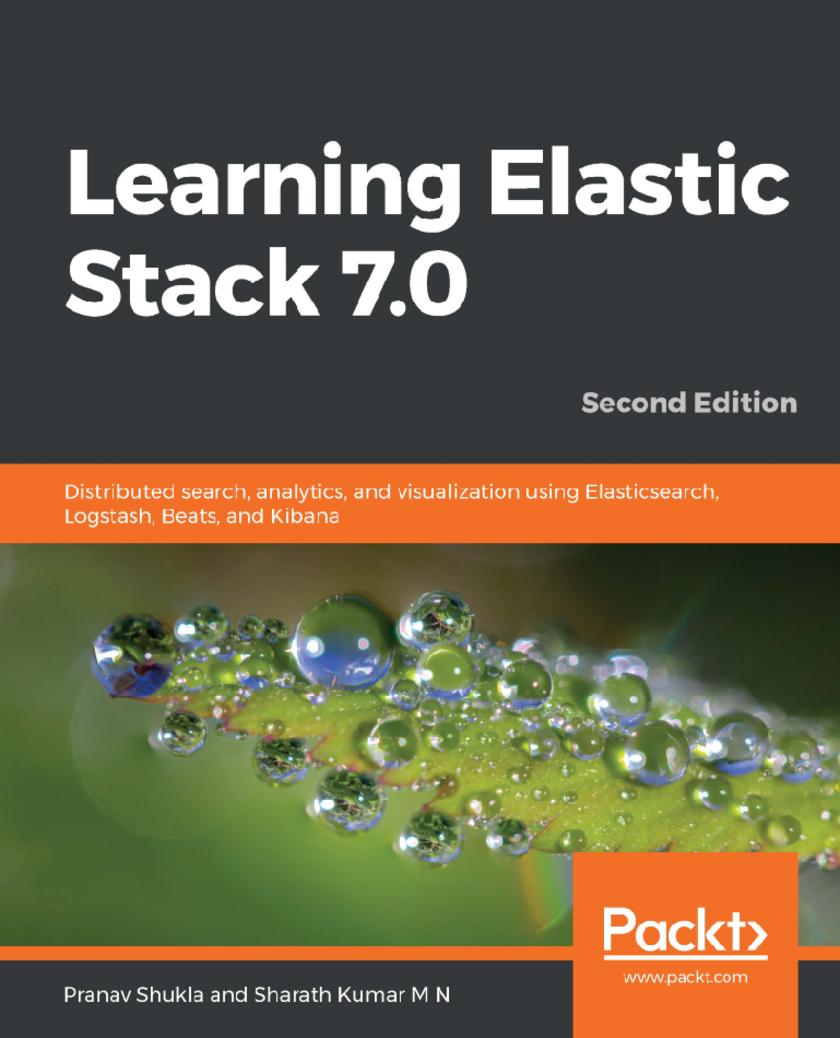
Learning Elastic Stack 7.0
¥62.12
A beginner's guide to storing, managing, and analyzing data with the updated features of Elastic 7.0 Key Features * Gain access to new features and updates introduced in Elastic Stack 7.0 * Grasp the fundamentals of Elastic Stack including Elasticsearch, Logstash, and Kibana * Explore useful tips for using Elastic Cloud and deploying Elastic Stack in production environments Book Description The Elastic Stack is a powerful combination of tools for techniques such as distributed search, analytics, logging, and visualization of data. Elastic Stack 7.0 encompasses new features and capabilities that will enable you to find unique insights into analytics using these techniques. This book will give you a fundamental understanding of what the stack is all about, and help you use it efficiently to build powerful real-time data processing applications. The first few sections of the book will help you understand how to set up the stack by installing tools, and exploring their basic configurations. You’ll then get up to speed with using Elasticsearch for distributed searching and analytics, Logstash for logging, and Kibana for data visualization. As you work through the book, you will discover the technique of creating custom plugins using Kibana and Beats. This is followed by coverage of the Elastic X-Pack, a useful extension for effective security and monitoring. You’ll also find helpful tips on how to use Elastic Cloud and deploy Elastic Stack in production environments. By the end of this book, you’ll be well versed with the fundamental Elastic Stack functionalities and the role of each component in the stack to solve different data processing problems. What you will learn * Install and configure an Elasticsearch architecture * Solve the full-text search problem with Elasticsearch * Discover powerful analytics capabilities through aggregations using Elasticsearch * Build a data pipeline to transfer data from a variety of sources into Elasticsearch for analysis * Create interactive dashboards for effective storytelling with your data using Kibana * Learn how to secure, monitor and use Elastic Stack’s alerting and reporting capabilities * Take applications to an on-premise or cloud-based production environment with Elastic Stack Who this book is for This book is for entry-level data professionals, software engineers, e-commerce developers, and full-stack developers who want to learn about Elastic Stack and how the real-time processing and search engine works for business analytics and enterprise search applications. Previous experience with Elastic Stack is not required, however knowledge of data warehousing and database concepts will be helpful.
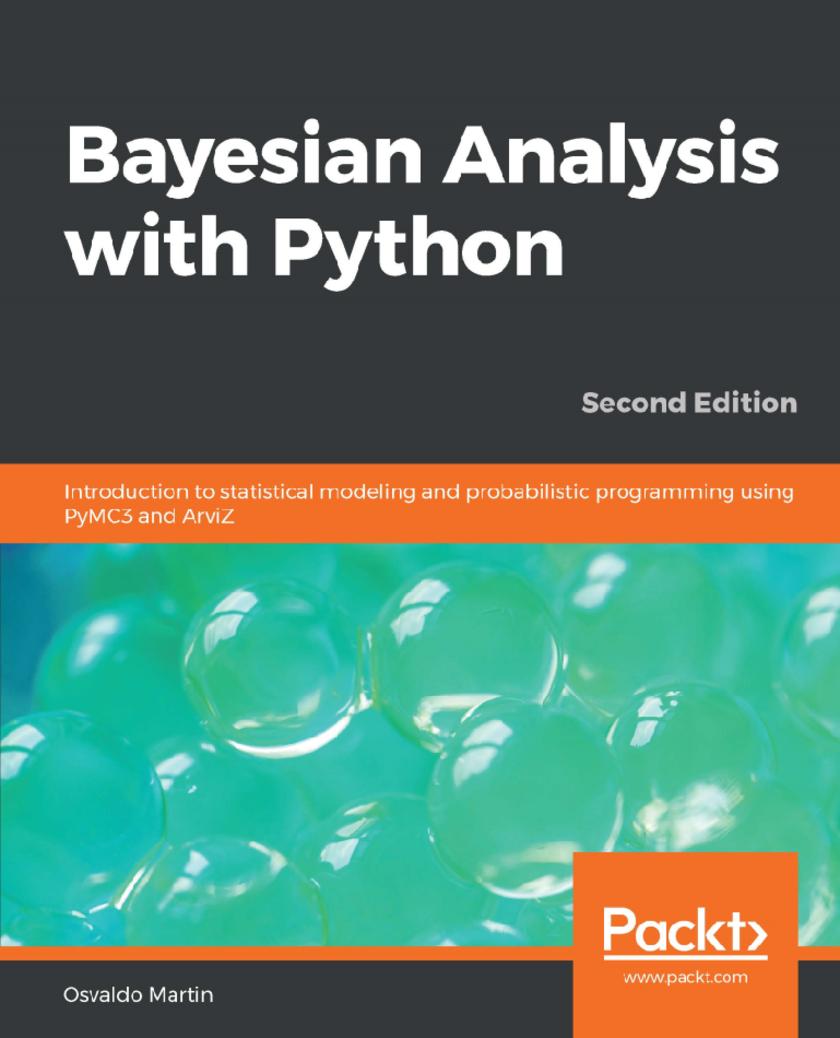
Bayesian Analysis with Python
¥81.74
Bayesian modeling with PyMC3 and exploratory analysis of Bayesian models with ArviZ Key Features *A step-by-step guide to conduct Bayesian data analyses using PyMC3 and ArviZ *A modern, practical and computational approach to Bayesian statistical modeling *A tutorial for Bayesian analysis and best practices with the help of sample problems and practice exercises. Book Description The second edition of Bayesian Analysis with Python is an introduction to the main concepts of applied Bayesian inference and its practical implementation in Python using PyMC3, a state-of-the-art probabilistic programming library, and ArviZ, a new library for exploratory analysis of Bayesian models. The main concepts of Bayesian statistics are covered using a practical and computational approach. Synthetic and real data sets are used to introduce several types of models, such as generalized linear models for regression and classification, mixture models, hierarchical models, and Gaussian processes, among others. By the end of the book, you will have a working knowledge of probabilistic modeling and you will be able to design and implement Bayesian models for your own data science problems. After reading the book you will be better prepared to delve into more advanced material or specialized statistical modeling if you need to. What you will learn *Build probabilistic models using the Python library PyMC3 *Analyze probabilistic models with the help of ArviZ *Acquire the skills required to sanity check models and modify them if necessary *Understand the advantages and caveats of hierarchical models *Find out how different models can be used to answer different data analysis questions *Compare models and choose between alternative ones *Discover how different models are unified from a probabilistic perspective *Think probabilistically and benefit from the flexibility of the Bayesian framework Who this book is for If you are a student, data scientist, researcher, or a developer looking to get started with Bayesian data analysis and probabilistic programming, this book is for you. The book is introductory so no previous statistical knowledge is required, although some experience in using Python and NumPy is expected.
Mastering Geospatial Development with QGIS 3.x
¥73.02
Go beyond the basics and unleash the full power of QGIS 3.4 and 3.6 with practical, step-by-step examples Key Features * One-stop solution to all of your GIS needs * Master QGIS by learning about database integration, and geoprocessing tools * Learn about the new and updated Processing toolbox and perform spatial analysis Book Description QGIS is an open source solution to GIS and widely used by GIS professionals all over the world. It is the leading alternative to proprietary GIS software. Although QGIS is described as intuitive, it is also, by default, complex. Knowing which tools to use and how to apply them is essential to producing valuable deliverables on time. Starting with a refresher on the QGIS basics and getting you acquainted with the latest QGIS 3.6 updates, this book will take you all the way through to teaching you how to create a spatial database and a GeoPackage. Next, you will learn how to style raster and vector data by choosing and managing different colors. The book will then focus on processing raster and vector data. You will be then taught advanced applications, such as creating and editing vector data. Along with that, you will also learn about the newly updated Processing Toolbox, which will help you develop the advanced data visualizations. The book will then explain to you the graphic modeler, how to create QGIS plugins with PyQGIS, and how to integrate Python analysis scripts with QGIS. By the end of the book, you will understand how to work with all aspects of QGIS and will be ready to use it for any type of GIS work. What you will learn * Create and manage a spatial database * Get to know advanced techniques to style GIS data * Prepare both vector and raster data for processing * Add heat maps, live layer effects, and labels to your maps * Master LAStools and GRASS integration with the Processing Toolbox * Edit and repair topological data errors * Automate workflows with batch processing and the QGIS Graphical Modeler * Integrate Python scripting into your data processing workflows * Develop your own QGIS plugins Who this book is for If you are a GIS professional, a consultant, a student, or perhaps a fast learner who wants to go beyond the basics of QGIS, then this book is for you. It will prepare you to realize the full potential of QGIS.
Hands-On Generative Adversarial Networks with Keras
¥70.84
Develop generative models for a variety of real-world use-cases and deploy them to production Key Features * Discover various GAN architectures using Python and Keras library * Understand how GAN models function with the help of theoretical and practical examples * Apply your learnings to become an active contributor to open source GAN applications Book Description Generative Adversarial Networks (GANs) have revolutionized the fields of machine learning and deep learning. This book will be your first step towards understanding GAN architectures and tackling the challenges involved in training them. This book opens with an introduction to deep learning and generative models, and their applications in artificial intelligence (AI). You will then learn how to build, evaluate, and improve your first GAN with the help of easy-to-follow examples. The next few chapters will guide you through training a GAN model to produce and improve high-resolution images. You will also learn how to implement conditional GANs that give you the ability to control characteristics of GAN outputs. You will build on your knowledge further by exploring a new training methodology for progressive growing of GANs. Moving on, you'll gain insights into state-of-the-art models in image synthesis, speech enhancement, and natural language generation using GANs. In addition to this, you'll be able to identify GAN samples with TequilaGAN. By the end of this book, you will be well-versed with the latest advancements in the GAN framework using various examples and datasets, and you will have the skills you need to implement GAN architectures for several tasks and domains, including computer vision, natural language processing (NLP), and audio processing. Foreword by Ting-Chun Wang, Senior Research Scientist, NVIDIA What you will learn * Learn how GANs work and the advantages and challenges of working with them * Control the output of GANs with the help of conditional GANs, using embedding and space manipulation * Apply GANs to computer vision, NLP, and audio processing * Understand how to implement progressive growing of GANs * Use GANs for image synthesis and speech enhancement * Explore the future of GANs in visual and sonic arts * Implement pix2pixHD to turn semantic label maps into photorealistic images Who this book is for This book is for machine learning practitioners, deep learning researchers, and AI enthusiasts who are looking for a perfect mix of theory and hands-on content in order to implement GANs using Keras. Working knowledge of Python is expected.
OpenCV 4 Computer Vision Application Programming Cookbook
¥70.84
Discover interesting recipes to help you understand the concepts of object detection, image processing, and facial detection Key Features * Explore the latest features and APIs in OpenCV 4 and build computer vision algorithms * Develop effective, robust, and fail-safe vision for your applications * Build computer vision algorithms with machine learning capabilities Book Description OpenCV is an image and video processing library used for all types of image and video analysis. Throughout the book, you'll work through recipes that implement a variety of tasks, such as facial recognition and detection. With 70 self-contained tutorials, this book examines common pain points and best practices for computer vision (CV) developers. Each recipe addresses a specific problem and offers a proven, best-practice solution with insights into how it works, so that you can copy the code and configuration files and modify them to suit your needs. This book begins by setting up OpenCV, and explains how to manipulate pixels. You'll understand how you can process images with classes and count pixels with histograms. You'll also learn detecting, describing, and matching interest points. As you advance through the chapters, you'll get to grips with estimating projective relations in images, reconstructing 3D scenes, processing video sequences, and tracking visual motion. In the final chapters, you'll cover deep learning concepts such as face and object detection. By the end of the book, you'll be able to confidently implement a range to computer vision algorithms to meet the technical requirements of your complex CV projects What you will learn * Install and create a program using the OpenCV library * Segment images into homogenous regions and extract meaningful objects * Apply image filters to enhance image content * Exploit image geometry to relay different views of a pictured scene * Calibrate the camera from different image observations * Detect people and objects in images using machine learning techniques * Reconstruct a 3D scene from images * Explore face detection using deep learning Who this book is for If you’re a CV developer or professional who already uses or would like to use OpenCV for building computer vision software, this book is for you. You’ll also find this book useful if you’re a C++ programmer looking to extend your computer vision skillset by learning OpenCV.
Hands-On Network Programming with C
¥62.12
A comprehensive guide to programming with network sockets, implementing Internet protocols, designing IoT devices, and much more with C Key Features * Leverage your C or C++ programming skills to build powerful network applications * Get to grips with a variety of network protocols that allow you to load web pages, send emails, and do much more * Write portable network code for operating systems such as Windows, Linux, and macOS Book Description Network programming, a challenging topic in C, is made easy to understand with a careful exposition of socket programming APIs. This book gets you started with modern network programming in C and the right use of relevant operating system APIs. This book covers core concepts, such as hostname resolution with DNS, that are crucial to the functioning of the modern web. You’ll delve into the fundamental network protocols, TCP and UDP. Essential techniques for networking paradigms such as client-server and peer-to-peer models are explained with the help of practical examples. You’ll also study HTTP and HTTPS (the protocols responsible for web pages) from both the client and server perspective. To keep up with current trends, you’ll apply the concepts covered in this book to gain insights into web programming for IoT. You’ll even get to grips with network monitoring and implementing security best practices. By the end of this book, you’ll have experience of working with client-server applications, and be able to implement new network programs in C. The code in this book is compatible with the older C99 version as well as the latest C18 and C++17 standards. Special consideration is given to writing robust, reliable, and secure code that is portable across operating systems, including Winsock sockets for Windows and POSIX sockets for Linux and macOS. What you will learn * Uncover cross-platform socket programming APIs * Implement techniques for supporting IPv4 and IPv6 * Understand how TCP and UDP connections work over IP * Discover how hostname resolution and DNS work * Interface with web APIs using HTTP and HTTPS * Acquire hands-on experience with Simple Mail Transfer Protocol (SMTP) * Apply network programming to the Internet of Things (IoT) Who this book is for If you're a developer or a system administrator who wants to enter the world of network programming, this book is for you. Basic knowledge of C programming is assumed.
Julia 1.0 Programming Complete Reference Guide
¥88.28
Learn dynamic programming with Julia to build apps for data analysis, visualization, machine learning, and the web Key Features * Leverage Julia's high speed and efficiency to build fast, efficient applications * Perform supervised and unsupervised machine learning and time series analysis * Tackle problems concurrently and in a distributed environment Book Description Julia offers the high productivity and ease of use of Python and R with the lightning-fast speed of C++. There’s never been a better time to learn this language, thanks to its large-scale adoption across a wide range of domains, including fintech, biotech and artificial intelligence (AI). You will begin by learning how to set up a running Julia platform, before exploring its various built-in types. This Learning Path walks you through two important collection types: arrays and matrices. You’ll be taken through how type conversions and promotions work, and in further chapters you'll study how Julia interacts with operating systems and other languages. You’ll also learn about the use of macros, what makes Julia suitable for numerical and scientific computing, and how to run external programs. Once you have grasped the basics, this Learning Path goes on to how to analyze the Iris dataset using DataFrames. While building a web scraper and a web app, you’ll explore the use of functions, methods, and multiple dispatches. In the final chapters, you'll delve into machine learning, where you'll build a book recommender system. By the end of this Learning Path, you’ll be well versed with Julia and have the skills you need to leverage its high speed and efficiency for your applications. This Learning Path includes content from the following Packt products: * Julia 1.0 Programming - Second Edition by Ivo Balbaert * Julia Programming Projects by Adrian Salceanu What you will learn * Create your own types to extend the built-in type system * Visualize your data in Julia with plotting packages * Explore the use of built-in macros for testing and debugging * Integrate Julia with other languages such as C, Python, and MATLAB * Analyze and manipulate datasets using Julia and DataFrames * Develop and run a web app using Julia and the HTTP package * Build a recommendation system using supervised machine learning Who this book is for If you are a statistician or data scientist who wants a quick course in the Julia programming language while building big data applications, this Learning Path is for you. Basic knowledge of mathematics and programming is a must.


