


 购物车
购物车 个人中心
个人中心
Lumion 3D Cookbook
¥79.56
This book offers uses practical applications using recipes with step-by-step instructions and useful information to help you master how to produce professional architectural visualizations in Lumion. The cookbook approach means you need to think and explore how a particular feature can be applied in your project and perform the intended task. This book is written to be accessible to all Lumion users and is a useful guide to follow when becoming familiar with this cutting-edge real-time technology.This practical guide is designed for all levels of Lumion users who know how to model buildings in 3D and a basic understanding of Lumion, who want to enhance their skills to the next level.
Puppet Reporting and Monitoring
¥54.49
An easy to follow guide with extensive examples to explain Puppet's reporting capabilities to facilitate effective implementation of Puppet in the real world as a reporting tool.If you are a Puppet developer or a system administrator using Puppet, and you want to extend your expertise to manage and optimize your server resources, then this book is for you.
Appcelerator Titanium Smartphone App Development Cookbook - Second Edition
¥80.65
Over 100 recipes to help you develop cross-platform, native applications in JavaScript About This Book Leverage your JavaScript skills to write mobile applications using Titanium Studio tools with the native advantage Deploy your application on the App Store and Google Play Add your own IOS native modules in objective-C, in an easy-to-follow step-by-step format Who This Book Is For This book is an essential for any developer learning or using JavaScript who wants to write native UI applications for iOS and Android. No knowledge of Objective-C, Swift and Java is required and you’ll quickly be developing native, cross-platform apps, in JavaScript! What You Will Learn Transfer data between applications with URL schemes, and make your application accessible to other mobile applications and services Connect with remote services using JSON Work with Google Maps and Apple Maps, GPS and annotate routes Create animations and special effects Integrate notifications and connect with social media services such as Facebook and Twitter Build applications with Alloy MVC – a rapid application development framework Design native APIs and use local databases In Detail The mobile web has paved the way but many users want to have “native” applications installed. Using Appcelerator as a platform it’s now possible to write iOS, Android, and Windows phone applications in JavaScript! It allows developers to develop fully native UI applications using Appcelerator studio tools without any knowledge of Objective-C, Swift or Java. This book will take you through the process of building cross-platform, native UI applications for the mobile from scratch. You will learn how to develop apps, how to use GPS, cameras and photos and how to build socially connected apps. You will also learn how to package them for submission to the App Store and Google Play. This cookbook takes a pragmatic approach to creating applications in JavaScript from putting together basic UIs, to handling events and implementation of third party services such as Twitter, Facebook and Push notifications. The book shows you how to integrate datasources and server APIs, and how to use local databases. The topics covered will guide you to use Appcelerator Studio tools for all the mobile features such as Geolocation, Accelerometer, animation and more. You’ll also learn about Alloy, the Appcelerator MVC framework for rapid app development, and how to transfer data between applications using URLSchemes, enabling other developers to access and launch specific parts of your app. Finally, you will learn how to register developer accounts and publish your very own applications on the App Store and Google Play. Style and approach This book offers a set of practical recipes with a step-by-step approach for building native applications for both the iOS and Android using JavaScript. This hands-on guide shows you exactly how to use the Appcelerator platform to rapidly develop cross-platform, native apps.
Test-Driven Machine Learning
¥71.93
Control your machine learning algorithms using test-driven development to achieve quantifiable milestones About This Book Build smart extensions to pre-existing features at work that can help maximize their value Quantify your models to drive real improvement Take your knowledge of basic concepts, such as linear regression and Na?ve Bayes classification, to the next level and productionalize their models Play what-if games with your models and techniques by following the test-driven exploration process Who This Book Is For This book is intended for data technologists (scientists, analysts, or developers) with previous machine learning experience who are also comfortable reading code in Python. You may be starting, or have already started, a machine learning project at work and are looking for a way to deliver results quickly to enable rapid iteration and improvement. Those looking for examples of how to isolate issues in models and improve them will find ideas in this book to move forward. What You Will Learn Get started with an introduction to test-driven development and familiarize yourself with how to apply these concepts to machine learning Build and test a neural network deterministically, and learn to look for niche cases that cause odd model behaviour Learn to use the multi-armed bandit algorithm to make optimal choices in the face of an enormous amount of uncertainty Generate complex and simple random data to create a wide variety of test cases that can be codified into tests Develop models iteratively, even when using a third-party library Quantify model quality to enable collaboration and rapid iteration Adopt simpler approaches to common machine learning algorithms Take behaviour-driven development principles to articulate test intent In Detail Machine learning is the process of teaching machines to remember data patterns, using them to predict future outcomes, and offering choices that would appeal to individuals based on their past preferences. Machine learning is applicable to a lot of what you do every day. As a result, you can’t take forever to deliver your first iteration of software. Learning to build machine learning algorithms within a controlled test framework will speed up your time to deliver, quantify quality expectations with your clients, and enable rapid iteration and collaboration. This book will show you how to quantifiably test machine learning algorithms. The very different, foundational approach of this book starts every example algorithm with the simplest thing that could possibly work. With this approach, seasoned veterans will find simpler approaches to beginning a machine learning algorithm. You will learn how to iterate on these algorithms to enable rapid delivery and improve performance expectations. The book begins with an introduction to test driving machine learning and quantifying model quality. From there, you will test a neural network, predict values with regression, and build upon regression techniques with logistic regression. You will discover how to test different approaches to na?ve bayes and compare them quantitatively, along with how to apply OOP (Object-Oriented Programming) and OOP patterns to test-driven code, leveraging SciKit-Learn. Finally, you will walk through the development of an algorithm which maximizes the expected value of profit for a marketing campaign by combining one of the classifiers covered with the multiple regression example in the book. Style and approach An example-driven guide that builds a deeper knowledge and understanding of iterative machine learning development, test by test. Each topic develops solutions using failing tests to illustrate problems; these are followed by steps to pass the tests, simply and straightforwardly. Topics which use generated data explore how the data was generated, alongside explanations of the assumptions behind different machine learning techniques.
Oracle SOA Suite 12c Administrator's Guide
¥107.90
A guide to everything an Oracle SOA Suite 12c administrator needs to hit the ground running About This Book Understand core administrative tasks such as deployments, purging, startup and shutdown, configuration, and backup and recovery Manage, monitor, and troubleshoot SOA composites and OSB services Follow step-by-step instructions to easily and quickly install a highly available two-node cluster Who This Book Is For With topic areas ranging from the simple to the complex, this book is intended for novice, mid-level, and experienced administrators of the Oracle SOA Suite 12c platform as well as Oracle WebLogic Server and Oracle Database administrators interested in diving into the product. What You Will Learn Navigate Oracle Enterprise Manager Fusion Middleware Control Monitor and manage the Oracle SOA Suite 12 c infrastructure Deploy and promote code Monitor and manage services Configure and administer the environment Manage the dehydration store and enterprise scheduler service Troubleshoot Oracle SOA Suite 12c infrastructure Set up backups, recovery, and high availability In Detail Oracle SOA Suite 12 c is the most comprehensive and integrated infrastructure on the market today that is used for building applications based on service-oriented architecture. With the vast number of features and capabilities that Oracle SOA Suite 12c has to offer comes numerous complexities and challenges for administration. Oracle SOA Suite 12c Administrator's Guide covers all the core areas of administration needed for you to effectively manage and monitor the Oracle SOA Suite environment and its transactions, from deployments, to monitoring, to performance tuning, and much, much more. Manage, monitor, and troubleshoot SOA composites and OSB services from a single product set. Understand core administrative activities such as deployments, purging, startup and shutdown, configuration, backup, and recovery. Also learn about new features such as Oracle Enterprise Scheduler, lazy loading, work manager groups, high availability, and more. Style and approach Presented in a reference guide format where chapters can be read in any sequence, this book explains the core concepts while providing real-world implementation specifics, detailing the what, why, and how of all the administration-related activities that involve Oracle SOA Suite 12c. We take a step-by-step approach and offers tips, instructions, and examples that you can easily follow and execute.
Creating Data Stories with Tableau Public
¥63.21
Illustrate your data in a more interactive and interesting way using Tableau Public About This Book Learn the basics of creating visualizations with Tableau using this concise reference book Understand how to join and aggregate your data sources using Tableau It is a step by step guide that uses examples to help you understand the key concepts and feature of Tableau Public Who This Book Is For This book is targeted at investigative journalists and bloggers with an interest in making rich and interactive data visualizations. Intermediate Tableau Public users and organizations can also use this book as a reference guide and teaching aid. Members of the media team, such as data specialists, web developers, editors, producers, and managers can also benefit from an understanding of the structure and challenges of writing an interactive and interesting data visualization using Tableau Public. What You Will Learn Connect to various data sources and understand what data is appropriate for Tableau Public Understand chart types and when to use specific chart types with different types of data Join and aggregate data for use in Tableau Public data stories Discover features of Tableau Public, from basic to advanced Involve calculations in Tableau Public Build geographic maps to bring context to data Create dashboards from one or more separate data visualizations Create filters and actions to allow greater interactivity to Tableau Public visualizations and dashboards Publish and embed Tableau visualizations and dashboards in articles In Detail Tableau Public is a very useful tool in anyone's data reporting toolbox that allows authors to add an interactive data element to any article. It allows investigative journalists and bloggers to tell a “data story”, allowing others to explore your data visualization. The relative ease of Tableau Public visualization creation allows data stories to be developed rapidly. It allows readers to explore data associations in multiple-sourced public data, and uses state-of-the-art dashboard and chart graphics to immerse the users in an interactive experience. This book offers investigative journalists, bloggers, and other data story tellers a rich discussion of visualization creation topics, features, and functions. This book allows data story tellers to quickly gain confidence in understanding and expanding their visualization-creation knowledge, and allows them to quickly create interesting, interactive data visualizations to bring a richness and vibrancy to complex articles. The book takes you from basic concepts in visualization creation, like connecting to data sources, cleansing data, chart types, common functions, map creation, and publishing to the Web, to more advanced functions. It is a great overview and reference guide for beginner to intermediate Tableau Public data story tellers, and covers creation of Tableau Public visualizations of varying complexities. Style and approach This book is a crisp, systematic, and tutorial-styled guide to building interactive Tableau visualizations.
Building a Game with Unity and Blender
¥80.65
Learn how to build a complete 3D game using the industry-leading Unity game development engine and Blender, the graphics software that gives life to your ideas About This Book Learn the fundamentals of two powerful tools and put the concepts into practice Find out how to designand buildall the core elements required for a great game - from characters to environments, to props— Learn how to integrate Artificial Intelligence (AI) into your game for sophisticated and engaging gameplay Who This Book Is For This book has been created for anyone who wants to learn how to develop their own game using Blender and Unity, both of which are freely available, yet very popular and powerful, tools. Not only will you be able to master the tools, but you will also learn the entire process of creating a game from the ground up. What You Will Learn Design and create a game concept that will determine how your game will look and how it will be played Construct 3D models of your game characters and create animations for them before importing them into the game Build the game environment from scratch by constructing the terrain and props, and eventually put it all together to form a scene Import and integrate game assets created in Blender into Unity—for example, setting up textures, materials, animation states, and prefabs Develop game structures including a game flow, user interface diagram, game logic, and a state machine Make the game characters move around and perform certain actions either through player inputs or fully controlled by artificial intelligence Create particles and visual effects to enhance the overall visual aesthetic Deploy the game for various types of platforms In Detail In the wake of the indie game development scene, game development tools are no longer luxury items costing up to millions of dollars but are now affordable by smaller teams or even individual developers. Among these cutting-edge applications, Blender and Unity stand out from the crowd as a powerful combination that allows small-to-no budget indie developers or hobbyists alike to develop games that they have always dreamt of creating. Starting from the beginning, this book will cover designing the game concept, constructing the gameplay, creating the characters and environment, implementing game logic and basic artificial intelligence, and finally deploying the game for others to play. By sequentially working through the steps in each chapter, you will quickly master the skills required to develop your dream game from scratch. Style and approach A step-by-step approach with tons of screenshots and sample code for readers to follow and learn from. Each topic is explained sequentially and placed in context so that readers can get a better understanding of every step in the process of creating a fully functional game.
PhoneGap Essentials
¥54.49
Use PhoneGap to build cross-platform mobile applications quickly and efficiently About This Book Build native mobile phone applications with HTML5, JavaScript, and CSS Incorporate smartphone capabilities such as GPS, camera, accelerometer, and more into your apps for any mobile platform Use Cordova view to embed PhoneGap into native applications to either transit smoothly to PhoneGap or incorporate PhoneGap functionalities Who This Book Is For If you are a mobile application developer in iOS or Android, or a web application developer who wants to learn how to make cross-platform mobile applications using PhoneGap, this book is perfect for you. To make the most of this book, it will be helpful if you have prior knowledge of HTML5, CSS, and JavaScript. What You Will Learn Get to grips with the fundamentals of PhoneGap to get started Set up a development environment for Linux, Mac OS, and Windows Use Cordova CLI, workflows, and Plugman Plugin manager to create mobile applications efficiently Understand the development workflow to create native cross-platform mobile applications Embed plugin support to transition to PhoneGap or use it to enhance existing applications Improve your mobile development knowledge using object-oriented programming (OOP), reusable components, and AJAX closures Be empowered to build your own mobile apps quickly with ease Discover tips and tricks to make app development fun and easy In Detail PhoneGap is an open source framework that allows you to quickly build cross-platform mobile apps using HTML5, JavaScript, and CSS. PhoneGap Build is a cloud service that allows you to quickly develop and compile mobile applications without SDKs, compilers, and hardware. PhoneGap allows you to use its existing plugins or create new ones, as per your requirements, to enhance your mobile applications. Starting by installing PhoneGap, you’ll develop an app that uses various device capabilities through different plugins and learn how to build an app in the cloud with PhoneGap’s Build service. You’ll discover how to use PhoneGap to create an application view, along with how to use a camera, geolocation, and other device capabilities to create engaging apps. Next, you’ll augment applications with PhoneGap's plugins using minimalistic code. You’ll explore the app preparation process to deploy your app to the app store. By the end of the book, you’ll have also learned how to apply hybrid mobile UIs that will work across different platforms and different screen sizes for better user experience. Style and approach This is an example-based, fast-paced guide that covers the fundamentals of creating cross-platform mobile applications with PhoneGap.
Redis Essentials
¥71.93
Harness the power of Redis to integrate and manage your projects efficiently About This Book Learn how to use Redis's data types efficiently to manage large data sets Scale Redis to multiple servers with Twemproxy, Redis Sentinel, and Redis Cluster A fast-paced guide, full of real-world examples to help you get the best out of the features offered by Redis Who This Book Is For If you are a competent developer with experience of working with data structure servers and want to boost your project's performance by learning about features of Redis, then this book is for you. What You Will Learn Build analytics applications using Bitmaps and Hyperloglogs Enhance scalability with Twemproxy, Redis Sentinel, and Redis Cluster Build a Time Series implementation in Node.js and Redis Create your own Redis commands by extending Redis with Lua Get to know security techniques to protect your data (SSL encryption, firewall rules, basic authorization) Persist data to disk and learn the trade-offs of AOF and RDB Understand how to use Node.js, PHP, Python, and Ruby clients for Redis Avoid common pitfalls when designing your next solution In Detail Redis is the most popular in-memory key-value data store. It’s very lightweight and its data types give it an edge over the other competitors. If you need an in-memory database or a high-performance cache system that is simple to use and highly scalable, Redis is what you need. Redis Essentials is a fast-paced guide that teaches the fundamentals on data types, explains how to manage data through commands, and shares experiences from big players in the industry. We start off by explaining the basics of Redis followed by the various data types such as Strings, hashes, lists, and more. Next, Common pitfalls for various scenarios are described, followed by solutions to ensure you do not fall into common traps. After this, major differences between client implementations in PHP, Python, and Ruby are presented. Next, you will learn how to extend Redis with Lua, get to know security techniques such as basic authorization, firewall rules, and SSL encryption, and discover how to use Twemproxy, Redis Sentinel, and Redis Cluster to scale infrastructures horizontally. At the end of this book, you will be able to utilize all the essential features of Redis to optimize your project's performance. Style and approach A practical guide that offers the foundation upon which you can begin to understand the capabilities of Redis using a step-by-step approach. This book is full of real-world problems and in-depth knowledge of the concepts and features of Redis, with plenty of examples.
Apache Spark Graph Processing
¥63.21
Build, process and analyze large-scale graph data effectively with Spark About This Book Find solutions for every stage of data processing from loading and transforming graph data to Improve the scalability of your graphs with a variety of real-world applications with complete Scala code. A concise guide to processing large-scale networks with Apache Spark. Who This Book Is For This book is for data scientists and big data developers who want to learn the processing and analyzing graph datasets at scale. Basic programming experience with Scala is assumed. Basic knowledge of Spark is assumed. What You Will Learn Write, build and deploy Spark applications with the Scala Build Tool. Build and analyze large-scale network datasets Analyze and transform graphs using RDD and graph-specific operations Implement new custom graph operations tailored to specific needs. Develop iterative and efficient graph algorithms using message aggregation and Pregel abstraction Extract subgraphs and use it to discover common clusters Analyze graph data and solve various data science problems using real-world datasets. In Detail Apache Spark is the next standard of open-source cluster-computing engine for processing big data. Many practical computing problems concern large graphs, like the Web graph and various social networks. The scale of these graphs - in some cases billions of vertices, trillions of edges - poses challenges to their efficient processing. Apache Spark GraphX API combines the advantages of both data-parallel and graph-parallel systems by efficiently expressing graph computation within the Spark data-parallel framework. This book will teach the user to do graphical programming in Apache Spark, apart from an explanation of the entire process of graphical data analysis. You will journey through the creation of graphs, its uses, its exploration and analysis and finally will also cover the conversion of graph elements into graph structures. This book begins with an introduction of the Spark system, its libraries and the Scala Build Tool. Using a hands-on approach, this book will quickly teach you how to install and leverage Spark interactively on the command line and in a standalone Scala program. Then, it presents all the methods for building Spark graphs using illustrative network datasets. Next, it will walk you through the process of exploring, visualizing and analyzing different network characteristics. This book will also teach you how to transform raw datasets into a usable form. In addition, you will learn powerful operations that can be used to transform graph elements and graph structures. Furthermore, this book also teaches how to create custom graph operations that are tailored for specific needs with efficiency in mind. The later chapters of this book cover more advanced topics such as clustering graphs, implementing graph-parallel iterative algorithms and learning methods from graph data. Style and approach A step-by-step guide that will walk you through the key ideas and techniques for processing big graph data at scale, with practical examples that will ensure an overall understanding of the concepts of Spark.
Python Machine Learning
¥80.65
Unlock deeper insights into Machine Leaning with this vital guide to cutting-edge predictive analytics About This Book Leverage Python’s most powerful open-source libraries for deep learning, data wrangling, and data visualization Learn effective strategies and best practices to improve and optimize machine learning systems and algorithms Ask – and answer – tough questions of your data with robust statistical models, built for a range of datasets Who This Book Is For If you want to find out how to use Python to start answering critical questions of your data, pick up Python Machine Learning – whether you want to get started from scratch or want to extend your data science knowledge, this is an essential and unmissable resource. What You Will Learn Explore how to use different machine learning models to ask different questions of your data Learn how to build neural networks using Keras and Theano Find out how to write clean and elegant Python code that will optimize the strength of your algorithms Discover how to embed your machine learning model in a web application for increased accessibility Predict continuous target outcomes using regression analysis Uncover hidden patterns and structures in data with clustering Organize data using effective pre-processing techniques Get to grips with sentiment analysis to delve deeper into textual and social media data In Detail Machine learning and predictive analytics are transforming the way businesses and other organizations operate. Being able to understand trends and patterns in complex data is critical to success, becoming one of the key strategies for unlocking growth in a challenging contemporary marketplace. Python can help you deliver key insights into your data – its unique capabilities as a language let you build sophisticated algorithms and statistical models that can reveal new perspectives and answer key questions that are vital for success. Python Machine Learning gives you access to the world of predictive analytics and demonstrates why Python is one of the world’s leading data science languages. If you want to ask better questions of data, or need to improve and extend the capabilities of your machine learning systems, this practical data science book is invaluable. Covering a wide range of powerful Python libraries, including scikit-learn, Theano, and Keras, and featuring guidance and tips on everything from sentiment analysis to neural networks, you’ll soon be able to answer some of the most important questions facing you and your organization. Style and approach Python Machine Learning connects the fundamental theoretical principles behind machine learning to their practical application in a way that focuses you on asking and answering the right questions. It walks you through the key elements of Python and its powerful machine learning libraries, while demonstrating how to get to grips with a range of statistical models.
Mastering Social Media Mining with R
¥63.21
Extract valuable data from your social media sites and make better business decisions using R About This Book Explore the social media APIs in R to capture data and tame it Employ the machine learning capabilities of R to gain optimal business value A hands-on guide with real-world examples to help you take advantage of the vast opportunities that come with social media data Who This Book Is For If you have basic knowledge of R in terms of its libraries and are aware of different machine learning techniques, this book is for you. Those with experience in data analysis who are interested in mining social media data will find this book useful. What You Will Learn Access APIs of popular social media sites and extract data Perform sentiment analysis and identify trending topics Measure CTR performance for social media campaigns Implement exploratory data analysis and correlation analysis Build a logistic regression model to detect spam messages Construct clusters of pictures using the K-means algorithm and identify popular personalities and destinations Develop recommendation systems using Collaborative Filtering and the Apriori algorithm In Detail With an increase in the number of users on the web, the content generated has increased substantially, bringing in the need to gain insights into the untapped gold mine that is social media data. For computational statistics, R has an advantage over other languages in providing readily-available data extraction and transformation packages, making it easier to carry out your ETL tasks. Along with this, its data visualization packages help users get a better understanding of the underlying data distributions while its range of "standard" statistical packages simplify analysis of the data. This book will teach you how powerful business cases are solved by applying machine learning techniques on social media data. You will learn about important and recent developments in the field of social media, along with a few advanced topics such as Open Authorization (OAuth). Through practical examples, you will access data from R using APIs of various social media sites such as Twitter, Facebook, Instagram, GitHub, Foursquare, LinkedIn, Blogger, and other networks. We will provide you with detailed explanations on the implementation of various use cases using R programming. With this handy guide, you will be ready to embark on your journey as an independent social media analyst. Style and approach This easy-to-follow guide is packed with hands-on, step-by-step examples that will enable you to convert your real-world social media data into useful, practical information.
DynamoDB Cookbook
¥63.21
Over 90 hands-on recipes to design Internet scalable web and mobile applications with Amazon DynamoDB About This Book Construct top-notch mobile and web applications with the Internet scalable NoSQL database and host it on cloud Integrate your applications with other AWS services like AWS EMR, AWS S3, AWS Redshift, and AWS CloudSearch etc. in order to achieve a one-stop application stack Step-by-step implementation guide that provides real-world use with hands-on recipes Who This Book Is For This book is intended for those who have a basic understanding of AWS services and want to take their knowledge to the next level by getting their hands dirty with coding recipes in DynamoDB. What You Will Learn Design DynamoDB tables to achieve high read and write throughput Discover best practices like caching, exponential back-offs and auto-retries, storing large items in AWS S3, storing compressed data etc. Effectively use DynamoDB Local in order to make your development smooth and cost effective Implement cost effective best practices to reduce the burden of DynamoDB charges Create and maintain secondary indexes to support improved data access Integrate various other AWS services like AWS EMR, AWS CloudSearch, AWS Pipeline etc. with DynamoDB In Detail AWS DynamoDB is an excellent example of a production-ready NoSQL database. In recent years, DynamoDB has been able to attract many customers because of its features like high-availability, reliability and infinite scalability. DynamoDB can be easily integrated with massive data crunching tools like Hadoop /EMR, which is an essential part of this data-driven world and hence it is widely accepted. The cost and time-efficient design makes DynamoDB stand out amongst its peers. The design of DynamoDB is so neat and clean that it has inspired many NoSQL databases to simply follow it. This book will get your hands on some engineering best practices DynamoDB engineers use, which can be used in your day-to-day life to build robust and scalable applications. You will start by operating with DynamoDB tables and learn to manipulate items and manage indexes. You will also discover how to easily integrate applications with other AWS services like EMR, S3, CloudSearch, RedShift etc. A couple of chapters talk in detail about how to use DynamoDB as a backend database and hosting it on AWS ElasticBean. This book will also focus on security measures of DynamoDB as well by providing techniques on data encryption, masking etc. By the end of the book you’ll be adroit in designing web and mobile applications using DynamoDB and host it on cloud. Style and approach An easy-to-follow guide, full of real-world examples, which takes you through the world of DynamoDB following a step-by-step, problem-solution based approach.
Raspberry Pi Android Projects
¥63.21
Create exciting projects by connecting the Raspberry Pi to your Android phone About This Book Manage most of the fundamental functions of Raspberry Pi from your Android phone Use the projects created in this book to develop even more exciting projects in the future A project-based learning experience to help you discover amazing ways to combine the power of Android and Raspberry Pi Who This Book Is For The target audience for this book includes Raspberry Pi enthusiasts, hobbyists, and anyone who wants to create engaging projects with Android OS. Some knowledge of Android programming would be helpful. What You Will Learn Install the tools required on your Pi and Android to manage and administer the Pi from Android Share your files between different Android devices using the Pi as a server Set up the Pi to live-stream the camera in surveillance mode and customize Android to receive this content Turn your Pi into a media center and control it from your Android See your Android display on a large screen using Raspberry Pi Connect your car's dashboard to your Android device using Raspberry Pi In Detail Raspberry Pi is the credit card-sized, general purpose computer which has revolutionized portable technology. Android is an operating system that widely used in mobile phones today both on the high and low ends of the mobile phone market. However, there is little information about how to connect the two in spite of how popular both of them are. Raspberry Pi Android Projects starts with simple projects that help you access the command prompt and the desktop environment of Raspberry Pi from the comfort of your Android phone or tablet. Then, you will be introduced to more complex projects that combine the strengths of the Pi and Android in amazing ways. These projects will teach you how to manage services on the Pi from Android, share files between Android devices using the Pi as a server, administer and view the Pi’s camera from Android in surveillance mode, and connect your car to the Pi and make data more accessible using Android. The introductory projects covered will be useful each time you need to access or administer your Pi for other purposes, and the more advanced projects will continue to be valuable even after you become an expert on Pi. By the end of this book, you will be able to create engaging and useful projects that will help you combine the powers of both Android and Raspberry Pi. Style and approach A quick and easy-to-follow guide that will show how you can add up the power of Pi and Android by combining them.

Manga Studio Ex 5 Cookbook
¥80.65
Over 90 hands-on recipes to help you create digital comics from page setup to exporting the final product About This Book Design creative and custom digital comics with the perfection equivalent of pen-and-paper drawings Explore the latest features from Manga Studio EX 5 such as custom brush effects, layers, masks, 3D objects, panels, and multiple-page story layout A pragmatic manual with engaging recipes and attractive screenshots that make comic creation fun and easy Who This Book Is For This book is intended for competent comic artists working on Manga Studio who want to create more attractive comics by using powerful tools and features from software for digital comic creation. What You Will Learn Create story files and custom pages for any Web or publishing project Customize brushes for special ink effects, hatching and cross-hatching, and much more Work with vector images in Manga Studio EX 5 Use the new Symmetry ruler and the new Line tools to create your illustrations faster and more efficiently Make and save custom screentones, and add them to your comic pages Punch up your illustrations with color palettes and special effects Add 3D models to create or accentuate your comic scenes Finish a project by exporting it for the Web or for a printed collection In Detail Manga Studio is a software application for the digital creation of comics and manga. Manga Studio EX 5 has all the features of Manga Studio 5, professional story creation tools, and other special features that make it the ultimate illustration tool for serious comic, manga, and graphic artists. Made specifically for comic artists and illustrators, it has some of the most powerful digital art creation tools available. From digital perspective rulers to a library of screentones, Manga Studio 5 works for the artist with an intuitive, customizable interface and tools. With Manga Studio EX 5, you can create custom page templates, save commonly used designs, make custom brushes, mimic traditional media, pose 3D objects directly on the art canvas, and export all of your comic pages for print or the Web. The book starts with everything you need to know to set up custom pages for your comic or Manga project. These recipes will take you all the way through to exporting your illustrations for print or to display them on the Web. You will learn how to create custom brushes that you will use for inking, or for repetitive tasks such as drawing foliage or rubble. Next, you will move on to understanding Layer Modes and Layer Masks. Then, you'll learn how to finish up your illustrations with color, screentones, special effects, and 3D objects. Finally, you will be taught to export your hard work and share it with the world, either through the Web or in print. This cookbook will give you just the right recipes to turn on the power of Manga Studio EX 5 and get you creating more illustrations faster and more efficiently. Style and approach An easy-to-follow, and informative book full of recipes that explore real-world topics for the comic creator. Each recipe is explained with detailed steps and interesting screenshots.
Mastering AndEngine Game Development
¥80.65
Move beyond basic games and explore the limits of AndEngine About This Book Extend the basic AndEngine features without modifying any of AndEngine's code Understand advanced technologies and gain the skills to create the ultimate games in AndEngine Theory supported with practical examples to stimulate your imagination and creativity Who This Book Is For This book is aimed at developers who have gone through all the basic AndEngine tutorials and books, and are looking for something more. It's also very suitable for developers with knowledge of other game engines who are looking to develop with AndEngine. Knowledge of Java, C++ and Android development are a prerequisite for getting the most out of this book. What You Will Learn Extend AndEngine to use and render 3D models Integrate and use various physics engines with AndEngine Advanced animations and their implementation in AndEngine Lighting theory and its application for both 2D and 3D objects Using skeletal animation with AndEngine Use GLSL shaders with AndEngine for effects and anti-aliasing Add sounds and effects to AndEngine using both basic and 3D audio libraries Efficient network implementations with AndEngine for multi-players In Detail AndEngine is a popular and easy-to-use game framework, best suited for Android game development. After learning the basics of creating an Android game using AndEngine it's time you move beyond the basics to explore further. For this you need to understand the theory behind many of the technologies AndEngine uses. This book aims to provide all the skills and tools you need to learn more about Android game development using AndEngine. With this book you will get a quick overview of the basics of AndEngine and Android application development. From there, you will learn how to use 3D models in a 2D scene, render a visual representation of a scene's objects, and create interaction between these objects. You will explore frame-based animations and learn to use skeletal animations. As the book progresses, you will be guided through exploring all the relevant aspects of rendering graphics with OpenGL ES, generating audio using OpenSL ES and OpenAL, making the best use of Android's network API, implementing anti-aliasing algorithms, shaders, dynamic lighting and much more. With all this, you will be ready to enhance the look and feel of your game with its user interface, sound effects and background music. After an in-depth study of 2D and 3D worlds and multi-player implementations, you will be a master in AndEngine and Android game development. Style and approach This book takes an in-depth tour of the many aspects of Android game development with the use of AndEngine. Each topic is covered extensively to act both as a practical guide as well as a reference.
Learning Dart - Second Edition
¥80.65
Learn to develop high performance applications with Dart 1.10 About This Book Develop apps for the modern web using Dart and HTML5 Clarify and shorten your Dart code using enums Build a complex UI for business applications with Dart's Polymer framework, based on web components Who This Book Is For If you want to become a developer for the modern web, or wish to add Dart to your tool belt, then this book is for you. The book assumes you have basic HTML experience and know how web applications work. Some previous programming experience, preferably in a modern language like C#, Java, Python, Ruby or JavaScript, will give you a head start. You can work with Dart on your preferred platform, be it Linux, Mac OS X or Windows. What You Will Learn Structure your code using functions, classes, generics, packages and libraries Use the power of modern browsers to process and store data Make games by drawing, and using audio and video in the browser Develop an application with a model-driven and spiral-paced approach Discover the Observatory tools for profiling memory and CPU usage of Dart programs Store your app's data in MySQL and MongoDB through Dart Build powerful HTML5 forms, validate and store data in local storage, and use web components to build your own user interface Run your Dart server on an App Engine Managed VM In Detail Dart is an open source programming language for the web, developed at Google, with a steadily growing community. It is a single language for both client and server, appropriate for the full range of devices on the web – including phones, tablets, laptops, and servers. It encompasses the lessons of the last two decades of web programming. This book will give you a thorough overview of Dart, taking you through its ecosystem, syntax, and development principles. With this book, you will build web games using HTML5, audio, and video, and also dive into processing and displaying data in HTML5 forms with Dart. You will also learn how web components fit together with HTML5, and how to apply them in business web applications of the future. You will discover how to store data on the client, communicate data between client and server with JSON, and store JSON data with MongoDB and MySQL. Stop solving new challenges with the same old tools – let Dart show you a whole new way. Style and approach This book provides you a project-based approach, with everything you need to start or enhance your career in the future of web development with Dart. It follows the spiral approach: each project builds up in successive spirals, adding new features in each step.
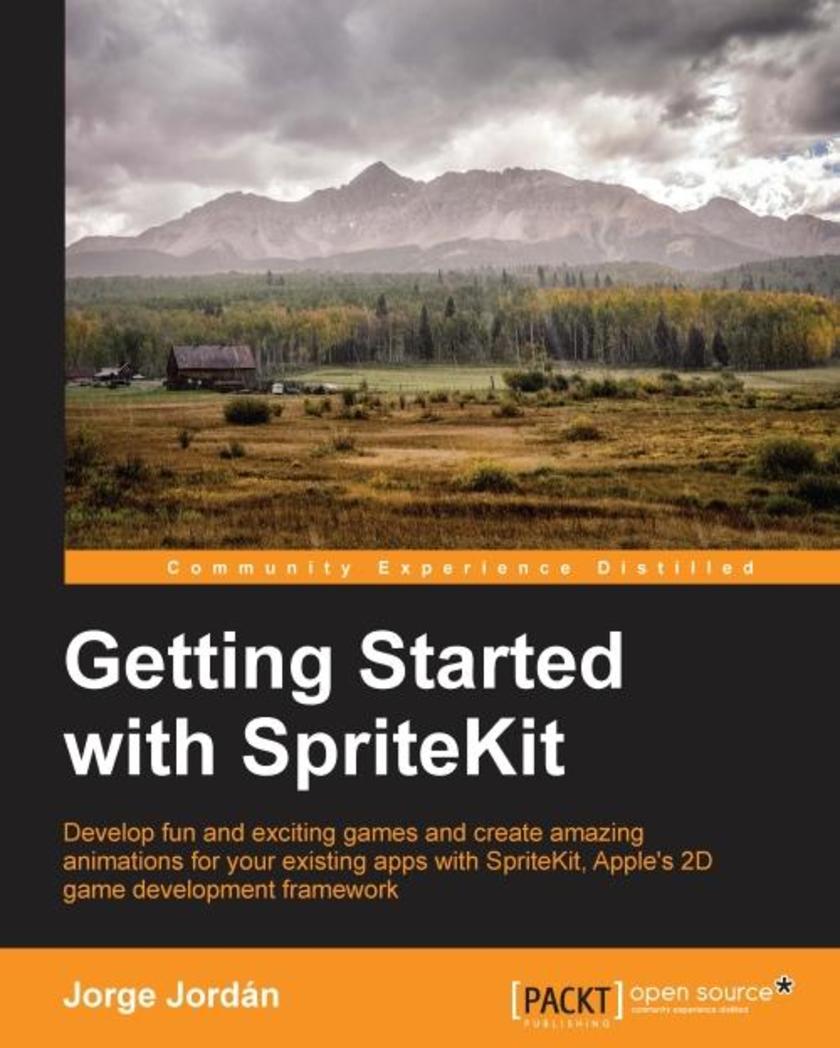
Getting Started with SpriteKit
¥71.93
Develop fun and exciting games and create amazing animations for your existing apps with SpriteKit, Apple's 2D game development frameworkAbout This BookLearn the key concepts of game development in iOSTake advantage of SpriteKit to create your own games and improve your appsFollow the step-by-step chapters to create a complete product ready to submit to the App StoreWho This Book Is ForGetting Started with SpriteKit is for beginner-level iOS developers who want to add an extra edge to their apps and create amazing games using SpriteKit. It doesn’t matter whether you have experience in iOS development or not as this book will show you the swift tricks you can use to create games.What You Will LearnCreate and configure a SpriteKit project from scratchLoad and manage the basic elements of games such as sprites, labels, and geometrical primitivesHandle touch events, detect collisions, and play sound audio filesCreate complex elements, animate sprites, and run the parallax effectComplete your games with key components such as a main menu, transitions between scenes, a tutorial, and the ability to load and save dataIncrease the efficiency of your device using the accelerometer or by adding shaders, lights, and shadowsGain complementary techniques such as creating or finding audio resources, applying SpriteKit to apps, or using third-party toolsIn DetailSpriteKit is Apple’s game engine to develop native iOS games. Strongly boosted by the Apple Inc., Cupertino, it has increased in popularity since its first release. This book shows you the solutions provided by SpriteKit to help you create any 2D game you can imagine and apply them to create animations that will highlight your existing apps.This book will give you the knowledge you need to apply SpriteKit to your existing apps or create your own games from scratch.Throughout the book, you will develop a complete game. The beautiful designs implemented in the game in this book will easily lead you to learn the basis of 2D game development, including creating and moving sprites, and adding them to a game scene. You will also discover how to apply advanced techniques such as collision detection, action execution, playing music, or running animations to give a more professional aspect to the game. You will finish your first game by learning how to add a main menu and a tutorial, as well as saving and loading data from and to the player’s device.Finally, you will find out how to apply some mobile games techniques such as accelerometer use or touch detection.Style and approachWritten in an informal way with plenty of illustrative screenshots, this easy-to-follow and practical guide will help you get the most from SpriteKit. The main part of the book provides step-by-step instructions to develop of a complete product, while the last chapters give you some complementary techniques than can be used in mobile 2D game development.
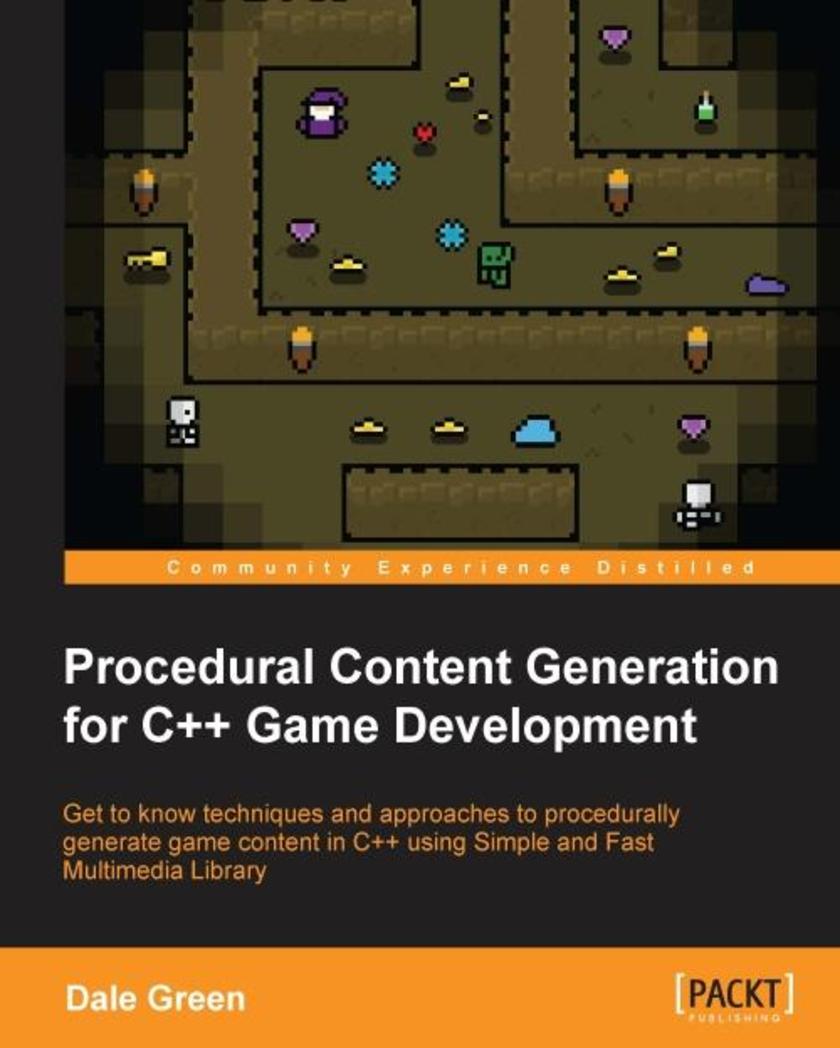
Procedural Content Generation for C++ Game Development
¥90.46
Get to know techniques and approaches to procedurally generate game content in C++ using Simple and Fast Multimedia LibraryAbout This BookThis book contains a bespoke Simple and Fast Multimedia Library (SFML) game engine with complete online documentationThrough this book, you’ll create games that are non-predictable and dynamic and have a high replayability factorGet a breakdown of the key techniques and approaches applied to a real game.Who This Book Is ForIf you are a game developer who is familiar with C++ and is looking to create bigger and more dynamic games, then this book is for you. The book assumes some prior experience with C++, but any intermediate concepts are clarified in detail. No prior experience with SFML is required.What You Will LearnDiscover the systems and ideology that lie at the heart of procedural systemsUse Random number generation (RNG) with C++ data types to create random but controlled resultsBuild levels procedurally with randomly located items and eventsCreate dynamic game objects at runtimeConstruct games using a component-based approachAssemble non-predictable game events and scenariosOperate procedural generation to create dynamic content fast and easilyGenerate game environments for endless replayabilityIn DetailProcedural generation is a growing trend in game development. It allows developers to create games that are bigger and more dynamic, giving the games a higher level of replayability. Procedural generation isn’t just one technique, it’s a collection of techniques and approaches that are used together to create dynamic systems and objects. C++ is the industry-standard programming language to write computer games. It’s at the heart of most engines, and is incredibly powerful. SFML is an easy-to-use, cross-platform, and open-source multimedia library. Access to computer hardware is broken into succinct modules, making it a great choice if you want to develop cross-platform games with ease.Using C++ and SFML technologies, this book will guide you through the techniques and approaches used to generate content procedurally within game development.Throughout the course of this book, we’ll look at examples of these technologies, starting with setting up a roguelike project using the C++ template. We’ll then move on to using RNG with C++ data types and randomly scattering objects within a game map. We will create simple console examples to implement in a real game by creating unique and randomised game items, dynamic sprites, and effects, and procedurally generating game events. Then we will walk you through generating random game maps. At the end, we will have a retrospective look at the project.By the end of the book, not only will you have a solid understanding of procedural generation, but you’ll also have a working roguelike game that you will have extended using the examples provided.Style and approachThis is an easy-to-follow guide where each topic is explained clearly and thoroughly through the use of a bespoke example, then implemented in a real game project.
Mastering Application Development with Force.com
¥63.21
Design and develop state-of-the-art applications using Force.com's powerful development platformAbout This BookFlaunt your skillsets by developing complex applications that include demanding concepts such as triggers, Visualforce controllers, batch jobs, and Lightning componentsEarn the gratitude of your colleagues by structuring a project so that multiple developers can work independently of each otherKevin Poorman, the author of the book and a Force.com MVP, shares his years of Force.com knowledge and experience with you through the medium of telling examplesWho This Book Is ForIf you're a Force.com developer with a fundamental understanding of Apex and JavaScript but now want to enhance your skills with tips, tricks, and guidance on the best architectural and engineering practices, then this book is for you.What You Will LearnCreating triggers, and the best practices for writing themDeveloping a number of Visualforce controllers and extensionsIntegrating third-party web APIs into your Apex codeWriting unit tests that cover testing bulk safety, user and profile settings, and negative testsCreating a Lightning component for use in Salesforce1Getting acquainted with various methods for deploying metadata between orgsUsing the Rest sObject API for access to Salesforce objects and data using the REST methodologyLearning about overarching architectural considerations such as naming conventions, testing practices, and data modeling practicesIn DetailForce.com is an extremely powerful, scalable, and secure cloud platform, delivering a complete technology stack, ranging from databases and security to workflow and the user interface. With salesforce.com's Force.com cloud platform, you can build any business application and run it on your servers.The book will help you enhance your skillset and develop complex applications using Force.com. It gets you started with a quick refresher of Force.com's development tools and methodologies, and moves to an in-depth discussion of triggers, bulkification, DML order of operations, and trigger frameworks. Next, you will learn to use batchable and schedulable interfaces to process massive amounts of information asynchronously. You will also be introduced to Salesforce Lightning and cover components—including backend (apex) controllers, frontend (JavaScript) controllers, events, and attributes—in detail.Moving on, the book will focus on testing various apex components: what to test, when to write the tests, and—most importantly—how to test. Next, you will develop a changeset and use it to migrate your code from one org to another, and learn what other tools are out there for deploying metadata. You will also use command-line tools to authenticate and access the Force.com Rest sObject API and the Bulk sObject API; additionally, you will write a custom Rest endpoint, and learn how to structure a project so that multiple developers can work independently of each other without causing metadata conflicts.Finally, you will take an in-depth look at the overarching best practices for architecture (structure) and engineering (code) applications on the Force.com platform.Style and approach A step-by-step tutorial, with plenty of tips and tricks that will help you develop complex Force.com applications.
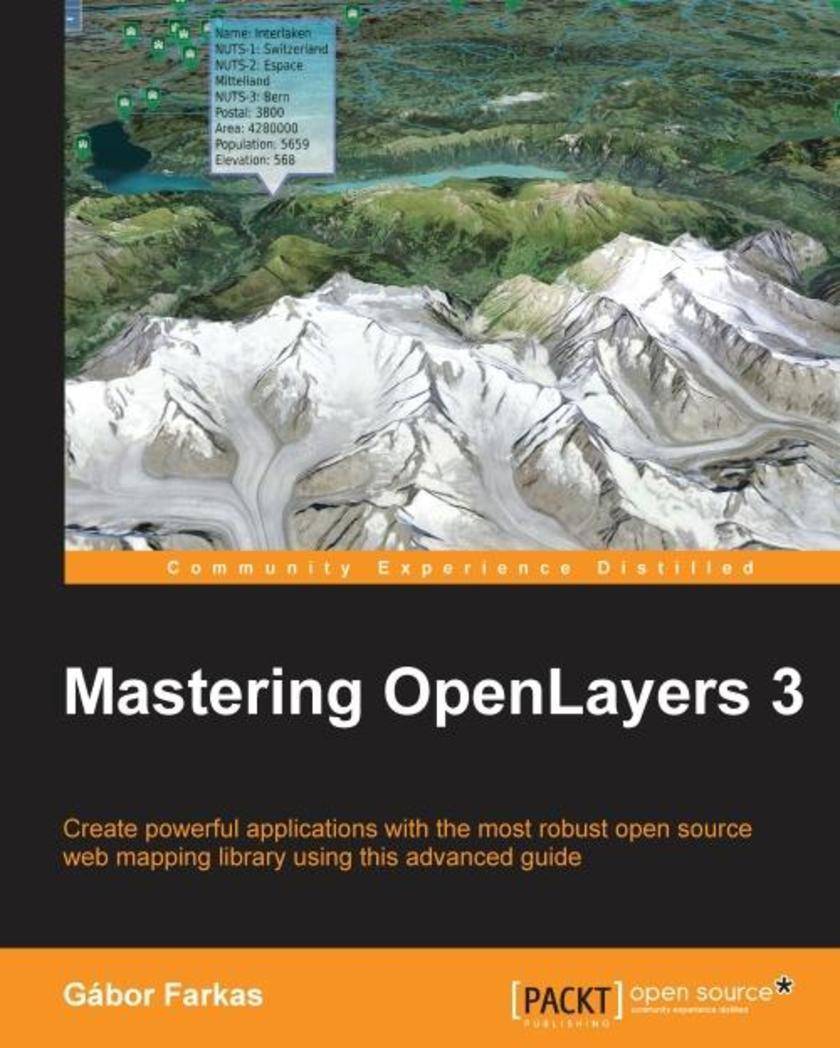
Mastering OpenLayers 3
¥90.46
Create powerful applications with the most robust open source web mapping library using this advanced guideAbout This BookDevelop responsive and platform-independent web mapping applications with OpenLayers 3Learn the key points of creating great applications with native JavaScript through the step-by-step examplesMaster the use of the library, from compiling custom builds to developing a complete WebGIS applicationWho This Book Is ForThis book is intended for front-end developers with basic understanding of JavaScript and GIS concepts, and preferably for those who are familiar with the fundamentals of OpenLayers 3. You might have never used OpenLayers 3 as a seasoned JavaScript developer. If this is the case and you are eager to learn web mapping, this book will definitely set you on the right track.What You Will LearnUse the advanced functionality of the OpenLayers 3 library effectivelyImplement the library in your application, shaping it to your needsManage layers and the layer stack dynamicallyCreate not only stunning but also accurate thematic mapsExtend OpenLayers 3 with your own custom classesDevelop mobile-friendly web mapping applicationsMake stunning effects with canvas manipulation, or visualize point clouds with WebGLIntegrate third-party applications, and create custom builds that completely satisfy your needsIn DetailOpenLayers 3 allows you to create stunning web mapping and WebGIS applications. It uses modern, cutting edge browser technologies. It is written with Closure Library, enabling you to build browser-independent applications without painful debugging ceremonies, which even have some limited fallback options for older browsers.With this guide, you will be introduced to the world of advanced web mapping and WebGIS.First, you will be introduced to the advanced features and functionalities available in OpenLayers 3. Next, you will be taken through the key points of creating custom applications with OpenLayers 3. You will then learn how to create the web mapping application of yours (or your company's) dream with this open source, expense-free, yet very powerful library. We’ll also show you how to make amazing looking thematic maps and create great effects with canvas manipulation.By the end of this book, you will have a strong command of web mapping and will be well on your way to creating amazing applications using OpenLayers 3.Style and approachThis is an advanced guide packed with comprehensive examples, and it concentrates on the advanced parts of OpenLayers 3 and JavaScript. It intentionally skips the basic and well-known methodologies, but discusses the hard-to-understand ones in great detail.


