


 购物车
购物车 个人中心
个人中心
NGINX Cookbook
¥80.65
A practical book on real-world NGINX deployments to get you up and running quickly. About This Book ? Be the first to immerse yourself in the NGINX 1.9x web server and explore the plethora of advanced features. ? Master the skills of load balancing TCP-based applications and implementing HTTP/2. ? A recipe-based approach book that provides you with up-to-date information on NGINX, allowing you to implement specific use cases immediately. Who This Book Is For This book is aimed at smaller-to-medium developers, who are just getting started with NGINX. It assumes they already understand the basics of how a web server works and how basic networking works. What You Will Learn ? Practical, real-world examples and recipes on how to use NGINX ? Common CMS deployments such as WordPress, Joomla and more ? NGINX configurations for frameworks such as Ruby on Rails, Django and more ? Detailed SSL recipes, including HTTP/2 ? Real world rewrite examples ? Basic web and TCP load balancing configuration ? Bandwidth management and connection limiting ? Detailed NGINX deployment scen+BO377arios with Docker ? Performance tuning and monitoring of your NGINX deployments ? OpenResty deployment guides ? Advanced deployments with NGINX Plus features In Detail NGINX Cookbook covers the basics of configuring NGINX as a web server for use with common web frameworks such as WordPress and Ruby on Rails, through to utilization as a reverse proxy. Designed as a go-to reference guide, this book will give you practical answers based on real-world deployments to get you up and running quickly. Recipes have also been provided for multiple SSL configurations, different logging scenarios, practical rewrites, and multiple load balancing scenarios. Advanced topics include covering bandwidth management, Docker container usage, performance tuning, OpenResty, and the NGINX Plus commercial features. By the time you've read this book, you will be able to adapt and use a wide variety of NGINX implementations to solve any problems you have. Style and approach With practical, real-world examples and recipes on how to use NGINX, this go-to book will remain valid for many years. Included are detailed recipes that solve very specific and sometimes complicated user scenarios with NGINX. Readers will think "Ah, so that's how you do it!" after reading a chapter/sub-chapter. Each scenario in the book is thoroughly tested and validated, especially, when it comes to direct cut and paste code scenarios, where possible, we made test code available so that the reader can instantly see the system in action
Mastering C++ Programming
¥90.46
Take your C++ coding to the next level by leveraging the latest features and advanced techniques to building high performing, reliable applications. About This Book ? Get acquainted with the latest features in C++ 17 ? Take advantage of the myriad of features and possibilities that C++ offers to build real-world applications ? Write clear and expressive code in C++, and get insights into how to keep your code error-free Who This Book Is For This book is for experienced C++ developers. If you are a novice C++ developer, then it’s highly recommended that you get a solid understanding of the C++ language before reading this book What You Will Learn ? Write modular C++ applications in terms of the existing and newly introduced features ? Identify code-smells, clean up, and refactor legacy C++ applications ? Leverage the possibilities provided by Cucumber and Google Test/Mock to automate test cases ? Test frameworks with C++ ? Get acquainted with the new C++17 features ? Develop GUI applications in C++ ? Build portable cross-platform applications using standard C++ features In Detail C++ has come a long way and has now been adopted in several contexts. Its key strengths are its software infrastructure and resource-constrained applications. The C++ 17 release will change the way developers write code, and this book will help you master your developing skills with C++. With real-world, practical examples explaining each concept, the book will begin by introducing you to the latest features in C++ 17. It encourages clean code practices in C++ in general, and demonstrates the GUI app-development options in C++. You’ll get tips on avoiding memory leaks using smart-pointers. Next, you’ll see how multi-threaded programming can help you achieve concurrency in your applications. Moving on, you’ll get an in-depth understanding of the C++ Standard Template Library. We show you the concepts of implementing TDD and BDD in your C++ programs, and explore template-based generic programming, giving you the expertise to build powerful applications. Finally, we’ll round up with debugging techniques and best practices.By the end of the book, you’ll have an in-depth understanding of the language and its various facets. Style and approach This straightforward guide will help you level up your skills in C++ programming, be it for enterprise software or for low-latency applications like games. Filled with real-world, practical examples, this book will take you gradually up the steep learning curve that is C++.
Learning Spark SQL
¥99.18
Design, implement, and deliver successful streaming applications, machine learning pipelines and graph applications using Spark SQL API About This Book ? Learn about the design and implementation of streaming applications, machine learning pipelines, deep learning, and large-scale graph processing applications using Spark SQL APIs and Scala. ? Learn data exploration, data munging, and how to process structured and semi-structured data using real-world datasets and gain hands-on exposure to the issues and challenges of working with noisy and "dirty" real-world data. ? Understand design considerations for scalability and performance in web-scale Spark application architectures. Who This Book Is For If you are a developer, engineer, or an architect and want to learn how to use Apache Spark in a web-scale project, then this is the book for you. It is assumed that you have prior knowledge of SQL querying. A basic programming knowledge with Scala, Java, R, or Python is all you need to get started with this book. What You Will Learn ? Familiarize yourself with Spark SQL programming, including working with DataFrame/Dataset API and SQL ? Perform a series of hands-on exercises with different types of data sources, including CSV, JSON, Avro, MySQL, and MongoDB ? Perform data quality checks, data visualization, and basic statistical analysis tasks ? Perform data munging tasks on publically available datasets ? Learn how to use Spark SQL and Apache Kafka to build streaming applications ? Learn key performance-tuning tips and tricks in Spark SQL applications ? Learn key architectural components and patterns in large-scale Spark SQL applications In Detail In the past year, Apache Spark has been increasingly adopted for the development of distributed applications. Spark SQL APIs provide an optimized interface that helps developers build such applications quickly and easily. However, designing web-scale production applications using Spark SQL APIs can be a complex task. Hence, understanding the design and implementation best practices before you start your project will help you avoid these problems. This book gives an insight into the engineering practices used to design and build real-world, Spark-based applications. The book's hands-on examples will give you the required confidence to work on any future projects you encounter in Spark SQL. It starts by familiarizing you with data exploration and data munging tasks using Spark SQL and Scala. Extensive code examples will help you understand the methods used to implement typical use-cases for various types of applications. You will get a walkthrough of the key concepts and terms that are common to streaming, machine learning, and graph applications. You will also learn key performance-tuning details including Cost Based Optimization (Spark 2.2) in Spark SQL applications. Finally, you will move on to learning how such systems are architected and deployed for a successful delivery of your project. Style and approach This book is a hands-on guide to designing, building, and deploying Spark SQL-centric production applications at scale.
Windows 10 for Enterprise Administrators
¥80.65
Learn the art of configuring, deploying, managing and securing Windows 10 for your enterprise. About This Book ? Enhance your enterprise administration skills to manage Windows 10 Redstone 3 ? Get acquainted with configuring Azure Active Directory for enabling cloud-based services and Remote Server Admin Tools for managing Windows Server ? Provide enterprise-level security with ease using the built-in data loss prevention of Windows 10 Who This Book Is For If you are a system administrator who has been given the responsibility of administering and managing Windows 10 Redstone 3, then this book is for you. If you have deployed and managed previous versions of Windows, it would be an added advantage. What You Will Learn ? Understand the remote access capabilities ? Use third-party tools to deploy Windows 10 ? Customize image and user Interface experience ? Implement assigned access rights ? Configure remote administration ? Manage Windows 10 security ? Work with Azure AD and Intune management In Detail Microsoft’s launch of Windows 10 is a step toward satisfying the enterprise administrator’s needs for management and user experience customization. This book provides the enterprise administrator with the knowledge needed to fully utilize the advanced feature set of Windows 10 Enterprise. This practical guide shows Windows 10 from an administrator's point of view. You'll focus on areas such as installation and configuration techniques based on your enterprise requirements, various deployment scenarios and management strategies, and setting up and managing admin and other user accounts. You’ll see how to configure Remote Server Administration Tools to remotely manage Windows Server and Azure Active Directory. Lastly, you will learn modern Mobile Device Management for effective BYOD and how to enable enhanced data protection, system hardening, and enterprise-level security with the new Windows 10 in order to prevent data breaches and impede attacks. By the end of this book, you will know the key technologies and capabilities in Windows 10 and will confidently be able to manage and deploy these features in your organization. Style and approach This step-by-step guide will show you how to configure, deploy, manage, and secure the all new Windows 10 Redstone 3 for your enterprise.
Kali Linux Cookbook - Second Edition
¥80.65
Over 80 recipes to effectively test your network and boost your career in security About This Book ? Learn how to scan networks to find vulnerable computers and servers ? Hack into devices to control them, steal their data, and make them yours ? Target wireless networks, databases, and web servers, and password cracking to make the most of Kali Linux Who This Book Is For If you are looking to expand your career into penetration testing, you will need a good understanding of Kali Linux and the variety of tools it includes. This book will work as a perfect guide for anyone who wants to have a practical approach in leveraging penetration testing mechanisms using Kali Linux What You Will Learn ? Acquire the key skills of ethical hacking to perform penetration testing ? Learn how to perform network reconnaissance ? Discover vulnerabilities in hosts ? Attack vulnerabilities to take control of workstations and servers ? Understand password cracking to bypass security ? Learn how to hack into wireless networks ? Attack web and database servers to exfiltrate data ? Obfuscate your command and control connections to avoid firewall and IPS detection In Detail Kali Linux is a Linux distribution designed for penetration testing and security auditing. It is the successor to BackTrack, the world’s most popular penetration testing distribution. Kali Linux is the most widely used platform and toolkit for penetration testing. Security is currently the hottest field in technology with a projected need for millions of security professionals. This book focuses on enhancing your knowledge in Kali Linux for security by expanding your skills with toolkits and frameworks that can increase your value as a security professional. Kali Linux Cookbook, Second Edition starts by helping you install Kali Linux on different options available. You will also be able to understand the lab architecture and install a Windows host for use in the lab. Next, you will understand the concept of vulnerability analysis and look at the different types of exploits. The book will introduce you to the concept and psychology of Social Engineering and password cracking. You will then be able to use these skills to expand the scope of any breaches you create. Finally, the book will guide you in exploiting specific technologies and gaining access to other systems in the environment. By the end of this book, you will have gained the core knowledge and concepts of the penetration testing process. Style and approach This book teaches you everything you need to know about Kali Linux from the perspective of a penetration tester. It is filled with powerful recipes and practical examples that will help you gain in-depth knowledge of Kali Linux.
Drupal 8 Blueprints
¥71.93
A project-based guide that will show you how to create 7 professional Drupal sites About This Book ? Create and design your own customized website effortlessly and efficiently ? This up-to-date guide on Drupal 8 will show you how you can leverage the latest Drupal 8 features ? This hands-on guide will turn you into a professional grade Drupal 8 developer through 7 unique and engaging web sites Who This Book Is For This book is ideal for web developers who are looking to create professional web applications using Drupal 8. You should have some previous experience with Drupal and must have a basic knowledge of web application development in general. If you are looking to create fluent professional websites that will take you to the next level, then this book is for you. What You Will Learn ? Find out how to use the Drupal 8 core functionality to build great websites ? Discover how to better manage content using custom blocks and views ? Display content in multiple ways, taking advantage of display modes ? Using the new TWIG theme engine for Drupal ? Easily manage and filter content ? Understanding best practices for building great Drupal sites ? Move beyond Drupal to build headless websites using RESTful services and JavaScript frameworks In Detail Drupal is an open source content management framework that can be used for developing websites and simplifying online management of content for users. This book is a must-have for web developers who are looking to create professional-grade websites using Drupal 8. While building 7 different Drupal websites, we will focus on implementing the out of the box features that come with Drupal 8 and see how we can make some complex sites with minimal custom code. Focusing completely on Drupal 8, this book will help you leverage the new Drupal 8 features such as creating a different types and layouts of content using configuration to build in core with its built-in web services facilities, and effortless authoring using the new CKEditor with an effortless and efficient industry standard approach. The book starts with getting started with the development environment of Drupal. Each chapter will start with a brief overview of the site to be built and the required features. Then, we will proceed to create customized modules and themes and integrate third-party plugins. Lastly, you will learn about "headless" Drupal that uses RESTful services that would help you to display content outside of Drupal By the end of the book, you will be able to implement the knowledge gained to build your own custom websites using Drupal 8. Style and approach This unique, project-based resource on Drupal 8 website development will show you how to leverage Drupal 8’s features to create customized, professional-grade applications efficiently and effectively.
Architecting the Industrial Internet
¥90.46
Learn the ins and outs of the Industrial Internet of Things through subjects ranging from its history and evolution, right up to what the future holds. About This Book ? Define solutions that can connect existing systems and newer cloud-based solutions to thousands of thousands of edge devices and industrial machines ? Identify, define, and justify Industrial Internet of Things (IIoT) projects, and design an application that can connect to and control thousands of machines ? Leverage the power and features of a platform to monitor, perform analytics, and maintain the Industrial Internet Who This Book Is For Architects who are interested in learning how to define solutions for the Industrial Internet will benefit immensely from this book. Relevant architect roles include enterprise architects, business architects, information architects, cloud solution architects, software architects, and others. The content is also relevant for technically inclined line of business leaders investing in these solutions. What You Will Learn ? Learn the history of the Industrial Internet and why an architectural approach is needed ? Define solutions that can connect to and control thousands of edge devices and machines ? Understand the significance of working with line of business leadership and key metrics to be gathered ? Connect business requirements to the functional architecture ? Gain the right expectation as to the capabilities of Industrial Internet applications and how to assess them ? Understand what data and analytics components should be included in your architecture solution ? Understand deployment trade-offs, management and security considerations, and the impact of emerging technologies In Detail The Industrial Internet or the IIoT has gained a lot of traction. Many leading companies are driving this revolution by connecting smart edge devices to cloud-based analysis platforms and solving their business challenges in new ways. To ensure a smooth integration of such machines and devices, sound architecture strategies based on accepted principles, best practices, and lessons learned must be applied. This book begins by providing a bird's eye view of what the IIoT is and how the industrial revolution has evolved into embracing this technology. It then describes architectural approaches for success, gathering business requirements, and mapping requirements into functional solutions. In a later chapter, many other potential use cases are introduced including those in manufacturing and specific examples in predictive maintenance, asset tracking and handling, and environmental impact and abatement. The book concludes by exploring evolving technologies that will impact IIoT architecture in the future and discusses possible societal implications of the Industrial Internet and perceptions regarding these projects. By the end of this book, you will be better equipped to embrace the benefits of the burgeoning IIoT. Style and approach This book takes a comprehensive approach to the Industrial Internet, thoroughly acquainting the reader with the concepts and philosophy of the IIoT. It provides a basis for defining an IIoT solution in a thoughtful manner and creating what will be viewed as a successful project.
Go Systems Programming
¥90.46
Learning the new system’s programming language for all Unix-type systems About This Book ? Learn how to write system's level code in Golang, similar to Unix/Linux systems code ? Ramp up in Go quickly ? Deep dive into Goroutines and Go concurrency to be able to take advantage of Go server-level constructs Who This Book Is For Intermediate Linux and general Unix programmers. Network programmers from beginners to advanced practitioners. C and C++ programmers interested in different approaches to concurrency and Linux systems programming. What You Will Learn ? Explore the Go language from the standpoint of a developer conversant with Unix, Linux, and so on ? Understand Goroutines, the lightweight threads used for systems and concurrent applications ? Learn how to translate Unix and Linux systems code in C to Golang code ? How to write fast and lightweight server code ? Dive into concurrency with Go ? Write low-level networking code In Detail Go is the new systems programming language for Linux and Unix systems. It is also the language in which some of the most prominent cloud-level systems have been written, such as Docker. Where C programmers used to rule, Go programmers are in demand to write highly optimized systems programming code. Created by some of the original designers of C and Unix, Go expands the systems programmers toolkit and adds a mature, clear programming language. Traditional system applications become easier to write since pointers are not relevant and garbage collection has taken away the most problematic area for low-level systems code: memory management. This book opens up the world of high-performance Unix system applications to the beginning Go programmer. It does not get stuck on single systems or even system types, but tries to expand the original teachings from Unix system level programming to all types of servers, the cloud, and the web. Style and approach This is the first book to introduce Linux and Unix systems programming in Go, a field for which Go has actually been developed in the first place.
Python Digital Forensics Cookbook
¥80.65
Over 60 recipes to help you learn digital forensics and leverage Python *s to amplify your examinations About This Book ? Develop code that extracts vital information from everyday forensic acquisitions. ? Increase the quality and efficiency of your forensic analysis. ? Leverage the latest resources and capabilities available to the forensic community. Who This Book Is For If you are a digital forensics examiner, cyber security specialist, or analyst at heart, understand the basics of Python, and want to take it to the next level, this is the book for you. Along the way, you will be introduced to a number of libraries suitable for parsing forensic artifacts. Readers will be able to use and build upon the *s we develop to elevate their analysis. What You Will Learn ? Understand how Python can enhance digital forensics and investigations ? Learn to access the contents of, and process, forensic evidence containers ? Explore malware through automated static analysis ? Extract and review message contents from a variety of email formats ? Add depth and context to discovered IP addresses and domains through various Application Program Interfaces (APIs) ? Delve into mobile forensics and recover deleted messages from SQLite databases ? Index large logs into a platform to better query and visualize datasets In Detail Technology plays an increasingly large role in our daily lives and shows no sign of stopping. Now, more than ever, it is paramount that an investigator develops programming expertise to deal with increasingly large datasets. By leveraging the Python recipes explored throughout this book, we make the complex simple, quickly extracting relevant information from large datasets. You will explore, develop, and deploy Python code and libraries to provide meaningful results that can be immediately applied to your investigations. Throughout the Python Digital Forensics Cookbook, recipes include topics such as working with forensic evidence containers, parsing mobile and desktop operating system artifacts, extracting embedded metadata from documents and executables, and identifying indicators of compromise. You will also learn to integrate *s with Application Program Interfaces (APIs) such as VirusTotal and PassiveTotal, and tools such as Axiom, Cellebrite, and EnCase. By the end of the book, you will have a sound understanding of Python and how you can use it to process artifacts in your investigations. Style and approach Our succinct recipes take a no-frills approach to solving common challenges faced in investigations. The code in this book covers a wide range of artifacts and data sources. These examples will help improve the accuracy and efficiency of your analysis—no matter the situation.
JUNOS Automation Cookbook
¥80.65
Administer, configure, and monitor Junos in your organization About This Book ? Get well acquainted with security and routing policies to identify the use of firewall filters. ? Learn to provide end-user authentication and protect each layer in an enterprise network. ? A recipe-based guide that will help you configure and monitor Junos OS and basic device operations. Who This Book Is For This book targets network engineers, developers, support personals, and administrators who are working on devices running Junos OS and are looking at automating their organisation's operations. Some understanding about Junos would be necessary What You Will Learn ? Start using NETCONF RPC standard and understand its usefulness in programming JUNOS ? Write SLAX *s to respond to events in the JUNOS environment ? Automate JUNOS with PyEZ ? Deal with events in the JUNOS environment, and writing response handlers to deal with them ? Make the most of automation technologies to help with maintenance and monitoring of JUNOS ? Use the Ansible framework to extend the automation functionality of Junos In Detail The JUNOS Automation Cookbook is a companion guide for the complex field of automating tasks on JUNOS devices. With a foundation in industry-standrd XML, JUNOS provides an ideal environment for programmatic interation, allowing you to build upon the capabilities provided by Juniper, with your own original code. You will begin by learning about, and setting up, the industry-standard NETCONF remote procedure call mechanisms on your device. After initial setup, you'll walk through SLAX - Juniper's foundation *ing language - for manipulating XML representations of JUNOS concepts and elements. You'll learn how to write your own SLAX *s to customise the operating environment, and also how to write proactive event handlers that deal with situations as they happen. You'll then delve into PyEZ - Juniper's bridging framework to make automation accessible to Python code - allowing you to build automation applications in the popular *ing language. You'll witness some examples of how to write applications that can monitor configuration changes, implement BGP security policies and implement ad-hoc routing protocols, for those really tricky situations. You'll also leaarn how asynchronous I/O frameworks like Node.js can be used to implement automation applications that present an acceptable web interface. Along with way, you'll explore how to make use of the latest RESTful APIs that JUNOS provides, how to visualize aspects of your JUNOS network, and how to integrate your automation capabilities with enterprise-wide orchestration systems like Ansible. By the end of the book, you'll be able to tackle JUNOS automation challenges with confidence and understanding, and without hassle. Style and Approach A guide that will cover all the automation tools along with steps on leveraging these tools
Mastering Assembly Programming
¥80.65
Incorporate the assembly language routines in your high level language applications About This Book ? Understand the Assembly programming concepts and the benefits of examining the AL codes generated from high level languages ? Learn to incorporate the assembly language routines in your high level language applications ? Understand how a CPU works when programming in high level languages Who This Book Is For This book is for developers who would like to learn about Assembly language. Prior programming knowledge of C and C++ is assumed. What You Will Learn ? Obtain deeper understanding of the underlying platform ? Understand binary arithmetic and logic operations ? Create elegant and efficient code in Assembly language ? Understand how to link Assembly code to outer world ? Obtain in-depth understanding of relevant internal mechanisms of Intel CPU ? Write stable, efficient and elegant patches for running processes In Detail The Assembly language is the lowest level human readable programming language on any platform. Knowing the way things are on the Assembly level will help developers design their code in a much more elegant and efficient way. It may be produced by compiling source code from a high-level programming language (such as C/C++) but can also be written from scratch. Assembly code can be converted to machine code using an assembler. The first section of the book starts with setting up the development environment on Windows and Linux, mentioning most common toolchains. The reader is led through the basic structure of CPU and memory, and is presented the most important Assembly instructions through examples for both Windows and Linux, 32 and 64 bits. Then the reader would understand how high level languages are translated into Assembly and then compiled into object code. Finally we will cover patching existing code, either legacy code without sources or a running code in same or remote process. Style and approach This book takes a step-by-step, detailed approach to Comprehensively learning Assembly Programming.
Mastering the C++17 STL
¥80.65
This book breaks down the C++ STL, teaching you how to extract its gems and apply them to your programming. About This Book ? Boost your productivity as a C++ developer with the latest features of C++17 ? Develop high-quality, fast, and portable applications with the varied features of the STL ? Migrate from older versions (C++11, C++14) to C++17 Who This Book Is For This book is for developers who would like to master the C++ STL and make full use of its components. Prior C++ knowledge is assumed. What You Will Learn ? Make your own iterator types, allocators, and thread pools. ? Master every standard container and every standard algorithm. ? Improve your code by replacing new/delete with smart pointers. ? Understand the difference between monomorphic algorithms, polymorphic algorithms, and generic algorithms. ? Learn the meaning and applications of vocabulary type, product type and sum type. In Detail Modern C++ has come a long way since 2011. The latest update, C++17, has just been ratified and several implementations are on the way. This book is your guide to the C++ standard library, including the very latest C++17 features. The book starts by exploring the C++ Standard Template Library in depth. You will learn the key differences between classical polymorphism and generic programming, the foundation of the STL. You will also learn how to use the various algorithms and containers in the STL to suit your programming needs. The next module delves into the tools of modern C++. Here you will learn about algebraic types such as std::optional, vocabulary types such as std::function, smart pointers, and synchronization primitives such as std::atomic and std::mutex. In the final module, you will learn about C++'s support for regular expressions and file I/O. By the end of the book you will be proficient in using the C++17 standard library to implement real programs, and you'll have gained a solid understanding of the library's own internals. Style and approach This book takes a concise but comprehensive approach to explaining and applying the C++ STL, one feature at a time.
Practical Time Series Analysis
¥80.65
Step by Step guide filled with real world practical examples. About This Book ? Get your first experience with data analysis with one of the most powerful types of analysis—time-series. ? Find patterns in your data and predict the future pattern based on historical data. ? Learn the statistics, theory, and implementation of Time-series methods using this example-rich guide Who This Book Is For This book is for anyone who wants to analyze data over time and/or frequency. A statistical background is necessary to quickly learn the analysis methods. What You Will Learn ? Understand the basic concepts of Time Series Analysis and appreciate its importance for the success of a data science project ? Develop an understanding of loading, exploring, and visualizing time-series data ? Explore auto-correlation and gain knowledge of statistical techniques to deal with non-stationarity time series ? Take advantage of exponential smoothing to tackle noise in time series data ? Learn how to use auto-regressive models to make predictions using time-series data ? Build predictive models on time series using techniques based on auto-regressive moving averages ? Discover recent advancements in deep learning to build accurate forecasting models for time series ? Gain familiarity with the basics of Python as a powerful yet simple to write programming language In Detail Time Series Analysis allows us to analyze data which is generated over a period of time and has sequential interdependencies between the observations. This book describes special mathematical tricks and techniques which are geared towards exploring the internal structures of time series data and generating powerful de*ive and predictive insights. Also, the book is full of real-life examples of time series and their analyses using cutting-edge solutions developed in Python. The book starts with de*ive analysis to create insightful visualizations of internal structures such as trend, seasonality and autocorrelation. Next, the statistical methods of dealing with autocorrelation and non-stationary time series are described. This is followed by exponential smoothing to produce meaningful insights from noisy time series data. At this point, we shift focus towards predictive analysis and introduce autoregressive models such as ARMA and ARIMA for time series forecasting. Later, powerful deep learning methods are presented, to develop accurate forecasting models for complex time series, and under the availability of little domain knowledge. All the topics are illustrated with real-life problem scenarios and their solutions by best-practice implementations in Python. The book concludes with the Appendix, with a brief discussion of programming and solving data science problems using Python. Style and approach This book takes the readers from the basic to advance level of Time series analysis in a very practical and real world use cases.
Practical Real-time Data Processing and Analytics
¥90.46
A practical guide to help you tackle different real-time data processing and analytics problems using the best tools for each scenario About This Book ? Learn about the various challenges in real-time data processing and use the right tools to overcome them ? This book covers popular tools and frameworks such as Spark, Flink, and Apache Storm to solve all your distributed processing problems ? A practical guide filled with examples, tips, and tricks to help you perform efficient Big Data processing in real-time Who This Book Is For If you are a Java developer who would like to be equipped with all the tools required to devise an end-to-end practical solution on real-time data streaming, then this book is for you. Basic knowledge of real-time processing would be helpful, and knowing the fundamentals of Maven, Shell, and Eclipse would be great. What You Will Learn ? Get an introduction to the established real-time stack ? Understand the key integration of all the components ? Get a thorough understanding of the basic building blocks for real-time solution designing ? Garnish the search and visualization aspects for your real-time solution ? Get conceptually and practically acquainted with real-time analytics ? Be well equipped to apply the knowledge and create your own solutions In Detail With the rise of Big Data, there is an increasing need to process large amounts of data continuously, with a shorter turnaround time. Real-time data processing involves continuous input, processing and output of data, with the condition that the time required for processing is as short as possible. This book covers the majority of the existing and evolving open source technology stack for real-time processing and analytics. You will get to know about all the real-time solution aspects, from the source to the presentation to persistence. Through this practical book, you’ll be equipped with a clear understanding of how to solve challenges on your own. We’ll cover topics such as how to set up components, basic executions, integrations, advanced use cases, alerts, and monitoring. You’ll be exposed to the popular tools used in real-time processing today such as Apache Spark, Apache Flink, and Storm. Finally, you will put your knowledge to practical use by implementing all of the techniques in the form of a practical, real-world use case. By the end of this book, you will have a solid understanding of all the aspects of real-time data processing and analytics, and will know how to deploy the solutions in production environments in the best possible manner. Style and Approach In this practical guide to real-time analytics, each chapter begins with a basic high-level concept of the topic, followed by a practical, hands-on implementation of each concept, where you can see the working and execution of it. The book is written in a DIY style, with plenty of practical use cases, well-explained code examples, and relevant screenshots and diagrams.
Mastering Non-Functional Requirements
¥71.93
This book covers the most critical 24 NFRs that are applicable to IT applications and systems. About This Book ? Explains three stages of nonfunctional requirements, that is, analysis, architecture, and assessment ? In-depth knowledge of NFR framework and taxonomy that provides guidance around the modelling phase for the NFRs ? Coverage of 24 critical and pivotal NFRs, including the analysis, architecture, and assessment. Who This Book Is For The primary audience for this title are the gamut of roles starting from IT consultant to chief architects who are responsible to deliver strategic, tactical, and operational engagements for fortune 100 customers worldwide. Nonfunctional requirements are the key to any software / IT program. They cannot be overlooked or ignored. The book provides a comprehensive approach from analysis, architecture, and measurement of nonfunctional requirements. The book includes considerations for bespoke (Java, .Net, and COTS applications). These are applicable to IT applications from various domains. The book outlines the methodology for capturing the NFRs and also describes a framework that can be leveraged by analysts and architects for tackling NFRs for various engagements. The audience for this book include business analysts, enterprise architects, business architects, solution architects, technical architects/designers, domain/security/integration architects, software developers, support engineers and test engineers, technical project managers, project leads/technical leads/technical project managers, and students from the computer science/IT stream What You Will Learn ? Learn techniques related to the analysis, architecture, and monitoring of NFRs ? Understand the various tools, techniques, and processes in order to improve the overall quality of the desired outcomes ? Embrace the best practices of architecting, metrics, and success factors for NFRs ? Identify the common pitfalls to be avoided and the patterns to leverage ? Understand taxonomy and framework for NFRs ? Learn the design guidelines for architecting applications and systems relating to NFRs ? Abstract different methodologies to analyze and gather NFRs In Detail Non-functional Requirements are key to any software/IT program and cannot be overlooked or ignored. This book provides a comprehensive approach to the analysis, architecture, and measurement of NFRs. It includes considerations for bespoke Java, .NET, and COTS applications that are applicable to IT applications/systems in different domains. The book outlines the methodology for capturing the NFRs and also describes a framework that can be leveraged by analysts and architects for tackling NFRs for various engagements. This book starts off by explaining the various KPIs, taxonomies, and methods for identifying NFRs. Learn the design guidelines for architecting applications and systems relating to NFRs and design principles to achieve the desired outcome. We will then move on to various key tiers/layers and patterns pertaining to the business, database, and integrating tiers. After this, we will dive deep into the topics pertaining to techniques related to monitoring and measurement of NFRs, such as sizing, analytical modeling, and quality assurance. Lastly, we end the book by describing some pivotal NFRs and checklists for the software quality attributes related to the business, application, data, and infrastructure domains. Style and approach The book takes a pragmatic approach, describing various techniques related to the analysis of NFRs, the architecture of NFRs, and assessment of NFRs.
Implementing Azure Solutions
¥90.46
A practical guide that enhances your skills in implementing Azure solutions for your organization About This Book ? Confidently configure, deploy, and manage cloud services and virtual machines ? Implement a highly-secured environment and respond to threats with increased visibility ? This comprehensive guide is packed with exciting practical scenarios that enable you to implement Azure solutions with ease Who This Book Is For This book is for IT architects, system and network admins, and DevOps engineers who are aware of Azure solutions and want to implement them for their organization. What You Will Learn ? Implement virtual networks, network gateways, Site-to-Site VPN, ExpressRoute, routing, and network devices ? Understand the working of different storage accounts in Azure ? Plan, deploy, and secure virtual machines ? Deploy and manage Azure Containers ? Get familiar with some common Azure usage scenarios In Detail Microsoft Azure has numerous effective solutions that shape the future of any business. However, the major challenge that architects and administrators face are implementing these solutions appropriately. Our book focuses on various implementation scenarios that will help overcome the challenge of implementing Azure’s solutions in a very efficient manner and will also help you to prepare for Microsoft Architect exam. You will not only learn how to secure a newly deployed Azure Active Directory but also get to know how Azure Active Directory Synchronization could be implemented. To maintain an isolated and secure environment so that you can run your virtual machines and applications, you will implement Azure networking services. Also to manage, access, and secure your confidential data, you will implement storage solutions. Toward the end, you will explore tips and tricks to secure your environment. By the end, you will be able to implement Azure solutions such as networking, storage, and cloud effectively. Style and approach This step-by-step guide focuses on implementing various Azure solutions for your organization. The motive is to provide a comprehensive exposure and ensure they can implement these solutions with ease.
Learn Python in 7 Days
¥71.93
Learn efficient Python coding within 7 days About This Book ? Make the best of Python features ? Learn the tinge of Python in 7 days ? Learn complex concepts using the most simple examples Who This Book Is For The book is aimed at aspiring developers and absolute novice who want to get started with the world of programming. We assume no knowledge of Python for this book. What You Will Learn ? Use if else statement with loops and how to break, skip the loop ? Get acquainted with python types and its operators ? Create modules and packages ? Learn slicing, indexing and string methods ? Explore advanced concepts like collections, class and objects ? Learn dictionary operation and methods ? Discover the scope and function of variables with arguments and return value In Detail Python is a great language to get started in the world of programming and application development. This book will help you to take your skills to the next level having a good knowledge of the fundamentals of Python. We begin with the absolute foundation, covering the basic syntax, type variables and operators. We'll then move on to concepts like statements, arrays, operators, string processing and I/O handling. You’ll be able to learn how to operate tuples and understand the functions and methods of lists. We’ll help you develop a deep understanding of list and tuples and learn python dictionary. As you progress through the book, you’ll learn about function parameters and how to use control statements with the loop. You’ll further learn how to create modules and packages, storing of data as well as handling errors. We later dive into advanced level concepts such as Python collections and how to use class, methods, objects in python. By the end of this book, you will be able to take your skills to the next level having a good knowledge of the fundamentals of Python. Style and approach Fast paced guide to get you up-to-speed with the language. Every chapter is followed by an exercise that focuses on building something with the language. The codes of the exercises can be found on the Packt website
Akka Cookbook
¥90.46
Learn how to use the Akka framework to build effective applications in Scala About This Book ? Covers a discussion on Lagom—the newest launched Akka framework that is built to create complex microservices easily ? The recipe approach of the book allows the reader to know important and independent concepts of Scala and Akka in a seamless manner ? Provides a comprehensive understanding of the Akka actor model and implementing it to create reactive web applications Who This Book Is For If you are a Scala developer who wants to build scalable and concurrent applications, then this book is for you. Basic knowledge of Akka will help you take advantage of this book. What You Will Learn ? Control an actor using the ContolAware mailbox ? Test a fault-tolerant application using the Akka test kit ? Create a parallel application using futures and agents ? Package and deploy Akka application inside Docker ? Deploy remote actors programmatically on different nodes ? Integrate Streams with Akka actors ? Install Lagom and create a Lagom project In Detail Akka is an open source toolkit that simplifies the construction of distributed and concurrent applications on the JVM. This book will teach you how to develop reactive applications in Scala using the Akka framework. This book will show you how to build concurrent, scalable, and reactive applications in Akka. You will see how to create high performance applications, extend applications, build microservices with Lagom, and more. We will explore Akka's actor model and show you how to incorporate concurrency into your applications. The book puts a special emphasis on performance improvement and how to make an application available for users. We also make a special mention of message routing and construction. By the end of this book, you will be able to create a high-performing Scala application using the Akka framework. Style and approach This highly practical recipe-based approach will allow you to build scalable, robust, and reactive applications using the Akka framework.
Mastering Reactive JavaScript
¥71.93
Expand your boundaries by creating applications empowered with real-time data using RxJs without compromising performance About This Book ? Handle an infinite stream of incoming data using RxJs without going crazy ? Explore important RxJs operators that can help you improve your code readability ? Get acquainted with the different techniques and operators used to handle data traffic, which occurs when you receive data faster than you can process Who This Book Is For If you're a web developer with some basic JavaScript programming knowledge who wants to implement the reactive programming paradigm with JavaScript, then this book is for you. What You Will Learn ? Get to know the basics of functional reactive programming using RxJs ? Process a continuous flow of data with linear memory consumption ? Filter, group, and react to changes in your system ? Discover how to deal with data traffic ? Compose operators to create new operators and use them in multiple observables to avoid code repetition ? Explore transducers and see how they can improve your code readability ? Detect and recover from errors in observables using Retry and Catch operators ? Create your own reactive application: a real-time webchat In Detail If you’re struggling to handle a large amount of data and don’t know how to improve your code readability, then reactive programming is the right solution for you. It lets you describe how your code behaves when changes happen and makes it easier to deal with real-time data. This book will teach you what reactive programming is, and how you can use it to write better applications. The book starts with the basics of reactive programming, what Reactive Extensions is, and how can you use it in JavaScript along with some reactive code using Bacon. Next, you’ll discover what an Observable and an Observer are and when to use them.You'll also find out how you can query data through operators, and how to use schedulers to react to changes. Moving on, you’ll explore the RxJs API, be introduced to the problem of data traffic (backpressure), and see how you can mitigate it. You’ll also learn about other important operators that can help improve your code readability, and you’ll see how to use transducers to compose operators. At the end of the book, you’ll get hands-on experience of using RxJs, and will create a real-time web chat using RxJs on the client and server, providing you with the complete package to master RxJs. Style and approach This easy-to-follow guide is full of hands-on examples of reactive programming. Each topic is explained and placed in context, and for the more inquisitive there are more details of the concepts used, ending with an application using the concepts learned through the book.
User Experience Mapping
¥71.93
Understand your users, gain strategic insights, and make your product development more efficient with user experience mapping About This Book ? Detailed guidance on the major types of User Experience Maps. ? Learn to gain strategic insights and improve communication with stakeholders . ? Get an idea on creating wireflows, mental model maps, ecosystem maps and solution maps Who This Book Is For This book is for Product Manager, Service Managers and Designers who are keen on learning the user experience mapping techniques. What You Will Learn ? Create and understand all common user experience map types. ? Use lab or remote user research to create maps and understand users better. ? Design behavioral change and represent it visually. ? Create 4D user experience maps, the “ultimate UX deliverable”. ? Capture many levels of interaction in a holistic view. ? Use experience mapping in an agile team, and learn how maps help in communicating within the team and with stakeholders. ? Become more user focused and help your organisation become user-centric. In Detail Do you want to create better products and innovative solutions? User Experience Maps will help you understand users, gain strategic insights and improve communication with stakeholders. Maps can also champion user-centricity within the organisation. Two advanced mapping techniques will be revealed for the first time in print, the behavioural change map and the 4D UX map. You will also explore user story maps, task models and journey maps. You will create wireflows, mental model maps, ecosystem maps and solution maps. In this book, the author will show you how to use insights from real users to create and improve your maps and your product. The book describes each major User Experience map type in detail. Starting with simple techniques based on sticky notes moving to more complex map types. In each chapter, you will solve a real-world problem with a map. The book contains detailed, beginner level tutorials on creating maps using different software products, including Adobe Illustrator, Balsamiq Mockups, Axure RP or Microsoft Word. Even if you don’t have access to any of those, each map type can also be drawn with pen and paper. Beyond creating maps, the book will also showcase communication techniques and workshop ideas. Although the book is not intended to be a comprehensive guide to modern user experience or product management, its novel ideas can help you create better solutions. You will also learn about the Kaizen-UX management framework, developed by the author, now used by many agencies and in-house UX teams in Europe and beyond. Buying this map will give you hundreds of hours worth of user experience knowledge, from one of the world’s leading UX consultants. It will change your users’ world for the better. If you are still not convinced, we have hidden some cat drawings in it, just in case. Style and approach An easy to understand guide, filled with real world use cases on how to plan, prioritize and visualize your project on customer experience
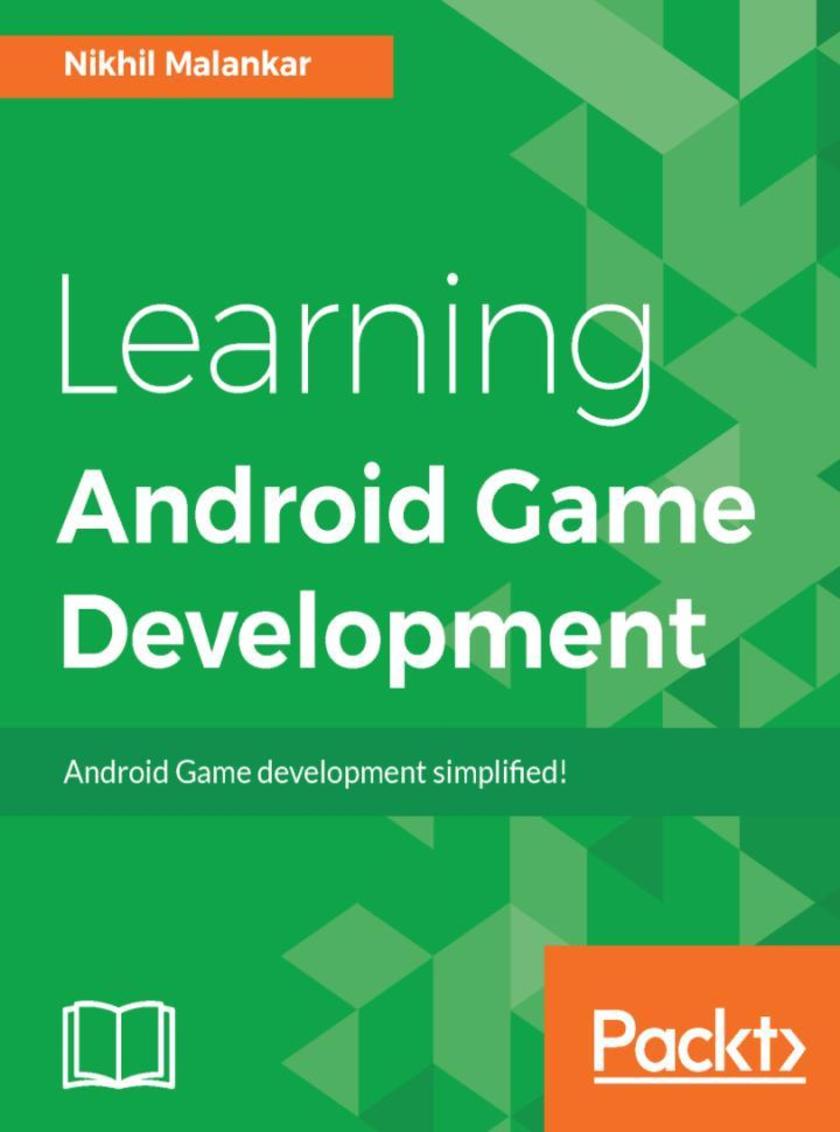
Learning Android Game Development
¥63.21
Learn the art of making Android games and turn your game development dreams into reality About This Book ? Leverage the latest features of Android N to create real-world 2D games ? Architect a 2D game from scratch and level up your Android game development skill ? Transition from developing simple 2D games to 3D games using basic Java code Who This Book Is For If you are a mobile developer who has basic Java programming knowledge, then this book is ideal for you. Previous Android development experience is not needed; however, basic mobile development knowledge is essential. What You Will Learn ? Understand the nuts and bolts of developing highly interactive and interesting games for Android N ? Link the interface to the code used in games through simple methods ? Interact with the images on the screen and also learn to animate them ? Set and save the game state and save high scores, hit points, and so on for your games ? Get a grasp of various collision techniques and implement the bounding box technique ? Convert your 2D games to 3D games using Android N ? Get an understanding of the process of UI creation using Android Studio In Detail In this book, we’ll start with installing Android studio and its components, and setting it up ready for Android N. We teach you how to take inputs from users, create images and interact with them, and work with sprites to create animations. You’ll then explore the various collision detection methods and use sprites to create an explosion. Moving on, you’ll go through the process of UI creation and see how to create buttons as well as display the score and other parameters on screen. By the end of the book, you will have a working example and an understanding of a 2D platform game like Super Mario and know how to convert your 2D games to 3D games. Style and approach This easy-to-understand guide follows a step-by-step approach to building games, and contains plenty of graphical examples for you to follow and grasp quickly, giving you the chance to implement the concepts practically.


