


 购物车
购物车 个人中心
个人中心
Tableau Cookbook – Recipes for Data Visualization
¥90.46
Create beautiful data visualizations and interactive dashboards with Tableau About This Book Delve into the features and functionalities of Tableau from the ground up with this step-by-step guide that has over 50 "follow-me" recipes Build rich visualizations to effectively highlight the underlying trends and patterns in your data Build beautiful interactive dashboards and storyboards to stitch your visualizations together and tell a story Who This Book Is For This book is for anyone who wishes to use Tableau. It will be of use to both beginners who want to learn Tableau from scratch and to more seasoned users who simply want a quick reference guide. This book is a ready reckoner guide for you. The book will be such that both new & existing Tableau users who don’t know, or can’t recall how to perform different Tableau tasks can use the book and be benefited from it. What You Will Learn Get to grips with the Tableau workspace and terminologies and understand what data sources you can connect Learn to create basic charts like bar chart, stacked bar, pie chart, line chart, area chart, tree map & word cloud Go even further with more advanced visualizations such as scatter plot, box & whiskers plot, dual axis, bullet chart, Histograms, Maps, etc Use pre-defined calculation and change its scope and direction to affect outcome Learn to define Parameters and call them into parametric calculations that provide outcomes based on user inputs Build Dashboards and use Actions to link multiple sheets on the dashboard Connect to multiple data sources using Data Blending, Multiple Table Join within the same data source as well as across data sources, Custom SQL and learn to work with data Extracts Compute statistical trends, build forecasting models and use Reference lines for benchmarking In Detail Data is everywhere and everything is data! Visualization of data allows us to bring out the underlying trends and patterns inherent in the data and gain insights that enable faster and smarter decision making. Tableau is one of the fastest growing and industry leading Business Intelligence platforms that empowers business users to easily visualize their data and discover insights at the speed of thought. Tableau is a self-service BI platform designed to make data visualization and analysis as intuitive as possible. Creating visualizations with simple drag-and-drop, you can be up and running on Tableau in no time. Starting from the fundamentals such as getting familiarized with Tableau Desktop, connecting to common data sources and building standard charts; you will walk through the nitty gritty of Tableau such as creating dynamic analytics with parameters, blended data sources, and advanced calculations. You will also learn to group members into higher levels, sort the data in a specific order & filter out the unnecessary information. You will then create calculations in Tableau & understand the flexibility & power they have and go on to building story-boards and share your insights with others. Whether you are just getting started or whether you need a quick reference on a "how-to" question, This book is the perfect companion for you Style and approach This cookbook takes a step-by-step approach and the text systematically evolves to cover more involved functionalities. Every recipe includes illustrative screenshots which provide a detailed visual resource for each step.
Effective Robotics Programming with ROS - Third Edition
¥90.46
Find out everything you need to know to build powerful robots with the most up-to-date ROS About This Book This comprehensive, yet easy-to-follow guide will help you find your way through the ROS framework Successfully design and simulate your 3D robot model and use powerful robotics algorithms and tools to program and set up your robots with an unparalleled experience by using the exciting new features from Robot Kinetic Use the latest version of gazebo simulator, OpenCV 3.0, and C++11 standard for your own algorithms Who This Book Is For This book is suitable for an ROS beginner as well as an experienced ROS roboticist or ROS user or developer who is curious to learn ROS Kinetic and its features to make an autonomous Robot. The book is also suitable for those who want to integrate sensors and embedded systems with other software and tools using ROS as a framework. What You Will Learn Understand the concepts of ROS, the command-line tools, visualization GUIs, and how to debug ROS Connect robot sensors and actuators to ROS Obtain and analyze data from cameras and 3D sensors Use Gazebo for robot/sensor and environment simulation Design a robot and see how to make it map the environment, navigate autonomously, and manipulate objects in the environment using MoveIt! Add vision capabilities to the robot using OpenCV 3.0 Add 3D perception capabilities to the robot using the latest version of PCL In Detail Building and programming a robot can be cumbersome and time-consuming, but not when you have the right collection of tools, libraries, and more importantly expert collaboration. ROS enables collaborative software development and offers an unmatched simulated environment that simplifies the entire robot building process. This book is packed with hands-on examples that will help you program your robot and give you complete solutions using open source ROS libraries and tools. It also shows you how to use virtual machines and Docker containers to simplify the installation of Ubuntu and the ROS framework, so you can start working in an isolated and control environment without changing your regular computer setup. It starts with the installation and basic concepts, then continues with more complex modules available in ROS such as sensors and actuators integration (drivers), navigation and mapping (so you can create an autonomous mobile robot), manipulation, Computer Vision, perception in 3D with PCL, and more. By the end of the book, you’ll be able to leverage all the ROS Kinetic features to build a fully fledged robot for all your needs. Style and approach This book is packed with hands-on examples that will help you program your robot and give you complete solutions using ROS open source libraries and tools. All the robotics concepts and modules are explained and multiple examples are provided so that you can understand them easily.
Mastering Text Mining with R
¥71.93
Master text-taming techniques and build effective text-processing applications with R About This Book Develop all the relevant skills for building text-mining apps with R with this easy-to-follow guide Gain in-depth understanding of the text mining process with lucid implementation in the R language Example-rich guide that lets you gain high-quality information from text data Who This Book Is For If you are an R programmer, analyst, or data scientist who wants to gain experience in performing text data mining and analytics with R, then this book is for you. Exposure to working with statistical methods and language processing would be helpful. What You Will Learn Get acquainted with some of the highly efficient R packages such as OpenNLP and RWeka to perform various steps in the text mining process Access and manipulate data from different sources such as JSON and HTTP Process text using regular expressions Get to know the different approaches of tagging texts, such as POS tagging, to get started with text analysis Explore different dimensionality reduction techniques, such as Principal Component Analysis (PCA), and understand its implementation in R Discover the underlying themes or topics that are present in an unstructured collection of documents, using common topic models such as Latent Dirichlet Allocation (LDA) Build a baseline sentence completing application Perform entity extraction and named entity recognition using R In Detail Text Mining (or text data mining or text analytics) is the process of extracting useful and high-quality information from text by devising patterns and trends. R provides an extensive ecosystem to mine text through its many frameworks and packages. Starting with basic information about the statistics concepts used in text mining, this book will teach you how to access, cleanse, and process text using the R language and will equip you with the tools and the associated knowledge about different tagging, chunking, and entailment approaches and their usage in natural language processing. Moving on, this book will teach you different dimensionality reduction techniques and their implementation in R. Next, we will cover pattern recognition in text data utilizing classification mechanisms, perform entity recognition, and develop an ontology learning framework. By the end of the book, you will develop a practical application from the concepts learned, and will understand how text mining can be leveraged to analyze the massively available data on social media. Style and approach This book takes a hands-on, example-driven approach to the text mining process with lucid implementation in R.
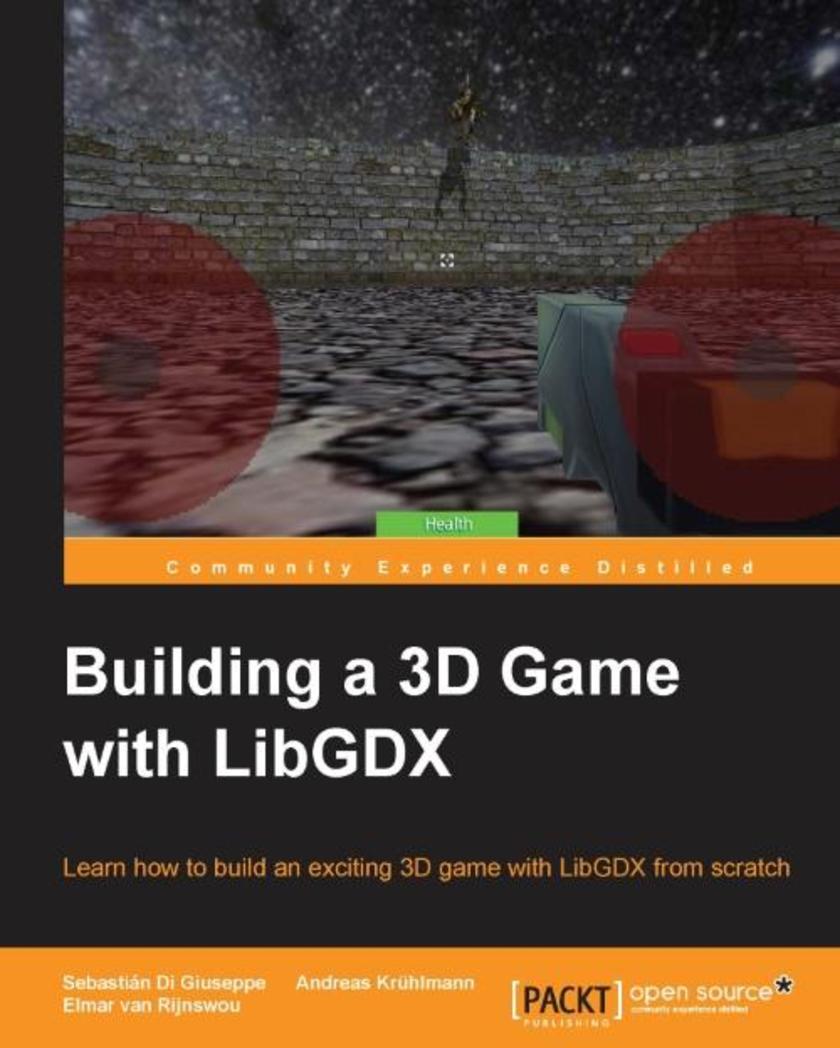
Building a 3D Game with LibGDX
¥54.49
Learn how to build an exciting 3D game with LibGDX from scratch About This Book Implement an exhaustive list of features that LibGDX unleashes to build your 3D game. Write, test, and debug your application on your desktop and deploy them on multiple platforms. Gain a clear understanding of the physics behind LibGDX and libraries like OpenGL and WebGL that make up LibGDX. Who This Book Is For If you are a game developer or enthusiasts who want to build 3D games with LibGDX, then this book is for you. A basic knowledge of LibGDX and Java programming is appreciated. What You Will Learn Learn the potential of LibGDX in game development Understand the LibGDX architecture and explore platform limitation and variations Explore the various approaches for game development using LibGDX Learn about the common mistakes and possible solutions of development Discover the 3D workflow with Blender and how it works with LibGDX Implement 3D models along with textures and animations into your games Familiarize yourself with Scene2D and its potential to boost your game’s design In Detail LibGDX is a hugely popular open source, cross-platform, Java-based game development framework built for the demands of cross-platform game development. This book will teach readers how the LibGDX framework uses its 3D rendering API with the OpenGL wrapper, in combination with Bullet Physics, 3D Particles, and Shaders to develop and deploy a game application to different platforms You will start off with the basic Intellij environment, workflow and set up a LibGDX project with necessary APIs for 3D development. You will then go through LibGDX’s 3D rendering API main features and talk about the camera used for 3D. Our next step is to put everything together to build a basic 3D game with Shapes, including basic gameplay mechanics and basic UI. Next you will go through modeling, rigging, and animation in Blender. We will then talk about refining mechanics, new input implementations, implementing enemy 3D models, mechanics, and gameplay balancing. The later part of this title will help you to manage secondary resources like audio, music and add 3D particles in the game to make the game more realistic. You will finally test and deploy the app on a multitude of different platforms, ready to start developing your own titles how you want! Style and approach A step by step guide on building a 3D game with LibGDX and implementing an exhaustive list of features that you would wish to incorporate into your 3D game
Tableau: Creating Interactive Data Visualizations
¥152.59
Illustrate your data in a more interactive way by implementing data visualization principles and creating visual stories using Tableau About This Book Use data visualization principles to help you to design dashboards that enlighten and support business decisions Integrate your data to provide mashed-up dashboards Connect to various data sources and understand what data is appropriate for Tableau Public Understand chart types and when to use specific chart types with different types of data Who This Book Is For Data scientists who have just started using Tableau and want to build on the skills using practical examples. Familiarity with previous versions of Tableau will be helpful, but not necessary. What You Will Learn Customize your designs to meet the needs of your business using Tableau Use Tableau to prototype, develop, and deploy the final dashboard Create filled maps and use any shape file Discover features of Tableau Public, from basic to advanced Build geographic maps to bring context to data Create filters and actions to allow greater interactivity to Tableau Public visualizations and dashboards Publish and embed Tableau visualizations and dashboards in articles In Detail With increasing interest for data visualization in the media, businesses are looking to create effective dashboards that engage as well as communicate the truth of data. Tableau makes data accessible to everyone, and is a great way of sharing enterprise dashboards across the business. Tableau is a revolutionary toolkit that lets you simply and effectively create high-quality data visualizations. This course starts with making you familiar with its features and enable you to develop and enhance your dashboard skills, starting with an overview of what dashboard is, followed by how you can collect data using various mathematical formulas. Next, you'll learn to filter and group data, as well as how to use various functions to present the data in an appealing and accurate way. In the first module, you will learn how to use the key advanced string functions to play with data and images. You will be walked through the various features of Tableau including dual axes, scatterplot matrices, heat maps, and sizing.In the second module, you’ll start with getting your data into Tableau, move onto generating progressively complex graphics, and end with the finishing touches and packaging your work for distribution. This module is filled with practical examples to help you create filled maps, use custom markers, add slider selectors, and create dashboards. You will learn how to manipulate data in various ways by applying various filters, logic, and calculating various aggregate measures. Finally, in the third module, you learn about Tableau Public using which allows readers to explore data associations in multiple-sourced public data, and uses state-of-the-art dashboard and chart graphics to immerse the users in an interactive experience. In this module, the readers can quickly gain confidence in understanding and expanding their visualization, creation knowledge, and quickly create interesting, interactive data visualizations to bring a richness and vibrancy to complex articles. The course provides a great overview for beginner to intermediate Tableau users, and covers the creation of data visualizations of varying complexities. Style and approach The approach will be a combined perspective, wherein we start by performing some basic recipes and move on to some advanced ones. Finally, we perform some advanced analytics and create appealing and insightful data stories using Tableau Public in a step-by-step manner.
Python: Deeper Insights into Machine Learning
¥161.31
Leverage benefits of machine learning techniques using Python About This Book Improve and optimise machine learning systems using effective strategies. Develop a strategy to deal with a large amount of data. Use of Python code for implementing a range of machine learning algorithms and techniques. Who This Book Is For This title is for data scientist and researchers who are already into the field of data science and want to see machine learning in action and explore its real-world application. Prior knowledge of Python programming and mathematics is must with basic knowledge of machine learning concepts. What You Will Learn Learn to write clean and elegant Python code that will optimize the strength of your algorithms Uncover hidden patterns and structures in data with clustering Improve accuracy and consistency of results using powerful feature engineering techniques Gain practical and theoretical understanding of cutting-edge deep learning algorithms Solve unique tasks by building models Get grips on the machine learning design process In Detail Machine learning and predictive analytics are becoming one of the key strategies for unlocking growth in a challenging contemporary marketplace. It is one of the fastest growing trends in modern computing, and everyone wants to get into the field of machine learning. In order to obtain sufficient recognition in this field, one must be able to understand and design a machine learning system that serves the needs of a project. The idea is to prepare a learning path that will help you to tackle the real-world complexities of modern machine learning with innovative and cutting-edge techniques. Also, it will give you a solid foundation in the machine learning design process, and enable you to build customized machine learning models to solve unique problems. The course begins with getting your Python fundamentals nailed down. It focuses on answering the right questions that cove a wide range of powerful Python libraries, including scikit-learn Theano and Keras.After getting familiar with Python core concepts, it’s time to dive into the field of data science. You will further gain a solid foundation on the machine learning design and also learn to customize models for solving problems. At a later stage, you will get a grip on more advanced techniques and acquire a broad set of powerful skills in the area of feature selection and feature engineering. Style and approach This course includes all the resources that will help you jump into the data science field with Python. The aim is to walk through the elements of Python covering powerful machine learning libraries. This course will explain important machine learning models in a step-by-step manner. Each topic is well explained with real-world applications with detailed guidance.Through this comprehensive guide, you will be able to explore machine learning techniques.
JavaScript: Functional Programming for JavaScript Developers
¥143.87
Unlock the powers of functional programming hidden within JavaScript to build smarter, cleaner, and more reliable web apps About This Book Write powerful code with the high-level functions that JavaScript offers Discover what functional programming is, why it's effective, and how it's used in JavaScript Understand and optimize JavaScript's hidden potential as a true functional language Who This Book Is For If you are a JavaScript developer interested in learning functional programming, looking for the quantum leap toward mastering the JavaScript language, or just want to become a better programmer in general, then this book is ideal for you. This guide is aimed at programmers, involved in developing reactive frontend apps, server-side apps that wrangle with reliability and concurrency, and everything in between. What You Will Learn Get a run through of the basic JavaScript language constructs Code using the powerful object-oriented feature in JavaScript Master DOM manipulation, cross-browser strategies, and ES6 Understand the basic concurrency constructs in Java* and best performance strategies Harness the power of patterns for tasks ranging from application building to code testing Build large-scale apps seamlessly with the help of reactive patterns Explore advanced design patterns, including dependency injection Develop more powerful applications with currying and function composition Create more reliable code with closures and immutable data In Detail JavaScript is a high-level, dynamic, untyped, lightweight, and interpreted programming language and functional programming is a style that emphasizes and enables smarter code that minimizes complexity and increases modularity. It's a way of writing cleaner code through clever ways of mutating, combining, and using functions. And JavaScript provides an excellent medium for this approach. By learning how to expose JavaScript's true identity as a functional language, we can implement web apps that are more powerful, easier to maintain and more reliable. The java *: Functional Programming for JavaScript Developers course will take you on a journey to show how functional programming when combined with other techniques makes JavaScript programming more efficient. The first module Mastering JavaScript, stress on practical aspects of Java* development like—Functions and Closures, Runtime debugging techniques, project layout, events and DOM processing, build tools, Object-oriented patterns, isomorphism—everything that a modern Java* project would need. The second module, Mastering JavaScript Design Patterns - Second Edition, will explore how design patterns can help you improve and organize your JavaScript code. You’ll get to grips with creational, structural, and behavioral patterns as you discover how to put them to work in different scenarios. This updated edition will also delve into reactive design patterns and microservices as they are a growing phenomenon in the world of web development. It will also show you some advanced patterns, including dependency injection and live post processing. The third module, Functional Programming in JavaScript, will help you to write real-world applications by utilizing a wide range of functional techniques and styles. It explores the core concepts of functional programming common to all functional languages, with examples of their use in JavaScript. Style and approach This course will begin with providing insights and practical tips on advanced JavaScript features to build highly scalable web and mobile system and move on to some design patterns with JavaScript. Finally, the course ends with presenting the functional programming techniques and styles in JavaScript.
OpenStack Essentials - Second Edition
¥63.21
Untangle the complexity of OpenStack clouds through this practical tutorial About This Book Navigate through the complex jungle of components in OpenStack using practical instructions This book helps administrators, cloud engineers, and even developers to consolidate and control pools of compute, networking, and storage resources Learn to use the centralized dashboard and administration panel to monitor large-scale deployments Who This Book Is For This book is perfect for administrators, cloud engineers, and operators who want to get started with OpenStack, solve basic problems encountered during deployment, and get up to speed with the latest release of OpenStack. Familiarity with the Linux command line and experience with Linux system administration is expected. What You Will Learn Brush up on the latest release, and how it affects the various components Install OpenStack using the Packstack and RDO Manager installation tool Learn to convert a computer node that supports Docker containers Implement Ceph Block Device images with OpenStack Create and allocate virtual networks, routers and IP addresses to OpenStack Tenants. Configuring and Launching a Docker container. In Detail OpenStack is a widely popular platform for cloud computing. Applications that are built for this platform are resilient to failure and convenient to scale. This book, an update to our extremely popular OpenStack Essentials (published in May 2015) will help you master not only the essential bits, but will also examine the new features of the latest OpenStack release - Mitaka; showcasing how to put them to work straight away. This book begins with the installation and demonstration of the architecture. This book will tech you the core 8 topics of OpenStack. They are Keystone for Identity Management, Glance for Image management, Neutron for network management, Nova for instance management, Cinder for Block storage, Swift for Object storage, Ceilometer for Telemetry and Heat for Orchestration. Further more you will learn about launching and configuring Docker containers and also about scaling them horizontally. You will also learn about monitoring and Troubleshooting OpenStack. Style and approach This book offers step-by-step practical instructions to help you quickly navigate through the complexities of OpenStack
Xamarin 4 By Example
¥71.93
Design, develop, and publish your own mobile apps for iOS and Android using C# and Xamarin Studio About This Book Explore the exciting features of Xamarin Studio while learning to develop your own applications Develop a complete application from conceptualization through to publishing it on the app store The book walks you through the basics of cross-platform development with Xamarin using examples and best practices and tips for cross platform solutions. Who This Book Is For If you want to develop your own applications and want to explore the features of Xamarin Studio, then this is the book for you. It is expected that you have a basic understanding of technologies in mobile development, but prior knowledge of Xamarin is not required. What You Will Learn Understand the software development lifecycle for mobile applications Use Xamarin Studio and its wide range of features to write your programs in C# Use different options to create multi-platform applications using Xamarin and develop a cross-platform extension method Work with Xamarin forms and various UI controls Integrate synchronous and asynchronous communication module within your app Render images to work with Android and iOS Link a third-party application to your solution In Detail The mobile app market is increasing exponentially every year. Xamarin Studio with its modern and powerful IDEs makes creating applications a lot easier by simplifying the development process. Xamarin will allow you and your team to create native applications by taking advantage of one of the most evolved programming language in the world: C#. This book will provide you with the basic skills you need to start developing mobile apps using C# and Xamarin. By working through the examples in each chapter, you will gain hands-on experience of creating a complete app that is fully functional by all means. Finally, you will learn to publish the app you created on the app market. Each project in this book will take you one step closer to becoming a professional app developer. Style and approach The step-by-guide will walk you through the process of creating an application of with the help of small projects that will teach you everything you need to know to build a complete application of your own.
Cassandra 3.x High Availability - Second Edition
¥63.21
Achieve scalability and high availability without compromising on performance About This Book See how to get 100 percent uptime with your Cassandra applications using this easy-follow guide Learn how to avoid common and not-so-common mistakes while working with Cassandra using this highly practical guide Get familiar with the intricacies of working with Cassandra for high availability in your work environment with this go-to-guide Who This Book Is For If you are a developer or DevOps engineer who has basic familiarity with Cassandra and you want to become an expert at creating highly available, fault tolerant systems using Cassandra, this book is for you. What You Will Learn Understand how the core architecture of Cassandra enables highly available applications Use replication and tunable consistency levels to balance consistency, availability, and performance Set up multiple data centers to enable failover, load balancing, and geographic distribution Add capacity to your cluster with zero downtime Take advantage of high availability features in the native driver Create data models that scale well and maximize availability Understand common anti-patterns so you can avoid them Keep your system working well even during failure scenarios In Detail Apache Cassandra is a massively scalable, peer-to-peer database designed for 100 percent uptime, with deployments in the tens of thousands of nodes, all supporting petabytes of data. This book offers a practical insight into building highly available, real-world applications using Apache Cassandra. The book starts with the fundamentals, helping you to understand how Apache Cassandra’s architecture allows it to achieve 100 percent uptime when other systems struggle to do so. You’ll get an excellent understanding of data distribution, replication, and Cassandra’s highly tunable consistency model. Then we take an in-depth look at Cassandra's robust support for multiple data centers, and you’ll see how to scale out a cluster. Next, the book explores the domain of application design, with chapters discussing the native driver and data modeling. Lastly, you’ll find out how to steer clear of common anti-patterns and take advantage of Cassandra’s ability to fail gracefully. Style and approach This practical guide will get you implementing Cassandra right from the design to creating highly available systems. Through a systematic, step-by-step approach, you will learn different aspects of building highly available Cassandra applications and all this with the help of easy-to-follow examples, tips, and tricks.

Mastering SoapUI
¥65.39
Master the art of testing and automating your SOA using SoapUI About This Book Design real-time test automation frameworks for Enterprise applications using SoapUI Learn how to solve test automation issues for complex systems A complete guide to understanding SOA automation from quality assurance to business assurance Who This Book Is For The book is intended for test architects, SOA test specialists, automation testers, test managers, and software developers who have a good understanding of SOA, web services, Groovy Scripting, and the SOAP UI tool. What You Will Learn Familiarize yourself with Test Web services from functional, nonfunctional, and security aspects Learn to test real-time service orchestrations Design test automation solutions for SOA-based Enterprise applications Learn multilayer test automation Selenium plus SoapUI under a single umbrella Integrate your SoapUI framework with Jenkins In Detail SoapUI is an open-source cross-platform testing application that provides complete test coverage and supports all the standard protocols and technologies. This book includes real-time examples of implementing SoapUI to achieve quality and business assurance. Starting with the features and functionalities of SoapUI, the book will then focus on functional testing, load testing, and security testing of web services. Furthermore, you will learn how to automate your services and then design data-driven, keyword-driven, and hybrid-driven frameworks in SoapUI. Then the book will show you how to test UIs and services using SoapUI with the help of Selenium. You will also learn how to integrate SoapUI with Jenkins for CI and SoapUI test with QC with backward- and forward-compatibility. The final part of the book will show you how to virtualize a service response in SoapUI using Service Mocking. You will finish the journey by discovering the best practices for SoapUI test automation and preparing yourself for the online certification of SoapUI. Style and approach Filled with real-time examples, this book will help readers take their knowledge to the next level. This book is a comprehensive guide that will cover the end-to-end life cycle of implementing SoapUI in various phases of software testing and the software development life cycle.
Learning Nagios - Third Edition
¥90.46
Learn and monitor your entire IT infrastructure to ensure your systems, applications, services, and business function effectively. About This Book Packed with tips, tricks and illustrations, the book will explain the configuration and monitoring concepts in a simplified manner Experience the scalability and flexibility of Nagios in a very practical and easy-to-understand approach. Unleash the power of Nagios Core and Nagios XI 5 to monitor and secure your infrastructure with ease. Who This Book Is For This book is targeted at System Administrators, both, who have no prior knowledge of Nagios as well as readers experienced with it. It not only covers the basics of Nagios but also the advanced features. What You Will Learn Set up and use the built-in Nagios web interface Upskill the additional interfaces available for Nagios to monitor your IT infrastructure Learn how to perform various checks using both, Nagios standard plugins and third-party plugins Explore the working of notifications and events in Nagios Familiarize yourself with SNMP and use it for monitoring devices such as routers, switches, modems and printers Discover how can be Nagios can be customized and tailored to your needs Get to know more about the entreprise version of Nagios, Nagios XI In Detail Nagios, a powerful and widely used IT monitoring and management software for problem -solving. It detects problems related to your organizations infrastructure and helps in resolving the issue before it impacts the business. Following the success of the previous edition, this book will continue to help you monitor the status of network devices and also notify the system administrators of network problems. Starting with the fundamentals, the book will teach you how to install and configure Nagios for your environment. The book helps you learn how to end downtimes, adding comments and generating reports using the built-in Web interface of Nagios. Moving on, you will be introduced to the third-party web interfaces and applications for checking the status and report specific information. As you progress further in Learning Nagios, you will focus on the standard set of Nagios plugins and also focus on teach you how to efficiently manage large configurations and using templates. Once you are up to speed with this, you will get to know the concept and working of notifications and events in Nagios. The book will then uncover the concept of passive check and shows how to use NRDP (Nagios Remote Data Processor). The focus then shifts to how Nagios checks can be run on remote machines and SNMP (Simple Network Management Protocol) can be used from Nagios. Lastly, the book will demonstrate how to extend Nagios by creating custom check commands, custom ways of notifying users and showing how passive checks and NRDP can be used to integrate your solutions with Nagios. By the end of the book, you will be a competent system administrator who could monitor mid-size businesses or even large scale enterprises. Style and approach This will be a practical learning guide for system administrators which will teach them everything about Nagios along with implementing it for your organization and then ending with securing it.
Visualforce Development Cookbook - Second Edition
¥90.46
Discover over 70 real-world examples to overcome the most complex concepts you will face developing with Visualforce About This Book This book provides an enhanced user experience with dynamically-generated, reactive pages Access data over additional channels via public web sites and mobile pages Packed with easy-to-follow recipes, including step-by-step instructions and Apex/Visualforce code downloads this title is the all in one package you need to get more from Visualforce. Who This Book Is For This book will be beneficial to developers who are already well-versed with the basics of Visualforce. An awareness of the standard component library and the purpose of controllers is expected. What You Will Learn Pass parameters between Visualforce pages Update attributes in component controllers Avoid validation errors with action regions Refresh record details from embedded Visualforce Create and develop a website template from scratch Get to know about the Salesforce Lightening Design system and use Visualforce in Salesforce1 Effectively tackle frequently-faced problems while developing Visualforce pages In Detail Visualforce is a framework that allows developers to build sophisticated, custom user interfaces that can be hosted natively on the Force.com platform. The Visualforce framework includes a tag-based markup language, similar to HTML that is used to write the Visualforce pages and a set of controllers that are used to write business logic to the Visualforce pages. Visualforce Development Cookbook provides solutions to a variety of challenges faced by Salesforce developers and demonstrates how easy it is to build rich, interactive pages using Visualforce. Whether you are looking to make a minor addition to the standard page functionality or override it completely, this book will provide you with the help you require throughout. You will start by learning about the simple utilities and will build up to more advanced techniques for data visualization and to reuse functionality. You will learn how to perform various tasks such as creating multiple records from a single page, visualizing data as charts, using JavaScript to enhance client-side functionality, building a public website, and making data available to a mobile device. With an interesting chapter on tackling common issues faced while developing Visualforce pages, the book provides lots of practical examples to enhance and extend your Salesforce user interface. Style and approach Following a cookbook structure, the book provides recipes on some essential technical scenarios and a few that focus on real-world development problems. This book is packed with illustrations and contains lots of code samples to improve your understanding.
Docker for Serverless Applications
¥73.02
Build applications and infrastructures that leverage Function-as-a-Service and Docker About This Book ? Implement containerization in Serverless/FaaS environments ? Utilize Docker as a functional unit of work for Serverless/FaaS platforms ? Use Docker as a portable infrastructure for Serverless Applications Who This Book Is For If you are a Developer, a Docker Engineer, a DevOps Engineer, or any stakeholder interested in learning the use of Docker on Serverless environments then this book is for you. What You Will Learn ? Learn what Serverless and FaaS applications are ? Get acquainted with the architectures of three major serverless systems ? Explore how Docker technologies can help develop Serverless applications ? Create and maintain FaaS infrastructures ? Set up Docker infrastructures to serve as on-premises FaaS infrastructures ? Define functions for Serverless applications with Docker containers In Detail Serverless applications have gained a lot of popularity among developers and are currently the buzzwords in the tech market. Docker and serverless are two terms that go hand-in-hand. This book will start by explaining serverless and Function-as-a-Service (FaaS) concepts, and why they are important. Then, it will introduce the concepts of containerization and how Docker fits into the Serverless ideology. It will explore the architectures and components of three major Docker-based FaaS platforms, how to deploy and how to use their CLI. Then, this book will discuss how to set up and operate a production-grade Docker cluster. We will cover all concepts of FaaS frameworks with practical use cases, followed by deploying and orchestrating these serverless systems using Docker. Finally, we will also explore advanced topics and prototypes for FaaS architectures in the last chapter. By the end of this book, you will be in a position to build and deploy your own FaaS platform using Docker. Style and approach A practical guide that offers a simple way to easily understand Serverless Applications utilizing Docker as the development environment.
Solidity Programming Essentials
¥63.21
Learn the most powerful and primary programming language for writing smart contracts and find out how to write, deploy, and test smart contracts in Ethereum. About This Book ? Get you up and running with Solidity Programming language ? Build Ethereum Smart Contracts with Solidity as your scripting language ? Learn to test and deploy the smart contract to your private Blockchain Who This Book Is For This book is for anyone who would like to get started with Solidity Programming for developing an Ethereum smart contract. No prior knowledge of EVM is required. What You Will Learn ? Learn the basics and foundational concepts of Solidity and Ethereum ? Explore the Solidity language and its uniqueness in depth ? Create new accounts and submit transactions to blockchain ? Get to know the complete language in detail to write smart contracts ? Learn about major tools to develop and deploy smart contracts ? Write defensive code using exception handling and error checking ? Understand Truffle basics and the debugging process In Detail Solidity is a contract-oriented language whose syntax is highly influenced by JavaScript, and is designed to compile code for the Ethereum Virtual Machine. Solidity Programming Essentials will be your guide to understanding Solidity programming to build smart contracts for Ethereum and blockchain from ground-up. We begin with a brief run-through of blockchain, Ethereum, and their most important concepts or components. You will learn how to install all the necessary tools to write, test, and debug Solidity contracts on Ethereum. Then, you will explore the layout of a Solidity source file and work with the different data types. The next set of recipes will help you work with operators, control structures, and data structures while building your smart contracts. We take you through function calls, return types, function modifers, and recipes in object-oriented programming with Solidity. Learn all you can on event logging and exception handling, as well as testing and debugging smart contracts. By the end of this book, you will be able to write, deploy, and test smart contracts in Ethereum. This book will bring forth the essence of writing contracts using Solidity and also help you develop Solidity skills in no time. Style and approach Solidity is a high-level programming language best understood using examples. After covering basic concepts of Ethereum and Solidity, programming constructs will be explained with help of examples. As chapters progress, deployment, usage and testing of contacts will form major aspect of the book. Troubleshooting and unit testing is an important exercise and skill to master this language will also be covered in this book.
PostgreSQL 10 High Performance
¥81.74
Leverage the power of PostgreSQL 10 to design, administer and maintain a high-performance database solution About This Book ? Obtain optimal PostgreSQL 10 database performance, ranging from initial design to routine maintenance ? Fine tune the performance of your queries and avoid the common pitfalls that can slow your system down ? Contains tips and tricks on scaling successful database installations, and ensuring a highly available PostgreSQL solution Who This Book Is For This book is designed for database administrators and PostgreSQL architects who already use or plan to exploit the features of PostgreSQL 10 to design and maintain a high-performance PostgreSQL database. A working knowledge of SQL, and some experience with PostgreSQL will be helpful in getting the most out of this book. What You Will Learn ? Learn best practices for scaling PostgreSQL 10 installations ? Discover the best hardware for developing high-performance PostgreSQL applications ? Benchmark your whole system – from hardware to application ? Learn by real examples how server parameters impact performance ? Discover PostgreSQL 10 features for partitioning and parallel query ? Monitor your server, both inside and outside the database ? Design and implement a good replication system on PostgreSQL 10 In Detail PostgreSQL database servers have a common set of problems that they encounter as their usage gets heavier and requirements get more demanding. Peek into the future of your PostgreSQL 10 database's problems today. Know the warning signs to look for and how to avoid the most common issues before they even happen. Surprisingly, most PostgreSQL database applications evolve in the same way—choose the right hardware, tune the operating system and server memory use, optimize queries against the database and CPUs with the right indexes, and monitor every layer, from hardware to queries, using tools from inside and outside PostgreSQL. Also, using monitoring insight, PostgreSQL database applications continuously rework the design and configuration. On reaching the limits of a single server, they break things up; connection pooling, caching, partitioning, replication, and parallel queries can all help handle increasing database workloads. By the end of this book, you will have all the knowledge you need to design, run, and manage your PostgreSQL solution while ensuring high performance and high availability Style and approach This book has been organized in such a manner that will help you understand basic PostgreSQL 10 performance tuning to an advanced-level configuration.
Cloud Analytics with Google Cloud Platform
¥73.02
Combine the power of analytics and cloud computing for faster and efficient insights About This Book ? Master the concept of analytics on the cloud: and how organizations are using it ? Learn the design considerations and while applying a cloud analytics solution ? Design an end-to-end analytics pipeline on the cloud Who This Book Is For This book is targeted at CIOs, CTOs, and even analytics professionals looking for various alternatives to implement their analytics pipeline on the cloud. Data professionals looking to get started with cloud-based analytics will also find this book useful. Some basic exposure to cloud platforms such as GCP will be helpful, but not mandatory. What You Will Learn ? Explore the basics of cloud analytics and the major cloud solutions ? Learn how organizations are using cloud analytics to improve the ROI ? Explore the design considerations while adopting cloud services ? Work with the ingestion and storage tools of GCP such as Cloud Pub/Sub ? Process your data with tools such as Cloud Dataproc, BigQuery, etc ? Over 70 GCP tools to build an analytics engine for cloud analytics ? Implement machine learning and other AI techniques on GCP In Detail With the ongoing data explosion, more and more organizations all over the world are slowly migrating their infrastructure to the cloud. These cloud platforms also provide their distinct analytics services to help you get faster insights from your data. This book will give you an introduction to the concept of analytics on the cloud, and the different cloud services popularly used for processing and analyzing data. If you’re planning to adopt the cloud analytics model for your business, this book will help you understand the design and business considerations to be kept in mind, and choose the best tools and alternatives for analytics, based on your requirements. The chapters in this book will take you through the 70+ services available in Google Cloud Platform and their implementation for practical purposes. From ingestion to processing your data, this book contains best practices on building an end-to-end analytics pipeline on the cloud by leveraging popular concepts such as machine learning and deep learning. By the end of this book, you will have a better understanding of cloud analytics as a concept as well as a practical know-how of its implementation Style and approach Comprehensive guide with a perfect blend of theory, examples, and implementation of real-world use-cases
Serverless Design Patterns and Best Practices
¥81.74
Get started with designing your serverless application using optimum design patterns and industry standard practices About This Book ? Learn the details of popular software patterns and how they are applied to serverless applications ? Understand key concepts and components in serverless designs ? Walk away with a thorough understanding of architecting serverless applications Who This Book Is For If you're a software architect, engineer, or someone who wants to build serverless applications, which are non-trivial in complexity and scope, then this book is for you. Basic knowledge of programming and serverless computing concepts are assumed. What You Will Learn ? Comprehend the popular design patterns currently being used with serverless architectures ? Understand the various design options and corresponding implementations for serverless web application APIs ? Learn multiple patterns for data-intensive serverless systems and pipelines, including MapReduce and Lambda Architecture ? Learn how to leverage hosted databases, queues, streams, storage services, and notification services ? Understand error handling and system monitoring in a serverless architecture a serverless architecture ? Learn how to set up a serverless application for continuous integration, continuous delivery, and continuous deployment In Detail Serverless applications handle many problems that developers face when running systems and servers. The serverless pay-per-invocation model can also result in drastic cost savings, contributing to its popularity. While it's simple to create a basic serverless application, it's critical to structure your software correctly to ensure it continues to succeed as it grows. Serverless Design Patterns and Best Practices presents patterns that can be adapted to run in a serverless environment. You will learn how to develop applications that are scalable, fault tolerant, and well-tested. The book begins with an introduction to the different design pattern categories available for serverless applications. You will learn the trade-offs between GraphQL and REST and how they fare regarding overall application design in a serverless ecosystem. The book will also show you how to migrate an existing API to a serverless backend using AWS API Gateway. You will learn how to build event-driven applications using queuing and streaming systems, such as AWS Simple Queuing Service (SQS) and AWS Kinesis. Patterns for data-intensive serverless application are also explained, including the lambda architecture and MapReduce. This book will equip you with the knowledge and skills you need to develop scalable and resilient serverless applications confidently. Style and approach Readers will be taken through a set of specific software patterns and learn, in detail, how to apply these patterns and build working software on top of a serverless system. At each step along the way, the reader will learn about the subcomponents and subsystems which comprise the larger system and which may be used in the future to solve different types of challenges.
Functional Python Programming
¥90.46
Create succinct and expressive implementations with functional programming in Python About This Book ? Learn how to choose between imperative and functional approaches based on expressiveness, clarity, and performance ? Get familiar with complex concepts such as monads, concurrency, and immutability ? Apply functional Python to common Exploratory Data Analysis (EDA) programming problems Who This Book Is For This book is for Python developers who would like to perform Functional programming with Python. Python Programming knowledge is assumed. What You Will Learn ? Use Python's generator functions and generator expressions to work with collections in a non-strict (or lazy) manner ? Utilize Python library modules including itertools, functools, multiprocessing, and concurrent features to ensure efficient functional programs ? Use Python strings with object-oriented suffix notation and prefix notation ? Avoid stateful classes with families of tuples ? Design and implement decorators to create composite functions ? Use functions such as max(), min(), map(), filter(), and sorted() ? Write higher-order functions In Detail If you’re a Python developer who wants to discover how to take the power of functional programming (FP) and bring it into your own programs, then this book is essential for you, even if you know next to nothing about the paradigm. Starting with a general overview of functional concepts, you’ll explore common functional features such as first-class and higher-order functions, pure functions, and more. You’ll see how these are accomplished in Python 3.6 to give you the core foundations you’ll build upon. After that, you’ll discover common functional optimizations for Python to help your apps reach even higher speeds. You’ll learn FP concepts such as lazy evaluation using Python’s generator functions and expressions. Moving forward, you’ll learn to design and implement decorators to create composite functions. You'll also explore data preparation techniques and data exploration in depth, and see how the Python standard library fits the functional programming model. Finally, to top off your journey into the world of functional Python, you’ll at look at the PyMonad project and some larger examples to put everything into perspective. Style and approach This book provides a general overview of functional concepts and then delves deeper into the functional features, showing you how the Python standard library fits the functional programming model. It also demonstrates how to implement common functional programming design patterns and techniques in Python.
Practical Game Design
¥81.74
Design accessible and creative games across genres, platforms, and development realities About This Book ? Implement the skills and techniques required to work in a professional studio ? Ace the core principles and processes of level design, world building, and storytelling ? Design interactive characters that animate the gaming world Who This Book Is For Whether you are a student eager to design a game or a junior game designer looking for your first role as a professional, this book will help you with the fundamentals of game design. By focusing on best practices and a pragmatic approach, Practical Game Design provides insights into the arts and crafts from two senior game designers that will interest more seasoned professionals in the game industry. What You Will Learn ? Define the scope and structure of a game project ? Conceptualize a game idea and present it to others ? Design gameplay systems and communicate them clearly and thoroughly ? Build and validate engaging game mechanics ? Design successful business models and prepare your games for live operations ? Master the principles behind level design, worldbuilding and storytelling ? Improve the quality of a game by playtesting and polishing it In Detail If you are looking for an up-to-date and highly applicable guide to game design, then you have come to the right place! Immerse yourself in the fundamentals of game design with this book, written by two highly experienced industry professionals to share their profound insights as well as give valuable advice on creating games across genres and development platforms. Practical Game Design covers the basics of game design one piece at a time. Starting with learning how to conceptualize a game idea and present it to the development team, you will gradually move on to devising a design plan for the whole project and adapting solutions from other games. You will also discover how to produce original game mechanics without relying on existing reference material, and test and eliminate anticipated design risks. You will then design elements that compose the playtime of a game, followed by making game mechanics, content, and interface accessible to all players. You will also find out how to simultaneously ensure that the gameplay mechanics and content are working as intended. As the book reaches its final chapters, you will learn to wrap up a game ahead of its release date, work through the different challenges of designing free-to-play games, and understand how to significantly improve their quality through iteration, polishing and playtesting. Style and approach A practical step by step guide to get you up and running with Game Design from scratch
Mastering Geospatial Development with QGIS 3.x
¥73.02
Go beyond the basics and unleash the full power of QGIS 3.4 and 3.6 with practical, step-by-step examples Key Features * One-stop solution to all of your GIS needs * Master QGIS by learning about database integration, and geoprocessing tools * Learn about the new and updated Processing toolbox and perform spatial analysis Book Description QGIS is an open source solution to GIS and widely used by GIS professionals all over the world. It is the leading alternative to proprietary GIS software. Although QGIS is described as intuitive, it is also, by default, complex. Knowing which tools to use and how to apply them is essential to producing valuable deliverables on time. Starting with a refresher on the QGIS basics and getting you acquainted with the latest QGIS 3.6 updates, this book will take you all the way through to teaching you how to create a spatial database and a GeoPackage. Next, you will learn how to style raster and vector data by choosing and managing different colors. The book will then focus on processing raster and vector data. You will be then taught advanced applications, such as creating and editing vector data. Along with that, you will also learn about the newly updated Processing Toolbox, which will help you develop the advanced data visualizations. The book will then explain to you the graphic modeler, how to create QGIS plugins with PyQGIS, and how to integrate Python analysis scripts with QGIS. By the end of the book, you will understand how to work with all aspects of QGIS and will be ready to use it for any type of GIS work. What you will learn * Create and manage a spatial database * Get to know advanced techniques to style GIS data * Prepare both vector and raster data for processing * Add heat maps, live layer effects, and labels to your maps * Master LAStools and GRASS integration with the Processing Toolbox * Edit and repair topological data errors * Automate workflows with batch processing and the QGIS Graphical Modeler * Integrate Python scripting into your data processing workflows * Develop your own QGIS plugins Who this book is for If you are a GIS professional, a consultant, a student, or perhaps a fast learner who wants to go beyond the basics of QGIS, then this book is for you. It will prepare you to realize the full potential of QGIS.


