


 购物车
购物车 个人中心
个人中心
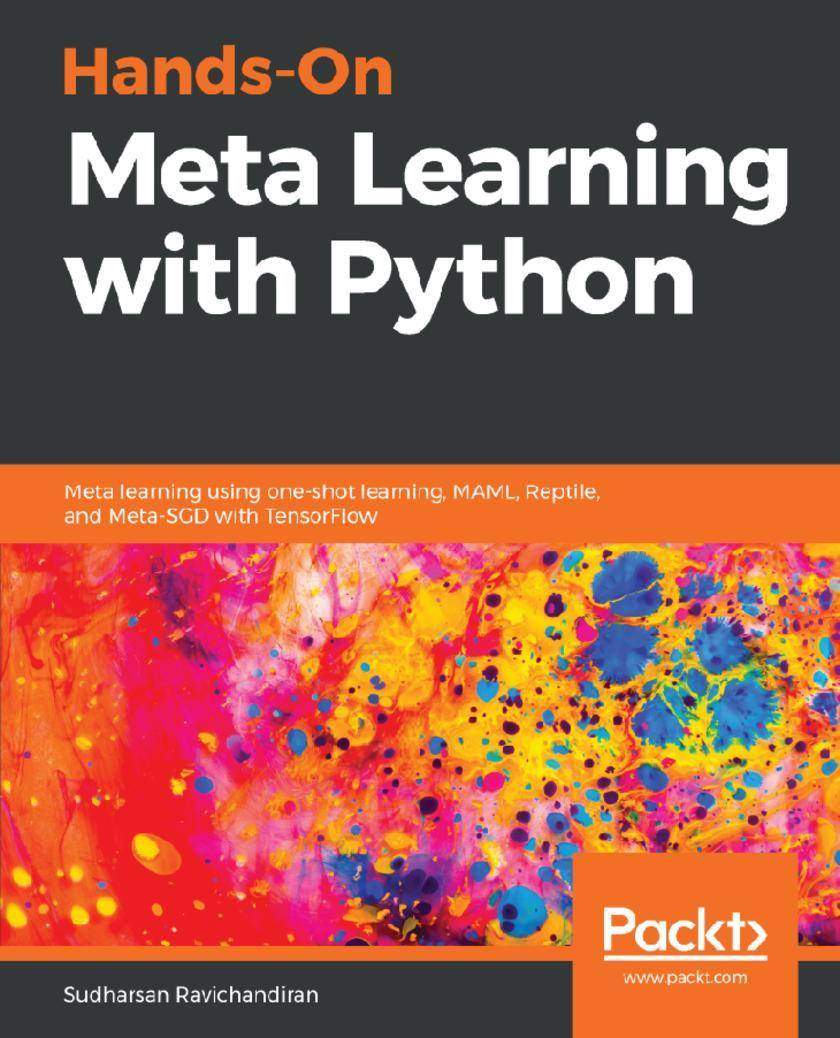
Hands-On Meta Learning with Python
¥71.93
Explore a diverse set of meta-learning algorithms and techniques to enable human-like cognition for your machine learning models using various Python frameworks Key Features *Understand the foundations of meta learning algorithms *Explore practical examples to explore various one-shot learning algorithms with its applications in TensorFlow *Master state of the art meta learning algorithms like MAML, reptile, meta SGD Book Description Meta learning is an exciting research trend in machine learning, which enables a model to understand the learning process. Unlike other ML paradigms, with meta learning you can learn from small datasets faster. Hands-On Meta Learning with Python starts by explaining the fundamentals of meta learning and helps you understand the concept of learning to learn. You will delve into various one-shot learning algorithms, like siamese, prototypical, relation and memory-augmented networks by implementing them in TensorFlow and Keras. As you make your way through the book, you will dive into state-of-the-art meta learning algorithms such as MAML, Reptile, and CAML. You will then explore how to learn quickly with Meta-SGD and discover how you can perform unsupervised learning using meta learning with CACTUs. In the concluding chapters, you will work through recent trends in meta learning such as adversarial meta learning, task agnostic meta learning, and meta imitation learning. By the end of this book, you will be familiar with state-of-the-art meta learning algorithms and able to enable human-like cognition for your machine learning models. What you will learn *Understand the basics of meta learning methods, algorithms, and types *Build voice and face recognition models using a siamese network *Learn the prototypical network along with its variants *Build relation networks and matching networks from scratch *Implement MAML and Reptile algorithms from scratch in Python *Work through imitation learning and adversarial meta learning *Explore task agnostic meta learning and deep meta learning Who this book is for Hands-On Meta Learning with Python is for machine learning enthusiasts, AI researchers, and data scientists who want to explore meta learning as an advanced approach for training machine learning models. Working knowledge of machine learning concepts and Python programming is necessary.
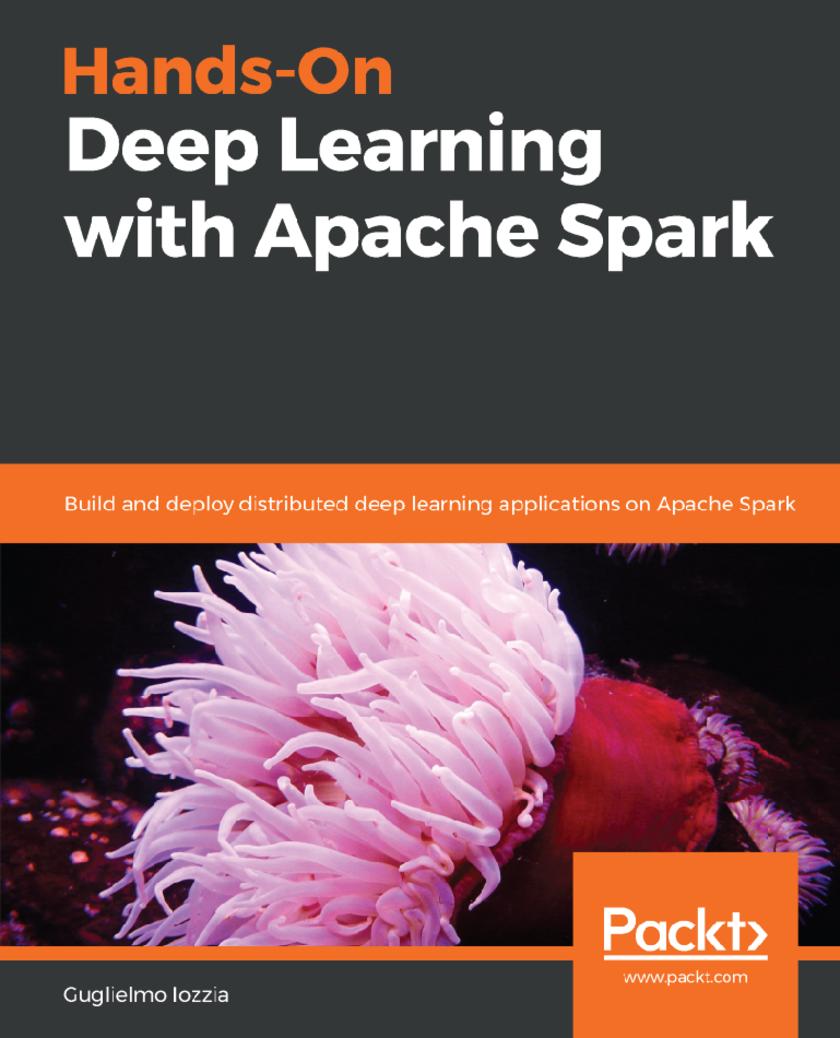
Hands-On Deep Learning with Apache Spark
¥81.74
Speed up the design and implementation of deep learning solutions using Apache Spark Key Features * Explore the world of distributed deep learning with Apache Spark * Train neural networks with deep learning libraries such as BigDL and TensorFlow * Develop Spark deep learning applications to intelligently handle large and complex datasets Book Description Deep learning is a subset of machine learning where datasets with several layers of complexity can be processed. Hands-On Deep Learning with Apache Spark addresses the sheer complexity of technical and analytical parts and the speed at which deep learning solutions can be implemented on Apache Spark. The book starts with the fundamentals of Apache Spark and deep learning. You will set up Spark for deep learning, learn principles of distributed modeling, and understand different types of neural nets. You will then implement deep learning models, such as convolutional neural networks (CNNs), recurrent neural networks (RNNs), and long short-term memory (LSTM) on Spark. As you progress through the book, you will gain hands-on experience of what it takes to understand the complex datasets you are dealing with. During the course of this book, you will use popular deep learning frameworks, such as TensorFlow, Deeplearning4j, and Keras to train your distributed models. By the end of this book, you'll have gained experience with the implementation of your models on a variety of use cases. What you will learn * Understand the basics of deep learning * Set up Apache Spark for deep learning * Understand the principles of distribution modeling and different types of neural networks * Obtain an understanding of deep learning algorithms * Discover textual analysis and deep learning with Spark * Use popular deep learning frameworks, such as Deeplearning4j, TensorFlow, and Keras * Explore popular deep learning algorithms Who this book is for If you are a Scala developer, data scientist, or data analyst who wants to learn how to use Spark for implementing efficient deep learning models, Hands-On Deep Learning with Apache Spark is for you. Knowledge of the core machine learning concepts and some exposure to Spark will be helpful.
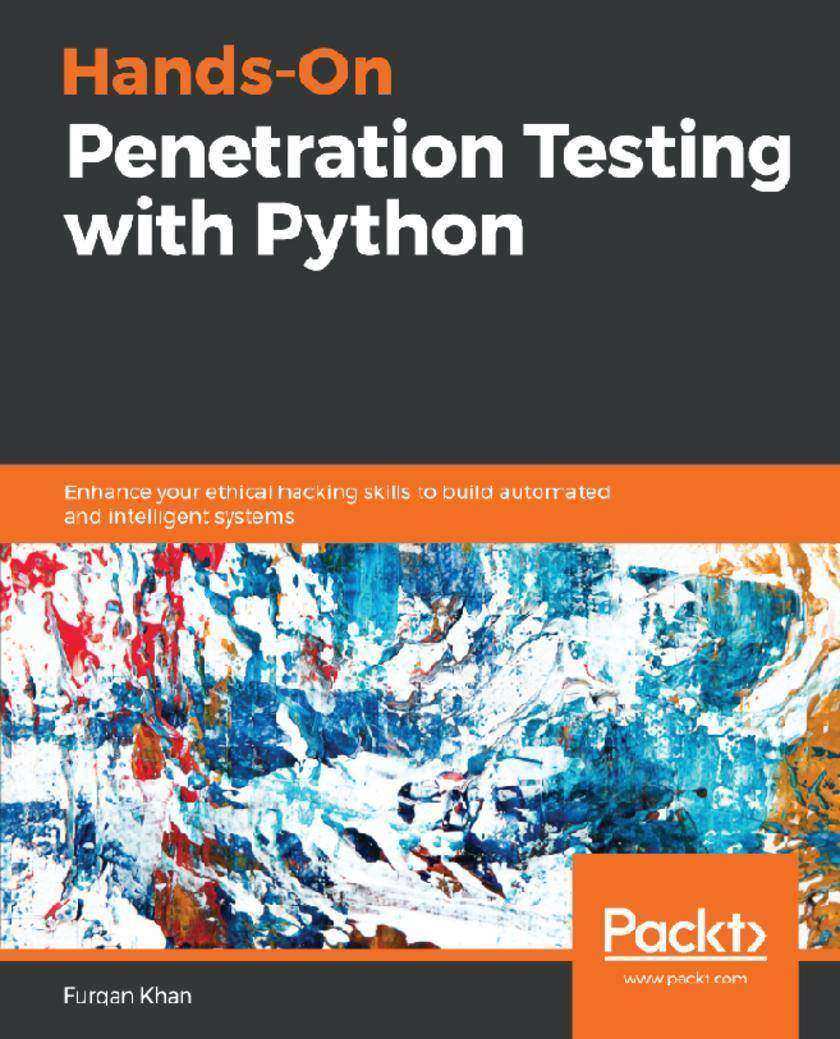
Hands-On Penetration Testing with Python
¥73.02
Implement defensive techniques in your ecosystem successfully with Python Key Features * Identify and expose vulnerabilities in your infrastructure with Python * Learn custom exploit development . * Make robust and powerful cybersecurity tools with Python Book Description With the current technological and infrastructural shift, penetration testing is no longer a process-oriented activity. Modern-day penetration testing demands lots of automation and innovation; the only language that dominates all its peers is Python. Given the huge number of tools written in Python, and its popularity in the penetration testing space, this language has always been the first choice for penetration testers. Hands-On Penetration Testing with Python walks you through advanced Python programming constructs. Once you are familiar with the core concepts, you’ll explore the advanced uses of Python in the domain of penetration testing and optimization. You’ll then move on to understanding how Python, data science, and the cybersecurity ecosystem communicate with one another. In the concluding chapters, you’ll study exploit development, reverse engineering, and cybersecurity use cases that can be automated with Python. By the end of this book, you’ll have acquired adequate skills to leverage Python as a helpful tool to pentest and secure infrastructure, while also creating your own custom exploits. What you will learn * Get to grips with Custom vulnerability scanner development * Familiarize yourself with web application scanning automation and exploit development * Walk through day-to-day cybersecurity scenarios that can be automated with Python * Discover enterprise-or organization-specific use cases and threat-hunting automation * Understand reverse engineering, fuzzing, buffer overflows , key-logger development, and exploit development for buffer overflows. * Understand web scraping in Python and use it for processing web responses * Explore Security Operations Centre (SOC) use cases * Get to understand Data Science, Python, and cybersecurity all under one hood Who this book is for If you are a security consultant , developer or a cyber security enthusiast with little or no knowledge of Python and want in-depth insight into how the pen-testing ecosystem and python combine to create offensive tools , exploits , automate cyber security use-cases and much more then this book is for you. Hands-On Penetration Testing with Python guides you through the advanced uses of Python for cybersecurity and pen-testing, helping you to better understand security loopholes within your infrastructure .
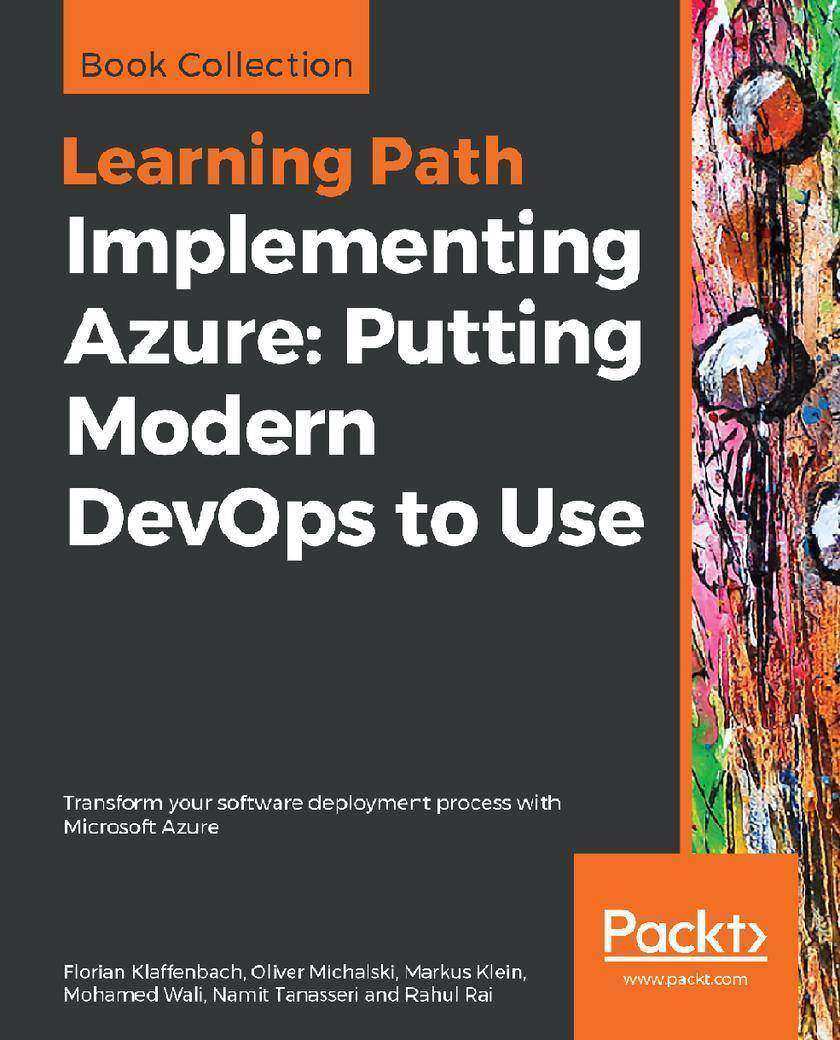
Implementing Azure: Putting Modern DevOps to Use
¥90.46
Explore powerful Azure DevOps solutions to develop and deploy your software faster and more efficiently. Key Features * Build modern microservice-based systems with Azure architecture * Learn to deploy and manage cloud services and virtual machines * Configure clusters with Azure Service Fabric for deployment Book Description This Learning Path helps you understand microservices architecture and leverage various services of Microsoft Azure Service Fabric to build, deploy, and maintain highly scalable enterprise-grade applications. You will learn to select an appropriate Azure backend structure for your solutions and work with its toolkit and managed apps to share your solutions with its service catalog. As you progress through the Learning Path, you will study Azure Cloud Services, Azure-managed Kubernetes, and Azure Container Services deployment techniques. To apply all that you’ve understood, you will build an end-to-end Azure system in scalable, decoupled tiers for an industrial bakery with three business domains. Toward the end of this Learning Path, you will build another scalable architecture using Azure Service Bus topics to send orders between decoupled business domains with scalable worker roles processing these orders. By the end of this Learning Path, you will be comfortable in using development, deployment, and maintenance processes to build robust cloud solutions on Azure. This Learning Path includes content from the following Packt products: * Learn Microsoft Azure by Mohamed Wali * Implementing Azure Solutions - Second Edition by Florian Klaffenbach, Oliver Michalski, Markus Klein * Microservices with Azure by Namit Tanasseri and Rahul Rai What you will learn * Study various Azure Service Fabric application programming models * Create and manage a Kubernetes cluster in Azure Kubernetes Service * Use site-to-site VPN and ExpressRoute connections in your environment * Design an Azure IoT app and learn to operate it in various scenarios * Implement a hybrid Azure design using Azure Stack * Build Azure SQL databases with Code First Migrations * Integrate client applications with Web API and SignalR on Azure * Implement the Azure Active Directory (Azure AD) across the entire system Who this book is for If you are an IT system architect, network admin, or a DevOps engineer who wants to implement Azure solutions for your organization, this Learning Path is for you. Basic knowledge of the Azure Cloud platform will be beneficial.
Installing and Configuring Windows 10: 70-698 Exam Guide
¥73.02
Get ready for the Windows 10: 70-698 exam and configure Windows to manage data recovery Key Features * Implement Windows 10 operational and administrative tasks * Configure devices, remote management settings, advanced management tools, and device drivers * Comprehensive guide to help you work efficiently in Windows 10 Book Description The Installing and Configuring Windows 10: 70-698 Exam Guide is designed to confirm what you already know, while also updating your knowledge of Windows 10. With its easy-to-follow guidance, you will quickly learn the user interface and discover steps to work efficiently in Windows 10 to rule out delays and obstacles. This book begins by covering various ways of installing Windows 10, followed by instructions on post-installation tasks. You will learn about the deployment of Windows 10 in Enterprise and also see how to configure networking in Windows 10. You’ll understand how to leverage Disk Management and Windows PowerShell to configure disks, volumes, and file system options. As you progress through the chapters, you will be able to set up remote management in Windows 10 and learn more about Windows update usage, behavior, and settings. You will also gain insights that will help you monitor and manage data recovery and explore how to configure authentication, authorization, and advanced management tools in Windows 10. By the end of this book, you will be equipped with enough knowledge to take the 70-698 exam and explore different study methods to improve your chances of passing the exam with ease. What you will learn * Discover various ways of installing Windows 10 * Understand how to configure devices and device drivers * Configure and support IPv4 and IPv6 network settings * Troubleshoot storage and removable device issues * Get to grips with data access and usage * Explore the advanced management tools available in Windows 10 Who this book is for This book is for IT professionals who perform installation, configuration, general local management and maintenance of Windows 10 core services and are preparing to clear the Windows 10: 70-698 exam
Machine Learning Quick Reference
¥54.49
Your hands-on reference guide to developing, training, and optimizing your machine learning models Key Features * Your guide to learning efficient machine learning processes from scratch * Explore expert techniques and hacks for a variety of machine learning concepts * Write effective code in R, Python, Scala, and Spark to solve all your machine learning problems Book Description Machine learning makes it possible to learn about the unknowns and gain hidden insights into your datasets by mastering many tools and techniques. This book guides you to do just that in a very compact manner. After giving a quick overview of what machine learning is all about, Machine Learning Quick Reference jumps right into its core algorithms and demonstrates how they can be applied to real-world scenarios. From model evaluation to optimizing their performance, this book will introduce you to the best practices in machine learning. Furthermore, you will also look at the more advanced aspects such as training neural networks and work with different kinds of data, such as text, time-series, and sequential data. Advanced methods and techniques such as causal inference, deep Gaussian processes, and more are also covered. By the end of this book, you will be able to train fast, accurate machine learning models at your fingertips, which you can easily use as a point of reference. What you will learn * Get a quick rundown of model selection, statistical modeling, and cross-validation * Choose the best machine learning algorithm to solve your problem * Explore kernel learning, neural networks, and time-series analysis * Train deep learning models and optimize them for maximum performance * Briefly cover Bayesian techniques and sentiment analysis in your NLP solution * Implement probabilistic graphical models and causal inferences * Measure and optimize the performance of your machine learning models Who this book is for If you’re a machine learning practitioner, data scientist, machine learning developer, or engineer, this book will serve as a reference point in building machine learning solutions. You will also find this book useful if you’re an intermediate machine learning developer or data scientist looking for a quick, handy reference to all the concepts of machine learning. You’ll need some exposure to machine learning to get the best out of this book.
Python Machine Learning Blueprints
¥81.74
Discover a project-based approach to mastering machine learning concepts by applying them to everyday problems using libraries such as scikit-learn, TensorFlow, and Keras Key Features * Get to grips with Python's machine learning libraries including scikit-learn, TensorFlow, and Keras * Implement advanced concepts and popular machine learning algorithms in real-world projects * Build analytics, computer vision, and neural network projects Book Description Machine learning is transforming the way we understand and interact with the world around us. This book is the perfect guide for you to put your knowledge and skills into practice and use the Python ecosystem to cover key domains in machine learning. This second edition covers a range of libraries from the Python ecosystem, including TensorFlow and Keras, to help you implement real-world machine learning projects. The book begins by giving you an overview of machine learning with Python. With the help of complex datasets and optimized techniques, you’ll go on to understand how to apply advanced concepts and popular machine learning algorithms to real-world projects. Next, you’ll cover projects from domains such as predictive analytics to analyze the stock market and recommendation systems for GitHub repositories. In addition to this, you’ll also work on projects from the NLP domain to create a custom news feed using frameworks such as scikit-learn, TensorFlow, and Keras. Following this, you’ll learn how to build an advanced chatbot, and scale things up using PySpark. In the concluding chapters, you can look forward to exciting insights into deep learning and you'll even create an application using computer vision and neural networks. By the end of this book, you’ll be able to analyze data seamlessly and make a powerful impact through your projects. What you will learn * Understand the Python data science stack and commonly used algorithms * Build a model to forecast the performance of an Initial Public Offering (IPO) over an initial discrete trading window * Understand NLP concepts by creating a custom news feed * Create applications that will recommend GitHub repositories based on ones you’ve starred, watched, or forked * Gain the skills to build a chatbot from scratch using PySpark * Develop a market-prediction app using stock data * Delve into advanced concepts such as computer vision, neural networks, and deep learning Who this book is for This book is for machine learning practitioners, data scientists, and deep learning enthusiasts who want to take their machine learning skills to the next level by building real-world projects. The intermediate-level guide will help you to implement libraries from the Python ecosystem to build a variety of projects addressing various machine learning domains. Knowledge of Python programming and machine learning concepts will be helpful.
Hands-On Data Science with the Command Line
¥54.49
Big data processing and analytics at speed and scale using command line tools. Key Features * Perform string processing, numerical computations, and more using CLI tools * Understand the essential components of data science development workflow * Automate data pipeline scripts and visualization with the command line Book Description The Command Line has been in existence on UNIX-based OSes in the form of Bash shell for over 3 decades. However, very little is known to developers as to how command-line tools can be OSEMN (pronounced as awesome and standing for Obtaining, Scrubbing, Exploring, Modeling, and iNterpreting data) for carrying out simple-to-advanced data science tasks at speed. This book will start with the requisite concepts and installation steps for carrying out data science tasks using the command line. You will learn to create a data pipeline to solve the problem of working with small-to medium-sized files on a single machine. You will understand the power of the command line, learn how to edit files using a text-based and an. You will not only learn how to automate jobs and scripts, but also learn how to visualize data using the command line. By the end of this book, you will learn how to speed up the process and perform automated tasks using command-line tools. What you will learn * Understand how to set up the command line for data science * Use AWK programming language commands to search quickly in large datasets. * Work with files and APIs using the command line * Share and collect data with CLI tools * Perform visualization with commands and functions * Uncover machine-level programming practices with a modern approach to data science Who this book is for This book is for data scientists and data analysts with little to no knowledge of the command line but has an understanding of data science. Perform everyday data science tasks using the power of command line tools.
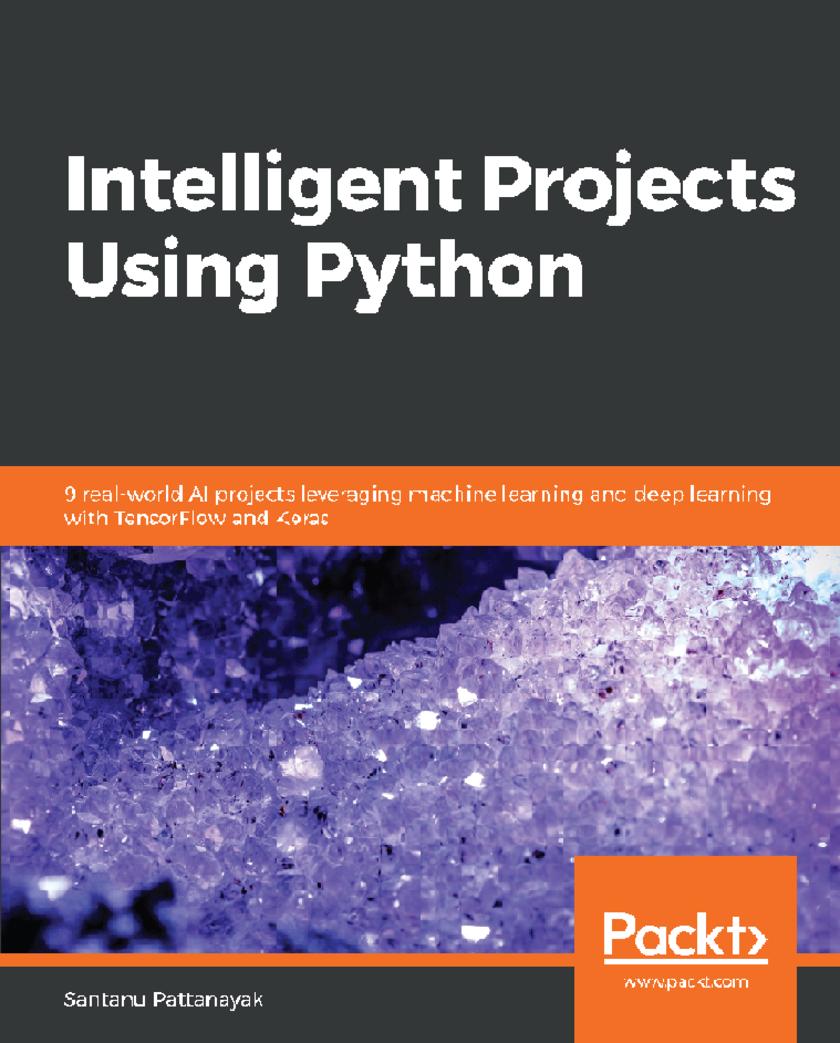
Intelligent Projects Using Python
¥73.02
Implement machine learning and deep learning methodologies to build smart, cognitive AI projects using Python Key Features * A go-to guide to help you master AI algorithms and concepts * 8 real-world projects tackling different challenges in healthcare, e-commerce, and surveillance * Use TensorFlow, Keras, and other Python libraries to implement smart AI applications Book Description This book will be a perfect companion if you want to build insightful projects from leading AI domains using Python. The book covers detailed implementation of projects from all the core disciplines of AI. We start by covering the basics of how to create smart systems using machine learning and deep learning techniques. You will assimilate various neural network architectures such as CNN, RNN, LSTM, to solve critical new world challenges. You will learn to train a model to detect diabetic retinopathy conditions in the human eye and create an intelligent system for performing a video-to-text translation. You will use the transfer learning technique in the healthcare domain and implement style transfer using GANs. Later you will learn to build AI-based recommendation systems, a mobile app for sentiment analysis and a powerful chatbot for carrying customer services. You will implement AI techniques in the cybersecurity domain to generate Captchas. Later you will train and build autonomous vehicles to self-drive using reinforcement learning. You will be using libraries from the Python ecosystem such as TensorFlow, Keras and more to bring the core aspects of machine learning, deep learning, and AI. By the end of this book, you will be skilled to build your own smart models for tackling any kind of AI problems without any hassle. What you will learn * Build an intelligent machine translation system using seq-2-seq neural translation machines * Create AI applications using GAN and deploy smart mobile apps using TensorFlow * Translate videos into text using CNN and RNN * Implement smart AI Chatbots, and integrate and extend them in several domains * Create smart reinforcement, learning-based applications using Q-Learning * Break and generate CAPTCHA using Deep Learning and Adversarial Learning Who this book is for This book is intended for data scientists, machine learning professionals, and deep learning practitioners who are ready to extend their knowledge and potential in AI. If you want to build real-life smart systems to play a crucial role in every complex domain, then this book is what you need. Knowledge of Python programming and a familiarity with basic machine learning and deep learning concepts are expected to help you get the most out of the book
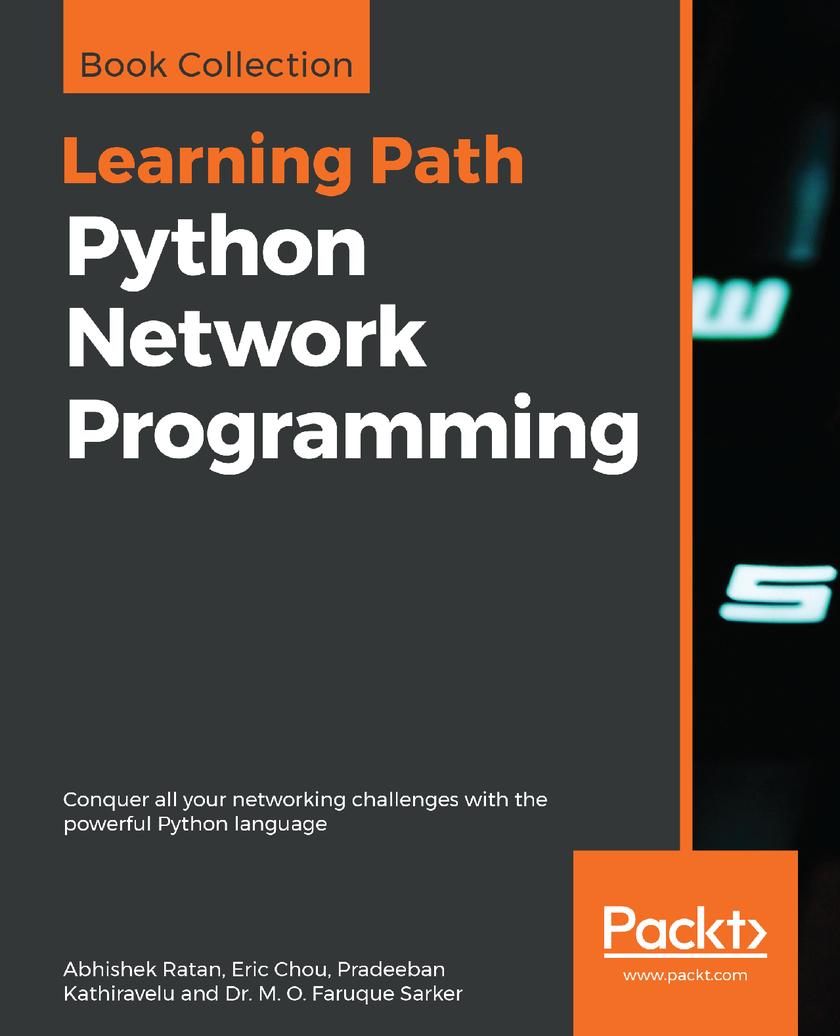
Python Network Programming
¥90.46
Power up your network applications with Python programming Key Features * Master Python skills to develop powerful network applications * Grasp the fundamentals and functionalities of SDN * Design multi-threaded, event-driven architectures for echo and chat servers Book Description This Learning Path highlights major aspects of Python network programming such as writing simple networking clients, creating and deploying SDN and NFV systems, and extending your network with Mininet. You’ll also learn how to automate legacy and the latest network devices. As you progress through the chapters, you’ll use Python for DevOps and open source tools to test, secure, and analyze your network. Toward the end, you'll develop client-side applications, such as web API clients, email clients, SSH, and FTP, using socket programming. By the end of this Learning Path, you will have learned how to analyze a network's security vulnerabilities using advanced network packet capture and analysis techniques. This Learning Path includes content from the following Packt products: * Practical Network Automation by Abhishek Ratan * Mastering Python Networking by Eric Chou * Python Network Programming Cookbook, Second Edition by Pradeeban Kathiravelu, Dr. M. O. Faruque Sarker What you will learn * Create socket-based networks with asynchronous models * Develop client apps for web APIs, including S3 Amazon and Twitter * Talk to email and remote network servers with different protocols * Integrate Python with Cisco, Juniper, and Arista eAPI for automation * Use Telnet and SSH connections for remote system monitoring * Interact with websites via XML-RPC, SOAP, and REST APIs * Build networks with Ryu, OpenDaylight, Floodlight, ONOS, and POX * Configure virtual networks in different deployment environments Who this book is for If you are a Python developer or a system administrator who wants to start network programming, this Learning Path gets you a step closer to your goal. IT professionals and DevOps engineers who are new to managing network devices or those with minimal experience looking to expand their knowledge and skills in Python will also find this Learning Path useful. Although prior knowledge of networking is not required, some experience in Python programming will be helpful for a better understanding of the concepts in the Learning Path.
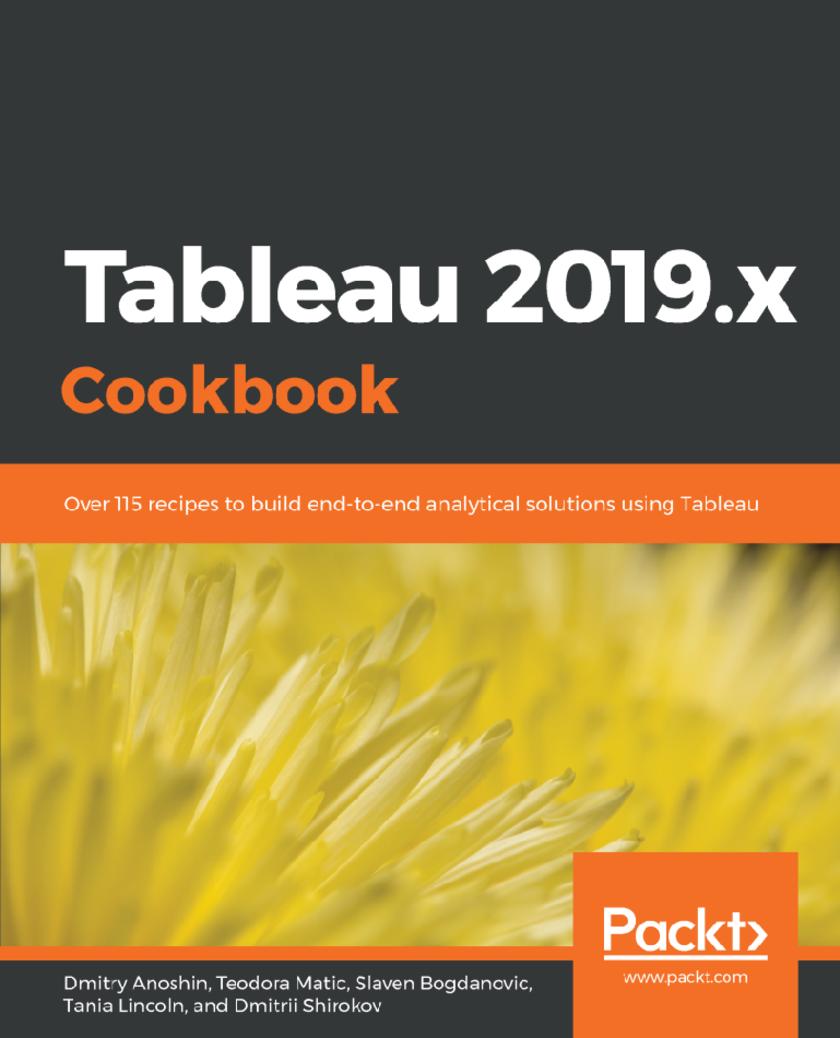
Tableau 2019.x Cookbook
¥90.46
Perform advanced dashboard, visualization, and analytical techniques with Tableau Desktop, Tableau Prep, and Tableau Server Key Features * Unique problem-solution approach to aid effective business decision-making * Create interactive dashboards and implement powerful business intelligence solutions * Includes best practices on using Tableau with modern cloud analytics services Book Description Tableau has been one of the most popular business intelligence solutions in recent times, thanks to its powerful and interactive data visualization capabilities. Tableau 2019.x Cookbook is full of useful recipes from industry experts, who will help you master Tableau skills and learn each aspect of Tableau's ecosystem. This book is enriched with features such as Tableau extracts, Tableau advanced calculations, geospatial analysis, and building dashboards. It will guide you with exciting data manipulation, storytelling, advanced filtering, expert visualization, and forecasting techniques using real-world examples. From basic functionalities of Tableau to complex deployment on Linux, you will cover it all. Moreover, you will learn advanced features of Tableau using R, Python, and various APIs. You will learn how to prepare data for analysis using the latest Tableau Prep. In the concluding chapters, you will learn how Tableau fits the modern world of analytics and works with modern data platforms such as Snowflake and Redshift. In addition, you will learn about the best practices of integrating Tableau with ETL using Matillion ETL. By the end of the book, you will be ready to tackle business intelligence challenges using Tableau's features. What you will learn * Understand the basic and advanced skills of Tableau Desktop * Implement best practices of visualization, dashboard, and storytelling * Learn advanced analytics with the use of build in statistics * Deploy the multi-node server on Linux and Windows * Use Tableau with big data sources such as Hadoop, Athena, and Spectrum * Cover Tableau built-in functions for forecasting using R packages * Combine, shape, and clean data for analysis using Tableau Prep * Extend Tableau’s functionalities with REST API and R/Python Who this book is for Tableau 2019.x Cookbook is for data analysts, data engineers, BI developers, and users who are looking for quick solutions to common and not-so-common problems faced while using Tableau products. Put each recipe into practice by bringing the latest offerings of Tableau 2019.x to solve real-world analytics and business intelligence challenges. Some understanding of BI concepts and Tableau is required.
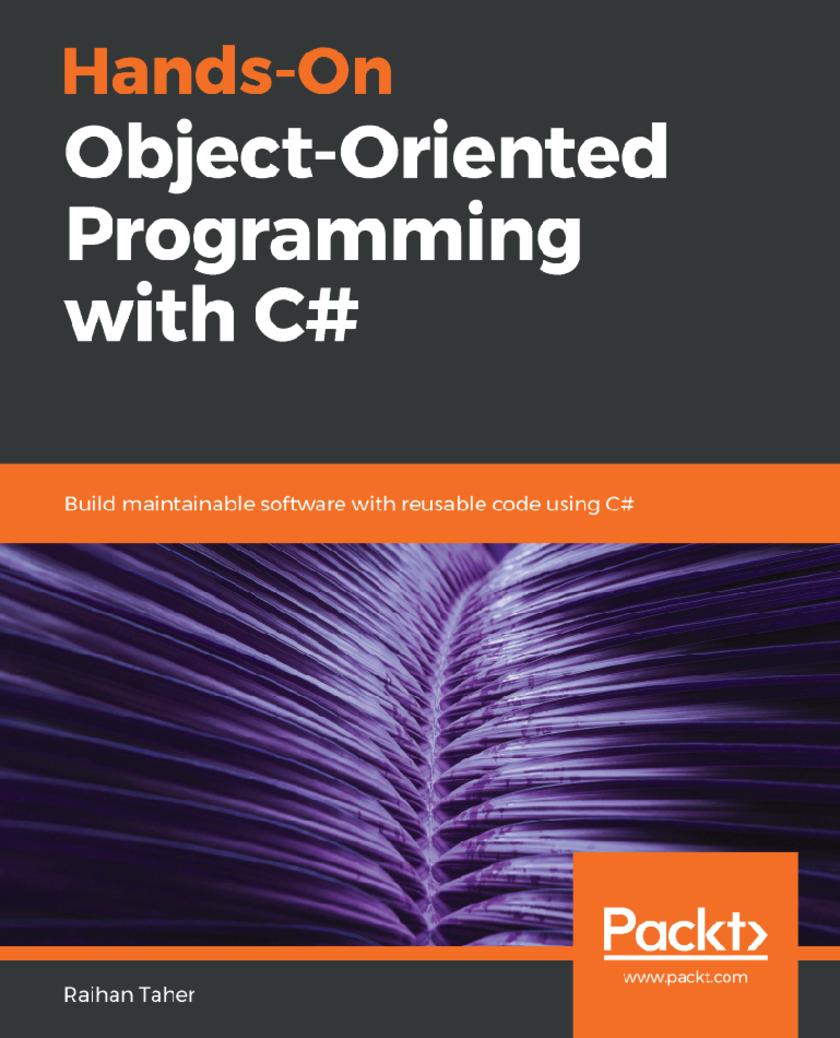
Hands-On Object-Oriented Programming with C#
¥73.02
Enhance your programming skills by learning the intricacies of object oriented programming in C# 8 Key Features * Understand the four pillars of OOP; encapsulation, inheritance, abstraction and polymorphism * Leverage the latest features of C# 8 including nullable reference types and Async Streams * Explore various design patterns, principles, and best practices in OOP Book Description Object-oriented programming (OOP) is a programming paradigm organized around objects rather than actions, and data rather than logic. With the latest release of C#, you can look forward to new additions that improve object-oriented programming. This book will get you up to speed with OOP in C# in an engaging and interactive way. The book starts off by introducing you to C# language essentials and explaining OOP concepts through simple programs. You will then go on to learn how to use classes, interfacesm and properties to write pure OOP code in your applications. You will broaden your understanding of OOP further as you delve into some of the advanced features of the language, such as using events, delegates, and generics. Next, you will learn the secrets of writing good code by following design patterns and design principles. You'll also understand problem statements with their solutions and learn how to work with databases with the help of ADO.NET. Further on, you'll discover a chapter dedicated to the Git version control system. As you approach the conclusion, you'll be able to work through OOP-specific interview questions and understand how to tackle them. By the end of this book, you will have a good understanding of OOP with C# and be able to take your skills to the next level. What you will learn * Master OOP paradigm fundamentals * Explore various types of exceptions * Utilize C# language constructs efficiently * Solve complex design problems by understanding OOP * Understand how to work with databases using ADO.NET * Understand the power of generics in C# * Get insights into the popular version control system, Git * Learn how to model and design your software Who this book is for This book is designed for people who are new to object-oriented programming. Basic C# skills are assumed, however, prior knowledge of OOP in any other language is not required.
ReasonML Quick Start Guide
¥54.49
A hands on approach to learning ReasonML from the perspective of a web developer. Key Features * Hands on learning by building a real world app shell that includes client-side routing and more. * Understand Reason’s ecosystem including BuckleScript and various npm workflows. * Learn how Reason differs from TypeScript and Flow, and how to use it to make refactoring less stressful. Book Description ReasonML, also known as Reason, is a new syntax and toolchain for OCaml that was created by Facebook and is meant to be approachable for web developers. Although OCaml has several resources, most of them are from the perspective of systems development. This book, alternatively, explores Reason from the perspective of web development. You'll learn how to use Reason to build safer, simpler React applications and why you would want to do so. Reason supports immutability by default, which works quite well in the context of React. In learning Reason, you will also learn about its ecosystem – BuckleScript, JavaScript interoperability, and various npm workflows. We learn by building a real-world app shell, including a client-side router with page transitions, that we can customize for any Reason project. You'll learn how to leverage OCaml's excellent type system to enforce guarantees about business logic, as well as preventing runtime type errors.You'll also see how the type system can help offload concerns that we once had to keep in our heads. We'll explore using CSS-in-Reason, how to use external JSON in Reason, and how to unit-test critical business logic. By the end of the book, you'll understand why Reason is exploding in popularity and will have a solid foundation on which to continue your journey with Reason. What you will learn * Learn why Reason is exploding in popularity and why it's the future of React * Become familiar with Reason's syntax and semantics * Learn about Reason's ecosystem: BuckleScript and JavaScript interoperability * Learn how to build React applications with Reason * Learn how to use Reason's type system as a tool to provide amazing guarantees * Gain a solid foundation on which to continue your journey Who this book is for The target audience of this book is web developers who are somewhat familiar with ReactJS and who want to learn why ReasonML is the future of ReactJS.
Hands-On Application Penetration Testing with Burp Suite
¥81.74
Test, fuzz, and break web applications and services using Burp Suite’s powerful capabilities Key Features * Master the skills to perform various types of security tests on your web applications * Get hands-on experience working with components like scanner, proxy, intruder and much more * Discover the best-way to penetrate and test web applications Book Description Burp suite is a set of graphic tools focused towards penetration testing of web applications. Burp suite is widely used for web penetration testing by many security professionals for performing different web-level security tasks. The book starts by setting up the environment to begin an application penetration test. You will be able to configure the client and apply target whitelisting. You will also learn to setup and configure Android and IOS devices to work with Burp Suite. The book will explain how various features of Burp Suite can be used to detect various vulnerabilities as part of an application penetration test. Once detection is completed and the vulnerability is confirmed, you will be able to exploit a detected vulnerability using Burp Suite. The book will also covers advanced concepts like writing extensions and macros for Burp suite. Finally, you will discover various steps that are taken to identify the target, discover weaknesses in the authentication mechanism, and finally break the authentication implementation to gain access to the administrative console of the application. By the end of this book, you will be able to effectively perform end-to-end penetration testing with Burp Suite. What you will learn * Set up Burp Suite and its configurations for an application penetration test * Proxy application traffic from browsers and mobile devices to the server * Discover and identify application security issues in various scenarios * Exploit discovered vulnerabilities to execute commands * Exploit discovered vulnerabilities to gain access to data in various datastores * Write your own Burp Suite plugin and explore the Infiltrator module * Write macros to automate tasks in Burp Suite Who this book is for If you are interested in learning how to test web applications and the web part of mobile applications using Burp, then this is the book for you. It is specifically designed to meet your needs if you have basic experience in using Burp and are now aiming to become a professional Burp user.
Blockchain Development with Hyperledger
¥90.46
Learn quick and effective techniques for developing blockchain-based distributed ledgers with ease Key Features * Discover why blockchain is a game changer in the technology landscape * Set up blockchain networks using Hyperledger Fabric * Write smart contracts at speed with Hyperledger Composer Book Description Blockchain and Hyperledger are open source technologies that power the development of decentralized applications. This Learning Path is your helpful reference for exploring and building blockchain networks using Ethereum, Hyperledger Fabric, and Hyperledger Composer. Blockchain Development with Hyperledger will start off by giving you an overview of blockchain and demonstrating how you can set up an Ethereum development environment for developing, packaging, building, and testing campaign-decentralized applications. You'll then explore the de facto language Solidity, which you can use to develop decentralized applications in Ethereum. Following this, you'll be able to configure Hyperledger Fabric and use it to build private blockchain networks and applications that connect to them. Toward the later chapters, you'll learn how to design and launch a network, and even implement smart contracts in chain code. By the end of this Learning Path, you'll be able to build and deploy your own decentralized applications by addressing the key pain points encountered in the blockchain life cycle. This Learning Path includes content from the following Packt products: * Blockchain Quick Start Guide by Xun (Brian) Wu and Weimin Sun * Hands-On Blockchain with Hyperledger by Nitin Gaur et al. What you will learn * Understand why decentralized applications are necessary * Develop and test a decentralized application with Hyperledger Fabric and Hyperledger Composer * Write and test a smart contract using Solidity * Design transaction models and chain code with Golang * Deploy the Composer REpresentational State Transfer (REST) Gateway to access Composer transactions * Maintain, monitor, and manage your blockchain solutions Who this book is for This Learning Path is designed for blockchain developers who want to build decentralized applications and smart contracts from scratch using Hyperledger. Basic familiarity with or exposure to any programming language will be useful to get started with this course.
Hands-On Full Stack Development with Go
¥73.02
Create a real-world application in Go and explore various frameworks and methodologies for full-stack development Key Features * Organize your isomorphic codebase to enhance the maintainability of your application * Build web APIs and middleware in the Go language by making use of the popular Gin framework * Implement real-time web application functionality with WebSockets Book Description The Go programming language has been rapidly adopted by developers for building web applications. With its impressive performance and ease of development, Go enjoys the support of a wide variety of open source frameworks, for building scalable and high-performant web services and apps. Hands-On Full Stack Development with Go is a comprehensive guide that covers all aspects of full stack development with Go. This clearly written, example-rich book begins with a practical exposure to Go development and moves on to build a frontend with the popular React framework. From there, you will build RESTful web APIs utilizing the Gin framework. After that, we will dive deeper into important software backend concepts, such as connecting to the database via an ORM, designing routes for your services, securing your services, and even charging credit cards via the popular Stripe API. We will also cover how to test, and benchmark your applications efficiently in a production environment. In the concluding chapters, we will cover isomorphic developments in pure Go by learning about GopherJS. As you progress through the book, you'll gradually build a musical instrument online store application from scratch. By the end of the book, you will be confident in taking on full stack web applications in Go. What you will learn * Understand Go programming by building a real-world application * Learn the React framework to develop a frontend for your application * Understand isomorphic web development utilizing the GopherJS framework * Explore methods to write RESTful web APIs in Go using the Gin framework * Learn practical topics such as ORM layers, secure communications, and Stripe's API * Learn methods to benchmark and test web APIs in Go Who this book is for Hands-On Full Stack Development with Go will appeal to developers who are looking to start building amazing full stack web applications in Go. Basic knowhow of Go language and JavaScript is expected. The book targets web developers who are looking to move to the Go language.
Unreal Engine 4.x Scripting with C++ Cookbook
¥73.02
Write efficient, reusable scripts to build custom characters, game environments, and control enemy AI Key Features * Build captivating multiplayer games using Unreal Engine and C++ * Incorporate existing C++ libraries into your game to add extra functionality such as hardware integration * Practical solutions for memory management, error handling, inputs, and collision for your game codebase Book Description Unreal Engine 4 (UE4) is a popular and award-winning game engine that powers some of the most popular games. A truly powerful tool for game development, there has never been a better time to use it for both commercial and independent projects. With more than 100 recipes, this book shows how to unleash the power of C++ while developing games with Unreal Engine. This book takes you on a journey to jumpstart your C++ and UE4 development skills. You will start off by setting up UE4 for C++ development and learn how to work with Visual Studio, a popular code editor. You will learn how to create C++ classes and structs the Unreal way. This will be followed by exploring memory management, smart pointers, and debugging your code. You will then learn how to make your own Actors and Components through code and how to handle input and collision events. You will also get exposure to many elements of game development including creating user interfaces, artificial intelligence, and writing code with networked play in mind. You will also learn how to add on to the Unreal Editor itself. With a range of task-oriented recipes, this book provides actionable information about writing code for games with UE4 using C++. By the end of the book, you will be empowered to become a top-notch developer with UE4 using C++ as your scripting language! What you will learn * Create C++ classes and structs that integrate well with UE4 and the Blueprints editor * Discover how to work with various APIs that Unreal Engine already contains * Utilize advanced concepts such as events, delegates, and interfaces in your UE4 projects * Build user interfaces using Canvas and UMG through C++ * Extend the Unreal Editor by creating custom windows and editors * Implement AI tasks and services using C++, Blackboard, and Behavior Trees * Write C++ code with networking in mind and replicate properties and functions Who this book is for If you are really passionate game developer looking for solutions to common scripting problems, then this is the book for you. Understanding of the fundamentals of game design and C++ is expected to get the most from this book.
Docker High Performance
¥44.68
Leverage Docker to unlock efficient and rapid container deployments to improve your development workflow Key Features * Reconfigure Docker hosts to create a logging system with the ElasticSearch-Logstash-Kibana (ELK) stack * Tackle the challenges of large-scale container deployment with this fast-paced guide * Benchmark the performance of your Docker containers using Apache JMeter Book Description Docker is an enterprise-grade container platform that allows you to build and deploy your apps. Its portable format lets you run your code right from your desktop workstations to popular cloud computing providers. This comprehensive guide will improve your Docker work?ows and ensure your application's production environment runs smoothly. This book starts with a refresher on setting up and running Docker and details the basic setup for creating a Docker Swarm cluster. You will then learn how to automate this cluster by using Chef Server and Cookbook. After that, you will run the Docker monitoring system with Prometheus and Grafana, and deploy the ELK stack. You will also learn some tips for optimizing Docker images. After deploying containers with the help of Jenkins, you will then move on to a tutorial on using Apache JMeter to analyze your application's performance. You will learn how to use Docker Swarm and NGINX to load-balance your application and how common debugging tools in Linux can be used to troubleshoot Docker containers. By the end of this book, you will be able to integrate all the optimizations that you have learned and put everything into practice in your applications. What you will learn * Automate provisioning and setting up nodes in a Docker Swarm cluster * Configure a monitoring system with Prometheus and Grafana * Use Apache JMeter to create workloads for benchmarking the performance of Docker containers * Understand how to load-balance an application with Docker Swarm and Nginx * Deploy strace, tcdump, blktrace, and other Linux debugging tools to troubleshoot containers * Integrate Docker optimizations for DevOps, Site Reliability Engineering, CI, and CD Who this book is for If you are a software developer with a good understanding of managing Docker services and the Linux file system and are looking for ways to optimize working with Docker containers, then this is the book for you. Developers fascinated with containers and workflow automation with benefit from this book.
TIBCO Spotfire: A Comprehensive Primer
¥62.12
Create innovative informatics solutions with TIBCO Spotfire Key Features * Get to grips with a variety of TIBCO Spotfire features to create professional applications * Use different data and visualization techniques to build interactive analyses. * Simplify BI processes and understand data analysis and visualization Book Description The need for agile business intelligence (BI) is growing daily, and TIBCO Spotfire? combines self-service features with essential enterprise governance and scaling capabilities to provide best-practice analytics solutions. Spotfire is easy and intuitive to use and is a rewarding environment for all BI users and analytics developers. Starting with data and visualization concepts, this book takes you on a journey through increasingly advanced topics to help you work toward becoming a professional analytics solution provider. Examples of analyzing real-world data are used to illustrate how to work with Spotfire. Once you've covered the AI-driven recommendations engine, you'll move on to understanding Spotfire's rich suite of visualizations and when, why and how you should use each of them. In later chapters, you'll work with location analytics, advanced analytics using TIBCO Enterprise Runtime for R?, how to decide whether to use in-database or in-memory analytics, and how to work with streaming (live) data in Spotfire. You'll also explore key product integrations that significantly enhance Spotfire's capabilities.This book will enable you to exploit the advantages of the Spotfire serve topology and learn how to make practical use of scheduling and routing rules. By the end of this book, you will have learned how to build and use powerful analytics dashboards and applications, perform spatial analytics, and be able to administer your Spotfire environment efficiently What you will learn * Work with Spotfire on its web, Cloud, PC, Mac and mobile clients * Deploy Spotfire's suite of visualization types effectively and intelligently * Build user-friendly analytics frameworks and analytics applications * Explore Spotfire's predictive analytics capabilities * Use Spotfire's location analytics capabilities to create interactive spatial analyses * Write IronPython scripts with the Spotfire API * Learn the different ways Spotfire can be deployed and administered Who this book is for If you are a business intelligence or data professional, this book will give you a solid grounding in the use of TIBCO Spotfire. This book requires no prior knowledge of Spotfire or any basic data and visualization concepts.
Mastering Swift 5
¥62.12
Harness the power of the latest edition with this in-depth and comprehensive guide to the Swift language Key Features * Fifth edition of this bestselling book, improved and updated to cover the latest version of the Swift 5 programming language * Get to grips with popular and modern design techniques to write easy-to-manage Swift code * Learn how to use core Swift features such as concurrency, generics, and copy-on-write in your code Book Description Over the years, the Mastering Swift book has established itself amongst developers as a popular choice as an in-depth and practical guide to the Swift programming language. The latest edition is fully updated and revised to cover the new version: Swift 5. Inside this book, you'll find the key features of Swift 5 easily explained with complete sets of examples. From the basics of the language to popular features such as concurrency, generics, and memory management, this definitive guide will help you develop your expertise and mastery of the Swift language. Mastering Swift 5, Fifth Edition will give you an in-depth knowledge of some of the most sophisticated elements in Swift development, including protocol extensions, error handling, and closures. It will guide you on how to use and apply them in your own projects. Later, you'll see how to leverage the power of protocol-oriented programming to write flexible and easier-to-manage code. You will also see how to add the copy-on-write feature to your custom value types and how to avoid memory management issues caused by strong reference cycles. What you will learn * Understand core Swift components, including operators, collections, control flows, and functions * Learn how and when to use classes, structures, and enumerations * Understand how to use protocol-oriented design with extensions to write easier-to-manage code * Use design patterns with Swift, to solve commonly occurring design problems * Implement copy-on-write for you custom value types to improve performance * Add concurrency to your applications using Grand Central Dispatch and Operation Queues * Implement generics to write flexible and reusable code Who this book is for This book is for developers who want to delve into the newest version of Swift. If you are a developer and learn best by looking at and working with code, then this book is for you. A basic understanding of Apple's tools would be beneficial but not mandatory. All examples should work on the Linux platform as well.
Expert Python Programming
¥70.84
Refine your Python programming skills and build professional grade applications with this comprehensive guide Key Features * Create manageable code that can run in various environments with different sets of dependencies * Implement effective Python data structures and algorithms to write optimized code * Discover the exciting new features of Python 3.7 Book Description Python is a dynamic programming language that's used in a wide range of domains thanks to its simple yet powerful nature. Although writing Python code is easy, making it readable, reusable, and easy to maintain is challenging. Complete with best practices, useful tools, and standards implemented by professional Python developers, the third edition of Expert Python Programming will help you overcome this challenge. The book will start by taking you through the new features in Python 3.7. You'll then learn the advanced components of Python syntax, in addition to understanding how to apply concepts of various programming paradigms, including object-oriented programming, functional programming, and event-driven programming. This book will also guide you through learning the best naming practices, writing your own distributable Python packages, and getting up to speed with automated ways of deploying your software on remote servers. You’ll discover how to create useful Python extensions with C, C++, Cython, and CFFI. Furthermore, studying about code management tools, writing clear documentation, and exploring test-driven development will help you write clean code. By the end of the book, you will have become an expert in writing efficient and maintainable Python code. What you will learn * Explore modern ways of setting up repeatable and consistent development environments * Package Python code effectively for community and production use * Learn modern syntax elements of Python programming such as f-strings, enums, and lambda functions * Demystify metaprogramming in Python with metaclasses * Write concurrent code in Python * Extend Python with code written in different languages * Integrate Python with code written in different languages Who this book is for This book will appeal to you if you’re a programmer looking to take your Python knowledge to the next level by writing efficient code and learning the latest features of version 3.7 and above.


