


 购物车
购物车 个人中心
个人中心
Building Microservices with Spring
¥90.46
Learn and use the design patterns and best practices in Spring to solve common design problems and build user-friendly microservices Key Features *Study the benefits of using the right design pattern in your toolkit *Manage your code easily with Spring's dependency injection pattern *Explore the features of Docker and Mesos to build successful microservices Book Description Getting Started with Spring Microservices begins with an overview of the Spring Framework 5.0, its design patterns, and its guidelines that enable you to implement responsive microservices at scale. You will learn how to use GoF patterns in application design. You will understand the dependency injection pattern, which is the main principle behind the decoupling process of the Spring Framework and makes it easier to manage your code. Then, you will learn how to use proxy patterns in aspect-oriented programming and remoting. Moving on, you will understand the JDBC template patterns and their use in abstracting database access. After understanding the basics, you will move on to more advanced topics, such as reactive streams and concurrency. Written to the latest specifications of Spring that focuses on Reactive Programming, the Learning Path teaches you how to build modern, internet-scale Java applications in no time. Next, you will understand how Spring Boot is used to deploying serverless autonomous services by removing the need to have a heavyweight application server. You’ll also explore ways to deploy your microservices to Docker and managing them with Mesos. By the end of this Learning Path, you will have the clarity and confidence for implementing microservices using Spring Framework. This Learning Path includes content from the following Packt products: *Spring 5 Microservices by Rajesh R V *Spring 5 Design Patterns by Dinesh Rajput What you will learn *Develop applications using dependency injection patterns *Build web applications using traditional Spring MVC patterns *Utilize the reactive programming pattern to build reactive web apps *Learn concurrency and handle multiple connections inside a web server *Use Spring Boot and Spring Cloud to develop microservices *Leverage reactive programming to build cloud-native applications Who this book is for Getting Started with Spring Microservices is ideal for Spring developers who want to use design patterns to solve common design problems and build cloud-ready, Internet-scale applications, and simple RESTful services.
Modern C++: Efficient and Scalable Application Development
¥90.46
Create apps in C++ and leverage its latest features using modern programming techniques. Key Features *Develop strong C++ skills to build a variety of applications *Explore features of C++17, such as containers, algorithms, and threads *Grasp the standard support for threading and concurrency and use them in basic daily tasks Book Description C++ is one of the most widely used programming languages. It is fast, flexible, and used to solve many programming problems. This Learning Path gives you an in-depth and hands-on experience of working with C++, using the latest recipes and understanding most recent developments. You will explore C++ programming constructs by learning about language structures, functions, and classes, which will help you identify the execution flow through code. You will also understand the importance of the C++ standard library as well as memory allocation for writing better and faster programs. Modern C++: Efficient and Scalable Application Development deals with the challenges faced with advanced C++ programming. You will work through advanced topics such as multithreading, networking, concurrency, lambda expressions, and many more recipes. By the end of this Learning Path, you will have all the skills to become a master C++ programmer. This Learning Path includes content from the following Packt products: *Beginning C++ Programming by Richard Grimes *Modern C++ Programming Cookbook by Marius Bancila *The Modern C++ Challenge by Marius Bancila What you will learn *Become familiar with the structure of C++ projects *Identify the main structures in the language: functions and classes *Learn to debug your programs *Leverage C++ features to obtain increased robustness and performance *Explore functions and callable objects with a focus on modern features *Serialize and deserialize JSON and XML data *Create client-server applications that communicate over TCP/IP *Use design patterns to solve real-world problems Who this book is for This Learning Path is designed for developers who want to gain a solid foundation in C++. The desire to learn how to code in C++ is all you need to get started with this Learning Path
Hands-On System Programming with C++
¥90.46
A hands-on guide to making system programming with C++ easy Key Features *Write system-level code leveraging C++17 *Learn the internals of the Linux Application Binary Interface (ABI) and apply it to system programming *Explore C++ concurrency to take advantage of server-level constructs Book Description C++ is a general-purpose programming language with a bias toward system programming as it provides ready access to hardware-level resources, efficient compilation, and a versatile approach to higher-level abstractions. This book will help you understand the benefits of system programming with C++17. You will gain a firm understanding of various C, C++, and POSIX standards, as well as their respective system types for both C++ and POSIX. After a brief refresher on C++, Resource Acquisition Is Initialization (RAII), and the new C++ Guideline Support Library (GSL), you will learn to program Linux and Unix systems along with process management. As you progress through the chapters, you will become acquainted with C++'s support for IO. You will then study various memory management methods, including a chapter on allocators and how they benefit system programming. You will also explore how to program file input and output and learn about POSIX sockets. This book will help you get to grips with safely setting up a UDP and TCP server/client. Finally, you will be guided through Unix time interfaces, multithreading, and error handling with C++ exceptions. By the end of this book, you will be comfortable with using C++ to program high-quality systems. What you will learn *Understand the benefits of using C++ for system programming *Program Linux/Unix systems using C++ *Discover the advantages of Resource Acquisition Is Initialization (RAII) *Program both console and file input and output *Uncover the POSIX socket APIs and understand how to program them *Explore advanced system programming topics, such as C++ allocators *Use POSIX and C++ threads to program concurrent systems *Grasp how C++ can be used to create performant system applications Who this book is for If you are a fresh developer with intermediate knowledge of C++ but little or no knowledge of Unix and Linux system programming, this book will help you learn system programming with C++ in a practical way.
Blockchain Quick Start Guide
¥54.49
Learn quick and effective techniques to get up and running with building blockchain including Ethereum and Hyperledger Fabric. Key Features *Understand the key concepts of decentralized applications and consensus algorithms *Learn key concepts of Ethereum and Solidity programming *Practical guide to get started with build efficient Blockchain applications with Ethereum and Hyperledger Book Description Blockchain is a technology that powers the development of decentralized applications.This technology allows the construction of a network with no single control that enables participants to make contributions to and receive benefits from the network directly. This book will give you a thorough overview of blockchain and explain how a blockchain works.You will begin by going through various blockchain consensus mechanisms and cryptographic hash functions. You will then learn the fundamentals of programming in Solidity – the defacto language for developing decentralize, applications in Ethereum. After that, you will set up an Ethereum development environment and develop, package, build, and test campaign-decentralized applications.The book also shows you how to set up Hyperledger composer tools, analyze business scenarios, design business models, and write a chain code. Finally, you will get a glimpse of how blockchain is actually used in different real-world domains. By the end of this guide, you will be comfortable working with basic blockchain frameworks, and develop secure, decentralized applications in a hassle-free manner. What you will learn *Understand how blockchain hashing works *Write and test a smart contract using Solidity *Develop and test a decentralized application *Build and test your application using Hyperledger Fabric *Implement business network using Hyperledger Composer *Test and interact with business network applications Who this book is for The book is for developers, analysts, or anyone looking to learn about Blockchain in a quick and easy manner.
Learn Linux Shell Scripting – Fundamentals of Bash 4.4
¥71.93
Create and maintain powerful Bash scripts for automation and administration. Key Features *Get up and running with Linux shell scripting using real-world examples *Leverage command-line techniques and methodologies to automate common yet complex administration tasks *A practical guide with exposure to scripting constructs and common scripting patterns Book Description Shell scripts allow us to program commands in chains and have the system execute them as a scripted event, just like batch files. This book will start with an overview of Linux and Bash shell scripting, and then quickly deep dive into helping you set up your local environment, before introducing you to tools that are used to write shell scripts. The next set of chapters will focus on helping you understand Linux under the hood and what Bash provides the user. Soon, you will have embarked on your journey along the command line. You will now begin writing actual scripts instead of commands, and will be introduced to practical applications for scripts. The final set of chapters will deep dive into the more advanced topics in shell scripting. These advanced topics will take you from simple scripts to reusable, valuable programs that exist in the real world. The final chapter will leave you with some handy tips and tricks and, as regards the most frequently used commands, a cheat sheet containing the most interesting flags and options will also be provided. After completing this book, you should feel confident about starting your own shell scripting projects, no matter how simple or complex the task previously seemed. We aim to teach you how to script and what to consider, to complement the clear-cut patterns that you can use in your daily scripting challenges. What you will learn *Understand Linux and Bash basics as well as shell scripting fundamentals *Learn to write simple shell scripts that interact with Linux operating system *Build, maintain, and deploy scripts in a Linux environment *Learn best practices for writing shell scripts *Avoid common pitfalls associated with Bash scripting *Gain experience and the right toolset to write your own complex shell scripts Who this book is for This book targets new and existing Linux system administrators, Windows system administrators or developers who are interested in automating administrative tasks. No prior shell scripting experience is needed but in case you do this book will make a pro quickly. Readers should have a basic understanding of the command line.
Jira Quick Start Guide
¥54.49
Leverage Jira's powerful task management and workflow features to better manage your business processes Key Features * The book covers all major applications of Jira, which are Jira Software, Jira Core, Jira Service Desk. * Configure project workflows and the fields that will be used in the project with the help of Jira's features * Create tickets for issues and manage your projects using the Jira software Book Description Jira is an issue tracker and project management system. With their latest release, the Jira team has now expanded their user base to agile teams as well as business teams. This book provides a comprehensive explanation covering all major components of Jira, including Jira Software, Jira Core, and Jira Service Desk. This book starts with an introduction to Jira's unique features and how it can be used as an issue-tracking tool. It will then teach you about how a new project is created by a Jira administrator, what responsibilities there are, and using correct and relevant schemes in your project. You will then learn how to configure project workflows and fields for project screens. You will understand the various permissions used in projects and the importance of project roles in Jira. Then, the book talks about the concepts of versions acting as milestones and using components when handling issues in your projects. It will then focus on analysing data using built-in reports and creating dashboards in Jira. At the end, it will discuss various best practices for users as well as project managers or project administrators. What you will learn * Implement Jira as a project administrator or project manager * Get familiar with various functionalities of Jira * Configure projects and boards in your organisation's Jira instance * Understand how and when to use components and versions in your projects * Manage project configurations and Jira schemes * Learn the best practices to manage your Jira instance Who this book is for This book will be especially useful for project managers but it's also intended for other Jira users, including developers, and any other industry besides software development, who would like to use Jira for project management.
Blockchain for Business 2019
¥54.49
Your one-stop guide to blockchain technology and its business applications Key Features * Assimilate blockchain services such as Ethereum and Hyperledger to transform industrial applications * Know in and out of blockchain technology to understand various business use cases * Understand various common and not-so-common challenges faced in blockchain development Book Description Blockchain for Business 2019 is a comprehensive guide that enables you to bring in various blockchain functionalities to extend your existing business models and make correct fully-informed decisions. You will learn how decentralized applications are transforming numerous business sectors that are expected to play a huge role in the future. You will see how large corporations are already implementing blockchain technology now. You will then learn about the various blockchain services, such as Bitcoin, Ethereum, Hyperledger, and others to understand their use cases in a variety of business domains. You will develop a solid fundamental understanding of blockchain architecture. Moving ahead, you will get to grips with the inner workings of blockchain, with detailed explanations of mining, decentralized consensus, cryptography, smart contracts, and many other important concepts. You will delve into a realistic view of the current state of blockchain technology, along with its issues, limitations, and potential solutions that can take it to the next level. By the end of this book, you will all be well versed in the latest innovations and developments in the emerging blockchain space. What you will learn * Understand the fundamentals of blockchain and how it was developed * Gain a good understanding of economic concepts and developments * Develop a base for concepts such as cryptography, computer networking, and programming * Understand the applications of blockchain and its potential impact on the world * Become well versed with the latest developments in the blockchain space * Explore blockchain frameworks, including decentralized organizational structures, networks, and applications Who this book is for This book is for financial professionals, business executives, managers, and enthusiasts who are interested in getting well-versed with blockchain technology in various business domains. This book will help boost your existing business models using blockchain services. No prior experience of blockchain is required.
Hands-On Design Patterns with C++
¥90.46
A comprehensive guide with extensive coverage on concepts such as OOP, functional programming, generic programming, and STL along with the latest features of C++ Key Features * Delve into the core patterns and components of C++ in order to master application design * Learn tricks, techniques, and best practices to solve common design and architectural challenges * Understand the limitation imposed by C++ and how to solve them using design patterns Book Description C++ is a general-purpose programming language designed with the goals of efficiency, performance, and flexibility in mind. Design patterns are commonly accepted solutions to well-recognized design problems. In essence, they are a library of reusable components, only for software architecture, and not for a concrete implementation. The focus of this book is on the design patterns that naturally lend themselves to the needs of a C++ programmer, and on the patterns that uniquely benefit from the features of C++, in particular, the generic programming. Armed with the knowledge of these patterns, you will spend less time searching for a solution to a common problem and be familiar with the solutions developed from experience, as well as their advantages and drawbacks. The other use of design patterns is as a concise and an efficient way to communicate. A pattern is a familiar and instantly recognizable solution to specific problem; through its use, sometimes with a single line of code, we can convey a considerable amount of information. The code conveys: "This is the problem we are facing, these are additional considerations that are most important in our case; hence, the following well-known solution was chosen." By the end of this book, you will have gained a comprehensive understanding of design patterns to create robust, reusable, and maintainable code. What you will learn * Recognize the most common design patterns used in C++ * Understand how to use C++ generic programming to solve common design problems * Explore the most powerful C++ idioms, their strengths, and drawbacks * Rediscover how to use popular C++ idioms with generic programming * Understand the impact of design patterns on the program’s performance Who this book is for This book is for experienced C++ developers and programmers who wish to learn about software design patterns and principles and apply them to create robust, reusable, and easily maintainable apps.

Advanced JavaScript
¥63.21
Gain a deeper understanding of JavaScript and apply it to build small applications in backend, frontend, and mobile frameworks. Key Features * Explore the new ES6 syntax, the event loop, and asynchronous programming * Learn the test-driven development approach when building apps * Master advanced JavaScript concepts to enhance your web developments skill Book Description If you are looking for a programming language to develop flexible and efficient applications, JavaScript is an obvious choice. Advanced JavaScript is a hands-on guide that takes you through JavaScript and its many features, one step at a time. You'll begin by learning how to use the new JavaScript syntax in ES6, and then work through the many other features that modern JavaScript has to offer. As you progress through the chapters, you’ll use asynchronous programming with callbacks and promises, handle browser events, and perform Document Object Model (DOM) manipulation. You'll also explore various methods of testing JavaScript projects. In the concluding chapters, you'll discover functional programming and learn to use it to build your apps. With this book as your guide, you'll also be able to develop APIs using Node.js and Express, create front-ends using React/Redux, and build mobile apps using React/Expo. By the end of Advanced JavaScript, you will have explored the features and benefits of JavaScript to build small applications. What you will learn * Examine major features in ES6 and implement those features to build applications * Create promise and callback handlers to work with asynchronous processes * Develop asynchronous flows using Promise chaining and async/await syntax * Manipulate the DOM with JavaScript * Handle JavaScript browser events * Explore Test Driven Development and build code tests with JavaScript code testing frameworks. * List the benefits and drawbacks of functional programming compared to other styles * Construct applications with the Node.js backend framework and the React frontend framework Who this book is for This book is designed to target anyone who wants to write JavaScript in a professional environment. We expect the audience to have used JavaScript in some capacity and be familiar with the basic syntax. This book would be good for a tech enthusiast wondering when to use generators or how to use Promises and Callbacks effectively, or a novice developer who wants to deepen their knowledge on JavaScript and understand TDD.
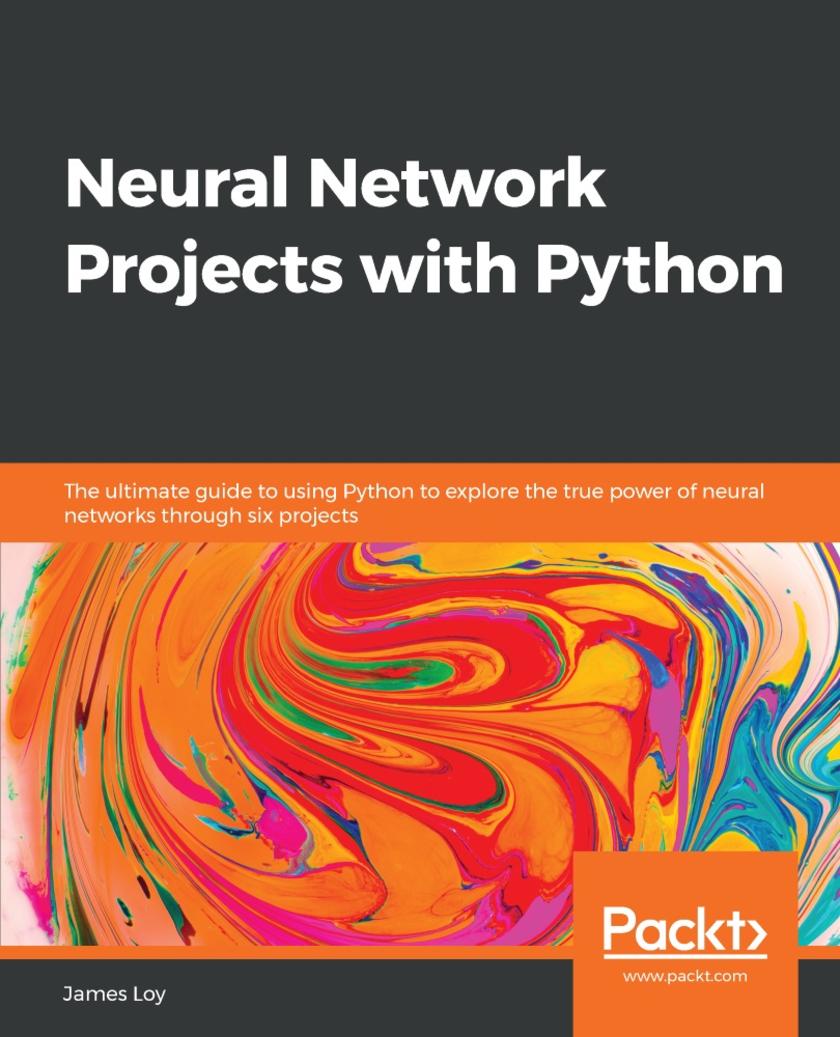
Neural Network Projects with Python
¥73.02
Build your Machine Learning portfolio by creating 6 cutting-edge Artificial Intelligence projects using neural networks in Python Key Features * Discover neural network architectures (like CNN and LSTM) that are driving recent advancements in AI * Build expert neural networks in Python using popular libraries such as Keras * Includes projects such as object detection, face identification, sentiment analysis, and more Book Description Neural networks are at the core of recent AI advances, providing some of the best resolutions to many real-world problems, including image recognition, medical diagnosis, text analysis, and more. This book goes through some basic neural network and deep learning concepts, as well as some popular libraries in Python for implementing them. It contains practical demonstrations of neural networks in domains such as fare prediction, image classification, sentiment analysis, and more. In each case, the book provides a problem statement, the specific neural network architecture required to tackle that problem, the reasoning behind the algorithm used, and the associated Python code to implement the solution from scratch. In the process, you will gain hands-on experience with using popular Python libraries such as Keras to build and train your own neural networks from scratch. By the end of this book, you will have mastered the different neural network architectures and created cutting-edge AI projects in Python that will immediately strengthen your machine learning portfolio. What you will learn * Learn various neural network architectures and its advancements in AI * Master deep learning in Python by building and training neural network * Master neural networks for regression and classification * Discover convolutional neural networks for image recognition * Learn sentiment analysis on textual data using Long Short-Term Memory * Build and train a highly accurate facial recognition security system Who this book is for This book is a perfect match for data scientists, machine learning engineers, and deep learning enthusiasts who wish to create practical neural network projects in Python. Readers should already have some basic knowledge of machine learning and neural networks.
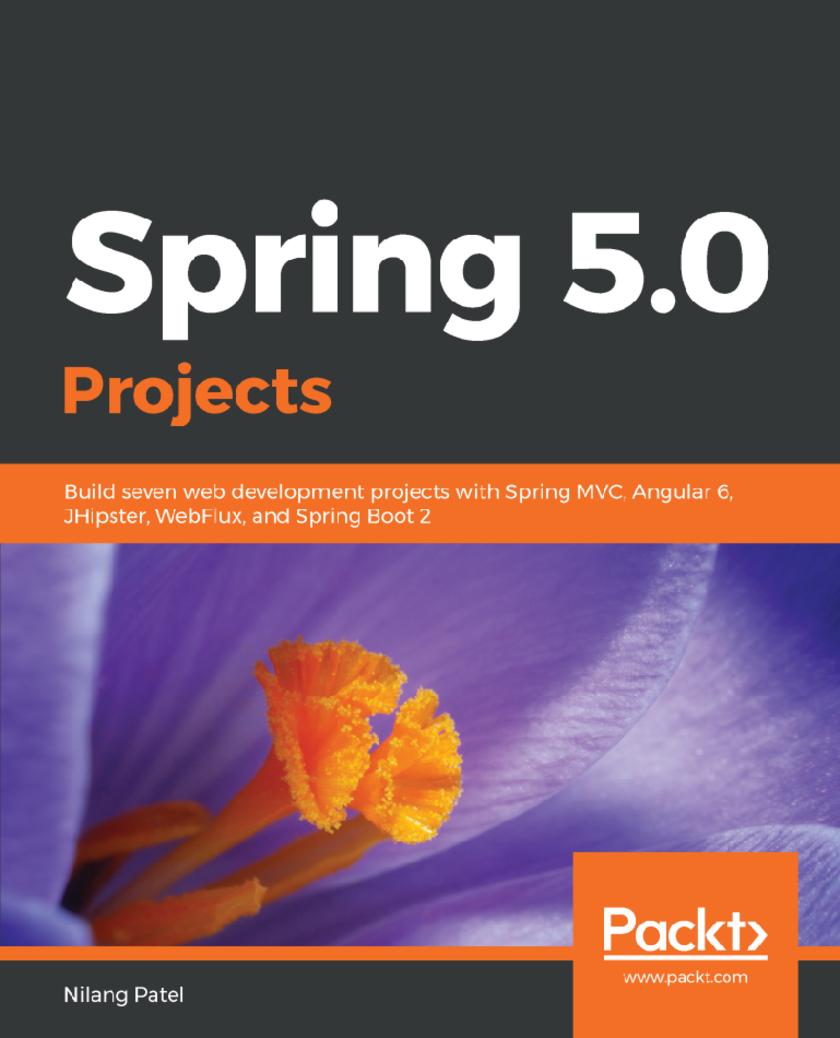
Spring 5.0 Projects
¥81.74
Discover the latest features of Spring framework by building robust, fast, and reactive web applications Key Features * Take advantage of all the features of Spring 5.0 with third party tools to build a robust back end * Secure Spring based web application using Spring Security framework with LDAP and OAuth protocol * Develop robust and scalable microservice based applications on Spring Cloud, using Spring Boot Book Description Spring makes it easy to create RESTful applications, merge with social services, communicate with modern databases, secure your system, and make your code modular and easy to test. With the arrival of Spring Boot, developers can really focus on the code and deliver great value, with minimal contour. This book will show you how to build various projects in Spring 5.0, using its features and third party tools. We'll start by creating a web application using Spring MVC, Spring Data, the World Bank API for some statistics on different countries, and MySQL database. Moving ahead, you'll build a RESTful web services application using Spring WebFlux framework. You'll be then taken through creating a Spring Boot-based simple blog management system, which uses Elasticsearch as the data store. Then, you'll use Spring Security with the LDAP libraries for authenticating users and create a central authentication and authorization server using OAuth 2 protocol. Further, you'll understand how to create Spring Boot-based monolithic application using JHipster. Toward the end, we'll create an online book store with microservice architecture using Spring Cloud and Net?ix OSS components, and a task management system using Spring and Kotlin. By the end of the book, you'll be able to create coherent and ?exible real-time web applications using Spring Framework. What you will learn * Build Spring based application using Bootstrap template and JQuery * Understand the Spring WebFlux framework and how it uses Reactor library * Interact with Elasticsearch for indexing, querying, and aggregating data * Create a simple monolithic application using JHipster * Use Spring Security and Spring Security LDAP and OAuth libraries for Authentication * Develop a microservice-based application with Spring Cloud and Netflix * Work on Spring Framework with Kotlin Who this book is for This book is for competent Spring developers who wish to understand how to develop complex yet flexible applications with Spring. You must have a good knowledge of Java programming and be familiar with the basics of Spring.
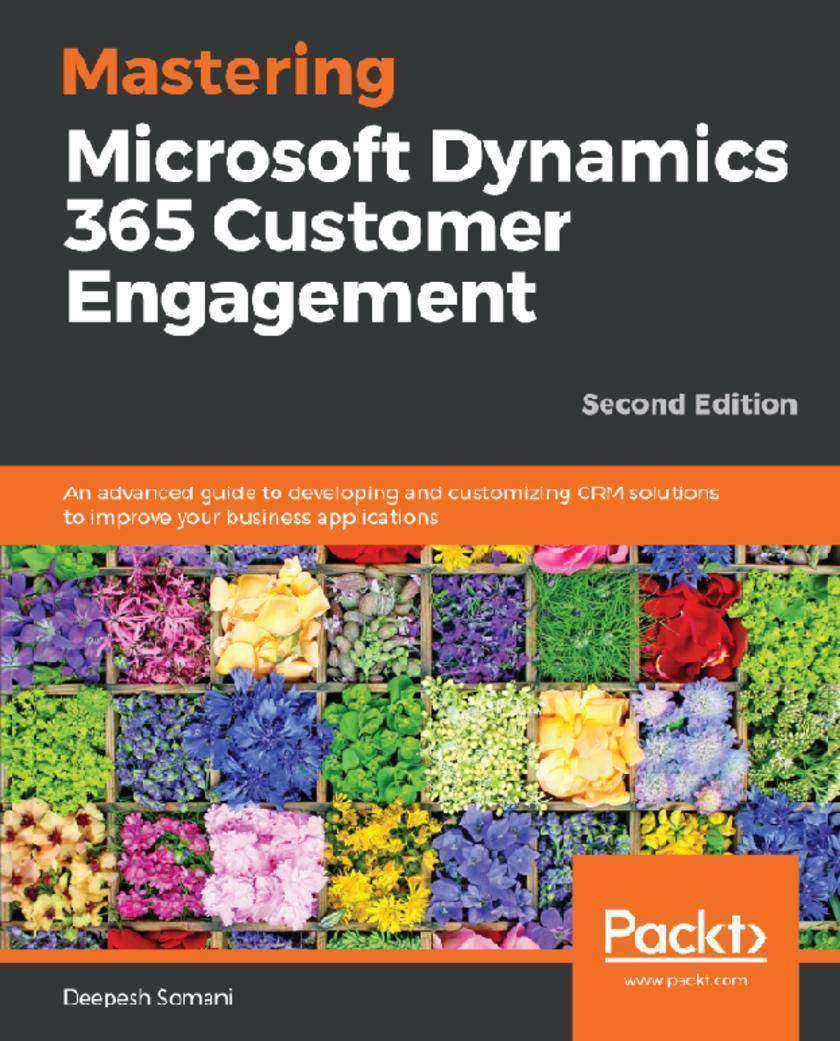
Mastering Microsoft Dynamics 365 Customer Engagement
¥90.46
A comprehensive guide packed with the latest features of Dynamics 365 for customer relationship management Key Features * Create efficient client-side apps and customized plugins that work seamlessly * Learn best practices from field experience to use Dynamics 365 efficiently * Unleash the power of Dynamics 365 to maximize your organization’s profits Book Description Microsoft Dynamics 365 is an all-in-one business management solution that's easy to use and adapt. It helps you connect your finances, sales, service, and operations to streamline business processes, improve customer interactions, and enable growth. This book gives you all the information you need to become an expert in MS Dynamics 365. This book starts with a brief overview of the functional features of Dynamics 365. You will learn how to create Word and Excel templates using CRM data to enable customized data analysis for your organization. This book helps you understand how to use Dynamics 365 as an XRM Framework, gain a deep understanding of client-side scripting in Dynamics 365, and create client-side applications using JavaScript and the Web API. In addition to this, you will discover how to customize Dynamics 365, and quickly move on to grasp the app structure, which helps you customize Dynamics 365 better. You will also learn how Dynamics 365 can be seamlessly embedded into various productivity tools to customize them for machine learning and contextual guidance. By the end of this book, you will have mastered utilizing Dynamics 365 features through real-world scenarios. What you will learn * Manage various divisions of your organization using Dynamics 365 customizations * Explore the XRM Framework and leverage its features * Provide an enhanced mobile and tablet experience * Develop client-side applications using JavaScript and the Web API * Understand how to develop plugins and workflows using Dynamics 365 * Explore solution framework improvements and new field types Who this book is for Mastering Microsoft Dynamics 365 Customer Engagement is for you if you have knowledge of Dynamics CRM and want to utilize the latest features of Dynamics 365. This book is also for you if you’re a skilled developer looking to move to the Microsoft stack to build business solution software. Extensive Dynamics CRM development experience will be beneficial to understand the concepts covered in this book.
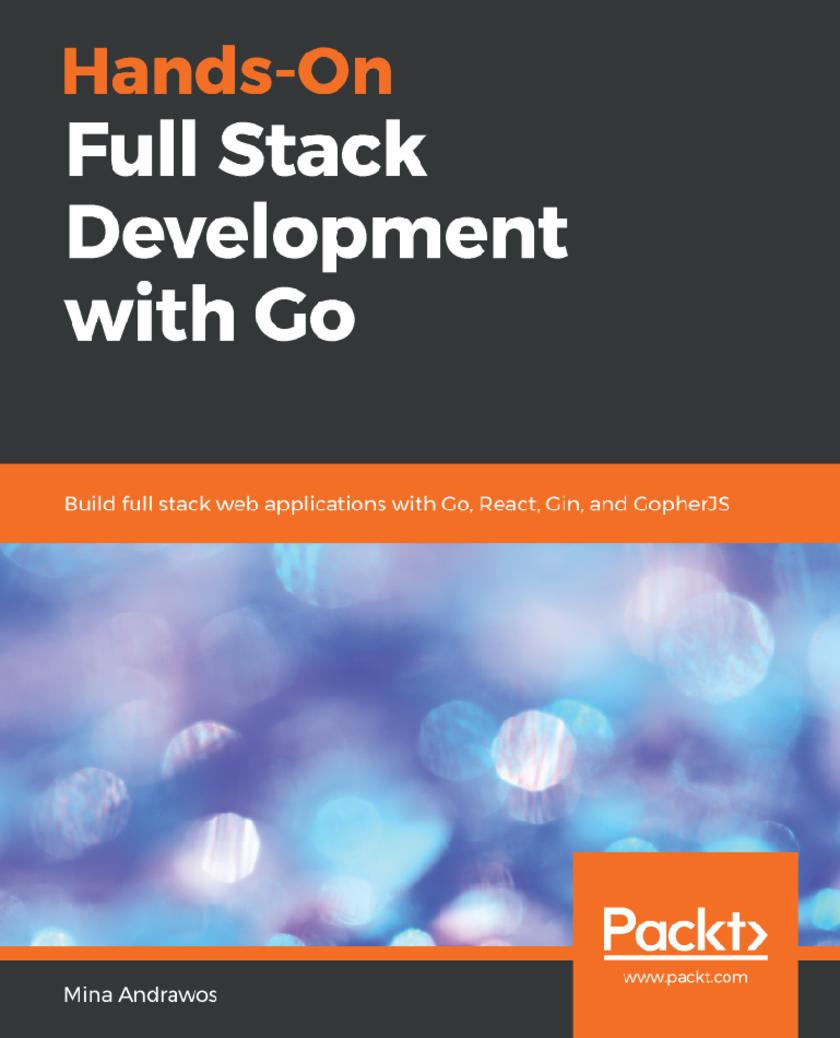
Hands-On Full Stack Development with Go
¥73.02
Create a real-world application in Go and explore various frameworks and methodologies for full-stack development Key Features * Organize your isomorphic codebase to enhance the maintainability of your application * Build web APIs and middleware in the Go language by making use of the popular Gin framework * Implement real-time web application functionality with WebSockets Book Description The Go programming language has been rapidly adopted by developers for building web applications. With its impressive performance and ease of development, Go enjoys the support of a wide variety of open source frameworks, for building scalable and high-performant web services and apps. Hands-On Full Stack Development with Go is a comprehensive guide that covers all aspects of full stack development with Go. This clearly written, example-rich book begins with a practical exposure to Go development and moves on to build a frontend with the popular React framework. From there, you will build RESTful web APIs utilizing the Gin framework. After that, we will dive deeper into important software backend concepts, such as connecting to the database via an ORM, designing routes for your services, securing your services, and even charging credit cards via the popular Stripe API. We will also cover how to test, and benchmark your applications efficiently in a production environment. In the concluding chapters, we will cover isomorphic developments in pure Go by learning about GopherJS. As you progress through the book, you'll gradually build a musical instrument online store application from scratch. By the end of the book, you will be confident in taking on full stack web applications in Go. What you will learn * Understand Go programming by building a real-world application * Learn the React framework to develop a frontend for your application * Understand isomorphic web development utilizing the GopherJS framework * Explore methods to write RESTful web APIs in Go using the Gin framework * Learn practical topics such as ORM layers, secure communications, and Stripe's API * Learn methods to benchmark and test web APIs in Go Who this book is for Hands-On Full Stack Development with Go will appeal to developers who are looking to start building amazing full stack web applications in Go. Basic knowhow of Go language and JavaScript is expected. The book targets web developers who are looking to move to the Go language.
Unreal Engine 4.x Scripting with C++ Cookbook
¥73.02
Write efficient, reusable scripts to build custom characters, game environments, and control enemy AI Key Features * Build captivating multiplayer games using Unreal Engine and C++ * Incorporate existing C++ libraries into your game to add extra functionality such as hardware integration * Practical solutions for memory management, error handling, inputs, and collision for your game codebase Book Description Unreal Engine 4 (UE4) is a popular and award-winning game engine that powers some of the most popular games. A truly powerful tool for game development, there has never been a better time to use it for both commercial and independent projects. With more than 100 recipes, this book shows how to unleash the power of C++ while developing games with Unreal Engine. This book takes you on a journey to jumpstart your C++ and UE4 development skills. You will start off by setting up UE4 for C++ development and learn how to work with Visual Studio, a popular code editor. You will learn how to create C++ classes and structs the Unreal way. This will be followed by exploring memory management, smart pointers, and debugging your code. You will then learn how to make your own Actors and Components through code and how to handle input and collision events. You will also get exposure to many elements of game development including creating user interfaces, artificial intelligence, and writing code with networked play in mind. You will also learn how to add on to the Unreal Editor itself. With a range of task-oriented recipes, this book provides actionable information about writing code for games with UE4 using C++. By the end of the book, you will be empowered to become a top-notch developer with UE4 using C++ as your scripting language! What you will learn * Create C++ classes and structs that integrate well with UE4 and the Blueprints editor * Discover how to work with various APIs that Unreal Engine already contains * Utilize advanced concepts such as events, delegates, and interfaces in your UE4 projects * Build user interfaces using Canvas and UMG through C++ * Extend the Unreal Editor by creating custom windows and editors * Implement AI tasks and services using C++, Blackboard, and Behavior Trees * Write C++ code with networking in mind and replicate properties and functions Who this book is for If you are really passionate game developer looking for solutions to common scripting problems, then this is the book for you. Understanding of the fundamentals of game design and C++ is expected to get the most from this book.
Android Programming with Kotlin for Beginners
¥70.84
Build smart looking Kotlin apps with UI and functionality for the Android platform Key Features * Start your Android programming career, or just have fun publishing apps on Google Play marketplace * The first-principle introduction to Kotlin through Android, to start building easy-to-use apps * Learn by example and build four real-world apps and dozens of mini-apps Book Description Android is the most popular mobile operating system in the world and Kotlin has been declared by Google as a first-class programming language to build Android apps. With the imminent arrival of the most anticipated Android update, Android 10 (Q), this book gets you started building apps compatible with the latest version of Android. It adopts a project-style approach, where we focus on teaching the fundamentals of Android app development and the essentials of Kotlin by building three real-world apps and more than a dozen mini-apps. The book begins by giving you a strong grasp of how Kotlin and Android work together before gradually moving onto exploring the various Android APIs for building stunning apps for Android with ease. You will learn to make your apps more presentable using different layouts. You will dive deep into Kotlin programming concepts such as variables, functions, data structures, Object-Oriented code, and how to connect your Kotlin code to the UI. You will learn to add multilingual text so that your app is accessible to millions of more potential users. You will learn how animation, graphics, and sound effects work and are implemented in your Android app. By the end of the book, you will have sound knowledge about significant Kotlin programming concepts and start building your own fully featured Android apps. What you will learn * Learn how Kotlin and Android work together * Build a graphical drawing app using Object-Oriented Programming (OOP) principles * Build beautiful, practical layouts using ScrollView, RecyclerView, NavigationView, ViewPager and CardView * Write Kotlin code to manage an apps' data using different strategies including JSON and the built-in Android SQLite database * Add user interaction, data captures, sound, and animation to your apps * Implement dialog boxes to capture input from the user * Build a simple database app that sorts and stores the user's data Who this book is for This book is for people who are new to Kotlin, Android and want to develop Android apps.It also acts as a refresher for those who have some experience in programming with Android and Kotlin.
Expert Python Programming
¥70.84
Refine your Python programming skills and build professional grade applications with this comprehensive guide Key Features * Create manageable code that can run in various environments with different sets of dependencies * Implement effective Python data structures and algorithms to write optimized code * Discover the exciting new features of Python 3.7 Book Description Python is a dynamic programming language that's used in a wide range of domains thanks to its simple yet powerful nature. Although writing Python code is easy, making it readable, reusable, and easy to maintain is challenging. Complete with best practices, useful tools, and standards implemented by professional Python developers, the third edition of Expert Python Programming will help you overcome this challenge. The book will start by taking you through the new features in Python 3.7. You'll then learn the advanced components of Python syntax, in addition to understanding how to apply concepts of various programming paradigms, including object-oriented programming, functional programming, and event-driven programming. This book will also guide you through learning the best naming practices, writing your own distributable Python packages, and getting up to speed with automated ways of deploying your software on remote servers. You’ll discover how to create useful Python extensions with C, C++, Cython, and CFFI. Furthermore, studying about code management tools, writing clear documentation, and exploring test-driven development will help you write clean code. By the end of the book, you will have become an expert in writing efficient and maintainable Python code. What you will learn * Explore modern ways of setting up repeatable and consistent development environments * Package Python code effectively for community and production use * Learn modern syntax elements of Python programming such as f-strings, enums, and lambda functions * Demystify metaprogramming in Python with metaclasses * Write concurrent code in Python * Extend Python with code written in different languages * Integrate Python with code written in different languages Who this book is for This book will appeal to you if you’re a programmer looking to take your Python knowledge to the next level by writing efficient code and learning the latest features of version 3.7 and above.
The Art of CRM
¥70.84
This CRM masterclass gives you a proven approach to modern customer relationship management Key Features * Proven techniques to architect CRM systems that perform well, that are built on time and on budget, and that deliver value for many years * Combines technical knowledge and business experience to provide a powerful guide to CRM implementation * Covers modern CRM opportunities and challenges including machine learning, cloud hosting, and GDPR compliance Book Description CRM systems have delivered huge value to organizations. This book shares proven and cutting-edge techniques to increase the power of CRM even further. In The Art of CRM, Max Fatouretchi shares his decades of experience building successful CRM systems that make a real difference to business performance. Through clear processes, actionable advice, and informative case studies, The Art of CRM teaches you to design successful CRM systems for your clients. Fatouretchi, founder of Academy4CRM institute, draws on his experience over 20 years and 200 CRM implementations worldwide. Bringing CRM bang up to date, The Art of CRM shows how to add AI and machine learning, ensure compliance with GDPR, and choose between on-premise, cloud, and hybrid hosting solutions. If you’re looking for an expert guide to real-world CRM implementations, this book is for you. What you will learn * Deliver CRM systems that are on time, on budget, and bring lasting value to organizations * Build CRM that excels at operations, analytics, and collaboration * Gather requirements effectively: identify key pain points, objectives, and functional requirements * Develop customer insight through 360-degree client view and client profiling * Turn customer requirements into a CRM design spec * Architect your CRM platform * Bring machine learning and artificial intelligence into your CRM system * Ensure compliance with GDPR and other critical regulations * Choose between on-premise, cloud, and hybrid hosting solutions Who this book is for CRM practitioners who want to update their work with new, proven techniques and approaches
Introduction to DevOps with Kubernetes
¥70.84
Become familiar with Kubernetes and explore techniques to manage your containerized workloads and services Key Features * Learn everything from creating a cluster to monitoring applications in Kubernetes * Understand and develop DevOps primitives using Kubernetes * Use Kubernetes to solve challenging real-life DevOps problems Book Description Kubernetes and DevOps are the two pillars that can keep your business at the top by ensuring high performance of your IT infrastructure. Introduction to DevOps with Kubernetes will help you develop the skills you need to improve your DevOps with the power of Kubernetes. The book begins with an overview of Kubernetes primitives and DevOps concepts. You'll understand how Kubernetes can assist you with overcoming a wide range of real-world operation challenges. You will get to grips with creating and upgrading a cluster, and then learn how to deploy, update, and scale an application on Kubernetes. As you advance through the chapters, you’ll be able to monitor an application by setting up a pod failure alert on Prometheus. The book will also guide you in configuring Alertmanager to send alerts to the Slack channel and trace down a problem on the application using kubectl commands. By the end of this book, you’ll be able to manage the lifecycle of simple to complex applications on Kubernetes with confidence. What you will learn * Create and manage Kubernetes clusters in on-premise systems and cloud * Exercise various DevOps practices using Kubernetes * Explore configuration, secret, and storage management, and exercise these on Kubernetes * Perform different update techniques and apply them on Kubernetes * Use the built-in scaling feature in Kubernetes to scale your applications up and down * Use various troubleshooting techniques and have a monitoring system installed on Kubernetes Who this book is for If you are a developer who wants to learn how to apply DevOps patterns using Kubernetes, then this book is for you. Familiarity with Kubernetes will be useful, but not essential.
Hands-On Game Development with WebAssembly
¥70.84
Make your WebAssembly journey fun while making a game with it Key Features * Create a WebAssembly game that implements sprites, animations, physics, particle systems, and other game development fundamentals * Get to grips with advanced game mechanics in WebAssembly * Learn to use WebAssembly and WebGL to render to the HTML5 canvas element Book Description Within the next few years, WebAssembly will change the web as we know it. It promises a world where you can write an application for the web in any language, and compile it for native platforms as well as the web. This book is designed to introduce web developers and game developers to the world of WebAssembly by walking through the development of a retro arcade game. You will learn how to build a WebAssembly application using C++, Emscripten, JavaScript, WebGL, SDL, and HTML5. This book covers a lot of ground in both game development and web application development. When creating a game or application that targets WebAssembly, developers need to learn a plethora of skills and tools. This book is a sample platter of those tools and skills. It covers topics including Emscripten, C/C++, WebGL, OpenGL, JavaScript, HTML5, and CSS. The reader will also learn basic techniques for game development, including 2D sprite animation, particle systems, 2D camera design, sound effects, 2D game physics, user interface design, shaders, debugging, and optimization. By the end of the book, you will be able to create simple web games and web applications targeting WebAssembly. What you will learn * Build web applications with near-native performance using WebAssembly * Become familiar with how web applications can be used to create games using HTML5 Canvas, WebGL, and SDL * Become well versed with game development concepts such as sprites, animation, particle systems, AI, physics, camera design, sound effects, and shaders * Deploy C/C++ applications to the browser using WebAssembly and Emscripten * Understand how Emscripten HTML shell templates, JavaScript glue code, and a WebAssembly module interact * Debug and performance tune your WebAssembly application Who this book is for Web developers and game developers interested in creating applications for the web using WebAssembly. Game developers interested in deploying their games to the web Web developers interested in creating applications that are potentially orders of magnitude faster than their existing JavaScript web apps C/C++ developers interested in using their existing skills to deploy applications to the web
Continuous Delivery with Docker and Jenkins
¥79.56
Create a complete Continuous Delivery process using modern DevOps tools such as Docker, Kubernetes, Jenkins, Docker Hub, Ansible, GitHub and many more. Key Features * Build reliable and secure applications using Docker containers. * Create a highly available environment to scale a Docker servers using Kubernetes * Implement advance continuous delivery process by parallelizing the pipeline tasks Book Description Continuous Delivery with Docker and Jenkins, Second Edition will explain the advantages of combining Jenkins and Docker to improve the continuous integration and delivery process of an app development. It will start with setting up a Docker server and configuring Jenkins on it. It will then provide steps to build applications on Docker files and integrate them with Jenkins using continuous delivery processes such as continuous integration, automated acceptance testing, and configuration management. Moving on, you will learn how to ensure quick application deployment with Docker containers along with scaling Jenkins using Kubernetes. Next, you will get to know how to deploy applications using Docker images and testing them with Jenkins. Towards the end, the book will touch base with missing parts of the CD pipeline, which are the environments and infrastructure, application versioning, and nonfunctional testing. By the end of the book, you will be enhancing the DevOps workflow by integrating the functionalities of Docker and Jenkins. What you will learn * Get to grips with docker fundamentals and how to dockerize an application for the CD process * Learn how to use Jenkins on the Cloud environments * Scale a pool of Docker servers using Kubernetes * Create multi-container applications using Docker Compose * Write acceptance tests using Cucumber and run them in the Docker ecosystem using Jenkins * Publish a built Docker image to a Docker Registry and deploy cycles of Jenkins pipelines using community best practices Who this book is for The book targets DevOps engineers, system administrators, docker professionals or any stakeholders who would like to explore the power of working with Docker and Jenkins together. No prior knowledge of DevOps is required for this book.
Linux Device Driver Development Cookbook
¥70.84
Over 30 recipes to develop custom drivers for your embedded Linux applications. Key Features * Use Kernel facilities to develop powerful drivers * Via a practical approach, learn core concepts of developing device drivers * Program a custom character device to get access to kernel internals Book Description Linux is a unified kernel that is widely used to develop embedded systems. As Linux has turned out to be one of the most popular operating systems used, the interest in developing proprietary device drivers has also increased. Device drivers play a critical role in how the system performs and ensures that the device works in the manner intended. By offering several examples on the development of character devices and how to use other kernel internals, such as interrupts, kernel timers, and wait queue, as well as how to manage a device tree, you will be able to add proper management for custom peripherals to your embedded system. You will begin by installing the Linux kernel and then configuring it. Once you have installed the system, you will learn to use the different kernel features and the character drivers. You will also cover interrupts in-depth and how you can manage them. Later, you will get into the kernel internals required for developing applications. Next, you will implement advanced character drivers and also become an expert in writing important Linux device drivers. By the end of the book, you will be able to easily write a custom character driver and kernel code as per your requirements. What you will learn * Become familiar with the latest kernel releases (4.19+/5.x) running on the ESPRESSObin devkit, an ARM 64-bit machine * Download, configure, modify, and build kernel sources * Add and remove a device driver or a module from the kernel * Master kernel programming * Understand how to implement character drivers to manage different kinds of computer peripherals * Become well versed with kernel helper functions and objects that can be used to build kernel applications * Acquire a knowledge of in-depth concepts to manage custom hardware with Linux from both the kernel and user space Who this book is for This book will help anyone who wants to develop their own Linux device drivers for embedded systems. Having basic hand-on with Linux operating system and embedded concepts is necessary.


