


 购物车
 个人中心


PlanetX
¥8.50
Чортова дванадцятка — досить змстовна й влучна характеристика збрки жахв за редакцю неперевершеного Ствена Джонса! Пд одню обкладинкою збран 12 гостроцкавих оповдань менитих майстрв горору. Дж. Гаррс, К. Ньюман, М. рей, Р. Кемпбелл та нш гарантують вам безсонну нч в атмосфер тамничост й мстики… Подейкують, що в паризькому Театр Жаху влаштовують кривав вистави. Тридцятидвохрчна Кейт Рд пдбралася надто близько до розгадки… (Гньоль) Вдомий актор Даррен Ловр на пку популярност… був, аж доки не розгнвав вдьму! (Забуття)Chortova dvanadcjatka — dosit' zmstovna j vluchna harakteristika zbrki zhahv za redakcju neperevershenogo Stvena Dzhonsa! Pd odnju obkladinkoju zbran 12 gostrockavih opovdan' menitih majstrv gororu. Dzh. Garrs, K. N'juman, M. rej, R. Kempbell ta nsh garantujut' vam bezsonnu nch v atmosfer tamnichost j mstiki… Podejkujut', shho v pariz'komu Teatr Zhahu vlashtovujut' krivav vistavi. Tridcjatidvohrchna Kejt Rd pdbralasja nadto bliz'ko do rozgadki… (Gn'ol') Vdomij aktor Darren Lovr na pku populjarnost… buv, azh doki ne rozgnvav vd'mu! (Zabuttja)

Tündevér
¥57.80
In 1861 Captain Grant succeeded Captain Burgess on Matinicus, taking his son with him as assistant. The old keeper left Abby on the rock to instruct the newcomers in their duties, and she performed the task so well that young Grant fell in love with her, and asked her to become his wife. Soon after their marriage she was appointed an assistant keeper. A few years later the husband was made keeper and the wife assistant keeper of White Head, another light on the Maine coast. There they remained until the spring of 1890, when they removed to Middleborough, Mass., intending to pass the balance of their days beyond sight and hearing of the rocks and the waves. But the hunger which the sea breeds in its adopted children was still strong within them, and the fall of 1892 found them again on the coast of Maine, this time at Portland, where the husband again entered the lighthouse establishment, working in the engineers' department of the first lighthouse district. With them until his death lived Captain Grant, who in the closing months of 1890, being then aged eighty-five, retired from the position of keeper of Matinicus light, which he had held for nearly thirty years. Not less lonely, but far more perilous than the life of the keepers of a light like that on Matinicus is the lot of the crew of the South Shoal lightship, whose position twenty-six miles off Sankaty Head, Nantucket Island, makes it the most exposed light-station in the world. Anchored so far out at sea, it is only during the months of summer and autumn that the lighthouse tender ventures to visit it, and its crew from December to May of each year are wholly cut off from communication with the land. It is this, however, that makes the South Shoal lightship a veritable protecting angel of the deep, for it stands guard not only over the treacherous New South Shoal, near which it is anchored, but over twenty-six miles of rips and reefs between it and the Nantucket shore—a wide-reaching ocean graveyard, where bleach the bones of more than a half thousand wrecked and forgotten vessels. The lightship is a stanchly built two-hulled schooner of 275 tons burden, 103 feet long over all, equipped with fore-and-aft lantern masts 71 feet high, and with two masts for sails, each 42 feet high. The lanterns are octagons of glass in copper frames, so arranged that they can be lowered into houses built around the masts. In the forward part of the ship is a huge fog bell, swung ten feet above the deck, which, when foggy weather prevails, as it frequently does for weeks at a time, is kept tolling day and night. A two-inch chain fastened to a "mushroom" anchor weighing upward of three tons holds the vessel in eighteen fathoms of water, but this, so fiercely do the waves beat against it in winter, has not prevented her from going adrift many times. She was two weeks at sea on one of these occasions, and on another she came to anchor in New York Harbor. Life on the South Shoal lightship is at all times a hard and trying one, and, as a matter of fact, the crew are instructed not to expose themselves to danger outside their special line of duty. This, however, does not deter them from frequently risking their lives in rescuing others, and when, several years ago, the City of Newcastle went ashore on one of the shoals near the lightship, all hands, twenty-seven in number, were saved by the South Shoal crew and kept aboard of her over two weeks, until the story of the wreck was signalled to a passing vessel. Isaac H. Grant holds a silver medal given him by the Government for rescuing two men from drowning while he was keeper at White Head; while Frederick Hatch, keeper of the Breakwater station at Cleveland was awarded the gold bar. The last mentioned badge of honor is granted only to one who has twice distinguished himself by a special act of bravery. It was given Hatch in the winter of 1898.
Abbotsford and Newstead Abbey
¥8.09
According to Wikipedia: "Washington Irving (April 3, 1783 – November 28, 1859) was an American author, essayist, biographer and historian of the early 19th century. He was best known for his short stories "The Legend of Sleepy Hollow" and "Rip Van Winkle", both of which appear in his book The Sketch Book of Geoffrey Crayon, Gent. His historical works include biographies of George Washington, Oliver Goldsmith and Muhammad, and several histories of 15th-century Spain dealing with subjects such as Christopher Columbus, the Moors, and the Alhambra. Irving also served as the U.S. minister to Spain from 1842 to 1846. He made his literary debut in 1802 with a series of observational letters to the Morning Chronicle, written under the pseudonym Jonathan Oldstyle. After moving to England for the family business in 1815, he achieved international fame with the publication of The Sketch Book of Geoffrey Crayon, Gent. in 1819. He continued to publish regularly—and almost always successfully—throughout his life, and completed a five-volume biography of George Washington just eight months before his death, at age 76, in Tarrytown, New York."
The Adventures of Captain Bonneville
¥8.09
According to Wikipedia: "Washington Irving (April 3, 1783 – November 28, 1859) was an American author, essayist, biographer and historian of the early 19th century. He was best known for his short stories "The Legend of Sleepy Hollow" and "Rip Van Winkle", both of which appear in his book The Sketch Book of Geoffrey Crayon, Gent. His historical works include biographies of George Washington, Oliver Goldsmith and Muhammad, and several histories of 15th-century Spain dealing with subjects such as Christopher Columbus, the Moors, and the Alhambra. Irving also served as the U.S. minister to Spain from 1842 to 1846. He made his literary debut in 1802 with a series of observational letters to the Morning Chronicle, written under the pseudonym Jonathan Oldstyle. After moving to England for the family business in 1815, he achieved international fame with the publication of The Sketch Book of Geoffrey Crayon, Gent. in 1819. He continued to publish regularly—and almost always successfully—throughout his life, and completed a five-volume biography of George Washington just eight months before his death, at age 76, in Tarrytown, New York."

White-Jacket: Or the World in a Man-of-War
¥8.09
Autobiographical novel by the author of Moby Dick. He explains, "In the year 1843 I shipped as "ordinary seaman" on board of a United States frigate then lying in a harbor of the Pacific Ocean. After remaining in this frigate for more than a year, I was discharged from the service upon the vessel's arrival home. My man-of-war experiences and observations have been incorporated in the present volume." According to Wikipedia: "Herman Melville (August 1, 1819 – September 28, 1891) was an American novelist, short story writer, essayist and poet. His first two books gained much attention, though they were not bestsellers, and his popularity declined precipitously after only a few years. By the time of his death he had been almost completely forgotten, but his longest novel, Moby-Dick — largely considered a failure during his lifetime, and most responsible for Melville's fall from favor with the reading public — was recognized in the 20th century as one of the chief literary masterpieces of both American and world literature."
The Seventh Man
¥8.09
Classic western. According to Wikipedia: "Frederick Schiller Faust (May 29, 1892 - May 12, 1944) was an American fiction author known primarily for his thoughtful and literary Westerns. Faust wrote mostly under pen names, and today is primarily known by one, Max Brand. Others include George Owen Baxter, Evan Evans, David Manning, John Frederick, Peter Morland, George Challis, and Frederick Frost. ... Faust managed a massive outpouring of fiction, rivaling Edgar Wallace and especially Isaac Asimov as one of the most prolific authors of all time. He wrote more than 500 novels for magazines and almost as many stories of shorter length. His total literary output is estimated to have been between 25,000,000 and 30,000,000 words. Most of his books and stories were turned out at breakneck rate, sometimes as quickly as 12,000 words in the course of a weekend. New books based on magazine serials or unpublished manuscripts or restored versions continue to appear so that he has averaged a new book every four months for seventy-five years. Beyond this, some work by him is newly reprinted every week of every year in one or another format somewhere in the world."
Mother Goose in Prose
¥8.09
According to Wikipedia: "Mother Goose in Prose is a collection of twenty-two children's stories based on Mother Goose nursery rhymes. It was the first children's book written by L. Frank Baum, and the first book illustrated by Maxfield Parrish. It was originally published in 1897 by Way and Williams of Chicago, and re-released by the George M. Hill Company in 1901. The book opens with an introduction by Baum that traces the history of Mother Goose. It is followed by the original text of a nursery rhyme with a broader story to establish its literary context... The book's last selection features a girl named Dorothy who can talk to animals — an anticipation of the Oz books. When Baum later included this story in his Juvenile Speaker (1910) and The Snuggle Tales (1916–17), he changed the girl's name to Doris, to avoid confusing her with Dorothy Gale."

Bull Hunter
¥8.09
Classic western. According to Wikipedia: "Frederick Schiller Faust (May 29, 1892 - May 12, 1944) was an American fiction author known primarily for his thoughtful and literary Westerns. Faust wrote mostly under pen names, and today is primarily known by one, Max Brand. Others include George Owen Baxter, Evan Evans, David Manning, John Frederick, Peter Morland, George Challis, and Frederick Frost. ... Faust managed a massive outpouring of fiction, rivaling Edgar Wallace and especially Isaac Asimov as one of the most prolific authors of all time. He wrote more than 500 novels for magazines and almost as many stories of shorter length. His total literary output is estimated to have been between 25,000,000 and 30,000,000 words. Most of his books and stories were turned out at breakneck rate, sometimes as quickly as 12,000 words in the course of a weekend. New books based on magazine serials or unpublished manuscripts or restored versions continue to appear so that he has averaged a new book every four months for seventy-five years. Beyond this, some work by him is newly reprinted every week of every year in one or another format somewhere in the world."
Lady Baltimore
¥8.09
Classic western. According to Wikipedia: "Owen Wister (July 14, 1860 – July 21, 1938) was an American writer of western fiction... Wister had spent several summers out in the American West, making his first trip to Wyoming in 1885. Like his friend Teddy Roosevelt, Wister was fascinated with the culture, lore and terrain of the region. On an 1893 visit to Yellowstone, Wister met the western artist Frederic Remington; they remained lifelong friends. When he started writing, he naturally inclined towards fiction set on the western frontier. Wister's most famous work remains the 1902 novel The Virginian, the loosely constructed story of a cowboy who is a natural aristocrat, set against a highly mythologized version of the Johnson County War and taking the side of the large land owners. This is widely regarded as being the first cowboy novel and was reprinted fourteen times in eight months. The book is dedicated to Theodore Roosevelt."
Trailin'
¥8.09
Classic western. According to Wikipedia: "Frederick Schiller Faust (May 29, 1892 - May 12, 1944) was an American fiction author known primarily for his thoughtful and literary Westerns. Faust wrote mostly under pen names, and today is primarily known by one, Max Brand. Others include George Owen Baxter, Evan Evans, David Manning, John Frederick, Peter Morland, George Challis, and Frederick Frost. ... Faust managed a massive outpouring of fiction, rivaling Edgar Wallace and especially Isaac Asimov as one of the most prolific authors of all time. He wrote more than 500 novels for magazines and almost as many stories of shorter length. His total literary output is estimated to have been between 25,000,000 and 30,000,000 words. Most of his books and stories were turned out at breakneck rate, sometimes as quickly as 12,000 words in the course of a weekend. New books based on magazine serials or unpublished manuscripts or restored versions continue to appear so that he has averaged a new book every four months for seventy-five years. Beyond this, some work by him is newly reprinted every week of every year in one or another format somewhere in the world."

War and Peace
¥8.09
The epic Tolstoy novel. Probably the greatest novel of all time. With color reproductions of ten painings by Vasily Vereshchagin.According to Wikipedia: "Leo Tolstoy, or Count Lev Nikolayevich Tolstoy (1828 – 1910) was a Russian writer widely regarded as one of the greatest of all novelists. His masterpieces War and Peace and Anna Karenina stand, in their scope, breadth and vivid depiction of 19th-century Russian life, at the very peak of realist fiction... Vasily Vasilyevich Vereshchagin (Russian: Васи?лий Васи?льевич Вереща?гин, October 26, 1842 – April 13, 1904) was one of the most famous Russian war artists and one of the first Russian artists to be widely recognized abroad. The graphic nature of his realist scenes led many of them to never be printed or exhibited... Aylmer Maude (28 March 1858 – 25 August 1938) and Louise Maude (1855–1939) were English translators of Tolstoy's works, and Aylmer Maude also wrote his friend Tolstoy's biography. After living many years in Russia the Maudes spent the rest of their life in England translating Tolstoy's writing and promoting public interest in his work."

The Hunters of the Hills
¥8.09
The first volume of a series dealing with the struggle of France and England and their colonies for dominion in North America, culminating with the fall of Quebec. It is also concerned to a large extent with the Iroquois, the mighty league known in their own language as the Hodenosaunee, for the favor of which both French and English were high bidders. According to Wikipedia: "Joseph Alexander Altsheler (1862 - 1919), was an American author of popular juvenile historical fiction. Altsheler was born in Three Springs, Kentucky to Joseph and Louise Altsheler. In 1885, he took a job at the Louisville Courier-Journal as a reporter and later, an editor. He started working for the New York World in 1892, first as the paper's Hawaiian correspondent and then as the editor of the World's tri-weekly magazine. Due to a lack of suitable stories, he began writing children's stories for the magazine.

The Heritage of the Desert
¥8.09
Classic western. According to Wikipedia: "Zane Grey (1872 – 1939) was an American author best known for his popular adventure novels and stories that presented an idealized image of the rugged Old West. As of June 2007, the Internet Movie Database credits Grey with 110 films, one TV episode, and a series, Dick Powell's Zane Grey Theater based loosely on his novels and short stories."
Riders of the Purple Sage
¥8.09
Zane Grey's best-known western novel, first published in 1912. Grey's novels and stories present an idealized image of the rugged Old West.

Story of the Champions of the Round Table
¥8.09
With 31 black-and-white illustrations. The Foreword begins: "In a book which was written by me aforetime, and which was set forth in print, I therein told much of the history of King Arthur; of how he manifested his royalty in the achievement of that wonderful magic sword which he drew forth out of the anvil; of how he established his royalty; of how he found a splendid sword yclept Excalibur in a miraculously wonderful manner; of how he won the most beautiful lady in the world for his queen; and of how he established the famous Round Table of noble worthy knights, the like of whose prowess the world hath never seen, and will not be likely ever to behold again.."
The Street of Seven Stars
¥8.09
According to Wikipedia: "Mary Roberts Rinehart (August 12, 1876-September 22, 1958) was a prolific author often called the American Agatha Christie.[1] She is considered the source of the phrase "The butler did it", although she did not actually use the phrase herself, and also considered to have invented the "Had-I-But-Known" school of mystery writing.... Rinehart wrote hundreds of short stories, poems, travelogues and special articles. Many of her books and plays, such as The Bat (1920) were adapted for movies, such as The Bat (1926), The Bat Whispers (1930), and The Bat (1959). While many of her books were best-sellers, critics were most appreciative of her murder mysteries. Rinehart, in The Circular Staircase (1908), is credited with inventing the "Had-I-But-Known" school of mystery writing. The Circular Staircase is a novel in which "a middle-aged spinster is persuaded by her niece and nephew to rent a country house for the summer. The house they choose belonged to a bank defaulter who had hidden stolen securities in the walls. The gentle, peace-loving trio is plunged into a series of crimes solved with the help of the aunt. This novel is credited with being the first in the "Had-I-But-Known" school."[3] The Had-I-But-Known mystery novel is one where the principal character (frequently female) does less than sensible things in connection with a crime which have the effect of prolonging the action of the novel. Ogden Nash parodied the school in his poem Don't Guess Let Me Tell You: "Sometimes the Had I But Known then what I know now I could have saved at least three lives by revealing to the Inspector the conversation I heard through that fortuitous hole in the floor." The phrase "The butler did it", which has become a cliché, came from Rinehart's novel The Door, in which the butler actually did do it, although that exact phrase does not actually appear in the work."
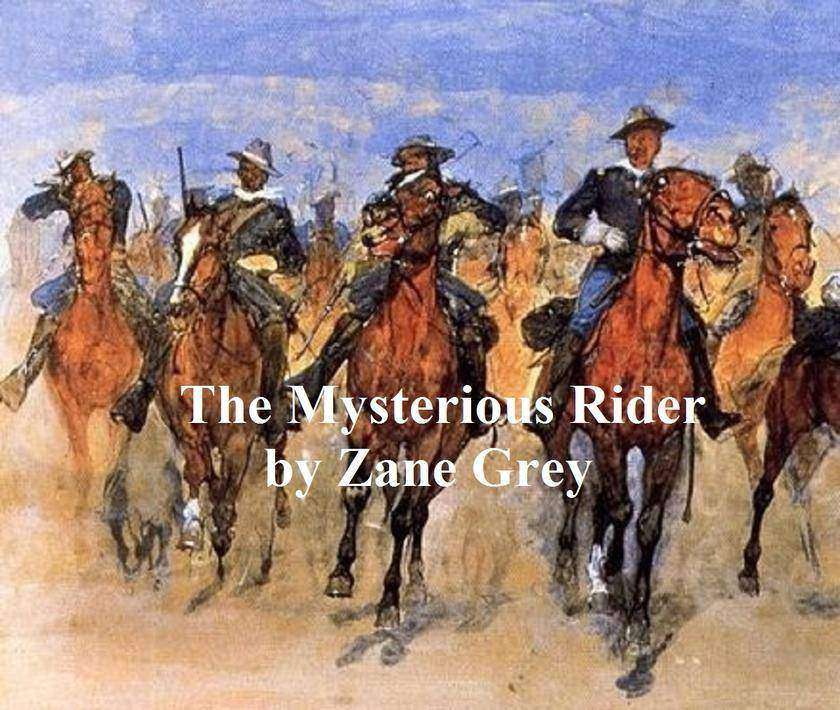
The Mysterious Rider
¥8.09
Classic Western. According to Wikipedia: "Zane Grey (1872 – 1939) was an American author best known for his popular adventure novels and stories that presented an idealized image of the rugged Old West. As of June 2007, the Internet Movie Database credits Grey with 110 films, one TV episode, and a series, Dick Powell's Zane Grey Theater based loosely on his novels and short stories."
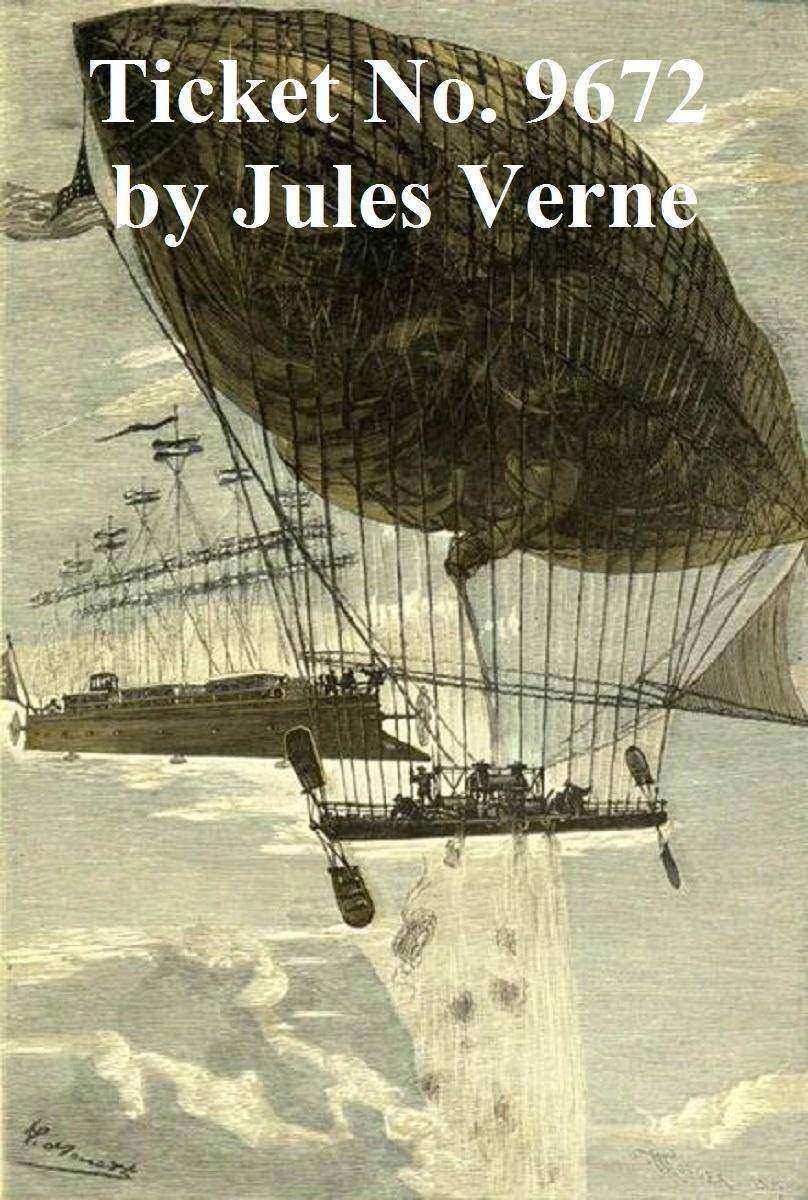
Ticket Number 9672
¥8.09
Classic novel. According to Wikipedia: "Jules Gabriel Verne (February 8, 1828-March 24, 1905) was a French author who pioneered the science-fiction genre. He is best known for novels such as Journey to the Center of the Earth (1864), Twenty Thousand Leagues under the Sea (1870), and Around the World in Eighty Days (1873). Verne wrote about space, air, and underwater travel before air travel and practical submarines were invented, and before practical means of space travel had been devised. He is the third most translated author in the world, according to Index Translationum. Some of his books have been made into films. Verne, along with H. G. Wells, is often popularly referred to as the "Father of Science Fiction"

Through the Fray, A Tale of the Luddite Riots
¥8.09
Historical novel set at the beginning of the 19th century, during violent worker protests against the mechanization of the Industrial Revolution. The Preface begins: "The beginning of the present century, glorious as it was for British arms abroad, was a dark time to those who lived by their daily labor at home. The heavy taxation entailed by the war, the injury to trade, and the enormous prices of food, all pressed heavily upon the working classes. The invention of improved machinery, vast as has been the increase of trade which it has brought about, at first pressed heavily upon the hand workers, who assigned all their distress to the new inventions. Hence a movement arose, which did much damage and for a time threatened to be extremely formidable." According to Wikipedia: "George Alfred Henty (8 December 1832 - 16 November 1902), referred to as G. A. Henty, was a prolific English novelist, special correspondent, and Imperialist born in Trumpington, Cambridgeshire, England. He is best known for his historical adventure stories that were popular in the late 19th century. His works include Out on the Pampas (1871), The Young Buglers (1880), With Clive in India (1884) and Wulf the Saxon (1895)."

Mother West Wind "Why" Stories, Illustrated
¥8.09
Children's book, first published in 1920, with eight color illustrations. According to Wikipedia: "Thornton Waldo Burgess (January 14, 1874 – June 5, 1965). Born in Sandwich, Cape Cod, Massachusetts, he was a conservationist and author of children's stories. Thornton Waldo Burgess loved the beauty of nature and its living creatures so much that he wrote about them for 50 years. By the time he retired, he had written more than 170 books and 15,000 stories for daily columns in newspapers."

Sodome et Gomorrhe
¥8.09
Selon Wikipédia: "Valentin Louis Georges Eugène Marcel Proust (10 Juillet 1871 - 18 Novembre 1922) était un romancier, essayiste et critique fran?ais, mieux connu comme l'auteur de la recherche du temps perdu Remembrance of Things Past), une ?uvre monumentale de fiction du XXe siècle publiée en sept parties de 1913 à 1927. "


